

Habitat and Host Indicate Lineage Identity in Colletotrichum gloeosporioides s.l. from Wild and Agricultural Landscapes in North America
Open accessThe DOI matches its Crossref record; 72 of the 74 references it cites were found in a registry or an index.
Abstract
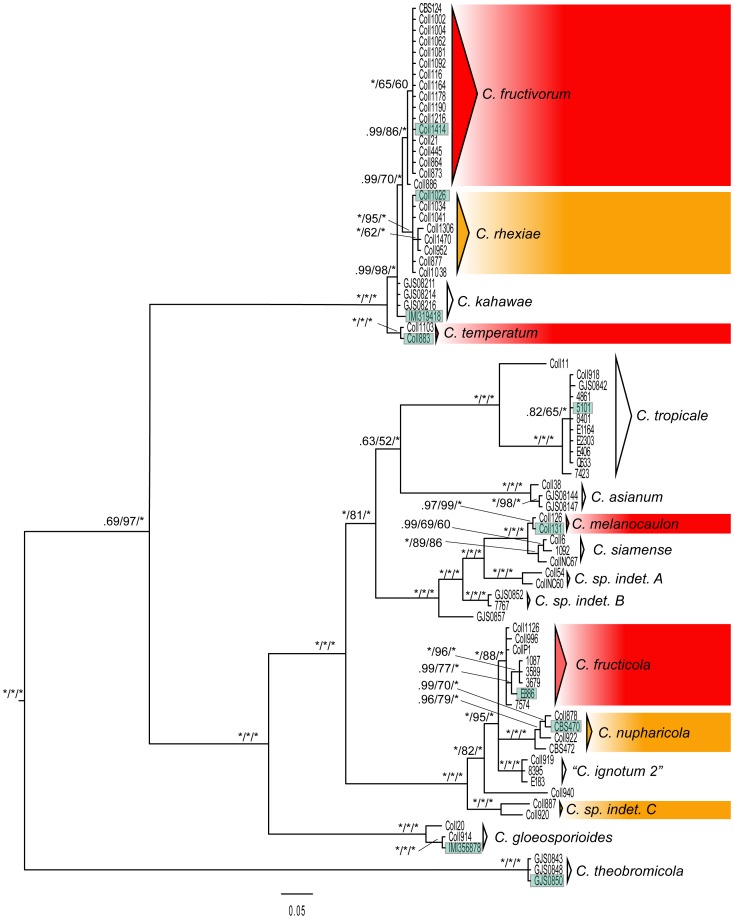
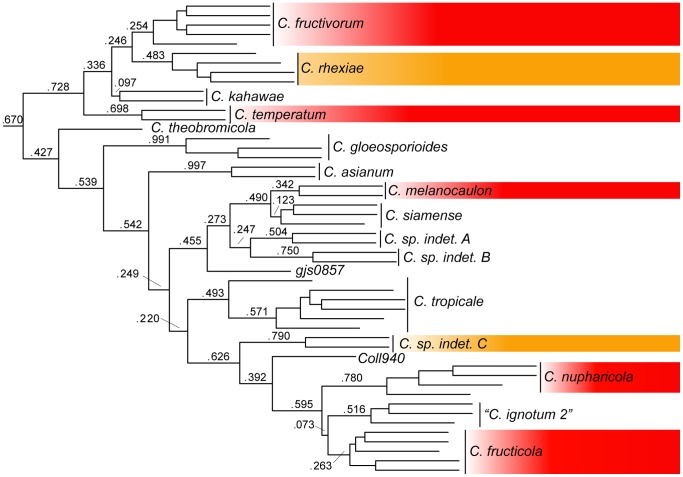
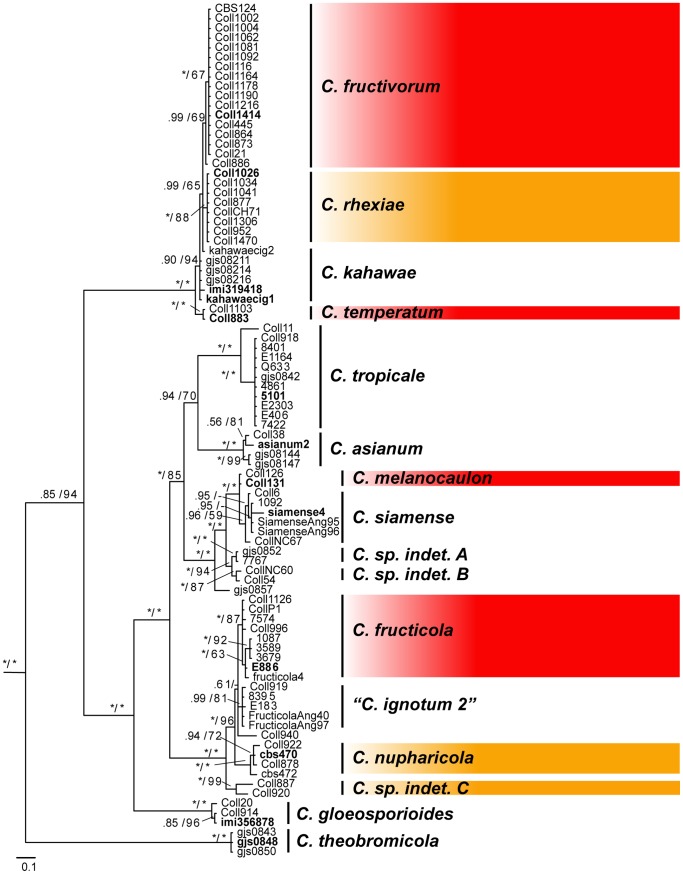
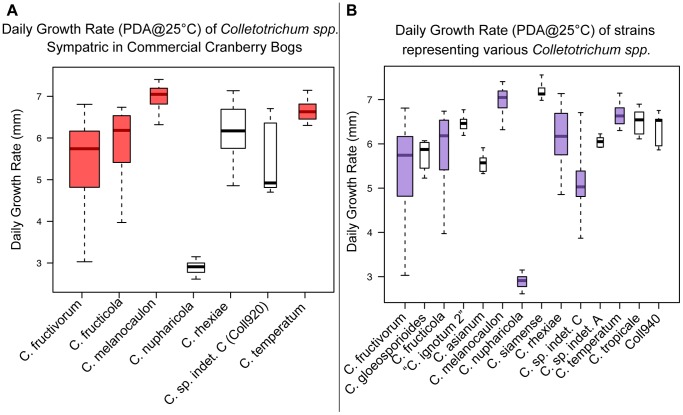
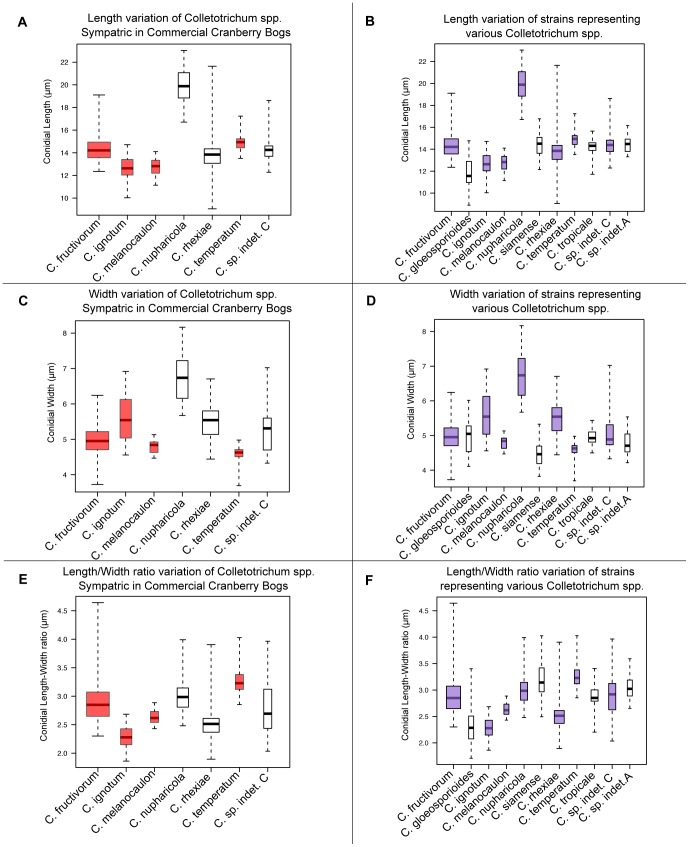
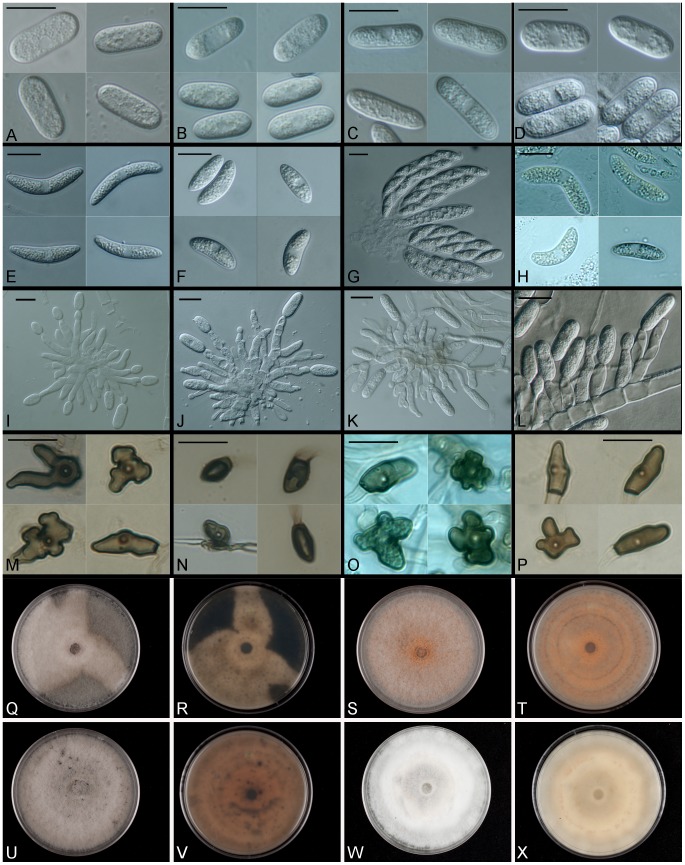
Understanding the factors that drive the evolution of pathogenic fungi is central to revealing the mechanisms of virulence and host preference, as well as developing effective disease control measures. Prerequisite to these pursuits is the accurate delimitation of species boundaries. Colletotrichum gloeosporioides s.l. is a species complex of plant pathogens and endophytic fungi for which reliable species recognition has only recently become possible through a multi-locus phylogenetic approach. By adopting an intensive regional sampling strategy encompassing multiple hosts within and beyond agricultural zones associated with cranberry (Vaccinium macrocarpon Aiton), we have integrated North America strains of Colletotrichum gloeosporioides s.l. from these habitats into a broader phylogenetic framework. We delimit species on the basis of genealogical concordance phylogenetic species recognition (GCPSR) and quantitatively assess the monophyly of delimited species at each of four nuclear loci and in the combined data set with the genealogical sorting index (gsi). Our analysis resolved two principal lineages within the species complex. Strains isolated from cranberry and sympatric host plants are distributed across both of these lineages and belong to seven distinct species or terminal clades. Strains isolated from V. macrocarpon in commercial cranberry beds belong to four species, three of which are described here as new. Another species, C. rhexiae Ellis & Everh., is epitypified. Intensive regional sampling has revealed a combination of factors, including the host species from which a strain has been isolated, the host organ of origin, and the habitat of the host species, as useful indicators of species identity in the sampled regions. We have identified three broadly distributed temperate species, C. fructivorum, C. rhexiae, and C. nupharicola, that could be useful for understanding the microevolutionary forces that may lead to species divergence in this important complex of endophytes and plant pathogens.
Overview
The claims and statistics of this paper haven’t been checked yet.
Free: it reads the open-access text and checks the first 5 claims that cite a source we can check. Create a free account to check every claim.
Integrity signals
Registry
Cites
Statistics
Figures
Verification
Claims the paper makes
The claims and statistics of this paper haven’t been checked yet.
Free: it reads the open-access text and checks the first 5 claims that cite a source we can check. Create a free account to check every claim.
Claims other papers make about this one
Each is checked against this paper’s own text: does it say what the citing paper says it does?
The cited source doesn’t support the claim as written.
In the citing paper
“It is in the kahawae clade and can be identified any of the loci (ITS and tub2) used in Doyle et al. (2013).”
From Colletotrichum: lifestyles, biology, morpho-species, species complexes and accepted species (2021) · cites this paper as Doyle et al. 2013
Checked by a reasoning model — may be wrong.
Experimental — accuracy not yet measuredThe source backs part of the claim, not all of it — or backs it for a different population, condition or comparison.
In the citing paper
“This species can be distinguished by any of the loci (ITS and tub2) used in Doyle et al. (2013).”
From Colletotrichum: lifestyles, biology, morpho-species, species complexes and accepted species (2021) · cites this paper as Doyle et al. 2013
Experimental — accuracy not yet measuredThe source backs part of the claim, not all of it — or backs it for a different population, condition or comparison.
In the citing paper
“Notes -This taxon is pathogenic to Vaccinium sp. in Canada, Colombia and the USA (Doyle et al. 2013).”
From Colletotrichum: lifestyles, biology, morpho-species, species complexes and accepted species (2021) · cites this paper as Doyle et al. 2013
Experimental — accuracy not yet measuredThe source backs part of the claim, not all of it — or backs it for a different population, condition or comparison.
In the citing paper
“Distribution -Canada, Colombia and the USA (Doyle et al. 2013)”
From Colletotrichum: lifestyles, biology, morpho-species, species complexes and accepted species (2021) · cites this paper as Doyle et al. 2013
Experimental — accuracy not yet measuredThe source backs part of the claim, not all of it — or backs it for a different population, condition or comparison.
In the citing paper
“Using an additional genomic region, ApMat, the three strains identified in the C. gloeosporioides complex were refined and confirmed (Doyle et al., 2013; Pardo-De la Hoz et al., 2016).”
From Mango anthracnose disease: the current situation and direction for future research (2023) · cites this paper as Doyle et al., 2013
Experimental — accuracy not yet measured
6 more claims about this paper
Create a free account to see every claim other papers make about this one.
Self-check
Percentages, sums and reported differences re-computed from the paper’s own numbers.
The self-check needs the paper’s full text.
Citations
Cites
R: A Language and Environment for Statistical Computing
R Core Team (2025) · doi:10.32614/r.manuals · Cited by 352,181
Amplification and direct sequencing of fungal ribosomal RNA genes for phylogenetics
White, T. J., Bruns, T., Lee, S., & Taylor, J. (1990) · PCR Protocols · doi:10.1016/b978-0-12-372180-8.50042-1 · Cited by 36,648
MrBayes 3: Bayesian phylogenetic inference under mixed models
Ronquist, F., & Huelsenbeck, J. P. (2003) · Bioinformatics · doi:10.1093/bioinformatics/btg180 · Cited by 29,077
MRBAYES: Bayesian inference of phylogenetic trees.
Huelsenbeck, J. P., & Ronquist, F. (2001) · Bioinformatics · doi:10.1093/bioinformatics/17.8.754 · Cited by 21,937
RAxML-VI-HPC: maximum likelihood-based phylogenetic analyses with thousands of taxa and mixed models
Stamatakis, A. (2006) · Bioinformatics · doi:10.1093/bioinformatics/btl446 · Cited by 15,582
Abràmoff, M. D., Magalhães, P. J., & Ram, S. J. (2004) · Utrecht University Repository (Utrecht University) · Cited by 15,460
Creating the CIPRES Science Gateway for inference of large phylogenetic trees
Miller, M. A., Pfeiffer, W., & Schwartz, T. (2010) · 2010 Gateway Computing Environments Workshop (GCE) · doi:10.1109/gce.2010.5676129 · Cited by 11,228
A Rapid Bootstrap Algorithm for the RAxML Web Servers
Stamatakis, A., Hoover, P., & Rougemont, J. (2008) · Systematic Biology · doi:10.1080/10635150802429642 · Cited by 7,028
TNT, a free program for phylogenetic analysis
Goloboff, P. A., Farris, J. S., & Nixon, K. C. (2008) · Cladistics · doi:10.1111/j.1096-0031.2008.00217.x · Cited by 5,352
MRBAYES: Bayesian inference of phylogeny
Huelsenbeck, J. P., & Ronquist, F. (2001) · Bioinformatics · Cited by 4,892
Research works printed but not linked: 9
- Hyde KD, Cai L, McKenzie EHC, Yang YL, Zhang JZ, et al (2009) Colletotrichum: a catalogue of confusion. Fungal Diversity 39: 1– 17.
- Adaskaveg JE, Forster H (2000) Occurrence and Management of Anthracnose Epidemics Caused by Colletotrichum Species on Tree Fruit Crops in California. In: Prusky D, Freeman S, Dickman MB, editors. Colletotrichum: Host Specificity, Pathology and Host-Pathogen Interaction. St. Paul, Minnesota: The American Phytopathogical Society Press. 317–336.
- von Arx JA (1957) Die Arten der Gattung Colletotrichum Corda. Phytopathologische Zeitschrift 29: 414– 468.
- Stiles CM, Oudemans PV (1997) Cranberry fruit rot pathogens isolated from various cranberry plant tissues over two growing seasons. Phytopathology 87: S94.
- Ellis JB, Everhart BM (1894) New Species of Fungi from Various Localities Proceedings of the Academy of Natural Sciences of Philadelphia. 46: 322– 386.
- Bills G, Polishook JD (1992) Recovery of endophytic fungi from Chamaecyparis thyoides. Sydowia 44: 1– 12.
- Colon-Garay J, Rivera-Vargas L, McGovern RJ, Rodriquez RdP (2002) Hypovirulent isolates of Colletotrichum gloeosporioides induce resistance to anthracnose in detached mango fruits and seedlings. J Agric Univ Puerto Rico 84: 56– 64.
- Prihastuti H, Cai L, Chen H, McKenzie EHC, Hyde KD (2009) Characterization of Colletotrichum species associated with coffee berries in northern Thailand. Fungal Diversity 39: 89– 109.
- Yang YL, Liu ZY, Cai L, Hyde KD, Yu ZN, et al (2009) Colletotrichum anthracnose of Amaryllidaceae. Fungal Diversity 39: 123– 146.
Cited by
Items 101–134 of 134
Colletotrichum gloeosporioides sensu lato associated with anthracnose in Bauhinia forficata
de Souza, F. J. C., Vieira, W. A. D. S., Veloso, J. S., Duarte, I. G., Amaral, A. G. G., Laranjeira, D., Balbino, V. D. Q., Doyle, V. P., & Câmara, M. P. S. (2021) · European Journal of Plant Pathology · doi:10.1007/s10658-021-02277-w · Cited by 2
Self-citationMaia, C. B., de Melo, P. A. F. R., Barreto, R. W., Maffia, L. A., Pinto, O. C. É. K. M. S., Rodrigues, A. A. C., Serra, I. M. R. D. S., Mesquita, M. L. R., Mondego, J. M., & da Silva, A. P. G. (2020) · Australian Journal of Crop Science · doi:10.21475/ajcs.20.14.02.p2170 · Cited by 2
“In this case, the interactions between this pathogenetic systems are still not well understood (Doyle et al., 2013).”
BackgroundInfluentialAlternaria brown spot: An emerging problem on annonaceous orchards in northeast Brazil
Veloso, J. S., do Nascimento, E. R. C., Duarte, I. G., Vieira, W. A. D. S., Silva, A. M. F., Balbino, V. D. Q., Doyle, V. P., & Câmara, M. P. S. (2024) · Plant Pathology · doi:10.1111/ppa.14046 · Cited by 2
Self-citationSinkevičienė, J., Sinkevičiūtė, A., Česonienė, L., & Daubaras, R. (2023) · Plants · doi:10.3390/plants12122360 · Cited by 3
“fungi cause more damage in old growing areas [28].”
BackgroundZapata, M. A., & Palfner, G. (2022) · Forest Pathology · doi:10.1111/efp.12748 · Cited by 3
Xue, C., Wen, S., Tian, T., Gou, Y., Liu, S., Gao, S., Sun, S., & Meng, Q. (2023) · Authorea · doi:10.22541/au.168241165.58935174/v1 · Cited by 2
Bustamante, M. I., Fernández, Y., Osorio-Navarro, C., Cardenas, C. S., Bourret, T. B., Eşkalen, A., & Henríquez-Sáez, J. L. (2026) · Phytopathologia Mediterranea · doi:10.36253/phyto-16790 · Cited by 1
Zakaria, L. (2020) · Malaysian Journal of Microbiology · doi:10.21161/mjm.190668 · Cited by 2
“Following these recommended methods, many new species have been described by Damm et al. (2009), Weir et al. (2012), Doyle et al. (2013), Manamgoda et al. (2013), Liu et al. (2015), Zhou et al. (2019) and Damm et al. (2019).”
MethodInfluentialVieira, W. A. D. S., & Câmara, M. P. S. (2022) · CABI Compendium · doi:10.1079/cabicompendium.121992 · Cited by 1
Albu, S. (2015) · Louisiana State University · doi:10.31390/gradschool_dissertations.2140
“This phenomenon of cryptic speciation has also been observed in other ascomycetes such as Colletotrichum gloeosporoides (Doyle et al. 2013) and Fusarium subglutinans (Steenkamp et al. 2002) and raises the question of whether Cercospora species associated with other hosts can infect soybeans.”
BackgroundKaur, H. (2020) · Louisiana State University · doi:10.31390/gradschool_theses.5225
“Additionally, glyceraldehyde 3-phosphate dehydrogenase (GAPDH), calmodulin, manganesesuperoxide dismutase (SOD2), β-tubulin 2 (TUB2), glutamine synthetase (GS) (Weir et al. 2012), DNA lyase (APN2), and the intergenic region between DNA lyase and the mating type locus (MAT1-2) (Rojas et al. 2010; Doyle et al. 2013) are…”
BackgroundResultInfluentialCRESCIMENTO VEGETATIVO DE TRÊS ESPÉCIES FLORESTAIS EM ÁREA DE REFLORESTAMENTO NO SUDESTE DA AMAZÔNIA
Sousa, L. G. D. S. D. O., Ferreira, G. S., Siqueira, R. S., Mariano, D. D. C., Ebling, Â. A., & Okumura, R. S. (2022) · doi:10.22533/at.ed.75422160914
PROSPECÇÃO CIENTÍFICA E TECNOLÓGICA DE QUEIJOS PETIT SUISSE COM A UTILIZAÇÃO DE ESPÉCIES VEGETAIS
de Souza, J. S. P., de Lucena, M. K. S. P., Marques, L. E., Bezerra, M. E. D. M., & Ramalho, H. M. M. (2022) · doi:10.22533/at.ed.75422160926
THE CULTURE OF HELICONIA ASSOCIATED WITH ANTHRACNOSIS AND CHEMICAL MANAGEMENT
Lima, T. S., Costa, J. F. D. O., da Silva, J. L., Ramirez, C. H., da Silva, M. J. D. S., dos Santos, T. F., Lima, G. S. D. A., & Assunção, I. P. (2022) · doi:10.22533/at.ed.75422160928
EFICIÊNCIA DO USO DA ÁGUA DE IRRIGAÇÃO NA CULTURA DO CAFÉ CONILON, EM CAMPOS DOS GOYTACAZES, RJ
Mendonça, J. C., de Almeida, C. M., Garcia, R. F., & Lazzarini, L. M. (2022) · doi:10.22533/at.ed.75422160918
EFECTO DE FITOVITA EN EL DESARROLLO DE RAÍZ EN MAÍZ Y CAÑA DE AZÚCAR
Hernández, A. V., Mireles, H. C., Prado, A. D., Isaac, M. M., & Gómez, A. A. (2022) · doi:10.22533/at.ed.75422160915
AGRICULTURA URBANA E PERIURBANA: UM ESTUDO DE CASO NO MUNICÍPIO DE ARAGARÇAS-GO
de Oliveira, J. C., Corioletti, N. S. D., de Matos, L. G. T., Morais, M. A. V., Maia, A. H., Binde, D. R., de Moura, G. B., Taveira, J. H. D. S., Lima, D. A. L. L., & Cardoso, R. L. (2022) · doi:10.22533/at.ed.7542216093
Carnaúba, J. P., Carvalho, T. D. S., da Silva, J. A. C., de Cristo, C. C. N., de Melo, L. H. V., Silva, I. O., & Amorim, E. P. D. R. (2022) · doi:10.22533/at.ed.75422160917
A IMPORTÂNCIA DA BIOTECNOLOGIA AGRÍCOLA NA PRODUÇÃO DE ALIMENTOS
Barros, D. D. M., de Moura, D. F., do Monte, Z. S., Rodrigues, T. H. G., da Silva, H. M. L., Ribeiro, A. N. D. S., Lima, T. V. D. O., da Silva, A. S., Campos, M. I. X., Silva, J. T. A., et al. (2022) · doi:10.22533/at.ed.7542216091
EXTENSIÓN AGROECOLÓGICA CON UNA COMUNIDAD MAPUCHE HUILLICHE DEL SUR DE CHILE
Martínez-Lagos, J. (2022) · doi:10.22533/at.ed.75422160919 · Cited by 3
LEGITIMAÇÃO DE POSSE SOBRE TERRAS DEVOLUTAS
Moreira, L. S., & de Lima, R. R. (2022) · doi:10.22533/at.ed.75422160922
Ribeiro, P. R. C. D. C., Pires, F. R., Viana, D. G., Filho, F. B. E., & Cruz, L. B. S. (2022) · doi:10.22533/at.ed.75422160927
CLÍNICA ENTOMOLÓGICA: UMA AÇÃO DE EXTENSÃO UNIVERSITÁRIA
Costa, G. G., & de Azevedo, F. R. (2022) · doi:10.22533/at.ed.75422160912
Costa, A. J. D. S. R., Arré, F. A., Carvalho, F. L. D. A., de Oliveira, M. R. A., Lustosa, J. C. B., da Silva, L. A. S., Reis, M. L., Evangelista, A. F., Castro, G. C., & da Silva, D. C. F. (2022) · doi:10.22533/at.ed.75422160924
EFEITO ALELOPÁTICO DA VASSOURINHA DE BOTÃO SOBRE A CULTURA DO MATAPASTO
Pinto, F. F., Ribeiro, B. D. S. B., de Sousa, L. A. M., Silva, F. L. D. S., Silva, K. R. C., Azevedo, J. L. X., Moraes, L. F., Cordeiro, K. V., da Silva-Matos, R. R. S., & da Silva, R. R. S. D. S.-M. I. A. (2022) · doi:10.22533/at.ed.75422160916
Barreto, M. L. R., dos Santos, C. R. C., da Silva, M. O., Oliveira, J. D. N. D. S., Oliveira, M. B. D. L., Borges, M. D. C. D. S., Pereira, C. J. S., Barbosa, B. S., Amaral, L. D. S., Martins, W. B. R., et al. (2022) · doi:10.22533/at.ed.75422160921
da Silva, B. B. F., & Carnaúba, J. P. (2022) · doi:10.22533/at.ed.7542216095
ADUBAÇÃO NITROGENADA E INOCULAÇÃO COM Azospirillum brasilense NO DESENVOLVIMENTO DA CULTURA DO MILHO
Chaves, H. S., Galdino, G. C., Neto, C. F. D. O., Mariano, D. D. C., Maciel, R. P., & Okumura, R. S. (2022) · doi:10.22533/at.ed.7542216092
Belém, J. G., dos Santos, C. F., Lopes, E. L. N., Ritter, L. H., Redig, M. D. S. F., & Costa, G. V. (2022) · doi:10.22533/at.ed.7542216099
Costa, L. D. S., & da Costa, B. L. (2022) · doi:10.22533/at.ed.7542216094
Soltez, K., Soltis, D. E., & Richter, B. S. (2025) · Plant Disease · doi:10.1094/pdis-08-24-1643-re
CRESCIMENTO DE COLLETOTRICHUM GLOEOSPORIOIDES EM ABACATE
Macedo, A. K. D. O., Santana, M. E. D. O., Monteiro, M. F. P., Leite, M. A. P., da Silva, M. V. M., Panta, L. D. L., Grigorio, E. N. T., Coelho, K. T. R., Sousa, J. D., Júnior, I. A. D. S., et al. (2026) · Editora Omnis Scietia eBooks · doi:10.47094/978-65-284-0495-7/547-552
Metadata
- Authors
- Doyle, V. P., Oudemans, P. V., Rehner, S. A., & Litt, A.
- Affiliations
- The Graduate Center, CUNY (US)
- Rutgers, The State University of New Jersey (US)
- Agricultural Research Service (US)
- New York Botanical Garden (US)
- Corresponding author
- Doyle, Vinson P.
- Venue
- PLoS ONE
- Publisher
- Public Library of Science (PLoS)
- Published
- 2013-05-06
- Volume
- 8
- Issue
- 5
- Pages
- e62394
- ISSN
- 1932-6203 (ISSN-L)
- PMC
- PMC3646003
- OpenAlex
- W2087624808
- Semantic Scholar
- a7b780334f4ed7a67726b7dc61b5c8547c20c711
- Cited by
- 134
- References
- 74
- Citations by year
- 2026: 2 · 2025: 8 · 2024: 11 · 2023: 8 · 2022: 33 · 2021: 8 · 2020: 11 · 2019: 8 · 2018: 7 · 2017: 6 · 2016: 11 · 2015: 6 · 2014: 8 · 2013: 7
- FWCI
- 6.19
- Type
- journal article
- Language
- en
- Open access
- gold
- doi.org
- Licence
- Locations
- PLoS ONE (publishedVersion, public-domain)
- Europe PMC (PubMed Central) (publishedVersion, other-oa)
- PubMed Central (publishedVersion, public-domain)
- PubMed (publishedVersion)
- CUNY Academic Works (City University of New York) (submittedVersion, public-domain)
- Civil War Book Review (submittedVersion)
- DOAJ (DOAJ: Directory of Open Access Journals) (submittedVersion, cc-by-sa)
- Figshare (submittedVersion, cc-by)
- Funders
- National Science Foundation (1011120, 0749751)
- Topics
- Life Sciences › Agricultural and Biological Sciences › Plant Science › Plant Pathogens and Fungal Diseases
- Life Sciences › Immunology and Microbiology › Microbiology › Yeasts and Rust Fungi Studies
- Life Sciences › Agricultural and Biological Sciences › Plant Science › Fungal Plant Pathogen Control
- Keywords
- Colletotrichum gloeosporioides species complex, species delimitation, cranberry, new species, endophytic fungi, plant pathogenic fungi, host preference, habitat, multilocus phylogeny, North America
- MeSH terms
- Agriculture, Bayes Theorem, Genes, Fungal, Phylogeny, Plant Diseases, United States, Likelihood Functions, Mycological Typing Techniques, Ecosystem, Plant Stems, Colletotrichum, Vaccinium macrocarpon, Multilocus Sequence Typing
About these checks
Registry, retraction, Cites and statistics results are computed, not judged, with one exception: a printed reference that no index lists is read once by a model before it counts as a citation error. Claims are extracted by a model and kept only when their quote appears verbatim in the text; each cited source is then checked, with a model’s help, for whether it says what the claim relies on. Those verdicts can be wrong — read the claim’s quote and the cited source before relying on one.
Statistics and arithmetic are recomputed, not judged.
Confidence bands are shown only for fields calibrated on our annotated test set. None is calibrated yet, so no band is shown.
What counts as a claim ›How we measure confidence ›How we check this ›
Are you an author, or do you see a problem with this page? Request a review
Data sources
Bibliographic data: Semantic Scholar, OpenAlex, Crossref.
Contains information from the Semantic Scholar Academic Graph Datasets, made available under the ODC Attribution License (ODC-BY 1.0).
Semantic Scholar’s data is described in: Kinney, R., et al. (2023). The Semantic Scholar Open Data Platform. arXiv:2301.10140.
