

Habitat and Host Indicate Lineage Identity in Colletotrichum gloeosporioides s.l. from Wild and Agricultural Landscapes in North America
Open accessThe DOI matches its Crossref record; 72 of the 74 references it cites were found in a registry or an index.
Abstract
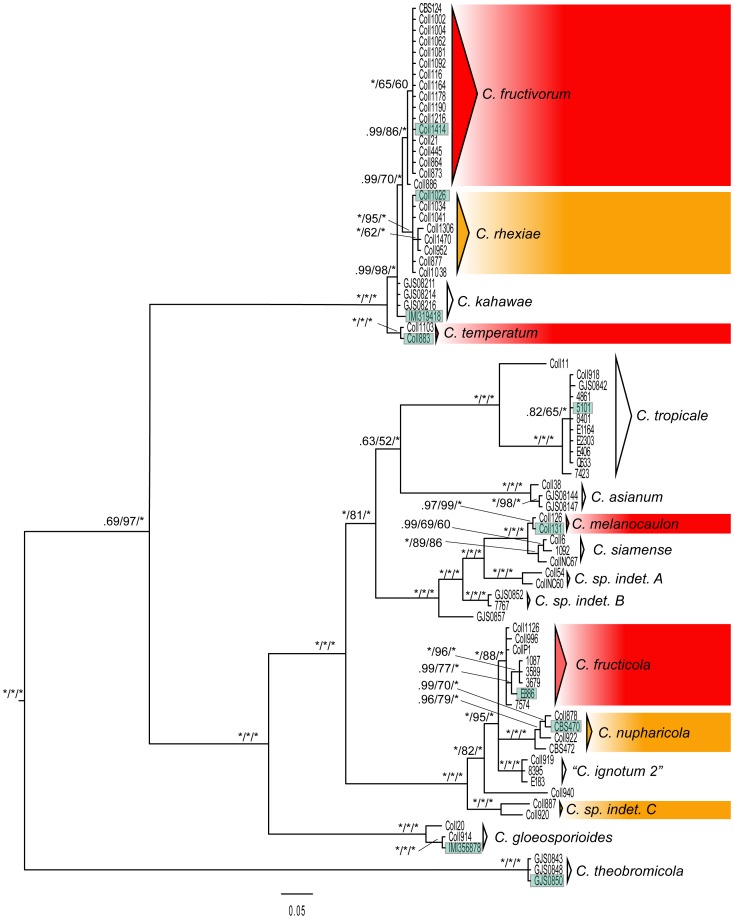
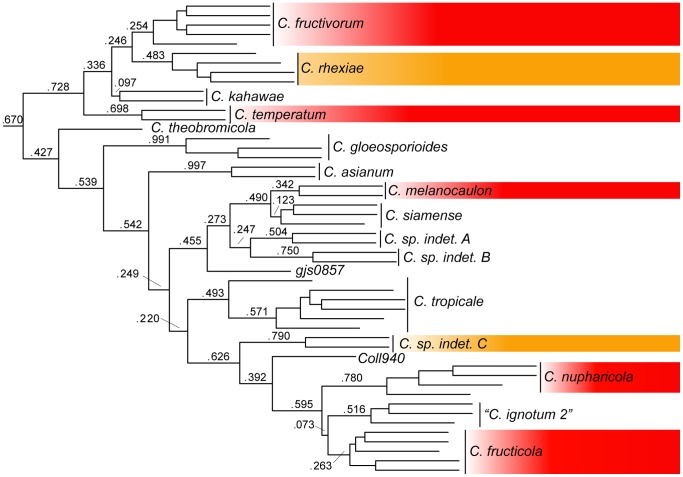
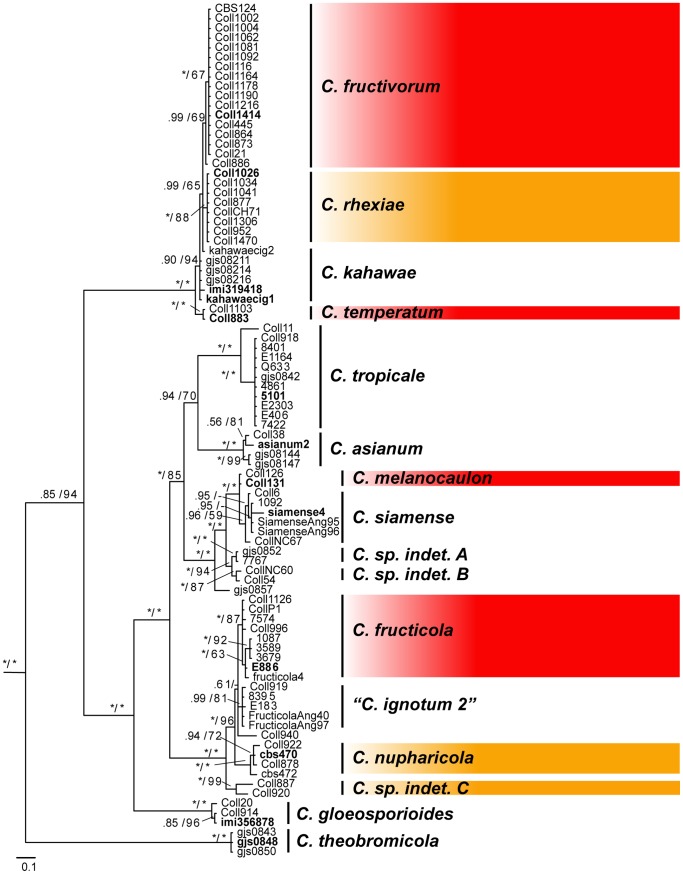
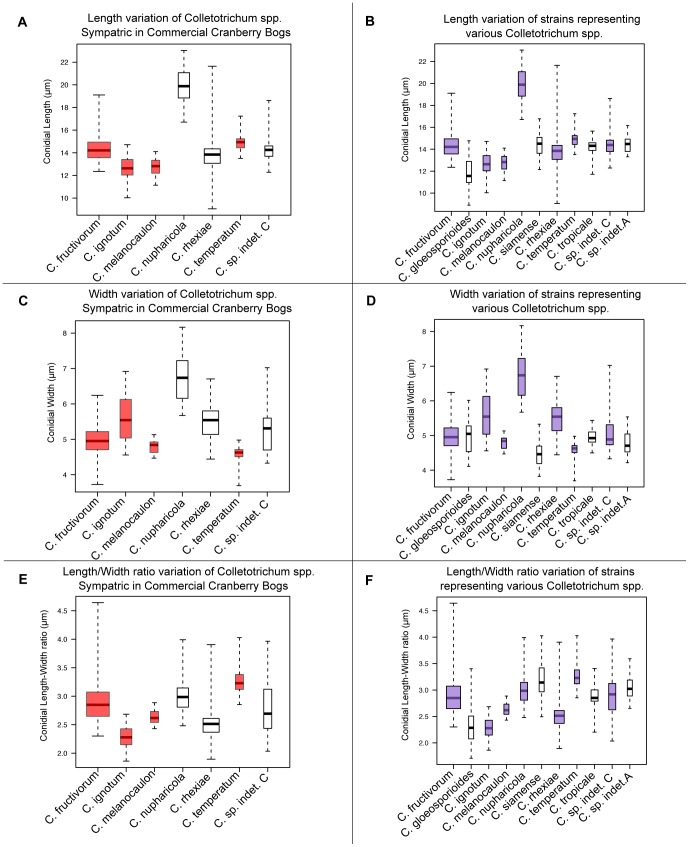
Understanding the factors that drive the evolution of pathogenic fungi is central to revealing the mechanisms of virulence and host preference, as well as developing effective disease control measures. Prerequisite to these pursuits is the accurate delimitation of species boundaries. Colletotrichum gloeosporioides s.l. is a species complex of plant pathogens and endophytic fungi for which reliable species recognition has only recently become possible through a multi-locus phylogenetic approach. By adopting an intensive regional sampling strategy encompassing multiple hosts within and beyond agricultural zones associated with cranberry (Vaccinium macrocarpon Aiton), we have integrated North America strains of Colletotrichum gloeosporioides s.l. from these habitats into a broader phylogenetic framework. We delimit species on the basis of genealogical concordance phylogenetic species recognition (GCPSR) and quantitatively assess the monophyly of delimited species at each of four nuclear loci and in the combined data set with the genealogical sorting index (gsi). Our analysis resolved two principal lineages within the species complex. Strains isolated from cranberry and sympatric host plants are distributed across both of these lineages and belong to seven distinct species or terminal clades. Strains isolated from V. macrocarpon in commercial cranberry beds belong to four species, three of which are described here as new. Another species, C. rhexiae Ellis & Everh., is epitypified. Intensive regional sampling has revealed a combination of factors, including the host species from which a strain has been isolated, the host organ of origin, and the habitat of the host species, as useful indicators of species identity in the sampled regions. We have identified three broadly distributed temperate species, C. fructivorum, C. rhexiae, and C. nupharicola, that could be useful for understanding the microevolutionary forces that may lead to species divergence in this important complex of endophytes and plant pathogens.
Overview
The claims and statistics of this paper haven’t been checked yet.
Free: it reads the open-access text and checks the first 5 claims that cite a source we can check. Create a free account to check every claim.
Integrity signals
Registry
Cites
Statistics
Figures
Verification
Claims the paper makes
The claims and statistics of this paper haven’t been checked yet.
Free: it reads the open-access text and checks the first 5 claims that cite a source we can check. Create a free account to check every claim.
Claims other papers make about this one
Each is checked against this paper’s own text: does it say what the citing paper says it does?
The cited source doesn’t support the claim as written.
In the citing paper
“It is in the kahawae clade and can be identified any of the loci (ITS and tub2) used in Doyle et al. (2013).”
From Colletotrichum: lifestyles, biology, morpho-species, species complexes and accepted species (2021) · cites this paper as Doyle et al. 2013
Checked by a reasoning model — may be wrong.
Experimental — accuracy not yet measuredThe source backs part of the claim, not all of it — or backs it for a different population, condition or comparison.
In the citing paper
“This species can be distinguished by any of the loci (ITS and tub2) used in Doyle et al. (2013).”
From Colletotrichum: lifestyles, biology, morpho-species, species complexes and accepted species (2021) · cites this paper as Doyle et al. 2013
Experimental — accuracy not yet measuredThe source backs part of the claim, not all of it — or backs it for a different population, condition or comparison.
In the citing paper
“Notes -This taxon is pathogenic to Vaccinium sp. in Canada, Colombia and the USA (Doyle et al. 2013).”
From Colletotrichum: lifestyles, biology, morpho-species, species complexes and accepted species (2021) · cites this paper as Doyle et al. 2013
Experimental — accuracy not yet measuredThe source backs part of the claim, not all of it — or backs it for a different population, condition or comparison.
In the citing paper
“Distribution -Canada, Colombia and the USA (Doyle et al. 2013)”
From Colletotrichum: lifestyles, biology, morpho-species, species complexes and accepted species (2021) · cites this paper as Doyle et al. 2013
Experimental — accuracy not yet measuredThe source backs part of the claim, not all of it — or backs it for a different population, condition or comparison.
In the citing paper
“Using an additional genomic region, ApMat, the three strains identified in the C. gloeosporioides complex were refined and confirmed (Doyle et al., 2013; Pardo-De la Hoz et al., 2016).”
From Mango anthracnose disease: the current situation and direction for future research (2023) · cites this paper as Doyle et al., 2013
Experimental — accuracy not yet measured
6 more claims about this paper
Create a free account to see every claim other papers make about this one.
Self-check
Percentages, sums and reported differences re-computed from the paper’s own numbers.
The self-check needs the paper’s full text.
Citations
Cites
R: A Language and Environment for Statistical Computing
R Core Team (2025) · doi:10.32614/r.manuals · Cited by 352,181
Amplification and direct sequencing of fungal ribosomal RNA genes for phylogenetics
White, T. J., Bruns, T., Lee, S., & Taylor, J. (1990) · PCR Protocols · doi:10.1016/b978-0-12-372180-8.50042-1 · Cited by 36,648
MrBayes 3: Bayesian phylogenetic inference under mixed models
Ronquist, F., & Huelsenbeck, J. P. (2003) · Bioinformatics · doi:10.1093/bioinformatics/btg180 · Cited by 29,077
MRBAYES: Bayesian inference of phylogenetic trees.
Huelsenbeck, J. P., & Ronquist, F. (2001) · Bioinformatics · doi:10.1093/bioinformatics/17.8.754 · Cited by 21,937
RAxML-VI-HPC: maximum likelihood-based phylogenetic analyses with thousands of taxa and mixed models
Stamatakis, A. (2006) · Bioinformatics · doi:10.1093/bioinformatics/btl446 · Cited by 15,582
Abràmoff, M. D., Magalhães, P. J., & Ram, S. J. (2004) · Utrecht University Repository (Utrecht University) · Cited by 15,460
Creating the CIPRES Science Gateway for inference of large phylogenetic trees
Miller, M. A., Pfeiffer, W., & Schwartz, T. (2010) · 2010 Gateway Computing Environments Workshop (GCE) · doi:10.1109/gce.2010.5676129 · Cited by 11,228
A Rapid Bootstrap Algorithm for the RAxML Web Servers
Stamatakis, A., Hoover, P., & Rougemont, J. (2008) · Systematic Biology · doi:10.1080/10635150802429642 · Cited by 7,028
TNT, a free program for phylogenetic analysis
Goloboff, P. A., Farris, J. S., & Nixon, K. C. (2008) · Cladistics · doi:10.1111/j.1096-0031.2008.00217.x · Cited by 5,352
MRBAYES: Bayesian inference of phylogeny
Huelsenbeck, J. P., & Ronquist, F. (2001) · Bioinformatics · Cited by 4,892
Research works printed but not linked: 9
- Hyde KD, Cai L, McKenzie EHC, Yang YL, Zhang JZ, et al (2009) Colletotrichum: a catalogue of confusion. Fungal Diversity 39: 1– 17.
- Adaskaveg JE, Forster H (2000) Occurrence and Management of Anthracnose Epidemics Caused by Colletotrichum Species on Tree Fruit Crops in California. In: Prusky D, Freeman S, Dickman MB, editors. Colletotrichum: Host Specificity, Pathology and Host-Pathogen Interaction. St. Paul, Minnesota: The American Phytopathogical Society Press. 317–336.
- von Arx JA (1957) Die Arten der Gattung Colletotrichum Corda. Phytopathologische Zeitschrift 29: 414– 468.
- Stiles CM, Oudemans PV (1997) Cranberry fruit rot pathogens isolated from various cranberry plant tissues over two growing seasons. Phytopathology 87: S94.
- Ellis JB, Everhart BM (1894) New Species of Fungi from Various Localities Proceedings of the Academy of Natural Sciences of Philadelphia. 46: 322– 386.
- Bills G, Polishook JD (1992) Recovery of endophytic fungi from Chamaecyparis thyoides. Sydowia 44: 1– 12.
- Colon-Garay J, Rivera-Vargas L, McGovern RJ, Rodriquez RdP (2002) Hypovirulent isolates of Colletotrichum gloeosporioides induce resistance to anthracnose in detached mango fruits and seedlings. J Agric Univ Puerto Rico 84: 56– 64.
- Prihastuti H, Cai L, Chen H, McKenzie EHC, Hyde KD (2009) Characterization of Colletotrichum species associated with coffee berries in northern Thailand. Fungal Diversity 39: 89– 109.
- Yang YL, Liu ZY, Cai L, Hyde KD, Yu ZN, et al (2009) Colletotrichum anthracnose of Amaryllidaceae. Fungal Diversity 39: 123– 146.
Cited by
Genera of phytopathogenic fungi: GOPHY 1
Marin-Felix, Y., Groenewald, J. Z., Cai, L., Chen, Q., Marincowitz, S., Barnes, I., Bensch, K., Braun, U., Camporesi, E., Damm, U., et al. (2017) · Studies in Mycology · doi:10.1016/j.simyco.2017.04.002 · Cited by 436
“…128505T JQ005228 JQ005315 JQ005402 JQ005489 JQ005576 JQ005662 JQ005749 – – – Damm et al. (2012a) Col. nupharicola ICMP 18187T JX010187 JX009972 JX009835 – JX009437 JX010398 JX009663 JX010088 JX010320 JX145319 Weir et al. (2012), Doyle et al. (2013) Col. nymphaeae CBS 515.78T JQ948197 JQ948527…”
One stop shop: backbones trees for important phytopathogenic genera: I (2014)
Hyde, K. D., Nilsson, R. H., Alias, S. A., Ariyawansa, H. A., Blair, J. E., Cai, L., de Cock, A. W. A. M., Dissanayake, A. J., Glockling, S. L., Goonasekara, I. D., et al. (2014) · Fungal Diversity · doi:10.1007/s13225-014-0298-1 · Cited by 379
Towards a natural classification and backbone tree for Sordariomycetes
Maharachchikumbura, S. S. N., Hyde, K. D., Jones, E. B. G., McKenzie, E. H. C., Huang, S.-K., Abdel-Wahab, M. A., Daranagama, D. A., Dayarathne, M., D’souza, M. J., Goonasekara, I. D., et al. (2015) · Fungal Diversity · doi:10.1007/s13225-015-0331-z · Cited by 376
Notes on currently accepted species of Colletotrichum
Jayawardena, R. (2016) · Mycosphere · doi:10.5943/mycosphere/si/2c/9 · Cited by 363
Colletotrichum species and complexes: geographic distribution, host range and conservation status
Talhinhas, P., & Baroncelli, R. (2021) · Fungal Diversity · doi:10.1007/s13225-021-00491-9 · Cited by 280
Insights into the genus Diaporthe: phylogenetic species delimitation in the D. eres species complex
Udayanga, D., Castlebury, L. A., Rossman, A. Y., Chukeatirote, E., & Hyde, K. D. (2014) · Fungal Diversity · doi:10.1007/s13225-014-0297-2 · Cited by 279
Liu, F., Weir, B. S., Damm, U., Crous, P. W., Wang, Y., Liu, B., Wang, M., Zhang, M., & Cai, L. (2015) · Persoonia - Molecular Phylogeny and Evolution of Fungi · doi:10.3767/003158515x687597 · Cited by 239
Colletotrichum: lifestyles, biology, morpho-species, species complexes and accepted species
Jayawardena, R. (2021) · Mycosphere · doi:10.5943/mycosphere/12/1/7 · Cited by 208
Managing Colletotrichum on Fruit Crops: A “Complex” Challenge
Dowling, M., Peres, N., Villani, S., & Schnabel, G. (2020) · Plant Disease · doi:10.1094/pdis-11-19-2378-fe · Cited by 194
Species boundaries in plant pathogenic fungi: a Colletotrichum case study
Liu, F., Wang, M., Damm, U., Crous, P. W., & Cai, L. (2016) · BMC Evolutionary Biology · doi:10.1186/s12862-016-0649-5 · Cited by 175
“melanocaulon were respectively based on two strains [28, 29, 31].”
da Silva, L. L., Moreno, H. L. A., Correia, H. L. N., Santana, M. F., & de Queiroz, M. V. (2020) · Applied Microbiology and Biotechnology · doi:10.1007/s00253-020-10363-y · Cited by 162
“…Colletotrichum species and is used as a molecular marker in phylogenetic analyses of the genus (Baroncelli et al. 2015; Chen et al. 2002; Crouch et al. 2009; Du et al. 2005; Garcia-Serrano et al. 2008), gene sequences that characterize theMat1-1 idiomorph have not yet been detected and isolated.”
BackgroundOptimal markers for the identification of Colletotrichum species
Vieira, W. A. D. S., Bezerra, P. A., da Silva, A. C., Veloso, J. S., Câmara, M. P. S., & Doyle, V. P. (2019) · Molecular Phylogenetics and Evolution · doi:10.1016/j.ympev.2019.106694 · Cited by 179
Self-citationInvestigating species boundaries in Colletotrichum
Bhunjun, C. S., Phukhamsakda, C., Jayawardena, R. S., Jeewon, R., Promputtha, I., & Hyde, K. D. (2021) · Fungal Diversity · doi:10.1007/s13225-021-00471-z · Cited by 153
Sharma, G., Maymon, M., & Freeman, S. (2017) · Scientific Reports · doi:10.1038/s41598-017-15946-w · Cited by 152
What are the common anthracnose pathogens of tropical fruits?
Udayanga, D., Manamgoda, D. S., Liu, X., Chukeatirote, E., & Hyde, K. D. (2013) · Fungal Diversity · doi:10.1007/s13225-013-0257-2 · Cited by 147
“Doyle et al. (2013) and Sharma et al. (2013) also showed C. siamense to be a species complex based on APN2 (DNA lyase) and APN2/MAT-IGS (intergenic spacer between 3′ end of the DNA lyase and mating type locus MAT1-2) genetic markers.”
Endophytic species of Colletotrichum associated with mango in northeastern Brazil
Vieira, W. A. S., Michereff, S. J., de Morais, M. A., Hyde, K. D., & Câmara, M. P. S. (2014) · Fungal Diversity · doi:10.1007/s13225-014-0293-6 · Cited by 143
“This species was also described from North America, as C. melanocaulon, causing stem canker in Vaccinium macrocarpon (Doyle et al. 2013).”
BackgroundMethodResultInfluentialThe ApMat marker can resolve Colletotrichum species: a case study with Mangifera indica
Sharma, G., Kumar, N., Weir, B. S., Hyde, K. D., & Shenoy, B. D. (2013) · Fungal Diversity · doi:10.1007/s13225-013-0247-4 · Cited by 131
Khodadadi, F., González, J. B., Martin, P. L., Giroux, E., Bilodeau, G. J., Peter, K. A., Doyle, V. P., & Aćimović, S. G. (2020) · Scientific Reports · doi:10.1038/s41598-020-66761-9 · Cited by 125
Self-citationWhat is a species in fungal plant pathogens?
Jayawardena, R. S., Hyde, K. D., de Farias, A. R. G., Bhunjun, C. S., Ferdinandez, H. S., Manamgoda, D. S., Udayanga, D., Herath, I. S., Thambugala, K. M., Manawasinghe, I. S., et al. (2021) · Fungal Diversity · doi:10.1007/s13225-021-00484-8 · Cited by 176
“melanocaulon (Doyle et al. 2013) were introduced as new species in the C.”
BackgroundResolving the Colletotrichum siamense species complex using ApMat marker
Sharma, G., Pinnaka, A. K., & Shenoy, B. D. (2015) · Fungal Diversity · doi:10.1007/s13225-014-0312-7 · Cited by 120
Velho, A. C., Alaniz, S., Casanova, L., Mondino, P., & Stadnik, M. J. (2015) · Fungal Biology · doi:10.1016/j.funbio.2014.12.009 · Cited by 142
“Further, Colletotrichum isolates are most aggressive on their original host (Doyle et al. 2013), which can justify”
BackgroundInfluentialDistribution and Pathogenicity of Colletotrichum Species Associated With Mango Anthracnose in Mexico
Tovar-Pedraza, J. M., Mora-Aguilera, J. A., Nava-Díaz, C., Lima, N. B., Michereff, S. J., Sandoval-Islas, J. S., Câmara, M. P. S., Téliz-Ortiz, D., & Leyva-Mir, S. G. (2020) · Plant Disease · doi:10.1094/pdis-01-19-0178-re · Cited by 105
“…that the ApMat marker provided better phylogenetic information compared with other loci used and can resolve species within the C. gloeosporioides complex (Doyle et al. 2013; Pardo-De la Hoz et al. 2016; Rojas et al. 2010; Sharma et al. 2013, 2015, 2017; Silva et al. 2012; Vieira et al. 2014).”
Mango anthracnose disease: the current situation and direction for future research
Dofuor, A. K., Quartey, N. K.-A., Osabutey, A. F., Antwi-Agyakwa, A. K., Asante, K., Boateng, B. O., Ablormeti, F. K., Lutuf, H., Osei-Owusu, J., Osei, J. H. N., et al. (2023) · Frontiers in Microbiology · doi:10.3389/fmicb.2023.1168203 · Cited by 103
“gloeosporioides complex were refined and confirmed (Doyle et al., 2013; Pardo-De la Hoz et al., 2016).”
Talhinhas, P. (2023) · Mycosphere · doi:10.5943/mycosphere/14/si2/4 · Cited by 124
Diverse species of Colletotrichum associated with grapevine anthracnose in China
Yan, J.-Y., Jayawardena, M. M. R. S., Goonasekara, I. D., Wang, Y., Zhang, W., Liu, M., Huang, J.-B., Wang, Z.-Y., Shang, J.-J., Peng, Y.-L., et al. (2015) · Fungal Diversity · doi:10.1007/s13225-014-0310-9 · Cited by 100
Tao, G., Liu, Z.-Y., Liu, F., Gao, Y.-H., & Cai, L. (2013) · Fungal Diversity · doi:10.1007/s13225-013-0254-5 · Cited by 98
“Recently, a further 52 species have been introduced (Damm et al. 2012a; Damm et al. 2012b; Noireung et al. 2012; Weir et al. 2012; Doyle et al. 2013).”
BackgroundCurrent Insight into Traditional and Modern Methods in Fungal Diversity Estimates
Gautam, A. K., Verma, R. K., Avasthi, S., Sushma, S., Bohra, Y., Devadatha, B., Niranjan, M., & Suwannarach, N. (2022) · Journal of Fungi · doi:10.3390/jof8030226 · Cited by 122
Colletotrichum fructicola and C. siamense are involved in chilli anthracnose in India
Sharma, G., & Shenoy, B. D. (2014) · Archives Of Phytopathology And Plant Protection · doi:10.1080/03235408.2013.833749 · Cited by 96
“2000) has been used and it has yielded promising results, especially in recognising Colletotrichum gloeosporioides as a species complex, now incorporating 28 phylogenetic species (Table 1) (Peng et al. 2012, 2013; Weir et al. 2012; Doyle et al. 2013; Lima et al. 2013; Liu et al. 2013; Manamgoda et al. 2013; Udayanga e…”
BackgroundResultColletotrichum Species Causing Anthracnose of Rubber Trees in China
Liu, X., Li, B., Cai, J., Zheng, X., Feng, Y., & Guixiu, H. (2018) · Scientific Reports · doi:10.1038/s41598-018-28166-7 · Cited by 107
Endophytic Colletotrichum from tropical grasses with a new species C. endophytica
Manamgoda, D. S., Udayanga, D., Cai, L., Chukeatirote, E., & Hyde, K. D. (2013) · Fungal Diversity · doi:10.1007/s13225-013-0256-3 · Cited by 90
“…gene has revealed several different lineages withinColletrichum siamense sensu lato, including C. hymenocallidis, C. jasmini-sambac, C. siamense sensu stricto, C. melanocaulon and three undescribed clades which are probably new species (Doyle et al. 2013; Sharma et al. 2013; Udayanga et al. 2013).”
BackgroundResultLiu, F., Damm, U., Cai, L., & Crous, P. W. (2013) · Fungal Diversity · doi:10.1007/s13225-013-0249-2 · Cited by 87
“melanocaulon, and two unnamed clades (Doyle et al. 2013).”
Han, Y., Zeng, X. G., Xiang, F., Ren, L., Chen, F., & Gu, Y. C. (2015) · Plant Disease · doi:10.1094/pdis-09-15-1016-re · Cited by 100
Vieira, W. A. S., Lima, W. G., Nascimento, E. S., Michereff, S. J., Câmara, M. P. S., & Doyle, V. P. (2017) · Mycologia · doi:10.1080/00275514.2017.1418577 · Cited by 83
“In contrast, C. nupharicola is reported as host-specific to aquatic plants of the family Nymphaeaceae (Johnson et al. 1997; Weir et al. 2012; Doyle et al. 2013).”
BackgroundMethodInfluentialSelf-citationVeloso, J. S., Câmara, M. P. S., Lima, W. G., Michereff, S. J., & Doyle, V. P. (2018) · Fungal Biology · doi:10.1016/j.funbio.2018.03.005 · Cited by 65
Self-citationColletotrichum gloeosporioides: pathogen of anthracnose disease in mango (Mangifera indica L.)
Kamle, M., & Kumar, P. (2016) · Fungal Biology · doi:10.1007/978-3-319-27312-9_9 · Cited by 60
Albu, S., Schneider, R. W., Price, P. P., & Doyle, V. P. (2016) · Phytopathology · doi:10.1094/phyto-12-15-0332-r · Cited by 74
Self-citationHassan, O., Jeon, J. Y., Chang, T., Shin, J. S., Oh, N. K., & Lee, Y.-S. (2017) · Plant Disease · doi:10.1094/pdis-10-17-1564-re · Cited by 70
Cao, X., Xu, X., Che, H., West, J. S., & Luo, D. (2018) · Plant Disease · doi:10.1094/pdis-02-18-0374-re · Cited by 61
James, R. S., Ray, J. D., Tan, Y. P., & Shivas, R. G. (2014) · Australasian Plant Disease Notes · doi:10.1007/s13314-014-0138-x · Cited by 62
“gloeosporioides species complex into 22 species using multi-locus phylogenies, several other novel species in this complex have been described (Peng et al. 2012; Doyle et al. 2013; Lima et al. 2013; Liu et al. 2013; Peng et al. 2013; Udayanga et al. 2013).”
BackgroundFrom Natural Hosts to Agricultural Threats: The Evolutionary Journey of Phytopathogenic Fungi
Madhushan, A., Weerasingha, D. B., Ilyukhin, E., Taylor, P. W. J., Ratnayake, A. S., Liu, J., & Maharachchikumbura, S. S. N. (2025) · Journal of Fungi · doi:10.3390/jof11010025 · Cited by 51
Cabral, A., Azinheira, H. G., Talhinhas, P., Batista, D., Ramos, A. P., Silva, M. D. C., Oliveira, H., & Várzea, V. (2020) · Plants · doi:10.3390/plants9040502 · Cited by 52
Rockenbach, M. F., Velho, A. C., Gonçalves, A. E., Mondino, P., Alaniz, S., & Stadnik, M. J. (2016) · Phytopathology · doi:10.1094/phyto-09-15-0222-r · Cited by 51
Diversity of Colletotrichum species in coffee (Coffea arabica) plantations in Mexico
Cristóbal-Martínez, A. L., Yáñez‐Morales, M. D. J., Solano–Vidal, R., Segura‐León, O. L., & Hernández-Anguiano, A. M. (2016) · European Journal of Plant Pathology · doi:10.1007/s10658-016-1029-0 · Cited by 44
Zhang, Q., Nizamani, M. M., Feng, Y., Yang, Y., Jayawardena, R. S., Hyde, K., Wang, Y., & Li, C. (2023) · Mycosphere · doi:10.5943/mycosphere/14/si2/1 · Cited by 50
ITS-based diversity of Colletotrichum from India
Sharma, G. (2013) · Current Research in Environmental & Applied Mycology · doi:10.5943/cream/3/2/3 · Cited by 45
Martin, P. L., & Peter, K. A. (2020) · Phytopathology · doi:10.1094/phyto-05-20-0157-r · Cited by 41
Colletotrichum species complexes associated with crops in northern South America: a review
Guevara-Suarez, M., Cárdenas, M., Jiménez, P., Afanador-Kafuri, L., & Restrepo, S. (2022) · Agronomy · doi:10.3390/agronomy12030548 · Cited by 29
Colletotrichum systematics: Past, present and prospects
Sharma, G. (2016) · Mycosphere · doi:10.5943/mycosphere/si/2c/2 · Cited by 28
“…fruit-rot and leaf-wilt (Bailey & Jeger 1992, Hyde et al. 2009a, b, 2014, Phoulivong et al. 2010, 2011, Rojas et al. 2010, Su et al. 2011, Cannon et al. 2012, Damm et al. 2012a, b, 2013, Weir et al. 2012, Doyle et al. 2013, Huang et al. 2013, Sharma et al. 2013a, 2014, 2015a, Udayanga et al. 2013).”
BackgroundInfluentialCosseboom, S. D., & Hu, M. (2022) · Phytopathology · doi:10.1094/phyto-01-22-0004-r · Cited by 30
Lei, Y. (2016) · Mycosphere · doi:10.5943/mycosphere/si/2c/8 · Cited by 29
Colletotrichum species associated with cassava anthracnose in China
Liu, X., Shi, T., Li, B., Cai, J., Li, C., & Guixiu, H. (2018) · Journal of Phytopathology · doi:10.1111/jph.12765 · Cited by 29
Manova, V. I., Stoyanova, Z., Rodeva, R., Boycheva, I., Korpelainen, H., Vesterinen, E. J., Wirta, H., & Bonchev, G. (2022) · Journal of Fungi · doi:10.3390/jof8111123 · Cited by 30
“Thus, in many cases, the multilocus barcoding approach is the only method that allows for consistent species delimitation within the gloeosporioides complex [36].”
Moreira, R. R., Zielinski, E. C., Castellar, C., Filho, A. B., & Mio, L. L. M. D. (2020) · European Journal of Plant Pathology · doi:10.1007/s10658-020-02138-y · Cited by 34
Soil and Climate Drive Floristic Composition in Tropical Forests: A Literature Review
Bañares‐de‐Dios, G., Macía, M. J., de Carvalho, G. M., Arellano, G., & Cayuela, L. (2022) · Frontiers in Ecology and Evolution · doi:10.3389/fevo.2022.866905 · Cited by 29
“%) to the meta-analysis conducted by Soininen (2014), which included organisms other than plants such as microorganisms, invertebrates and vertebrates.”
BackgroundGenome Sequence Resource of the Wide-Host-Range Anthracnose Pathogen Colletotrichum siamense
Meng, Y., Gleason, M. L., Zhang, R., & Sun, G. (2019) · Molecular Plant-Microbe Interactions · doi:10.1094/mpmi-01-19-0010-a · Cited by 29
Astolfi, P., Velho, A. C., Moreira, V., Mondino, P., Alaniz, S., & Stadnik, M. J. (2022) · Phytopathology · doi:10.1094/phyto-12-21-0527-sc · Cited by 24
Vieira, A., Silva, D. N., Várzea, V., Paulo, O. S., & Batista, D. (2018) · Molecular Plant Pathology · doi:10.1111/mpp.12726 · Cited by 23
Guava decline: updating its etiology from ‘Fusarium solani’ to Neocosmospora falciformis
Veloso, J. S., Câmara, M. P. S., & Souza, R. M. (2020) · European Journal of Plant Pathology · doi:10.1007/s10658-020-02161-z · Cited by 19
“The fungus isolates were recognized through the genealogical concordance phylogenetic species recognition (GCPSR) criterion, as described by Taylor et al. (2000 ), Dettman et al. (2003) and Doyle et al. (2013).”
MethodDiversity of Colletotrichum species causing onion anthracnose in Brazil
Lopes, L. H. R., Boiteux, L. S., Rossato, M., Aguiar, F. M., Fonseca, M. E. N., Oliveira, V. R., & Reis, A. (2021) · European Journal of Plant Pathology · doi:10.1007/s10658-020-02166-8 · Cited by 23
Diversity of pathogenic and endophytic Colletotrichum isolates from Licania tomentosa in Brazil
Lisboa, D. O., Silva, M. A., Pinho, D. B., Pereira, O. L., & Furtado, G. Q. (2018) · Forest Pathology · doi:10.1111/efp.12448 · Cited by 20
Aumentado, H. D., Armand, A., Phukhamsakda, C., Hyde, K. D., Jones, E. B. G., & Jayawardena, R. S. (2024) · European Journal of Plant Pathology · doi:10.1007/s10658-024-02819-y · Cited by 19
“…been conducted on Colletotrichum siamense sensu lato, leading to the conclusion that it constitutes a single species rather than a species complex (Doyle et al., 2013; Lima et al., 2013; Liu et al., 2016; Peng et al., 2012; Sharma et al., 2015; Vieira et al., 2014; Weir et al., 2012; Wikee et…”
First Report of Anthracnose Crown Rot of Strawberry Caused by Colletotrichum siamense in Taiwan
Chung, P.-C., Wu, H., Ariyawansa, H. A., Tzean, S. S., & Chung, C. (2019) · Plant Disease · doi:10.1094/pdis-12-18-2167-pdn · Cited by 20
A Molecular Assay Allows the Simultaneous Detection of 12 Fungi Causing Fruit Rot in Cranberry
Conti, M., Cinget, B., Vivancos, J., Oudemans, P. V., & Bélanger, R. R. (2019) · Plant Disease · doi:10.1094/pdis-03-19-0531-re · Cited by 25
Self-citationLaevens, G. C. S., Dolson, W. C., Drapeau, M. M., Telhig, S., Ruffell, S. E., Rose, D. M., Glick, B. R., & Stegelmeier, A. A. (2024) · Biology · doi:10.3390/biology13121014 · Cited by 22
Adugna, G. (2023) · Journal of Plant Diseases and Protection · doi:10.1007/s41348-023-00838-1 · Cited by 19
“Doyle et al. (2013) and Hyde et al. (2020) suggested studying the genus Colletotrichum from plants in natural and agricultural habitats; it is advisable to encompass wide host ranges involving all Coffea spp. and wild relatives, and associated plants (shade trees and crops used in intercropping…”
Soares, W. R. D. O., Vieira, W. A. D. S., Reis, A., Miller, R. G., dos Santos, M. D. D. M., Costa, É. D. C., Câmara, M. P. S., & Café‐Filho, A. C. (2024) · Plant Pathology · doi:10.1111/ppa.13879 · Cited by 15
Fungal endophytes of South China blueberry (Vaccinium dunalianumvar.urophyllum)
Li, Z.-J., Shen, X.-Y., & Hou, C. (2016) · Letters in Applied Microbiology · doi:10.1111/lam.12673 · Cited by 15
“Some common pathogens, including Fusicoccum putrefaciens and Phomopsis vaccinii, which are fruit-associated and capable of causing infection of ripe fruit (Doyle et al. 2013), did not appear in V.”
BackgroundInfluentialChethana, C. S., Chowdappa, P., Biju, C. N., Praveena, R., & Sujatha, A. M. (2016) · European Journal of Plant Pathology · doi:10.1007/s10658-016-0931-9 · Cited by 14
“…was epitypified by Cannon et al. (2008) and it has been possible to compare strains of Colletotrichum with that of the epitype, using multi-locus analysis (Cannon et al. 2012; Damm et al. 2012a, b; Weir et al. 2012; Doyle et al. 2013; Sharma et al. 2013; Hyde et al. 2014; Yan et al. 2014).”
BackgroundMethodInfluentialThao, L. D., Choi, H., Choi, Y., Mageswari, A., Lee, D., Kim, D.-H., Shin, H., Choi, H.-W., Ju, H.-J., & Hong, S. (2024) · The Plant Pathology Journal · doi:10.5423/ppj.oa.09.2023.0133 · Cited by 17
Neto, J. A. D. S., Ambrósio, M. M. D. Q., Araújo, M. B. M., da Silva, R. M., PINTO, P. S. L., & Holanda, I. S. A. (2022) · Revista Caatinga · doi:10.1590/1983-21252022v35n302rc · Cited by 18
Sharpening the species boundaries in the Cladonia mediterranea complex (Cladoniaceae, Ascomycota)
Pino‐Bodas, R., Pérez-Vargas, I., Stenroos, S., Ahtı, T., & Burgaz, A. R. (2015) · Persoonia - Molecular Phylogeny and Evolution of Fungi · doi:10.3767/003158516x688081 · Cited by 14
Conti, M., Cinget, B., Labbé, C., Asselin, Y., & Bélanger, R. R. (2021) · Plant Disease · doi:10.1094/pdis-06-21-1163-re · Cited by 16
Colletotrichum species associated with sugarcane red rot in Brazil
Marins, É. F. C., da Silva, M. J. D. S., da Silva, J. L., Silva-Cabral, J. R. A., Costa, J. F. D. O., Feijó, F. M., Assunção, I. P., & Lima, G. S. D. A. (2022) · Fungal Biology · doi:10.1016/j.funbio.2022.02.002 · Cited by 13
Plant Pathogenic and Endophytic Colletotrichum fructicola
Zakaria, L. (2025) · Microorganisms · doi:10.3390/microorganisms13071465 · Cited by 10
“…for successful species identification and phylogenetic analysis of species within the gloeosporioides complex: TUB2, GS, GAPDH, APN2, and ApMat [7,14,15] According to Vieira et al. [16] and dos Santos Vieira [17], ACT, CHS-1, ITS, and GAPDH are markers that are not suitable for species…”
Boxwood Dieback Caused By Colletotrichum theobromicola: A Diagnostic Guide
Singh, R., & Doyle, V. P. (2017) · Plant Health Progress · doi:10.1094/php-04-17-0024-dg · Cited by 12
Self-citationHuang, R., Gui, Q., Zhang, Y., Sun, W., Tang, L., Huang, S., Guo, T., Li, Q., Mo, J., Huang, H., et al. (2022) · Plant Disease · doi:10.1094/pdis-04-22-0765-re · Cited by 11
Khodadadi, F., Giroux, E., Bilodeau, G. J., Jurick, W. M., & Aćimović, S. G. (2023) · Molecular Plant-Microbe Interactions · doi:10.1094/mpmi-10-22-0204-a · Cited by 10
Anthracnose and Stem-End Rots of Tropical and Subtropical Fruit – New Names for Old Foes
Everett, K. R. (2014) · Springer eBooks · doi:10.1007/978-3-319-07701-7_5 · Cited by 9
Penet, L., Briand, S., Pétro, D., Bussière, F., & Guyader, S. (2017) · Data in Brief · doi:10.1016/j.dib.2017.05.012 · Cited by 9
Gomdola, D., Jeewon, R., McKenzie, E. H. C., Jayawardena, R. S., Al-Otibi, F. O., Tang, X., Wang, Y., Hyde, K. D., & Fu, L. (2025) · MycoKeys · doi:10.3897/mycokeys.119.152323 · Cited by 11
Mercado, A. F. Q., Dangon-Bernier, F., & Páez-Redondo, A. (2019) · Revista de la Academia Colombiana de Ciencias Exactas Físicas y Naturales · doi:10.18257/raccefyn.788 · Cited by 9
Machado, S. D. C. S., Veloso, J. S., Câmara, M. P. S., Vieira, W. A. D. S., Jumbo, L. O. V., Aguiar, R. W. D. S., Cangussu, A. S. R., Giongo, M. V., de Moraes, C. B., Campos, F. S., et al. (2024) · Journal of Fungi · doi:10.3390/jof10060367 · Cited by 10
Khodadadi, F., Luciano‐Rosario, D., Gottschalk, C., Jurick, W. M., & Aćimović, S. G. (2024) · Journal of Fungi · doi:10.3390/jof10070493 · Cited by 8
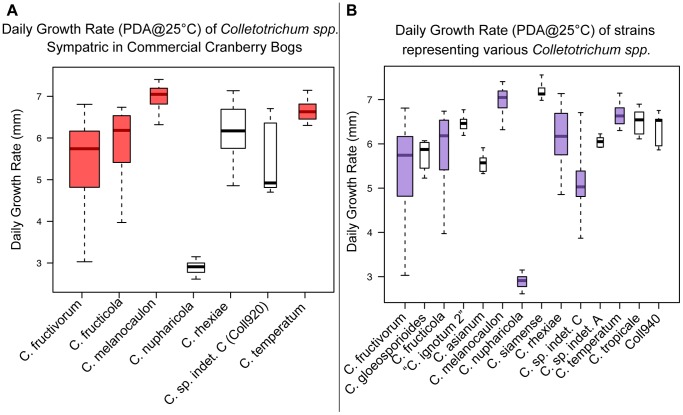
“This host-specific species exhibits significantly slower growth on potato dextrose agar (PDA) and possesses conidia with both length and width exceeding those of other species in CGSC [25,40].”
BackgroundInfluentialKaur, H., Singh, R., Doyle, V. P., & Valverde, R. A. (2021) · Plant Disease · doi:10.1094/pdis-11-20-2439-re · Cited by 8
Self-citationWaller, T. J., Gager, J., Constantelos, C., & Oudemans, P. V. (2020) · Phytopathology · doi:10.1094/phyto-01-20-0010-r · Cited by 13
Self-citationDiversity of Colletotrichum species associated with torch ginger anthracnose
Duarte, I. G., Amaral, A. G. G., Vieira, W. A. D. S., Veloso, J. S., da Silva, A. C., da Silva, C. D. F. B., Balbino, V. D. Q., Castlebury, L. A., & Câmara, M. P. S. (2023) · Mycologia · doi:10.1080/00275514.2023.2227747 · Cited by 7
Oksińska, M. P., Magnucka, E. G., Kmieć, A., & Pietr, S. J. (2024) · Applied Sciences · doi:10.3390/app14104328 · Cited by 6
Babb-Biernacki, S. J., Esselstyn, J. A., & Doyle, V. P. (2022) · Journal of Fungi · doi:10.3390/jof8080799 · Cited by 6
Self-citationThe 50 most researched fungal and oomycete plant pathogens
Maharachchikumbura, S. S. N., MAHADEVAKUMAR, S., Hyde, K. D., Al-Sadi, A. M., Chalasani, D., Chandranayaka, S., Dissanayake, L. S., Faraj, T. K., Fernando, W. G. D., Gunasinghe, N., et al. (2026) · Fungal Diversity · doi:10.65390/fdiv.2026.136004 · Cited by 9
Prathibha, V. H., Rajesh, M. K., Dinesh, A., Patil, B., Daliyamol, D., Nagaraja, N. R., Rajkumar, Sabana, A. A., Gangaraj, K. P., Thejasri, K. P., et al. (2024) · Physiological and Molecular Plant Pathology · doi:10.1016/j.pmpp.2024.102416 · Cited by 5
Rampersad, S. N., Hosein, F. N., & Carrington, C. V. F. (2014) · SpringerPlus · doi:10.1186/2193-1801-3-614 · Cited by 5
“Doyle et al. (2013) separated C. gloeosporioides sensu lato isolates infecting cranberry in the United States, however, when the Apn2/Mat genetic marker was compared with TUB2 and ITS markers (Silva et al. 2012) some isolates still had ambiguous phylogenetic placement based on separate gene tree…”
BackgroundWu, Y., Zhou, F., Chen, Q., He, L., Zang, Y., Wang, Z., Lin, C., Miao, W., & Li, Z. (2025) · Journal of Fungi · doi:10.3390/jof11090679 · Cited by 4
“The C. gloeosporioides species complex is known for its wide host range and ecological plasticity [52].”
Tocoloa, G. L., & Tocoloa, A. E. L. (2022) · doi:10.22533/at.ed.75422160923 · Cited by 5
The Genealogical Sorting Index and species delimitationsPreprint
Winter, D. J., Trewick, S. A., Waters, J. M., & Spencer, H. G. (2016) · bioRxiv (Cold Spring Harbor Laboratory) · doi:10.1101/036525 · Cited by 5
Dada, A. O., Dania, V. O., Oyatomi, O., Abberton, M. T., & Ortega‐Beltran, A. (2024) · Journal of Plant Pathology · doi:10.1007/s42161-024-01804-y · Cited by 3
“In our study, the ApMat marker was critical to distinguishing isolates in the C. gloeosporioides species complex, as in other studies (Silva et al. 2012 ; Doyle et al. 2013 ).”
Norphanphoun, C., Meng-ting, Z. O. U., Liu, F., & Wang, Y. (2025) · MycoKeys · doi:10.3897/mycokeys.122.161122 · Cited by 4
Wang, R., Ouyang, D., Lu, M., Tang, L., Chen, X., Huang, S., Guo, T., Hsiang, T., & Li, Q. (2024) · Plant Disease · doi:10.1094/pdis-02-24-0424-re · Cited by 4
Three New Records of Pathogens Causing Stem Blight on Vaccinium corymbosum in China
Zhou, Y., Wu, L., Ren, K., Wang, M., Wang, N., Tangtrakulwanich, K., Li, X., Chethana, K. W. T., Hyde, K. D., Zhang, W., et al. (2025) · Plants · doi:10.3390/plants14050647 · Cited by 3
“The genus is distributed across the world as pathogens or saprobes with a broad host range, especially a threat to Poaceae crops [28].”
Adhikari, T. B., Knaus, B. J., Grünwald, N. J., Halterman, D., & Louws, F. J. (2019) · bioRxiv (Cold Spring Harbor Laboratory) · doi:10.1101/827790 · Cited by 3
Cruz, M. A., Cortaga, C. Q., Amas, J. C., Calabon, M. S., Bagacay, J. F. E., Concepcion, R., Bulasag, A. S., Mendoza, J.-V. S., Fronda, M. F., Metrillo, J., et al. (2025) · Physiological and Molecular Plant Pathology · doi:10.1016/j.pmpp.2025.102941 · Cited by 2
Metadata
- Authors
- Doyle, V. P., Oudemans, P. V., Rehner, S. A., & Litt, A.
- Affiliations
- The Graduate Center, CUNY (US)
- Rutgers, The State University of New Jersey (US)
- Agricultural Research Service (US)
- New York Botanical Garden (US)
- Corresponding author
- Doyle, Vinson P.
- Venue
- PLoS ONE
- Publisher
- Public Library of Science (PLoS)
- Published
- 2013-05-06
- Volume
- 8
- Issue
- 5
- Pages
- e62394
- ISSN
- 1932-6203 (ISSN-L)
- PMC
- PMC3646003
- OpenAlex
- W2087624808
- Semantic Scholar
- a7b780334f4ed7a67726b7dc61b5c8547c20c711
- Cited by
- 134
- References
- 74
- Citations by year
- 2026: 2 · 2025: 8 · 2024: 11 · 2023: 8 · 2022: 33 · 2021: 8 · 2020: 11 · 2019: 8 · 2018: 7 · 2017: 6 · 2016: 11 · 2015: 6 · 2014: 8 · 2013: 7
- FWCI
- 6.19
- Type
- journal article
- Language
- en
- Open access
- gold
- doi.org
- Licence
- Locations
- PLoS ONE (publishedVersion, public-domain)
- Europe PMC (PubMed Central) (publishedVersion, other-oa)
- PubMed Central (publishedVersion, public-domain)
- PubMed (publishedVersion)
- CUNY Academic Works (City University of New York) (submittedVersion, public-domain)
- Civil War Book Review (submittedVersion)
- DOAJ (DOAJ: Directory of Open Access Journals) (submittedVersion, cc-by-sa)
- Figshare (submittedVersion, cc-by)
- Funders
- National Science Foundation (1011120, 0749751)
- Topics
- Life Sciences › Agricultural and Biological Sciences › Plant Science › Plant Pathogens and Fungal Diseases
- Life Sciences › Immunology and Microbiology › Microbiology › Yeasts and Rust Fungi Studies
- Life Sciences › Agricultural and Biological Sciences › Plant Science › Fungal Plant Pathogen Control
- Keywords
- Colletotrichum gloeosporioides species complex, species delimitation, cranberry, new species, endophytic fungi, plant pathogenic fungi, host preference, habitat, multilocus phylogeny, North America
- MeSH terms
- Agriculture, Bayes Theorem, Genes, Fungal, Phylogeny, Plant Diseases, United States, Likelihood Functions, Mycological Typing Techniques, Ecosystem, Plant Stems, Colletotrichum, Vaccinium macrocarpon, Multilocus Sequence Typing
About these checks
Registry, retraction, Cites and statistics results are computed, not judged, with one exception: a printed reference that no index lists is read once by a model before it counts as a citation error. Claims are extracted by a model and kept only when their quote appears verbatim in the text; each cited source is then checked, with a model’s help, for whether it says what the claim relies on. Those verdicts can be wrong — read the claim’s quote and the cited source before relying on one.
Statistics and arithmetic are recomputed, not judged.
Confidence bands are shown only for fields calibrated on our annotated test set. None is calibrated yet, so no band is shown.
What counts as a claim ›How we measure confidence ›How we check this ›
Are you an author, or do you see a problem with this page? Request a review
Data sources
Bibliographic data: Semantic Scholar, OpenAlex, Crossref.
Contains information from the Semantic Scholar Academic Graph Datasets, made available under the ODC Attribution License (ODC-BY 1.0).
Semantic Scholar’s data is described in: Kinney, R., et al. (2023). The Semantic Scholar Open Data Platform. arXiv:2301.10140.
