

The DOI matches its Crossref record; 62 of the 64 references it cites were found in a registry or an index.
Failure of Working Memory Training to Enhance Cognition or Intelligence
Open accessAbstract
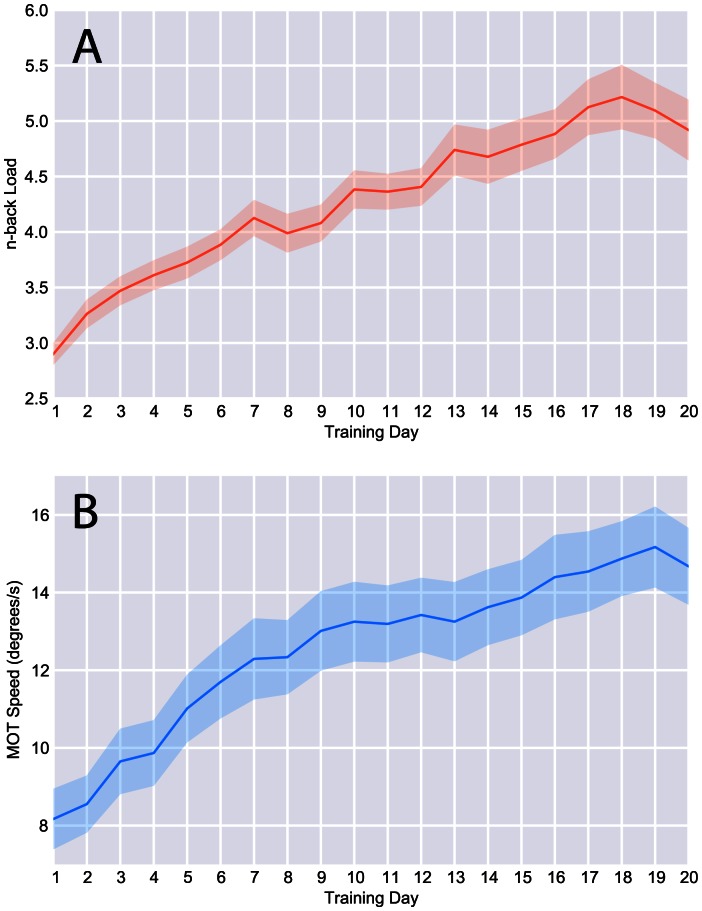
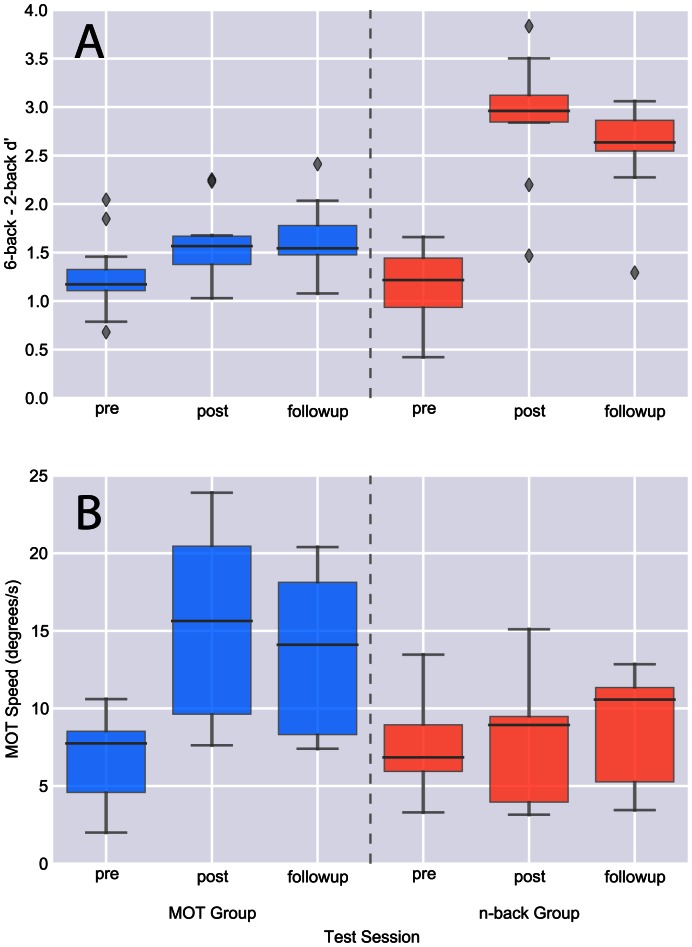
Fluid intelligence is important for successful functioning in the modern world, but much evidence suggests that fluid intelligence is largely immutable after childhood. Recently, however, researchers have reported gains in fluid intelligence after multiple sessions of adaptive working memory training in adults. The current study attempted to replicate and expand those results by administering a broad assessment of cognitive abilities and personality traits to young adults who underwent 20 sessions of an adaptive dual n-back working memory training program and comparing their post-training performance on those tests to a matched set of young adults who underwent 20 sessions of an adaptive attentional tracking program. Pre- and post-training measurements of fluid intelligence, standardized intelligence tests, speed of processing, reading skills, and other tests of working memory were assessed. Both training groups exhibited substantial and specific improvements on the trained tasks that persisted for at least 6 months post-training, but no transfer of improvement was observed to any of the non-trained measurements when compared to a third untrained group serving as a passive control. These findings fail to support the idea that adaptive working memory training in healthy young adults enhances working memory capacity in non-trained tasks, fluid intelligence, or other measures of cognitive abilities.
Overview
The claims and statistics of this paper haven’t been checked yet.
Run the check — free, no account needed. It reads the open-access text and checks the sources it cites.
Integrity signals
Registry
Cites
Statistics
Figures
Verification
Claims the paper makes
The claims and statistics of this paper haven’t been checked yet.
Run the check — free, no account needed. It reads the open-access text and checks the sources it cites.
Claims other papers make about this one
Each is checked against this paper’s own text: does it say what the citing paper says it does?
The cited source says what the claim attributes to it.
In the citing paper
“However, evidence on transfer of improved WM into more general cognitive domains such as fluid intelligence (Gf) has been more equivocal.”
From Improving fluid intelligence with training on working memory: a meta-analysis (2015) · cites this paper as Thompson et al., 2013
In the citing paper
“However, such near transfer effects may not be surprising since many of these outcome measures are very similar to the training tasks themselves and improvement may be the result of a learned strategy instead of improved cognitive capacity [87].”
In the citing paper
“While there are numerous reports of transfer in the literature, there is also substantial evidence for failure of transfer (Thompson et al. 2013; Jackson et al. 2012).”
From Divergent Research Methods Limit Understanding of Working Memory Training (2020) · cites this paper as Thompson et al. 2013
In the citing paper
“in several studies comparing dual n-back working memory training to either active or no contact control groups, training related gains were not identified in any one group relative to another for any outcome [24–26].”
From Dual N-back working memory training in healthy adults: A randomized comparison to processing speed training. (2016) · cites this paper as [25]
In the citing paper
“Our findings support previous work which fails to replicate near and far transfer benefits of dual n-back working memory training when directly compared to an active control condition (see [24–26]).”
From Dual N-back working memory training in healthy adults: A randomized comparison to processing speed training. (2016) · cites this paper as [25]
Self-check
Percentages, sums and reported differences re-computed from the paper’s own numbers.
The self-check needs the paper’s full text.
Citations
Cites
Faul, F., Erdfelder, E., Lang, A.-G., & Buchner, A. (2007) · Behavior Research Methods · doi:10.3758/bf03193146 · Cited by 65,971
Baddeley, A. D., & Hitch, G. (1974) · Psychology of Learning and Motivation · doi:10.1016/s0079-7421(08)60452-1 · Cited by 9,860
Cohen, J. (1992) · Psychological Bulletin · doi:10.1037//0033-2909.112.1.155 · Cited by 8,771
Mindset: The New Psychology of Success
(2006) · Choice Reviews Online · doi:10.5860/choice.44-2397 · Cited by 7,804
Grit: perseverance and passion for long-term goals
Duckworth, A. L., Peterson, C., Matthews, M. D., & Kelly, D. R. (2007) · Journal of Personality and Social Psychology · doi:10.1037/0022-3514.92.6.1087 · Cited by 6,911
(1999) · Cited by 6,308
The Psychology of Learning and Motivation: Advances in Research and Theory
(2010) · The Psychology of learning and motivation/The psychology of learning and motivation · doi:10.1016/c2009-0-62209-1 · Cited by 6,035
Wechsler Abbreviated Scale of Intelligence
Dumont, R., Willis, J. O., Veizel, K., & Zibulsky, J. (2014) · Wiley eBooks · doi:10.1002/9781118660584.ese2519 · Cited by 5,546
Wechsler Abbreviated Scale of Intelligence
Wechsler, D. (1999) · PsycTESTS Dataset · doi:10.1037/t15170-000 · Cited by 4,681
Blackwell, L. S., Trzesniewski, K. H., & Dweck, C. S. (2007) · Child Development · doi:10.1111/j.1467-8624.2007.00995.x · Cited by 3,784
Research works printed but not linked: 1
- Raven JC, Court JH, Raven J (1998) Raven’s Progressive Matrices. Oxford: Oxford Psychological Press.
Cited by
Sorted by citations
Items 101–200 of 209
Making Brains run Faster: are they Becoming Smarter?
Pahor, A., & Jaušovec, N. (2016) · The Spanish Journal of Psychology · doi:10.1017/sjp.2016.83 · Cited by 23
Chen, C., Kuo, J.-C., & Wang, W.-J. (2019) · Frontiers in Behavioral Neuroscience · doi:10.3389/fnbeh.2019.00084 · Cited by 26
Zając-Lamparska, L., & Trempała, J. (2016) · Health Psychology Report · doi:10.5114/hpr.2016.56846 · Cited by 27
Chen, L., Chang, H., Rudoler, J., Arnardóttir, E., Zhang, Y., Angeles, C. D. L., & Menon, V. (2022) · npj Science of Learning · doi:10.1038/s41539-022-00146-7 · Cited by 36
Cassetta, B. D., & Goghari, V. M. (2016) · Trials · doi:10.1186/s13063-016-1188-5 · Cited by 28
Transcranial Random Noise Stimulation Does Not Enhance the Effects of Working Memory Training
Holmes, J., Byrne, E. M., Gathercole, S. E., & Ewbank, M. (2016) · Journal of Cognitive Neuroscience · doi:10.1162/jocn_a_00993 · Cited by 25
Dovis, S., Marić, M., Prins, P. J. M., & der Oord, S. V. (2019) · ADHD Attention Deficit and Hyperactivity Disorders · doi:10.1007/s12402-019-00308-5 · Cited by 26
Stojanoski, B. B., Wild, C. J., Battista, M. E., Nichols, E. S., & Owen, A. M. (2020) · Journal of Experimental Psychology General · doi:10.1037/xge0000773 · Cited by 24
Working Memory Training and Transfer: Theoretical and Practical Considerations
Jaeggi, S. M., & Buschkuehl, M. (2014) · Springer proceedings in mathematics & statistics · doi:10.1007/978-3-319-07755-0_2 · Cited by 24
The role of child socioeconomic status in cognitive training outcomes
Katz, B., & Shah, P. (2017) · Journal of Applied Developmental Psychology · doi:10.1016/j.appdev.2017.10.003 · Cited by 28
Baer, J. (2018) · Cambridge University Press eBooks · doi:10.1017/9781108185936.004 · Cited by 20
Zhao, X., Xu, Y., Fu, J., & Maes, J. H. R. (2017) · Memory & Cognition · doi:10.3758/s13421-017-0773-5 · Cited by 22
Scaling up visual attention and visual working memory to the real world
Brady, T. F., Störmer, V. S., Shafer-Skelton, A., Williams, J. R., Chapman, A. F., & Schill, H. M. (2019) · The Psychology of learning and motivation/The psychology of learning and motivation · doi:10.1016/bs.plm.2019.03.001 · Cited by 22
Daugherty, A. M., Sutton, B. P., Hillman, C. H., Kramer, A. F., Cohen, N. J., & Barbey, A. K. (2019) · Trends in Neuroscience and Education · doi:10.1016/j.tine.2019.100123 · Cited by 23
How does Auditory Training Work? Joined up Thinking and Listening
Henshaw, H., & Ferguson, M. (2015) · Seminars in Hearing · doi:10.1055/s-0035-1568985 · Cited by 19
The benefits and potential costs of cognitive offloading for retrospective information
Richmond, L. L., & Taylor, R. G. (2025) · Nature Reviews Psychology · doi:10.1038/s44159-025-00432-2 · Cited by 26
The therapeutic potential of working memory training for treating mental disorders
Ansari, S. (2015) · Frontiers in Human Neuroscience · doi:10.3389/fnhum.2015.00481 · Cited by 20
Strong, R. W., & Alvarez, G. A. (2020) · Journal of Vision · doi:10.1167/jov.20.8.24 · Cited by 18
Self-citationByrne, E. M., Ewbank, M., Gathercole, S. E., & Holmes, J. (2020) · Brain and Cognition · doi:10.1016/j.bandc.2020.105552 · Cited by 18
Can brain games help smokers quit?: Results of a randomized clinical trial
Loughead, J., Falcone, M., Wileyto, E. P., Albelda, B., Audrain-McGovern, J. E., Cao, W., Kurtz, M. M., Gur, R. C., & Lerman, C. E. (2016) · Drug and Alcohol Dependence · doi:10.1016/j.drugalcdep.2016.08.621 · Cited by 17
Exploring Individual Differences as Predictors of Performance Change During Dual-N-Back Training
Ørskov, P. T., Norup, A., Beatty, E. L., & Jaeggi, S. M. (2021) · Journal of Cognitive Enhancement · doi:10.1007/s41465-021-00216-5 · Cited by 18
Fu, W.-S., Zhang, J., Zhang, D., Li, T., Lan, M., & Liu, N. (2025) · Journal of Educational Computing Research · doi:10.1177/07356331241313126 · Cited by 15
Urbánek, T., & Marček, V. (2015) · Psychological Research · doi:10.1007/s00426-015-0687-4 · Cited by 18
McDermott, A. F., Rose, M. C., Norris, T. W., & Gordon, E. (2016) · Journal of Attention Disorders · doi:10.1177/1087054715623044 · Cited by 21
McLoughlin, S., Tyndall, I. T., Pereira, A., & Mulhern, T. (2020) · Journal of Cognitive Enhancement · doi:10.1007/s41465-020-00187-z · Cited by 18
Studer-Luethi, B., Bösch, V. D., Lusti, S., & Meier, B. (2022) · Aging Neuropsychology and Cognition · doi:10.1080/13825585.2022.2105298 · Cited by 16
Training working memory updating in young adults
Linares, R., Borella, E., Lechuga, M. T., Carretti, B., & Pelegrina, S. (2017) · Psychological Research · doi:10.1007/s00426-017-0843-0 · Cited by 14
McLoughlin, S., Tyndall, I. T., & Pereira, A. (2020) · Journal of Behavioral Education · doi:10.1007/s10864-020-09399-x · Cited by 16
da Silva, T. B. L., Barbosa, M. E. D. C., Zumkeller, M. G., Verga, C. E. R., Lessa, P. P., Cardoso, N. P., de Moraes, L. C., & Brucki, S. M. D. (2021) · Dementia & Neuropsychologia · doi:10.1590/1980-57642021dn15-020014 · Cited by 13
Lange, S., & Süß, H. (2015) · Applied Cognitive Psychology · doi:10.1002/acp.3126 · Cited by 13
Exploring the n-back task: insights, applications, and future directions
Huang, S., Chen, C., Mo, Y., Zhao, Y., Zhu, Y., Dong, K., & Xu, T. (2025) · Frontiers in Human Neuroscience · doi:10.3389/fnhum.2025.1721330 · Cited by 20
Zhao, X., Ji, C., Zhang, C., Huang, C., Zhou, Y., & Wang, L. (2023) · BMC Psychiatry · doi:10.1186/s12888-023-04917-3 · Cited by 14
Doma, K. M., Lewis, E. D., Barracato, J., Brink, L., Gratson, A. A., Pandey, N., Crowley, D. C., & Evans, M. (2023) · Neurology and Therapy · doi:10.1007/s40120-023-00454-z · Cited by 12
Cognitive Training in Obsessive-Compulsive Disorder: A Systematic Review
Bhattacharya, M., Kashyap, H., & Reddy, Y. C. J. (2023) · Indian Journal of Psychological Medicine · doi:10.1177/02537176231207781 · Cited by 10
Asymmetric negative transfer effects of working memory training
Ni, N., Gathercole, S. E., Norris, D. G., & Saito, S. (2023) · Memory & Cognition · doi:10.3758/s13421-023-01412-8 · Cited by 12
Strong, R. W., & Alvarez, G. A. (2017) · Journal of Vision · doi:10.1167/17.4.4 · Cited by 9
Self-citationPractice makes imperfect: Working memory training can harm recognition memory performance
Matzen, L. E., Trumbo, M., Haass, M. J., Hunter, M. A., Silva, A., Stevens-Adams, S. M., Bunting, M. F., & O’Rourke, P. (2016) · Memory & Cognition · doi:10.3758/s13421-016-0629-4 · Cited by 9
Erker, T. D., Arif, Y., John, J. A., Embury, C. M., Kress, K. A., Springer, S. D., Okelberry, H. J., McDonald, K. M., Picci, G., Wiesman, A. I., et al. (2024) · The Journal of Physiology · doi:10.1113/jp286004 · Cited by 8
Mogollón, E. (2014) · Revista Electrónica Educare · doi:10.15359/ree.18-2.1 · Cited by 8
Does working memory training enhance intelligence?
Tsubomi, H., Saito, S., Osaka, M., & Osaka, N. (2019) · The Japanese journal of psychology · doi:10.4992/jjpsy.90.18402 · Cited by 8
Karampela, O., Madison, G., & Holm, L. (2020) · Experimental Brain Research · doi:10.1007/s00221-020-05780-4 · Cited by 7
Wang, K., & Qian, J. (2020) · Psychological Research · doi:10.1007/s00426-020-01404-2 · Cited by 9
Studer-Luethi, B., & Meier, B. (2020) · Journal of Cognitive Enhancement · doi:10.1007/s41465-020-00202-3 · Cited by 10
Cassanelli, P. M., Cladouchos, M. L., Macedo, G. V. F., Sifonios, L. L., Giaccardi, L. I., Gutiérrez, M. L., Gravielle, M. C., & Wikinski, S. (2015) · Progress in Neuro-Psychopharmacology and Biological Psychiatry · doi:10.1016/j.pnpbp.2015.02.011 · Cited by 7
Efficacy of Working Memory Training in Middle-aged Adults
George, V. M., Bajaj, G., & Bhat, J. S. (2020) · Eon'eo cheong'gag jang'ae yeon'gu/Communication sciences & disorders · doi:10.12963/csd.20768 · Cited by 8
Ralph, K. J., Gibson, B. S., Gondoli, D. M., Sztybel, P., Pauszek, J. R., Miller, R. W., & Litzow, E. (2017) · Journal of Cognitive Enhancement · doi:10.1007/s41465-017-0043-2 · Cited by 6
FAST: A Novel, Executive Function-Based Approach to Cognitive Enhancement
Almquist, J. N.-F., Mathan, S. A., Brem, A., Plessow, F., McKanna, J. A., Santarnecchi, E., Pascual‐Leone, Á., Kadosh, R. C., Pavel, M., & Yeung, N. (2019) · Frontiers in Human Neuroscience · doi:10.3389/fnhum.2019.00235 · Cited by 8
Chen, D. Y., Di, X., Amaya, N., Sun, H., Pal, S., & Biswal, B. B. (2024) · bioRxiv (Cold Spring Harbor Laboratory) · doi:10.1101/2024.02.09.579655 · Cited by 6
Unicorn, Hare, or Tortoise? Using Machine Learning to Predict Working Memory Training Performance
Feng, Y., Pahor, A., Seitz, A. R., Barbour, D. L., & Jaeggi, S. M. (2023) · Journal of Cognition · doi:10.5334/joc.319 · Cited by 6
Treinar memória de trabalho promove mudanças em inteligência fluida?
Alves, M. M., & Silva, R. S. (2017) · Temas em Psicologia · doi:10.9788/tp2017.2-19pt · Cited by 8
The near- and far-transfer effects of cognitive training on attentional networks in women and men
Bednarek, H., Przedniczek, M., Olszewska, J. M., Niewiarowski, J., & Orzechowski, J. (2021) · Journal of Cognitive Psychology · doi:10.1080/20445911.2021.1916508 · Cited by 5
Falcone, M., Loughead, J., & Lerman, C. E. (2019) · Springer eBooks · doi:10.1007/978-3-030-20992-6_4 · Cited by 5
Lewis, E. D., Apostol, M., Langston, J., Parker, A., & Evans, M. (2023) · Applied Sciences · doi:10.3390/app13052818 · Cited by 4
Transfer Effects of Working Memory Intervention on Linguistic Abilities in Patients with Dementia
Lee, M. S., & Kim, B. S. (2019) · Audiology and Speech Research · doi:10.21848/asr.190095 · Cited by 4
Żelechowska, D., Sarzyńska‐Wawer, J., & Nȩcka, E. (2017) · Journal of Intelligence · doi:10.3390/jintelligence5040036 · Cited by 5
Peer-reviewed working memory training
Brooks, S. J., Funk, S. G., Rabier, C., & Schiöth, H. B. (2019) · Elsevier eBooks · doi:10.1016/b978-0-12-815298-0.00018-6 · Cited by 3
Tagliabue, C. F., Varesio, G., & Mazza, V. (2022) · Attention Perception & Psychophysics · doi:10.3758/s13414-022-02580-6 · Cited by 3
Retention of Visual Images: Children With ADHD
Narimoto, T., & Matsuura, N. (2023) · The Japanese Journal of Educational Psychology · doi:10.5926/jjep.71.13 · Cited by 3
Decker, S. L., & Luedke, J. C. (2021) · Frontiers in Education · doi:10.3389/feduc.2021.637676 · Cited by 5
Does Working Memory Training Promote Changes in Fluid Intelligence?
Alves, M. M., & Silva, R. S. (2017) · Temas em Psicologia · doi:10.9788/tp2017.2-19en · Cited by 3
Ari�s (2018) · Research Publications (Maastricht University) · doi:10.26481/dis.20180517ra · Cited by 3
Near and Far Transfer of Working Memory Training Related Gains in Healthy Adults
Lawlor‐Savage, L. (2013) · Libraries and Cultural Resources (University of Calgary) · doi:10.11575/prism/27065 · Cited by 4
Pappa, K., Flegal, K. E., Baylan, S., & Evans, J. J. (2021) · Applied Neuropsychology Adult · doi:10.1080/23279095.2021.1904243 · Cited by 2
Cortical network modulations associated with prolonged training of the multiple object-tracking task
Felßberg, A.-M., Schönemann, N., Hopf, J., Schoenfeld, M. A., & Merkel, C. (2025) · Imaging Neuroscience · doi:10.1162/imag_a_00577 · Cited by 2
The Effect of Longitudinal Training on Working Memory Capacities: An Exploratory EEG Study
Pei, Z., Xu, T., Bezerianos, A., Li, J., Sun, Y., & Wang, H. (2020) · Annual International Conference of the IEEE Engineering in Medicine and Biology Society (EMBC) · doi:10.1109/embc44109.2020.9176070 · Cited by 2
Foster, T. C. (2019) · The Research Repository @ WVU (West Virginia University) · doi:10.33915/etd.4100 · Cited by 3
Characteristics and neuronal correlates of superior memory performance
Konrad, B. N. (2014) · Electronic Theses of LMU Munich (Ludwig-Maximilians-Universität München) · doi:10.5282/edoc.16636 · Cited by 3
Lim, J., & Ayyagari, R. (2025) · American Journal of Business · doi:10.1108/ajb-09-2024-0195 · Cited by 2
Cognitive training with casual video games: points to
Baniqued, L., Kranz, M., Voss, M. W., Lee, H., Cosman, J. D., Severson, J., & Kramer, A. F. (2014) · Cited by 1
Jaušovec, N., & Pahor, A. (2017) · Elsevier eBooks · doi:10.1016/b978-0-12-809407-5.00001-4 · Cited by 1
The Mindset of Intelligence Is Not a Contributor of Placebo Effects in Working Memory Training
Liu, P., Zhang, X., & Zhou, R. (2021) · Frontiers in Psychology · doi:10.3389/fpsyg.2021.712309 · Cited by 1
The Profile of Task Performances for Cognitive-communicative Intervention in the Oldest-Old
Lee, M. S. (2021) · Audiology and Speech Research · doi:10.21848/asr.210023 · Cited by 1
Education, SES, and Intelligence
Flores-Mendoza, C. E., Ardila, R., Rosas, R., Lucio, M. E., Gallegos, M., & Colareta, N. R. (2018) · Springer eBooks · doi:10.1007/978-3-319-89975-6_3 · Cited by 1
Ang, S. Y., Lee, K. L., Poon, K. K., & Suryadarma, I. (2018) · Education innovation series · doi:10.1007/978-981-13-2975-3_11 · Cited by 1
NON-COGNITIVE COMPONENTS CONCEPT OF HUMAN CAPITAL IN MODERN ECONOMIC AND SOCIOLOGICAL LITERATURE
Khuziakhmetov, R. R., & Davydenko, V. A. (2021) · Вестник Тюменского государственного университета. Социально-экономические и правовые исследования · doi:10.21684/2411-7897-2021-7-2-39-64 · Cited by 1
On the cognitive and neuronal effects and mechanisms of working memory training
Salminen, T. (2016) · edoc Publication server (Humboldt University of Berlin) · doi:10.18452/17487 · Cited by 1
Computerized Cognitive Intervention in Cognitively Normal Very Elderly Individuals
West, R. K. (2016) · CUNY Academic Works (City University of New York) · Cited by 1
Cognitive enhancement in video game training: two separate routes of transfer?
Oei, C. M. (2014) · DR-NTU (Nanyang Technological University) · doi:10.32657/10356/61737 · Cited by 1
Gathercole, S. E., Dunning, D. L., Holmes, J., & Norris, D. G. (2018) · Data in Brief · doi:10.1016/j.dib.2018.11.040 · Cited by 1
Ørskov, P. T., Norup, A., Beatty, E. L., & Jaeggi, S. M. (2021) · Journal of Cognitive Enhancement · doi:10.1007/s41465-021-00221-8 · Cited by 1
Getting at Underlying Mechanisms of Far Transfer - the Mediating Role of Near TransferPreprint
Pahor, A., Seitz, A. R., & Jaeggi, S. M. (2021) · doi:10.31234/osf.io/q5xmp · Cited by 1
The asymmetry of working memory training transfer: A systematic review and meta-analysis
Fu, J., Zhou, Y., Yuan, M., & Cai, Y. (2026) · Psychonomic Bulletin & Review · doi:10.3758/s13423-026-02994-5
Using Brain Stimulation to Enhance Working Memory: A Charged Topic
Trumbo, M. (2016) · UNM’s Digital Repository (University of New Mexico) · Cited by 1
Working memory training and transcranial electrical brain stimulation
Byrne, E. M. (2018) · UEA Digital Repository (University of East Anglia) · doi:10.17863/cam.24394
Evidence and Controversy about the Far Transfer Effect in Working Memory Training
覃, 丽. (2019) · Advances in Psychology · doi:10.12677/ap.2019.91009
Cerebral bases of cognitive training in working memory executive tasks
Padilla, A. M. (2018) · Tesis Doctorals en Xarxa (Consorci de Serveis Universitaris de Catalunya) · doi:10.6035/14109.2018.208792
Beyond Capacity: The Importance of Attentional Coordination
Strong, R. W. (2019) · Digital Access to Scholarship at Harvard (DASH) (Harvard University)
Effects of Digitally Enhanced Learning Tasks on Cognitive Functioning
Yoshiura, R. (2015) · Chapman University Digital Commons (Chapman University)
Interventions for Improving Executive Functions during Development
Steinbeis, N., & Smid, C. R. (2022) · Cambridge University Press eBooks · doi:10.1017/9781108399838.035
Byrne, E. M., Ewbank, M., Gathercole, S. E., & Holmes, J. (2019) · PsyArXiv (OSF Preprints) · doi:10.31234/osf.io/3bf6x
(2016) · Elsevier eBooks · doi:10.1016/b978-0-12-799962-3.00008-2
Evolutionary Cognitive Enhancement: Reawakening Adaptive Cognitive-Emotional-Motor SystemsPreprint
Malaei, F., & Machado, L. (2022) · PsyArXiv (OSF Preprints) · doi:10.31234/osf.io/t6rxm
Odhiambo, K. T., & OKoth, G. O. (2022) · International Journal of Research and Innovation in Social Science · doi:10.47772/ijriss.2022.6415
The N-Back Training Task and Its Effects on Behavior and the Brain
肖, 越. (2023) · Advances in Social Sciences · doi:10.12677/ass.2023.124215
Lee, M. S. (2023) · Audiology and Speech Research · doi:10.21848/asr.220067
Haier, R. J., Colom, R., & Hunt, E. B. (2023) · Cambridge University Press eBooks · doi:10.1017/9781108569576.014
Interpreting the WISC–V from a Cognitive Neuroscience Perspective
Kaufman, A. S., Raiford, S. E., & Coalson, D. L. (2016) · Wiley eBooks · doi:10.1002/9781394259397.ch10
(2016) · Wiley eBooks · doi:10.1002/9781394259397.refs
Metadata
- Authors
- Thompson, T. W., Waskom, M. L., Garel, K.-L. A., Cardenas-Iniguez, C., Reynolds, G. O., Winter, R., Chang, P., Pollard, K., Lala, N., Alvarez, G. A., & Gabrieli, J. D. E.
- Affiliations
- Massachusetts Institute of Technology (US)
- Boston University (US)
- The University of Texas MD Anderson Cancer Center (US)
- Harvard University (US)
- McGovern Institute for Brain Research (US)
- Corresponding author
- Thompson, Todd W.
- ORCID
- Venue
- PLoS ONE
- Publisher
- Public Library of Science (PLoS)
- Published
- 2013-05-22
- Volume
- 8
- Issue
- 5
- Pages
- e63614
- ISSN
- 1932-6203 (ISSN-L)
- PMC
- PMC3661602
- OpenAlex
- W2054335768
- Cited by
- 208
- References
- 64
- Citations by year
- 2026: 5 · 2025: 6 · 2024: 6 · 2023: 12 · 2022: 9 · 2021: 14 · 2020: 18 · 2019: 24 · 2018: 15 · 2017: 23 · 2016: 29 · 2015: 24 · 2014: 16 · 2013: 7
- FWCI
- 34.32
- Type
- journal article
- Language
- en
- Open access
- gold
- doi.org
- Locations
- PLoS ONE (publishedVersion, cc-by)
- Europe PMC (PubMed Central) (publishedVersion, other-oa)
- PubMed Central (publishedVersion, cc-by)
- PubMed (publishedVersion)
- Digital Access to Scholarship at Harvard (DASH) (Harvard University) (submittedVersion, cc-by)
- Knowledge@UChicago (University of Chicago) (submittedVersion, cc-by-nc-nd)
- DOAJ (DOAJ: Directory of Open Access Journals) (submittedVersion, cc-by-sa)
- DSpace@MIT (Massachusetts Institute of Technology) (submittedVersion, cc-by-nc)
- Figshare (submittedVersion, cc-by)
- University of Chicago (cc-by)
- Funders
- U.S. Department of Defense
- National Institutes of Health
- Defense Advanced Research Projects Agency (NBCHC070105)
- Advanced Research Projects Agency
- National Defense Science and Engineering Graduate
- National Institute on Drug Abuse (T90DA022759, R90DA023427)
- NIH Blueprint for Neuroscience Research (R90DA023427, T90DA022759/R90DA023427, T90DA022759)
- Topics
- Social Sciences › Psychology › Experimental and Cognitive Psychology › Cognitive Abilities and Testing
- Social Sciences › Psychology › Experimental and Cognitive Psychology › Cognitive Functions and Memory
- Life Sciences › Neuroscience › Cognitive Neuroscience › Neural and Behavioral Psychology Studies
- Keywords
- working memory training, fluid intelligence, adaptive training, transfer of training, cognitive enhancement, processing speed, reading skills, attentional tracking, young adults, intelligence
- MeSH terms
- Adult, Cognition, Education, Female, Humans, Intelligence, Male, Memory, Short-Term, Reading, Young Adult
About these checks
Registry, retraction, Cites and statistics results are computed, not judged, with one exception: a printed reference that no index lists is read once by a model before it counts as a citation error. Claims are extracted by a model and kept only when their quote appears verbatim in the text; each cited source is then checked, with a model’s help, for whether it says what the claim relies on. Those verdicts can be wrong — read the claim’s quote and the cited source before relying on one.
Statistics and arithmetic are recomputed, not judged.
Confidence bands are shown only for fields calibrated on our annotated test set. None is calibrated yet, so no band is shown.
What counts as a claim ›How we measure confidence ›How we check this ›
Are you an author, or do you see a problem with this page? Request a review
