

The DOI matches its Crossref record; 62 of the 64 references it cites were found in a registry or an index.
Failure of Working Memory Training to Enhance Cognition or Intelligence
Open accessAbstract
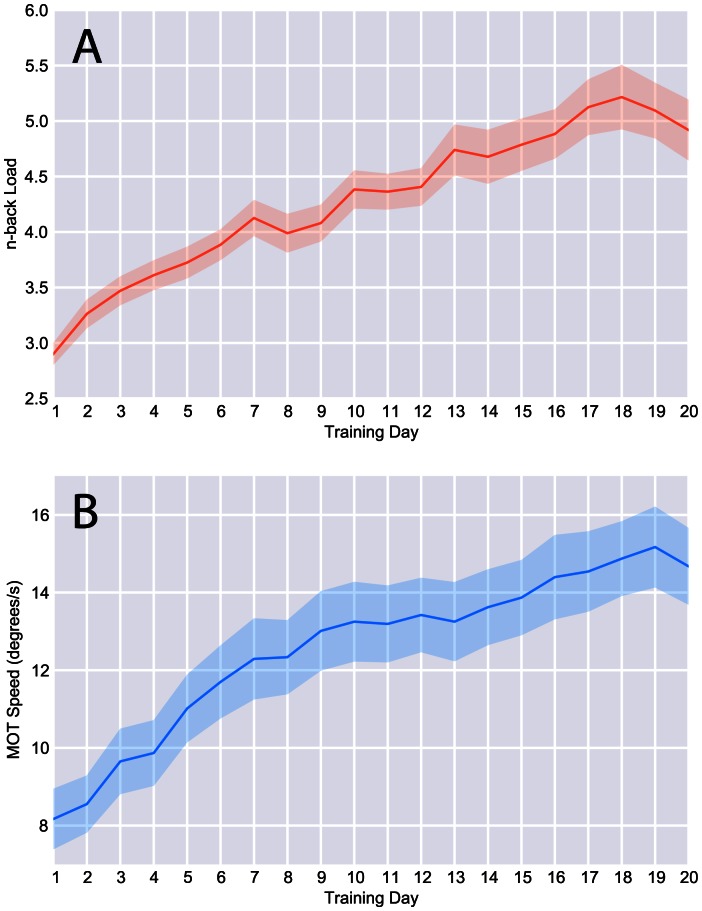
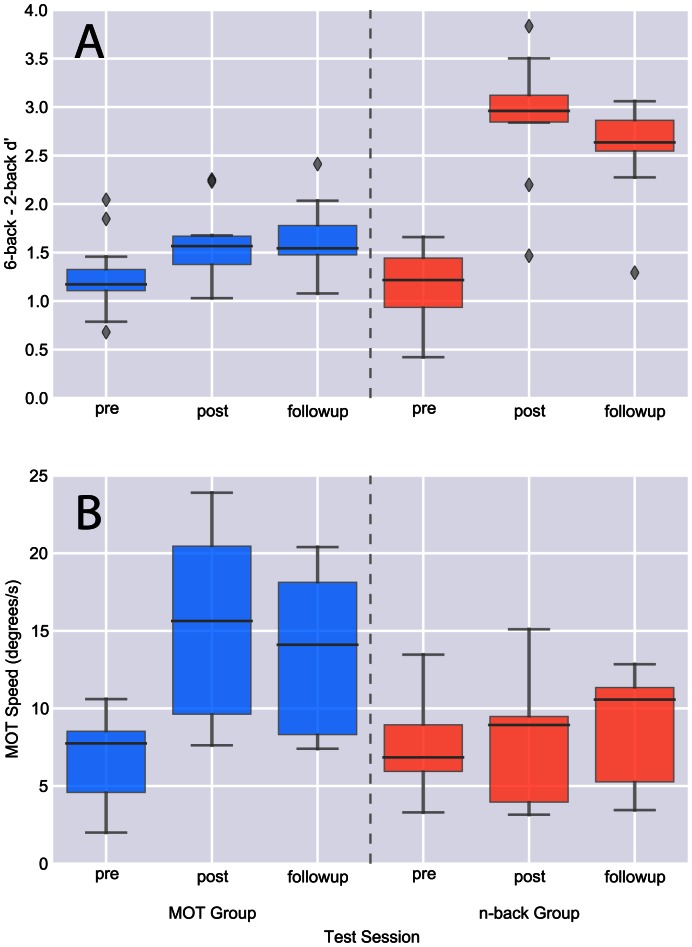
Fluid intelligence is important for successful functioning in the modern world, but much evidence suggests that fluid intelligence is largely immutable after childhood. Recently, however, researchers have reported gains in fluid intelligence after multiple sessions of adaptive working memory training in adults. The current study attempted to replicate and expand those results by administering a broad assessment of cognitive abilities and personality traits to young adults who underwent 20 sessions of an adaptive dual n-back working memory training program and comparing their post-training performance on those tests to a matched set of young adults who underwent 20 sessions of an adaptive attentional tracking program. Pre- and post-training measurements of fluid intelligence, standardized intelligence tests, speed of processing, reading skills, and other tests of working memory were assessed. Both training groups exhibited substantial and specific improvements on the trained tasks that persisted for at least 6 months post-training, but no transfer of improvement was observed to any of the non-trained measurements when compared to a third untrained group serving as a passive control. These findings fail to support the idea that adaptive working memory training in healthy young adults enhances working memory capacity in non-trained tasks, fluid intelligence, or other measures of cognitive abilities.
Overview
The claims and statistics of this paper haven’t been checked yet.
Run the check — free, no account needed. It reads the open-access text and checks the sources it cites.
Integrity signals
Registry
Cites
Statistics
Figures
Verification
Claims the paper makes
The claims and statistics of this paper haven’t been checked yet.
Run the check — free, no account needed. It reads the open-access text and checks the sources it cites.
Claims other papers make about this one
Each is checked against this paper’s own text: does it say what the citing paper says it does?
The cited source says what the claim attributes to it.
In the citing paper
“However, evidence on transfer of improved WM into more general cognitive domains such as fluid intelligence (Gf) has been more equivocal.”
From Improving fluid intelligence with training on working memory: a meta-analysis (2015) · cites this paper as Thompson et al., 2013
In the citing paper
“However, such near transfer effects may not be surprising since many of these outcome measures are very similar to the training tasks themselves and improvement may be the result of a learned strategy instead of improved cognitive capacity [87].”
In the citing paper
“While there are numerous reports of transfer in the literature, there is also substantial evidence for failure of transfer (Thompson et al. 2013; Jackson et al. 2012).”
From Divergent Research Methods Limit Understanding of Working Memory Training (2020) · cites this paper as Thompson et al. 2013
In the citing paper
“in several studies comparing dual n-back working memory training to either active or no contact control groups, training related gains were not identified in any one group relative to another for any outcome [24–26].”
From Dual N-back working memory training in healthy adults: A randomized comparison to processing speed training. (2016) · cites this paper as [25]
In the citing paper
“Our findings support previous work which fails to replicate near and far transfer benefits of dual n-back working memory training when directly compared to an active control condition (see [24–26]).”
From Dual N-back working memory training in healthy adults: A randomized comparison to processing speed training. (2016) · cites this paper as [25]
Self-check
Percentages, sums and reported differences re-computed from the paper’s own numbers.
The self-check needs the paper’s full text.
Citations
Cites
Faul, F., Erdfelder, E., Lang, A.-G., & Buchner, A. (2007) · Behavior Research Methods · doi:10.3758/bf03193146 · Cited by 65,971
Baddeley, A. D., & Hitch, G. (1974) · Psychology of Learning and Motivation · doi:10.1016/s0079-7421(08)60452-1 · Cited by 9,860
Cohen, J. (1992) · Psychological Bulletin · doi:10.1037//0033-2909.112.1.155 · Cited by 8,771
Mindset: The New Psychology of Success
(2006) · Choice Reviews Online · doi:10.5860/choice.44-2397 · Cited by 7,804
Grit: perseverance and passion for long-term goals
Duckworth, A. L., Peterson, C., Matthews, M. D., & Kelly, D. R. (2007) · Journal of Personality and Social Psychology · doi:10.1037/0022-3514.92.6.1087 · Cited by 6,911
(1999) · Cited by 6,308
The Psychology of Learning and Motivation: Advances in Research and Theory
(2010) · The Psychology of learning and motivation/The psychology of learning and motivation · doi:10.1016/c2009-0-62209-1 · Cited by 6,035
Wechsler Abbreviated Scale of Intelligence
Dumont, R., Willis, J. O., Veizel, K., & Zibulsky, J. (2014) · Wiley eBooks · doi:10.1002/9781118660584.ese2519 · Cited by 5,546
Wechsler Abbreviated Scale of Intelligence
Wechsler, D. (1999) · PsycTESTS Dataset · doi:10.1037/t15170-000 · Cited by 4,681
Blackwell, L. S., Trzesniewski, K. H., & Dweck, C. S. (2007) · Child Development · doi:10.1111/j.1467-8624.2007.00995.x · Cited by 3,784
Research works printed but not linked: 1
- Raven JC, Court JH, Raven J (1998) Raven’s Progressive Matrices. Oxford: Oxford Psychological Press.
Cited by
Sorted by citations
Melby-Lervåg, M., Redick, T. S., & Hulme, C. (2016) · Perspectives on Psychological Science · doi:10.1177/1745691616635612 · Cited by 983
Anxiety and working memory capacity: A meta-analysis and narrative review.
Moran, T. P. (2016) · Psychological Bulletin · doi:10.1037/bul0000051 · Cited by 776
Improving fluid intelligence with training on working memory: a meta-analysis
Au, J., Sheehan, E., Tsai, N., Duncan, G. J., Buschkuehl, M., & Jaeggi, S. M. (2015) · Psychonomic Bulletin & Review · doi:10.3758/s13423-014-0699-x · Cited by 727
Neurocognitive Architecture of Working Memory
Eriksson, J., Vogel, E. K., Lansner, A., Bergström, F., & Nyberg, L. H. (2015) · Neuron · doi:10.1016/j.neuron.2015.09.020 · Cited by 709
The role of individual differences in cognitive training and transfer
Jaeggi, S. M., Buschkuehl, M., Shah, P., & Jonides, J. (2014) · Memory & Cognition · doi:10.3758/s13421-013-0364-z · Cited by 432
Working memory training revisited: A multi-level meta-analysis of n-back training studies
Soveri, A., Antfolk, J., Karlsson, L., Salo, B., & Laine, M. (2017) · Psychonomic Bulletin & Review · doi:10.3758/s13423-016-1217-0 · Cited by 371
“…of Turku, Turku, Finland 2008, 2010; Klingberg et al., 2002, 2005; Kundu, Sutterer, Emrich, & Postle, 2013; Lilienthal, Tamez, Shelton, Myerson, & Hale, 2013; Oelhafen et al., 2013; Redick et al., 2013; Salminen, Strobach, & Schubert, 2012; Thompson et al., 2013; Waris, Soveri, & Laine, 2015).”
Does Working Memory Training Transfer? A Meta-Analysis Including Training Conditions as Moderators
Schwaighofer, M., Fischer, F., & Bühner, M. (2015) · Educational Psychologist · doi:10.1080/00461520.2015.1036274 · Cited by 332
Complex span and n-back measures of working memory: A meta-analysis
Redick, T. S., & Lindsey, D. R. B. (2013) · Psychonomic Bulletin & Review · doi:10.3758/s13423-013-0453-9 · Cited by 305
Effects and mechanisms of working memory training: a review
von Bastian, C. C., & Oberauer, K. (2014) · Psychological Research · doi:10.1007/s00426-013-0524-6 · Cited by 318
Dovis, S., Van der Oord, S., Wiers, R. W., & Prins, P. J. M. (2015) · PLOS ONE · doi:10.1371/journal.pone.0121651 · Cited by 272
Diamond, A. D., & Ling, D. S. (2019) · Oxford University Press eBooks · doi:10.1093/oso/9780199974467.003.0008 · Cited by 343
The Neuroscience of Intelligence
Haier, R. J. (2016) · Cambridge University Press eBooks · doi:10.1017/9781316105771 · Cited by 209
Melby-Lervåg, M., & Hulme, C. (2016) · Psychonomic Bulletin & Review · doi:10.3758/s13423-015-0862-z · Cited by 189
Brain Modularity: A Biomarker of Intervention-related Plasticity
Gallen, C. L., & D’Esposito, M. (2019) · Trends in Cognitive Sciences · doi:10.1016/j.tics.2019.01.014 · Cited by 168
Novelty Interventions to Enhance Broad Cognitive Abilities and Prevent Dementia
Fissler, P., Küster, O. C., Schlee, W., & Kolassa, I. (2013) · Progress in brain research · doi:10.1016/b978-0-444-63327-9.00017-5 · Cited by 192
Enhancing cognition using transcranial electrical stimulation
Santarnecchi, E., Brem, A., Levenbaum, E., Thompson, T. W., Kadosh, R. C., & Pascual‐Leone, Á. (2015) · Current Opinion in Behavioral Sciences · doi:10.1016/j.cobeha.2015.06.003 · Cited by 160
Self-citationWeicker, J., Villringer, A., & Thöne-Otto, A. (2016) · Neuropsychology · doi:10.1037/neu0000227 · Cited by 147
Katz, B., Jaeggi, S., Buschkuehl, M., Stegman, A., & Shah, P. (2014) · Frontiers in Human Neuroscience · doi:10.3389/fnhum.2014.00242 · Cited by 142
Cognitive training with casual video games: points to consider
Baniqued, P. L., Kranz, M. B., Voss, M. W., Lee, H., Cosman, J. D., Severson, J., & Kramer, A. F. (2014) · Frontiers in Psychology · doi:10.3389/fpsyg.2013.01010 · Cited by 152
Kable, J. W., Caulfield, M. K., Falcone, M., McConnell, M., Bernardo, L., Parthasarathi, T., Cooper, N., Ashare, R., Audrain-McGovern, J., Hornik, R., et al. (2017) · The Journal of Neuroscience · doi:10.1523/jneurosci.2832-16.2017 · Cited by 124
Ferguson, M., & Henshaw, H. (2015) · Frontiers in Psychology · doi:10.3389/fpsyg.2015.00556 · Cited by 120
Intensive Working Memory Training Produces Functional Changes in Large-scale Frontoparietal Networks
Thompson, T. W., Waskom, M., & Gabrieli, J. D. E. (2016) · Journal of Cognitive Neuroscience · doi:10.1162/jocn_a_00916 · Cited by 125
Self-citationMoreau, D., Kirk, I. J., & Waldie, K. E. (2017) · eLife · doi:10.7554/elife.25062 · Cited by 126
Dougherty, M. R., Hamovitz, T., & Tidwell, J. W. (2016) · Psychonomic Bulletin & Review · doi:10.3758/s13423-015-0865-9 · Cited by 112
Creativity Doesn't Develop in a Vacuum
Baer, J. (2016) · New Directions for Child and Adolescent Development · doi:10.1002/cad.20151 · Cited by 119
EEG Microstate Correlates of Fluid Intelligence and Response to Cognitive Training
on behalf of Honeywell SHARP Team authors, Santarnecchi, E., Khanna, A. R., Musaeus, C. S., Benwell, C., Davila-Pérez, P., Farzan, F., Matham, S., Pascual‐Leone, Á., & Shafi, M. M. (2017) · Brain Topography · doi:10.1007/s10548-017-0565-z · Cited by 119
Traut, H. J., Guild, R. M., & Munakata, Y. (2021) · Frontiers in Psychology · doi:10.3389/fpsyg.2021.662139 · Cited by 100
The effects of theta transcranial alternating current stimulation (tACS) on fluid intelligence
Pahor, A., & Jaušovec, N. (2014) · International Journal of Psychophysiology · doi:10.1016/j.ijpsycho.2014.06.015 · Cited by 103
Training working memory: Limits of transfer
Sprenger, A. M., Atkins, S. M., Bolger, D. J., Harbison, J. I., Novick, J. M., Chrabaszcz, J. S., Weems, S. A., Smith, V., Bobb, S., Bunting, M. F., et al. (2013) · Intelligence · doi:10.1016/j.intell.2013.07.013 · Cited by 96
Do we really become smarter when our fluid-intelligence test scores improve?
Hayes, T. R., Petrov, A. A., & Sederberg, P. B. (2015) · Intelligence · doi:10.1016/j.intell.2014.10.005 · Cited by 93
Au, J., Gibson, B. C., Bunarjo, K., Buschkuehl, M., & Jaeggi, S. M. (2020) · Journal of Cognitive Enhancement · doi:10.1007/s41465-020-00164-6 · Cited by 100
A simultaneous examination of two forms of working memory training: Evidence for near transfer only
Minear, M., Brasher, F., Guerrero, C. B., Brasher, M., Moore, A., & Sukeena, J. (2016) · Memory & Cognition · doi:10.3758/s13421-016-0616-9 · Cited by 85
Bauer, C. C. C., Caballero, C., Scherer, E., West, M. R., Mrazek, M. D., Phillips, D. T., Whitfield-Gabrieli, S., & Gabrieli, J. D. E. (2019) · Behavioral Neuroscience · doi:10.1037/bne0000337 · Cited by 85
Self-citationWard, N., Paul, E. J., Watson, P. D., Cooke, G. E., Hillman, C. H., Cohen, N. J., Kramer, A. F., & Barbey, A. K. (2017) · Scientific Reports · doi:10.1038/s41598-017-06237-5 · Cited by 101
Does working memory training have to be adaptive?
von Bastian, C. C., & Eschen, A. (2016) · Psychological Research · doi:10.1007/s00426-015-0655-z · Cited by 83
Guye, S., Simoni, C. D., & von Bastian, C. C. (2017) · Journal of Cognitive Enhancement · doi:10.1007/s41465-017-0049-9 · Cited by 81
N-back Versus Complex Span Working Memory Training
Blacker, K. J., Negoita, S., Ewen, J. B., & Courtney, S. M. (2017) · Journal of Cognitive Enhancement · doi:10.1007/s41465-017-0044-1 · Cited by 74
Lawlor-Savage, L., & Goghari, V. M. (2016) · PLOS ONE · doi:10.1371/journal.pone.0151817 · Cited by 74
“, [5,10,17,25]), remain susceptible to criticism based on the measures chosen to detect change.”
BackgroundThe development and malleability of executive control abilities
Hsu, N. S., Novick, J. M., & Jaeggi, S. M. (2014) · Frontiers in Behavioral Neuroscience · doi:10.3389/fnbeh.2014.00221 · Cited by 78
Working Memory Capacity as a Predictor of Cognitive Training Efficacy in the Elderly Population
Matysiak, O., Kroemeke, A., & Brzezicka, A. (2019) · Frontiers in Aging Neuroscience · doi:10.3389/fnagi.2019.00126 · Cited by 85
The Hype Cycle of Working Memory Training
Redick, T. S. (2019) · Current Directions in Psychological Science · doi:10.1177/0963721419848668 · Cited by 69
Transfer after Dual n -Back Training Depends on Striatal Activation Change
Salminen, T., Kühn, S., Frensch, P. A., & Schubert, T. (2016) · The Journal of Neuroscience · doi:10.1523/jneurosci.2305-15.2016 · Cited by 70
Rammstedt, B., Grüning, D. J., & Lechner, C. M. (2022) · European Journal of Psychological Assessment · doi:10.1027/1015-5759/a000735 · Cited by 100
Motamed‐Jahromi, M., & Kaveh, M. H. (2021) · Frontiers in Public Health · doi:10.3389/fpubh.2020.516151 · Cited by 67
Chapman, S. B., & Mudar, R. A. (2014) · Frontiers in Systems Neuroscience · doi:10.3389/fnsys.2014.00069 · Cited by 67
Modulating fluid intelligence performance through combined cognitive training and brain stimulation
Brem, A., Almquist, J. N.-F., Mansfield, K. L., Plessow, F., Sella, F., Santarnecchi, E., Orhan, U., McKanna, J. A., Pavel, M., Mathan, S. A., et al. (2018) · Neuropsychologia · doi:10.1016/j.neuropsychologia.2018.04.008 · Cited by 71
Trumbo, M., Matzen, L. E., Coffman, B. A., Hunter, M. A., Jones, A. P., Robinson, C. S. H., & Clark, V. P. (2016) · Neuropsychologia · doi:10.1016/j.neuropsychologia.2016.10.011 · Cited by 67
Long-term brain effects of N-back training: an fMRI study
Miró‐Padilla, A., Bueichekú, E., Ventura‐Campos, N., Flores-Compañ, M.-J., Parcet, M. A., & Ávila, C. (2018) · Brain Imaging and Behavior · doi:10.1007/s11682-018-9925-x · Cited by 67
Divergent Research Methods Limit Understanding of Working Memory Training
Pergher, V., Shalchy, M. A., Pahor, A., Van Hulle, M. M., Jaeggi, S. M., & Seitz, A. R. (2020) · Journal of Cognitive Enhancement · doi:10.1007/s41465-019-00134-7 · Cited by 56
Baniqued, P. L., Allen, C. M., Kranz, M. B., Johnson, K., Sipolins, A., Dickens, C., Ward, N., Geyer, A., & Kramer, A. F. (2015) · PLoS ONE · doi:10.1371/journal.pone.0142169 · Cited by 64
Ang, S. Y., Lee, K., Cheam, F., Poon, K., & Koh, J. (2015) · Journal of Applied Research in Memory and Cognition · doi:10.1016/j.jarmac.2015.03.001 · Cited by 53
Are Working Memory Training Effects Paradigm-Specific?
Holmes, J., Woolgar, F., Hampshire, A., & Gathercole, S. E. (2019) · Frontiers in Psychology · doi:10.3389/fpsyg.2019.01103 · Cited by 55
Training on Abacus-Based Mental Calculation Enhances Visuospatial Working Memory in Children
Wang, C., Xu, T., Geng, F., Hu, Y., Wang, Y., Liu, H., & Chen, F. (2019) · Journal of Neuroscience · doi:10.1523/jneurosci.3195-18.2019 · Cited by 58
Task specificity of attention training: the case of probability cuing
Jiang, Y. V., Swallow, K. M., Won, B.-Y., Cistera, J. D., & Rosenbaum, G. M. (2014) · Attention Perception & Psychophysics · doi:10.3758/s13414-014-0747-7 · Cited by 55
Memory and language improvements following cognitive control training.
Hussey, E. K., Harbison, J. I., Teubner-Rhodes, S. E., Mishler, A., Velnoskey, K. R., & Novick, J. M. (2016) · Journal of Experimental Psychology Learning Memory and Cognition · doi:10.1037/xlm0000283 · Cited by 60
Functional brain activation associated with working memory training and transfer
Clark, C. M., Lawlor‐Savage, L., & Goghari, V. M. (2017) · Behavioural Brain Research · doi:10.1016/j.bbr.2017.07.030 · Cited by 57
Seven Pervasive Statistical Flaws in Cognitive Training Interventions
Moreau, D., Kirk, I. J., & Waldie, K. E. (2016) · Frontiers in Human Neuroscience · doi:10.3389/fnhum.2016.00153 · Cited by 54
Transfer after working memory updating training
Waris, O., Soveri, A., & Laine, M. (2015) · PLOS ONE · doi:10.1371/journal.pone.0138734 · Cited by 47
Cognitive Training in the Elderly: Bottlenecks and New Avenues
Zokaei, N., MacKellar, C., Čepukaitytė, G., Patai, E. Z., & Nobre, A. C. (2016) · Journal of Cognitive Neuroscience · doi:10.1162/jocn_a_01080 · Cited by 48
Tidwell, J. W., Dougherty, M. R., Chrabaszcz, J. R., Thomas, R. P., & Mendoza, J. L. (2014) · Psychonomic Bulletin & Review · doi:10.3758/s13423-013-0560-7 · Cited by 45
Computer and Videogame Interventions for Older Adults' Cognitive and Everyday Functioning
Belchior, P. D. C., Yam, A., Thomas, K. R., Bavelier, D., Ball, K., Mann, W. C., & Marsiske, M. (2018) · Games for Health Journal · doi:10.1089/g4h.2017.0092 · Cited by 53
Bombonato, C., Lucchese, B. D., Ruffini, C., Lieto, M., Brovedani, P., Sgandurra, G., Cioni, G., & Pecini, C. (2023) · Neuropsychology Review · doi:10.1007/s11065-022-09574-z · Cited by 57
Pappa, K., Biswas, V., Flegal, K. E., Evans, J. J., & Baylan, S. (2020) · Neuroscience & Biobehavioral Reviews · doi:10.1016/j.neubiorev.2020.07.027 · Cited by 46
Bogg, T., & Lasecki, L. (2015) · Frontiers in Psychology · doi:10.3389/fpsyg.2014.01589 · Cited by 41
Liu, Z., Glizer, D., Tannock, R., & Woltering, S. (2015) · Clinical Neurophysiology · doi:10.1016/j.clinph.2015.10.032 · Cited by 44
(Un)Great Expectations: The Role of Placebo Effects in Cognitive Training
Tsai, N., Buschkuehl, M., Kamarsu, S., Shah, P., Jonides, J., & Jaeggi, S. M. (2018) · Journal of Applied Research in Memory and Cognition · doi:10.1016/j.jarmac.2018.06.001 · Cited by 44
Cochrane, A., Simmering, V. R., & Green, C. S. (2019) · PLoS ONE · doi:10.1371/journal.pone.0221353 · Cited by 46
How Does Auditory Training Work? Joined-Up Thinking and Listening
Henshaw, H., & Ferguson, M. (2015) · Seminars in Hearing · doi:10.1055/s-0035-1564456 · Cited by 39
Goghari, V. M., & Lawlor‐Savage, L. (2017) · Frontiers in Aging Neuroscience · doi:10.3389/fnagi.2017.00039 · Cited by 42
Ralph, B. C. W., Wammes, J. D., Barr, N., & Smilek, D. (2017) · Canadian Journal of Experimental Psychology/Revue canadienne de psychologie expérimentale · doi:10.1037/cep0000116 · Cited by 39
A Review of the Effects of Abacus Training on Cognitive Functions and Neural Systems in Humans
Wang, C. (2020) · Frontiers in Neuroscience · doi:10.3389/fnins.2020.00913 · Cited by 46
Liu, Z.-X., Lishak, V., Tannock, R., & Woltering, S. (2017) · Neuropsychologia · doi:10.1016/j.neuropsychologia.2016.11.023 · Cited by 35
Ackermann, S., Halfon, O., Fornari, E., Urben, S., & Bader, M. (2018) · Psychiatry Research · doi:10.1016/j.psychres.2018.07.036 · Cited by 43
Stojanoski, B. B., Lyons, K., Pearce, A., & Owen, A. M. (2018) · Neuropsychologia · doi:10.1016/j.neuropsychologia.2018.07.013 · Cited by 41
Miró‐Padilla, A., Bueichekú, E., & Ávila, C. (2020) · Scientific Reports · doi:10.1038/s41598-020-62067-y · Cited by 36
Pahor, A., Seitz, A. R., & Jaeggi, S. M. (2022) · Nature Human Behaviour · doi:10.1038/s41562-022-01384-w · Cited by 40
Pattern of Near Transfer Effects Following Working Memory Training With a Dual N-Back Task
Soveri, A., Karlsson, E. P. A., Waris, O., Grönholm-Nyman, P., & Laine, M. (2017) · Experimental Psychology · doi:10.1027/1618-3169/a000370 · Cited by 34
Effects of cognitive training on the structure of intelligence
Protzko, J. (2016) · Psychonomic Bulletin & Review · doi:10.3758/s13423-016-1196-1 · Cited by 37
Küper, K., & Karbach, J. (2016) · Journal of Cognitive Psychology · doi:10.1080/20445911.2015.1118106 · Cited by 33
Guidelines for Prevention and Treatment of Cognitive Impairment in the Elderly
Różyk-Myrta, A. (2015) · Medical Science Monitor · doi:10.12659/msm.892542 · Cited by 34
The effect of monetary compensation on cognitive training outcomes
Katz, B., Jaeggi, S. M., Buschkuehl, M., Shah, P., & Jonides, J. (2018) · Learning and Motivation · doi:10.1016/j.lmot.2017.12.002 · Cited by 31
The State of Cognitive Control in Language Processing
Ness, T., Langlois, V. J., Kim, A. E., & Novick, J. M. (2023) · Perspectives on Psychological Science · doi:10.1177/17456916231197122 · Cited by 40
Working Memory Training in Schizophrenia and Healthy Populations
Lawlor‐Savage, L., & Goghari, V. M. (2014) · Behavioral Sciences · doi:10.3390/bs4030301 · Cited by 31
The brain-games conundrum: does cognitive training really sharpen the mind?
Boot, W. R., & Kramer, A. F. (2014) · PubMed · Cited by 30
Content Matters: Why Nurturing Creativity Is So Different in Different Domains
Baer, J. (2016) · Creativity theory and action in education · doi:10.1007/978-3-319-21924-0_8 · Cited by 29
Multi-modal fitness and cognitive training to enhance fluid intelligence
Daugherty, A. M., Zwilling, C. E., Paul, E. J., Sherepa, N., Allen, C. M., Kramer, A. F., Hillman, C. H., Cohen, N. J., & Barbey, A. K. (2017) · Intelligence · doi:10.1016/j.intell.2017.11.001 · Cited by 35
Clark, C. M., Lawlor‐Savage, L., & Goghari, V. M. (2017) · PLoS ONE · doi:10.1371/journal.pone.0177707 · Cited by 34
Overlapping and dissociable brain activations for fluid intelligence and executive functions
Santarnecchi, E., Momi, D., Mencarelli, L., Plessow, F., Saxena, S., Rossi, S., Rossi, A., Mathan, S. A., & Pascual‐Leone, Á. (2021) · Cognitive Affective & Behavioral Neuroscience · doi:10.3758/s13415-021-00870-4 · Cited by 29
Cheng, C. P.-W., Chan, S. S. M., Mak, A. D. P., Chan, W. C., Cheng, S., Shi, L., Wang, D., & LAM, L. C. W. (2015) · Trials · doi:10.1186/s13063-015-0999-0 · Cited by 32
Clinical utility of the dual n-back task in schizophrenia: A functional imaging approach
Li, X., Yi, Z., Lv, Q., Chu, M., Hu, H., Wang, J., Zhang, J., Cheung, E. E. F., & Chan, R. C. K. (2019) · Psychiatry Research Neuroimaging · doi:10.1016/j.pscychresns.2019.01.002 · Cited by 28
The Role and Sources of Individual Differences in Critical-Analytic Thinking: a Capsule Overview
Bolger, D. J., Mackey, A. P., Wang, M., & Grigorenko, E. L. (2014) · Educational Psychology Review · doi:10.1007/s10648-014-9279-x · Cited by 30
Training-induced improvement in working memory tasks results from switching to efficient strategies
Malinovitch, T., Jakoby, H., & Ahissar, M. (2021) · Psychonomic Bulletin & Review · doi:10.3758/s13423-020-01824-6 · Cited by 29
“…of trained groups is also small (∼ 15 per group, Chooi & Thompson, 2012; De Simoni & von Bastian, 2018; Gibson et al., 2012; Redick et al., 2013; Thompson et al., 2013), raising the target level of significance would have rendered the reported transfer non-significant (e.g. Anguera et al.,…”
BackgroundA More Rigorous Examination of the Effects of Mindfulness Meditation on Working Memory Capacity
Baranski, M. F. S., & Was, C. A. (2018) · Journal of Cognitive Enhancement · doi:10.1007/s41465-018-0064-5 · Cited by 28
Individual Differences in Cognitive Training Research
Katz, B., Jones, M. R., Shah, P., Buschkuehl, M., & Jaeggi, S. M. (2020) · Springer eBooks · doi:10.1007/978-3-030-39292-5_8 · Cited by 33
Transfer of working memory training to the inhibitory control of auditory distraction
Kattner, F. (2021) · Psychological Research · doi:10.1007/s00426-020-01468-0 · Cited by 29
Cognitive Training in Parkinson’s Disease: A Review of Studies from 2000 to 2014
Glizer, D., & MacDonald, P. A. (2016) · Parkinson s Disease · doi:10.1155/2016/9291713 · Cited by 30
Relationships between Dota 2 expertise and decision-making ability
Sörman, D. E., Dahl, K. E., Lindmark, D., Hansson, P., Vega‐Mendoza, M., & Ljungberg, J. K. (2022) · PLoS ONE · doi:10.1371/journal.pone.0264350 · Cited by 29
Promoting Social Competence in Preschool with an Executive Functions Program Conducted by Teachers
Romero-López, M., Pichardo, M. C., Serrano, J. B., & García-Berbén, T. (2020) · Sustainability · doi:10.3390/su12114408 · Cited by 32
The role of proactive interference in working memory training and transfer
Redick, T. S., Wiemers, E. A., & Engle, R. W. (2019) · Psychological Research · doi:10.1007/s00426-019-01172-8 · Cited by 30
Can we enhance working memory? Bias and effectiveness in cognitive training studies
Rodas, J. A., Asimakopoulou, A. A., & Greene, C. M. (2024) · Psychonomic Bulletin & Review · doi:10.3758/s13423-024-02466-8 · Cited by 28
Metadata
- Authors
- Thompson, T. W., Waskom, M. L., Garel, K.-L. A., Cardenas-Iniguez, C., Reynolds, G. O., Winter, R., Chang, P., Pollard, K., Lala, N., Alvarez, G. A., & Gabrieli, J. D. E.
- Affiliations
- Massachusetts Institute of Technology (US)
- Boston University (US)
- The University of Texas MD Anderson Cancer Center (US)
- Harvard University (US)
- McGovern Institute for Brain Research (US)
- Corresponding author
- Thompson, Todd W.
- ORCID
- Venue
- PLoS ONE
- Publisher
- Public Library of Science (PLoS)
- Published
- 2013-05-22
- Volume
- 8
- Issue
- 5
- Pages
- e63614
- ISSN
- 1932-6203 (ISSN-L)
- PMC
- PMC3661602
- OpenAlex
- W2054335768
- Cited by
- 208
- References
- 64
- Citations by year
- 2026: 5 · 2025: 6 · 2024: 6 · 2023: 12 · 2022: 9 · 2021: 14 · 2020: 18 · 2019: 24 · 2018: 15 · 2017: 23 · 2016: 29 · 2015: 24 · 2014: 16 · 2013: 7
- FWCI
- 34.32
- Type
- journal article
- Language
- en
- Open access
- gold
- doi.org
- Locations
- PLoS ONE (publishedVersion, cc-by)
- Europe PMC (PubMed Central) (publishedVersion, other-oa)
- PubMed Central (publishedVersion, cc-by)
- PubMed (publishedVersion)
- Digital Access to Scholarship at Harvard (DASH) (Harvard University) (submittedVersion, cc-by)
- Knowledge@UChicago (University of Chicago) (submittedVersion, cc-by-nc-nd)
- DOAJ (DOAJ: Directory of Open Access Journals) (submittedVersion, cc-by-sa)
- DSpace@MIT (Massachusetts Institute of Technology) (submittedVersion, cc-by-nc)
- Figshare (submittedVersion, cc-by)
- University of Chicago (cc-by)
- Funders
- U.S. Department of Defense
- National Institutes of Health
- Defense Advanced Research Projects Agency (NBCHC070105)
- Advanced Research Projects Agency
- National Defense Science and Engineering Graduate
- National Institute on Drug Abuse (T90DA022759, R90DA023427)
- NIH Blueprint for Neuroscience Research (R90DA023427, T90DA022759/R90DA023427, T90DA022759)
- Topics
- Social Sciences › Psychology › Experimental and Cognitive Psychology › Cognitive Abilities and Testing
- Social Sciences › Psychology › Experimental and Cognitive Psychology › Cognitive Functions and Memory
- Life Sciences › Neuroscience › Cognitive Neuroscience › Neural and Behavioral Psychology Studies
- Keywords
- working memory training, fluid intelligence, adaptive training, transfer of training, cognitive enhancement, processing speed, reading skills, attentional tracking, young adults, intelligence
- MeSH terms
- Adult, Cognition, Education, Female, Humans, Intelligence, Male, Memory, Short-Term, Reading, Young Adult
About these checks
Registry, retraction, Cites and statistics results are computed, not judged, with one exception: a printed reference that no index lists is read once by a model before it counts as a citation error. Claims are extracted by a model and kept only when their quote appears verbatim in the text; each cited source is then checked, with a model’s help, for whether it says what the claim relies on. Those verdicts can be wrong — read the claim’s quote and the cited source before relying on one.
Statistics and arithmetic are recomputed, not judged.
Confidence bands are shown only for fields calibrated on our annotated test set. None is calibrated yet, so no band is shown.
What counts as a claim ›How we measure confidence ›How we check this ›
Are you an author, or do you see a problem with this page? Request a review
