

The DOI matches its Crossref record; 51 of the 51 references it cites were found in a registry or an index.
Aerobic Capacity Reference Data in 3816 Healthy Men and Women 20–90 Years
Open accessAbstract
PURPOSE: To provide a large reference material on aerobic fitness and exercise physiology data in a healthy population of Norwegian men and women aged 20-90 years. METHODS: Maximal and sub maximal levels of VO2, heart rate, oxygen pulse, and rating of perceived exertion (Borg scale: 6-20) were measured in 1929 men and 1881 women during treadmill running. RESULTS: The highest VO2max and maximal heart rate among men and women were observed in the youngest age group (20-29 years) and was 54.4±8.4 mL·kg(-1)·min(-1) and 43.0±7.7 mL·kg(-1)·min(-1) (sex differences, p<0.001) and 196±10 beats·min(-1) and 194±9 beats·min(-1) (sex differences, p<0.05), respectively, with a subsequent reduction of approximately 3.5 mL·kg(-1)·min(-1) and 6 beats·min(-1) per decade. The highest oxygen pulses were observed in the 3 youngest age groups (20-29 years, 30-39 years, 40-49 years) among men and women; 22.3 mL·beat(-1)±3.6 and 14.7 mL·beat(-1)±2.7 (sex differences, p<0.001), respectively, with no significant difference between these age groups. After the age of 50 we observed an 8% reduction per decade among both sexes. Borg scores appear to give a good estimate of the relative exercise intensity, although observing a slightly different relationship than reported in previous reference material from small populations. CONCLUSION: This is the largest European reference material of objectively measured parameters of aerobic fitness and exercise-physiology in healthy men and women aged 20-90 years, forming the basis for an easily accessible, valid and understandable tool for improved training prescription in healthy men and women.
Overview
The claims and statistics of this paper haven’t been checked yet.
Run the check — free, no account needed. It reads the open-access text and checks the sources it cites.
Integrity signals
Registry
Cites
Statistics
Figures
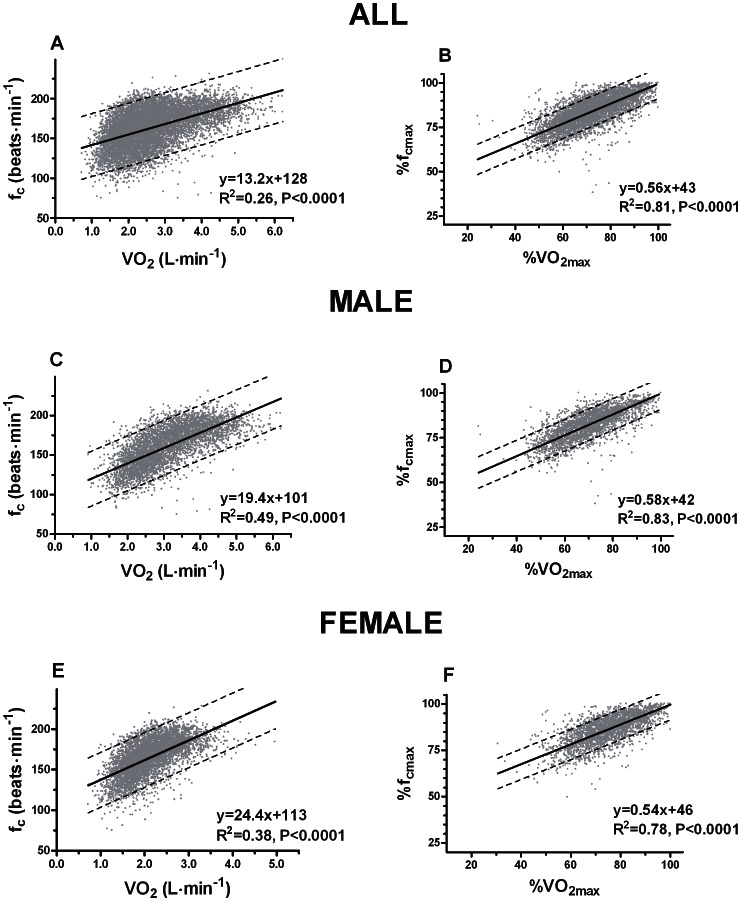
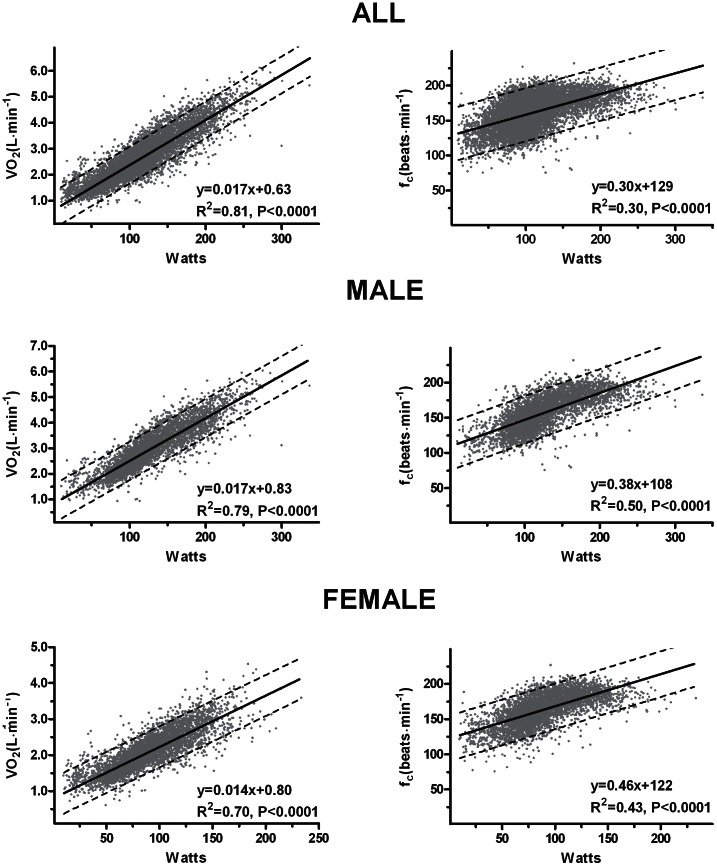
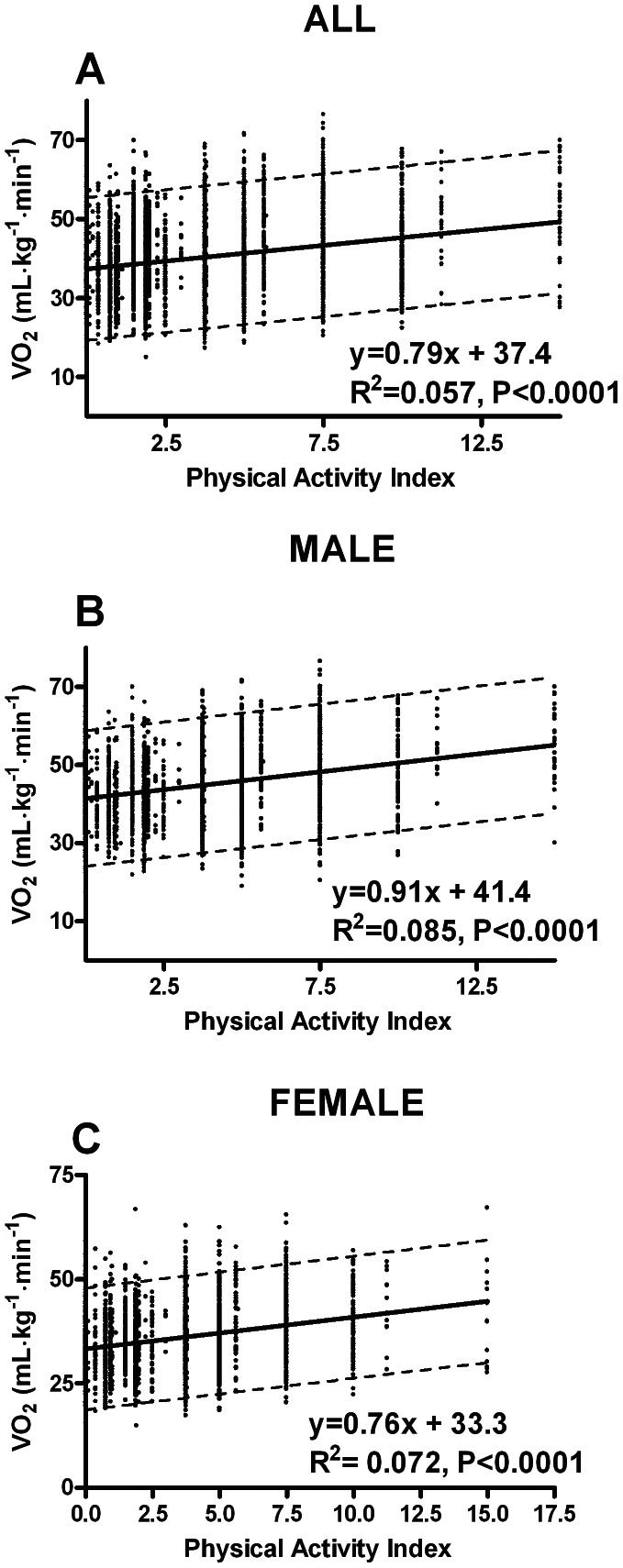
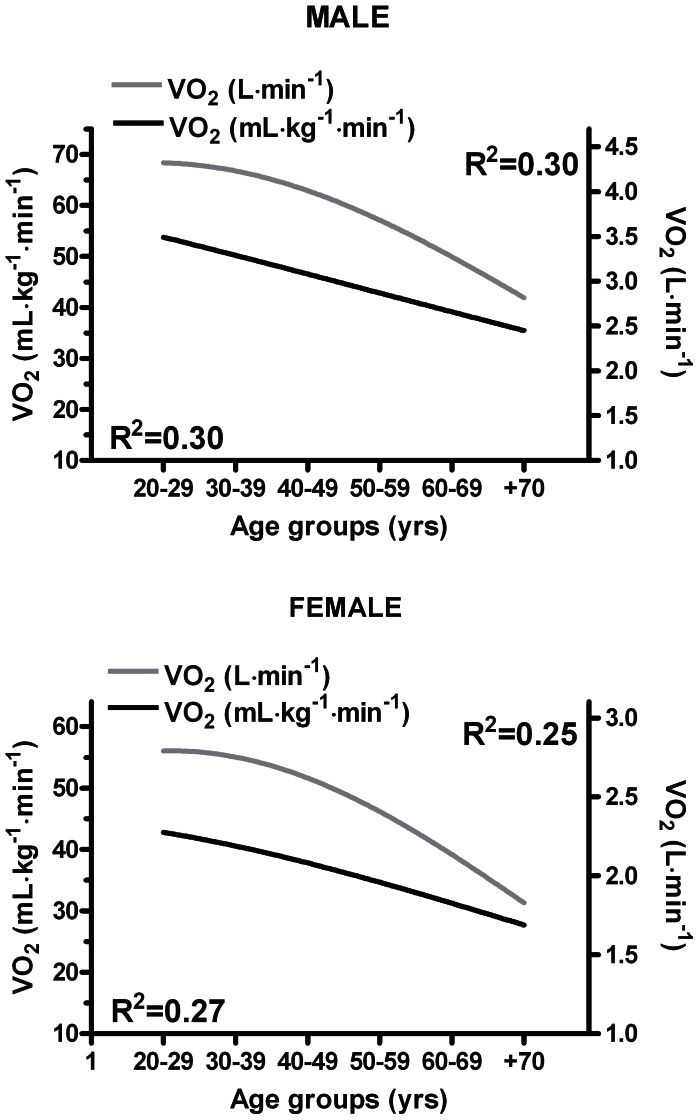
Verification
Claims the paper makes
The claims and statistics of this paper haven’t been checked yet.
Run the check — free, no account needed. It reads the open-access text and checks the sources it cites.
Claims other papers make about this one
Each is checked against this paper’s own text: does it say what the citing paper says it does?
The cited source says what the claim attributes to it.
In the citing paper
“Although there was no control group in this study, a large reference material shows that the expected age-related reduction in maximal oxygen uptake is close to 1% per year [27].”
From Improved cardiorespiratory fitness after occupational rehabilitation in merged diagnostic groups (2018) · cites this paper as [27]
Self-check
Percentages, sums and reported differences re-computed from the paper’s own numbers.
The self-check needs the paper’s full text.
Citations
Cites
Psychophysical bases of perceived exertion
BORG, G. A. V. (1982) · Medicine & Science in Sports & Exercise · doi:10.1249/00005768-198205000-00012 · Cited by 16,580
(2014) · Medical Entomology and Zoology · Cited by 9,400
Exercise capacity and mortality among men referred for exercise testing
Myers, J., Prakash, M., Froelicher, V., Do, D., Partington, S., & Atwood, J. E. (2002) · New England Journal of Medicine · doi:10.1056/nejmoa011858 · Cited by 4,114
Age-predicted maximal heart rate revisited
Tanaka, H., Monahan, K. D., & Seals, D. R. (2001) · Journal of the American College of Cardiology · doi:10.1016/s0735-1097(00)01054-8 · Cited by 3,775 · cited 1×
“gradient is approximately half that compared to using the 220 beats?min(21) minus age equation, which is consistent with former research [10,42,43].”
ResultKodama, S. (2009) · JAMA · doi:10.1001/jama.2009.681 · Cited by 3,035
Principles of Exercise Testing and Interpretation.
(1987) · Annals of Internal Medicine · doi:10.7326/0003-4819-106-4-646 · Cited by 2,366
Textbook of Work Physiology: Physiological Bases of Exercise
(2004) · Physiotherapy Theory and Practice · doi:10.1080/09593980490425012 · Cited by 1,864
Accelerated longitudinal decline of aerobic capacity in healthy older adults
Fleg, J. L., Morrell, C. H., Bos, A. G., Brant, L. J., Talbot, L. A., Wright, J. G., & Lakatta, E. G. (2005) · Circulation · doi:10.1161/circulationaha.105.545459 · Cited by 970
Exercise physiology : nutrition, energy and human performance
McArdle, W. D., Katch, F. I., & Katch, V. L. (2010) · SDÜ Bilgi Merkezi · Cited by 861
Physical Fitness as a Predictor of Mortality among Healthy, Middle-Aged Norwegian Men
Sandvik, L., Erikssen, J., Thaulow, E., Erikssen, G., Mundal, R., & Rodahl, K. (1993) · New England Journal of Medicine · doi:10.1056/nejm199302253280803 · Cited by 788
Research works printed but not linked: 1
- AH Herdy, 2011, Reference values for cardiopulmonary exercise testing for sedentary and active men and women, Arq Bras Cardiol, 96, 54
Cited by
Sorted by citations
Reference Standards for Cardiorespiratory Fitness Measured With Cardiopulmonary Exercise Testing
Kaminsky, L. A., Arena, R., & Myers, J. (2015) · Mayo Clinic Proceedings · doi:10.1016/j.mayocp.2015.07.026 · Cited by 461
The “Saltin–Grimby Physical Activity Level Scale” and its application to health research
Grimby, G., Börjesson, M., Jónsdóttir, I. H., Schnohr, P., Thelle, D. S., & Saltin, B. (2015) · Scandinavian Journal of Medicine and Science in Sports · doi:10.1111/sms.12611 · Cited by 383
Self-citationCardiorespiratory fitness and cardiovascular disease - The past, present, and future
Kaminsky, L. A., Arena, R. A., Ellingsen, Ø., Harber, M. P., MYERS, J. N., Ozemek, C., & Ross, R. (2019) · Progress in Cardiovascular Diseases · doi:10.1016/j.pcad.2019.01.002 · Cited by 280
HUNTER, S. K., S. ANGADI, S., BHARGAVA, A., HARPER, J., HIRSCHBERG, A. L., D. LEVINE, B., L. MOREAU, K., J. NOKOFF, N., STACHENFELD, N. S., & BERMON, S. (2023) · Medicine & Science in Sports & Exercise · doi:10.1249/mss.0000000000003300 · Cited by 241
Kaminsky, L. A., Imboden, M. T., Arena, R. A., & MYERS, J. N. (2016) · Mayo Clinic Proceedings · doi:10.1016/j.mayocp.2016.10.003 · Cited by 204
Metadata
- Authors
- Loe, H., Rognmo, Ø., Saltin, B., & Wisløff, U.
- Affiliations
- Norwegian University of Science and Technology (NO)
- Copenhagen University Hospital (DK)
- Corresponding author
- Wisløff, Ulrik
- ORCID
- Wisløff, Ulrik
- Venue
- PLoS ONE
- Publisher
- Public Library of Science (PLoS)
- Published
- 2013-05-15
- Volume
- 8
- Issue
- 5
- Pages
- e64319
- ISSN
- 1932-6203 (ISSN-L)
- PMC
- PMC3654926
- OpenAlex
- W2024550820
- Cited by
- 216
- References
- 51
- Citations by year
- 2026: 11 · 2025: 12 · 2024: 11 · 2023: 20 · 2022: 24 · 2021: 19 · 2020: 22 · 2019: 22 · 2018: 20 · 2017: 15 · 2016: 15 · 2015: 15 · 2014: 8 · 2013: 2
- FWCI
- 31.51
- Type
- journal article
- Language
- en
- Update notices
- correction (2013-11-07)
- Open access
- gold
- doi.org
- Locations
- PLoS ONE (publishedVersion, cc-by)
- Europe PMC (PubMed Central) (publishedVersion, cc-by)
- PubMed Central (publishedVersion, cc-by)
- PubMed (publishedVersion)
- DOAJ (DOAJ: Directory of Open Access Journals) (submittedVersion, cc-by-sa)
- NORA - Norwegian Open Research Archives (submittedVersion, cc-by)
- Funders
- Foundation for Cardiovascular Research
- Norges Teknisk-Naturvitenskapelige Universitet
- Helse Midt-Norge
- Norges Forskningsråd
- Norwegian Institute of Public Health
- Topics
- Health Sciences › Medicine › Physiology (medical) › Cardiovascular and exercise physiology
- Health Sciences › Medicine › Public Health, Environmental and Occupational Health › Physical Activity and Health
- Health Sciences › Medicine › Orthopedics and Sports Medicine › Sports Performance and Training
- Keywords
- cardiorespiratory fitness, VO2max, sex differences, heart rate, oxygen pulse, rating of perceived exertion, Borg scale, treadmill running, exercise physiology, healthy adults, training prescription, reference values
- MeSH terms
- Adult, Aged, Aged, 80 and over, Female, Heart Rate, Humans, Male, Middle Aged, Motor Activity, Oxygen Consumption, Exercise, Young Adult
About these checks
Registry, retraction, Cites and statistics results are computed, not judged, with one exception: a printed reference that no index lists is read once by a model before it counts as a citation error. Claims are extracted by a model and kept only when their quote appears verbatim in the text; each cited source is then checked, with a model’s help, for whether it says what the claim relies on. Those verdicts can be wrong — read the claim’s quote and the cited source before relying on one.
Statistics and arithmetic are recomputed, not judged.
Confidence bands are shown only for fields calibrated on our annotated test set. None is calibrated yet, so no band is shown.
What counts as a claim ›How we measure confidence ›How we check this ›
Are you an author, or do you see a problem with this page? Request a review
