

The Effect of Copayments for Prescriptions on Adherence to Prescription Medicines in Publicly Insured Populations; A Systematic Review and Meta-Analysis
Open accessThe DOI matches its Crossref record; 60 of the 60 references it cites were found in a registry or an index.
Abstract
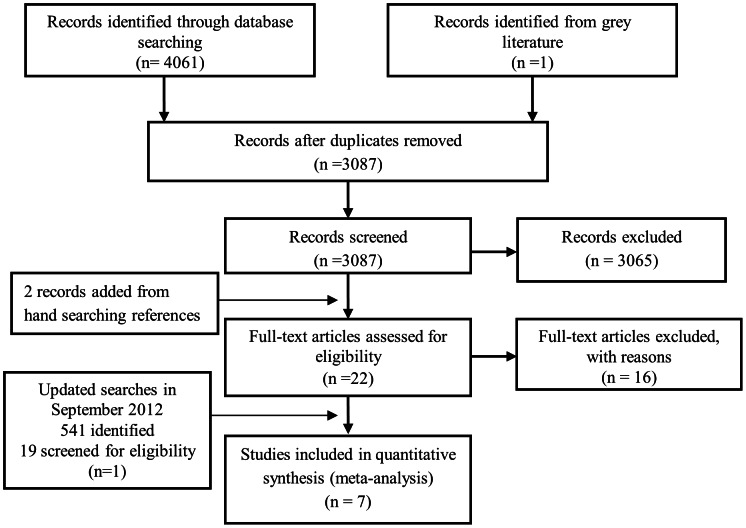
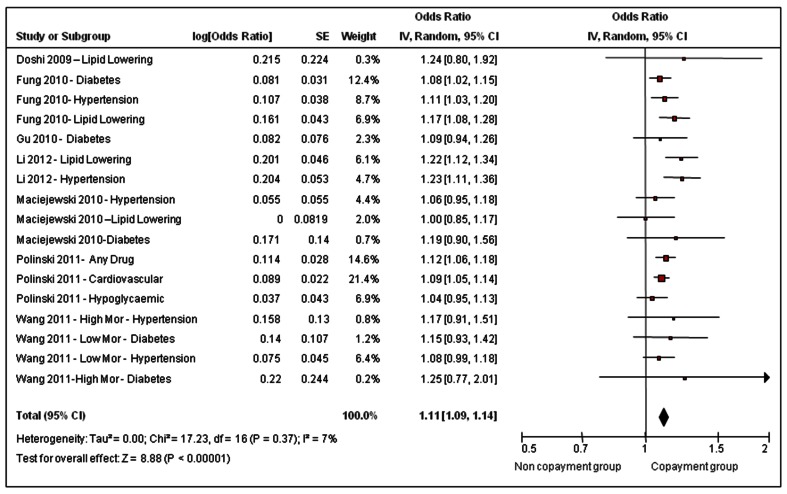
INTRODUCTION: Copayments are intended to decrease third party expenditure on pharmaceuticals, particularly those regarded as less essential. However, copayments are associated with decreased use of all medicines. Publicly insured populations encompass some vulnerable patient groups such as older individuals and low income groups, who may be especially susceptible to medication non-adherence when required to pay. Non-adherence has potential consequences of increased morbidity and costs elsewhere in the system. OBJECTIVE: To quantify the risk of non-adherence to prescribed medicines in publicly insured populations exposed to copayments. METHODS: The population of interest consisted of cohorts who received public health insurance. The intervention was the introduction of, or an increase, in copayment. The outcome was non-adherence to medications, evaluated using objective measures. Eight electronic databases and the grey literature were systematically searched for relevant articles, along with hand searches of references in review articles and the included studies. Studies were quality appraised using modified EPOC and EHPPH checklists. A random effects model was used to generate the meta-analysis in RevMan v5.1. Statistical heterogeneity was assessed using the I(2) test; p>0.1 indicated a lack of heterogeneity. RESULTS: Seven out of 41 studies met the inclusion criteria. Five studies contributed more than 1 result to the meta-analysis. The meta-analysis included 199,996 people overall; 74,236 people in the copayment group and 125,760 people in the non-copayment group. Average age was 71.75 years. In the copayment group, (verses the non-copayment group), the odds ratio for non-adherence was 1.11 (95% CI 1.09-1.14; P = <0.00001). An acceptable level of heterogeneity at I(2) = 7%, (p = 0.37) was observed. CONCLUSION: This meta-analysis showed an 11% increased odds of non-adherence to medicines in publicly insured populations where copayments for medicines are necessary. Policy-makers should be wary of potential negative clinical outcomes resulting from non-adherence, and also possible knock-on economic repercussions.
Overview
The claims and statistics of this paper haven’t been checked yet.
Free: it reads the open-access text and checks the first 5 claims that cite a source we can check. Create a free account to check every claim.
Integrity signals
Registry
Cites
Statistics
Figures
Verification
Claims the paper makes
The claims and statistics of this paper haven’t been checked yet.
Free: it reads the open-access text and checks the first 5 claims that cite a source we can check. Create a free account to check every claim.
Claims other papers make about this one
Each is checked against this paper’s own text: does it say what the citing paper says it does?
The cited source says what the claim attributes to it.
In the citing paper
“The meta-analysis of Sinnott et al. provides robust evidence for a negative impact of co-payments on adherence across different conditions [40].”
From Medication adherence influencing factors—an (updated) overview of systematic reviews (2019) · cites this paper as [40]
Self-check
Percentages, sums and reported differences re-computed from the paper’s own numbers.
The self-check needs the paper’s full text.
Citations
Cites
Pharmacological interventions for somatoform disorders in adults
Kleinstäuber, M., Witthöft, M., Steffanowski, A., van Marwijk, H., Hiller, W., & Lambert, M. J. (2014) · Cochrane Database of Systematic Reviews · doi:10.1002/14651858.cd010628.pub2 · Cited by 11,335
Turner, R. C., Fox, C., Matthews, McElroy, H. H., Cull, C. A., Holman, R. R., Neil, P., Hadden, D. R., Wright, D., Manley, E., et al. (1998) · The Lancet · Cited by 8,419
Osterberg, L., & Blaschke, T. (2005) · New England Journal of Medicine · doi:10.1056/nejmra050100 · Cited by 7,974
Medication compliance and persistence: terminology and definitions
Cramer, J. A., Roy, A., Burrell, A., Fairchild, C. J., Fuldeore, M. J., Ollendorf, D. A., & Wong, P. K. (2008) · Value in Health · doi:10.1111/j.1524-4733.2007.00213.x · Cited by 2,220 · cited 1×
“Non-adherence is classified as any percentage of adherence ,80%, an arbitrary but accepted cut-off [36,41].”
BackgroundImpact of Medication Adherence on Hospitalization Risk and Healthcare Cost
Sokol, M. C., McGuigan, K. A., Verbrugge, R. R., & Epstein, R. S. (2005) · Medical Care · doi:10.1097/01.mlr.0000163641.86870.af · Cited by 1,729 · cited 2×
“These results have financial implications as described by Sokol et al, who demonstrated that adherence to medicines used to treat diabetes and hypercholesteremia reduces expenditure in overall health costs [27].”
BackgroundHaynes, R. B., Taylor, D. W., & Sackett, D. L. (1979) · DigitalGeorgetown (Georgetown University Library) · Cited by 1,405
Ho, P. M., Rumsfeld, J. S., Masoudi, F. A., McClure, D. L., Plomondon, M. E., Steiner, J. F., & Magid, D. J. (2006) · Archives of Internal Medicine · doi:10.1001/archinte.166.17.1836 · Cited by 1,135
Methods for evaluation of medication adherence and persistence using automated databases
Andrade, S. E., Kahler, K. H., Frech, F., & Chan, K. A. (2006) · Pharmacoepidemiology and Drug Safety · doi:10.1002/pds.1230 · Cited by 1,079 · cited 2×
“Four commonly used objective measures of adherence were included in search terms; Proportion of Days Covered (PDC), Medication Possession Ratio (MPR), Daily Defined Dose (DDD) and the ReComp algorithm [36,37,40].”
BackgroundMethodGoldman, D. P., Joyce, G. F., & Zheng, Y. (2007) · JAMA · doi:10.1001/jama.298.1.61 · Cited by 874 · cited 2×
“This review and other similar reviews which studied utilization as the main outcome, have quantified the effects of copayments on utilization/ adherence by estimating price elasticities of demand [16,18,33,34].”
Background
Research works printed but not linked: 4
- Tamblyn R, Laprise R, Hanley JA, Abrahamowicz M, Scott S, et al (2001) Adverse events associated with prescription drug cost-sharing among poor and elderly persons. Journal of the American Medical Association 285: 421– 429. 11242426 · DOI · Paper page
- Effective Practice and Organisation of Care Review Group - Cochrane Data Collection Checklist http://epoc.cochrane.org/sites/epoc.cochrane.org/files/uploads/datacollectionchecklist.pdf. Last accessed from http://epoc.cochrane.org April 2013.
- RevMan (2011) Review Manager (RevMan) [Computer program]. Version 5.1. Copenhagen: The Nordic Cochrane Centre, The Cochrane Collaboration, 2011.
- Jha Ak Fau - Aubert RE, Aubert Re Fau - Yao J, Yao J Fau - Teagarden JR, Teagarden Jr Fau - Epstein RS, Epstein RS (2012) Greater adherence to diabetes drugs is linked to less hospital use and could save nearly $5 billion annually. Health affairs (Project Hope). 22869663 · DOI · Paper page
Cited by
Medication adherence influencing factors—an (updated) overview of systematic reviews
Gast, A., & Mathes, T. (2019) · Systematic Reviews · doi:10.1186/s13643-019-1014-8 · Cited by 560
“…assessing treatment adherence via objective or self-reporting measures Studies considering employment as a possible adherence influencing factor Sinnott 2013 1946 to September 2012 Participants received healthcare from a public insurance scheme Comparator group was the same population/similar…”
MethodAdes, P. A., Keteyian, S. J., Wright, J. S., Hamm, L. F., Lui, K., Newlin, K., Shepard, D. S., & Thomas, R. J. (2017) · Mayo Clinic Proceedings · doi:10.1016/j.mayocp.2016.10.014 · Cited by 449
“Although not all patients have copayments for CR sessions, insurers can reduce or eliminate these co-payments or cost share to encourage more and longer participation, which leads to better outcomes for users.(39,40)”
Factors associated with low adherence to medicine treatment for chronic diseases in Brazil
Tavares, N. U. L., Bertoldi, A. D., Mengue, S. S., Arrais, P. S. D., Luiza, V. L., Oliveira, M. A., Ramos, L. R., Farías, M. R., & Pizzol, T. D. S. D. (2016) · Revista de Saúde Pública · doi:10.1590/s1518-8787.2016050006150 · Cited by 188
Adherence influencing factors – a systematic review of systematic reviews
Mathes, T., Jaschinski, T., & Pieper, D. (2014) · Archives of Public Health · doi:10.1186/2049-3258-72-37 · Cited by 183
“For example it was not possible to include the effect size and number of included patients in the evidence synthesis because with one exception [16] none of the studies provide information on these.”
BackgroundInfluentialEffective healthcare cost-containment policies: A systematic review
Stadhouders, N., Kruse, F., Tanke, M., Koolman, X., & Jeurissen, P. (2019) · Health Policy · doi:10.1016/j.healthpol.2018.10.015 · Cited by 161
Health-care expenditure and health policy in the USA versus other high-spending OECD countries
Lorenzoni, L., Belloni, A., & Sassi, F. (2014) · The Lancet · doi:10.1016/s0140-6736(14)60571-7 · Cited by 161
Patel, S., Huang, M., & Miliara, S. (2025) · Journal of Clinical Medicine · doi:10.3390/jcm14176034 · Cited by 156
“A meta-analysis covering nearly 200,000 patients with chronic conditions in the US indicated an 11% increase in the chance of non-adherence in patients requiring to co-pay [80].”
O’Donnell, P., Tierney, E., O’Carroll, A., Nurse, D., & MacFarlane, A. E. (2016) · International Journal for Equity in Health · doi:10.1186/s12939-016-0487-5 · Cited by 125
“, who reported on publicly funded patients internationally [77].”
Intentional Non-Adherence to Medications by Older Adults
Mukhtar, O., Weinman, J. A., & Jackson, S. H. (2014) · Drugs & Aging · doi:10.1007/s40266-014-0153-9 · Cited by 132
“75 years) where co-payments are necessary; however, none of the studies included in the meta-analysis explicitly sought to determine whether cost/co-payment influences intentional or unintentional adherence [75].”
BackgroundPharmaceutical policies: effects of cap and co-payment on rational use of medicines.
Luiza, V. L., Chaves, L. A., Silva, R. M., Emmerick, I. C. M., Chaves, G. C., Fonseca de Araújo, S. C., Moraes, E. L., & Oxman, A. D. (2015) · Cochrane Database of Systematic Reviews · doi:10.1002/14651858.cd007017.pub2 · Cited by 102
Heinrich, C. J., Camacho, S., Henderson, S. C., Hernández, M., & Joshi, E. (2021) · Journal of Policy Analysis and Management · doi:10.1002/pam.22324 · Cited by 113
Health Care Disparities Across the Urban‐Rural Divide: A National Study of Individuals with COPD
Gaffney, A. W., Hawks, L. C., White, A. C., Woolhandler, S. J., Himmelstein, D. U., Christiani, D. C., & McCormick, D. (2020) · The Journal of Rural Health · doi:10.1111/jrh.12525 · Cited by 97
Cecchini, M., Langer, J., & Slawomirski, L. (2015) · Cited by 138
Jain, N., Li, A. L., Yu, Y., & VanderBeek, B. L. (2019) · British Journal of Ophthalmology · doi:10.1136/bjophthalmol-2019-314765 · Cited by 74
Böhm, A.-K., Schneider, U., Aberle, J., & Stargardt, T. (2021) · PLoS ONE · doi:10.1371/journal.pone.0250993 · Cited by 81
Encouraging adherence to long-term medication
Usherwood, T. (2017) · Australian Prescriber · doi:10.18773/austprescr.2017.050 · Cited by 63
Gourzoulidis, G., Kourlaba, G., Stafylas, P., Giamouzis, G., Parissis, J., & Maniadakis, N. (2017) · Health Policy · doi:10.1016/j.healthpol.2017.02.008 · Cited by 62
Mbui, J. M., Oluka, M. N., Guantai, E. M., Sinei, K. A., Achieng, L., Kurdi, A. B., Jande, M. B., Massele, A. Y., & Godman, B. (2017) · Expert Review of Clinical Pharmacology · doi:10.1080/17512433.2017.1371590 · Cited by 66
“Co-payments for multiple medicines could also be an issue affecting adherence rates (48-52).”
BackgroundCoca, A., Agabiti-Rosei, E., Cifkova, R., Manolis, A. J., Redón, J., & Mancia, G. (2017) · Journal of Hypertension · doi:10.1097/hjh.0000000000001390 · Cited by 53
The Effect Of Veterans Health Administration Coverage On Cost-Related Medication Nonadherence
Gaffney, A. W., Bor, D. H., Himmelstein, D. U., Woolhandler, S. J., & McCormick, D. (2020) · Health Affairs · doi:10.1377/hlthaff.2019.00481 · Cited by 54
Kalra, D. K., Vijayaraghavan, K., Sikand, G., Desai, N. R., Joshi, P. H., Mehta, A., Karmally, W., Vani, A. K., Sitafalwalla, S. J., Puri, R., et al. (2021) · Journal of clinical lipidology · doi:10.1016/j.jacl.2021.03.007 · Cited by 50
Goldsmith, L. J., Kolhatkar, A., Popowich, D., Holbrook, A. M., Morgan, S. G., & Law, M. R. (2017) · Social Science & Medicine · doi:10.1016/j.socscimed.2017.10.007 · Cited by 48
López‐Valcárcel, B. G., Librero, J., García‐Sempere, A., Peña, L. M., Bauer, S., Puig‐Junoy, J., Oliva, J., Peiró, S., & Sanfélix‐Gimeno, G. (2017) · Heart · doi:10.1136/heartjnl-2016-310610 · Cited by 51
“Our findings confirm those of earlier studies 8 10 but in a universal free healthcare setting using a robust methodology to define the outcome, that is, adherence to essential medications on a high-risk population.”
BackgroundResultFactors influencing adherence in Hepatitis-C infected patients: a systematic review
Mathes, T., Antoine, S.-L., & Pieper, D. (2014) · BMC Infectious Diseases · doi:10.1186/1471-2334-14-203 · Cited by 44
Patient Co-payment and Adherence to Statins: A Review and Case Studies
Simoens, S., & Sinnaeve, P. (2013) · Cardiovascular Drugs and Therapy · doi:10.1007/s10557-013-6497-2 · Cited by 51
“D at a lim ite d to V et er an s A ff ai rs sy st em ; [3 5] 102 Cardiovasc Drugs Ther (2014) 28:99–109”
BackgroundInfluentialSchneider, A. P. H., Gaedke, M. Â., Garcêz, A., Barcellos, N. T., & Paniz, V. M. V. (2017) · International Journal of Clinical Practice · doi:10.1111/ijcp.13044 · Cited by 48
Takura, T., Goto, K., & Honda, A. (2021) · BMC Medicine · doi:10.1186/s12916-020-01874-6 · Cited by 39
Aznar‐Lou, I., Pottegård, A., Fernández, A., Peñarrubia‐María, M. T., Serrano‐Blanco, A., Sabés-Figuera, R., Gil‐Girbau, M., Fajó‐Pascual, M., Moreno-Peral, P., & Rubio-Valera, M. (2018) · BMJ Quality & Safety · doi:10.1136/bmjqs-2017-007416 · Cited by 38
Suh, H. S., Kang, H.-Y., Kim, J., & Shin, E. (2014) · BMC Health Services Research · doi:10.1186/s12913-014-0570-9 · Cited by 33
“Some evidence suggests that lowering copayments or deductibles would have positive health consequences or vice versa [27,28].”
BackgroundGuindon, G. E., Fatima, T., Garasia, S., & Khoee, K. (2022) · BMC Health Services Research · doi:10.1186/s12913-022-07554-w · Cited by 32
“Another review reported that publicly insured patients who were required to pay copays for their prescription medicines had 11% higher odds of reporting nonadherence relative to those who faced no copayments [36].”
BackgroundInfluentialHealing an ailing pharmaceutical system: prescription for reform for United States and Canada
Gaffney, A. W., Lexchin, J., US, & Canadian Pharmaceutical Policy Reform Working Group (2018) · BMJ · doi:10.1136/bmj.k1039 · Cited by 31
Puig‐Junoy, J., García‐Gómez, P., & Marín, D. C. (2015) · Health Economics · doi:10.1002/hec.3182 · Cited by 30
“(2008) suggest that increased cost sharing of prescription drugs for elderly beneficiaries appears to exert negative effects on health outcomes and may be related to an increase in utilization of other healthcare services, and a recent meta-analysis shows lower adherence to medicines in publicly insured populations af…”
BackgroundCo-payments for health care: what is their real cost?
Laba, T., Usherwood, T. P., Leeder, S., Yusuf, F., Gillespie, J., Perkovic, V., Wilson, A. J., Jan, S., & Essue, B. M. (2014) · Australian Health Review · doi:10.1071/ah14087 · Cited by 29
Adherence to Antihypertensive Medications: Current Status and Future Directions
Rash, J. A., Lavoie, K., Feldman, R. D., & Campbell, T. S. (2014) · Current Cardiovascular Risk Reports · doi:10.1007/s12170-014-0415-4 · Cited by 29
Contreras, E. M., García-Ramos, L. L., Martell‐Claros, N., Gil-Guillén, V. F., Márquez‐Rivero, S., Pérez-López, E., Garrido-Lopez, M. A., Farauste, C., López‐Pineda, A., Casado-Martínez, J. J., et al. (2018) · Patient Education and Counseling · doi:10.1016/j.pec.2018.04.009 · Cited by 32
Dillon, P., Smith, S. M., Gallagher, P., & Cousins, G. (2018) · BMC Public Health · doi:10.1186/s12889-018-6209-8 · Cited by 31
Dahlén, E., Komen, J. J., Jonsson, E. W., Almqvist, C., Kull, I., & Wettermark, B. (2019) · Basic & Clinical Pharmacology & Toxicology · doi:10.1111/bcpt.13268 · Cited by 25
Cost Sharing in Medicaid: Assumptions, Evidence, and Future Directions
Powell, V. E., Saloner, B. K., & Sabik, L. M. (2015) · Medical Care Research and Review · doi:10.1177/1077558715617381 · Cited by 24
Horvat, O., Popržen, J., Tomás, A., Kusturica, M. P., Tomić, Z., & Sabo, A. (2017) · Primary care diabetes · doi:10.1016/j.pcd.2017.10.002 · Cited by 26
Yuniarti, E., Prabandari, Y. S., Kristin, E., & Suryawati, S. (2019) · Journal of Pharmaceutical Policy and Practice · doi:10.1186/s40545-019-0170-5 · Cited by 22
“A systematic review and meta-analysis found copayments for prescriptions medicines among publicly insured patients increased odds of non-adherence by 11% [22].”
BackgroundIncreased burden of disease and role of health economics: Asia-pacific region
Shah, S., Abbas, G., Hanif, M., Rehman, A. U., Zaman, M., Riaz, N., Altaf, A., Hassan, S. U., Saleem, U., & Shah, A. (2019) · Expert Review of Pharmacoeconomics & Outcomes Research · doi:10.1080/14737167.2019.1650643 · Cited by 23
Shadow and extended shadow cost sharing associated to informal long-term care: the case of Spain
Rubio, R. D. P., Martínez, P. M., Ortega‐Ortega, M., & Oliva-Moreno, J. (2020) · Health Economics Review · doi:10.1186/s13561-020-00272-1 · Cited by 22
Watanabe, J. H., Kazerooni, R., & Bounthavong, M. (2014) · Journal of Managed Care Pharmacy · doi:10.18553/jmcp.2014.20.1.43 · Cited by 23
Comparison of United States and International Ophthalmic Drug Pricing
Gong, D. A., Chang, J. S., Barbany, M., Corcóstegui, B., Değirmenci, M. F. K., Ishikawa, H., Mammo, Z. N., Özmert, E., Rossi, T., & Chang, S. (2019) · Ophthalmology · doi:10.1016/j.ophtha.2019.04.018 · Cited by 19
Mattison, C. A., Wilson, M. G., Wang, R. H., & Waddell, K. (2019) · Canadian Journal on Aging / La Revue canadienne du vieillissement · doi:10.1017/s0714980819000187 · Cited by 22
Schwartz, D. G., Spitzer, S., Khalemsky, M., Bejar, A. H. C., Ray, S., Chiou, J., Sakhnini, R., Lanin, R., Meir, M. M., & Tsai, M. (2024) · Health Policy and Technology · doi:10.1016/j.hlpt.2024.100848 · Cited by 19
Toward digital-based interventions for medication adherence and safety
Haga, S. B. (2020) · Expert Opinion on Drug Safety · doi:10.1080/14740338.2020.1764935 · Cited by 21
“In a study of publicly insured patient populations, medication co-payments were demonstrated to negatively affect medication adherence [73].”
BackgroundPrimary Prevention of Cardiovascular Disease in Asia: Challenges
Dalakoti, M., Lin, N., Yap, J. J. L., Cader, F. A., Prajapati, D., Lee, D. P. H., Shariff, R. E. R., Cuenza, L. R., Honda, S., Malis, V., et al. (2025) · JACC Advances · doi:10.1016/j.jacadv.2025.101670 · Cited by 18
Drug non-adherence in hypertensive patients in Morocco, and its associated risk factors
Essayagh, T., Essayagh, M., & Essayagh, S. (2020) · European Journal of Cardiovascular Nursing · doi:10.1093/eurjcn/zvaa002 · Cited by 17
Pisu, M., Richman, J., Piper, K., Martin, R. C., Funkhouser, E. M., Dai, C., Juarez, L., Szaflarski, J. P., & Faught, E. (2017) · Medical Care · doi:10.1097/mlr.0000000000000724 · Cited by 17
Rättö, H., & Aaltonen, K. (2021) · PLoS ONE · doi:10.1371/journal.pone.0250305 · Cited by 18
Saundankar, V., Peng, X., Fu, H., Ascher‐Svanum, H., Rodríguez, Á., Ali, A. K., Slabaugh, S. L., Young, P., & Louder, A. M. (2016) · Journal of Managed Care & Specialty Pharmacy · doi:10.18553/jmcp.2016.22.5.467 · Cited by 17
Pruitt, K., Yu, A., Kaplan, B. M., Hsu, J., & Collins, P. (2018) · Preventing Chronic Disease · doi:10.5888/pcd15.180116 · Cited by 17
Doll, J. A., Wang, T. Y., Choudhry, N. K., Cannon, C. P., Cohen, D. J., Fonarow, G. C., Henry, T. D., Bhandary, D., Khan, N., Davidson-Ray, L. D., et al. (2016) · American Heart Journal · doi:10.1016/j.ahj.2016.04.008 · Cited by 15
Análisis del coste económico del absentismo de pacientes en consultas externas
Mesa, M. L. J., Morales‐Asencio, J. M., Rivas‐Ruiz, F., & González, M. H. (2017) · Revista de Calidad Asistencial · doi:10.1016/j.cali.2017.01.004 · Cited by 27
Valenta, S. T., Stecchi, M., Perazza, F., Nuccitelli, C., Villanova, N., Pironi, L., Atti, A. R., & Petroni, M. L. (2023) · Eating and Weight Disorders - Studies on Anorexia Bulimia and Obesity · doi:10.1007/s40519-023-01625-5 · Cited by 14
“Secondly, it is essential to consider that medications requiring out-of-pocket expenses, as exemplified by liraglutide 3.0 mg for Italian patients, have been shown to exert a negative influence on adherence [39, 40].”
BackgroundInfluentialReach, G., Benarbia, L., Bruckert, É., Kévorkian, J.-P., Farnier, M., Mourad, J., & Vaïsse, B. (2021) · Patient Preference and Adherence · doi:10.2147/ppa.s318116 · Cited by 16
Co-payment for Unfunded Additional Care in Publicly Funded Healthcare Systems: Ethical Issues
Färdow, J., Broström, L., & Johansson, M. (2019) · Journal of Bioethical Inquiry · doi:10.1007/s11673-019-09924-2 · Cited by 12
Health Outcome Changes in Individuals With Type 1 Diabetes After a State-Level Insulin Copayment Cap
Giannouchos, T. V., Ukert, B. D., & Buchmueller, T. C. (2024) · JAMA Network Open · doi:10.1001/jamanetworkopen.2024.25280 · Cited by 13
Cost-Sharing Rates Increase During Deep Recession: Preliminary Data From Greece
Gouvalas, A., Igoumenidis, M., Θεοδώρου, Μ., & Athanasakis, K. (2016) · International Journal of Health Policy and Management · doi:10.15171/ijhpm.2016.62 · Cited by 14
Rethinking cost-effectiveness in the era of zero healthcare spending growth
Arbel, R., & Greenberg, D. (2016) · International Journal for Equity in Health · doi:10.1186/s12939-016-0326-8 · Cited by 12
“2 illustrates the results in the demo scenario: Moreover, higher costs of a drug may imply higher copayments, which have a negative effect on adherence [28], and thus a negative impact on outcomes, as adherence has a significant impact on outcomes, as has been shown to be the case in secondary prevention post myocardi…”
BackgroundHuang, T., Bai, L., Wushouer, H., Wang, Z., Yang, M., Lin, H., Shen, P., Guan, X., & Shi, L. (2022) · Frontiers in Pharmacology · doi:10.3389/fphar.2022.757398 · Cited by 10
“Besides, higher cost may negatively impact patient adherence to medicines and thus clinical outcomes (Sinnott et al., 2013; Mann et al., 2014; Simoens and Sinnaeve, 2014; Banerjee et al., 2016).”
BackgroundKim, N. H., & Look, K. A. (2019) · Journal of Managed Care & Specialty Pharmacy · doi:10.18553/jmcp.2019.25.12.1432 · Cited by 9
Seaman, K. L., Sanfilippo, F. M., Roughead, E. E., Bulsara, M. K., Kemp, A., Bulsara, C., Watts, G. F., & Preen, D. B. (2017) · BMJ Open · doi:10.1136/bmjopen-2016-013691 · Cited by 9
Alefan, Q., Tashman, K., & Mukattash, T. L. (2016) · Jordan Journal of Pharmaceutical Sciences · doi:10.12816/0029868 · Cited by 8
Sinnott, S., Whelton, H. P., Franklin, J. M., & Polinski, J. M. (2016) · Health Policy · doi:10.1016/j.healthpol.2016.10.009 · Cited by 8
“[1-3] Most studies have found that as the price of the copayment increases, patients reduce their adherence to essential life-prolonging drugs that are used in the treatment of chronic disease.[1, 4, 5] Copayments for prescription drugs are therefore directly and indirectly associated with increased morbidity, mortali…”
BackgroundSelf-citationThe impact of prescription drug co-payments for publicly insured families
Mohan, G., & Nolan, A. (2019) · The European Journal of Health Economics · doi:10.1007/s10198-019-01125-3 · Cited by 8
Feijoó, S. R., & Rodríguez, A. (2019) · Gaceta Sanitaria · doi:10.1016/j.gaceta.2019.09.009 · Cited by 9
Holst, J., Giovanella, L., de Andrade, G. C. L., Fundação Oswaldo Cruz, B., & Fundação Oswaldo Cruz, B. (2016) · Saúde em Debate · doi:10.1590/0103-11042016s18 · Cited by 13
Voorham, J., Vrijens, B., van Boven, J. F. M., Ryan, D. P., Miravitlles, M., Law, L. M., & Price, D. B. (2017) · Pragmatic and Observational Research · doi:10.2147/por.s132658 · Cited by 8
“A meta-analysis published in 2013, 44 which included only US studies of varying medication types, estimated an overall increase in odds of nonadherence of 11% in co-payment versus no co-payment.”
The Relationship Between Prescription Copayments and Contraceptive Adherence in a New-user Cohort
Marshall, C. J., Schmittdiel, J. A., Chandra, M., Calhoun, A., & Raine‐Bennett, T. R. (2018) · Medical Care · doi:10.1097/mlr.0000000000000921 · Cited by 7
Guijarro, A. B., Guijarro, E. B., Bailén, M., & Hernando, A. (2022) · Farmacéuticos Comunitarios · doi:10.33620/fc.2173-9218.(2022/vol14).002.03 · Cited by 6
Nelson, D. R., Heaton, P. C., Hincapie, A. L., Ghodke, S. D., & Chen, J. (2021) · Diabetes Therapy · doi:10.1007/s13300-021-01098-8 · Cited by 7
Dickins, K. A., & Braun, L. T. (2017) · The Journal for Nurse Practitioners · doi:10.1016/j.nurpra.2016.10.026 · Cited by 7
Rättö, H. (2022) · SSM - Population Health · doi:10.1016/j.ssmph.2022.101178 · Cited by 5
Trade-Offs: Pros and Cons of Being a Doctor and Patient in Canada
Cram, P. M., Dhalla, I. A., & Kwan, J. L. (2016) · Journal of General Internal Medicine · doi:10.1007/s11606-016-3874-0 · Cited by 5
“But an absence of cost sharing does have some benefits, particularly for patients with lower incomes or multiple chronic conditions, where even modest copays can become barriers to care.(4) We all know the numbers.”
BackgroundUsing a game-theoretic approach to design optimal health insurance for chronic disease
Ho, T.-Y., Fishman, P. A., & Zabinsky, Z. B. (2019) · IISE Transactions on Healthcare Systems Engineering · doi:10.1080/24725579.2019.1567626 · Cited by 6
“Many studies have collected data on the association among health insurance coverage, out-of-pocket payments and health care utilization (Doiron et al., 2008; Fishman et al., 2012; Liu et al., 2012; Nguyen, 2012; Sinnott et al., 2013; Mann et al., 2014).”
BackgroundDaw, J. R., & Law, M. R. (2020) · Health Affairs · doi:10.1377/hlthaff.2019.01554 · Cited by 5
Seaman, K. L., Bulsara, M. K., Sanfilippo, F. M., Kemp, A., Roughead, E. E., Bulsara, C., Watts, G. F., & Preen, D. B. (2021) · Research in Social and Administrative Pharmacy · doi:10.1016/j.sapharm.2021.01.011 · Cited by 4
Penner, L. S., Armitage, C. J., Thornley, T., Whelan, P., Chuter, A., Allen, T., & Elliott, R. A. (2023) · Journal of Public Health · doi:10.1007/s10389-022-01813-0 · Cited by 4
“…there is generally poor awareness of PPCs (Mason 2018), suggesting that more should be done to make people managing LTCs with multiple medicines aware, especially considering that prescription co-payments are strongly correlated with poorer adherence (Sinnott et al. 2013; Gast and Mathes 2019).”
van Boemmel-Wegmann, S., Re, V. L., & Park, H. (2020) · Digestive Diseases and Sciences · doi:10.1007/s10620-019-06037-z · Cited by 4
Leinonen, M. K., Igland, J., Dreier, J. W., Alvestad, S., Cohen, J. M., Gilhus, N. E., Gissler, M., Sun, Y., Tomson, T., Zoëga, H., et al. (2024) · Epilepsia · doi:10.1111/epi.18022 · Cited by 4
Bulo, B., Woldu, M. A., Berha, A. B., Mekonnen, D., & Engidawork, E. (2024) · Clinical Medicine Insights Cardiology · doi:10.1177/11795468241274720 · Cited by 3
“59-61 The study demonstrated high treatment satisfaction scores post-intervention, potentially attributable to increased health literacy, adherence rates, and reduced DTPs and ADRs.”
BackgroundGiruparajah, M., Everett, K., Shah, B. R., Austin, P. C., Fuchs, S., & Shulman, R. M. (2022) · CMAJ Open · doi:10.9778/cmajo.20210214 · Cited by 3
Bazyar, M. (2023) · Journal of preventive medicine and hygiene · doi:10.15167/2421-4248/jpmh2023.64.3.3036 · Cited by 4
“A study by Sinot’s designated that health insurance companies can impact the prescribing behavior of physicians and reduce their prescriptions [16].”
BackgroundThe redistributive effects of copayment in outpatient prescriptions: evidence from Lombardy
Berta, P., Levaggi, R., Martini, G., & Verzillo, S. (2017) · BMC Health Services Research · doi:10.1186/s12913-017-2248-6 · Cited by 3
“Background Copayment was firstly introduced in public health care systems to curb inappropriate expenditure; nowadays it produces substantial revenues, but it might become a barrier to access to health care [1, 2, 4, 5, 9].”
BackgroundMartínez-Jiménez, M., García‐Gómez, P., & Puig‐Junoy, J. (2021) · International Journal of Environmental Research and Public Health · doi:10.3390/ijerph18052562 · Cited by 3
“[21] focus on effect of copayments on the adherence to prescribed medicines in publicly insured populations on high-income countries.”
BackgroundOut of pocket expenses: effect of fee-waivers on opioid prescribing and dispensing
Boogaerts, T., Swert, C. D., Covaci, A., van Nuijs, A. L. N., Hamelinck, W., Saevels, J., & Loof, H. D. (2021) · International Journal of Drug Policy · doi:10.1016/j.drugpo.2021.103423 · Cited by 3
Wang, S. T.-L., Parkinson, A., Butler, D., Law, H. D., Fanning, V., & Desborough, J. (2022) · BMJ Open · doi:10.1136/bmjopen-2022-065932 · Cited by 3
Nind, J., Marra, C. A., Scahill, S., Siermans, C., & Smith, A. J. (2024) · Canadian Pharmacists Journal / Revue des Pharmaciens du Canada · doi:10.1177/17151635241267025 · Cited by 4
Should national pharmacare apply a value-based insurance design?
Yeung, K., & Morgan, S. G. (2019) · Canadian Medical Association Journal · doi:10.1503/cmaj.181721 · Cited by 3
Palazón‐Bru, A., Calvo-Pérez, M., Rico-Ferreira, P., Freire-Ballesta, M. A., Gil-Guillén, V. F., & Carbonell‐Torregrosa, M. D. L. Á. (2021) · International Journal of Environmental Research and Public Health · doi:10.3390/ijerph18158009 · Cited by 3
“Different studies have evaluated the influence of pharmaceutical copayments on different aspects of health [7–18], such as adherence to therapy [7,9,10,16], smoking cessation [8], reduction in the use of drugs [11,12,15,17], physician consultations [13,14,18] and hospital admissions [14,16,18].”
BackgroundFactores determinantes del absentismo en consultas externas de la Agencia Sanitaria Costa del Sol
Mesa, M. L. J., & de Lourdes, M. (2015) · LA Referencia (Red Federada de Repositorios Institucionales de Publicaciones Científicas) · Cited by 5
García-Calderó, G., & Sospedra-Martínez, E. (2023) · Revista Iberoamericana de Bioética · doi:10.14422/rib.i22.y2023.006 · Cited by 2
Federal Enforcement of Pharmaceutical Fraud under the False Claims Act, 2006–2022
Bendicksen, L., Kesselheim, A. S., & Daval, C. J. R. (2023) · Journal of Health Politics Policy and Law · doi:10.1215/03616878-10989695 · Cited by 2
Esquivel-Prados, E., Battikh, H. R., & Corpas, J. P. G. (2023) · Ars Pharmaceutica (Internet) · doi:10.30827/ars.v65i1.29147 · Cited by 3
Arshad, S., Hu, X. Y., Krukowski, R. A., Waters, T. M., Vidal, G. A., Schwartzberg, L. S., Lipscomb, J., & Graetz, I. (2025) · Health Services Research · doi:10.1111/1475-6773.14658 · Cited by 2
Irish GMS Cost Projections and Its Implications between 2016 and 2026
Conway Lenihan, A., & Woods, N. (2015) · Pharmacoeconomics open access · doi:10.4172/2472-1042.1000101 · Cited by 2
“Two Irish studies found both co-payments (€0.50 and €1.50) were associated with larger reductions in adherence to less--essential medicines than essential medicines, with anti-depressant and anxiolytic/hypnotic medicines being the exception [34,35].”
InfluentialGrishin, V. V., & BYKOVA, L. A. (2024) · Economic problems and legal practice · doi:10.33693/2541-8025-2024-20-6-180-193 · Cited by 1
Artificial Intelligence in the Clinic: Don’t Pay for the Tool, Pay for the Care
Vakili, S., Nayak, A., Conrad, A., & Schulman, K. A. (2026) · NEJM Catalyst · doi:10.1056/cat.25.0338 · Cited by 1
Metadata
- Authors
- Sinnott, S.-J., Buckley, C., O′Riordan, D., Bradley, C., & Whelton, H.
- Affiliations
- University College Cork (IE)
- Corresponding author
- Sinnott, Sarah-Jo
- Venue
- PLoS ONE
- Publisher
- Public Library of Science (PLoS)
- Published
- 2013-05-28
- Volume
- 8
- Issue
- 5
- Pages
- e64914
- ISSN
- 1932-6203 (ISSN-L)
- PMC
- PMC3665806
- OpenAlex
- W2036514691
- Semantic Scholar
- bd1cf61cd556002d11dada05cc628a6370b8899e
- Cited by
- 124
- References
- 60
- Citations by year
- 2026: 3 · 2025: 6 · 2024: 6 · 2023: 7 · 2022: 8 · 2021: 14 · 2020: 9 · 2019: 15 · 2018: 9 · 2017: 15 · 2016: 13 · 2015: 8 · 2014: 10 · 2013: 1
- FWCI
- 1.47
- Type
- journal article
- Language
- en
- Open access
- gold
- doi.org
- Locations
- PLoS ONE (publishedVersion, cc-by)
- Europe PMC (PubMed Central) (publishedVersion, cc-by)
- PubMed Central (publishedVersion, cc-by)
- PubMed (publishedVersion)
- LSHTM Research Online (London School of Hygiene and Tropical Medicine) (acceptedVersion)
- Arrow@dit (Dublin Institute of Technology) (submittedVersion, cc-by)
- RePEc: Research Papers in Economics (submittedVersion)
- Cork Open Research Archive (University College Cork, Ireland) (submittedVersion, cc-by)
- DOAJ (DOAJ: Directory of Open Access Journals) (submittedVersion)
- Figshare (submittedVersion, cc-by)
- Funders
- Health Research Board (PHD/2007/16)
- University College Cork
- Topics
- Health Sciences › Medicine › Family Practice › Medication Adherence and Compliance
- Social Sciences › Economics, Econometrics and Finance › Economics and Econometrics › Healthcare Policy and Management
- Social Sciences › Economics, Econometrics and Finance › Economics and Econometrics › Pharmaceutical Economics and Policy
- Keywords
- medication adherence, medication non-adherence, public health insurance, pharmaceutical expenditure, older adults, low-income populations, health policy
- MeSH terms
- Aged, Aged, 80 and over, Algorithms, Female, Humans, Insurance, Health, Male, Drug Prescriptions, Public Health, Quality Assurance, Health Care, Cohort Studies, Publication Bias, Medication Adherence, Prescription Drugs
About these checks
Registry, retraction, Cites and statistics results are computed, not judged, with one exception: a printed reference that no index lists is read once by a model before it counts as a citation error. Claims are extracted by a model and kept only when their quote appears verbatim in the text; each cited source is then checked, with a model’s help, for whether it says what the claim relies on. Those verdicts can be wrong — read the claim’s quote and the cited source before relying on one.
Statistics and arithmetic are recomputed, not judged.
Confidence bands are shown only for fields calibrated on our annotated test set. None is calibrated yet, so no band is shown.
What counts as a claim ›How we measure confidence ›How we check this ›
Are you an author, or do you see a problem with this page? Request a review
Data sources
Bibliographic data: Semantic Scholar, OpenAlex, Crossref.
Contains information from the Semantic Scholar Academic Graph Datasets, made available under the ODC Attribution License (ODC-BY 1.0).
Semantic Scholar’s data is described in: Kinney, R., et al. (2023). The Semantic Scholar Open Data Platform. arXiv:2301.10140.
