

The Effect of Copayments for Prescriptions on Adherence to Prescription Medicines in Publicly Insured Populations; A Systematic Review and Meta-Analysis
Open accessThe DOI matches its Crossref record; 60 of the 60 references it cites were found in a registry or an index.
Abstract
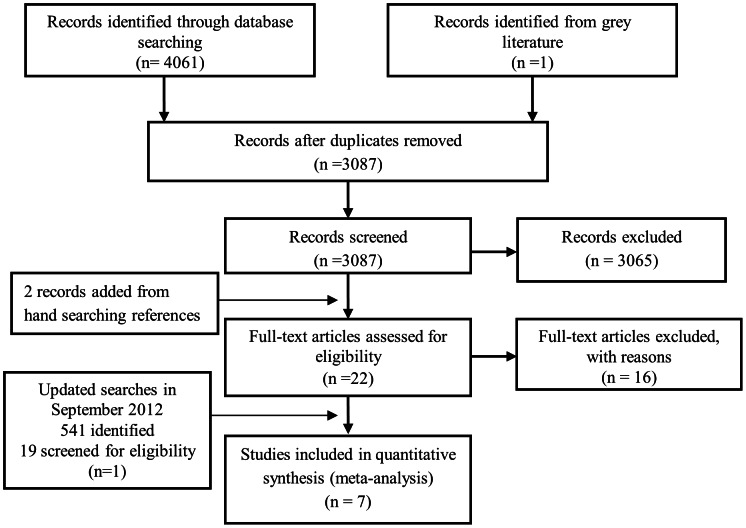
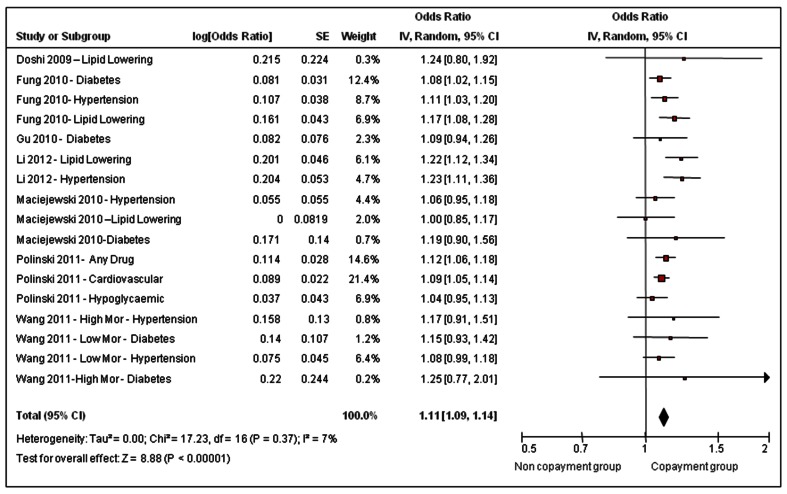
INTRODUCTION: Copayments are intended to decrease third party expenditure on pharmaceuticals, particularly those regarded as less essential. However, copayments are associated with decreased use of all medicines. Publicly insured populations encompass some vulnerable patient groups such as older individuals and low income groups, who may be especially susceptible to medication non-adherence when required to pay. Non-adherence has potential consequences of increased morbidity and costs elsewhere in the system. OBJECTIVE: To quantify the risk of non-adherence to prescribed medicines in publicly insured populations exposed to copayments. METHODS: The population of interest consisted of cohorts who received public health insurance. The intervention was the introduction of, or an increase, in copayment. The outcome was non-adherence to medications, evaluated using objective measures. Eight electronic databases and the grey literature were systematically searched for relevant articles, along with hand searches of references in review articles and the included studies. Studies were quality appraised using modified EPOC and EHPPH checklists. A random effects model was used to generate the meta-analysis in RevMan v5.1. Statistical heterogeneity was assessed using the I(2) test; p>0.1 indicated a lack of heterogeneity. RESULTS: Seven out of 41 studies met the inclusion criteria. Five studies contributed more than 1 result to the meta-analysis. The meta-analysis included 199,996 people overall; 74,236 people in the copayment group and 125,760 people in the non-copayment group. Average age was 71.75 years. In the copayment group, (verses the non-copayment group), the odds ratio for non-adherence was 1.11 (95% CI 1.09-1.14; P = <0.00001). An acceptable level of heterogeneity at I(2) = 7%, (p = 0.37) was observed. CONCLUSION: This meta-analysis showed an 11% increased odds of non-adherence to medicines in publicly insured populations where copayments for medicines are necessary. Policy-makers should be wary of potential negative clinical outcomes resulting from non-adherence, and also possible knock-on economic repercussions.
Overview
The claims and statistics of this paper haven’t been checked yet.
Free: it reads the open-access text and checks the first 5 claims that cite a source we can check. Create a free account to check every claim.
Integrity signals
Registry
Cites
Statistics
Figures
Verification
Claims the paper makes
The claims and statistics of this paper haven’t been checked yet.
Free: it reads the open-access text and checks the first 5 claims that cite a source we can check. Create a free account to check every claim.
Claims other papers make about this one
Each is checked against this paper’s own text: does it say what the citing paper says it does?
The cited source says what the claim attributes to it.
In the citing paper
“The meta-analysis of Sinnott et al. provides robust evidence for a negative impact of co-payments on adherence across different conditions [40].”
From Medication adherence influencing factors—an (updated) overview of systematic reviews (2019) · cites this paper as [40]
Self-check
Percentages, sums and reported differences re-computed from the paper’s own numbers.
The self-check needs the paper’s full text.
Citations
Cites
Pharmacological interventions for somatoform disorders in adults
Kleinstäuber, M., Witthöft, M., Steffanowski, A., van Marwijk, H., Hiller, W., & Lambert, M. J. (2014) · Cochrane Database of Systematic Reviews · doi:10.1002/14651858.cd010628.pub2 · Cited by 11,335
Turner, R. C., Fox, C., Matthews, McElroy, H. H., Cull, C. A., Holman, R. R., Neil, P., Hadden, D. R., Wright, D., Manley, E., et al. (1998) · The Lancet · Cited by 8,419
Osterberg, L., & Blaschke, T. (2005) · New England Journal of Medicine · doi:10.1056/nejmra050100 · Cited by 7,974
Medication compliance and persistence: terminology and definitions
Cramer, J. A., Roy, A., Burrell, A., Fairchild, C. J., Fuldeore, M. J., Ollendorf, D. A., & Wong, P. K. (2008) · Value in Health · doi:10.1111/j.1524-4733.2007.00213.x · Cited by 2,220 · cited 1×
“Non-adherence is classified as any percentage of adherence ,80%, an arbitrary but accepted cut-off [36,41].”
BackgroundImpact of Medication Adherence on Hospitalization Risk and Healthcare Cost
Sokol, M. C., McGuigan, K. A., Verbrugge, R. R., & Epstein, R. S. (2005) · Medical Care · doi:10.1097/01.mlr.0000163641.86870.af · Cited by 1,729 · cited 2×
“These results have financial implications as described by Sokol et al, who demonstrated that adherence to medicines used to treat diabetes and hypercholesteremia reduces expenditure in overall health costs [27].”
BackgroundHaynes, R. B., Taylor, D. W., & Sackett, D. L. (1979) · DigitalGeorgetown (Georgetown University Library) · Cited by 1,405
Ho, P. M., Rumsfeld, J. S., Masoudi, F. A., McClure, D. L., Plomondon, M. E., Steiner, J. F., & Magid, D. J. (2006) · Archives of Internal Medicine · doi:10.1001/archinte.166.17.1836 · Cited by 1,135
Methods for evaluation of medication adherence and persistence using automated databases
Andrade, S. E., Kahler, K. H., Frech, F., & Chan, K. A. (2006) · Pharmacoepidemiology and Drug Safety · doi:10.1002/pds.1230 · Cited by 1,079 · cited 2×
“Four commonly used objective measures of adherence were included in search terms; Proportion of Days Covered (PDC), Medication Possession Ratio (MPR), Daily Defined Dose (DDD) and the ReComp algorithm [36,37,40].”
BackgroundMethodGoldman, D. P., Joyce, G. F., & Zheng, Y. (2007) · JAMA · doi:10.1001/jama.298.1.61 · Cited by 874 · cited 2×
“This review and other similar reviews which studied utilization as the main outcome, have quantified the effects of copayments on utilization/ adherence by estimating price elasticities of demand [16,18,33,34].”
Background
Research works printed but not linked: 4
- Tamblyn R, Laprise R, Hanley JA, Abrahamowicz M, Scott S, et al (2001) Adverse events associated with prescription drug cost-sharing among poor and elderly persons. Journal of the American Medical Association 285: 421– 429. 11242426 · DOI · Paper page
- Effective Practice and Organisation of Care Review Group - Cochrane Data Collection Checklist http://epoc.cochrane.org/sites/epoc.cochrane.org/files/uploads/datacollectionchecklist.pdf. Last accessed from http://epoc.cochrane.org April 2013.
- RevMan (2011) Review Manager (RevMan) [Computer program]. Version 5.1. Copenhagen: The Nordic Cochrane Centre, The Cochrane Collaboration, 2011.
- Jha Ak Fau - Aubert RE, Aubert Re Fau - Yao J, Yao J Fau - Teagarden JR, Teagarden Jr Fau - Epstein RS, Epstein RS (2012) Greater adherence to diabetes drugs is linked to less hospital use and could save nearly $5 billion annually. Health affairs (Project Hope). 22869663 · DOI · Paper page
Cited by
Medication adherence influencing factors—an (updated) overview of systematic reviews
Gast, A., & Mathes, T. (2019) · Systematic Reviews · doi:10.1186/s13643-019-1014-8 · Cited by 560
“…assessing treatment adherence via objective or self-reporting measures Studies considering employment as a possible adherence influencing factor Sinnott 2013 1946 to September 2012 Participants received healthcare from a public insurance scheme Comparator group was the same population/similar…”
MethodAdes, P. A., Keteyian, S. J., Wright, J. S., Hamm, L. F., Lui, K., Newlin, K., Shepard, D. S., & Thomas, R. J. (2017) · Mayo Clinic Proceedings · doi:10.1016/j.mayocp.2016.10.014 · Cited by 449
“Although not all patients have copayments for CR sessions, insurers can reduce or eliminate these co-payments or cost share to encourage more and longer participation, which leads to better outcomes for users.(39,40)”
Factors associated with low adherence to medicine treatment for chronic diseases in Brazil
Tavares, N. U. L., Bertoldi, A. D., Mengue, S. S., Arrais, P. S. D., Luiza, V. L., Oliveira, M. A., Ramos, L. R., Farías, M. R., & Pizzol, T. D. S. D. (2016) · Revista de Saúde Pública · doi:10.1590/s1518-8787.2016050006150 · Cited by 188
Adherence influencing factors – a systematic review of systematic reviews
Mathes, T., Jaschinski, T., & Pieper, D. (2014) · Archives of Public Health · doi:10.1186/2049-3258-72-37 · Cited by 183
“For example it was not possible to include the effect size and number of included patients in the evidence synthesis because with one exception [16] none of the studies provide information on these.”
BackgroundInfluentialEffective healthcare cost-containment policies: A systematic review
Stadhouders, N., Kruse, F., Tanke, M., Koolman, X., & Jeurissen, P. (2019) · Health Policy · doi:10.1016/j.healthpol.2018.10.015 · Cited by 161
Metadata
- Authors
- Sinnott, S.-J., Buckley, C., O′Riordan, D., Bradley, C., & Whelton, H.
- Affiliations
- University College Cork (IE)
- Corresponding author
- Sinnott, Sarah-Jo
- Venue
- PLoS ONE
- Publisher
- Public Library of Science (PLoS)
- Published
- 2013-05-28
- Volume
- 8
- Issue
- 5
- Pages
- e64914
- ISSN
- 1932-6203 (ISSN-L)
- PMC
- PMC3665806
- OpenAlex
- W2036514691
- Semantic Scholar
- bd1cf61cd556002d11dada05cc628a6370b8899e
- Cited by
- 124
- References
- 60
- Citations by year
- 2026: 3 · 2025: 6 · 2024: 6 · 2023: 7 · 2022: 8 · 2021: 14 · 2020: 9 · 2019: 15 · 2018: 9 · 2017: 15 · 2016: 13 · 2015: 8 · 2014: 10 · 2013: 1
- FWCI
- 1.47
- Type
- journal article
- Language
- en
- Open access
- gold
- doi.org
- Locations
- PLoS ONE (publishedVersion, cc-by)
- Europe PMC (PubMed Central) (publishedVersion, cc-by)
- PubMed Central (publishedVersion, cc-by)
- PubMed (publishedVersion)
- LSHTM Research Online (London School of Hygiene and Tropical Medicine) (acceptedVersion)
- Arrow@dit (Dublin Institute of Technology) (submittedVersion, cc-by)
- RePEc: Research Papers in Economics (submittedVersion)
- Cork Open Research Archive (University College Cork, Ireland) (submittedVersion, cc-by)
- DOAJ (DOAJ: Directory of Open Access Journals) (submittedVersion)
- Figshare (submittedVersion, cc-by)
- Funders
- Health Research Board (PHD/2007/16)
- University College Cork
- Topics
- Health Sciences › Medicine › Family Practice › Medication Adherence and Compliance
- Social Sciences › Economics, Econometrics and Finance › Economics and Econometrics › Healthcare Policy and Management
- Social Sciences › Economics, Econometrics and Finance › Economics and Econometrics › Pharmaceutical Economics and Policy
- Keywords
- medication adherence, medication non-adherence, public health insurance, pharmaceutical expenditure, older adults, low-income populations, health policy
- MeSH terms
- Aged, Aged, 80 and over, Algorithms, Female, Humans, Insurance, Health, Male, Drug Prescriptions, Public Health, Quality Assurance, Health Care, Cohort Studies, Publication Bias, Medication Adherence, Prescription Drugs
About these checks
Registry, retraction, Cites and statistics results are computed, not judged, with one exception: a printed reference that no index lists is read once by a model before it counts as a citation error. Claims are extracted by a model and kept only when their quote appears verbatim in the text; each cited source is then checked, with a model’s help, for whether it says what the claim relies on. Those verdicts can be wrong — read the claim’s quote and the cited source before relying on one.
Statistics and arithmetic are recomputed, not judged.
Confidence bands are shown only for fields calibrated on our annotated test set. None is calibrated yet, so no band is shown.
What counts as a claim ›How we measure confidence ›How we check this ›
Are you an author, or do you see a problem with this page? Request a review
Data sources
Bibliographic data: Semantic Scholar, OpenAlex, Crossref.
Contains information from the Semantic Scholar Academic Graph Datasets, made available under the ODC Attribution License (ODC-BY 1.0).
Semantic Scholar’s data is described in: Kinney, R., et al. (2023). The Semantic Scholar Open Data Platform. arXiv:2301.10140.
