

The DOI matches its Crossref record; 111 of the 111 references it cites were found in a registry or an index.
Circadian Adaptation to Night Shift Work Influences Sleep, Performance, Mood and the Autonomic Modulation of the Heart
Open accessAbstract
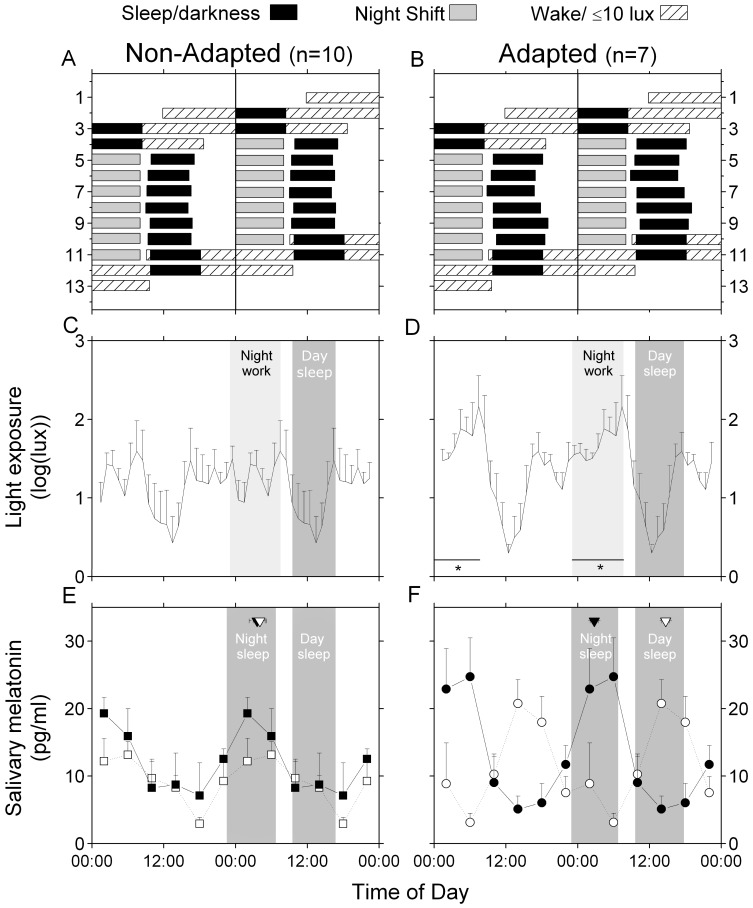
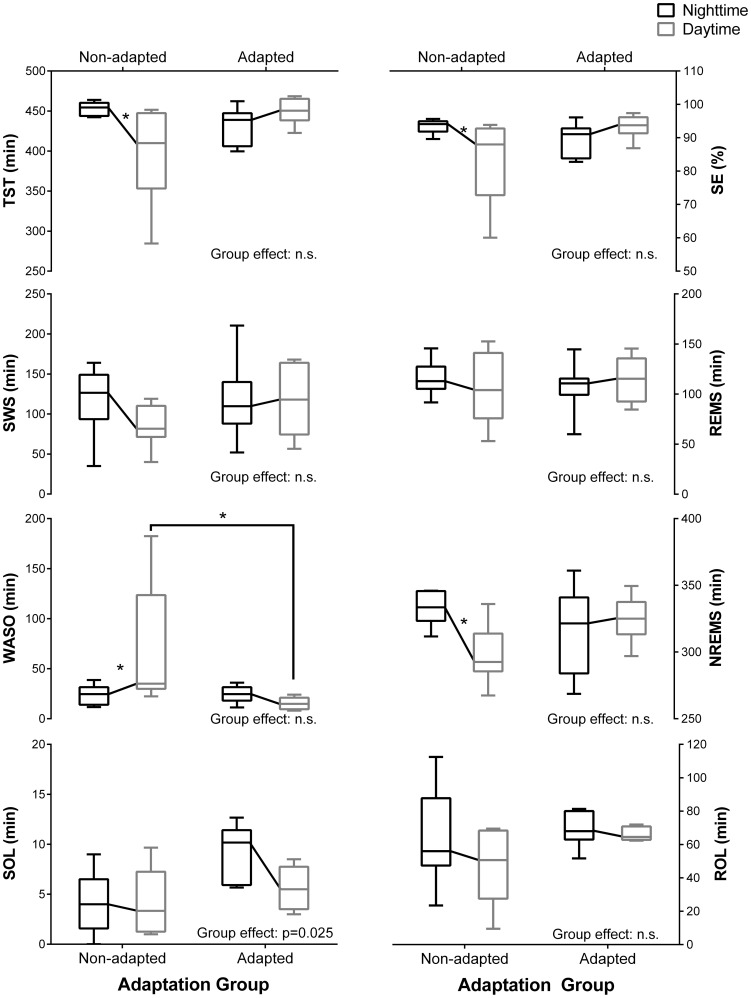
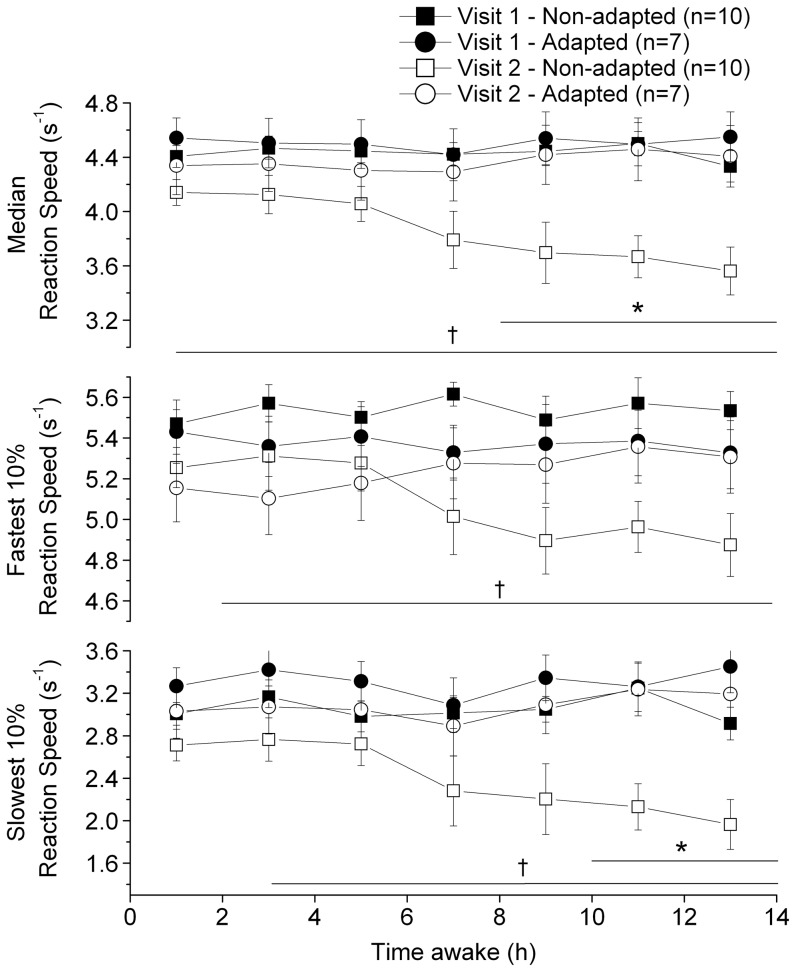
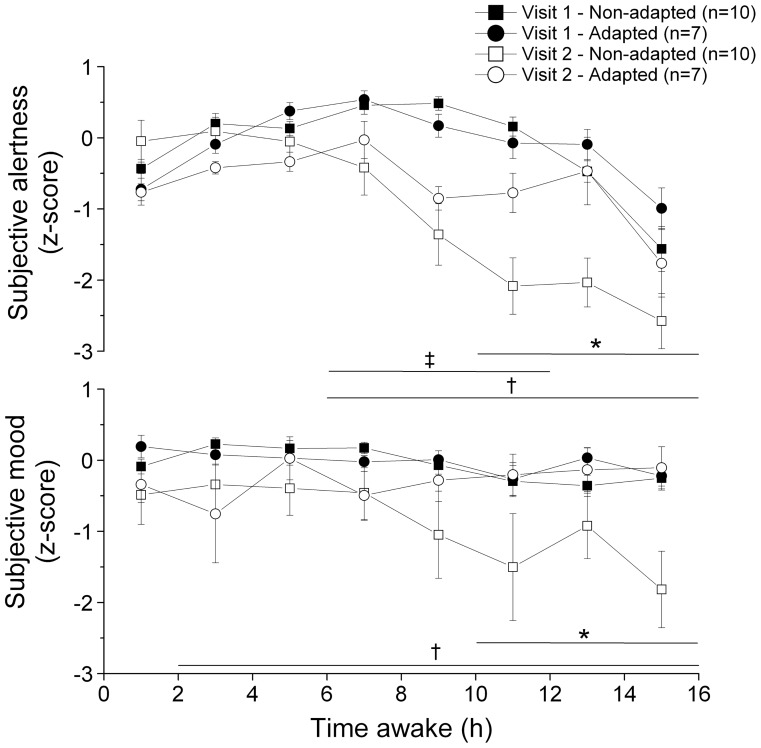
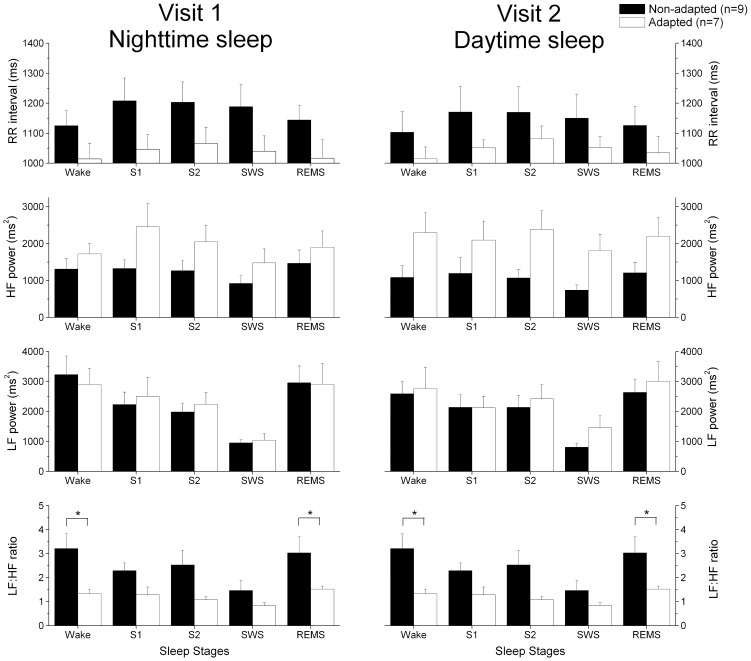
Our aim was to investigate how circadian adaptation to night shift work affects psychomotor performance, sleep, subjective alertness and mood, melatonin levels, and heart rate variability (HRV). Fifteen healthy police officers on patrol working rotating shifts participated to a bright light intervention study with 2 participants studied under two conditions. The participants entered the laboratory for 48 h before and after a series of 7 consecutive night shifts in the field. The nighttime and daytime sleep periods were scheduled during the first and second laboratory visit, respectively. The subjects were considered "adapted" to night shifts if their peak salivary melatonin occurred during their daytime sleep period during the second visit. The sleep duration and quality were comparable between laboratory visits in the adapted group, whereas they were reduced during visit 2 in the non-adapted group. Reaction speed was higher at the end of the waking period during the second laboratory visit in the adapted compared to the non-adapted group. Sleep onset latency (SOL) and subjective mood levels were significantly reduced and the LF∶HF ratio during daytime sleep was significantly increased in the non-adapted group compared to the adapted group. Circadian adaptation to night shift work led to better performance, alertness and mood levels, longer daytime sleep, and lower sympathetic dominance during daytime sleep. These results suggest that the degree of circadian adaptation to night shift work is associated to different health indices. Longitudinal studies are required to investigate long-term clinical implications of circadian misalignment to atypical work schedules.
Overview
The claims and statistics of this paper haven’t been checked yet.
Run the check — free, no account needed. It reads the open-access text and checks the sources it cites.
Integrity signals
Registry
Cites
Statistics
Figures
Verification
Claims the paper makes
The claims and statistics of this paper haven’t been checked yet.
Run the check — free, no account needed. It reads the open-access text and checks the sources it cites.
Claims other papers make about this one
Each is checked against this paper’s own text: does it say what the citing paper says it does?
In the citing paper
“Sympathovagal balance is then disrupted [72], as indicated by changes in heart rate variability that are believed to reflect increased risk of cardiovascular disease (CVD) [73].”
From Shift Work: Disrupted Circadian Rhythms and Sleep—Implications for Health and Well-being (2017) · cites this paper as [73]
In the citing paper
“Boudreau and colleagues found that circadian adaptation to night work resulted in improved sleep, improved performance, and improved heart rate variability (Boudreau et al., 2013).”
From Addressing sleep disturbances: an opportunity to prevent cardiometabolic disease? (2014) · cites this paper as Boudreau et al., 2013
Self-check
Percentages, sums and reported differences re-computed from the paper’s own numbers.
The self-check needs the paper’s full text.
Citations
Cites
Heart Rate Variability: Standards of Measurement, Physiological Interpretation, and Clinical Use
Electrophysiology, T. F. O. T. E. S. O. C. T. N. A. (1996) · Circulation · doi:10.1161/01.cir.93.5.1043 · Cited by 17,159
Heart rate variability: Standards of measurement, physiological interpretation, and clinical use
Malik, M., Bigger, J. T., Camm, A. J., Kleiger, R. E., Malliani, A., Moss, A. J., & Schwartz, P. J. (1996) · European Heart Journal · doi:10.1093/oxfordjournals.eurheartj.a014868 · Cited by 15,289
Rechtschaffen, A. (1968) · Medical Entomology and Zoology · Cited by 11,772
(2007) · Cited by 6,530
A self-assessment questionnaire to determine morningness- eveningness in human circadian rhythms
Home, J. K. (1976) · Medical Entomology and Zoology · Cited by 4,783
(1976) · PubMed · Cited by 3,979
Impact of sleep debt on metabolic and endocrine function
Spiegel, K., Leproult, R., & Van Cauter, E. (1999) · The Lancet · doi:10.1016/s0140-6736(99)01376-8 · Cited by 3,668
Van Dongen, H. P. A., Maislin, G., Mullington, J. M., & Dinges, D. F. (2003) · Sleep · doi:10.1093/sleep/26.2.117 · Cited by 3,173
Dinges, D. F., Pack, F. M., Williams, K., Gillen, K. A., Powell, J. W., Ott, G. E., Trasande, C. A., & Pack, A. I. (1997) · SLEEP · doi:10.1093/sleep/20.4.267 · Cited by 2,018 · cited 3×
“Sleep restriction can also contribute to impaired mood, as a week of sleep restriction to 4–5 hours/night can lead to increased sleepiness and reduced subjective mood levels [11].”
BackgroundResult
Research works printed but not linked: 1
- Wyszecki G, Stiles WS (2000) Color Science: Concepts and Methods, Quantitative Data and Formulae (2nd eds.): John Wiley & Sons.
Cited by
Sorted by citations
Health consequences of shift work and insufficient sleep
Kecklund, G., & Axelsson, J. (2016) · BMJ · doi:10.1136/bmj.i5210 · Cited by 1,195
Impacts of shift work on sleep and circadian rhythms
Boivin, D. B., & Boudreau, P. (2014) · Pathologie Biologie · doi:10.1016/j.patbio.2014.08.001 · Cited by 639
Self-citationShift Work: Disrupted Circadian Rhythms and Sleep—Implications for Health and Well-being
James, S. M., Honn, K. A., Gaddameedhi, S., & Van Dongen, H. P. A. (2017) · Current Sleep Medicine Reports · doi:10.1007/s40675-017-0071-6 · Cited by 517
Disturbance of the Circadian System in Shift Work and Its Health Impact
Boivin, D. B., Boudreau, P., & Kosmadopoulos, A. (2021) · Journal of Biological Rhythms · doi:10.1177/07487304211064218 · Cited by 580
“These changes result in circadian misalignment, which describes a state of desynchronization between circadian clocks and the environment (Boivin and James, 2002a; Boudreau et al., 2013a; Skene et al., 2018; Kervezee et al., 2019a).”
BackgroundSelf-citationRole of the circadian system in cardiovascular disease
Thosar, S. S., Butler, M. P., & Shea, S. A. (2018) · Journal of Clinical Investigation · doi:10.1172/jci80590 · Cited by 443
“org Volume 128 Number 6 June 2018 bright light during night shifts and reducing light exposure following the end of night shifts (148–150) helps shift the circadian pacemaker and does improve performance, mood, and reduces sympathetic activity in night-shift workers who sleep during the daytime (151).”
Metadata
- Authors
- Boudreau, P., Dumont, G. A., & Boivin, D. B.
- Affiliations
- Douglas Mental Health University Institute (CA)
- University of British Columbia (CA)
- Corresponding author
- Boivin, Diane B.
- Venue
- PLoS ONE
- Publisher
- Public Library of Science (PLoS)
- Published
- 2013-07-26
- Volume
- 8
- Issue
- 7
- Pages
- e70813
- ISSN
- 1932-6203 (ISSN-L)
- PMC
- PMC3724779
- OpenAlex
- W2094064988
- Cited by
- 128
- References
- 111
- Citations by year
- 2026: 5 · 2025: 10 · 2024: 9 · 2023: 12 · 2022: 13 · 2021: 13 · 2020: 8 · 2019: 17 · 2018: 15 · 2017: 6 · 2016: 9 · 2015: 6 · 2014: 5
- FWCI
- 9.01
- Type
- journal article
- Language
- en
- Open access
- gold
- doi.org
- Locations
- PLoS ONE (publishedVersion, cc-by)
- Europe PMC (PubMed Central) (publishedVersion, cc-by)
- PubMed Central (publishedVersion, cc-by)
- PubMed (publishedVersion)
- DOAJ (DOAJ: Directory of Open Access Journals) (submittedVersion)
- Figshare (submittedVersion, cc-by)
- PhareSST (submittedVersion)
- Funders
- Servier
- Topics
- Social Sciences › Psychology › Experimental and Cognitive Psychology › Sleep and Work-Related Fatigue
- Life Sciences › Neuroscience › Endocrine and Autonomic Systems › Circadian rhythm and melatonin
- Social Sciences › Psychology › Experimental and Cognitive Psychology › Sleep and related disorders
- Keywords
- circadian adaptation, night shift work, rotating shifts, melatonin, heart rate variability, sleep quality, sleep latency, psychomotor performance, subjective alertness, mood, sympathetic dominance, circadian misalignment, police officers
- MeSH terms
- Adaptation, Physiological, Adult, Affect, Circadian Rhythm, Darkness, Female, Heart Rate, Humans, Male, Melatonin, Psychomotor Performance, Sleep, Wakefulness, Work Schedule Tolerance
About these checks
Registry, retraction, Cites and statistics results are computed, not judged, with one exception: a printed reference that no index lists is read once by a model before it counts as a citation error. Claims are extracted by a model and kept only when their quote appears verbatim in the text; each cited source is then checked, with a model’s help, for whether it says what the claim relies on. Those verdicts can be wrong — read the claim’s quote and the cited source before relying on one.
Statistics and arithmetic are recomputed, not judged.
Confidence bands are shown only for fields calibrated on our annotated test set. None is calibrated yet, so no band is shown.
What counts as a claim ›How we measure confidence ›How we check this ›
Are you an author, or do you see a problem with this page? Request a review
