

The DOI matches its Crossref record; 155 of the 157 references it cites were found in a registry or an index, and 2 are not checked yet.
Meta-Regression Analyses, Meta-Analyses, and Trial Sequential Analyses of the Effects of Supplementation with Beta-Carotene, Vitamin A, and Vitamin E Singly or in Different Combinations on All-Cause Mortality: Do We Have Evidence for Lack of Harm?
Open accessAbstract
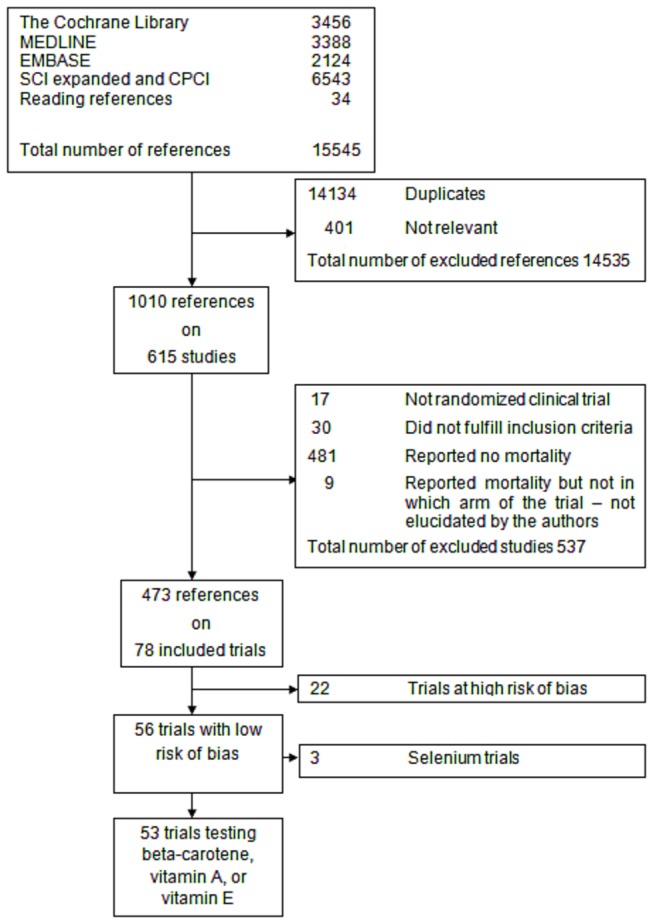
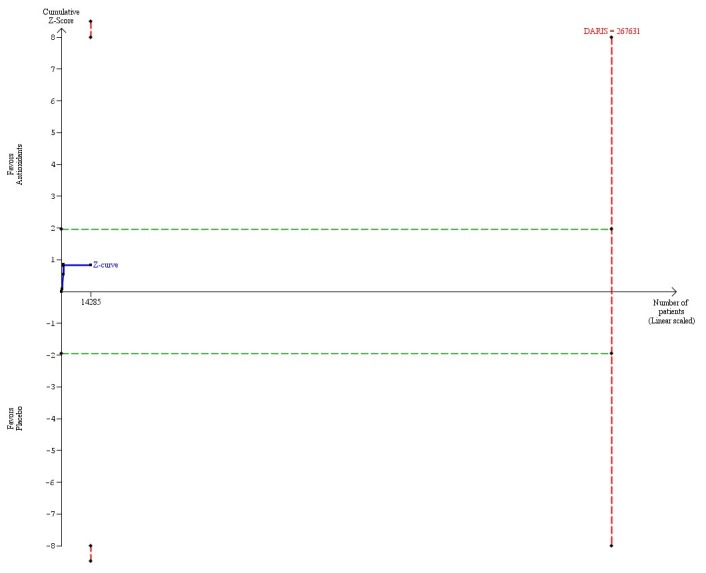
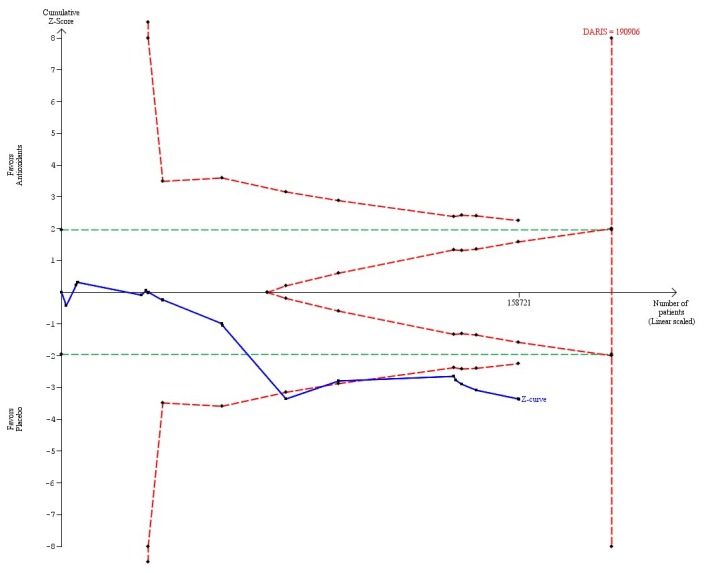
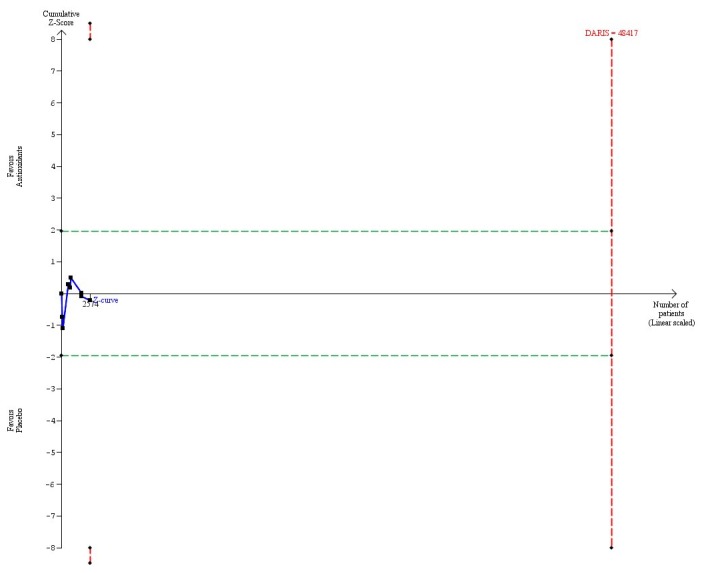
BACKGROUND AND AIMS: Evidence shows that antioxidant supplements may increase mortality. Our aims were to assess whether different doses of beta-carotene, vitamin A, and vitamin E affect mortality in primary and secondary prevention randomized clinical trials with low risk of bias. METHODS: The present study is based on our 2012 Cochrane systematic review analyzing beneficial and harmful effects of antioxidant supplements in adults. Using random-effects meta-analyses, meta-regression analyses, and trial sequential analyses, we examined the association between beta-carotene, vitamin A, and vitamin E, and mortality according to their daily doses and doses below and above the recommended daily allowances (RDA). RESULTS: We included 53 randomized trials with low risk of bias (241,883 participants, aged 18 to 103 years, 44.6% women) assessing beta-carotene, vitamin A, and vitamin E. Meta-regression analysis showed that the dose of vitamin A was significantly positively associated with all-cause mortality. Beta-carotene in a dose above 9.6 mg significantly increased mortality (relative risk (RR) 1.06, 95% confidence interval (CI) 1.02 to 1.09, I(2) = 13%). Vitamin A in a dose above the RDA (> 800 µg) did not significantly influence mortality (RR 1.08, 95% CI 0.98 to 1.19, I(2) = 53%). Vitamin E in a dose above the RDA (> 15 mg) significantly increased mortality (RR 1.03, 95% CI 1.00 to 1.05, I(2) = 0%). Doses below the RDAs did not affect mortality, but data were sparse. CONCLUSIONS: Beta-carotene and vitamin E in doses higher than the RDA seem to significantly increase mortality, whereas we lack information on vitamin A. Dose of vitamin A was significantly associated with increased mortality in meta-regression. We lack information on doses below the RDA. BACKGROUND: All essential compounds to stay healthy cannot be synthesized in our body. Therefore, these compounds must be taken through our diet or obtained in other ways [1]. Oxidative stress has been suggested to cause a variety of diseases [2]. Therefore, it is speculated that antioxidant supplements could have a potential role in preventing diseases and death. Despite the fact that a normal diet in high-income countries may provide sufficient amounts of antioxidants [3,4], more than one third of adults regularly take antioxidant supplements [5,6].
Overview
The claims and statistics of this paper haven’t been checked yet.
Run the check — free, no account needed. It reads the open-access text and checks the sources it cites.
Integrity signals
Registry
Cites
Statistics
Figures
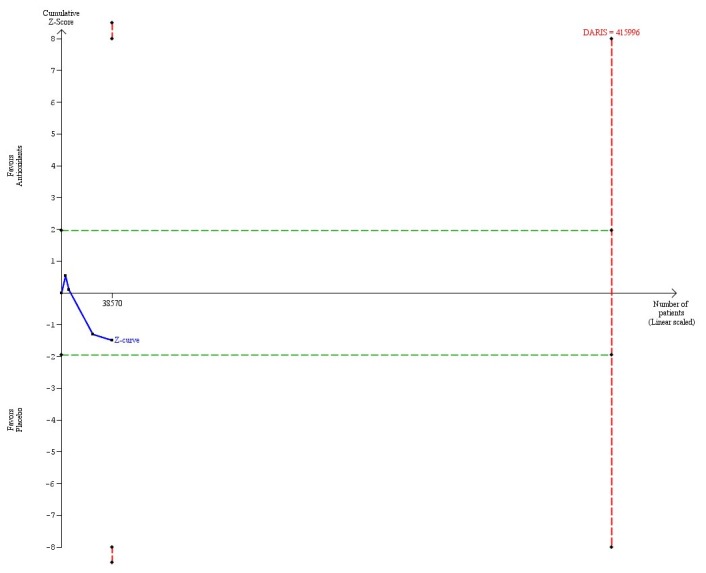
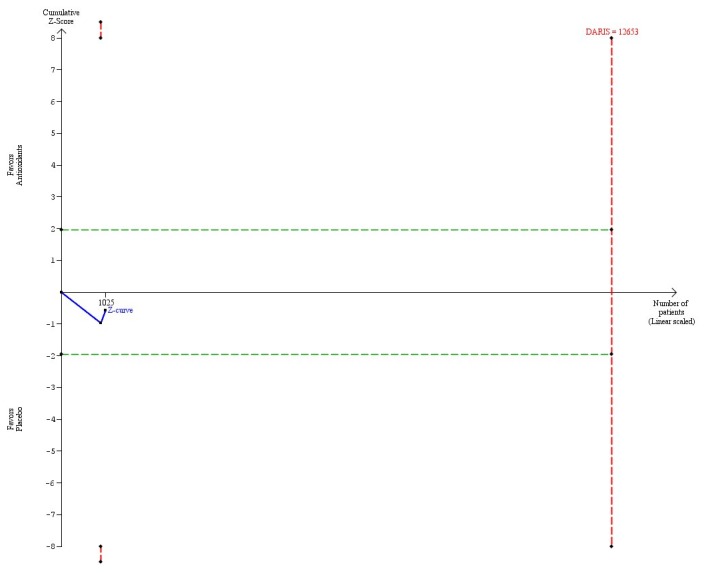
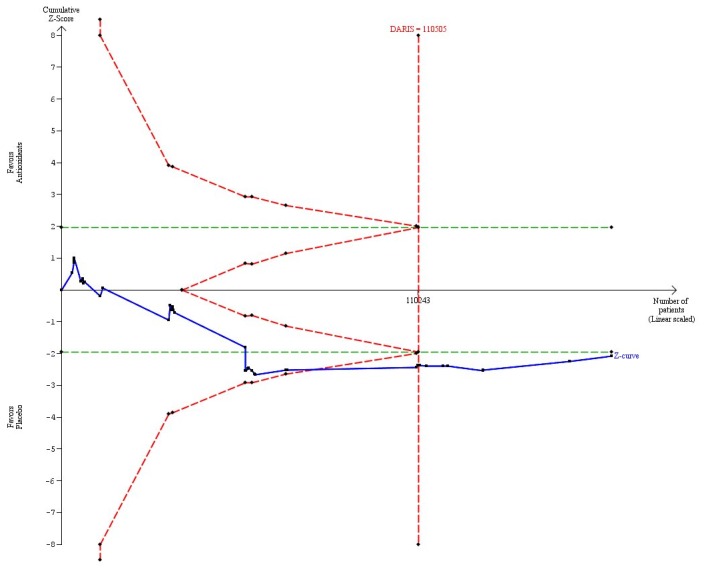
Verification
Claims the paper makes
The claims and statistics of this paper haven’t been checked yet.
Run the check — free, no account needed. It reads the open-access text and checks the sources it cites.
Claims other papers make about this one
Each is checked against this paper’s own text: does it say what the citing paper says it does?
The source backs part of the claim, not all of it — or backs it for a different population, condition or comparison.
In the citing paper
“Nonetheless, the impact of vitamin E supplementation on cardiovascular mortality or prostate cancer is still not settled and clinical intervention studies have shown no bene fi t.”
From EASL-EASD-EASO Clinical Practice Guidelines on the management of metabolic dysfunction-associated steatotic liver disease (MASLD). (2024) · cites this paper as [369]
Experimental — accuracy not yet measured
Self-check
Percentages, sums and reported differences re-computed from the paper’s own numbers.
The self-check needs the paper’s full text.
Citations
Cites
2 retracted
Chandra, R. K. (1992) · The Lancet · doi:10.1016/0140-6736(92)93151-c · Cited by 523
RetractedChandra, R. K. (2001) · Nutrition · doi:10.1016/s0899-9007(01)00610-4 · Cited by 121
RetractedQuantifying heterogeneity in a meta‐analysis
Higgins, J. P. T., & Thompson, S. G. (2002) · Statistics in Medicine · doi:10.1002/sim.1186 · Cited by 36,763
Cochrane Handbook for Systematic Reviews of Interventions: Cochrane Book Series
(2008) · doi:10.1002/9780470712184 · Cited by 25,048
Cochrane Handbook for Systematic Reviews of Interventions
Higgins, J. P. T., Green, S., & Ben Van Den, A. (2020) · International Coaching Psychology Review · doi:10.53841/bpsicpr.2020.15.2.123 · Cited by 5,670
Cochrane Handbook for Systematic Reviews of Interventions Version 5.0.1. The Cochrane Collaboration
Higgins, J., Green, S. R., & Higgins, J. (2008) · Cited by 5,544
Trumbo (2001) · doi:10.1016/s0002-8223(01)00078-5 · Cited by 4,852
Oxidative stress: oxidants and antioxidants
Sies, H. (1997) · Experimental Physiology · doi:10.1113/expphysiol.1997.sp004024 · Cited by 4,577
Institute of Medicine (2001) · National Academies Press eBooks · doi:10.17226/10026 · Cited by 4,239
Research works printed but not linked: 3
- 2012, Review Manager (RevMan), version 5.2 Copenhagen
- J Wetterslev, 2012, Trial sequential analysis: methods and software for cumulative meta-analyses, Cochrane Methods Cochrane Database Syst Rev Suppl, 1, 29
- 2001, Collaborative Group of the Primary Prevention, Low-dose aspirin and vitamin E in people at cardiovascular risk
Cited by
Sorted by citations
Neuschwander-Tetri, B. A., Loomba, R., Sanyal, A. J., Lavine, J. E., Van Natta, M. L., Abdelmalek, M. F., Chalasani, N., Dasarathy, S., Diehl, A. M., Hameed, B., et al. (2015) · The Lancet · doi:10.1016/s0140-6736(14)61933-4 · Cited by 2,237
Tacke, F., Horn, P., Wai-Sun Wong, V., Ratziu, V., Bugianesi, E., Francque, S., Zelber-Sagi, S., Valenti, L., Roden, M., Schick, F., et al. (2024) · Journal of Hepatology · doi:10.1016/j.jhep.2024.04.031 · Cited by 2,210
Vos, M. B., Abrams, S. H., Barlow, S. E., Caprio, S., Daniels, S. R., Kohli, R., Mouzaki, M., Sathya, P., Schwimmer, J. B., Sundaram, S. S., et al. (2016) · Journal of Pediatric Gastroenterology and Nutrition · doi:10.1097/mpg.0000000000001482 · Cited by 1,055
Pimentel-Nunes, P., Libânio, D., Marcos-Pinto, R., Areia, M., Leja, M., Esposito, G., Garrido, M., Kikuste, I., Megraud, F., Matysiak-Budnik, T., et al. (2019) · Endoscopy · doi:10.1055/a-0859-1883 · Cited by 993
(2024) · Obesity Facts · doi:10.1159/000539371 · Cited by 522
Metadata
- Authors
- Bjelakovic, G., Nikolova, D., & Gluud, C.
- Affiliations
- Copenhagen University Hospital (DK)
- Venue
- PLoS ONE
- Publisher
- Public Library of Science (PLoS)
- Published
- 2013-09-06
- Volume
- 8
- Issue
- 9
- Pages
- e74558
- ISSN
- 1932-6203 (ISSN-L)
- PMC
- PMC3765487
- OpenAlex
- W2081764095
- Cited by
- 183
- References
- 155
- Citations by year
- 2026: 5 · 2025: 9 · 2024: 8 · 2023: 16 · 2022: 13 · 2021: 18 · 2020: 11 · 2019: 18 · 2018: 18 · 2017: 15 · 2016: 18 · 2015: 23 · 2014: 9 · 2013: 1
- FWCI
- 12.67
- Type
- journal article
- Language
- en
- Open access
- gold
- doi.org
- Locations
- PLoS ONE (publishedVersion, cc-by)
- Europe PMC (PubMed Central) (publishedVersion, other-oa)
- PubMed Central (publishedVersion, cc-by)
- PubMed (publishedVersion)
- RePEc: Research Papers in Economics (submittedVersion)
- DOAJ (DOAJ: Directory of Open Access Journals) (submittedVersion, cc-by-sa)
- Funders
- Gentofte Hospital
- Rigshospitalet
- Copenhagen Trial Unit, Centre for Clinical Intervention Research
- Topics
- Health Sciences › Medicine › Biochemistry (medical) › Antioxidant Activity and Oxidative Stress
- Health Sciences › Nursing › Nutrition and Dietetics › Vitamin C and Antioxidants Research
- Health Sciences › Medicine › Public Health, Environmental and Occupational Health › Nutrition and Health Studies
- Keywords
- antioxidant supplements, beta-carotene, vitamin A, vitamin E, all-cause mortality, dose-response relationship, recommended daily allowance, vitamin A toxicity, oxidative stress, primary and secondary prevention, randomized controlled trials, trial sequential analysis, meta-regression
- MeSH terms
- Adolescent, Adult, Aged, Aged, 80 and over, Drug Combinations, Female, Humans, Male, Middle Aged, Mortality, Regression Analysis, Vitamin A, Vitamin E, Randomized Controlled Trials as Topic, beta Carotene, Dietary Supplements
About these checks
Registry, retraction, Cites and statistics results are computed, not judged, with one exception: a printed reference that no index lists is read once by a model before it counts as a citation error. Claims are extracted by a model and kept only when their quote appears verbatim in the text; each cited source is then checked, with a model’s help, for whether it says what the claim relies on. Those verdicts can be wrong — read the claim’s quote and the cited source before relying on one.
Statistics and arithmetic are recomputed, not judged.
Confidence bands are shown only for fields calibrated on our annotated test set. None is calibrated yet, so no band is shown.
What counts as a claim ›How we measure confidence ›How we check this ›
Are you an author, or do you see a problem with this page? Request a review
