

Extreme Learning Machine-Based Classification of ADHD Using Brain Structural MRI Data
Open accessThe DOI matches its Crossref record; 56 of the 56 references it cites were found in a registry or an index.
Abstract
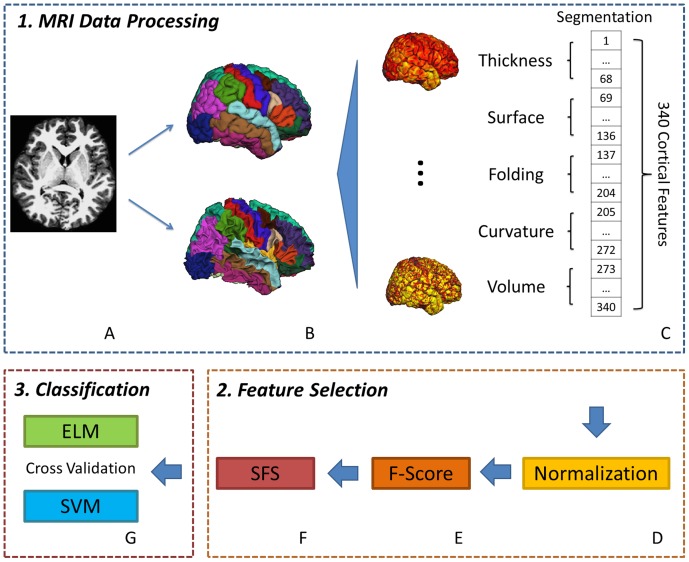
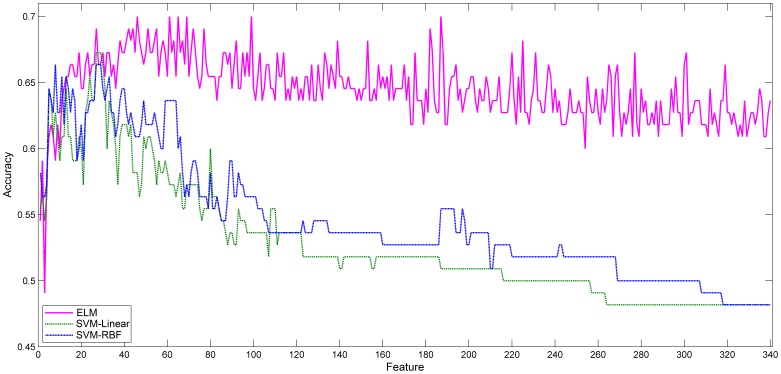
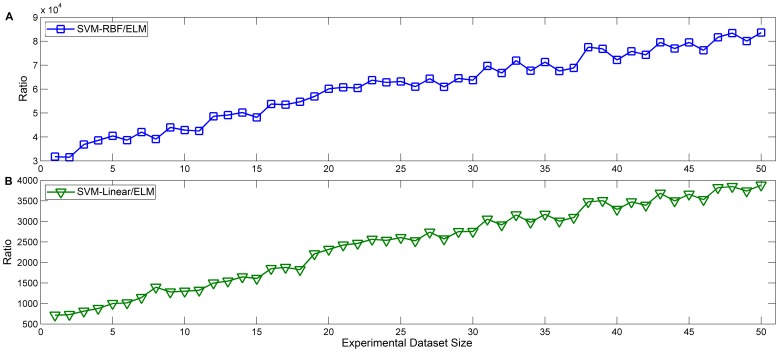
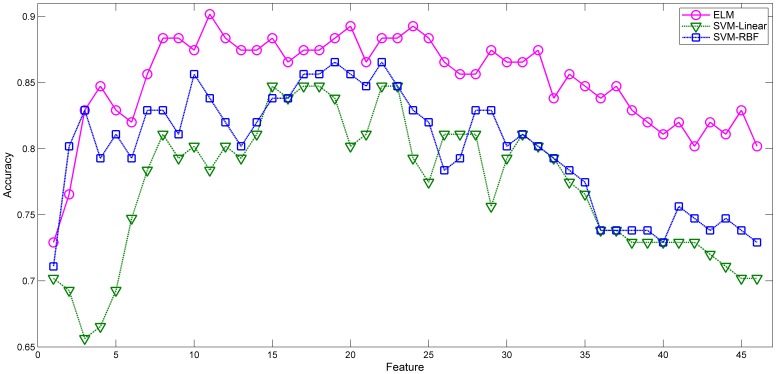
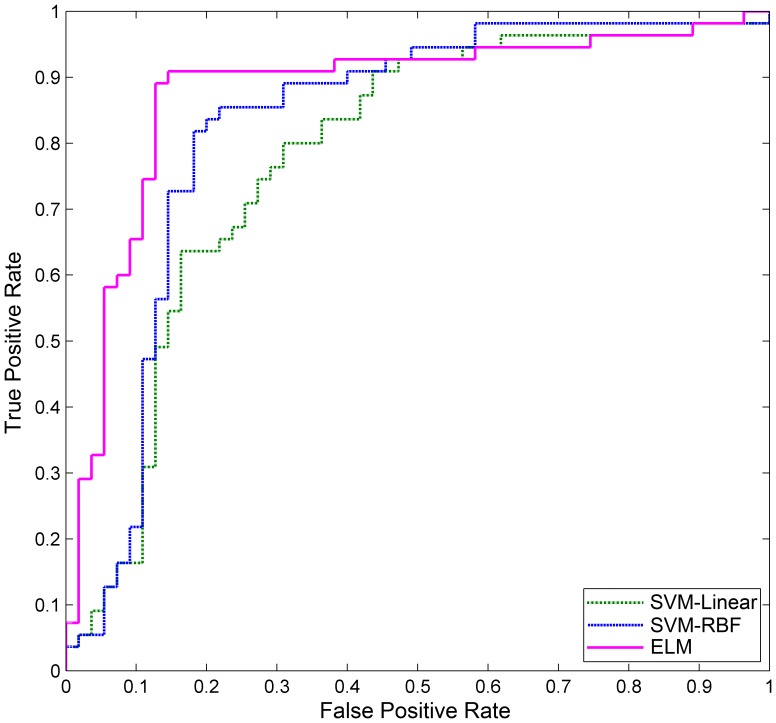
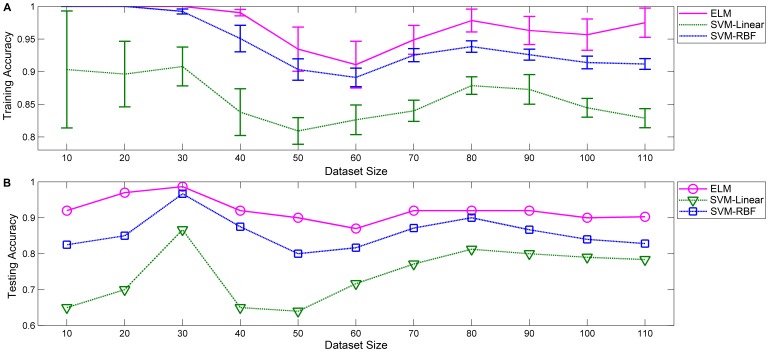
BACKGROUND: Effective and accurate diagnosis of attention-deficit/hyperactivity disorder (ADHD) is currently of significant interest. ADHD has been associated with multiple cortical features from structural MRI data. However, most existing learning algorithms for ADHD identification contain obvious defects, such as time-consuming training, parameters selection, etc. The aims of this study were as follows: (1) Propose an ADHD classification model using the extreme learning machine (ELM) algorithm for automatic, efficient and objective clinical ADHD diagnosis. (2) Assess the computational efficiency and the effect of sample size on both ELM and support vector machine (SVM) methods and analyze which brain segments are involved in ADHD. METHODS: High-resolution three-dimensional MR images were acquired from 55 ADHD subjects and 55 healthy controls. Multiple brain measures (cortical thickness, etc.) were calculated using a fully automated procedure in the FreeSurfer software package. In total, 340 cortical features were automatically extracted from 68 brain segments with 5 basic cortical features. F-score and SFS methods were adopted to select the optimal features for ADHD classification. Both ELM and SVM were evaluated for classification accuracy using leave-one-out cross-validation. RESULTS: We achieved ADHD prediction accuracies of 90.18% for ELM using eleven combined features, 84.73% for SVM-Linear and 86.55% for SVM-RBF. Our results show that ELM has better computational efficiency and is more robust as sample size changes than is SVM for ADHD classification. The most pronounced differences between ADHD and healthy subjects were observed in the frontal lobe, temporal lobe, occipital lobe and insular. CONCLUSION: Our ELM-based algorithm for ADHD diagnosis performs considerably better than the traditional SVM algorithm. This result suggests that ELM may be used for the clinical diagnosis of ADHD and the investigation of different brain diseases.
Overview
The claims and statistics of this paper haven’t been checked yet.
Free: it reads the open-access text and checks the first 5 claims that cite a source we can check. Create a free account to check every claim.
Integrity signals
Registry
Cites
Statistics
Figures
Verification
Claims the paper makes
The claims and statistics of this paper haven’t been checked yet.
Free: it reads the open-access text and checks the first 5 claims that cite a source we can check. Create a free account to check every claim.
Claims other papers make about this one
Each is checked against this paper’s own text: does it say what the citing paper says it does?
In the citing paper
“Discriminative brain regions included inferior frontal, temporal, occipital and insular cortices.”
From Progress and roadblocks in the search for brain-based biomarkers of autism and attention-deficit/hyperactivity disorder (2017) · cites this paper as [55]
In the citing paper
“Similarly, Peng et al.55 reported high classification accuracy (90.18%) using an extreme learning machine (ELM) algorithm with multiple cortical features.”
From Progress and roadblocks in the search for brain-based biomarkers of autism and attention-deficit/hyperactivity disorder (2017) · cites this paper as [55]
Self-check
Percentages, sums and reported differences re-computed from the paper’s own numbers.
The self-check needs the paper’s full text.
Citations
Cites
Cortes, C., & Vapnik, V. (1995) · Machine Learning · doi:10.1007/bf00994018 · Cited by 59,421
Cortes, C., & Vapnik, V. (1995) · Machine-mediated learning · doi:10.1023/a:1022627411411 · Cited by 48,445 · cited 1×
“According to Theorem 1 and Theorem 2 shown in the Appendix S1, the input weight w i and the hidden layer biases b i of SLFNs for ELM can be randomly assigned if the activation functions in the hidden layer are infinitely differentiable [37,38].”
MethodA default mode of brain function
Raichle, M. E., MacLeod, A. M., Snyder, A. Z., Powers, W. J., Gusnard, D. A., & Shulman, G. L. (2001) · Proceedings of the National Academy of Sciences · doi:10.1073/pnas.98.2.676 · Cited by 12,190
Feature selection: evaluation, application, and small sample performance
Jain, A., & Zongker, D. (1997) · IEEE Transactions on Pattern Analysis and Machine Intelligence · doi:10.1109/34.574797 · Cited by 2,171 · cited 1×
“Sequential forward selection (SFS) is a simple efficient feature selection approach [34].”
The Prevalence of DSM-IV Attention-Deficit/Hyperactivity Disorder: A Meta-Analytic Review
Willcutt, E. G. (2012) · Neurotherapeutics · doi:10.1007/s13311-012-0135-8 · Cited by 2,160 · cited 1×
“For instance, approximately 20% of children are misdiagnosed because they are younger than their classmates [2,3].”
BackgroundSmall sample size effects in statistical pattern recognition: Recommendations for practitioners
Raudys, S. J., & Jain, A. K. (1991) · IEEE Transactions on Pattern Analysis and Machine Intelligence · doi:10.1109/34.75512 · Cited by 1,384 · cited 2×
“One of the common practices in these previous studies is the utilization of hundreds of training samples to achieve better classification accuracy [44– 47].”
MethodSmall-World Anatomical Networks in the Human Brain Revealed by Cortical Thickness from MRI
He, Y., Chen, Z. J., & Evans, A. C. (2007) · Cerebral Cortex · doi:10.1093/cercor/bhl149 · Cited by 1,353 · cited 1×
“Anatomical MRI showed that the maturation of cortical thickness and the surface area developmental trajectory of the right prefrontal cortex is delayed in ADHD children relative to typically developing children [7].”
BackgroundMultimodal classification of Alzheimer's disease and mild cognitive impairment
Zhang, D., Wang, Y., Zhou, L., Yuan, H., & Shen, D. (2011) · NeuroImage · doi:10.1016/j.neuroimage.2011.01.008 · Cited by 1,314 · cited 1×
“One of the common practices in these previous studies is the utilization of hundreds of training samples to achieve better classification accuracy [44– 47].”
MethodMultiplexed echo planar imaging for sub-second whole brain FMRI and fast diffusion imaging
Feinberg, D. A., Moeller, S., Smith, S. M., Auerbach, E., Ramanna, S., Glasser, M. F., Miller, K. L., Ugurbil, K., & Yacoub, E. (2010) · PLoS ONE · doi:10.1371/journal.pone.0015710 · Cited by 1,296 · cited 1×
“Several studies using structural MRI have demonstrated anatomical differences be-tween ADHD and normal children [23–25].”
BackgroundZeng, L.-L., Shen, H., Liu, L., Wang, L., Li, B., Fang, P., Zhou, Z., Li, Y., & Hu, D. (2012) · Brain · doi:10.1093/brain/aws059 · Cited by 748 · cited 1×
“The permutation tests have been adapted to assess statistical significance of the classifier and its performance in many research fields [39,40].”
Neurochemical Modulation of Response Inhibition and Probabilistic Learning in Humans
Chamberlain, S. R., Müller, U., Blackwell, A. D., Clark, L., Robbins, T. W., & Sahakian, B. J. (2006) · Science · doi:10.1126/science.1121218 · Cited by 573 · cited 1×
“Atomoxetine improved inhibitory control and increased activation in the right inferior frontal gyrus [49,50].”
BackgroundMedical Imaging 2012: Image Processing
Haynor, D. R., & Sebastien Ourselin, A. (2012) · SPIE eBooks · Cited by 563
Rubia, K., Smith, A. B., Brammer, M. J., Toone, B., & Taylor, E. (2005) · American Journal of Psychiatry · doi:10.1176/appi.ajp.162.6.1067 · Cited by 537 · cited 1×
“Atomoxetine improved inhibitory control and increased activation in the right inferior frontal gyrus [49,50].”
BackgroundMotor functions of the parietal lobe
Fogassi, L., & Luppino, G. (2005) · Current Opinion in Neurobiology · doi:10.1016/j.conb.2005.10.015 · Cited by 488
Support vector machine-based classification of Alzheimer’s disease from whole-brain anatomical MRI
Magnin, B., Mesrob, L., Kinkingnéhun, S., Pélégrini-Issac, M., Colliot, O., Sarazin, M., Dubois, B., Lehéricy, S., & Benali, H. (2009) · Neuroradiology · doi:10.1007/s00234-008-0463-x · Cited by 470 · cited 2×
“In addition, the testing accuracy is not always satisfactory enough for practical classification applications [31].”
BackgroundNetwork homogeneity reveals decreased integrity of default-mode network in ADHD
Uddin, L. Q., Kelly, A. M. C., Biswal, B. B., Margulies, D. S., Shehzad, Z., Shaw, D., Ghaffari, M., Rotrosen, J., Adler, L. A., Castellanos, F. X., et al. (2008) · Journal of Neuroscience Methods · doi:10.1016/j.jneumeth.2007.11.031 · Cited by 452 · cited 1×
“However, these recordings are subject to electromagnetic interference from the external environment, such as 50 Hz power-line interference, or signal reductions by the human skull [9–12].”
BackgroundCognitive Psychology: Mind and Brain
Smith, E. E., & Kosslyn, S. M. (2007) · Cited by 419
Permutation Tests for Classification: Towards Statistical Significance in Image-Based Studies
Golland, P., & Fischl, B. (2003) · Lecture Notes in Computer Science · doi:10.1007/978-3-540-45087-0_28 · Cited by 338 · cited 1×
“The permutation tests have been adapted to assess statistical significance of the classifier and its performance in many research fields [39,40].”
The importance of relative standards in ADHD diagnoses: Evidence based on exact birth dates
Elder, T. E. (2010) · Journal of Health Economics · doi:10.1016/j.jhealeco.2010.06.003 · Cited by 337
Shaw, P., Gilliam, M., Liverpool, M., Weddle, C., Malek, M., Sharp, W., Greenstein, D., Evans, A., Rapoport, J., & Giedd, J. (2011) · American Journal of Psychiatry · doi:10.1176/appi.ajp.2010.10030385 · Cited by 322 · cited 1×
“Outstanding Alzheimer’s disease (AD) classification accuracy has been achieved using whole-brain anatomical MRI with SVM, which can aid early AD diagnosis [28–31].”
BackgroundTemporal information processing in ADHD: Findings to date and new methods
Toplak, M. E., Dockstader, C., & Tannock, R. (2006) · Journal of Neuroscience Methods · doi:10.1016/j.jneumeth.2005.09.018 · Cited by 300 · cited 1×
“Structural imaging tools, such as magnetic resonance imaging (MRI) and functional MRI, have been extensively utilized to study the anatomical aspects of human brain disorders and to identify the fundamental differences between ADHD and normal subjects [13–16].”
MethodChanges of Brain Structure and Function in ADHD Children
Qiu, M.-G., Ye, Z., Li, Q.-Y., Liu, G.-J., Xie, B., & Wang, J. (2011) · Brain Topography · doi:10.1007/s10548-010-0168-4 · Cited by 267 · cited 2×
“For example, brain tumor volume can be obtained from structural MRI data using computer-aided diagnosis [26,27].”
BackgroundInfluentialSelf-citationSwanson, C. J., Perry, K. W., Koch-Krueger, S., Katner, J., Svensson, K. A., & Bymaster, F. P. (2006) · Neuropharmacology · doi:10.1016/j.neuropharm.2005.11.022 · Cited by 214 · cited 1×
“This may caused by atomoxetine increased extracellular (EX) concentrations of norepinephrine and dopamine in prefrontal cortex [51].”
BackgroundEpidemiologic Considerations in Attention Deficit Hyperactivity Disorder: A Review and Update
Polanczyk, G., & Jensen, P. (2008) · Child and Adolescent Psychiatric Clinics of North America · doi:10.1016/j.chc.2007.11.006 · Cited by 198 · cited 1×
“Approximately 5% of school-age children and 2–4% of adults are diagnosed with ADHD or have ADHD-associated symptoms [1].”
BackgroundBrown, J. E., Chatterjee, N., Younger, J., & Mackey, S. (2011) · PLoS ONE · doi:10.1371/journal.pone.0024124 · Cited by 192 · cited 1×
“This involves time-consuming training sessions for the experimental dataset, classification inefficiency with changes in sample size and selection of one or more parameters for the classifier [29,30].”
MethodPrinciples and Applications of Echo-planar Imaging: A Review for the General Radiologist
Poustchi-Amin, M., Mirowitz, S. A., Brown, J. J., McKinstry, R. C., & Li, T. (2001) · Radiographics · doi:10.1148/radiographics.21.3.g01ma23767 · Cited by 188
Abnormal cerebral cortex structure in children with ADHD
Wolosin, S. M., Richardson, M. E., Hennessey, J. G., Denckla, M. B., & Mostofsky, S. H. (2009) · Human Brain Mapping · doi:10.1002/hbm.20496 · Cited by 180 · cited 1×
“Results for children with ADHD from recent findings showed a decrease in total cortical volume of over 7 and 8% and a decrease in surface area of over 7% bilaterally [20].”
BackgroundWigal, S. B. (2009) · CNS Drugs · doi:10.2165/00023210-200923000-00004 · Cited by 166 · cited 1×
“There are a number of non-stimulant medications, such as atomoxetine, that may be used as alternatives [48].”
BackgroundDukart, J., Mueller, K., Barthel, H., Villringer, A., Sabri, O., & Schroeter, M. L. (2012) · Psychiatry Research Neuroimaging · doi:10.1016/j.pscychresns.2012.04.007 · Cited by 147
Dynamic functional connectomics signatures for characterization and differentiation of PTSD patients
Li, X., Zhu, D., Jiang, X., Jin, C., Zhang, X., Guo, L., Zhang, J., Hu, X. P., Li, L., & Liu, T. (2013) · Human Brain Mapping · doi:10.1002/hbm.22290 · Cited by 144 · cited 1×
“Structural imaging tools, such as magnetic resonance imaging (MRI) and functional MRI, have been extensively utilized to study the anatomical aspects of human brain disorders and to identify the fundamental differences between ADHD and normal subjects [13–16].”
MethodCortical Thickness and Folding Deficits in Conduct-Disordered Adolescents
Hyatt, C. J., Haney-Caron, E., & Stevens, M. C. (2012) · Biological Psychiatry · doi:10.1016/j.biopsych.2011.11.017 · Cited by 123 · cited 1×
“Anatomical abnormalities have also been observed in cortical thickness and folding, especially in posterior brain regions and anterior brain regions, including left/right superior temporal and parietal lobes, temporoparietal junction, and insula [21,22].”
BackgroundSahiner, B., Chan, H., Petrick, N., Wagner, R. F., & Hadjiiski, L. (2000) · Medical Physics · doi:10.1118/1.599017 · Cited by 123
Haller, S., Badoud, S., Nguyen, D. D., Garibotto, V., Lövblad, K., & Burkhard, P. R. (2012) · American Journal of Neuroradiology · doi:10.3174/ajnr.a3126 · Cited by 121 · cited 1×
“Extreme learning machine (ELM) is an extremely fast learning algorithm with good generalization performance that was developed by Huang and his research group [36].”
BackgroundO'Dwyer, L., Lamberton, F., Bokde, A. L. W., Ewers, M., Faluyi, Y. O., Tanner, C., Mazoyer, B., O'Neill, D., Bartley, M., Collins, D. R., et al. (2012) · PLoS ONE · doi:10.1371/journal.pone.0032441 · Cited by 117 · cited 1×
“This involves time-consuming training sessions for the experimental dataset, classification inefficiency with changes in sample size and selection of one or more parameters for the classifier [29,30].”
MethodFace recognition based on multi-class mapping of Fisher scores
Chen, L., Man, H., & Nefian, A. (2005) · Pattern Recognition · doi:10.1016/j.patcog.2004.11.003 · Cited by 113 · cited 1×
“F-score (Fisher score) is a simple and efficient feature selection criterion obtained by measuring the discrimination between two sets of real numbers [33].”
BackgroundRader, R., McCauley, L., & Callen, E. C. (2009) · PubMed · Cited by 103
ADHD classification by a texture analysis of anatomical brain MRI data
Chang, C.-W., Ho, C., & Chen, J. (2012) · Frontiers in Systems Neuroscience · doi:10.3389/fnsys.2012.00066 · Cited by 96
Oliveira, P. P. D. M., Nitrini, R., Busatto, G., Buchpiguel, C., Sato, J. R., & Amaro, E. (2010) · Journal of Alzheimer's Disease · doi:10.3233/jad-2010-1322 · Cited by 94 · cited 1×
“Support vector machines (SVM) are popular machine learning methods for classification and regression that are based on the learning theory originally developed by Vapnik and his colleagues in 1995 [35].”
MethodGrant, J. A., Duerden, E. G., Courtemanche, J., Cherkasova, M. V., Duncan, G. H., & Rainville, P. (2012) · Biological Psychology · doi:10.1016/j.biopsycho.2012.09.007 · Cited by 92 · cited 1×
“Anatomical abnormalities have also been observed in cortical thickness and folding, especially in posterior brain regions and anterior brain regions, including left/right superior temporal and parietal lobes, temporoparietal junction, and insula [21,22].”
BackgroundAdleman, N. E., Fromm, S. J., Razdan, V., Kayser, R. R., Dickstein, D. P., Brotman, M. A., Pine, D. S., & Leibenluft, E. (2012) · Journal of Child Psychology and Psychiatry · doi:10.1111/j.1469-7610.2012.02568.x · Cited by 91 · cited 1×
“For example, brain tumor volume can be obtained from structural MRI data using computer-aided diagnosis [26,27].”
BackgroundBlakemore, S. (2005) · Cited by 91
Diagnosis of attention deficit hyperactivity disorder: much ado about something.
Berger, I. (2011) · PubMed · Cited by 82
A Neuronal Basis for Task-Negative Responses in the Human Brain
Lin, P., Hasson, U., Jovicich, J., & Robinson, S. (2010) · Cerebral Cortex · doi:10.1093/cercor/bhq151 · Cited by 81 · cited 1×
“Several resting state functional connectivity studies suggest that ADHD is associated with large-scale brain sub-networks dysfunction [52,53].”
BackgroundSelf-citationWilson, T. W., Franzen, J. D., Heinrichs‐Graham, E., White, M. L., Knott, N. L., & Wetzel, M. W. (2011) · Human Brain Mapping · doi:10.1002/hbm.21459 · Cited by 75 · cited 2×
“To date, most studies have explored differences in the connectivity of complex human brain networks between ADHD and normal children [4–8].”
BackgroundInfluentialEvaluation of Pattern Recognition and Feature Extraction Methods in ADHD Prediction
Sato, J. R., Hoexter, M. Q., Fujita, A., & Rohde, L. A. (2012) · Frontiers in Systems Neuroscience · doi:10.3389/fnsys.2012.00068 · Cited by 74 · cited 1×
“…of imaging techniques, a growing number of noninvasive imaging technologies begin to be applied in ADHD classification, especially two particularly prominent kinds of imaging methods: morphological information based on brain MRI data and brain connectivity based on functional MRI [18,19].”
BackgroundEEG anomalies in adult ADHD subjects performing a working memory task
Missonnier, P., Hasler, R., Perroud, N. A., Herrmann, F. R., Millet, P., Richiardi, J., Malafosse, A., Giannakopoulos, P., & Baud, P. (2013) · Neuroscience · doi:10.1016/j.neuroscience.2013.03.011 · Cited by 73
A Novel Approach for Lie Detection Based on F-Score and Extreme Learning Machine
Gao, J., Wang, Z., Yang, Y., Wenjia, Z., Tao, C., Guan, J., & Rao, N. (2013) · PLoS ONE · doi:10.1371/journal.pone.0064704 · Cited by 63
Measuring network's entropy in ADHD: A new approach to investigate neuropsychiatric disorders
Sato, J. R., Takahashi, D. Y., Hoexter, M. Q., Massirer, K. B., & Fujita, A. (2013) · NeuroImage · doi:10.1016/j.neuroimage.2013.03.035 · Cited by 57
Heinrich, H., Dickhaus, H., Rothenberger, A., Heinrich, V., & Moll, G. H. (1999) · IEEE Transactions on Biomedical Engineering · doi:10.1109/10.771199 · Cited by 54 · cited 1×
“However, these recordings are subject to electromagnetic interference from the external environment, such as 50 Hz power-line interference, or signal reductions by the human skull [9–12].”
BackgroundBarakat, N., Mohamed, F. B., Hunter, L. N., Shah, P. N., Faro, S. H., Samdani, A. F., Finsterbusch, J., Betz, R. R., Gaughan, J., & Mulcahey, M. J. (2012) · American Journal of Neuroradiology · doi:10.3174/ajnr.a2924 · Cited by 49 · cited 1×
“Several studies using structural MRI have demonstrated anatomical differences be-tween ADHD and normal children [23–25].”
BackgroundSimultaneous EEG and MEG source reconstruction in sparse electromagnetic source imaging
Ding, L., & Yuan, H. (2011) · Human Brain Mapping · doi:10.1002/hbm.21473 · Cited by 45
Lorberboym, M., Watemberg, N. M., Nissenkorn, A., Nir, B., & Lerman‐Sagie, T. (2004) · Journal of Child Neurology · doi:10.1177/08830738040190020201 · Cited by 32
Sparse Representation of Brain Aging: Extracting Covariance Patterns from Structural MRI
Su, L., Wang, L., Chen, F., Shen, H., Li, B., & Hu, D. (2012) · PLoS ONE · doi:10.1371/journal.pone.0036147 · Cited by 27
ADHD classification using bag of words approach on network features
Solmaz, B., Dey, S., Rao, A. R., & Shah, M. A. (2012) · Proceedings of SPIE, the International Society for Optical Engineering/Proceedings of SPIE · doi:10.1117/12.911598 · Cited by 24 · cited 1×
“According to Theorem 1 and Theorem 2 shown in the Appendix S1, the input weight w i and the hidden layer biases b i of SLFNs for ELM can be randomly assigned if the activation functions in the hidden layer are infinitely differentiable [37,38].”
Method[Detailed review of epidemiologic studies on adult Attention Deficit/Hyperactivity Disorder (ADHD)].
Simon, V., Czobor, P., Bálint, S., Mészáros, Á., Murai, Z., & Bitter, I. (2007) · PubMed · Cited by 12
A Discriminant Model for the Pattern Recognition of Linearly Independent Samples
Wu, W., & Ahmad, M. O. (2011) · Circuits Systems and Signal Processing · doi:10.1007/s00034-011-9337-2 · Cited by 2
Cited by
Attention-deficit/hyperactivity disorder
Faraone, S. V., Asherson, P., Banaschewski, T., Biederman, J., Buitelaar, J. K., Ramos-Quiroga, J. A., Rohde, L. A., Sonuga-Barke, E. J. S., Tannock, R., & Franke, B. (2015) · Nature Reviews Disease Primers · doi:10.1038/nrdp.2015.20 · Cited by 1,479
Computational psychiatry as a bridge from neuroscience to clinical applications
Huys, Q. J. M., Maia, T. V., & Frank, M. J. (2016) · Nature Neuroscience · doi:10.1038/nn.4238 · Cited by 1,002
“There is nevertheless scope for further improvement through the integration of more modalities 36 , or from algorithmic advances, for example, with deep belief networks 37 or other methods 38 that outperform more standard approaches on a variety of ML benchmarks 35,39,40 .”
BackgroundSingle subject prediction of brain disorders in neuroimaging: Promises and pitfalls
Arbabshirani, M. R., Plis, S., Sui, J., & Calhoun, V. D. (2017) · NeuroImage · doi:10.1016/j.neuroimage.2016.02.079 · Cited by 912
“…= 10, Total = 30 60.0–87%% Semrud-Clikeman et al. (1996) t6:16 sMRI ADHD Cortical thickness measures 340 ELM HC = 55, ADHD = 55, Total = 110 90.2% Peng et al. (2013) t6:17 sMRI ADHD Voxel-wise GM volumetric measures N/A Gaussian process classifier HC = 19, ASD = 19, ADHD = 20, Total = 58…”
BackgroundInfluentialA review on extreme learning machine
Wang, J., Lu, S., Wang, S.-H., & Zhang, Y.-D. (2022) · Multimedia Tools and Applications · doi:10.1007/s11042-021-11007-7 · Cited by 572
“Peng and Lin [136] proposed an attention-deficit/hyperactivity disorder detection method based on ELM and structural MRI.”
MethodSelf-citationASD-DiagNet: A Hybrid Learning Approach for Detection of Autism Spectrum Disorder Using fMRI Data
Eslami, T., Mirjalili, V., Fong, A., Laird, A. R., & Saeed, F. (2019) · Frontiers in Neuroinformatics · doi:10.3389/fninf.2019.00070 · Cited by 379
Metadata
- Authors
- Peng, X., Lin, P., Zhang, T., & Wang, J.
- Affiliations
- Xi'an Jiaotong University (CN)
- University of New Mexico (US)
- Corresponding author
- Lin, Pan
- Wang, Jue
- Venue
- PLoS ONE
- Publisher
- Public Library of Science (PLoS)
- Published
- 2013-11-19
- Volume
- 8
- Issue
- 11
- Pages
- e79476
- ISSN
- 1932-6203 (ISSN-L)
- PMC
- PMC3834213
- OpenAlex
- W2075529349
- Cited by
- 194
- References
- 55
- Citations by year
- 2026: 3 · 2025: 11 · 2024: 16 · 2023: 17 · 2022: 22 · 2021: 22 · 2020: 27 · 2019: 17 · 2018: 16 · 2017: 16 · 2016: 12 · 2015: 11 · 2014: 3 · 2013: 1
- FWCI
- 6.38
- Type
- journal article
- Language
- en
- Open access
- gold
- doi.org
- Licence
- Locations
- PLoS ONE (publishedVersion, cc-by)
- Europe PMC (PubMed Central) (publishedVersion, cc-by)
- PubMed Central (publishedVersion, cc-by)
- PubMed (publishedVersion)
- RePEc: Research Papers in Economics (submittedVersion)
- DOAJ (DOAJ: Directory of Open Access Journals) (submittedVersion, cc-by-sa)
- Funders
- Ministry of Education of the People's Republic of China
- Peking University
- Fundamental Research Funds for the Central Universities (20120201120071)
- Topics
- Health Sciences › Medicine › Psychiatry and Mental health › Attention Deficit Hyperactivity Disorder
- Physical Sciences › Computer Science › Artificial Intelligence › Machine Learning and ELM
- Life Sciences › Neuroscience › Cognitive Neuroscience › Autism Spectrum Disorder Research
- Keywords
- attention deficit hyperactivity disorder, ADHD diagnosis, extreme learning machine, support vector machine, structural MRI, cortical thickness, brain segmentation, feature selection, frontal lobe, temporal lobe, occipital lobe, insula, computational efficiency
- MeSH terms
- Adolescent, Artificial Intelligence, Attention Deficit Disorder with Hyperactivity, Brain, Child, Female, Humans, Magnetic Resonance Imaging, Male, Software, Support Vector Machine
About these checks
Registry, retraction, Cites and statistics results are computed, not judged, with one exception: a printed reference that no index lists is read once by a model before it counts as a citation error. Claims are extracted by a model and kept only when their quote appears verbatim in the text; each cited source is then checked, with a model’s help, for whether it says what the claim relies on. Those verdicts can be wrong — read the claim’s quote and the cited source before relying on one.
Statistics and arithmetic are recomputed, not judged.
Confidence bands are shown only for fields calibrated on our annotated test set. None is calibrated yet, so no band is shown.
What counts as a claim ›How we measure confidence ›How we check this ›
Are you an author, or do you see a problem with this page? Request a review
Data sources
Bibliographic data: Semantic Scholar, OpenAlex, Crossref.
Contains information from the Semantic Scholar Academic Graph Datasets, made available under the ODC Attribution License (ODC-BY 1.0).
Semantic Scholar’s data is described in: Kinney, R., et al. (2023). The Semantic Scholar Open Data Platform. arXiv:2301.10140.
