

The DOI matches its Crossref record; 84 of the 86 references it cites were found in a registry or an index.
A meta-analysis of randomised placebo-controlled treatment trials for depression and anxiety in Parkinson's disease
Open accessAbstract
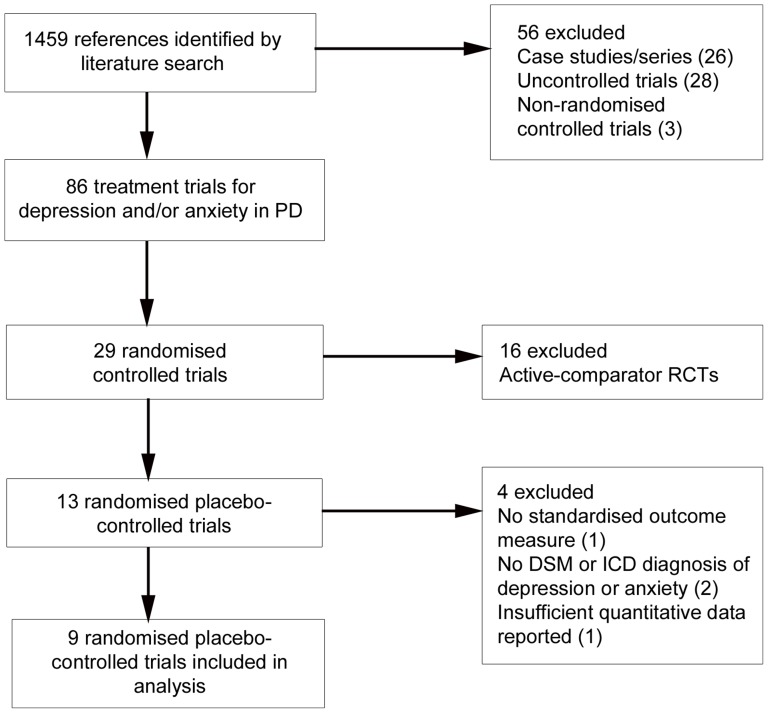
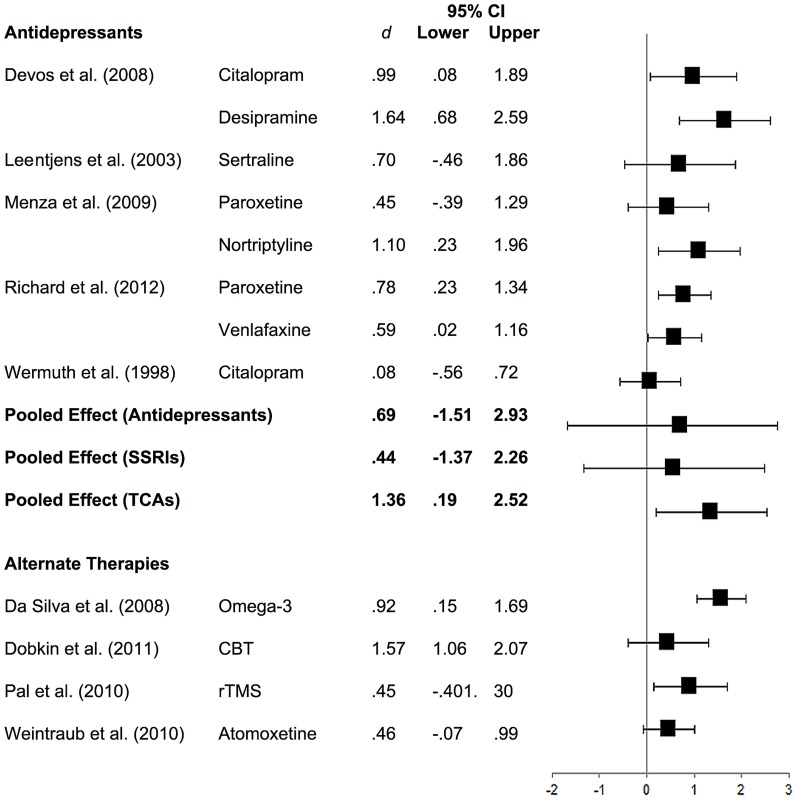
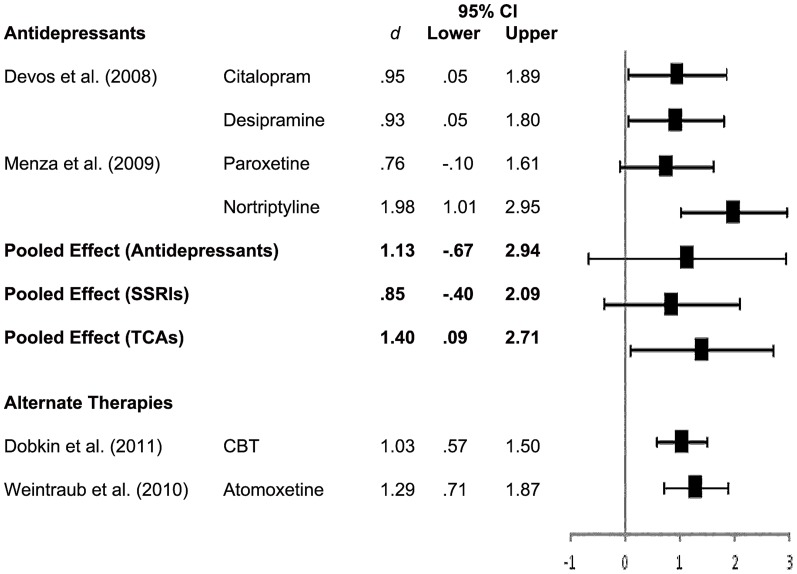
BACKGROUND: Psychopharmacotherapy currently constitutes the first-line treatment for depression and anxiety in Parkinson's disease (PD) however the efficacy of antidepressant treatments in PD is unclear. Several alternative treatments have been suggested as potentially more viable alternatives including dopamine agonists, repetitive transcranial magnetic stimulation, and cognitive behavioural therapy (CBT). METHOD: A meta-analysis of randomised placebo-controlled trials for depression and/or anxiety in PD was conducted to systematically examine the efficacy of current treatments for depression and anxiety in PD. RESULTS: Nine trials were included. There was only sufficient data to calculate a pooled effect for antidepressant therapies. The pooled effect of antidepressants for depression in PD was moderate but non-significant (d = .71, 95% CI = -1.33 to 3.08). The secondary effect of antidepressants on anxiety in PD was large but also non-significant (d = 1.13, 95% CI = -.67 to 2.94). Two single-trials of non-pharmacological treatments for depression in PD resulted in significant large effects; Omega-3 supplementation (d = .92, 95% CI = .15 to 1.69) and CBT (d = 1.57, 95% CI = 1.06 to 2.07), and warrant further exploration. CONCLUSIONS: There remains a lack of controlled trials for both pharmacological and non-pharmacological treatments for depression and anxiety in PD which limits the conclusions which can be drawn. While the pooled effects of antidepressant therapies in PD were non-significant, the moderate to large magnitude of each pooled effect is promising. Non-pharmacological approaches show potential for depression in PD however more research is required.
Overview
The claims and statistics of this paper haven’t been checked yet.
Run the check — free, no account needed. It reads the open-access text and checks the sources it cites.
Integrity signals
Registry
Cites
Statistics
Figures
Verification
Claims the paper makes
The claims and statistics of this paper haven’t been checked yet.
Run the check — free, no account needed. It reads the open-access text and checks the sources it cites.
Claims other papers make about this one
Each is checked against this paper’s own text: does it say what the citing paper says it does?
The source backs part of the claim, not all of it — or backs it for a different population, condition or comparison.
In the citing paper
“Evidence for the effectiveness of pharmacological interventions in treating PD neuropsychiatric symptoms is mixed (Price et al., 2011”
From Remote delivery of psychological interventions for Parkinson's disease. (2018) · cites this paper as Troeung et al., 2013
Experimental — accuracy not yet measured
Self-check
Percentages, sums and reported differences re-computed from the paper’s own numbers.
The self-check needs the paper’s full text.
Citations
Cites
Preferred Reporting Items for Systematic Reviews and Meta-Analyses: the PRISMA statement
Moher, D., Liberati, A., Tetzlaff, J., Altman, D. G., & for the PRISMA Group (2009) · BMJ · doi:10.1136/bmj.b2535 · Cited by 83,823
Preferred Reporting Items for Systematic Reviews and Meta-Analyses: The PRISMA Statement
Moher, D., Liberati, A., Tetzlaff, J., Altman, D. G., & The PRISMA Group (2009) · PLoS Medicine · doi:10.1371/journal.pmed.1000097 · Cited by 64,042
Measuring inconsistency in meta-analyses
Higgins, J. P. T., Thompson, S. G., Deeks, J. J., & Altman, D. G. (2003) · BMJ · doi:10.1136/bmj.327.7414.557 · Cited by 63,139
Bias in meta-analysis detected by a simple, graphical test
Egger, M., Smith, G. D., Schneider, M., & Minder, C. (1997) · BMJ · doi:10.1136/bmj.315.7109.629 · Cited by 56,722 · cited 2×
“Publication bias in the current meta-analysis was assessed using Egger’s [69] regression asymmetry test and Rosenthal’s [70] Fail-Safe N method.”
MethodPreferred reporting items for systematic reviews and meta-analyses: the PRISMA Statement.
(2009) · PubMed Central · Cited by 44,859
Meta-analysis in clinical trials
DerSimonian, R., & Laird, N. (1986) · Controlled Clinical Trials · doi:10.1016/0197-2456(86)90046-2 · Cited by 39,552
Preferred reporting items for systematic reviews and meta-analyses: The PRISMA statement
Moher, D., Liberati, A., Tetzlaff, J., Altman, D. G., & the PRISMA Group* (2009) · Annals of Internal Medicine · doi:10.7326/0003-4819-151-4-200908180-00135 · Cited by 37,554
Quantifying heterogeneity in a meta‐analysis
Higgins, J. P. T., & Thompson, S. G. (2002) · Statistics in Medicine · doi:10.1002/sim.1186 · Cited by 36,763
Cochrane Handbook for Systematic Reviews of Interventions: Cochrane Book Series
(2008) · doi:10.1002/9780470712184 · Cited by 25,048
Wasserman, S. S., Hedges, L. V., & Olkin, I. (1988) · Journal of Educational Statistics · doi:10.2307/1164953 · Cited by 10,377
Research works printed but not linked: 3
- R Verma, 2012, Efficacy and tolerability of escitalopram for treating depression in parkinson’s disease, Delhi Psychiatry J, 15, 57
- A Alca, 2011, Comparison of sertraline and venlafaxine treatments for depression in Parkinson’s disease, Noropsikiyatri Arsivi, 48, 201
- Hedges LV, Olkin I (1985) Statistical methods for meta-analysis. Orlando, Florida, Academic Press.
Cited by
Sorted by citations
Pharmacological Treatment of Parkinson Disease
Connolly, B. S., & Lang, A. E. (2014) · JAMA · doi:10.1001/jama.2014.3654 · Cited by 1,510
Depression in neurodegenerative diseases: Common mechanisms and current treatment options
Galts, C., Bettio, L. E. B., Jewett, D. C., Yang, C. C., Brocardo, P. S., Rodrigues, A. L. S., Thacker, J. S., & Gil‐Mohapel, J. (2019) · Neuroscience & Biobehavioral Reviews · doi:10.1016/j.neubiorev.2019.04.002 · Cited by 276
Prange, S., Klinger, H., Laurencin, C., Danaila, T., & Thobois, S. (2022) · Drugs & Aging · doi:10.1007/s40266-022-00942-1 · Cited by 193
Neuroimaging of Parkinson's disease: Expanding views
Weingarten, C. P., Sundman, M. H., Hickey, P., & Chen, N. (2015) · Neuroscience & Biobehavioral Reviews · doi:10.1016/j.neubiorev.2015.09.007 · Cited by 164
Antidepressive treatments for Parkinson's disease: A systematic review and meta-analysis
Bomasang-Layno, E., Fadlon, I., Murray, A. N., & Himelhoch, S. S. (2015) · Parkinsonism & Related Disorders · doi:10.1016/j.parkreldis.2015.04.018 · Cited by 142
Reynolds, G., Otto, M. W., Ellis, T. D., & Cronin‐Golomb, A. (2015) · Movement Disorders · doi:10.1002/mds.26484 · Cited by 144
“There is emerging evidence for psychosocial alternatives to pharmacologic treatment of mood, with limited but promising data from cognitive behavioral therapy (CBT).(46,53-60)”
BackgroundPsychiatric Manifestation in Patients with Parkinson's Disease
Han, J. W., Ahn, Y. D., Kim, W.-S., Shin, C. M., Jeong, S. J., Song, Y. S., Bae, Y. J., & Kim, J.-M. (2018) · Journal of Korean Medical Science · doi:10.3346/jkms.2018.33.e300 · Cited by 127
Depression and Anxiety in Parkinson Disease
Ray, S., & Agarwal, P. (2019) · Clinics in Geriatric Medicine · doi:10.1016/j.cger.2019.09.012 · Cited by 120
Current Pharmaceutical Treatments and Alternative Therapies of Parkinson's Disease
Dong, J., Cui, Y., Li, S., & Le, W. (2016) · Current Neuropharmacology · doi:10.2174/1570159x14666151120123025 · Cited by 112
“Recent two meta-analyses have shown that antidepressants have moderate but non-significant pooled effect in PD, and insufficient evidence to support selective serotonin recapture inhibitors (SSRIs), pramipexole, pergolide and norepinephrine recapture inhibitors (SNRIs).”
BackgroundThobois, S., Prange, S., Sgambato, V., Tremblay, L., & Broussolle, E. (2017) · Current Neurology and Neuroscience Reports · doi:10.1007/s11910-017-0788-0 · Cited by 124
Neuropsychiatric Symptoms in Parkinson’s Disease
Aarsland, D., & Kramberger, M. G. (2015) · Journal of Parkinson s Disease · doi:10.3233/jpd-150604 · Cited by 105
Management of Depression in Parkinson's Disease: A Systematic Review
STARKSTEIN, S. E., & Brockman, S. (2017) · Movement Disorders Clinical Practice · doi:10.1002/mdc3.12507 · Cited by 108
“The most recent meta-analysis by Bomasang-Layno and colleagues25 did not include any new RCTs compared with the meta-analysis by Troeung et al. but reported significant efficacy for SSRIs over TCAs.”
MethodInfluentialEmotional manifestations of PD: Neurobiological basis
Castrioto, A., Thobois, S., Carnicella, S., Maillet, A., & Krack, P. (2016) · Movement Disorders · doi:10.1002/mds.26587 · Cited by 105
“studies on depression have shown that noradrenergic and serotonergic antidepressants also have a positive effect on anxiety.(41,43,48) Although a randomized, controlled study comparing paroxetine and nortriptyline showed superiority of nortriptyline in alleviating anxiety and depression,(43) another randomized, contro…”
ResultDrug treatment strategies for depression in Parkinson disease
Ryan, M. A., Eatmon, C. V., & Slevin, J. T. (2019) · Expert Opinion on Pharmacotherapy · doi:10.1080/14656566.2019.1612877 · Cited by 94
Treatment of advanced Parkinson's disease
Giugni, J. C., & Okun, M. S. (2014) · Current Opinion in Neurology · doi:10.1097/wco.0000000000000118 · Cited by 90
Remote delivery of psychological interventions for Parkinson's disease.
Swalwell, C., Pachana, N. A., & Dissanayaka, N. N. (2018) · International Psychogeriatrics · doi:10.1017/s1041610218000340 · Cited by 87
“Evidence for the effectiveness of pharmacological interventions in treating PD neuropsychiatric symptoms is mixed (Price et al., 2011; Troeung et al., 2013), and concerns regarding unfavorable side effects, including exacerbation of motor problems in patients with complex medication regimes, have…”
BackgroundWhat a neurologist should know about depression in Parkinson’s disease
Timmer, M. H. M., Beek, M. H. C. T. V., Bloem, B. R., & Esselink, R. A. J. (2017) · Practical Neurology · doi:10.1136/practneurol-2017-001650 · Cited by 87
Cognitive–behavioural therapy for non-motor symptoms of Parkinson's disease: a clinical review
Koychev, I. G., & Okai, D. (2017) · Evidence-Based Mental Health · doi:10.1136/eb-2016-102574 · Cited by 88
“In the case of depression and anxiety, the efficacy of medication was found to be of moderate effect size but statistically non-significant in a pooled analysis.(12) Other issues with antidepressants include concerns over polypharmacy(13).”
BackgroundDrug Choices and Advancements for Managing Depression in Parkinson's Disease
Assogna, F., Pellicano, C., Savini, C., Macchiusi, L., Pellicano, G. R., Alborghetti, M., Caltagirone, C., Spalletta, G., & Pontieri, F. E. (2019) · Current Neuropharmacology · doi:10.2174/1570159x17666191016094857 · Cited by 83
Lim, J., Bang, Y., & Choi, H. J. (2018) · Archives of Pharmacal Research · doi:10.1007/s12272-018-1063-x · Cited by 82
Anxiety: An ignored aspect of Parkinson's disease lacking attention.
Khatri, D., Choudhary, M., Sood, A., & Singh, S. B. (2020) · Biomedicine & pharmacotherapy = Biomedecine & pharmacotherapie · doi:10.1016/j.biopha.2020.110776 · Cited by 65
Takahashi, M., Tabu, H., Ozaki, A., Hamano, T., Takeshima, T., & for the REBORN study group (2018) · Internal Medicine · doi:10.2169/internalmedicine.1359-18 · Cited by 77
“Although two meta-analyses concluded that SSRIs were effective (23, 24), others indicated that there was insufficient evidence to confirm an effect (8, 9).”
BackgroundTroeung, L., Egan, S. J., & Gasson, N. (2014) · BMC Psychiatry · doi:10.1186/1471-244x-14-19 · Cited by 85
“In a recent meta-analysis [6], the pooled effect of antidepressants for depression in PD was found to be moderate but non-significant (d = .”
BackgroundSelf-citationMallery, L. H., MacLeod, T., Allen, M., McLean-Veysey, P., Rodney-Cail, N., Bezanson, E., Steeves, B., LeBlanc, C. H., & Moorhouse, P. A. (2019) · BMC Geriatrics · doi:10.1186/s12877-019-1327-4 · Cited by 71
Cognitive Behaviour Therapy for Depression and Anxiety in Parkinson’s Disease
Egan, S. J., Laidlaw, K., & STARKSTEIN, S. E. (2015) · Journal of Parkinson s Disease · doi:10.3233/jpd-150542 · Cited by 66
Self-citationEfficacy of antidepressive medication for depression in Parkinson disease
Zhuo, C., Xue, R., Luo, L., Ji, F., Tian, H., Qu, H., Lin, X., Jiang, R., & Tao, R. (2017) · Medicine · doi:10.1097/md.0000000000006698 · Cited by 62
Antidepressant medications in dementia: evidence and potential mechanisms of treatment-resistance
Costello, H., Roiser, J. P., & Howard, R. (2023) · Psychological Medicine · doi:10.1017/s003329172200397x · Cited by 60
“It may also explain why depressive symptoms in PD are poorly responsive to serotonergic and noradrenergic antidepressants (Troeung, Egan, & Gasson, 2013) but can respond to dopaminergic agonists used to treat motor symptoms (van der Velden, Broen, Kuijf, & Leentjens, 2018).”
Factors associated with life satisfaction in Parkinson's disease
Rosqvist, K., Hagell, P., Odin, P., Ekström, H., Iwarsson, S., & Nilsson, M. H. (2016) · Acta Neurologica Scandinavica · doi:10.1111/ane.12695 · Cited by 58
Shin, H.-W., Youn, Y. C., Chung, S. J., & Sohn, Y. H. (2016) · Journal of Neurology · doi:10.1007/s00415-016-8160-x · Cited by 54
Cognitive-Behavioral Therapy for Anxiety in Parkinson’s Disease
Reynolds, G. O., Saint-Hilaire, M., Thomas, C. A., Barlow, D. H., & Cronin-Golomb, A. (2020) · Behavior Modification · doi:10.1177/0145445519838828 · Cited by 59
Parkinson and depression: review and outlook
Laux, G. (2022) · Journal of Neural Transmission · doi:10.1007/s00702-021-02456-3 · Cited by 52
Fordham, B., Sugavanam, T., Edwards, K., Hemming, K., Howick, J., Copsey, B. J., Lee, H., Kaidesoja, M., Kirtley, S., Hopewell, S., et al. (2021) · Health Technology Assessment · doi:10.3310/hta25090 · Cited by 62
Panisset, M., Chen, J. J., Rhyee, S. H., Conner, J. B., Mathena, J., & the STACCATO study investigators (2014) · Pharmacotherapy The Journal of Human Pharmacology and Drug Therapy · doi:10.1002/phar.1500 · Cited by 50
Why Do We Care More About Disease than Health?
Picard, M. A. (2022) · Phenomics · doi:10.1007/s43657-021-00037-8 · Cited by 51
“For example, in the case of depression, which stands as one of the most debilitating condition world-wide (Lim et al. 2018), the evidence for genetic etiology is controversial and in most people, antidepressants work similarly well as placebos (Troeung et al. 2013).”
BackgroundAnxiety and Depression in Parkinson’s Disease
Djamshidian, A., & Friedman, J. H. (2014) · Current Treatment Options in Neurology · doi:10.1007/s11940-014-0285-6 · Cited by 47
Costello, H., Berry, A., Reeves, S., Weil, R., Joyce, E., Howard, R., & Roiser, J. (2021) · Journal of Neurology Neurosurgery & Psychiatry · doi:10.1136/jnnp-2021-327762 · Cited by 40
Angelopoulou, E., Stanitsa, E., Karpodini, C. C., Bougea, A. M., Kontaxopoulou, D., Fragkiadaki, S., Koros, C., GEORGAKOPOULOU, V. E., Fotakopoulos, G., Koutedakis, Y., et al. (2023) · Medicina · doi:10.3390/medicina59081454 · Cited by 46
“In agreement with these findings, another two meta-analyses confirmed the statistically insignificant efficacy of SSRIs and proposed that TCAs are more effective than SSRIs for PD depression [28,29].”
BackgroundResultMood Disorders and Anxiety in Parkinson’s Disease: Current Concepts
Lintel, H. A., Corpuz, T. V., Paracha, S.-U.-R., & Grossberg, G. T. (2021) · Journal of Geriatric Psychiatry and Neurology · doi:10.1177/08919887211018267 · Cited by 51
“This difference plays a significant role relative to subgroup analyses in a meta-analysis by Troeung et al.41 SSRIs are used commonly as first-line treatment and have been shown in some studies to be superior to placebo.”
BackgroundInfluentialRodgers, S. H., Schütze, R., Gasson, N., Anderson, R. A., Kane, R. T., Starkstein, S., Morgan-Lowes, K., & Egan, S. J. (2019) · Behavioural and Cognitive Psychotherapy · doi:10.1017/s135246581800070x · Cited by 43
“57) for cognitive behaviour therapy (CBT) (Troeung et al., 2013).”
BackgroundInfluentialSelf-citationPagonabarraga, J., Álamo, C., Castellanos, M., Díaz, S., & Manzano, S. (2023) · Brain Sciences · doi:10.3390/brainsci13020318 · Cited by 49
“A large placebo effect has been observed in many randomized studies of antidepressants in PD [85,86].”
BackgroundAgüera-Ortíz, L., García-Ramos, R., Pérez, F. J. G., López‐Álvarez, J., Rodríguez, J. M. M., Rodríguez, F. J. O., Pueyo, J. O., Valero, C. P., & Porta-Etessam, J. (2021) · Parkinson s Disease · doi:10.1155/2021/6621991 · Cited by 44
“found that pharmacological therapy of depression in PD ameliorates this condition [35, 36], while Troeung and colleagues determined a modest yet not a statistically significant effect of antidepressants compared with placebo [37].”
ResultCharacteristics and Treatment of Anxiety Disorders in Parkinson's Disease
Dissanayaka, N. N., White, E., O’Sullivan, J. D., Marsh, R., Silburn, P. A., Copland, D. A., Mellick, G. D., & Byrne, G. J. (2015) · Movement Disorders Clinical Practice · doi:10.1002/mdc3.12157 · Cited by 39
“All other PD studies with SSRIs and SNRIs have focused on anxiety secondary to depression and have reported favorable outcomes; however, there is no robust empirical evidence to provide recommendations on choice of pharmacotherapy for anxiety in PD.(2,46)”
BackgroundDepression in Parkinson's Disease: A Narrative Review
Chikatimalla, R., Dasaradhan, T., Koneti, J., Cherukuri, S. P., Kalluru, R., & Gadde, S. (2022) · Cureus · doi:10.7759/cureus.27750 · Cited by 45
“SSRIs (citalopram, paroxetine, and sertraline) did not have the same effect [67].”
BackgroundButterfield, L. C., Cimino, C. R., Salazar, R., Sanchez-Ramos, J., Bowers, D., & Okun, M. S. (2017) · Journal of Geriatric Psychiatry and Neurology · doi:10.1177/0891988716673467 · Cited by 38
Xie, C., Wang, X., Chen, J., Lin, H., Chen, Y.-H., Pan, J., & Wang, W. (2015) · Neurological Sciences · doi:10.1007/s10072-015-2118-0 · Cited by 38
“[20] reported a meta-analysis that showed there remained a lack of controlled trials for both pharmacological and non-pharmacological treatments for depression and anxiety in PD which limited the conclusions.”
BackgroundDetecting anxiety in individuals with Parkinson disease
Mele, B., Holroyd-Leduc, J. M., Smith, E. E., Pringsheim, T. M., Ismail, Z., & Goodarzi, Z. (2017) · Neurology · doi:10.1212/wnl.0000000000004771 · Cited by 36
“Despite this, there are fewer evidence-based treatment options for anxiety than for depression in PD.(10,11) Antidepressantmedications, such as selective serotonin reuptake inhibitors, can improve anxiety symptoms as a secondary outcome in clinical trials in PD.”
BackgroundMethodTreatment Strategies in Early and Advanced Parkinson Disease
Ossig, C., & Reichmann, H. (2014) · Neurologic Clinics · doi:10.1016/j.ncl.2014.09.009 · Cited by 33
Emotional dysfunctions in neurodegenerative diseases
Loeffler, L. A. K., Radke, S., Morawetz, C., & Derntl, B. (2015) · The Journal of Comparative Neurology · doi:10.1002/cne.23816 · Cited by 32
Comparison of Selegiline and Rasagiline Therapies in Parkinson Disease: A Real-life Study
Peretz, C., Segev, H., Rozani, V., Gurevich, T., El‐Ad, B., Tsamir, J., & Giladi, N. (2016) · Clinical Neuropharmacology · doi:10.1097/wnf.0000000000000167 · Cited by 32
Depressive symptoms can amplify embarrassment in essential tremor
Louis, E. D., Cosentino, S., & Huey, E. D. (2016) · Journal of Clinical Movement Disorders · doi:10.1186/s40734-016-0039-6 · Cited by 29
“While the effect of depression treatment has not been specifically studied in ET patients, the effect size for the treatment of depressive symptoms with antidepressant medication in patients with Parkinson’s disease is moderate [33].”
BackgroundKawakami, I., Iga, J., Takahashi, S., Lin, Y., & Fujishiro, H. (2022) · Psychiatry and Clinical Neurosciences · doi:10.1111/pcn.13485 · Cited by 27
“Tricyclic antidepressants were more effective than selective serotonin reuptake inhibitors.(182) However, concerns regarding tolerability and unwanted anticholinergic effects make tricyclics less favorable choices, especially for patients with cardiac problems, angle-closure glaucoma, urinary retention, and constipati…”
BackgroundKalbe, E., Folkerts, A., Witt, K., Buhmann, C., Liepelt‐Scarfone, I., & for the German Parkinson’s Guidelines Group (2024) · Journal of Neurology · doi:10.1007/s00415-024-12503-0 · Cited by 25
“This has been shown in case reports, observational studies, and two meta-analyses [170–172].”
Electroconvulsive therapy in Parkinson´s disease
Calderón‐Fajardo, H., Cervantes‐Arriaga, A., Llorens‐Arenas, R., Ramírez‐Bermúdez, J., Ruíz-Chow, Á. A., & Rodríguez‐Violante, M. (2015) · Arquivos de Neuro-Psiquiatria · doi:10.1590/0004-282x20150131 · Cited by 25
Management of anxiety and motor symptoms in Parkinson’s disease
Coakeley, S., Martens, K. A. E., & Almeida, Q. J. (2014) · Expert Review of Neurotherapeutics · doi:10.1586/14737175.2014.936388 · Cited by 25
“The mechanism for the effect of anxiety on motor symptoms may be due to limbic input to the basal ganglia, which possesses connections to the motor cortex [37,62].”
BackgroundA practical approach to detection and treatment of depression in Parkinson disease and dementia
Goodarzi, Z., & Ismail, Z. (2017) · Neurology Clinical Practice · doi:10.1212/cpj.0000000000000351 · Cited by 25
Okano, M., Takahata, K., Sugimoto, J., & Muraoka, S. (2019) · Frontiers in Behavioral Neuroscience · doi:10.3389/fnbeh.2019.00176 · Cited by 23
Peña, E., Mata, M. J. D., Manzanares, L. L., Kurtis, M. M., Eimil, M., Martínez‐Castrillo, J. C., Navas, I., Posada, I. J., Prieto, C., Ruíz-Huete, C., et al. (2016) · Neurología · doi:10.1016/j.nrl.2016.02.002 · Cited by 23
Thangavelu, K., Hayward, J. A., Pachana, N. A., Byrne, G. J., Mitchell, L. K., Wallis, G. M., Au, T. R., & Dissanayaka, N. N. (2020) · Clinical Gerontologist · doi:10.1080/07317115.2019.1709597 · Cited by 22
Kampling, H., Brendel, L. K., & Mittag, O. (2019) · Neuropsychology Review · doi:10.1007/s11065-019-09409-4 · Cited by 21
Broen, M. P. G., Leentjens, A. F. G., Köhler, S., Kuijf, M. L., McDonald, W. M., & Richard, I. (2015) · Parkinsonism & Related Disorders · doi:10.1016/j.parkreldis.2015.12.013 · Cited by 20
A Systematic Review of Psychotherapy Approaches for Anxiety in Parkinson's Disease.
Roper, A., Pacas Fronza, G., Dobkin, R. D., Beaudreau, S. A., Mitchell, L. K., Pachana, N. A., Thangavelu, K., & Dissanayaka, N. N. (2024) · Clinical Gerontologist · doi:10.1080/07317115.2022.2074814 · Cited by 19
“A meta-analysis by Troeung, Egan, Gasson and Zhang (2013) reported few controlled trials for both pharmacological and non-pharmacological interventions for depression and anxiety in PD, which limited any conclusions they could draw to inform clinical practice guidelines.”
BackgroundAdvances in the study of depression and anxiety in Parkinson’s disease: A review
Wang, Z., Wei, H., Xin, Y., & Qin, W. (2025) · Medicine · doi:10.1097/md.0000000000041674 · Cited by 19
Sklerov, M., Browner, N., Dayan, E., Rubinow, D., & Frӧhlich, F. (2022) · Journal of Parkinson s Disease · doi:10.3233/jpd-213075 · Cited by 19
Wang, Y., Sun, X. K., Li, F. Y., Li, Q., & Jin, Y. J. (2022) · Frontiers in Aging Neuroscience · doi:10.3389/fnagi.2022.1050715 · Cited by 20
“Among the conventional meta-analyses that demonstrated that CBT had a significant positive effect on the improvement of depression (Troeung et al., 2013; Xie et al., 2015; Zhang et al., 2020; Hong et al., 2021), a meta-analysis showed that CBT had a larger effect size than antidepressant treatments (Troeung et al.”
Leal, P. C., Bispo, J. M. M., Lins, L. C. R. F., Souza, M. F., de Gois, A. M., Moore, C., Marchioro, M., Ribeiro, A. M., Silva, R. H., Meshul, C. K., et al. (2019) · Brain Research Bulletin · doi:10.1016/j.brainresbull.2019.01.009 · Cited by 19
Cognitive behavioral therapy for depression in Japanese Parkinson's disease patients: a pilot study
Shinmei, I., Kobayashi, K., Oe, Y., Takagishi, Y., Kanie, A., Ito, M., Takebayashi, Y., Murata, M., Horikoshi, M., & Dobbin, R. D. (2016) · Neuropsychiatric Disease and Treatment · doi:10.2147/ndt.s104777 · Cited by 18
“08), although not significant, which suggests the need for additional controlled research.(9,10) Concerns about side effects and polypharmacy are also consistently raised regarding the pharmacological treatment of dPD.”
Go natural and smarter: fenugreek as a hydration designer of collagen based biomaterials
Kanungo, I., Fathima, N. N., Jonnalagadda, R. R., & Nair, B. U. (2014) · Physical Chemistry Chemical Physics · doi:10.1039/c4cp04363d · Cited by 17
Chow, R., Tripp, B., Rzondzinski, D. M., & Almeida, Q. J. (2021) · Neurorehabilitation and neural repair · doi:10.1177/1545968321992331 · Cited by 16
Management of Depression in Parkinson’s Disease
Frenklach, A. (2016) · American Journal of Psychiatry Residents Journal · doi:10.1176/appi.ajp-rj.2016.110405 · Cited by 16
Motion and emotion: anxiety–axial connections in Parkinson’s disease
Šumec, R., Rektorová, I., Jech, R., Menšíková, K., Roth, J., Růžička, E., Sochorová, D., Dušek, L., Kaňovský, P., Rektor, I., et al. (2016) · Journal of Neural Transmission · doi:10.1007/s00702-016-1652-0 · Cited by 16
“Meta-analysis of treatment trials for depression and anxiety in PD showed that there have been no randomized control trials of any treatment directly targeting anxiety in PD (Troeung et al. 2013).”
MethodRecognition and Treatment of Depressive Symptoms in Parkinson's Disease: The NPF Dataset
Bega, D., Wu, S. S. X., Pei, Q., Schmidt, P. N., & Simuni, T. (2014) · Journal of Parkinson s Disease · doi:10.3233/jpd-140382 · Cited by 15
“Currently, pharmacotherapy constitutes the first line treatment for depression in PD, although a recent meta-analysis demonstrated that only nine randomized placebo controlled trials employing standardized outcome measures of treatment efficacy could be identified [10].”
Shi, Y., Dobkin, R. D., Weintraub, D. A., Cho, H. R., Caspell‐Garcia, C., Bock, M., Brown, E. G., Aarsland, D., & Dahodwala, N. A. (2024) · Movement Disorders Clinical Practice · doi:10.1002/mdc3.14145 · Cited by 16
Pharmacological interventions for anxiety in Parkinson’s disease sufferers
Sawada, H., Umemura, A., Kohsaka, M., Tomita, S., Park, K., Oeda, T., & Yamamoto, K. (2018) · Expert Opinion on Pharmacotherapy · doi:10.1080/14656566.2018.1485650 · Cited by 15
New Pharmacological Approaches to Treating Non-Motor Symptoms of Parkinson’s Disease
Kelberman, M. A., & Vazey, E. M. (2016) · Current Pharmacology Reports · doi:10.1007/s40495-016-0071-0 · Cited by 13
Dupouy, J., Ory‐Magne, F., & Brefel‐Courbon, C. (2016) · La Presse Médicale · doi:10.1016/j.lpm.2016.11.009 · Cited by 13
Neuropsychiatric aspects of Parkinson disease psychopharmacology: Insights from circuit dynamics
Butala, A., Shepard, M. D., & Pontone, G. M. (2019) · Handbook of clinical neurology · doi:10.1016/b978-0-444-64012-3.00007-1 · Cited by 13
Effects of Health Qigong Exercise on Depression and Anxiety in Patients with Parkinson’s Disease
Li, X., Taylor, A., Li, J., Wang, T., Kuang, J., Zhang, Z., Liu, X., Liu, T., Qin, X., Lu, S., et al. (2022) · International Journal of Mental Health Promotion · doi:10.32604/ijmhp.2022.021508 · Cited by 12
Costello, H., Schrag, A. E., Howard, R. J., & Roiser, J. P. (2024) · Nature Mental Health · doi:10.1038/s44220-024-00256-8 · Cited by 14
“However, current treatment guidelines for depression in PD advise the same approach as for depressed patients with other long-term conditions, despite evidence suggesting that standard antidepressant drugs are ineffective for these patients 8,9 .”
The Growing Role of Cognitive Behavior Therapy in the Treatment of Parkinson’s Disease
Lopes, S. R., Khan, S., & Chand, S. P. (2021) · Journal of Geriatric Psychiatry and Neurology · doi:10.1177/08919887211018274 · Cited by 14
“In a metaanalysis that included randomized placebo controlled treatments for depression and anxiety in PD it was found that the pooled effect of antidepressants for depression in PD was moderate but non-significant and the secondary effect of antidepressants on anxiety in PD was large but also non-significant.(15) Co…”
ResultPeña, E., Mata, M. J. D., Manzanares, L. L., Kurtis, M. M., Eimil, M., Martínez‐Castrillo, J. C., Navas, I., Posada, I. J., Prieto, C., Ruíz-Huete, C., et al. (2018) · Neurología (English Edition) · doi:10.1016/j.nrleng.2016.02.017 · Cited by 13
“1% for depression(2)), and their significant impact on patients’ quality of life, they are often not adequately treated: it is estimated that only 20% of patients with PD presenting with anxiety or depression receive any type of medical or psychological treatment for these symptoms.(3) The basis of the problem is the…”
BackgroundSatisfaction with Care in Late Stage Parkinson’s Disease
Rosqvist, K., Hagell, P., Iwarsson, S., Nilsson, M. H., & Odin, P. (2019) · Parkinson s Disease · doi:10.1155/2019/2593547 · Cited by 10
“, serotoninnorepinephrine reuptake inhibitors (SNRIs), tricyclic antidepressants (TCAs), and probably serotonin selective reuptake inhibitors (SSRIs) as well as through nonpharmacological interventions such as cognitive behavioural therapy [37] and exercise [38].”
BackgroundSpectrum of Non-Motor Symptoms in Parkinson’s Disease — a Review
Rizvi, S. Z. H., Palimar, V., Gupta, C., & Andrade, L. S. (2024) · Annals of Clinical and Experimental Neurology · doi:10.17816/acen.1001 · Cited by 8
Wu, Z., Liu, C., Chan, V., Wu, X., Huang, F., Guo, Z., Liu, W., Lu, L., & Xu, N. (2024) · Frontiers in Aging Neuroscience · doi:10.3389/fnagi.2024.1462851 · Cited by 8
“In addition, the long-term use of these medications may result in adverse effect (Troeung et al., 2013).”
Vortioxetine Improved Depressive State In Parkinson’s Disease
Yoshimura, R., Ikenouchi, A., Okamoto, N., & Konishi, Y. (2021) · Cureus · doi:10.7759/cureus.15750 · Cited by 7
“However, several meta-analyses have suggested that the current evidence on the efficacy of TCAs and SSRIs in treating psychiatric symptoms is inconclusive [4-6,9-12].”
BackgroundImpaired reward sensitivity in Parkinson's depression is unresponsive to dopamine treatment
Costello, H., Yamamori, Y., Kieslich, K., Murphy, M., Bobyreva, K., Schrag, A. E., Howard, R. J., & Roiser, J. P. (2025) · Brain · doi:10.1093/brain/awaf098 · Cited by 11
Interpersonal Psychotherapy for Depression in Parkinson’s Disease: A Feasibility Study
Koszycki, D., Taljaard, M., Kogan, C. S., Bradwejn, J., & Grimes, D. (2022) · Journal of Geriatric Psychiatry and Neurology · doi:10.1177/08919887221090220 · Cited by 7
“There is encouraging evidence that CBT adapted for PD may be an efficacious antidepressant treatment, with randomized trials demonstrating superiority of CBT relative to clinical monitoring,(23) treatment as usual,(24) and waitlist control.(25) However, we are unaware of any published research on the acceptability and…”
MethodNon-motor Symptoms in Parkinson’s Disease
Vuletić, V. (2020) · Springer eBooks · doi:10.1007/978-3-030-38606-1_9 · Cited by 6
Cognitive dysfunction and neuropsychiatric aspects of Parkinson's disease
Austgen, G., & Marsh, L. (2022) · Progress in brain research · doi:10.1016/bs.pbr.2022.01.009 · Cited by 6
Alborghetti, M., Barbieri, M. A., Nicoletti, F., & Spina, E. (2025) · Expert Opinion on Drug Metabolism & Toxicology · doi:10.1080/17425255.2025.2566692 · Cited by 5
“Systematic reviews highlight the most effective options as citalopram, sertraline, paroxetine, fluoxetine, venlafaxine, amitriptyline, nortriptyline, and desipramine [48,49].”
Current trends in the medical management of Parkinson's disease: implications for nursing practice
Magennis, B., Lynch, T., & Corry, M. (2014) · British Journal of Neuroscience Nursing · doi:10.12968/bjnn.2014.10.2.67 · Cited by 5
Rosenblum, U., Cocks, A. J., Norris, M., Kal, E. C., & Young, W. R. (2025) · Journal of Parkinson s Disease · doi:10.1177/1877718x251326266 · Cited by 4
Prevalence, impact, and management of depression and anxiety in patients with Parkinson’s disease
Renfroe, J. B., Turner, T. H., & Hinson, V. K. (2016) · Journal of Parkinsonism and Restless Legs Syndrome · doi:10.2147/jprls.s83165 · Cited by 5
“60 However, as discussed previously, the use of TCAs clinically is somewhat eschewed owing to their unfavorable side effect profile.”
BackgroundMethodResultInfluentialFeehan, S., & Kritzer, M. F. (2025) · Frontiers in Behavioral Neuroscience · doi:10.3389/fnbeh.2025.1646733 · Cited by 3
“…shown that anxiety disturbances respond favorably to dopamine-or serotonin-targeting medications in some patients (Seppi et al., 2019; Troeung et al., 2013; Weintraub, 2020) for others these medications oer little to no symptom relief (Richard et al., 2012; Troeung et al., 2013; Weintraub, 2020).”
Placebo Responses in Trials of Parkinson’s Disease
Garg, S., & Mestre, T. (2025) · Neurologic Clinics · doi:10.1016/j.ncl.2025.08.003 · Cited by 3
Singian, K. R. P., Price, M., Bungay, V., & Wong, S. T. (2016) · CMAJ Open · doi:10.9778/cmajo.20160052 · Cited by 3
Cognitive–Behavioral Treatment for Anxiety and Depression in Parkinson’s Disease
Reynolds, G., Piers, R. J., & Cronin‐Golomb, A. (2023) · Oxford University Press eBooks · doi:10.1093/oso/9780197564295.003.0010 · Cited by 3
Treatment Approaches To Anxiety and Depression in Parkinson’s Disease
Maruca-Sullivan, P. E., Doumlele, K., Keller, S., & Wilkins, K. M. (2025) · Current Geriatrics Reports · doi:10.1007/s13670-025-00436-z · Cited by 2
“An older meta-analysis indicated that CBT actually outperformed antidepressant medication in the treatment of depression in PD [153].”
Deurwaerdère, P. D., & Ding, Y. (2016) · Translational Neuroscience and Clinics · doi:10.18679/cn11-6030_r.2016.019 · Cited by 2
“Furthermore, clinical reports are not always clear regarding the use of pharmacological and nonpharmacological treatments, which would be controlled in trials[120].”
BackgroundTıwarı, R., Nandikola, J. R., Jothinathan, M. K. D., Shaik, K., Hemalatha, G., Dharani Prasad, P., & Mohan, V. K. (2025) · International Journal of Developmental Disabilities · doi:10.1080/20473869.2025.2462915 · Cited by 11
Deurwaerdère, P. D., & Yuqiang, D. (2016) · Translational Neuroscience and Clinics · doi:10.18679/cn11-6030/r.2016.019 · Cited by 2
Metadata
- Authors
- Troeung, L., Egan, S. J., & Gasson, N.
- Affiliations
- Curtin University (AU)
- Corresponding author
- Troeung, Lakkhina
- Venue
- PLoS ONE
- Publisher
- Public Library of Science (PLoS)
- Published
- 2013-11-13
- Volume
- 8
- Issue
- 11
- Pages
- e79510
- ISSN
- 1932-6203 (ISSN-L)
- PMC
- PMC3827386
- OpenAlex
- W2022947342
- Cited by
- 132
- References
- 86
- Citations by year
- 2026: 4 · 2025: 13 · 2024: 7 · 2023: 7 · 2022: 16 · 2021: 10 · 2020: 6 · 2019: 14 · 2018: 7 · 2017: 7 · 2016: 20 · 2015: 10 · 2014: 11
- FWCI
- 1.78
- Type
- journal article
- Language
- en
- Open access
- gold
- doi.org
- Locations
- PLoS ONE (publishedVersion, cc-by)
- Europe PMC (PubMed Central) (publishedVersion, cc-by)
- PubMed Central (publishedVersion, cc-by)
- PubMed (publishedVersion)
- eSpace (Curtin University) (submittedVersion)
- UWA Profiles and Research Repository (UWA) (submittedVersion, other-oa)
- RePEc: Research Papers in Economics (submittedVersion)
- DOAJ (DOAJ: Directory of Open Access Journals) (submittedVersion, cc-by-sa)
- Topics
- Health Sciences › Medicine › Clinical Neurology › Parkinson's Disease Mechanisms and Treatments
- Health Sciences › Medicine › Pharmacology (medical) › Treatment of Major Depression
- Health Sciences › Medicine › Clinical Neurology › Deep Brain Stimulation and Movement Disorders
- Keywords
- Parkinson's disease, depression, anxiety, antidepressants, psychopharmacological treatment, dopamine agonists, repetitive transcranial magnetic stimulation, cognitive behavioral therapy, omega-3 supplementation, non-pharmacological treatment, treatment efficacy
- MeSH terms
- Antidepressive Agents, Anxiety, Depression, Humans, Parkinson Disease, Psychotherapy, Randomized Controlled Trials as Topic, Treatment Outcome
About these checks
Registry, retraction, Cites and statistics results are computed, not judged, with one exception: a printed reference that no index lists is read once by a model before it counts as a citation error. Claims are extracted by a model and kept only when their quote appears verbatim in the text; each cited source is then checked, with a model’s help, for whether it says what the claim relies on. Those verdicts can be wrong — read the claim’s quote and the cited source before relying on one.
Statistics and arithmetic are recomputed, not judged.
Confidence bands are shown only for fields calibrated on our annotated test set. None is calibrated yet, so no band is shown.
What counts as a claim ›How we measure confidence ›How we check this ›
Are you an author, or do you see a problem with this page? Request a review
