

The DOI matches its Crossref record; 84 of the 86 references it cites were found in a registry or an index.
A meta-analysis of randomised placebo-controlled treatment trials for depression and anxiety in Parkinson's disease
Open accessAbstract
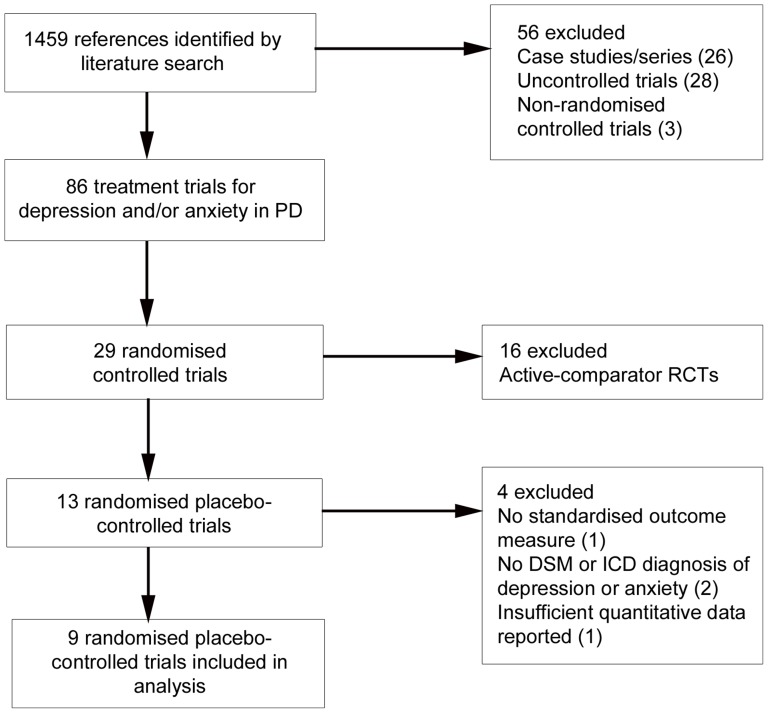
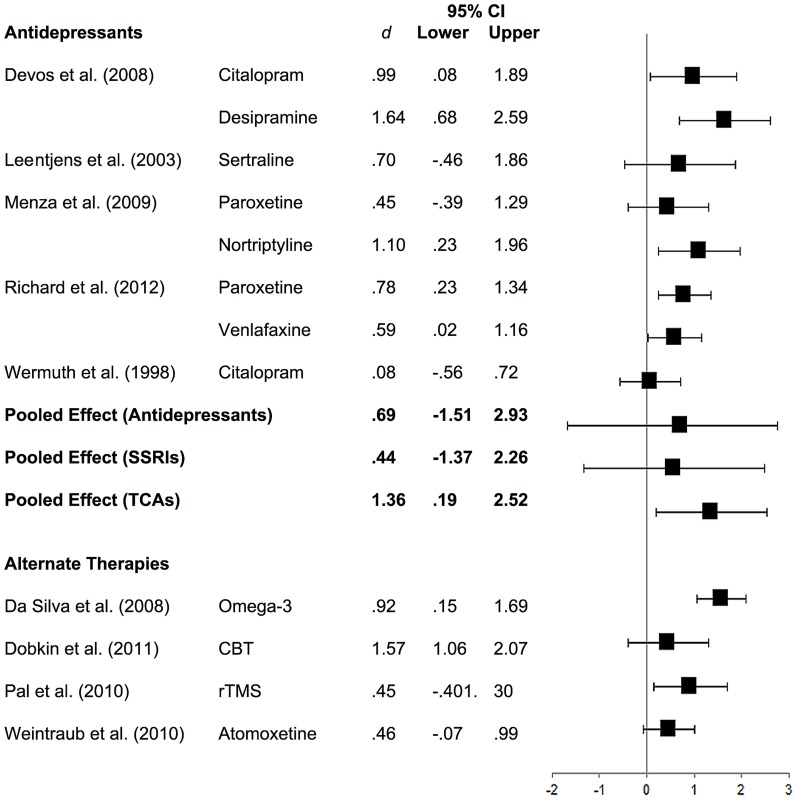
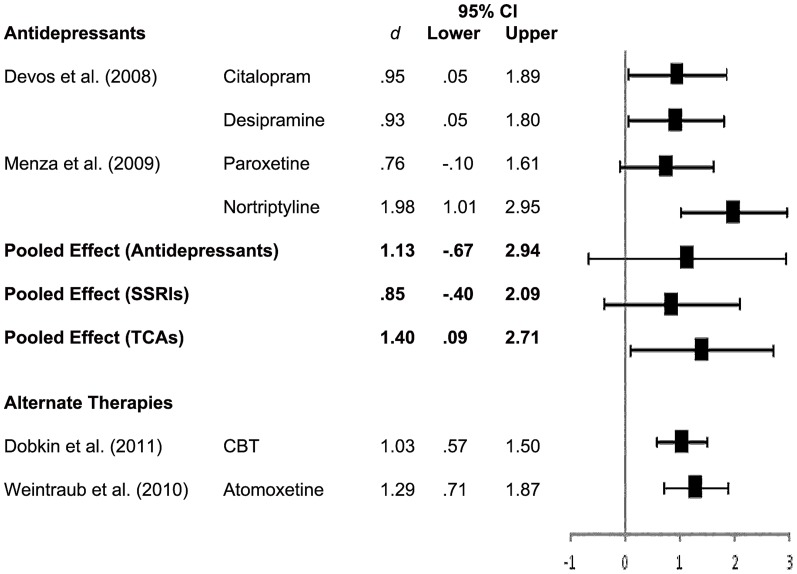
BACKGROUND: Psychopharmacotherapy currently constitutes the first-line treatment for depression and anxiety in Parkinson's disease (PD) however the efficacy of antidepressant treatments in PD is unclear. Several alternative treatments have been suggested as potentially more viable alternatives including dopamine agonists, repetitive transcranial magnetic stimulation, and cognitive behavioural therapy (CBT). METHOD: A meta-analysis of randomised placebo-controlled trials for depression and/or anxiety in PD was conducted to systematically examine the efficacy of current treatments for depression and anxiety in PD. RESULTS: Nine trials were included. There was only sufficient data to calculate a pooled effect for antidepressant therapies. The pooled effect of antidepressants for depression in PD was moderate but non-significant (d = .71, 95% CI = -1.33 to 3.08). The secondary effect of antidepressants on anxiety in PD was large but also non-significant (d = 1.13, 95% CI = -.67 to 2.94). Two single-trials of non-pharmacological treatments for depression in PD resulted in significant large effects; Omega-3 supplementation (d = .92, 95% CI = .15 to 1.69) and CBT (d = 1.57, 95% CI = 1.06 to 2.07), and warrant further exploration. CONCLUSIONS: There remains a lack of controlled trials for both pharmacological and non-pharmacological treatments for depression and anxiety in PD which limits the conclusions which can be drawn. While the pooled effects of antidepressant therapies in PD were non-significant, the moderate to large magnitude of each pooled effect is promising. Non-pharmacological approaches show potential for depression in PD however more research is required.
Overview
The claims and statistics of this paper haven’t been checked yet.
Run the check — free, no account needed. It reads the open-access text and checks the sources it cites.
Integrity signals
Registry
Cites
Statistics
Figures
Verification
Claims the paper makes
The claims and statistics of this paper haven’t been checked yet.
Run the check — free, no account needed. It reads the open-access text and checks the sources it cites.
Claims other papers make about this one
Each is checked against this paper’s own text: does it say what the citing paper says it does?
The source backs part of the claim, not all of it — or backs it for a different population, condition or comparison.
In the citing paper
“Evidence for the effectiveness of pharmacological interventions in treating PD neuropsychiatric symptoms is mixed (Price et al., 2011”
From Remote delivery of psychological interventions for Parkinson's disease. (2018) · cites this paper as Troeung et al., 2013
Experimental — accuracy not yet measured
Self-check
Percentages, sums and reported differences re-computed from the paper’s own numbers.
The self-check needs the paper’s full text.
Citations
Cites
Preferred Reporting Items for Systematic Reviews and Meta-Analyses: the PRISMA statement
Moher, D., Liberati, A., Tetzlaff, J., Altman, D. G., & for the PRISMA Group (2009) · BMJ · doi:10.1136/bmj.b2535 · Cited by 83,823
Preferred Reporting Items for Systematic Reviews and Meta-Analyses: The PRISMA Statement
Moher, D., Liberati, A., Tetzlaff, J., Altman, D. G., & The PRISMA Group (2009) · PLoS Medicine · doi:10.1371/journal.pmed.1000097 · Cited by 64,042
Measuring inconsistency in meta-analyses
Higgins, J. P. T., Thompson, S. G., Deeks, J. J., & Altman, D. G. (2003) · BMJ · doi:10.1136/bmj.327.7414.557 · Cited by 63,139
Bias in meta-analysis detected by a simple, graphical test
Egger, M., Smith, G. D., Schneider, M., & Minder, C. (1997) · BMJ · doi:10.1136/bmj.315.7109.629 · Cited by 56,722 · cited 2×
“Publication bias in the current meta-analysis was assessed using Egger’s [69] regression asymmetry test and Rosenthal’s [70] Fail-Safe N method.”
MethodPreferred reporting items for systematic reviews and meta-analyses: the PRISMA Statement.
(2009) · PubMed Central · Cited by 44,859
Meta-analysis in clinical trials
DerSimonian, R., & Laird, N. (1986) · Controlled Clinical Trials · doi:10.1016/0197-2456(86)90046-2 · Cited by 39,552
Preferred reporting items for systematic reviews and meta-analyses: The PRISMA statement
Moher, D., Liberati, A., Tetzlaff, J., Altman, D. G., & the PRISMA Group* (2009) · Annals of Internal Medicine · doi:10.7326/0003-4819-151-4-200908180-00135 · Cited by 37,554
Quantifying heterogeneity in a meta‐analysis
Higgins, J. P. T., & Thompson, S. G. (2002) · Statistics in Medicine · doi:10.1002/sim.1186 · Cited by 36,763
Cochrane Handbook for Systematic Reviews of Interventions: Cochrane Book Series
(2008) · doi:10.1002/9780470712184 · Cited by 25,048
Wasserman, S. S., Hedges, L. V., & Olkin, I. (1988) · Journal of Educational Statistics · doi:10.2307/1164953 · Cited by 10,377
The file drawer problem and tolerance for null results.
Rosenthal, R. (1979) · Psychological Bulletin · doi:10.1037/0033-2909.86.3.638 · Cited by 9,068 · cited 1×
“Publication bias in the current meta-analysis was assessed using Egger’s [69] regression asymmetry test and Rosenthal’s [70] Fail-Safe N method.”
MethodA basic introduction to fixed-effect and random-effects models for meta-analysis
Borenstein, M., Hedges, L. V., Higgins, J. P. T., & Rothstein, H. R. (2010) · Research Synthesis Methods · doi:10.1002/jrsm.12 · Cited by 6,793
Fixed-and random-effects models in meta-analysis.
Hedges, L. V., & Vevea, J. L. (1998) · Psychological Methods · doi:10.1037/1082-989x.3.4.486 · Cited by 2,977 · cited 1×
“Individual effect sizes from each study were weighted to account for both within-study and between-study variance using the Hedges and Vevea [66] ‘weighting by inverse variance’ method.”
MethodDanaei, G., Ding, E. L., Mozaffarian, D., Taylor, B., Rehm, J., Murray, C. J. L., & Ezzati, M. (2009) · PLoS Medicine · doi:10.1371/journal.pmed.1000058 · Cited by 2,860
Random-effects model for meta-analysis of clinical trials: An update
DerSimonian, R., & Kacker, R. (2007) · Contemporary Clinical Trials · doi:10.1016/j.cct.2006.04.004 · Cited by 2,374 · cited 1×
“Statistical analyses were guided by recommendations by Borenstein, Hedges, Higgins and Rothstein [62], DerSimonian and Kacker [63] and Marin-Martinez and Sanchez-Meca [64].”
MethodPublication bias in meta-analysis its causes and consequences
Thornton, A. (2000) · Journal of Clinical Epidemiology · doi:10.1016/s0895-4356(99)00161-4 · Cited by 1,291 · cited 1×
“Publication bias refers to the tendency for researchers to publish only positive results from clinical trials while neglecting to report any small or non-significant findings which can ultimately result in inflated pooled effect size in meta-analyses [68].”
BackgroundSydney multicenter study of Parkinson's disease: Non‐L‐dopa–responsive problems dominate at 15 years
Hely, M. A., Morris, J. G. L., Reid, W. G. J., & Trafficante, R. (2005) · Movement Disorders · doi:10.1002/mds.20324 · Cited by 1,050
Barone, P., Poewe, W., Albrecht, S., Debieuvre, C., Massey, D., Rascol, O., Tolosa, E., & Weintraub, D. (2010) · The Lancet Neurology · doi:10.1016/s1474-4422(10)70106-x · Cited by 562 · cited 1×
“[33] trial of the dopamine agonist pramipexole and Werneck et al.”
BackgroundBrand, J. L. (1997) · Digital Commons - Andrews University (Andrews University) · Cited by 537
Parkinson's disease: The quintessential neuropsychiatric disorder
Weintraub, D. A., & Burn, D. J. (2011) · Movement Disorders · doi:10.1002/mds.23664 · Cited by 422 · cited 1×
“However, there has been a recent movement towards a reconceptualisation of PD in recognition of the multitude of cognitive and psychiatric disturbances that also feature in the disease [1].”
BackgroundA controlled trial of antidepressants in patients with Parkinson disease and depression
Menza, M. A., Dobkin, R. D., Marín, H., Mark, M. H., Gara, M. A., Buyske, S. G., Bienfait, K., & Dicke, A. (2008) · Neurology · doi:10.1212/01.wnl.0000336340.89821.b3 · Cited by 411 · cited 5×
“There have been several uncontrolled trials [7–13] and randomised controlled trials (RCT) [14–23] of antidepressants in PD to date, however, the efficacy of antidepressant treatments in PD remains unclear.”
BackgroundInfluentialA randomized, double-blind, placebo-controlled trial of antidepressants in Parkinson disease
Richard, I., McDermott, M. P., Kurlan, R., Lyness, J. M., Como, P. G., Pearson, N., Factor, S. A., Juncos, J. L., Ramos, C. S., Brodsky, M., et al. (2012) · Neurology · doi:10.1212/wnl.0b013e3182516244 · Cited by 335
Pinquart, M., Duberstein, P. R., & Lyness, J. M. (2007) · Aging & Mental Health · doi:10.1080/13607860701529635 · Cited by 328
Cognitive-Behavioral Therapy for Depression in Parkinson's Disease: A Randomized, Controlled Trial
Dobkin, R. D., Menza, M., Allen, L. A., Gara, M. A., Mark, M. H., Tiu, J., Bienfait, K. L., & Friedman, J. (2011) · American Journal of Psychiatry · doi:10.1176/appi.ajp.2011.10111669 · Cited by 310
Devos, D., Dujardin, K., Poirot, I., Moreau, C., Cottencin, O., Thomas, P., Destée, A., Bordet, R., & Defebvre, L. (2008) · Movement Disorders · doi:10.1002/mds.21966 · Cited by 273 · cited 2×
“These were; citalopram and desipramine [17], nortriptyline [19], paroxetine and venlafaxine [20], Omega-3 supplementation [43], and CBT [55].”
BackgroundDietary fatty acids and the risk of Parkinson disease
de Lau, L. M. L., Bornebroek, M., Witteman, J. C. M., Albert Hofman, D., Koudstaal, P. J., & Breteler, M. M. B. (2005) · Neurology · doi:10.1212/01.wnl.0000166038.67153.9f · Cited by 260
Atomoxetine for depression and other neuropsychiatric symptoms in Parkinson disease
Weintraub, D., Mavandadi, S., Mamikonyan, E., Siderowf, A. D., Duda, J. E., Hurtig, H. I., Colcher, A., Horn, S. S., Nazem, S., Ten Have, T. R., et al. (2010) · Neurology · doi:10.1212/wnl.0b013e3181ebdd79 · Cited by 255 · cited 3×
“There were two trials of antidepressants [17,19], one trial of CBT [55], and one trial of atomoxetine [76].”
BackgroundRektorová, I., Rektor, I., Bareš, M., Dostál, V., Ehler, E., Fanfrdlová, Z., Fiedler, J., Klajblová, H., Kulišťák, P., Ressner, P., et al. (2003) · European Journal of Neurology · doi:10.1046/j.1468-1331.2003.00612.x · Cited by 248 · cited 1×
“Several alternate treatments have been suggested as safer and potentially more effective alternatives than antidepressant therapies and include dopamine agonists [28–34], Omega-3 fatty-acid supplementation [35–37], repetitive transcranial magnetic stimulation (rTMS) [38–43], and cognitive behavioural therapy (CBT) [44…”
BackgroundPramipexole versus sertraline in the treatment of depression in Parkinson’s disease
Barone, P., Scarzella, L., Marconi, R., Antonini, A., Morgante, F., Bracco, F., Zappia, M., Musch, B., & and the Depression/Parkinson Italian Study Group (2006) · Journal of Neurology · doi:10.1007/s00415-006-0067-5 · Cited by 247
Cognitive Behaviour Therapy with Older People
Laidlaw, K., Thompson, L. W., Dick‐Siskin, L., & Gallagher‐Thompson, D. (2003) · doi:10.1002/9780470713402 · Cited by 238
Fregni, F. (2004) · Journal of Neurology Neurosurgery & Psychiatry · doi:10.1136/jnnp.2003.027060 · Cited by 227
National Institute of Health and Clinical Excellence
Smedley, J. (2006) · Occupational Medicine · doi:10.1093/occmed/kql029 · Cited by 220
Weighting by Inverse Variance or by Sample Size in Random-Effects Meta-Analysis
Marín‐Martínez, F., & Sánchez‐Meca, J. (2009) · Educational and Psychological Measurement · doi:10.1177/0013164409344534 · Cited by 214 · cited 1×
“Statistical analyses were guided by recommendations by Borenstein, Hedges, Higgins and Rothstein [62], DerSimonian and Kacker [63] and Marin-Martinez and Sanchez-Meca [64].”
MethodAndersen, J., Aabro, E., Gulmann, N. C., Hjelmsted, A., & Pedersen, H. E. (2009) · Acta Neurologica Scandinavica · doi:10.1111/j.1600-0404.1980.tb03028.x · Cited by 211
da Silva, T. M., Munhoz, R. P., Alvarez, C., Naliwaiko, K., Kiss, Á., Andreatini, R., & Ferraz, A. C. (2008) · Journal of Affective Disorders · doi:10.1016/j.jad.2008.03.008 · Cited by 205
Pál, E., Nagy, F. T., Aschermann, Z., Balázs, É., & Kovács, N. (2010) · Movement Disorders · doi:10.1002/mds.23270 · Cited by 199 · cited 4×
“These were; citalopram and desipramine [17], nortriptyline [19], paroxetine and venlafaxine [20], Omega-3 supplementation [43], and CBT [55].”
BackgroundInfluentialAntidepressant studies in Parkinson's disease: A review and meta‐analysis
Weintraub, D., Morales, K. H., Moberg, P. J., Bilker, W. B., Balderston, C., Duda, J. E., Katz, I. R., & Stern, M. B. (2005) · Movement Disorders · doi:10.1002/mds.20555 · Cited by 191 · cited 2×
“[57] review, while Weintraub and colleagues [58] pooled results from both RCTs and non-RCTs and reported an uncontrolled pooled effect size for antidepressant therapies in PD.”
BackgroundResultAnxious and depressive symptoms in Parkinson's disease: The French cross‐sectionnal DoPaMiP study
Nègre‐Pagès, L., Grandjean, H., Lapeyre‐Mestre, M., Montastruc, J. L., Fourrier, A., Lepine, J. P., Rascol, O., & on behalf of the DoPaMiP Study Group (2009) · Movement Disorders · doi:10.1002/mds.22760 · Cited by 176
Leentjens, A. F. G., Koester, J., Früh, B., Shephard, D. T. S., Barone, P., & Houben, J. J. G. (2009) · Clinical Therapeutics · doi:10.1016/j.clinthera.2009.01.012 · Cited by 167 · cited 1×
“Several alternate treatments have been suggested as safer and potentially more effective alternatives than antidepressant therapies and include dopamine agonists [28–34], Omega-3 fatty-acid supplementation [35–37], repetitive transcranial magnetic stimulation (rTMS) [38–43], and cognitive behavioural therapy (CBT) [44…”
BackgroundLemke, M. R., Brecht, H. M., Koester, J., Kraus, P. H., & Reichmann, H. (2005) · Journal of Neuropsychiatry · doi:10.1176/jnp.17.2.214 · Cited by 166 · cited 1×
“Several alternate treatments have been suggested as safer and potentially more effective alternatives than antidepressant therapies and include dopamine agonists [28–34], Omega-3 fatty-acid supplementation [35–37], repetitive transcranial magnetic stimulation (rTMS) [38–43], and cognitive behavioural therapy (CBT) [44…”
BackgroundLemke, M. R., Brecht, H. M., Koester, J., & Reichmann, H. (2006) · Journal of the Neurological Sciences · doi:10.1016/j.jns.2006.05.024 · Cited by 146 · cited 1×
“Several alternate treatments have been suggested as safer and potentially more effective alternatives than antidepressant therapies and include dopamine agonists [28–34], Omega-3 fatty-acid supplementation [35–37], repetitive transcranial magnetic stimulation (rTMS) [38–43], and cognitive behavioural therapy (CBT) [44…”
BackgroundSertraline for the treatment of depression in parkinson's disease
Hauser, R. A., & Zesiewicz, T. A. (1997) · Movement Disorders · doi:10.1002/mds.870120522 · Cited by 136 · cited 1×
“There have been several uncontrolled trials [7–13] and randomised controlled trials (RCT) [14–23] of antidepressants in PD to date, however, the efficacy of antidepressant treatments in PD remains unclear.”
BackgroundDepression in idiopathic Parkinson's disease treated with citalopram: A placebo-controlled trial
Wermuth, L., Sørensen, P. S., Timm, S., Christensen, B., Utzon, N. P., Boas, J., Dupont, E., Hansen, E., Magnussen, I., Mikkelsen, B. O., et al. (1998) · Nordic Journal of Psychiatry · doi:10.1080/08039489850139049 · Cited by 126
Carod-Artal, F. J., Ziomkowski, S., Mesquita, H., & Martínez‐Martín, P. (2007) · Parkinsonism & Related Disorders · doi:10.1016/j.parkreldis.2007.06.011 · Cited by 122 · cited 1×
“Research has shown that both depression and anxiety are among the greatest predictors of poor quality of life in PD and consistently rated as more detrimental to well-being and functional ability than motor symptoms [3], even in the most advanced stages of disease where motor symptoms have fully progressed [4].”
BackgroundAntonini, A., Tesei, S., Zecchinelli, A., Barone, P., Gaspari, D. D., Canesi, M., Sacilotto, G., Meucci, N., Mariani, C. B., & Pezzoli, G. (2006) · Movement Disorders · doi:10.1002/mds.20895 · Cited by 118 · cited 2×
“A further sensitivity analysis was conducted including data from two additional active-comparator antidepressant trials [16,42] that were included in the Skapinakis et al.”
BackgroundMethodSSRIs in the treatment of depression in Parkinson's disease
Leentjens, A. F. G., Vreeling, F. W., Luijckx, G. J., & Verhey, F. R. J. (2003) · International Journal of Geriatric Psychiatry · doi:10.1002/gps.865 · Cited by 117 · cited 1×
“Six studies had low risk of bias (17, 19, 20, 37, 55, 76) and three had unclear risk of bias [18,22,43].”
BackgroundDragašević, N., Potrebić, A., Damjanović, A., Stefanova, E. D., & Kostić, V. (2002) · Movement Disorders · doi:10.1002/mds.10109 · Cited by 112 · cited 1×
“Several alternate treatments have been suggested as safer and potentially more effective alternatives than antidepressant therapies and include dopamine agonists [28–34], Omega-3 fatty-acid supplementation [35–37], repetitive transcranial magnetic stimulation (rTMS) [38–43], and cognitive behavioural therapy (CBT) [44…”
BackgroundCognitive-behavioral therapy for depression in Parkinson's disease: a pilot study
Dobkin, R. D., Allen, L. A., & Menza, M. (2007) · Movement Disorders · doi:10.1002/mds.21455 · Cited by 107
Samadi, P., Grégoire, L., Rouillard, C., Bédard, P. J., Paolo, T. D., & Lévesque, D. (2006) · Annals of Neurology · doi:10.1002/ana.20738 · Cited by 105
Epstein, C. M., Evatt, M. L., Funk, A. P., Girard‐Siqueira, L., Lupei, N., Slaughter, L., Athar, S., Green, J., McDonald, W. M., & DeLong, M. R. (2007) · Clinical Neurophysiology · doi:10.1016/j.clinph.2007.07.010 · Cited by 101 · cited 1×
“Several alternate treatments have been suggested as safer and potentially more effective alternatives than antidepressant therapies and include dopamine agonists [28–34], Omega-3 fatty-acid supplementation [35–37], repetitive transcranial magnetic stimulation (rTMS) [38–43], and cognitive behavioural therapy (CBT) [44…”
BackgroundSkapinakis, P., Bakola, E., Salanti, G., Lewis, G., Kyritsis, A., & Mavreas, V. (2010) · BMC Neurology · doi:10.1186/1471-2377-10-49 · Cited by 100 · cited 4×
“Skapinakis and colleagues [56] reported a slightly better response rate associated with SSRIs relative to placebos, however this result was not statistically significant (RR = 1.”
BackgroundMethodResultInfluentialNeuropsychologic assessment of patients for movement disorder surgery
Saint‐Cyr, J. A., & Tr�panier, L. L. (2000) · Movement Disorders · doi:10.1002/1531-8257(200009)15:5 · Cited by 92
Telephone-Based Cognitive–Behavioral Therapy for Depression in Parkinson Disease
Dobkin, R. D., Menza, M., Allen, L. A., Tiu, J., Friedman, J., Bienfait, K. L., Gara, M. A., & Mark, M. H. (2011) · Journal of Geriatric Psychiatry and Neurology · doi:10.1177/0891988711422529 · Cited by 88
Depression in Parkinson’s disease: Health risks, etiology, and treatment options
Borod, J. C. (2008) · Neuropsychiatric Disease and Treatment · doi:10.2147/ndt.s1453 · Cited by 84 · cited 1×
“Despite this, the majority of cases of depressive and anxiety disorders in PD are not effectively managed, and only an estimated 20% of people with PD experiencing depressive and/or anxiety complications receive some form of professional treatment [5].”
BackgroundAntidepressants for depression in Parkinson’s disease: systematic review and meta-analysis
Rocha, F. L., Murad, M. G., Stumpf, B. P., Hara, C., & Fuzikawa, C. (2013) · Journal of Psychopharmacology · doi:10.1177/0269881113478282 · Cited by 82
Treatment of depression in Parkinson's disease: a meta-analysis
Klaassen, T., Verhey, F. R. J., Sneijders, G. H., Rozendaal, N., de Vet, H. C. W., & van Praag, H. M. (1995) · Journal of Neuropsychiatry · doi:10.1176/jnp.7.3.281 · Cited by 82 · cited 2×
“[57] review, while Weintraub and colleagues [58] pooled results from both RCTs and non-RCTs and reported an uncontrolled pooled effect size for antidepressant therapies in PD.”
BackgroundResultMenza, M. A., Marín, H., Kaufman, K. R., Mark, M. H., & Lauritano, M. (2004) · Journal of Neuropsychiatry · doi:10.1176/jnp.16.3.315 · Cited by 76 · cited 1×
“There have been several uncontrolled trials [7–13] and randomised controlled trials (RCT) [14–23] of antidepressants in PD to date, however, the efficacy of antidepressant treatments in PD remains unclear.”
BackgroundVeazey, C., Cook, K. F., Stanley, M., Lai, E. C., & Kunik, M. E. (2009) · Journal of Clinical Psychology in Medical Settings · doi:10.1007/s10880-009-9167-6 · Cited by 75
Chen, P., Kales, H. C., Weintraub, D. A., Blow, F. C., Jiang, L., & Mellow, A. M. (2007) · Journal of Geriatric Psychiatry and Neurology · doi:10.1177/0891988707301866 · Cited by 60 · cited 1×
“Currently, psychopharmacotherapy constitutes the first-line treatment for depression and anxiety in PD, with the two most traditionally administered psychiatric medications in PD being selective serotonin reuptake inhibitors (SSRIs) and tricyclic antidepressants (TCAs) [6].”
BackgroundMeta‐Analysis of Clinical Trials
Thompson, S. G. (2005) · Encyclopedia of Biostatistics · doi:10.1002/0470011815.b2a01034 · Cited by 52
Cole, K., & Vaughan, F. L. (2005) · Parkinsonism & Related Disorders · doi:10.1016/j.parkreldis.2005.03.002 · Cited by 49 · cited 1×
“Several alternate treatments have been suggested as safer and potentially more effective alternatives than antidepressant therapies and include dopamine agonists [28–34], Omega-3 fatty-acid supplementation [35–37], repetitive transcranial magnetic stimulation (rTMS) [38–43], and cognitive behavioural therapy (CBT) [44…”
BackgroundFarabaugh, A. H., Locascio, J. J., Yap, L., Growdon, J. H., D, M. F. M., Crawford, C., Matthews, J., McCutchen, J., Buchin, J., Pava, J. A., et al. (2010) · Psychosomatics · doi:10.1016/s0033-3182(10)70672-1 · Cited by 47
The use of an antagonist 5-HT2a/c for depression and motor function in Parkinson' disease
Werneck, A. L. D. S., de Rosso, A. L. Z., & Vincent, M. B. (2009) · Arquivos de Neuro-Psiquiatria · doi:10.1590/s0004-282x2009000300007 · Cited by 46
Anxiety disorders in Parkinson's disease
Marsh, L. (2000) · International Review of Psychiatry · doi:10.1080/09540260020002532 · Cited by 45
Motor changes during sertraline treatment in depressed patients with Parkinson’s disease*
Kulisevsky, J., Pagonabarraga, J., Pascual‐Sedano, B., Gironell, A., García‐Sánchez, C., & Martínez‐Corral, M. (2008) · European Journal of Neurology · doi:10.1111/j.1468-1331.2008.02218.x · Cited by 44 · cited 1×
“There have been several uncontrolled trials [7–13] and randomised controlled trials (RCT) [14–23] of antidepressants in PD to date, however, the efficacy of antidepressant treatments in PD remains unclear.”
BackgroundFeeney, F., Egan, S., & Gasson, N. (2005) · Clinical Psychologist · doi:10.1080/13284200500048240 · Cited by 43 · cited 1×
“Several alternate treatments have been suggested as safer and potentially more effective alternatives than antidepressant therapies and include dopamine agonists [28–34], Omega-3 fatty-acid supplementation [35–37], repetitive transcranial magnetic stimulation (rTMS) [38–43], and cognitive behavioural therapy (CBT) [44…”
BackgroundSelf-citationCurrent approaches to management of depression in Parkinson’s Disease
Vajda, F. J. E., & Solinas, C. (2005) · Journal of Clinical Neuroscience · doi:10.1016/j.jocn.2005.03.008 · Cited by 43 · cited 1×
“PD are complicated by concerns regarding polypharmacy [25,26] and safety [27].”
BackgroundEscitalopram for Major Depression in Parkinson's Disease: An Open-Label, Flexible-Dosage Study
Weintraub, D. A., Taraborelli, D., Morales, K. H., Duda, J. E., Katz, I. R., & Stern, M. B. (2006) · Journal of Neuropsychiatry · doi:10.1176/jnp.2006.18.3.377 · Cited by 43 · cited 1×
“There have been several uncontrolled trials [7–13] and randomised controlled trials (RCT) [14–23] of antidepressants in PD to date, however, the efficacy of antidepressant treatments in PD remains unclear.”
BackgroundA Cognitive-Behavioral Treatment Package for Depression in Parkinson's Disease
Dobkin, R. D., Allen, L. A., & Menza, M. (2006) · Psychosomatics · doi:10.1176/appi.psy.47.3.259 · Cited by 41
Serrano‐Dueñas, M. (2002) · PubMed · Cited by 34
Mohlman, J., Reel, D. H., Chazin, D., Ong, D., Georgescu, B., Tiu, J., & Dobkin, R. D. (2010) · Clinical Case Studies · doi:10.1177/1534650109351305 · Cited by 32 · cited 1×
“Several alternate treatments have been suggested as safer and potentially more effective alternatives than antidepressant therapies and include dopamine agonists [28–34], Omega-3 fatty-acid supplementation [35–37], repetitive transcranial magnetic stimulation (rTMS) [38–43], and cognitive behavioural therapy (CBT) [44…”
BackgroundXia, Y. X., Wang, H., Ding, Y., Kang, B., & Liu, W. (2012) · PubMed · Cited by 32
The Effects of Antidepressants in Parkinson’s Disease: A Meta-Analysis
Frisina, P. G., Tenenbaum, H. R., Borod, J. C., & Foldi, N. S. (2008) · International Journal of Neuroscience · doi:10.1080/00207450701239418 · Cited by 30 · cited 1×
“A fifth meta-analysis of antidepressant therapies in PD was identified [59], however this study did not specifically examine the treatment of clinical depression in PD (i.”
BackgroundCognitive-behavioral treatment for social phobia in Parkinson's disease: A single-case study
Heinrichs, N., Hoffman, E. C., & Hofmann, S. G. (2001) · Cognitive and Behavioral Practice · doi:10.1016/s1077-7229(01)80005-5 · Cited by 26
Paroxysmal non‐kinesigenic dyskinesia in antiphospholipid syndrome
Engelen, M., & Tijssen, M. A. J. (2004) · Movement Disorders · doi:10.1002/mds.20262 · Cited by 25
Beneficial effect of pramipexole for motor function and depression in Parkinson’s disease
Kano, O. (2009) · Neuropsychiatric Disease and Treatment · doi:10.2147/ndt.s2921 · Cited by 23 · cited 1×
“Several alternate treatments have been suggested as safer and potentially more effective alternatives than antidepressant therapies and include dopamine agonists [28–34], Omega-3 fatty-acid supplementation [35–37], repetitive transcranial magnetic stimulation (rTMS) [38–43], and cognitive behavioural therapy (CBT) [44…”
BackgroundA controlled trial of antidepressants in patients with Parkinson’s disease and depression
Morgan, J. C., & Sethi, K. D. (2009) · Current Neurology and Neuroscience Reports · doi:10.1007/s11910-009-0038-1 · Cited by 21
Drug treatment of non-motor symptoms in Parkinson’s disease
Müller, T. H. (2002) · Expert Opinion on Pharmacotherapy · doi:10.1517/14656566.3.4.381 · Cited by 20 · cited 1×
“PD are complicated by concerns regarding polypharmacy [25,26] and safety [27].”
BackgroundMarino, L. J., & Friedman, J. H. (2012) · International Journal of Neuroscience · doi:10.3109/00207454.2012.726300 · Cited by 19 · cited 1×
“There have been several uncontrolled trials [7–13] and randomised controlled trials (RCT) [14–23] of antidepressants in PD to date, however, the efficacy of antidepressant treatments in PD remains unclear.”
BackgroundKormos, T. C. (2007) · Movement Disorders · doi:10.1002/mds.21613 · Cited by 13 · cited 1×
“Several alternate treatments have been suggested as safer and potentially more effective alternatives than antidepressant therapies and include dopamine agonists [28–34], Omega-3 fatty-acid supplementation [35–37], repetitive transcranial magnetic stimulation (rTMS) [38–43], and cognitive behavioural therapy (CBT) [44…”
BackgroundRepetitive transcranial magnetic stimulation as treatment for depression in Parkinson's disease
Chen, R. E. (2010) · Movement Disorders · doi:10.1002/mds.23266 · Cited by 12 · cited 1×
“Several alternate treatments have been suggested as safer and potentially more effective alternatives than antidepressant therapies and include dopamine agonists [28–34], Omega-3 fatty-acid supplementation [35–37], repetitive transcranial magnetic stimulation (rTMS) [38–43], and cognitive behavioural therapy (CBT) [44…”
BackgroundP01-29 - Depression in Parkinson's Disease- Searching for the most Potent Antidepressant
Djokic, G., Zivkovic, N., Pavicevic, D., & Lazic, D. (2010) · European Psychiatry · doi:10.1016/s0924-9338(10)70248-0 · Cited by 5
A New (Old) Treatment Option for Depression in Parkinson's Disease
BLACK, K. J. (2011) · American Journal of Psychiatry · doi:10.1176/appi.ajp.2011.11071124 · Cited by 5 · cited 2×
“In recognition of the potential of CBT for depression in PD, Black [79] recently urged researchers and clinicians alike to truly consider the utility of this ‘new (old)’ treatment modality as an alternate to current pharmacological regimens for depression in PD. Limitations and Direction for Future Research There are…”
BackgroundCognitive behaviour therapy for depression in Parkinson’s disease
Laidlaw, K. (2008) · Oxford University Press eBooks · doi:10.1093/med:psych/9780198569459.003.0016 · Cited by 3 · cited 1×
“Several alternate treatments have been suggested as safer and potentially more effective alternatives than antidepressant therapies and include dopamine agonists [28–34], Omega-3 fatty-acid supplementation [35–37], repetitive transcranial magnetic stimulation (rTMS) [38–43], and cognitive behavioural therapy (CBT) [44…”
Background
Research works printed but not linked: 3
- R Verma, 2012, Efficacy and tolerability of escitalopram for treating depression in parkinson’s disease, Delhi Psychiatry J, 15, 57
- A Alca, 2011, Comparison of sertraline and venlafaxine treatments for depression in Parkinson’s disease, Noropsikiyatri Arsivi, 48, 201
- Hedges LV, Olkin I (1985) Statistical methods for meta-analysis. Orlando, Florida, Academic Press.
Cited by
Sorted by citations
Pharmacological Treatment of Parkinson Disease
Connolly, B. S., & Lang, A. E. (2014) · JAMA · doi:10.1001/jama.2014.3654 · Cited by 1,510
Depression in neurodegenerative diseases: Common mechanisms and current treatment options
Galts, C., Bettio, L. E. B., Jewett, D. C., Yang, C. C., Brocardo, P. S., Rodrigues, A. L. S., Thacker, J. S., & Gil‐Mohapel, J. (2019) · Neuroscience & Biobehavioral Reviews · doi:10.1016/j.neubiorev.2019.04.002 · Cited by 276
Prange, S., Klinger, H., Laurencin, C., Danaila, T., & Thobois, S. (2022) · Drugs & Aging · doi:10.1007/s40266-022-00942-1 · Cited by 193
Neuroimaging of Parkinson's disease: Expanding views
Weingarten, C. P., Sundman, M. H., Hickey, P., & Chen, N. (2015) · Neuroscience & Biobehavioral Reviews · doi:10.1016/j.neubiorev.2015.09.007 · Cited by 164
Antidepressive treatments for Parkinson's disease: A systematic review and meta-analysis
Bomasang-Layno, E., Fadlon, I., Murray, A. N., & Himelhoch, S. S. (2015) · Parkinsonism & Related Disorders · doi:10.1016/j.parkreldis.2015.04.018 · Cited by 142
Metadata
- Authors
- Troeung, L., Egan, S. J., & Gasson, N.
- Affiliations
- Curtin University (AU)
- Corresponding author
- Troeung, Lakkhina
- Venue
- PLoS ONE
- Publisher
- Public Library of Science (PLoS)
- Published
- 2013-11-13
- Volume
- 8
- Issue
- 11
- Pages
- e79510
- ISSN
- 1932-6203 (ISSN-L)
- PMC
- PMC3827386
- OpenAlex
- W2022947342
- Cited by
- 132
- References
- 86
- Citations by year
- 2026: 4 · 2025: 13 · 2024: 7 · 2023: 7 · 2022: 16 · 2021: 10 · 2020: 6 · 2019: 14 · 2018: 7 · 2017: 7 · 2016: 20 · 2015: 10 · 2014: 11
- FWCI
- 1.78
- Type
- journal article
- Language
- en
- Open access
- gold
- doi.org
- Locations
- PLoS ONE (publishedVersion, cc-by)
- Europe PMC (PubMed Central) (publishedVersion, cc-by)
- PubMed Central (publishedVersion, cc-by)
- PubMed (publishedVersion)
- eSpace (Curtin University) (submittedVersion)
- UWA Profiles and Research Repository (UWA) (submittedVersion, other-oa)
- RePEc: Research Papers in Economics (submittedVersion)
- DOAJ (DOAJ: Directory of Open Access Journals) (submittedVersion, cc-by-sa)
- Topics
- Health Sciences › Medicine › Clinical Neurology › Parkinson's Disease Mechanisms and Treatments
- Health Sciences › Medicine › Pharmacology (medical) › Treatment of Major Depression
- Health Sciences › Medicine › Clinical Neurology › Deep Brain Stimulation and Movement Disorders
- Keywords
- Parkinson's disease, depression, anxiety, antidepressants, psychopharmacological treatment, dopamine agonists, repetitive transcranial magnetic stimulation, cognitive behavioral therapy, omega-3 supplementation, non-pharmacological treatment, treatment efficacy
- MeSH terms
- Antidepressive Agents, Anxiety, Depression, Humans, Parkinson Disease, Psychotherapy, Randomized Controlled Trials as Topic, Treatment Outcome
About these checks
Registry, retraction, Cites and statistics results are computed, not judged, with one exception: a printed reference that no index lists is read once by a model before it counts as a citation error. Claims are extracted by a model and kept only when their quote appears verbatim in the text; each cited source is then checked, with a model’s help, for whether it says what the claim relies on. Those verdicts can be wrong — read the claim’s quote and the cited source before relying on one.
Statistics and arithmetic are recomputed, not judged.
Confidence bands are shown only for fields calibrated on our annotated test set. None is calibrated yet, so no band is shown.
What counts as a claim ›How we measure confidence ›How we check this ›
Are you an author, or do you see a problem with this page? Request a review
