

Increased Functional Connectivity between Prefrontal Cortex and Reward System in Pathological Gambling
Open accessThe DOI matches its Crossref record; 71 of the 72 references it cites were found in a registry or an index.
Abstract
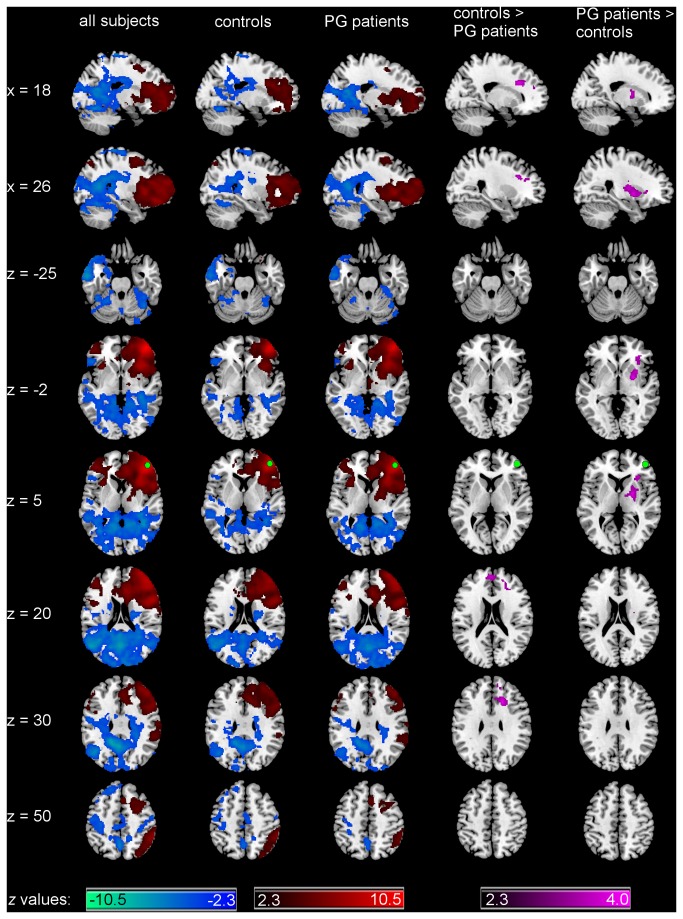
Pathological gambling (PG) shares clinical characteristics with substance-use disorders and is thus discussed as a behavioral addiction. Recent neuroimaging studies on PG report functional changes in prefrontal structures and the mesolimbic reward system. While an imbalance between these structures has been related to addictive behavior, whether their dysfunction in PG is reflected in the interaction between them remains unclear. We addressed this question using functional connectivity resting-state fMRI in male subjects with PG and controls. Seed-based functional connectivity was computed using two regions-of-interest, based on the results of a previous voxel-based morphometry study, located in the prefrontal cortex and the mesolimbic reward system (right middle frontal gyrus and right ventral striatum). PG patients demonstrated increased connectivity from the right middle frontal gyrus to the right striatum as compared to controls, which was also positively correlated with nonplanning aspect of impulsiveness, smoking and craving scores in the PG group. Moreover, PG patients demonstrated decreased connectivity from the right middle frontal gyrus to other prefrontal areas as compared to controls. The right ventral striatum demonstrated increased connectivity to the right superior and middle frontal gyrus and left cerebellum in PG patients as compared to controls. The increased connectivity to the cerebellum was positively correlated with smoking in the PG group. Our results provide further evidence for alterations in functional connectivity in PG with increased connectivity between prefrontal regions and the reward system, similar to connectivity changes reported in substance use disorder.
Overview
The claims and statistics of this paper haven’t been checked yet.
Free: it reads the open-access text and checks the first 5 claims that cite a source we can check. Create a free account to check every claim.
Integrity signals
Registry
Cites
Statistics
Figures



Verification
Claims the paper makes
The claims and statistics of this paper haven’t been checked yet.
Free: it reads the open-access text and checks the first 5 claims that cite a source we can check. Create a free account to check every claim.
Claims other papers make about this one
Each is checked against this paper’s own text: does it say what the citing paper says it does?
The source backs part of the claim, not all of it — or backs it for a different population, condition or comparison.
In the citing paper
“the abnormal functional connections may lead to some cognitive impairment, such as in reward and executive control (58–60)”
From Altered functional connectivity between the cerebellum and the cortico-striato-thalamo-cortical circuit in obsessive-compulsive disorder (2019) · cites this paper as [58]
Experimental — accuracy not yet measured
Self-check
Percentages, sums and reported differences re-computed from the paper’s own numbers.
The self-check needs the paper’s full text.
Citations
Cites
Diagnostic and Statistical Manual of Mental Disorders
Williams, J. B. W., & First, M. (2013) · Encyclopedia of Social Work · doi:10.1093/acrefore/9780199975839.013.104 · Cited by 109,519
The assessment and analysis of handedness: The Edinburgh inventory
Oldfield, R. C. (1971) · Neuropsychologia · doi:10.1016/0028-3932(71)90067-4 · Cited by 35,900
An Integrative Theory of Prefrontal Cortex Function
Miller, E. K., & Cohen, J. D. (2001) · Annual Review of Neuroscience · doi:10.1146/annurev.neuro.24.1.167 · Cited by 12,803 · cited 1×
“prefrontal cortex (PFC) [5].”
Diagnostic and Statistical Manual of Mental Disorders
Siegel, L. J., & Fletcher‐Janzem, E. (2008) · Encyclopedia of Special Education · doi:10.1002/9780470373699.speced0655 · Cited by 8,477
Spontaneous fluctuations in brain activity observed with functional magnetic resonance imaging
Fox, M. D., & Raichle, M. E. (2007) · Nature Reviews Neuroscience · doi:10.1038/nrn2201 · Cited by 6,700 · cited 1×
“Patterns of intrinsic functional connectivity are correlated with similar patterns to those activated during tasks-related activity [34,35].”
BackgroundCorrespondence of the brain's functional architecture during activation and rest
Smith, S. M., Fox, P. T., Miller, K. L., Glahn, D. C., Fox, P. M., Mackay, C. E., Filippini, N., Watkins, K. E., Toro, R., Laird, A. R., et al. (2009) · Proceedings of the National Academy of Sciences · doi:10.1073/pnas.0905267106 · Cited by 5,150 · cited 1×
“Patterns of intrinsic functional connectivity are correlated with similar patterns to those activated during tasks-related activity [34,35].”
BackgroundInhibition and the right inferior frontal cortex
Aron, A. R., Robbins, T. W., & Poldrack, R. A. (2004) · Trends in Cognitive Sciences · doi:10.1016/j.tics.2004.02.010 · Cited by 3,197
Separate neural systems value immediate and delayed monetary rewards
McClure, S. M., Laibson, D. I., Loewenstein, G., & Cohen, J. D. (2004) · Science · doi:10.1126/science.1100907 · Cited by 3,089 · cited 1×
“regulation [64-67].”
Dysfunction of the prefrontal cortex in addiction: neuroimaging findings and clinical implications
Goldstein, R. Z., & Volkow, N. D. (2011) · Nature Reviews Neuroscience · doi:10.1038/nrn3119 · Cited by 2,749
Decision making, impulse control and loss of willpower to resist drugs: a neurocognitive perspective
Bechara, A. (2005) · Nature Neuroscience · doi:10.1038/nn1584 · Cited by 2,149 · cited 2×
“Taking these alterations into account, an imbalance between prefrontal brain activity and mesolimbic function has been suggested to contribute to addictive behavior [18,19].”
Background
Research works printed but not linked: 2
- Petry J, Baulig T (1996) KFG: Kurzfragebogen zum Glücksspielverhalten. Psychotherapie der Gluecksspielsucht. Weinheim: Psychologie Verlags Union pp. 300- 302.
- First M, Spitzer R, Gibbon M, Williams J (2001) Structured Clinical Interview for DSM-IV-TR Axis I Disorders, Research Version, Patient Edition with Psychotic Screen (SCID-I/PW/PSYSCREEN). New York: New York State Psychiatric Institute.
Cited by
Peters, S. K., Dunlop, K., & Downar, J. (2016) · Frontiers in Systems Neuroscience · doi:10.3389/fnsys.2016.00104 · Cited by 611
“Conversely, gambling addiction has displayed increased PFC connectivity to the striatum; this connectivity was associated with impulsivity, smoking frequency and craving severity (Koehler et al., 2013).”
BackgroundBargeron, A. H., & Hormes, J. M. (2017) · Computers in Human Behavior · doi:10.1016/j.chb.2016.11.029 · Cited by 204
“Excess engagement in gambling also activates brain areas typically associated with substance addiction, such as the frontal cortices and striatal complexes (Goudriaan et al., 2014; Koehler et al., 2013; Kuss & Griffiths, 2012; Leeman & Potenza, 2013).”
BackgroundBrand, M., Snagowski, J., Laier, C., & Maderwald, S. (2016) · NeuroImage · doi:10.1016/j.neuroimage.2016.01.033 · Cited by 198
“…Grüsser et al., 2004; Heinz, Beck, Grüsser, Grace, & Wrase, 2008; Ko, Liu, Yen, Chen, et al., 2013; Ko, Liu, Yen, Yen, et al., 2013; Ko et al., 2009; Koehler et al., 2013; Potenza, 2008; Potenza et al., 2013; Potenza et al., 2003; Romanczuk-Seiferth, Koehler, Dreesen, Wüstenberg, & Heinz, 2015).”
Disordered gambling: the evolving concept of behavioral addiction
Clark, L. (2014) · Annals of the New York Academy of Sciences · doi:10.1111/nyas.12558 · Cited by 194
Neuroimaging of reward mechanisms in Gambling disorder: an integrative review
Clark, L., Boileau, I., & Zack, M. H. (2018) · Molecular Psychiatry · doi:10.1038/s41380-018-0230-2 · Cited by 175
Neural correlates of cognitive control in gambling disorder: a systematic review of fMRI studies
Moccia, L., Pettorruso, M., De Crescenzo, F., De Risio, L., di Nuzzo, L., Martinotti, G., Bifone, A., Janiri, L., & Di Nicola, M. (2017) · Neuroscience & Biobehavioral Reviews · doi:10.1016/j.neubiorev.2017.04.025 · Cited by 158
The cerebellum in fear and anxiety-related disorders
Moreno, J. M. M. (2018) · Progress in Neuro-Psychopharmacology and Biological Psychiatry · doi:10.1016/j.pnpbp.2018.04.002 · Cited by 136
Miquel, M., Vazquez-Sanroman, D. B., Carbo‐Gas, M., Gil‐Miravet, I., Sanchis‐Segura, C., Carulli, D., Manzo, J., & Coria‐Ávila, G. A. (2015) · Neuroscience & Biobehavioral Reviews · doi:10.1016/j.neubiorev.2015.11.005 · Cited by 120
Brain network dysfunctions in addiction: a meta-analysis of resting-state functional connectivity
Tolomeo, S., & Yu, R. (2022) · Translational Psychiatry · doi:10.1038/s41398-022-01792-6 · Cited by 130
A Working Hypothesis for the Role of the Cerebellum in Impulsivity and Compulsivity
Miquel, M., Nicola, S. M., Gil‐Miravet, I., Guarque‐Chabrera, J., & Sanchez-Hernandez, A. (2019) · Frontiers in Behavioral Neuroscience · doi:10.3389/fnbeh.2019.00099 · Cited by 100
Imperatori, C., Fabbricatore, M., Innamorati, M., Farina, B., Quintiliani, M. I., Lamis, D. A., Mazzucchi, E., Contardi, A., Vollono, C., & Marca, G. D. (2014) · Brain Imaging and Behavior · doi:10.1007/s11682-014-9324-x · Cited by 94
Qin, K., Zhang, F., Chen, T., Li, L., Li, W., Suo, X., Lei, D., Kemp, G. J., & Gong, Q. (2020) · Journal of Behavioral Addictions · doi:10.1556/2006.2020.00006 · Cited by 79
The cerebellum in drug craving
Moreno, J. M. M., & Miquel, M. (2017) · Drug and Alcohol Dependence · doi:10.1016/j.drugalcdep.2016.12.028 · Cited by 78
Resting state functional connectivity analysis for addiction medicine
Pariyadath, V., Gowin, J. L., & Stein, E. A. (2015) · Progress in brain research · doi:10.1016/bs.pbr.2015.07.015 · Cited by 80
Socioeconomic disadvantage and altered corticostriatal circuitry in urban youth
Marshall, N. A., Marusak, H. A., Sala‐Hamrick, K. J., Crespo, L. M., Rabinak, C. A., & Thomason, M. E. (2018) · Human Brain Mapping · doi:10.1002/hbm.23978 · Cited by 60
Contreras-Rodríguez, O., Albein-Urios, N., Vilar-López, R., Perales, J. C., Martínez-Gonzalez, J. M., Fernández-Serrano, M. J., Lozano-Rojas, O., Clark, L., & Verdejo-García, A. (2016) · Addiction Biology · doi:10.1111/adb.12242 · Cited by 59
Chen, Y., Yim, H., & Lee, T. (2023) · Developmental Cognitive Neuroscience · doi:10.1016/j.dcn.2023.101218 · Cited by 69
Berger, S., Baria, A. T., Baliki, M. N., Mansour, A. R., Herrmann, K. M., Torbey, S., Huang, L., Parks, E. L., Schnizter, T. J., & Apkarian, A. V. (2014) · BMC Research Notes · doi:10.1186/1756-0500-7-739 · Cited by 60
From Symptoms to Neurobiology: Pathological Gambling in the Light of the New Classification in DSM-5
Romanczuk‐Seiferth, N., van den Brink, W., & Goudriaan, A. E. (2014) · Neuropsychobiology · doi:10.1159/000362839 · Cited by 66
Self-citationZhang, H., Wang, B., Li, K., Wang, X., Li, X., Zhu, J., Zhao, Q., Yang, Y., Lv, L., Zhang, M., et al. (2019) · Frontiers in Psychiatry · doi:10.3389/fpsyt.2019.00522 · Cited by 55
Parkes, L., Tiego, J., Aquino, K. M., Braganza, L., Chamberlain, S. R., Fontenelle, L. F., Harrison, B. J., Lorenzetti, V., Paton, B. K., Razi, A., et al. (2019) · NeuroImage · doi:10.1016/j.neuroimage.2019.116070 · Cited by 59
Sütterlin, S., Olsen, V., & Lugo, R. G. (2015) · Psychology Research and Behavior Management · doi:10.2147/prbm.s68695 · Cited by 59
Brown, V. M., Wilson, J., Hallquist, M. N., Szanto, K., & Dombrovski, A. Y. (2020) · Neuropsychopharmacology · doi:10.1038/s41386-020-0632-0 · Cited by 48
Transcriptional signatures of connectomic subregions of the human striatum
Parkes, L., Fulcher, B. D., Yücel, M., & Fornito, A. (2017) · Genes, Brain and Behavior · doi:10.1111/gbb.12386 · Cited by 49
Zhang, J., Ma, S., Li, C. R., Liu, L., Xia, C., Lan, J., Wang, L., Liu, B., Yao, Y., & Fang, X. (2016) · Addiction Biology · doi:10.1111/adb.12474 · Cited by 47
Contreras‐Rodríguez, O., Albein‐Urios, N., Perales, J. C., Martínez‐Gonzalez, J. M., Vilar‐López, R., Fernández‐Serrano, M. J., Lozano‐Rojas, O., & Verdejo‐García, A. (2015) · Addiction · doi:10.1111/add.13076 · Cited by 46
Craving in gambling disorder: A systematic review
Mallorquí‐Bagué, N., Mestre‐Bach, G., & Testa, G. (2023) · Journal of Behavioral Addictions · doi:10.1556/2006.2022.00080 · Cited by 50
Bae, S., Han, D. H., Jung, J., Nam, K., & Renshaw, P. F. (2017) · Journal of Behavioral Addictions · doi:10.1556/2006.6.2017.061 · Cited by 44
Verger, A., Klesse, E., Chawki, M. B., Witjas, T., Azulay, J., Eusébio, A., & Guedj, É. (2018) · Human Brain Mapping · doi:10.1002/hbm.24068 · Cited by 46
Structural brain changes in young males addicted to video-gaming
Mohammadi, B., Szycik, G. R., Wildt, B. T. T., Heldmann, M., Samii, A., & Münte, T. F. (2020) · Brain and Cognition · doi:10.1016/j.bandc.2020.105518 · Cited by 38
Neural correlates of visual aesthetic appreciation: insights from non-invasive brain stimulation
Cattaneo, Z. (2019) · Experimental Brain Research · doi:10.1007/s00221-019-05685-x · Cited by 36
Castro, J. A. G., Cancela, A., & Cárdaba, M. Á. M. (2022) · Current Psychology · doi:10.1007/s12144-022-03915-0 · Cited by 38
Stress psychobiology in the context of addiction medicine
Lemieux, A., & al'Absi, M. (2016) · Progress in Brain Research · doi:10.1016/bs.pbr.2015.08.001 · Cited by 29
Addiction and the cerebellum with a focus on actions of opioid receptors
Ranjbar, H., Soti, M., Banazadeh, M., Saleki, K., Kohlmeier, K. A., & Shabani, M. (2021) · Neuroscience & Biobehavioral Reviews · doi:10.1016/j.neubiorev.2021.09.021 · Cited by 28
Brain Imaging in Gambling Disorder
Quester, S., & Romanczuk‐Seiferth, N. (2015) · Current Addiction Reports · doi:10.1007/s40429-015-0063-x · Cited by 32
Self-citationConnectome-based prediction of craving in gambling disorder and cocaine use disorder
Antons, S., Yip, S. W., Lacadie, C., Dadashkarimi, J., Scheinost, D., Brand, M., & Potenza, M. N. (2023) · Dialogues in Clinical Neuroscience · doi:10.1080/19585969.2023.2208586 · Cited by 28
Striatal functional connectivity in chronic ketamine users: a pilot study
Hung, C., Zhang, S., Chen, C., Duann, J., Lin, C., Lee, T. S., & Li, C. R. (2019) · The American Journal of Drug and Alcohol Abuse · doi:10.1080/00952990.2019.1624764 · Cited by 24
Piccoli, T., Maniaci, G., Collura, G., Gagliardo, C., Brancato, A., Tona, G. L., Gangitano, M., Cascia, C. L., Picone, F., Marrale, M., et al. (2020) · Behavioural Brain Research · doi:10.1016/j.bbr.2020.112668 · Cited by 23
Mestre‐Bach, G., & Potenza, M. N. (2023) · Nutrients · doi:10.3390/nu15040827 · Cited by 22
Zeng, X., Han, X., Gao, F., Sun, Y., & Yuan, Z. (2023) · Journal of Behavioral Addictions · doi:10.1556/2006.2023.00025 · Cited by 20
Dong, G., Li, H., Wang, Y., & Potenza, M. N. (2018) · International Journal of Psychophysiology · doi:10.1016/j.ijpsycho.2018.03.014 · Cited by 18
Connectivity networks in gambling disorder: a resting-state fMRI study
van Timmeren, T., Zhutovsky, P., van Holst, R. J., & Goudriaan, A. E. (2018) · International Gambling Studies · doi:10.1080/14459795.2018.1449884 · Cited by 17
Cognitive dynamics of intertemporal choice in gambling disorder
Calluso, C., Pettorruso, M., Tosoni, A., Carenti, M. L., Cannito, L., Martinotti, G., Giannantonio, M. D., & Committeri, G. (2020) · Addictive Behaviors · doi:10.1016/j.addbeh.2020.106463 · Cited by 23
Genauck, A., Matthis, C., Andrejević, M., Ballon, L., Chiarello, F., Duecker, K., Heinz, A., Kathmann, N., & Romanczuk‐Seiferth, N. (2020) · Addiction Biology · doi:10.1111/adb.12951 · Cited by 16
Self-citationBellmunt‐Gil, A., Majuri, J., Arponen, E., Kaasinen, V., & Joutsa, J. (2023) · Journal of Behavioral Addictions · doi:10.1556/2006.2023.00037 · Cited by 15
The Role of the Cerebellum in Drug Reward: A Review
Wang, Y., & Yan, L. (2023) · Journal of Integrative Neuroscience · doi:10.31083/j.jin2206147 · Cited by 17
Neurogenetics of acute and chronic opiate opioid abstinence treating symptoms and the cause
Blum, K., Gold, M. S., Jacobs, W., McCall, W. V., Febo, M., Baron, D., Dushaj, K., Demetrovics, Z., & Badgaiyan, R. D. (2017) · Frontiers in bioscience · doi:10.2741/4544 · Cited by 16
Serotonergic dysfunction in patients with impulse control disorders in Parkinson’s disease
Prange, S., Météreau, É., Klinger, H., Huddlestone, M., Oliveira, M. D., Duperrier, S., Courault, P., Redouté, J., Tremblay, L., Sgambato, V., et al. (2025) · Brain · doi:10.1093/brain/awaf087 · Cited by 15
Modulation of Resting Connectivity Between the Mesial Frontal Cortex and Basal Ganglia
Popa, T., Morris, L. S., Hunt, R., Deng, Z., Horovitz, S. G., Mente, K., Shitara, H., Baek, K., Hallett, M., & Voon, V. (2019) · Frontiers in Neurology · doi:10.3389/fneur.2019.00587 · Cited by 13
Mantanona, C. P., Alsiö, J., Elson, J. L., Fisher, B. M., Dalley, J. W., Bussey, T. J., & Pienaar, I. S. (2019) · Brain Structure and Function · doi:10.1007/s00429-019-01957-y · Cited by 14
Duquette, L. L., Mattiace, F., Blum, K., Waite, R. L., Boland, T., McLaughlin, T., Dushaj, K., Febo, M., & Badgaiyan, R. D. (2016) · Clinical Medical Reviews and Case Reports · doi:10.23937/2378-3656/1410104 · Cited by 13
Nakagawa, Y. (2017) · Journal of Drug and Alcohol Research · doi:10.4303/jdar/236017 · Cited by 10
Gell, M., Langner, R., Küppers, V., Cieslik, E. C., Satterthwaite, T. D., Eickhoff, S. B., & Müller, V. I. (2024) · Imaging Neuroscience · doi:10.1162/imag_a_00295 · Cited by 8
Dolatshahi, M., Ashraf‐Ganjouei, A., Wu, I.-W., Zhang, Y., Aarabi, M. H., & Tosun, D. (2021) · Journal of the Neurological Sciences · doi:10.1016/j.jns.2021.120032 · Cited by 8
Altered hierarchical organization between empathy and gambling networks in disordered gamblers
Zhou, H., He, Y., Yuan, Z., Zhou, Y., Yin, J., Chark, R., Fong, D. K. C., Fong, L. H. N., & Wu, A. M. S. (2023) · Frontiers in Psychiatry · doi:10.3389/fpsyt.2023.1083465 · Cited by 8
Balodis, I. M., & Potenza, M. N. (2016) · International review of neurobiology · doi:10.1016/bs.irn.2016.05.001 · Cited by 7
Takeuchi, H., Yahata, N., Lisi, G., Tsurumi, K., Yoshihara, Y., Kawada, R., Murao, T., Mizuta, H., Yokomoto, T., Miyagi, T., et al. (2022) · Psychiatry and Clinical Neurosciences · doi:10.1111/pcn.13350 · Cited by 6
Zhou, M., Gao, G., Rong, B., Zhao, H., Huang, J., Tu, N., Bu, L., Ling, X., & Wang, G. (2024) · Frontiers in Psychiatry · doi:10.3389/fpsyt.2024.1379259 · Cited by 6
Inhibitory framing in hypersexual patients with Parkinson’s disease. An fMRI pilot study
Theis, H., Probst, C. C., Campabadal, A., Goerlich, K. S., Granert, O., Wolff, S., Witt, K., Deuschl, G., & van Eimeren, T. (2022) · Experimental Brain Research · doi:10.1007/s00221-022-06397-5 · Cited by 5
Zhu, F., Kanda, H., Neyama, H., Wu, Y., Kato, S., Hu, D., Duan, S., Noguchi, K., Watanabe, Y., Kobayashi, K., et al. (2024) · Neuroscience Bulletin · doi:10.1007/s12264-024-01230-1 · Cited by 4
Frontal white and gray matter abnormality in gambling disorder: A multimodal MRI study
Bellmunt‐Gil, A., Vorobyev, V. A., Parkkola, R. K., Lötjönen, J. M. P., Joutsa, J., & Kaasinen, V. (2024) · Journal of Behavioral Addictions · doi:10.1556/2006.2024.00031 · Cited by 5
Zhou, H., He, Y., Liu, L., Yin, J., Xiong, A. Y., Leong, K. H., Wu, A. M. S., & Potenza, M. N. (2025) · International Journal of Clinical and Health Psychology · doi:10.1016/j.ijchp.2025.100547 · Cited by 5
Tikhonov, P., Levchuk, A. G., Trufanov, A. G., Efimtsev, A., & Zubkov, M. A. (2023) · Computers in Human Behavior · doi:10.1016/j.chb.2023.108052 · Cited by 5
Ravinder, D., Pasha, A., Botlagunta, M., Heena, S. K., Mutyala, V. V. V. P., & Pawar, S. C. (2022) · Medical Oncology · doi:10.1007/s12032-022-01826-5 · Cited by 3
Ciricugno, A., Slaby, R. J., Benedek, M., & Cattaneo, Z. (2023) · Current clinical neurology · doi:10.1007/978-3-031-14724-1_7 · Cited by 6
Pathologisches Glücksspiel und Delinquenz
Romanczuk‐Seiferth, N., Mörsen, C. P., & Heinz, A. (2016) · Forensische Psychiatrie Psychologie Kriminologie · doi:10.1007/s11757-016-0376-1 · Cited by 6
Self-citationAdolescent substance use trajectories are associated with nucleus accumbens functional connectivity
Purcell, J. B., Dark, H. E., Mrug, S., Elliott, M. N., Emery, S. T., Schuster, M. A., & Knight, D. C. (2025) · Journal of Psychopharmacology · doi:10.1177/02698811251344691 · Cited by 3
Lima, G., Soares, C., Teixeira, M., Pais, M. L., Cabral, C., Rijo, P. M., & Castelo-Branco, M. S. (2025) · Scientific Reports · doi:10.1038/s41598-025-31431-1 · Cited by 2
Neurobiologische und genetische Befunde bei pathologischem Glücksspiel
Fauth‐Bühler, M., Romanczuk‐Seiferth, N., Mann, K. F., & Heinz, A. (2014) · Springer eBooks · doi:10.1007/978-3-642-38364-9_7 · Cited by 2
Self-citationHypergraph based Subnetwork Extraction using Fusion of Task and Rest Functional ConnectivityPreprint
Wang, C., & Rafeef Abugharbieh, A. (2018) · arXiv (Cornell University) · doi:10.48550/arxiv.1801.05017 · Cited by 3
De-Sola, J. (2017) · LA Referencia (Red Federada de Repositorios Institucionales de Publicaciones Científicas) · Cited by 27
Compensatory Mechanisms in Prefrontal and Reward Systems Reveal Delayed Brain Aging in Musicians
Ma, R., Guo, S., Bian, H., Li, Y., Tang, W., Chen, X., Lu, J., & Yao, D. (2025) · Annals of the New York Academy of Sciences · doi:10.1111/nyas.70061 · Cited by 1
Yılmazer, E., Çınaroğlu, M., Ülker, S. V., & Tarlacı, S. (2025) · Frontiers in Neuroscience · doi:10.3389/fnins.2025.1687112 · Cited by 1
Von Diagnostik über Neurobiologie zur Therapie pathologischen Glücksspiels
Romanczuk‐Seiferth, N., & Fauth‐Bühler, M. (2014) · DNP - Der Neurologe und Psychiater · doi:10.1007/s15202-014-0717-x · Cited by 1
Self-citationSoberay, A. (2015) · Digital Commons - DU (University of Denver) · Cited by 2
The Neurobiology of Gambling Disorder: Neuroscientific Studies and Computational Perspectives
Genauck, A., & Romanczuk‐Seiferth, N. (2019) · Springer eBooks · doi:10.1007/978-3-030-03060-5_7 · Cited by 1
Self-citationPsychometric Validation of the Chinese Version of Gambling Symptom Assessment Scale (C-GSAS)
Liu, S., Fang, S., Chen, L., Tu, P., Su, H., Huang, W.-C., Liao, P.-C., Chang, H., & Huang, M. (2025) · Journal of Gambling Studies · doi:10.1007/s10899-025-10414-x · Cited by 1
Involvement of the cerebellum in cocaine-induced memory
Carbo‐Gas, M. (2017) · Tesis Doctorals en Xarxa (Consorci de Serveis Universitaris de Catalunya) · doi:10.6035/14023.2017.208925 · Cited by 1
The Cerebellar Landscape of Drug Addiction
Miquel, M., Vazquez-Sanroman, D. B., Carbo‐Gas, M., Gil‐Miravet, I., & Sanchis‐Segura, C. (2016) · Elsevier eBooks · doi:10.1016/b978-0-12-800634-4.00021-4
Zois, E., Kiefer, F., Vollstädt‐Klein, S., Leménager, T., Mann, K. F., & Fauth‐Bühler, M. (2018) · International Gambling Studies · doi:10.1080/14459795.2018.1452276
Makkonen, E. (2021) · Helda - University of Helsinki Institutional Repository
Disruptive, Impulse-Control, and Conduct Disorders
Bains, A., & Sanders, K. M. (2024) · Elsevier eBooks · doi:10.1016/b978-0-443-11844-9.00023-0
Computational and Neural Evidence for Altered Fast and Slow Learning from Losses in Problem Gambling
Iigaya, K., Larsen, T., FONG, T. W., & O’Doherty, J. P. (2024) · Journal of Neuroscience · doi:10.1523/jneurosci.0080-24.2024
Peters, L. (2018) · Electronic Theses of LMU Munich (Ludwig-Maximilians-Universität München) · doi:10.5282/edoc.22658
Andersson, E., & Balazs, E. (2025) · University Library of Skövde (University of Skövde)
Metadata
- Authors
- Koehler, S., Ovadia-Caro, S., van der Meer, E., Villringer, A., Heinz, A., Romanczuk-Seiferth, N., & Margulies, D. S.
- Affiliations
- Humboldt-Universität zu Berlin (DE)
- Max Planck Society (DE)
- Corresponding author
- Koehler, Saskia
- Venue
- PLoS ONE
- Publisher
- Public Library of Science (PLoS)
- Published
- 2013-12-19
- Volume
- 8
- Issue
- 12
- Pages
- e84565
- ISSN
- 1932-6203 (ISSN-L)
- PMC
- PMC3868704
- OpenAlex
- W1968016381
- Cited by
- 86
- References
- 72
- Citations by year
- 2025: 7 · 2024: 7 · 2023: 10 · 2022: 6 · 2021: 3 · 2020: 6 · 2019: 8 · 2018: 9 · 2017: 7 · 2016: 8 · 2015: 9 · 2014: 6
- FWCI
- 8.52
- Type
- journal article
- Language
- en
- Update notices
- correction (2015-07-21)
- Open access
- gold
- doi.org
- Licence
- Locations
- PLoS ONE (publishedVersion, cc-by)
- Europe PMC (PubMed Central) (publishedVersion, cc-by)
- PubMed Central (publishedVersion, cc-by)
- PubMed (publishedVersion)
- DOAJ (DOAJ: Directory of Open Access Journals) (submittedVersion, cc-by-sa)
- Max Planck Digital Library (submittedVersion, other-oa)
- Figshare (submittedVersion, cc-by)
- MPG.PuRe (Max Planck Society) (submittedVersion, other-oa)
- Funders
- Bristol-Myers Squibb
- Eli Lilly and Company
- Minerva Foundation
- Deutsche Forschungsgemeinschaft (HE 2597/4, HE 2597/4-3, EXC257, 01QG87164, 01GQ0411, STE 1430/2-1)
- Bundesministerium für Bildung und Forschung (01QG87164, 01GQ0411, 01GS08152)
- Cilag
- Topics
- Social Sciences › Psychology › Clinical Psychology › Gambling Behavior and Treatments
- Life Sciences › Neuroscience › Cognitive Neuroscience › Functional Brain Connectivity Studies
- Life Sciences › Neuroscience › Cognitive Neuroscience › Neural and Behavioral Psychology Studies
- Keywords
- gambling addiction, functional connectivity, prefrontal cortex, mesolimbic reward system, ventral striatum, middle frontal gyrus, cerebellum, impulsivity, smoking, craving, behavioral addiction, substance use disorders
- MeSH terms
- Adult, Basal Ganglia, Brain Mapping, Gambling, Humans, Magnetic Resonance Imaging, Male, Nerve Net, Psychometrics, Reward, Behavior, Addictive, Prefrontal Cortex, Self Report
About these checks
Registry, retraction, Cites and statistics results are computed, not judged, with one exception: a printed reference that no index lists is read once by a model before it counts as a citation error. Claims are extracted by a model and kept only when their quote appears verbatim in the text; each cited source is then checked, with a model’s help, for whether it says what the claim relies on. Those verdicts can be wrong — read the claim’s quote and the cited source before relying on one.
Statistics and arithmetic are recomputed, not judged.
Confidence bands are shown only for fields calibrated on our annotated test set. None is calibrated yet, so no band is shown.
What counts as a claim ›How we measure confidence ›How we check this ›
Are you an author, or do you see a problem with this page? Request a review
Data sources
Bibliographic data: Semantic Scholar, OpenAlex, Crossref.
Contains information from the Semantic Scholar Academic Graph Datasets, made available under the ODC Attribution License (ODC-BY 1.0).
Semantic Scholar’s data is described in: Kinney, R., et al. (2023). The Semantic Scholar Open Data Platform. arXiv:2301.10140.
