

Association between Drug Insurance Cost Sharing Strategies and Outcomes in Patients with Chronic Diseases: A Systematic Review
Open accessThe DOI matches its Crossref record; 41 of the 43 references it cites were found in a registry or an index.
Abstract
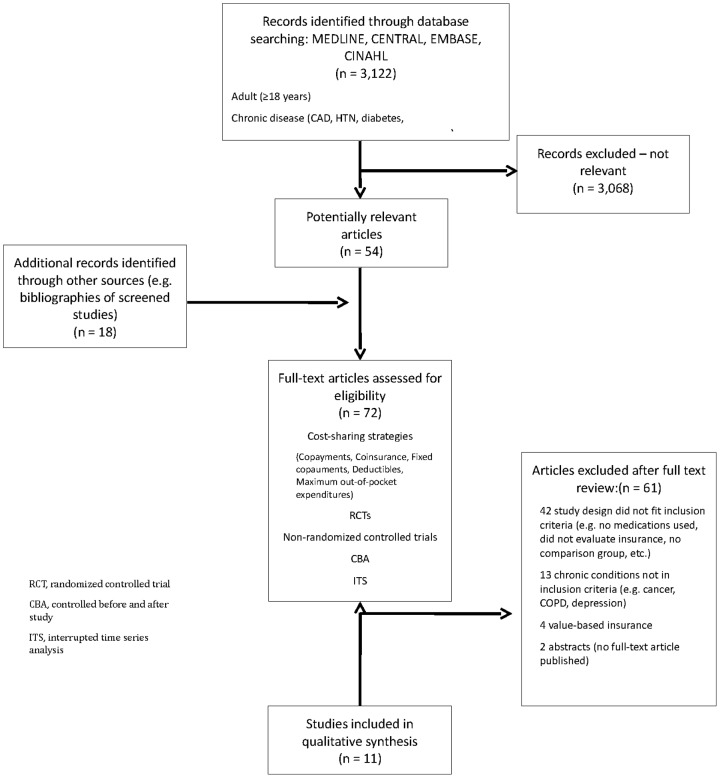
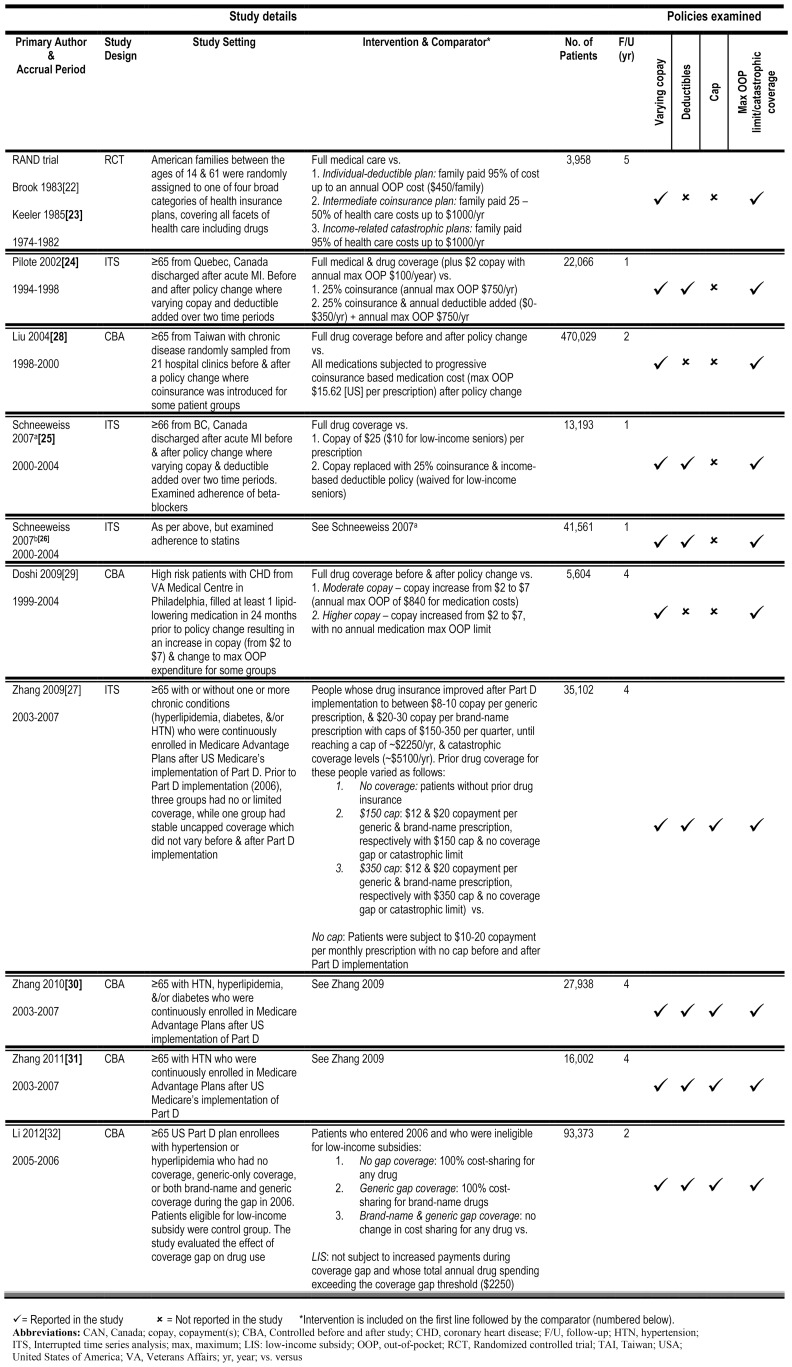
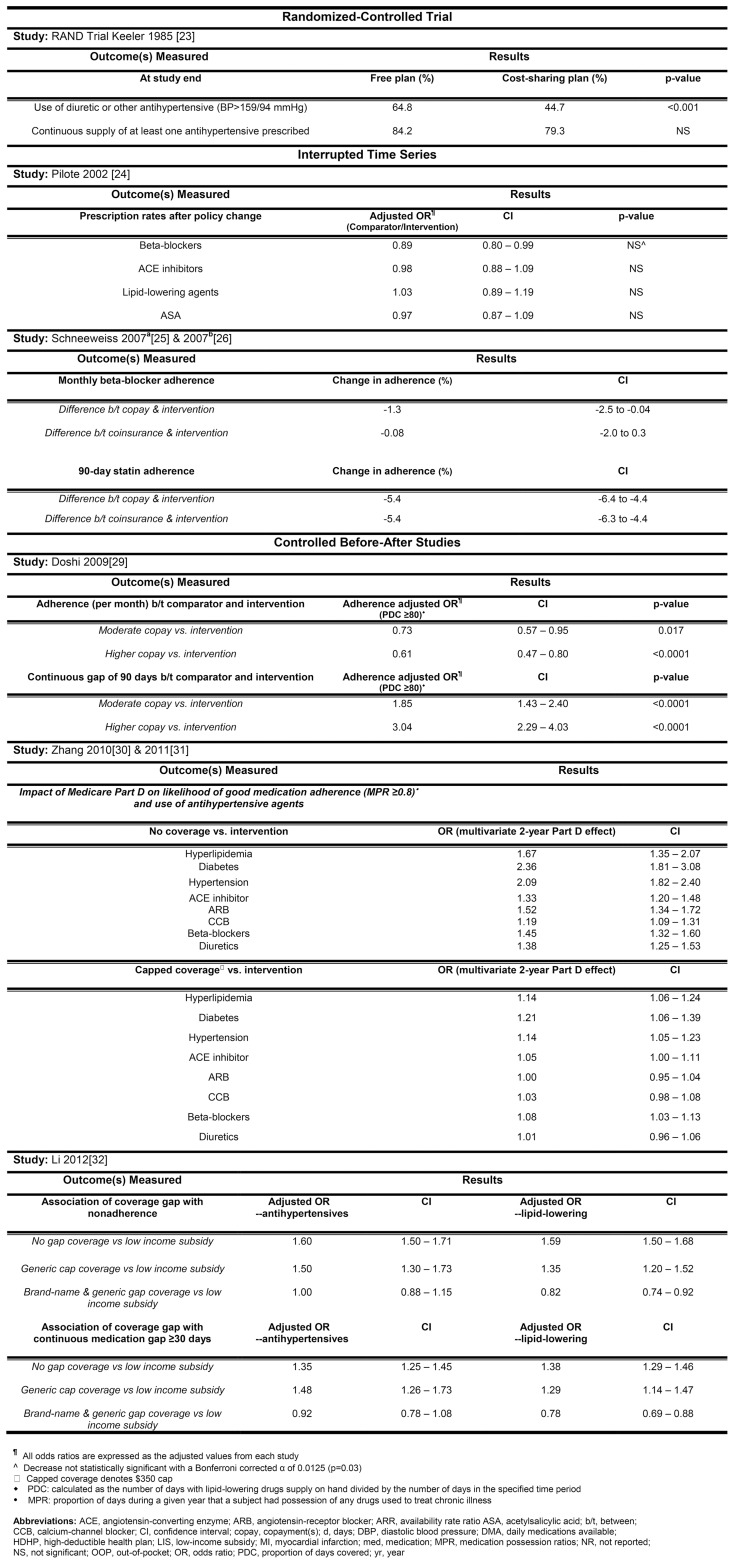
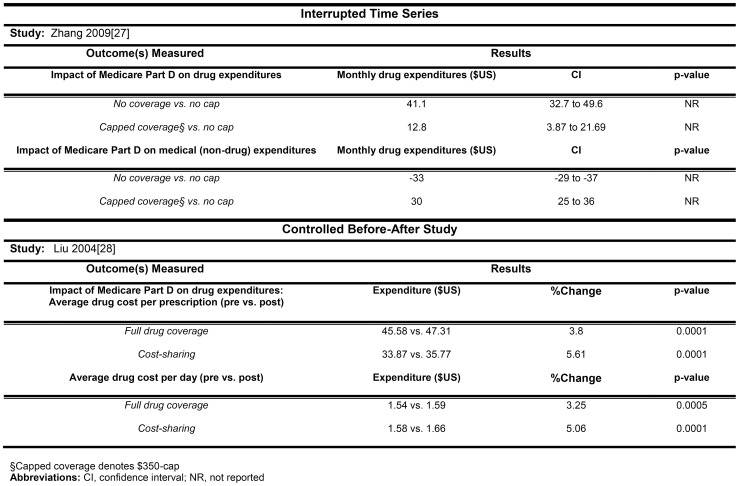
BACKGROUND: Prescription drugs are used in people with hypertension, diabetes, and cardiovascular disease to manage their illness. Patient cost sharing strategies such as copayments and deductibles are often employed to lower expenditures for prescription drug insurance plans, but the impact on health outcomes in these patients is unclear. OBJECTIVE: To determine the association between drug insurance and patient cost sharing strategies on medication adherence, clinical and economic outcomes in those with chronic diseases (defined herein as diabetes, hypertension, hypercholesterolemia, coronary artery disease, and cerebrovascular disease). METHODS: Studies were included if they examined various cost sharing strategies including copayments, coinsurance, fixed copayments, deductibles and maximum out-of-pocket expenditures. Value-based insurance design and reference based pricing studies were excluded. Two reviewers independently identified original intervention studies (randomized controlled trials, interrupted time series, and controlled before-after designs). MEDLINE, EMBASE, Cochrane Library, CINAHL, and relevant reference lists were searched until March 2013. Two reviewers independently assessed studies for inclusion, quality, and extracted data. Eleven studies, assessing the impact of seven policy changes, were included: 2 separate reports of one randomized controlled trial, 4 interrupted time series, and 5 controlled before-after studies. FINDINGS: Outcomes included medication adherence, clinical events (myocardial infarction, stroke, death), quality of life, healthcare utilization, or cost. The heterogeneity among the studies precluded meta-analysis. Few studies reported the impact of cost sharing strategies on mortality, clinical and economic outcomes. The association between patient copayments and medication adherence varied across studies, ranging from no difference to significantly lower adherence, depending on the amount of the copayment. CONCLUSION: Lowering cost sharing in patients with chronic diseases may improve adherence, but the impact on clinical and economic outcomes is uncertain.
Overview
The claims and statistics of this paper haven’t been checked yet.
Free: it reads the open-access text and checks the first 5 claims that cite a source we can check. Create a free account to check every claim.
Integrity signals
Registry
Cites
Statistics
Figures
Verification
Claims the paper makes
The claims and statistics of this paper haven’t been checked yet.
Free: it reads the open-access text and checks the first 5 claims that cite a source we can check. Create a free account to check every claim.
Claims other papers make about this one
Each is checked against this paper’s own text: does it say what the citing paper says it does?
The source backs part of the claim, not all of it — or backs it for a different population, condition or comparison.
In the citing paper
“In contrast, 2/3 of all included SRs were at high risk of bias in two or three domains [20, 21, 23, 24, 26, 30, 33, 35, 37–39].”
From Medication adherence influencing factors—an (updated) overview of systematic reviews (2019) · cites this paper as [26]
Experimental — accuracy not yet measuredThe cited source says what the claim attributes to it.
In the citing paper
“Finally, 21 SRs were included in this overview [20–40].”
From Medication adherence influencing factors—an (updated) overview of systematic reviews (2019) · cites this paper as [26]
The cited source says what the claim attributes to it.
In the citing paper
“Some evidence for a negative impact of co-payments on adherence in inflammatory arthritis, chronic diseases and cardiovascular conditions exists [20, 22, 23, 25, 26, 38].”
From Medication adherence influencing factors—an (updated) overview of systematic reviews (2019) · cites this paper as [26]
The cited source says what the claim attributes to it.
In the citing paper
“In cardiovascular conditions, there was some evidence that patients not paying any co-payments are more adherent than those patients paying (any) co-payments [25, 26].”
From Medication adherence influencing factors—an (updated) overview of systematic reviews (2019) · cites this paper as [26]
Self-check
Percentages, sums and reported differences re-computed from the paper’s own numbers.
The self-check needs the paper’s full text.
Citations
Cites
The Cochrane Collaboration's tool for assessing risk of bias in randomised trials
Higgins, J. P. T., Altman, D. G., Gotzsche, P. C., Juni, P., Moher, D., Oxman, A. D., Savovic, J., Schulz, K. F., Weeks, L., Sterne, J. A. C., et al. (2011) · BMJ · doi:10.1136/bmj.d5928 · Cited by 33,817
Grundy, S. M., Bilheimer, D. W., Chait, A., Clark, L. T., Denke, M. A., Havel, R. J., Hazzard, W. R., Hulley, S. B., Hunninghake, D. B., Kreisberg, R. A., et al. (1993) · JAMA · doi:10.1001/jama.269.23.3015 · Cited by 27,947
Dermyshi, E., Wang, Y., Yan, C., Hong, W., Qiu, G., Gong, X., & Zhang, T. (2017) · Neonatology · doi:10.1159/000454668 · Cited by 24,451
Ahmed, A., Jorna, T., & Bhandari, S. (2016) · Nephron · doi:10.1159/000447068 · Cited by 11,717
The ALLHAT Officers and Coordinators for the ALLHAT Collaborative Research Group (2002) · JAMA: The Journal of the American Medical Association · doi:10.1001/jama.288.23.2981 · Cited by 5,664
Standards of medical care in diabetes—2013
American Diabetes Association (2013) · Diabetes Care · doi:10.2337/dc13-s011 · Cited by 4,369
Collaborators, C. T. T. (. (2012) · The Lancet · doi:10.1016/s0140-6736(12)60367-5 · Cited by 2,833
Fihn, S. D., Gardin, J. M., Abrams, J., Berra, K., Blankenship, J. C., Dallas, A. P., Douglas, P. S., Foody, J. M., Gerber, T. C., Hinderliter, A. L., et al. (2012) · Circulation · doi:10.1161/cir.0b013e3182776f83 · Cited by 2,410
Cited by
Medication adherence influencing factors—an (updated) overview of systematic reviews
Gast, A., & Mathes, T. (2019) · Systematic Reviews · doi:10.1186/s13643-019-1014-8 · Cited by 560
“…outcome of interest Different study types including controlled trials, cohort studies and cross-sectional studies Published in every language Mann 2014 Not limited to March 2013 Adult patients with cardiovascular-related chronic conditions (coronary artery disease, hypertension,…”
BackgroundAdherence to cardiovascular medication: a review of systematic reviews
Leslie, K., McCowan, C., & Pell, J. P. (2018) · Journal of Public Health · doi:10.1093/pubmed/fdy088 · Cited by 136
Reasons for Nonadherence to Statins – A Systematic Review of Reviews
Ingersgaard, M. V., Andersen, T. H., Norgaard, O., Grabowski, D., & Olesen, K. (2020) · Patient Preference and Adherence · doi:10.2147/ppa.s245365 · Cited by 95
Qin, V. M., Hone, T., Millett, C. J., Moreno‐Serra, R., McPake, B., Atun, R. A., & Lee, J. T. (2019) · BMJ Global Health · doi:10.1136/bmjgh-2018-001087 · Cited by 96
Karter, A. J., Parker, M. M., Solomon, M. D., Lyles, C. R., Adams, A. S., Moffet, H. H., & Reed, M. E. (2018) · Health Services Research · doi:10.1111/1475-6773.12700 · Cited by 80
“As a strategy to control expenditures and excessive use of services, insurers and health care delivery systems typically require patients to bear an out-ofpocket (OOP) cost (in the form of copayments, coinsurance, or deductibles) for prescribed medications (Goldman et al. 2007; Eaddy et al. 2012; Mann et al. 2014).”
BackgroundInfluentialGourzoulidis, G., Kourlaba, G., Stafylas, P., Giamouzis, G., Parissis, J., & Maniadakis, N. (2017) · Health Policy · doi:10.1016/j.healthpol.2017.02.008 · Cited by 62
Improving the quality of health care in Canada
Dhalla, I. A., & Tepper, J. D. (2018) · Canadian Medical Association Journal · doi:10.1503/cmaj.171045 · Cited by 75
O acesso a medicamentos em sistemas universais de saúde – perspectivas e desafios
de Oliveira, L. C. F., do Nascimento, M. Â. A., & Lima, I. M. S. O. (2019) · Saúde em Debate · doi:10.1590/0103-11042019s523 · Cited by 53
Islam, M. Z., & Sumi, A. B. (2022) · doi:10.63125/7xgryf71 · Cited by 51
Alm, A., Hornmark, A., Fall, P.-A., Linder, L., Bergstrand, B., Ehrnebo, M., Madsen, S., & Setterberg, G. (2026) · Acta Dermato Venereologica · doi:10.2340/000155551989149110 · Cited by 55
Comparison of Canadian public medication insurance plans and the impact on out-of-pocket costs
Campbell, D. J. T., Manns, B., Soril, L. J. J., & Clement, F. M. (2017) · CMAJ Open · doi:10.9778/cmajo.20170065 · Cited by 36
“11 However, the conclusions have been limited to documenting the association between increased out-of-pocket costs and lower medication use; the authors have not been able to compare across mechanisms of cost-sharing.”
Self-citationValue-Based Health Care for Inflammatory Bowel Diseases
van Deen, W. K., Esrailian, E., & Hommes, D. W. (2015) · Journal of Crohn s and Colitis · doi:10.1093/ecco-jcc/jjv036 · Cited by 37
Guindon, G. E., Fatima, T., Garasia, S., & Khoee, K. (2022) · BMC Health Services Research · doi:10.1186/s12913-022-07554-w · Cited by 32
“One review found no evidence of an association between drug cost-sharing and clinical outcomes among patients with cardiovascular-related chronic disease [38].”
BackgroundInfluentialRoss‐Degnan, D., Wallace, J., Zhang, F., Soumerai, S. B., Garabedian, L. F., & Wharam, J. F. (2020) · Medical Care · doi:10.1097/mlr.0000000000001295 · Cited by 24
Affordability of Medical Care Among Medicare Enrollees
Madden, J. M., Bayapureddy, S., Briesacher, B. A., Zhang, F., Ross‐Degnan, D., Soumerai, S. B., Gurwitz, J. H., & Galbraith, A. A. (2021) · JAMA Health Forum · doi:10.1001/jamahealthforum.2021.4104 · Cited by 30
Martin, R. C., Faught, E., Szaflarski, J. P., Richman, J., Funkhouser, E. M., Piper, K., Juarez, L., Dai, C., & Pisu, M. (2017) · Epilepsia · doi:10.1111/epi.13675 · Cited by 27
“This is an unexpected result because the deductible usually acts as a barrier to care as the beneficiaries cover the full cost of the prescription in this phase.(18,19) However, beneficiaries eligible for the Part D LIS were less likely to start AEDs within 30 days, indicating that lower income acts as a barrier to op…”
Ajibola, S. S., & Fajemirokun, T. O. (2017) · Journal of Patient Experience · doi:10.1177/2374373517732384 · Cited by 23
“Evidence has since shown that the NHIS improves healthcare accessibility and reduces catastrophic spending on drugs in many health-care settings (9,10).”
BackgroundResultCampbell, P. J., Axon, D. R., Taylor, A. M., Smith, K. L., Pickering, M. K., Black, H. L., Warholak, T. L., & Chinthammit, C. (2021) · Medicine · doi:10.1097/md.0000000000027143 · Cited by 22
The Role of Patient Activation in Achieving Better Outcomes and Cost-Effectiveness in Patient Care
Tzeng, A., Tzeng, T. H., Vasdev, S., Grindy, A. K., Saleh, J. K., & Saleh, K. J. (2015) · JBJS Reviews · doi:10.2106/jbjs.rvw.n.00048 · Cited by 23
Novel Type 2 Diabetes Medication Access and Effect of Patient Cost Sharing
Henk, H. J., Lopez, J. M. S., & Bookhart, B. (2018) · Journal of Managed Care & Specialty Pharmacy · doi:10.18553/jmcp.2018.24.9.847 · Cited by 19
Luiza, V. L., Chaves, L. A., Campos, M. R., Bertoldi, A. D., da Silva, R. M., Bigdeli, M., Ross‐Degnan, D., & Emmerick, I. C. M. (2018) · BMJ Global Health · doi:10.1136/bmjgh-2017-000547 · Cited by 21
Rättö, H., & Aaltonen, K. (2021) · PLoS ONE · doi:10.1371/journal.pone.0250305 · Cited by 18
Doll, J. A., Wang, T. Y., Choudhry, N. K., Cannon, C. P., Cohen, D. J., Fonarow, G. C., Henry, T. D., Bhandary, D., Khan, N., Davidson-Ray, L. D., et al. (2016) · American Heart Journal · doi:10.1016/j.ahj.2016.04.008 · Cited by 15
McAdam‐Marx, C., Ruiz‐Negrón, N., Sullivan, J. M., & Tucker, J. M. (2022) · Journal of Managed Care & Specialty Pharmacy · doi:10.18553/jmcp.2022.21481 · Cited by 15
Treatment Adherence in Integrative Medicine-Part One: Review of Literature.
Bailey, R., English, J., Knee, C., & Keller, A. (2021) · PubMed Central · Cited by 27
Salinas, A. M., & KONES, R. J. (2018) · Journal of Preventive Medicine · doi:10.21767/2572-5483.100022 · Cited by 13
“There is some suggestion a threshold effect may exist [28,30].”
BackgroundPinhati, R. R., Ferreira, R. E., Carminatti, M., Tavares, P. L., Marsicano, E. O., Sertório, E. S., Colugnati, F. A. B., de Paula, R. B., & Sanders‐Pinheiro, H. (2021) · International Urology and Nephrology · doi:10.1007/s11255-020-02755-w · Cited by 14
Carvalho, M. S., Coeli, C. M., Chor, D., Pinheiro, R. S., da Fonseca, M. D. J. M., & Carvalho, L. C. D. S. (2015) · PLoS ONE · doi:10.1371/journal.pone.0132216 · Cited by 13
Commentary: Patient Cost Sharing and Medical Expenditures for the Elderly
Jakovljević, M. (2016) · Frontiers in Pharmacology · doi:10.3389/fphar.2016.00073 · Cited by 12
“However, the impact of increased co-payments on health is still subject to ongoing debate (Mann et al., 2014).”
BackgroundChen, Y.-L., Nguyen, P., Chien, C., Hsu, M., Liou, D.-M., & Yang, H. (2023) · Diabetes Research and Clinical Practice · doi:10.1016/j.diabres.2023.111033 · Cited by 13
Cost-Sharing Rates Increase During Deep Recession: Preliminary Data From Greece
Gouvalas, A., Igoumenidis, M., Θεοδώρου, Μ., & Athanasakis, K. (2016) · International Journal of Health Policy and Management · doi:10.15171/ijhpm.2016.62 · Cited by 14
Huang, T., Bai, L., Wushouer, H., Wang, Z., Yang, M., Lin, H., Shen, P., Guan, X., & Shi, L. (2022) · Frontiers in Pharmacology · doi:10.3389/fphar.2022.757398 · Cited by 10
“Besides, higher cost may negatively impact patient adherence to medicines and thus clinical outcomes (Sinnott et al., 2013; Mann et al., 2014; Simoens and Sinnaeve, 2014; Banerjee et al., 2016).”
BackgroundLaba, T., Cheng, L., Worthington, H. C., McGrail, K. M., Chan, F. K. I., Mamdani, M., & Law, M. R. (2020) · Health Policy · doi:10.1016/j.healthpol.2020.05.001 · Cited by 11
Effects of economic and health policies on the consumption of antibiotics in a Spanish region
García, P. R., & Antoñanzas, F. (2019) · Expert Review of Pharmacoeconomics & Outcomes Research · doi:10.1080/14737167.2019.1647105 · Cited by 11
Imanaka, T., Sato, I., Kawasaki, Y., Kanazawa, Y., & Kawakami, K. (2019) · International Forum of Allergy & Rhinology · doi:10.1002/alr.22308 · Cited by 9
Optimal coinsurance rates for a heterogeneous population under inequality and resource constraints
Schell, G. J., Garcia, G. P., Lavieri, M. S., Sussman, J. B., & Hayward, R. A. (2019) · IISE Transactions · doi:10.1080/24725854.2018.1499053 · Cited by 10
“Health researchers (Chernew et al., 2010) and insurance providers (Mann et al., 2014) have championed the principle of reducing out-of-pocket expenses for highly valuable clinical services to improve adherence.”
BackgroundKim, N. H., & Look, K. A. (2019) · Journal of Managed Care & Specialty Pharmacy · doi:10.18553/jmcp.2019.25.12.1432 · Cited by 9
Huang, X., Liu, Z., Shankar, R. R., & Rajpathak, S. N. (2015) · Current Medical Research and Opinion · doi:10.1185/03007995.2015.1060211 · Cited by 8
Jia, J., Dong, P., Du, L., Li, Z.-G., Lai, L., Yang, X.-M., Wang, S., Yang, X.-S., Li, Z., Shang, X., et al. (2017) · PubMed Central · doi:10.6515/acs20160521a · Cited by 8
Taira, D. A., Seto, B. K., Davis, J. W., Seto, T. B., Landsittel, D., & Sumida, W. K. (2017) · Journal of Pharmaceutical Health Services Research · doi:10.1111/jphs.12193 · Cited by 9
How Pharmacy Benefit Managers Add to Financial Toxicity
Nabhan, C., Phillips, E. G., & Feinberg, B. A. (2018) · JAMA Oncology · doi:10.1001/jamaoncol.2018.4554 · Cited by 7
Nelson, D. R., Heaton, P. C., Hincapie, A. L., Ghodke, S. D., & Chen, J. (2021) · Diabetes Therapy · doi:10.1007/s13300-021-01098-8 · Cited by 7
Haff, N., Sequist, T. D., Gibson, T. B., Benevent, R., Sears, E. S., Chaguturu, S. K., & Lauffenburger, J. C. (2021) · Journal of General Internal Medicine · doi:10.1007/s11606-021-07031-w · Cited by 6
“Reducing patient outof-pocket costs has been shown to improve adherence through value-based insurance design, coupons,(19) and low-cost medication options,(20,21) among others.(9) Providing medications in 90-day supplies and allowing for a mail-order option(25) may also increase adherence through improved convenience.”
BackgroundCampbell, D. J. T., Saunders‐Smith, T., Manns, B., Tonelli, M. A., Ivers, N. M., Hemmelgarn, B. R., Tsuyuki, R. T., Pannu, R., & King‐Shier, K. M. (2020) · Health Expectations · doi:10.1111/hex.13133 · Cited by 6
Self-citationUsing a game-theoretic approach to design optimal health insurance for chronic disease
Ho, T.-Y., Fishman, P. A., & Zabinsky, Z. B. (2019) · IISE Transactions on Healthcare Systems Engineering · doi:10.1080/24725579.2019.1567626 · Cited by 6
“Mann et al. (2014) showed that for insureds with chronic diseases, lowering cost-sharing may improve adherence, but the impact on clinical and economic outcomes is less certain.”
BackgroundInfluentialPrevention of seasonal influenza outbreak via healthcare insurance
Ho, T.-Y., Zabinsky, Z. B., Fishman, P. A., & Liu, S. (2022) · IISE Transactions on Healthcare Systems Engineering · doi:10.1080/24725579.2022.2145393 · Cited by 5
“…have shown that patient ’ s out-of-pocket expenses, known as “ cost-sharing charge ” in health insurance terminology, reduce the health-care resource utilization in preventive care, drug treatment, and adherence (Eaddy et al., 2012; Goldman et al., 2007; Huskamp et al., 2003; Mann et al., 2014).”
BackgroundImpact of Cost-Sharing Mechanisms on Patient-Borne Medication Costs
Campbell, D. J. T., Soril, L. J. J., & Clement, F. M. (2016) · JAMA Internal Medicine · doi:10.1001/jamainternmed.2016.5445 · Cited by 4
Self-citationMomahhed, S. S., Emamgholipour, S., Bidgoli, B. M., & Arab, M. (2024) · International Journal for Equity in Health · doi:10.1186/s12939-023-02065-4 · Cited by 4
“When healthcare insurance aims to facilitate access to care, copayments must be meticulously designed [17].”
BackgroundPersonalized Medicine in Chronic Disease Management.
Schell, G. J. (2015) · Deep Blue (University of Michigan) · Cited by 6
Shaw, L., Briscoe, S., Nunns, M., Lawal, H. M., Meléndez‐Torres, G. J., Turner, M., Garside, R., & Coon, J. T. (2024) · BMJ Open · doi:10.1136/bmjopen-2023-072502 · Cited by 3
Out-of-Pocket Costs Burden in Marketplace Plans for People With Diabetes
Ruscitti, B., Kern, C., & H, D. B. M. P. (2024) · Health Services Insights · doi:10.1177/11786329241304618 · Cited by 3
Jesudian, A. B., Gagnon‐Sanschagrin, P., Maitland, J., Yokoji, K., Guérin, A., Heimanson, Z., Samson, A., Olujohungbe, O., & Bumpass, B. (2025) · Advances in Therapy · doi:10.1007/s12325-025-03145-3 · Cited by 3
“…requirements, and cost sharing imposed by payers can be barriers to treatment access and are associated with increased time to treatment initiation and lower adherence across various disease conditions, including car‑ diovascular, dermatological, and gastrointestinal disorders [14–16].”
Introducing Value-Based Purchasing into TRICARE Reform
Hosek, S. D., Sorbero, M. E. S., Martsolf, G. R., & Kandrack, R. (2016) · Rand health quarterly · doi:10.7249/rhq-06-02-09 · Cited by 4
Yu, Y., Feng, Z., Chen, Q., Hao, Z., Cao, Z. L., Huang, K., He, P., Tang, X., Jia, C., Li, Y., et al. (2025) · BMC Medicine · doi:10.1186/s12916-025-04422-2 · Cited by 2
“A systematic review indicated that while medical insurance may improve treatment adherence, its association with clinical outcomes varies, ranging from no measurable link to substantial improvement [4].”
Alderfer, J., Alvir, J., Cook, J., Gilchrist, K., Maculaitis, M. C., & Thompson, J. A. (2022) · Current Medical Research and Opinion · doi:10.1080/03007995.2022.2050109 · Cited by 2
Son, K., Lee, E., & Lee, S. (2022) · Frontiers in Public Health · doi:10.3389/fpubh.2022.924992 · Cited by 1
McQueen, R. B. (2015) · Journal of General Internal Medicine · doi:10.1007/s11606-015-3296-4
“Previous studies have suggested that lower out-ofpocket medication expenditures are associated with improved adherence, but not necessarily enough to reduce overall medical spending for patients and payers.(3,5) Future studies on the DHP may include, as the investigators note, return-oninvestment (ROI) analyses focusi…”
BackgroundDevelopment Of The Acute Decompensated Heart Failure Risk Model For Emergency Room Resident Training
Cvetkovski-Injic, Z. (2016) · Human Biology
Herrera, B. S., Barrera-Ortíz, L., González, G. M. C., Chaparro-Díaz, L., Carreño-Moreno, S., Rosero, E. V., & Ramírez, O. J. G. (2015) · Medunab · doi:10.29375/01237047.2264
Prescription Drug Adherence and Cost-Related Underuse in the Medicare Population
Swenson, T. (2016) · University of Minnesota Digital Conservancy (University of Minnesota)
Bello, H. C. A., Buitrago, G., & Morales, Á. R. (2021) · Gerencia y Políticas de Salud · doi:10.11144/javeriana.rgps20.acmf
The path to improving equitable access to healthcare in Canada
Brandts‐Longtin, O. (2021) · University of Ottawa Journal of Medicine · doi:10.18192/uojm.v11is1.5934
Evidence Generation on Access to Medicines by Patients
Roughead, E. E., & Kemp, A. (2023) · Springer eBooks · doi:10.1007/978-3-030-50247-8_134-1
Evidence Generation on Access to Medicines by Patients
Roughead, E. E., & Kemp, A. (2023) · Springer eBooks · doi:10.1007/978-3-030-64477-2_134
Exploring patient perspectives on the impact of resuming cost sharing: a qualitative analysis
Tran, S. H. N., Fletcher, J. M., McSweeney, B., Saunders‐Smith, T., Manns, B., & Campbell, D. J. T. (2024) · Trials · doi:10.1186/s13063-024-08593-w
Self-citationStroupe, K. T., Markossian, T. W., Etingen, B., Hogan, T. P., González, B., Evans, C. T., Suda, K. J., Osteen, C. M., Kale, I. O., Huo, Z., et al. (2025) · Medical Care Research and Review · doi:10.1177/10775587251356369
“…in copayments have been associated with medication acquisition (Stroupe et al., 2007) and adherence (Doshi et al., 2009; Lieberman et al., 2014; Mann et al., 2014; Sullivan et al., 2015), less is known about the impact of V-BIDs on affordability and other medication management experiences…”
Veretennikova, A. V., Васильевна, К. А., Kutsenko, V. A., Soplenkova, A. G., & Drapkina, O. M. (2025) · Rational Pharmacotherapy in Cardiology · doi:10.20996/1819-6446-2025-3197
Financial Toxicity and Coping Strategies in Workers with Chronic Illnesses
Widjaja, C., & Suwartono, C. (2025) · Biopsikososial Jurnal Ilmiah Psikologi Fakultas Psikologi Universitas Mercubuana Jakarta · doi:10.22441/biopsikososial.v9i2.22505
The Association of Lower Medication Adherence and Increased Medical Spending
Fuchs, R. A. (2022) · DigitalCommons@UNMC
Efeito da isenção de taxas moderadoras na procura de Cuidados de Saúde Primários
Pereira, P. A. M. (2025) · Portuguese National Funding Agency for Science, Research and Technology (RCAAP Project by FCT)
Medicare Advantage Benefits Design and Access to Cardiovascular Care
Billig, J. I., Yang, S., Cardin, J. R., Joo, J. H., Jiang, C., & Liao, J. M. (2026) · JAMA Network Open · doi:10.1001/jamanetworkopen.2026.5439
Metadata
- Authors
- Mann, B. S., Barnieh, L., Tang, K., Campbell, D. J. T., Clement, F., Hemmelgarn, B., Tonelli, M., Lorenzetti, D., & Manns, B. J.
- Affiliations
- University of Calgary (CA)
- University of Alberta (CA)
- Corresponding author
- Manns, Braden J.
- ORCID
- Venue
- PLoS ONE
- Publisher
- Public Library of Science (PLoS)
- Published
- 2014-03-25
- Volume
- 9
- Issue
- 3
- Pages
- e89168
- ISSN
- 1932-6203 (ISSN-L)
- PMC
- PMC3965394
- OpenAlex
- W2140725189
- Semantic Scholar
- 04e4e675230b940c20947ca40f5f7fd3e30af549
- Cited by
- 66
- References
- 41
- Citations by year
- 2026: 2 · 2025: 4 · 2024: 4 · 2023: 3 · 2022: 6 · 2021: 10 · 2020: 4 · 2019: 7 · 2018: 7 · 2017: 7 · 2016: 5 · 2015: 7
- FWCI
- 1.86
- Type
- journal article
- Language
- en
- Open access
- gold
- doi.org
- Locations
- PLoS ONE (publishedVersion, cc-by)
- Europe PMC (PubMed Central) (publishedVersion, other-oa)
- PubMed Central (publishedVersion, cc-by)
- PubMed (publishedVersion)
- RePEc: Research Papers in Economics (submittedVersion)
- DOAJ (DOAJ: Directory of Open Access Journals) (submittedVersion, cc-by-sa)
- Figshare (submittedVersion, cc-by)
- Funders
- Government of Alberta
- Government of Canada
- Alberta Innovates
- Topics
- Social Sciences › Economics, Econometrics and Finance › Economics and Econometrics › Healthcare Policy and Management
- Health Sciences › Medicine › Family Practice › Medication Adherence and Compliance
- Social Sciences › Economics, Econometrics and Finance › Economics and Econometrics › Pharmaceutical Economics and Policy
- Keywords
- prescription drug coverage, patient cost sharing, copayments, deductibles, medication adherence, chronic disease, diabetes mellitus, hypertension, cardiovascular disease, hypercholesterolemia, cerebrovascular disease, health care utilization, health outcomes, cost-sharing policy
- MeSH terms
- Chronic Disease, Health Expenditures, Humans, Insurance, Pharmaceutical Services, Quality of Life, Cost Sharing, Outcome Assessment, Health Care, Medication Adherence
About these checks
Registry, retraction, Cites and statistics results are computed, not judged, with one exception: a printed reference that no index lists is read once by a model before it counts as a citation error. Claims are extracted by a model and kept only when their quote appears verbatim in the text; each cited source is then checked, with a model’s help, for whether it says what the claim relies on. Those verdicts can be wrong — read the claim’s quote and the cited source before relying on one.
Statistics and arithmetic are recomputed, not judged.
Confidence bands are shown only for fields calibrated on our annotated test set. None is calibrated yet, so no band is shown.
What counts as a claim ›How we measure confidence ›How we check this ›
Are you an author, or do you see a problem with this page? Request a review
Data sources
Bibliographic data: Semantic Scholar, OpenAlex, Crossref.
Contains information from the Semantic Scholar Academic Graph Datasets, made available under the ODC Attribution License (ODC-BY 1.0).
Semantic Scholar’s data is described in: Kinney, R., et al. (2023). The Semantic Scholar Open Data Platform. arXiv:2301.10140.
