

Personality and Healthy Sleep: The Importance of Conscientiousness and Neuroticism
Open accessThe DOI matches its Crossref record; 67 of the 68 references it cites were found in a registry or an index.
Abstract
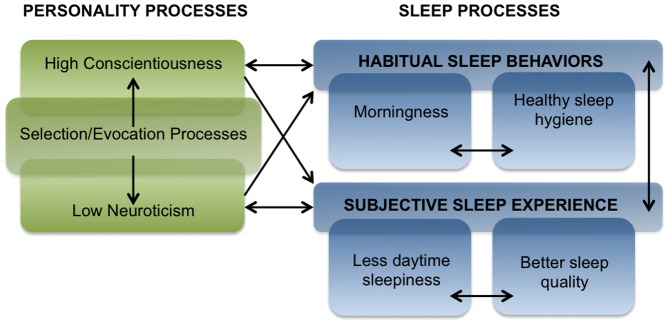
Although previous research has shown personality and sleep are each substantial predictors of health throughout the lifespan, little is known about links between personality and healthy sleep patterns. This study examined Big Five personality traits and a range of factors related to sleep health in 436 university students (M(age) = 19.88, SD = 1.50, 50% Male). Valid self-report measures of personality, chronotype, sleep hygiene, sleep quality, and sleepiness were analyzed. To remove multicollinearity between personality factors, each sleep domain was regressed on relevant demographic and principal component-derived personality factors in multiple linear regressions. Results showed that low conscientiousness and high neuroticism were the best predictors of poor sleep (poor sleep hygiene, low sleep quality, and increased sleepiness), consistent with other research on predictors of poor health and mortality risk. In this first comprehensive study of the topic, the findings suggest that personality has a significant association with sleep health, and researchers could profitably examine both personality and sleep in models of health and well-being.
Overview
The claims and statistics of this paper haven’t been checked yet.
Free: it reads the open-access text and checks the first 5 claims that cite a source we can check. Create a free account to check every claim.
Integrity signals
Registry
Cites
Statistics
Figures
Verification
Claims the paper makes
The claims and statistics of this paper haven’t been checked yet.
Free: it reads the open-access text and checks the first 5 claims that cite a source we can check. Create a free account to check every claim.
Claims other papers make about this one
Each is checked against this paper’s own text: does it say what the citing paper says it does?
The source backs part of the claim, not all of it — or backs it for a different population, condition or comparison.
In the citing paper
“There is clear evidence to support the relationships between the transdiagnostic factors and chronic insomnia (18, 19, 21); however, the extent to which each of these factors can affect insomnia remains unclear.”
From The contribution of transdiagnostic vulnerability factors in patients with chronic insomnia (2023) · cites this paper as [18]
Experimental — accuracy not yet measured
Self-check
Percentages, sums and reported differences re-computed from the paper’s own numbers.
The self-check needs the paper’s full text.
Citations
Cites
The Pittsburgh Sleep Quality Index: a new instrument for psychiatric practice and research
Buysse, D. J., Reynolds, C. F., Monk, T. H., Berman, S. R., & Kupfer, D. J. (1989) · Psychiatry Research · doi:10.1016/0165-1781(89)90047-4 · Cited by 35,234 · cited 4×
“Sleep quality was measured using the Pittsburgh Sleep Quality Index (PSQI; [22]).”
BackgroundMethodInfluential(1992) · PubMed · Cited by 33,716
The MOS 36-ltem Short-Form Health Survey (SF-36): I. Conceptual Framework and Item Selection
Ware, J. E., & Sherbourne, C. D. (1992) · Medical Care · doi:10.1097/00005650-199206000-00002 · Cited by 30,033
Applied Multiple Regression/Correlation Analysis for the Behavioral Sciences
Cohen, P., Cohen, P., West, S. G., & Aiken, L. S. (2014) · Psychology Press eBooks · doi:10.4324/9781410606266 · Cited by 20,737
A New Method for Measuring Daytime Sleepiness: The Epworth Sleepiness Scale
Johns, M. W. (1991) · Sleep · doi:10.1093/sleep/14.6.540 · Cited by 17,364 · cited 4×
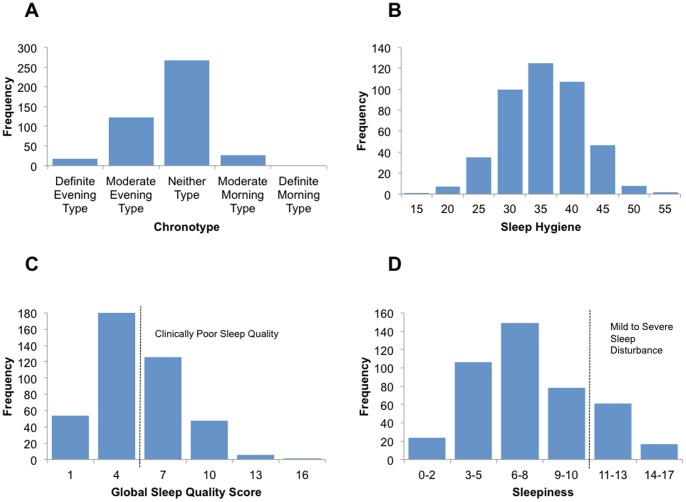
“Higher scores on the Epworth Sleepiness Scale indicate higher trait sleepiness, and scores above 10 indicate a mild to severe sleep disturbance may be contributing to daytime sleepiness.”
BackgroundMethodInfluentialAmazon's Mechanical Turk: A New Source of Inexpensive, Yet High-Quality, Data?
Buhrmester, M., Kwang, T., & Gosling, S. D. (2011) · Perspectives on Psychological Science · doi:10.1177/1745691610393980 · Cited by 9,996
(1999) · Cited by 7,995
Adler, N. E., Epel, E. S., Castellazzo, G., & Ickovics, J. R. (2000) · Health Psychology · doi:10.1037/0278-6133.19.6.586 · Cited by 5,080 · cited 2×
“Perceived socioeconomic status (SES) was assessed using a question that asked participants to rate their status from a 1 (low) to 10 (high) on a modified ladder scale similar to Adler, Epel, Castellazzo, and Ickovics [34].”
BackgroundMethodA self-assessment questionnaire to determine morningness- eveningness in human circadian rhythms
Home, J. K. (1976) · Medical Entomology and Zoology · Cited by 4,783
Handbook of Personality : Theory and Research
Pervin, L. A. (1992) · Cited by 4,543
Cited by
Items 101–200 of 211
Sleep: A pathway linking personality to mortality risk
Spears, S. K., Montgomery‐Downs, H. E., Steinman, S. A., Duggan, K. A., & Turiano, N. A. (2019) · Journal of Research in Personality · doi:10.1016/j.jrp.2019.04.007 · Cited by 15
Self-citationNguyen, H., Ruiz, C., Wilson, E. V., Strong, D. M., & Djamasbi, S. (2018) · Hawaii International Conference on System Sciences (HICSS) · doi:10.24251/hicss.2018.365 · Cited by 17
“Recent personality research has linked sleep behavior to the Five-Factor Model (FFM) of personality, which encompasses five personality traits: conscientiousness, neuroticism, extraversion, agreeableness, and openness [7].”
BackgroundInfluentialThe contribution of transdiagnostic vulnerability factors in patients with chronic insomnia
Habibi Asgarabad, M., Doos Ali Vand, H., Salehi Yegaei, P., Hooman, F., Ahmadi, R., Baglioni, C., & Moradi, S. (2023) · Frontiers in Psychiatry · doi:10.3389/fpsyt.2023.1162729 · Cited by 10
Hao, R., Jiao, J., Liu, X., Zuo, J., Jin, H., Wu, Y., & Hu, J. (2024) · Journal of Affective Disorders · doi:10.1016/j.jad.2024.03.142 · Cited by 11
Why is personality tied to sleep quality? A biometric analysis of twins
Križan, Z., Hisler, G. C., Krueger, R. F., & McGue, M. K. (2020) · Journal of Research in Personality · doi:10.1016/j.jrp.2020.104048 · Cited by 10
Sleep-related daytime consequences mediated the neuroticism–depression link
Wong, M. L., Zhang, J., Wing, Y. K., & Lau, E. Y. Y. (2016) · Sleep and Biological Rhythms · doi:10.1007/s41105-016-0074-6 · Cited by 11
Thomas, M. C., Duggan, K. A., Kamarck, T. W., Wright, A. G. C., Muldoon, M. F., & Manuck, S. B. (2021) · Annals of Behavioral Medicine · doi:10.1093/abm/kaab027 · Cited by 15
“Sleep results may be explained by the fact that conscientious people show better overall sleep hygiene [31], less bedtime procrastination [36], and healthier nap habits [37].”
BackgroundSelf-citationCatherman, C., Cassidy, S., Benca‐Bachman, C. E., Barber, J. M., & Palmer, R. H. C. (2021) · Journal of American College Health · doi:10.1080/07448481.2021.1891917 · Cited by 10
“Conscientious people, for example, are more likely to exercise and go to sleep at the same time every night.(16) One aspect of temperament, neuroticism, has been repeatedly linked with both depressive symptoms(17) and poor sleep quality in cross-sectional studies.”
BackgroundInfluentialNorbury, R. (2021) · Biological Rhythm Research · doi:10.1080/09291016.2021.2014083 · Cited by 9
“By contrast, morningness is associated with increased conscientiousness, openness and agreeability (Duggan et al. 2014).”
BackgroundEmergency personnel neuroticism, health and lifestyle: A UK Biobank study
Mutambudzi, M. S., Flowers, P., & Demou, E. (2019) · Occupational Medicine · doi:10.1093/occmed/kqz169 · Cited by 9
“For health behaviours, general population studies have demonstrated associations between high neuroticism and poor sleep [15], lower engagement in physical activity [16] and with increased risky alcohol use, heavy alcohol consumption and future alcohol problems [17].”
BackgroundRestless nights, cold hearts: Poor sleep causally blunts empathy
Gordon‐Hecker, T., Choshen‐Hillel, S., Simon, E. B., Walker, M. P., Perry, A., & Gileles‐Hillel, A. (2025) · International Journal of Clinical and Health Psychology · doi:10.1016/j.ijchp.2025.100548 · Cited by 12
“The association between worse sleep quality and higher personal distress is in line with the previously described association between poor sleep and self-focus or neuroticism traits (Duggan et al., 2014).”
Wang, R., Mu, Z., Li, X., Cheung, F. T. W., Chan, N. Y., Chan, J. W. Y., Wing, Y. K., & Li, S. X. (2025) · Sleep Medicine Reviews · doi:10.1016/j.smrv.2025.102081 · Cited by 13
Snoozing: an examination of a common method of waking
Mattingly, S. M., Martinez, G. J., Young, J., Cain, M. K., & Striegel, A. (2022) · SLEEP · doi:10.1093/sleep/zsac184 · Cited by 10
Kim, B. R., Lee, R., Kim, N., Jeong, J. H., & Kim, G. H. (2021) · Behavioral Sleep Medicine · doi:10.1080/15402002.2021.1879809 · Cited by 9
“people with higher tendencies for neuroticism could be explained by that they might have difficulty in regulating emotions such as depression or anxiety as well as sleep hygiene (Duggan et al., 2014).”
BackgroundInfluentialGorgol, J., Stolarski, M., & Jankowski, K. S. (2022) · Chronobiology International · doi:10.1080/07420528.2022.2067000 · Cited by 9
“Second, higher neuroticism and lower conscientiousness are associated with poorer sleep quality and lower stability of sleep-wake patterns (Duggan et al. 2014).”
BackgroundSørengaard, T. A., Langvik, E., Olsen, A., & Saksvik‐Lehouillier, I. (2022) · Cogent Psychology · doi:10.1080/23311908.2022.2137246 · Cited by 10
“These findings are in line with previous studies on neuroticism and sleep, which have shown that high neuroticism contribute to poorer sleep and more sleep problems (Booker et al., 2018; Duggan et al., 2014; Gray & Watson, 2002; Gurtman et al., 2014; Križan & Hisler, 2019).”
BackgroundResultLinking genetic foundations of sleep disturbances to personality traits: a study of mid‐life twins
Križan, Z., Freilich, C. D., Krueger, R. F., & Mann, F. D. (2023) · Journal of Sleep Research · doi:10.1111/jsr.13903 · Cited by 8
Coxon, C., Hepsomali, P., Brandt, K. R., Vauzour, D., & Costabile, A. (2023) · Health Science Reports · doi:10.1002/hsr2.1525 · Cited by 10
“For instance, compared to vegans following the diet for ethical reasons, those doing so for health reasons reported eating more fruit and fewer sweets,80 which are known to be associated with better sleep outcomes.81,82 Additionally, it is possible that these individuals would be involved in better sleep hygiene pract…”
BackgroundInfluentialDynamics between Sleep and Self-Control
Hisler, G. C., & Križan, Z. (2019) · Springer eBooks · doi:10.1007/978-3-030-30628-1_7 · Cited by 8
The role of objectively recorded smartphone usage and personality traits in sleep quality
Alam, A., Alshakhsi, S. A. A., Al‐Thani, D., & Ali, R. (2023) · PeerJ Computer Science · doi:10.7717/peerj-cs.1261 · Cited by 8
“Most studies have also found a relationship between conscientiousness and better sleep quality (Duggan et al., 2014; Gray & Watson, 2002; Hintsanen et al., 2014; Kim et al., 2015; Williams & Moroz, 2009), although two studies did not find support for this association (Allen, Magee & Vella, 2016; Cellini, Duggan & Sarl…”
BackgroundMethodResultInfluentialYang, Y., Zhang, D., Li, Y., Li, C., Zhu, L., & Luo, G. (2024) · Journal of Neural Transmission · doi:10.1007/s00702-024-02836-5 · Cited by 8
“In addition, low conscientiousness and high neuroticism were the best predictors of poor sleep (Duggan et al. 2014 ). we firstly found that extroverted nurses are less likely to have sleep disorders than introverts.”
King, J. D., Yang, M., Tyrer, H., & Tyrer, P. J. (2024) · Behavioral Sleep Medicine · doi:10.1080/15402002.2024.2441795 · Cited by 7
“In this way, findings mirror those which indicate personality factors have a complex association in the relationship between common mental disorders and sleep quality (Duggan et al., 2014; Rojo-Wissar et al., 2021).”
High neuroticism is associated with reduced negative affect following sleep deprivation
Saksvik‐Lehouillier, I., Langvik, E., Saksvik, S. B., Kallestad, H., Follesø, H. S., Austad, S. B., Dahlberg, J., Ringen, H., Tanum, T. K., Sørengaard, T. A., et al. (2021) · Personality and Individual Differences · doi:10.1016/j.paid.2021.111291 · Cited by 8
Pallesen, S., Vedaa, Ø., Sunde, E., Harris, A., Waage, S., Saxvig, I. W., Zhang, J., & Bjorvatn, B. (2025) · Frontiers in Sleep · doi:10.3389/frsle.2025.1499802 · Cited by 6
“Overall, results seem to suggest quite consistently that conscientiousness and neuroticism/emotionality are positively and negatively associated with sleep quality, respectively (Dekker et al., 2017; Duggan et al., 2014; Krizan and Hisler, 2019).”
Lee, T., Cho, E., Ahmed, O., Ahn, J., Bang, Y. R., Chung, S., & Park, J. (2025) · International Journal of Behavioral Medicine · doi:10.1007/s12529-025-10351-4 · Cited by 7
“In particular, low conscientiousness and high neuroticism have been shown to predict sleep problems such as poor sleep hygiene and increased sleepiness [20].”
Rodrigues, P. M., Marques, D. R., & Gomes, A. A. (2019) · Psychiatric Quarterly · doi:10.1007/s11126-019-09662-z · Cited by 14
Mokros, Ł., Witusik, A., Szydłowska, D., Jankowski, K. S., Kuna, P., & Pietras, T. (2021) · Journal of Asthma · doi:10.1080/02770903.2021.1989463 · Cited by 5
Matricciani, L., Paquet, C., Dumuid, D., Lushington, K., & Olds, T. (2022) · The Science of Diabetes Self-Management and Care · doi:10.1177/26350106221137896 · Cited by 9
Zakiei, A., Khazaie, H., Alimoradi, M., Rafihi‐Ferreira, R. E., Moradi, M., & Komasi, S. (2025) · Personality and Mental Health · doi:10.1002/pmh.70008 · Cited by 4
“The relationship between the five personality factors and variables in the sleep domain, such as sleep quality and insomnia, has been extensively studied (Andenæs et al. 2016; Duggan et al. 2014).”
Personality Processes and Sleep: An Overview and a Leitmotif for a Research Agenda
Duggan, K. A., & Križan, Z. (2019) · Springer eBooks · doi:10.1007/978-3-030-30628-1_12 · Cited by 4
Self-citationEating behavior, sleep self-assessment and personality traits of students with extreme chronotypes
Budkevich, R. O., Владимировна, Б. Е., Kolomeichuk, S. N., & Banshchikova, T. N. (2021) · S S Korsakov Journal of Neurology and Psychiatry · doi:10.17116/jnevro202112104219 · Cited by 5
Pivovarniček, P., Kentiba, E., Plieštik, M., Mena, M., Kondrátová, D., Kremnický, J., & Jančoková, Ľ. (2021) · Biological Rhythm Research · doi:10.1080/09291016.2021.1976940 · Cited by 5
“In addition, the E-type was positively associated with neuroticism (DeYoung et al. 2007; Randler 2008; Tonetti et al. 2009; Duggan et al. 2014) and the M-type with conscientiousness (Duggan et al. 2014; Randler et al. 2017; You et al. 2020).”
BackgroundInfluentialPersonality traits and clinical/biochemical course in the first year after kidney transplant
Thomas, C. V., de Castro, E. K., & Antonello, I. C. F. (2016) · Renal Failure · doi:10.1080/0886022x.2016.1216712 · Cited by 4
Hypnagogic states are quite common: Self-reported prevalence, modalities, and gender differences
Ghibellini, R., & Meier, B. (2023) · Consciousness and Cognition · doi:10.1016/j.concog.2023.103582 · Cited by 4
“Low conscientiousness and high neuroticism were associated with poor sleep hygiene, quality and daytime sleepiness, whereas low agreeableness was only associated with poor sleep hygiene and daytime sleepiness (Duggan et al., 2014; Kri ˇ zan & Hisler, 2019; Sutin et al., 2020).”
Do, A. H., Schnitker, S. A., & Scullin, M. K. (2024) · The Journal of Positive Psychology · doi:10.1080/17439760.2024.2394452 · Cited by 4
“…with this idea, studies have connected prosocial preferences to relative slow wave activity (stable, trait like marker of sleep depth; Studler et al., 2024) and a person’s global sleep quality is associated with personality traits such as neuroticism and extraversion (e.g. Duggan et al., 2014).”
Rahman, T. U., Jan, Z., Alam, A., & Ali, R. (2024) · Digital Health · doi:10.1177/20552076241295797 · Cited by 9
Foundations and Future of Well-Being: How Personality Influences Happiness and Well-Being
Athota, V. S. (2017) · Advances in human resources management and organizational development book series · doi:10.4018/978-1-5225-2021-4.ch012 · Cited by 7
Personalizing a sleep health APP for college students using personality traits and chronotype
Nguyen, H. (2016) · IEEE MIT Undergraduate Research Technology Conference (URTC) · doi:10.1109/urtc.2016.8284084 · Cited by 3
“A propensity for morningness correlates with higher levels of conscientiousness and opennness, but lower levels of neuroticism [13].”
BackgroundBuckingham, R. M., & Corkeron, J. (2020) · Heliyon · doi:10.1016/j.heliyon.2020.e05594 · Cited by 4
“Obstructive sleep apnea (OSA) is a chronic disorder characterised by repeated complete or partial collapse of the upper airway during sleep (Epstein et al., 2009).”
BackgroundSaxey, M. T., Dew, J. P., & Yorgason, J. B. (2022) · International Journal of Environmental Research and Public Health · doi:10.3390/ijerph20010055 · Cited by 4
“Conceptualizing sleep quality as an indicator of conscientiousness related to health behaviors is supported by recent work that suggests sleep quality and conscientiousness are positively associated [14,15].”
Exploring Wellness Through Concept Analysis
Skarbek, A. J., Endsley, P., Chrisman, M., Hastert, M. C., & Stellwagen, C. (2023) · The Journal of School Nursing · doi:10.1177/10598405231165510 · Cited by 6
“Conscientiousness, as a personality construct, entails moving from awareness to goal-directed behavior that can be viewed as an indicator of performance and health outcomes (Duggan et al., 2014; Roberts et al., 2012).”
BackgroundPersonalidade e padrões comportamentais do sono: diferenças entre homens e mulheres
Pereira, V. H. D., Melo, L. H. C. D., dos Santos, N. A., Galdino, M. K. C., & de Andrade, M. J. O. (2018) · Temas em Psicologia · doi:10.9788/tp2018.1-08pt · Cited by 4
Association between Changes in Chronotype during Clerkship and Defense Style among Medical Students
Lee, S.-J., Park, C., Kim, B., Lee, C.-S., Cha, B., Lee, J.-S., Lee, D., Seo, J.-Y., & Choi, J.-W. (2019) · Chronobiology in Medicine · doi:10.33069/cim.2018.0003 · Cited by 3
“Higher levels of conscientiousness [8,56-58], agreeableness [39,58-60], and emotional stability [55] are associated with morningness.”
BackgroundCCOnto: The Character Computing Ontology
Bolock, A. E., Elaraby, N., Herbert, C., & Abdennadher, S. (2021) · Lecture notes in business information processing · doi:10.1007/978-3-030-75018-3_21 · Cited by 4
Küskens, A., Pietrowsky, R., & Gieselmann, A. (2021) · Somnologie - Schlafforschung und Schlafmedizin · doi:10.1007/s11818-021-00315-7 · Cited by 4
Baksa, D., Eszlári, N., Török, D., Nagy, T., Hullám, G., Petschner, P., Bagdy, G., & Juhász, G. (2026) · Headache The Journal of Head and Face Pain · doi:10.1111/head.70171 · Cited by 2
Kaneko, Y., Konno, C., Saitoh, K., Furihata, R., Kaneita, Y., Uchiyama, M., & Suzuki, M. (2022) · Sleep and Biological Rhythms · doi:10.1007/s41105-022-00383-8 · Cited by 2
“Recent studies examining factors associated with insomnia have demonstrated that insomnia is linked to particular personality traits, including neuroticism [4, 5].”
BackgroundPhilbrook, L. E., & Simmons, E. J. (2022) · Behavioral Sleep Medicine · doi:10.1080/15402002.2022.2154212 · Cited by 2
“It is important to acknowledge that in both the present study and others (e.g., Duggan et al., 2014), elevated sleepiness was moderately correlated with personality traits such as low conscientiousness and high neuroticism.”
BackgroundFernandes, C., Maruta, C., Marques-Dias, C. M., & Reis, C. (2025) · Behavioral Sleep Medicine · doi:10.1080/15402002.2025.2493650 · Cited by 3
“A relationship between personality traits and sleep quality has been documented in adults (Duggan et al., 2014; Stephan et al., 2018) and with insomnia symptoms in shift workers (Holzinger et al., 2021).”
Khazaie, H., Komasi, S., Zakiei, A., Khazaie, A., & Sharafkhaneh, A. (2025) · International Journal of Behavioral Medicine · doi:10.1007/s12529-025-10384-9 · Cited by 5
Ji, X., Fang, X., Leung, P. W. L., & Liu, J. (2025) · World Journal of Pediatrics · doi:10.1007/s12519-025-00979-3 · Cited by 5
Hisler, G. C., Križan, Z., Manuck, S. B., Marsland, A. L., Hasler, B. P., & Wright, A. G. (2025) · European Journal of Personality · doi:10.1177/08902070251408107 · Cited by 2
“While trait neuroticism is routinely associated with worse sleep, trait conscientiousness is frequently associated with more continuous sleep and earlier sleep timing (Duggan et al., 2014; Kri ˇ zan & Hisler, 2019; Lipnevich et al., 2017; Mead et al., 2021; Stephan et al., 2018).”
Morell‐Mengual, V., Ruiz‐Palomino, E., Giménez‐García, C., Castro‐Calvo, J., & Díaz-Rodríguez, I. (2016) · International Journal of Developmental and Educational Psychology Revista INFAD de psicología · doi:10.17060/ijodaep.2016.n1.v2.199 · Cited by 2
Neuroticism and BMI: The role of genetic tendency, behavior and environment on body weight
Jacobs, M. (2020) · New Insights in Obesity Genetics and Beyond · doi:10.29328/journal.niogb.1001012 · Cited by 3
“These results are not surprising given the signi icant relationships between neuroticism and sleep, sleep problems and sleep duration [60].”
ResultSleep and psychological characteristics in habitual self-awakeners and forced awakeners
Malloggi, S., Conte, F., Albinni, B., Gronchi, G., Ficca, G., & Giganti, F. (2021) · Chronobiology International · doi:10.1080/07420528.2021.2003375 · Cited by 3
“Moreover, previous studies found an association between conscientiousness, on one hand, and sleep satisfaction and sleep quality, on the other, suggesting that this personality trait could be a predictor of healthy sleep-related habits as well (Bogg and Roberts 2004; Duggan et al. 2014).”
BackgroundThe moderating role of conscientiousness in the temporal association of stress on sleep
Quaedflieg, C. W. E. M., Bossi, C., & Bruijel, J. (2024) · Journal of Sleep Research · doi:10.1111/jsr.14224 · Cited by 3
Os traços de personalidade associados ao desenvolvimento da obesidade
de Maria, C. C., & Yaegashi, S. F. R. (2016) · RBONE - Revista Brasileira de Obesidade, Nutrição e Emagrecimento · Cited by 6
Theses for a metatheory of personality
Konstabel, K. (2019) · Personality and Individual Differences · doi:10.1016/j.paid.2019.05.003 · Cited by 2
Hurricane exposure, personality traits, and perceived changes in health and health behaviors
Atherton, O. E., & Damian, R. I. (2024) · Journal of Research in Personality · doi:10.1016/j.jrp.2024.104544 · Cited by 1
Aschwanden, D., Allemand, M., Kliegel, M., Sutin, A. R., Luchetti, M., Stéphan, Y., Schilling, O. K., Wahl, H.-W., Olaru, G., & Terracciano, A. (2024) · European Journal of Personality · doi:10.1177/08902070241272247 · Cited by 2
“Behavioral factors, such as poor sleep (Duggan et al., 2014), may also affect mental processes (i.e., daytime sleepiness leading to more cognitive lapses).”
Kuzu, D., & Kratz, A. L. (2024) · Journal of Psychosomatic Research · doi:10.1016/j.jpsychores.2024.112022 · Cited by 1
Personality traits and insomnia: direct and anxiety‐mediated associations
Conway, B. A., do Carmo, M. M. I. D. B., Filho, H. S. L. S., Toscanini, A. C., Hasan, R., Alves, M. M., & Rafihi‐Ferreira, R. E. (2025) · Journal of Sleep Research · doi:10.1111/jsr.70003 · Cited by 6
“…(symptom and disorder) is consistently associated with a high level of neuroticism (Akram et al., 2019; Akram et al., 2023; Dekker et al., 2017; Duggan et al., 2014; Harvey et al., 2014; Larsgård & Saksvik-Lehouillier, 2017; LeBlanc et al., 2007; Sassoon et al., 2014; van de Laar et al.,…”
Personality stability and change across the academic semester
Anglin, S. M., Rubinstein, R., Haraden, D. A., Otten, C. D., Mangracina, B., & Shaw, K. M. (2025) · Frontiers in Psychology · doi:10.3389/fpsyg.2025.1531794 · Cited by 2
Exploring the link between grit and excessive daytime sleepiness: a study in a population sample
Kim, J. R., Oh, D., Yoon, J., Park, H. J., Paik, S. M., Han, S. K., Lee, W., Kim, D., Yang, K. I., Chu, M. K., et al. (2025) · Sleep And Breathing · doi:10.1007/s11325-025-03414-z · Cited by 1
Foundations and Future of Well-Being: How Personality Influences Happiness and Well-Being
Athota, V. S. (2020) · IGI Global eBooks · doi:10.4018/978-1-7998-3432-8.ch098 · Cited by 1
Lee, S. Y., Song-Ern, D. L., & Yin-Fah, B. C. (2023) · Malaysian Journal of Business Economics and Management · doi:10.56532/mjbem.v2i2.24 · Cited by 1
“It was found that people who score high in the domain of neuroticism are more emotionally unstable (Bozanoğlu & Sapancı, 2015; Duggan, Friedman, McDevitt, & Mednick, 2014; Karatas, 2015).”
BackgroundWang, L., Huang, Z., Zhao, Q., Dong, L., Zhao, H., Zhu, X., Gong, L., & Liu, J. (2024) · Heliyon · doi:10.1016/j.heliyon.2024.e39040 · Cited by 1
Personality Traits and Behavioral Sleep Patterns: Differences between Men and Women
Pereira, V. H. D., Melo, L. H. C. D., dos Santos, N. A., Galdino, M. K. C., & de Andrade, M. J. O. (2018) · Temas em Psicologia · doi:10.9788/tp2018.1-08en · Cited by 1
Ivleva, V., & Kairys, A. (2023) · International Journal of Cognitive Research in Science Engineering and Education · doi:10.23947/2334-8496-2023-11-1-129-141
Horne, C. M., & Norbury, R. (2017) · PsyArXiv (OSF Preprints) · doi:10.31234/osf.io/m5qsb · Cited by 1
Sirois, F. M., van Eerde, W., & Argiropoulou, M. I. (2015)
Havigerová, J. M., Dosedlová, J., & Burešová, I. (2016) · The European Proceedings of Social & Behavioural Sciences · doi:10.15405/epsbs.2016.11.15
Watson, E. (2016) · The Scholarship East Carolina University's Institutional Repository (East Carolina University)
Editorial “Sleep quality is associated with weight loss maintenance status: the MedWeight study”
Fatima, Y. (2017) · Sleep Medicine · doi:10.1016/j.sleep.2017.03.003 · Cited by 1
Goothy, S. S. K. (2019) · International Journal of Biochemistry & Physiology · doi:10.23880/ijbp-16000153
“Altered sleep pattern can influence several systematic physiology and pathology [17].”
Budkevich, R. O., & Владимировна, Б. Е. (2019) · Human Physiology · doi:10.1134/s0362119719010031
共分散構造分析を用いた性格, コーピング, および主観的ストレスの関連の検討 —男女別の解析—
乙成, 淳., 朝野, 泰., 吉原, 一., Ikezaki, H., 古庄, 憲., & 須藤, 信. (2020) · 心身医学 · doi:10.15064/jjpm.60.7_608
Personality, Sleep, and Mortality
Spears, S. K. (2018) · The Research Repository @ WVU (West Virginia University) · doi:10.33915/etd.6698
“…traits, given inconsistent findings for the effects of agreeableness, openness, and extraversion on sleep duration (e.g., Granö et al., 2007; Gray & Watson, 2002), sleep quality (e.g., Duggan et al., 2014; Gray & Watson, 2002), and mortality risk (e.g., Friedman et al., 1993; Turiano et al., 2015).”
BackgroundResultInfluentialBaharloo, S., Moosazadeh, M., & Setareh, J. (2021) · DOAJ (DOAJ: Directory of Open Access Journals) · Cited by 2
Cortico-striatal-thalamic loop as a neural correlate of neuroticism in the mind-body interface
Nakagawa, S., Takeuchi, H., Taki, Y., Nouchi, R., Kotozaki, Y., Shinada, T., Maruyama, T., Sekiguchid, A., Iizuka, K., Yokoyama, R., et al. (2021) · Journal of Psychosomatic Research · doi:10.1016/j.jpsychores.2021.110590
Bolock, A. E., Abdennadher, S., & Herbert, C. (2022) · Open Psychology · doi:10.1515/psych-2022-0011
The Contribution of Transdiagnostic Vulnerability Factors in Patients with Chronic InsomniaPreprint
Vand, H. D. A., Hooman, F., Yegaei, P. S., Ahmadi, R., & Habibi, M. (2022) · Research Square · doi:10.21203/rs.3.rs-2241964/v1
Sleep, psychological well-being, and mental health
Garcia, O. G., Menge, R. S., & Duggan, K. A. (2023) · Elsevier eBooks · doi:10.1016/b978-0-323-91497-0.00251-4
Self-citationHuang, V., Peck, K. J., Mallya, S., LUPIEN, S. J., & Fiocco, A. J. (2023) · doi:10.32920/14753772
Huang, V., Peck, K. J., Mallya, S., LUPIEN, S. J., & Fiocco, A. J. (2024) · doi:10.32920/14753772.v1
The moderating role of conscientiousness in the temporal association between stress and sleepPreprint
Quaedflieg, C. W. E. M., Bossi, C., & Bruijel, J. (2023) · doi:10.31234/osf.io/3a9wy
Pivovarniček, P., Jančoková, Ľ., Vyšehradský, R., Hricko, L., Gavliakova, S., Sýkora, J., & Malý, T. (2023) · Chronobiology International · doi:10.1080/07420528.2023.2265473
“Late evening bedtime shifts sleep into late hours, which, particularly in adolescent E-types, has various negative effects, e.g., depression and poor sleep quality (Duggan et al. 2014; Przepiorka et al. 2021).”
BackgroundPersönlichkeitsprozesse und Schlaf: Überblick und Leitmotiv für eine Forschungsagenda
Duggan, K. A., & Križan, Z. (2024) · Springer eBooks · doi:10.1007/978-3-031-49766-7_12
Self-citationDynamik zwischen Schlaf und Selbstkontrolle
Hisler, G. C., & Križan, Z. (2024) · Springer eBooks · doi:10.1007/978-3-031-49766-7_7
Lu, C., Yin, S., Tian, T., Zhao, Z., Wang, L., Zhang, X., Zeng, M., Liu, T., & Wang, L. (2024) · Research Square · doi:10.21203/rs.3.rs-4454661/v1
Insônia e traços de personalidade
Conway, B. A. (2024) · Digital Library of Theses and Dissertations (Universidade de São Paulo) · doi:10.11606/d.5.2024.tde-19062024-163230
Chen, I., Chen, H., Liu, C., Liao, S., Hsieh, M. H., Wang, T.-Y., Chan, J.-H., & Kuo, P. (2024) · Humanities and Social Sciences Communications · doi:10.1057/s41599-024-03467-7
“…with high neuroticism tend to experience heightened negative emotions and poor sleep quality when faced with adverse events (Calkins et al., 2013; Duggan et al., 2014), while those high in extraversion exhibit energetic and prosocial tendencies, which can serve as a protective factor against…”
Huang, K. A., Mu, C., Smith, C. E., & Lee, S. (2024) · Research Square · doi:10.21203/rs.3.rs-4897224/v1
“We also controlled for neuroticism (1 = Less neurotic to 4 = More neurotic), as it is a known predictor of poor sleep health and may in�uence the perception and response to questions on workplace experiences and spillover (Duggan et al., 2014; Widiger & Oltmanns, 2017).”
Association between grit and insomnia: A population-based study
Kim, J. R., Park, J., Kim, H.-J., Yoon, J., Oh, D., Park, H., Paik, S. M., Lee, W., Kim, D., Yang, K. I., et al. (2024) · Sleep Medicine · doi:10.1016/j.sleep.2024.10.006 · Cited by 1
de Souza, L. S. M., & Faro, A. (2024) · Salud Mental · doi:10.17711/sm.0185-3325.2024.033 · Cited by 2
“Individuals with higher conscientiousness are more likely to engage in regular physical exercise and follow a healthy diet, thereby reducing the risk of obesity and other conditions that can negatively impact sleep (Duggan et al., 2014; Rochefort et al., 2019).”
Metadata
- Authors
- Duggan, K. A., Friedman, H. S., McDevitt, E. A., & Mednick, S. C.
- Affiliations
- University of California, Riverside (US)
- Corresponding author
- Mednick, Sara C.
- Venue
- PLoS ONE
- Publisher
- Public Library of Science (PLoS)
- Published
- 2014-03-20
- Volume
- 9
- Issue
- 3
- Pages
- e90628
- ISSN
- 1932-6203 (ISSN-L)
- PMC
- PMC3961248
- OpenAlex
- W1973489838
- Cited by
- 211
- References
- 68
- Citations by year
- 2026: 8 · 2025: 16 · 2024: 21 · 2023: 26 · 2022: 17 · 2021: 31 · 2020: 16 · 2019: 25 · 2018: 16 · 2017: 17 · 2016: 12 · 2015: 6
- FWCI
- 16.23
- Type
- journal article
- Language
- en
- Open access
- gold
- doi.org
- Locations
- PLoS ONE (publishedVersion, cc-by)
- Europe PMC (PubMed Central) (publishedVersion, other-oa)
- PubMed Central (publishedVersion, cc-by)
- PubMed (publishedVersion)
- RePEc: Research Papers in Economics (submittedVersion)
- DOAJ (DOAJ: Directory of Open Access Journals) (submittedVersion, cc-by-sa)
- eScholarship (California Digital Library) (submittedVersion, cc-by)
- Funders
- National Institute of Mental Health (K01MH080992)
- Topics
- Social Sciences › Psychology › Experimental and Cognitive Psychology › Sleep and related disorders
- Social Sciences › Psychology › Clinical Psychology › Personality Traits and Psychology
- Life Sciences › Neuroscience › Cognitive Neuroscience › Sleep and Wakefulness Research
- Keywords
- personality, sleep health, conscientiousness, neuroticism, Big Five personality traits, sleep hygiene, sleep quality, sleepiness, chronotype, university students, well-being
- MeSH terms
- Neuroticism, Anxiety Disorders, Demography, Female, Humans, Male, Personality, Personality Inventory, Regression Analysis, Sleep, Principal Component Analysis, Young Adult
About these checks
Registry, retraction, Cites and statistics results are computed, not judged, with one exception: a printed reference that no index lists is read once by a model before it counts as a citation error. Claims are extracted by a model and kept only when their quote appears verbatim in the text; each cited source is then checked, with a model’s help, for whether it says what the claim relies on. Those verdicts can be wrong — read the claim’s quote and the cited source before relying on one.
Statistics and arithmetic are recomputed, not judged.
Confidence bands are shown only for fields calibrated on our annotated test set. None is calibrated yet, so no band is shown.
What counts as a claim ›How we measure confidence ›How we check this ›
Are you an author, or do you see a problem with this page? Request a review
Data sources
Bibliographic data: Semantic Scholar, OpenAlex, Crossref.
Contains information from the Semantic Scholar Academic Graph Datasets, made available under the ODC Attribution License (ODC-BY 1.0).
Semantic Scholar’s data is described in: Kinney, R., et al. (2023). The Semantic Scholar Open Data Platform. arXiv:2301.10140.
