

Personality and Healthy Sleep: The Importance of Conscientiousness and Neuroticism
Open accessThe DOI matches its Crossref record; 67 of the 68 references it cites were found in a registry or an index.
Abstract
Although previous research has shown personality and sleep are each substantial predictors of health throughout the lifespan, little is known about links between personality and healthy sleep patterns. This study examined Big Five personality traits and a range of factors related to sleep health in 436 university students (M(age) = 19.88, SD = 1.50, 50% Male). Valid self-report measures of personality, chronotype, sleep hygiene, sleep quality, and sleepiness were analyzed. To remove multicollinearity between personality factors, each sleep domain was regressed on relevant demographic and principal component-derived personality factors in multiple linear regressions. Results showed that low conscientiousness and high neuroticism were the best predictors of poor sleep (poor sleep hygiene, low sleep quality, and increased sleepiness), consistent with other research on predictors of poor health and mortality risk. In this first comprehensive study of the topic, the findings suggest that personality has a significant association with sleep health, and researchers could profitably examine both personality and sleep in models of health and well-being.
Overview
The claims and statistics of this paper haven’t been checked yet.
Free: it reads the open-access text and checks the first 5 claims that cite a source we can check. Create a free account to check every claim.
Integrity signals
Registry
Cites
Statistics
Figures
Verification
Claims the paper makes
The claims and statistics of this paper haven’t been checked yet.
Free: it reads the open-access text and checks the first 5 claims that cite a source we can check. Create a free account to check every claim.
Claims other papers make about this one
Each is checked against this paper’s own text: does it say what the citing paper says it does?
The source backs part of the claim, not all of it — or backs it for a different population, condition or comparison.
In the citing paper
“There is clear evidence to support the relationships between the transdiagnostic factors and chronic insomnia (18, 19, 21); however, the extent to which each of these factors can affect insomnia remains unclear.”
From The contribution of transdiagnostic vulnerability factors in patients with chronic insomnia (2023) · cites this paper as [18]
Experimental — accuracy not yet measured
Self-check
Percentages, sums and reported differences re-computed from the paper’s own numbers.
The self-check needs the paper’s full text.
Citations
Cites
The Pittsburgh Sleep Quality Index: a new instrument for psychiatric practice and research
Buysse, D. J., Reynolds, C. F., Monk, T. H., Berman, S. R., & Kupfer, D. J. (1989) · Psychiatry Research · doi:10.1016/0165-1781(89)90047-4 · Cited by 35,234 · cited 4×
“Sleep quality was measured using the Pittsburgh Sleep Quality Index (PSQI; [22]).”
BackgroundMethodInfluential(1992) · PubMed · Cited by 33,716
The MOS 36-ltem Short-Form Health Survey (SF-36): I. Conceptual Framework and Item Selection
Ware, J. E., & Sherbourne, C. D. (1992) · Medical Care · doi:10.1097/00005650-199206000-00002 · Cited by 30,033
Applied Multiple Regression/Correlation Analysis for the Behavioral Sciences
Cohen, P., Cohen, P., West, S. G., & Aiken, L. S. (2014) · Psychology Press eBooks · doi:10.4324/9781410606266 · Cited by 20,737
A New Method for Measuring Daytime Sleepiness: The Epworth Sleepiness Scale
Johns, M. W. (1991) · Sleep · doi:10.1093/sleep/14.6.540 · Cited by 17,364 · cited 4×
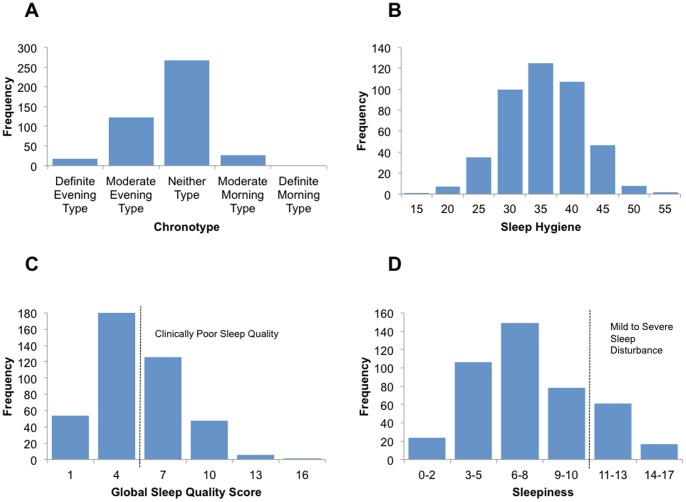
“Higher scores on the Epworth Sleepiness Scale indicate higher trait sleepiness, and scores above 10 indicate a mild to severe sleep disturbance may be contributing to daytime sleepiness.”
BackgroundMethodInfluentialAmazon's Mechanical Turk: A New Source of Inexpensive, Yet High-Quality, Data?
Buhrmester, M., Kwang, T., & Gosling, S. D. (2011) · Perspectives on Psychological Science · doi:10.1177/1745691610393980 · Cited by 9,996
(1999) · Cited by 7,995
Adler, N. E., Epel, E. S., Castellazzo, G., & Ickovics, J. R. (2000) · Health Psychology · doi:10.1037/0278-6133.19.6.586 · Cited by 5,080 · cited 2×
“Perceived socioeconomic status (SES) was assessed using a question that asked participants to rate their status from a 1 (low) to 10 (high) on a modified ladder scale similar to Adler, Epel, Castellazzo, and Ickovics [34].”
BackgroundMethodA self-assessment questionnaire to determine morningness- eveningness in human circadian rhythms
Home, J. K. (1976) · Medical Entomology and Zoology · Cited by 4,783
Handbook of Personality : Theory and Research
Pervin, L. A. (1992) · Cited by 4,543
Rammstedt, B., & John, O. P. (2007) · Journal of Research in Personality · doi:10.1016/j.jrp.2006.02.001 · Cited by 4,244 · cited 2×
“The Sleep Hygiene Index has acceptable internal consistency reliability ( a = 0.66) and test-retest reliability ( r =.71) and is positively correlated with associated features of inadequate sleep hygiene (e.g., worrying about sleep; [37]).”
BackgroundMethodInfluential(1976) · PubMed · Cited by 3,979
Health complaints, stress, and distress: Exploring the central role of negative affectivity.
Watson, D., & Pennebaker, J. W. (1989) · Psychological Review · doi:10.1037/0033-295x.96.2.234 · Cited by 3,030 · cited 2×
“Most people high in neuroticism have fewer health-promoting behaviors and engage in more risk taking [12], and they are also very sensitive and more likely to report somatic complaints [13], possibly relevant to poor sleep.”
BackgroundHow People Make Their Own Environments: A Theory of Genotype Environment Effects
Scarr, S., & McCartney, K. (1983) · Child Development · doi:10.1111/j.1467-8624.1983.tb03884.x · Cited by 2,895
Social Jetlag: Misalignment of Biological and Social Time
Wittmann, M., Dinich, J., Merrow, M., & Roenneberg, T. (2006) · Chronobiology International · doi:10.1080/07420520500545979 · Cited by 2,625 · cited 1×
“The social and biological clocks of morning types are more likely to be aligned, and thus, these individuals may experience less social jetlag, a greater misalignment of biological and social time [57].”
BackgroundJohn, O. P., & Gross, J. J. (2004) · Journal of Personality · doi:10.1111/j.1467-6494.2004.00298.x · Cited by 2,381 · cited 1×
“Neurotic individuals tend to experience high levels of stress [13] and have difficulties with emotion regulation [56].”
BackgroundSleep duration and all-cause mortality: a systematic review and meta-analysis of prospective studies
Cappuccio, F. P., D'Elia, L., Strazzullo, P., & Miller, M. A. (2010) · Sleep · doi:10.1093/sleep/33.5.585 · Cited by 2,224 · cited 1×
“Longitudinally, meta-analyses have confirmed that both short and long sleep durations are associated with increased mortality risk [18,19].”
BackgroundReliability and Factor Analysis of the Epworth Sleepiness Scale
Johns, M. W. (1992) · Sleep · doi:10.1093/sleep/15.4.376 · Cited by 2,122 · cited 1×
“The Epworth Sleepiness Scale has high internal consistency ( a = .73–.88) and high test-retest reliability in situations where sleepiness is expected to remain constant ( r = .82), but scores do decrease when patients are treated for sleep disturbance ( t = 2 9.59, p , .01; [44]).”
BackgroundInfluentialMeta-Analysis of Short Sleep Duration and Obesity in Children and Adults
Cappuccio, F. P., Taggart, F. M., Kandala, N.-B., Currie, A., Peile, E., Stranges, S., & Miller, M. A. (2008) · Sleep · doi:10.1093/sleep/31.5.619 · Cited by 2,076 · cited 1×
“Sleep duration is the most commonly investigated domain with respect to health and has been associated with obesity [15], diabetes and insulin resistance [16], and cardiovascular disease [17].”
BackgroundPublic health significance of neuroticism
Lahey, B. B. (2009) · American Psychologist · doi:10.1037/a0015309 · Cited by 1,901 · cited 2×
“People high in neuroticism are at greater risk of poor mental and physical health [10] and increased mortality [11].”
BackgroundBogg, T., & Roberts, B. W. (2004) · Psychological Bulletin · doi:10.1037/0033-2909.130.6.887 · Cited by 1,632 · cited 2×
“In previous research, conscientiousness has been associated with fewer risky health behaviors and more healthpromoting behaviors, including lower levels of alcohol abuse, drug use, unhealthy eating, risky driving, risky sex, suicide, tobacco use, and violence [8].”
BackgroundEpidemiology of the human circadian clock
Roenneberg, T., Kuehnle, T., Juda, M., Kantermann, T., Allebrandt, K., Gordijn, M., & Merrow, M. (2007) · Sleep Medicine Reviews · doi:10.1016/j.smrv.2007.07.005 · Cited by 1,545 · cited 1×
“Most of the sample were neither types or moderate evening types (see Figure 1), and college samples typically tend toward eveningness [41].”
BackgroundSchmitt, D. P., Allik, J., McCrae, R. R., & Benet-Martínez, V. (2007) · Journal of Cross-Cultural Psychology · doi:10.1177/0022022106297299 · Cited by 1,222 · cited 1×
“Additionally, it reliably distinguishes between patients without sleep complaints and patients with obstructive sleep apnea, narcolepsy, and idiopathic hypersomnia [38].”
BackgroundSleep loss: a novel risk factor for insulin resistance and type 2 diabetes
Spiegel, K., Knutson, K., Leproult, R., Tasali, E., & Cauter, E. V. (2005) · Journal of Applied Physiology · doi:10.1152/japplphysiol.00660.2005 · Cited by 1,175
The spectrum of behaviors influenced by serotonin
Lucki, I. (1998) · Biological Psychiatry · doi:10.1016/s0006-3223(98)00139-5 · Cited by 1,158 · cited 1×
“Serotonin acts as a general inhibitor of behavioral reactivity [62], helps people pursue goals, and may protect against psychopathology [63].”
BackgroundNeuroticism, Somatic Complaints, and Disease: Is the Bark Worse than the Bite?
Costa, P. T., & McCrae, R. R. (1987) · Journal of Personality · doi:10.1111/j.1467-6494.1987.tb00438.x · Cited by 1,010
Sleep duration and mortality: a systematic review and meta-analysis
GALLICCHIO, L., & KALESAN, B. (2009) · Journal of Sleep Research · doi:10.1111/j.1365-2869.2008.00732.x · Cited by 979 · cited 1×
“Longitudinally, meta-analyses have confirmed that both short and long sleep durations are associated with increased mortality risk [18,19].”
BackgroundJohn, O. P., Donahue, E. M., & Kentle, R. L. (2012) · PsycTESTS Dataset · doi:10.1037/t07550-000 · Cited by 971
Pilcher, J. J., Ginter, D. R., & Sadowsky, B. (1997) · Journal of Psychosomatic Research · doi:10.1016/s0022-3999(97)00004-4 · Cited by 840 · cited 1×
“Poor sleep quality has been associated with increased somatic complaints and poor mental health [23,24] as well as increased mortality risk [25,26].”
BackgroundSleep Duration in the United States: A Cross-sectional Population-based Study
Krueger, P. M., & Friedman, E. M. (2009) · American Journal of Epidemiology · doi:10.1093/aje/kwp023 · Cited by 791 · cited 1×
“Sleep duration is the most commonly investigated domain with respect to health and has been associated with obesity [15], diabetes and insulin resistance [16], and cardiovascular disease [17].”
BackgroundRole of Melatonin in the Regulation of Human Circadian Rhythms and Sleep
Cajochen, C., Kräuchi, K., & Wirz‐Justice, A. (2003) · Journal of Neuroendocrinology · doi:10.1046/j.1365-2826.2003.00989.x · Cited by 735 · cited 1×
“Chronotype is the relatively stable preference for activity in the morning, middle of the day, or evening, and is associated with bed/wake times, body temperature, and melatonin and cortisol levels [39,46,47].”
BackgroundThe "disease-prone personality": A meta-analytic view of the construct.
Friedman, H. S., & Booth-Kewley, S. (1987) · American Psychologist · doi:10.1037//0003-066x.42.6.539 · Cited by 646 · cited 1×
“There is a rich tradition of research that links personality with substantial health outcomes (e.g., [1,2]).”
BackgroundSelf-citationAssessment of Sleep Hygiene Using the Sleep Hygiene Index
Mastin, D. F., Bryson, J., & Corwyn, R. (2006) · Journal of Behavioral Medicine · doi:10.1007/s10865-006-9047-6 · Cited by 635 · cited 2×
“The Sleep Hygiene Index has acceptable internal consistency reliability ( a = 0.66) and test-retest reliability ( r =.71) and is positively correlated with associated features of inadequate sleep hygiene (e.g., worrying about sleep; [37]).”
MethodInfluentialLong‐Term Relations of Personality and Health: Dynamisms, Mechanisms, Tropisms
Friedman, H. S. (2000) · Journal of Personality · doi:10.1111/1467-6494.00127 · Cited by 514 · cited 1×
“Conscientiousness, which describes socially-prescribed impulse control, task- and goal-oriented behavior, planfulness, persistence, and dependability [4,5], has been associated with decreased mortality risk in clinical, elderly, and healthy populations [6], as well as in individuals followed since childhood [7].”
BackgroundSelf-citationMallon, L., Broman, J. ‐., & Hetta, J. (2002) · Journal of Internal Medicine · doi:10.1046/j.1365-2796.2002.00941.x · Cited by 495 · cited 1×
“Poor sleep quality has been associated with increased somatic complaints and poor mental health [23,24] as well as increased mortality risk [25,26].”
BackgroundContinuities and Consequences of Interactional Styles Across the Life Course
Caspi, A., Bem, D. J., & Elder, G. H. (1989) · Journal of Personality · doi:10.1111/j.1467-6494.1989.tb00487.x · Cited by 485 · cited 1×
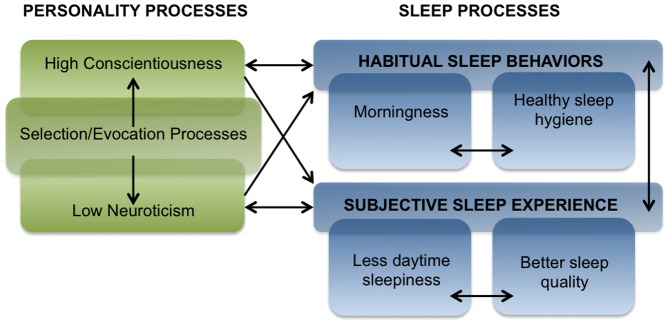
“Developmental and personality theories of continuity and change throughout the lifespan suggest that individual traits are reinforced through complex processes of selection (sometimes called cumulative continuity) and evocation (sometimes called interactional continuity [58,59]; Figure 2, green boxes).”
BackgroundDo conscientious individuals live longer? A quantitative review.
Kern, M. L., & Friedman, H. S. (2008) · Health Psychology · doi:10.1037/0278-6133.27.5.505 · Cited by 464 · cited 1×
“Conscientiousness, which describes socially-prescribed impulse control, task- and goal-oriented behavior, planfulness, persistence, and dependability [4,5], has been associated with decreased mortality risk in clinical, elderly, and healthy populations [6], as well as in individuals followed since childhood [7].”
BackgroundSelf-citationAssociations between Major Domains of Personality and Health Behavior
Booth‐Kewley, S., & Vickers, R. R. (1994) · Journal of Personality · doi:10.1111/j.1467-6494.1994.tb00298.x · Cited by 454 · cited 1×
“Most people high in neuroticism have fewer health-promoting behaviors and engage in more risk taking [12], and they are also very sensitive and more likely to report somatic complaints [13], possibly relevant to poor sleep.”
BackgroundSleep and Mortality: A Population-Based 22-Year Follow-Up Study
Hublin, C., Partinen, M., Koskenvuo, M., & Kaprio, J. (2007) · Sleep · doi:10.1093/sleep/30.10.1245 · Cited by 439 · cited 1×
“Poor sleep quality has been associated with increased somatic complaints and poor mental health [23,24] as well as increased mortality risk [25,26].”
BackgroundPersonality Processes: Mechanisms by Which Personality Traits “Get Outside the Skin”
Hampson, S. E. (2012) · Annual Review of Psychology · doi:10.1146/annurev-psych-120710-100419 · Cited by 427 · cited 1×
“Situation selection is an active process by which the individual creates, seeks, attends to, and learns from aspects of the environment that are consistent with his or her personality traits [58,60].”
BackgroundCIRCADIAN RHYTHMICITY OF CORTISOL AND BODY TEMPERATURE: MORNINGNESS-EVENINGNESS EFFECTS
Bailey, S. L., & Heitkemper, M. M. (2001) · Chronobiology International · doi:10.1081/cbi-100103189 · Cited by 390 · cited 1×
“Chronotype is the relatively stable preference for activity in the morning, middle of the day, or evening, and is associated with bed/wake times, body temperature, and melatonin and cortisol levels [39,46,47].”
BackgroundVitiello, M. V., Larsen, L. H., & Moe, K. E. (2004) · Journal of Psychosomatic Research · doi:10.1016/s0022-3999(04)00023-6 · Cited by 341 · cited 1×
“Many studies have reported that female participants have poorer sleep quality (e.g., [49,50]).”
BackgroundGeneral and Specific Traits of Personality and Their Relation to Sleep and Academic Performance
Gray, E. K., & Watson, D. (2002) · Journal of Personality · doi:10.1111/1467-6494.05002 · Cited by 333 · cited 3×
“Conscientiousness has been associated with better sleep quality [30,31].”
BackgroundShipley, B. A., Weiss, A., Der, G., Taylor, M. D., & Deary, I. J. (2007) · Psychosomatic Medicine · doi:10.1097/psy.0b013e31815abf83 · Cited by 288 · cited 1×
“People high in neuroticism are at greater risk of poor mental and physical health [10] and increased mortality [11].”
BackgroundMorningness-Eveningness, Chronotypes and Health-Impairing Behaviors in Adolescents
Urbán, R., Magyaródi, T., & Rigó, A. (2011) · Chronobiology International · doi:10.3109/07420528.2010.549599 · Cited by 271
Psychosocial and behavioral predictors of longevity: The aging and death of the ‘Termites’.
Friedman, H. S., Tucker, J. S., Schwartz, J. E., Tomlinson-Keasey, C., Martin, L. R., Wingard, D. L., & Criqui, M. H. (1995) · American Psychologist · doi:10.1037/0003-066x.50.2.69 · Cited by 271 · cited 1×
“Conscientiousness, which describes socially-prescribed impulse control, task- and goal-oriented behavior, planfulness, persistence, and dependability [4,5], has been associated with decreased mortality risk in clinical, elderly, and healthy populations [6], as well as in individuals followed since childhood [7].”
BackgroundSelf-citationRelationship between sleepiness and general health status
Briones, B., Adams, N., Strauss, M., Rosenberg, C., Whalen, C., Carskadon, M., Roebuck, T., Winters, M., & Redline, S. (1996) · SLEEP · doi:10.1093/sleep/19.7.583 · Cited by 253 · cited 1×
“Daytime sleepiness, which may be the product of poor sleep quality, is also associated with lower general health perceptions, energy levels, well-being, and functional status [27].”
BackgroundProsser, R. A., Dean, R. R., Edgar, D. M., Heller, H. C., & Miller, J. D. (1993) · Journal of Biological Rhythms · doi:10.1177/074873049300800101 · Cited by 221
Relations among mindfulness, well-being, and sleep
Howell, A. J., Digdon, N. L., Buro, K., & Sheptycki, A. R. (2008) · Personality and Individual Differences · doi:10.1016/j.paid.2008.08.005 · Cited by 217 · cited 1×
“Poor sleep quality has been associated with increased somatic complaints and poor mental health [23,24] as well as increased mortality risk [25,26].”
BackgroundVoderholzer, U., Al-Shajlawi, A., Weske, G., Feige, B., & Riemann, D. (2003) · Depression and Anxiety · doi:10.1002/da.10101 · Cited by 195 · cited 2×
“These findings may be because neuroticism, which significantly predicts sleep quality, depression, and anxiety [51], was higher in the women in our sample.”
BackgroundSleep Hygiene and Migraine in Children and Adolescents
Bruni, O., Galli, F., & Guidetti, V (1999) · Cephalalgia · doi:10.1177/0333102499019s2516 · Cited by 191 · cited 1×
“For example, morning people engage in more health-promoting behaviors [20] and interventions that improve sleep hygiene reduce migraine frequency in children and adolescents [21].”
BackgroundMorning people are stable people: Circadian rhythm and the higher-order factors of the Big Five
DeYoung, C. G., Hasher, L., Djikic, M., Criger, B., & Peterson, J. B. (2007) · Personality and Individual Differences · doi:10.1016/j.paid.2006.11.030 · Cited by 185 · cited 2×
“Most research has focused on personality and chronotype, reporting that conscientious people tend to be morning types whereas neurotics tend to be evening types [28,29].”
BackgroundRelations of serotonin function to personality: Current views and a key methodological issue
Carver, C. S., & Miller, C. J. (2006) · Psychiatry Research · doi:10.1016/j.psychres.2006.03.013 · Cited by 177
Jackson, J. J., Bogg, T., Walton, K. E., Wood, D., Harms, P. D., Lodi-Smith, J., Edmonds, G. W., & Roberts, B. W. (2009) · Journal of Personality and Social Psychology · doi:10.1037/a0014156 · Cited by 169 · cited 1×
“During college and throughout adulthood, specific conscientiousness facets clearly increase, including impulse control and reliability [61], and these changes may be due to the situations individuals self-select into.”
Background(2011) · Choice Reviews Online · doi:10.5860/choice.49-2137 · Cited by 166 · cited 1×
“People high in conscientiousness live longer lives because they engage in more health-promoting behaviors, including more physical activity, healthier diets, lower substance use, and fewer risky behaviors [8], and because they have more stable relationships and better integration into their communities [9].”
BackgroundRelationship between Circadian Typology and Big Five Personality Domains
Tonetti, L., Fabbri, M., & Natale, V. (2009) · Chronobiology International · doi:10.1080/07420520902750995 · Cited by 166 · cited 3×
“This replicates the results of Tonetti and colleagues [29], who, using ANCOVA, found that conscientiousness best discriminated between chronotype dimensions.”
BackgroundResultA new life-span approach to conscientiousness and health: Combining the pieces of the causal puzzle.
Friedman, H. S., Kern, M. L., Hampson, S. E., & Duckworth, A. L. (2014) · Developmental Psychology · doi:10.1037/a0030373 · Cited by 164 · cited 1×
“There is a rich tradition of research that links personality with substantial health outcomes (e.g., [1,2]).”
BackgroundSelf-citationNeubauer, A. C. (1992) · Personality and Individual Differences · doi:10.1016/0191-8869(92)90035-n · Cited by 155 · cited 1×
“The MEQ has high internal consistency reliability ( a = 0.86) and high test-retest reliability ( r = .89; [40]).”
BackgroundInfluentialSubjective and psychophysiologic insomnia: An examination of sleep tendency and personality
Dorsey, C. M., & Bootzin, R. R. (1997) · Biological Psychiatry · doi:10.1016/0006-3223(95)00659-1 · Cited by 135 · cited 1×
“On the other hand, Dorsey & Bootzin [54] found that people high in neuroticism were likely to complain of insomnia on self-report measures, even though polysomnographic measures indicated that they did not have impaired sleep quality.”
BackgroundSocioeconomic Status Predicts Objective and Subjective Sleep Quality in Aging Women
Friedman, E. M., Love, G. D., Rosenkranz, M. A., Urry, H. L., Davidson, R. J., Singer, B. H., & Ryff, C. D. (2007) · Psychosomatic Medicine · doi:10.1097/psy.0b013e31814ceada · Cited by 135 · cited 1×
“[52] found that including neuroticism attenuates associations between SES and sleep quality.”
BackgroundCarver, C. S., Johnson, S. L., & Joormann, J. (2009) · Current Directions in Psychological Science · doi:10.1111/j.1467-8721.2009.01635.x · Cited by 132 · cited 2×
“Serotonin may drive sleep behavior through two dual-processes: via a lower-order system that responds in-the-moment, and a higher-order system that responds planfully and reflectively [63].”
BackgroundPersonality and the modulation of effects of sleep loss on mood and cognition
Blagrove, M., & Akehurst, L. (2001) · Personality and Individual Differences · doi:10.1016/s0191-8869(00)00075-1 · Cited by 105 · cited 1×
“Blagrove and Akehurst [55] and Mastin and colleagues [32] found that participants high in neuroticism were more affected by experimentally-induced sleep deprivation compared to individuals low in neuroticism (participants low in extraversion may also be affected [55]).”
BackgroundWilliams, P., & Moroz, T. L. (2009) · Personality and Individual Differences · doi:10.1016/j.paid.2008.12.017 · Cited by 101 · cited 3×
“Similarly, Williams and Moroz [31] found that high neuroticism and low conscientiousness were associated with poor subjective sleep quality at the bivariate level, with neuroticism the only significant predictor in multiple regressions.”
BackgroundConscientiousness is a Predictor of Diurnal Preference
Hogben, A. L., Ellis, J., Archer, S. N., & von Schantz, M. (2007) · Chronobiology International · doi:10.1080/07420520701791596 · Cited by 98 · cited 1×
“, [29]) and smaller associations with agreeableness [28] and openness [48].”
BackgroundCalkins, A. W., Hearon, B. A., Capozzoli, M. C., & Otto, M. W. (2013) · Behavioral Sleep Medicine · doi:10.1080/15402002.2011.643968 · Cited by 91 · cited 1×
“It is also remarkable that our results replicate work by Calkins and colleagues [53] who found that roughly 16% of the variance in sleep quality is explained by neuroticism and dysfunctional beliefs about sleep.”
ResultPersonality as a predictor of the objective and subjective impact of sleep deprivation
Mastin, D. F., Peszka, J., Poling, T. H., Phillips, R., & Duke, J. (2005) · Personality and Individual Differences · doi:10.1016/j.paid.2005.08.007 · Cited by 35 · cited 2×
“Blagrove and Akehurst [55] and Mastin and colleagues [32] found that participants high in neuroticism were more affected by experimentally-induced sleep deprivation compared to individuals low in neuroticism (participants low in extraversion may also be affected [55]).”
Background
Cited by
Luciano, M., Hagenaars, S. P., Davies, G., Hill, W. D., Clarke, T.-K., Shirali, M., Harris, S. E., Marioni, R. E., Liewald, D. C., Fawns-Ritchie, C., et al. (2018) · Nature Genetics · doi:10.1038/s41588-017-0013-8 · Cited by 391
Chronotype and mental health: recent advances
Taylor, B. J., & Hasler, B. P. (2018) · Current Psychiatry Reports · doi:10.1007/s11920-018-0925-8 · Cited by 289
Bullis, J. R., Boettcher, H., Sauer‐Zavala, S., Farchione, T. J., & Barlow, D. H. (2019) · Clinical Psychology: Science and Practice · doi:10.1111/cpsp.12278 · Cited by 216
Personality and sleep quality: Evidence from four prospective studies.
Stephan, Y., Sutin, A. R., Bayard, S., Križan, Z., & Terracciano, A. (2018) · Health Psychology · doi:10.1037/hea0000577 · Cited by 146
“Higher extraversion has been related to better sleep quality in some studies (Allen et al., 2016; Gray & Watson, 2002; Hintsanen et al., 2014; Williams & Moroz, 2009), but not in others (Cellini et al., in press; Duggan et al., 2014; Huang et al., 2016; Kim et al., 2015).”
BackgroundMethodResultInfluentialLipnevich, A. A., Credé, M., Hahn, E., Spinath, F. M., Roberts, R. D., & Preckel, F. (2017) · Journal of Personality and Social Psychology · doi:10.1037/pspp0000099 · Cited by 107
Metadata
- Authors
- Duggan, K. A., Friedman, H. S., McDevitt, E. A., & Mednick, S. C.
- Affiliations
- University of California, Riverside (US)
- Corresponding author
- Mednick, Sara C.
- Venue
- PLoS ONE
- Publisher
- Public Library of Science (PLoS)
- Published
- 2014-03-20
- Volume
- 9
- Issue
- 3
- Pages
- e90628
- ISSN
- 1932-6203 (ISSN-L)
- PMC
- PMC3961248
- OpenAlex
- W1973489838
- Cited by
- 211
- References
- 68
- Citations by year
- 2026: 8 · 2025: 16 · 2024: 21 · 2023: 26 · 2022: 17 · 2021: 31 · 2020: 16 · 2019: 25 · 2018: 16 · 2017: 17 · 2016: 12 · 2015: 6
- FWCI
- 16.23
- Type
- journal article
- Language
- en
- Open access
- gold
- doi.org
- Locations
- PLoS ONE (publishedVersion, cc-by)
- Europe PMC (PubMed Central) (publishedVersion, other-oa)
- PubMed Central (publishedVersion, cc-by)
- PubMed (publishedVersion)
- RePEc: Research Papers in Economics (submittedVersion)
- DOAJ (DOAJ: Directory of Open Access Journals) (submittedVersion, cc-by-sa)
- eScholarship (California Digital Library) (submittedVersion, cc-by)
- Funders
- National Institute of Mental Health (K01MH080992)
- Topics
- Social Sciences › Psychology › Experimental and Cognitive Psychology › Sleep and related disorders
- Social Sciences › Psychology › Clinical Psychology › Personality Traits and Psychology
- Life Sciences › Neuroscience › Cognitive Neuroscience › Sleep and Wakefulness Research
- Keywords
- personality, sleep health, conscientiousness, neuroticism, Big Five personality traits, sleep hygiene, sleep quality, sleepiness, chronotype, university students, well-being
- MeSH terms
- Neuroticism, Anxiety Disorders, Demography, Female, Humans, Male, Personality, Personality Inventory, Regression Analysis, Sleep, Principal Component Analysis, Young Adult
About these checks
Registry, retraction, Cites and statistics results are computed, not judged, with one exception: a printed reference that no index lists is read once by a model before it counts as a citation error. Claims are extracted by a model and kept only when their quote appears verbatim in the text; each cited source is then checked, with a model’s help, for whether it says what the claim relies on. Those verdicts can be wrong — read the claim’s quote and the cited source before relying on one.
Statistics and arithmetic are recomputed, not judged.
Confidence bands are shown only for fields calibrated on our annotated test set. None is calibrated yet, so no band is shown.
What counts as a claim ›How we measure confidence ›How we check this ›
Are you an author, or do you see a problem with this page? Request a review
Data sources
Bibliographic data: Semantic Scholar, OpenAlex, Crossref.
Contains information from the Semantic Scholar Academic Graph Datasets, made available under the ODC Attribution License (ODC-BY 1.0).
Semantic Scholar’s data is described in: Kinney, R., et al. (2023). The Semantic Scholar Open Data Platform. arXiv:2301.10140.
