

Probiotics Protect Mice from Ovariectomy-Induced Cortical Bone Loss
Open accessThe DOI matches its Crossref record; 44 of the 44 references it cites were found in a registry or an index.
Abstract
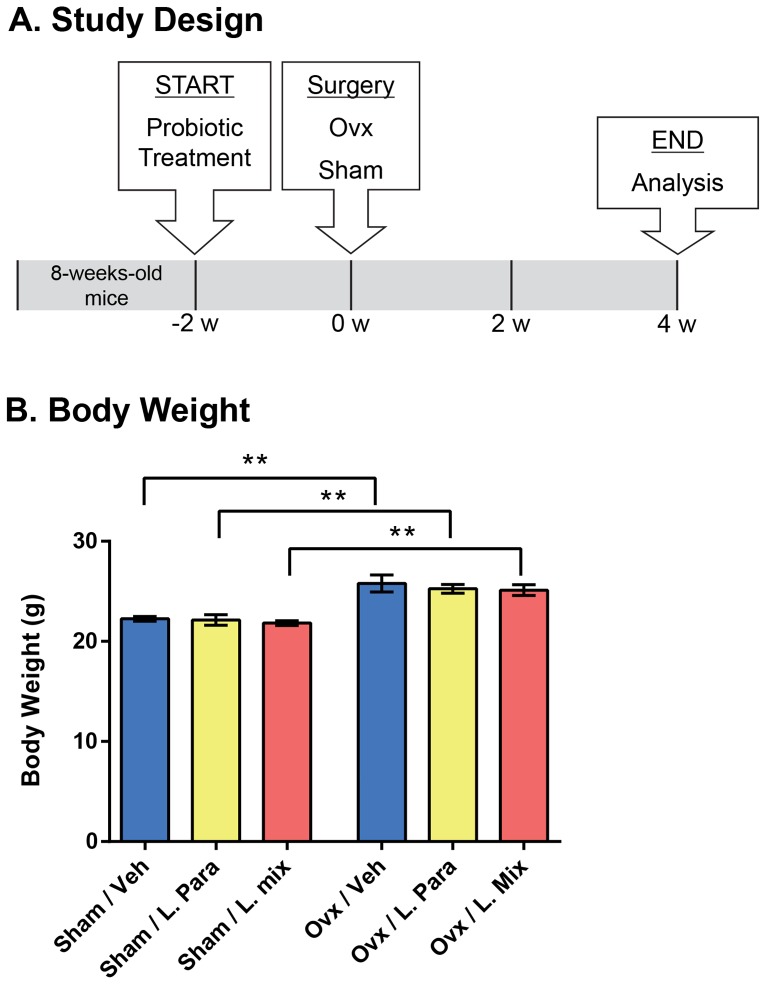
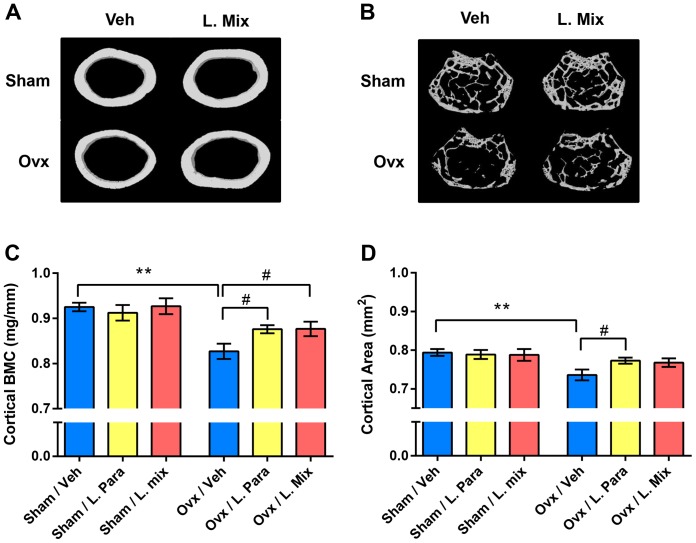
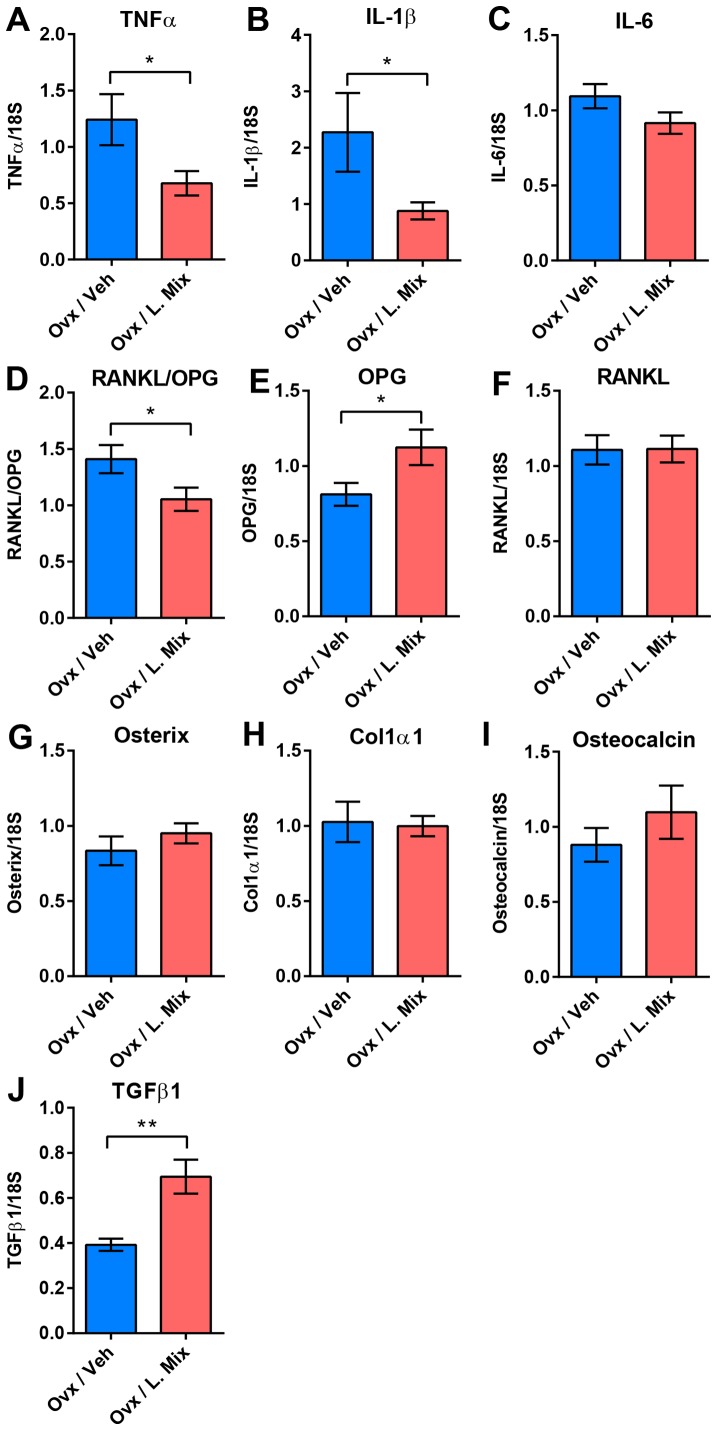
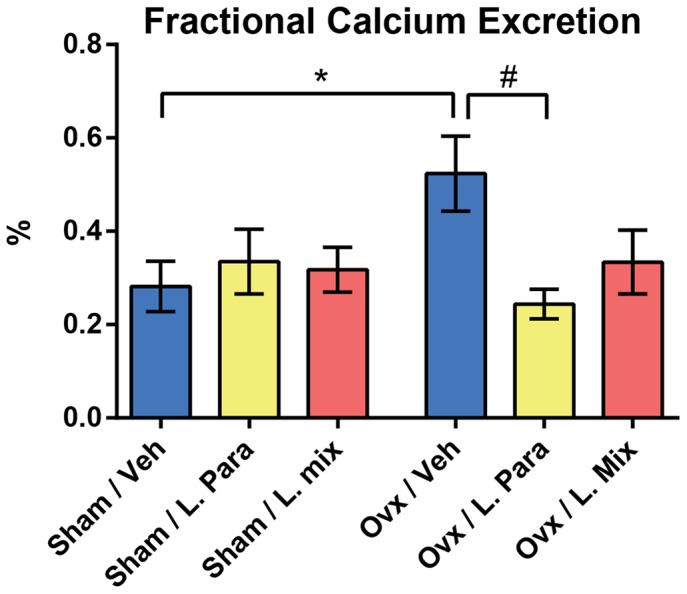
The gut microbiota (GM) modulates the hosts metabolism and immune system. Probiotic bacteria are defined as live microorganisms which when administered in adequate amounts confer a health benefit on the host and can alter the composition of the GM. Germ-free mice have increased bone mass associated with reduced bone resorption indicating that the GM also regulates bone mass. Ovariectomy (ovx) results in bone loss associated with altered immune status. The purpose of this study was to determine if probiotic treatment protects mice from ovx-induced bone loss. Mice were treated with either a single Lactobacillus (L) strain, L. paracasei DSM13434 (L. para) or a mixture of three strains, L. paracasei DSM13434, L. plantarum DSM 15312 and DSM 15313 (L. mix) given in the drinking water during 6 weeks, starting two weeks before ovx. Both the L. para and the L. mix treatment protected mice from ovx-induced cortical bone loss and bone resorption. Cortical bone mineral content was higher in both L. para and L. mix treated ovx mice compared to vehicle (veh) treated ovx mice. Serum levels of the resorption marker C-terminal telopeptides and the urinary fractional excretion of calcium were increased by ovx in the veh treated but not in the L. para or the L. mix treated mice. Probiotic treatment reduced the expression of the two inflammatory cytokines, TNFα and IL-1β, and increased the expression of OPG, a potent inhibitor of osteoclastogenesis, in cortical bone of ovx mice. In addition, ovx decreased the frequency of regulatory T cells in bone marrow of veh treated but not probiotic treated mice. In conclusion, treatment with L. para or the L. mix prevents ovx-induced cortical bone loss. Our findings indicate that these probiotic treatments alter the immune status in bone resulting in attenuated bone resorption in ovx mice.
Overview
The claims and statistics of this paper haven’t been checked yet.
Free: it reads the open-access text and checks the first 5 claims that cite a source we can check. Create a free account to check every claim.
Integrity signals
Registry
Cites
Statistics
Figures
Verification
Claims the paper makes
The claims and statistics of this paper haven’t been checked yet.
Free: it reads the open-access text and checks the first 5 claims that cite a source we can check. Create a free account to check every claim.
Claims other papers make about this one
Each is checked against this paper’s own text: does it say what the citing paper says it does?
The cited source says what the claim attributes to it.
In the citing paper
“select probiotics blunt the bone loss that normally ensues following ovariectomy (ovx) (13)(14)(15).”
From Sex steroid deficiency-associated bone loss is microbiota dependent and prevented by probiotics (2016) · cites this paper as [14]
The cited source says what the claim attributes to it.
In the citing paper
“lactobacilli can prevent the loss of cortical but not trabecular bone”
From Sex steroid deficiency-associated bone loss is microbiota dependent and prevented by probiotics (2016) · cites this paper as [14]
The cited source says what the claim attributes to it.
In the citing paper
“reverses the decrease in Tregs induced by ovx (14)”
From Sex steroid deficiency-associated bone loss is microbiota dependent and prevented by probiotics (2016) · cites this paper as [14]
Self-check
Percentages, sums and reported differences re-computed from the paper’s own numbers.
The self-check needs the paper’s full text.
Citations
Cites
A human gut microbial gene catalogue established by metagenomic sequencing
MetaHIT Consortium, Qin, J., Li, R., Raes, J., Arumugam, M., Burgdorf, K. S., Manichanh, C., Nielsen, T., Pons, N., Levenez, F., et al. (2010) · Nature · doi:10.1038/nature08821 · Cited by 11,624 · cited 1×
“It is acquired at birth and, although a distinct entity, it has clearly coevolved with the human genome and can be considered a multicellular organ that communicates with and affects its host in numerous ways [12].”
BackgroundOsteoclast differentiation and activation
Boyle, W. J., Simonet, W. S., & Lacey, D. L. (2003) · Nature · doi:10.1038/nature01658 · Cited by 6,670 · cited 9×
“TNFa promotes osteoclastogenesis indirectly by stimulating RANKL expression by marrow stromal cells and osteoblasts and by direct stimulation of OCL precursors exposed to permissive levels of RANKL [32–34].”
BackgroundInfluentialOsteoprotegerin: a novel secreted protein involved in the regulation of bone density.
Simonet, W. S., Lacey, D. L., Dunstan, C. R., Kelley, M., Chang, M.-S., Lüthy, R., Nguyen, H. Q., Wooden, S., Bennett, L., Boone, T., et al. (1997) · Cell · doi:10.1016/s0092-8674(00)80209-3 · Cited by 5,130
Functional interactions between the gut microbiota and host metabolism
Tremaroli, V., & Bäckhed, F. (2012) · Nature · doi:10.1038/nature11552 · Cited by 4,387 · cited 1×
“Perturbed microbial composition has been postulated to be involved in a range of inflammatory conditions, within and outside the gut including Crohn’s disease, ulcerative colitis, rheumatoid arthritis, multiple sclerosis, diabetes, food allergies, eczema and asthma as well as obesity and the metabolic syndrome [13,14].”
BackgroundKong, Y.-Y., Feige, U., Sarosi, I., Bolon, B., Tafuri, A., Morony, S., Capparelli, C., Li, J., Elliott, R., McCabe, S., et al. (1999) · Nature · doi:10.1038/46303 · Cited by 1,856
Antibiotics in early life alter the murine colonic microbiome and adiposity
Cho, I., Yamanishi, S., Cox, L., Methé, B. A., Zavadil, J., Li, K., Gao, Z., Mahana, D., Raju, K., Teitler, I., et al. (2012) · Nature · doi:10.1038/nature11400 · Cited by 1,613 · cited 1×
“A role of the GM for bone mass is supported by a recent study demonstrating that subtherapeutic antibiotic treatment in early life increases bone mass in young mice [16].”
ResultReciprocal interactions of the intestinal microbiota and immune system
Maynard, C. L., Elson, C. O., Hatton, R. D., & Weaver, C. T. (2012) · Nature · doi:10.1038/nature11551 · Cited by 1,598 · cited 2×
“Perturbed microbial composition has been postulated to be involved in a range of inflammatory conditions, within and outside the gut including Crohn’s disease, ulcerative colitis, rheumatoid arthritis, multiple sclerosis, diabetes, food allergies, eczema and asthma as well as obesity and the metabolic syndrome [13,14].”
BackgroundLam, J., Takeshita, S., Barker, J. E., Kanagawa, O., Ross, F. P., & Teitelbaum, S. L. (2000) · Journal of Clinical Investigation · doi:10.1172/jci11176 · Cited by 1,440
Perspective how many women have osteoporosis?
Dr. Melton, L. J., Chrischilles, E. A., Cooper, C., Lane, A. W., & Riggs, B. L. (1992) · Journal of Bone and Mineral Research · doi:10.1002/jbmr.5650070902 · Cited by 1,400 · cited 1×
“In USA, the risk has been reported to be 40% and 13% in white women and men, respectively and fractures are associated with significant mortality and morbidity [2].”
BackgroundLong-Term Risk of Osteoporotic Fracture in Malmö
Kanis, J. A., Johnell, O., Oden, A., Sernbo, I., Redlund-Johnell, I., Dawson, A., De Laet, C., & Jonsson, B. (2000) · Osteoporosis International · doi:10.1007/s001980070064 · Cited by 1,027 · cited 1×
“In Sweden, the lifetime risk of any osteoporotic fracture is 47% and 24% in women and men, respectively [1].”
Background
Cited by
Items 101–200 of 368
The Gut Microbiome: a New Frontier in Musculoskeletal Research
Li, R., Boer, C. G., Oei, L., & Medina‐Gómez, C. (2021) · Current Osteoporosis Reports · doi:10.1007/s11914-021-00675-x · Cited by 55
“In addition, probiotic treatment based on different Lactobacillus species reduced the expression of osteoclastogenic cytokines and increased the expression of OPG in bone, protecting mice from ovariectomy (OVX)-induced bone loss [65].”
BackgroundProbiotics: A promising tool for calcium absorption
Dubey, M. R., & Patel, V. P. (2018) · The Open Nutrition Journal · doi:10.2174/1874288201812010059 · Cited by 53
Living probiotic biomaterials for osteoporosis therapy
Chen, Z., Cai, Z., Zhuang, P., Li, F., Cui, W., & Li, Z. (2022) · Biomedical Technology · doi:10.1016/j.bmt.2022.11.007 · Cited by 54
Post-menopausal Osteoporosis and Probiotics
Huidrom, S., Beg, M. A., & Masood, T. (2020) · Current Drug Targets · doi:10.2174/1389450121666201027124947 · Cited by 53
Tousen, Y., Matsumoto, Y., Matsumoto, C., Nishide, Y., Nagahata, Y., Kobayashi, I., & Ishimi, Y. (2016) · British Journal Of Nutrition · doi:10.1017/s0007114516001537 · Cited by 52
“Ohlsson et al.(34) reported that Lactobacillus spp. treatments reduced the expression of inflammatory cytokines in bone, resulting in attenuated bone resorption in ovariectomised (OVX) mice.”
Collins, F. L., Rios‐Arce, N. D., Schepper, J. D., Jones, A. D., Schaefer, L., Britton, R. A., McCabe, L. R., & Parameswaran, N. (2019) · Scientific Reports · doi:10.1038/s41598-019-51293-8 · Cited by 52
Pasteurized Akkermansia muciniphila protects from fat mass gain but not from bone loss
Lawenius, L., Scheffler, J. M., Gustafsson, K. L., Henning, P., Nilsson, K. H., Colldén, H., Islander, U., Plovier, H., Cani, P. D., de Vos, W. M., et al. (2020) · American Journal of Physiology-Endocrinology and Metabolism · doi:10.1152/ajpendo.00425.2019 · Cited by 49
“We have previously shown that treatment with three different probiotic Lactobacillus plantarum and Lactobacillus paracasei strains protects from ovx-induced bone loss (27).”
BackgroundInfluentialSelf-citationProbiotics as a New Regulator for Bone Health: A Systematic Review and Meta-Analysis
Malmir, H., Ejtahed, H., Soroush, A., Mortazavian, A. M., Fahimfar, N., Ostovar, A., Esmaillzadeh, A., Larijani, B. A., & Hasani‐Ranjbar, S. (2021) · Evidence-based Complementary and Alternative Medicine · doi:10.1155/2021/3582989 · Cited by 52
“In fourteen investigations, female rats had ovariectomy surgery that induced osteoporosis [36, 37, 39, 40, 42, 44, 47, 51, 56, 57, 59, 62, 66], and in two studies, diabetic rats were included [38, 45].”
BackgroundInfluentialOsteoporosis and Celiac Disease: Updates and Hidden Pitfalls
Lungaro, L., Manza, F., Costanzini, A., Barbalinardo, M., Gentili, D., Caputo, F., Guarino, M., Zoli, G., Volta, U., GIORGIO, R. D., et al. (2023) · Nutrients · doi:10.3390/nu15051089 · Cited by 53
“Other studies described a beneficial effect on rat bone health markers after the treatment with Bifidobacterium longum [81], Lactobacillus rhamnosus [82], and Lactobacillus paracasei [83].”
BackgroundMendes, E., Acetturi, B. G., Thomas, A. M., Martins, F. D. S., Crisma, A. R., Murata, G., Braga, T. T., Camâra, N. O. S., Franco, A. L. D. S., Setubal, J. C., et al. (2017) · Frontiers in Microbiology · doi:10.3389/fmicb.2017.01732 · Cited by 46
“Recently, studies have demonstrated that oral administration of probiotics protects female mice from bone density loss caused by ovary removal (Sjogren et al., 2012; Britton et al., 2014; Ohlsson et al., 2014; Parvaneh et al., 2015).”
BackgroundLiu, H., Gu, R., Li, W., Zhou, W., Cong, Z., Xue, J., Liu, Y., Wei, Q., & Zhou, Y. (2019) · Therapeutic Advances in Chronic Disease · doi:10.1177/2040622319860653 · Cited by 48
The Relationship Between Osteoporosis and Intestinal Microbes in the Henan Province of China
Qin, Q., Yan, S., Yang, Y., Chen, J., Yan, H., Li, T., Gao, X., Wang, Y., Li, A., Wang, S., et al. (2021) · Frontiers in Cell and Developmental Biology · doi:10.3389/fcell.2021.752990 · Cited by 49
“Akkermansia muciniphila restores bone destruction and improves revascularization of bone fractures by reducing gut permeability and inhibiting systemic inflammatory cell infiltration mediated by increasing anti-inflammatory IL-10 and decreasing anti-inflammatory IL-12 (Huck et al., 2020; Liu et al., 2020).”
BackgroundGregori, G., Pivodic, A., Magnusson, P., Johansson, L., Hjertonsson, U., Brättemark, E., & Lorentzon, M. (2024) · JAMA Network Open · doi:10.1001/jamanetworkopen.2024.15455 · Cited by 47
Osteoimmunology: from mice to humans
D’Amelio, P., & Sassi, F. (2016) · bonekey Reports · doi:10.1038/bonekey.2016.29 · Cited by 43
Lan, H., Liu, W., Zheng, H., Feng, H., Zhao, W., Hung, W., & Li, H. (2022) · Food & Function · doi:10.1039/d1fo02218k · Cited by 47
Langgartner, D., Vaihinger, C. A., Haffner-Luntzer, M., Kunze, J. F., Weiss, A.-L. J., Foertsch, S., Bergdolt, S., Ignatius, A., & Reber, S. O. (2018) · Frontiers in Behavioral Neuroscience · doi:10.3389/fnbeh.2018.00252 · Cited by 45
“Moreover, estrogen-depletion does not result in bone loss in germfree mice and supplementation with probiotics prevents from ovariectomy-induced bone loss (Ohlsson et al., 2014; Li et al., 2016).”
BackgroundLee, C. S., Kim, J. ‐., Kim, B. K., Lee, I. O., Park, N. H., & Kim, S. H. (2021) · Journal of Applied Microbiology · doi:10.1111/jam.14852 · Cited by 39
Microbiota-bone axis in ageing-related bone diseases
Fu, L., Zhang, P., Wang, Y., & Liu, X. (2024) · Frontiers in Endocrinology · doi:10.3389/fendo.2024.1414350 · Cited by 44
“In a study where estrogen-de fi cient mice were administered Lactobacillus acidophilus, a reduction in bone resorption markers and an improvement in bone formation were observed (47).”
BackgroundZhao, Y., Wang, J., Xu, L., Xu, H., Yan, Y., Zhao, H., & Yan, Y. (2025) · Biomedicines · doi:10.3390/biomedicines13061443 · Cited by 45
Hua, P., Xiong, Y. C., Yu, Z., Liu, B., & Zhao, L. (2019) · Marine Drugs · doi:10.3390/md17060348 · Cited by 46
Hu, W. L., Chen, S., Zou, X., Chen, Y., Luo, J., Zhong, P., & Ma, D. (2024) · Journal of Advanced Research · doi:10.1016/j.jare.2024.08.019 · Cited by 41
Gut microbiota in common elderly diseases affecting activities of daily living
Shimizu, Y. (2018) · World Journal of Gastroenterology · doi:10.3748/wjg.v24.i42.4750 · Cited by 40
Probiotics protect mice from CoCrMo particles-induced osteolysis
Wang, Z., Xue, K., Bai, M., Deng, Z., Gan, J., Zhou, G., Qian, H., Bao, N., & Zhao, J. (2017) · International Journal of Nanomedicine · doi:10.2147/ijn.s130485 · Cited by 39
“Probiotics are defined as live microorganisms whose administration in adequate amounts confers health benefits to the host by altering the composition of GM.(8) Lactobacillus casei is usually used in dietary supplements, and previous studies have shown that L.”
InfluentialYan, F., Wang, W.-C., & Cheng, H. W. (2018) · Journal of Functional Foods · doi:10.1016/j.jff.2018.09.017 · Cited by 39
Zhu, Y., Liu, S., Mei, F., Zhao, M., Xia, G., & Shen, X. (2022) · Frontiers in Nutrition · doi:10.3389/fnut.2021.792793 · Cited by 38
“Gut microbiota is a symbiotic microorganism that lines in the gut and is more than the number of all human cells (15, 16).”
BackgroundGholami, A., Dabbaghmanesh, M. H., Ghasemi, Y., Koohpeyma, F., Talezadeh, P., & Montazeri‐Najafabady, N. (2022) · BMC Complementary Medicine and Therapies · doi:10.1186/s12906-022-03713-y · Cited by 38
“Therefore, blockade of the pro-inflammatory cytokine levels due to intake of probiotic supplements leads to a decrease in bone resorption [32, 33].”
BackgroundPark, O.-J., Kim, J., Yang, J., Yun, C., & Han, S. H. (2017) · Journal of Bone and Mineral Research · doi:10.1002/jbmr.3137 · Cited by 38
“Lactobacillus paracasei and a mixture of other Lactobacillus species have been shown to alleviate ovariectomy-induced bone loss by reducing the expression of inflammatory cytokines and the RANKL/OPG ratio.((45)) However, the exact mechanism for the improved bone health observed after oral administration of probiotics…”
BackgroundProbiotics Treatment of Leg Diseases in Broiler Chickens: a Review
Xu, T., Yue, K., Zhang, C., Tong, X., Lin, L., Cao, Q., & Huang, S. (2021) · Probiotics and Antimicrobial Proteins · doi:10.1007/s12602-021-09869-2 · Cited by 37
“plantarum, also improves the content of bone mass and minerals of cortical bone in ovariectomized mice [70].”
BackgroundBone Fragility in Gastrointestinal Disorders
Merlotti, D., Mingiano, C., Valenti, R., Cavati, G., Calabrese, M., Pirrotta, F., Bianciardi, S., Palazzuoli, A., & Gennari, L. (2022) · International Journal of Molecular Sciences · doi:10.3390/ijms23052713 · Cited by 37
The Microbiome and Osteosarcopenic Obesity in Older Individuals in Long-Term Care Facilities
Inglis, J. E., & Ilich, J. Z. (2015) · Current Osteoporosis Reports · doi:10.1007/s11914-015-0287-7 · Cited by 36
Hathaway‐Schrader, J. D., Poulides, N. A., Carson, M. D., Kirkpatrick, J. E., Warner, A. J., Swanson, B. A., Taylor, E. V., Chew, M. E., Reddy, S. V., Liu, B., et al. (2020) · JBMR Plus · doi:10.1002/jbm4.10338 · Cited by 36
Bone Homeostasis and Gut Microbial-Dependent Signaling Pathways
Zhong, X., Zhang, F., Yin, X., Cao, H., Wang, X., Liu, D., Chen, J., & Chen, X. (2021) · Journal of Microbiology and Biotechnology · doi:10.4014/jmb.2104.04016 · Cited by 36
“Treating sex steroid-deficient mice with the probiotic Lactobacillus rhamnosus GG reduced gut permeability, dampened inflammation of intestinal and bone marrow and protected against bone loss [29]; similarly, probiotics prevented bone loss in ovariectomized mice [95, 96].”
BackgroundCheung, K. C.-P., Ma, J., Xingxuan, C., & Jia, W. P. (2023) · Frontiers in Pharmacology · doi:10.3389/fphar.2022.1051134 · Cited by 35
“OP Osteoporosis EVs Extracellular vesicles BEVs Bacterial extracellular vesicles OA Osteoarthritis GM Gut microbiota OBs osteoblasts OCs osteoclasts MSCs Mesenchymal stem cells HucMSC Human umbilical cord MSC hiPSC-MSC human induced pluripotent stem cells BMP Bone morphogenetic protein PI3K Phosphoinositide-3 kinase B…”
BackgroundInfluentialZhou, Y., Sheng, Y. J., Li, C. Y., Zou, L., Tong, C. Y., Zhang, Y., Cao, G., & Shou, D. (2023) · International Journal of Biological Macromolecules · doi:10.1016/j.ijbiomac.2023.127428 · Cited by 35
Jiang, P., Yu, X., Yu, L., Tian, F., Zhao, J.-X., Zhang, H., Chen, W., & Zhai, Q. (2021) · Food Research International · doi:10.1016/j.foodres.2021.110331 · Cited by 34
Probiotics Inhibit Cartilage Damage and Progression of Osteoarthritis in Mice
Sophocleous, A., Azfer, A., Huesa, C., Stylianou, E., & Ralston, S. H. (2022) · Calcified Tissue International · doi:10.1007/s00223-022-01030-7 · Cited by 33
“Although survival of the probiotic bacteria was not assessed in this experiment, evidence from other studies showed that their concentration in drinking water drops one log unit per day, to approximately 108 CFU/ml [7, 11].”
BackgroundLinking the Gut Microbiota to Bone Health in Anorexia Nervosa
Strock, N. C. A., Koltun, K. J., VanEvery, H., Rogers, C. J., & Souza, M. J. D. (2018) · Current Osteoporosis Reports · doi:10.1007/s11914-018-0420-5 · Cited by 34
Xie, W., Han, Y., Li, F., Gu, X., Su, D., Yu, W., Li, Z., & Xiao, J. (2019) · Calcified Tissue International · doi:10.1007/s00223-019-00647-5 · Cited by 33
“Similar results have been observed in some studies investigating other Lactobacillus strains [39, 40], such as L.”
ResultQuach, D., Parameswaran, N., McCabe, L. R., & Britton, R. A. (2019) · Bone Reports · doi:10.1016/j.bonr.2019.100227 · Cited by 32
Mechanisms Underlying Bone Loss Associated with Gut Inflammation
Ke, K., Arra, M., & Abu‐Amer, Y. (2019) · International Journal of Molecular Sciences · doi:10.3390/ijms20246323 · Cited by 32
Bellissimo, M. P., Ziegler, T. R., Jones, D. P., Liu, K., Fernandes, J., Roberts, J. L., Weitzmann, M. N., Pacifici, R., & Alvarez, J. A. (2020) · Clinical Nutrition · doi:10.1016/j.clnu.2020.05.041 · Cited by 33
“An emerging area of research suggests that probiotic supplementation may influence gut microbiome activity that favorably impacts biomarkers relevant to bone health (9, 56).”
BackgroundZou, X., Jiang, S., Zhang, M., Hu, H., Wu, X., Liu, J., Jin, M., & Cheng, H. W. (2021) · Animals · doi:10.3390/ani11072041 · Cited by 32
“However, probiotics supplements can protect ovariectomized mice from bone lose [74,75].”
BackgroundBone and the gut microbiome: a new dimension
Medina‐Gómez, C. (2018) · Journal of Laboratory and Precision Medicine · doi:10.21037/jlpm.2018.11.03 · Cited by 33
Development of a synbiotic that protects against ovariectomy-induced trabecular bone loss
Lawenius, L., Gustafsson, K. L., Wu, J., Nilsson, K. H., Movérare‐Skrtic, S., Schott, E. M., Soto-Girón, M. J., Toledo, G. V., Sjögren, K., & Ohlsson, C. (2022) · American Journal of Physiology-Endocrinology and Metabolism · doi:10.1152/ajpendo.00366.2021 · Cited by 32
Self-citationKrishnamoorthy, D., Frechette, D. M., Adler, B. J., Green, D. E., Chan, M. E., & Rubin, C. T. (2015) · Osteoporosis International · doi:10.1007/s00198-015-3289-5 · Cited by 32
“with longer trials [19, 28, 29], earlier interventions [30, 31], or refractory periods [32, 33] to augment the responsiveness of the skeleton.”
BackgroundFrom the gut to the strut: where inflammation reigns, bone abstains
Iqbal, J. Z., Yuen, T., Sun, L., & Zaidi, M. (2016) · Journal of Clinical Investigation · doi:10.1172/jci87430 · Cited by 31
“Probiotics do decrease TNF α and IL-1 β levels and increase production of the antiosteoclastogenic cytokine osteoprotegerin (OPG) in hypogonadal mice (21).”
BackgroundCrosstalk between gut microbiota and osteoarthritis: A critical view
Korotkyi, O., Kyriachenko, Y., Kobyliak, N. M., Falalyeyeva, T. M., & Остапченко, Л. І. (2020) · Journal of Functional Foods · doi:10.1016/j.jff.2020.103904 · Cited by 31
Effect of Lactobacillus Fermentum as a Probiotic Agent on Bone Health in Postmenopausal Women
Han, H., Kim, J. G., Choi, Y. H., Lee, K. M., Kwon, T. H., & Kim, S. H. (2022) · Journal of Bone Metabolism · doi:10.11005/jbm.2022.29.4.225 · Cited by 30
“org/ 231 mal studies have suggested that probiotic bacterial species can regulate pro-inflammatory cytokines (tumor necrosis factor-α, interleukin [IL]-6, IL-17, and receptor activator of nuclear factor-κB ligand) affecting osteoclast recruitment and activation in estrogen deficiency setting.[23-26] Other studies have…”
BackgroundRetractedChen, J., Hsia, K.-C., Kuo, Y., Chen, S., Huang, Y.-Y., Li, C.-M., Hsu, Y.-C., Tsai, S., & Ho, H.-H. (2023) · Nutrients · doi:10.3390/nu16010126 · Cited by 30
“…effects attributed to L. paracasei include promoting digestive health, supporting the immune system, balancing gut microbiota, managing allergies, maintaining skin health, alleviating gastrointestinal disorders, promoting oral health, reducing oxidative stress, and improving bone health [36–40].”
BackgroundZhou, Y., Zhang, Y., Qian, Y., Tang, L., Zhou, T., Xie, Y., Hu, L., Ma, C., Dong, Q., & Sun, P. (2024) · International Immunopharmacology · doi:10.1016/j.intimp.2024.112027 · Cited by 29
Lucateli, R. L., Silva, P. H. F., Salvador, S. L. D. S., Ervolino, E., Furlaneto, F. A. C., Marciano, M. A., Antunes, T. B. M., Arco, M. C. G. D., Tardelli, M. D. C., de Sousa, L. G., et al. (2024) · Journal of Periodontal Research · doi:10.1111/jre.13256 · Cited by 29
Wang, F., Wang, Y., Zhao, Y., Zhan, Q., Yu, P., Wang, J., & Xue, C. (2016) · Journal of Agricultural and Food Chemistry · doi:10.1021/acs.jafc.5b06132 · Cited by 29
Effect of probiotics on postmenopausal bone health: a preclinical meta-analysis
Bose, S., & Sharan, K. (2023) · British Journal Of Nutrition · doi:10.1017/s0007114523002362 · Cited by 28
“They have also been shown to have inhibitory effects on osteoclastic bone resorption (16,17) and properties of osteoblastic bone formation (18,19) , which is why probiotics are now being considered as an alternative osteoporosis treatment.”
BackgroundMethodResultInfluentialAntiosteoporotic Effect of Combined Extract ofMorus albaandPolygonum odoratum
Sungkamanee, S., Wattanathorn, J., Muchimapura, S., & Thukham-mee, W. (2014) · Oxidative Medicine and Cellular Longevity · doi:10.1155/2014/579305 · Cited by 28
“These changes were not in agreement with the previous studies [21– 24].”
ResultLiu, J., Liu, J., Liu, L., Zhang, G., & Peng, X. (2021) · Food & Function · doi:10.1039/d1fo00113b · Cited by 28
Diet-induced obesity, gut microbiota and bone, including alveolar bone loss
Eaimworawuthikul, S., Thiennimitr, P., Chattipakorn, N., & Chattipakorn, S. C. (2017) · Archives of Oral Biology · doi:10.1016/j.archoralbio.2017.02.009 · Cited by 28
“…regarding the model of estrogen deficiency-induced 14 osteoporosis via an ovariectomy, the studies found that the administration of either probiotics or prebiotics can attenuate bone loss (Britton et al., 2014; Ohlsson et al., 2014; Parvaneh et al., 2015; L. C. Yang, Wu, Lu, & Lin, 2013).”
BackgroundAhrén, I. L., Hillman, M., Nordström, E. A., Larsson, N., & Niskanen, T. M. (2020) · Journal of Nutrition · doi:10.1093/jn/nxaa353 · Cited by 27
Sojan, J. M., Raman, R., Müller, M., Carnevali, O., & Renn, J. (2022) · International Journal of Molecular Sciences · doi:10.3390/ijms23094748 · Cited by 27
Myeong, J.-Y., Jung, H.-Y., Chae, H.-S., Cho, H. H., Kim, D., Jang, Y.-J., & Park, J.-I. (2023) · Probiotics and Antimicrobial Proteins · doi:10.1007/s12602-023-10065-7 · Cited by 27
“Probiotic treatment with either L. paracasei or a mixture of L. para-casei and L. plantarum protects mice from OVX-induced cortical bone loss and increased bone resorption [26].”
BackgroundMicrobiota and Resveratrol: How Are They Linked to Osteoporosis?
Meyer, C., Brockmueller, A., de Porras, V. R., & Shakibaei, M. (2024) · Cells · doi:10.3390/cells13131145 · Cited by 28
“Other Lactobacillus strains, such as Lactobacillus paracasei and Lactobacillus brevis , hindered bone loss in ovariec-Cells tomized mice by reducing the production of pro-inflammatory markers and inhibiting osteoclastogenesis [141,142] (Table 1).”
BackgroundNigerian foods of probiotics relevance and chronic metal exposure: a systematic review
Orisakwe, O. E., Amadi, C. N., Frazzoli, C., & Dokubo, A. (2020) · Environmental Science and Pollution Research · doi:10.1007/s11356-020-08537-2 · Cited by 28
A review of mathematical modeling of bone remodeling from a systems biology perspective
Cook, C. V., Lighty, A. M., Smith, B. J., & Ford Versypt, A. N. (2024) · Frontiers in Systems Biology · doi:10.3389/fsysb.2024.1368555 · Cited by 25
“…and Bi fi dobacteria ) protected against bone loss in a small clinical trial (Takimoto et al., 2018) and in animal models of periodontal disease (Messora et al., 2013), diabetes (Zhang et al., 2015), and estrogen de fi ciency (Britton et al., 2014; Ohlsson et al., 2014; Li et al., 2016).”
Lamari, F., Mahdhi, A., Chakroun, I., Esteban, M. Á., Mazurais, D., Bakhrouf, A., & Gatesoupe, F. (2016) · Journal of Fish Diseases · doi:10.1111/jfd.12479 · Cited by 25
Setbo, E., Campbell, K. L., Cuív, P. Ó., & Hubbard, R. E. (2019) · The journal of nutrition health & aging · doi:10.1007/s12603-019-1187-9 · Cited by 25
Emerging therapeutic targets for osteoporosis
Gennari, L., Merlotti, D., Falchetti, A., Eller-Vainicher, C., Cosso, R., & Chiodini, I. (2020) · Expert Opinion on Therapeutic Targets · doi:10.1080/14728222.2020.1726889 · Cited by 26
“Moreover, in female mice probiotics were able to prevent OVX–induced bone loss by reducing OC activation, and this effect was associated with a modification of the bacterial diversity in the gut [140,141].”
BackgroundLawenius, L., Cowardin, C. A., Grahnemo, L., Scheffler, J. M., Horkeby, K., Engdahl, C., Wu, J., Vandenput, L., Koskela, A., Tuukkanen, J., et al. (2023) · Gut Microbes · doi:10.1080/19490976.2023.2236755 · Cited by 24
“15 22–27 In humans, treatment with certain strains of Lactobacillus protects against tibial bone loss in old women 28 and against lumbar spine bone loss in postmenopausal women.”
Self-citationZhao, L., Cai, C., Wang, J., Zhao, L., Li, W., Liu, C., Guan, H., Zhu, Y., & Xiao, J. (2017) · Frontiers in Pharmacology · doi:10.3389/fphar.2017.00928 · Cited by 24
“The weight of the uterus was used as an indicator of estrogen status to assess the success of ovariectomy and OVX resulted in a significant decrease in uterus weight (Ohlsson et al., 2014) (Supplementary Figure 2).”
MethodImmune cells: the key mediator between the gut microbiota and osteoporosis
Ma, T., Zhang, T., Peng, C., Liu, K., Xiong, Y., Chen, K., Peng, N., Wei, Z., Kuang, J., & Ou, L. (2025) · Frontiers in Immunology · doi:10.3389/fimmu.2025.1680021 · Cited by 23
Associations between gut microbiota and incident fractures in the FINRISK cohort
Grahnemo, L., Kambur, O., Lahti, L., Jousilahti, P., Niiranen, T., Knight, R. D., Salomaa, V. V., Havulinna, A. S., & Ohlsson, C. (2024) · npj Biofilms and Microbiomes · doi:10.1038/s41522-024-00530-8 · Cited by 23
“As in fl ammation has been shown to be affected by the GM 6,18,19 , we tested whether the GM composition was associated with CRP.”
Self-citationEffects of probiotics, prebiotics or synbiotics on jawbone in obese-insulin resistant rats
Eaimworawuthikul, S., Tunapong, W., Chunchai, T., Yasom, S., Wanchai, K., Suntornsaratoon, P., Charoenphandhu, N., Thiennimitr, P., Chattipakorn, N., & Chattipakorn, S. C. (2018) · European Journal of Nutrition · doi:10.1007/s00394-018-1829-4 · Cited by 23
Papageorgiou, M., & Biver, E. (2021) · Therapeutic Advances in Musculoskeletal Disease · doi:10.1177/1759720x211009018 · Cited by 23
Mauricio, M. D., Serna, E., Fernández-Murga, M. L., Portero, J., Aldasoro, M., Vallés, S. L., Sanz, Y., & Vila, J. M. (2017) · International Journal of Medical Sciences · doi:10.7150/ijms.18354 · Cited by 23
“In addition, previous experiments have shown that some probiotics could increase plasma calcium levels by improving calcium bioavailability [24] solubility [25] and absorption [26] as well as diminishing urinary excretion [27].”
BackgroundEffects of probiotics on bone mineral density and bone turnover: A systematic review
Billington, E. O., Mahajan, A., Benham, J. L., & Raman, M. (2021) · Critical Reviews in Food Science and Nutrition · doi:10.1080/10408398.2021.1998760 · Cited by 22
A probiotic mix partially protects against castration-induced bone loss in male mice
Lawenius, L., Colldén, H., Horkeby, K., Wu, J., Grahnemo, L., Vandenput, L., Ohlsson, C., & Sjögren, K. (2022) · Journal of Endocrinology · doi:10.1530/joe-21-0408 · Cited by 22
Self-citationEffect of Lactobacillus casei fermented milk on fracture healing in osteoporotic mice
Guo, X., Zhong, K., Zou, L., Xue, H., Zheng, S., Guo, J., Lv, H., Duan, K., Huang, D., & Tan, M. (2022) · Frontiers in Endocrinology · doi:10.3389/fendo.2022.1041647 · Cited by 22
“Oral probiotics are the most common treatment for gut microbiota dysbiosis, and many studies have demonstrated that probiotic therapy can alleviate multiple factors contributing to osteoporosis (7, 8, 45).”
BackgroundInfluentialJiang, X., Qi, X., & Xie, C. L. (2023) · Food & Nutrition Research · doi:10.29219/fnr.v67.9064 · Cited by 22
The Potential Value of Probiotics after Dental Implant Placement
Xu, J., Chen, C., Gan, S., Liao, Y., Fu, R., Hou, C., Yang, S., Zheng, Z., & Chen, W. (2023) · Microorganisms · doi:10.3390/microorganisms11071845 · Cited by 24
“Probiotics such as Bifidobacterium longum, Lacticaseibacillus paracasei, Lacticaseibacillus casei, Limosilactobacillus reuteri, and Lactiplantibacillus plantarum can also reduce the expression of IL-1β, IL-6, IL-17 within bone tissue while increasing IL-10 expression [83,101,102], thereby inhibiting the osteoclastic e…”
BackgroundWang, F., Yu, P., Gui, X., Wang, Y., Xue, C., & Wang, J. (2016) · Food & Function · doi:10.1039/c6fo01103a · Cited by 22
Madel, M., Halper, J., Ibáñez, L., Claire, L., Rouleau, M., Boutin, A., Mahler, A., Pontier-Bres, R., Ciucci, T., Topi, M., et al. (2023) · eLife · doi:10.7554/elife.82037 · Cited by 22
Islam, P., Ice, J. A., Alake, S. E., Adedigba, P. A., Hatter, B., Robinson, K., Clarke, S. L., Versypt, A. N. F., Ritchey, J. W., Lucas, E. A., et al. (2024) · JBMR Plus · doi:10.1093/jbmrpl/ziae021 · Cited by 21
“16,23,60 In particular, Tyagi and colleagues 23 reported that young female mice receiving Lactobacillus rhamnosus GG exhibited an increase in the bone marrow Tregs that stimulated CD8 + T cell secretion of the Wnt ligand, Wnt10b, thus, promoting bone formation and mineralization.”
He, W., Bertram, H. C., Yin, J., & Nie, S. (2024) · Journal of Agricultural and Food Chemistry · doi:10.1021/acs.jafc.4c03218 · Cited by 23
The Impact of Multispecies Probiotics on Calcium and Magnesium Status in Healthy Male Rats
Suliburska, J., Harahap, I. A., Skrypnik, K., & Bogdański, P. (2021) · Nutrients · doi:10.3390/nu13103513 · Cited by 21
Lactic Acid Bacteria: A Promising Tool for Menopausal Health Management in Women
Chen, Q., Wang, H., Wang, G., Zhao, J., Chen, H., Lu, X., & Chen, W. (2022) · Nutrients · doi:10.3390/nu14214466 · Cited by 21
“LAB treatment acts on the immune system and attenuates increases in the osteoclastogenic factors (TNF-α and IL-1β) that are present during osteoporosis [83,84].”
BackgroundProbiotics and Bone Health: It takes GUTS to Improve Bone Density
Srivastava Rupesh, K. (2015) · International Journal of Immunotherapy and Cancer Research · doi:10.17352/2455-8591.000005 · Cited by 21
“These findings clearly signify that probiotic treatment alters the status of immune cells in the bone microenvironment resulting in attenuated bone resorption observed in ovx mice [35].”
BackgroundProceedings of the 2018 Santa Fe Bone Symposium: Advances in the Management of Osteoporosis
Lewiecki, E. M., Bilezikian, J. P., Giangregorio, L., Greenspan, S. L., Khosla, S., Kostenuik, P. J., Krohn, K., McClung, M. R., Miller, P. D., & Pacifici, R. (2018) · Journal of Clinical Densitometry · doi:10.1016/j.jocd.2018.09.010 · Cited by 21
Liu, H., Gu, R., Li, W., Xue, J., Cong, Z., Wei, Q., & Zhou, Y. (2019) · Journal of Oral Rehabilitation · doi:10.1111/joor.12840 · Cited by 19
Ohlsson, C., Lawenius, L., Andersson, A., Gustafsson, K., Wu, J., Lagerquist, M. K., Movérare‐Skrtic, S., Islander, U., & Sjögren, K. (2021) · American Journal of Physiology-Endocrinology and Metabolism · doi:10.1152/ajpendo.00412.2020 · Cited by 19
Self-citationHelicobacter pylori Related Diseases and Osteoporotic Fractures (Narrative Review)
Fisher, L., Fisher, A., & Smith, P. N. (2020) · Journal of Clinical Medicine · doi:10.3390/jcm9103253 · Cited by 21
Chen, Y., Xie, Y., & Yu, X. (2025) · Frontiers of Medicine · doi:10.1007/s11684-025-1129-3 · Cited by 18
Tang, X., Gao, M., Xiao, H.-H., Dai, Z.-Q., Yao, Z., Dai, Y., & Yao, X. (2021) · Journal of Chromatography B · doi:10.1016/j.jchromb.2021.122771 · Cited by 18
The human microbiota key role in the bone metabolism activity.
Inchingolo, A. M., Isacco, C. G., Inchingolo, A. D., Nguyen, K. C. D., Cantore, S., Santacroce, L., Scacco, S., Cirulli, N., Corriero, A., Puntillo, F., et al. (2023) · PubMed · doi:10.26355/eurrev_202303_31803 · Cited by 18
“…gradual destruction of the gut system’s protective shield, known as the “mucosal firewall”, adopted to keep stable gut internal homeostatic relationships within the microbiota by reducing, as much as possible, the direct interaction between microorganisms and the epithelial cell surface 29,80,81 .”
BackgroundTsai, W.-H., Lin, W., Chou, C., & Yang, L.-C. (2023) · Food & Function · doi:10.1039/d3fo00681f · Cited by 18
The Impact of Fermented Dairy Products and Probiotics on Bone Health Improvement
Bashir, H. H., Hasnain, M. A., Abbas, A., Lee, J.-H., & Moon, G. (2025) · Food Science of Animal Resources · doi:10.5851/kosfa.2025.e7 · Cited by 19
“Additionally, Lactobacillus paracasei has been demonstrated to prevent cortical bone loss induced by OVX and to reduce bone resorption (Chen et al., 2023; Collins et al., 2017; Ohlsson et al., 2014).”
Intestinal Microbiota and Bone Health: The Role of Prebiotics, Probiotics, and Diet
Collins, F. L., Kim, S. M., McCabe, L. R., & Weaver, C. M. (2017) · Molecular and integrative toxicology · doi:10.1007/978-3-319-56192-9_14 · Cited by 18
Abel, J. M., Nesil, T., Bakhti‐Suroosh, A., Grant, P. A., & Lynch, W. J. (2019) · Psychopharmacology · doi:10.1007/s00213-019-05208-0 · Cited by 17
“Post hoc comparisons to controls (saline, cocaine sedentary) were made using Dunnett’s t tests (Nesil et al. 2018; Ohlsson et al. 2014), and comparisons of the first and last session were made using a paired t test.”
MethodChargo, N. J., Schepper, J. D., Rios‐Arce, N., Kang, H. J., Gardinier, J. D., Parameswaran, N., & McCabe, L. R. (2023) · JBMR Plus · doi:10.1002/jbm4.10805 · Cited by 17
“(23,44,45) Our lab has previously shown bene fi ts of LR 6475 on cortical bone measures in mice in both a type 1 diabetes – induced model of bone loss (24) and under in fl ammatory settings.”
BackgroundBone Response to Dietary Co-Enrichment with Powdered Whole Grape and Probiotics
Blanton, C. A. (2018) · Nutrients · doi:10.3390/nu10020146 · Cited by 18
“plantarum, prevented femur cortical loss and reduced the expression of femur TNF-α in ovariectomized mice [97].”
BackgroundWei, F., Hughes, M., Omer, M., Ngo, C., Pugazhendhi, A. S., Kolanthai, E., Aceto, M., Ghattas, Y. S., Razavi, M., Kean, T. J., et al. (2024) · Advanced Science · doi:10.1002/advs.202308698 · Cited by 16
A systematic review and meta-analysis of the effects of probiotics on bone outcomes in rodent models
Yumol, J. L., Gittings, W., de Souza, R. J., & Ward, W. E. (2024) · Journal of Bone and Mineral Research · doi:10.1093/jbmr/zjae187 · Cited by 16
Anti-osteoporotic potential of Lactobacillus plantarum AR237 and AR495 in ovariectomized mice
Yu, J., Xia, Y., Wang, G., Xiong, Z., Zhang, H., Lai, P. F. H., Song, X., & Ai, L. (2021) · Journal of Functional Foods · doi:10.1016/j.jff.2021.104762 · Cited by 16
Metadata
- Authors
- Ohlsson, C., Engdahl, C., Fåk, F., Andersson, A., Windahl, S. H., Farman, H. H., Movérare-Skrtic, S., Islander, U., & Sjögren, K.
- Affiliations
- University of Gothenburg (SE)
- Lund University (SE)
- Corresponding author
- Sjögren, Klara
- Venue
- PLoS ONE
- Publisher
- Public Library of Science (PLoS)
- Published
- 2014-03-17
- Volume
- 9
- Issue
- 3
- Pages
- e92368
- ISSN
- 1932-6203 (ISSN-L)
- PMC
- PMC3956931
- OpenAlex
- W2088517855
- Cited by
- 339
- References
- 44
- Citations by year
- 2026: 20 · 2025: 27 · 2024: 33 · 2023: 32 · 2022: 28 · 2021: 36 · 2020: 28 · 2019: 29 · 2018: 32 · 2017: 37 · 2016: 20 · 2015: 14 · 2014: 3
- FWCI
- 35.31
- Type
- journal article
- Language
- en
- Open access
- gold
- doi.org
- Locations
- PLoS ONE (publishedVersion, cc-by)
- Europe PMC (PubMed Central) (publishedVersion, cc-by)
- PubMed Central (publishedVersion, cc-by)
- PubMed (publishedVersion)
- DOAJ (DOAJ: Directory of Open Access Journals) (submittedVersion, cc-by-sa)
- Lund University Publications (Lund University) (submittedVersion)
- Funders
- Stiftelsen för Strategisk Forskning
- Novo Nordisk
- Vetenskapsrådet (15312)
- Magnus Bergvalls Stiftelse
- Novo Nordisk Fonden (NNF14OC0010513, NNF13OC0005785)
- Topics
- Life Sciences › Agricultural and Biological Sciences › Food Science › Probiotics and Fermented Foods
- Life Sciences › Biochemistry, Genetics and Molecular Biology › Molecular Biology › Bone Metabolism and Diseases
- Health Sciences › Medicine › Orthopedics and Sports Medicine › Bone health and osteoporosis research
- Keywords
- probiotics, ovariectomy, cortical bone loss, bone resorption, gut microbiota, Lactobacillus paracasei, Lactobacillus plantarum, postmenopausal osteoporosis, bone mineral content, C-terminal telopeptide, urinary calcium excretion, TNF-α, IL-1β, osteoprotegerin, regulatory T cells, bone marrow, osteoclastogenesis, germ-free mice
- MeSH terms
- Animals, Body Weight, Bone and Bones, Bone Marrow, Bone Resorption, Female, Lactobacillus, Mice, Inbred C57BL, Minerals, Organ Size, Ovariectomy, Biomarkers, Cytokines, Transforming Growth Factor beta, Inflammation Mediators, Probiotics, T-Lymphocytes, Regulatory, Mice, Osteoprotegerin, RANK Ligand
About these checks
Registry, retraction, Cites and statistics results are computed, not judged, with one exception: a printed reference that no index lists is read once by a model before it counts as a citation error. Claims are extracted by a model and kept only when their quote appears verbatim in the text; each cited source is then checked, with a model’s help, for whether it says what the claim relies on. Those verdicts can be wrong — read the claim’s quote and the cited source before relying on one.
Statistics and arithmetic are recomputed, not judged.
Confidence bands are shown only for fields calibrated on our annotated test set. None is calibrated yet, so no band is shown.
What counts as a claim ›How we measure confidence ›How we check this ›
Are you an author, or do you see a problem with this page? Request a review
Data sources
Bibliographic data: Semantic Scholar, OpenAlex, Crossref.
Contains information from the Semantic Scholar Academic Graph Datasets, made available under the ODC Attribution License (ODC-BY 1.0).
Semantic Scholar’s data is described in: Kinney, R., et al. (2023). The Semantic Scholar Open Data Platform. arXiv:2301.10140.
