

The DOI matches its Crossref record; 30 of the 30 references it cites were found in a registry or an index.
Motor Effort Alters Changes of Mind in Sensorimotor Decision Making
Open accessAbstract
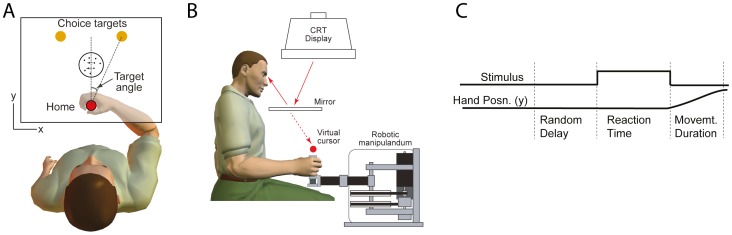
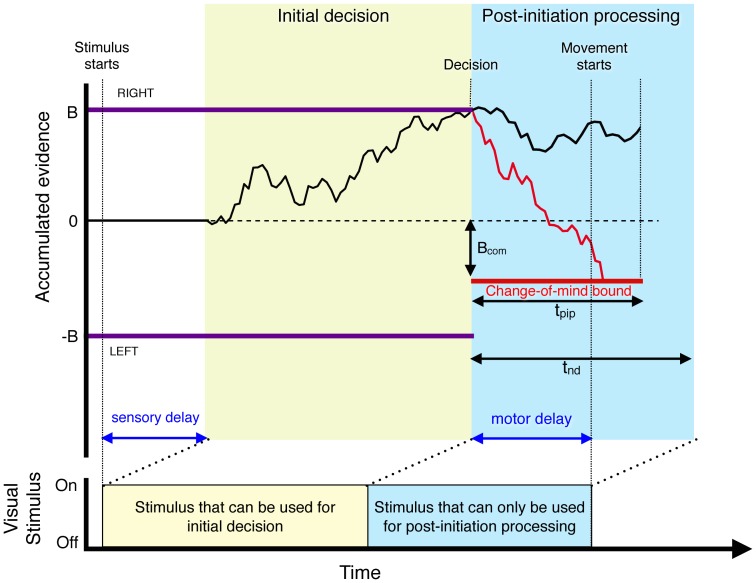
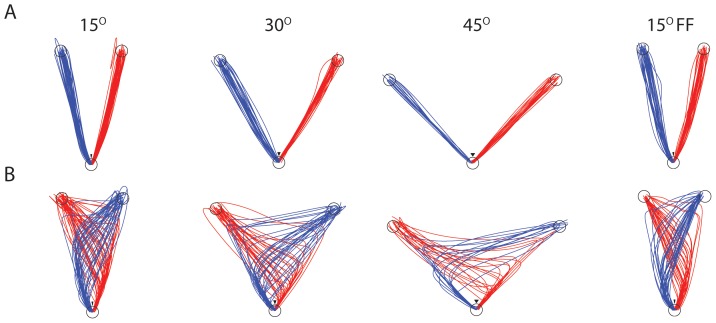
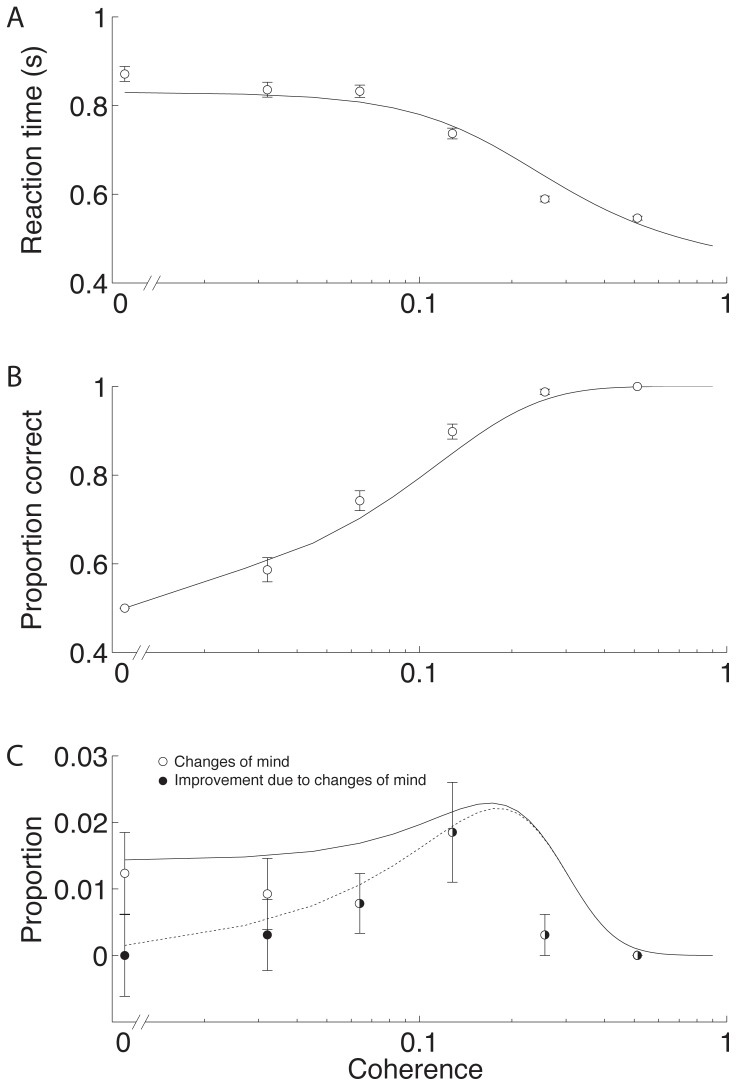
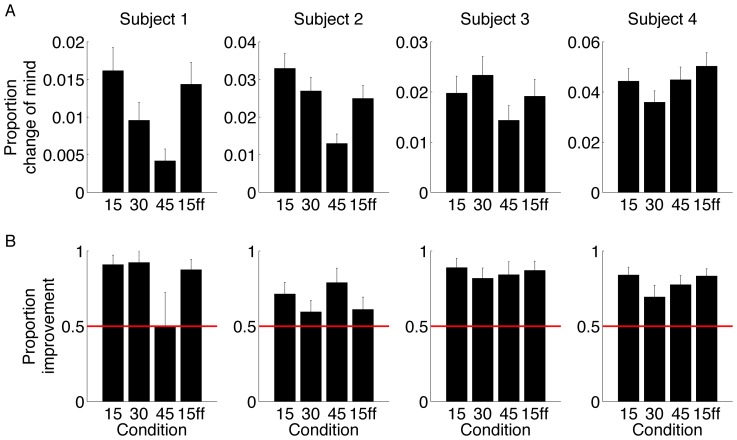
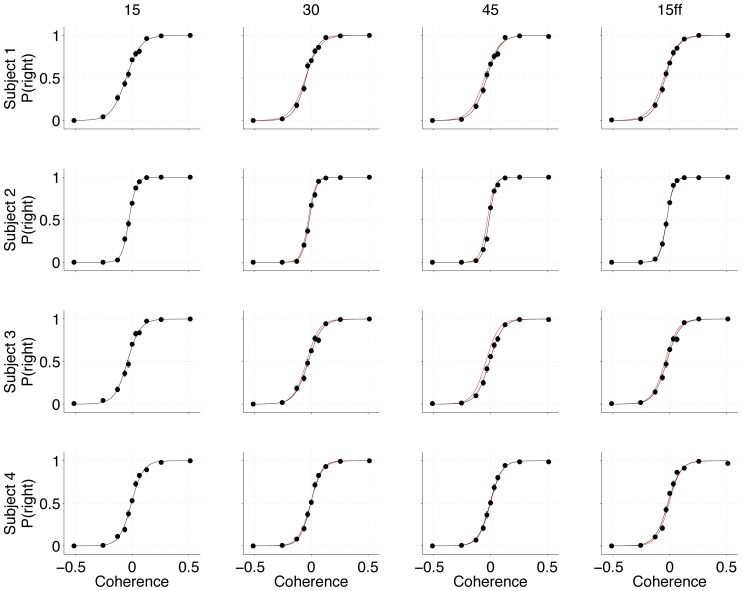
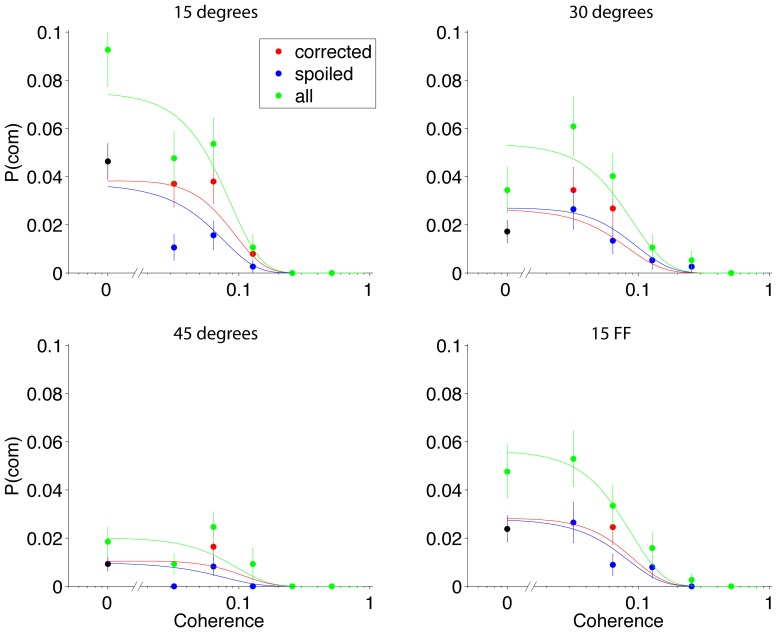
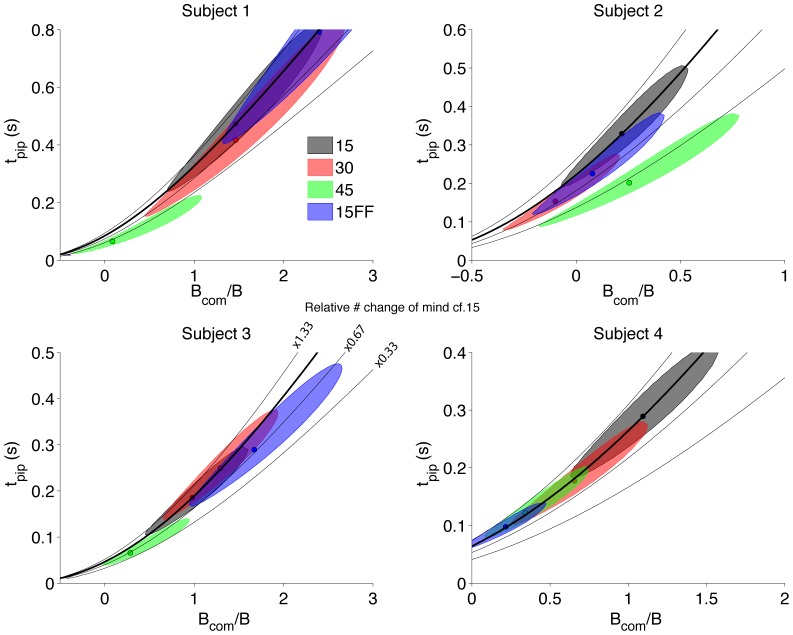
After committing to an action, a decision-maker can change their mind to revise the action. Such changes of mind can even occur when the stream of information that led to the action is curtailed at movement onset. This is explained by the time delays in sensory processing and motor planning which lead to a component at the end of the sensory stream that can only be processed after initiation. Such post-initiation processing can explain the pattern of changes of mind by asserting an accumulation of additional evidence to a criterion level, termed change-of-mind bound. Here we test the hypothesis that physical effort associated with the movement required to change one's mind affects the level of the change-of-mind bound and the time for post-initiation deliberation. We varied the effort required to change from one choice target to another in a reaching movement by varying the geometry of the choice targets or by applying a force field between the targets. We show that there is a reduction in the frequency of change of mind when the separation of the choice targets would require a larger excursion of the hand from the initial to the opposite choice. The reduction is best explained by an increase in the evidence required for changes of mind and a reduced time period of integration after the initial decision. Thus the criteria to revise an initial choice is sensitive to energetic costs.
Overview
The claims and statistics of this paper haven’t been checked yet.
Run the check — free, no account needed. It reads the open-access text and checks the sources it cites.
Integrity signals
Registry
Cites
Statistics
Figures
Verification
Claims the paper makes
The claims and statistics of this paper haven’t been checked yet.
Run the check — free, no account needed. It reads the open-access text and checks the sources it cites.
Claims other papers make about this one
Each is checked against this paper’s own text: does it say what the citing paper says it does?
In the citing paper
“For three of the four subjects, changes of decision corrected an initial error more often than they spoiled an initially correct choice (P<0.001, P<0.001, P = 0.084, P<0.001), consistent with previous reports (Resulaj et al., 2009; Burk et al., 2014).”
From A common mechanism underlies changes of mind about decisions and confidence (2016) · cites this paper as Burk et al., 2014
In the citing paper
“In previous studies, we showed that the motor system receives a continuous updating of the state of the evidence leading to a choice (Gold and Shadlen, 2000; Selen et al., 2012) and can utilize the late arriving information to revise an initial choice by continuing the process of deliberation (Resulaj et al., 2009; Burk et al., 2014).”
From A common mechanism underlies changes of mind about decisions and confidence (2016) · cites this paper as Burk et al., 2014
In the citing paper
“To further reduce the degrees of freedom of the model to four we fixed both the covariance ρ to -0.5 ≈ -0.71 and non-decision time standard deviation σtnd to 60 ms (within the normal range from a previous study (Burk et al., 2014) and supported by an analysis of motion energy; see Figure 1—figure supplement 1).”
From A common mechanism underlies changes of mind about decisions and confidence (2016) · cites this paper as Burk et al., 2014
Self-check
Percentages, sums and reported differences re-computed from the paper’s own numbers.
The self-check needs the paper’s full text.
Citations
Cites
(2005) · Springer eBooks · doi:10.1007/0-387-27255-0_9 · Cited by 20,333
McCullagh, P., & Nelder, J. A. (1989) · doi:10.1007/978-1-4899-3242-6 · Cited by 16,836
Ratcliff, R. (1978) · Psychological Review · doi:10.1037/0033-295x.85.2.59 · Cited by 4,513
The Neural Basis of Decision Making
Gold, J. I., & Shadlen, M. N. (2007) · Annual Review of Neuroscience · doi:10.1146/annurev.neuro.29.051605.113038 · Cited by 3,764
Self-citationOptimal feedback control as a theory of motor coordination
Todorov, E., & Jordan, M. I. (2002) · Nature Neuroscience · doi:10.1038/nn963 · Cited by 3,081
Roitman, J. D., & Shadlen, M. N. (2002) · The Journal of Neuroscience · doi:10.1523/jneurosci.22-21-09475.2002 · Cited by 1,589 · cited 3×
“In monkeys, the decision variable is represented in structures that are associated with planning the motor response [14,23] and the motor system of both human and nonhuman primates are affected by partial informa tion leading to a decision [15,19,24–27].”
BackgroundMethodModeling Response Times for Two-Choice Decisions
Ratcliff, R., & Rouder, J. N. (1998) · Psychological Science · doi:10.1111/1467-9280.00067 · Cited by 1,478
Information theory of choice-reaction times
Laming, D. (1968) · Medical Entomology and Zoology · Cited by 945
Decision Making as a Window on Cognition
Shadlen, M. N., & Kiani, R. (2013) · Neuron · doi:10.1016/j.neuron.2013.10.047 · Cited by 694
Hidden cognitive states revealed in choice reaching tasks
Song, J., & Nakayama, K. (2009) · Trends in Cognitive Sciences · doi:10.1016/j.tics.2009.04.009 · Cited by 691
The effect of stimulus strength on the speed and accuracy of a perceptual decision
Palmer, J., Huk, A. C., & Shadlen, M. N. (2005) · Journal of Vision · doi:10.1167/5.5.1 · Cited by 691
Self-citationChanges of mind in decision-making
Resulaj, A., Kiani, R., Wolpert, D. M., & Shadlen, M. N. (2009) · Nature · doi:10.1038/nature08275 · Cited by 678
Continuous attraction toward phonological competitors
Spivey, M. J., Grosjean, M., & Knoblich, G. (2005) · Proceedings of the National Academy of Sciences · doi:10.1073/pnas.0503903102 · Cited by 659
A role for neural integrators in perceptual decision making
Mazurek, M. E., Roitman, J. D., Ditterich, J., & Shadlen, M. N. (2003) · Cerebral Cortex · doi:10.1093/cercor/bhg097 · Cited by 620
The Cost of Accumulating Evidence in Perceptual Decision Making
Drugowitsch, J., Moreno-Bote, R., Churchland, A. K., Shadlen, M. N., & Pouget, A. (2012) · The Journal of Neuroscience · doi:10.1523/jneurosci.4010-11.2012 · Cited by 577
Gold, J. I., & Shadlen, M. N. (2002) · Neuron · doi:10.1016/s0896-6273(02)00971-6 · Cited by 561
Huk, A. C., & Shadlen, M. N. (2005) · The Journal of Neuroscience · doi:10.1523/jneurosci.4684-04.2005 · Cited by 538
Choosing the greater of two goods: neural currencies for valuation and decision making
Sugrue, L. P., Corrado, G. S., & Newsome, W. T. (2005) · Nature Reviews Neuroscience · doi:10.1038/nrn1666 · Cited by 536
Neural basis of deciding, choosing and acting
Schall, J. D. (2001) · Nature reviews. Neuroscience · doi:10.1038/35049054 · Cited by 528
Representation of a perceptual decision in developing oculomotor commands
Gold, J. I., & Shadlen, M. N. (2000) · Nature · doi:10.1038/35006062 · Cited by 515
The Wave Theory of Difference and Similarity
Link, S. W. (2020) · Routledge eBooks · doi:10.1201/9780429054709 · Cited by 351
Gold, J. I., & Shadlen, M. N. (2003) · Journal of Neuroscience · doi:10.1523/jneurosci.23-02-00632.2003 · Cited by 281
The relative judgment theory of two choice response time
Link, S. W. (1975) · Journal of Mathematical Psychology · doi:10.1016/0022-2496(75)90053-x · Cited by 251
The accumulator model of two-choice discrimination
Smith, P. L., & Vickers, D. (1988) · Journal of Mathematical Psychology · doi:10.1016/0022-2496(88)90043-0 · Cited by 223
Deliberation in the Motor System: Reflex Gains Track Evolving Evidence Leading to a Decision
Selen, L. P. J., Shadlen, M. N., & Wolpert, D. M. (2012) · Journal of Neuroscience · doi:10.1523/jneurosci.5273-11.2012 · Cited by 212
A modular planar robotic manipulandum with end-point torque control
Howard, I. S., Ingram, J. N., & Wolpert, D. M. (2009) · Journal of Neuroscience Methods · doi:10.1016/j.jneumeth.2009.05.005 · Cited by 211
Neurobiology of Decision Making
Shadlen, M. N., Kiani, R., Hanks, T. D., & Churchland, A. K. (2008) · The MIT Press eBooks · doi:10.7551/mitpress/7735.003.0007 · Cited by 134
Dissociating Variability and Effort as Determinants of Coordination
O'Sullivan, I., Burdet, E., & Diedrichsen, J. (2009) · PLoS Computational Biology · doi:10.1371/journal.pcbi.1000345 · Cited by 117
(2008) · The MIT Press eBooks · doi:10.7551/mitpress/9780262195805.001.0001 · Cited by 78
Neurobiology of Decision Making
Shadlen, M. N., Kiani, R., Hanks, T. D., & Churchland, A. K. (2008) · The MIT Press eBooks · doi:10.7551/mitpress/9780262195805.003.0004 · Cited by 67
Cited by
Sorted by citations
Decision-making in sensorimotor control
Gallivan, J. P., Chapman, C. S., Wolpert, D. M., & Flanagan, J. R. (2018) · Nature reviews. Neuroscience · doi:10.1038/s41583-018-0045-9 · Cited by 332
A common mechanism underlies changes of mind about decisions and confidence
van den Berg, R., Anandalingam, K., Zylberberg, A., Kiani, R., Shadlen, M. N., & Wolpert, D. M. (2016) · eLife · doi:10.7554/elife.12192 · Cited by 270
Self-citationEmbodied choice: how action influences perceptual decision making
Lepora, N. F., & Pezzulo, G. (2015) · PLOS Computational Biology · doi:10.1371/journal.pcbi.1004110 · Cited by 209
Confidence Is the Bridge between Multi-stage Decisions
van den Berg, R., Zylberberg, A., Kiani, R., Shadlen, M. N., & Wolpert, D. M. (2016) · Current Biology · doi:10.1016/j.cub.2016.10.021 · Cited by 125
Process-Tracing Methods in Decision Making: On Growing Up in the 70s
Schulte‐Mecklenbeck, M., Johnson, J. G., Böckenholt, U., Goldstein, D. G., Russo, J. E., Sullivan, N. J., & Willemsen, M. C. (2017) · Current Directions in Psychological Science · doi:10.1177/0963721417708229 · Cited by 137
Metadata
- Authors
- Burk, D., Ingram, J. N., Franklin, D. W., Shadlen, M. N., & Wolpert, D. M.
- Affiliations
- National Institute on Drug Abuse (US)
- University of Cambridge (GB)
- Howard Hughes Medical Institute (US)
- Corresponding author
- Wolpert, Daniel M.
- Venue
- PLoS ONE
- Publisher
- Public Library of Science (PLoS)
- Published
- 2014-03-20
- Volume
- 9
- Issue
- 3
- Pages
- e92681
- ISSN
- 1932-6203 (ISSN-L)
- PMC
- PMC3961398
- OpenAlex
- W1981476255
- Cited by
- 117
- References
- 30
- Citations by year
- 2026: 6 · 2025: 15 · 2024: 14 · 2023: 9 · 2022: 13 · 2021: 13 · 2020: 9 · 2019: 11 · 2018: 7 · 2017: 6 · 2016: 5 · 2015: 6 · 2014: 2
- FWCI
- 3.50
- Type
- journal article
- Language
- en
- Open access
- gold
- doi.org
- Locations
- PLoS ONE (publishedVersion, cc-by)
- Europe PMC (PubMed Central) (publishedVersion, cc-by)
- PubMed Central (publishedVersion, cc-by)
- PubMed (publishedVersion)
- RePEc: Research Papers in Economics (submittedVersion)
- DOAJ (DOAJ: Directory of Open Access Journals) (submittedVersion, cc-by-sa)
- Cambridge University Engineering Department Publications Database (submittedVersion)
- Columbia Academic Commons (Columbia University)
- Funders
- Howard Hughes Medical Institute
- Wellcome Trust (097803, 097803/Z/11/Z)
- National Institutes of Health
- National Eye Institute (R01EY011378)
- Topics
- Life Sciences › Neuroscience › Cognitive Neuroscience › Motor Control and Adaptation
- Life Sciences › Neuroscience › Cognitive Neuroscience › Neural and Behavioral Psychology Studies
- Social Sciences › Arts and Humanities › Philosophy › Free Will and Agency
- Keywords
- change of mind, sensorimotor decision making, motor effort, evidence accumulation, reaching movements, force fields, target geometry, energetic cost, decision revision
- MeSH terms
- Adult, Choice Behavior, Decision Making, Female, Humans, Male, Psychometrics, Psychomotor Performance, Young Adult
About these checks
Registry, retraction, Cites and statistics results are computed, not judged, with one exception: a printed reference that no index lists is read once by a model before it counts as a citation error. Claims are extracted by a model and kept only when their quote appears verbatim in the text; each cited source is then checked, with a model’s help, for whether it says what the claim relies on. Those verdicts can be wrong — read the claim’s quote and the cited source before relying on one.
Statistics and arithmetic are recomputed, not judged.
Confidence bands are shown only for fields calibrated on our annotated test set. None is calibrated yet, so no band is shown.
What counts as a claim ›How we measure confidence ›How we check this ›
Are you an author, or do you see a problem with this page? Request a review
