

The DOI matches its Crossref record; 55 of the 56 references it cites were found in a registry or an index.
Biotic and Abiotic Properties Mediating Plant Diversity Effects on Soil Microbial Communities in an Experimental Grassland
Open accessAbstract
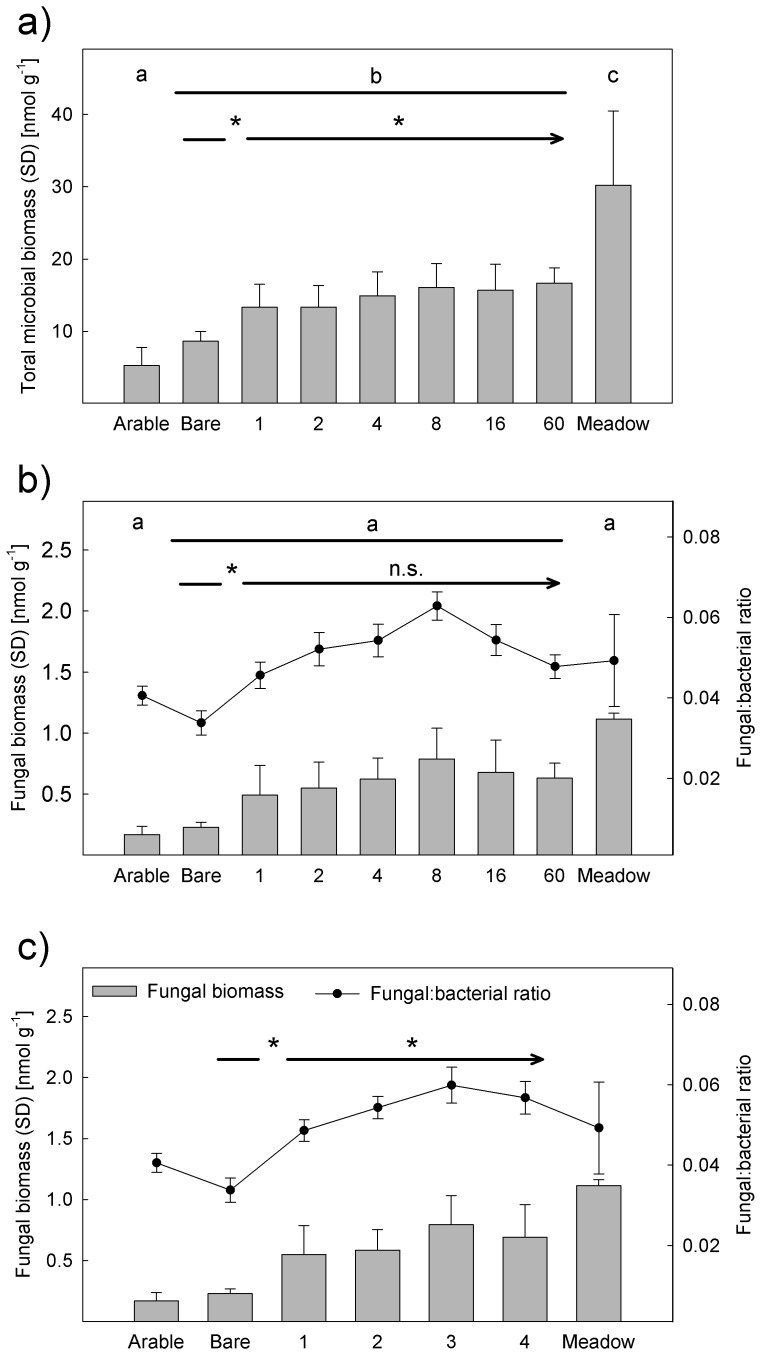
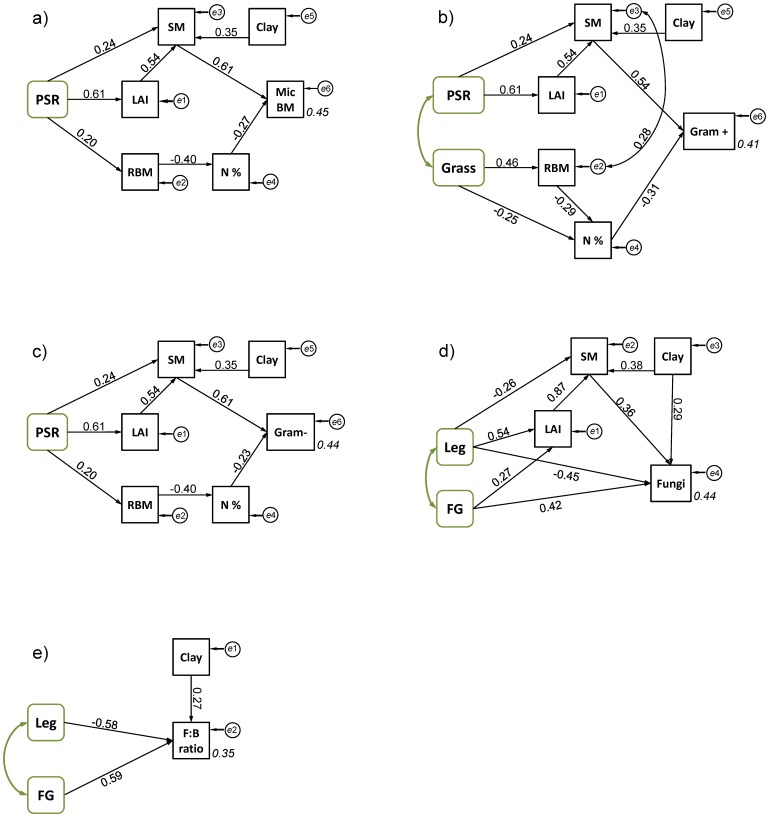
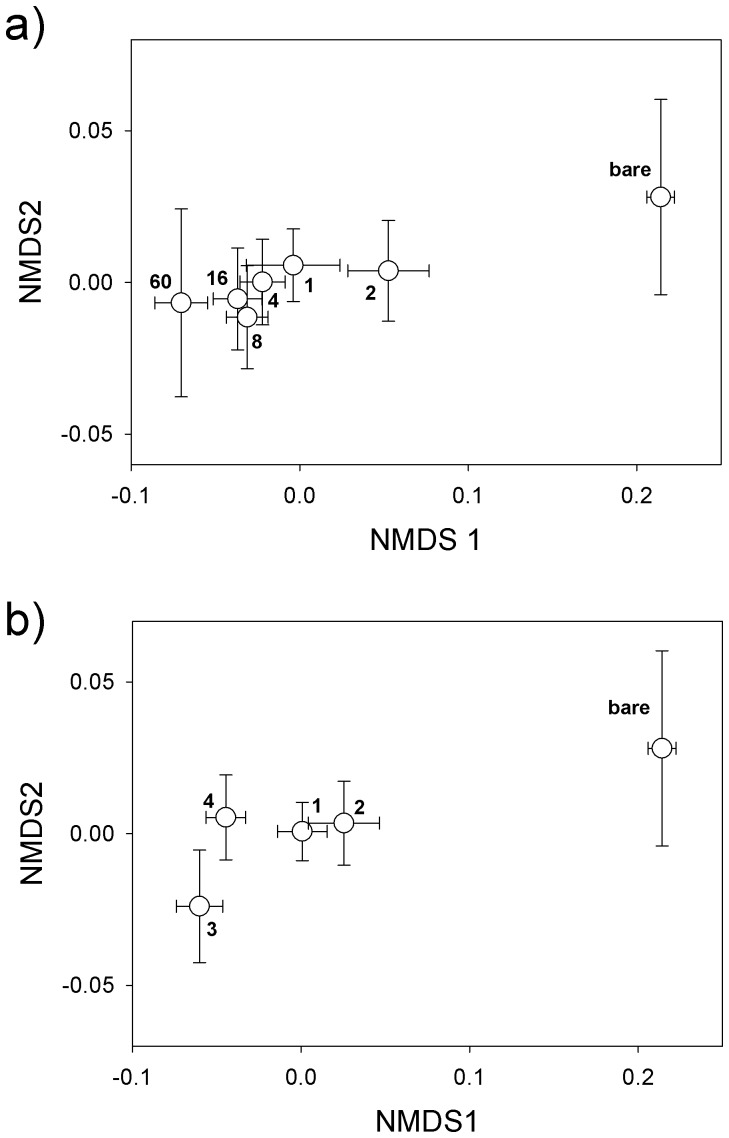
Plant diversity drives changes in the soil microbial community which may result in alterations in ecosystem functions. However, the governing factors between the composition of soil microbial communities and plant diversity are not well understood. We investigated the impact of plant diversity (plant species richness and functional group richness) and plant functional group identity on soil microbial biomass and soil microbial community structure in experimental grassland ecosystems. Total microbial biomass and community structure were determined by phospholipid fatty acid (PLFA) analysis. The diversity gradient covered 1, 2, 4, 8, 16 and 60 plant species and 1, 2, 3 and 4 plant functional groups (grasses, legumes, small herbs and tall herbs). In May 2007, soil samples were taken from experimental plots and from nearby fields and meadows. Beside soil texture, plant species richness was the main driver of soil microbial biomass. Structural equation modeling revealed that the positive plant diversity effect was mainly mediated by higher leaf area index resulting in higher soil moisture in the top soil layer. The fungal-to-bacterial biomass ratio was positively affected by plant functional group richness and negatively by the presence of legumes. Bacteria were more closely related to abiotic differences caused by plant diversity, while fungi were more affected by plant-derived organic matter inputs. We found diverse plant communities promoted faster transition of soil microbial communities typical for arable land towards grassland communities. Although some mechanisms underlying the plant diversity effect on soil microorganisms could be identified, future studies have to determine plant traits shaping soil microbial community structure. We suspect differences in root traits among different plant communities, such as root turnover rates and chemical composition of root exudates, to structure soil microbial communities.
Overview
The claims and statistics of this paper haven’t been checked yet.
Run the check — free, no account needed. It reads the open-access text and checks the sources it cites.
Integrity signals
Registry
Cites
Statistics
Figures
Verification
Claims the paper makes
The claims and statistics of this paper haven’t been checked yet.
Run the check — free, no account needed. It reads the open-access text and checks the sources it cites.
Claims other papers make about this one
Each is checked against this paper’s own text: does it say what the citing paper says it does?
In the citing paper
“First, a denser vegetation in highly diverse plant communities reduces evaporation from the topsoil, which in turn promotes higher soil microbial activity and growth 30 .”
From Plant diversity increases soil microbial activity and soil carbon storage (2015) · cites this paper as [30]
Self-check
Percentages, sums and reported differences re-computed from the paper’s own numbers.
The self-check needs the paper’s full text.
Citations
Cites
R: A Language and Environment for Statistical Computing
R Core Team (2000) · doi:10.32614/r.manuals · Cited by 355,893
A RAPID METHOD OF TOTAL LIPID EXTRACTION AND PURIFICATION
Bligh, E. G., & Dyer, W. J. (1959) · Canadian Journal of Biochemistry and Physiology · doi:10.1139/o59-099 · Cited by 54,751 · cited 1×
“4) to extract soil lipids [29,36].”
Biodiversity loss and its impact on humanity
Cardinale, B. J., Duffy, J. E., Gonzalez, A., Hooper, D. U., Perrings, C., Venail, P., Narwani, A., Mace, G. M., Tilman, D., Wardle, D. A., et al. (2012) · Nature · doi:10.1038/nature11148 · Cited by 7,457 · cited 1×
“but the underlying mechanisms are not well understood [18]; for”
BackgroundVan Der Heijden, M. G. A., Bardgett, R. D., & Van Straalen, N. M. (2008) · Ecology Letters · doi:10.1111/j.1461-0248.2007.01139.x · Cited by 5,053
THE ROLE OF ROOT EXUDATES IN RHIZOSPHERE INTERACTIONS WITH PLANTS AND OTHER ORGANISMS
Bais, H. P., Weir, T. L., Perry, L. G., Gilroy, S., & Vivanco, J. M. (2006) · Annual Review of Plant Biology · doi:10.1146/annurev.arplant.57.032905.105159 · Cited by 4,682 · cited 1×
“Indeed, root exudates were reported to strongly influence soil microbial communities [14,55].”
BackgroundThe use of phospholipid fatty acid analysis to estimate bacterial and fungal biomass in soil
Frosteg�rd, A., & B��th, E. (1996) · Biology and Fertility of Soils · doi:10.1007/bf00384433 · Cited by 2,543 · cited 1×
“The F:B ratio was calculated using the molar weight of the fungal PLFA marker divided by the sum of molar weights of bacterial PLFA biomarker [40].”
MethodStructural Equation Modeling and Natural Systems
Grace, J. B. (2006) · doi:10.1017/cbo9780511617799 · Cited by 2,432 · cited 7×
“The adequacy of the model was tested with Chi-squared tests (x2 tests) and root mean square error of approximation (RMSEA) [44].”
MethodInfluentialZelles, L. (1999) · Biology and Fertility of Soils · doi:10.1007/s003740050533 · Cited by 2,059 · cited 2×
“PLFA 18:2v6 was used as a fungal biomarker [38,39].”
BackgroundMethodFrostegård, Å., Bååth, E., & Tunlio, A. (1993) · Soil Biology and Biochemistry · doi:10.1016/0038-0717(93)90113-p · Cited by 1,442 · cited 1×
“PLFA 18:2v6 was used as a fungal biomarker [38,39].”
MethodVegetation Ecology of Central Europe
Ellenberg, H. (1988) · Medical Entomology and Zoology · Cited by 1,374
Cited by
Sorted by citations
Items 101–200 of 233
Tree species diversity enhances plant-soil interactions in a temperate forest in northeast China
Sanaei, A., Yuan, Z., Ali, A., Loreau, M., Mori, A., Reich, P. B., Jucker, T., Lin, F., Ye, J., Fang, S., et al. (2021) · Forest Ecology and Management · doi:10.1016/j.foreco.2021.119160 · Cited by 26
Effects of Land Use and Restoration on Soil Microbial Communities
McKinley, V. L. (2019) · Advances in environmental microbiology · doi:10.1007/978-3-030-10777-2_7 · Cited by 23
Rodríguez, A. R., Canals, R. M., & Sebastià, M. (2021) · Ecosystems · doi:10.1007/s10021-021-00695-9 · Cited by 29
Shifts of understory vegetation induced by thinning drive the expansion of soil rare fungi
Qiang, W., Gunina, A., Kuzyakov, Y. V., Luo, R., Zhang, Y., Liu, B., & Pang, X. (2023) · Journal of Environmental Management · doi:10.1016/j.jenvman.2023.118119 · Cited by 23
Artificial light at night (ALAN) causes shifts in soil communities and functions
Cesarz, S., Eisenhauer, N., Bucher, S. F., Ciobanu, M., & Hines, J. (2023) · Philosophical Transactions of the Royal Society B Biological Sciences · doi:10.1098/rstb.2022.0366 · Cited by 23
“The higher plant biomass in phase 2 did not reduce soil water content, likely because plant communities with more biomass can reduce transpiration [52], create a more stable microclimate close to the soil surface [53,54] and be more efficient in water use than under high ALAN.”
BackgroundSelf-citationHutengs, C., Eisenhauer, N., Schädler, M., Lochner, A., Seidel, M., & Vohland, M. (2021) · Soil Biology and Biochemistry · doi:10.1016/j.soilbio.2021.108319 · Cited by 24
Self-citationSoil Health Check-Up of Conservation Agriculture Farming Systems in Brazil
Passinato, J. H., Amado, T. J. C., Kassam, A., Acosta, J. A. A., & Amaral, L. D. P. (2021) · Agronomy · doi:10.3390/agronomy11122410 · Cited by 22
Su, J., Jing, G., Jin, J., Lin, W., Liu, J., & Cheng, J. (2016) · Ecological Engineering · doi:10.1016/j.ecoleng.2016.11.050 · Cited by 22
Poeydebat, C., Tixier, P., Chabrier, C., de Bellaire, L. D. L., Vargas, R., Daribo, M., & Carval, D. (2017) · Applied Soil Ecology · doi:10.1016/j.apsoil.2017.04.017 · Cited by 25
“Lange et al. (2014) showed that higher plant richness was associated with higher leaf area index which provided more favorable microclimatic conditions for microbial activity.”
BackgroundHacker, N., Wilcke, W., & Oelmann, Y. (2019) · Geochimica et Cosmochimica Acta · doi:10.1016/j.gca.2018.11.023 · Cited by 24
Self-citationRong, Y., Monaco, T. A., Liu, Z., Zhao, M., & Han, G. (2022) · European Journal of Soil Biology · doi:10.1016/j.ejsobi.2022.103404 · Cited by 20
Zuo, Y., He, C., Zhang, D., Zhao, L., He, X., & Sun, X. (2023) · Microbiological Research · doi:10.1016/j.micres.2023.127315 · Cited by 20
Wang, M., Wang, C., Yu, Z., Wang, H., Wu, C., Masoudi, A., & Liu, J. (2023) · Frontiers in Microbiology · doi:10.3389/fmicb.2023.1036905 · Cited by 22
“The diversity of the fungal communities in soils is heavily regulated by a variety of biotic and abiotic ecological variables, including temperature, moisture, seasons, soil edaphic parameters, plant and vegetation types, geographical coordinates, and even agricultural practices (Singh et al., 2009; Lange et al., 2014…”
BackgroundBierza, W., Czarnecka, J., Błońska, A., Kompała‐Bąba, A., Hutniczak, A. K., Jendrzejek, B., Bakr, J., Jagodziński, A. M., Prostański, D., & Woźniak, G. (2023) · Sustainability · doi:10.3390/su15097284 · Cited by 23
“The diversity of the vegetation patches, including the functional group assembly and the essential species richness parameters, as well as its impacts on the soil microbial activity and biomass, and other soil functions, have been frequently studied [49,140,141].”
BackgroundBai, X., Zeng, Q., Abbas, F., Dong, Y., & An, S. (2018) · Arid Land Research and Management · doi:10.1080/15324982.2018.1501621 · Cited by 20
“A dense vegetation in highly diverse plant communities reduces evaporation, which in turn promotes higher soil microbial activity and growth (Lange et al. 2014), and compared to F-SZ and SZ, the soil and water conservation effect in FZ is highest as higher Figure 4.”
BackgroundInfluentialXu, H., Qu, Q., Chen, Y., Wang, M., Liu, G., Xue, S., & Yang, X. (2020) · CATENA · doi:10.1016/j.catena.2020.104774 · Cited by 19
Lemanski, K., & Scheu, S. (2014) · Biology and Fertility of Soils · doi:10.1007/s00374-014-0963-2 · Cited by 19
“In line, Smith et al. (2008) found the fungal to bacterial ratio to be higher in swards dominated by forbs including legumes, whereas Lange et al. (2014) found legumes to negatively affect fungal biomass.”
BackgroundSelf-citationSantos, E., Pires, F. R., Ferreira, A. D., Filho, F. B. E., Madalão, J. C., Bonomo, R., & da Rocha, P. R. (2019) · International Journal of Phytoremediation · doi:10.1080/15226514.2018.1556583 · Cited by 18
“…microbial populations, studies have reported that fine-textured soils provide favorable habitats for microbial growth compared to coarse-textured soils (Chodak and Nikli nska 2010; Lange et al. 2014), exhibiting a high biomass and diversity of microbes (Dequiedt et al. 2011; Naveed et al. 2016).”
BackgroundNogueira, C. B., Menéndez, E., Ramírez-Bahena, M.-H., Velázquez, E., Péix, Á., Mateos, P. F., & Scotti, M. R. (2019) · Scientific Reports · doi:10.1038/s41598-019-47380-5 · Cited by 18
Soil microbial communities in alpine grasslands on the Tibet Plateau and their influencing factors
Pang, Z., Wang, D., Zhang, J., Zhou, S., Cui, X., Xue, K., Wang, F., Li, T., Hu, R., Che, R., et al. (2019) · Chinese Science Bulletin (Chinese Version) · doi:10.1360/tb-2019-0090 · Cited by 18
Nganga, W. B., Ng'etich, K. O., Macharia, J. M., Kiboi, M., Adamtey, N., & Ngetich, F. K. (2019) · Scientific African · doi:10.1016/j.sciaf.2019.e00231 · Cited by 17
Liu, X., Li, X., Li, X., Ma, W., Guo, Q., Zhu, X., & Fu, X. (2021) · Applied Soil Ecology · doi:10.1016/j.apsoil.2020.103872 · Cited by 16
Erhunmwunse, A. S., Mackowiak, C. L., Blount, A. R. S., Dubeux, J. C. B., Ogram, A. V., & Liao, H. (2023) · European Journal of Soil Biology · doi:10.1016/j.ejsobi.2023.103566 · Cited by 16
A Meta-Analysis of the Effects of Warming and Elevated CO2 on Soil Microbes
Fu, G., Zhang, H., Li, S., & Wei, S. (2019) · Journal of Resources and Ecology · doi:10.5814/j.issn.1674-764x.2019.01.009 · Cited by 16
Franco, A. D. J., da Silva, A. P. V., Souza, A. B. S., Oliveira, R. L., Batista, É. R., de Souza, E. D., Silva, A. O., & Carneiro, M. A. C. (2020) · Pesquisa Agropecuária Tropical · doi:10.1590/1983-40632020v5064026 · Cited by 16
Bates, C. T., Escalas, A., Kuang, J., Hale, L., Wang, Y., Herman, D., Nuccio, E. E., Wan, X., Bhattacharyya, A., Fu, Y., et al. (2022) · The ISME Journal · doi:10.1038/s41396-021-00916-y · Cited by 17
“, microbial) ground biodiversity [41] and biomass [42, 43] are related, and edaphic conditions can influence these relationships.”
BackgroundRooting for function: community‐level fine‐root traits relate to many ecosystem functions
Barry, K. E., Hennecke, J., Weigelt, A., Bergmann, J., Bruelheide, H., Freschet, G. T., Iversen, C. M., Kuyper, T. W., Laughlin, D. C., McCormack, M., et al. (2025) · New Phytologist · doi:10.1111/nph.70606 · Cited by 15
Self-citationCarmona‐Yáñez, M. D., Lucas‐Borja, M. E., Zema, D. A., Jing, X., Kooch, Y., Garrido-Gallego, P., Plaza‐Álvarez, P. A., Zhou, G., & Delgado‐Baquerizo, M. (2023) · Trees · doi:10.1007/s00468-023-02462-w · Cited by 15
“The increases in the Gram + and Gram − biomass in SBSJ stands may have a secondary role on waste decomposition, and these increases should presumably due to the higher soil water content, which promotes the relative abundance of those bacteria (Lange et al. 2014; Chen et al. 2019).”
BackgroundSubramanian, P., Gupta, A., Gopal, M., Selvamani, V., Mathew, J., Surekha, & Indhuja, S. (2024) · Springer eBooks · doi:10.1007/978-981-97-0092-9_2 · Cited by 15
Randhawa, P. K., Mullen, C., & Barbercheck, M. E. (2018) · Biological Control · doi:10.1016/j.biocontrol.2018.06.001 · Cited by 18
Lama, S., Kuhn, T., Lehmann, M. F., Müller, C., Macé, O. G., Eisenhauer, N., Lange, M., Scheu, S., Oelmann, Y., & Wilcke, W. (2020) · Biology and Fertility of Soils · doi:10.1007/s00374-020-01480-x · Cited by 16
“Lange et al. (2014) reported for the year 2007 based on phospholipid fatty acid patterns that the fungalto-bacterial biomass ratio was positively affected by plant functional group richness and negatively by the presence of legumes.”
BackgroundMethodResultInfluentialSelf-citationCompetition‐induced downregulation of symbiotic nitrogen fixation
Dagan, R., Dovrat, G., Masci, T., & Sheffer, E. (2023) · New Phytologist · doi:10.1111/nph.19322 · Cited by 14
Albracht, C., Solbach, M. D., Hennecke, J., Bassi, L., van der Ploeg, G. R., Eisenhauer, N., Weigelt, A., Buscot, F., & Heintz‐Buschart, A. (2024) · Biology and Fertility of Soils · doi:10.1007/s00374-024-01821-0 · Cited by 16
Self-citationGillespie, M. A. K., Buckley, H. L., Condron, L. M., & Wratten, S. D. (2022) · Basic and Applied Ecology · doi:10.1016/j.baae.2022.06.010 · Cited by 14
Rodriguez, A. M., Jacobo, E. J., & Golluscio, R. Á. (2017) · Rangeland Ecology & Management · doi:10.1016/j.rama.2017.07.009 · Cited by 14
“All rights res 2008), while richness is positively related to the water content in the soil surface horizon (Lange et al., 2014) and the abundance of decomposers (Eisenhauer et al., 2010, 2011).”
BackgroundChe, Z., Yu, D., Chen, K., Wang, H., Yang, Z., Liu, F., & Wang, X. (2022) · Sustainability · doi:10.3390/su142215255 · Cited by 13
Effects of tree diversity on soil microbial community in a subtropical forest in Southwest China
Li, Y., Qian, Z., & Li, D. (2023) · European Journal of Soil Biology · doi:10.1016/j.ejsobi.2023.103490 · Cited by 15
Smith, D. J., Duston, S., Barney, J. N., Strahm, B. D., Agarwal, P., Mangru, A., & Badgley, B. D. (2024) · Applied Soil Ecology · doi:10.1016/j.apsoil.2024.105313 · Cited by 12
Pires, M. D. F. M., Medeiros, J. C., de Souza, H. A., Rosa, J. D., Boechat, C. L., Mafra, Á. L., Nolêto, K. C., & da Rocha, A. G. (2020) · Bragantia · doi:10.1590/1678-4499.20200117 · Cited by 13
Impacts of diverse undersown cover crops on seasonal soil microbial properties
Shrestha, R., Huusko, K., Sietiö, O., Schmid, B., Cappelli, S. L., Thitz, P., Gerin, S., Laine, A., Lohila, A., & Heinonsalo, J. (2025) · FEMS Microbiology Ecology · doi:10.1093/femsec/fiaf068 · Cited by 15
“In addition, plant diversity was reported to increase fungal abundance but not bacterial abundance in a grass-land experiment (Chung et al. 2007 , Lange et al. 2014 , Dassen et al. 2017 ) and may increase soil fungi:bacteria ratio.”
InfluentialTemperature modifies the magnitude of a plant response to Collembola presence
Chauvat, M., & Forey, E. (2020) · Applied Soil Ecology · doi:10.1016/j.apsoil.2020.103814 · Cited by 12
Habiyaremye, J. D. D., Herrmann, S., Reitz, T., Buscot, F., & Goldmann, K. (2021) · Environmental Microbiology · doi:10.1111/1462-2920.15433 · Cited by 11
“, 2020) compared with that of bacteria, which are usually more affected by abiotic environmental parameters (Millard and Singh, 2010; Lange et al., 2014; Uroz et al., 2016).”
BackgroundSoil Bacteria and Fungi Respond Differently to Organisms Covering on Leshan Giant Buddha Body
Chen, X., Wang, M., Wu, F., Sun, B., Yang, T., & Song, H. (2021) · Sustainability · doi:10.3390/su13073897 · Cited by 11
Baião, É. E., Santos, C. H. B., Santos, A. H., Marques, G., Lima, J. C., Rigobelo, E. C., & Scotti, M. R. (2021) · Geoderma Regional · doi:10.1016/j.geodrs.2021.e00401 · Cited by 11
Wang, W., Li, M., Zhou, R., Mo, F., Wang, B., Zhu, L., Tao, H., Zhu, Y., Wang, W., Zhao, Z., et al. (2022) · iScience · doi:10.1016/j.isci.2022.105773 · Cited by 12
“Particularly, higher root biomass inputs can activate microbial community activity and improve its composition in soils.(36)”
BackgroundGiusti, B., Hogue, R., Jeanne, T., & Lucotte, M. (2023) · Agrosystems, Geosciences & Environment · doi:10.1002/agg2.20349 · Cited by 11
Forage Species Identity Shapes Soil Biota in a Temperate Agroecosystem
Finney, D. M., Garritano, S., & Kenwood, M. (2021) · Sustainability · doi:10.3390/su13105689 · Cited by 11
“First, increasing N fertility has been observed to lower F:B ratio in grasslands [69]; therefore, the presence of white clover could lower the F:B ratio in the WC monoculture as well as intercrops with WC [41].”
BackgroundAudu, V., Ruf, T., Vogt-Kaute, W., & Emmerling, C. (2022) · Biological Agriculture & Horticulture · doi:10.1080/01448765.2022.2040589 · Cited by 11
“However, more ground cover in biennial cropping systems tends to stimulate more aboveground biomass and also conserve moisture (Lange et al. 2014), as was shown by the results of this study.”
ResultCONSERVATION AGRICULTURE FOR CLIMATE CHANGE RESILIENCE
Meena, R. P., & Jha, A. (2017) · doi:10.1002/9781119276050.ch8 · Cited by 11
Zhang, Y., Chen, Y., An, B., Ma, X., Zhang, H., Liu, Q., & Mao, R. (2024) · Plant and Soil · doi:10.1007/s11104-024-06502-3 · Cited by 10
Steinauer, K., Heinen, R., Hannula, S. E., Long, J. R. D., Huberty, M., Jongen, R., Wang, M., & Bezemer, Т. M. (2020) · Ecosphere · doi:10.1002/ecs2.3246 · Cited by 13
“Those can drive differences in above- and belowground community functioning (Finke and Snyder 2008, Cadotte et al. 2009), which can alter both abiotic and biotic soil conditions (Ehrenfeld 2010, Lange et al. 2014, Heinen et al. 2018).”
BackgroundNORMANIZA, O., Halim, A., ISMAIL, Y., TAN, G. Y. A., & Rozainah, M. Z. (2018) · Applied Ecology and Environmental Research · doi:10.15666/aeer/1603_22192232 · Cited by 10
“It indicates that microbial application and higher vegetation density in DM enhance the F/B ratio of the microbial community through ecological complementarity effects such as higher supply of resources for microorganisms (Lange et al., 2014).”
BackgroundDryland soil mycobiome response to long‐term precipitation variability depends on host type
Louw, N. L., Gherardi, L., Sala, O. E., & Chung, Y. A. (2022) · Journal of Ecology · doi:10.1111/1365-2745.14006 · Cited by 9
“In experimental grassland ecosystems in Europe, Lange et al. (2014) and Bartelt- Ryser et al. (2005) found that the presence of legumes generally decreased the biomass of soil fungi.”
Backgroundde Souza, I. A., Daly, A. B., Schnecker, J., Warren, N. D., Lobo-Jr, A. R., Smith, R. G., Brito, A. F., & Grandy, A. S. (2023) · Agrosystems Geosciences & Environment · doi:10.1002/agg2.20395 · Cited by 11
Liu, D., Liu, G., Chen, L., Han, W., & Wang, D. (2021) · Soil Ecology Letters · doi:10.1007/s42832-021-0113-3 · Cited by 9
“Lange et al. (2014) manipulated a gradient in sown plant species next to a river in Germany, and they reported that there was no significant trend between soil fungal biomass and PSR.”
BackgroundGillespie, L. M., Prada‐Salcedo, L. D., Shihan, A., Fromin, N., Goldmann, K., Milcu, A., Buscot, F., Buatois, B., & Hättenschwiler, S. (2023) · Pedobiologia · doi:10.1016/j.pedobi.2023.150875 · Cited by 14
Liu, Z., Michalet, R., Wang, C., Wang, Y., Chen, J., Cui, H., Song, H., Wang, J., Yang, Z., An, L., et al. (2022) · The Science of The Total Environment · doi:10.1016/j.scitotenv.2022.160154 · Cited by 8
Li, J., Jiang, X. P., Zhou, X., Yin, X., & Niu, K. (2023) · Plant and Soil · doi:10.1007/s11104-023-06395-8 · Cited by 8
“…(SOC) Vol.: (0123456789) more pronouncedly consumed by biomass production of two-grasses mixtures due to complementary uptake and utilization (Lange et al. 2014); (ii) the lowered soil available nitrogen and disadvantageous effect of mixture-planting on some infrequent taxa of soil microbes…”
Sun, D.-D., Li, Y.-J., Zhao, W., Zhang, Z., Li, D., Zhao, C., & Liu, Q. (2016) · Journal of Mountain Science · doi:10.1007/s11629-015-3733-1 · Cited by 8
Aubert, M., & Bureau, F. (2017) · Applied Soil Ecology · doi:10.1016/j.apsoil.2017.09.004 · Cited by 8
Sherman, C., Marais, E., Maggs‐Kölling, G., Adams, J. M., & Steinberger, Y. (2019) · Journal of Arid Environments · doi:10.1016/j.jaridenv.2019.01.009 · Cited by 8
Xu, P., Jiang, M., Khan, I., Zhou, M., Shaaban, M., & Hu, R. (2024) · Plant and Soil · doi:10.1007/s11104-024-06731-6 · Cited by 8
“S3) which were based on the theoretical knowledge derived from the some reported literature (Lange et al. 2014, 2015; Zhou et al. 2017, 2020; Xu et al. 2022b, 2023, 2024; Wu et al. 2023), the SEM was accordingly modified to reflect the direct and indirect effects of several key components on soil N…”
Xiao, W., Zhao, J., Yan, X., & Guan, Q. (2018) · Forest Science · doi:10.1093/forsci/fxy037 · Cited by 7
“First, plant diversity can affect the fungal community directly through abiotic changes; such changes are mainly mediated by changes in the leaf area index, which affect the moisture in the litter layer (Allison et al. 2013, Lange et al. 2014).”
Narayana, N. K., Kingery, W. L., Jacobs, A. A., Allison, J., & Shanmugam, S. G. (2022) · Land · doi:10.3390/land11122259 · Cited by 7
Wang, X., Yu, Z., Shen, G., Cheng, H., & Tao, S. (2022) · Environmental Science and Pollution Research · doi:10.1007/s11356-022-22283-7 · Cited by 7
Xue, Z., He, X., & Zuo, Y. (2019) · Arid Land Research and Management · doi:10.1080/15324982.2019.1637968 · Cited by 6
“Numerous studies have demonstrated that soil microorganisms have profound effects on plant performance and composition (Heijden, Bardgett, and Straalen 2008; Lange et al. 2014).”
BackgroundSarker, R. R., Rashid, M. H., Islam, M. A., Jahiruddin, M., Islam, K. R., & Jahangir, M. M. R. (2023) · Journal of soil science and plant nutrition · doi:10.1007/s42729-023-01168-9 · Cited by 5
“The higher diversity of crop species caused higher fungal-to-bacterial ratios of the microbial community due to available source of labile C and nutrient stock for microbial growth (Lange et al. 2014).”
BackgroundQiu, Z., Li, J., Wang, P., Wang, D., Li, H., Gao, X., & Shu, J. (2023) · Scientific Reports · doi:10.1038/s41598-023-44468-x · Cited by 5
Erhunmwunse, A. S., Guerra, V., Liu, J.-C., Mackowiak, C. L., Blount, A. R. S., Dubeux, J. C. B., & Liao, H. (2023) · Microorganisms · doi:10.3390/microorganisms11123002 · Cited by 5
“However, the association between introduced plant species and soil bacteria may change over time within the same ecosystem as plant growth and development advances [40,41].”
BackgroundXu, L., Yao, B., Wang, W., Wang, F., Zhou, H., Shi, J., & Zhao, X. (2017) · Scientific Reports · doi:10.1038/srep40307 · Cited by 5
Baseline status of microbial activity on gold tailings facilities in South Africa
Schimmer, C., & van Deventer, P. W. (2017) · Applied Soil Ecology · doi:10.1016/j.apsoil.2017.10.020 · Cited by 5
Yoshihara, Y., Sasaki, T., Nyambayar, D., Matsuki, Y., Baba, Y., & Suyama, Y. (2019) · Basic and Applied Ecology · doi:10.1016/j.baae.2019.05.005 · Cited by 5
Zou, C., Dai, T., Liang, Z., Li, M., Meng, L., Xianming, Z., Li, N., Wei, Q., Elhamid, M. A. A., Atif, A. M., et al. (2025) · Frontiers in Microbiology · doi:10.3389/fmicb.2025.1651997 · Cited by 4
“Increasingly, studies have shown that the relationship between soil nutrient factors and soil microorganisms can provide a deeper understanding of the ecological processes and mechanisms underlying soil microorganisms’ role in promoting normal plant growth (Lange et al., 2014).”
Reddy, B., Kumar, A., Mehta, S., & Sahu, K. P. (2021) · Rhizosphere biology · doi:10.1007/978-981-16-3364-5_14 · Cited by 4
Guillén-Cruz, G., Campuzano, E. F., Juárez-Altamirano, R., López-García, K. L., Torres-Arreola, R., & Flores‐Rentería, D. (2023) · Land · doi:10.3390/land12111961 · Cited by 4
“On the other hand, the concentration of TC in the soil of the agricultural plots is related to a higher content of SOC, and precisely, we can confirm it with the percentages of SOM in both land uses since, as is well known, the SOM contains about 58% organic carbon [29].”
BackgroundCai, S., Zheng, B., Zhao, Z., Zheng, Z., Yang, N., & Zhai, B. (2024) · Agronomy · doi:10.3390/agronomy14030581 · Cited by 4
Carvalho, F., Healing, S., & Armstrong, A. (2024) · Environmental Research Ecology · doi:10.1088/2752-664x/ad8ce4 · Cited by 6
“For instance, diverse grasslands are thought to promote ecological complementarity among species and result in higher productivity and a more diverse supply of plant-derived resources for soil microorganisms compared to less diverse grasslands [58, 60].”
de Oca-Vásquez, G. M., Solano-Campos, F., Bolaños, B. A., Vásquez, A. P., Vega‐Baudrit, J. R., Ruiz‐Navarro, A., López‐Mondéjar, R., & Bastida, F. (2020) · Soil Ecology Letters · doi:10.1007/s42832-020-0041-7 · Cited by 4
HALIM, A., Yusoff, I., Osman, N., & Mohamed, N. A. (2021) · Applied Ecology and Environmental Research · doi:10.15666/aeer/1904_27612778 · Cited by 4
“As such, the higher number of plants in the dense plot (D) could enhance the F/B ratio through ecological complementarity effects such as a higher supply of resources for microorganisms (Lange et al., 2014).”
Backgroundguez, A. R., Canals, R. M., & Sebastià, M. (2020) · doi:10.22541/au.158930956.66985695 · Cited by 4
Wang, S., Li, Y., Hu, H., Ding, X., Lin, Q., Li, G., & Xiao-rong, Z. (2025) · European Journal of Soil Science · doi:10.1111/ejss.70176 · Cited by 3
“In this study, the negative correlation between grazing intensity and soil PLFAs (Figure 3 and Figure S3) could be due to the altered soil structure and environment under long-term grazing (Lange et al. 2014; Li et al. 2018; Pan, Liu, et al. 2018).”
Parisy, B., Schmidt, N. M., Wirta, H., Stewart, L., Pellissier, L., Holben, W. E., Pannoni, S. B., Somervuo, P. J., Jones, M. M., Sirén, J., et al. (2023) · Metabarcoding and Metagenomics · doi:10.3897/mbmg.7.99979 · Cited by 3
Dębska, B., Długosz, J., & Piotrowska‐Długosz, A. (2024) · Soil Use and Management · doi:10.1111/sum.13106 · Cited by 3
“…permanent, dense plant cover performs a protective function by preventing the leaching of organic C and nutrients (e.g. nitrogen) from the soil (Burzyńska, 2012) as well as by reducing evaporation, which in turn positively affects soil microbial and enzymatic properties (Lange et al., 2014).”
Impact of plant diversity in potato-ley strip-cropping systems on soil microbial communities
Riggi, L. G. A., Sveen, T. R., Castaño, C., Onorati, P., van Apeldoorn, D. F., Berri, M., Mommer, L., Clemmensen, K. E., & Bahram, M. (2024) · Applied Soil Ecology · doi:10.1016/j.apsoil.2024.105777 · Cited by 2
“…yield, but also impact microbial communities (e.g. generally decreasing biomass of soil fungi and benefits saprotrophs (Bartelt-Ryser et al., 2005; Lange et al., 2014; Yu et al., 2022)) and interactions between microbes (e.g. promoting interactions between Rhizobium and AMF, Hnini et al., 2024).”
Jimeno‐Alda, J., Navarro‐Cano, J. A., Goberna, M., & Verdú, M. (2025) · Plant and Soil · doi:10.1007/s11104-025-07419-1 · Cited by 2
“Despite its subtle influence, it remains significant, as plant functional diversity is a key factor mediating plant–soil microorganism feedback, which in turn influence ecosystem processes (e.g., Sardans 2013; Kardol et al. 2013; Lange et al. 2014).”
Strohm, T. N., Fonte, S. J., Ghimire, R., Mikha, M. M., Adebayo, O., Bista, P., Acosta‐Martínez, V., Angadi, S. V., & Schipanski, M. E. (2025) · Journal of Soil and Water Conservation · doi:10.1080/00224561.2025.2477320 · Cited by 2
Ivanova, E. A., Abakumov, E. V., Vasilyeva, N., Zverev, A. O., Vladimirov, A., Ksenofontova, N. A., Andronov, E. E., & Kostenko, I. V. (2022) · PLoS ONE · doi:10.1371/journal.pone.0263135 · Cited by 2
Gisele, A. K., Ndoye, F., Dabonné, S., Bakhoum, N., Faye, M. N., Dioumacor, F., & Diegane, D. (2018) · African Journal of Microbiology Research · doi:10.5897/ajmr2017.8775 · Cited by 2
Microbial Profile of a Calcareous Soil of South Tamil Nadu, India
Maheshwari, P., & Raj, S. A. (2020) · International Journal of Current Microbiology and Applied Sciences · doi:10.20546/ijcmas.2020.910.449 · Cited by 2
Dual effects of carbon in Red Ferralitic soils in the San José de Las Lajas Polje, Cuba
Díaz, J. M. F., González, J. M. F., Calvo, T. G., Becerra, A. T., Pérez, M. S., & Bravo, X. B. L. (2021) · Geoderma · doi:10.1016/j.geoderma.2021.115525 · Cited by 2
Idbella, M., Abd‐ElGawad, A. M., Mazzoleni, S., & Bonanomi, G. (2022) · Ecosphere · doi:10.1002/ecs2.4296 · Cited by 2
Zhang, H., Cai, J., Xu, Y., Huang, J. Y., Zhou, X., & Chen, D. (2024) · Geoderma · doi:10.1016/j.geoderma.2024.117125 · Cited by 2
Predictability of plant-soil feedback
Cortois, R. (2015) · doi:10.18174/345257 · Cited by 2
“We expected to find an indirect positive relationship between plant community diversity and abundance and taxon richness of microbial feeding nematodes, via increased microbial biomass (Lange et al. 2014) and increased organic matter content of the soil (Steinbeiss et al.”
BackgroundDhyani, P., Sati, P., Rawat, S., Tripathi, L. K., Dhyani, S., & Pande, V. (2022) · Springer eBooks · doi:10.1007/978-981-19-0071-6_7 · Cited by 1
Land Degradation and Floristic Diversity: An Interplay of Environmental Dynamics
Kanta, C., & Gaur, R. (2024) · Springer eBooks · doi:10.1007/978-981-97-5223-2_3 · Cited by 1
Li, Y., Wang, J., Shen, C., & Ge, Y. (2025) · Journal of Environmental Management · doi:10.1016/j.jenvman.2025.128359 · Cited by 1
Comparison of Chemical Soil Properties of Temperate Grassland and Arable Land—A Review
Filipiak, M., & Kuka, K. (2026) · Soil Systems · doi:10.3390/soilsystems10010020 · Cited by 1
Zhang, X., Sha, L., Mai, Y., Xu, J., Nizamani, M. M., & Fang, F. (2026) · Frontiers in Microbiology · doi:10.3389/fmicb.2026.1774048 · Cited by 1
Sources of carbon isotopes in Baltic Sea sediments
Lujanienė, G., Li, H., Jokšas, K., Šemčuk, S., Remeikaitė-Nikienė, N., Stirbys, V., Garnaga-Budrė, G., Stankevičius, A., & Povinec, P. P. (2019) · Journal of Radioanalytical and Nuclear Chemistry · doi:10.1007/s10967-019-06834-w · Cited by 1
Metadata
- Authors
- Lange, M., Habekost, M., Eisenhauer, N., Roscher, C., Bessler, H., Engels, C., Oelmann, Y., Scheu, S., Wilcke, W., Schulze, E.-D., & Gleixner, G.
- Affiliations
- Max Planck Society (DE)
- Friedrich Schiller University Jena (DE)
- Helmholtz Centre for Environmental Research (DE)
- Humboldt-Universität zu Berlin (DE)
- University of Tübingen (DE)
- University of Göttingen (DE)
- University of Bern (CH)
- Corresponding author
- Gleixner, Gerd
- ORCID
- Venue
- PLoS ONE
- Publisher
- Public Library of Science (PLoS)
- Published
- 2014-05-09
- Volume
- 9
- Issue
- 5
- Pages
- e96182
- ISSN
- 1932-6203 (ISSN-L)
- PMC
- PMC4015938
- OpenAlex
- W2045806593
- Cited by
- 233
- References
- 56
- Citations by year
- 2026: 4 · 2025: 8 · 2024: 19 · 2023: 26 · 2022: 21 · 2021: 30 · 2020: 23 · 2019: 30 · 2018: 21 · 2017: 21 · 2016: 10 · 2015: 16 · 2014: 4
- FWCI
- 23.98
- Type
- journal article
- Language
- en
- Open access
- gold
- doi.org
- Locations
- PLoS ONE (publishedVersion, cc-by)
- Europe PMC (PubMed Central) (publishedVersion, other-oa)
- PubMed Central (publishedVersion, cc-by)
- Repository KITopen (Karlsruhe Institute of Technology) (publishedVersion, cc-by)
- PubMed (publishedVersion)
- BORIS (University Library Bern) (submittedVersion, cc-by)
- DOAJ (DOAJ: Directory of Open Access Journals) (submittedVersion, cc-by-sa)
- Max Planck Digital Library (submittedVersion, other-oa)
- Figshare (submittedVersion, cc-by)
- GoeScholar The Publication Server of the Georg-August-Universität Göttingen (Georg-August-Universität Göttingen) (submittedVersion, cc-by)
- GRO (submittedVersion, cc-by)
- MPG.PuRe (Max Planck Society) (submittedVersion, other-oa)
- KITopen (cc-by)
- Funders
- Johns Hopkins University
- Friedrich-Schiller-Universität Jena
- Deutsche Forschungsgemeinschaft (FOR 456)
- Max-Planck-Gesellschaft
- Topics
- Life Sciences › Agricultural and Biological Sciences › Soil Science › Soil Carbon and Nitrogen Dynamics
- Physical Sciences › Environmental Science › Nature and Landscape Conservation › Ecology and Vegetation Dynamics Studies
- Physical Sciences › Environmental Science › Ecology › Microbial Community Ecology and Physiology
- Keywords
- plant diversity, soil microbial communities, plant functional groups, plant species richness, soil microbial biomass, leaf area index, soil moisture, fungal to bacterial ratio, Fabaceae, plant-derived organic matter, root exudates, phospholipid fatty acids, grassland
- MeSH terms
- Bacteria, Chromatography, Gas, Fatty Acids, Fungi, Gas Chromatography-Mass Spectrometry, Models, Theoretical, Phospholipids, Plants, Soil, Soil Microbiology, Water, Plant Roots, Biomass, Biodiversity, Grassland
About these checks
Registry, retraction, Cites and statistics results are computed, not judged, with one exception: a printed reference that no index lists is read once by a model before it counts as a citation error. Claims are extracted by a model and kept only when their quote appears verbatim in the text; each cited source is then checked, with a model’s help, for whether it says what the claim relies on. Those verdicts can be wrong — read the claim’s quote and the cited source before relying on one.
Statistics and arithmetic are recomputed, not judged.
Confidence bands are shown only for fields calibrated on our annotated test set. None is calibrated yet, so no band is shown.
What counts as a claim ›How we measure confidence ›How we check this ›
Are you an author, or do you see a problem with this page? Request a review
