

Internet-Delivered Psychological Treatments for Mood and Anxiety Disorders: A Systematic Review of Their Efficacy, Safety, and Cost-Effectiveness
Open accessThe DOI matches its Crossref record; 101 of the 101 references it cites were found in a registry or an index.
Abstract
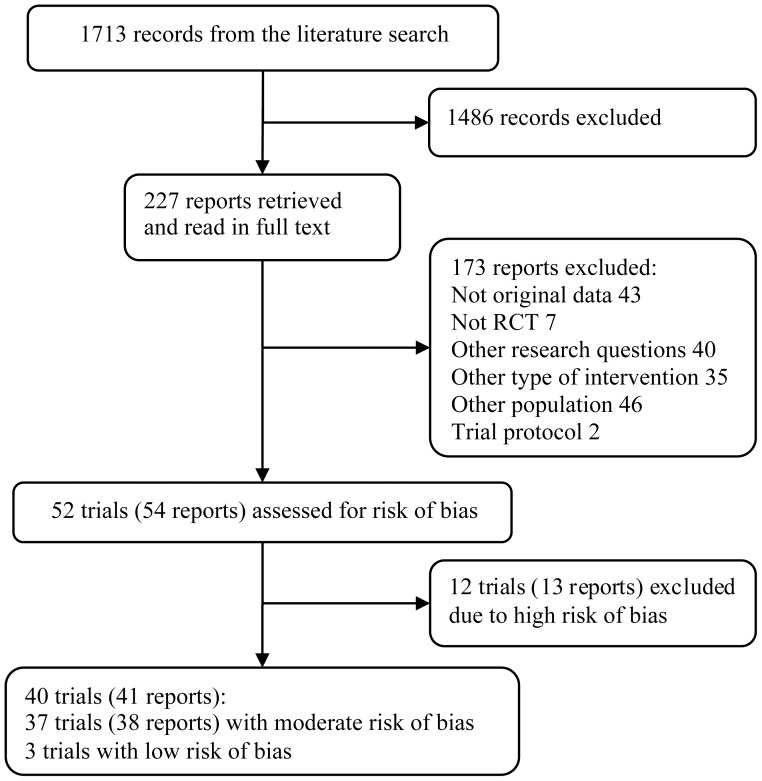
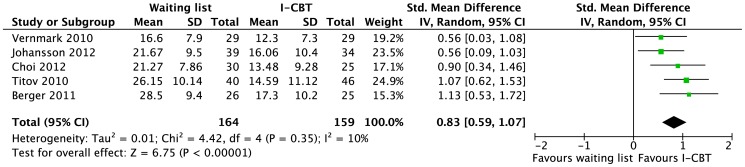
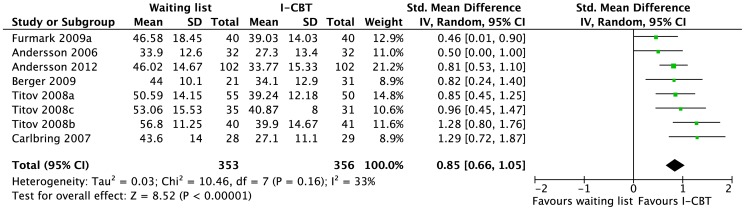
BACKGROUND: Greater access to evidence-based psychological treatments is needed. This review aimed to evaluate whether internet-delivered psychological treatments for mood and anxiety disorders are efficacious, noninferior to established treatments, safe, and cost-effective for children, adolescents and adults. METHODS: We searched the literature for studies published until March 2013. Randomized controlled trials (RCTs) were considered for the assessment of short-term efficacy and safety and were pooled in meta-analyses. Other designs were also considered for long-term effect and cost-effectiveness. Comparisons against established treatments were evaluated for noninferiority. Two reviewers independently assessed the relevant studies for risk of bias. The quality of the evidence was graded using an international grading system. RESULTS: A total of 52 relevant RCTs were identified whereof 12 were excluded due to high risk of bias. Five cost-effectiveness studies were identified and three were excluded due to high risk of bias. The included trials mainly evaluated internet-delivered cognitive behavioral therapy (I-CBT) against a waiting list in adult volunteers and 88% were conducted in Sweden or Australia. One trial involved children. For adults, the quality of evidence was graded as moderate for the short-term efficacy of I-CBT vs. waiting list for mild/moderate depression (d = 0.83; 95% CI 0.59, 1.07) and social phobia (d = 0.85; 95% CI 0.66, 1.05), and moderate for no efficacy of internet-delivered attention bias modification vs. sham treatment for social phobia (d = -0.04; 95% CI -0.24, 0.35). The quality of evidence was graded as low/very low for other disorders, interventions, children/adolescents, noninferiority, adverse events, and cost-effectiveness. CONCLUSIONS: I-CBT is a viable treatment option for adults with depression and some anxiety disorders who request this treatment modality. Important questions remain before broad implementation can be supported. Future research would benefit from prioritizing adapting treatments to children/adolescents and using noninferiority designs with established forms of treatment.
Overview
The claims and statistics of this paper haven’t been checked yet.
Free: it reads the open-access text and checks the first 5 claims that cite a source we can check. Create a free account to check every claim.
Integrity signals
Registry
Cites
Statistics
Figures

Verification
Claims the paper makes
The claims and statistics of this paper haven’t been checked yet.
Free: it reads the open-access text and checks the first 5 claims that cite a source we can check. Create a free account to check every claim.
Claims other papers make about this one
Each is checked against this paper’s own text: does it say what the citing paper says it does?
The source backs part of the claim, not all of it — or backs it for a different population, condition or comparison.
In the citing paper
“The efficacy of CBT-based internet interventions for treating depression in younger and middle-aged adults is well established (10) (11).”
From Harnessing Peer Support in an Online Intervention for Older Adults with Depression (2017) · cites this paper as [11]
Experimental — accuracy not yet measuredThe source backs part of the claim, not all of it — or backs it for a different population, condition or comparison.
In the citing paper
“Meta-analyses and reviews of computer-based psychological treatment for the treatment of MDD, whether delivered over the Internet or as a stand-alone program, confirm efficacy.[144][145][146][147][148][149][150]”
From Canadian Network for Mood and Anxiety Treatments (CANMAT) 2016 Clinical Guidelines for the Management of Adults with Major Depressive Disorder (2016) · cites this paper as [145]
Experimental — accuracy not yet measuredThe source backs part of the claim, not all of it — or backs it for a different population, condition or comparison.
In the citing paper
“The online intervention in both of them proved to be cost-effective regarding the compared treatment (treatment as usual and group CBT).”
From Using a transdiagnostic, psychodynamic online self-help intervention to maintain inpatient psychosomatic treatment effects: Study protocol of a feasibility study (2016) · cites this paper as Arnberg et al., 2014
Experimental — accuracy not yet measuredThe cited source says what the claim attributes to it.
In the citing paper
“However broad economic evaluations in this research context are still scarce.24”
In the citing paper
“provide remote access to effective treatments, for example computerised cognitive behavioural therapy for mental health and somatic problems. 10–14”
From Evaluating Digital Health Interventions (2016) · cites this paper as [10]
1 more claim about this paper
Create a free account to see every claim other papers make about this one.
Self-check
Percentages, sums and reported differences re-computed from the paper’s own numbers.
The self-check needs the paper’s full text.
Citations
Cites
Diagnostic and Statistical Manual of Mental Disorders
Williams, J. B. W., & First, M. (2013) · Encyclopedia of Social Work · doi:10.1093/acrefore/9780199975839.013.104 · Cited by 109,519
Statistical power analysis for the behavioral sciences
(1990) · Computers, Environment and Urban Systems · doi:10.1016/0198-9715(90)90050-4 · Cited by 65,269
Duval, S., & Tweedie, R. (2000) · Biometrics · doi:10.1111/j.0006-341x.2000.00455.x · Cited by 14,099 · cited 1×
“Potential publication bias was assessed for plausibly effective interventions by inspecting funnel plots and by a trim-and-fill procedure [37], which yields an estimate of the effect size after taking bias into account (analyses performed in Comprehensive Meta-Analysis v2, Biostat Inc.”
MethodKessler, R. C., Chiu, W. T., Demler, O., & Walters, E. E. (2005) · Archives of General Psychiatry · doi:10.1001/archpsyc.62.6.617 · Cited by 12,052
GRADE guidelines: 3. Rating the quality of evidence
Balshem, H., Helfand, M., Schünemann, H. J., Oxman, A. D., Kunz, R., Brozek, J., Vist, G. E., Falck-Ytter, Y., Meerpohl, J., & Norris, S. (2011) · Journal of Clinical Epidemiology · doi:10.1016/j.jclinepi.2010.07.015 · Cited by 8,285
Diagnostic and Statistical Manual of Mental Disorders, 5th Edition
(2013) · American Psychiatric Association Publishing eBooks · doi:10.1176/appi.books.9780890425596.893619 · Cited by 4,383
Trivedi, M. H., Rush, A. J., Wisniewski, S. R., Nierenberg, A. A., Warden, D., Ritz, L., Norquist, G., Howland, R. H., Lebowitz, B., McGrath, P. J., et al. (2006) · American Journal of Psychiatry · doi:10.1176/appi.ajp.163.1.28 · Cited by 3,879
(2008) · Cited by 3,790
The size and burden of mental disorders and other disorders of the brain in Europe 2010
Wittchen, H. U., Jacobi, F., Rehm, J., Gustavsson, A., Svensson, M., Jönsson, B., Olesen, J., Allgulander, C., Alonso, J., Faravelli, C., et al. (2011) · European Neuropsychopharmacology · doi:10.1016/j.euroneuro.2011.07.018 · Cited by 3,754 · cited 2×
“Nearly 40% of the population is estimated to be in need of treatment at some time during their life for anxiety or depression [1].”
BackgroundInternational Statistical Classification of Diseases and Related Health Problems
Eisfeld, J. (2014) · TSQ: Transgender Studies Quarterly · doi:10.1215/23289252-2399740 · Cited by 3,570
Research works printed but not linked: 3
- 25. Collaboration TC (2014) Cochrane editorial and publishing policy resource: Conflicts of interest and Cochrane Reviews. Oxford, UK: The Cochrane Collaboration.
- 87. Hedman E, Ljo ´tsson B, Lindefors N (2012) Cognitive behavior therapy via the Internet: a systematic review of applications, clinical efficacy and cost- effectiveness. Expert Rev Pharmacoecon Outcomes Res 12: 745-764. · DOI · Paper page
- 88. Chambless DL, Baker MJ, Baucom DH, Beutler LE, Calhoun KS, et al. (1998) Update on empirically validated therapies, II. Clinical Psychologist 51: 3-16.
Cited by
Items 201–300 of 331
Ramzan, N., Dixey, R., & Morris, A. (2022) · The Cognitive Behaviour Therapist · doi:10.1017/s1754470x22000460 · Cited by 13
Boberg, J., Kaldo, V., Mataix‐Cols, D., Crowley, J. J., Roelstraete, B., Halvorsen, M., Forsell, E., Isacsson, N. H., Sullivan, P. F., Svanborg, C., et al. (2023) · BMJ Open · doi:10.1136/bmjopen-2022-069427 · Cited by 12
Apolinario-Hagen, J. A., & Tasseit, S. (2015) · International Journal of Health Professions · doi:10.1515/ijhp-2015-0010 · Cited by 11
Buntrock, C., Kählke, F., Smit, F., & Ebert, D. D. (2019) · European Journal of Public Health · doi:10.1093/eurpub/ckz022 · Cited by 16
Meiksin, R., Meléndez‐Torres, G. J., Miners, A. H., Falconer, J., Witzel, T. C., Weatherburn, P., & Bonell, C. P. (2022) · Public Health Research · doi:10.3310/brwr6308 · Cited by 12
Weitzel, E. C., Pabst, A., Luppa, M., Kersting, A., König, H. ‐., Löbner, M., & Riedel-Heller, S. G. (2022) · Journal of Affective Disorders · doi:10.1016/j.jad.2022.04.090 · Cited by 14
Köhnen, M., Kriston, L., Härter, M., Dirmaier, J., & Liebherz, S. (2019) · BMJ Open · doi:10.1136/bmjopen-2018-028042 · Cited by 10
“However broad economic evaluations in this research context are still scarce.(24) In summary, TBIs hold the chance to enhance geographic and time-related flexibility, reduce waiting times, stigmatisation and costs.”
BackgroundMethodInfluentialLobban, F. A., Appleton, V., Appelbe, D. E., Barraclough, J., Bowland, J., Fisher, N. R., Foster, S., Johnson, S., Lewis, E., Mateus, C., et al. (2017) · Implementation Science · doi:10.1186/s13012-017-0687-4 · Cited by 15
Langergaard, A., Mathiasen, K., Søndergaard, J., Sørensen, S. S., Laursen, S. L., Xylander, A. A. P., Lichtenstein, M. B., & Ehlers, L. H. (2022) · Internet Interventions · doi:10.1016/j.invent.2022.100513 · Cited by 10
Guided Internet-Delivered Treatment for Depression: Scoping Review
Børtveit, L., Dechsling, A., Sütterlin, S., Nordgreen, T., & Nordahl‐Hansen, A. (2022) · JMIR Mental Health · doi:10.2196/37342 · Cited by 14
Computerised cognitive behaviour therapy for major depression: a reply to the REEACT trial
Andrews, G., Hobbs, M. J., & Newby, J. M. (2016) · Evidence Based Mental Health · doi:10.1136/eb-2015-102293 · Cited by 10
Designing an Internet Intervention for Emerging Adults Who Experience Troubled Relationships
Draucker, C. B., Martsolf, D. S., Crane, S. M., Romero, L., & Stafford, A. M. (2017) · Archives of Psychiatric Nursing · doi:10.1016/j.apnu.2017.02.002 · Cited by 10
Distance supervision in the Aiglé Foundation's Latin American Psychotherapy Training Program
Fernández‐Álvarez, H., Grazioso, M. D. P., & Kirszman, D. (2018) · Journal of Clinical Psychology · doi:10.1002/jclp.22721 · Cited by 12
Kouvonen, A. M., Mänty, M., Harkko, J., Sumanen, H., Konttinen, H. M., Lahti, J., Pietiläinen, O. P. H., Blomgren, J., Tuovinen, E., Ketonen, E.-L., et al. (2019) · BMJ Open · doi:10.1136/bmjopen-2019-032119 · Cited by 9
Campion, J. (2018) · Springer eBooks · doi:10.1007/978-3-319-70554-5_31 · Cited by 10
Computer-Assisted Cognitive-Behavior Therapy in Medical Care Settings
Wright, J. H., McCray, L. W., Eells, T. D., Gopalraj, R. K., & Bishop, L. B. (2018) · Current Psychiatry Reports · doi:10.1007/s11920-018-0947-2 · Cited by 10
Yu, H.-Z., Fu, T., Zhou, J.-N., Ping, K., & Wang, Y. (2021) · Frontiers in Psychiatry · doi:10.3389/fpsyt.2021.629904 · Cited by 10
Depression in cardiovascular disease: From awareness to action
Huffman, J. C., & Celano, C. M. (2015) · Trends in Cardiovascular Medicine · doi:10.1016/j.tcm.2015.02.007 · Cited by 12
Newton, A. S., Wozney, L., Bagnell, A. L., Fitzpatrick, E. A., Curtis, S. J., Jabbour, M., Johnson, D. W., Rosychuk, R. J., Young, M., Öhinmaa, A., et al. (2016) · JMIR Research Protocols · doi:10.2196/resprot.4428 · Cited by 8
Andersson, G., Nordgren, L. B., Buhrman, M., & Carlbring, P. (2015) · Revista de Psicopatología y Psicología Clínica · doi:10.5944/rppc.vol.19.num.3.2014.13903 · Cited by 10
Welzel, F. D., Löbner, M., Quittschalle, J., Pabst, A., Luppa, M., Stein, J., & Riedel-Heller, S. G. (2021) · Internet Interventions · doi:10.1016/j.invent.2021.100451 · Cited by 17
Soler, C. L., Vicente-Escudero, J. L., López-López, J. A., Alcántara-López, M., Martínez, A. C., Sáez, M. C., Fernández, V., & Sánchez‐Meca, J. (2024) · International Journal of Clinical and Health Psychology · doi:10.1016/j.ijchp.2024.100487 · Cited by 9
Ma, R., Zhang, Q., Zhang, C., & Xu, W. (2024) · BMC Psychology · doi:10.1186/s40359-024-01908-1 · Cited by 16
Najafi, T. F., Dashti, S., Bolghanabadi, N., Rezvanifard, M., Andaroon, N., Abadibavil, D., Golkhatmy, F. T., & Bahri, N. (2021) · Archives of Psychiatric Nursing · doi:10.1016/j.apnu.2021.03.009 · Cited by 10
Development of Chatbot Psychologist Applying Natural Language Understanding Techniques
Narynov, S., Zhumanov, Z., Gumar, A., Khassanova, M., & Omarov, B. S. (2021) · International Conference on Control, Automation and Systems (ICCAS) · doi:10.23919/iccas52745.2021.9649825 · Cited by 12
Blankers, M., Salemink, E., & Wiers, R. W. H. J. (2015) · Springer eBooks · doi:10.1007/978-3-319-20852-7_10 · Cited by 11
Cost Effectiveness of Digital Interventions for Generalised Anxiety Disorder: A Model-Based Analysis
Janković, D., Saramago, P., Gega, L., Marshall, D. C., Wright, K. E., Hafidh, M., Churchill, R. C., & Bojke, L. (2021) · PharmacoEconomics - Open · doi:10.1007/s41669-021-00318-y · Cited by 11
Generalized Anxiety Disorder in Children and Adolescents: An Update
Imran, N., Haider, I. I., & Azeem, M. W. (2017) · Psychiatric Annals · doi:10.3928/00485713-20170913-01 · Cited by 10
Lobban, F. A., Appelbe, D., Appleton, V., Aref-Adib, G., Barraclough, J., Billsborough, J., Fisher, N. R., Foster, S., Gill, B., Glentworth, D., et al. (2020) · Health Services and Delivery Research · doi:10.3310/hsdr08370 · Cited by 7
Jones, S. H., Atanasova, D., Dodd, S. R., Flowers, S., Rosala‐Hallas, A., Robinson, H., Semino, E., & Lobban, F. A. (2022) · JMIR Mental Health · doi:10.2196/35837 · Cited by 11
Increasing Well-Being and Mental Health Through Cutting-Edge Technology and Artificial Intelligence
Podina, I. R., & Caculidis-Tudor, D. (2023) · Integrated science · doi:10.1007/978-3-031-15959-6_17 · Cited by 8
El-Magd, R. M. A., Obuobi-Donkor, G., Adu, M. K., Lachowski, C., Duddumpudi, S., Lawal, M. A., Sapara, A. O., Achor, M., Kouzehgaran, M., Hegde, R., et al. (2020) · JMIR Research Protocols · doi:10.2196/18843 · Cited by 6
Gotlib, I. H., Borchers, L. R., Chahal, R., Gifuni, A. J., Teresi, G. I., & Ho, T. C. (2020) · PsyArXiv (OSF Preprints) · doi:10.31234/osf.io/4dkaf · Cited by 7
Digital Confessions: Exploring the Role of Chatbots in Self-Disclosure
van der Lee, C., Croes, E. A. J., de Wit, J., & Antheunis, M. L. (2019) · Research portal (Tilburg University) · Cited by 5
Zarbo, C., Brugnera, A., Cipresso, P., Brignoli, O., Cricelli, C. A., Rabboni, M., Bondi, E., & Compare, A. (2017) · Frontiers in Psychology · doi:10.3389/fpsyg.2017.00118 · Cited by 5
Hillier, L. (2018) · Lancaster University · doi:10.17635/lancaster/thesis/406 · Cited by 5
Vicente-Escudero, J. L. (2025) · Journal of Technology in Behavioral Science · doi:10.1007/s41347-025-00488-0 · Cited by 5
Tarp, K., Nielsen, S. L., Holmberg, T. T., Dalsgaard, C., Borkner, S., Skaarnes, H., Jensen, E. S., Piera-Jiménez, J., Vis, C., & Mathiasen, K. (2023) · Frontiers in Psychiatry · doi:10.3389/fpsyt.2023.1104301 · Cited by 4
The Internet and CBT: A New Clinical Application of an Effective Therapy
Gratzer, D., Khalid-Khan, F., & Balasingham, S. (2018) · InTech eBooks · doi:10.5772/intechopen.72146 · Cited by 7
Apolinário-Hagen, J., Fritsche, L., Albers, L., & Salewski, C. (2018) · Springer eBooks · doi:10.1007/978-981-10-4358-1_21 · Cited by 4
McCashin, D., Coyle, D., & O’Reilly, G. (2020) · Internet Interventions · doi:10.1016/j.invent.2020.100348 · Cited by 4
Elvira, A. C., Santacreu, M., Giráldez, C. A. M., & Shih, P. (2021) · Clinical Psychology & Psychotherapy · doi:10.1002/cpp.2571 · Cited by 4
Dahmen, A., Keller, F. M., Derksen, C., Kötting, L., & Lippke, S. (2021) · PPmP - Psychotherapie · Psychosomatik · Medizinische Psychologie · doi:10.1055/a-1503-5548 · Cited by 8
Dahmen, A., Gao, L., Keller, F. M., Lehr, D., Becker, P., & Lippke, S. (2022) · Die Rehabilitation · doi:10.1055/a-1872-9727 · Cited by 5
Cost-Effectiveness of Interventions for Anxiety and Depressive Disorders
Mihalopoulos, C., & Chatterton, M. L. (2017) · Springer eBooks · doi:10.1007/978-3-319-55266-8_18 · Cited by 4
Maximizing the impact of E-Therapy and Serious Gaming: Time for a paradigm shift
Fleming, T. M., Beurs, D. P. D., Khazaal, Y., Gaggioli, A., Riva, G., Botella, C., Baños, R., Aschieri, F., Bavin, L. M., Kleiboer, A. M., et al. (2020) · doi:10.26686/wgtn.12331280.v2 · Cited by 4
Ferretti, M., Lowery Walker, K., Bires, J., & BrintzenhofeSzoc, K. (2024) · Journal of Psychosocial Oncology · doi:10.1080/07347332.2023.2238263 · Cited by 4
Conversational skills at work: Teaching small talk via telehealth to individuals with disabilities
Lu, W., Oursler, J. D., Herrick, S. J., Gao, N., Beninato, J., Minor, T. D., Eissenstat, S. J., Harosh, A. S., Wang, K., Diviney, J., et al. (2023) · Journal of Employment Counseling · doi:10.1002/joec.12217 · Cited by 3
Baumeister, H., Lin, J., & Ebert, D. D. (2017) · Bundesgesundheitsblatt - Gesundheitsforschung - Gesundheitsschutz · Cited by 3
Fehm, L., & Knappe, S. (2020) · Springer eBooks · doi:10.1007/978-3-662-61814-1_49 · Cited by 4
Bjornstad, G. J., Sonthalia, S., Rouse, B., Freeman, L., Hessami, N., Dunne, J. H., & Axford, N. (2024) · Campbell Systematic Reviews · doi:10.1002/cl2.1376 · Cited by 8
Nur auf Einladung? Wie die Rekrutierungsstrategie beeinflusst, wer online behandelt wird
Zagorscak, P., Bohn, J., Heinrich, M., Kampisiou, C., & Knaevelsrud, C. (2019) · Verhaltenstherapie · doi:10.1159/000502018 · Cited by 8
Digital Mental Health Interventions: Impact and Considerations
Shelton, C. R., Kotsiou, A., & Hetzel‐Riggin, M. D. (2021) · Advances in human and social aspects of technology book series · doi:10.4018/978-1-7998-6453-0.ch008 · Cited by 4
Apolinário-Hagen, J. (2017) · Palgrave Macmillan UK eBooks · doi:10.1057/978-1-349-95173-4_12 · Cited by 5
Rozental, A. (2016) · DiVA (Stockholm University) · Cited by 6
Vernmark, K. (2017) · doi:10.3384/diss.diva-142389 · Cited by 7
Salois, J. R., Heinle, K., Slovarp, L. J., Jetté, M. E., Manchaiah, V. K. C., Vlaescu, G., & Andersson, G. (2025) · American Journal of Speech-Language Pathology · doi:10.1044/2025_ajslp-25-00124 · Cited by 5
Sahab, S., Haqbeen, J. A., Sapkota, D., & Itō, T. (2025) · IEICE Transactions on Information and Systems · doi:10.1587/transinf.2025dkp0015 · Cited by 6
Greene, E. A., Serpico, E. J., Legault, G. L., & Williams, S. G. (2025) · Current Psychiatry Reports · doi:10.1007/s11920-025-01651-3 · Cited by 6
Dobrean, A., Poetar, C.-R., Florean, I. S., Balan, R., & Andersson, G. (2026) · npj Digital Medicine · doi:10.1038/s41746-026-02341-x · Cited by 2
Friend or Therapist? A Systematic Literature Review on Chatbots and Mental Health in Young People
Hashmati, N., Skoog, T., Obaid, M., & Eriksson, T. (2026) · doi:10.1145/3780045.3780052 · Cited by 3
Klein, J. P., Berger, T., Hautzinger, M., Lutz, W., Rose, M., Späth, C., Schröder, J., Hohagen, F., & Moritz, S. (2019) · Fortschritte der Neurologie · Psychiatrie · doi:10.1055/a-0849-9838 · Cited by 5
The Practice-Based Implementation (PBI) Network: Technology (Tech) into Care pilot
Pratt, K. M., Branch, L. Z., & Houston, J. (2019) · Translational Behavioral Medicine · doi:10.1093/tbm/ibz174 · Cited by 3
Technological Interventions for Anxiety Disorders
Baños, R., Vara, M. D., Mira, A., García‐Palacios, A., & Botella, C. (2020) · Elsevier eBooks · doi:10.1016/b978-0-12-818697-8.00008-x · Cited by 2
Franco, P., Olhaberry, M., Muzard, A., Lara, M. A., & Cuijpers, P. J. (2022) · Depression and personality · doi:10.1007/978-3-031-13029-8_8 · Cited by 2
Blankers, M., Salemink, E., & Wiers, R. W. H. J. (2024) · Springer eBooks · doi:10.1007/978-3-031-59936-1_14 · Cited by 3
Girard, M. F., Nubukpo, P., & Malauzat, D. (2016) · Journal of Mental Health · doi:10.3109/09638237.2016.1167846 · Cited by 2
Bjornstad, G. J., Sonthalia, S., Rouse, B., Timmons, L., Whybra, L., & Axford, N. (2020) · Campbell Systematic Reviews · doi:10.1002/cl2.1073 · Cited by 2
Treatment of Psychosomatic Symptoms
Baloh, R. W. (2020) · Springer eBooks · doi:10.1007/978-3-030-59181-6_10 · Cited by 2
Almeida, A. M. P., Figueiredo‐Braga, M., & Almeida, H. (2021) · International Journal of E-Services and Mobile Applications · doi:10.4018/ijesma.2021040105 · Cited by 2
Schure, M. B., McCrory, B., Greist, J. H., & Weissman, R. S. (2022) · Discover Psychology · doi:10.1007/s44202-022-00030-w · Cited by 2
Nobis, S., Heber, E., & Lehr, D. (2017) · Springer eBooks · doi:10.1007/978-3-658-14550-7_36 · Cited by 3
Only on Invitation? How the Recruitment Strategy Determines Who Is Treated Online
Zagorscak, P., Bohn, J., Heinrich, M., Kampisiou, C., & Knaevelsrud, C. (2019) · Verhaltenstherapie · doi:10.1159/000503407 · Cited by 3
Psychological perspectives on fear of birth : heterogeneity, mechanisms and treatment
Rondung, E. (2018) · Publications (Mid Sweden University) · Cited by 2
Digital Patient Experience: Umbrella Systematic Review (Preprint)Preprint
Wang, T., Giunti, G., Melles, M., & Goossens, R. (2022) · doi:10.2196/preprints.37952 · Cited by 2
Noack, R., Eckelt, T., Scharoba, J., Hoferichter, E., Jacobi, F., Weidner, K., & Hoyer, J. (2020) · Verhaltenstherapie · doi:10.1159/000503871 · Cited by 1
Mathiasen, K., Andersen, T. E., Lichtenstein, M. B., Riper, H., Kleiboer, A., & Roessler, K. K. (2022) · doi:10.2196/preprints.36577 · Cited by 2
The Stress Gym: An Online Intervention to Improve Stress and Depressive Symptoms in Adults
Hinkle, J. F. (2015) · Issues in Mental Health Nursing · doi:10.3109/01612840.2015.1074768 · Cited by 1
Baumeister, H., Terhorst, Y., & Lin, J. (2016) · Springer eBooks · doi:10.1007/978-3-319-32480-7_22 · Cited by 1
Why Do Some Psychotherapy Clients Get Better Than Others?
Eells, T. D. (2017) · Pragmatic Case Studies in Psychotherapy · doi:10.14713/pcsp.v13i3.2013 · Cited by 1
David, D., Șoflău, R., & Matu, S. A. (2018) · Springer eBooks · doi:10.1007/978-3-319-74067-6_10 · Cited by 1
Tayama, J., Shimazu, A., Ogawa, S., & Naoki, N. (2021) · Journal of Occupational Health · doi:10.1002/1348-9585.12229 · Cited by 2
Weser, V. U., Opara, I., Budge, M., Duncan, L. R., Fernandes, C.-S. F., Hussett-Richardson, S., Sands, B. E., & Hieftje, K. D. (2023) · JMIR Research Protocols · doi:10.2196/43666 · Cited by 2
Welzel, F. D., Pabst, A., Stein, J., Bleck, F., Riedel-Heller, S. G., & Löbner, M. (2025) · Journal of Medical Internet Research · doi:10.2196/68662 · Cited by 2
A review on digital mental health applications types, PsycappsE and eQuoo
Litvin, S. (2019) · Neurology and Neurosurgery · doi:10.15761/nns.1000119 · Cited by 1
The Use of Mobile Phones for Frontline Health-Care Workers to Manage Depression
Musyimi, C. W., Lai, Y., Mutiso, V., & Ndetei, D. M. (2020) · Springer eBooks · doi:10.1007/978-3-319-70134-9_12-1 · Cited by 1
Cardiovascular Disease and Mental Health in Men
Thompson, D. R., & Ski, C. F. (2021) · Cambridge University Press eBooks · doi:10.1017/9781108646765.021 · Cited by 2
Zakharchuk, M., & Basyuk, T. (2021) · Vìsnik Nacìonalʹnogo unìversitetu Lʹvìvsʹka polìtehnìka Serìâ Ìnformacìjnì sistemi ta merežì · doi:10.23939/sisn2021.09.044 · Cited by 1
The Impact of Relationship Separation on Suicidality and Mental Health
Kazan, D. (2018) · ANU Open Research (Australian National University) · doi:10.25911/5d67b7babc65d · Cited by 4
Kortz, L. (2017) · Scholars Archive - University at Albany (University at Albany, State University of New York) · doi:10.54014/dkvq-a03j · Cited by 2
eHealth cognitieve gedragstherapie voor patiënten met chronische somatische aandoeningen
van Beugen, S., van Middendorp, H., van der Vaart, R., Ferwerda, M., & Evers, A. W. M. (2015) · TSG - Tijdschrift voor gezondheidswetenschappen · doi:10.1007/s12508-015-0030-x · Cited by 1
van Straten, A., Blom, K., Lancee, J., & Kaldo, V. (2016) · Springer eBooks · doi:10.1007/978-3-319-06083-5_8 · Cited by 1
Imamura, K., Kawakami, N., & Shimazu, A. (2016) · Springer eBooks · doi:10.1007/978-3-319-44400-0_14
Schwartz, M. D. (2017) · Journal of General Internal Medicine · doi:10.1007/s11606-017-4120-0
Neue Medien in der psychotherapeutischen und psychosomatischen Versorgung
Bauer, S., & Kordy, H. (2016) · Elsevier eBooks · doi:10.1016/b978-3-437-21833-0.00041-3
A Framework for Designing and Evaluating Internet Interventions to Improve Tinnitus Care
Beukes, E. W., Andersson, G., Manchaiah, V. K. C., Allen, P. M., & Baguley, D. (2018) · Advances in medical technologies and clinical practice book series · doi:10.4018/978-1-5225-8191-8.ch006
Robles, V. A. G. (2019) · Tesis Doctorals en Xarxa (Consorci de Serveis Universitaris de Catalunya) · doi:10.6035/14109.2019.233592
Prescribing where there is a comorbid presentation of anxiety and depression: a case study
Young, A. (2020) · Journal of Prescribing Practice · doi:10.12968/jprp.2020.2.8.442
Physical and Cognitive Therapy Enhancement Using Game-Based Learning
Ramić-Brkić, B., Ćosović, M., & Begić, E. (2020) · Lecture notes in networks and systems · doi:10.1007/978-3-030-54765-3_24 · Cited by 2
Metadata
- Authors
- Arnberg, F. K., Linton, S. J., Hultcrantz, M., Heintz, E., & Jonsson, U.
- Affiliations
- Uppsala University (SE)
- Örebro University (SE)
- SBU - Swedish Agency for Health Technology Assessment and Assessment of Social Services (SE)
- Linköping University (SE)
- Karolinska Institutet (SE)
- Corresponding author
- Arnberg, Filip K.
- Venue
- PLoS ONE
- Publisher
- Public Library of Science (PLoS)
- Published
- 2014-05-20
- Volume
- 9
- Issue
- 5
- Pages
- e98118
- ISSN
- 1932-6203 (ISSN-L)
- PMC
- PMC4028301
- OpenAlex
- W2113690422
- Semantic Scholar
- 4581e3daba74bcfa3954d2d6f9df0a958154e06d
- Cited by
- 330
- References
- 101
- Citations by year
- 2026: 3 · 2025: 6 · 2024: 12 · 2023: 11 · 2022: 29 · 2021: 41 · 2020: 39 · 2019: 28 · 2018: 43 · 2017: 51 · 2016: 42 · 2015: 21 · 2014: 4
- FWCI
- 4.76
- Type
- journal article
- Language
- en
- Open access
- gold
- doi.org
- Locations
- PLoS ONE (publishedVersion, cc-by)
- Europe PMC (PubMed Central) (publishedVersion, other-oa)
- PubMed Central (publishedVersion, cc-by)
- PubMed (publishedVersion)
- DiVA (Linkoping University) (submittedVersion, other-oa)
- Uppsala University Publications (Uppsala University) (submittedVersion, other-oa)
- RePEc: Research Papers in Economics (submittedVersion)
- DOAJ (DOAJ: Directory of Open Access Journals) (submittedVersion, cc-by-sa)
- Figshare (submittedVersion, cc-by)
- Topics
- Social Sciences › Psychology › Applied Psychology › Digital Mental Health Interventions
- Social Sciences › Psychology › Experimental and Cognitive Psychology › Anxiety, Depression, Psychometrics, Treatment, Cognitive Processes
- Health Sciences › Medicine › Public Health, Environmental and Occupational Health › Telemedicine and Telehealth Implementation
- Keywords
- mood disorders, anxiety disorders, internet-based cognitive behavioral therapy, depression, social anxiety disorder, attentional bias modification, treatment efficacy, treatment safety, cost-effectiveness, non-inferiority, children and adolescents, waiting list comparison
- MeSH terms
- Adolescent, Adult, Anxiety Disorders, Child, Child, Preschool, Cost-Benefit Analysis, Humans, Psychotherapy, Time Factors, Cognitive Behavioral Therapy, Randomized Controlled Trials as Topic, Treatment Outcome, Publication Bias, Mood Disorders, Internet
About these checks
Registry, retraction, Cites and statistics results are computed, not judged, with one exception: a printed reference that no index lists is read once by a model before it counts as a citation error. Claims are extracted by a model and kept only when their quote appears verbatim in the text; each cited source is then checked, with a model’s help, for whether it says what the claim relies on. Those verdicts can be wrong — read the claim’s quote and the cited source before relying on one.
Statistics and arithmetic are recomputed, not judged.
Confidence bands are shown only for fields calibrated on our annotated test set. None is calibrated yet, so no band is shown.
What counts as a claim ›How we measure confidence ›How we check this ›
Are you an author, or do you see a problem with this page? Request a review
Data sources
Bibliographic data: Semantic Scholar, OpenAlex, Crossref.
Contains information from the Semantic Scholar Academic Graph Datasets, made available under the ODC Attribution License (ODC-BY 1.0).
Semantic Scholar’s data is described in: Kinney, R., et al. (2023). The Semantic Scholar Open Data Platform. arXiv:2301.10140.
