

Internet-Delivered Psychological Treatments for Mood and Anxiety Disorders: A Systematic Review of Their Efficacy, Safety, and Cost-Effectiveness
Open accessThe DOI matches its Crossref record; 101 of the 101 references it cites were found in a registry or an index.
Abstract
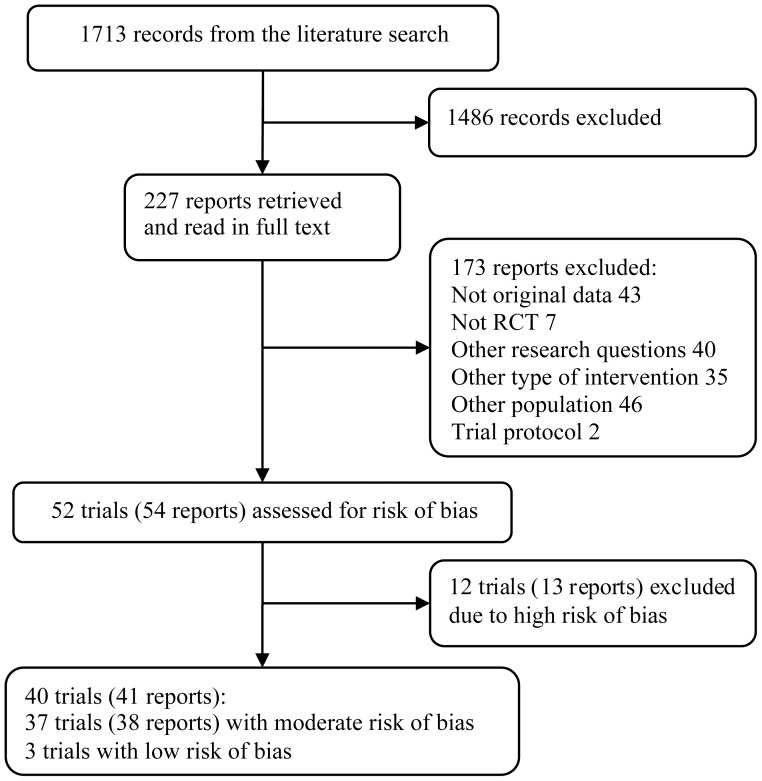
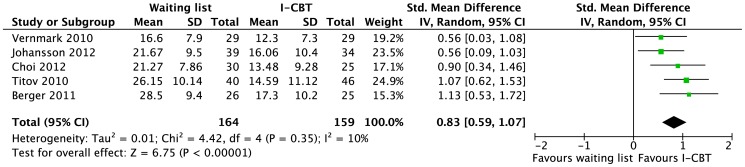
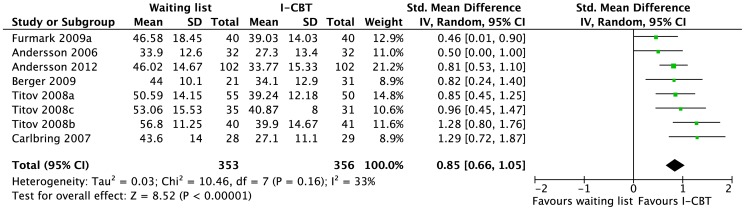
BACKGROUND: Greater access to evidence-based psychological treatments is needed. This review aimed to evaluate whether internet-delivered psychological treatments for mood and anxiety disorders are efficacious, noninferior to established treatments, safe, and cost-effective for children, adolescents and adults. METHODS: We searched the literature for studies published until March 2013. Randomized controlled trials (RCTs) were considered for the assessment of short-term efficacy and safety and were pooled in meta-analyses. Other designs were also considered for long-term effect and cost-effectiveness. Comparisons against established treatments were evaluated for noninferiority. Two reviewers independently assessed the relevant studies for risk of bias. The quality of the evidence was graded using an international grading system. RESULTS: A total of 52 relevant RCTs were identified whereof 12 were excluded due to high risk of bias. Five cost-effectiveness studies were identified and three were excluded due to high risk of bias. The included trials mainly evaluated internet-delivered cognitive behavioral therapy (I-CBT) against a waiting list in adult volunteers and 88% were conducted in Sweden or Australia. One trial involved children. For adults, the quality of evidence was graded as moderate for the short-term efficacy of I-CBT vs. waiting list for mild/moderate depression (d = 0.83; 95% CI 0.59, 1.07) and social phobia (d = 0.85; 95% CI 0.66, 1.05), and moderate for no efficacy of internet-delivered attention bias modification vs. sham treatment for social phobia (d = -0.04; 95% CI -0.24, 0.35). The quality of evidence was graded as low/very low for other disorders, interventions, children/adolescents, noninferiority, adverse events, and cost-effectiveness. CONCLUSIONS: I-CBT is a viable treatment option for adults with depression and some anxiety disorders who request this treatment modality. Important questions remain before broad implementation can be supported. Future research would benefit from prioritizing adapting treatments to children/adolescents and using noninferiority designs with established forms of treatment.
Overview
The claims and statistics of this paper haven’t been checked yet.
Free: it reads the open-access text and checks the first 5 claims that cite a source we can check. Create a free account to check every claim.
Integrity signals
Registry
Cites
Statistics
Figures

Verification
Claims the paper makes
The claims and statistics of this paper haven’t been checked yet.
Free: it reads the open-access text and checks the first 5 claims that cite a source we can check. Create a free account to check every claim.
Claims other papers make about this one
Each is checked against this paper’s own text: does it say what the citing paper says it does?
The source backs part of the claim, not all of it — or backs it for a different population, condition or comparison.
In the citing paper
“The efficacy of CBT-based internet interventions for treating depression in younger and middle-aged adults is well established (10) (11).”
From Harnessing Peer Support in an Online Intervention for Older Adults with Depression (2017) · cites this paper as [11]
Experimental — accuracy not yet measuredThe source backs part of the claim, not all of it — or backs it for a different population, condition or comparison.
In the citing paper
“Meta-analyses and reviews of computer-based psychological treatment for the treatment of MDD, whether delivered over the Internet or as a stand-alone program, confirm efficacy.[144][145][146][147][148][149][150]”
From Canadian Network for Mood and Anxiety Treatments (CANMAT) 2016 Clinical Guidelines for the Management of Adults with Major Depressive Disorder (2016) · cites this paper as [145]
Experimental — accuracy not yet measuredThe source backs part of the claim, not all of it — or backs it for a different population, condition or comparison.
In the citing paper
“The online intervention in both of them proved to be cost-effective regarding the compared treatment (treatment as usual and group CBT).”
From Using a transdiagnostic, psychodynamic online self-help intervention to maintain inpatient psychosomatic treatment effects: Study protocol of a feasibility study (2016) · cites this paper as Arnberg et al., 2014
Experimental — accuracy not yet measuredThe cited source says what the claim attributes to it.
In the citing paper
“However broad economic evaluations in this research context are still scarce.24”
In the citing paper
“provide remote access to effective treatments, for example computerised cognitive behavioural therapy for mental health and somatic problems. 10–14”
From Evaluating Digital Health Interventions (2016) · cites this paper as [10]
1 more claim about this paper
Create a free account to see every claim other papers make about this one.
Self-check
Percentages, sums and reported differences re-computed from the paper’s own numbers.
The self-check needs the paper’s full text.
Citations
Cites
Diagnostic and Statistical Manual of Mental Disorders
Williams, J. B. W., & First, M. (2013) · Encyclopedia of Social Work · doi:10.1093/acrefore/9780199975839.013.104 · Cited by 109,519
Statistical power analysis for the behavioral sciences
(1990) · Computers, Environment and Urban Systems · doi:10.1016/0198-9715(90)90050-4 · Cited by 65,269
Duval, S., & Tweedie, R. (2000) · Biometrics · doi:10.1111/j.0006-341x.2000.00455.x · Cited by 14,099 · cited 1×
“Potential publication bias was assessed for plausibly effective interventions by inspecting funnel plots and by a trim-and-fill procedure [37], which yields an estimate of the effect size after taking bias into account (analyses performed in Comprehensive Meta-Analysis v2, Biostat Inc.”
MethodKessler, R. C., Chiu, W. T., Demler, O., & Walters, E. E. (2005) · Archives of General Psychiatry · doi:10.1001/archpsyc.62.6.617 · Cited by 12,052
GRADE guidelines: 3. Rating the quality of evidence
Balshem, H., Helfand, M., Schünemann, H. J., Oxman, A. D., Kunz, R., Brozek, J., Vist, G. E., Falck-Ytter, Y., Meerpohl, J., & Norris, S. (2011) · Journal of Clinical Epidemiology · doi:10.1016/j.jclinepi.2010.07.015 · Cited by 8,285
Diagnostic and Statistical Manual of Mental Disorders, 5th Edition
(2013) · American Psychiatric Association Publishing eBooks · doi:10.1176/appi.books.9780890425596.893619 · Cited by 4,383
Trivedi, M. H., Rush, A. J., Wisniewski, S. R., Nierenberg, A. A., Warden, D., Ritz, L., Norquist, G., Howland, R. H., Lebowitz, B., McGrath, P. J., et al. (2006) · American Journal of Psychiatry · doi:10.1176/appi.ajp.163.1.28 · Cited by 3,879
(2008) · Cited by 3,790
The size and burden of mental disorders and other disorders of the brain in Europe 2010
Wittchen, H. U., Jacobi, F., Rehm, J., Gustavsson, A., Svensson, M., Jönsson, B., Olesen, J., Allgulander, C., Alonso, J., Faravelli, C., et al. (2011) · European Neuropsychopharmacology · doi:10.1016/j.euroneuro.2011.07.018 · Cited by 3,754 · cited 2×
“Nearly 40% of the population is estimated to be in need of treatment at some time during their life for anxiety or depression [1].”
BackgroundInternational Statistical Classification of Diseases and Related Health Problems
Eisfeld, J. (2014) · TSQ: Transgender Studies Quarterly · doi:10.1215/23289252-2399740 · Cited by 3,570
Research works printed but not linked: 3
- 25. Collaboration TC (2014) Cochrane editorial and publishing policy resource: Conflicts of interest and Cochrane Reviews. Oxford, UK: The Cochrane Collaboration.
- 87. Hedman E, Ljo ´tsson B, Lindefors N (2012) Cognitive behavior therapy via the Internet: a systematic review of applications, clinical efficacy and cost- effectiveness. Expert Rev Pharmacoecon Outcomes Res 12: 745-764. · DOI · Paper page
- 88. Chambless DL, Baker MJ, Baucom DH, Beutler LE, Calhoun KS, et al. (1998) Update on empirically validated therapies, II. Clinical Psychologist 51: 3-16.
Cited by
Fitzpatrick, K. K., Darcy, A., & Vierhile, M. (2017) · JMIR Mental Health · doi:10.2196/mental.7785 · Cited by 2,730
“One systematic review of 5464 abstracts identified just 5 apps that had supporting evidence from randomized controlled trials, though, as of January 2014, none of them were available commercially [13].”
BackgroundCarlbring, P., Andersson, G., Cuijpers, P., Riper, H., & Hedman-Lagerlöf, E. (2018) · Cognitive Behaviour Therapy · doi:10.1080/16506073.2017.1401115 · Cited by 1,232
Evaluating Digital Health Interventions
Murray, E., Hekler, E. B., Andersson, G., Collins, L. M., Doherty, A., Hollis, C., Rivera, D. E., West, R., & Wyatt, J. C. (2016) · American Journal of Preventive Medicine · doi:10.1016/j.amepre.2016.06.008 · Cited by 847
Parikh, S. V., Quilty, L. C., Ravitz, P., Rosenbluth, M., Pavlova, B., Grigoriadis, S., Velyvis, V., Kennedy, S. H., Lam, R. W., MacQueen, G. M., et al. (2016) · The Canadian Journal of Psychiatry · doi:10.1177/0706743716659418 · Cited by 562
Eccleston, C., Blyth, F. M., Dear, B. F., Fisher, E. A., Keefe, F. J., Lynch, M. E., Palermo, T. M., Reid, M. C., & Williams, A. C. D. C. (2020) · Pain · doi:10.1097/j.pain.0000000000001885 · Cited by 480
Depression in the Primary Care Setting
Park, L. T., & Zarate, C. A. (2019) · New England Journal of Medicine · doi:10.1056/nejmcp1712493 · Cited by 458
Digital interventions for the treatment of depression: a meta-analytic review
Moshe, I., Terhorst, Y., Philippi, P., Domhardt, M., Cuijpers, P., Cristea, I., Pulkki-Råback, L., Baumeister, H., & Sander, L. B. (2021) · Psychological Bulletin · doi:10.1037/bul0000334 · Cited by 390
Andersson, G., Carlbring, P., Titov, N., & Lindefors, N. (2019) · The Canadian Journal of Psychiatry · doi:10.1177/0706743719839381 · Cited by 324
Economic evaluations of Internet interventions for mental health: a systematic review
Donker, T., Blankers, M., Hedman, E., Ljótsson, B., Petrie, K., & Christensen, H. (2015) · Psychological Medicine · doi:10.1017/s0033291715001427 · Cited by 316
IntelliCare: An Eclectic, Skills-Based App Suite for the Treatment of Depression and Anxiety
Mohr, D. C., Tomasino, K. N., Lattie, E. G., Palac, H. L., Kwasny, M. J., Weingardt, K., Karr, C. J., Kaiser, S. M., Rossom, R. C., Bardsley, L. R., et al. (2017) · Journal of Medical Internet Research · doi:10.2196/jmir.6645 · Cited by 301
Kretzschmar, K., Tyroll, H., Pavarini, G., Manzini, A., Singh, I., & NeurOx Young People’s Advisory Group (2019) · Biomedical Informatics Insights · doi:10.1177/1178222619829083 · Cited by 270
“7 Besides using evidence-based techniques and testing the efficacy of the apps, we find it important that the platform informs users about: (1) the theoretical approach that guides the service, be it cognitive behavioural, humanistic, psychodynamic, or others; (2) whether the bot has been empirically tested; (3) what…”
MethodRogers, M. A., Lemmen, K., Kramer, R., Mann, J., & Chopra, V. (2017) · Journal of Medical Internet Research · doi:10.2196/jmir.7111 · Cited by 259
“There were 71 meta-analyses of Internet-based interventions that met eligibility criteria and were included in this study [7-76].”
Fisher, E., Law, E., Palermo, T. M., & Eccleston, C. (2015) · Cochrane Database of Systematic Reviews · doi:10.1002/14651858.cd011118.pub2 · Cited by 244
Maximizing the Impact of e-Therapy and Serious Gaming: Time for a Paradigm Shift
Fleming, T. M., de Beurs, D., Khazaal, Y., Gaggioli, A., Riva, G., Botella, C., Baños, R. M., Aschieri, F., Bavin, L. M., Kleiboer, A., et al. (2016) · Frontiers in Psychiatry · doi:10.3389/fpsyt.2016.00065 · Cited by 212
Speyer, R., Denman, D., Wilkes-Gillan, S., Chen, Y., Bogaardt, H., Kim, J., Heckathorn, D., & Cordier, R. (2018) · Journal of Rehabilitation Medicine · doi:10.2340/16501977-2297 · Cited by 219
Domhardt, M., Geßlein, H., von Rezori, R. E., & Baumeister, H. (2019) · Depression and Anxiety · doi:10.1002/da.22860 · Cited by 218
“This finding lends support for the active role of specific intervention components and indicates that thewell-knownefficacy of IMIs for anxiety disorders (Andersson et al., 2014; Arnberg et al., 2014; Olthuis et al., 2016) is not due to common (online) factors or a “digital placebo effect” alone (Torous & Firth, 2016).”
ResultPatel, S., Akhtar, A., Malins, S., Wright, N., Rowley, E., Young, E., Sampson, S., & Morriss, R. (2020) · Journal of Medical Internet Research · doi:10.2196/16228 · Cited by 190
The overlap between anxiety, depression, and obsessive-compulsive disorder
Goodwin, G. M. (2015) · Dialogues in Clinical Neuroscience · doi:10.31887/dcns.2015.17.3/ggoodwin · Cited by 191
Meyer, B., Bierbrodt, J., Schröder, J., Berger, T., Beevers, C. G., Weiss, M., Jacob, G., Späth, C., Andersson, G., Lutz, W., et al. (2015) · Internet Interventions · doi:10.1016/j.invent.2014.12.003 · Cited by 188
“…several methodological shortcomings plaguing this field, including the scarcity of non-inferiority comparisons with established treatments, the absence of valid diagnostic procedures and outcome assessments beyond self-report, and the predominant focus on short-term effects (Arnberg et al., 2014).”
BackgroundInfluentialPauley, D., Cuijpers, P., Papola, D., Miguel, C., & Karyotaki, E. (2021) · Psychological Medicine · doi:10.1017/s0033291721001999 · Cited by 170
“…disorder-specific and mixed sample-specific findings align with prior research while adding value by updating the field (Andrews et al., 2010, 2018; Arnberg et al., 2014; Cuijpers et al., 2009; Kampmann et al., 2016; P ă s ă relu et al., 2017; Richards et al., 2015; Stech et al., 2020) The…”
InfluentialWallin, E. E. K., Mattsson, S., & Olsson, E. M. G. (2016) · JMIR Mental Health · doi:10.2196/mental.5324 · Cited by 136
Lenhard, F., Andersson, E., Mataix-Cols, D., Rück, C., Vigerland, S., Högström, J., Hillborg, M., Brander, G., Ljungström, M., Ljótsson, B., et al. (2017) · Journal of the American Academy of Child & Adolescent Psychiatry · doi:10.1016/j.jaac.2016.09.515 · Cited by 146
Paganini, S., Teigelkötter, W., Buntrock, C., & Baumeister, H. (2018) · Journal of Affective Disorders · doi:10.1016/j.jad.2017.07.018 · Cited by 144
Ramos, G., & Chavira, D. A. (2022) · Cognitive and Behavioral Practice · doi:10.1016/j.cbpra.2019.10.004 · Cited by 143
Rozental, A., Magnusson, K., Boettcher, J., Andersson, G., & Carlbring, P. (2017) · Journal of Consulting and Clinical Psychology · doi:10.1037/ccp0000158 · Cited by 137
Non-pharmacological treatment of depression: a systematic review and evidence map
Farah, W. H., Alsawas, M., Mainou, M., Alahdab, F., Farah, M. H., Ahmed, A. T., Mohamed, E. A., Almasri, J., Gionfriddo, M. R., Castaneda-Guarderas, A., et al. (2016) · Evidence Based Medicine · doi:10.1136/ebmed-2016-110522 · Cited by 141
Sztein, D. M., Koransky, C. E., Fegan, L., & Himelhoch, S. (2018) · Journal of Telemedicine and Telecare · doi:10.1177/1357633x17717402 · Cited by 135
Pots, W. T. M., Fledderus, M., Meulenbeek, P. A. M., ten Klooster, P. M., Schreurs, K. M. G., & Bohlmeijer, E. T. (2016) · British Journal of Psychiatry · doi:10.1192/bjp.bp.114.146068 · Cited by 133
Improving the Efficiency of Psychotherapy for Depression: Computer-Assisted Versus Standard CBT
Thase, M. E., Wright, J. H., Eells, T. D., Barrett, M. S., Wisniewski, S. R., Balasubramani, G. K., McCrone, P., & Brown, G. K. (2018) · American Journal of Psychiatry · doi:10.1176/appi.ajp.2017.17010089 · Cited by 131
Boersma, K., Södermark, M., Hesser, H., Flink, I. K., Gerdle, B., & Linton, S. J. (2019) · Pain · doi:10.1097/j.pain.0000000000001575 · Cited by 123
Self-citationFolker, A. P., Mathiasen, K., Lauridsen, S. M., Stenderup, E., Dozeman, E., & Folker, M. P. (2018) · Internet Interventions · doi:10.1016/j.invent.2018.02.001 · Cited by 116
“Several randomized controlled trials and meta-analyses have demonstrated that iCBT can be effective for various mental and somatic disorders with outcomes that are comparable to face-to-face interventions when delivered with some form of professional guidance (Andersson et al., 2014; Andersson and Hedman, 2013; Arnber…”
BackgroundTaylor, C. B., Graham, A. K., Flatt, R. E., Waldherr, K., & Fitzsimmons-Craft, E. E. (2021) · European Journal of Public Health · doi:10.1093/eurpub/ckz208 · Cited by 114
Schröder, J., Berger, T., Meyer, B., Lutz, W., Hautzinger, M., Späth, C., Eichenberg, C., Klein, J. P., & Moritz, S. (2017) · Cognitive Therapy and Research · doi:10.1007/s10608-017-9850-0 · Cited by 113
Internet-delivered cognitive behavioural therapy in the treatment of psychiatric illness
Gratzer, D., & Khalid-Khan, F. (2016) · Canadian Medical Association Journal · doi:10.1503/cmaj.150007 · Cited by 112
Välimäki, M., Anttila, K., Anttila, M., & Lahti, M. (2017) · JMIR mHealth and uHealth · doi:10.2196/mhealth.8624 · Cited by 110
“A review by Arnberg et al [18] showed that the quality of evidence was graded as low or very low, and therefore, no conclusions were able to be drawn.”
Kelders, S. M., Sommers-Spijkerman, M., & Goldberg, J. (2018) · Journal of Medical Internet Research · doi:10.2196/jmir.9923 · Cited by 109
Domhardt, M., Steubl, L., & Baumeister, H. (2020) · Zeitschrift für Kinder- und Jugendpsychiatrie und Psychotherapie · doi:10.1024/1422-4917/a000625 · Cited by 101
Internet-Delivered Acceptance and Commitment Therapy for Anxiety Treatment: Systematic Review.
Kelson, J., Rollin, A., Ridout, B., & Campbell, A. (2019) · Journal of Medical Internet Research · doi:10.2196/12530 · Cited by 107
Harnessing Peer Support in an Online Intervention for Older Adults with Depression
Tomasino, K. N., Lattie, E. G., Ho, J., Palac, H. L., Kaiser, S. M., & Mohr, D. C. (2017) · The American Journal of Geriatric Psychiatry · doi:10.1016/j.jagp.2017.04.015 · Cited by 107
“The efficacy of CBT-based internet interventions for treating depression in younger and middle-aged adults is well established (10) (11).”
BackgroundTwomey, C., O’Reilly, G., & Meyer, B. (2017) · Psychiatry Research · doi:10.1016/j.psychres.2017.06.081 · Cited by 103
Apolinário-Hagen, J., Drüge, M., & Fritsche, L. (2020) · Advances in Experimental Medicine and Biology · doi:10.1007/978-981-32-9705-0_17 · Cited by 100
Internet-based cognitive—behavior therapy for procrastination: A randomized controlled trial.
Rozental, A., Forsell, E., Svensson, A., Andersson, G., & Carlbring, P. (2015) · Journal of Consulting and Clinical Psychology · doi:10.1037/ccp0000023 · Cited by 103
Buntrock, C., Ebert, D., Lehr, D., Riper, H., Smit, F., Cuijpers, P., & Berking, M. (2015) · Psychotherapy and Psychosomatics · doi:10.1159/000438673 · Cited by 102
Massoudi, B., Holvast, F., Bockting, C. L. H., Burger, H., & Blanker, M. H. (2019) · Journal of Affective Disorders · doi:10.1016/j.jad.2018.11.050 · Cited by 101
Internet Use in Old Age: Results of a German Population-Representative Survey
Quittschalle, J., Stein, J., Luppa, M., Pabst, A., Löbner, M., Koenig, H.-H., & Riedel-Heller, S. G. (2020) · Journal of Medical Internet Research · doi:10.2196/15543 · Cited by 99
Apolinário-Hagen, J., Kemper, J., & Stürmer, C. (2017) · JMIR Mental Health · doi:10.2196/mental.6186 · Cited by 98
Czosnek, L., Lederman, O., Cormie, P., Zopf, E., Stubbs, B., & Rosenbaum, S. (2019) · Mental Health and Physical Activity · doi:10.1016/j.mhpa.2018.11.001 · Cited by 94
Apolinário-Hagen, J., Vehreschild, V., & Alkoudmani, R. M. (2017) · JMIR Mental Health · doi:10.2196/mental.6375 · Cited by 90
“…through the Internet, controlled trials have confirmed the effectiveness for guided Internet-based cognitive behavior therapy (iCBT) and related approaches for mood and anxiety disorders [12-14], eating disorders [15], coping with chronic somatic conditions [16], and harmful health behavior [17].”
Zhou, T., Li, X., Pei, Y., Gao, J., & Kong, J. (2016) · BMC Psychiatry · doi:10.1186/s12888-016-1061-9 · Cited by 89
Mitchell, L. M., Joshi, U., Patel, V., Lu, C., & Naslund, J. A. (2021) · Journal of Affective Disorders · doi:10.1016/j.jad.2021.01.092 · Cited by 80
Milgrom, J., Danaher, B. G., Seeley, J. R., Holt, C. J., Holt, C., Ericksen, J., Tyler, M. S., Gau, J. M., & Gemmill, A. W. (2021) · Journal of Medical Internet Research · doi:10.2196/17185 · Cited by 78
Family Science in the Context of the COVID‐19 Pandemic: Solutions and New Directions
Brock, R. L., & Laifer, L. M. (2020) · Family Process · doi:10.1111/famp.12582 · Cited by 79
“Telehealth and video conferencing are increasingly used for clinical interventions and are viable options for investigators conducting treatment outcome research (e.g., Arnberg et al., 2014; Perle & Nierenberg, www.FamilyProcess.org 2013).”
MethodTwomey, C., O’Reilly, G., Bültmann, O., & Meyer, B. (2020) · PLOS ONE · doi:10.1371/journal.pone.0228100 · Cited by 76
Rozental, A., Shafran, R., Wade, T., Egan, S., Nordgren, L. B., Carlbring, P., Landström, A., Roos, S., Skoglund, M., Thelander, E., et al. (2017) · Behaviour Research and Therapy · doi:10.1016/j.brat.2017.05.015 · Cited by 76
Gotlib, I. H., Borchers, L. R., Chahal, R., Gifuni, A. J., Teresi, G. I., & Ho, T. C. (2021) · Frontiers in Psychology · doi:10.3389/fpsyg.2020.603748 · Cited by 76
Domhardt, M., Letsch, J., Kybelka, J., Koenigbauer, J., Doebler, P., & Baumeister, H. (2020) · Journal of Affective Disorders · doi:10.1016/j.jad.2020.06.059 · Cited by 75
Ahern, E., Kinsella, S., & Semkovska, M. (2018) · Expert Review of Pharmacoeconomics & Outcomes Research · doi:10.1080/14737167.2018.1407245 · Cited by 73
(2019) · Europe PMC (PubMed Central)
Kolovos, S., van Dongen, J. M., Riper, H., Buntrock, C., Cuijpers, P., Ebert, D. D., Geraedts, A. S., Kenter, R. M., Nobis, S., Smith, A., et al. (2018) · Depression and Anxiety · doi:10.1002/da.22714 · Cited by 63
Beevers, C. G., Pearson, R., Hoffman, J. S., Foulser, A. A., Shumake, J., & Meyer, B. (2017) · Journal of Consulting and Clinical Psychology · doi:10.1037/ccp0000171 · Cited by 69
O’Connor, M., Munnelly, A., Whelan, R., & McHugh, L. (2018) · Behavior Therapy · doi:10.1016/j.beth.2017.07.007 · Cited by 62
Lenhard, F., Ssegonja, R., Andersson, E., Feldman, I., Rück, C., Mataix-Cols, D., & Serlachius, E. (2017) · BMJ Open · doi:10.1136/bmjopen-2016-015246 · Cited by 67
Klein, J. P., Gerlinger, G., Knaevelsrud, C., Bohus, M., Meisenzahl, E., Kersting, A., Röhr, S., Riedel-Heller, S. G., Sprick, U., Dirmaier, J., et al. (2016) · Der Nervenarzt · doi:10.1007/s00115-016-0217-7 · Cited by 73
De Bruin, E. J., van Steensel, F. J. A., & Meijer, A. M. (2016) · Sleep · doi:10.5665/sleep.6024 · Cited by 65
Eilert, N., Enrique, A., Wogan, R., Mooney, O., Timulak, L., & Richards, D. (2021) · Depression and Anxiety · doi:10.1002/da.23115 · Cited by 60
“This form of treatment was developed in recent decades for a variety of mental health conditions, particularly depression and anxiety disorders including GAD (e.g., Arnberg et al., 2014).”
BackgroundBrigden, A., Anderson, E., Linney, C., Morris, R., Parslow, R., Serafimova, T., Smith, L., Briggs, E., Loades, M., & Crawley, E. (2020) · Journal of Medical Internet Research · doi:10.2196/16924 · Cited by 63
Cost-effectiveness of interventions for treating anxiety disorders: A systematic review
Ophuis, R. H., Lokkerbol, J., Heemskerk, S. C. M., van Balkom, A. J. L. M., Hiligsmann, M., & Evers, S. (2016) · Journal of Affective Disorders · doi:10.1016/j.jad.2016.12.005 · Cited by 79
Holst, A., Nejati, S., Björkelund, C., Eriksson, M. C. M., Hange, D., Kivi, M., Wikberg, C., & Petersson, E.-L. (2017) · Scandinavian Journal of Primary Health Care · doi:10.1080/02813432.2017.1288813 · Cited by 63
Kählke, F., Buntrock, C., Smit, F., & Ebert, D. D. (2022) · npj Digital Medicine · doi:10.1038/s41746-022-00702-w · Cited by 61
Hadjistavropoulos, H. D., Schneider, L. H., Klassen, K., Dear, B. F., & Titov, N. (2018) · Cognitive Behaviour Therapy · doi:10.1080/16506073.2018.1457079 · Cited by 61
Duffecy, J., Grekin, R., Hinkel, H., Gallivan, N., Nelson, G., & O'Hara, M. W. (2019) · JMIR Mental Health · doi:10.2196/10778 · Cited by 60
“Internet interventions for the treatment of depression are widely accepted as efficacious [14-18].”
BackgroundThase, M. E., McCrone, P., Barrett, M. S., Eells, T. D., Wisniewski, S. R., Balasubramani, G. K., Brown, G. K., & Wright, J. H. (2020) · Psychotherapy and Psychosomatics · doi:10.1159/000508143 · Cited by 60
Pot, A. M., Blom, M. M., & Willemse, B. M. (2015) · International Psychogeriatrics · doi:10.1017/s1041610215000034 · Cited by 60
Electronic behavioral interventions for headache: a systematic review
Minen, M. T., Torous, J., Raynowska, J., Piazza, A., Grudzen, C., Powers, S., Lipton, R., & Sevick, M. A. (2016) · The Journal of Headache and Pain · doi:10.1186/s10194-016-0608-y · Cited by 58
Efficacy of face-to-face versus self-guided treatments for disordered gambling: a meta-analysis
Goslar, M., Leibetseder, M., Muench, H. M., Hofmann, S. G., & Laireiter, A.-R. (2017) · Journal of Behavioral Addictions · doi:10.1556/2006.6.2017.034 · Cited by 58
Wozney, L., Newton, A. S., Gehring, N. D., Bennett, K., Huguet, A., Hartling, L., Dyson, M. P., & McGrath, P. (2017) · BMC Medical Informatics and Decision Making · doi:10.1186/s12911-017-0474-9 · Cited by 58
“Though not universal, both short- and long-term positive outcomes have been reported for a diverse range of eMental Health technologies [10, 11].”
BackgroundInternet Interventions for Mental Health and Addictions: Current Findings and Future Directions
Cunningham, J. A., Gulliver, A., Farrer, L., Bennett, K., & Carron‐Arthur, B. (2014) · Current Psychiatry Reports · doi:10.1007/s11920-014-0521-5 · Cited by 69
Defining and Predicting Patterns of Early Response in a Web-Based Intervention for Depression
Lutz, W., Arndt, A., Rubel, J., Berger, T., Schröder, J., Späth, C., Meyer, B., Greiner, W., Gräfe, V., Hautzinger, M., et al. (2017) · Journal of Medical Internet Research · doi:10.2196/jmir.7367 · Cited by 57
Telemedicine and current clinical practice trends in the COVID-19 pandemic
Wahezi, S. E., Kohan, L. R., Spektor, B., Brancolini, S., Emerick, T., Fronterhouse, J. M., Luedi, M. M., Colon, M. A., Kitei, P. M., Anitescu, M., et al. (2021) · Best Practice & Research Clinical Anaesthesiology · doi:10.1016/j.bpa.2020.11.005 · Cited by 56
Meyer, B., Weiss, M., Holtkamp, M., Arnold, S., Brückner, K., Schröder, J., Scheibe, F., & Nestoriuc, Y. (2019) · Epilepsia · doi:10.1111/epi.14673 · Cited by 53
Digital Patient Experience: Umbrella Systematic Review
Wang, T., Giunti, G., Melles, M., & Goossens, R. (2022) · Journal of Medical Internet Research · doi:10.2196/37952 · Cited by 80
Over promised, over-sold and underperforming? – e-health in mental health
Wykes, T., & Brown, M. (2016) · Journal of Mental Health · doi:10.3109/09638237.2015.1124406 · Cited by 52
Interest in Use of Technology for Healthcare Among Veterans Receiving Treatment for Mental Health
Miller, C. J., McInnes, D. K., Stolzmann, K., & Bauer, M. S. (2016) · Telemedicine and e-Health · doi:10.1089/tmj.2015.0190 · Cited by 52
Wootton, B. M., Karin, E., Titov, N., & Dear, B. F. (2019) · Journal of Anxiety Disorders · doi:10.1016/j.janxdis.2019.102111 · Cited by 51
Fordham, B., Sugavanam, T., Edwards, K., Hemming, K., Howick, J., Copsey, B. J., Lee, H., Kaidesoja, M., Kirtley, S., Hopewell, S., et al. (2021) · Health Technology Assessment · doi:10.3310/hta25090 · Cited by 69
Richards, P., Simpson, S., Bastiampillai, T., Pietrabissa, G., & Castelnuovo, G. (2018) · Clinical Psychologist · doi:10.1111/cp.12102 · Cited by 50
Kemmeren, L. L., van Schaik, D. J. F., Riper, H., Kleiboer, A. M., Bosmans, J. E., & Smit, J. H. (2016) · BMC Psychiatry · doi:10.1186/s12888-016-0818-5 · Cited by 49
Development and technical functionality of an Internet-based intervention for tinnitus in the UK
Beukes, E. W., Vlaescu, G., Manchaiah, V., Baguley, D. M., Allen, P. M., Kaldo, V., & Andersson, G. (2016) · Internet Interventions · doi:10.1016/j.invent.2016.08.002 · Cited by 48
Digital interventions in mental health: Evidence syntheses and economic modelling
Gega, L., Jankovic, D., Saramago, P., Marshall, D., Dawson, S., Brabyn, S., Nikolaidis, G. F., Melton, H., Churchill, R., & Bojke, L. (2022) · Health Technology Assessment · doi:10.3310/rcti6942 · Cited by 48
Wahle, F., Bollhalder, L., Kowatsch, T., & Fleisch, E. (2017) · Journal of Medical Internet Research · doi:10.2196/jmir.7381 · Cited by 48
“This was shown by a number of reviews and meta-analyses on computerized and Internet-delivered MHIS for mental health disorders in general [2-4] and for depression in particular [5-8].”
BackgroundKivi, M., Eriksson, M. C. M., Hange, D., Petersson, E.-L., Björkelund, C., & Johansson, B. (2015) · Internet Interventions · doi:10.1016/j.invent.2015.06.001 · Cited by 48
Meiksin, R., Meléndez‐Torres, G. J., Falconer, J., Witzel, T. C., Weatherburn, P., & Bonell, C. P. (2021) · Journal of Medical Internet Research · doi:10.2196/22477 · Cited by 50
Rondung, E., Ternström, E., Hildingsson, I., Haines, H. M., Sundin, Ö., Ekdahl, J., Karlström, A., Larsson, B., Segeblad, B., Baylis, R., et al. (2018) · JMIR Mental Health · doi:10.2196/10420 · Cited by 47
Mathiasen, K., Riper, H., Andersen, T. E., & Roessler, K. K. (2018) · Journal of Medical Internet Research · doi:10.2196/10927 · Cited by 45
Integrating internet CBT into clinical practice: a practical guide for clinicians
Newby, J., Mason, E., Kladnistki, N., Murphy, M., Millard, M., Haskelberg, H., Allen, A., & Mahoney, A. (2021) · Clinical Psychologist · doi:10.1080/13284207.2020.1843968 · Cited by 45
To What Extent is Internet Activity Predictive of Psychological Well-Being?
Lippke, S., Dahmen, A., Gao, L., Guza, E., & Nigg, C. R. (2021) · Psychology Research and Behavior Management · doi:10.2147/prbm.s274502 · Cited by 57
Egan, J. E., Corey, S. L., Henderson, E. R., Abebe, K. Z., Louth-Marquez, W., Espelage, D. L., Hunter, S. C., DeLucas, M., Miller, E. P., Morrill, B. A., et al. (2021) · Journal of Adolescent Health · doi:10.1016/j.jadohealth.2021.03.027 · Cited by 49
Cernvall, M., Sveen, J., Bergh Johannesson, K., & Arnberg, F. (2018) · European Journal of Psychotraumatology · doi:10.1080/20008198.2018.1472990 · Cited by 44
Self-citationLeong Bin Abdullah, M. F. I., Ahmad Yusof, H., Mohd Shariff, N., Hami, R., Nisman, N. F., & Law, K. S. (2021) · Current Psychology · doi:10.1007/s12144-021-01492-2 · Cited by 43
Wallin, E., Norlund, F., Olsson, E. M. G., Burell, G., Held, C., & Carlsson, T. (2018) · Journal of Medical Internet Research · doi:10.2196/jmir.9690 · Cited by 36
Metadata
- Authors
- Arnberg, F. K., Linton, S. J., Hultcrantz, M., Heintz, E., & Jonsson, U.
- Affiliations
- Uppsala University (SE)
- Örebro University (SE)
- SBU - Swedish Agency for Health Technology Assessment and Assessment of Social Services (SE)
- Linköping University (SE)
- Karolinska Institutet (SE)
- Corresponding author
- Arnberg, Filip K.
- Venue
- PLoS ONE
- Publisher
- Public Library of Science (PLoS)
- Published
- 2014-05-20
- Volume
- 9
- Issue
- 5
- Pages
- e98118
- ISSN
- 1932-6203 (ISSN-L)
- PMC
- PMC4028301
- OpenAlex
- W2113690422
- Semantic Scholar
- 4581e3daba74bcfa3954d2d6f9df0a958154e06d
- Cited by
- 330
- References
- 101
- Citations by year
- 2026: 3 · 2025: 6 · 2024: 12 · 2023: 11 · 2022: 29 · 2021: 41 · 2020: 39 · 2019: 28 · 2018: 43 · 2017: 51 · 2016: 42 · 2015: 21 · 2014: 4
- FWCI
- 4.76
- Type
- journal article
- Language
- en
- Open access
- gold
- doi.org
- Locations
- PLoS ONE (publishedVersion, cc-by)
- Europe PMC (PubMed Central) (publishedVersion, other-oa)
- PubMed Central (publishedVersion, cc-by)
- PubMed (publishedVersion)
- DiVA (Linkoping University) (submittedVersion, other-oa)
- Uppsala University Publications (Uppsala University) (submittedVersion, other-oa)
- RePEc: Research Papers in Economics (submittedVersion)
- DOAJ (DOAJ: Directory of Open Access Journals) (submittedVersion, cc-by-sa)
- Figshare (submittedVersion, cc-by)
- Topics
- Social Sciences › Psychology › Applied Psychology › Digital Mental Health Interventions
- Social Sciences › Psychology › Experimental and Cognitive Psychology › Anxiety, Depression, Psychometrics, Treatment, Cognitive Processes
- Health Sciences › Medicine › Public Health, Environmental and Occupational Health › Telemedicine and Telehealth Implementation
- Keywords
- mood disorders, anxiety disorders, internet-based cognitive behavioral therapy, depression, social anxiety disorder, attentional bias modification, treatment efficacy, treatment safety, cost-effectiveness, non-inferiority, children and adolescents, waiting list comparison
- MeSH terms
- Adolescent, Adult, Anxiety Disorders, Child, Child, Preschool, Cost-Benefit Analysis, Humans, Psychotherapy, Time Factors, Cognitive Behavioral Therapy, Randomized Controlled Trials as Topic, Treatment Outcome, Publication Bias, Mood Disorders, Internet
About these checks
Registry, retraction, Cites and statistics results are computed, not judged, with one exception: a printed reference that no index lists is read once by a model before it counts as a citation error. Claims are extracted by a model and kept only when their quote appears verbatim in the text; each cited source is then checked, with a model’s help, for whether it says what the claim relies on. Those verdicts can be wrong — read the claim’s quote and the cited source before relying on one.
Statistics and arithmetic are recomputed, not judged.
Confidence bands are shown only for fields calibrated on our annotated test set. None is calibrated yet, so no band is shown.
What counts as a claim ›How we measure confidence ›How we check this ›
Are you an author, or do you see a problem with this page? Request a review
Data sources
Bibliographic data: Semantic Scholar, OpenAlex, Crossref.
Contains information from the Semantic Scholar Academic Graph Datasets, made available under the ODC Attribution License (ODC-BY 1.0).
Semantic Scholar’s data is described in: Kinney, R., et al. (2023). The Semantic Scholar Open Data Platform. arXiv:2301.10140.
