

Deficiency of RAMP1 Attenuates Antigen-Induced Airway Hyperresponsiveness in Mice
Open accessThe DOI matches its Crossref record; 35 of the 35 references it cites were found in a registry or an index.
Abstract
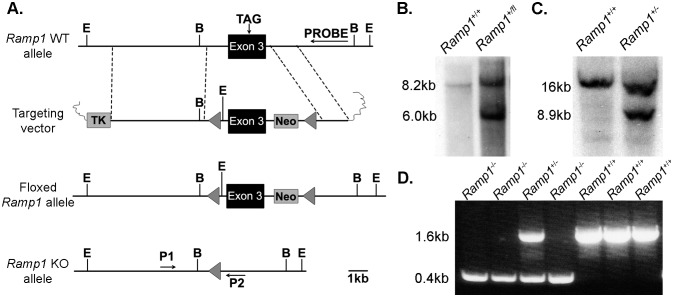
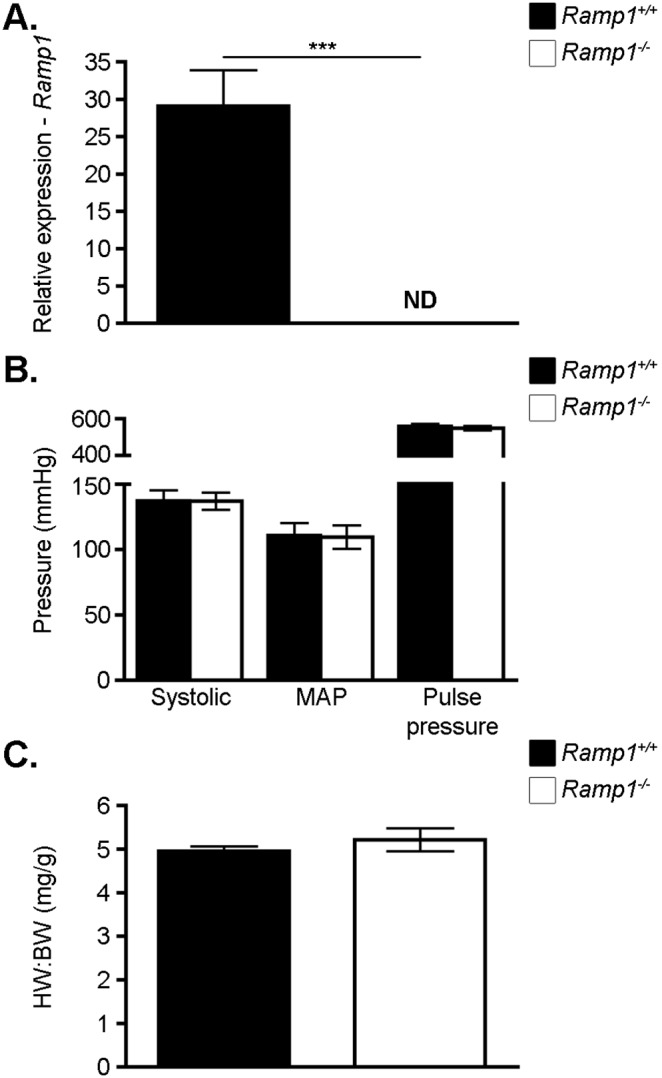
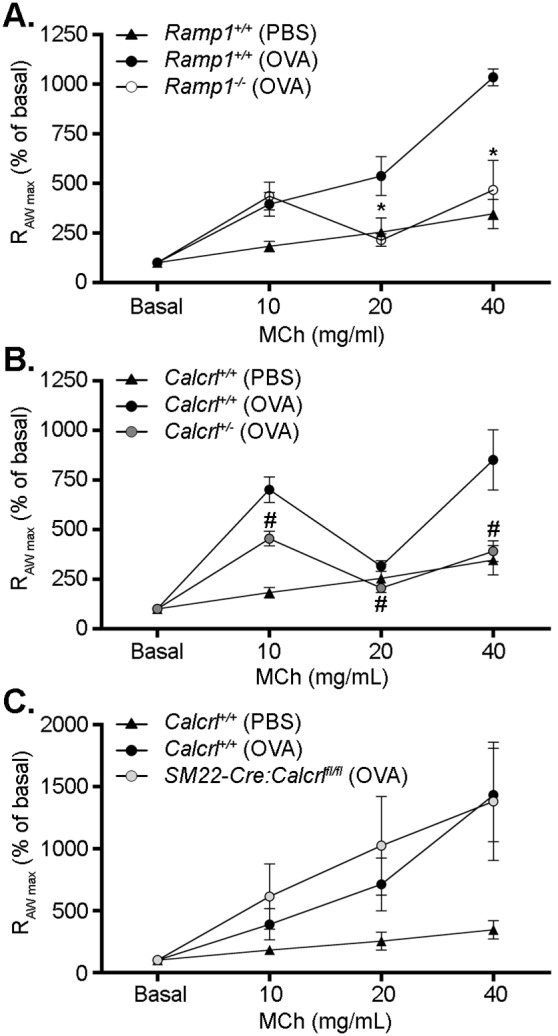
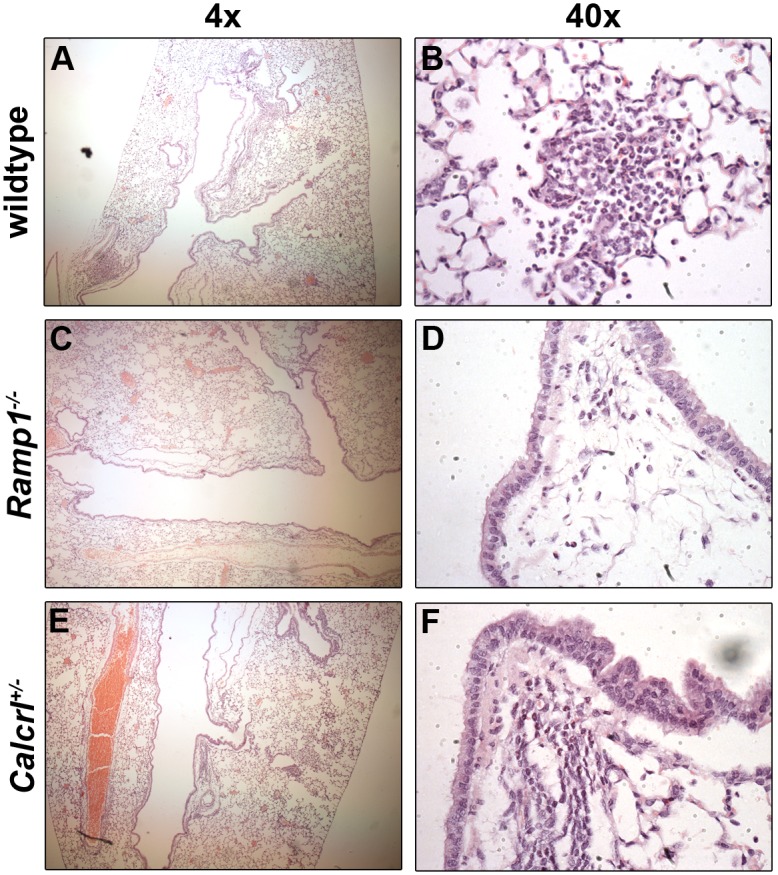
Asthma is a chronic inflammatory disease affecting the lung, characterized by breathing difficulty during an attack following exposure to an environmental trigger. Calcitonin gene-related peptide (CGRP) is a neuropeptide that may have a pathological role in asthma. The CGRP receptor is comprised of two components, which include the G-protein coupled receptor, calcitonin receptor-like receptor (CLR), and receptor activity-modifying protein 1 (RAMP1). RAMPs, including RAMP1, mediate ligand specificity in addition to aiding in the localization of receptors to the cell surface. Since there has been some controversy regarding the effect of CGRP on asthma, we sought to determine the effect of CGRP signaling ablation in an animal model of asthma. Using gene-targeting techniques, we generated mice deficient for RAMP1 by excising exon 3. After determining that these mice are viable and overtly normal, we sensitized the animals to ovalbumin prior to assessing airway resistance and inflammation after methacholine challenge. We found that mice lacking RAMP1 had reduced airway resistance and inflammation compared to wildtype animals. Additionally, we found that a 50% reduction of CLR, the G-protein receptor component of the CGRP receptor, also ameliorated airway resistance and inflammation in this model of allergic asthma. Interestingly, the loss of CLR from the smooth muscle cells did not alter the airway resistance, indicating that CGRP does not act directly on the smooth muscle cells to drive airway hyperresponsiveness. Together, these data indicate that signaling through RAMP1 and CLR plays a role in mediating asthma pathology. Since RAMP1 and CLR interact to form a receptor for CGRP, our data indicate that aberrant CGRP signaling, perhaps on lung endothelial and inflammatory cells, contributes to asthma pathophysiology. Finally, since RAMP-receptor interfaces are pharmacologically tractable, it may be possible to develop compounds targeting the RAMP1/CLR interface to assist in the treatment of asthma.
Overview
The claims and statistics of this paper haven’t been checked yet.
Free: it reads the open-access text and checks the first 5 claims that cite a source we can check. Create a free account to check every claim.
Integrity signals
Registry
Cites
Statistics
Figures
Verification
Claims the paper makes
The claims and statistics of this paper haven’t been checked yet.
Free: it reads the open-access text and checks the first 5 claims that cite a source we can check. Create a free account to check every claim.
Claims other papers make about this one
Each is checked against this paper’s own text: does it say what the citing paper says it does?
The source backs part of the claim, not all of it — or backs it for a different population, condition or comparison.
In the citing paper
“Genetic deficiency in either adrenomedullin, Calcrl, or Ramp2 (27,57,74) is embryonic lethal at midgestation because of cardiovascular defects and a hypoproliferative lymphatic vasculature, whereas Ramp1 KO and Ramp3 KO are viable (57,131,203).”
From The Activity of Peptides of the Calcitonin Family in Bone (2019) · cites this paper as [131]
Experimental — accuracy not yet measured
Self-check
Percentages, sums and reported differences re-computed from the paper’s own numbers.
The self-check needs the paper’s full text.
Citations
Cites
Production of a novel neuropeptide encoded by the calcitonin gene via tissue-specific RNA processing
Rosenfeld, M. G., Mermod, J.-J., Amara, S. G., Swanson, L. W., Sawchenko, P. E., Rivier, J., Vale, W. W., & Evans, R. M. (1983) · Nature · doi:10.1038/304129a0 · Cited by 2,302 · cited 2×
“This initial study by Rosenfeld et al determined that the lung contains CGRP-positive nerve fibers which tended to localize with the smooth muscle cells of the blood vessels [14], indicating a possible role for CGRP in maintenance of vascular tone.”
BackgroundRAMPs regulate the transport and ligand specificity of the calcitonin-receptor-like receptor
McLatchie, L. M., Fraser, N. J., Main, M. J., Wise, A., Brown, J., Thompson, N., Solari, R., Lee, M. G., & Foord, S. M. (1998) · Nature · doi:10.1038/30666 · Cited by 2,134 · cited 1×
“while the association of RAMP2 with CLR produced an AM receptor [7].”
BackgroundCalcitonin gene-related peptide is a potent vasodilator
Brain, S. D., Williams, T. J., Tippins, J. R., Morris, H. R., & MacIntyre, I. (1985) · Nature · doi:10.1038/313054a0 · Cited by 2,086 · cited 1×
“In fact, studies have demonstrated that CGRP is an extremely potent vasodilator [15], which suggests that CGRP may be protective in the context of asthma.”
BackgroundAsthma prevalence, health care use, and mortality: United States, 2005-2009.
Akinbami, L. J., Moorman, J. E., & Liu, X. (2011) · PubMed · Cited by 946
B cell stimulatory factor-1 enhances the IgE response of lipopolysaccharide-activated B cells.
Coffman, R. L., Ohara, J., Bond, M. W., Carty, J., Zlotnik, A., & Paul, W. E. (1986) · The Journal of Immunology · doi:10.4049/jimmunol.136.12.4538 · Cited by 796 · cited 2×
“To date, several GWAS studies have identified SNPs that are correlated with asthma, including loci harboring the IgE receptor [4,5], cytokines [4,6], and DNA repair elements [4], highlighting the multifaceted nature of this disease.”
BackgroundHsieh, C. S., Heimberger, A. B., Gold, J. S., O'Garra, A., & Murphy, K. M. (1992) · Proceedings of the National Academy of Sciences · doi:10.1073/pnas.89.13.6065 · Cited by 747 · cited 1×
“IL-4 is a potent pro-inflammatory cytokine that is responsible for activating TH2 cells [32], inducing mucin gene expression [33], enhancing the secretion of IgE [34], as well as upregulating IgE receptor expression [35].”
BackgroundSpergel, J. M., Mizoguchi, E., Brewer, J. P., Martin, T. R., Bhan, A. K., & Geha, R. S. (1998) · Journal of Clinical Investigation · doi:10.1172/jci1647 · Cited by 640 · cited 8×
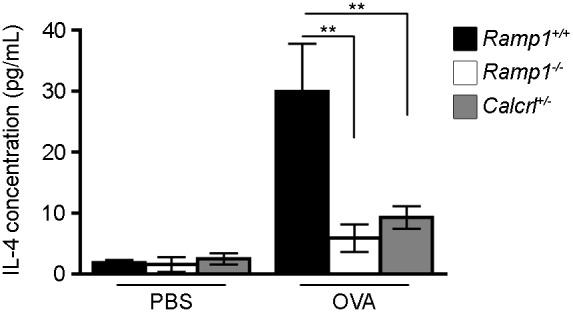
“cytokines, including IL-4 [27], we were interested in determining whether the decreased RAW of the Ramp1 2/2 and Calcrlmice was associated with a reduction in inflammatory cells and cytokines.”
BackgroundInfluentialCosts of asthma in the United States: 2002-2007
Barnett, S. B. L., & Nurmagambetov, T. A. (2011) · Journal of Allergy and Clinical Immunology · doi:10.1016/j.jaci.2010.10.020 · Cited by 607 · cited 1×
“$56 billion per year in medical costs and lost productivity [2].”
BackgroundA Noninvasive Computerized Tail-Cuff System for Measuring Blood Pressure in Mice
Krege, J. H., Hodgin, J. B., Hagaman, J. R., & Smithies, O. (1995) · Hypertension · doi:10.1161/01.hyp.25.5.1111 · Cited by 587 · cited 1×
“Systolic, mean arterial pressure (MAP), and pulse pressure were determined by the tail cuff method as described previously [20,21].”
MethodIL-4 Induces Mucin Gene Expression and Goblet Cell Metaplasia In Vitro and In Vivo
Dabbagh, K., Takeyama, K., Lee, H.-M., Ueki, I. F., Lausier, J. A., & Nadel, J. A. (1999) · The Journal of Immunology · doi:10.4049/jimmunol.162.10.6233 · Cited by 464 · cited 1×
“IL-4 is a potent pro-inflammatory cytokine that is responsible for activating TH2 cells [32], inducing mucin gene expression [33], enhancing the secretion of IgE [34], as well as upregulating IgE receptor expression [35].”
Background
Cited by
Kashem, S. W., Riedl, M. S., Yao, C., Honda, C. N., Vulchanova, L., & Kaplan, D. H. (2015) · Immunity · doi:10.1016/j.immuni.2015.08.016 · Cited by 448
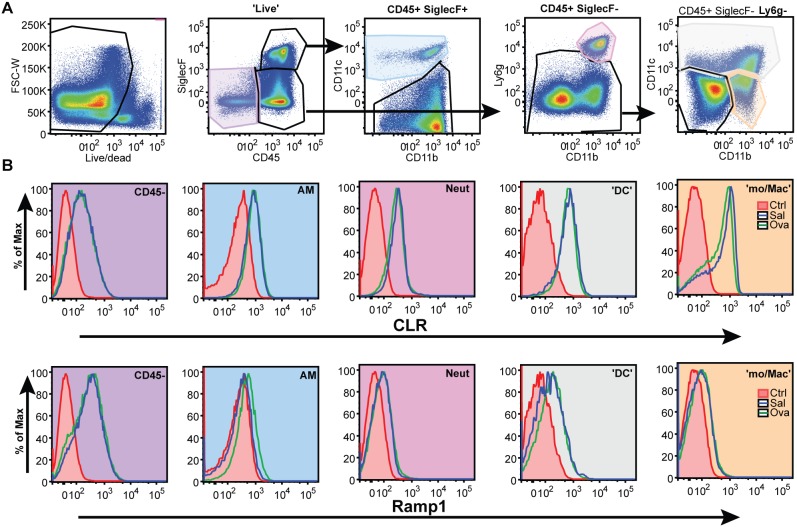
“This is consistent with other reports showing expression of CGRP receptors by CD11b DCs in other tissues (Li et al., 2014).”
InfluentialPulmonary neuroendocrine cells amplify allergic asthma responses
Sui, P., Wiesner, D. L., Xu, J., Zhang, Y., Lee, J., Van Dyken, S., Lashua, A., Yu, C., Klein, B. S., Locksley, R. M., et al. (2018) · Science · doi:10.1126/science.aan8546 · Cited by 428
Neuropeptide CGRP Limits Group 2 Innate Lymphoid Cell Responses and Constrains Type 2 Inflammation
Nagashima, H., Mahlakõiv, T., Shih, H.-Y., Davis, F. P., Meylan, F., Huang, Y., Harrison, O. J., Yao, C., Mikami, Y., Urban, J. F., et al. (2019) · Immunity · doi:10.1016/j.immuni.2019.06.009 · Cited by 322
“For generation of bone marrow chimera mice, Rag2−/− gc−/− mice were irradiated (600 rads x 2), and were injected intravenously with 5 millions bone marrow cells from either Ramp1−/− mice (Li et al., 2014) or background matched wild-type mice (provided by Kathleen M.”
MethodSelf-citationWallrapp, A., Burkett, P. R., Riesenfeld, S. J., Kim, S.-J., Christian, E., Abdulnour, R.-E. E., Thakore, P. I., Schnell, A., Lambden, C., Herbst, R. H., et al. (2019) · Immunity · doi:10.1016/j.immuni.2019.09.005 · Cited by 261
“found that deleting Calcrl specifically in smooth muscle cells decreases airway hyperreactivity similar to observations in Ramp1−/− mice (Li et al., 2014), consistent with CGRP directly inducing human bronchial smooth muscle contraction (Springer et al.”
ResultReceptor Activity-Modifying Proteins (RAMPs): New Insights and Roles
Hay, D. L., & Pioszak, A. A. (2016) · Annual Review of Pharmacology and Toxicology · doi:10.1146/annurev-pharmtox-010715-103120 · Cited by 190
Metadata
- Authors
- Li, M., Wetzel-Strong, S. E., Hua, X., Tilley, S. L., Oswald, E., Krummel, M. F., & Caron, K. M.
- Affiliations
- University of North Carolina at Chapel Hill (US)
- University of California, San Francisco (US)
- Corresponding author
- Caron, Kathleen M.
- Venue
- PLoS ONE
- Publisher
- Public Library of Science (PLoS)
- Published
- 2014-07-10
- Volume
- 9
- Issue
- 7
- Pages
- e102356
- ISSN
- 1932-6203 (ISSN-L)
- PMC
- PMC4092148
- OpenAlex
- W2069843745
- Cited by
- 50
- References
- 35
- Citations by year
- 2026: 4 · 2025: 2 · 2024: 4 · 2023: 4 · 2022: 3 · 2021: 5 · 2020: 7 · 2019: 4 · 2018: 3 · 2017: 4 · 2016: 6 · 2015: 4
- FWCI
- 3.10
- Type
- journal article
- Language
- en
- Open access
- gold
- doi.org
- Locations
- PLoS ONE (publishedVersion, cc-by)
- Europe PMC (PubMed Central) (publishedVersion, cc-by)
- PubMed Central (publishedVersion, cc-by)
- PubMed (publishedVersion)
- Carolina Digital Repository (University of North Carolina at Chapel Hill) (submittedVersion)
- DOAJ (DOAJ: Directory of Open Access Journals) (submittedVersion)
- eScholarship (California Digital Library) (submittedVersion)
- UNC Libraries
- Funders
- National Institutes of Health
- U.S. Public Health Service (2U19A1077439-06)
- National Heart, Lung, and Blood Institute (P01HL024136)
- National Institute of Allergy and Infectious Diseases (U19AI077439)
- National Institute of Diabetes and Digestive and Kidney Diseases (R01DK099156, DK99156)
- Eunice Kennedy Shriver National Institute of Child Health and Human Development (HD-060860, R01HD060860)
- Topics
- Health Sciences › Medicine › Pulmonary and Respiratory Medicine › Asthma and respiratory diseases
- Life Sciences › Neuroscience › Cellular and Molecular Neuroscience › Neuropeptides and Animal Physiology
- Life Sciences › Neuroscience › Sensory Systems › Ion Channels and Receptors
- Keywords
- RAMP1, calcitonin receptor-like receptor, calcitonin gene-related peptide, CGRP receptor, allergic asthma, airway hyperresponsiveness, airway inflammation, airway resistance, ovalbumin sensitization, methacholine challenge, smooth muscle cells
- MeSH terms
- Animals, Asthma, Disease Models, Animal, Humans, Inflammation, Lung, Signal Transduction, Calcitonin Gene-Related Peptide, Myocytes, Smooth Muscle, Mice, Receptor Activity-Modifying Protein 1, Calcitonin Receptor-Like Protein
About these checks
Registry, retraction, Cites and statistics results are computed, not judged, with one exception: a printed reference that no index lists is read once by a model before it counts as a citation error. Claims are extracted by a model and kept only when their quote appears verbatim in the text; each cited source is then checked, with a model’s help, for whether it says what the claim relies on. Those verdicts can be wrong — read the claim’s quote and the cited source before relying on one.
Statistics and arithmetic are recomputed, not judged.
Confidence bands are shown only for fields calibrated on our annotated test set. None is calibrated yet, so no band is shown.
What counts as a claim ›How we measure confidence ›How we check this ›
Are you an author, or do you see a problem with this page? Request a review
Data sources
Bibliographic data: Semantic Scholar, OpenAlex, Crossref.
Contains information from the Semantic Scholar Academic Graph Datasets, made available under the ODC Attribution License (ODC-BY 1.0).
Semantic Scholar’s data is described in: Kinney, R., et al. (2023). The Semantic Scholar Open Data Platform. arXiv:2301.10140.
