

Insular and Hippocampal Gray Matter Volume Reductions in Patients with Major Depressive Disorder
Open accessThe DOI matches its Crossref record; 132 of the 132 references it cites were found in a registry or an index.
Abstract
BACKGROUND: Major depressive disorder is a serious psychiatric illness with a highly variable and heterogeneous clinical course. Due to the lack of consistent data from previous studies, the study of morphometric changes in major depressive disorder is still a major point of research requiring additional studies. The aim of the study presented here was to characterize and quantify regional gray matter abnormalities in a large sample of clinically well-characterized patients with major depressive disorder. METHODS: For this study one-hundred thirty two patients with major depressive disorder and 132 age- and gender-matched healthy control participants were included, 35 with their first episode and 97 with recurrent depression. To analyse gray matter abnormalities, voxel-based morphometry (VBM8) was employed on T1 weighted MRI data. We performed whole-brain analyses as well as a region-of-interest approach on the hippocampal formation, anterior cingulate cortex and amygdala, correlating the number of depressive episodes. RESULTS: Compared to healthy control persons, patients showed a strong gray-matter reduction in the right anterior insula. In addition, region-of-interest analyses revealed significant gray-matter reductions in the hippocampal formation. The observed alterations were more severe in patients with recurrent depressive episodes than in patients with a first episode. The number of depressive episodes was negatively correlated with gray-matter volume in the right hippocampus and right amygdala. CONCLUSIONS: The anterior insula gray matter structure appears to be strongly affected in major depressive disorder and might play an important role in the neurobiology of depression. The hippocampal and amygdala volume loss cumulating with the number of episodes might be explained either by repeated neurotoxic stress or alternatively by higher relapse rates in patients showing hippocampal atrophy.
Overview
The claims and statistics of this paper haven’t been checked yet.
Free: it reads the open-access text and checks the first 5 claims that cite a source we can check. Create a free account to check every claim.
Integrity signals
Registry
Cites
Statistics
Figures
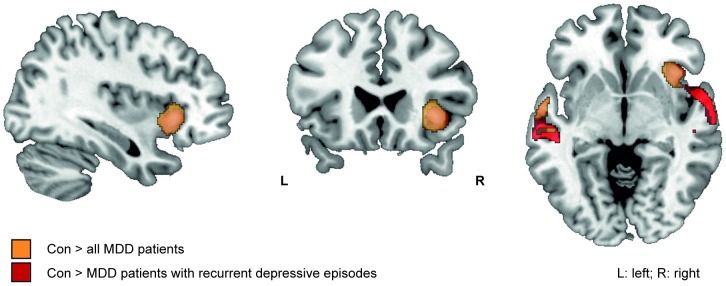
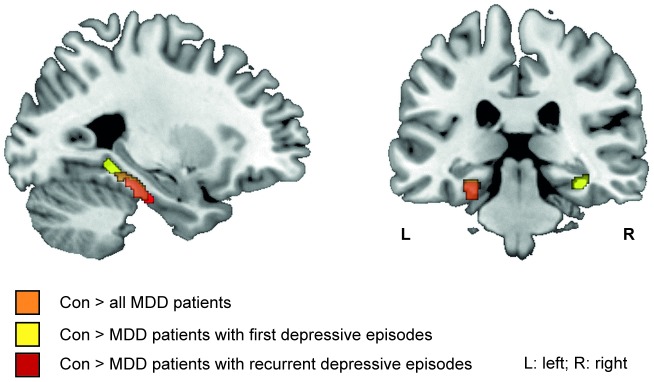
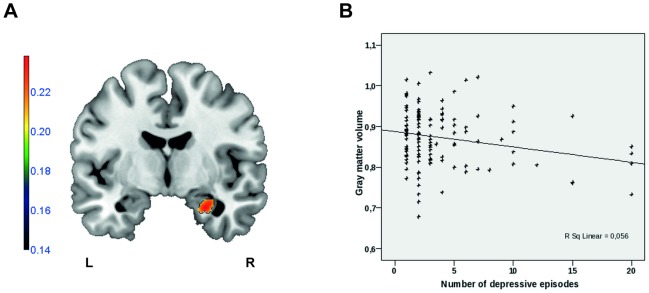
Verification
Claims the paper makes
The claims and statistics of this paper haven’t been checked yet.
Free: it reads the open-access text and checks the first 5 claims that cite a source we can check. Create a free account to check every claim.
Claims other papers make about this one
Each is checked against this paper’s own text: does it say what the citing paper says it does?
The source backs part of the claim, not all of it — or backs it for a different population, condition or comparison.
In the citing paper
“they have been consistently associated with markers of a progressive course of MDD characterized by more recurrent episodes/relapses (3,19–25)”
From The Impact of Stress and Major Depressive Disorder on Hippocampal and Medial Prefrontal Cortex Morphology (2019) · cites this paper as [22]
Experimental — accuracy not yet measured
Self-check
Percentages, sums and reported differences re-computed from the paper’s own numbers.
The self-check needs the paper’s full text.
Citations
Cites
An inventory for measuring depression
BECK, A. T. (1961) · Archives of General Psychiatry · doi:10.1001/archpsyc.1961.01710120031004 · Cited by 38,032 · cited 7×
“Current depression severity was assessed by means of the Hamilton Depression Rating Scale (HDRS) [41] and Beck Depression Inventory (BDI) [42].”
MethodInfluentialThe assessment and analysis of handedness: The Edinburgh inventory
Oldfield, R. C. (1971) · Neuropsychologia · doi:10.1016/0028-3932(71)90067-4 · Cited by 35,900
Hamilton, M. (1960) · Journal of Neurology, Neurosurgery & Psychiatry · doi:10.1136/jnnp.23.1.56 · Cited by 32,817 · cited 6×
“Current depression severity was assessed by means of the Hamilton Depression Rating Scale (HDRS) [41] and Beck Depression Inventory (BDI) [42].”
MethodInfluentialTzourio-Mazoyer, N., Landeau, B., Papathanassiou, D., Crivello, F., Etard, O., Delcroix, N., Mazoyer, B., & Joliot, M. (2002) · NeuroImage · doi:10.1006/nimg.2001.0978 · Cited by 16,319 · cited 2×
“According to previously described affected brain regions in patients with MDD we defined the following ROIs using the AALdefinitions [47]: hippocampus + parahippocampal gyrus, amygdala and ACC, each bilaterally.”
MethodKessler, R. C., Chiu, W. T., Demler, O., & Walters, E. E. (2005) · Archives of General Psychiatry · doi:10.1001/archpsyc.62.6.617 · Cited by 12,052 · cited 1×
“Comorbidity of depression and anxiety disorder is frequent in MDD [125–128].”
BackgroundKessler, R. C., Berglund, P., Demler, O., Jin, R., Koretz, D., Merikangas, K. R., Rush, A. J., Walters, E. E., & Wang, P. S. (2003) · JAMA · doi:10.1001/jama.289.23.3095 · Cited by 7,988 · cited 1×
“With a lifetime prevalence of about 16% [1] it is the most prevalent mood disorder and one of the leading causes of burden of disease [2].”
BackgroundAshburner, J., & Friston, K. J. (2005) · NeuroImage · doi:10.1016/j.neuroimage.2005.02.018 · Cited by 7,507
How do you feel — now? The anterior insula and human awareness
(Bud) Craig, A. D. (2009) · Nature Reviews Neuroscience · doi:10.1038/nrn2555 · Cited by 6,657 · cited 1×
“The insula cortex plays an important integrative role in processing of information from diverse functional systems [51–57].”
BackgroundHiggins, S. M. F., Macken, A. P., Cullen, W., Saunders, J., Dunne, C. P., & O’Gorman, C. S. (2013) · PubMed · doi:10.34961/9953 · Cited by 4,806
Requirement of hippocampal neurogenesis for the behavioral effects of antidepressants
Santarelli, L., Saxe, M., Gross, C., Surget, A., Battaglia, F., Dulawa, S., Weisstaub, N., Lee, J., Duman, R., Arancio, O., et al. (2003) · Science · doi:10.1126/science.1083328 · Cited by 4,321 · cited 1×
“It is known that antidepressants may exert neurotrophic or neuroprotective effects [120–124].”
Background
Cited by
Items 101–164 of 164
Wu, Y., Kong, L., Yang, A., Xin, K., Lu, Y., Yan, X., Liu, W., Zhu, Y., Guo, Y., Jiang, X., et al. (2023) · NeuroImage Clinical · doi:10.1016/j.nicl.2023.103341 · Cited by 12
“Numerous studies have found that patients with MDD have abnormally reduced GMV in the frontal brain regions (Kim et al., 2019; Schmaal et al., 2017; Meng et al., 2020; Fossati et al., 2004; Duman and Monteggia, 2006; Du et al., 2012; Stratmann et al., 2014; Lloyd et al., 2004; Bora et al., 2012), especially in the OFC…”
BackgroundLong-term effects of electroconvulsive therapy on brain structure in major depression
Borgers, T., Enneking, V., Klug, M., Garbe, J., Meinert, H., Wulle, M., König, P., Zwiky, E., Herrmann, R., Selle, J., et al. (2023) · Psychological Medicine · doi:10.1017/s0033291723002647 · Cited by 13
“…2021; Frodl et al., 2008; Schmaal et al., 2016; Videbech & Ravnkilde, 2004), amygdala (Cattarinussi et al., 2021), insula (Soriano-Mas et al., 2011; Stratmann et al., 2014; Zaremba et al., 2018a) and pre-frontal cortex (Frodl et al., 2008; Schmaal et al., 2016; Zaremba et al., 2018a) to an…”
BackgroundSelf-citationKlugah‐Brown, B., Bore, M. C., Liu, X., Gan, X., Biswal, B. B., Kendrick, K. M., Chang, D. H. F., Zhou, B., & Becker, B. (2024) · Journal of Affective Disorders · doi:10.1016/j.jad.2024.05.016 · Cited by 12
Peterson, B. S., Kaur, T., Baez, M. A., Whiteman, R. C., Sawardekar, S., Sanchez‐Peña, J., Hao, X., Klahr, K., Talati, A., WICKRAMARATNE, P. J., et al. (2022) · Diagnostics · doi:10.3390/diagnostics12051218 · Cited by 10
“Previously published studies have reported either reduced or normal overall volumes of the hippocampus in already-affected individuals with MDD compared to healthy controls [4,10,11].”
BackgroundThe influence of sex steroid treatment on insular connectivity in gender dysphoria
Reed, M. B., Handschuh, P. A., Klöbl, M., Konadu, M. E., Kaufmann, U., Hahn, A., Kranz, G. S., Spies, M., & Lanzenberger, R. R. (2023) · Psychoneuroendocrinology · doi:10.1016/j.psyneuen.2023.106336 · Cited by 12
Selenius, J. S., Silveira, P. P., Salonen, M. K., Kautiainen, H., von Bonsdorff, M. B., Kajantie, E., Lahti, J. M. T., Eriksson, J. G., & Wasenius, N. (2021) · Scientific Reports · doi:10.1038/s41598-021-00631-w · Cited by 11
Marchese, E., Maria, V. D., Samengo, D., Pani, G., Michetti, F., & Geloso, M. C. (2017) · Neurochemical Research · doi:10.1007/s11064-017-2233-9 · Cited by 10
Chen, Y., Jia, L., Gao, W., Wu, C., Mu, Q., Fang, Z., Hu, S., Huang, M., Zhang, P., & Lu, S. (2023) · BMC Psychiatry · doi:10.1186/s12888-023-05146-4 · Cited by 12
“The occurrence of depressive episodes has been specifically linked to gray matter volume (GMV) changes in the insula, hippocampus, and amygdala, as well as cortical thickness decline in the dorsomedial PFC (dmPFC) [13–15].”
BackgroundKirk‐Provencher, K. T., Nelson, R. J., & Spillane, N. S. (2020) · Violence and Gender · doi:10.1089/vio.2019.0051 · Cited by 14
“2017), and major depressive disorder has been linked to gray matter reductions in the amygdala (Sheline et al. 1998; Stratmann et al. 2014) and orbitofrontal cortex (Koolschijn et al.”
BackgroundMu, Q., Wu, C., Chen, Y., Xu, Y., Zhang, K., Zhu, C., Hu, S., Huang, M., Zhang, P., Cui, D., et al. (2025) · Depression and Anxiety · doi:10.1155/da/1925158 · Cited by 9
“Hyperactivation of the INS and its reduced GMV and cortical thickness in relation to MDD have been independently reported in numerous studies [59 – 62].”
State-Independent and -Dependent Structural Connectivity Alterations in Depression
Fan, Y., Liu, J., Zeng, L., Dong, Q., Su, J., Peng, L., Shen, H., Lu, X., Sun, J., Zhang, L., et al. (2020) · Frontiers in Psychiatry · doi:10.3389/fpsyt.2020.568717 · Cited by 7
“Additionally, clinically remitted MDD patients with decreased insula-related SC by MRI scans are likely to be recurrent and require longer antidepressant treatment (34).”
BackgroundGorrino, I., Canessa, N., & Mattavelli, G. C. (2023) · Frontiers in Behavioral Neuroscience · doi:10.3389/fnbeh.2023.1234837 · Cited by 9
“This view is supported by growing evidence of structural and functional abnormalities, in this region, in patients with major depressive disorder (Herwig et al., 2010; Surguladze et al., 2010; Takahashi et al., 2010; Stratmann et al., 2014), bipolar disorder (Ellison-Wright and Bullmore, 2010; Hulvershorn et al.”
ResultArgyrophilic grain disease in a 46-year-old male suicide victim
Yoshida, K., Hata, Y., Kinoshita, K., & Nishida, N. (2017) · Journal of the Neurological Sciences · doi:10.1016/j.jns.2017.07.043 · Cited by 7
Psychoradiological Biomarkers for Psychopharmaceutical Effects
Schrantee, A., Ruhé, H. G., & Reneman, L. (2019) · Neuroimaging Clinics of North America · doi:10.1016/j.nic.2019.09.006 · Cited by 12
Qi, Q., Wang, W., Deng, Z., Weng, W., Feng, S., Li, D., Wu, Z. L., & Liu, H. (2018) · Advances in intelligent systems and computing · doi:10.1007/978-3-319-74690-6_69 · Cited by 9
Fang, Y., & Mao, R. (2019) · Advances in experimental medicine and biology · doi:10.1007/978-981-32-9271-0_1 · Cited by 6
Ge, R., Blumberger, D. M., Downar, J. H., Daskalakis, Z. J., Tham, J. C. W., Lam, R. W. M., & Vila‐Rodriguez, F. (2017) · Journal of Neuroscience Methods · doi:10.1016/j.jneumeth.2017.07.017 · Cited by 6
“Furthermore, both right hippocampal and right vAI atrophy have been reported in MDD (MacQueen and Frodl, 2011; Stratmann et al., 2014).”
BackgroundBrain Structural Abnormalities of Major Depressive Disorder
Wu, H., Melicher, T., Bauer, I. E., Sanches, M., & Soares, J. C. (2019) · Elsevier eBooks · doi:10.1016/b978-0-323-58131-8.00003-3 · Cited by 10
Fassett-Carman, A. N., Smolker, H. R., Hankin, B. L., Snyder, H. R., & Banich, M. T. (2023) · Developmental Psychology · doi:10.1037/dev0001489 · Cited by 6
Malik, A. S., & Mumtaz, W. (2019) · Elsevier eBooks · doi:10.1016/b978-0-12-817420-3.00004-7 · Cited by 7
Antidepressants Promote and Prevent Cancers
Lavergne, F., & Jay, T. M. (2020) · Cancer Investigation · doi:10.1080/07357907.2020.1817481 · Cited by 8
iStim. A New Portable Device for Interoceptive Stimulation
Lernia, D. D., Riva, G., & Cipresso, P. (2018) · Lecture notes of the Institute for Computer Sciences, Social Informatics and Telecommunications Engineering · doi:10.1007/978-3-030-01093-5_6 · Cited by 8
Cortical thinning in preschoolers with maladaptive guilt
Donohue, M. R., Tillman, R., Barch, D. M., Luby, J. L., & Gaffrey, M. S. (2020) · Psychiatry Research Neuroimaging · doi:10.1016/j.pscychresns.2020.111195 · Cited by 4
“associated with both depression, generally, and guilt, specifically (Belden et al., 2015; Bora et al., 2012; Gifuni et al., 2017; Lai and Wu, 2014; Stratmann et al., 2014; Whittle et al., 2016; Zhang et al., 2016).”
BackgroundSchaub, N., Ammann, N., Conring, F., Müller, T., Federspiel, A., Wiest, R., Hoepner, R., Stegmayer, K., & Walther, S. (2022) · Frontiers in Human Neuroscience · doi:10.3389/fnhum.2022.877461 · Cited by 6
Gray Matter Reduction in Currently Depressed Patients of Major Depressive Disorder: A Meta-Analysis
Chen, L., Bian, Y., Han, X., Chen, L., Zhu, Y., & Chen, D. (2017) · Neuropsychiatry · doi:10.4172/neuropsychiatry.1000254 · Cited by 6
“The literature search identified 749 studies, and ultimately 14 studies [12,13,15,16,31-40] that met the inclusion criteria were used.”
BackgroundVoxel-Based Morphometry Imaging Studies in Major Depression
Dusi, N., Delvecchio, G., Rovera, C., Altamura, C. A., & Brambilla, P. (2018) · Neuromethods · doi:10.1007/978-1-4939-7647-8_21 · Cited by 6
Different MRI structural processing methods do not impact functional connectivity computation
Zhang, L., Pini, L., & Corbetta, M. (2023) · Scientific Reports · doi:10.1038/s41598-023-34645-3 · Cited by 4
Older Thai Peoples’ Perceptions and Experiences of Major Depression
Kleebthong, D., Chareonsuk, S., & Kristiansen, L. P. (2017) · Global Journal of Health Science · doi:10.5539/gjhs.v9n9p26 · Cited by 6
“Moreover, these patients showed significant gray matter reduction in the whole brain, which is associated with disruption of the neural network that regulates mood and behavior (Stratmann et al., 2014).”
BackgroundAbnormal vestibular asymmetries in patients with major depression
Soza, A., Certanec, B., & Tapia, E. (2018) · Asia Pacific Journal of Clinical Trials Nervous System Diseases · doi:10.4103/2542-3932.232075 · Cited by 5
The pivotal role of the X-chromosome in the genetic architecture of the human brainPreprint
Jiang, Z., Sullivan, P. F., Li, T., Zhao, B., Wang, X., Luo, T., Huang, S., Guan, P. Y., Chen, J., Yang, Y., et al. (2023) · medRxiv · doi:10.1101/2023.08.30.23294848 · Cited by 4
Brain structural correlates of an impending initial major depressive episode
Kraus, A., Dohm, K., Borgers, T., Goltermann, J., Grotegerd, D., Winter, A., Thiel, K., Flinkenflügel, K., Schürmeyer, N., Hahn, T., et al. (2025) · Neuropsychopharmacology · doi:10.1038/s41386-025-02075-6 · Cited by 5
“Previous cross-sectional [15, 59, 60] and longitudinal research [20, 61] on volumes of DLPFC and insula suggested neural correlates of MDD might actually represent a persistent, even scar-like effect, as stronger GMV decline was associated with more severe disease courses (e.g., duration of disease…”
Self-citationZhang, Q.-M., Chen, Y., Xing, Y.-Y., Yang, M., Li, N., Jiang, X., Gao, H., Lu, S., & Yao, J. (2025) · Molecular Psychiatry · doi:10.1038/s41380-025-03139-1 · Cited by 6
Du, W. D., Tang, B., Gao, Z., Li, X., Liu, N., Tang, X., Zhang, Q., Lu, P., Zhang, W., & Lui, S. (2025) · BMC Medicine · doi:10.1186/s12916-025-04442-y · Cited by 5
Reduced anterior insular cortex volume in male heroin addicts: a postmortem study
Müller, U., Schmalenbach, L. J., Dobrowolny, H., Guest, P. C., Schlaaff, K., Mawrin, C., Truebner, K., Bogerts, B., Gos, T., Bernstein, H., et al. (2023) · European Archives of Psychiatry and Clinical Neuroscience · doi:10.1007/s00406-023-01553-6 · Cited by 3
“Insular volumes have been shown to be lower in other neuropsychiatric diseases such as mood disorders [55] and schizophrenia [56, 57], and addictions and mood disorders are often comorbid [58].”
BackgroundBoschetti, A., Camperio-Ciani, A., & Scarpazza, C. (2023) · Handbook of clinical neurology · doi:10.1016/b978-0-12-821375-9.00017-7 · Cited by 3
Brisch, R., Bernstein, H., Dobrowolny, H., Krzyżanowska, M., Jankowski, Z., Bogerts, B., & Gos, T. (2015) · Clinical Anatomy · doi:10.1002/ca.22656 · Cited by 3
Depicting Coupling Between Cortical Morphology and Functional Networks in Major Depressive Disorder
Wang, P., Lu, L., Wang, J., Xiao, Y., Sun, L., Zheng, Y., Sun, J., Wang, J., & Xue, S. (2025) · Depression and Anxiety · doi:10.1155/da/6885509 · Cited by 2
“Structural MRI studies have consistently reported gray matter (GM) volume reductions in crucial brain regions [13, 14], including the prefrontal cortex [15], insula [16], and hippocampus [17, 18] in individuals with MDD.”
The interrelation of emotion regulation, anterior insula structure, and narcissistic traits
Schmidt, L., Dominguez-Ruiz, A., Meller, T., & Nenadić, I. (2025) · Journal of Affective Disorders · doi:10.1016/j.jad.2025.05.002 · Cited by 3
Vestibular Stimulation in Neuropsychiatry
Ried, S. (2020) · Annals of Behavioral Neuroscience · doi:10.18314/abne.v3i1.1863 · Cited by 3
The thalamus network seems responsible for the depression and anxiety affecting risk-taking
Bahri, M., Farrahi, H., Mahdavinataj, H., & Batouli, S. A. H. (2025) · Psychiatry Research Neuroimaging · doi:10.1016/j.pscychresns.2025.112003 · Cited by 1
Wu, X., Wang, P., Lang, X., Guo, Q., Jiang, Y., Xu, J., Wang, Q., Kang, Y., Liu, F., Ding, H., et al. (2026) · BMC Psychiatry · doi:10.1186/s12888-026-07895-4 · Cited by 1
“Regional GMV reductions have been reported in the anterior cingulate cortex, hippocampus, superior temporal gyrus, inferior temporal gyrus, inferior frontal gyrus, right amygdala and thalamus [5–7].”
Acunha, R. M., Medeiros, P., Machado, H. R., Sbragia, L., Coimbra, N. C., Maione, S., & de Freitas, R. L. (2026) · Physiology & Behavior · doi:10.1016/j.physbeh.2026.115374 · Cited by 1
RetractedHippocampal volume changes in patients with mood disorders
Santos, M. A. O., Bezerra, L. S., Carvalho, A. R. M. R., & Lima, A. C. M. B. D. Q. (2018) · International Journal of Radiology & Radiation Therapy · doi:10.15406/ijrrt.2018.05.00159 · Cited by 1
“From observational studies, 12 met the established inclusion criteria ([12-23]).”
BackgroundMethodResultInfluentialZeraatkar, H. (2019) · The Neuroscience Journal of Shefaye Khatam · doi:10.29252/shefa.8.1.111 · Cited by 1
Fipps, D. C., Staab, J. P., & Allen, N. D. (2022) · Frontiers in Psychiatry · doi:10.3389/fpsyt.2022.841072 · Cited by 1
“Voxelbased morphometry found significant reductions in insular gray matter volume in patients with major depressive disorder (15, 16).”
BackgroundFan, Q., Gao, J., Wu, Y., Wang, Y., Zhang, L., Zhou, J., Feng, Y., Lu, Y., Wang, G., & Zhou, Y. (2025) · bioRxiv (Cold Spring Harbor Laboratory) · doi:10.64898/2025.12.07.692810 · Cited by 1
“…MDD cohorts and healthy controls [HCs]) have yielded inconsistent findings: while some studies report reduced GMV in emotion-regulation regions (e.g., prefrontal cortex, cingulate gyrus, hippocampus)[7–9], others find no significant differences or even increased GMV in these same areas[10–12].”
Depression and Multiple Sclerosis: Imaging, Mechanisms
Romero, K., & Feinstein, A. (2015) · Neuropsychiatric symptoms of neurological disease · doi:10.1007/978-3-319-18464-7_3 · Cited by 1
Neuroimaging of Risk Factors of Depression and Cardiovascular Disease
Opel, N., Dannlowski, U., & Redlich, R. (2016) · Springer eBooks · doi:10.1007/978-3-319-32480-7_10
Self-citationOh-McGinnis, R., Sigola, L. B., Fuentes, A., Vapenik, J., & Millis, L. (2015) · HAPS Educator · doi:10.21692/haps.2015.023
Won, E., Ham, B., & Kim, Y. (2018) · Springer eBooks · doi:10.1007/978-981-10-6580-4_2
Structural, Functional, and Molecular Neuroimaging in Depression
Zhang, K., Huang, J., Feng, J., Zhang, H., & Tian, M. (2017) · Springer eBooks · doi:10.1007/978-981-10-6580-4_10 · Cited by 1
Depression, Anxiety, and Quality of Life in Postconcussion Syndrome
Doroszkiewicz, C. C. (2019) · TSpace (University of Toronto)
Peng, R., Dai, W., Li, D., & Li, Y. (2021) · Research Square · doi:10.21203/rs.3.rs-1130484/v1
A Cultural Neuroscience Perspective on Socioeconomic Disparities in Global Mental Health
Alvarez, G., & Muscatell, K. A. (2022) · Oxford University Press eBooks · doi:10.1093/oxfordhb/9780190057695.013.30
Wu, Y., Kong, L., Yang, A., Xin, K., Lu, Y., Yan, X., Liu, W., Zhu, Y., Jiang, X., Zhou, Y., et al. (2022) · SSRN Electronic Journal · doi:10.2139/ssrn.4189465
Metin, B., Farhad, S., Erguzel, T. T., Çiftçi, E., & Tarhan, N. (2023) · Journal of Neural Transmission · doi:10.1007/s00702-023-02649-y
“The altered GM volume in the insula may be the neural underpinning of the disturbed emotional processing that was reported in several previous studies (Stratmann et al. 2014).”
ResultThe Insula and Psychiatry: A Hidden Target for Neurostimulation
Honnekeri, A. S., & Desousa, A. (2025) · Annals of Indian Psychiatry · doi:10.4103/aip.aip_51_25
Wang, X., Chen, S., Yanrong, C. H. E. N., Zuo, X., Zhao, J., Zang, Y., & Yan, C. (2025) · China Scientific Data · doi:10.11922/11-6035.csd.2025.0033.zh
Insular Lesions as a Neural Substrate of Attentional Dysfunction in Post-Stroke DepressionPreprint
Na, Y., Auer, D. P., Jung, J., & Pyun, S. (2025) · medRxiv · doi:10.64898/2025.12.17.25342446
Levada, O. A., Troian, O., Myshakivska, O., & Пінчук, І. (2026) · Proceedings of the Shevchenko Scientific Society Medical Sciences · doi:10.25040/ntsh2026.01.23
Liu, A., Guo, W., Li, J., Zhang, T., & Xu, D. (2026) · Animal Models and Experimental Medicine · doi:10.1002/ame2.70276
Illness Severity and Longitudinal Gray Matter Volumes Among People With Major Depressive Disorder
Kraus, A., Goltermann, J., Borgers, T., Dohm, K., Grotegerd, D., Schrammen, E., Flinkenflügel, K., Enneking, V., Leehr, E. J., Böhnlein, J., et al. (2026) · JAMA Network Open · doi:10.1001/jamanetworkopen.2026.33507
Self-citation林彬, Ma, Y., Gao, H., Ding, S., Sun, F., Cai, H., Zhao, Z., & Gao, L. (2026) · Journal of Psychiatric Research · doi:10.1016/j.jpsychires.2026.08.028
Xu, K., Wu, B., Zhao, Z., Shao, Y., Li, L., & 贾志云 (2026) · Journal of Affective Disorders · doi:10.1016/j.jad.2026.122648
Metadata
- Authors
- Stratmann, M., Konrad, C., Kugel, H., Krug, A., Schöning, S., Ohrmann, P., Uhlmann, C., Postert, C., Suslow, T., Heindel, W., Arolt, V., Kircher, T., & Dannlowski, U.
- Affiliations
- Philipps University of Marburg (DE)
- University of Münster (DE)
- Leipzig University (DE)
- Corresponding author
- Konrad, Carsten
- ORCID
- Venue
- PLoS ONE
- Publisher
- Public Library of Science (PLoS)
- Published
- 2014-07-22
- Volume
- 9
- Issue
- 7
- Pages
- e102692
- ISSN
- 1932-6203 (ISSN-L)
- PMC
- PMC4106847
- OpenAlex
- W2087125720
- Cited by
- 164
- References
- 132
- Citations by year
- 2026: 7 · 2025: 13 · 2024: 4 · 2023: 18 · 2022: 16 · 2021: 13 · 2020: 16 · 2019: 15 · 2018: 24 · 2017: 16 · 2016: 9 · 2015: 11 · 2014: 2
- FWCI
- 9.20
- Type
- journal article
- Language
- en
- Open access
- gold
- doi.org
- Locations
- PLoS ONE (publishedVersion, cc-by)
- Europe PMC (PubMed Central) (publishedVersion, cc-by)
- PubMed Central (publishedVersion, cc-by)
- PubMed (publishedVersion)
- DOAJ (DOAJ: Directory of Open Access Journals) (submittedVersion, cc-by-sa)
- Funders
- Eli Lilly and Company
- Pfizer
- Servier
- H. Lundbeck A/S
- Topics
- Health Sciences › Medicine › Pharmacology (medical) › Treatment of Major Depression
- Life Sciences › Neuroscience › Cognitive Neuroscience › Neural and Behavioral Psychology Studies
- Life Sciences › Neuroscience › Behavioral Neuroscience › Stress Responses and Cortisol
- Keywords
- major depressive disorder, gray matter volume, anterior insula, hippocampus, amygdala, recurrent depression, first-episode depression, hippocampal atrophy, relapse, neurobiology of depression
- MeSH terms
- Adolescent, Adult, Major Depressive Disorder, Female, Hippocampus, Humans, Male, Middle Aged, Organ Size, Case-Control Studies, Young Adult, Gray Matter
About these checks
Registry, retraction, Cites and statistics results are computed, not judged, with one exception: a printed reference that no index lists is read once by a model before it counts as a citation error. Claims are extracted by a model and kept only when their quote appears verbatim in the text; each cited source is then checked, with a model’s help, for whether it says what the claim relies on. Those verdicts can be wrong — read the claim’s quote and the cited source before relying on one.
Statistics and arithmetic are recomputed, not judged.
Confidence bands are shown only for fields calibrated on our annotated test set. None is calibrated yet, so no band is shown.
What counts as a claim ›How we measure confidence ›How we check this ›
Are you an author, or do you see a problem with this page? Request a review
Data sources
Bibliographic data: Semantic Scholar, OpenAlex, Crossref.
Contains information from the Semantic Scholar Academic Graph Datasets, made available under the ODC Attribution License (ODC-BY 1.0).
Semantic Scholar’s data is described in: Kinney, R., et al. (2023). The Semantic Scholar Open Data Platform. arXiv:2301.10140.
