

A Gain-of-Function Mutation in Adenylate Cyclase 3 Protects Mice from Diet-Induced Obesity
Open accessThe DOI matches its Crossref record; 37 of the 37 references it cites were found in a registry or an index.
Abstract
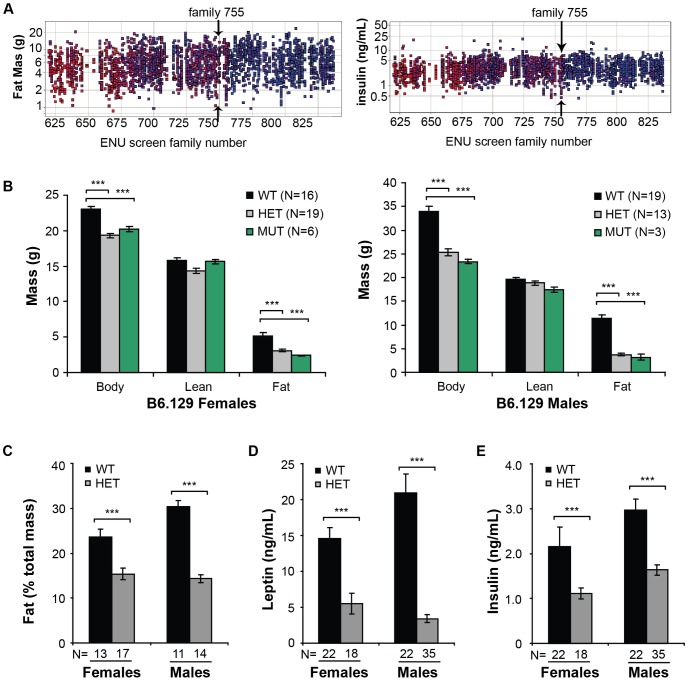
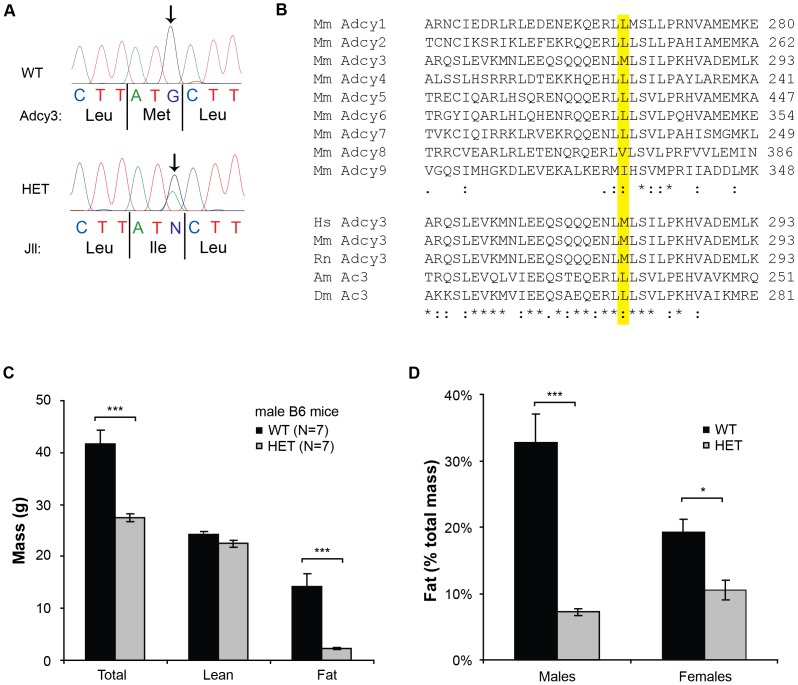
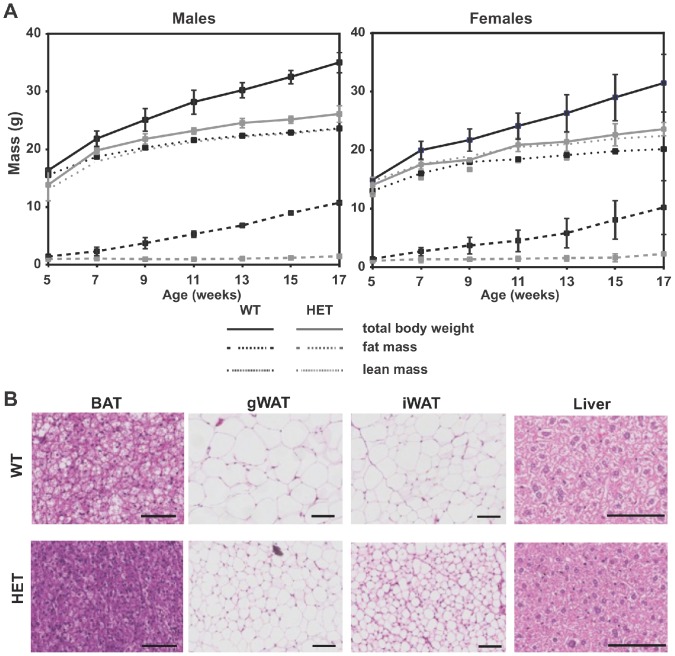
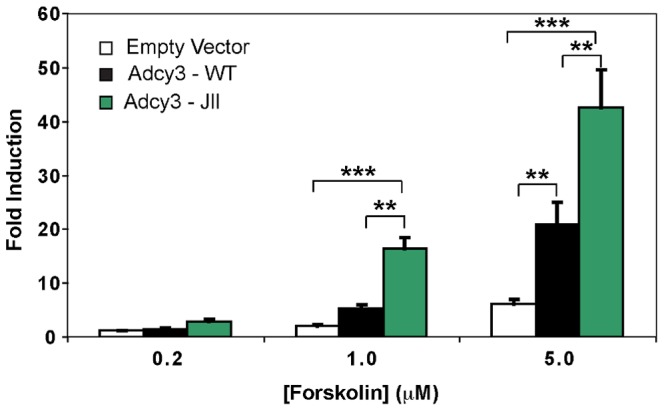
In a screen for genes that affect the metabolic response to high-fat diet (HFD), we selected one line of N-ethyl-N-nitrosourea (ENU)-mutagenized mice, Jll, with dominantly inherited resistance to diet-induced obesity (DIO). Mutant animals had dramatically reduced body weight and fat mass, and low basal insulin and glucose levels relative to unaffected controls. Both white adipose tissue (WAT) and brown adipose tissue (BAT) depots were smaller in mutant animals. Mutant animals fed a HFD gained only slightly more weight than animals fed regular chow, and were protected from hepatic lipid accumulation. The phenotype was genetically linked to a 5.7-Mb interval on chromosome 12, and sequencing of the entire interval identified a single coding mutation, predicted to cause a methionine-to-isoleucine substitution at position 279 of the Adcy3 protein (Adcy3M279I, henceforth referred to as Adcy3Jll). The mutant protein is hyperactive, possibly constitutively so, producing elevated levels of cyclic AMP in a cell-based assay. These mice demonstrate that increased Adcy3 activity robustly protect animals from diet-induced metabolic derangements.
Overview
The claims and statistics of this paper haven’t been checked yet.
Free: it reads the open-access text and checks the first 5 claims that cite a source we can check. Create a free account to check every claim.
Integrity signals
Registry
Cites
Statistics
Figures
Verification
Claims the paper makes
The claims and statistics of this paper haven’t been checked yet.
Free: it reads the open-access text and checks the first 5 claims that cite a source we can check. Create a free account to check every claim.
Claims other papers make about this one
Each is checked against this paper’s own text: does it say what the citing paper says it does?
In the citing paper
“Conversely, mice with a gain-of-function mutant in AC3 display resistance to diet-induced increases in body weight, leptin content, and insulin content (304).”
From Physiological roles of mammalian transmembrane adenylyl cyclase isoforms (2022) · cites this paper as [304]
Self-check
Percentages, sums and reported differences re-computed from the paper’s own numbers.
The self-check needs the paper’s full text.
Citations
Cites
Genome sequencing in microfabricated high-density picolitre reactors
Margulies, M., Egholm, M., Altman, W. E., Attiya, S., Bader, J. S., Bemben, L. A., Berka, J., Braverman, M. S., Chen, Y.-J., Chen, Z., et al. (2005) · Nature · doi:10.1038/nature03959 · Cited by 7,693
Association analyses of 249,796 individuals reveal 18 new loci associated with body mass index
MAGIC, Speliotes, E. K., on behalf of Procardis Consortium, Willer, C. J., Berndt, S. I., Monda, K. L., Thorleifsson, G., Jackson, A. U., Allen, H. L., Lindgren, C. M., et al. (2010) · Nature Genetics · doi:10.1038/ng.686 · Cited by 2,912
Impact of Overweight on the Risk of Developing Common Chronic Diseases During a 10-Year Period
Field, A. E., Coakley, E. H., Must, A., Spadano, J. L., Laird, N., Dietz, W. H., Rimm, E., & Colditz, G. A. (2001) · Archives of Internal Medicine · doi:10.1001/archinte.161.13.1581 · Cited by 1,694 · cited 1×
“Obesity increases the risk of heart disease, type 2 diabetes, hypertension, stroke, colon cancer, and early mortality [2,3].”
BackgroundGenetic diagnosis by whole exome capture and massively parallel DNA sequencing
Choi, M., Scholl, U. I., Ji, W., Liu, T., Tikhonova, I. R., Zumbo, P., Nayir, A., Bakkaloğlu, A., Özen, S., Sanjad, S., et al. (2009) · Proceedings of the National Academy of Sciences · doi:10.1073/pnas.0910672106 · Cited by 1,329
Jackson, R. S., Creemers, J. W. M., Ohagi, S., Raffin-Sanson, M.-L., Sanders, L., Montague, C. T., Hutton, J. C., & O'Rahilly, S. (1997) · Nature Genetics · doi:10.1038/ng0797-303 · Cited by 1,153 · cited 1×
“In the case of prohormone convertase 1 (PC1), monogenic obesity was identified in humans before a corresponding, obesity-causing mutation was identified in mice [7,8].”
BackgroundCrystal Structure of the Catalytic Domains of Adenylyl Cyclase in a Complex with G sα ·GTPγS
Tesmer, J. J. G., Sunahara, R. K., Gilman, A. G., & Sprang, S. R. (1997) · Science · doi:10.1126/science.278.5345.1907 · Cited by 796
βAR Signaling Required for Diet-Induced Thermogenesis and Obesity Resistance
Bachman, E. S., Dhillon, H., Zhang, C.-Y., Cinti, S., Bianco, A. C., Kobilka, B. K., & Lowell, B. B. (2002) · Science · doi:10.1126/science.1073160 · Cited by 783
Regulation and Role of Adenylyl Cyclase Isoforms
Hanoune, J., & Defer, N. (2001) · Annual Review of Pharmacology and Toxicology · doi:10.1146/annurev.pharmtox.41.1.145 · Cited by 691
McGee, D. L. (2005) · Annals of Epidemiology · doi:10.1016/j.annepidem.2004.05.012 · Cited by 582
Nguyen, D. M., & El-Serag, H. B. (2010) · Gastroenterology Clinics of North America · doi:10.1016/j.gtc.2009.12.014 · Cited by 531
Cited by
Loss-of-function variants in ADCY3 increase risk of obesity and type 2 diabetes
Grarup, N., Moltke, I., Andersen, M. K., Dalby, M., Vitting-Seerup, K., Kern, T., Mahendran, Y., Jørsboe, E., Larsen, C. V. L., Dahl-Petersen, I. K., et al. (2018) · Nature Genetics · doi:10.1038/s41588-017-0022-7 · Cited by 216
Loss-of-function mutations in ADCY3 cause monogenic severe obesity
Saeed, S., Bonnefond, A., Tamanini, F., Mirza, M. U., Manzoor, J., Janjua, Q. M., Din, S. M., Gaitan, J., Milochau, A., Durand, E., et al. (2018) · Nature Genetics · doi:10.1038/s41588-017-0023-6 · Cited by 187
Physiological roles of mammalian transmembrane adenylyl cyclase isoforms
Ostrom, K. F., LaVigne, J. E., Brust, T. F., Seifert, R., Dessauer, C. W., Watts, V. J., & Ostrom, R. S. (2022) · Physiological Reviews · doi:10.1152/physrev.00013.2021 · Cited by 131
Vaisse, C., Reiter, J. F., & Berbari, N. F. (2017) · Cold Spring Harbor Perspectives in Biology · doi:10.1101/cshperspect.a028217 · Cited by 112
“Conversely, a gain-of-function mutation in Adcy3 confers protection from diet-induced obesity (Pitman et al. 2014).”
BackgroundTong, T., Shen, Y., Lee, H.-W., Yu, R., & Park, T. (2016) · Scientific Reports · doi:10.1038/srep34179 · Cited by 82
Neuronal and astrocytic primary cilia in the mature brain
Sterpka, A., & Chen, X. (2018) · Pharmacological Research · doi:10.1016/j.phrs.2018.10.002 · Cited by 80
“tion mutation of AC3 in mice can protect the animals from diet-induced obesity [104].”
BackgroundKeele, G. R., Prokop, J. W., He, H., Holl, K., Littrell, J. C., Deal, A. W., Francic, S., Cui, L., Gatti, D. M., Broman, K. W., et al. (2017) · Obesity · doi:10.1002/oby.22075 · Cited by 72
“In addition, gain of function in Adcy3 protects against diet-induced obesity [35], further supporting a causal role for this gene.”
Li, W., Tang, R., Ma, F., Ouyang, S., Liu, Z., & Wu, J. (2018) · The Journal of Nutritional Biochemistry · doi:10.1016/j.jnutbio.2018.05.010 · Cited by 74
Ectopic Odorant Receptor Responding to Flavor Compounds: Versatile Roles in Health and Disease
Tong, T., Wang, Y., Kang, S., & Huang, K. (2021) · Pharmaceutics · doi:10.3390/pharmaceutics13081314 · Cited by 66
“Other ORs expressed in adipose tissues, such as olfr1434 and olfr984, are reported to be in association with obesity based on descriptive data; however, functional analysis for these OR genes and identification of their cognate ligands are required [53,54].”
BackgroundAdenylate cyclase 3: a new target for anti‐obesity drug development
Wu, L., Shen, C., Ahmed, M. S., Östenson, C., & Gu, H. F. (2016) · Obesity Reviews · doi:10.1111/obr.12430 · Cited by 59
“They found that the gain-of-function mutation (M279I) of the NEU gene had increased NEU gene activity and cAMP production and consequently the mutant mice had dramatically reduced body weight and fat mass, low basal insulin and glucose levels compared with wild type of mice (32).”
BackgroundType 3 adenylyl cyclase: a key enzyme mediating the cAMP signaling in neuronal cilia.
Qiu, L., LeBel, R. P., Storm, D. R., & Chen, X. (2016) · Europe PMC (PubMed Central) · Cited by 55
Oya, M., Miyasaka, Y., Nakamura, Y., Tanaka, M., Suganami, T., Mashimo, T., & Nakamura, K. (2024) · Cell Metabolism · doi:10.1016/j.cmet.2024.02.010 · Cited by 56
Sazzini, M., Abondio, P., Sarno, S., Gnecchi‐Ruscone, G. A., Ragno, M., Giuliani, C., Fanti, S. D., Ojeda‐Granados, C., Boattini, A., Marquis, J., et al. (2020) · BMC Biology · doi:10.1186/s12915-020-00778-4 · Cited by 43
Goñi, L., Riezu‐Boj, J. I., Milagro, F. I., Corrales, F. J., Ortiz, L., Cuervo, M., & Martínez, J. A. (2018) · Nutrients · doi:10.3390/nu10060789 · Cited by 36
“Moreover, mice with a gain-of-function mutation in Adcy3 presented increased Adcy3 activity and cAMP production and consequently the mutation protects mice from high fat diet-induced metabolic disorders [32].”
BackgroundLoss-of-function mutations in ADCY3 cause monogenic severe obesity
Saeed, S., Bonnefond, A., Tamanini, F., Mirza, M. U., Manzoor, J., Janjua, Q. M., Din, S. M., Gaitan, J., Milochau, A., Durand, E., et al. (2018) · Yearbook of pediatric endocrinology · doi:10.1530/ey.15.11.5 · Cited by 35
α-Cedrene protects rodents from high-fat diet-induced adiposity via adenylyl cyclase 3
Tong, T., Yu, R., & Park, T. (2018) · International Journal of Obesity · doi:10.1038/s41366-018-0176-0 · Cited by 35
Liraglutide reduces body weight by upregulation of adenylate cyclase 3
Li, Z., Liang, Y., Xia, N., Lai, Y., Pan, H., Zhou, S. Y., Jiang, F., & He, Y. (2017) · Nutrition and Diabetes · doi:10.1038/nutd.2017.17 · Cited by 31
Disruption of Type 3 Adenylyl Cyclase Expression in the Hypothalamus Leads to Obesity
Cao, H., Chen, X., Yang, Y., & R Storm, D. (2016) · Integrative Obesity and Diabetes · doi:10.15761/iod.1000149 · Cited by 25
“Subsequently, it was discovered that a gain of function mutation in AC3 protects mice from diet-induced obesity providing further evidence that AC3 may play a major role in weight control [10].”
BackgroundGenetics of metabolic traits in Greenlanders: lessons from an isolated population
Andersen, M. K., & Hansen, T. F. (2018) · Journal of Internal Medicine · doi:10.1111/joim.12814 · Cited by 27
Abdel‐Halim, S. M., Madhoun, A. S. A., Nizam, R., Melhem, M., Cherian, P., Al‐Khairi, I., Haddad, D., Abu‐Farha, M., Abubaker, J. A., Bitar, M. S., et al. (2020) · Biology · doi:10.3390/biology9090244 · Cited by 27
“In addition, ADCY3-knockout mice were found to be more vulnerable to obesity induced by a high-fat diet [17]; meanwhile, the gain-of-function ADCY3M279I mutant protects animals from diet-induced metabolic imbalance [18].”
BackgroundMechanisms of Weight Control by Primary Cilia
Lee, C. H., Kang, G. M., & Kim, M. (2022) · Molecules and Cells · doi:10.14348/molcells.2022.2046 · Cited by 32
“In line with the aforementioned evidence, a gain-of-function mutation in Adcy3 was shown to induce resistance to diet-induced obesity in mice (Pitman et al., 2014).”
BackgroundCold-induced expression of a truncated adenylyl cyclase 3 acts as rheostat to brown fat function
Khani, S., Topel, H., Kardinal, R., Tavanez, A. R., Josephrajan, A., Larsen, B. D., Gaudry, M. J., Leyendecker, P., Egedal, N. M., Güller, A. S., et al. (2024) · Nature Metabolism · doi:10.1038/s42255-024-01033-8 · Cited by 28
Neuronal primary cilia integrate peripheral signals with metabolic drives
DeMars, K. M., Ross, M. R., Starr, A., & McIntyre, J. C. (2023) · Frontiers in Physiology · doi:10.3389/fphys.2023.1150232 · Cited by 24
“Conversely, a gain-of-function mutation (M279I) protects mice against diet-induced obesity (Pitman et al., 2014).”
BackgroundNew ADCY3 Variants Dance in Obesity Etiology
Tian, Y., Peng, B.-Q., & Fu, X. (2018) · Trends in Endocrinology and Metabolism · doi:10.1016/j.tem.2018.02.004 · Cited by 24
Cold-induced expression of a truncated Adenylyl Cyclase 3 acts as rheostat to brown fat function
Khani, S., Topel, H., Josephrajan, A., Larsen, B. D. M., de Almeida Tavanez, A. R. A., Gaudry, M. J., Leyendecker, P., Stanic, N., Gaziano, I., Hansmeier, N. R., et al. (2022) · doi:10.1101/2022.08.01.502156 · Cited by 24
Chen, J., Ding, Q., An, L., & Wang, H. (2022) · Frontiers in Pharmacology · doi:10.3389/fphar.2022.949384 · Cited by 25
“It is further identified that CaMKII (CaM-dependent protein kinase II) phosphorylates and inhibits ADCY3, suggesting an indirect inhibition effect of Ca2+ (Wei et al., 1996) (Figure 1).”
BackgroundInfluentialFilbertone Ameliorates Adiposity in Mice Fed a High-Fat Diet via Activation of cAMP Signaling
Moon, Y., Tong, T., Kang, W., & Park, T. (2019) · Nutrients · doi:10.3390/nu11081749 · Cited by 21
Dysfunction of intraflagellar transport-A causes hyperphagia-induced obesity and metabolic syndrome
Jacobs, D. T., Silva, L. M., Allard, B. A., Schonfeld, M. P., Chatterjee, A., Talbott, G. C., Beier, D. R., & Tran, P. V. (2016) · Disease Models & Mechanisms · doi:10.1242/dmm.025791 · Cited by 23
“Deletion of AC3 in mice causes obesity (Wang et al., 2009), whereas a gain-of-function mutation in AC3 protects mice from diet-induced obesity (Pitman et al., 2014).”
Adenylate Cyclase Type III Is Not a Ubiquitous Marker for All Primary Cilia during Development
Antal, M. C., Bénardais, K., Samama, B., Auger, C., Schini‐Kerth, V. B., Ghandour, S., & Boehm, N. (2017) · PLoS ONE · doi:10.1371/journal.pone.0170756 · Cited by 24
Molecular modelling of novel ADCY3 variant predicts a molecular target for tackling obesity
Toumba, M., Fanis, P., Vlachakis, D. P., Neocleous, V., Phylactou, L. A., Skordis, N., Mantzoros, C. S., & Pantelidou, M. (2021) · International Journal of Molecular Medicine · doi:10.3892/ijmm.2021.5065 · Cited by 22
Szalanczy, A., Chuang, C., & Woods, L. C. S. (2021) · The Journal of Nutritional Biochemistry · doi:10.1016/j.jnutbio.2021.108928 · Cited by 22
Paternal High-Protein Diet Programs Offspring Insulin Sensitivity in a Sex-Specific Manner
Gong, P., Bailbé, D., Bianchi, L., Pommier, G., Liu, J., Tolu, S., Stathopoulou, M. G., Portha, B., Grandjean, V., & Movassat, J. (2021) · Biomolecules · doi:10.3390/biom11050751 · Cited by 18
“Adcy3 has been implicated in the regulation of body adiposity [51,52], but also has metabolic roles in the liver and muscle [53,54].”
BackgroundQi, R., Liang, Y., Yu, J., Chen, B., Jiang, J., Wu, X., Lu, W., & Li, Z. (2024) · Reproductive Biology and Endocrinology · doi:10.1186/s12958-024-01202-0 · Cited by 18
“One obesity locus identified by genome-wide association studies is located within or near the AC3 gene [5].”
BackgroundPowell, D. R., Revelli, J., Doree, D. D., DaCosta, C. M., Desai, U., Shadoan, M. K., Rodriguez, L., Mullens, M., Yang, Q. M., Ding, Z., et al. (2021) · Diabetes Metabolic Syndrome and Obesity · doi:10.2147/dmso.s322083 · Cited by 16
Yang, D. J., Wu, X., Wang, W., Zhou, Y., & Wang, Z. (2021) · Advanced Science · doi:10.1002/advs.202102568 · Cited by 16
Park, S. (2022) · Nutrition Bulletin · doi:10.1111/nbu.12569 · Cited by 13
Adenylate cyclase 3: a potential genetic link between obesity and major depressive disorder
Fitzpatrick, M., & Woods, L. C. S. (2023) · Physiological Genomics · doi:10.1152/physiolgenomics.00056.2023 · Cited by 14
Lunsky, I. O., & Meyre, D. (2018) · Current Opinion in Endocrine and Metabolic Research · doi:10.1016/j.coemr.2018.10.002 · Cited by 11
Adenylyl cyclase 3 regulates osteocyte mechanotransduction and primary cilium
Duffy, M. P., Sup, M. E., & Guo, X. E. (2021) · Biochemical and Biophysical Research Communications · doi:10.1016/j.bbrc.2021.08.033 · Cited by 14
Chu, S., Narayan, V. P., Sung, M., & Park, T. (2017) · Molecular Nutrition & Food Research · doi:10.1002/mnfr.201601124 · Cited by 8
Role of Obesity in Human Health and Disease
Rao, V., & Rao, L. (2021) · IntechOpen eBooks · doi:10.5772/intechopen.90990 · Cited by 9
Luo, G., Wang, S., Ai, Y., Li, J., & Ren, Z. (2022) · Biology · doi:10.3390/biology11070944 · Cited by 8
“The ADCY3 gene is associated with obesity and lipid metabolism [63,64].”
BackgroundThe Multiple Causes of Obesity
Saxena, I., Suman, S., Kaur, A. P., Abhilasha, Mitra, P., Sharma, P., & Kumar, M. (2021) · IntechOpen eBooks · doi:10.5772/intechopen.98835 · Cited by 10
Fitzpatrick, M. K., Szalanczy, A., Beeson, A., Vora, A., Scott, C., Grzybowski, M. N., Klotz, J., Der, N., Chen, R., Geurts, A. M., et al. (2024) · Obesity · doi:10.1002/oby.24178 · Cited by 5
“EE had not been previously assessed in any Adcy3 KO model, but one study examining a gain-of-function mutation in Adcy3 reported that EE played a role in protecting against diet-induced obesity, although this study was only done in male mice [27].”
Genetic architecture of obesity and advances in precision pharmacotherapy: a comprehensive review
Kavaja, F., Liehr, T., & Temaj, G. (2026) · Acta Biochimica Polonica · doi:10.3389/abp.2026.15484 · Cited by 6
Alhaidan, Y., Christesen, H. T., Lundberg, E., Balwi, M. A. A., & Brusgaard, K. (2021) · Frontiers in Endocrinology · doi:10.3389/fendo.2021.657873 · Cited by 5
Functional Evaluation of a Novel Homozygous ADCY3 Variant Causing Childhood Obesity
Mohammed, I., Selvaraj, S., Ahmed, W. S., Al-Barazenji, T., Dauleh, H., Love, D. R., Saraiva, L. R., & Hussain, K. (2024) · International Journal of Molecular Sciences · doi:10.3390/ijms252111815 · Cited by 5
“In contrast, in another study in mice, a gain-of-function mutation in the ADCY3 had a protective effect against diet-induced obesity [7].”
BackgroundResultGuo, J., Kang, S., Huang, K., & Tong, T. (2024) · Foods · doi:10.3390/foods13233938 · Cited by 4
“Adcy3 − / − mice exhibit pronounced obesity, hyperphagia, and leptin resistance and lower physical activity [73], whereas the Adcy3 gain-of-function mutation results in reduced fat mass and body weights in HFD-fed mice [74].”
Fitzpatrick, M. K., Dyson, C., Beeson, A., Adrian, L., Marrs, G. S., Grzybowski, M. N., Klotz, J., Geurts, A. M., Chen, R., Weiner, J. L., et al. (2025) · Genes Brain & Behavior · doi:10.1111/gbb.70028 · Cited by 2
“Despite the fact that MDD and obesity have been shown to be bi-directionally associated and that anxiety may also share causal mechanisms with MDD and obesity, very few studies have investigated biological and genetic mechanisms that may contribute to these associations.”
Adcy8 deficiency contributes to impaired lipolysis and an increased prevalence of obesity in mice
Han, M., Shu, Q., Yu, R., Wu, S., Deng, H., Liu, Y., Yu, Q., Li, W., Gao, L., Zhao, Y., et al. (2025) · Biochimica et Biophysica Acta (BBA) - Molecular and Cell Biology of Lipids · doi:10.1016/j.bbalip.2025.159648 · Cited by 3
Genetic Polymorphisms Associated with the Efficiency of Weight Loss: A Systematic Review
Egorova, E. S., & Ahmetov, I. I. (2023) · Russian Journal of Genetics · doi:10.1134/s1022795423080057 · Cited by 3
“…of heterozygous mice for gene Adcy3 +/– leads to a decrease in the expression of genes involved in thermogenesis, fatty-acid oxidation, and insulin signaling in mice, and, conversely, to an increase in the expression of genes associated with adipogenesis in peripheral tissues [75].”
BackgroundXu, Y., He, C., Fan, J., Zhou, Y., Cheng, C., Meng, R., Cui, Y., Li, W., Gamazon, E. R., & Zhou, D. (2024) · EBioMedicine · doi:10.1016/j.ebiom.2024.105305 · Cited by 2
“46 As indicated by cellular experiments, nuclear PHIP has been shown to enhance the transcription of pro-opiomelanocortin (POMC), a neuropeptide known to suppress appetite.”
An Update on Mendelian Forms of Obesity and their Personalized Treatments
Chen, S., & Meyre, D. (2020) · Springer eBooks · doi:10.1007/978-3-030-53370-0_16 · Cited by 2
Genetic Polymorphisms Associated with the Efficiency of Weight Loss: A Systematic Review
Egorova, E. S., & Ahmetov, I. I. (2023) · Генетика · doi:10.31857/s0016675823080052 · Cited by 1
Exploring Genetic Heterogeneity in Type 2 Diabetes Subtypes
Timasheva, Y., Kochetova, O. V., Balkhiyarova, Z., Avzaletdinova, D. S., Korytina, G. F., Kochetova, T. M., & Nouwen, A. (2025) · Genes · doi:10.3390/genes16101131 · Cited by 3
“Loss-of-function mutations in ADCY3 have been linked to obesity and T2D in humans and mice, whereas gain-of-function mutations are protective against diet-induced obesity [24–27].”
Liu, L., Cui, H., Xiang, Z., Dong, N., & Niu, D. (2025) · Functional & Integrative Genomics · doi:10.1007/s10142-025-01789-6 · Cited by 2
Sypniewski, M., & Szydłowski, M. (2023) · Veterinary Sciences · doi:10.3390/vetsci10060390 · Cited by 4
“Studies on mice showed that gain-of-function mutation in ADCY3 reduced white and brown adipose tissue depots and protected the animals from hepatic lipid accumulation when fed with a high-fat diet [34].”
BackgroundAlhaidan, Y., Christesen, H. T., Lundberg, E., Balwi, M. A. A., & Brusgaard, K. (2022) · Yearbook of pediatric endocrinology · doi:10.1530/ey.19.2.8
Sazzini, M., Abondio, P., Sarno, S., Gnecchi‐Ruscone, G. A., Ragno, M., Giuliani, C., De Fanti, S., Ojeda‐Granados, C., Boattini, A., Marquis, J., et al. (2020) · Figshare · doi:10.6084/m9.figshare.12355664
Fitzpatrick, M. K., Seshie, O., Scott, C. C., Vora, A., Seramur, M. E., Beeson, A., Adrian, L. A., Grzybowski, M. N., Klotz, J., Geurts, A. M., et al. (2026) · Research Square · doi:10.21203/rs.3.rs-8309561/v1
Wang, W., Li, Y., Dong, S., Liu, Y., Guo, C., Su, Y., Tian, W., Hu, X., & Wang, Z. (2026) · EMBO Reports · doi:10.1038/s44319-026-00758-9
“Moreover, ADCY3 is the predominant adenylate cyclase isoform expressed in WAT, and its mutation markedly reduces adenylate cyclase activity in this tissue (Pitman et al, 2014).”
Latest Advances in Obesity Treatment by Regulating Adipocyte Thermogenesis
Nie, T., Chen, J., Wang, Z., & Mao, L. (2026) · PPAR Research · doi:10.1155/ppar/1742256
Metadata
- Authors
- Pitman, J. L., Wheeler, M. C., Lloyd, D. J., Walker, J. R., Glynne, R. J., & Gekakis, N.
- Affiliations
- Scripps Research Institute (US)
- Genomics Institute of the Novartis Research Foundation (US)
- San Diego State University (US)
- Corresponding author
- Gekakis, Nicholas
- Venue
- PLoS ONE
- Publisher
- Public Library of Science (PLoS)
- Published
- 2014-10-16
- Volume
- 9
- Issue
- 10
- Pages
- e110226
- ISSN
- 1932-6203 (ISSN-L)
- PMC
- PMC4199629
- OpenAlex
- W2046035265
- Cited by
- 63
- References
- 37
- Citations by year
- 2026: 4 · 2025: 4 · 2024: 7 · 2023: 5 · 2022: 5 · 2021: 12 · 2020: 4 · 2019: 1 · 2018: 10 · 2017: 5 · 2016: 5 · 2015: 1
- FWCI
- 1.79
- Type
- journal article
- Language
- en
- Open access
- gold
- doi.org
- Locations
- PLoS ONE (publishedVersion, cc-by)
- Europe PMC (PubMed Central) (publishedVersion, cc-by)
- PubMed Central (publishedVersion, cc-by)
- PubMed (publishedVersion)
- DOAJ (DOAJ: Directory of Open Access Journals) (submittedVersion, cc-by-sa)
- Figshare (submittedVersion, cc-by)
- Funders
- National Institutes of Health
- University of North Carolina at Chapel Hill
- National Heart, Lung, and Blood Institute (R21HL113696)
- National Institute of Diabetes and Digestive and Kidney Diseases (R01DK079925, K01DK090185)
- Topics
- Life Sciences › Neuroscience › Endocrine and Autonomic Systems › Regulation of Appetite and Obesity
- Health Sciences › Medicine › Physiology (medical) › Adipose Tissue and Metabolism
- Health Sciences › Medicine › Endocrinology, Diabetes and Metabolism › Adipokines, Inflammation, and Metabolic Diseases
- Keywords
- ADCY3, diet-induced obesity, high-fat diet, obesity resistance, gain-of-function mutations, cyclic AMP, white adipose tissue, brown adipose tissue, hepatic lipid accumulation, insulin, glucose, N-ethyl-N-nitrosourea mutagenesis, genetic screen, mouse model
- MeSH terms
- Cyclic AMP, Adenylyl Cyclases, Alleles, Animals, Adipose Tissue, Brown, Energy Metabolism, Female, Colforsin, Male, Mutation, Obesity, Mice, Adipose Tissue, White, Diet, High-Fat
About these checks
Registry, retraction, Cites and statistics results are computed, not judged, with one exception: a printed reference that no index lists is read once by a model before it counts as a citation error. Claims are extracted by a model and kept only when their quote appears verbatim in the text; each cited source is then checked, with a model’s help, for whether it says what the claim relies on. Those verdicts can be wrong — read the claim’s quote and the cited source before relying on one.
Statistics and arithmetic are recomputed, not judged.
Confidence bands are shown only for fields calibrated on our annotated test set. None is calibrated yet, so no band is shown.
What counts as a claim ›How we measure confidence ›How we check this ›
Are you an author, or do you see a problem with this page? Request a review
Data sources
Bibliographic data: Semantic Scholar, OpenAlex, Crossref.
Contains information from the Semantic Scholar Academic Graph Datasets, made available under the ODC Attribution License (ODC-BY 1.0).
Semantic Scholar’s data is described in: Kinney, R., et al. (2023). The Semantic Scholar Open Data Platform. arXiv:2301.10140.
