

Extent of Non-Publication in Cohorts of Studies Approved by Research Ethics Committees or Included in Trial Registries
Open accessThe DOI matches its Crossref record; 64 of the 65 references it cites were found in a registry or an index.
Abstract
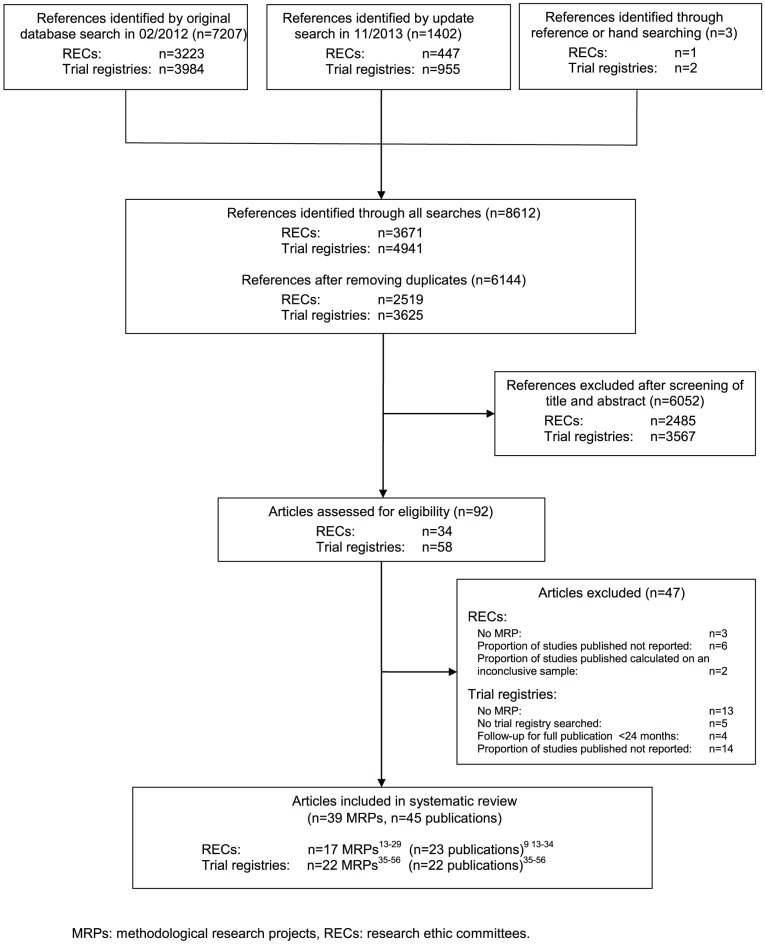
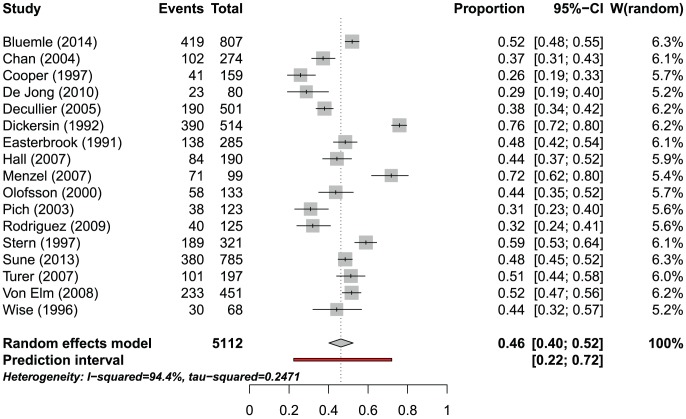
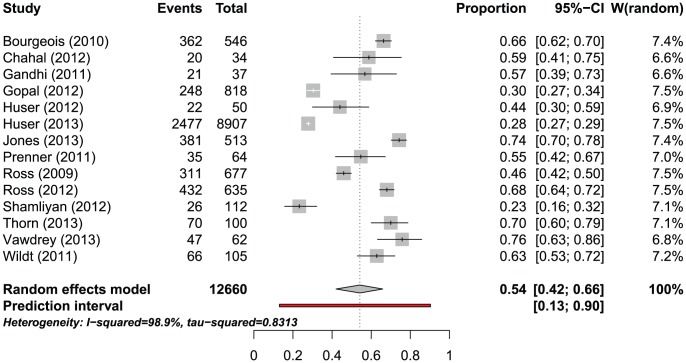
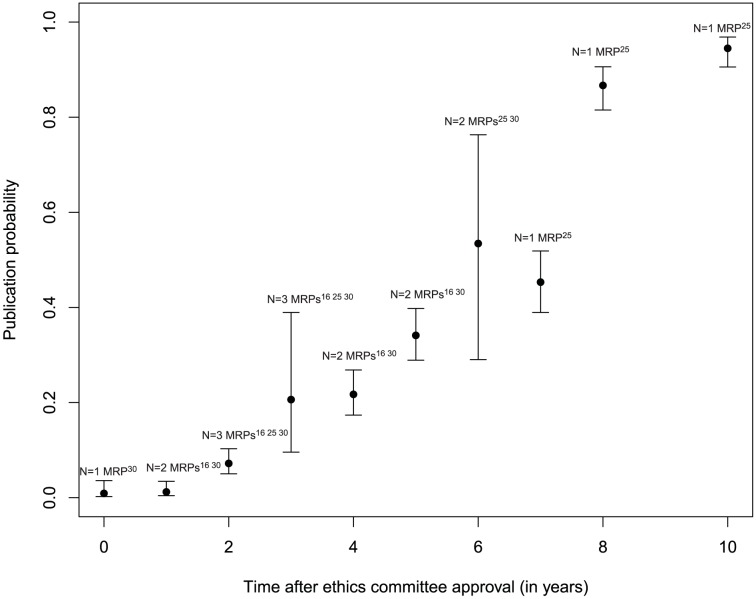
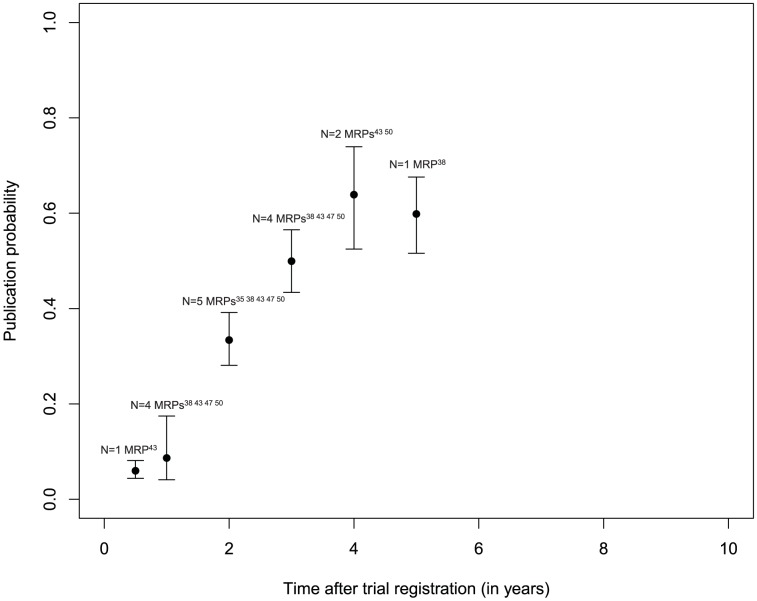
BACKGROUND: The synthesis of published research in systematic reviews is essential when providing evidence to inform clinical and health policy decision-making. However, the validity of systematic reviews is threatened if journal publications represent a biased selection of all studies that have been conducted (dissemination bias). To investigate the extent of dissemination bias we conducted a systematic review that determined the proportion of studies published as peer-reviewed journal articles and investigated factors associated with full publication in cohorts of studies (i) approved by research ethics committees (RECs) or (ii) included in trial registries. METHODS AND FINDINGS: Four bibliographic databases were searched for methodological research projects (MRPs) without limitations for publication year, language or study location. The searches were supplemented by handsearching the references of included MRPs. We estimated the proportion of studies published using prediction intervals (PI) and a random effects meta-analysis. Pooled odds ratios (OR) were used to express associations between study characteristics and journal publication. Seventeen MRPs (23 publications) evaluated cohorts of studies approved by RECs; the proportion of published studies had a PI between 22% and 72% and the weighted pooled proportion when combining estimates would be 46.2% (95% CI 40.2%-52.4%, I2 = 94.4%). Twenty-two MRPs (22 publications) evaluated cohorts of studies included in trial registries; the PI of the proportion published ranged from 13% to 90% and the weighted pooled proportion would be 54.2% (95% CI 42.0%-65.9%, I2 = 98.9%). REC-approved studies with statistically significant results (compared with those without statistically significant results) were more likely to be published (pooled OR 2.8; 95% CI 2.2-3.5). Phase-III trials were also more likely to be published than phase II trials (pooled OR 2.0; 95% CI 1.6-2.5). The probability of publication within two years after study completion ranged from 7% to 30%. CONCLUSIONS: A substantial part of the studies approved by RECs or included in trial registries remains unpublished. Due to the large heterogeneity a prediction of the publication probability for a future study is very uncertain. Non-publication of research is not a random process, e.g., it is associated with the direction of study findings. Our findings suggest that the dissemination of research findings is biased.
Overview
The claims and statistics of this paper haven’t been checked yet.
Free: it reads the open-access text and checks the first 5 claims that cite a source we can check. Create a free account to check every claim.
Integrity signals
Registry
Cites
Statistics
Figures
Verification
Claims the paper makes
The claims and statistics of this paper haven’t been checked yet.
Free: it reads the open-access text and checks the first 5 claims that cite a source we can check. Create a free account to check every claim.
Claims other papers make about this one
Each is checked against this paper’s own text: does it say what the citing paper says it does?
The source backs part of the claim, not all of it — or backs it for a different population, condition or comparison.
In the citing paper
“Such an association has been observed for randomized and non-randomized studies of interventions 6 , diagnostic test accuracy studies 9 , prognostic accuracy studies 10 and qualitative studies 11 .”
From Investigating and dealing with publication bias and other reporting biases in meta-analyses of health research: a review (2021) · cites this paper as [6]
Experimental — accuracy not yet measuredThe cited source says what the claim attributes to it.
In the citing paper
“These investigations have found that, on average, studies with statistically significant or “positive” results are more likely to be published than null or “negative” studies (Figure 1).”
From Investigating and dealing with publication bias and other reporting biases in meta-analyses of health research: a review (2021) · cites this paper as [6]
Self-check
Percentages, sums and reported differences re-computed from the paper’s own numbers.
The self-check needs the paper’s full text.
Citations
Cites
Measuring inconsistency in meta-analyses
Higgins, J. P. T., Thompson, S. G., Deeks, J. J., & Altman, D. G. (2003) · BMJ · doi:10.1136/bmj.327.7414.557 · Cited by 63,139 · cited 1×
“[11] Given the substantial heterogeneity found we also decided to calculate prediction intervals (PI) - which were not pre-specified in the published protocol - using the method suggested by Higgins et al.”
MethodWhy Most Published Research Findings Are False
Ioannidis, J. P. A. (2005) · PLoS Medicine · doi:10.1371/journal.pmed.0020124 · Cited by 10,505
Why Most Published Research Findings Are False
Ioannidis, J. P. A. (2005) · CHANCE · doi:10.1080/09332480.2005.10722754 · Cited by 4,702 · cited 1×
“[5] It is obvious that these selection mechanisms violate the fundamental scientific and ethical imperative that findings from all research on humans should be available to advance knowledge.”
BackgroundPublication bias in clinical research
Easterbrook, P. J., Gopalan, R., Berlin, J. A., & Matthews, D. R. (1991) · The Lancet · doi:10.1016/0140-6736(91)90201-y · Cited by 3,109 · cited 3×
“Easterbrook 1992 [9, 19] Different medical specialties UK Research protocols approved/completed by the Central Oxford REC between 1984 and 1987 (RCT+others) Author contact (100% response) 29 (from completion) 285 (completed)/ 487 (approved) 138 (48.”
BackgroundA Re-Evaluation of Random-Effects Meta-Analysis
Higgins, J. P. T., Thompson, S. G., & Spiegelhalter, D. J. (2009) · Journal of the Royal Statistical Society Series A: Statistics in Society · doi:10.1111/j.1467-985x.2008.00552.x · Cited by 2,569
Chan, A.-W., Hróbjartsson, A., Haahr, M. T., Gøtzsche, P. C., & Altman, D. G. (2004) · JAMA · doi:10.1001/jama.291.20.2457 · Cited by 1,845 · cited 5×
“Eight [17, 19–21, 23, 26–28] included studies from different fields and five [13, 14, 18, 22, 25] did not provide any information.”
BackgroundMethodInfluentialSuñé, P., Suñé, J. M., & Montoro, J. B. (2013) · PLoS ONE · doi:10.1371/journal.pone.0054583 · Cited by 1,687 · cited 6×
“Factors associated with time to publication The time to full publication of studies being published in peer-reviewed journals was reported in two MRPs following studies after REC approval: [17, 26] One MRP [17] reported a statistically significant (p,0.”
BackgroundInfluentialIncreasing value and reducing waste in research design, conduct, and analysis
Ioannidis, J. P. A., Greenland, S., Hlatky, M. A., Khoury, M. J., Macleod, M. R., Moher, D., Schulz, K. F., & Tibshirani, R. (2014) · The Lancet · doi:10.1016/s0140-6736(13)62227-8 · Cited by 1,597
The Existence of Publication Bias and Risk Factors for Its Occurrence
Dickersin, K. (1990) · JAMA: The Journal of the American Medical Association · doi:10.1001/jama.1990.03440100097014 · Cited by 1,417
Dwan, K., Gamble, C., Williamson, P. R., Kirkham, J. J., & the Reporting Bias Group (2013) · PLoS ONE · doi:10.1371/journal.pone.0066844 · Cited by 1,127 · cited 1×
“[58] In addition, a Cochrane Review concluded that trials with positive findings are published more often and more quickly than trials with negative findings.”
Background
Cited by
Items 101–200 of 263
Changes to aspects of ongoing randomised controlled trials with fixed designs
Coskinas, X., Simes, J. R., Schou, I. M., & Martin, A. J. (2020) · Trials · doi:10.1186/s13063-020-04374-3 · Cited by 11
Hartwell, M. L., Sajjadi, N. B., Shepard, S., Whelan, J., Roberts, J. N., Ford, A. I., Beaman, J., & Vassar, M. B. (2022) · Substance Abuse · doi:10.1080/08897077.2021.2010261 · Cited by 11
Systematic Reviews and Meta‐Analysis
Crombie, I. (2021) · Wiley eBooks · doi:10.1002/9781394322183.ch5 · Cited by 9
Transparency in risk regulation : the case of the European Medicines Agency
Balog‐Way, D. H. P. (2017) · Research Portal (King's College London) · Cited by 14
Investigating and Dealing with Publication Bias and Other Reporting Biases
Page, M. J., Sterne, J. A. C., Higgins, J. P. T., & Egger, M. (2022) · Wiley eBooks · doi:10.1002/9781119099369.ch5 · Cited by 14
Hoffmann, J., Großmann, R., & Widmann, A. (2022) · Frontiers in Medicine · doi:10.3389/fmed.2022.1069933 · Cited by 8
“(8) conducted a systematic review to determine the proportion of studies published as peer-reviewed journal articles.”
BackgroundMorrow, R. L., Mintzes, B. J., Gray, G., Law, M. R., Garrison, S., & Dormuth, C. R. (2023) · BMJ Open · doi:10.1136/bmjopen-2022-068221 · Cited by 12
“However, about 4 in every 10 clinical trials are not published or only published after a long delay.(2) In this study, I am interested in trying to better understand this phenomenon, in part by talking to trial investigators and research administrators about their experiences and views related to trials and trial repo…”
BackgroundInfluentialAn Introduction to Systematic Reviews and Meta-Analyses
Rao, S. C. (2023) · APIK Journal of Internal Medicine · doi:10.4103/ajim.ajim_36_23 · Cited by 9
Cancer randomized trials showed that dissemination bias is still a problem to be solved
Urrútia, G., Ballesteros, M., Djulbegović, B., Gich, I. J., Figuls, M. R. I., & Bonfill, X. (2016) · Journal of Clinical Epidemiology · doi:10.1016/j.jclinepi.2016.04.011 · Cited by 10
Nsanzabaganwa, C., Habineza, H., Nyirimanzi, N., Umuhoza, C., Cartledge, K., Conard, C., & Cartledge, P. (2019) · Pan African Medical Journal · doi:10.11604/pamj.2019.32.164.18409 · Cited by 8
“Encouraging students to publish dissertation work is important as the future synthesis of research, in systematic reviews, is compromised if journal publications represent a biased selection of research projects conducted [15].”
BackgroundThiele, C., & Hirschfeld, G. H. F. (2022) · PLoS ONE · doi:10.1371/journal.pone.0267883 · Cited by 10
Kaul, T., Damen, J. A., Seidler, A. L., Willson, M. L., Karam, G., Idema, D. L., Kusters, M. P. T., Dowsett, M. A., Abutahoun, T. I. H., Hooft, L., et al. (2025) · Journal of Clinical Epidemiology · doi:10.1016/j.jclinepi.2025.111901 · Cited by 9
Asiimwe, I. G., & Rumona, D. (2016) · Research Integrity and Peer Review · doi:10.1186/s41073-016-0017-4 · Cited by 9
“Schmucker and colleagues also noted that the probability of publication within 2 years, for their study, ranged from 7 to 30 % [51].”
BackgroundMorrow, R. L., Mintzes, B. J., Gray, G., Law, M. R., Garrison, S., & Dormuth, C. R. (2022) · British Journal of Clinical Pharmacology · doi:10.1111/bcp.15574 · Cited by 8
“A systematic review estimated the proportion of studies included in trial registries that were published as journal articles, based on studies of nonpublication assessing publication status after a minimum of 24 months from study completion.(3) It found that only 54.”
BackgroundWoodhead, A., North, J. S., Hill, J., Murphy, C. P., Kidgell, D. J., & Tallent, J. (2023) · Experimental Brain Research · doi:10.1007/s00221-023-06563-3 · Cited by 8
“Publication bias is a well-recognised issue in science (DeVito and Goldacre 2018) with a tendency to favour publication of studies reporting significant over null effects (Fanelli, 2013; Schmucker et al. 2014).”
BackgroundPublication outcome of abstracts presented at the AACC annual meeting
Greene, D. N., Wilson, A. R., Bailey, N. M., & Schmidt, R. L. (2016) · Clinica Chimica Acta · doi:10.1016/j.cca.2016.02.019 · Cited by 7
Matvienko‐Sikar, K., Adair, L. S., Bell, L., Birken, C. S., Brown, V., Dahly, D. L., Doherty, A. S., Golley, R. K., Leahy‐Warren, P., McBride, M., et al. (2023) · HRB Open Research · doi:10.12688/hrbopenres.13797.1 · Cited by 6
Paludan‐Müller, A. S., MacLean-Nyegaard, I. R., & Munkholm, K. (2022) · Journal of Clinical Epidemiology · doi:10.1016/j.jclinepi.2022.02.004 · Cited by 40
Publication rates in small German trials remained low five years after trial completion
Jansen, M. S., Dekkers, O. M., Groenwold, R. H. H., & Siegerink, B. (2022) · Contemporary Clinical Trials · doi:10.1016/j.cct.2022.106899 · Cited by 6
Motahari-Nezhad, H. (2023) · Aslib Journal of Information Management · doi:10.1108/ajim-08-2022-0364 · Cited by 6
Dal‐Ré, R., Castell, M. V., & García‐Puig, J. (2015) · Revista Clínica Española (English Edition) · doi:10.1016/j.rceng.2015.08.004 · Cited by 6
Strech, D., & Littmann, J. (2016) · Research Ethics · doi:10.1177/1747016115626497 · Cited by 8
“However, studies still demonstrate that in many instances the results of trials which were approved by Research Ethics Committees (RECs) are published only partially or not at all (Blumle et al., 2014; Kasenda et al., 2014a, b; Schmucker et al., 2014).”
ResultJull, A., & Walker, N. K. (2022) · BMJ Open · doi:10.1136/bmjopen-2022-065050 · Cited by 6
Cuschieri, S. (2019) · Saudi Journal of Anaesthesia · doi:10.4103/sja.sja_575_18 · Cited by 6
“[6,7] Unfortunately, it was reported that only 60% of the RCTs are fully published in scientific journals.[8] Regretfully, trials that obtain a positive outcome are more likely to be published than those obtaining a negative outcome.”
Blümle, A., Haag, T., Balmford, J., Rücker, G., Schumacher, M. C., & Binder, N. (2020) · PLoS ONE · doi:10.1371/journal.pone.0230797 · Cited by 9
“A systematic review of the extent of non-publication of studies approved by research ethics committees (REC) or included in trial registries showed that only about half of all studies were eventually published in a peer-reviewed journal [8, 11, 12].”
BackgroundResultInfluentialPublication Rates and Reported Results in a Cohort of Gene- and Cell-Based Therapy Trials
Coppens, D., Gardarsdóttir, H., van den Bogert, C. A., Bruin, M. L. D., Leufkens, H. G. M., & Hoekman, J. (2020) · Regenerative Medicine · doi:10.2217/rme-2019-0066 · Cited by 5
Software engineering principles address current problems in the systematic review ecosystem
Bashir, R., & Dunn, A. G. (2018) · Journal of Clinical Epidemiology · doi:10.1016/j.jclinepi.2018.12.014 · Cited by 6
Accentuating Research Scholarship Through Innovative Student Opportunities: A Mentored Approach
Visek, A. J., Middleton, T. R. F., O’Neil, L., Scheadler, T. R., & Arvinen‐Barrow, M. (2021) · Journal for Advancing Sport Psychology in Research · doi:10.55743/000002 · Cited by 6
“For example, more than half of submitted peer-reviewed research manuscripts are not accepted for publication (Blümle et al., 2016; Chen et al., 2016; Schumaker et al., 2014).”
BackgroundFrank, R. A., Fabiano, N., Hallgrimson, Z., Korevaar, D. A., Cohen, J. F., Bossuyt, P. M., Leeflang, M., Moher, D., McInnes, M. D. F., Treanor, L. M., et al. (2022) · Journal of Magnetic Resonance Imaging · doi:10.1002/jmri.28046 · Cited by 7
Wright, D. N. M., Williams, E., Bryce, C., le May, A., Stein, K., Milne, R., & Walley, T. (2018) · Health Research Policy and Systems · doi:10.1186/s12961-018-0339-4 · Cited by 5
DeVito, N., Drysdale, H., McKee, M., & Goldacre, B. M. (2021) · Tobacco Control · doi:10.1136/tobaccocontrol-2020-056221 · Cited by 7
Pandolfini, C., & Bonati, M. R. (2018) · Trials · doi:10.1186/s13063-018-2910-2 · Cited by 4
Athena Unbound: Why and How Scholarly Knowledge Should Be Free for All
Baldwin, P. A. (2023) · The MIT Press eBooks · doi:10.7551/mitpress/14887.001.0001 · Cited by 14
Si le llaman la atención los resultados de un artículo, léalo completo, no se fíe solo del resumen
Dal‐Ré, R., Castell, M. V., & García‐Puig, J. (2015) · Revista Clínica Española · doi:10.1016/j.rce.2015.05.004 · Cited by 7
Créquit, P., Vivot, A., Grégory, J., & Milleron, B. J. (2022) · Journal of Cancer Policy · doi:10.1016/j.jcpo.2022.100347 · Cited by 5
Dunn, A. G., Orenstein, L., Coiera, E. W., Mandl, K. D., & Bourgeois, F. T. (2019) · Journal of Clinical Epidemiology · doi:10.1016/j.jclinepi.2019.01.009 · Cited by 4
Deutsch, S., Heider, M., Glage, S., Bleich, A., Tolba, R. H., Strech, D., & Wieschowski, S. (2021) · PLoS ONE · doi:10.1371/journal.pone.0250362 · Cited by 4
“While the extent of results publication has been thoroughly investigated for clinical trials, less data is available for the field of animal research [9].”
BackgroundRiesgo de sesgo de publicación en intervenciones terapéuticas para la COVID-19
Hasdeu, S., & Tortosa, F. G. (2021) · Revista Panamericana de Salud Pública · doi:10.26633/rpsp.2021.157 · Cited by 4
“Se estima que aproximadamente 50% de los estudios realizados se mantienen ocultos (10).”
BackgroundInfluentialSurian, D., Bourgeois, F. T., & Dunn, A. G. (2021) · BMC Medical Research Methodology · doi:10.1186/s12874-021-01485-6 · Cited by 4
Fixing flaws in science must be professionalized
Goldacre, B. M., & Brown, T. (2015) · Journal of Clinical Epidemiology · doi:10.1016/j.jclinepi.2015.06.018 · Cited by 6
Perez-Alija, J., Gallego, P., Linares, I., Ambroa, E., & Pedro, A. (2017) · BMJ Open · doi:10.1136/bmjopen-2017-016040 · Cited by 3
Development and application of meta-analysis in environmental health research
Li, Q., Liang, X., Yang, R., Yin, N., & Faiola, F. (2025) · Critical Reviews in Toxicology · doi:10.1080/10408444.2025.2530972 · Cited by 4
“Publication bias—where negative/non-significant findings are underrepresented—is well documented (Hopewell et al. 2009; Schmucker et al. 2014; Marks-Anglin and Chen 2020).”
Hernandez, H. P., Urrútia, G., Meerpohl, J. J., Marušić, A., Wager, E., & Bonfill, X. (2017) · Journal of Evaluation in Clinical Practice · doi:10.1111/jep.12692 · Cited by 5
Self-citationPublication and associated factors of clinical trials registered in Peru
Heredia, P., Alarcon-Ruiz, C. A., Roque‐Roque, J. S., Cruz-Vargas, J. A. D. L., & Quispe, A. M. (2020) · Journal of Evidence-Based Medicine · doi:10.1111/jebm.12413 · Cited by 4
Toews, I., Nyirenda, J. L. Z., Stadelmaier, J., Schwarzer, G., Noyes, J., Booth, A., Lewin, S. A., & Meerpohl, J. J. (2021) · Research Synthesis Methods · doi:10.1002/jrsm.1534 · Cited by 4
“4–8 There is now considerable evidence that the benefits of clinical interventions are overestimated as a consequence of dissemination bias.(1,7,9) Such bias TOEWS ET AL.”
BackgroundSelf-citationBias in kontrollierten Studien
Schmucker, C. M., Meerpohl, J. J., & Blümle, A. (2019) · Der Radiologe · doi:10.1007/s00117-019-0572-z · Cited by 4
Self-citationProceedings of the Paris Open Science European Conference: OSEC 2022
Conference, O. S. E. (2022) · doi:10.4000/books.oep.15829 · Cited by 5
Dissemination of Research Results
Haven, T. L., & Strech, D. (2023) · Collaborative bioethics · doi:10.1007/978-3-031-29455-6_5 · Cited by 3
The randomized clinical trial trustworthiness crisis
Butt, F., Fawzy, M. M., Wattar, B. H. A., Bueno‐Cavanillas, A., Khan, K. S., & Khalaf, Y. (2024) · Middle East Fertility Society Journal · doi:10.1186/s43043-023-00161-7 · Cited by 4
“Given that 60% of randomized controlled trials are eventually published [42], it is estimated that around 125 trials are initiated every day.”
BackgroundIs there a female-male self-selection bias in TSST-based reactive stress research?
Xu, V., Journault, A., Alarie, S., Giguère, C., Beaumont, E., & LUPIEN, S. J. (2025) · Comprehensive Psychoneuroendocrinology · doi:10.1016/j.cpnec.2025.100296 · Cited by 2
Weber, M., Lewin, S. A., Meerpohl, J. J., Munthe‐Kaas, H. M., Berg, R. C., Booth, A., Glenton, C., Noyes, J., & Toews, I. (2025) · Research Synthesis Methods · doi:10.1017/rsm.2025.10033 · Cited by 2
“17,18 While the impacts of dissemination bias are well-researched in quantitative research, 19–21 very little is known about this phenomenon in qualitative research.”
Self-citationCicerone, O., Oliviero, B., Mantovani, S., Maiocchi, L., Ravetta, V., Berton, F., Corallo, S., Vanoli, A., & Maestri, M. (2025) · World Journal of Clinical Oncology · doi:10.5306/wjco.v16.i10.110511 · Cited by 3
Interventional clinical trials registered per million population per country worldwide
Bjerg, J., Nikolova, D., & Gluud, C. N. (2025) · Trials · doi:10.1186/s13063-025-09185-y · Cited by 3
“All results are of interest, but due to the observation that about every second randomised clinical trial is never published [3], national research activities may not become properly gauged.”
Keynejad, R. C., Holt, C., & Rao, T. (2015) · BJPsych Bulletin · doi:10.1192/pb.39.6.315 · Cited by 2
An examination of the use of clinical trials as a source of information in scientific research
Trigueiros, B. A. F. D. S., Ávila, A. R., & Pimenta, F. P. (2022) · Transinformação · doi:10.1590/2318-0889202234e210065 · Cited by 2
Bias in kontrollierten Studien
Schmucker, C. M., Meerpohl, J. J., & Blümle, A. (2020) · HNO · doi:10.1007/s00106-020-00835-y · Cited by 2
Self-citationKaul, T., Colombijn, J. M. T., Vernooij, R. W. M., Spijker, R., Idema, D. L., Veld, L. F. H. I. ’., Damen, J. A., & Hooft, L. (2024) · Journal of Clinical Epidemiology · doi:10.1016/j.jclinepi.2024.111300 · Cited by 2
Bramley, P., Bird, C., Badgett, R. G., & DeVito, N. (2025) · Journal of Clinical Epidemiology · doi:10.1016/j.jclinepi.2025.111958 · Cited by 3
Reasons for missing evidence in rehabilitation meta-analyses: a cross-sectional meta-research study
Lazzarini, S. G., Yousif, M. S., Bargeri, S., Castellini, G., & Gianola, S. (2023) · BMC Medical Research Methodology · doi:10.1186/s12874-023-02064-7 · Cited by 2
“…has been supported that statistically significant results are more likely to be published or reported in a complete way than non-significant ones [6–8]: including only such results might overestimate the effects of an intervention or underestimate its undesirable effect, leading to the uptake of…”
ResultCanadian funders and institutions are lagging on reporting results of clinical trials
Cobey, K. D., Fergusson, D. A., & Moher, D. (2017) · Canadian Medical Association Journal · doi:10.1503/cmaj.170840 · Cited by 2
Research integrity and the law that never was
Mayer, M. G. (2018) · BMJ Evidence-Based Medicine · doi:10.1136/bmjebm-2018-110993 · Cited by 2
New EU trial reporting regulations must be enforced
DeVito, N., & Goldacre, B. M. (2022) · BMJ · doi:10.1136/bmj.o410 · Cited by 3
Quality of biopharmaceuticals: Comparability exercise and post-approval surveillance
Alsamil, A. M. (2022) · Utrecht University Repository (Utrecht University) · doi:10.33540/1484 · Cited by 2
Reynders, R. M. (2024) · Evidence-Based Dentistry · doi:10.1038/s41432-024-00984-x · Cited by 3
“There is convincing evidence that statistically signi fi cant results are more likely to be published 8,9 .”
Bruckner, T., Yerunkar, S., Basegmez, O., Borana, R., Chavarría, B., Velarde, M., & DeVito, N. J. (2023) · medRxiv · doi:10.1101/2023.01.17.23284683 · Cited by 4
Network meta-analysis: What is its purpose in Orthopaedic literature?
Reddy, A. K., Checketts, J. X., Scott, J., Norris, G. R., & Norris, B. L. (2022) · Injury · doi:10.1016/j.injury.2022.06.025 · Cited by 1
Dobrescu, A. I., Nußbaumer-Streit, B., Wagner, G., Sharifan, A., Gadinger, A., Klerings, I., Nowak, C. P., & Gartlehner, G. (2025) · Journal of Clinical Epidemiology · doi:10.1016/j.jclinepi.2025.112014 · Cited by 1
Re-formulating Gehan’s design as a flexible two-stage single-arm trial
Grayling, M. J., & Mander, A. (2019) · BMC Medical Research Methodology · doi:10.1186/s12874-019-0659-2 · Cited by 1
Malički, M., Nachev, V., Wieschowski, S., Hildebrand, N., Gestrich, S., Yerunkar, S. S., Zavalis, E. A., Carlisle, B. G., Franzen, D. L., Salholz‐Hillel, M., et al. (2025) · Trials · doi:10.1186/s13063-025-09270-2 · Cited by 1
“…publicly accessible source of results information for thousands of trials [4], many trials are not prospectively registered [5], trials can have discrepancies between outcomes listed in their registration and their peer-reviewed publications, and not all trials have summary results reported [6–8].”
Weber, M., Toews, M., Siemens, W., Booth, A., Lewin, S. A., Munthe‐Kaas, H. M., Glenton, C., Noyes, J., Meerpohl, J. J., & Toews, I. (2026) · Research Synthesis Methods · doi:10.1017/rsm.2026.10085 · Cited by 2
Self-citationStewart, C., McPherson, K., Whitaker, L., Sajjadi, N. B., Kerr, R., Baxter, M. A., & Hartwell, M. L. (2023) · Pediatric Hematology and Oncology · doi:10.1080/08880018.2023.2197935 · Cited by 1
Attitudes of people living with cancer towards trial non-publication and research participation
Hamilton, D. G., Everitt, S., Page, M. J., Vazire, S., & Fidler, F. M. (2023) · BMJ Evidence-Based Medicine · doi:10.1136/bmjebm-2023-112456 · Cited by 1
Parent–child contact during placement and mental health: A meta‐analysis
Touati, C. D., Sirparanta, A., Dubois‐Comtois, K., Giguère, E., & Miljkovitch, R. (2025) · Family Relations · doi:10.1111/fare.13204 · Cited by 1
Borah, R., Samanta, A. D., Mendiratta, J., Mishra, M., & Saberwal, G. (2024) · BMC Medical Research Methodology · doi:10.1186/s12874-024-02336-w · Cited by 1
“In general, because a large fraction of studies are not published [16]], meta-researchers are being increasingly urged to search trial registries in addition to publications for relevant data.”
BackgroundStaikos, I., Ntalaouti, E., Antoniadou, C., Zintzaras, E., Doxani, C., & Tatsioni, A. (2019) · Journal of Clinical Epidemiology · doi:10.1016/j.jclinepi.2019.12.019 · Cited by 1
Vedula, S. S., Hróbjartsson, A., & Page, M. J. (2022) · Springer eBooks · doi:10.1007/978-3-319-52636-2_183 · Cited by 1
Open Science, Publications and Code
Harrison, M. (2022) · doi:10.4000/books.oep.16187 · Cited by 1
The role of Infrastructure for Software in Open Science
Lucke, U. (2022) · doi:10.4000/books.oep.16184 · Cited by 1
Actes des Journées européennes de la science ouverte
Conference, O. S. E. (2022) · doi:10.4000/books.oep.15822 · Cited by 2
Building the Software Pillar of Open Science
Cosmo, R. D. (2022) · doi:10.4000/books.oep.16182 · Cited by 3
Gabriel, M. (2022) · doi:10.4000/books.oep.16089 · Cited by 1
When Evidence Goes “Missing in Action”: Implications for Patient Management in Cardiac Surgery
Reynolds, P. S. (2020) · Journal of ExtraCorporeal Technology · doi:10.1051/ject/202052126 · Cited by 1
Too few trials or too few reported trials?
Viteri-García, A. A., DeVito, N., & Goldacre, B. M. (2018) · Evidence-Based Dentistry · doi:10.1038/sj.ebd.6401317 · Cited by 3
Underreporting of scientific knowledge: a theme for reflection
Pittella, J. E. H. (2015) · Jornal Brasileiro de Patologia e Medicina Laboratorial · doi:10.5935/1676-2444.20150034
More is needed by all for transparency in clinical research
Pandolfini, C., Garattini, S. K., & Bonati, M. R. (2015) · Public Health · doi:10.1016/j.puhe.2015.07.039 · Cited by 1
Maretty, L., Sibbesen, J. A., & Krogh, A. (2014)
Research Waste in ME/CFSPreprint
Lee, S. (2017) · bioRxiv (Cold Spring Harbor Laboratory) · doi:10.1101/133926
“Reviews on publication rates indicate: 50% of randomised trials are not published (Kasenda et. al., 2014); 88% for cohort studies (Bogert et al., 2015); and 50% for pre-clinical and clinical studies (Schmucker et al., 2014).”
BackgroundCommentary: Evaluating the Landscape of Clinical Research in Neurosurgery
Quinn, T. J., & McMahon, D. (2019) · Neurosurgery · doi:10.1093/neuros/nyz155 · Cited by 2
Ponce, M. F. (2018) · SSRN Electronic Journal · doi:10.2139/ssrn.3164259
Duco, L., Legendre, C., Châtellier, G., & Saint‐Jean, O. (2019) · Trends in Geriatric Healthcare · doi:10.36959/452/576
“gov and to the findings of a recent review of all articles on the subject [68].”
BackgroundMills, N., & Langley, J. (2020) · Journal of research in nursing · doi:10.1177/1744987120922394
“This is a huge issue across the field in health research and innovation and well documented with regard to randomised controlled trials (Hopewell et al., 2009; Schmucker et al., 2014; Song et al., 2010) yet applies just as much to device innovation.”
BackgroundBlümle, A., Wollmann, K., Bischoff, K., Lohner, S., Nury, E., Nitschke, K., Rücker, G., & Schumacher, M. C. (2020) · doi:10.21203/rs.3.rs-106925/v1
“It has long been known that only part of the clinical studies conducted ultimately reaches the stage of full publication in peerreviewed journals [1].”
BackgroundGabelica, M., Sapunar, D., Marušić, M., & Puljak, L. (2021) · F1000Research · doi:10.12688/f1000research.28008.1
Editorial: Outcome reporting in midwifery research
Matvienko‐Sikar, K., & Homer, C. (2021) · Women and Birth · doi:10.1016/j.wombi.2021.04.001
Los grandes ensayos clínicos aleatorizados frecuentemente no se publican ni presentan sus resultados
Longarini, G. I. (2015) · Evidencia actualizacion en la práctica ambulatoria · doi:10.51987/evidencia.v18i2.6347
Outcomes of Clinical Trials on Osteonecrosis of the Jaw
Wu, B. W., Lee, K. C., Halepas, S., & Karlis, V. (2021) · Cureus · doi:10.7759/cureus.17984
“Discoveries should be reported regardless of the results [1], and publication bias may lead to false and inappropriate conclusions [2].”
Untapping the hidden value of clinical trial registries
Hunter, K. E. (2022) · BMJ · doi:10.1136/bmj.o1058
Almgren, H., Parsons, N., Bossche, S. V. D., & Marinazzo, D. (2020) · MetArXiv (OSF Preprints) · doi:10.31222/osf.io/9hg3j
Vedula, S. S., Hróbjartsson, A., & Page, M. J. (2021) · Springer eBooks · doi:10.1007/978-3-319-52677-5_183-1
Ayobami, O., Brinkwirth, S., Eckmanns, T., & Markwart, R. (2022) · Emerging Microbes & Infections · doi:10.1080/22221751.2022.2122586
Metadata
- Authors
- Schmucker, C., Schell, L. K., Portalupi, S., Oeller, P., Cabrera, L., Bassler, D., Schwarzer, G., Scherer, R. W., Antes, G., von Elm, E., Meerpohl, J. J., & on behalf of the OPEN consortium
- Affiliations
- University of Freiburg (DE)
- University Hospital Zurich (CH)
- Johns Hopkins University (US)
- Corresponding author
- Meerpohl, Joerg J.
- Venue
- PLoS ONE
- Publisher
- Public Library of Science (PLoS)
- Published
- 2014-12-23
- Volume
- 9
- Issue
- 12
- Pages
- e114023
- ISSN
- 1932-6203 (ISSN-L)
- PMC
- PMC4275183
- OpenAlex
- W1976996265
- Cited by
- 269
- References
- 65
- Citations by year
- 2026: 9 · 2025: 14 · 2024: 14 · 2023: 19 · 2022: 61 · 2021: 32 · 2020: 29 · 2019: 22 · 2018: 21 · 2017: 16 · 2016: 19 · 2015: 12 · 2014: 1
- FWCI
- 15.68
- Type
- journal article
- Language
- en
- Open access
- gold
- doi.org
- Locations
- PLoS ONE (publishedVersion, cc-by)
- PubMed Central (publishedVersion, cc-by)
- PubMed (publishedVersion)
- Zurich Open Repository and Archive (University of Zurich) (acceptedVersion, cc-by)
- RePEc: Research Papers in Economics (acceptedVersion)
- SERVAL (Université de Lausanne) (acceptedVersion, other-oa)
- IRIS (submittedVersion, other-oa)
- Archivio Istituzionale della Ricerca (Universita Degli Studi Di Milano) (submittedVersion, other-oa)
- DOAJ (DOAJ: Directory of Open Access Journals) (submittedVersion, cc-by-sa)
- Figshare (submittedVersion, cc-by)
- Zurich Open Repository and Archive (University of Zurich) (submittedVersion, cc-by)
- Zurich Open Repository and Archive (University of Zurich)
- Funders
- European Commission (2007–2013, FP7 2007-2013, FP7/2007)
- Topics
- Social Sciences › Decision Sciences › Statistics, Probability and Uncertainty › Meta-analysis and systematic reviews
- Social Sciences › Library and Information Sciences › Academic Publishing and Open Access
- Health Sciences › Nursing › Issues, ethics and legal aspects › Pharmaceutical industry and healthcare
- Keywords
- dissemination bias, non-publication, research ethics committees, clinical trial registries, publication bias, statistical significance, prediction intervals, research ethics approval, research integrity, time to publication
- MeSH terms
- Clinical Trials as Topic, Humans, Probability, Publications, Registries, Time Factors, Cohort Studies, Publication Bias, Ethics Committees, Research
About these checks
Registry, retraction, Cites and statistics results are computed, not judged, with one exception: a printed reference that no index lists is read once by a model before it counts as a citation error. Claims are extracted by a model and kept only when their quote appears verbatim in the text; each cited source is then checked, with a model’s help, for whether it says what the claim relies on. Those verdicts can be wrong — read the claim’s quote and the cited source before relying on one.
Statistics and arithmetic are recomputed, not judged.
Confidence bands are shown only for fields calibrated on our annotated test set. None is calibrated yet, so no band is shown.
What counts as a claim ›How we measure confidence ›How we check this ›
Are you an author, or do you see a problem with this page? Request a review
Data sources
Bibliographic data: Semantic Scholar, OpenAlex, Crossref.
Contains information from the Semantic Scholar Academic Graph Datasets, made available under the ODC Attribution License (ODC-BY 1.0).
Semantic Scholar’s data is described in: Kinney, R., et al. (2023). The Semantic Scholar Open Data Platform. arXiv:2301.10140.
