

Multifactorial Analysis of Conditional Reprogramming of Human Keratinocytes
Open accessThe DOI matches its Crossref record; 32 of the 32 references it cites were found in a registry or an index.
Abstract
Co-culture of human primary epithelial cells with irradiated 3T3 fibroblast feeder cells (J2 cells) and the Rho kinase inhibitor Y-27632 (Y) allows for the unrestricted growth of cells of epithelial origin by the process termed conditional reprogramming. To better understand the nature of the signaling processes associated with conditionally reprogrammed cells, the effect of the two critical components of the co-culture conditions, J2 cells and Y, on the growth of human foreskin keratinocytes (HFKs) was evaluated by gene expression profiling, reverse-phase protein arrays and siRNA screening. J2 cells and Y acted cooperatively to down-regulate differentiation, and upregulate proliferation and cell adhesion, including increased pT308Akt and pERK, and reduced TGF-β pathway signaling. These findings establish a mechanistic basis for the unlimited growth potential of human epithelial cells that will be invaluable to assess the effect of genetic changes in pathologic tissues and their response to therapeutic agents.
Overview
The claims and statistics of this paper haven’t been checked yet.
Free: it reads the open-access text and checks the first 5 claims that cite a source we can check. Create a free account to check every claim.
Integrity signals
Registry
Cites
Statistics
Figures
Verification
Claims the paper makes
The claims and statistics of this paper haven’t been checked yet.
Free: it reads the open-access text and checks the first 5 claims that cite a source we can check. Create a free account to check every claim.
Claims other papers make about this one
Each is checked against this paper’s own text: does it say what the citing paper says it does?
The source backs part of the claim, not all of it — or backs it for a different population, condition or comparison.
In the citing paper
“Indeed, pathways affected under CR conditions, including AKT, ERK, TGF-β/SMAD, Notch, and β-catenin signaling, are closely linked to transcriptional regulation, lineage specification, cellstate maintenance, and epigenetic control (Ligaba et al. 2015;Bray 2016;Hill 2016;Nusse and Clevers 2017;Lavoie et al. 2020).”
From Primary cell cultures versus immortalized cell lines: critical comparative insights into biological fidelity and translational applications (2026) · cites this paper as Ligaba et al. 2015
Experimental — accuracy not yet measuredThe cited source says what the claim attributes to it.
In the citing paper
“Consistent with this, Ligaba et al. (2015) demonstrated that CR conditions alter intracellular signaling in human keratinocytes, including increased AKT and ERK activity, suppression of TGF-β/SMAD signaling, enhanced proliferation-and adhesion-associated programs, and reduced differentiation-associated gene expression.”
From Primary cell cultures versus immortalized cell lines: critical comparative insights into biological fidelity and translational applications (2026) · cites this paper as Ligaba et al. (2015)
Self-check
Percentages, sums and reported differences re-computed from the paper’s own numbers.
The self-check needs the paper’s full text.
Citations
Cites
New Colorimetric Cytotoxicity Assay for Anticancer-Drug Screening
Skehan, P., Storeng, R., Scudiero, D., Monks, A., McMahon, J., Vistica, D., Warren, J. T., Bokesch, H., Kenney, S., & Boyd, M. R. (1990) · JNCI Journal of the National Cancer Institute · doi:10.1093/jnci/82.13.1107 · Cited by 9,766 · cited 1×
“Colonies were grown for 5 days prior to fixation and quantified using the sulforhodamine B (SRB) assay [10].”
MethodMassagué, J. (2008) · Cell · doi:10.1016/j.cell.2008.07.001 · Cited by 3,907
Three clonal types of keratinocyte with different capacities for multiplication.
Barrandon, Y., & Green, H. (1987) · Proceedings of the National Academy of Sciences · doi:10.1073/pnas.84.8.2302 · Cited by 1,294 · cited 1×
“When keratinocytes are co-cultured with irradiated 3T3 fibroblast feeder cells (J2 cells) and growth factors [1, 4, 5], they undergo continuous replication over many generations resulting in their “immortalization”.”
BackgroundPharmacological Properties of Y-27632, a Specific Inhibitor of Rho-Associated Kinases
Ishizaki, T., Uehata, M., Tamechika, I., Keel, J., Nonomura, K., Maekawa, M., & Narumiya, S. (2000) · Molecular Pharmacology · doi:10.1016/s0026-895x(24)26508-1 · Cited by 928 · cited 2×
“The Rho kinase inhibitor Y-27632 has been reported to reduce stress fibers and the actin microarchitecture [15, 16], however cells in coculture do not depict its negative effect on cell growth.”
BackgroundResultEx vivo culture of circulating breast tumor cells for individualized testing of drug susceptibility
Yu, M., Bardia, A., Aceto, N., Bersani, F., Madden, M. W., Donaldson, M. C., Desai, R., Zhu, H., Comaills, V., Zheng, Z., et al. (2014) · Science · doi:10.1126/science.1253533 · Cited by 913 · cited 1×
“Recently, an alternate tissue culture technique for circulating tumor cells was described for the similar objective of assessing drug sensitivity and individualizing therapy [19].”
BackgroundJames, D., Levine, A. J., Besser, D., & Hemmati-Brivanlou, A. (2005) · Development · doi:10.1242/dev.01706 · Cited by 896
p63 Is Essential for the Proliferative Potential of Stem Cells in Stratified Epithelia
Senoo, M., Pinto, F., Crum, C. P., & McKeon, F. (2007) · Cell · doi:10.1016/j.cell.2007.02.045 · Cited by 881 · cited 1×
“When keratinocytes are co-cultured with irradiated 3T3 fibroblast feeder cells (J2 cells) and growth factors [1, 4, 5], they undergo continuous replication over many generations resulting in their “immortalization”.”
BackgroundROCK Inhibitor and Feeder Cells Induce the Conditional Reprogramming of Epithelial Cells
Liu, X., Ory, V., Chapman, S., Yuan, H., Albanese, C., Kallakury, B., Timofeeva, O. A., Nealon, C., Dakic, A., Simic, V., et al. (2012) · The American Journal of Pathology · doi:10.1016/j.ajpath.2011.10.036 · Cited by 726
Subramanyam, D., Lamouille, S., Judson, R. L., Liu, J. Y., Bucay, N., Derynck, R., & Blelloch, R. (2011) · Nature Biotechnology · doi:10.1038/nbt.1862 · Cited by 598
Kumar, P. A., Hu, Y., Yamamoto, Y., Hoe, N. B., Wei, T. S., Mu, D., Sun, Y., Joo, L. S., Dagher, R., Zielonka, E. M., et al. (2011) · Cell · doi:10.1016/j.cell.2011.10.001 · Cited by 577 · cited 1×
“When keratinocytes are co-cultured with irradiated 3T3 fibroblast feeder cells (J2 cells) and growth factors [1, 4, 5], they undergo continuous replication over many generations resulting in their “immortalization”.”
BackgroundSlominski, A. T., Zmijewski, M. A., Skobowiat, C., Zbytek, B., Slominski, R. M., & Steketee, J. D. (2012) · Advances in Anatomy, Embryology and Cell Biology · doi:10.1007/978-3-642-19683-6 · Cited by 496
Slominski (2012) · doi:10.1007/978-3-642-19683-6_1 · Cited by 461
Canonical notch signaling functions as a commitment switch in the epidermal lineage
Blanpain, C., Lowry, W. E., Pasolli, H. A., & Fuchs, E. (2006) · Genes & Development · doi:10.1101/gad.1477606 · Cited by 442 · cited 2×
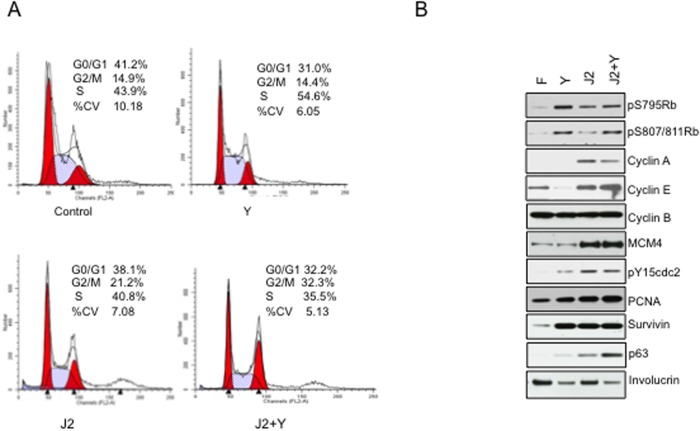
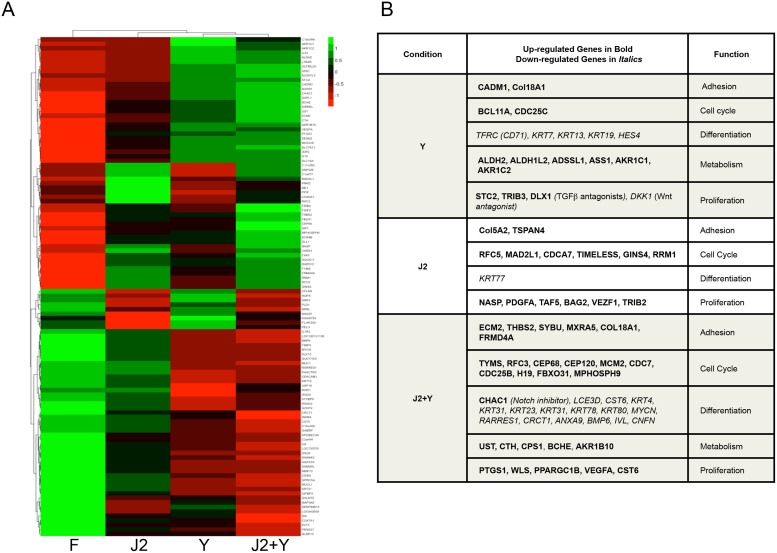
“Considering the importance of Notch signaling in keratinocyte differentiation [22], the negative regulatory effects of J2 cells and Y on this process likely occur in part through inhibition of this pathway.”
BackgroundProtein kinase C and the regulation of the actin cytoskeleton
Larsson, C. (2006) · Cellular Signalling · doi:10.1016/j.cellsig.2005.07.010 · Cited by 388 · cited 1×
“4B; Table D in S1 File), processes associated with destabilization of F-actin capping [20].”
BackgroundTgfβ Signal Inhibition Cooperates in the Induction of iPSCs and Replaces Sox2 and cMyc
Maherali, N., & Hochedlinger, K. (2009) · Current Biology · doi:10.1016/j.cub.2009.08.025 · Cited by 348
New regulatory mechanisms of TGF-β receptor function
Kang, J. S., Liu, C., & Derynck, R. (2009) · Trends in Cell Biology · doi:10.1016/j.tcb.2009.05.008 · Cited by 328 · cited 1×
“TGF-β and related ligands signal through Smads to promote tissue homeostasis through modulation of proliferation, differentiation and apoptosis [25, 26].”
BackgroundEzratty, E. J., Stokes, N., Chai, S., Shah, A. S., Williams, S. E., & Fuchs, E. (2011) · Cell · doi:10.1016/j.cell.2011.05.030 · Cited by 317 · cited 1×
“Y was shown previously to reduce keratinocyte differentiation gene expression [23], and reduce non-canonical Notch-mediated cell differentiation, which led to loss of Involucrin and increased p63 expression [24].”
BackgroundHuman keratinocytes are efficiently immortalized by a Rho kinase inhibitor
Chapman, S., Liu, X., Meyers, C., Schlegel, R., & McBride, A. A. (2010) · Journal of Clinical Investigation · doi:10.1172/jci42297 · Cited by 315 · cited 1×
“Recently, this co-culture technique was modified to include epithelial cells from prostate, breast, trachea, liver and lung, wherein the use of J2 cells and the Rho kinase inhibitor Y-27632 (Y) resulted in the rapid reprogramming of cells into immortalized karyotype-stable cultures [6, 7].”
BackgroundShimizu, Y., Thumkeo, D., Keel, J., Ishizaki, T., Oshima, H., Oshima, M., Noda, Y., Matsumura, F., Taketo, M. M., & Narumiya, S. (2005) · The Journal of Cell Biology · doi:10.1083/jcb.200411179 · Cited by 304 · cited 2×
“The Rho kinase inhibitor Y-27632 has been reported to reduce stress fibers and the actin microarchitecture [15, 16], however cells in coculture do not depict its negative effect on cell growth.”
BackgroundResultConditionally reprogrammed cells represent a stem-like state of adult epithelial cells
Suprynowicz, F. A., Upadhyay, G., Krawczyk, E., Kramer, S. C., Hebert, J. D., Liu, X., Yuan, H., Cheluvaraju, C., Clapp, P. W., Boucher, R. C., et al. (2012) · Proceedings of the National Academy of Sciences · doi:10.1073/pnas.1213241109 · Cited by 291 · cited 1×
“These conditionally reprogrammed epithelial cells expressed markers of adult stem cells, but not of embryonic and induced pluripotent stem cells, and appeared to consist of cell populations resembling their primary tissue of origin, making them ideal to study tissue regeneration, as well as normal physiologic and path…”
BackgroundSelf-citationCutaneous hypothalamic–pituitary–adrenal axis homolog: regulation by ultraviolet radiation
Skobowiat, C., Dowdy, J. C., Sayre, R. M., Tuckey, R. C., & Slominski, A. (2011) · American Journal of Physiology-Endocrinology and Metabolism · doi:10.1152/ajpendo.00217.2011 · Cited by 269
Use of Reprogrammed Cells to Identify Therapy for Respiratory Papillomatosis
Yuan, H., Myers, S., Wang, J., Zhou, D., Woo, J. A., Kallakury, B., Ju, A., Bazylewicz, M., Carter, Y. M., Albanese, C., et al. (2012) · New England Journal of Medicine · doi:10.1056/nejmoa1203055 · Cited by 169 · cited 2×
“examine the differential drug response of tissue acquired from a patient with recurrent respiratory papillomatosis to identify a drug that was effective in controlling this disease [9].”
BackgroundMethodPalechor-Ceron, N., Suprynowicz, F. A., Upadhyay, G., Dakic, A., Minas, T., Simic, V., Johnson, M., Albanese, C., Schlegel, R., & Liu, X. (2013) · The American Journal of Pathology · doi:10.1016/j.ajpath.2013.08.009 · Cited by 120 · cited 1×
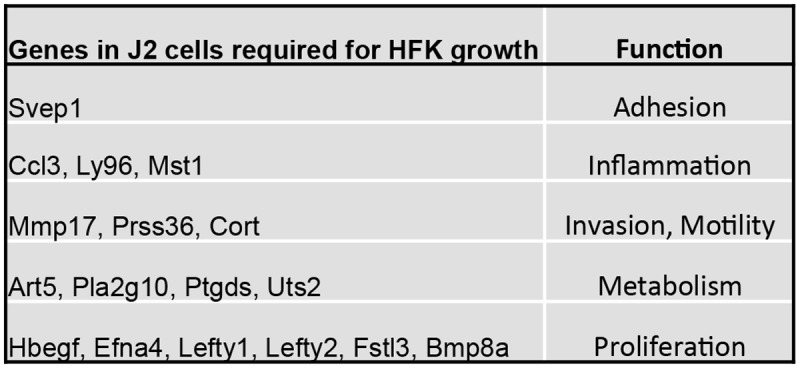
“J2 cells secreted factors into the ‘conditioned’medium (CM) that were able to substitute for the use of feeder cells in conditional reprogramming [17].”
BackgroundSelf-citationUlloa, L., & TABIBZADEH, S. S. (2001) · Journal of Biological Chemistry · doi:10.1074/jbc.m010783200 · Cited by 95 · cited 2×
“Also noted as positive regulators of cell growth in the CM were negative regulators of TGF-β signaling (Fstl3, Lefty1, Lefty2) (Fig.”
BackgroundEinspahr, J. G., Calvert, V. S., Alberts, D. S., Curiel‐Lewandrowski, C. N., Warneke, J. A., Krouse, R. S., Stratton, S. P., Liotta, L. A., Longo, C., Pellicani, G., et al. (2012) · Cancer Prevention Research · doi:10.1158/1940-6207.capr-11-0427 · Cited by 89 · cited 1×
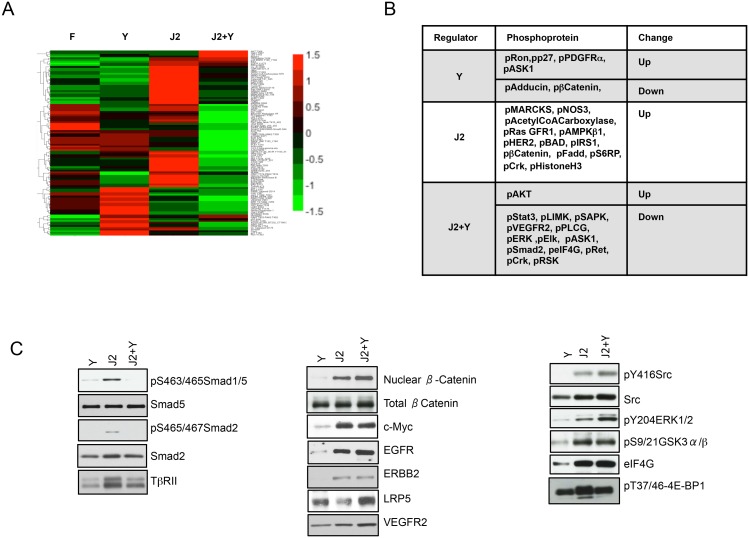
“Protein lysates were immobilized on a solid phase membrane, probed with 106 validated antibodies, tagged with secondary antibodies and the signal amplified as previously described [11, 12].”
MethodSelf-citationAP-2 factors act in concert with Notch to orchestrate terminal differentiation in skin epidermis
Wang, X., Pasolli, H. A., Williams, T., & Fuchs, E. (2008) · The Journal of Cell Biology · doi:10.1083/jcb.200804030 · Cited by 85 · cited 1×
“This effect was initially noted almost 40 years ago when feeder cells were first used to propagate human keratinocytes for a limited duration [21, 22].”
BackgroundUpadhyay, G., Yin, Y., Yuan, H., Li, X., Derynck, R., & Glazer, R. I. (2011) · Proceedings of the National Academy of Sciences · doi:10.1073/pnas.1103441108 · Cited by 75 · cited 2×
“Interestingly, a similar association between TGF-β pathway inhibition and cell proliferation was noted previously for the stem/progenitor cell factor Sca-1 [14], as well as for the ability of embryonic stem cells to maintain pluripotency [28–30].”
BackgroundMethodSelf-citationYugawa, T., Nishino, K., Ohno, S.-I., Nakahara, T., Fujita, M., Goshima, N., Umezawa, A., & Kiyono, T. (2013) · Molecular and Cellular Biology · doi:10.1128/mcb.00577-13 · Cited by 56 · cited 1×
“Y was shown previously to reduce keratinocyte differentiation gene expression [23], and reduce non-canonical Notch-mediated cell differentiation, which led to loss of Involucrin and increased p63 expression [24].”
BackgroundPollock, C. B., Yin, Y., Yuan, H., Zeng, X., King, S., Li, X., Kopelovich, L., Albanese, C., & Glazer, R. I. (2011) · PLoS ONE · doi:10.1371/journal.pone.0016215 · Cited by 42 · cited 1×
“protein detection system (Millipore) was performed as previously described [13, 14].”
MethodSelf-citationMonitoring Proteins and Protein Networks Using Reverse Phase Protein Arrays
Wilson, B., Liotta, L. A., & Petricoin, E. (2010) · Disease Markers · doi:10.1155/2010/240248 · Cited by 29
Self-citationMonitoring proteins and protein networks using reverse phase protein arrays.
Wilson, B., Liotta, L. A., & Petricoin, E. F. (2010) · PubMed · doi:10.3233/dma-2010-0705 · Cited by 28
Self-citationAgarwal, S., & Rimm, D. L. (2011) · American Journal Of Pathology · doi:10.1016/j.ajpath.2011.12.001 · Cited by 17 · cited 1×
“The utility of this method lies in its ability to use primary human tissues to study processes such as transformation and chemoprevention, and to assess chemosensitivity and resistance in malignant tissues of individual patients [18].”
Method
Cited by
Rapid Expansion of Human Epithelial Stem Cells Suitable for Airway Tissue Engineering
Butler, C. R., Hynds, R. E., Gowers, K. H. C., Lee, D. D. H., Brown, J. M., Crowley, C., Teixeira, V. H., Smith, C. M., Urbani, L., Hamilton, N. J., et al. (2016) · American Journal of Respiratory and Critical Care Medicine · doi:10.1164/rccm.201507-1414oc · Cited by 216
Martinovich, K. M., Iosifidis, T., Buckley, A. G., Looi, K., Ling, K.-M., Sutanto, E. N., Kicic-Starcevich, E., Garratt, L. W., Shaw, N. C., Montgomery, S., et al. (2017) · Scientific Reports · doi:10.1038/s41598-017-17952-4 · Cited by 96
Conditional Reprogramming for Patient-Derived Cancer Models and Next-Generation Living Biobanks
Palechor-Ceron, N., Krawczyk, E., Dakic, A., Simić, V., Yuan, H., Blancato, J. K., Wang, W., Hubbard, F. A., Zheng, Y., Dan, H., et al. (2019) · Cells · doi:10.3390/cells8111327 · Cited by 85
Self-citationRegeneration and Repair of Skin Wounds: Various Strategies for Treatment
Rezaie, F., Momeni‐Moghaddam, M., & Naderi‐Meshkin, H. (2019) · The International Journal of Lower Extremity Wounds · doi:10.1177/1534734619859214 · Cited by 86
Peters-Hall, J. R., Coquelin, M. L., Torres, M. J., LaRanger, R., Alabi, B. R., Sho, S., Calva-Moreno, J. F., Thomas, P. J., & Shay, J. W. (2018) · American Journal of Physiology-Lung Cellular and Molecular Physiology · doi:10.1152/ajplung.00355.2017 · Cited by 64
“Gene expression analyses of keratinocytes grown in Std CRC conditions showed a downregulation of differentiation genes and an upregulation of proliferation and cell adhesion (14), while similar gene expresA NHBEC1 Mod CRC”
Result
Metadata
- Authors
- Ligaba, S. B., Khurana, A., Graham, G., Krawczyk, E., Jablonski, S., Petricoin, E. F., Glazer, R. I., & Upadhyay, G.
- Affiliations
- Georgetown University (US)
- George Mason University (US)
- Corresponding author
- Upadhyay, Geeta
- ORCID
- Venue
- PLOS ONE
- Publisher
- Public Library of Science (PLoS)
- Published
- 2015-02-25
- Volume
- 10
- Issue
- 2
- Pages
- e0116755
- ISSN
- 1932-6203 (ISSN-L)
- PMC
- PMC4340869
- OpenAlex
- W1984905005
- Semantic Scholar
- 2e1761a6a7c98163c8464d1548adb88883beec9d
- Cited by
- 22
- References
- 31
- Citations by year
- 2026: 2 · 2025: 2 · 2023: 1 · 2022: 3 · 2020: 5 · 2019: 3 · 2018: 2 · 2017: 2 · 2016: 2
- FWCI
- 0.87
- Type
- journal article
- Language
- en
- Open access
- gold
- doi.org
- Licence
- Locations
- PLoS ONE (publishedVersion, cc-by)
- Europe PMC (PubMed Central) (publishedVersion, cc-by)
- PubMed Central (publishedVersion, cc-by)
- PubMed (publishedVersion)
- DOAJ (DOAJ: Directory of Open Access Journals) (submittedVersion, cc-by-sa)
- Funders
- National Institutes of Health
- Center for Clinical and Translational Sciences, University of Texas Health Science Center at Houston
- National Cancer Institute (R21CA175862, P30CA051008)
- National Center for Research Resources (UL1RR031975)
- Topics
- Life Sciences › Biochemistry, Genetics and Molecular Biology › Molecular Biology › Protein Kinase Regulation and GTPase Signaling
- Life Sciences › Biochemistry, Genetics and Molecular Biology › Cell Biology › Telomeres, Telomerase, and Senescence
- Life Sciences › Biochemistry, Genetics and Molecular Biology › Cell Biology › Skin and Cellular Biology Research
- Keywords
- conditional reprogramming, Y-27632, Rho kinase inhibition, epithelial differentiation, cell proliferation, cell adhesion, Akt signaling, ERK signaling, TGF-beta signaling, gene expression profiling, siRNA screening
- MeSH terms
- Amides, Animals, Cell Adhesion, Cell Cycle, Cell Differentiation, Cell Line, Cells, Cultured, Gene Expression Regulation, Humans, Protein Processing, Post-Translational, Pyridines, Keratinocytes, Cluster Analysis, Coculture Techniques, Gene Expression Profiling, RNA, Small Interfering, Cell Proliferation, Feeder Cells, Cellular Reprogramming
About these checks
Registry, retraction, Cites and statistics results are computed, not judged, with one exception: a printed reference that no index lists is read once by a model before it counts as a citation error. Claims are extracted by a model and kept only when their quote appears verbatim in the text; each cited source is then checked, with a model’s help, for whether it says what the claim relies on. Those verdicts can be wrong — read the claim’s quote and the cited source before relying on one.
Statistics and arithmetic are recomputed, not judged.
Confidence bands are shown only for fields calibrated on our annotated test set. None is calibrated yet, so no band is shown.
What counts as a claim ›How we measure confidence ›How we check this ›
Are you an author, or do you see a problem with this page? Request a review
Data sources
Bibliographic data: Semantic Scholar, OpenAlex, Crossref.
Contains information from the Semantic Scholar Academic Graph Datasets, made available under the ODC Attribution License (ODC-BY 1.0).
Semantic Scholar’s data is described in: Kinney, R., et al. (2023). The Semantic Scholar Open Data Platform. arXiv:2301.10140.
