

Aberrant function of learning and cognitive control networks underlie inefficient cognitive flexibility in anorexia nervosa: a cross- sectional fMRI study
Open accessThe DOI matches its Crossref record; 46 of the 46 references it cites were found in a registry or an index.
Abstract
OBJECTIVES: People with Anorexia Nervosa exhibit difficulties flexibly adjusting behaviour in response to environmental changes. This has previously been attributed to problematic behavioural shifting, characterised by a decrease in fronto-striatal activity. Additionally, alterations of instrumental learning, which relies on fronto-striatal networks, may contribute to the observation of inflexible behaviour. The authors sought to investigate the neural correlates of cognitive flexibility and learning in Anorexia Nervosa. METHOD: Thirty-two adult females with Anorexia Nervosa and thirty-two age-matched female control participants completed the Wisconsin Card Sorting Task whilst undergoing functional magnetic resonance imaging. Event-related analysis permitted the comparison of cognitive shift trials against those requiring maintenance of rule-sets and allowed assessment of trials representing learning. RESULTS: Although both groups performed similarly, we found significant interactions in the left middle frontal gyrus, precuneus and superior parietal lobule whereby blood-oxygenated-level dependent response was higher in Anorexia Nervosa patients during shifting but lower when maintaining rule-sets, as compared to healthy controls. During learning, posterior cingulate cortex activity in healthy controls decreased whilst increasing in the Anorexia Nervosa group, whereas the right precuneus exhibited the opposite pattern. Furthermore, learning was associated with lower blood-oxygenated-level dependent response in the caudate body, as compared to healthy controls. CONCLUSIONS: People with Anorexia Nervosa display widespread changes in executive function. Whilst cognitive flexibility appears to be associated with aberrant functioning of the fronto-parietal control network that mediates between internally and externally directed cognition, fronto-striatal alterations, particularly within the caudate body, were associated with instrumental learning. Together, this shows how perseverative tendencies could be a substrate of multiple high-order processes that may contribute to the maintenance of Anorexia Nervosa.
Overview
The claims and statistics of this paper haven’t been checked yet.
Free: it reads the open-access text and checks the first 5 claims that cite a source we can check. Create a free account to check every claim.
Integrity signals
Registry
Cites
Statistics
Figures


Verification
Claims the paper makes
The claims and statistics of this paper haven’t been checked yet.
Free: it reads the open-access text and checks the first 5 claims that cite a source we can check. Create a free account to check every claim.
Claims other papers make about this one
Each is checked against this paper’s own text: does it say what the citing paper says it does?
The cited source says what the claim attributes to it.
In the citing paper
“Similarly, AN patients have also been shown to have altered frontostriatal activation on executive function tasks, including the Wisconsin Card Sorting Task (Lao-Kaim et al., 2015), and delay discounting (Wierenga et al., 2014; Decker et al., 2015).”
From Cortico-striatal-thalamic loop circuits of the salience network: A central pathway in psychiatric disease and treatment (2016) · cites this paper as Lao-Kaim et al., 2015
Self-check
Percentages, sums and reported differences re-computed from the paper’s own numbers.
The self-check needs the paper’s full text.
Citations
Cites
The Hospital Anxiety and Depression Scale
Zigmond, A. S., & Snaith, R. P. (1983) · Acta Psychiatrica Scandinavica · doi:10.1111/j.1600-0447.1983.tb09716.x · Cited by 47,139
Depression and quality of life in older persons: A review
Sivertsen, H., Bjørkløf, G. H., Engedal, K., Selbæk, G., & Helvik, A.-S. (2015) · Dementia and Geriatric Cognitive Disorders · doi:10.1159/000437299 · Cited by 14,152
Co-Planar Stereotaxic Atlas of the Human Brain
Talairach, J., & Tournoux, P. (1988) · Medical Entomology and Zoology · Cited by 11,798
Lippa, N. C., & Sanderson, S. C. (2013) · Human Heredity · doi:10.1159/000353712 · Cited by 6,078
The prevalence and correlates of eating disorders in the National Comorbidity Survey Replication
Hudson, J. I., Hiripi, E., Pope, H. G., & Kessler, R. C. (2007) · Biological Psychiatry · doi:10.1016/j.biopsych.2006.03.040 · Cited by 4,973 · cited 1×
“3% in males [1], and carries the highest mortality rate among psychiatric conditions [2].”
BackgroundThresholding of statistical maps in functional neuroimaging using the false discovery rate
Genovese, C. R., Lazar, N. A., & Nichols, T. (2002) · NeuroImage · doi:10.1006/nimg.2001.1037 · Cited by 4,923
Structured Clinical Interview for DSM-IV Axis I Disorders
Spitzer, R. L., First, M. B., & Gibbon, M. (1997) · Medical Entomology and Zoology · Cited by 4,086
Excess mortality of mental disorder
Harris, C., & Barraclough, B. (1998) · British Journal of Psychiatry · doi:10.1192/bjp.173.1.11 · Cited by 1,881 · cited 1×
“3% in males [1], and carries the highest mortality rate among psychiatric conditions [2].”
BackgroundSpreng, R. N., Stevens, W. D., Chamberlain, J. P., Gilmore, A. W., & Schacter, D. L. (2010) · NeuroImage · doi:10.1016/j.neuroimage.2010.06.016 · Cited by 1,256 · cited 2×
“The FPCN shows a high degree of between-network interconnectivity with the DAN and default mode network (DMN), acting as an intermediary that delegates cortical resources towards either externally or internally focussed goal-directed cognition respectively [15,43].”
BackgroundA New Measure of Cognitive Flexibility
Martin, M. M., & Rubin, R. B. (1995) · Psychological Reports · doi:10.2466/pr0.1995.76.2.623 · Cited by 1,156
Bullmore, E. T., Suckling, J., Overmeyer, S., Rabe-Hesketh, S., Taylor, E., & Brammer, M. J. (1999) · IEEE Transactions on Medical Imaging · doi:10.1109/42.750253 · Cited by 1,088 · cited 1×
“[34].”
Precuneus shares intrinsic functional architecture in humans and monkeys
Margulies, D. S., Vincent, J. L., Kelly, C., Lohmann, G., Uddin, L. Q., Biswal, B. B., Villringer, A., Castellanos, F. X., Milham, M. P., & Petrides, M. (2009) · Proceedings of the National Academy of Sciences · doi:10.1073/pnas.0905314106 · Cited by 965 · cited 1×
“This region exhibits high functional connectivity with the superior parietal cortex, paracentral lobule and motor cortex, constituting a network related to sensorimotor processing [38].”
BackgroundThe cognitive functions of the caudate nucleus
Grahn, J. A., Parkinson, J. A., & Owen, A. M. (2008) · Progress in Neurobiology · doi:10.1016/j.pneurobio.2008.09.004 · Cited by 940 · cited 2×
“Indeed, abnormal activity within the dorsal striatum, which plays a major role in forming stimulus-response and action-outcome associations [18], has been observed during cognitive-behavioural flexibility [11,16] as well as during a reward-based guessing game that in healthy individuals relies on ventral striatal func…”
BackgroundSchmidt, U., & Treasure, J. (2006) · British Journal of Clinical Psychology · doi:10.1348/014466505x53902 · Cited by 888 · cited 2×
“As such, inefficient cognitive flexibility has been marked as a possible endophenotype of AN that facilitates persistent appetitive control [3] and could contribute to its development [10].”
BackgroundSpreng, R. N., Sepulcre, J., Turner, G. R., Stevens, W. D., & Schacter, D. L. (2013) · Journal of Cognitive Neuroscience · doi:10.1162/jocn_a_00281 · Cited by 668 · cited 2×
“The FPCN shows a high degree of between-network interconnectivity with the DAN and default mode network (DMN), acting as an intermediary that delegates cortical resources towards either externally or internally focussed goal-directed cognition respectively [15,43].”
BackgroundBullmore, E., Long, C., Suckling, J., Fadili, J., Calvert, G., Zelaya, F., Carpenter, T. A., & Brammer, M. (2001) · Human Brain Mapping · doi:10.1002/1097-0193(200102)12:2<61::aid-hbm1004>3.0.co;2-w · Cited by 602 · cited 1×
“Following computation of the observed SSQ ratio at each voxel, the data were permuted by the wavelet-based method [31].”
MethodGeneric brain activation mapping in functional magnetic resonance imaging: A nonparametric approach
Brammer, M. J., Bullmore, E. T., Simmons, A., Williams, S. C. R., Grasby, P. M., Howard, R. J., Woodruff, P. W. R., & Rabe-Hesketh, S. (1997) · Magnetic Resonance Imaging · doi:10.1016/s0730-725x(97)00135-5 · Cited by 470 · cited 1×
“The observed and permuted SSQ ratio maps for each individual were transformed into the standard space of Talairach and Tournoux [32] using a two-stage warping procedure [33].”
MethodSelf-citationBullmore, E. T., Brammer, M. J., Rabe-Hesketh, S., Curtis, V. A., Morris, R. G., Williams, S. C. R., Sharma, T., & McGuire, P. K. (1999) · Human Brain Mapping · doi:10.1002/(sici)1097-0193(1999)7:1<38::aid-hbm4>3.0.co;2-q · Cited by 455 · cited 1×
“Data were first processed to minimize motion related artefacts [29].”
MethodSelf-citationPsychiatric Comorbidities of Female Inpatients With Eating Disorders
Blinder, B. J., Cumella, E. J., & Sanathara, V. A. (2006) · Psychosomatic Medicine · doi:10.1097/01.psy.0000221254.77675.f5 · Cited by 423 · cited 1×
“Lastly, we found that depression and anxiety scores were higher in AN, however, research suggests that up to 94% of patients with an eating disorder also suffer from at least one comorbid mood disorder [45], therefore we opted to analyse a cohort that reflects clinical presentation.”
BackgroundAnderluh, M. B., Tchanturia, K., Rabe-Hesketh, S., & Treasure, J. (2003) · American Journal of Psychiatry · doi:10.1176/appi.ajp.160.2.242 · Cited by 400 · cited 1×
“As such, inefficient cognitive flexibility has been marked as a possible endophenotype of AN that facilitates persistent appetitive control [3] and could contribute to its development [10].”
BackgroundSelf-citationUsing fMRI to decompose the neural processes underlying the Wisconsin Card Sorting Test
Lie, C.-H., Specht, K., Marshall, J. C., & Fink, G. R. (2006) · NeuroImage · doi:10.1016/j.neuroimage.2005.10.031 · Cited by 395 · cited 1×
“[44] could be used to isolate components of the task via subtraction logic, although this may not allow direct assessment of all WCST event types.”
MethodTchanturia, K., Davies, H., Roberts, M., Harrison, A., Nakazato, M., Schmidt, U., Treasure, J., & Morris, R. (2012) · PLoS ONE · doi:10.1371/journal.pone.0028331 · Cited by 392 · cited 3×
“This lack of cognitive flexibility remains present after recovery [4,6], is independent of body mass index (BMI: weight/height(2)) and illness duration [5,7] and has been observed in unaffected sisters [5,6,8] as well as in children whose mothers suffer from AN [9].”
BackgroundSelf-citationIs Impaired Set-Shifting an Endophenotype of Anorexia Nervosa?
Holliday, J., Tchanturia, K., Landau, S., Collier, D., & Treasure, J. (2005) · American Journal of Psychiatry · doi:10.1176/appi.ajp.162.12.2269 · Cited by 359 · cited 1×
“This lack of cognitive flexibility remains present after recovery [4,6], is independent of body mass index (BMI: weight/height(2)) and illness duration [5,7] and has been observed in unaffected sisters [5,6,8] as well as in children whose mothers suffer from AN [9].”
BackgroundSelf-citationAltered Reward Processing in Women Recovered From Anorexia Nervosa
Wagner, A., Aizenstein, H., Venkatraman, V. K., Fudge, J., May, J. C., Mazurkewicz, L., Frank, G. K., Bailer, U. F., Fischer, L., Nguyen, V., et al. (2007) · American Journal of Psychiatry · doi:10.1176/appi.ajp.2007.07040575 · Cited by 342 · cited 3×
“Indeed, abnormal activity within the dorsal striatum, which plays a major role in forming stimulus-response and action-outcome associations [18], has been observed during cognitive-behavioural flexibility [11,16] as well as during a reward-based guessing game that in healthy individuals relies on ventral striatal func…”
BackgroundResultBoth random and perseverative errors underlie WCST deficits in prefrontal patients
Barceló, F., & Knight, R. T. (2002) · Neuropsychologia · doi:10.1016/s0028-3932(01)00110-5 · Cited by 295 · cited 1×
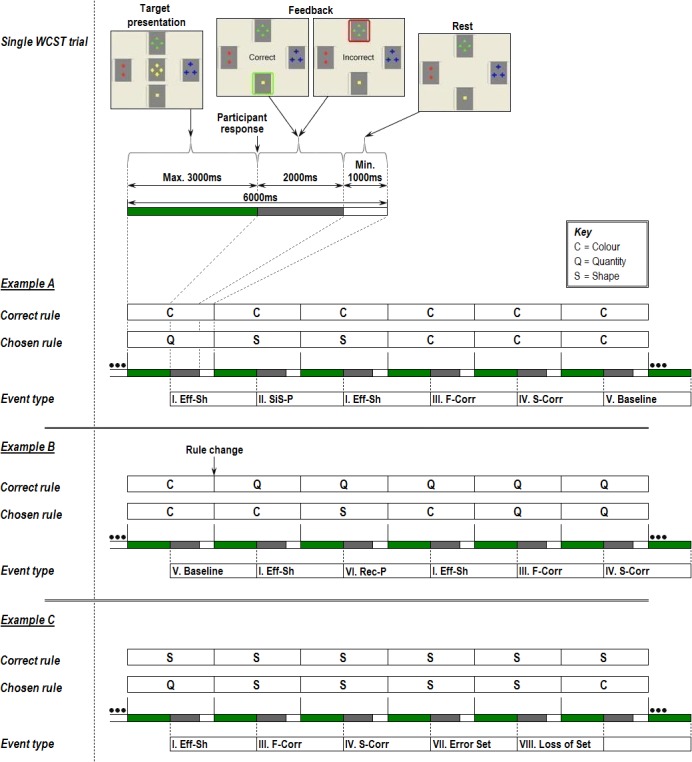
“Notably, we included two forms of perseveration: stuck-in-set (SiS-P) and recurrent (Rec-P) [17], and adopted the suggestion of distinguishing loss-of-set from efficient shifts (Eff-Sh), both traditionally classified as non-perseverative errors [26].”
BackgroundClarke, H. F., Robbins, T. W., & Roberts, A. C. (2008) · The Journal of Neuroscience · doi:10.1523/jneurosci.1521-08.2008 · Cited by 263 · cited 1×
“However, one study of the marmoset medial striatum, an area analogous to the caudate nucleus, showed that focal lesions to this structure cause impairments in reversal learning when goal values and/or task requirements change, whilst the ability to establish new action-outcome contingencies remains intact [37].”
BackgroundExploring the neurocognitive signature of poor set-shifting in anorexia and bulimia nervosa.
Roberts, M. E., Tchanturia, K., & Treasure, J. L. (2010) · Journal of Psychiatric Research · doi:10.1016/j.jpsychires.2010.03.001 · Cited by 258 · cited 2×
“This lack of cognitive flexibility remains present after recovery [4,6], is independent of body mass index (BMI: weight/height(2)) and illness duration [5,7] and has been observed in unaffected sisters [5,6,8] as well as in children whose mothers suffer from AN [9].”
BackgroundSelf-citationNeural Correlates of Impaired Cognitive-Behavioral Flexibility in Anorexia Nervosa
Zastrow, A., Kaiser, Stippich, C., Walther, S., Herzog, W., Tchanturia, K., Belger, A., Weisbrod, M., Treasure, J., & Friederich, H.-C. (2009) · American Journal of Psychiatry · doi:10.1176/appi.ajp.2008.08050775 · Cited by 237 · cited 5×
“[11] who demonstrated dominant activation of the fronto-parietal control network (FPCN) in AN during behavioural shifts.”
BackgroundResultSelf-citationIncreased neural processing of rewarding and aversive food stimuli in recovered anorexia nervosa
Cowdrey, F. A., Park, R. J., Harmer, C. J., & McCabe, C. (2011) · Biological Psychiatry · doi:10.1016/j.biopsych.2011.05.028 · Cited by 233 · cited 1×
“This was somewhat surprising, given that previous fMRI investigations have found hyperactivity during various executive processes, including reward and cognitive flexibility [16,19] as well as when presented with aversive food stimuli [36].”
ResultCognitive flexibility and clinical severity in eating disorders
Tchanturia, K., Harrison, A., Davies, H., Roberts, M., Oldershaw, A., Nakazato, M., Stahl, D., Morris, R., Schmidt, U., & Treasure, J. (2011) · PLoS ONE · doi:10.1371/journal.pone.0020462 · Cited by 231 · cited 1×
“This lack of cognitive flexibility remains present after recovery [4,6], is independent of body mass index (BMI: weight/height(2)) and illness duration [5,7] and has been observed in unaffected sisters [5,6,8] as well as in children whose mothers suffer from AN [9].”
BackgroundSelf-citationTenconi, E., Santonastaso, P., Degortes, D., Bosello, R., Titton, F., Mapelli, D., & Favaro, A. (2010) · The World Journal of Biological Psychiatry · doi:10.3109/15622975.2010.483250 · Cited by 225 · cited 2×
“This lack of cognitive flexibility remains present after recovery [4,6], is independent of body mass index (BMI: weight/height(2)) and illness duration [5,7] and has been observed in unaffected sisters [5,6,8] as well as in children whose mothers suffer from AN [9].”
BackgroundTitova, O. E., Hjorth, O. C., Schiöth, H. B., & Brooks, S. J. (2013) · BMC Psychiatry · doi:10.1186/1471-244x-13-110 · Cited by 210 · cited 1×
“These findings are corroborated by an activation likelihood estimation meta-analysis of nine voxel-based morphometry studies showing decreased grey matter volume in the right caudate and right lentiform nucleus in currently ill AN [12], and decreased ACC grey matter in recovered participants [13].”
ResultStriatal connections of the parietal association cortices in rhesus monkeys
Yeterian, E. H., & Pandya, D. N. (1993) · Journal of Comparative Neurology · doi:10.1002/cne.903320204 · Cited by 203 · cited 1×
“In addition, a recent fMRI study revealed that activity in the caudate, which receives projections from the superior parietal cortex [41], decreases steadily for successive trials following initial acquisition [42].”
BackgroundRavizza, S. M., & Carter, C. S. (2008) · Neuropsychologia · doi:10.1016/j.neuropsychologia.2008.06.006 · Cited by 200 · cited 2×
“Although the exact function of the right precuneus in sensorimotor functions remains elusive, the superior parietal cortex has been found to respond when detection of stimulus features is necessary to update stimulus-response associations [39,40].”
BackgroundAdaptive analysis of fMRI data
Friman, O., Borga, M., Lundberg, P., & Knutsson, H. (2003) · NeuroImage · doi:10.1016/s1053-8119(03)00077-6 · Cited by 200
Cognitive Control Involved in Overcoming Prepotent Response Tendencies and Switching Between Tasks
Barber, A. D., & Carter, C. S. (2005) · Cerebral Cortex · doi:10.1093/cercor/bhh189 · Cited by 172
Gray Matter Decrease of the Anterior Cingulate Cortex in Anorexia Nervosa
Mühlau, M., Gaser, C., Ilg, R., Conrad, B., Leibl, C., Cebulla, M. H., Backmund, H., Gerlinghoff, M., Lommer, P., Schnebel, A., et al. (2007) · American Journal of Psychiatry · doi:10.1176/appi.ajp.2007.06111861 · Cited by 169 · cited 1×
“These findings are corroborated by an activation likelihood estimation meta-analysis of nine voxel-based morphometry studies showing decreased grey matter volume in the right caudate and right lentiform nucleus in currently ill AN [12], and decreased ACC grey matter in recovered participants [13].”
ResultDopamine Supports Coupling of Attention-Related Networks
Dang, L. C., O'Neil, J. P., & Jagust, W. J. (2012) · Journal of Neuroscience · doi:10.1523/jneurosci.0909-12.2012 · Cited by 148 · cited 1×
“demonstrated dominant activation of the right middle frontal gyrus and bilateral temporoparietal junction in AN, regions that form the fronto-parietal control network (FPCN; [14,15]).”
BackgroundNeural Basis of Impaired Cognitive Flexibility in Patients with Anorexia Nervosa
Sato, Y., Saito, N., Utsumi, A., Aizawa, E., Shoji, T., Izumiyama, M., Mushiake, H., Hongo, M., & Fukudo, S. (2013) · PLoS ONE · doi:10.1371/journal.pone.0061108 · Cited by 118 · cited 4×
“Indeed, abnormal activity within the dorsal striatum, which plays a major role in forming stimulus-response and action-outcome associations [18], has been observed during cognitive-behavioural flexibility [11,16] as well as during a reward-based guessing game that in healthy individuals relies on ventral striatal func…”
BackgroundResultInfluentialSimmons, A., Moore, E., & Williams, S. C. R. (1999) · Magnetic Resonance in Medicine · doi:10.1002/(sici)1522-2594(199906)41:6<1274::aid-mrm27>3.0.co;2-1 · Cited by 114 · cited 1×
“Data quality was assured using an automated quality control procedure [27].”
MethodThe cerebral correlates of different types of perseveration in the Wisconsin Card Sorting Test
Nagahama, Y. (2005) · Journal of Neurology, Neurosurgery & Psychiatry · doi:10.1136/jnnp.2004.039818 · Cited by 89
The neuropsychological profile of children at high risk of developing an eating disorder
Kothari, R., Solmi, F., Treasure, J., & Micali, N. (2013) · Psychological Medicine · doi:10.1017/s0033291712002188 · Cited by 57 · cited 1×
“This lack of cognitive flexibility remains present after recovery [4,6], is independent of body mass index (BMI: weight/height(2)) and illness duration [5,7] and has been observed in unaffected sisters [5,6,8] as well as in children whose mothers suffer from AN [9].”
BackgroundAltered implicit category learning in anorexia nervosa.
Shott, M. E., Filoteo, J. V., Jappe, L. M., Pryor, T., Maddox, W. T., Rollin, M. D. H., Hagman, J. O., & Frank, G. K. W. (2012) · Neuropsychology · doi:10.1037/a0026771 · Cited by 38 · cited 2×
“To our knowledge, no studies have directly assessed cortical function during learning processes in AN, although one neuropsychological study provided an indication of disrupted striatal dopamine pathways by showing poorer performance on an implicit category learning task [20].”
BackgroundEliassen, J. C., Lamy, M., Allendorfer, J. B., Boespflug, E. L., Bullard, D. P., Smith, M. S., Lee, J. H., & Strakowski, S. M. (2012) · Brain Research · doi:10.1016/j.brainres.2012.04.010 · Cited by 17 · cited 1×
“In addition, a recent fMRI study revealed that activity in the caudate, which receives projections from the superior parietal cortex [41], decreases steadily for successive trials following initial acquisition [42].”
Background(2014) · Institutional Repository University of Antioquia (University of Antioquia) · doi:10.1371/journal.pone
Assessment of eating disorders: interview or self-report questionnaire
Fairburn, C. G., & Beglin, S. J. (1994) · International Journal of Eating Disorders · doi:10.1002/1098-108x(199412)16:4<363::aid-eat2260160405>3.0.co;2-# · cited 1×
“Self-report questionnaires included the 36-item Eating Disorder Examination Questionnaire (EDE-Q;[23]), 14-item Hospital Anxiety and Depression Scale (HADS;[24]) and 12-item Cognitive Flexibility Scale (CFS;[25]).”
Method
Cited by
Peters, S. K., Dunlop, K., & Downar, J. (2016) · Frontiers in Systems Neuroscience · doi:10.3389/fnsys.2016.00104 · Cited by 611
The Neurobiology of Eating Disorders
Frank, G., Shott, M. E., & DeGuzman, M. C. (2019) · Child and Adolescent Psychiatric Clinics of North America · doi:10.1016/j.chc.2019.05.007 · Cited by 190
“During the Wisconsin Card Sorting Test for cognitive flexibility, participants with AN had higher activation during behavior change in the frontal, parietal, and occipital regions but lower activation during learning or maintaining rulebased behavior.(87) Visual attention in participants with BN led to higher activati…”
BackgroundCognitive flexibility in acute anorexia nervosa and after recovery: A systematic review
Miles, S., Gnatt, I., Phillipou, A., & Nedeljkovic, M. (2020) · Clinical Psychology Review · doi:10.1016/j.cpr.2020.101905 · Cited by 155
Cognitive flexibility and decision-making in eating disorders and obesity
Perpiñá, C., Segura, M., & Sánchez-Reales, S. (2016) · Eating and Weight Disorders - Studies on Anorexia Bulimia and Obesity · doi:10.1007/s40519-016-0331-3 · Cited by 133
“example the WCST allows the measurement of cortical function during instrumental learning and reinforcement, essential processes for efficient flexible behavior [49].”
BackgroundPsychological and Neurobiological Correlates of Food Addiction
Kalon, E., Hong, J. Y., Tobin, C., & Schulte, T. (2016) · International Review of Neurobiology · doi:10.1016/bs.irn.2016.06.003 · Cited by 101
Metadata
- Authors
- Lao-Kaim, N. P., Fonville, L., Giampietro, V. P., Williams, S. C. R., Simmons, A., & Tchanturia, K.
- Affiliations
- King's College London (GB)
- Corresponding author
- Tchanturia, Kate
- Venue
- PLOS ONE
- Publisher
- Public Library of Science (PLoS)
- Published
- 2015-05-13
- Volume
- 10
- Issue
- 5
- Pages
- e0124027
- ISSN
- 1932-6203 (ISSN-L)
- PMC
- PMC4430209
- OpenAlex
- W1521916915
- Cited by
- 79
- References
- 46
- Citations by year
- 2026: 4 · 2025: 9 · 2024: 9 · 2023: 7 · 2022: 6 · 2021: 2 · 2020: 5 · 2019: 10 · 2018: 3 · 2017: 10 · 2016: 10 · 2015: 4
- FWCI
- 11.16
- Type
- journal article
- Language
- en
- Open access
- gold
- doi.org
- Licence
- Locations
- PLoS ONE (publishedVersion, cc-by)
- PubMed Central (publishedVersion, cc-by)
- PubMed (publishedVersion)
- WestminsterResearch (University of Westminster) (acceptedVersion)
- WestminsterResearch (University of Westminster) (acceptedVersion, cc-by)
- DOAJ (DOAJ: Directory of Open Access Journals) (submittedVersion)
- Figshare (submittedVersion, cc-by)
- Research Portal (King's College London) (submittedVersion, other-oa)
- Funders
- South London and Maudsley NHS Foundation Trust
- Psychiatry Research Trust
- National Institute for Health and Care Research
- King's College London
- Topics
- Social Sciences › Psychology › Clinical Psychology › Eating Disorders and Behaviors
- Life Sciences › Neuroscience › Cognitive Neuroscience › Neural and Behavioral Psychology Studies
- Social Sciences › Psychology › Clinical Psychology › Historical and Modern Theater Studies
- Keywords
- anorexia nervosa, cognitive flexibility, cognitive control, fronto-striatal network, operant conditioning, Wisconsin Card Sorting Test, perseveration, caudate nucleus, frontoparietal network, executive function, neural correlates
- MeSH terms
- Adolescent, Adult, Anorexia Nervosa, Brain Mapping, Cognition, Corpus Striatum, Cross-Sectional Studies, Female, Frontal Lobe, Gyrus Cinguli, Humans, Learning, Magnetic Resonance Imaging, Nerve Net, Neuropsychological Tests, Parietal Lobe, Case-Control Studies, Executive Function
About these checks
Registry, retraction, Cites and statistics results are computed, not judged, with one exception: a printed reference that no index lists is read once by a model before it counts as a citation error. Claims are extracted by a model and kept only when their quote appears verbatim in the text; each cited source is then checked, with a model’s help, for whether it says what the claim relies on. Those verdicts can be wrong — read the claim’s quote and the cited source before relying on one.
Statistics and arithmetic are recomputed, not judged.
Confidence bands are shown only for fields calibrated on our annotated test set. None is calibrated yet, so no band is shown.
What counts as a claim ›How we measure confidence ›How we check this ›
Are you an author, or do you see a problem with this page? Request a review
Data sources
Bibliographic data: Semantic Scholar, OpenAlex, Crossref.
Contains information from the Semantic Scholar Academic Graph Datasets, made available under the ODC Attribution License (ODC-BY 1.0).
Semantic Scholar’s data is described in: Kinney, R., et al. (2023). The Semantic Scholar Open Data Platform. arXiv:2301.10140.
