

The DOI matches its Crossref record; 54 of the 55 references it cites were found in a registry or an index.
NLRP3 Inflammasome Is Expressed and Functional in Mouse Brain Microglia but Not in Astrocytes
Open accessAbstract
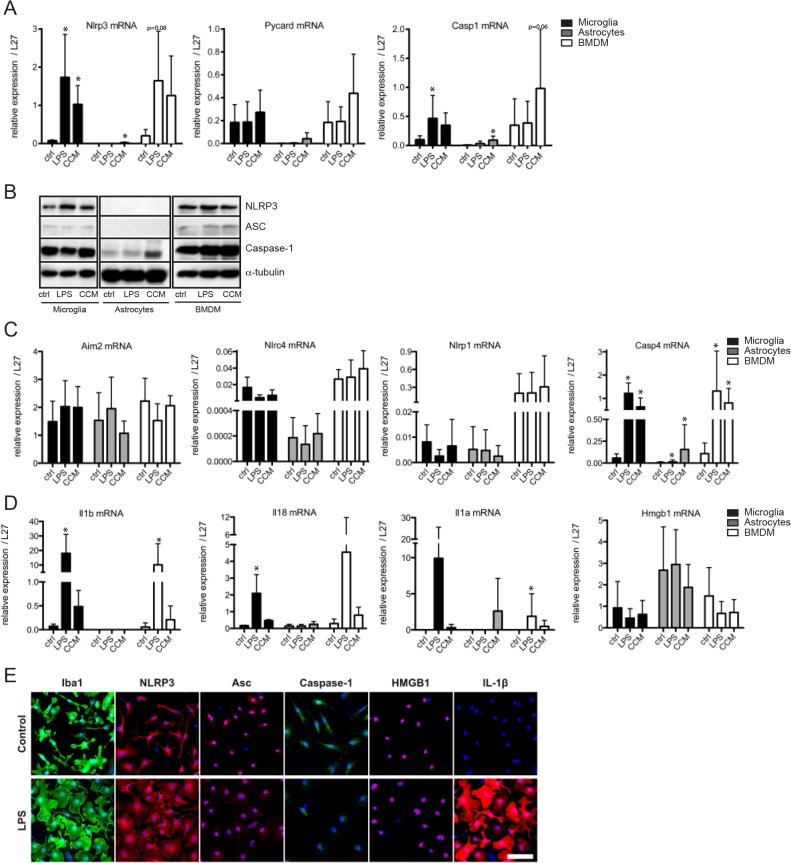
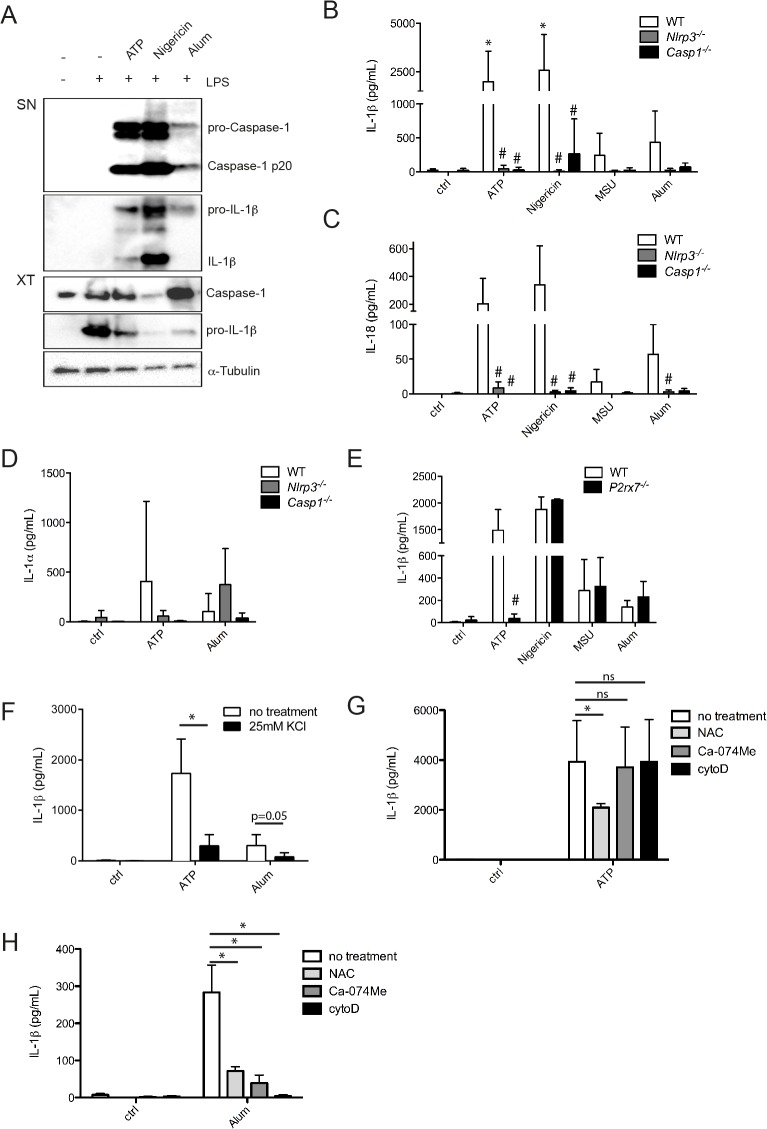
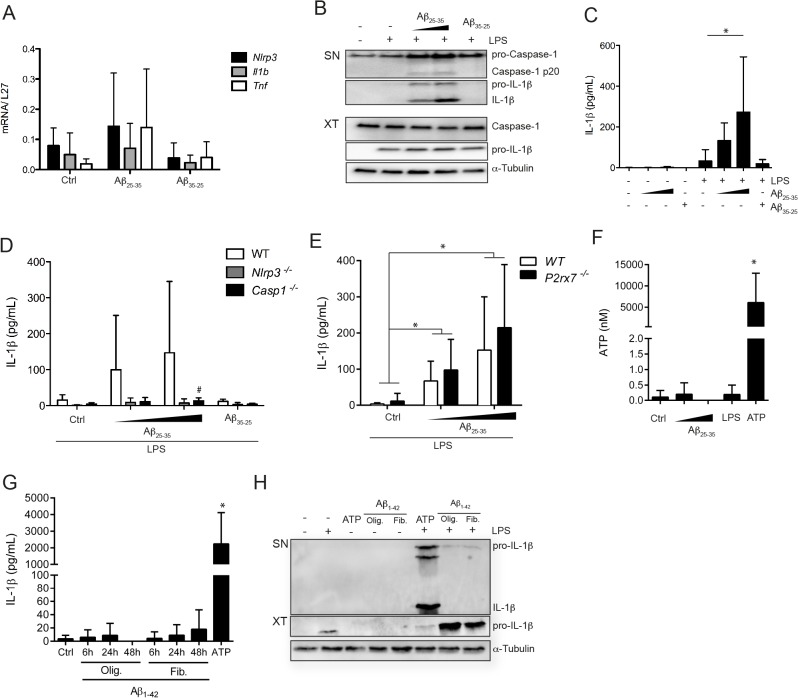
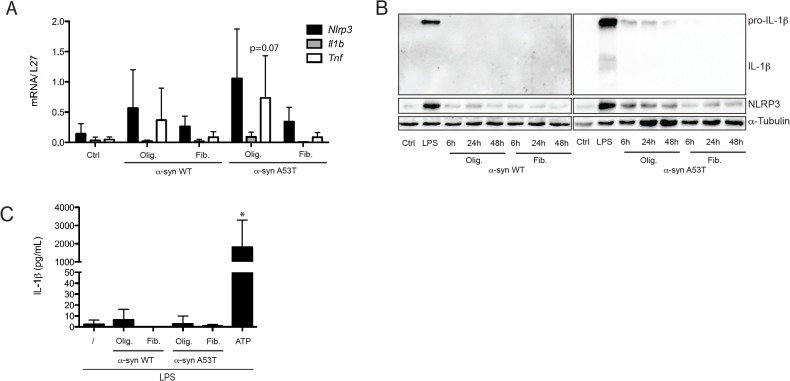
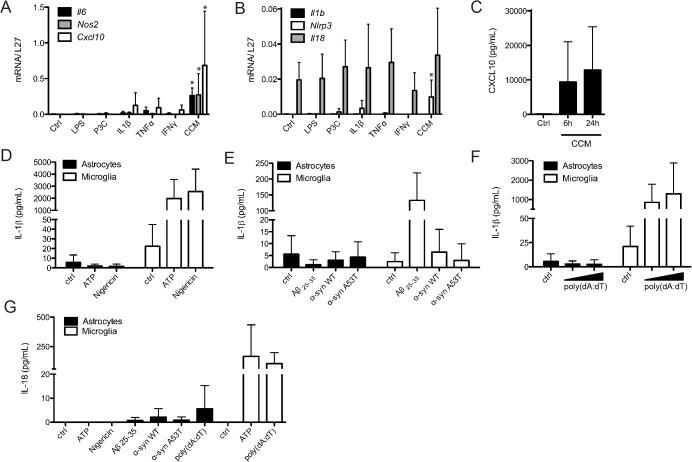
Neuroinflammation is the local reaction of the brain to infection, trauma, toxic molecules or protein aggregates. The brain resident macrophages, microglia, are able to trigger an appropriate response involving secretion of cytokines and chemokines, resulting in the activation of astrocytes and recruitment of peripheral immune cells. IL-1β plays an important role in this response; yet its production and mode of action in the brain are not fully understood and its precise implication in neurodegenerative diseases needs further characterization. Our results indicate that the capacity to form a functional NLRP3 inflammasome and secretion of IL-1β is limited to the microglial compartment in the mouse brain. We were not able to observe IL-1β secretion from astrocytes, nor do they express all NLRP3 inflammasome components. Microglia were able to produce IL-1β in response to different classical inflammasome activators, such as ATP, Nigericin or Alum. Similarly, microglia secreted IL-18 and IL-1α, two other inflammasome-linked pro-inflammatory factors. Cell stimulation with α-synuclein, a neurodegenerative disease-related peptide, did not result in the release of active IL-1β by microglia, despite a weak pro-inflammatory effect. Amyloid-β peptides were able to activate the NLRP3 inflammasome in microglia and IL-1β secretion occurred in a P2X7 receptor-independent manner. Thus microglia-dependent inflammasome activation can play an important role in the brain and especially in neuroinflammatory conditions.
Overview
The claims and statistics of this paper haven’t been checked yet.
Run the check — free, no account needed. It reads the open-access text and checks the sources it cites.
Integrity signals
Registry
Cites
Statistics
Figures
Verification
Claims the paper makes
The claims and statistics of this paper haven’t been checked yet.
Run the check — free, no account needed. It reads the open-access text and checks the sources it cites.
Claims other papers make about this one
Each is checked against this paper’s own text: does it say what the citing paper says it does?
In the citing paper
“Inflammasome signaling in the CNS has also been reported in the microglia, the brain’s critical innate immune cells (206), in astrocytes (207), perivascular brain-resident macrophages (208), oligodendrocytes (209), endothelial cells (210), as well as in neurons (211).”
From The gut-brain axis: how microbiota and host inflammasome influence brain physiology and pathology (2020) · cites this paper as [206]
In the citing paper
“stimulation of microglia cell culture with ATP enhance the expression of NLRP3, ASC protein and caspase-1 along with enhanced secretion of IL-1β and IL-18 in a NLRP3 inflammasome-dependent manner.”
From P2X7 Receptor Signaling in Stress and Depression (2019) · cites this paper as [153]
In the citing paper
“The same NLRP3 inflammasome components (ASC, caspase-1 and cytokines) were not observed in astrocytes culture cell, indicating a cell-type specific NLRP3 expression [153].”
From P2X7 Receptor Signaling in Stress and Depression (2019) · cites this paper as [153]
In the citing paper
“Additionally, the effects of ATP in microglia NRLP3 activation were blocked by pre-treatment with potassium chloride (KCl), preventing the efflux of K+, suggesting requirement of low concentrations of this ion in the intracellular environment for the activation of NLRP3 inflammasome [153].”
From P2X7 Receptor Signaling in Stress and Depression (2019) · cites this paper as [153]
Self-check
Percentages, sums and reported differences re-computed from the paper’s own numbers.
The self-check needs the paper’s full text.
Citations
Cites
Martinon, F., Burns, K., & Tschopp, J. (2002) · Molecular Cell · doi:10.1016/s1097-2765(02)00599-3 · Cited by 6,066
Gout-associated uric acid crystals activate the NALP3 inflammasome
Martinon, F., Pétrilli, V., Mayor, A., Tardivel, A., & Tschopp, J. (2006) · Nature · doi:10.1038/nature04516 · Cited by 5,326
Self-citationAstrocytes: Biology and pathology
Sofroniew, M. V., & Vinters, H. V. (2010) · Acta Neuropathologica · doi:10.1007/s00401-009-0619-8 · Cited by 5,196
Mechanisms underlying inflammation in neurodegeneration
Glass, C. K., Saijo, K., Winner, B., Marchetto, M. C., & Gage, F. H. (2010) · Cell · doi:10.1016/j.cell.2010.02.016 · Cited by 3,580
Cryopyrin activates the inflammasome in response to toxins and ATP
Mariathasan, S., Weiss, D. S., Newton, K., McBride, J., O'Rourke, K., Roose-Girma, M., Lee, W. P., Weinrauch, Y., Monack, D. M., & Dixit, V. M. (2006) · Nature · doi:10.1038/nature04515 · Cited by 3,080
NLRP3 is activated in Alzheimer’s disease and contributes to pathology in APP/PS1 mice
Heneka, M. T., Kummer, M. P., Stutz, A., Delekate, A., Schwartz, S., Vieira-Saecker, A., Griep, A., Axt, D., Remus, A., Tzeng, T.-C., et al. (2013) · Nature · doi:10.1038/nature11729 · Cited by 2,898
Activation and regulation of the inflammasomes
Latz, E., Xiao, T. S., & Stutz, A. (2013) · Nature Reviews Immunology · doi:10.1038/nri3452 · Cited by 2,884
Identification of a unique TGF-β–dependent molecular and functional signature in microglia
Butovsky, O., Jedrychowski, M. P., Moore, C. S., Cialic, R., Lanser, A. J., Gabriely, G., Koeglsperger, T., Dake, B., Wu, P. M., Doykan, C. E., et al. (2014) · Nature Neuroscience · doi:10.1038/nn.3599 · Cited by 2,543
The NALP3 inflammasome is involved in the innate immune response to amyloid-β
Halle, A., Hornung, V., Petzold, G. C., Stewart, C. R., Monks, B. G., Reinheckel, T., Fitzgerald, K. A., Latz, E., Moore, K. J., & Golenbock, D. T. (2008) · Nature Immunology · doi:10.1038/ni.1636 · Cited by 2,441
Innate immune activation in neurodegenerative disease
Heneka, M. T., Kummer, M. P., & Latz, E. (2014) · Nature Reviews Immunology · doi:10.1038/nri3705 · Cited by 1,437
Cited by
Sorted by citations
Oxidative Stress in Neurodegenerative Diseases: From Molecular Mechanisms to Clinical Applications
Liu, Z., Zhou, T., Ziegler, A. C., Dimitrion, P., & Zuo, L. (2017) · Oxidative Medicine and Cellular Longevity · doi:10.1155/2017/2525967 · Cited by 810
The gut-brain axis: how microbiota and host inflammasome influence brain physiology and pathology
Rutsch, A., Kantsjö, J. B., & Ronchi, F. (2020) · Frontiers in Immunology · doi:10.3389/fimmu.2020.604179 · Cited by 821
Inflammasomes in neuroinflammatory and neurodegenerative diseases
Voet, S., Srinivasan, S., Lamkanfi, M., & van Loo, G. (2019) · EMBO Molecular Medicine · doi:10.15252/emmm.201810248 · Cited by 761
Glycolysis – a key player in the inflammatory response
Soto‐Heredero, G., Heras, M. M. G. D. L., Gabandé‐Rodríguez, E., Oller, J., & Mittelbrunn, M. (2020) · FEBS Journal · doi:10.1111/febs.15327 · Cited by 660
Neuroinflammation in the central nervous system: Symphony of glial cells
Yang, Q., & Zhou, J. (2018) · Glia · doi:10.1002/glia.23571 · Cited by 539
Metadata
- Authors
- Gustin, A., Kirchmeyer, M., Koncina, E., Felten, P., Losciuto, S., Heurtaux, T., Tardivel, A., Heuschling, P., & Dostert, C.
- Affiliations
- University of Luxembourg (LU)
- University of Lausanne (CH)
- Corresponding author
- Dostert, Catherine
- Venue
- PLoS ONE
- Publisher
- Public Library of Science (PLoS)
- Published
- 2015-06-19
- Volume
- 10
- Issue
- 6
- Pages
- e0130624
- ISSN
- 1932-6203 (ISSN-L)
- PMC
- PMC4474809
- OpenAlex
- W582182564
- Cited by
- 369
- References
- 55
- Citations by year
- 2026: 21 · 2025: 27 · 2024: 33 · 2023: 38 · 2022: 33 · 2021: 44 · 2020: 59 · 2019: 27 · 2018: 29 · 2017: 37 · 2016: 17 · 2015: 3
- FWCI
- 12.44
- Type
- journal article
- Language
- en
- Open access
- gold
- doi.org
- Licence
- Locations
- PLoS ONE (publishedVersion, cc-by)
- PubMed Central (publishedVersion, cc-by)
- PubMed (publishedVersion)
- IRIS (submittedVersion)
- Open Repository and Bibliography (University of Luxembourg) (submittedVersion, cc-by-nc-sa)
- DOAJ (DOAJ: Directory of Open Access Journals) (submittedVersion, cc-by-sa)
- Figshare (submittedVersion, cc-by)
- SERVAL (Université de Lausanne) (submittedVersion, other-oa)
- Funders
- Université du Luxembourg
- Fonds National de la Recherche Luxembourg
- Université de Lausanne
- Topics
- Life Sciences › Biochemistry, Genetics and Molecular Biology › Molecular Biology › Inflammasome and immune disorders
- Life Sciences › Neuroscience › Neurology › Neuroinflammation and Neurodegeneration Mechanisms
- Life Sciences › Immunology and Microbiology › Immunology › Immune Response and Inflammation
- Keywords
- NLRP3 inflammasome, microglia, astrocytes, IL-1β secretion, neuroinflammation, IL-18, IL-1α, alpha-synuclein, amyloid-beta, P2X7 receptor, neurodegenerative diseases
- MeSH terms
- NLR Family, Pyrin Domain-Containing 3 Protein, Animals, Astrocytes, Brain, Carrier Proteins, Cells, Cultured, Enzyme-Linked Immunosorbent Assay, Mice, Inbred C57BL, Peptide Fragments, Amyloid beta-Peptides, Microglia, Mice, Knockout, Caspase 1, Interleukin-18, Mice, alpha-Synuclein, Interleukin-1alpha, Interleukin-1beta, Receptors, Purinergic P2X7, Inflammasomes
About these checks
Registry, retraction, Cites and statistics results are computed, not judged, with one exception: a printed reference that no index lists is read once by a model before it counts as a citation error. Claims are extracted by a model and kept only when their quote appears verbatim in the text; each cited source is then checked, with a model’s help, for whether it says what the claim relies on. Those verdicts can be wrong — read the claim’s quote and the cited source before relying on one.
Statistics and arithmetic are recomputed, not judged.
Confidence bands are shown only for fields calibrated on our annotated test set. None is calibrated yet, so no band is shown.
What counts as a claim ›How we measure confidence ›How we check this ›
Are you an author, or do you see a problem with this page? Request a review
