

A Comparison Study of Canonical Correlation Analysis Based Methods for Detecting Steady-State Visual Evoked Potentials
Open accessThe DOI matches its Crossref record; 36 of the 36 references it cites were found in a registry or an index.
Abstract
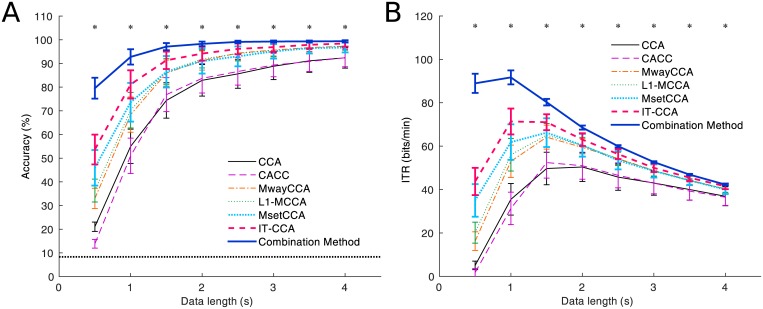
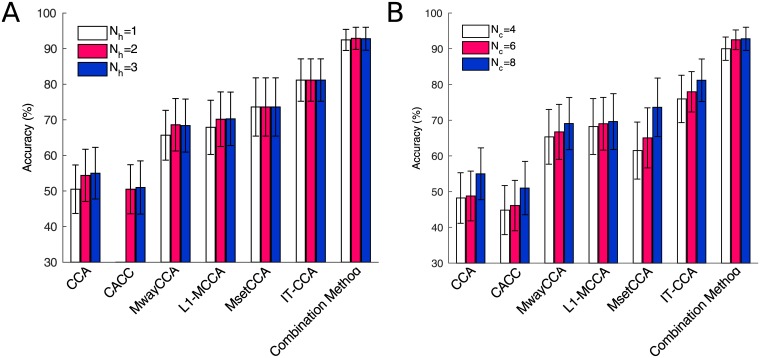
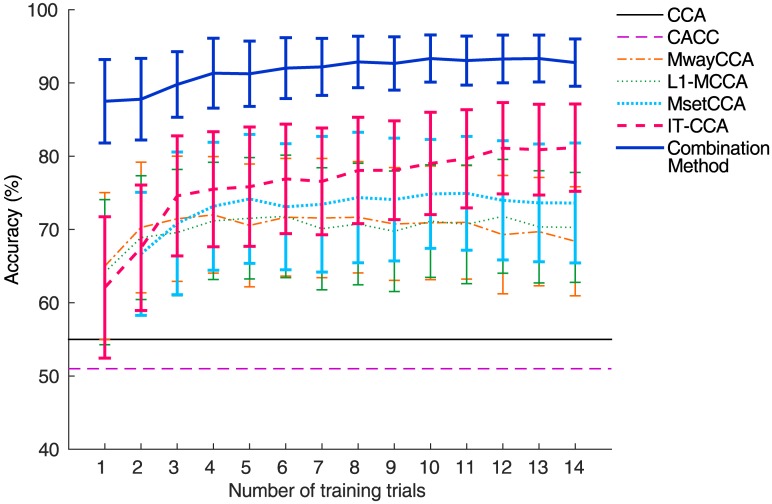
Canonical correlation analysis (CCA) has been widely used in the detection of the steady-state visual evoked potentials (SSVEPs) in brain-computer interfaces (BCIs). The standard CCA method, which uses sinusoidal signals as reference signals, was first proposed for SSVEP detection without calibration. However, the detection performance can be deteriorated by the interference from the spontaneous EEG activities. Recently, various extended methods have been developed to incorporate individual EEG calibration data in CCA to improve the detection performance. Although advantages of the extended CCA methods have been demonstrated in separate studies, a comprehensive comparison between these methods is still missing. This study performed a comparison of the existing CCA-based SSVEP detection methods using a 12-class SSVEP dataset recorded from 10 subjects in a simulated online BCI experiment. Classification accuracy and information transfer rate (ITR) were used for performance evaluation. The results suggest that individual calibration data can significantly improve the detection performance. Furthermore, the results showed that the combination method based on the standard CCA and the individual template based CCA (IT-CCA) achieved the highest performance.
Overview
The claims and statistics of this paper haven’t been checked yet.
Free: it reads the open-access text and checks the first 5 claims that cite a source we can check. Create a free account to check every claim.
Integrity signals
Registry
Cites
Statistics
Figures


Verification
Claims the paper makes
The claims and statistics of this paper haven’t been checked yet.
Free: it reads the open-access text and checks the first 5 claims that cite a source we can check. Create a free account to check every claim.
Claims other papers make about this one
Each is checked against this paper’s own text: does it say what the citing paper says it does?
The source backs part of the claim, not all of it — or backs it for a different population, condition or comparison.
In the citing paper
“CieConv1 are employed to extract the crosschannel correlation of the original input feature map, in which the correlation information assists in decoding EEG correctly.”
From IENet: a robust convolutional neural network for EEG based brain-computer interfaces (2022) · cites this paper as [64]
Experimental — accuracy not yet measuredThe source backs part of the claim, not all of it — or backs it for a different population, condition or comparison.
In the citing paper
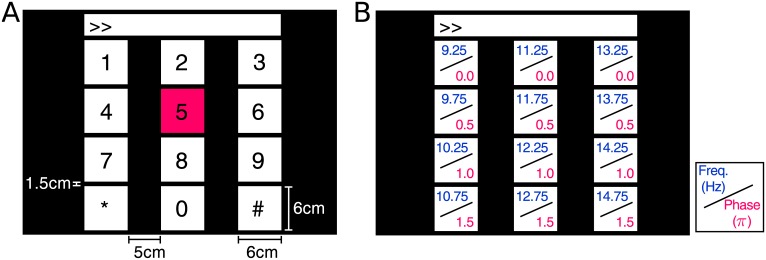
“We can see that temporal kernels of different lengths extract the frequency characteristics of the SSVEP, where the frequency range is consistent with that of the SSVEP experimental stimulus (9.25-14.75 Hz) [64].”
From IENet: a robust convolutional neural network for EEG based brain-computer interfaces (2022) · cites this paper as [64]
Experimental — accuracy not yet measured
Self-check
Percentages, sums and reported differences re-computed from the paper’s own numbers.
The self-check needs the paper’s full text.
Citations
Cites
Brainard, D. H. (1997) · Spatial Vision · doi:10.1163/156856897x00357 · Cited by 19,702 · cited 1×
“) using the Psychophysics Toolbox extensions [35].”
Brain–computer interfaces for communication and control
Wolpaw, J. R., Birbaumer, N., McFarland, D. J., Pfurtscheller, G., & Vaughan, T. M. (2002) · Clinical Neurophysiology · doi:10.1016/s1388-2457(02)00057-3 · Cited by 7,927 · cited 4×
“This study also evaluated the feature values for each method using r -square value (i.e., the proportion of the variance of the signal feature that is accounted for by the user ’ s intent) [1].”
BackgroundMethodInfluentialSteady-state visually evoked potentials: Focus on essential paradigms and future perspectives
Vialatte, F.-B., Maurice, M., Dauwels, J., & Cichocki, A. (2010) · Progress in Neurobiology · doi:10.1016/j.pneurobio.2009.11.005 · Cited by 1,066 · cited 2×
“Various target identification methods have been developed for detecting SSVEPs in BCIs [2 – 4].”
BackgroundMethodFrequency recognition based on canonical correlation analysis for SSVEP-based BCIs
Lin, Z., Zhang, C., Wu, W., & Gao, X. (2007) · IEEE Transactions on Biomedical Engineering · doi:10.1109/tbme.2006.889197 · Cited by 867
Design and implementation of a brain-computer interface with high transfer rates
Cheng, M., Gao, X., Gao, S., & Xu, D. (2002) · IEEE Transactions on Biomedical Engineering · doi:10.1109/tbme.2002.803536 · Cited by 818
Bin, G., Gao, X., Yan, Z., Hong, B., & Gao, S. (2009) · Journal of Neural Engineering · doi:10.1088/1741-2560/6/4/046002 · Cited by 773 · cited 3×
“Among these methods, CCA is one of the most widely used methods in SSVEP-based BCIs due to its high efficiency, robustness, and simple implementation [10, 11, 15, 21 – 23].”
MethodResultA Survey of Stimulation Methods Used in SSVEP-Based BCIs
Zhu, D., Bieger, J., Garcia Molina, G., & Aarts, R. M. (2010) · Computational Intelligence and Neuroscience · doi:10.1155/2010/702357 · Cited by 654 · cited 1×
“Although the number of frequencies that can be presented on a computer monitor is limited by the refresh rate, recent progresses of the stimulus presentation meth-ods succeeded in presenting a large number of visual flickers on the computer monitor [6 – 11].”
BackgroundA practical VEP-based brain-computer interface
Wang, Y., Wang, R., Gao, X., Hong, B., & Gao, S. (2006) · IEEE Transactions on Neural Systems and Rehabilitation Engineering · doi:10.1109/tnsre.2006.875576 · Cited by 617
Self-citationMultiple Channel Detection of Steady-State Visual Evoked Potentials for Brain-Computer Interfaces
Friman, O., Volosyak, I., & Graser, A. (2007) · IEEE Transactions on Biomedical Engineering · doi:10.1109/tbme.2006.889160 · Cited by 541 · cited 1×
“The widely used spatial filtering methods in SSVEP-based BCIs include canonical correlation analysis (CCA) [15], minimum energy combination (MEC) [16], and common spatial pattern (CSP) [17].”
MethodVisual and Auditory Brain–Computer Interfaces
Gao, S., Wang, Y., Gao, X., & Hong, B. (2014) · IEEE Transactions on Biomedical Engineering · doi:10.1109/tbme.2014.2300164 · Cited by 449 · cited 2×
“Various target identification methods have been developed for detecting SSVEPs in BCIs [2 – 4].”
BackgroundMethodSelf-citation
Cited by
Items 101–200 of 389
NeuralBench: A Unifying Framework to Benchmark NeuroAI ModelsPreprint
Banville, H. J., d’Ascoli, S., Dahan, S., Rapin, J., Careil, M., Benchetrit, Y., Levy, J., Panchavati, S., Ratouchniak, A., Mingfang, et al. (2026) · arXiv (Cornell University) · doi:10.48550/arxiv.2605.08495 · Cited by 24
Detection of brain stimuli using Ramanujan periodicity transforms
Saidi, P., Vosoughi, A., & Atia, G. (2019) · Journal of Neural Engineering · doi:10.1088/1741-2552/ab123a · Cited by 19
“As real data, we employ a publicly available SSVEP dataset [11], which contains multiple goal frequencies (frequencies of stimuli) f m , m = 0 , ..., M − 1 , with a sampling frequency of f s = 256 Hz, and M is the number of classes to be discriminated.”
BackgroundMethodInfluentialHigh-Speed Visual Target Identification for Low-Cost Wearable Brain-Computer Interfaces
Kim, D., Byun, W., Ku, Y., & Kim, J.-H. (2019) · IEEE Access · doi:10.1109/access.2019.2912997 · Cited by 21
“sampling rate of 2,048Hz, then down-sampled to 256Hz [22] and filtered using a 6-80Hz bandpass filter.”
MethodInfluentialWei, Q., Zhu, S., Wang, Y., Gao, X., Guo, H., & Wu, X. (2019) · IEEE Access · doi:10.1109/access.2019.2925078 · Cited by 19
“A comparison study showed that the extended CCA method yielded the best classification performance among all CCA-based methods [22].”
BackgroundMethodInfluentialSelf-citationDBConformer: Dual-Branch Convolutional Transformer for EEG Decoding
Wang, Z., Wang, H., Jia, T., He, X., Li, S., & Wu, D. (2025) · IEEE Journal of Biomedical and Health Informatics · doi:10.1109/jbhi.2025.3622725 · Cited by 41
“3) SSVEP Dataset: The Nakanishi2015 [60] SSVEP dataset isevaluated.”
OS-SSVEP: One-shot SSVEP classification
Deng, Y., Ji, Z., Wang, Y., & Zhou, S. K. (2024) · Neural Networks · doi:10.1016/j.neunet.2024.106734 · Cited by 19
Self-citationA Comparative Review of Detection Methods in SSVEP-Based Brain-Computer Interfaces
Besharat, A., Samadzadehaghdam, N., & Afghan, R. (2024) · IEEE Access · doi:10.1109/access.2024.3509275 · Cited by 22
Control of a Robotic Arm With an Optimized Common Template-Based CCA Method for SSVEP-Based BCI
Peng, F., Li, M., Zhao, S., Xu, Q., Xu, J., & Wu, H. (2022) · Frontiers in Neurorobotics · doi:10.3389/fnbot.2022.855825 · Cited by 18
“Many comparative studies showed that the extension methods of CCA with supervised (such as IT-CCA) have better performance of recognition accuracies and information transfer rate (ITR) than training-free (such as CCA and FBCCA) (Nakanishi et al., 2015; Zerafa et al., 2018; Saidi et al., 2019).”
BackgroundMethodInfluentialAn Adaptive Task-Related Component Analysis Method for SSVEP Recognition
Oikonomou, V. P. (2022) · Sensors · doi:10.3390/s22207715 · Cited by 18
“More specifically, B− 1 blocks are used for training and 1 block for testing, similar to [15,16,23,42].”
MethodTSMNet: A comprehensive network based on spatio-temporal representations for SSVEP classification
Deng, L., Li, P., Zhang, H., Zheng, Q., Liu, S., Ding, X., Wang, M., & Gao, D. (2025) · Biomedical Signal Processing and Control · doi:10.1016/j.bspc.2025.107554 · Cited by 17
Han, C., Xu, G., Zheng, X., Tian, P., Zhang, K., Yan, W., Jia, Y., & Chen, X. (2022) · Frontiers in Neuroscience · doi:10.3389/fnins.2021.757679 · Cited by 21
“, 2020) due to its high efficiency, high robustness, high signalto-noise ratio, and simple implementation (Bin et al., 2009; Kalunga et al., 2013; Nakanishi et al., 2015).”
BackgroundAbbas, S. N., & Hatzinakos, D. (2022) · Neurocomputing · doi:10.1016/j.neucom.2022.02.084 · Cited by 17
Wang, Y., Xu, G., Zhang, S., Luo, A., Li, M., & Han, C. (2016) · Signal Processing · doi:10.1016/j.sigpro.2016.11.015 · Cited by 16
“In SSVEP-based BCIs, users gaze at one of multiple visual flickers tagged by frequency or phase, resulting in SSVEPs that exhibit the same properties as the target stimulus [38].”
MethodInfluentialSelf-citationFusing Canonical Coefficients for Frequency Recognition in SSVEP-Based BCI
Liu, T., Zhang, Y., Wang, L., Li, J., Xu, P., & Yao, D. (2019) · IEEE Access · doi:10.1109/access.2019.2911646 · Cited by 16
“The canonical correlation analysis (CCA) based recognition method is one of the widely used methods to detect stimulus frequency of the flickering stimulus attended by the subject due to its efficiency [19].”
MethodBrogin, J. A. F., Faber, J., & Bueno, D. (2019) · Biomedical Signal Processing and Control · doi:10.1016/j.bspc.2019.101644 · Cited by 16
Ojha, M. K., & Mukul, M. K. (2020) · Wireless Personal Communications · doi:10.1007/s11277-020-07738-9 · Cited by 16
Wang, H., Sun, Y., Li, Y., Chen, S., & Zhou, W. (2020) · Frontiers in Neuroscience · doi:10.3389/fnins.2020.00717 · Cited by 17
“The most recent state-of-the-art methods for SSVEP recognition use the individual calibration data as the template of correlation analysis and significantly improve the detection performance (Nakanishi et al., 2015).”
MethodEvaluation of Optimal Stimuli for SSVEP-Based Augmented Reality Brain-Computer Interfaces
Zehra, S., Mu, J., Syiem, B. V., Burkitt, A. N., & Grayden, D. B. (2023) · IEEE Access · doi:10.1109/access.2023.3297882 · Cited by 16
A Mathematical Programming Approach to Sparse Canonical Correlation Analysis
Amorosi, L., Padellini, T., Puerto, J., & Valverde, C. (2023) · Expert Systems with Applications · doi:10.1016/j.eswa.2023.121293 · Cited by 15
“Example of interest in CCA are the cases of genomic data [16], microbiome data [17] and EEG [18].”
BackgroundYang, H., Paller, K. A., & van Vugt, M. K. (2022) · Frontiers in Human Neuroscience · doi:10.3389/fnhum.2022.892863 · Cited by 16
“…the SSVEP to find where on the screen a participant was looking by presenting 12 visual target stimuli flickering at different frequencies; classifiers using spatial filtering which was based on canonical correlation analysis (CCA) achieved an average accuracy of 92.78% (Nakanishi et al., 2015).”
MethodInfluentialAn SSVEP Recognition Method by Combining Individual Template with CCA
Nwachukwu, S. E., Shi, M., Liu, C., Liu, X., Zhou, C., Chao, F., Jiang, M., Kang, P., & Li, Z. (2019) · International Conference on Innovation in Artificial Intelligence (ICIAI) · doi:10.1145/3319921.3319925 · Cited by 15
A Novel Approach Based on EMD to improve the Performance of SSVEP Based BCI System
Ojha, M. K., & Mukul, M. K. (2021) · Wireless Personal Communications · doi:10.1007/s11277-021-08135-6 · Cited by 15
Minimizing Subject-dependent Calibration for BCI with Riemannian Transfer Learning
Khazem, S., Chevallier, S., Barthélemy, Q., Haroun, K., & Noûs, C. (2021) · International IEEE/EMBS Conference on Neural Engineering · doi:10.1109/ner49283.2021.9441279 · Cited by 20
A CNN-Based Deep Learning Approach for SSVEP Detection Targeting Binaural Ear-EEG
Israsena, P., & Pan-ngum, S. (2022) · Frontiers in Computational Neuroscience · doi:10.3389/fncom.2022.868642 · Cited by 16
“Nakanishi et al. (2015) showed that with 8-channel EEG measurement taken from the occipital and posterior areas, the proposed design achieved more than 90% accuracy (depending on the window length) with up to 91.68 bits/min ITR achievable for simulated online BCI compared more favorably to results…”
BackgroundMethodResultInfluentialFrequency tagging of spatial attention using periliminal flickers
Ladouce, S., & Dehais, F. (2024) · Imaging Neuroscience · doi:10.1162/imag_a_00223 · Cited by 18
Shi, P., Li, J., Zhang, W., Li, M., & Han, D. (2023) · Biomedical Signal Processing and Control · doi:10.1016/j.bspc.2023.104817 · Cited by 14
Bayesian-Based Classification Confidence Estimation for Enhancing SSVEP Detection
Zhang, Y., Xie, S. Q., Wang, H., Shi, C., & Zhang, Z. (2023) · IEEE Transactions on Instrumentation and Measurement · doi:10.1109/tim.2023.3284952 · Cited by 14
“In particular, canonical correlation analysis (CCA) is the most popular target detection method because of its simplicity of use and robustness [18], [19].”
BackgroundNeghabi, M., Marateb, H. R., & Mahnam, A. (2018) · Basic and Clinical Neuroscience Journal · doi:10.32598/bcn.9.10.200 · Cited by 14
Design and Implementation of an Asynchronous BCI System With Alpha Rhythm and SSVEP
Zhang, L., Wu, X., Guo, X., Liu, J., & Zhou, B. (2019) · IEEE Access · doi:10.1109/access.2019.2946301 · Cited by 14
“The CCA algorithm used in this paper is recognized as having higher accuracy and better robustness in a shorter time window than those of the PSD algorithm [45], [64], [65].”
BackgroundMethodMehdizavareh, M. H., Hemati, S., & Soltanian-Zadeh, H. (2020) · PLoS ONE · doi:10.1371/journal.pone.0226048 · Cited by 14
“Incorporating training data in target identification methods can capture the temporal features of SSVEP response more effectively and enhance the performance of the CCA-based approaches [12, 22].”
MethodFuzzy ensemble system for SSVEP stimulation frequency detection using the MLR and MsetCCA
Ziafati, A., & Maleki, A. (2020) · Journal of Neuroscience Methods · doi:10.1016/j.jneumeth.2020.108686 · Cited by 14
Sharma, S., Chaudhury, S., & Jayadeva (2020) · IEEE Transactions on Neural Networks and Learning Systems · doi:10.1109/tnnls.2020.3027773 · Cited by 13
Enhancing SSVEP-Based Brain-Computer Interface with Two-Step Task-Related Component Analysis
Lee, H. K., & Choi, Y.-S. (2021) · Sensors · doi:10.3390/s21041315 · Cited by 14
“In [16,18], using an ensemble approach yielded better robustness and superior performance than standard TRCA by integrating the spatial filters of all target frequency.”
BackgroundMethodSSVEP-gated EMG-based decoding of elbow angle during goal-directed reaching movement
Davarinia, F., & Maleki, A. (2021) · Biomedical Signal Processing and Control · doi:10.1016/j.bspc.2021.103222 · Cited by 13
Multi-information improves the performance of CCA-based SSVEP classification
Yin, X., & Lin, M. (2023) · Cognitive Neurodynamics · doi:10.1007/s11571-022-09923-x · Cited by 13
“To make full use of the effective information in harmonics, Chen et al. (Chen et al. 2015a) proposed a filter bank method to decompose the test data so as to improve the performance of SCCA.”
InfluentialSpatial fusion of maximum signal fraction analysis for frequency recognition in SSVEP-based BCI
Li, Z., Liu, K., Deng, X., & Wang, G. (2020) · Biomedical Signal Processing and Control · doi:10.1016/j.bspc.2020.102042 · Cited by 13
Wang, X., Liu, A., Wu, L., Guan, L., & Chen, X. (2023) · IEEE Transactions on Neural Systems and Rehabilitation Engineering · doi:10.1109/tnsre.2023.3324148 · Cited by 14
“We used three public datasets [13], [16], [17] to validate the proposed framework and compared it with the state-of-the-art (SOTA) methods.”
MethodJin, J., Wu, X. M., Daly, I. P., Chen, W., He, X., Wang, X., & Cichocki, A. S. (2024) · IEEE Internet of Things Journal · doi:10.1109/jiot.2024.3488745 · Cited by 14
“2) m-Extended-CCA [50]: An extension based on the CCA method to improve the classification performance of SSVEP target recognition.”
Enhancing SSVEP-Based BCI Performance via Consensus Information Transfer Among Subjects
Zhang, X., Wei, W., Qiu, S., Li, X., Wang, Y., & He, H. (2024) · IEEE Transactions on Neural Networks and Learning Systems · doi:10.1109/tnnls.2024.3506998 · Cited by 12
“Individual templates, such as those in individual template-based CCA (ITCCA) [38], TRCA/eTRCA [16], and TDCA [18], can be used to identify the target.”
Self-citationEfficient Spatial Filters Enhance SSVEP Target Recognition Based on Task-Related Component Analysis
Wang, Z., Jin, J., Xu, R., Liu, C., Wang, X., & Cichocki, A. S. (2021) · IEEE Transactions on Cognitive and Developmental Systems · doi:10.1109/tcds.2021.3096812 · Cited by 12
“According to [35], the phase interval was set to 0.5 π when using the UCSD data set.”
MethodInfluentialAn improved cross-subject spatial filter transfer method for SSVEP-based BCI
Yan, W., Wu, Y., Du, C., & Xu, G. (2022) · Journal of Neural Engineering · doi:10.1088/1741-2552/ac81ee · Cited by 12
“More details about this dataset can be found in [28].”
A hybrid complex-valued neural network framework with applications to electroencephalogram (EEG)
Du, H., Riddell, R. P., & Wang, X. (2023) · Biomedical Signal Processing and Control · doi:10.1016/j.bspc.2023.104862 · Cited by 15
Peng, Y., Wang, Z., Wong, C. M., Nan, W., Rosa, A. C., Xu, P., Wan, F., & Hu, Y. S. (2020) · Journal of Neural Engineering · doi:10.1088/1741-2552/ab933e · Cited by 12
Ikeda, A., & Washizawa, Y. (2021) · Sensors · doi:10.3390/s21165309 · Cited by 12
“We used two datasets: (i) our original SSVEP dataset (original dataset) and (ii) an open SSVEP benchmark dataset (open dataset) [44].”
BackgroundMethodKim, H., & Im, C. (2021) · Frontiers in Neuroinformatics · doi:10.3389/fninf.2021.750839 · Cited by 13
“Among these, SSVEP-based BCIs have the advantage of higher accuracy and higher information transfer rate (ITR) and generally require no/short training time (Tello et al., 2014; Nakanishi et al., 2015; Hwang et al., 2017; Xing et al., 2018).”
BackgroundAn SSVEP-based BCI with LEDs visual stimuli using dynamic window CCA algorithm
Liu, C., Duan, M., Duan, Z., Liu, A., Lü, Z., & Wang, H. (2022) · Biomedical Signal Processing and Control · doi:10.1016/j.bspc.2022.103727 · Cited by 12
A Convolutional Neural Network for SSVEP Identification by Using a Few-Channel EEG
Li, X., Yang, S., Fei, N., Wang, J., Huang, W., & Hu, Y. S. (2024) · Bioengineering · doi:10.3390/bioengineering11060613 · Cited by 11
“This dataset, which was presented by Nakanishi et al. [34], was collected by a BioSemi ActiveTwo EEG system (Biosemi Inc., Amsterdam, Netherlands) from ten healthy subjects (one female and nine males; average age: 28 years).”
MethodSSVEP-based brain–computer interface for music using a low-density EEG system
Venkatesh, S., Miranda, E. R., & Braund, E. (2022) · Assistive Technology · doi:10.1080/10400435.2022.2084182 · Cited by 11
“This does not require user-training sessions and thus, improving the usability of BCIs (Lin et al., 2007; Bin et al., 2009; Nakanishi et al., 2015; Yger et al., 2016).”
BackgroundEder, M., Xu, J., & Grosse‐Wentrup, M. (2024) · Journal of Neural Engineering · doi:10.1088/1741-2552/ad6793 · Cited by 18
“Included data sets for motor imagery are BNCI2014001 [24], BNCI2014004 [25], PhysionetMI [26], Shin2017A [27], MunichMI [28], for P300 are BNCI2014008 [29], BNCI2014009 [30], BNCI2015003 [31], BI2014A [32], BI2015A [33], and for SSVEP are SSVEPExo [34], Nakanishi2015 [35], MAMEM3 [36]. analysis.”
Task-oriented EEG denoising generative adversarial network for enhancing SSVEP-BCI performance
Zeng, P., Fan, L., Luo, Y. X., Shen, H., & Hu, D. (2024) · Journal of Neural Engineering · doi:10.1088/1741-2552/ad8963 · Cited by 13
“The Dial SSVEP dataset [44], introduced by Nakanishi et al in 2015, encompasses SSVEP EEG recordings from 10 healthy individuals, averaging 28 years in age, inclusive of one female subject.”
Deep Multi-Task Learning for SSVEP Detection and Visual Response Mapping
Khok, H. J., Koh, V., & Guan, C. (2020) · Conference proceedings/Conference proceedings - IEEE International Conference on Systems, Man, and Cybernetics · doi:10.1109/smc42975.2020.9283310 · Cited by 11
“Traditionally, the go-to SSVEP detection techniques have been statistical and correlation-based such as canonical-correlation analysis, where its objective is to find the maximum correlation between the signal and the target frequency [17].”
BackgroundLongitudinal Assessment of EEG Biometrics under Auditory Stimulation: A Deep Learning Approach
Abbas, S. N., & Hatzinakos, D. (2021) · European Signal Processing Conference (EUSIPCO) · doi:10.23919/eusipco54536.2021.9616098 · Cited by 11
Kwon, J., Hwang, J., Nam, H., & Im, C. (2022) · Frontiers in Neuroinformatics · doi:10.3389/fninf.2022.997068 · Cited by 12
“CCA is a multivariate statistical method used to measure the underlying correlation between two sets of multidimensional variables, X ∈ R d x × N s and Y ∈ R d y × N s where, N s is the number of sample points and d x and d y indicate the dimension of X and Y , respectively (Nakanishi et al., 2015).”
MethodOn robust detection of brain stimuli with Ramanujan Periodicity Transforms
Saidi, P., Atia, G., & Vosoughi, A. (2017) · Asilomar Conference on Signals, Systems and Computers (ACSSC) · doi:10.1109/acssc.2017.8335440 · Cited by 11
“Real data: In this section, we employ a publicly available SSVEP dataset [13].”
MethodUniversal semantic feature extraction from EEG signals: a task-independent framework
Ahmadi, H., & Mesin, L. (2025) · Journal of Neural Engineering · doi:10.1088/1741-2552/add08f · Cited by 13
EEG-fTCD hybrid brain–computer interface using template matching and wavelet decomposition
Khalaf, A. F., Sejdić, E., & Akçakaya, M. (2019) · Journal of Neural Engineering · doi:10.1088/1741-2552/ab0b7f · Cited by 11
“In CCA, artificial sinusoidal signals with frequencies of the same value as the flickering frequencies of the stimuli presented to the users are used as reference signals to recognize frequency of the stimulus under test [28, 29].”
BackgroundMethodPhase-Locked Time-Shift Data Augmentation Method for SSVEP Brain-Computer Interfaces
Mai, X., Ai, J., Wei, Y., Zhu, X., & Meng, J. (2023) · IEEE Transactions on Neural Systems and Rehabilitation Engineering · doi:10.1109/tnsre.2023.3323351 · Cited by 10
“…number of training block N b , the number of augmented epochs N a Output: Append X into X a 7 Train the detection model using X a C. Evaluation 1) Data Used in This Study: The similarities between the original epoch and the augmented epochs were evaluated by analyzing the SSVEP public dataset [38].”
MethodXie, S., Gao, W., Zeng, Z., Wu, Q. M. J., Huang, Q., Ban, N., Wu, Q., & Pan, J. (2024) · Engineering Applications of Artificial Intelligence · doi:10.1016/j.engappai.2024.108294 · Cited by 10
Lyu, J., Yang, Y., Zong, Y., Leng, Y., Zheng, W., & Ge, S. (2024) · IEEE Journal of Biomedical and Health Informatics · doi:10.1109/jbhi.2024.3439391 · Cited by 10
“By identifying the features of the response, the user’s gaze target corresponding to their attention is inferred, thereby recognizing the user’s intent [7].”
BackgroundMethodCombining the Benefits of CCA and SVMs for SSVEP-based BCIs in Real-world Conditions
Chatzilari, E., Liarios, G., Georgiadis, K., Nikolopoulos, S., & Kompatsiaris, I. Y. (2017) · International Workshop on Multimedia for Personal Health and Health Care (MMHealth) · doi:10.1145/3132635.3132636 · Cited by 10
“The incorporation of ITs have shown to improve significantly the performance of SSVEP detection [11].”
BackgroundMethodInfluentialWu, X., Li, Z., Jiang, L., Huang, X., Liu, Y., Xing, L., Xiao, X. M., Wang, Y., Pei, W., Yang, X., et al. (2019) · Electronics · doi:10.3390/electronics8101080 · Cited by 10
Self-citationRobustness analysis of decoding SSVEPs in humans with head movements using a moving visual flicker
Kanoga, S., Nakanishi, M., Murai, A., Tada, M., & Kanemura, A. (2019) · Journal of Neural Engineering · doi:10.1088/1741-2552/ab5760 · Cited by 10
Self-citationRobust Multisensor Fusion for the Development of EEG Controlled Vehicle
Khan, J., Khan, M. U. G., Iqbal, R., & Riaz, O. (2020) · IEEE Sensors Journal · doi:10.1109/jsen.2020.2992714 · Cited by 13
Zhang, W., Zhou, T., Zhao, J., Ji, B., & Wu, Z. (2020) · Journal of Neuroscience Methods · doi:10.1016/j.jneumeth.2020.108776 · Cited by 10
Rostami, E., Ghassemi, F., & Tabanfar, Z. (2021) · Biomedical Signal Processing and Control · doi:10.1016/j.bspc.2021.103449 · Cited by 10
Xiao, X., Xu, L., Jin, Y., Pan, B., Xu, M., & Ming, D. (2022) · Journal of Neural Engineering · doi:10.1088/1741-2552/ac9861 · Cited by 11
“The parameter t delay , which reflected a latency delay in the visual pathway, was selected based on previous studies with slight differences among the selected datasets (Nakan-ishi2015: 0.135 s; Wang2016: 0.14 s; BETA: 0.13 s) [32–34].”
InfluentialMulti-Brain Coding Expands the Instruction Set in SSVEP-Based Brain-Computer Interfaces
Chu, X., Yu, Y., Liu, K., Ye, Z., Hu, D., & Zeng, L. (2023) · IEEE Transactions on Human-Machine Systems · doi:10.1109/thms.2023.3273538 · Cited by 10
SSVEP recognition by modeling brain activity using system identification based on Box-Jenkins model
Safi, S. M. M., Pooyan, M., & Nasrabadi, A. M. (2018) · Computers in Biology and Medicine · doi:10.1016/j.compbiomed.2018.08.011 · Cited by 11
An Error Aware SSVEP-based BCI
Kalaganis, F. P., Chatzilari, E., Georgiadis, K., Nikolopoulos, S., Laskaris, N., & Kompatsiaris, I. Y. (2017) · Proceedings - IEEE Symposium on Computer-Based Medical Systems · doi:10.1109/cbms.2017.44 · Cited by 10
“the accuracy of a SSVEP-based BCI can range from 30% to 100% for different subjects [5]).”
BackgroundTowards a system to command a robotic wheelchair based on independent SSVEP–BCI
Bastos-Filho, T., Floriano, A. S. D. P., Montenegro-Couto, E. H., & Godinez-Tello, R. J. M. (2018) · Elsevier eBooks · doi:10.1016/b978-0-12-812892-3.00015-7 · Cited by 10
Sparse Canonical Correlation Analysis via Concave MinimizationPreprint
Solari, O. S., Brown, J. B., & Bickel, P. J. (2019) · arXiv (Cornell University) · doi:10.48550/arxiv.1909.07947 · Cited by 12
“Cao et al. (2015) and Nakanishi et al. (2015) used CCA in the area of Brain Computer Interface(BCI) to recognize the frequency components of target stimuli.”
MethodChen, R., Xu, G., Zhang, H., Zhang, X., Xie, J., Tian, P., Zhang, S., & Han, C. (2023) · NeuroImage · doi:10.1016/j.neuroimage.2023.120501 · Cited by 10
“This evaluation was conducted on two distinct datasets: Dataset 1, which was collected in our laboratory, and Dataset 2, a publicly available dataset (Masaki et al., 2015).”
BackgroundMethodA Least-Square Unified Framework for Spatial Filtering in SSVEP-Based BCIs
Wang, Z., Shen, L., Yang, Y., Ma, Y., Wong, C. M., Liu, Z., Lin, C., Hon, C. T., Qian, T., & Wan, F. (2024) · IEEE Transactions on Neural Systems and Rehabilitation Engineering · doi:10.1109/tnsre.2024.3424410 · Cited by 9
“simulations are carried out on 5 public with various subject numbers, stimulus numbers, stimulus designs, and devices, i.e., Benchmark Dataset BETA Dataset [32], eldBETA Dataset [33], UCSD Dataset [15], and Wearable SSVEP BCI Dataset [34].”
BackgroundMethodSecuring Brain-to-Brain Communication Channels Using Adversarial Training on SSVEP EEG
Ahmadi, H., Kuhestani, A., Keshavarzi, M., & Mesin, L. (2025) · IEEE Access · doi:10.1109/access.2025.3528770 · Cited by 10
“This study utilized two SSVEP EEG datasets: Nakanishi2015 [26] and Lee2019_SSVEP [27].”
Zhou, Y., Hu, L., Yu, T., & Li, Y. (2021) · Frontiers in Neuroscience · doi:10.3389/fnins.2021.746146 · Cited by 9
“This study employed the extended canonical correlation analysis (CCA)-based method, using the multiple trials of overt attention as individual calibration signals to extract the metrical features for the test signals during covert attention (Nakanishi et al., 2014, 2015; Chen et al., 2015b).”
MethodInfluentialDataset Evaluation Method and Application for Performance Testing of SSVEP-BCI Decoding Algorithm
Liang, L., Zhang, Q., Zhou, J., Li, W., & Gao, X. (2023) · Sensors · doi:10.3390/s23146310 · Cited by 9
Wahab, A., Khan, U. S., Nawaz, T. H., Akbar, H., Hussain, S. T., Khalid, A., Ansari, A. R., & Nawaz, R. (2024) · IEEE Access · doi:10.1109/access.2024.3442235 · Cited by 10
“Table 1 provides detailed information about Dataset A. 2) DATASET B [19] This dataset was collected for 12 classes ranging from 9.25 Hz to 14.75 Hz with a step size of 0.5 Hz.”
MethodInfluentialTian, P., Xu, G., Han, C., Du, C., Li, H., Chen, R., Xie, J., Wang, J., Jiang, H., Guo, X., et al. (2024) · Scientific Reports · doi:10.1038/s41598-024-79401-3 · Cited by 9
“Because of its high efficiency, robustness and simple implementation, CCA is widely used to explore the relationship between EEG and visual fatigue 33,34 .”
An optimized Impulse Factor-based VMD-EMD approach to improve SSVEP accuracy for BCI Systems
Wahab, A., Khan, U. S., Nawaz, T. H., Hussain, S. T., Izhar, U., & Zeb, A. (2025) · Results in Engineering · doi:10.1016/j.rineng.2025.104203 · Cited by 9
Chen, R., Xu, G., Zhang, X., Han, C., & Zhang, S. (2021) · Journal of Neural Engineering · doi:10.1088/1741-2552/ac2bb7 · Cited by 9
“In 2015, Nakanishi et al proposed the extended CCA-based (Extended-CCA) method [18], combining the CCA and IT-CCA methods, and designing multiple weight vectors as spatial filters to enhance target detection, which improves the training effect.”
Xu, D., Tang, F., Li, Y., Zhang, Q., & Feng, X. (2023) · Brain Sciences · doi:10.3390/brainsci13050780 · Cited by 10
“For most SSVEP BCIs, including the two open datasets used in this paper [40,41], the bandwidth of stimulation was less than or equal to 8 Hz.”
BackgroundMethodInfluentialYan, W., He, B., & Zhao, J. H. (2023) · Frontiers in Neuroscience · doi:10.3389/fnins.2023.1161511 · Cited by 9
“UCSD dataset In the UCSD dataset (Nakanishi et al., 2015), there are 10 subjects’ SSVEP data collected from 15-run experiment.”
MethodHybrid approach: combining eCCA and SSCOR for enhancing SSVEP decoding
Hamou, S., Moufassih, M., Tarahi, O., Agounad, S., & Azami, H. I. (2024) · The Journal of Supercomputing · doi:10.1007/s11227-024-06027-7 · Cited by 9
“9 Comparison between our approach and Nakanishi et al. method [55] for data length of 1 s various window lengths, particularly with shorter data durations, overcoming the challenges associated with eye fatigue and concentration levels.”
InfluentialBispectral analysis-based approach for steady-state visual evoked potentials detection
Trigui, O., Zouch, W., Slima, M. B., & Messaoud, M. B. (2018) · Multimedia Tools and Applications · doi:10.1007/s11042-018-6029-y · Cited by 9
“To overcome these limitations, various extended CCA-based methods have been proposed in literature [18] suggesting the introduction of individual calibration data which significantly improve the detection performance.”
MethodQuantum-inspired canonical correlation analysis for exponentially large dimensional data
Koide‐Majima, N., & Majima, K. (2020) · Neural Networks · doi:10.1016/j.neunet.2020.11.019 · Cited by 14
Lightweight deep learning models for EEG decoding: a review
Li, Y., Chen, E., Xiao, X., Xu, M., & Ming, D. (2025) · Journal of Neural Engineering · doi:10.1088/1741-2552/ae2717 · Cited by 12
“…[77] MI BCIC IV 2a MBEEGNet [95] MI BCIC IV 2a, HGD MBEEGSE [96] MI BCIC IV 2a, HGD MBEEGCBAM [97] MI BCIC IV 2a, HGD FB-EEGNet [59] SSVEP Public [115] & Private Datasets GCNs-Net [84] MI Physionet [109], HGD EEGSym [98] MI Physionet [109], OpenBMI [111], Kaya2018 [116],Meng2019 [117],…”
Mahmood, S., Shin, J., Farhana, I., Islam, M. R., & Molla, M. K. I. (2021) · IEEE Access · doi:10.1109/access.2021.3136774 · Cited by 9
“The Dataset I is prepared by Swartz Center for Computational Neuroscience, Institute for Neural Computation, University of California San Diego, La Jolla, California, USA [27].”
MethodAdvances in Wearable Brain-Computer Interfaces From an Algorithm-Hardware Co-Design Perspective
Byun, W., Je, M., & Kim, J.-H. (2022) · IEEE Transactions on Circuits & Systems II Express Briefs · doi:10.1109/tcsii.2022.3177616 · Cited by 9
A L1 normalization enhanced dynamic window method for SSVEP-based BCIs
Zhou, W., Liu, A., Wu, L., & Chen, X. (2022) · Journal of Neuroscience Methods · doi:10.1016/j.jneumeth.2022.109688 · Cited by 8
Byun, W., Je, M., & Kim, J.-H. (2022) · IEEE Transactions on Circuits and Systems I Regular Papers · doi:10.1109/tcsi.2022.3197186 · Cited by 8
“3, including 164-KB on-chip SRAM, and was evaluated using the 8-ch SSVEP dataset [15].”
BackgroundMethodInfluentialHuang, J., Lv, Y., Zhang, Z., Xiong, B., Wang, Q., Wan, B., & Yang, P. (2024) · IEEE Transactions on Neural Systems and Rehabilitation Engineering · doi:10.1109/tnsre.2024.3419013 · Cited by 8
“2) Dataset II: Another publicly available dataset collected by the University of California San Diego (UCSD) is also utilized in this study [44].”
MethodDiscriminative codewaves: a symbolic dynamics approach to SSVEP recognition for asynchronous BCI
Georgiadis, K., Laskaris, N., Nikolopoulos, S., & Kompatsiaris, I. Y. (2017) · Journal of Neural Engineering · doi:10.1088/1741-2552/aa904c · Cited by 9
“13 several SSVEP-recognition methodologies (of whom the results on the SCCN dataset are reported in [46]).”
BackgroundMethodResultInfluentialA mobile EEG system for practical applications
Huang, X., Yin, E., Wang, Y., Saab, R., & Gao, X. (2017) · IEEE Global Conference on Signal and Information Processing · doi:10.1109/globalsip.2017.8309110 · Cited by 8
“Steady-state visually evoked potential (SSVEP)-based BCI speller is one of the most popular BCI paradigms [10-11].”
BackgroundSelf-citationA Custom Hardware CCA Engine for Real-time SSVEP-based BCI Applications
Karkon, R., Shahshahani, S. M. R., & Mahdiani, H. R. (2020) · CSI International Symposium on Computer Architecture and Digital Systems (CADS) · doi:10.1109/cads50570.2020.9211863 · Cited by 8
“In recent years, it is shown that the CCA-based or more generally correlation-based methods provide better accuracies and Information Transfer Rates (ITR) with respect to other methods such as Power Spectrum Density Analysis (PSDA) and frequency filtering [8]-[11].”
MethodDu, Y., Yin, M., & Jiao, B. (2020) · IEEE International Conference on Computer and Communications (ICCC) · doi:10.1109/iccc51575.2020.9345194 · Cited by 8
“and the signal frequency n f and phase n of the n-th visual stimulus were expressed as [5]”
BackgroundMethodInfluentialA reliability-enhanced Brain–Computer Interface via Mixture-of-Graphs-driven Information Fusion
Dai, B., Wang, Y., Mou, X., & Gao, X. (2025) · Information Fusion · doi:10.1016/j.inffus.2025.103069 · Cited by 13
Self-citationFacilitating Applications of SSVEP-Based BCIs by Within-Subject Information Transfer
Liu, X., Liu, B., Dong, G., Gao, X., & Wang, Y. (2022) · Frontiers in Neuroscience · doi:10.3389/fnins.2022.863359 · Cited by 10
Self-citationGeethanjali, P., Prakash, P. R., & Kothari, S. (2017) · IET Signal Processing · doi:10.1049/iet-spr.2017.0220 · Cited by 7
A new 360° rotating type stimuli for improved SSVEP based brain computer interface
Bisht, A., Srivastava, S., & Purushothaman, G. (2019) · Biomedical Signal Processing and Control · doi:10.1016/j.bspc.2019.101778 · Cited by 7
Solving the SSVEP Paradigm Using the Nonlinear Canonical Correlation Analysis Approach
la Cruz-Guevara, D. R. D., Alfonso-Morales, W., & Caicedo, E. F. (2021) · Sensors · doi:10.3390/s21165308 · Cited by 7
“It is important to note that the marker was randomly located for each new trial until the volunteer ended a block [35].”
BackgroundMethodInfluential
Metadata
- Authors
- Nakanishi, M., Wang, Y., Wang, Y.-T., & Jung, T.-P.
- Affiliations
- University of California San Diego (US)
- Chinese Academy of Sciences (CN)
- Corresponding author
- Wang, Yijun
- Venue
- PLoS ONE
- Publisher
- Public Library of Science (PLoS)
- Published
- 2015-10-19
- Volume
- 10
- Issue
- 10
- Pages
- e0140703
- ISSN
- 1932-6203 (ISSN-L)
- PMC
- PMC4610694
- OpenAlex
- W2338492816
- Cited by
- 376
- References
- 36
- Citations by year
- 2026: 16 · 2025: 50 · 2024: 51 · 2023: 46 · 2022: 43 · 2021: 37 · 2020: 41 · 2019: 38 · 2018: 23 · 2017: 21 · 2016: 9
- FWCI
- 10.63
- Type
- journal article
- Language
- en
- Open access
- gold
- doi.org
- Licence
- Locations
- PLoS ONE (publishedVersion, cc-by)
- Europe PMC (PubMed Central) (publishedVersion, cc-by)
- PubMed Central (publishedVersion, cc-by)
- PubMed (publishedVersion)
- RePEc: Research Papers in Economics (submittedVersion)
- DOAJ (DOAJ: Directory of Open Access Journals) (submittedVersion)
- eScholarship (California Digital Library) (submittedVersion)
- eScholarship (California Digital Library) (submittedVersion, cc-by)
- SEMI-IR (submittedVersion)
- Funders
- Recruitment Program for Young Professionals
- National Institutes of Health (W911NF-10-2-0022)
- Defense Advanced Research Projects Agency (W911NF-10-2-0022, USDI D11PC20183)
- Office of Naval Research (W911NF-10-2-0022, N00014-08-1215, N00014)
- National Eye Institute (R21EY025056)
- Army Research Office (W911NF-10-2-0022, W911NF-09-1-0510, W911NF)
- Army Research Laboratory (W911-NF-10-2-0022, W911NF, W911NF-10)
- Topics
- Life Sciences › Neuroscience › Cognitive Neuroscience › EEG and Brain-Computer Interfaces
- Physical Sciences › Computer Science › Human-Computer Interaction › Gaze Tracking and Assistive Technology
- Physical Sciences › Computer Science › Artificial Intelligence › Emotion and Mood Recognition
- Keywords
- steady-state visual evoked potentials, canonical correlation analysis, SSVEP detection, brain-computer interface, information transfer rate, classification accuracy
- MeSH terms
- Adult, Electroencephalography, Evoked Potentials, Visual, Female, Humans, Male, Statistics as Topic, Brain-Computer Interfaces
About these checks
Registry, retraction, Cites and statistics results are computed, not judged, with one exception: a printed reference that no index lists is read once by a model before it counts as a citation error. Claims are extracted by a model and kept only when their quote appears verbatim in the text; each cited source is then checked, with a model’s help, for whether it says what the claim relies on. Those verdicts can be wrong — read the claim’s quote and the cited source before relying on one.
Statistics and arithmetic are recomputed, not judged.
Confidence bands are shown only for fields calibrated on our annotated test set. None is calibrated yet, so no band is shown.
What counts as a claim ›How we measure confidence ›How we check this ›
Are you an author, or do you see a problem with this page? Request a review
Data sources
Bibliographic data: Semantic Scholar, OpenAlex, Crossref.
Contains information from the Semantic Scholar Academic Graph Datasets, made available under the ODC Attribution License (ODC-BY 1.0).
Semantic Scholar’s data is described in: Kinney, R., et al. (2023). The Semantic Scholar Open Data Platform. arXiv:2301.10140.
