

A Comparison Study of Canonical Correlation Analysis Based Methods for Detecting Steady-State Visual Evoked Potentials
Open accessThe DOI matches its Crossref record; 36 of the 36 references it cites were found in a registry or an index.
Abstract
Canonical correlation analysis (CCA) has been widely used in the detection of the steady-state visual evoked potentials (SSVEPs) in brain-computer interfaces (BCIs). The standard CCA method, which uses sinusoidal signals as reference signals, was first proposed for SSVEP detection without calibration. However, the detection performance can be deteriorated by the interference from the spontaneous EEG activities. Recently, various extended methods have been developed to incorporate individual EEG calibration data in CCA to improve the detection performance. Although advantages of the extended CCA methods have been demonstrated in separate studies, a comprehensive comparison between these methods is still missing. This study performed a comparison of the existing CCA-based SSVEP detection methods using a 12-class SSVEP dataset recorded from 10 subjects in a simulated online BCI experiment. Classification accuracy and information transfer rate (ITR) were used for performance evaluation. The results suggest that individual calibration data can significantly improve the detection performance. Furthermore, the results showed that the combination method based on the standard CCA and the individual template based CCA (IT-CCA) achieved the highest performance.
Overview
The claims and statistics of this paper haven’t been checked yet.
Free: it reads the open-access text and checks the first 5 claims that cite a source we can check. Create a free account to check every claim.
Integrity signals
Registry
Cites
Statistics
Figures


Verification
Claims the paper makes
The claims and statistics of this paper haven’t been checked yet.
Free: it reads the open-access text and checks the first 5 claims that cite a source we can check. Create a free account to check every claim.
Claims other papers make about this one
Each is checked against this paper’s own text: does it say what the citing paper says it does?
The source backs part of the claim, not all of it — or backs it for a different population, condition or comparison.
In the citing paper
“CieConv1 are employed to extract the crosschannel correlation of the original input feature map, in which the correlation information assists in decoding EEG correctly.”
From IENet: a robust convolutional neural network for EEG based brain-computer interfaces (2022) · cites this paper as [64]
Experimental — accuracy not yet measuredThe source backs part of the claim, not all of it — or backs it for a different population, condition or comparison.
In the citing paper
“We can see that temporal kernels of different lengths extract the frequency characteristics of the SSVEP, where the frequency range is consistent with that of the SSVEP experimental stimulus (9.25-14.75 Hz) [64].”
From IENet: a robust convolutional neural network for EEG based brain-computer interfaces (2022) · cites this paper as [64]
Experimental — accuracy not yet measured
Self-check
Percentages, sums and reported differences re-computed from the paper’s own numbers.
The self-check needs the paper’s full text.
Citations
Cites
Brainard, D. H. (1997) · Spatial Vision · doi:10.1163/156856897x00357 · Cited by 19,702 · cited 1×
“) using the Psychophysics Toolbox extensions [35].”
Brain–computer interfaces for communication and control
Wolpaw, J. R., Birbaumer, N., McFarland, D. J., Pfurtscheller, G., & Vaughan, T. M. (2002) · Clinical Neurophysiology · doi:10.1016/s1388-2457(02)00057-3 · Cited by 7,927 · cited 4×
“This study also evaluated the feature values for each method using r -square value (i.e., the proportion of the variance of the signal feature that is accounted for by the user ’ s intent) [1].”
BackgroundMethodInfluentialSteady-state visually evoked potentials: Focus on essential paradigms and future perspectives
Vialatte, F.-B., Maurice, M., Dauwels, J., & Cichocki, A. (2010) · Progress in Neurobiology · doi:10.1016/j.pneurobio.2009.11.005 · Cited by 1,066 · cited 2×
“Various target identification methods have been developed for detecting SSVEPs in BCIs [2 – 4].”
BackgroundMethodFrequency recognition based on canonical correlation analysis for SSVEP-based BCIs
Lin, Z., Zhang, C., Wu, W., & Gao, X. (2007) · IEEE Transactions on Biomedical Engineering · doi:10.1109/tbme.2006.889197 · Cited by 867
Design and implementation of a brain-computer interface with high transfer rates
Cheng, M., Gao, X., Gao, S., & Xu, D. (2002) · IEEE Transactions on Biomedical Engineering · doi:10.1109/tbme.2002.803536 · Cited by 818
Bin, G., Gao, X., Yan, Z., Hong, B., & Gao, S. (2009) · Journal of Neural Engineering · doi:10.1088/1741-2560/6/4/046002 · Cited by 773 · cited 3×
“Among these methods, CCA is one of the most widely used methods in SSVEP-based BCIs due to its high efficiency, robustness, and simple implementation [10, 11, 15, 21 – 23].”
MethodResultA Survey of Stimulation Methods Used in SSVEP-Based BCIs
Zhu, D., Bieger, J., Garcia Molina, G., & Aarts, R. M. (2010) · Computational Intelligence and Neuroscience · doi:10.1155/2010/702357 · Cited by 654 · cited 1×
“Although the number of frequencies that can be presented on a computer monitor is limited by the refresh rate, recent progresses of the stimulus presentation meth-ods succeeded in presenting a large number of visual flickers on the computer monitor [6 – 11].”
BackgroundA practical VEP-based brain-computer interface
Wang, Y., Wang, R., Gao, X., Hong, B., & Gao, S. (2006) · IEEE Transactions on Neural Systems and Rehabilitation Engineering · doi:10.1109/tnsre.2006.875576 · Cited by 617
Self-citationMultiple Channel Detection of Steady-State Visual Evoked Potentials for Brain-Computer Interfaces
Friman, O., Volosyak, I., & Graser, A. (2007) · IEEE Transactions on Biomedical Engineering · doi:10.1109/tbme.2006.889160 · Cited by 541 · cited 1×
“The widely used spatial filtering methods in SSVEP-based BCIs include canonical correlation analysis (CCA) [15], minimum energy combination (MEC) [16], and common spatial pattern (CSP) [17].”
MethodVisual and Auditory Brain–Computer Interfaces
Gao, S., Wang, Y., Gao, X., & Hong, B. (2014) · IEEE Transactions on Biomedical Engineering · doi:10.1109/tbme.2014.2300164 · Cited by 449 · cited 2×
“Various target identification methods have been developed for detecting SSVEPs in BCIs [2 – 4].”
BackgroundMethodSelf-citation
Research works printed but not linked: 3
- W Nan, 2011, Proc 5th Int IEEE EMBS Neural Eng Conf, 469
- RMG Tello, 2014, Proc 5th ISSNIP-IEEE Biosig Biorobot Conf Biosig and Robot Better Safer Living, 1
- Y Wang, 2014, Proc 36th Ann Int Conf IEEE Eng Med Biol Soc, 3037
Cited by
Items 301–389 of 389
Ryu, S., Higashi, H., Tanaka, T., Nakauchi, S., & Minami, T. (2016) · Annual International Conference of the IEEE Engineering in Medicine and Biology Society (EMBC) · doi:10.1109/embc.2016.7590998 · Cited by 1
Periodicity Transforms For Multichannel and Multiclass Detection of Visual Evoked Potentials
Saidi, P., Atia, G., & Vosoughi, A. (2018) · Asilomar Conference on Signals, Systems and Computers (ACSSC) · doi:10.1109/acssc.2018.8645555 · Cited by 1
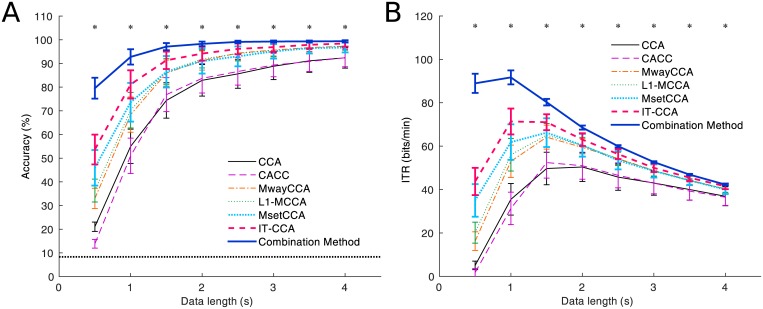
“2 and 3 show the correct classification accuracy and Information Transfer Rate (ITR) [9] of different detectors on real data.”
BackgroundMethodInfluentialDynamic time segment selection in steady state visual evoked potential detection
Cecotti, H. (2019) · International IEEE/EMBS Conference on Neural Engineering · doi:10.1109/ner.2019.8717051 · Cited by 1
Multiview MAX-VAR canonical correlation approach for enhancing SSVEP based BCIs
Kumar, G. R. K., & Reddy, M. R. (2019) · IEEE-EMBS International Conference on Biomedical and Health Informatics (BHI ...) · doi:10.1109/bhi.2019.8834650 · Cited by 1
“The use of calibration data for learning a spatial filter or templates have been shown to improve target detection and provide stable performances [5].”
MethodSözer, A. T. (2021) · Necmettin Erbakan Üniversitesi Fen ve Mühendislik Bilimleri Dergisi · doi:10.47112/neufmbd.2021.5 · Cited by 1
“The accuracy and ITR of target stimulus detection using the SSSA, PSDA LASSO and CCA & IT-CCA methods are presented in the figures.”
Influentialİşcan, Z. (2022) · Balkan Journal of Electrical and Computer Engineering · doi:10.17694/bajece.1088353 · Cited by 1
Ino, M., Kono, Y., & Kobayashi, N. (2022) · Asia-Pacific Signal and Information Processing Association Annual Summit and Conference (APSIPA ASC) · doi:10.23919/apsipaasc55919.2022.9980232 · Cited by 1
“In particular, SSVEP induced by visual stimuli are affected by EOG; therefore, subjects are asked to avoid eye movements as much as possible during the measurement [2].”
BackgroundA New CCA-Based Method for Improving SSVEP-Based BCI System Classification
Zhao, S., Cui, Y., Zhao, G., Jiang, L., & Chang, X.-Z. (2023) · WRC Symposium on Advanced Robotics and Automation (WRC SARA) · doi:10.1109/wrcsara60131.2023.10261825 · Cited by 1
“On the basis of that, the CCA method is proposed to meet such requirements for multi-channel frequency identification [13].”
MethodOu, L. S., Do, T., Tran, X.-T., Leong, D., Chang, Y., Wang, Y., & Lin, C. (2023) · Lecture notes in computer science · doi:10.1007/978-981-99-8391-9_30 · Cited by 1
Self-citationPerformance of Empirical Mode Decomposition for Frequency Identification in SSVEP Based BCI
Reddy, T. J., & Reddy, M. R. (2023) · Annual International Conference of the IEEE Engineering in Medicine and Biology Society (EMBC) · doi:10.1109/embc40787.2023.10340245 · Cited by 1
“Some researchers reported significant improvement in frequency identification accuracy of canonical correlation analysis method by optimizing reference signals [6],[7].”
BackgroundEffect of alpha range activity on SSVEP decoding in brain-computer interfaces
Zehra, S., Mu, J., Burkitt, A. N., & Grayden, D. B. (2023) · Annual International Conference of the IEEE Engineering in Medicine and Biology Society (EMBC) · doi:10.1109/embc40787.2023.10340956 · Cited by 1
“SSVEP BCIs are attractive because they require minimal user training, have high information transfer rates, and usually do not require decoder calibration for each individual [1], [2], [3].”
BackgroundResearch on SSVEP‐EEG feature enhancement algorithm based on fractional differentiation
Li, Z., Wang, W., Yuan, S., Pei, J., Yang, Q., & Wang, Y. (2024) · The Journal of Engineering · doi:10.1049/tje2.12363 · Cited by 1
Self-citationEMG and SSVEP-based bimodal estimation of elbow angle trajectory
Davarinia, F., & Maleki, A. (2024) · Neuroscience · doi:10.1016/j.neuroscience.2024.10.030 · Cited by 1
A Dual Training Framework Addressing Channel and Frequency Discrepancies in SSVEP Classification
Fu, R., Xu, X., Wu, N., Liang, Z., Wang, Z., & Chen, J. (2024) · IEEE Sensors Journal · doi:10.1109/jsen.2024.3492198 · Cited by 2
“Further details are available in [26].”
Narrowband-Enhanced Method for Improving Frequency Recognition in SSVEP-BCIs
Li, R., Zhao, X., Wang, Z., Xu, G., Hu, H., Zhou, T., & Xu, T. (2024) · Annual International Conference of the IEEE Engineering in Medicine and Biology Society (EMBC) · doi:10.1109/embc53108.2024.10782374 · Cited by 1
“The frequency range for these stimuli is between 9.24 Hz and 14.75 Hz, with a 0.5 Hz interval [15].”
InfluentialEEG Based Multitasking Assessment Using Simultaneous Spatiotemporal Stimulus
Ng, K. H., Ng, S., Siew, X. H., & Wai, A. A. P. (2021) · Springer eBooks · doi:10.1007/978-981-15-9472-4_32 · Cited by 1
Ravi, A. (2019) · UWSpace (University of Waterloo) · Cited by 1
POMDP-BCI: A Benchmark of Active BCI Using POMDP to Issue CommandsPreprint
Torre, J. J., Dehais, F., & Chanel, C. P. C. (2023) · doi:10.36227/techrxiv.22818212.v1 · Cited by 1
Mathematical and Statistical Analysis of Non-stationary Time Series Data
Du, H. (2023) · YorkSpace (York University) · Cited by 1
HEEGNet: Hyperbolic Embeddings for EEG
Li, S., Chu, S., Koç, O., Ding, Y., Zhao, Q., Kawanabe, M., & Chen, Z. (2026) · International Conference on Learning Representations · doi:10.48550/arxiv.2601.03322 · Cited by 7
“Visually evoked potentials (VEP) : Nakanishi (9 subjects/1 session/12 classes) (Nakanishi et al., 2015), Wang (34/1/40) (Wang et al., 2016), CBVEP40 (12/1/4) (Castillos et al., 2023), and CB-VEP100 (12/1/4) (Castillos et al., 2023).”
Advanced methods for BCI-EEG processing for improved classification performance and reproducibility
Carrara, I. (2024) · theses.fr (ABES) · doi:10.70675/081a3235z524cz4cb1za85bz85f8a53b3049 · Cited by 1
CortexBridge: Cortical Alignment of EEG Montages for Foundation ModelsPreprint
Hong, J., Zhou, X., Ding, Z., Wang, K., & Wu, Y. (2026) · arXiv (Cornell University) · doi:10.48550/arxiv.2610.01124 · Cited by 1
“Each class has 15 trials recorded from eight channels at 256 Hz [13].”
Brain Computer Interface Implementation with Short-Time SSVEP
Shiam, A. A., Molla, M. K. I., & Islam, M. R. (2018) · International Conference on Computer, Communication, Chemical, Materials and Electronic Engineering (IC4ME2) · doi:10.1109/ic4me2.2018.8465628
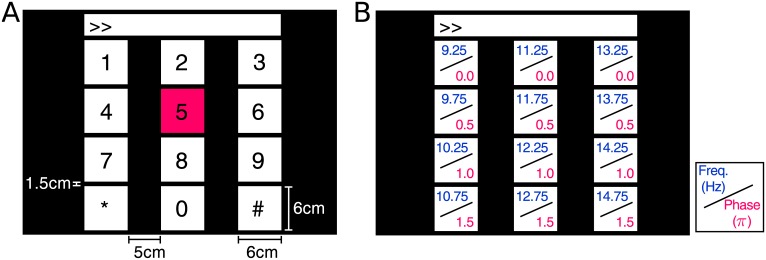
“The red square in (A) shows the target symbol 5 [6].”
BackgroundMethodDiscrimination of SSVEP responses using a kernel based approach
Oikonomou, V. P., Nikolopoulos, S., & Kompatsiaris, I. Y. (2019) · Annual International Conference of the IEEE Engineering in Medicine and Biology Society (EMBC) · doi:10.1109/embc.2019.8857685
“Calculator [10]: In this dataset, 12-target visual stimuli were presented on a 27-inch LCD monitor.”
MethodInfluentialKarkosz, S., & Jukiewicz, M. (2020) · Bio-Algorithms and Med-Systems · doi:10.1515/bams-2020-0013
A Novel Regression-based Algorithm for the recognition of SSVEP responses
Oikonomou, V. P., Nikolopoulos, S., & Kompatsiaris, I. Y. (2020) · IEEE International Conference on Bioinformatics and Bioengineering (BIBE) · doi:10.1109/bibe50027.2020.00090
“In the Calculator dataset the visual latency is defined using the classification accuracy, see [13], while, in the EPOC dataset an alignment procedure is used to extracted data epochs containing the SSVEP responses.”
MethodInfluentialZerafa, R., Camilleri, T. A., Falzon, O., & Camilleri, K. P. (2021) · Communications in computer and information science · doi:10.1007/978-3-030-72379-8_13
Towards real-world brain-computer interface: The BASIL projectPreprint
Mouček, R., Vařeka, L., Brůha, P., Ježek, P., Mautner, P., Holečková, I., Summer, J., & Lopuszanski, P. (2022) · Research Square · doi:10.21203/rs.3.rs-105256/v2
Multi-person coded brain-computer interface based on steady-state visual evoked potential
Chu, X., Yu, Y., Liu, K., Ye, Z., & Zeng, L. (2021) · China Automation Congress (CAC) · doi:10.1109/cac53003.2021.9727383
“…BCI usually include: fast Fourier transform method [16], canonical correlation analysis method (CCA) using spatial filtering principle to improve signal-to-noise ratio [17,18], MsetCCA method based on CCA [19], minimum energy combination (MEC) method [20], common spatial pattern (CSP) method [21].”
MethodSözer, A. T. (2017) · Zenodo (CERN European Organization for Nuclear Research) · doi:10.5281/zenodo.1045116
Improving the SSMVEP Detection Performance by Introducing a Secondary Discriminant Mechanism
Yan, W., & Du, Y. (2021) · CIE International Conference on Radar (RADAR) · doi:10.1109/radar53847.2021.10027911
“proposed an extended CCA-based method [17], in which a classifier was used to combine multiple features.”
MethodPOMDP-BCI: A Benchmark of Active BCI Using POMDP to Issue CommandsPreprint
Torre, J., Dehais, F., & Chanel, C. P. C. (2023) · doi:10.36227/techrxiv.22818212
An Asynchronous BCI-VR Hybrid Interactive System Based on a Mixed Template CCA MethodPreprint
Niu, L., Bin, J., zhao, Y., Deng, T., & Huo, Z. (2023) · SSRN Electronic Journal · doi:10.2139/ssrn.4635887
Research on Hybrid Modal Control Nursing Bed System Based on BCI-VT
Wang, P., Mao, L., Zhang, L., Jiang, N., & Ji, X. (2023) · IEEE Joint International Information Technology and Artificial Intelligence Conference (ITAIC) · doi:10.1109/itaic58329.2023.10409067
“The correlation between the multichannel SSVEP signal and the sine-cosine reference signal corresponding to each stimulus frequency is calculated by CCA, and the frequency corresponding to the reference signal with the largest correlation coefficient is the target of recognition [11].”
MethodWang, X., Cui, H., Liu, A., & Chen, X. (2024) · World Congress on Medical Physics and Biomedical Engineering, September 7 - 12, 2009, Munich, Germany · doi:10.1007/978-3-031-51455-5_2
Multi-Scale Spatio-Temporal Convolutional Neural Network for SSVEP Task
Wu, Q., Li, X., Chen, S., Zhao, X., Song, Y., Gao, Q., & Feng, Y. (2023) · China Automation Congress (CAC) · doi:10.1109/cac59555.2023.10451876
Ali, H., El-Zemity, A. S., Oghostinos, A. E., & Selim, S. (2024) · Communications in computer and information science · doi:10.1007/978-3-031-55729-3_2 · Cited by 1
Deng, Y., Ji, Z., Wang, Y., & Zhou, S. K. (2024) · SSRN Electronic Journal · doi:10.2139/ssrn.4798867
Self-citationThe interactions between spontaneous thoughts and decision-making in the context of depression
Yang, H. (2024) · University of Groningen research database (University of Groningen / Centre for Information Technology) · doi:10.33612/diss.1030953542
Zhang, J., & Zhong, X. (2024) · Journal of Circuits Systems and Computers · doi:10.1142/s0218126625501075
Tian, Z., Yu, Y., Ye, Z., Zhao, C., Hu, D., & Zeng, L. (2024) · IEEE International Conference on Cyber Technology in Automation, Control, and Intelligent Systems · doi:10.1109/cyber63482.2024.10749344
“CCA is a statistical technique employed to examine the correlation between two sets of multivariate variables [26].”
Design of an SSVEP-Based Brain-Controlled Robotic Arm Car System
Ma, X., Liu, J., Chen, R., Li, B., & Cao, J. (2024) · International Conference on Computer Systems (ICCS) · doi:10.1109/iccs62594.2024.10795855
Çabuk, A. S., BİLGE, İ., Çıkan, M., Başak, H., Mumcu, Y. K., YAVUZ, M., YAVUZ, M., YAVUZ, M., YAVUZ, M., Doğan, K., et al. (2024) · Bidge Yayınları eBooks · doi:10.70269/w74pta28128z
Bilge, İ. (2024) · Bidge Yayınları eBooks · doi:10.70269/10.70269/4987919596
YAVUZ, M. (2024) · Bidge Yayınları eBooks · doi:10.70269/10.70269/3111759514
Ahmed, S. S., Sani, U. M., Santali, S., & Saidu, U. (2024) · FUDMA Journal of Sciences · doi:10.33003/fjs-2024-0806-3111
Complex CNN incorporating Hilbert transform for steady-state visual evoked potential BCI
Takata, R., & Washizawa, Y. (2024) · Asia-Pacific Signal and Information Processing Association Annual Summit and Conference (APSIPA ASC) · doi:10.1109/apsipaasc63619.2025.10848767
“…sequence s i ( n ) of the i -th targets is defined as where f 0 is the minimum frequency used for stimulation, ϕ 0 is the initial phase at frequency f 0 , ∆ f and ∆ ϕ are the frequency and phase intervals respectively, and N targets = 12 is the number of frequencies used for stimulation [6].”
InfluentialEnhancing Cca-Based Methods with a Temporal Graph Reference Signal for Ssvep Frequency DetectionPreprint
Noori, N., & Sardouie, S. H. (2025) · SSRN Electronic Journal · doi:10.2139/ssrn.5219675
Zhang, C. Z., Su, P., & Wu, X. (2025) · Lecture notes in computer science · doi:10.1007/978-981-96-8173-0_28
Wang, D., Wu, L., Xue, B., & Liu, A. (2025) · Intelligent Sports and Health · doi:10.1016/j.ish.2025.05.002
Amirsoleimani, N., Rueda, L. G., & Abdel‐Raheem, E. (2025) · International Symposium on Signals, Circuits and Systems · doi:10.1109/isscs66034.2025.11105692
Dong, L., Xu, C., Xie, R., Wang, X., Yang, W., & Li, Y. (2025) · Biomimetics · doi:10.3390/biomimetics10080554 · Cited by 1
“Dataset 3 is from the publicly available database UCSD in San Diego [39].”
Lv, Y., & Luo, T.-J. (2025) · Applied Intelligence · doi:10.1007/s10489-025-06859-7
“The pioneering individual-template CCA (ITCCA) algorithm [23 ] employs subject-specific trial averages as templates, and detect target stimuli by maximizing template-test correlations.”
BGTransform: a neurophysiologically informed EEG data augmentation framework
Yue, J., Xiao, X., Zhang, H., Xu, M., & Ming, D. (2025) · Journal of Neural Engineering · doi:10.1088/1741-2552/ae0c3a
Islam, R., Ignatov, D. I., Kaberg, K., & Nabatchikov, R. (2026) · IEEE Access · doi:10.1109/access.2026.3722615 · Cited by 1
Adaptive Network Design for SSVEP/SSMVEP Classification via SE and Configurable Convolutions
Lin, Y., Wu, X., Du, X., Zhang, H., Lu, W., Zhu, Y., Ren, Z., Qin, P., Li, J., & Ma, Y. (2025) · Lecture notes in computer science · doi:10.1007/978-981-95-2095-4_29
TRCA with sparrow-optimized adaptive filter banks for SSVEP recognition
Nan, J., Zhang, S., Xu, P., Zhang, K., Li, D., Zhu, F., Li, Y., Xia, Y., & Meng, Y. (2025) · Cluster Computing · doi:10.1007/s10586-025-05795-y
“To further validate the effectiveness of our method, we also conducted the same experiments on the UCSD dataset [44] TRCA method recognized a maximum feature category of 12 (again a recognition error), while our method correctly identified the maximum feature category as 13.”
Adaptive Multi-Domain Joint Decoding Algorithm for SSVEP Signal Classification
Jia, S., & Cao, R. (2025) · International Joint Conference on Neural Networks (IJCNN) · doi:10.1109/ijcnn64981.2025.11227745
“1) Dataset A: The dataset utilized in this study is sourced from the publicly available dataset outlined in the paper[20].”
Luo, T.-J. (2025) · Biomedical Signal Processing and Control · doi:10.1016/j.bspc.2025.109196
Harmonic Component Analysis: A novel training-free and asynchronous BCI classification method
Kæseler, R. L., & Struijk, L. N. S. A. (2025) · Annual International Conference of the IEEE Engineering in Medicine and Biology Society (EMBC) · doi:10.1109/embc58623.2025.11253522
“Canonical correlation analysis (CCA) is the most widely used algorithm to classify SSVEP-based EEG without training data [5]; however, it has rarely been investigated for asynchronous control.”
DC-FFNet: Dual Channel Feature Fusion Network for Real-Time Asynchronous Signal Analysis
Sun, Y., You, Z., Sun, D., Huang, Y., Wu, Q., & Pan, J. (2025) · Annual International Conference of the IEEE Engineering in Medicine and Biology Society (EMBC) · doi:10.1109/embc58623.2025.11254486
“Based on previous research [20], the SSVEP SANDIEGO Dataset was recorded by eight electrodes over parietal and occipital areas ( O 1 , Oz, O 2 , PO 3 , POz, PO 4 , PO 7 and PO 8) .”
MCRBM–CNN: A Hybrid Deep Learning Framework for Robust SSVEP Classification
Gao, D., Zhao, Y., Zhou, J., Zhang, H., & Li, H. (2025) · Sensors · doi:10.3390/s25247456
“Aravind Ravi et al. and Nakanishi et al. [25,26] proposed the C-CNN network structure combined with complex spectral information, which achieved a cross-subject accuracy rate of 81.60% and an in-subject accuracy rate of 92.33% on public datasets.”
InfluentialBenchmarking Individual Frequency Selection for BCI SSVEP Paradigm with State-of-the-Art CNN Models
Kozin, A. V., Gerasimov, A. K., & Bakaev, M. (2025) · Studies in computational intelligence · doi:10.1007/978-3-032-07690-8_47
Huang, J., Xiong, B., Yang, P., Wan, B., & Zhang, Z.-Q. (2025) · International Conference on Advanced Robotics and Mechatronics (ICARM) · doi:10.1109/icarm65671.2025.11293574
“2) Dataset II: The second dataset was collected at the University of California, San Diego (UCSD) [28].”
Real-Time, Multi-Command Drone Navigation Using a Consumer-Grade EEG-Based SSVEP BCI
Wijaya, A. E., Nurizati, N., Hermawan, R., & Suhendra, M. A. (2026) · Indonesian Journal of Electronics Electromedical Engineering and Medical Informatics · doi:10.35882/ijeeemi.v8i1.295
Pang, R., Xu, H., Li, B., Ou, B., & tang, S. (2026) · SSRN Electronic Journal · doi:10.2139/ssrn.6045168
Research on Frequency Recognition Algorithm Based on Convolution-Long Short-Term Memory Network
Li, F., Tian, Y.-J., Su, Y., Shi, Z.-X., Zhang, M., & Yang, H.-S. (2025) · Proceedings of the 2025 International Conference on Artificial Intelligence and Foundation Model · doi:10.1145/3786709.3786717
Abdallah, A., Benayed, W., Trigui, O., Bouabid, A., & Ghorbel, M. (2025) · International Conference on Sciences and Techniques of Automatic Control and Computer Engineering · doi:10.1109/sta66620.2025.11364809
“The dataset used in this papier was originally introduced by Nakanishi et al. (2015) [5].”
LARSNet: A Lightweight Asymmetric Residual Siamese Network for SSVEP-Based Brain–Computer Interfaces
Gu, Y., Luo, P., Su, R., & Li, X. (2026) · IEEE Transactions on Instrumentation and Measurement · doi:10.1109/tim.2026.3660428
“2) Dataset 2 [28]: This dataset was obtained through visual stimuli of 12 targets on a 27-in liquid crystal display (LCD) monitor.”
FusionGen: Feature Fusion-Based Few-Shot EEG Data Generation
Chen, Y., Liu, D., Yang, X., Xu, X., Chen, B., & Wu, D. (2025) · IEEE International Conference on Computer Vision Workshops · doi:10.1109/iccvw69036.2025.00042 · Cited by 2
Comparative study of SSVEP characteristics in mixed versus virtual reality across varying depths
Zhang, Q., Cao, Z., Tian, S., Cai, Z., Shi, L., & Qi, X. (2026) · Frontiers in Neuroscience · doi:10.3389/fnins.2026.1713018
“This exactly matches the device’s frame rate, ensuring the full flicker waveform is rendered without distortion (Nakanishi et al., 2015).”
Impacto da Taxa de Amostragem em Redes Neurais Convolucionais para BCIs baseadas em SSVEP
Floriano, A., Malinowski, E. L., Filho, J. D. S. P., Figueiredo, G. V. C., Silva, P. R. D. S., & Coelho, J. J. D. S. (2025) · Congresso Latino-Americano de Software Livre e Tecnologias Abertas (Latinoware) · doi:10.5753/latinoware.2025.16448
“O conjunto de dados utilizado foi obtido a partir de um experimento BCI offline envolvendo 10 participantes saud´aveis, conforme descrito em [15].”
Torre, J. J., Chanel, C. P. C., & Dehais, F. (2026) · Engineering Applications of Artificial Intelligence · doi:10.1016/j.engappai.2026.114575
Torre, J. J. (2024) · theses.fr (ABES) · doi:10.70675/e4e78df0za2b0z4162z8104z7ae752d81a23 · Cited by 1
Transfert d'apprentissage intra et inter sujets en interfaces cerveau-machine non-invasives
Bleuzé, A. (2023) · theses.fr (ABES) · doi:10.70675/df3eca83z03adz47dbz88cczb6c306c34ae3 · Cited by 1
Quantized Compact 3D-CNN with High Classification Accuracy in Motor Imagery Brain-Computer Interface
Kobayashi, N., & Ino, M. (2025) · International Conference on Emerging Innovation and Digital Technology (ICEIDT) · doi:10.1109/iceidt66693.2025.11473525
“Some methods induce changes in brain activity by external stimuli such as auditory [5] or visual stimuli [6,7], and others induce changes in brain activity by mental tasks such as motor imagery (MI) [7,8] or audio imagery [9].”
Aran, A., Moradi, M., & Ghanbari, Z. (2026) · Elsevier eBooks · doi:10.1016/b978-0-443-44638-2.00013-0
Scheppink, H. A., Herpers, R., Thielen, J., & Volosyak, I. (2026) · Frontiers in Neuroergonomics · doi:10.3389/fnrgo.2026.1884144
“In c-VEP-, SSMVEP-, and SSVEP-based BCIs, canonical correlation analysis (CCA) has been successfully applied for template matching (Nakanishi et al., 2015; Bin et al., 2009) or frequency matching (Lin et al., 2007; Nakanishi et al., 2015).”
Yahya, S. A., Amin, O. A., & Badawy, W. (2026) · International Conference on Machine Intelligence and Smart Innovation (ICMISI) · doi:10.1109/icmisi69868.2026.11584234
“More recently, transformers have emerged as powerful alternatives, using self-attention to model global temporal relationships, making them well-suited for frequency-based signals like SSVEP [10], [11].”
Ear-EEG for SSVEP classification: a computationally efficient deep learning approach
Abbasi, M., Khodabakhshi, M. B., & Jamasb, S. (2026) · Signal Image and Video Processing · doi:10.1007/s11760-026-05589-8
Xu, L., Jiang, X., Wang, R., Leng, Y., Iramina, K., Yang, Y., & Ge, S. (2026) · Biomedical Signal Processing and Control · doi:10.1016/j.bspc.2026.111115
Descriptor: Dual-Paradigm SSVEP and Motor Imagery 16-Channel EEG Dataset (SMED)
Chen, Y., Shi, X., & Silva, D. (2026) · IEEE data descriptions. · doi:10.1109/ieeedata.2026.3735243
“For SSVEP, the benchmark dataset released by Nakanishi et al. [7] provides 12-class flickering stimuli recorded from ten participants and has been adopted for evaluating frequency recognition algorithms such as canonical correlation analysis (CCA) and its filter-bank extension [8], as well as…”
Quantum Machine Learning for Enhanced Classification in XR-Based SSVEP BCIs
Angrisani, L., D'Arco, M., D’Iorio, M., & Regio, F. L. (2026) · IEEE International Instrumentation and Measurement Technology Conference · doi:10.1109/i2mtc66907.2026.11694847
“…Correlation Analysis (CCA) and its filter-bank variants (FBCCA), rely on reference templates of sine and cosine waves to detect frequency matching [14], their performance degrades significantly in low-SNR environments, such as those encountered in mobile XR setups using dry electrodes [15].”
Design and implementation of a functional SSVEP-based Brain Computer Interface
Gonzalez, M. N. (2024) · Rovira & Virgili repository
DenoFlow: Flow matching for SSVEP denoising under recorded physiological artifacts
He, Z., Wang, Z., & Wu, D. (2026) · Knowledge-Based Systems · doi:10.1016/j.knosys.2026.117288
Adaptive local temporal weighting for short-window EEG-based SSVEP recognition using FB-eTRCA
Zhao, G., Feng, Z., & Wang, Z. (2026) · Science Progress · doi:10.1177/00368504261501367
LaBraM at Scale: Scaling Data and Models for EEG PretrainingPreprint
Pan, J., Yin, R., Lu, B., Li, D., Zheng, W.-L., & Wang, Y. (2026) · arXiv (Cornell University) · doi:10.48550/arxiv.2611.03165
Self-citation
Metadata
- Authors
- Nakanishi, M., Wang, Y., Wang, Y.-T., & Jung, T.-P.
- Affiliations
- University of California San Diego (US)
- Chinese Academy of Sciences (CN)
- Corresponding author
- Wang, Yijun
- Venue
- PLoS ONE
- Publisher
- Public Library of Science (PLoS)
- Published
- 2015-10-19
- Volume
- 10
- Issue
- 10
- Pages
- e0140703
- ISSN
- 1932-6203 (ISSN-L)
- PMC
- PMC4610694
- OpenAlex
- W2338492816
- Cited by
- 376
- References
- 36
- Citations by year
- 2026: 16 · 2025: 50 · 2024: 51 · 2023: 46 · 2022: 43 · 2021: 37 · 2020: 41 · 2019: 38 · 2018: 23 · 2017: 21 · 2016: 9
- FWCI
- 10.63
- Type
- journal article
- Language
- en
- Open access
- gold
- doi.org
- Licence
- Locations
- PLoS ONE (publishedVersion, cc-by)
- Europe PMC (PubMed Central) (publishedVersion, cc-by)
- PubMed Central (publishedVersion, cc-by)
- PubMed (publishedVersion)
- RePEc: Research Papers in Economics (submittedVersion)
- DOAJ (DOAJ: Directory of Open Access Journals) (submittedVersion)
- eScholarship (California Digital Library) (submittedVersion)
- eScholarship (California Digital Library) (submittedVersion, cc-by)
- SEMI-IR (submittedVersion)
- Funders
- Recruitment Program for Young Professionals
- National Institutes of Health (W911NF-10-2-0022)
- Defense Advanced Research Projects Agency (W911NF-10-2-0022, USDI D11PC20183)
- Office of Naval Research (W911NF-10-2-0022, N00014-08-1215, N00014)
- National Eye Institute (R21EY025056)
- Army Research Office (W911NF-10-2-0022, W911NF-09-1-0510, W911NF)
- Army Research Laboratory (W911-NF-10-2-0022, W911NF, W911NF-10)
- Topics
- Life Sciences › Neuroscience › Cognitive Neuroscience › EEG and Brain-Computer Interfaces
- Physical Sciences › Computer Science › Human-Computer Interaction › Gaze Tracking and Assistive Technology
- Physical Sciences › Computer Science › Artificial Intelligence › Emotion and Mood Recognition
- Keywords
- steady-state visual evoked potentials, canonical correlation analysis, SSVEP detection, brain-computer interface, information transfer rate, classification accuracy
- MeSH terms
- Adult, Electroencephalography, Evoked Potentials, Visual, Female, Humans, Male, Statistics as Topic, Brain-Computer Interfaces
About these checks
Registry, retraction, Cites and statistics results are computed, not judged, with one exception: a printed reference that no index lists is read once by a model before it counts as a citation error. Claims are extracted by a model and kept only when their quote appears verbatim in the text; each cited source is then checked, with a model’s help, for whether it says what the claim relies on. Those verdicts can be wrong — read the claim’s quote and the cited source before relying on one.
Statistics and arithmetic are recomputed, not judged.
Confidence bands are shown only for fields calibrated on our annotated test set. None is calibrated yet, so no band is shown.
What counts as a claim ›How we measure confidence ›How we check this ›
Are you an author, or do you see a problem with this page? Request a review
Data sources
Bibliographic data: Semantic Scholar, OpenAlex, Crossref.
Contains information from the Semantic Scholar Academic Graph Datasets, made available under the ODC Attribution License (ODC-BY 1.0).
Semantic Scholar’s data is described in: Kinney, R., et al. (2023). The Semantic Scholar Open Data Platform. arXiv:2301.10140.
