

A Comparison Study of Canonical Correlation Analysis Based Methods for Detecting Steady-State Visual Evoked Potentials
Open accessThe DOI matches its Crossref record; 36 of the 36 references it cites were found in a registry or an index.
Abstract
Canonical correlation analysis (CCA) has been widely used in the detection of the steady-state visual evoked potentials (SSVEPs) in brain-computer interfaces (BCIs). The standard CCA method, which uses sinusoidal signals as reference signals, was first proposed for SSVEP detection without calibration. However, the detection performance can be deteriorated by the interference from the spontaneous EEG activities. Recently, various extended methods have been developed to incorporate individual EEG calibration data in CCA to improve the detection performance. Although advantages of the extended CCA methods have been demonstrated in separate studies, a comprehensive comparison between these methods is still missing. This study performed a comparison of the existing CCA-based SSVEP detection methods using a 12-class SSVEP dataset recorded from 10 subjects in a simulated online BCI experiment. Classification accuracy and information transfer rate (ITR) were used for performance evaluation. The results suggest that individual calibration data can significantly improve the detection performance. Furthermore, the results showed that the combination method based on the standard CCA and the individual template based CCA (IT-CCA) achieved the highest performance.
Overview
The claims and statistics of this paper haven’t been checked yet.
Free: it reads the open-access text and checks the first 5 claims that cite a source we can check. Create a free account to check every claim.
Integrity signals
Registry
Cites
Statistics
Figures


Verification
Claims the paper makes
The claims and statistics of this paper haven’t been checked yet.
Free: it reads the open-access text and checks the first 5 claims that cite a source we can check. Create a free account to check every claim.
Claims other papers make about this one
Each is checked against this paper’s own text: does it say what the citing paper says it does?
The source backs part of the claim, not all of it — or backs it for a different population, condition or comparison.
In the citing paper
“CieConv1 are employed to extract the crosschannel correlation of the original input feature map, in which the correlation information assists in decoding EEG correctly.”
From IENet: a robust convolutional neural network for EEG based brain-computer interfaces (2022) · cites this paper as [64]
Experimental — accuracy not yet measuredThe source backs part of the claim, not all of it — or backs it for a different population, condition or comparison.
In the citing paper
“We can see that temporal kernels of different lengths extract the frequency characteristics of the SSVEP, where the frequency range is consistent with that of the SSVEP experimental stimulus (9.25-14.75 Hz) [64].”
From IENet: a robust convolutional neural network for EEG based brain-computer interfaces (2022) · cites this paper as [64]
Experimental — accuracy not yet measured
Self-check
Percentages, sums and reported differences re-computed from the paper’s own numbers.
The self-check needs the paper’s full text.
Citations
Cites
Brainard, D. H. (1997) · Spatial Vision · doi:10.1163/156856897x00357 · Cited by 19,702 · cited 1×
“) using the Psychophysics Toolbox extensions [35].”
Brain–computer interfaces for communication and control
Wolpaw, J. R., Birbaumer, N., McFarland, D. J., Pfurtscheller, G., & Vaughan, T. M. (2002) · Clinical Neurophysiology · doi:10.1016/s1388-2457(02)00057-3 · Cited by 7,927 · cited 4×
“This study also evaluated the feature values for each method using r -square value (i.e., the proportion of the variance of the signal feature that is accounted for by the user ’ s intent) [1].”
BackgroundMethodInfluentialSteady-state visually evoked potentials: Focus on essential paradigms and future perspectives
Vialatte, F.-B., Maurice, M., Dauwels, J., & Cichocki, A. (2010) · Progress in Neurobiology · doi:10.1016/j.pneurobio.2009.11.005 · Cited by 1,066 · cited 2×
“Various target identification methods have been developed for detecting SSVEPs in BCIs [2 – 4].”
BackgroundMethodFrequency recognition based on canonical correlation analysis for SSVEP-based BCIs
Lin, Z., Zhang, C., Wu, W., & Gao, X. (2007) · IEEE Transactions on Biomedical Engineering · doi:10.1109/tbme.2006.889197 · Cited by 867
Design and implementation of a brain-computer interface with high transfer rates
Cheng, M., Gao, X., Gao, S., & Xu, D. (2002) · IEEE Transactions on Biomedical Engineering · doi:10.1109/tbme.2002.803536 · Cited by 818
Bin, G., Gao, X., Yan, Z., Hong, B., & Gao, S. (2009) · Journal of Neural Engineering · doi:10.1088/1741-2560/6/4/046002 · Cited by 773 · cited 3×
“Among these methods, CCA is one of the most widely used methods in SSVEP-based BCIs due to its high efficiency, robustness, and simple implementation [10, 11, 15, 21 – 23].”
MethodResultA Survey of Stimulation Methods Used in SSVEP-Based BCIs
Zhu, D., Bieger, J., Garcia Molina, G., & Aarts, R. M. (2010) · Computational Intelligence and Neuroscience · doi:10.1155/2010/702357 · Cited by 654 · cited 1×
“Although the number of frequencies that can be presented on a computer monitor is limited by the refresh rate, recent progresses of the stimulus presentation meth-ods succeeded in presenting a large number of visual flickers on the computer monitor [6 – 11].”
BackgroundA practical VEP-based brain-computer interface
Wang, Y., Wang, R., Gao, X., Hong, B., & Gao, S. (2006) · IEEE Transactions on Neural Systems and Rehabilitation Engineering · doi:10.1109/tnsre.2006.875576 · Cited by 617
Self-citationMultiple Channel Detection of Steady-State Visual Evoked Potentials for Brain-Computer Interfaces
Friman, O., Volosyak, I., & Graser, A. (2007) · IEEE Transactions on Biomedical Engineering · doi:10.1109/tbme.2006.889160 · Cited by 541 · cited 1×
“The widely used spatial filtering methods in SSVEP-based BCIs include canonical correlation analysis (CCA) [15], minimum energy combination (MEC) [16], and common spatial pattern (CSP) [17].”
MethodVisual and Auditory Brain–Computer Interfaces
Gao, S., Wang, Y., Gao, X., & Hong, B. (2014) · IEEE Transactions on Biomedical Engineering · doi:10.1109/tbme.2014.2300164 · Cited by 449 · cited 2×
“Various target identification methods have been developed for detecting SSVEPs in BCIs [2 – 4].”
BackgroundMethodSelf-citation
Cited by
Enhancing Detection of SSVEPs for a High-Speed Brain Speller Using Task-Related Component Analysis
Nakanishi, M., Wang, Y., Chen, X., Wang, Y.-T., Gao, X., & Jung, T.-P. (2018) · IEEE Transactions on Biomedical Engineering · doi:10.1109/tbme.2017.2694818 · Cited by 813
“1) Extended CCA-Based Method: Our recent studies proposed an extended CCA-based method, which incorporated individual template signals obtained by averaging multiple training trials as χ̄njk = 1 Nt ∑Nt h=1 χnjkh [4], [9], [18], [19].”
MethodSelf-citationWaytowich, N., Lawhern, V. J., Garcia, J. O., Cummings, J., Faller, J., Sajda, P., & Vettel, J. M. (2018) · Journal of Neural Engineering · doi:10.1088/1741-2552/aae5d8 · Cited by 262
“Here, our division of the 4 s SSVEP trial epoch into 1 s segments simulates an asynchronous SSVEP BCI from a discretized stimulation paradigm.”
MethodInfluentialBETA: A Large Benchmark Database Toward SSVEP-BCI Application
Liu, B., Huang, X., Wang, Y., Chen, X., & Gao, X. (2020) · Frontiers in Neuroscience · doi:10.3389/fnins.2020.00627 · Cited by 209
“For all the methods without a filter bank scheme, the trials were band-pass filtered between 6 and 80 Hz except for the CVARS method, which was in line with the previous study (Nakanishi et al., 2015).”
MethodSelf-citationComparing user-dependent and user-independent training of CNN for SSVEP BCI
Ravi, A., Beni, N. H., Manuel, J., & Jiang, N. (2020) · Journal of Neural Engineering · doi:10.1088/1741-2552/ab6a67 · Cited by 165
“The proposed methods and other previously published methods were evaluated and compared on two datasets; a dataset acquired in our lab — Dataset 1 [33] and a public dataset — Dataset 2 [12].”
MethodInfluentialTo train or not to train? A survey on training of feature extraction methods for SSVEP-based BCIs
Zerafa, R., Camilleri, T., Falzon, O., & Camilleri, K. P. (2018) · Journal of Neural Engineering · doi:10.1088/1741-2552/aaca6e · Cited by 160
“…× n is the n -mode tensor product. in The optimization problem (31) is solved by iterations of alternating CCAs so that W 1 , W 3 and V satisfy the stop criterion, || W ( l ) − W ( l − 1 ) 2 < 10 − 5 , where l denotes the number of iteration steps and W is the weight coefficient to be learned [16].”
BackgroundMethodInfluentialState-of-the-Art on Brain-Computer Interface Technology
Pekša, J., & Mamchur, D. (2023) · Sensors · doi:10.3390/s23136001 · Cited by 207
“Steady-state visual evoked potentials (SSVEPs) utilize flicker frequencies, which present monitors generate periodic EEG patterns that correlate directly with the user’s gaze direction towards specific target screens [67].”
BackgroundData Analytics in Steady-State Visual Evoked Potential-Based Brain–Computer Interface: A Review
Zhang, Y., Xie, S. Q., Wang, H., & Zhang, Z. (2020) · IEEE Sensors Journal · doi:10.1109/jsen.2020.3017491 · Cited by 161
“It turns out that the averaged classification accuracy and ITR of MsetCCA are better than them of MwayCCA and CCA [100].”
InfluentialA transformer-based deep neural network model for SSVEP classification
Chen, J., Zhang, Y., Pan, Y., Xu, P., & Guan, C. (2023) · Neural Networks · doi:10.1016/j.neunet.2023.04.045 · Cited by 170
Learning across multi-stimulus enhances target recognition methods in SSVEP-based BCIs
Wong, C. M., Wan, F., Wang, B., Wang, Z., Nan, W., Lao, K. F., Mak, P. U., Vai, M. I., & Rosa, A. C. (2019) · Journal of Neural Engineering · doi:10.1088/1741-2552/ab2373 · Cited by 148
“In [10, 11], the eCCA is proposed to compute the spatial filters using both the subject-specific reference signals and the sine – cosine reference signals, thus it performs much better than the other CCA-based methods [14].”
BackgroundMethodA Tutorial on Canonical Correlation Methods
Uurtio, V., Monteiro, J. M., Kandola, J., Shawe-Taylor, J. S., Fernández-Reyes, D., & Rousu, J. (2017) · ACM Computing Surveys · doi:10.1145/3136624 · Cited by 172
“Relations have been explored for developing brain-computer interfaces [Cao et al. 2015; Nakanishi et al. 2015] and in the field imaging genetics [Fang et al. 2016].”
MethodA Deep Neural Network for SSVEP-Based Brain-Computer Interfaces
Güney, O. B., Oblokulov, M., & Özkan, H. (2021) · IEEE Transactions on Biomedical Engineering · doi:10.1109/tbme.2021.3110440 · Cited by 153
“Among those methods, Extended-CCA and its improved version m-Extended-CCA are reported to outperform the others [12], [30].”
MethodA High-Speed SSVEP-Based BCI Using Dry EEG Electrodes
Xiao, X. M., Wang, Y., Pei, W., Guo, X., Liu, Z., Wang, F., Ming, G., Zhao, H., Gui, Q., & Chen, H. (2018) · Scientific Reports · doi:10.1038/s41598-018-32283-8 · Cited by 140
Self-citationSpatial Filtering in SSVEP-Based BCIs: Unified Framework and New Improvements
Wong, C. M., Wang, B., Wang, Z., Lao, K. F., Rosa, A. C., & Wan, F. (2020) · IEEE Transactions on Biomedical Engineering · doi:10.1109/tbme.2020.2975552 · Cited by 139
“vidual template based CCA (itCCA) [23], the transfer template CCA (ttCCA) [25], the extended CCA (eCCA) [16], multi-set CCA (e.”
BackgroundMethodInfluentialDiscriminative Feature Extraction via Multivariate Linear Regression for SSVEP-Based BCI
Wang, H., Zhang, Y., Waytowich, N. R., Krusienski, D. J., Zhou, G., Jin, J., Wang, X., & Cichocki, A. S. (2016) · IEEE Transactions on Neural Systems and Rehabilitation Engineering · doi:10.1109/tnsre.2016.2519350 · Cited by 147
Deep Learning in EEG: Advance of the Last Ten-Year Critical Period
Gong, S., Xing, K., Cichocki, A., & Li, J. (2021) · IEEE Transactions on Cognitive and Developmental Systems · doi:10.1109/tcds.2021.3079712 · Cited by 147
“[191], - Participants, - Channel, 2048 Hz”
Implementing a calibration-free SSVEP-based BCI system with 160 targets
Chen, Y., Yang, C., Ye, X., Chen, X., Wang, Y., & Gao, X. (2021) · Journal of Neural Engineering · doi:10.1088/1741-2552/ac0bfa · Cited by 122
“Established from standard CCA, many extended algorithms were exploited for promoting higher performance [21].”
Self-citationİşcan, Z., & Nikulin, V. V. (2018) · PLoS ONE · doi:10.1371/journal.pone.0191673 · Cited by 122
Multi-Scale Neural Network for EEG Representation Learning in BCI
Ko, W., Jeon, E., Jeong, S., & Suk, H. (2021) · IEEE Computational Intelligence Magazine · doi:10.1109/mci.2021.3061875 · Cited by 117
“Examples of evoked BCIs include steady-state visually evoked potentials (SSVEP) [6], [7] and event-related potentials [6].”
BackgroundMethodInfluentialNakanishi, M., Wang, Y.-T., Jung, T., Zao, J. K.-K., Chien, Y., Diniz‐Filho, A., Daga, F. B., Lin, Y., Wang, Y., & Medeiros, F. A. (2017) · JAMA Ophthalmology · doi:10.1001/jamaophthalmol.2017.0738 · Cited by 102
Self-citationLi, M., He, D., Li, C., & Qi, S. (2021) · Brain Sciences · doi:10.3390/brainsci11040450 · Cited by 109
“Reference [40] compared eight methods of SSVEP detection based on CCA: (1) the standard CCA [35], (2) cluster analysis of CCA coefficients (CACC) [41], (3) phase-constrained CCA (PCCA) [42], (4) multi-way CCA (MwayCCA) [43], (5) L1-reguralized multi-way CCA (L1-MCCA) [44], (6) multi-set CCA (MsetCCA) [45], (7) individ…”
MethodJiao, Y., Zhang, Y., Wang, Y., Wang, B., Jin, J., & Wang, X. (2017) · International Journal of Neural Systems · doi:10.1142/s0129065717500393 · Cited by 96
Self-citationA novel training-free recognition method for SSVEP-based BCIs using dynamic window strategy
Chen, Y., Yang, C., Chen, X., Wang, Y., & Gao, X. (2021) · Journal of Neural Engineering · doi:10.1088/1741-2552/ab914e · Cited by 99
“CCA finds two spatial filters corresponding to multi-channels signals and predefined sine-cosine templates, which maximize the correlation coefficient between those two variables [16–18].”
Self-citationImproving user experience of SSVEP BCI through low amplitude depth and high frequency stimuli design
Ladouce, S., Darmet, L., Torre, J. J., Velut, S., Ferraro, G., & Dehais, F. (2022) · Scientific Reports · doi:10.1038/s41598-022-12733-0 · Cited by 95
“It would not have impacted the classification accuracy and provided an increased ITR of 76.7 bpm which compares favorably to a benchmark study 28 .”
ResultInfluentialTwo-Stage Frequency Recognition Method Based on Correlated Component Analysis for SSVEP-Based BCI
Zhang, Y., Yin, E., Li, F., Zhang, Y., Tanaka, T., Zhao, Q., Cui, Y., Xu, P., Yao, D., & Guo, D. (2018) · IEEE Transactions on Neural Systems and Rehabilitation Engineering · doi:10.1109/tnsre.2018.2848222 · Cited by 91
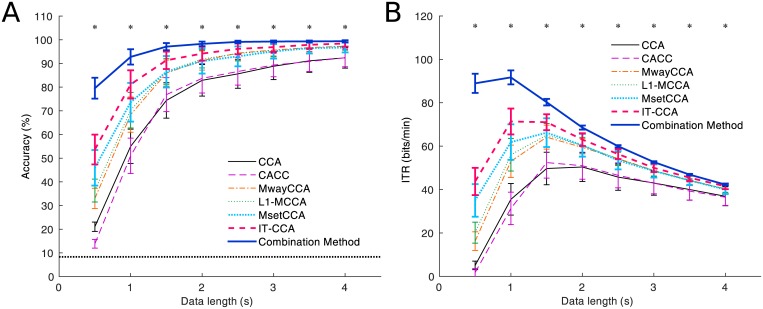
“A comprehensive comparison among these methods was recently presented by Nakanishi et al. , and the results showed that the combination method based on the standard CCA and the IT-CCA achieved the highest performance [31].”
MethodInfluentialPan, Y., Chen, J., Zhang, Y., & Zhang, Y. (2022) · Journal of Neural Engineering · doi:10.1088/1741-2552/ac8dc5 · Cited by 92
“This dataset was an open access dataset provide in [29].”
A Hybrid Asynchronous Brain-Computer Interface Combining SSVEP and EOG Signals
Zhou, Y., He, S., Huang, Q., & Li, Y. (2020) · IEEE Transactions on Biomedical Engineering · doi:10.1109/tbme.2020.2972747 · Cited by 88
“test data epoch X and the kth target that is to be used for target identification is defined as a weighted square sum of the correlative features pn,k of all subbands [16], [41]:”
BackgroundMethodInfluentialInter- and Intra-Subject Transfer Reduces Calibration Effort for High-Speed SSVEP-Based BCIs
Wong, C. M., Wang, Z., Wang, B., Lao, K. F., Rosa, A. C., Xu, P., Jung, T., Chen, C. L. P., & Wan, F. (2020) · IEEE Transactions on Neural Systems and Rehabilitation Engineering · doi:10.1109/tnsre.2020.3019276 · Cited by 81
“For more information about Datasets I and II, please refer to [17] and [18], respectively.”
BackgroundMethodInfluentialSelf-citationIncorporation of dynamic stopping strategy into the high-speed SSVEP-based BCIs
Jiang, J., Yin, E., Wang, C., Xu, M., & Ming, D. (2018) · Journal of Neural Engineering · doi:10.1088/1741-2552/aac605 · Cited by 78
“[20, 27, 42, 43] to recognize the SSVEP signal, which had the individual template and filter bank analysis incorporated into the classical CCA method.”
MethodBoosting template-based SSVEP decoding by cross-domain transfer learning
Chiang, K.-J., Wei, C.-S., Nakanishi, M., & Jung, T. (2021) · Journal of Neural Engineering · doi:10.1088/1741-2552/abcb6e · Cited by 82
Self-citationA Bayesian Shared Control Approach for Wheelchair Robot With Brain Machine Interface
Deng, X., Yu, Z. L., Lin, C., Gu, Z., & Li, Y. (2020) · IEEE Transactions on Neural Systems and Rehabilitation Engineering · doi:10.1109/tnsre.2019.2958076 · Cited by 81
“Among the BMI systems developed based on different EEG modalities, such as MI [28], P300 [29] and SSVEP [30], [31], SSVEP-based BMI system has the advantages of high information transfer rate (ITR) and less training [32], [33].”
BackgroundThe extension of multivariate synchronization index method for SSVEP-based BCI
Zhang, Y., Guo, D., Yao, D., & Xu, P. (2017) · Neurocomputing · doi:10.1016/j.neucom.2017.03.082 · Cited by 68
A Hybrid Speller Design Using Eye Tracking and SSVEP Brain–Computer Interface
Mannan, M. M. N., Kamran, M. A., Kang, S., Choi, H. S., & Jeong, M. Y. (2020) · Sensors · doi:10.3390/s20030891 · Cited by 68
“Nakanishi and co-authors [20] used different phase values to better discriminate the target frequency from the recorded SSVEP signals as compared with a conventional frequency coding scheme.”
BackgroundMethodAn Online Brain-Computer Interface Based on SSVEPs Measured From Non-Hair-Bearing Areas
Wang, Y.-T., Nakanishi, M., Wang, Y., Wei, C.-S., Cheng, C.-K., & Jung, T. (2016) · IEEE Transactions on Neural Systems and Rehabilitation Engineering · doi:10.1109/tnsre.2016.2573819 · Cited by 66
Self-citationShared Three-Dimensional Robotic Arm Control Based on Asynchronous BCI and Computer Vision
Zhou, Y., Yu, T., Gao, W., Huang, W., Lu, Z., Huang, Q., & Li, Y. (2023) · IEEE Transactions on Neural Systems and Rehabilitation Engineering · doi:10.1109/tnsre.2023.3299350 · Cited by 68
“The FBCCA method was then applied for extracting frequency-related features by taking into account both template data that modulating visual stimulation and individual calibration data, as well as the capture of specific harmonic information from SSVEP [29], [37], [38].”
MethodSparse Bayesian multiway canonical correlation analysis for EEG pattern recognition
Zhang, Y., Zhou, G., Jin, J., Zhang, Y., Wang, X., & Cichocki, A. S. (2016) · Neurocomputing · doi:10.1016/j.neucom.2016.11.008 · Cited by 63
Nakanishi, M., Wang, Y.-T., Wei, C.-S., Chiang, K.-J., & Jung, T. (2019) · IEEE Transactions on Biomedical Engineering · doi:10.1109/tbme.2019.2929745 · Cited by 64
“To construct more reliable classifiers, subject-specific calibration data have been incorporated in the template-matching algorithm [4], [11]–[16].”
MethodSelf-citationAn Analysis of Deep Learning Models in SSVEP-Based BCI: A Survey
Xu, D., Tang, F., Li, Y., Zhang, Q., & Feng, X. (2023) · Brain Sciences · doi:10.3390/brainsci13030483 · Cited by 68
“Nakanishi published their open dataset in 2015, making it the earliest and most frequently used SSVEP open dataset in deep learning research targeting SSVEP analysis [35].”
BackgroundEfficient representations of EEG signals for SSVEP frequency recognition based on deep multiset CCA
Liu, Q., Jiao, Y., Miao, Y., Zuo, C., Wang, X., Cichocki, A. S., & Jin, J. (2019) · Neurocomputing · doi:10.1016/j.neucom.2019.10.049 · Cited by 57
Designing a Sum of Squared Correlations Framework for Enhancing SSVEP-Based BCIs
Kumar, G. R. K., & Reddy, M. R. (2019) · IEEE Transactions on Neural Systems and Rehabilitation Engineering · doi:10.1109/tnsre.2019.2941349 · Cited by 56
“A number of methods such as individual template CCA (IT-CCA), L1-regularized multi-way CCA (L1-MCCA), multi-set CCA (MsetCCA), combined CCA and latent common source extraction (LCSE) have been introduced that use individual templates or optimize the sinusoidal references using the training data, or construct a spatial…”
BackgroundMethodWei, Q., Zhu, S., Wang, Y., Gao, X., Guo, H., & Wu, X. (2020) · International Journal of Neural Systems · doi:10.1142/s0129065720500203 · Cited by 55
Self-citationTian, P., Xu, G., Han, C., Zheng, X., Zhang, K., Du, C., Wei, F., & Zhang, S. (2022) · Sensors · doi:10.3390/s22114082 · Cited by 53
“In addition, CCA is widely used due to its high efficiency, robustness, and simple implementation [45,46].”
Zhang, Y., Guo, D., Xu, P., Zhang, Y., & Yao, D. (2016) · Cognitive Neurodynamics · doi:10.1007/s11571-016-9398-9 · Cited by 53
Wearable in‐the‐ear EEG system for SSVEP‐based brain–computer interface
Ahn, J., Ku, Y., Kim, D. Y., Sohn, J., Kim, J. ‐., & Kim, H. C. (2018) · Electronics Letters · doi:10.1049/el.2017.3970 · Cited by 53
Canonical Correlation Analysis (CCA) Based Multi-View Learning: An OverviewPreprint
Guo, C., & Wu, D. (2019) · arXiv (Cornell University) · doi:10.48550/arxiv.1907.01693 · Cited by 59
“…successful applications in phonetic recognition [44], [46], [57], handwritten digit recognition [22], [25], [32], [53], biometric structure prediction [26], text categorization [22], advertisement classification [26], brain-computer interfaces [58], [59], epileptic seizure detection [60], and so on.”
Background2D nanoporous materials: membrane platform for gas and liquid separations
Moghadam, F., & Park, H. B. (2019) · 2D Materials · doi:10.1088/2053-1583/ab1519 · Cited by 48
Zhang, R., Xu, Z., Zhang, L., Cao, L., Hu, Y., Lu, B., Shi, L., Yao, D., & Zhao, X. (2022) · Journal of Neural Engineering · doi:10.1088/1741-2552/ac6ae5 · Cited by 48
EEG-based Human Recognition Using Steady-State AEPs and Subject-Unique Spatial Filters
Abbas, S. N., & Hatzinakos, D. (2020) · IEEE Transactions on Information Forensics and Security · doi:10.1109/tifs.2020.3001729 · Cited by 45
“These techniques are employed in BCI-applications which comprise a combination of a template and a spatial filter whose coefficients are estimated using Canonical Correlation Analysis (CCA) [11]–[13].”
MethodDevelopment of a Smart Helmet for Strategical BCI Applications
Ko, L., Chang, Y., Wu, P. L., Tzou, H.-A., Chen, S.-F., Tang, S.-C., Yeh, C.-L., & Chen, Y. (2019) · Sensors · doi:10.3390/s19081867 · Cited by 42
“An established BCI application based on SSVEP was demonstrated to further strengthen the effectiveness of the proposed smart helmet. was implemented in the system of the following BCI application.”
BackgroundMethodStress-Induced Effects in Resting EEG Spectra Predict the Performance of SSVEP-Based BCI
Zhang, H., Stevenson, C., Jung, T., & Ko, L. (2020) · IEEE Transactions on Neural Systems and Rehabilitation Engineering · doi:10.1109/tnsre.2020.3005771 · Cited by 43
Self-citationRavi, A., Lu, J., Pearce, S., & Jiang, N. (2022) · IEEE Transactions on Neural Systems and Rehabilitation Engineering · doi:10.1109/tnsre.2022.3140772 · Cited by 43
Waytowich, N. R., Faller, J., Garcia, J. O., Vettel, J. M., & Sajda, P. (2016) · Conference proceedings/Conference proceedings - IEEE International Conference on Systems, Man, and Cybernetics · doi:10.1109/smc.2016.7844880 · Cited by 46
“Further details about the data recording and experimental paradigm can be found in [13].”
BackgroundMethodInfluentialChen, Y.-F., Atal, K., Xie, S. Q., & Liu, Q. (2017) · Journal of Neural Engineering · doi:10.1088/1741-2552/aa6a23 · Cited by 40
“Consequently, the low and medium frequency stimuli are primarily used to elicit SSVEPs in majority of BCI systems [10, 13, 38, 40].”
BackgroundMethodWang, H., Yan, F., Xu, T., Yin, H., Chen, P., Yue, H., Chen, C., Zhang, H., Xu, L., He, Y., et al. (2021) · IEEE Access · doi:10.1109/access.2021.3071599 · Cited by 47
“EEG changes caused by visual stimulation in a specific frequency range can be adjusted through stimulation [129].”
BackgroundCross-subject spatial filter transfer method for SSVEP-EEG feature recognition
Yan, W., Wu, Y., Du, C., & Xu, G. (2022) · Journal of Neural Engineering · doi:10.1088/1741-2552/ac6b57 · Cited by 42
“In the UCSD dataset [35], there are ten subjects’ SSVEP data collected from 15-run experiment.”
A hybrid BCI combining SSVEP and EOG and its application for continuous wheelchair control
Mai, X., Ai, J., Ji, M., Zhu, X., & Meng, J. (2023) · Biomedical Signal Processing and Control · doi:10.1016/j.bspc.2023.105530 · Cited by 44
FB-EEGNet: A fusion neural network across multi-stimulus for SSVEP target detection
Yao, H., Liu, K., Deng, X., Tang, X., & Yu, H. Z. (2022) · Journal of Neuroscience Methods · doi:10.1016/j.jneumeth.2022.109674 · Cited by 43
Individual Identification Based on Code-Modulated Visual-Evoked Potentials
Zhao, H., Wang, Y., Liu, Z., Pei, W., & Chen, H. (2019) · IEEE Transactions on Information Forensics and Security · doi:10.1109/tifs.2019.2912272 · Cited by 39
“a) CCA method: CCA, which is a statistical way to measure the underlying correlation between two sets of multidimensional variables, has been widely used to detect the frequency of SSVEPs [23], [24].”
MethodSelf-citationHierarchical feature fusion framework for frequency recognition in SSVEP-based BCIs
Zhang, Y., Yin, E., Li, F., Zhang, Y., Guo, D., Yao, D., & Xu, P. (2019) · Neural Networks · doi:10.1016/j.neunet.2019.07.007 · Cited by 42
“In the current study, the r-square value was computed using feature values of the attended target stimulus and the maximal feature values of the non-attended stimuli [38, 31], as the following formula [41].”
BackgroundMethodCross-Subject Transfer Learning for Boosting Recognition Performance in SSVEP-Based BCIs
Zhang, Y., Xie, S. Q., Shi, C., Li, J., & Zhang, Z. (2023) · IEEE Transactions on Neural Systems and Rehabilitation Engineering · doi:10.1109/tnsre.2023.3250953 · Cited by 38
“Almost recognition methods in SSVEP-based BCI fields built spatial filters via considering the relationship between the EEG signal and the artificial or the individual template, e.g., CCA and IT-CCA [12] or the relation across training trials, e.g., TRCA and SSCOR [19], [20].”
BackgroundMethodInfluentialNon-Invasive Biosensing for Healthcare Using Artificial Intelligence: A Semi-Systematic Review
Islam, T., & Washington, P. Y. (2024) · Biosensors · doi:10.3390/bios14040183 · Cited by 36
IENet: a robust convolutional neural network for EEG based brain-computer interfaces
Du, Y., & Liu, J. (2022) · Journal of Neural Engineering · doi:10.1088/1741-2552/ac7257 · Cited by 34
“Dataset 1 consisted of 12 classes SSVEP recorded by ten subjects in a simulated online BCI experiment [64].”
BackgroundMethodInfluentialFilter Bank Convolutional Neural Network for SSVEP Classification
Zhao, D., Wang, T., Tian, Y., & Jiang, X. (2021) · IEEE Access · doi:10.1109/access.2021.3124238 · Cited by 35
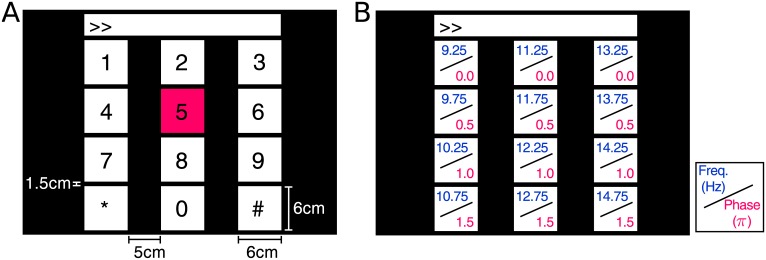
“The twelve stimuli are arranged on a 27-inch LCD monitor flashing at frequencies step of 0.5Hz ranging from 9.25Hz to 14.75Hz, with the corresponding phases ranging from 0π to 1.5π in steps of 0.5π [10].”
MethodInfluentialBidirectional Siamese correlation analysis method for enhancing the detection of SSVEPs
Zhang, X., Qiu, S., Zhang, Y., Wang, K., Wang, Y., & He, H. (2022) · Journal of Neural Engineering · doi:10.1088/1741-2552/ac823e · Cited by 37
“From the perspective of improving the template, ITCCA [26] replaced the sine-cosine template in CCA with the individual averaged template, and MwayCCA [16] introduced the inter-individual and inter-trial information in the template.”
Self-citationWang, H., Sun, Y., Wang, F., Cao, L., Zhou, W., Wang, Z., & Chen, S. (2021) · IEEE Transactions on Neural Systems and Rehabilitation Engineering · doi:10.1109/tnsre.2021.3057938 · Cited by 36
“The combined CCA (Combined-CCA) incorporating individual templates into the CCA leads to a higher performance than the other existing CCA-based methods [11].”
Islam, M. R., Molla, M. K. I., Nakanishi, M., & Tanaka, T. (2017) · Journal of Neural Engineering · doi:10.1088/1741-2552/aa5847 · Cited by 36
“In this study, the performance of different target identification methods was evaluated using an SSVEP dataset that has been publicly available [27] 6 .”
MethodResultInfluentialSelf-citationEEG-FM-Compass: progress, benchmarking and future directions for EEG foundation models
Liu, D., Chen, Y., Chen, Z., Cui, Z., Wen, Y., An, J., Luo, J., & Wu, D. (2026) · National Science Review · doi:10.1093/nsr/nwag466 · Cited by 35
Zhao, J., Zhang, W., Wang, J. H., Li, W., Lei, C., Chen, G., Liang, Z., & Li, X. (2020) · IEEE Transactions on Neural Systems and Rehabilitation Engineering · doi:10.1109/tnsre.2020.2983275 · Cited by 33
“Especially, the CCA-based methods are most widely used in extracting the SSVEP features due to their good performance and high robustness [9].”
MethodSelf-adaptive shared control with brain state evaluation network for human-wheelchair cooperation
Deng, X., Yu, Z. L., Lin, C., Gu, Z., & Li, Y. (2020) · Journal of Neural Engineering · doi:10.1088/1741-2552/ab937e · Cited by 36
“Here CCA method is applied for calculating the canonical correlation between the EEG sample and each reference signal that includes a set of sine and cosine functions at the stimulation frequency and the second harmonics [35].”
MethodAngrisani, L., Arpaïa, P., Benedetto, E. D., Duraccio, L., Regio, F. L., & Tedesco, A. (2023) · IEEE Sensors Journal · doi:10.1109/jsen.2023.3287983 · Cited by 36
“According to [73], xCCA combines standard CCA and Individual Template approach.”
MethodNakanishi, M., Wang, Y., & Jung, T. (2016) · Lecture notes in computer science · doi:10.1007/978-3-319-39955-3_24 · Cited by 33
Self-citationSafi, S. M. M., Pooyan, M., & Nasrabadi, A. M. (2018) · Biomedical Signal Processing and Control · doi:10.1016/j.bspc.2018.06.010 · Cited by 31
Ke, Y., Liu, S., & Ming, D. (2023) · IEEE Transactions on Biomedical Engineering · doi:10.1109/tbme.2023.3333435 · Cited by 31
Channel reflection: Knowledge-driven data augmentation for EEG-based brain–computer interfaces
Wang, Z., Li, S., Luo, J., Liu, J., & Wu, D. (2024) · Neural Networks · doi:10.1016/j.neunet.2024.106351 · Cited by 38
Huang, J., Zhang, Z., Xiong, B., Wang, Q., Wan, B., Li, F., & Yang, P. (2023) · IEEE Transactions on Neural Systems and Rehabilitation Engineering · doi:10.1109/tnsre.2023.3305202 · Cited by 34
“The UCSD dataset is collected from 10 healthy subjects at 8 electrodes (PO7, PO3, POz, PO4, PO8, O1, Oz, and O2) covering the occipital area.”
BackgroundMethodInfluentialTime–frequency transform based EEG data augmentation for brain–computer interfaces
Wang, Z., Li, S., Chen, X., & Wu, D. (2025) · Knowledge-Based Systems · doi:10.1016/j.knosys.2025.113074 · Cited by 36
Wei, Q., Zhang, Y., Wang, Y., & Gao, X. (2023) · IEEE Transactions on Neural Systems and Rehabilitation Engineering · doi:10.1109/tnsre.2023.3288397 · Cited by 28
“…methods include power spectrum density analysis (PSDA) [5], minimum energy combination (MEC) [6], canonical correlation analysis (CCA) [7], [8] and its variants [9], [10], [11], [12], [13], [14], [15], correlation component analysis [16] and task-related component analysis (TRCA) [17].”
MethodSelf-citationShao, X., & Lin, M. (2020) · Cognitive Neurodynamics · doi:10.1007/s11571-020-09620-7 · Cited by 27
Huang, J., Yang, P., Xiong, B., Wan, B., Su, K., & Zhang, Z. (2022) · IEEE Transactions on Neural Systems and Rehabilitation Engineering · doi:10.1109/tnsre.2022.3162029 · Cited by 27
Lekkas, G., Vrochidou, Ε., & Papakostas, G. A. (2025) · BioMedInformatics · doi:10.3390/biomedinformatics5010007 · Cited by 36
“In study [29], the authors utilize the DFT method to transform the 1D EEG signals into 2D images using the SSVEP [30] dataset for EEG classification by training a custom 2D CNN network.”
Ge, S., Jiang, Y., Wang, P., Wang, H., & Zheng, W. (2019) · IEEE Transactions on Neural Systems and Rehabilitation Engineering · doi:10.1109/tnsre.2019.2934496 · Cited by 26
“Following previous studies of CCA [27], [39], one set of variable X is defined as the set of SSVEPs, which are recorded from multiple EEG channels; the other set of variables Y is defined as the set of reference signals according to a certain SSVEP stimulation frequencies fi , (i = 1, 2, .”
MethodAn online hybrid BCI combining SSVEP and EOG-based eye movements
Zhang, J., Gao, S., Zhou, K., Cheng, Y., & Mao, S. (2023) · Frontiers in Human Neuroscience · doi:10.3389/fnhum.2023.1103935 · Cited by 26
SSVEP-EEG Denoising via Image Filtering Methods
Yan, W., Du, C., Wu, Y., Zheng, X., & Xu, G. (2021) · IEEE Transactions on Neural Systems and Rehabilitation Engineering · doi:10.1109/tnsre.2021.3104825 · Cited by 25
Small Data Least-Squares Transformation (sd-LST) for Fast Calibration of SSVEP-Based BCIs
Bian, R., Wu, H., Liu, B., & Wu, D. (2022) · IEEE Transactions on Neural Systems and Rehabilitation Engineering · doi:10.1109/tnsre.2022.3225878 · Cited by 27
“3) Dataset III: This dataset was first used by Nakanishi et al. [33] in 2015.”
MethodA Bayesian Multiple Kernel Learning Algorithm for SSVEP BCI Detection
Oikonomou, V. P., Nikolopoulos, S., & Kompatsiaris, I. Y. (2018) · IEEE Journal of Biomedical and Health Informatics · doi:10.1109/jbhi.2018.2878048 · Cited by 25
“ology, we have used two SSVEP datasets described in [21] where a 12-target stimuli resembling a 12-digit calculator is used to generate the EEG signals, and [47] where a 40-target”
MethodInfluentialCecotti, H. (2020) · IEEE Transactions on Neural Systems and Rehabilitation Engineering · doi:10.1109/tnsre.2020.2968307 · Cited by 27
“The first dataset is an open access dataset based on a 12-target stimuli resembling a 12-digit calculator, which was used to generate the EEG signals obtained from 10 healthy participants [33].”
MethodCross-target transfer algorithm based on the volterra model of SSVEP-BCI
Lin, J., Liang, L., Han, X., Yang, C., Chen, X., & Gao, X. (2021) · Tsinghua Science & Technology · doi:10.26599/tst.2020.9010015 · Cited by 25
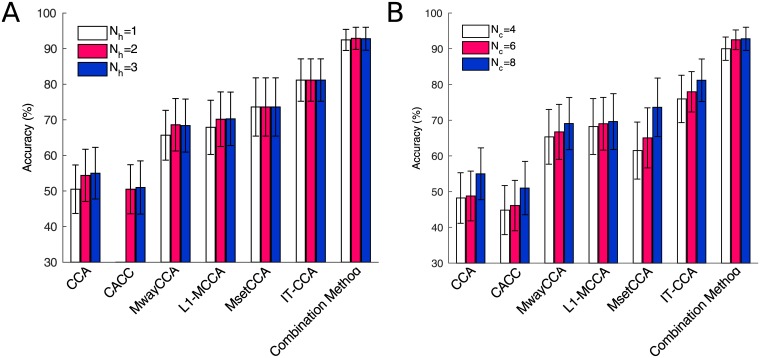
“%) were compared, corresponding to the number of sampling frequencies 4, 6, 8, and 10.”
BackgroundMethodSSVEP-EEG Feature Enhancement Method Using an Image Sharpening Filter
Yan, W., Xu, G., Du, Y., & Chen, X. (2022) · IEEE Transactions on Neural Systems and Rehabilitation Engineering · doi:10.1109/tnsre.2022.3142736 · Cited by 25
Reichert, C., Tellez Ceja, I. F., Sweeney-Reed, C. M., Heinze, H.-J., Hinrichs, H., & Dürschmid, S. (2020) · Frontiers in Neuroscience · doi:10.3389/fnins.2020.591777 · Cited by 23
Zhang, Y., Li, Z., Xie, S. Q., Wang, H., Yu, Z., & Zhang, Z. (2022) · IEEE Transactions on Instrumentation and Measurement · doi:10.1109/tim.2022.3146950 · Cited by 23
“Compared with the artificial reference with sine and cosine waves, the averaged SSVEP signal can effectively enhance the SNR of EEG data [18].”
BackgroundYue, J., Xiao, X., Wang, K., Yi, W., Jung, T., Xu, M., & Ming, D. (2025) · Cyborg and Bionic Systems · doi:10.34133/cbsystems.0379 · Cited by 27
“In dataset I [ 37 ], 10 subjects participated in an SSVEP-BCI experiment, during which each subject completed 15 blocks of experimental tasks.”
Self-citationEnhancing detection of steady-state visual evoked potentials using channel ensemble method
Yan, W., Du, C., Luo, D., Wu, Y., Duan, N., Zheng, X., & Xu, G. (2021) · Journal of Neural Engineering · doi:10.1088/1741-2552/abe7cf · Cited by 22
“Studies have shown that incorporating a users training data can reduce the interference of spontaneous background EEG activities on the SSVEP response [20].”
MetaBCI: An open-source platform for brain–computer interfaces
Mei, J., Luo, R., Xu, L., Zhao, W., Wen, S., Wang, K., Xiao, X., Meng, J., Huang, Y., Tang, J., et al. (2023) · Computers in Biology and Medicine · doi:10.1016/j.compbiomed.2023.107806 · Cited by 29
User-Independent SSVEP BCI Using Complex FFT Features and CNN Classification
Ravi, A., Beni, N. H., & Jiang, N. (2019) · Conference proceedings/Conference proceedings - IEEE International Conference on Systems, Man, and Cybernetics · doi:10.1109/smc.2019.8914258 · Cited by 22
“The signals from all eight channels were filtered by a 4th order Butterworth band-pass filter between 6Hz and 80Hz as per [11] and downsampled to 256Hz.”
BackgroundMethodEnhancing detection of SSVEP-based BCIs via a novel CCA-based method
Yuan, X., Sun, Q., Zhang, L., & Wang, H. (2022) · Biomedical Signal Processing and Control · doi:10.1016/j.bspc.2022.103482 · Cited by 22
Design of a video feedback SSVEP-BCI system for car control based on improved MUSIC method
Liu, C., Xie, S., Xie, X., Duan, X., Wang, W., & Obermayer, K. (2018) · International Winter Conference on Brain-Computer Interface (BCI) · doi:10.1109/iww-bci.2018.8311499 · Cited by 25
“A variety methods have been developed to recognize the SSVEP signal[7-13] and Fourier-based methods have been widely used because of simplicity and short computation time.”
MethodDreyer, A. M., Herrmann, C. S., & Rieger, J. W. (2017) · Frontiers in Human Neuroscience · doi:10.3389/fnhum.2017.00391 · Cited by 21
“During recent years, several approaches to improve CCA performance have been developed (Zhang et al., 2014; Chen et al., 2015) and these could be implemented for FM-SSVEP classification as well (see Nakanishi et al. (2015) for a direct comparison of different CCA-based approaches).”
BackgroundA survey of deep learning-based classification methods for steady-state visual evoked potentials
Pan, Y., Chen, J., & Zhang, Y. (2023) · Brain-Apparatus Communication A Journal of Bacomics · doi:10.1080/27706710.2023.2181102 · Cited by 24
“Waytowich et al. proposed to use the EEGNET to classify a 12-class SSVEP dataset (UCSD SSVEP dataset [30]) in the UI classification scenario and achieved about 80% accuracy [31].”
Luo, W., Yin, W., Liu, Q., & Qu, Y. (2023) · Brain-Apparatus Communication A Journal of Bacomics · doi:10.1080/27706710.2023.2258938 · Cited by 24
Short-length SSVEP data extension by a novel generative adversarial networks based framework
Pan, Y., Li, N., Zhang, Y., Xu, P., & Yao, D. (2024) · Cognitive Neurodynamics · doi:10.1007/s11571-024-10134-9 · Cited by 25
“…SSVEP-based BCI applications have been developed, such as bionic mechanical leg (Kwak et al. 2017), unmanned aerial vehicle (Dang et al. 2021), dial interface (Nakanishi et al. 2015), high-speed mental speller (Chen et al. 2015), smart homes (Kim et al. 2019), and games (Lalor et al. 2005).”
InfluentialFrequency detection for SSVEP-based BCI using deep canonical correlation analysis
Vu, H., Koo, B., & Choi, S. (2016) · Conference proceedings/Conference proceedings - IEEE International Conference on Systems, Man, and Cybernetics · doi:10.1109/smc.2016.7844531 · Cited by 23
“reported a comparison study among CCA-based methods to see their own advantages for classification performance improvement in SSVEP BCI system [7].”
Method
Metadata
- Authors
- Nakanishi, M., Wang, Y., Wang, Y.-T., & Jung, T.-P.
- Affiliations
- University of California San Diego (US)
- Chinese Academy of Sciences (CN)
- Corresponding author
- Wang, Yijun
- Venue
- PLoS ONE
- Publisher
- Public Library of Science (PLoS)
- Published
- 2015-10-19
- Volume
- 10
- Issue
- 10
- Pages
- e0140703
- ISSN
- 1932-6203 (ISSN-L)
- PMC
- PMC4610694
- OpenAlex
- W2338492816
- Cited by
- 376
- References
- 36
- Citations by year
- 2026: 16 · 2025: 50 · 2024: 51 · 2023: 46 · 2022: 43 · 2021: 37 · 2020: 41 · 2019: 38 · 2018: 23 · 2017: 21 · 2016: 9
- FWCI
- 10.63
- Type
- journal article
- Language
- en
- Open access
- gold
- doi.org
- Licence
- Locations
- PLoS ONE (publishedVersion, cc-by)
- Europe PMC (PubMed Central) (publishedVersion, cc-by)
- PubMed Central (publishedVersion, cc-by)
- PubMed (publishedVersion)
- RePEc: Research Papers in Economics (submittedVersion)
- DOAJ (DOAJ: Directory of Open Access Journals) (submittedVersion)
- eScholarship (California Digital Library) (submittedVersion)
- eScholarship (California Digital Library) (submittedVersion, cc-by)
- SEMI-IR (submittedVersion)
- Funders
- Recruitment Program for Young Professionals
- National Institutes of Health (W911NF-10-2-0022)
- Defense Advanced Research Projects Agency (W911NF-10-2-0022, USDI D11PC20183)
- Office of Naval Research (W911NF-10-2-0022, N00014-08-1215, N00014)
- National Eye Institute (R21EY025056)
- Army Research Office (W911NF-10-2-0022, W911NF-09-1-0510, W911NF)
- Army Research Laboratory (W911-NF-10-2-0022, W911NF, W911NF-10)
- Topics
- Life Sciences › Neuroscience › Cognitive Neuroscience › EEG and Brain-Computer Interfaces
- Physical Sciences › Computer Science › Human-Computer Interaction › Gaze Tracking and Assistive Technology
- Physical Sciences › Computer Science › Artificial Intelligence › Emotion and Mood Recognition
- Keywords
- steady-state visual evoked potentials, canonical correlation analysis, SSVEP detection, brain-computer interface, information transfer rate, classification accuracy
- MeSH terms
- Adult, Electroencephalography, Evoked Potentials, Visual, Female, Humans, Male, Statistics as Topic, Brain-Computer Interfaces
About these checks
Registry, retraction, Cites and statistics results are computed, not judged, with one exception: a printed reference that no index lists is read once by a model before it counts as a citation error. Claims are extracted by a model and kept only when their quote appears verbatim in the text; each cited source is then checked, with a model’s help, for whether it says what the claim relies on. Those verdicts can be wrong — read the claim’s quote and the cited source before relying on one.
Statistics and arithmetic are recomputed, not judged.
Confidence bands are shown only for fields calibrated on our annotated test set. None is calibrated yet, so no band is shown.
What counts as a claim ›How we measure confidence ›How we check this ›
Are you an author, or do you see a problem with this page? Request a review
Data sources
Bibliographic data: Semantic Scholar, OpenAlex, Crossref.
Contains information from the Semantic Scholar Academic Graph Datasets, made available under the ODC Attribution License (ODC-BY 1.0).
Semantic Scholar’s data is described in: Kinney, R., et al. (2023). The Semantic Scholar Open Data Platform. arXiv:2301.10140.
