

A Comparison Study of Canonical Correlation Analysis Based Methods for Detecting Steady-State Visual Evoked Potentials
Open accessThe DOI matches its Crossref record; 36 of the 36 references it cites were found in a registry or an index.
Abstract
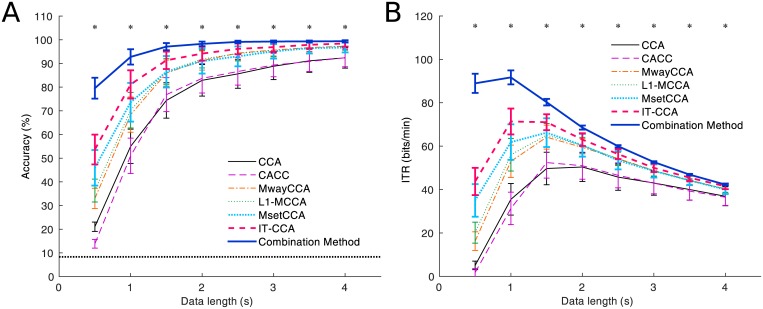
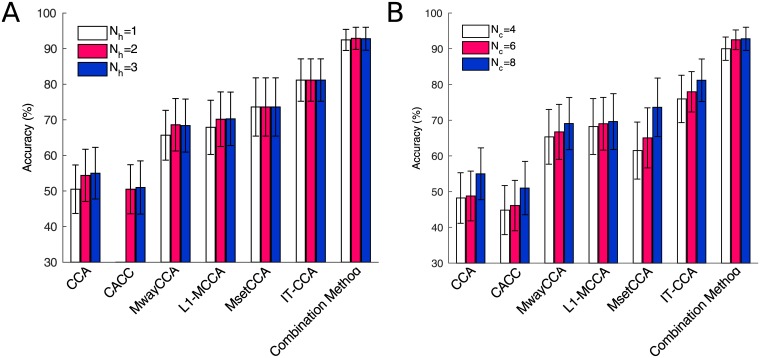
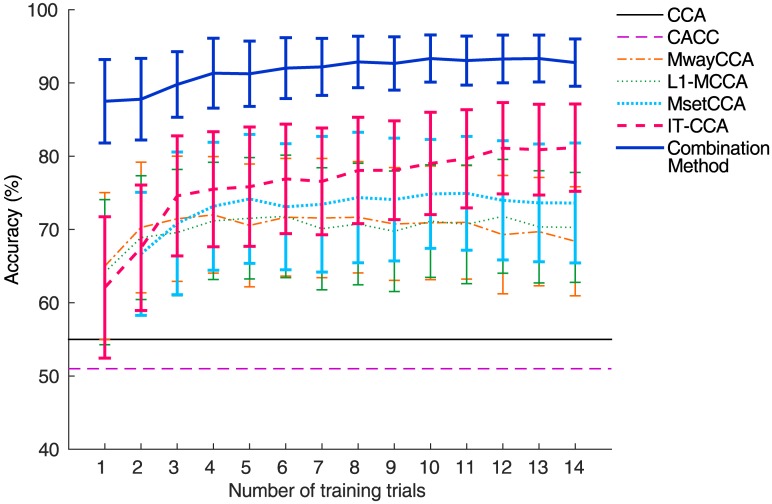
Canonical correlation analysis (CCA) has been widely used in the detection of the steady-state visual evoked potentials (SSVEPs) in brain-computer interfaces (BCIs). The standard CCA method, which uses sinusoidal signals as reference signals, was first proposed for SSVEP detection without calibration. However, the detection performance can be deteriorated by the interference from the spontaneous EEG activities. Recently, various extended methods have been developed to incorporate individual EEG calibration data in CCA to improve the detection performance. Although advantages of the extended CCA methods have been demonstrated in separate studies, a comprehensive comparison between these methods is still missing. This study performed a comparison of the existing CCA-based SSVEP detection methods using a 12-class SSVEP dataset recorded from 10 subjects in a simulated online BCI experiment. Classification accuracy and information transfer rate (ITR) were used for performance evaluation. The results suggest that individual calibration data can significantly improve the detection performance. Furthermore, the results showed that the combination method based on the standard CCA and the individual template based CCA (IT-CCA) achieved the highest performance.
Overview
The claims and statistics of this paper haven’t been checked yet.
Free: it reads the open-access text and checks the first 5 claims that cite a source we can check. Create a free account to check every claim.
Integrity signals
Registry
Cites
Statistics
Figures


Verification
Claims the paper makes
The claims and statistics of this paper haven’t been checked yet.
Free: it reads the open-access text and checks the first 5 claims that cite a source we can check. Create a free account to check every claim.
Claims other papers make about this one
Each is checked against this paper’s own text: does it say what the citing paper says it does?
The source backs part of the claim, not all of it — or backs it for a different population, condition or comparison.
In the citing paper
“CieConv1 are employed to extract the crosschannel correlation of the original input feature map, in which the correlation information assists in decoding EEG correctly.”
From IENet: a robust convolutional neural network for EEG based brain-computer interfaces (2022) · cites this paper as [64]
Experimental — accuracy not yet measuredThe source backs part of the claim, not all of it — or backs it for a different population, condition or comparison.
In the citing paper
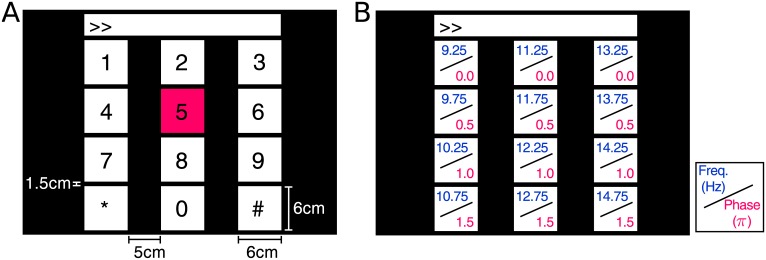
“We can see that temporal kernels of different lengths extract the frequency characteristics of the SSVEP, where the frequency range is consistent with that of the SSVEP experimental stimulus (9.25-14.75 Hz) [64].”
From IENet: a robust convolutional neural network for EEG based brain-computer interfaces (2022) · cites this paper as [64]
Experimental — accuracy not yet measured
Self-check
Percentages, sums and reported differences re-computed from the paper’s own numbers.
The self-check needs the paper’s full text.
Citations
Cites
Brainard, D. H. (1997) · Spatial Vision · doi:10.1163/156856897x00357 · Cited by 19,702 · cited 1×
“) using the Psychophysics Toolbox extensions [35].”
Brain–computer interfaces for communication and control
Wolpaw, J. R., Birbaumer, N., McFarland, D. J., Pfurtscheller, G., & Vaughan, T. M. (2002) · Clinical Neurophysiology · doi:10.1016/s1388-2457(02)00057-3 · Cited by 7,927 · cited 4×
“This study also evaluated the feature values for each method using r -square value (i.e., the proportion of the variance of the signal feature that is accounted for by the user ’ s intent) [1].”
BackgroundMethodInfluentialSteady-state visually evoked potentials: Focus on essential paradigms and future perspectives
Vialatte, F.-B., Maurice, M., Dauwels, J., & Cichocki, A. (2010) · Progress in Neurobiology · doi:10.1016/j.pneurobio.2009.11.005 · Cited by 1,066 · cited 2×
“Various target identification methods have been developed for detecting SSVEPs in BCIs [2 – 4].”
BackgroundMethodFrequency recognition based on canonical correlation analysis for SSVEP-based BCIs
Lin, Z., Zhang, C., Wu, W., & Gao, X. (2007) · IEEE Transactions on Biomedical Engineering · doi:10.1109/tbme.2006.889197 · Cited by 867
Design and implementation of a brain-computer interface with high transfer rates
Cheng, M., Gao, X., Gao, S., & Xu, D. (2002) · IEEE Transactions on Biomedical Engineering · doi:10.1109/tbme.2002.803536 · Cited by 818
Bin, G., Gao, X., Yan, Z., Hong, B., & Gao, S. (2009) · Journal of Neural Engineering · doi:10.1088/1741-2560/6/4/046002 · Cited by 773 · cited 3×
“Among these methods, CCA is one of the most widely used methods in SSVEP-based BCIs due to its high efficiency, robustness, and simple implementation [10, 11, 15, 21 – 23].”
MethodResultA Survey of Stimulation Methods Used in SSVEP-Based BCIs
Zhu, D., Bieger, J., Garcia Molina, G., & Aarts, R. M. (2010) · Computational Intelligence and Neuroscience · doi:10.1155/2010/702357 · Cited by 654 · cited 1×
“Although the number of frequencies that can be presented on a computer monitor is limited by the refresh rate, recent progresses of the stimulus presentation meth-ods succeeded in presenting a large number of visual flickers on the computer monitor [6 – 11].”
BackgroundA practical VEP-based brain-computer interface
Wang, Y., Wang, R., Gao, X., Hong, B., & Gao, S. (2006) · IEEE Transactions on Neural Systems and Rehabilitation Engineering · doi:10.1109/tnsre.2006.875576 · Cited by 617
Self-citationMultiple Channel Detection of Steady-State Visual Evoked Potentials for Brain-Computer Interfaces
Friman, O., Volosyak, I., & Graser, A. (2007) · IEEE Transactions on Biomedical Engineering · doi:10.1109/tbme.2006.889160 · Cited by 541 · cited 1×
“The widely used spatial filtering methods in SSVEP-based BCIs include canonical correlation analysis (CCA) [15], minimum energy combination (MEC) [16], and common spatial pattern (CSP) [17].”
MethodVisual and Auditory Brain–Computer Interfaces
Gao, S., Wang, Y., Gao, X., & Hong, B. (2014) · IEEE Transactions on Biomedical Engineering · doi:10.1109/tbme.2014.2300164 · Cited by 449 · cited 2×
“Various target identification methods have been developed for detecting SSVEPs in BCIs [2 – 4].”
BackgroundMethodSelf-citation
Research works printed but not linked: 3
- W Nan, 2011, Proc 5th Int IEEE EMBS Neural Eng Conf, 469
- RMG Tello, 2014, Proc 5th ISSNIP-IEEE Biosig Biorobot Conf Biosig and Robot Better Safer Living, 1
- Y Wang, 2014, Proc 36th Ann Int Conf IEEE Eng Med Biol Soc, 3037
Cited by
Items 201–300 of 389
A comparative survey of SSVEP recognition algorithms based on template matching of training trials
Luo, T.-J. (2022) · International Journal of Intelligent Computing and Cybernetics · doi:10.1108/ijicc-01-2022-0002 · Cited by 7
Li, D., Wang, X., Dou, M., Zhao, Y., Cui, X., Xiang, J., & Wang, B. (2024) · IEEE Transactions on Neural Systems and Rehabilitation Engineering · doi:10.1109/tnsre.2024.3387283 · Cited by 7
“3) Dataset III: UCSD Dataset was presented by Nakan-ishi et al. [30].”
MethodSparse Bayesian Learning for subject independent classification with application to SSVEP-BCI
Oikonomou, V. P., Maronidis, A., Liaros, G., Nikolopoulos, S., & Kompatsiaris, I. Y. (2017) · International IEEE/EMBS Conference on Neural Engineering · doi:10.1109/ner.2017.8008423 · Cited by 7
“In order to validate the performance of the proposed classification algorithm for SSVEP classification, we use the EEG dataset described in [8].”
BackgroundMethodInfluentialResearch on steady state visual evoked potential based on FBCCA
Zhao, L., Xue, Z., & Yang, G. (2017) · International Congress on Image and Signal Processing (CISP) · doi:10.1109/cisp-bmei.2017.8302089 · Cited by 7
“This is the stable visual evoked potential, mainly induced by SSVEP stimulation method of Newton ring cross modulation frequency stimulation paradigm, this paper adopts sinusoidal stimulation to induce SSVEP signal encoding paradigm, stimulus light flashes at a different frequency presented to the user, the user to se…”
MethodChiang, K.-J., Nakanishi, M., & Jung, T. (2020) · Annual International Conference of the IEEE Engineering in Medicine and Biology Society (EMBC) · doi:10.1109/embc44109.2020.9176205 · Cited by 7
“The performance is evaluated using a 12-class SSVEP dataset recorded from 10 subjects [12].”
MethodResultSelf-citationChen, X., Zhao, B., & Gao, X. (2018) · International Conference on Natural Computation, Fuzzy Systems and Knowledge Discovery (ICNC-FSKD) · doi:10.1109/fskd.2018.8686979 · Cited by 7
“Recently, some CCA-based methods incorporated SSVEP training data and exhibited better performance [16].”
MethodConstructing an exactly periodic subspace for enhancing SSVEP based BCI
Kumar, G. R. K., & Reddy, M. R. (2020) · Advanced Engineering Informatics · doi:10.1016/j.aei.2020.101046 · Cited by 7
A Personalized Compression Method for Steady-State Visual Evoked Potential EEG Signals
Zhang, S., Ma, K., Yin, Y., Ren, B., & Liu, M. (2022) · Information · doi:10.3390/info13040186 · Cited by 7
Oikonomou, V. P. (2025) · Electronics · doi:10.3390/electronics14224394 · Cited by 6
Decoding SSVEP Via Calibration-Free TFA-Net: A Novel Network Using Time-Frequency Features
Xu, L., Jiang, X., Wang, R., Lin, P., Yang, Y., Leng, Y., Zheng, W., & Ge, S. (2024) · IEEE Journal of Biomedical and Health Informatics · doi:10.1109/jbhi.2024.3510740 · Cited by 6
“Lastly, in BCI applications, researchers often implement an additional calibration phase for new users [12], [26].”
InfluentialMa, R., Cao, Y. K., Xie, S. Q., Zhang, M., Li, J., & Zhang, Z. (2025) · Neurocomputing · doi:10.1016/j.neucom.2025.131561 · Cited by 6
Learning to control an SSVEP-based BCI speller in naïve subjects
Tang, Z., Wang, Y., Dong, G., Pei, W., & Chen, H. (2017) · Annual International Conference of the IEEE Engineering in Medicine and Biology Society (EMBC) · doi:10.1109/embc.2017.8037227 · Cited by 6
“Then a canonical correlation analysis (CCA) based detection approach was applied to each sub-band component to detect the stimulation frequency [10, 11].”
MethodSelf-citationDenoising of Ocular Artifacts from single-channel EEG signals: A Review
Madhavi, K. S., Deeksha, M., Gayathri, S. L., Venkat, N. U. N., & Goru, H. K. (2022) · International Conference on Advanced Computing and Communication Systems (ICACCS) · doi:10.1109/icaccs54159.2022.9785129 · Cited by 6
Ho, J., Wang, C., Chuang, C., King, C., Feng, C.-W., Chou, T.-H., Chen, Y.-M., Yang, Y.-H., & Hsiao, Y.-C. (2022) · IEEE International Conference on Human-Machine Systems (ICHMS) · doi:10.1109/ichms56717.2022.9980765 · Cited by 6
“During the early assessments, we used canonical correlation analysis (CCA) [7], which seeks a pair of linear transformations to maximize the correlations, thus allowing the measuring of the quality of data collected by signal acquisition and phase decoding.”
MethodInfluentialImproving the performance of SSVEP-BCI contaminated by physiological noise via adversarial training
Wang, D., Liu, A., Xue, B., Wu, L., & Chen, X. (2023) · Medicine in Novel Technology and Devices · doi:10.1016/j.medntd.2023.100213 · Cited by 6
Alrawashdeh, M. J., Saad, S. A. A., Mohammed, A. M. A., & Alrawashdeh, W. J. A. (2024) · Partial Differential Equations in Applied Mathematics · doi:10.1016/j.padiff.2024.100820 · Cited by 6
Improving the Performance of SSVEP BCI with Short Response Time by Temporal Alignments Enhanced CCA
Wai, A. A. P., Lee, M.-H., Lee, S., & Guan, C. (2019) · International IEEE/EMBS Conference on Neural Engineering · doi:10.1109/ner.2019.8716985 · Cited by 6
“Various pre- or post- processing methods are proposed to integrate with CCA improving accuracy [3].”
BackgroundMethodResultInfluentialA Decoding algorithm for Non-invasive SSVEP-based Drone Flight Control
Hireche, A., Zennaia, Y., Ayad, R., & Belkacem, A. N. (2021) · IEEE International Conference on Bioinformatics and Biomedicine (BIBM) · doi:10.1109/bibm52615.2021.9669629 · Cited by 6
A static paradigm based on illusion-induced VEP for brain-computer interfaces
Li, R., Hu, H., Zhao, X., Wang, Z., & Xu, G. (2023) · Journal of Neural Engineering · doi:10.1088/1741-2552/acbdc0 · Cited by 6
“As one of the VEP techniques, steady-state visual evoked potential (SSVEP) is able to achieve robust performance across users, high tolerance to artifacts, and high information transfer rates (Chen et al 2015, Nakanishi et al 2015, 2017, Zhao et al 2021).”
Kumar, G. R. K., & Reddy, M. R. (2019) · Journal of Neural Engineering · doi:10.1088/1741-2552/ab13d1 · Cited by 6
Filter bank extensions for subject non-specific SSVEP based BCIs
Kumar, G. R. K., & Reddy, M. R. (2019) · International IEEE/EMBS Conference on Neural Engineering · doi:10.1109/ner.2019.8716945 · Cited by 7
A Novel 3D Paradigm for Target Expansion of Augmented Reality SSVEP
Cao, B., Tsai, C. L.-T., Zhou, N., Do, T., & Lin, C. (2025) · IEEE Transactions on Neural Systems and Rehabilitation Engineering · doi:10.1109/tnsre.2025.3562217 · Cited by 8
“This enhances the similarity between individual SSVEP signals and the reference signals, improving the discriminability between target and non-target frequencies [53], thereby achieving better classification results.”
A time-frequency feature fusion-based deep learning network for SSVEP frequency recognition
Dai, Y., Chen, Z., Cao, T., Zhou, H., Fang, M., Dai, Y., Jiang, L., & Tong, J. (2025) · Frontiers in Neuroscience · doi:10.3389/fnins.2025.1679451 · Cited by 9
Independent component analysis-based spatial filtering improves template-based SSVEP detection
Nakanishi, M., Wang, Y., Hsu, S.-H., Wang, Y.-T., & Jung, T. (2017) · Annual International Conference of the IEEE Engineering in Medicine and Biology Society (EMBC) · doi:10.1109/embc.2017.8037641 · Cited by 5
“temporal features of SSVEPs, have been incorporated into the CCA-based method to reduce the misclassification rate caused by the spontaneous EEG signals [4], [5], [11].”
MethodSelf-citationCorral-Bolaños, M., Ballestero, S. B., & Puthusserypady, S. K. (2021) · Annual International Conference of the IEEE Engineering in Medicine and Biology Society (EMBC) · doi:10.1109/embc46164.2021.9630838 · Cited by 5
“Previous studies [15], [21], [22] pointed out a better performance of the MsetCCA and IT-CCA methods over the MwayCCA.”
MethodPOMDP-BCI: A Benchmark of (Re)Active BCI Using POMDP to Issue Commands
Torre, J. J., Chanel, C. P. C., & Dehais, F. (2023) · IEEE Transactions on Biomedical Engineering · doi:10.1109/tbme.2023.3318578 · Cited by 6
Multifunctional robot based on multimodal brain-machine interface
Ban, N., Xie, S., Qu, C., Chen, X., & Pan, J. (2024) · Biomedical Signal Processing and Control · doi:10.1016/j.bspc.2024.106063 · Cited by 7
Qin, K., Xu, R., He, X., Zhang, Y., Wang, X., Cichocki, A. S., & Jin, J. (2024) · IEEE Transactions on Instrumentation and Measurement · doi:10.1109/tim.2024.3476551 · Cited by 5
“Additionally, considering visual latency [37], the SSVEP signals were processed with a 140-ms delay [38].”
MethodRavi, A., Wolfe, P., Tung, J. Y., & Jiang, N. (2025) · IEEE Transactions on Neural Systems and Rehabilitation Engineering · doi:10.1109/tnsre.2025.3544479 · Cited by 5
“Canonical Correlation Analysis (CCA) is the most widely used classifier to detect SSVEP/SSMVEP responses [34], [43], [44], [45].”
Data alignment based adversarial defense benchmark for EEG-based BCIs
Chen, X., Jia, T., & Wu, D. (2025) · Neural Networks · doi:10.1016/j.neunet.2025.107516 · Cited by 12
Steady-State Visual Evoked Potential-Based Real-Time BCI for Smart Appliance Control
Tavares, N. G., & Gad, R. S. (2018) · Advances in intelligent systems and computing · doi:10.1007/978-981-13-0617-4_74 · Cited by 6
CCA Model with Training Approach to Improve Recognition Rate of SSVEP in Real Time
Soni, D., Malan, N. S., & Sharma, S. (2019) · International Conference on Artificial Intelligence and Virtual Reality (AIVR) · doi:10.1145/3348488.3348498 · Cited by 5
“Then various Canonical Correlation Analysis (CCA) based methods were used for feature extraction and classification of SSVEPs, as compared in [11].”
MethodCompact CNN with Dynamic Window for SSVEP-based BCIs
Zhou, W., Liu, A., & Chen, X. (2022) · Chinese Control Conference (CCC) · doi:10.23919/ccc55666.2022.9902305 · Cited by 5
“In this part, a public SSVEP dataset [14] was introduced to verify the ascendancy of EEGNet-DW.”
MethodLi, X., Haba, T., Cui, G., Kinoshita, F., & Touyama, H. (2024) · Discover Applied Sciences · doi:10.1007/s42452-024-05816-2 · Cited by 5
Binocularly incongruent, multifrequency-coded SSVEP in VR: feasibility and characteristics
Yang, L., Sun, Q., & Hulle, M. M. V. (2024) · Journal of Neural Engineering · doi:10.1088/1741-2552/ad775f · Cited by 5
“Similarly, attempts with filter bank ITCCA [48] also resulted in subpar accuracy, close to chance level, in both asynchronous and synchronous conditions.”
Nakanishi, M., Wang, Y., Wang, Y.-T., & Jung, T. (2017) · International IEEE/EMBS Conference on Neural Engineering · doi:10.1109/ner.2017.8008360 · Cited by 5
“The detail of this method can be found in [6] and [13].”
MethodSelf-citationZiafati, A., & Maleki, A. (2022) · Medical Engineering & Physics · doi:10.1016/j.medengphy.2022.103945 · Cited by 5
A Multiple Command UAV Control System Based on a Hybrid Brain-Computer Interface
Wu, Q. M. J., Xie, S., Zeng, Z., Huang, Q., & Pan, J. (2023) · International Joint Conference on Neural Networks (IJCNN) · doi:10.1109/ijcnn54540.2023.10191621 · Cited by 4
“A. Experiment I 1) Dataset: The SSVEP classification model CL-NET proposed in this study and the algorithms in other studies are evaluated on two datasets: a public dataset—Dataset A [14] and the dataset collected in this experiment—Dataset B.”
MethodData augmentation using masked principal component representation for deep learning-based SSVEP-BCIs
Ding, W., Liu, A., Cheng, L., & Chen, X. (2025) · Journal of Neural Engineering · doi:10.1088/1741-2552/add9d1 · Cited by 4
“Future work should consider data-sets that incorporate varying numbers of stimulus targets, such as four [42] or twelve [43], as well as data-sets specifically designed for the elderly population [44].”
Deng, Y., Ji, Z., Wang, Y., & Zhou, S. K. (2025) · IEEE Transactions on Instrumentation and Measurement · doi:10.1109/tim.2025.3571139 · Cited by 4
“In this study, we utilize three common joint frequency and phase modulation (JFPM) coded SSVEP datasets: the UCSD dataset [38], the Benchmark dataset [30], and the BETA dataset [31].”
Self-citationHybrid Brain-Computer Interface Systems: Approaches, Features, and Trends
Guragain, B., Haider, A., & Fazel-Rezai, R. (2018) · InTech eBooks · doi:10.5772/intechopen.75132 · Cited by 5
“CCA is a multivariate statistical method to analyze frequency components of SSVEP in EEG [82].”
MethodDiddi, S. V. S., & Ko, L. (2022) · International Journal of Fuzzy Systems · doi:10.1007/s40815-022-01268-1 · Cited by 6
“CCA is a multi-variate statistical technique, which can be used to investigate the underlying correlation between two sets of data by studying the linear relationship between two multidimensional vectors [15].”
BackgroundMethodA novel multiple time-frequency sequential coding strategy for hybrid brain-computer interface
Yue, Z., Wu, Q., Ren, S.-Y., Li, M., Shi, B., Pan, Y., & Wang, J. (2022) · Frontiers in Human Neuroscience · doi:10.3389/fnhum.2022.859259 · Cited by 4
“CCA was adopted between them to identify the target.”
MethodInfluentialAAC-WGAN: A Novel Attention-Enhanced GAN Framework for SSVEP Augmentation and Classification
Liu, J., Xie, J., Tao, Q., Zhang, H., Wang, H., & Hu, B. (2024) · IEEE Access · doi:10.1109/access.2024.3509519 · Cited by 4
Wai, A. A. P., Guo, H., G, Y., Zhang, L., Hua, X., & Guan, C. (2020) · International Joint Conference on Neural Networks (IJCNN) · doi:10.1109/ijcnn48605.2020.9206983 · Cited by 5
“tensions of CCA are proposed to further improve the frequency recognition accuracy [16], [17], [21].”
BackgroundInfluentialSemi-autonomous Navigation Control System of Intelligent Wheelchair Based on Asynchronous SSVEP-BCI
Ping, J., Wang, F., Xu, Z., Bi, J., & Xiao, L. (2021) · IEEE International Conference on Cyber Technology in Automation, Control, and Intelligent Systems · doi:10.1109/cyber53097.2021.9588163 · Cited by 4
Rostami, E., Ghassemi, F., & Tabanfar, Z. (2022) · Brain-Computer Interfaces · doi:10.1080/2326263x.2022.2134623 · Cited by 4
Cognitive-switch detection for un-cued SSVEP BCI speller
Kim, H., Won, K., Ahn, M., & Jun, S. C. (2023) · International Winter Conference on Brain-Computer Interface (BCI) · doi:10.1109/bci57258.2023.10078622 · Cited by 4
“Also, spatial filtering methods such as CCA (canonical correlation analysis) and its variants are popular due to its high efficiency, robustness, and suitability for high-speed BCI systems [15].”
MethodLiu, Y., Song, Z., Xu, G., Wang, Z., Wan, F., Hu, Y. S., Zhang, M., & Zhang, Z. (2025) · IEEE International Conference on Acoustics Speech and Signal Processing · doi:10.1109/icassp49660.2025.10890554 · Cited by 3
“Dataset 1 Dataset 1 Dataset 1 [28]: This dataset contains EEG recordings from 10 subjects performing a 12-target SSVEP task.”
Research on a soft saturation nonlinear SSVEP signal feature extraction algorithm
Liu, B., Gao, H., Jiang, Y., & Wu, J. (2024) · Scientific Reports · doi:10.1038/s41598-024-67853-6 · Cited by 3
Li, C., Liao, Z., Cheng, Y., Wang, Z., Wu, J., & Liu, R. (2025) · IEEE Transactions on Consumer Electronics · doi:10.1109/tce.2025.3535157 · Cited by 3
“Dataset 1 [12] includes data from 10 subjects with normal or corrected-to-normal vision.”
An improved BCI-VR hybrid interactive system based on a mixed template CCA method
Niu, L., An, L., Bin, J., Zhao, Y., Kang, X., Zhang, L., & Ge, H. (2025) · Biomedical Signal Processing and Control · doi:10.1016/j.bspc.2025.107907 · Cited by 3
Emotiv Epoc ile Durağan Hal Görsel Uyarılmış Potansiyel Temelli Beyin Bilgisayar Arayüzü Uygulaması
Sözer, A. T., & Fidan, C. B. (2019) · Bitlis Eren Üniversitesi Fen Bilimleri Dergisi · doi:10.17798/bitlisfen.445574 · Cited by 3
A 110.3-bits/min 8-Ch SSVEP-based Brain-Computer Interface SoC with 87.9% Accuracy
Byun, W., Kim, D., Kim, S. Y., & Kim, J.-H. (2019) · IEEE Asian Solid-State Circuits Conference (A-SSCC) · doi:10.1109/a-sscc47793.2019.9056983 · Cited by 3
da Silva, A. D., da Cruz, G., & Júnior, C. G. P. (2020) · IEEE Latin America Transactions · doi:10.1109/tla.2020.9099676 · Cited by 4
“Além disto, se a etapa de treinamento não for bem realizada, o resultado pode ficar inferior a CCA tradicional [18].”
BackgroundSparse Graph-based Representations of SSVEP Responses Under the Variational Bayesian Framework
Oikonomou, V. P., Nikolopoulos, S., & Kompatsiaris, I. Y. (2021) · IEEE International Conference on Bioinformatics and Bioengineering (BIBE) · doi:10.1109/bibe52308.2021.9635427 · Cited by 3
“Finally, extensions of CCA have been proposed in [9]–[11], where data-driven approaches for the construction of templates are used.”
MethodStyp-Rekowski, K., Stolle, C., Michaelis, I., & Kao, O. (2021) · IEEE International Conference on Big Data (BigData) · doi:10.1109/bigdata52589.2021.9671977 · Cited by 3
Fair Canonical Correlation Analysis
Zhou, Z., Tarzanagh, D. A., Hou, B., Tong, B., Xu, J., Feng, Y., Long, Q., & Shen, L. (2023) · PubMed · doi:10.48550/arxiv.2309.15809 · Cited by 7
“CCA has been used to explore relations for developing brain-computer interfaces [10, 46] and in the field of imaging genetics [22].”
MethodQin, K., Xu, R., Li, S., Wang, X., Cichocki, A. S., & Jin, J. (2024) · IEEE Transactions on Neural Systems and Rehabilitation Engineering · doi:10.1109/tnsre.2024.3386763 · Cited by 3
“To better understand the impact of this mechanism on signal recognition, this section uses the R-square [22], [26], [35] as an indicator to compare the separability of features extracted by the algorithms on the Benchmark dataset.”
MethodImproving CCA-Based Methods for SSVEP Classification using a Common Source Graph
Noori, N., & Sardouie, S. H. (2024) · doi:10.1109/icee63041.2024.10668328 · Cited by 3
“In the IT-CCA method [15] they used the average trials of a stimulus frequency for each person as the reference signal and computed the correlation analysis of this signal with EEG test data.”
MethodImproving SSVEP BCI Spellers with Data Augmentation and Language Models
Zhang, J., Zhang, R., Koech, K., Hill, D. J., & Shapovalenko, K. (2025) · SiPS ... design and implementation - IEEE Workshop on Signal Processing Systems · doi:10.1109/sips66314.2025.11261233 · Cited by 3
“Second, to enhance generalizability beyond the Benchmark dataset and confirm robustness against varied noise levels, we plan to evaluate the method on additional large-scale public SSVEP datasets, such as the BETA dataset [17] and the Nakanishi 2015 dataset [18].”
Mishra, S. K., Rana, P., Sahoo, S. P., Kawade, N., & Rawat, V. S. (2019) · Laser Physics · doi:10.1088/1555-6611/ab0fec · Cited by 3
A SSVEP-Based BCI for Controlling a 4-DOF Robotic Manipulator
Lin, C., Deng, X., Yu, Z. L., & Gu, Z. (2019) · Conference proceedings/Conference proceedings - IEEE International Conference on Systems, Man, and Cybernetics · doi:10.1109/smc.2019.8914313 · Cited by 3
“As SSVEP has the advantages of higher information transmission rate (ITR), signal noise rate (SNR), classification accuracy and less training [18], [19], this paper adopted SSVEP as the modality of BCI system and devised a novel stimulator panel to provide visual stimuli.”
MethodRuiz-Olaya, A. F., Antelis, J. M., & Cerquera, A. (2019) · IEEE Annual Ubiquitous Computing, Electronics & Mobile Communication Conference (UEMCON) · doi:10.1109/uemcon47517.2019.8992968 · Cited by 3
“For SSVEP decoding, CCA provides correlation between the recorded EEG signals and a set of synthetic signals (sine and cosine) with frequencies of flickering visual stimulus [19].”
BackgroundMethodInfluentialApproximate Canonical Correlation Analysis for common/specific subspace decompositions
Ranta, R., Cam, S. L., Chaudet, B., Tyvaert, L., Maillard, L. G., Colnat‐Coulbois, S., & Louis-Dorr, V. (2021) · Biomedical Signal Processing and Control · doi:10.1016/j.bspc.2021.102780 · Cited by 4
Miao, R., Zhang, L., & Sun, Q. (2021) · International IEEE/EMBS Conference on Neural Engineering · doi:10.1109/ner49283.2021.9441307 · Cited by 3
“The second dataset is San Diego database provided in [9].”
GDCNN: A Gated CNN with dilated convolution for decoding steering directions from EEG
Yang, D., Liu, Y., & Sun, J. (2020) · IEEE Joint International Information Technology and Artificial Intelligence Conference (ITAIC) · doi:10.1109/itaic49862.2020.9338860 · Cited by 2
“Numerous EEG feature extraction and classification has come up [4-6].”
BackgroundKim, J., Kim, T., & Lee, J. (2024) · CHI Conference Extended Abstracts on Human Factors in Computing Systems (CHI EA) · doi:10.1145/3613905.3651084 · Cited by 2
“%) from the 0.75s time window as the previous studies [33].”
Reddy, T. J., & Reddy, M. R. (2024) · Biomedical Physics & Engineering Express · doi:10.1088/2057-1976/ad567f · Cited by 3
EvoMoE: Evolutionary Mixture-of-Experts for SSVEP-EEG Classification With User-Independent Training
Yang, X., Li, Y., Zhang, J., Tian, H., Li, S., & Pan, G. (2025) · IEEE Journal of Biomedical and Health Informatics · doi:10.1109/jbhi.2025.3565882 · Cited by 4
“…UI methods from [15] were evaluated along-side calibration-free CCA [17], [18], frequency-domain canonical correlation analysis (FBCCA) [44], task-related component analysis (TRCA) [22], a combination method [21], IT-CCA [23], Combined-tCCA [45], and Compact-CNN [46] on a public EEG dataset [21].”
SUMamba: A Mamba-based deep learning model with multi-scale feature fusion for SSVEP classification
Dong, L., Xu, C., Wang, X., Xie, R., Lei, G., Li, Y., & Yang, W. (2025) · Biomedical Signal Processing and Control · doi:10.1016/j.bspc.2025.108376 · Cited by 2
A Wireless EEG Acquisition System Capable of Real-Time BCI Applications
Dou, C., Luo, J., Lv, J., Wang, D., Zhao, B., & Zou, L. (2026) · IEEE Sensors Journal · doi:10.1109/jsen.2026.3651366 · Cited by 2
“Finally, EEG segments lasting 6 s from stimulus onset were extracted [23].”
Saffari, F., & Khadem, A. A. (2022) · Brain-Computer Interfaces · doi:10.1080/2326263x.2023.2166651 · Cited by 2
Zarei, A., & Asl, B. M. (2023) · Measurement · doi:10.1016/j.measurement.2023.113861 · Cited by 2
Tian, P., Xu, G., Han, C., Zheng, X., Zhang, K., Du, C., Zhang, X., Wei, F., Ma, Y., Zhang, S., et al. (2024) · Electronics · doi:10.3390/electronics13173411 · Cited by 3
Aperiodic Component Analysis in Quantification of Steady-State Visually Evoked Potentials
Chen, D., Song, Z., Du, Y., Chen, S., Zhang, X., Li, Y., & Huang, Q. (2024) · IEEE Transactions on Biomedical Engineering · doi:10.1109/tbme.2024.3458060 · Cited by 2
Enhancing SSEVP Classification via Hybrid Convolutional-Transformer Networks
Mao, S., & Gao, S. (2024) · IEEE International Conference on Power, Intelligent Computing and Systems (ICPICS) · doi:10.1109/icpics62053.2024.10796567 · Cited by 2
Improving CCA-based methods for SSVEP classification using a new graph reference signal
Noori, N., & Sardouie, S. H. (2024) · National and International Iranian Conference on Biomedical Engineering (ICBME) · doi:10.1109/icbme64381.2024.10895795 · Cited by 2
“Within the IT-CCA approach [25], the reference signal employed was the individual template, and the correlation analysis was conducted between this signal and the EEG test data.”
Reducing the training time for the SSVEP-based music player application
Zerafa, R., Camilleri, T. A., Bartolo, K., Camilleri, K. P., & Falzon, O. (2017) · Biomedical Physics & Engineering Express · doi:10.1088/2057-1976/aa73e1 · Cited by 2
Steady state visual evoked potential detection using Subclass Marginal Fisher Analysis
Maronidis, A., Oikonomou, V. P., Nikolopoulos, S., & Kompatsiaris, I. Y. (2017) · International IEEE/EMBS Conference on Neural Engineering · doi:10.1109/ner.2017.8008286 · Cited by 2
“Following the instructions of [6], as regards the time-length T , in each experiment, we considered an extra 1sec duration which is due to gaze shifting.”
BackgroundMethodInfluentialHigh-speed steady-state visual evoked potential-based brain–computer interfaces
Chen, X., Wang, Y., & Gao, X. (2008) · Elsevier eBooks · doi:10.1016/b978-0-12-812892-3.00006-6 · Cited by 2
Self-citationExactly Periodic Spatial Filter for SSVEP Based BCIs
Ravindran, K. K. G., & Reddy, M. R. (2018) · International Conference on Cyberworlds (CW) · doi:10.1109/cw.2018.00050 · Cited by 2
“To overcome this, recent SSVEP detection methods such as Multiway CCA, Multiset CCA and IT-CCA [11], [12] rely on calibration data to obtain a reliable estimate of the SSVEP components to be used as robust references.”
MethodFilter Bank Spatiotemporal Beamforming for Frequency Detection in SSVEP-based BCI
Jiang, Y., Kang, Y., Wang, P., & Ge, S. (2019) · IEEE-EMBS International Conference on Biomedical and Health Informatics (BHI ...) · doi:10.1109/bhi.2019.8834616 · Cited by 2
“A comprehensive comparison study demonstrated that Comb-CCA can achieve the highest accuracy among the above-described CCA-based methods [10].”
MethodResultThe Effect of Harmonics Count on SSVEP-Based BCI Results
Kancaoglu, M., & Kuntalp, M. (2019) · Innovations in Intelligent Systems and Applications Conference (ASYU) · doi:10.1109/asyu48272.2019.8946362 · Cited by 2
“Although new CCA methods are slightly better than the original, they require training steps [9].”
BackgroundA Brain Wave-Verified Driver Alert System for Vehicle Collision Avoidance
Riyahi, P., Eskandarian, A., & Zhang, C. (2021) · SAE International Journal of Transportation Safety · doi:10.4271/09-09-01-0002 · Cited by 2
CCA-based Spatio-temporal Filtering for Enhancing SSVEP Detection
Zhang, Y., Xie, S. Q., Li, Z., Zhao, Y., Qian, K., & Zhang, Z. (2022) · Wearable and Implantable Body Sensor Networks · doi:10.1109/bsn56160.2022.9928502 · Cited by 2
“The spatial filters designed in most previous methods normally have two functions: to optimise reference signals in CCA such as L1-MCCA and MsetCCA [16] or to optimise a separate correlation analysis procedure (between test data and individual templates) such as TRCA [12] and tdCCA [14].”
MethodTowards a Fast Steady-State Visual Evoked Potentials (SSVEP) Brain-Computer Interface (BCI)Preprint
Wai, A. A. P., Zhang, Y., Guo, H., Chi, Y., Zhang, L., Hua, X., Lee, S.-W., & Guan, C. (2020) · arXiv (Cornell University) · doi:10.48550/arxiv.2002.01171 · Cited by 2
“pendent cross validation of SOTA training-methods including deep learning in short time windows. Furthermore, we will continue to improve CSTA performance through subjectspecific templates like IT-CCA [21] and improved time-series alignment mapping methods [41]. Notably, extension of TRCA method by exploiting multiple…”
MethodInfluentialLu, H., Mehta, A. H., Bharadwaj, H., Shinn‐Cunningham, B. G., & Oxenham, A. J. (2020) · Clinical Neurophysiology · doi:10.1016/j.clinph.2020.05.018 · Cited by 2
Regularised task‐related component analysis for robust SSVEP‐based brain‐computer interface
Lee, H.-B., & Choi, Y.-S. (2022) · Electronics Letters · doi:10.1049/ell2.12540 · Cited by 1
Jiang, X., Lyu, J., & Ge, S. (2023) · ICME International Conference on Complex Medical Engineering (CME) · doi:10.1109/cme60059.2023.10565555 · Cited by 1
“In this study, three publicly available SSVEP datasets which recorded subjects’ EEG stimulated by JFPM-encoded brain speller (Fig.1 c-e) were used for validation: Benchmark dataset [6], Nakanishi dataset [9], eld-Beta dataset [7].”
MethodLiu, J., Xie, J., Zhang, H., Yang, H., Wang, H., & Hu, B. (2024) · International Conference on Electronic Engineering and Informatics (EEI) · doi:10.1109/eei63073.2024.10696515 · Cited by 1
“This investigation employs the experimental dataset delineated by Nakanishi et al. in 2015 [14], encompassing SSVEP spanning twelve distinct frequencies.”
MethodFliter Bank Convolution Neural Network Based on Transformer for SSVEP Classification
Chen, Y., & Cao, L. (2025) · International Symposium on Computer Applications and Information Systems (ISCAIS) · doi:10.1109/iscait64916.2025.11010339 · Cited by 1
“Early methods, such as Fourier transform and power spectral density (PSD)[4] analysis, were limited in handling non-stationary and multi-channel data.”
Subject-adaptive SSVEP decoding based on time–frequency information
Fan, M., Sang, Z., Wu, J., & Guo, Y. (2025) · Biomedical Signal Processing and Control · doi:10.1016/j.bspc.2025.108141 · Cited by 1
Alnour, A. M., Al-Junaidi, Y., Al-Tayar, A., Qaid, A., & Qureshi, K. K. (2025) · Eng—Advances in Engineering · doi:10.3390/eng6120343 · Cited by 1
Task-Oriented Learning for Automatic EEG Denoising
Xiang, T., Lei, Z., Zhou, X.-H., Gui, M.-J., Xie, X., Liu, S.-Q., Ou, H.-Y., Huang, X.-Z., Fu, X.-Y., & Hou, Z. (2026) · IEEE Transactions on Instrumentation and Measurement · doi:10.1109/tim.2026.3667226 · Cited by 2
“For the selector and proxy-task models, an additional study is conducted on the SSVEP dataset [35] using several network architectures [41], [42], [43], [44].”
InfluentialTest-Time Training for Inter-Subject Generalization in SSVEP-Based BCI
Duan, S.-B., Xiang, T., Zhou, X.-H., Gui, M.-J., Xie, X., Liu, S.-Q., Lai, Z., Hao, J., & Hou, Z. (2025) · IEEE International Conference on Information and Automation (ICIA) · doi:10.1109/icia64617.2025.11277456 · Cited by 2
“Dataset II: The second dataset is the 12-target SSVEP dataset collected by UCSD [20].”
BrainWaveDecoder: From raw EEG to SSVEP-BCI target selection via end-to-end deep learning
Pashapouryeganeh, M., Zafarghandi, M. S., & Setayeshi, S. (2025) · Biomedical Signal Processing and Control · doi:10.1016/j.bspc.2025.108792 · Cited by 1
Ahn, J., Yu, G. Y., Kim, S.-W., Seok, Y.-S., Byun, K. M., & Choi, S. H. (2026) · Sensors · doi:10.3390/s26072265 · Cited by 1
Lin, H., He, Q., Zhu, Y., Si, J., & Wang, F. (2026) · Sensors · doi:10.3390/s26185830 · Cited by 1
“Several SSVEP methods construct templates by averaging or superposing repeated trials, and template-based CCA methods use these templates for recognition [5,15,23].”
Optimizing Phase Intervals for Phase-Coded SSVEP-Based BCIs With Template-Based Algorithm
Nakanishi, M., Wang, Y.-T., & Jung, T. (2018) · Conference proceedings/Conference proceedings - IEEE International Conference on Systems, Man, and Cybernetics · doi:10.1109/smc.2018.00119 · Cited by 1
“The EEG dataset collected in our previous study [14] was used in this study.”
MethodSelf-citation
Metadata
- Authors
- Nakanishi, M., Wang, Y., Wang, Y.-T., & Jung, T.-P.
- Affiliations
- University of California San Diego (US)
- Chinese Academy of Sciences (CN)
- Corresponding author
- Wang, Yijun
- Venue
- PLoS ONE
- Publisher
- Public Library of Science (PLoS)
- Published
- 2015-10-19
- Volume
- 10
- Issue
- 10
- Pages
- e0140703
- ISSN
- 1932-6203 (ISSN-L)
- PMC
- PMC4610694
- OpenAlex
- W2338492816
- Cited by
- 376
- References
- 36
- Citations by year
- 2026: 16 · 2025: 50 · 2024: 51 · 2023: 46 · 2022: 43 · 2021: 37 · 2020: 41 · 2019: 38 · 2018: 23 · 2017: 21 · 2016: 9
- FWCI
- 10.63
- Type
- journal article
- Language
- en
- Open access
- gold
- doi.org
- Licence
- Locations
- PLoS ONE (publishedVersion, cc-by)
- Europe PMC (PubMed Central) (publishedVersion, cc-by)
- PubMed Central (publishedVersion, cc-by)
- PubMed (publishedVersion)
- RePEc: Research Papers in Economics (submittedVersion)
- DOAJ (DOAJ: Directory of Open Access Journals) (submittedVersion)
- eScholarship (California Digital Library) (submittedVersion)
- eScholarship (California Digital Library) (submittedVersion, cc-by)
- SEMI-IR (submittedVersion)
- Funders
- Recruitment Program for Young Professionals
- National Institutes of Health (W911NF-10-2-0022)
- Defense Advanced Research Projects Agency (W911NF-10-2-0022, USDI D11PC20183)
- Office of Naval Research (W911NF-10-2-0022, N00014-08-1215, N00014)
- National Eye Institute (R21EY025056)
- Army Research Office (W911NF-10-2-0022, W911NF-09-1-0510, W911NF)
- Army Research Laboratory (W911-NF-10-2-0022, W911NF, W911NF-10)
- Topics
- Life Sciences › Neuroscience › Cognitive Neuroscience › EEG and Brain-Computer Interfaces
- Physical Sciences › Computer Science › Human-Computer Interaction › Gaze Tracking and Assistive Technology
- Physical Sciences › Computer Science › Artificial Intelligence › Emotion and Mood Recognition
- Keywords
- steady-state visual evoked potentials, canonical correlation analysis, SSVEP detection, brain-computer interface, information transfer rate, classification accuracy
- MeSH terms
- Adult, Electroencephalography, Evoked Potentials, Visual, Female, Humans, Male, Statistics as Topic, Brain-Computer Interfaces
About these checks
Registry, retraction, Cites and statistics results are computed, not judged, with one exception: a printed reference that no index lists is read once by a model before it counts as a citation error. Claims are extracted by a model and kept only when their quote appears verbatim in the text; each cited source is then checked, with a model’s help, for whether it says what the claim relies on. Those verdicts can be wrong — read the claim’s quote and the cited source before relying on one.
Statistics and arithmetic are recomputed, not judged.
Confidence bands are shown only for fields calibrated on our annotated test set. None is calibrated yet, so no band is shown.
What counts as a claim ›How we measure confidence ›How we check this ›
Are you an author, or do you see a problem with this page? Request a review
Data sources
Bibliographic data: Semantic Scholar, OpenAlex, Crossref.
Contains information from the Semantic Scholar Academic Graph Datasets, made available under the ODC Attribution License (ODC-BY 1.0).
Semantic Scholar’s data is described in: Kinney, R., et al. (2023). The Semantic Scholar Open Data Platform. arXiv:2301.10140.
