

Ketamine Metabolites Enantioselectively Decrease Intracellular D-Serine Concentrations in PC-12 Cells
Open accessThe DOI matches its Crossref record; 33 of the 33 references it cites were found in a registry or an index.
Abstract
D-Serine is an endogenous NMDA receptor co-agonist that activates synaptic NMDA receptors modulating neuronal networks in the cerebral cortex and plays a key role in long-term potentiation of synaptic transmission. D-serine is associated with NMDA receptor neurotoxicity and neurodegeneration and elevated D-serine concentrations have been associated with Alzheimer's and Parkinsons' diseases and amyotrophic lateral sclerosis. Previous studies have demonstrated that the ketamine metabolites (rac)-dehydronorketamine and (2S,6S)-hydroxynorketamine decrease intracellular D-serine concentrations in a concentration dependent manner in PC-12 cells. In the current study, PC-12 cells were incubated with a series of ketamine metabolites and the IC50 values associated with attenuated intracellular D-serine concentrations were determined. The results demonstrate that structural and stereochemical features of the studied compounds contribute to the magnitude of the inhibitory effect with (2S,6S)-hydroxynorketamine and (2R,6R)-hydroxynorketamine displaying the most potent inhibition with IC50 values of 0.18 ± 0.04 nM and 0.68 ± 0.09 nM. The data was utilized to construct a preliminary 3D-QSAR/pharmacophore model for use in the design of new and more efficient modulators of D-serine.
Overview
The claims and statistics of this paper haven’t been checked yet.
Free: it reads the open-access text and checks the first 5 claims that cite a source we can check. Create a free account to check every claim.
Integrity signals
Registry
Cites
Statistics
Figures
Verification
Claims the paper makes
The claims and statistics of this paper haven’t been checked yet.
Free: it reads the open-access text and checks the first 5 claims that cite a source we can check. Create a free account to check every claim.
Claims other papers make about this one
Each is checked against this paper’s own text: does it say what the citing paper says it does?
The source backs part of the claim, not all of it — or backs it for a different population, condition or comparison.
In the citing paper
“intracellular and extracellular D-serine levels in PC-12 cell cultures were reduced by (2R,6R; 2S,6S)-HNK with IC50 values of 0.68 ± 0.09 nM and 0.18 ± 0.04 nM respectively (Singh et al., 2016).”
From Mechanisms of ketamine and its metabolites as antidepressants (2022) · cites this paper as Singh et al., 2016
Experimental — accuracy not yet measured
Self-check
Percentages, sums and reported differences re-computed from the paper’s own numbers.
The self-check needs the paper’s full text.
Citations
Cites
Molecular Mechanisms of Depression: Perspectives on New Treatment Strategies
Lang, U. E., & Borgwardt, S. (2013) · Cellular Physiology and Biochemistry · doi:10.1159/000350094 · Cited by 8,475
mTOR-Dependent Synapse Formation Underlies the Rapid Antidepressant Effects of NMDA Antagonists
Li, N., Lee, B., Liu, R.-J., Banasr, M., Dwyer, J. M., Iwata, M., Li, X.-Y., Aghajanian, G., & Duman, R. S. (2010) · Science · doi:10.1126/science.1190287 · Cited by 2,881 · cited 1×
“This effect was also observed after the administration of (R,S)-Ket and was associated with (R,S)-Ket’s antidepressant activity in the Wistar rat [8,9].”
BackgroundLong-term potentiation depends on release of d-serine from astrocytes
Henneberger, C., Papouin, T., Oliet, S. H. R., & Rusakov, D. A. (2010) · Nature · doi:10.1038/nature08673 · Cited by 1,389
Synaptic and Extrasynaptic NMDA Receptors Are Gated by Different Endogenous Coagonists
Papouin, T., Ladépêche, L., Ruel, J., Sacchi, S., Labasque, M., Hanini, M., Groc, L., Pollegioni, L., Mothet, J.-P., & Oliet, S. H. R. (2012) · Cell · doi:10.1016/j.cell.2012.06.029 · Cited by 754
Domino, E. F., & Warner, D. S. (2010) · Anesthesiology · doi:10.1097/aln.0b013e3181ed09a2 · Cited by 520 · cited 1×
“(rac)-Ketamine (Ket) is a chiral phencyclidine derivative that produces rapid and short-lived anesthesia via inhibition of the N-methyl-D-aspartate (NMDA) receptor [1,2].”
Backgroundd‐Amino acids in the brain:d‐serine in neurotransmission and neurodegeneration
Wolosker, H., Dumin, E., Balan, L., & Foltyn, V. N. (2008) · The FEBS Journal · doi:10.1111/j.1742-4658.2008.06515.x · Cited by 309 · cited 1×
“Recent studies have associated D-serine with NMDA receptor neurotoxicity and neurodegeneration [11,24] and elevated D-serine concentrations have been associated with Alzheimer’s and Parkinsons’ Fig 3.”
BackgroundZarate, C. A., Brutsche, N., Laje, G., Luckenbaugh, D. A., Venkata, S. L. V., Ramamoorthy, A., Moaddel, R., & Wainer, I. W. (2012) · Biological Psychiatry · doi:10.1016/j.biopsych.2012.03.004 · Cited by 282 · cited 1×
“patients suffering from treatment resistant major depressive disorder (MDD) and bipolar depression produced by subanesthetic dosing of (R,S)-Ket [6].”
BackgroundSelf-citationNeuron-derived D-Serine Release Provides a Novel Means to Activate N-Methyl-D-aspartate Receptors
Kartvelishvily, E., Shleper, M., Balan, L., Dumin, E., & Wolosker, H. (2006) · Journal of Biological Chemistry · doi:10.1074/jbc.m512927200 · Cited by 279 · cited 13×
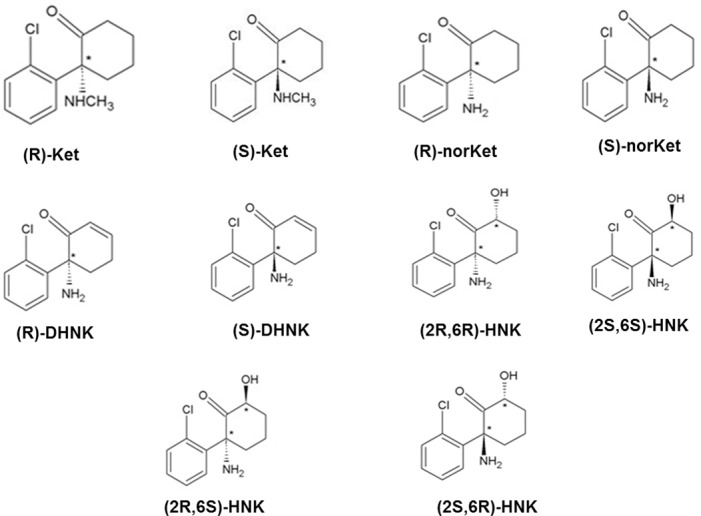
“Ket Metabolites Reduce Intracellular D-Serine Concentrations The molecular structures of the compounds used in this study are presented in Fig 1.”
BackgroundInfluentialMechanisms of analgesia by gabapentin and pregabalin – Calcium channel α2-δ [Cavα2-δ] ligands
Taylor, C. P. (2009) · Pain · doi:10.1016/j.pain.2008.11.019 · Cited by 257 · cited 1×
“This effect was attributed to decreased intracellular Ca flux resulting from the interaction of gabapentin and (S)-pregabalin with the α2-δ subunit of the voltage-gated Cavα2-δ calcium channel [31].”
BackgroundShleper, M., Kartvelishvily, E., & Wolosker, H. (2005) · The Journal of Neuroscience · doi:10.1523/jneurosci.3190-05.2005 · Cited by 216 · cited 1×
“Recent studies have associated D-serine with NMDA receptor neurotoxicity and neurodegeneration [11,24] and elevated D-serine concentrations have been associated with Alzheimer’s and Parkinsons’ Fig 3.”
BackgroundGlial D-Serine Gates NMDA Receptors at Excitatory Synapses in Prefrontal Cortex
Fossat, P., Turpin, F. R., Sacchi, S., Dulong, J., Shi, T., Rivet, J.-M., Sweedler, J. V., Pollegioni, L., Millan, M. J., Oliet, S. H. R., et al. (2012) · Cerebral Cortex · doi:10.1093/cercor/bhr130 · Cited by 187 · cited 1×
“Glycine has a demonstrated preference for extrasynaptic NMDA receptors associated with long term depression of synaptic signaling [13], while D-serine activates synaptic NMDA receptors modulating neuronal networks in the cerebral cortex [23] and plays a key role in long-term potentiation of synaptic transmission [12,1…”
BackgroundMoaddel, R., Abdrakhmanova, G., Kozak, J., Jozwiak, K., Toll, L., Jimenez, L., Rosenberg, A., Tran, T., Xiao, Y., Zarate, C. A., et al. (2013) · European Journal of Pharmacology · doi:10.1016/j.ejphar.2012.11.023 · Cited by 176 · cited 2×
“This effect was associated with the negative allosteric modulation of α7-nAChR activity, which results in lower intracellular Ca, which, in turn, reduces the magnitude of Ca–activated SR and consequently the intracellular D-Ser concentrations [7,10,15].”
BackgroundSelf-citationKetamine: new uses for an old drug?
Hirota, K., & Lambert, D. G. (2011) · British Journal of Anaesthesia · doi:10.1093/bja/aer221 · Cited by 162 · cited 1×
“(rac)-Ketamine (Ket) is a chiral phencyclidine derivative that produces rapid and short-lived anesthesia via inhibition of the N-methyl-D-aspartate (NMDA) receptor [1,2].”
BackgroundDirect Calcium Binding Results in Activation of Brain Serine Racemase
Cook, S. P., Galve‐Roperh, I., Martínez‐del‐Pozo, Á., & Rodríguez‐Crespo, I. (2002) · Journal of Biological Chemistry · doi:10.1074/jbc.m111814200 · Cited by 136 · cited 13×
“Ket Metabolites Reduce Intracellular D-Serine Concentrations The molecular structures of the compounds used in this study are presented in Fig 1.”
BackgroundInfluentialLeung, L. Y., & Baillie, T. A. (1986) · Journal of Medicinal Chemistry · doi:10.1021/jm00161a043 · Cited by 135 · cited 1×
“Initial studies of (rac)-Ket induced anesthesia demonstrated that the effect was produced by the parent compound and (R,S)-norKet and that the (2S,6S;2R,6R)-HNK metabolite was inactive in this test [5].”
BackgroundDwyer, J. M., & Duman, R. S. (2013) · Biological Psychiatry · doi:10.1016/j.biopsych.2012.11.011 · Cited by 132 · cited 1×
“This effect was also observed after the administration of (R,S)-Ket and was associated with (R,S)-Ket’s antidepressant activity in the Wistar rat [8,9].”
BackgroundPaul, R. K., Singh, N. S., Khadeer, M., Moaddel, R., Sanghvi, M., Green, C. E., O’Loughlin, K., Torjman, M. C., Bernier, M., & Wainer, I. W. (2014) · Anesthesiology · doi:10.1097/aln.0000000000000285 · Cited by 115 · cited 6×
“In addition, administration of (2S,6S)-HNK stimulated phosphorylation of the mammalian target of rapamycin (mTOR) and its downstream targets in Wistar rat pre-frontal cortex tissue [7].”
BackgroundMethodSelf-citationStereoselective and regiospecific hydroxylation of ketamine and norketamine
Desta, Z., Moaddel, R., Ogburn, E. T., Xu, C., Ramamoorthy, A., Venkata, S. L. V., Sanghvi, M., Goldberg, M. E., Torjman, M. C., & Wainer, I. W. (2012) · Xenobiotica · doi:10.3109/00498254.2012.685777 · Cited by 114 · cited 1×
“(rac)-Ket is rapidly, extensively and stereoselectively transformed into an array of N-demethylated and hydroxylated metabolites including norketamine (norKet), dehydronorketamine (DHNK) and diastereomeric hydroxynorketamines (HNK) [3,4].”
BackgroundSelf-citationMoaddel, R., Venkata, S. L. V., Tanga, M. J., Bupp, J. E., Green, C. E., Iyer, L., Furimsky, A., Goldberg, M. E., Torjman, M. C., & Wainer, I. W. (2010) · Talanta · doi:10.1016/j.talanta.2010.08.005 · Cited by 108 · cited 1×
“These metabolites were prepared as previously described [20].”
MethodSelf-citationAdams, J. D., Baillie, T. A., Trevor, A. J., & Castagnoli, N. (1981) · Biological Mass Spectrometry · doi:10.1002/bms.1200081103 · Cited by 105 · cited 1×
“(rac)-Ket is rapidly, extensively and stereoselectively transformed into an array of N-demethylated and hydroxylated metabolites including norketamine (norKet), dehydronorketamine (DHNK) and diastereomeric hydroxynorketamines (HNK) [3,4].”
BackgroundBalu, D. T., Basu, A. C., Corradi, J. P., Cacace, A. M., & Coyle, J. T. (2012) · Neurobiology of Disease · doi:10.1016/j.nbd.2011.10.006 · Cited by 98 · cited 1×
“D-Serine and glycine are endogenous NMDA receptor co-agonists that act on different NMDA receptor populations [13,22].”
BackgroundMoaddel, R., Luckenbaugh, D. A., Xie, Y., Villaseñor, A., Brutsche, N. E., Machado-Vieira, R., Ramamoorthy, A., Lorenzo, M. P., Garcia, A., Bernier, M., et al. (2015) · Psychopharmacology · doi:10.1007/s00213-014-3669-0 · Cited by 86
Self-citationInduction of Serine Racemase by Inflammatory Stimuli Is Dependent on AP‐1
Wu, S., & Barger, S. W. (2004) · Annals of the New York Academy of Sciences · doi:10.1196/annals.1332.009 · Cited by 82 · cited 1×
“In Alzheimer’s disease, elevated D-serine concentrations have been associated with increased expression of SR induced by amyloid β-peptide (Aβ1–42) [26] and secreted amyloid precursor protein [27].”
BackgroundInhibition of Human Serine Racemase, an Emerging Target for Medicinal Chemistry
Jiraskova-Vanickova, J., Ettrich, R., Vorlova, B., E. Hoffman, H., Lepsik, M., Jansa, P., & Konvalinka, J. (2011) · Current Drug Targets · doi:10.2174/138945011795677755 · Cited by 52 · cited 15×
“Ket Metabolites Reduce Intracellular D-Serine Concentrations The molecular structures of the compounds used in this study are presented in Fig 1.”
BackgroundInfluentialNMDA Receptor Activation: Two Targets for Two Co-Agonists
Henneberger, C., Bard, L., King, C., Jennings, A., & Rusakov, D. A. (2013) · Neurochemical Research · doi:10.1007/s11064-013-0987-2 · Cited by 49 · cited 2×
“D-Serine and glycine are endogenous NMDA receptor co-agonists that act on different NMDA receptor populations [13,22].”
BackgroundWu, S., Basile, A. S., & Barger, S. W. (2007) · Current Alzheimer Research · doi:10.2174/156720507781077241 · Cited by 48 · cited 1×
“In Alzheimer’s disease, elevated D-serine concentrations have been associated with increased expression of SR induced by amyloid β-peptide (Aβ1–42) [26] and secreted amyloid precursor protein [27].”
BackgroundMoaddel, R., Sanghvi, M., Dossou, K. S. S., Ramamoorthy, A., Green, C., Bupp, J., Swezey, R., O'Loughlin, K., & Wainer, I. W. (2015) · Pharmacology Research & Perspectives · doi:10.1002/prp2.157 · Cited by 40
Self-citationSingh, N. S., Paul, R. K., Ramamoorthy, A., Torjman, M. C., Moaddel, R., Bernier, M., & Wainer, I. W. (2013) · Cellular Signalling · doi:10.1016/j.cellsig.2013.08.025 · Cited by 30 · cited 5×
“We have previously demonstrated that incubation of PC-12 pheochromocytoma and 1321N1 astrocytoma cells with (rac)-DHNK and (2S,6S)-HNK reduces intracellular D-serine concentrations [7,15].”
BackgroundMethodSelf-citationSingh, N., Paul, R. K., Sichler, M., Moaddel, R., Bernier, M., & Wainer, I. W. (2011) · Analytical Biochemistry · doi:10.1016/j.ab.2011.10.003 · Cited by 29 · cited 2×
“MDQ system equipped with a laser-induced fluorescence detector (Beckman Instruments, Fullerton, CA, USA) [21].”
MethodSelf-citationD-Serine Regulation: A Possible Therapeutic Approach for Central Nervous Diseases and Chronic Pain
Sethuraman, R., Lee, T., & Tachibana, S. (2009) · Mini-Reviews in Medicinal Chemistry · doi:10.2174/138955709788452630 · Cited by 17 · cited 3×
“Since D-Serine concentrations have been correlated with a number of CNS diseases such as amyotrophic lateral sclerosis (ALS), Alzheimer’s and schizophrenia, the development of drugs that can modulate D-serine expression and distribution is an area of pharmacological and clinical interest [18,19].”
BackgroundGabapentin and (S)-pregabalin decrease intracellular d-serine concentrations in PC-12 cells
Singh, N., Paul, R. K., Torjman, M. C., & Wainer, I. W. (2012) · Neuroscience Letters · doi:10.1016/j.neulet.2012.12.024 · Cited by 16 · cited 1×
“This approach is supported by our recent observation that the treatment of PC-12 cells with gabapentin and (S)-pregabalin produced significant decreases in intracellular D-Ser concentrations [30].”
ResultSelf-citationEnantioselective inhibition of d‐serine transport by (S)‐ketamine
Singh, N. S., Bernier, M., Camandola, S., Khadeer, M. A., Moaddel, R., Mattson, M. P., & Wainer, I. W. (2015) · British Journal of Pharmacology · doi:10.1111/bph.13239 · Cited by 11 · cited 9×
“The effect was enantioselective with respect to (S)-Ket and (R)-Ket, as the minimum concentration required to elicit the maximum response with (S)-Ket was 200 nM while (R)-Ket required a concentration of 4,000 nM [17].”
BackgroundMethodSelf-citationD-Serine Production, Degradation, and Transport in ALS: Critical Role of Methodology
Crow, J. P., Marecki, J. C., & Thompson, M. M. (2012) · Neurology Research International · doi:10.1155/2012/625245 · Cited by 11 · cited 1×
“In ALS, it has been suggested that increased levels of D-serine in the CNS is the primary cause of neuronal death associated with the disease [25].”
Background
Cited by
Ketamine and Ketamine Metabolite Pharmacology: Insights into Therapeutic Mechanisms
Zanos, P., Moaddel, R., Morris, P. J., Riggs, L. M., Highland, J. N., Georgiou, P., Pereira, E. F. R., Albuquerque, E. X., Thomas, C. J., Zarate, C. A., et al. (2018) · Pharmacological Reviews · doi:10.1124/pr.117.015198 · Cited by 1,260
Self-citationMatveychuk, D., Thomas, R. K., Swainson, J., Khullar, A., MacKay, M.-A., Baker, G. B., & Dursun, S. M. (2020) · Therapeutic Advances in Psychopharmacology · doi:10.1177/2045125320916657 · Cited by 209
Mechanisms of ketamine and its metabolites as antidepressants
Hess, E. M., Riggs, L. M., Michaelides, M., & Gould, T. D. (2022) · Biochemical Pharmacology · doi:10.1016/j.bcp.2021.114892 · Cited by 175
Molecular Pharmacology and Neurobiology of Rapid-Acting Antidepressants
Gould, T. D., Zarate, C. A., & Thompson, S. M. (2019) · Annual Review of Pharmacology and Toxicology · doi:10.1146/annurev-pharmtox-010617-052811 · Cited by 133
Hydroxynorketamines: Pharmacology and Potential Therapeutic Applications
Highland, J. N., Zanos, P., Riggs, L. M., Georgiou, P., Clark, S. M., Morris, P. J., Moaddel, R., Thomas, C. J., Zarate, C. A., Pereira, E. F. R., et al. (2021) · Pharmacological Reviews · doi:10.1124/pharmrev.120.000149 · Cited by 92
“The mTOR pathway, a downstream target of BDNF/ TrkB, has also been shown to be increased byHNKs (Paul et al., 2014; Singh et al., 2016; Fukumoto et al., 2019; Lumsden et al., 2019).”
BackgroundSelf-citation
Metadata
- Authors
- Singh, N. S., Rutkowska, E., Plazinska, A., Khadeer, M., Moaddel, R., Jozwiak, K., Bernier, M., & Wainer, I. W.
- Affiliations
- National Institutes of Health (US)
- Medical University of Lublin (PL)
- Corresponding author
- Wainer, Irving W.
- Venue
- PLOS ONE
- Publisher
- Public Library of Science (PLoS)
- Published
- 2016-04-20
- Volume
- 11
- Issue
- 4
- Pages
- e0149499
- ISSN
- 1932-6203 (ISSN-L)
- PMC
- PMC4838237
- OpenAlex
- W2339134523
- Cited by
- 23
- References
- 33
- Citations by year
- 2025: 1 · 2024: 1 · 2023: 1 · 2022: 3 · 2021: 4 · 2020: 2 · 2018: 6 · 2017: 4 · 2016: 1
- FWCI
- 2.42
- Type
- journal article
- Language
- en
- Open access
- gold
- doi.org
- Licence
- public-domain
- creativecommons.org/publicdomain/zero/1.0/ (vor)
- Locations
- PLoS ONE (publishedVersion, public-domain)
- PubMed Central (publishedVersion, public-domain)
- PubMed (publishedVersion)
- DOAJ (DOAJ: Directory of Open Access Journals) (submittedVersion, cc-by-sa)
- Funders
- Fundacja na rzecz Nauki Polskiej
- National Institutes of Health
- National Institute on Aging
- Topics
- Life Sciences › Biochemistry, Genetics and Molecular Biology › Biochemistry › Amino Acid Enzymes and Metabolism
- Life Sciences › Neuroscience › Cellular and Molecular Neuroscience › Neuroscience and Neuropharmacology Research
- Health Sciences › Medicine › Pharmacology (medical) › Treatment of Major Depression
- Keywords
- ketamine metabolites, D-serine, enantiomers, hydroxynorketamine, dehydronorketamine, NMDA receptor co-agonist, PC12 cells, stereochemistry, 3D-QSAR, pharmacophore model, neurodegeneration
- MeSH terms
- Animals, Ketamine, Models, Molecular, Serine, Stereoisomerism, Blotting, Western, Minor Histocompatibility Antigens, PC12 Cells, Protein Transport, Amino Acid Transport System ASC, Rats
About these checks
Registry, retraction, Cites and statistics results are computed, not judged, with one exception: a printed reference that no index lists is read once by a model before it counts as a citation error. Claims are extracted by a model and kept only when their quote appears verbatim in the text; each cited source is then checked, with a model’s help, for whether it says what the claim relies on. Those verdicts can be wrong — read the claim’s quote and the cited source before relying on one.
Statistics and arithmetic are recomputed, not judged.
Confidence bands are shown only for fields calibrated on our annotated test set. None is calibrated yet, so no band is shown.
What counts as a claim ›How we measure confidence ›How we check this ›
Are you an author, or do you see a problem with this page? Request a review
Data sources
Bibliographic data: Semantic Scholar, OpenAlex, Crossref.
Contains information from the Semantic Scholar Academic Graph Datasets, made available under the ODC Attribution License (ODC-BY 1.0).
Semantic Scholar’s data is described in: Kinney, R., et al. (2023). The Semantic Scholar Open Data Platform. arXiv:2301.10140.
