

The DOI matches its Crossref record; 74 of the 74 references it cites were found in a registry or an index.
The Effectiveness of Mindfulness-Based Interventions in the Perinatal Period: A Systematic Review and Meta-Analysis
Open accessAbstract
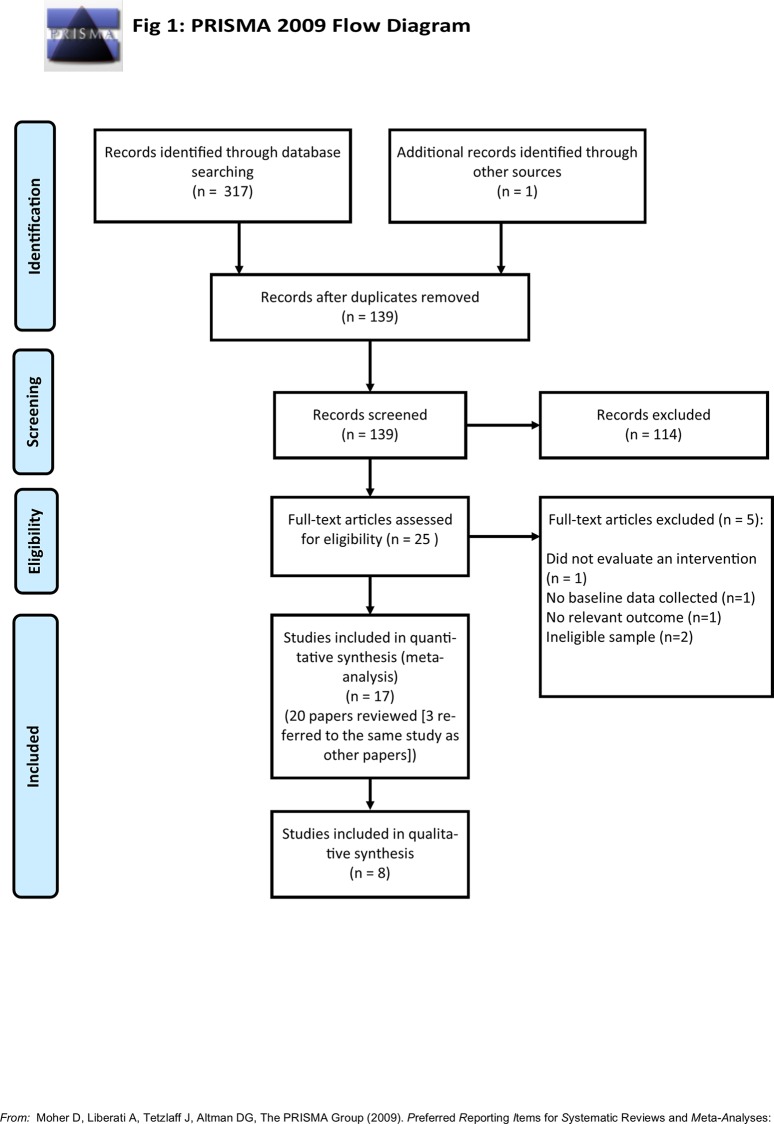
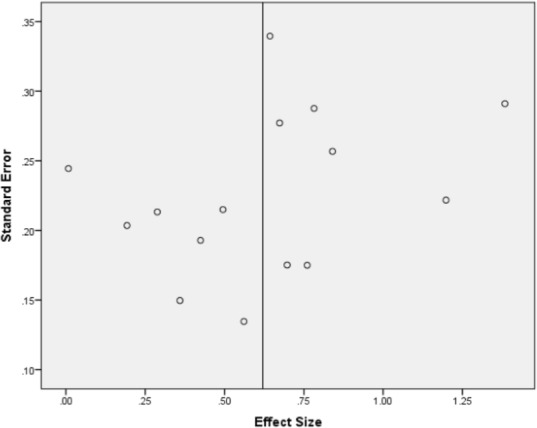
Perinatal mental health difficulties are associated with adverse consequences for parents and infants. However, the potential risks associated with the use of psychotropic medication for pregnant and breastfeeding women and the preferences expressed by women for non-pharmacological interventions mean it is important to ensure that effective psychological interventions are available. It has been argued that mindfulness-based interventions may offer a novel approach to treating perinatal mental health difficulties, but relatively little is known about their effectiveness with perinatal populations. This paper therefore presents a systematic review and meta-analysis of the effectiveness of mindfulness-based interventions for reducing depression, anxiety and stress and improving mindfulness skills in the perinatal period. A systematic review identified seventeen studies of mindfulness-based interventions in the perinatal period, including both controlled trials (n = 9) and pre-post uncontrolled studies (n = 8). Eight of these studies also included qualitative data. Hedge's g was used to assess uncontrolled and controlled effect sizes in separate meta-analyses, and a narrative synthesis of qualitative data was produced. Pre- to post-analyses showed significant reductions in depression, anxiety and stress and significant increases in mindfulness skills post intervention, each with small to medium effect sizes. Completion of the mindfulness-based interventions was reasonable with around three quarters of participants meeting study-defined criteria for engagement or completion where this was recorded. Qualitative data suggested that participants viewed mindfulness interventions positively. However, between-group analyses failed to find any significant post-intervention benefits for depression, anxiety or stress of mindfulness-based interventions in comparison to control conditions: effect sizes were negligible and it was conspicuous that intervention group participants did not appear to improve significantly more than controls in their mindfulness skills. The interventions offered often deviated from traditional mindfulness-based cognitive therapy or mindfulness-based stress reduction programmes, and there was also a tendency for studies to focus on healthy rather than clinical populations, and on antenatal rather than postnatal populations. It is argued that these and other limitations with the included studies and their interventions may have been partly responsible for the lack of significant between-group effects. The implications of the findings and recommendations for future research are discussed.
Overview
The claims and statistics of this paper haven’t been checked yet.
Run the check — free, no account needed. It reads the open-access text and checks the sources it cites.
Integrity signals
Registry
Cites
Statistics
Figures
Verification
Claims the paper makes
The claims and statistics of this paper haven’t been checked yet.
Run the check — free, no account needed. It reads the open-access text and checks the sources it cites.
Claims other papers make about this one
Each is checked against this paper’s own text: does it say what the citing paper says it does?
The source backs part of the claim, not all of it — or backs it for a different population, condition or comparison.
In the citing paper
“The majority of studies are pilot and feasibility trials that are not adequately powered to demonstrate the effectiveness [3, 18, 19].”
From Mindfulness-based stress reduction adapted to pregnant women with psychosocial vulnerabilities—a protocol for a randomized feasibility study in a Danish hospital-based outpatient setting (2021) · cites this paper as [19]
Experimental — accuracy not yet measuredThe cited source says what the claim attributes to it.
In the citing paper
“There is evidence that women with elevated levels of depression, anxiety, or stress during this time may benefit more from MBIs than universal perinatal populations (55), suggesting a promising use in hospitalized women with obstetric risk.”
From Acceptance, experiences, and needs of hospitalized pregnant women toward an electronic mindfulness-based intervention: A pilot mixed-methods study (2022) · cites this paper as [55]
The cited source says what the claim attributes to it.
In the citing paper
“However, there are only few studies of pregnancy-specific eMBIs with only small samples and lacking randomized controlled approaches (43, 51, 55, 63).”
From Acceptance, experiences, and needs of hospitalized pregnant women toward an electronic mindfulness-based intervention: A pilot mixed-methods study (2022) · cites this paper as [55]
The cited source says what the claim attributes to it.
In the citing paper
“Systematic reviews and meta-analyses point towards a trend in favor of mindfulness-based interventions but state that shortcomings in study designs limit the conclusions.”
The cited source says what the claim attributes to it.
In the citing paper
“However, more research is needed to explore the possible benefits of mindfulness-based interventions on mental health in pregnancy, and in particular in psychosocially vulnerable groups [3, 19].”
Self-check
Percentages, sums and reported differences re-computed from the paper’s own numbers.
The self-check needs the paper’s full text.
Citations
Cites
Statistical power analysis for the behavioral sciences
Cohen, J. (1990) · Computers Environment and Urban Systems · doi:10.1016/0198-9715(90)90050-4 · Cited by 65,417
Assessing the quality of reports of randomized clinical trials: Is blinding necessary?
Jadad, A. R., Moore, R. A., Carroll, D., Jenkinson, C., Reynolds, D. J. M., Gavaghan, D. J., & McQuay, H. J. (1996) · Controlled Clinical Trials · doi:10.1016/0197-2456(95)00134-4 · Cited by 17,582
Detection of Postnatal Depression: Development of the 10-item Edinburgh Postnatal Depression Scale
Cox, J. L., Holden, J. M., & Sagovsky, R. (1987) · British Journal of Psychiatry · doi:10.1192/bjp.150.6.782 · Cited by 14,183 · cited 2×
“The EPDS is the most frequently used self-report measure of perinatal depressive symptom severity with strong psychometric properties amongst both pregnant and postpartum samples [39, 40].”
MethodResultZhang, Q., Wang, C., Zheng, M., Li, Y., Li, J., Zhang, L., Shang, X., & Yan, C. (2014) · Cerebrovascular Diseases · doi:10.1159/000369778 · Cited by 11,609
Wasserman, S. S., Hedges, L. V., & Olkin, I. (1988) · Journal of Educational Statistics · doi:10.2307/1164953 · Cited by 10,377
Mindfulness-based interventions in context: Past, present, and future
Kabat-Zinn, J. (2003) · Clinical Psychology: Science and Practice · doi:10.1093/clipsy.bpg016 · Cited by 8,615 · cited 1×
“Mindfulness has been defined as “the awareness that emerges through paying attention on purpose, in the present moment, and non-judgementally to the unfolding of experience moment by moment” [21], p.”
BackgroundMindfulness-based interventions in context: Past, present, and future.
Kabat-Zinn, J. (2003) · Clinical Psychology: Science and Practice · doi:10.1093/clipsy/bpg016 · Cited by 8,612
Kessler, R. C., Berglund, P., Demler, O., Jin, R., Koretz, D., Merikangas, K. R., Rush, A. J., Walters, E. E., & Wang, P. S. (2003) · JAMA · doi:10.1001/jama.289.23.3095 · Cited by 7,988
Using Self-Report Assessment Methods to Explore Facets of Mindfulness
Baer, R. A., Smith, G. T., Hopkins, J., Krietemeyer, J., & Toney, L. (2006) · Assessment · doi:10.1177/1073191105283504 · Cited by 7,511
(1999) · Cited by 5,934
Research works printed but not linked: 1
- AV Pak, 2013, Efficacy of Mindfulness Training on Enhancing Happiness in Women with pregnancy diabetes, Advances in Environmental Biology, 7, 4203
Cited by
Sorted by citations
Items 201–283 of 283
The Personalized Wellness Life Plan
IsHak, W. W., Bart, R., Gohar, Y., Lorea, N., Eskander, L., Chang, T., Cohen, S., Furman, K., Nayyar, P. P., & DeBonis, K. (2020) · Cambridge University Press eBooks · doi:10.1017/9781108650182.050
Exercise, Dance, Tai Chi, Pilates, and Alexander Technique
Altug, Z. (2020) · Cambridge University Press eBooks · doi:10.1017/9781108650182.025
Louy, C., Sweet, C., Pollock, G. A., de Zagon, C., Louy, Z., Weiss, J. M., & Maher, D. P. (2020) · Cambridge University Press eBooks · doi:10.1017/9781108650182.017
Pharmaceuticals and Alternatives for Wellness
Parisi, T., Heath, B., Wen, R. Y., & IsHak, W. W. (2020) · Cambridge University Press eBooks · doi:10.1017/9781108650182.024
Bucciarelli, A., Ellison, G. K., Sommer, E. K., & Spooner, H. (2020) · Cambridge University Press eBooks · doi:10.1017/9781108650182.036
Screening and Assessment Methods for Wellness
Greenberg, J. M., Castillo, E. G., IsHak, W. W., & Wells, K. B. (2020) · Cambridge University Press eBooks · doi:10.1017/9781108650182.002
The Role of Leisure, Recreation, and Play in Health and Well-Being
Payne, L. L., & An, J. (2020) · Cambridge University Press eBooks · doi:10.1017/9781108650182.048
Positive Neuropsychology, Cognitive Rehabilitation, and Neuroenhancement
Pimental, P. A., O'Hara, J. B., Christopher, J., & Ciampanelli, A. (2020) · Cambridge University Press eBooks · doi:10.1017/9781108650182.030
Wellness in Children and Adolescents
Zanko, C., & Stuber, M. L. (2020) · Cambridge University Press eBooks · doi:10.1017/9781108650182.016
Connection, Compassion, and Community
Hedrick, R., & Jones, K. (2020) · Cambridge University Press eBooks · doi:10.1017/9781108650182.043
Wellness Interventions for Chronicity and Disability
Klimowicz, A., Schussel, L., & IsHak, W. W. (2020) · Cambridge University Press eBooks · doi:10.1017/9781108650182.044
Mays, A. M., Whiteman, E., & Rosen, S. L. (2020) · Cambridge University Press eBooks · doi:10.1017/9781108650182.015
Developing Purpose, Meaning, and Achievements
Vilhauer, J. S. (2020) · Cambridge University Press eBooks · doi:10.1017/9781108650182.041
Sleep, Rest, and Relaxation in Improving Wellness
Ngor, A., & IsHak, W. W. (2020) · Cambridge University Press eBooks · doi:10.1017/9781108650182.026
The Biopsychosocial Assessment
Somjee, L., & Esbitt, S. A. (2020) · Cambridge University Press eBooks · doi:10.1017/9781108650182.003 · Cited by 1
Wellness and the Genito-Urinary System
EILBER, K. S., & Lee, U. J. (2020) · Cambridge University Press eBooks · doi:10.1017/9781108650182.010
Marin, K., Tobia, G., Bakhoum, A., Naghdechi, L., Korouri, S., & IsHak, W. W. (2020) · Cambridge University Press eBooks · doi:10.1017/9781108650182.027
Cardiovascular and Pulmonary Wellness
IsHak, W. W., & Herrera, N. (2020) · Cambridge University Press eBooks · doi:10.1017/9781108650182.008
Wellness in Endocrine and Metabolic Disorders
Clevenger, S., Eskander, L., Lin, T. Y., & IsHak, W. W. (2020) · Cambridge University Press eBooks · doi:10.1017/9781108650182.013
The Concept of Wellness in Psychiatric and Substance-Use Disorders
Awad, A. G. (2020) · Cambridge University Press eBooks · doi:10.1017/9781108650182.006
Wellness and Whole-Person Care
Hutchinson, T. A., & Hutchinson, N. (2020) · Cambridge University Press eBooks · doi:10.1017/9781108650182.049
Herrera, N., & IsHak, W. W. (2020) · Cambridge University Press eBooks · doi:10.1017/9781108650182.040
Wellness in Cancer and Neoplastic Diseases
Bashmi, L., & IsHak, W. W. (2020) · Cambridge University Press eBooks · doi:10.1017/9781108650182.018
Wellness Interventions for Physicians and Healthcare Professionals
Goldenberg, M., & Danovitch, I. (2020) · Cambridge University Press eBooks · doi:10.1017/9781108650182.021
Neurological and Neurosurgical Disorders and Wellness
Ding, K., & Yang, I. (2020) · Cambridge University Press eBooks · doi:10.1017/9781108650182.007
Gastrointestinal System and Wellness
Robbins, L., & Feldman, E. J. (2020) · Cambridge University Press eBooks · doi:10.1017/9781108650182.009
McCarthy, M. J., Houghton, C., & Matvienko‐Sikar, K. (2021) · Research Square · doi:10.21203/rs.3.rs-461203/v1
Canfield, S. M. (2021) · MOspace Institutional Repository (University of Missouri) · doi:10.32469/10355/85766
Perinatal Depression and Psychiatric Considerations
Vanwetswinkel, F., & Hompes, T. (2021) · Springer eBooks · doi:10.1007/978-3-030-47652-6_25
Jenkins, A., Kearney, L. N., George, K., & Kannis‐Dymand, L. (2022) · Research Square · doi:10.21203/rs.3.rs-1037571/v1
Cognitive Behavioral Therapy for Perinatal Depression
Sockol, L. E. (2021) · Cambridge University Press eBooks · doi:10.1017/9781108355605.025
IsHak, W. W. (2020) · Cambridge University Press eBooks · doi:10.1017/9781108650182.051
Lundy, J. (2020) · Cambridge University Press eBooks · doi:10.1017/9781108650182.022
IsHak, W. W., Mann, A., Manoukian, V., Pakhdikian, S., Chaudhry, M., Liu, A., & Bart, R. (2020) · Cambridge University Press eBooks · doi:10.1017/9781108650182.001 · Cited by 2
IsHak, W. W. (2020) · Cambridge University Press eBooks · doi:10.1017/9781108650182.053
Zhang, X., Li, Y., Wang, J., Huang, Y., Mao, F., Wu, L., Sun, J., & Cao, F. (2022) · doi:10.2196/preprints.41298
Mindfulness-Based Interventions during Pregnancy and Labour
Merchante, M. S., & Martinez-Hurtado, E. D. (2022) · Recent advances in anesthesiology · doi:10.2174/9789815051841122040022
Psychological Intervention for Lactation Period in Postpartum Mother: Systematic Review
Dhamanik, R., Machmudah, M., & Rejeki, S. T. (2023) · Advances in health sciences research/Advances in Health Sciences Research · doi:10.2991/978-94-6463-132-6_49
Postpartum Depression: Overcoming Mental Health Challenges during Parenthood
Walls, J., Leiferman, J. A., Farewell, C. V., & Lacy, R. (2023) · Health · doi:10.4236/health.2023.157046
Pemberdayaan Kesehatan Ibu Hamil dengan Aplikasi Mindfulness Pregnancy
Kundarti, F. I., Titisari, I., & Rahayu, D. E. (2023) · Poltekita Jurnal Pengabdian Masyarakat · doi:10.33860/pjpm.v4i3.2882
EFICÁCIA DOS PROGRAMAS BASEADOS EM MINDFULNESS PARA DEPRESSÃO
Silva, L. P., de Sá, A. R., Schneider, I. J. C., & Silva, C. V. (2023) · Revista Contemporânea · doi:10.56083/rcv3n12-157
Effectiveness of Online Mindfulness-Based Intervention on Depression in Pregnancy
Kundarti, F. I., Titisari, I., Kiswati, K., Jamhariyah, J., & Rahayu, D. E. (2023) · JURNAL INFO KESEHATAN · doi:10.31965/infokes.vol21.iss2.1186
“However, there are few pregnancy-specific eMBI studies with small samples and a lack of randomized control trial approaches (Hall et al., 2016; Taylor, Cavanagh ,& Strauss, 2016; Dhillon, Sparkes & Duarte, 2017; Krusche, Crane, & Dymond, 2019).”
BackgroundThe impact of psychological factors on in vitro fertilization (IVF) outcomes: a comprehensive review
Yurci, A. (2024) · Journal of Comprehensive Surgery · doi:10.51271/jocs-0031
Harris, J. C., & Coyle, J. T. (2024) · Oxford University Press eBooks · doi:10.1093/med/9780199928118.003.0010
Coping strategies in pregnancy and perinatal period in times of COVID-19
Polanco-Muñoz, R., Torres-Luna, E., Cuadros-López, A., Hinojosa, C. L. M., Albán-Terán, M. G., Chavez, C. B. E., Barahona-Fuertes, G., Larrea-Legarda, N., & Polanco-Verduga, J. (2024) · Salud Ciencia y Tecnología · doi:10.56294/saludcyt20251111
Ansaari, N., Kuruveettissery, S., & Muralidhar, A. (2025) · Mental Health & Prevention · doi:10.1016/j.mhp.2025.200392
Impact of digital MBCT on perinatal depression and work motivation: pilot study
Ansaari, N., & Kuruveettissery, S. (2025) · Asia Pacific Journal of Counselling and Psychotherapy · doi:10.1080/21507686.2025.2494511
“MBCT has demonstrated effectiveness in reducing depression and improving psychological well-being across various populations (Fjorback et al., 2011; Hulsbosch et al., 2020; Lever Taylor et al., 2016).”
InfluentialFirstyani, M. L. R. (2025) · Jurnal Locus Penelitian dan Pengabdian · doi:10.58344/locus.v4i8.4535
Seixinho, S., & Presado, M. H. (2025) · Frontiers in Global Women s Health · doi:10.3389/fgwh.2025.1558231
Farley, C. D., Renshaw, T. L., & Caldarella, P. (2025) · Journal of Child and Family Studies · doi:10.1007/s10826-025-03163-3
Mental imagery and mental health in first-time expectant mothers: A mixed-methods investigation
Radley, J., Ginestet, C. E., Taylor, B. L., Moulds, M. L., & Pile, V. (2025) · Journal of Affective Disorders · doi:10.1016/j.jad.2025.120547 · Cited by 1
Mor, S., Sela, Y., & Lev‐Ari, S. (2025) · medRxiv · doi:10.1101/2025.11.04.25339519
Lantz, L. B., Gregory, A. A., Brown, R., Bodnar-Deren, S. M., Case, K. A., & Kinser, P. A. (2025) · Frontiers in Psychiatry · doi:10.3389/fpsyt.2025.1644798 · Cited by 1
McCarthy, M., Houghton, C., & Matvienko‐Sikar, K. (2021) · Figshare · doi:10.6084/m9.figshare.17127243
Missler, M. A., Donker, T., Beijers, R., Čihařová, M., Moyse, C., de Vries, R., Denissen, J. J. A., & van Straten, A. (2021) · Figshare · doi:10.6084/m9.figshare.14361999
Haeken, S. V., Braeken, M. A. K. A., Horsch, A., Oosterman, M., & Bogaerts, A. (2024) · Figshare · doi:10.6084/m9.figshare.26615353
Branjerdporn, G., Gillespie, K. M., Martin, E. K., Kissane, V., Young, A., Ewais, T., Goldsmith, K., Wilson, S., Adhikary, S. R., Mcgahan, G., et al. (2023) · Figshare · doi:10.6084/m9.figshare.24630243
Skovbjerg, S., Birk, D., Bruggisser, S., Wolf, A. L. A., & Fjorback, L. O. (2021) · Figshare · doi:10.6084/m9.figshare.14728544
McCarthy, M., Houghton, C., & Matvienko‐Sikar, K. (2021) · Figshare · doi:10.6084/m9.figshare.17127249
Branjerdporn, G., Gillespie, K. M., Martin, E. K., Kissane, V., Young, A., Ewais, T., Goldsmith, K., Wilson, S., Adhikary, S. R., Mcgahan, G., et al. (2024) · Figshare · doi:10.6084/m9.figshare.26644417
Haeken, S. V., Braeken, M. A. K. A., Horsch, A., Oosterman, M., & Bogaerts, A. (2024) · Figshare · doi:10.6084/m9.figshare.26615347
Haeken, S. V., Braeken, M. A. K. A., Horsch, A., Oosterman, M., & Bogaerts, A. (2024) · Figshare · doi:10.6084/m9.figshare.26615350
Branjerdporn, G., Gillespie, K. M., Martin, E. K., Kissane, V., Young, A., Ewais, T., Goldsmith, K., Wilson, S., Adhikary, S. R., Mcgahan, G., et al. (2024) · Figshare · doi:10.6084/m9.figshare.24630459
McCarthy, M., Houghton, C., & Matvienko‐Sikar, K. (2021) · Figshare · doi:10.6084/m9.figshare.17127246
Valö, L., Rosansky, J. A., Parry, G., Comeau, A., Rice, F. K., Fulwiler, C., & Schuman‐Olivier, Z. (2025) · doi:10.2196/preprints.88388
Wang, F., Zeng, W., Zhou, T., Yun, F., Li, X., Li, Y., Li, H., Huang, Y., Yu, D., Guo, S., et al. (2026) · BMC Pregnancy and Childbirth · doi:10.1186/s12884-026-08714-0
Transtornos de ansiedade em mulheres
Abramov, A. K., Kubrusly, R. C. C., & Silva, B. T. (2025) · Neurociências & Sociedade · doi:10.22409/nes.v2i1.66481
Barker, L. C., Dennis, C., & Vigod, S. N. (2026) · Cambridge University Press eBooks · doi:10.1017/9781911623496.013
Psychological Therapies for Parental Mental Health in the Perinatal Period
O’Mahen, H., Mycroft, R. H., & Rosan, C. (2026) · Cambridge University Press eBooks · doi:10.1017/9781911623496.031
Vaishnav, S. B., Mody, S. K., Ganjiwale, J. D., Vaishnav, R. B., Asrani, M. R., & Raithatha, N. S. (2026) · Journal of Public Health and Primary Care · doi:10.4103/jphpc.jphpc_43_25
Effect of home ultrasound in patients with previous late pregnancy loss: an interventional study
Mor, L., Eisenberg, H., Tamayev, L., Tairy, D., Oren, B., Paz, Y. G., Levy, M., Weiner, E., & Barda, G. (2026) · Archives of Gynecology and Obstetrics · doi:10.1007/s00404-026-08429-9
Schuman‐Olivier, Z., Valö, L., Rosansky, J. A., Parry, G. J., Comeau, A., Rice, F. K., & Fulwiler, C. (2026) · JMIR Mental Health · doi:10.2196/88388
“MBCT was also found to be effective for treating anxiety [37-39] and stress [40,41] when delivered in online or virtual and in-person formats [39,42, 43].”
Mindfulness-Based Interventions in Perinatal Populations: a Scoping Review
Anderson, M. R., Roske, C., Carr, C., Go, M., Sharp, M., & Musicaro, R. M. (2026) · Mindfulness · doi:10.1007/s12671-026-02884-w
“Reflecting the preventive orientation of current funding priorities, most research into MBIs has been conducted during pregnancy (Taylor et al., 2016).”
Huang, L., Wang, C., & Wen, J. (2026) · Journal of Affective Disorders · doi:10.1016/j.jad.2026.122086
Gliske, K., Buchanan, G. J. R., Carlson, D. D., Cai, Q., Waring, M. E., & Zhang, N. (2026) · Mindfulness · doi:10.1007/s12671-026-02917-4
“Three of the five reviews found that MBPs were more effective for clinical populations than subclinical (Leng et al., 2023; Lever Taylor et al., 2016; Torres-Giménez et al., 2024), while two reviews found that MBPs significantly improved depressive symptoms for healthy populations, comprised of…”
InfluentialTang, G., Cho, U., Zhang, J., & Chen, M. (2026) · Frontiers in Psychiatry · doi:10.3389/fpsyt.2026.1868153
Vladislav, E. O., Paica, C. I., Iordăchescu, D., Panaitescu, A. M., Mehedințu, C., & Gică, N. (2026) · Medicina · doi:10.3390/medicina62081512
“…body of research has identified coping strategies, social support and marital satisfaction as factors that may mitigate perinatal distress, the specific mechanisms through which these protective resources operate, particularly their moderating functions, remain insufficiently understood [61,62].”
Soultanopoulos, G. C., Idzenga, J. J., Kamperman, A. M., van Pampus, M. G., Ket, J. C. F., Henrichs, J., & Verhoeven, C. J. M. (2026) · Journal of Psychosomatic Obstetrics & Gynecology · doi:10.1080/0167482x.2026.2714888 · Cited by 1
Pujiati, E., & Ananta, P. (2025) · Proceeding Cendekia International Conference Health and Technology · doi:10.31596/pcicht.v3i.183
“The effectiveness of these interventions becomes even more prominent when applied during the third trimester of pregnancy, which is a period characterized by high psychological pressure(Taylor, Cavanagh, and Strauss 2016).”
Liblub, S., McLaughlin, K., Pringle, K. G., & Cummins, A. M. (2026) · European Journal of Midwifery · doi:10.18332/ejm/226733
Chakranon, P., Huang, J.-P., Au, H., Lin, C., Chen, Y., Mao, S., Kim, P., Taya, D. A., Hsu, H.-W., & Chen, Y.-H. (2026) · Journal of Affective Disorders · doi:10.1016/j.jad.2026.122572
Stierman, E. K., Clifford, S., Kramer, B. E., Soto, M., Minihane, M., Mary, M., Spielman, K. L., Daggula, K., & Creanga, A. A. (2026) · Journal of Affective Disorders Reports · doi:10.1016/j.jadr.2026.101194
Zhang, L., Tao, H., Zhu, L., Liu, S., & 阳彦辉 (2026) · Medicine · doi:10.1097/md.0000000000050992
Metadata
- Authors
- Lever Taylor, B., Cavanagh, K., & Strauss, C.
- Affiliations
- University of Sussex (GB)
- Corresponding author
- Strauss, Clara
- Venue
- PLOS ONE
- Publisher
- Public Library of Science (PLoS)
- Published
- 2016-05-16
- Volume
- 11
- Issue
- 5
- Pages
- e0155720
- ISSN
- 1932-6203 (ISSN-L)
- PMC
- PMC4868288
- OpenAlex
- W2350328130
- Cited by
- 284
- References
- 71
- Citations by year
- 2026: 16 · 2025: 26 · 2024: 20 · 2023: 41 · 2022: 22 · 2021: 43 · 2020: 73 · 2019: 18 · 2018: 13 · 2017: 10 · 2016: 2
- FWCI
- 2.12
- Type
- journal article
- Language
- en
- Open access
- gold
- doi.org
- Licence
- Locations
- PLoS ONE (publishedVersion, cc-by)
- Europe PMC (PubMed Central) (publishedVersion, cc-by)
- PubMed Central (publishedVersion, cc-by)
- PubMed (publishedVersion)
- Sussex Research Online (University of Sussex) (submittedVersion, cc-by)
- RePEc: Research Papers in Economics (submittedVersion)
- DOAJ (DOAJ: Directory of Open Access Journals) (submittedVersion, cc-by-sa)
- UCL Discovery (University College London) (submittedVersion)
- Figshare (submittedVersion, cc-by)
- Funders
- University of Surrey
- Topics
- Health Sciences › Medicine › Public Health, Environmental and Occupational Health › Maternal Mental Health During Pregnancy and Postpartum
- Social Sciences › Psychology › Clinical Psychology › Mindfulness and Compassion Interventions
- Social Sciences › Psychology › Applied Psychology › Digital Mental Health Interventions
- Keywords
- mindfulness-based interventions, perinatal mental health, perinatal depression, perinatal anxiety, perinatal stress, mindfulness skills, prenatal period, postpartum period, non-pharmacological treatment, pregnant and lactating women, intervention completion
- MeSH terms
- Anxiety, Depression, Female, Health Surveys, Humans, Pregnancy, Stress, Psychological, Outcome Assessment, Health Care, Publication Bias, Perinatal Care, Early Medical Intervention, Mindfulness
About these checks
Registry, retraction, Cites and statistics results are computed, not judged, with one exception: a printed reference that no index lists is read once by a model before it counts as a citation error. Claims are extracted by a model and kept only when their quote appears verbatim in the text; each cited source is then checked, with a model’s help, for whether it says what the claim relies on. Those verdicts can be wrong — read the claim’s quote and the cited source before relying on one.
Statistics and arithmetic are recomputed, not judged.
Confidence bands are shown only for fields calibrated on our annotated test set. None is calibrated yet, so no band is shown.
What counts as a claim ›How we measure confidence ›How we check this ›
Are you an author, or do you see a problem with this page? Request a review
