

The DOI matches its Crossref record; 74 of the 74 references it cites were found in a registry or an index.
The Effectiveness of Mindfulness-Based Interventions in the Perinatal Period: A Systematic Review and Meta-Analysis
Open accessAbstract
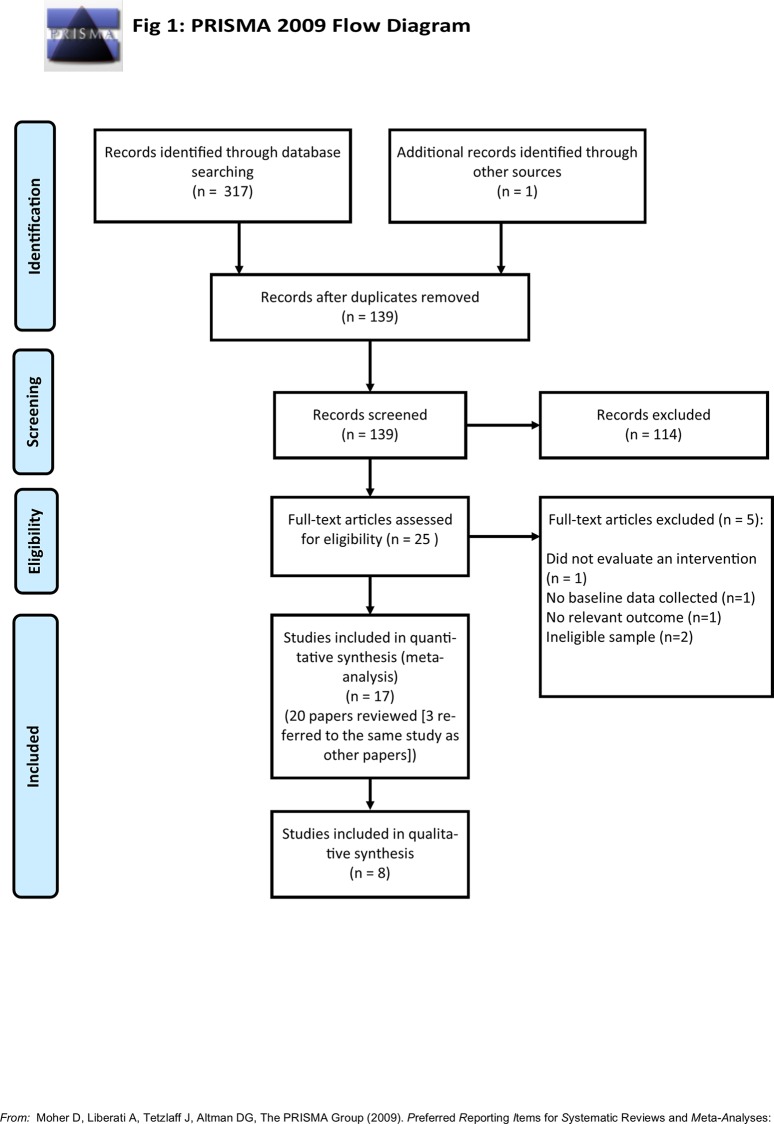
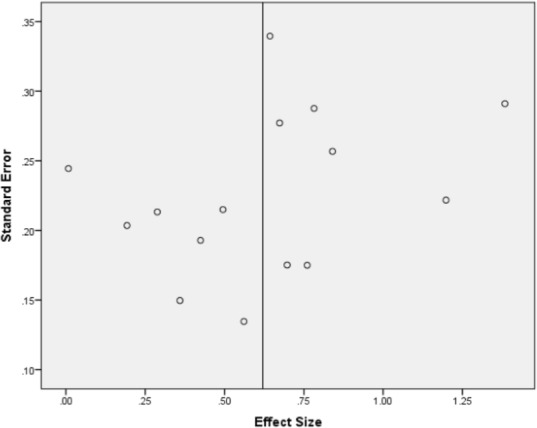
Perinatal mental health difficulties are associated with adverse consequences for parents and infants. However, the potential risks associated with the use of psychotropic medication for pregnant and breastfeeding women and the preferences expressed by women for non-pharmacological interventions mean it is important to ensure that effective psychological interventions are available. It has been argued that mindfulness-based interventions may offer a novel approach to treating perinatal mental health difficulties, but relatively little is known about their effectiveness with perinatal populations. This paper therefore presents a systematic review and meta-analysis of the effectiveness of mindfulness-based interventions for reducing depression, anxiety and stress and improving mindfulness skills in the perinatal period. A systematic review identified seventeen studies of mindfulness-based interventions in the perinatal period, including both controlled trials (n = 9) and pre-post uncontrolled studies (n = 8). Eight of these studies also included qualitative data. Hedge's g was used to assess uncontrolled and controlled effect sizes in separate meta-analyses, and a narrative synthesis of qualitative data was produced. Pre- to post-analyses showed significant reductions in depression, anxiety and stress and significant increases in mindfulness skills post intervention, each with small to medium effect sizes. Completion of the mindfulness-based interventions was reasonable with around three quarters of participants meeting study-defined criteria for engagement or completion where this was recorded. Qualitative data suggested that participants viewed mindfulness interventions positively. However, between-group analyses failed to find any significant post-intervention benefits for depression, anxiety or stress of mindfulness-based interventions in comparison to control conditions: effect sizes were negligible and it was conspicuous that intervention group participants did not appear to improve significantly more than controls in their mindfulness skills. The interventions offered often deviated from traditional mindfulness-based cognitive therapy or mindfulness-based stress reduction programmes, and there was also a tendency for studies to focus on healthy rather than clinical populations, and on antenatal rather than postnatal populations. It is argued that these and other limitations with the included studies and their interventions may have been partly responsible for the lack of significant between-group effects. The implications of the findings and recommendations for future research are discussed.
Overview
The claims and statistics of this paper haven’t been checked yet.
Run the check — free, no account needed. It reads the open-access text and checks the sources it cites.
Integrity signals
Registry
Cites
Statistics
Figures
Verification
Claims the paper makes
The claims and statistics of this paper haven’t been checked yet.
Run the check — free, no account needed. It reads the open-access text and checks the sources it cites.
Claims other papers make about this one
Each is checked against this paper’s own text: does it say what the citing paper says it does?
The source backs part of the claim, not all of it — or backs it for a different population, condition or comparison.
In the citing paper
“The majority of studies are pilot and feasibility trials that are not adequately powered to demonstrate the effectiveness [3, 18, 19].”
From Mindfulness-based stress reduction adapted to pregnant women with psychosocial vulnerabilities—a protocol for a randomized feasibility study in a Danish hospital-based outpatient setting (2021) · cites this paper as [19]
Experimental — accuracy not yet measuredThe cited source says what the claim attributes to it.
In the citing paper
“There is evidence that women with elevated levels of depression, anxiety, or stress during this time may benefit more from MBIs than universal perinatal populations (55), suggesting a promising use in hospitalized women with obstetric risk.”
From Acceptance, experiences, and needs of hospitalized pregnant women toward an electronic mindfulness-based intervention: A pilot mixed-methods study (2022) · cites this paper as [55]
The cited source says what the claim attributes to it.
In the citing paper
“However, there are only few studies of pregnancy-specific eMBIs with only small samples and lacking randomized controlled approaches (43, 51, 55, 63).”
From Acceptance, experiences, and needs of hospitalized pregnant women toward an electronic mindfulness-based intervention: A pilot mixed-methods study (2022) · cites this paper as [55]
The cited source says what the claim attributes to it.
In the citing paper
“Systematic reviews and meta-analyses point towards a trend in favor of mindfulness-based interventions but state that shortcomings in study designs limit the conclusions.”
The cited source says what the claim attributes to it.
In the citing paper
“However, more research is needed to explore the possible benefits of mindfulness-based interventions on mental health in pregnancy, and in particular in psychosocially vulnerable groups [3, 19].”
Self-check
Percentages, sums and reported differences re-computed from the paper’s own numbers.
The self-check needs the paper’s full text.
Citations
Cites
Statistical power analysis for the behavioral sciences
Cohen, J. (1990) · Computers Environment and Urban Systems · doi:10.1016/0198-9715(90)90050-4 · Cited by 65,417
Assessing the quality of reports of randomized clinical trials: Is blinding necessary?
Jadad, A. R., Moore, R. A., Carroll, D., Jenkinson, C., Reynolds, D. J. M., Gavaghan, D. J., & McQuay, H. J. (1996) · Controlled Clinical Trials · doi:10.1016/0197-2456(95)00134-4 · Cited by 17,582
Detection of Postnatal Depression: Development of the 10-item Edinburgh Postnatal Depression Scale
Cox, J. L., Holden, J. M., & Sagovsky, R. (1987) · British Journal of Psychiatry · doi:10.1192/bjp.150.6.782 · Cited by 14,183 · cited 2×
“The EPDS is the most frequently used self-report measure of perinatal depressive symptom severity with strong psychometric properties amongst both pregnant and postpartum samples [39, 40].”
MethodResultZhang, Q., Wang, C., Zheng, M., Li, Y., Li, J., Zhang, L., Shang, X., & Yan, C. (2014) · Cerebrovascular Diseases · doi:10.1159/000369778 · Cited by 11,609
Wasserman, S. S., Hedges, L. V., & Olkin, I. (1988) · Journal of Educational Statistics · doi:10.2307/1164953 · Cited by 10,377
Mindfulness-based interventions in context: Past, present, and future
Kabat-Zinn, J. (2003) · Clinical Psychology: Science and Practice · doi:10.1093/clipsy.bpg016 · Cited by 8,615 · cited 1×
“Mindfulness has been defined as “the awareness that emerges through paying attention on purpose, in the present moment, and non-judgementally to the unfolding of experience moment by moment” [21], p.”
BackgroundMindfulness-based interventions in context: Past, present, and future.
Kabat-Zinn, J. (2003) · Clinical Psychology: Science and Practice · doi:10.1093/clipsy/bpg016 · Cited by 8,612
Kessler, R. C., Berglund, P., Demler, O., Jin, R., Koretz, D., Merikangas, K. R., Rush, A. J., Walters, E. E., & Wang, P. S. (2003) · JAMA · doi:10.1001/jama.289.23.3095 · Cited by 7,988
Using Self-Report Assessment Methods to Explore Facets of Mindfulness
Baer, R. A., Smith, G. T., Hopkins, J., Krietemeyer, J., & Toney, L. (2006) · Assessment · doi:10.1177/1073191105283504 · Cited by 7,511
(1999) · Cited by 5,934
Research works printed but not linked: 1
- AV Pak, 2013, Efficacy of Mindfulness Training on Enhancing Happiness in Women with pregnancy diabetes, Advances in Environmental Biology, 7, 4203
Cited by
Sorted by citations
Traylor, C. S., Johnson, J., Kimmel, M., & Manuck, T. A. (2020) · American Journal of Obstetrics & Gynecology MFM · doi:10.1016/j.ajogmf.2020.100229 · Cited by 322
“A total of 74 pregnant women were randomized to either the intervention group or treatment-asusual (control), and psychological state was assessed though the Perceived Stress Scale, Edinburgh Postnatal Depression Scale, and Five Facet Mindfulness Questionnaire at midpregnancy (baseline) and 3 months postpartum.(49) Th…”
InfluentialThe Economic Case for the Prevention of Mental Illness
McDaid, D., Park, A., & Wahlbeck, K. (2019) · Annual Review of Public Health · doi:10.1146/annurev-publhealth-040617-013629 · Cited by 261
“preventing mental health problems is far from consistent, but some reviews of trials suggest that it can be an effective alternative to conventional approaches to addressing (perinatal) depression and anxiety, as well as stress in higher-risk groups, including some groups of workers and informal carers (40, 55, 89).”
BackgroundKubo, A., Kurtovich, E., McGinnis, M., Aghaee, S., Altschuler, A., Quesenberry, C., Kolevska, T., & Avins, A. L. (2019) · Integrative Cancer Therapies · doi:10.1177/1534735419850634 · Cited by 167
Sun, Y., Li, Y., Wang, J., Chen, Q., Bazzano, A. N., & Cao, F. (2021) · Journal of Medical Internet Research · doi:10.2196/23410 · Cited by 165
Shi, Z., & MacBeth, A. (2017) · Mindfulness · doi:10.1007/s12671-016-0673-y · Cited by 148
“There have been meta-analyses of mindfulness interventions in pregnancy (Hall et al. 2016; Taylor et al. 2016), focused on outcomes in common mental health symptoms, with both reviews highlighting issues with the quality of the data.”
Background
Metadata
- Authors
- Lever Taylor, B., Cavanagh, K., & Strauss, C.
- Affiliations
- University of Sussex (GB)
- Corresponding author
- Strauss, Clara
- Venue
- PLOS ONE
- Publisher
- Public Library of Science (PLoS)
- Published
- 2016-05-16
- Volume
- 11
- Issue
- 5
- Pages
- e0155720
- ISSN
- 1932-6203 (ISSN-L)
- PMC
- PMC4868288
- OpenAlex
- W2350328130
- Cited by
- 284
- References
- 71
- Citations by year
- 2026: 16 · 2025: 26 · 2024: 20 · 2023: 41 · 2022: 22 · 2021: 43 · 2020: 73 · 2019: 18 · 2018: 13 · 2017: 10 · 2016: 2
- FWCI
- 2.12
- Type
- journal article
- Language
- en
- Open access
- gold
- doi.org
- Licence
- Locations
- PLoS ONE (publishedVersion, cc-by)
- Europe PMC (PubMed Central) (publishedVersion, cc-by)
- PubMed Central (publishedVersion, cc-by)
- PubMed (publishedVersion)
- Sussex Research Online (University of Sussex) (submittedVersion, cc-by)
- RePEc: Research Papers in Economics (submittedVersion)
- DOAJ (DOAJ: Directory of Open Access Journals) (submittedVersion, cc-by-sa)
- UCL Discovery (University College London) (submittedVersion)
- Figshare (submittedVersion, cc-by)
- Funders
- University of Surrey
- Topics
- Health Sciences › Medicine › Public Health, Environmental and Occupational Health › Maternal Mental Health During Pregnancy and Postpartum
- Social Sciences › Psychology › Clinical Psychology › Mindfulness and Compassion Interventions
- Social Sciences › Psychology › Applied Psychology › Digital Mental Health Interventions
- Keywords
- mindfulness-based interventions, perinatal mental health, perinatal depression, perinatal anxiety, perinatal stress, mindfulness skills, prenatal period, postpartum period, non-pharmacological treatment, pregnant and lactating women, intervention completion
- MeSH terms
- Anxiety, Depression, Female, Health Surveys, Humans, Pregnancy, Stress, Psychological, Outcome Assessment, Health Care, Publication Bias, Perinatal Care, Early Medical Intervention, Mindfulness
About these checks
Registry, retraction, Cites and statistics results are computed, not judged, with one exception: a printed reference that no index lists is read once by a model before it counts as a citation error. Claims are extracted by a model and kept only when their quote appears verbatim in the text; each cited source is then checked, with a model’s help, for whether it says what the claim relies on. Those verdicts can be wrong — read the claim’s quote and the cited source before relying on one.
Statistics and arithmetic are recomputed, not judged.
Confidence bands are shown only for fields calibrated on our annotated test set. None is calibrated yet, so no band is shown.
What counts as a claim ›How we measure confidence ›How we check this ›
Are you an author, or do you see a problem with this page? Request a review
