

The DOI matches its Crossref record; 111 of the 113 references it cites were found in a registry or an index.
Development and Validation of a Self-Report Measure of Mentalizing: The Reflective Functioning Questionnaire
Open accessAbstract
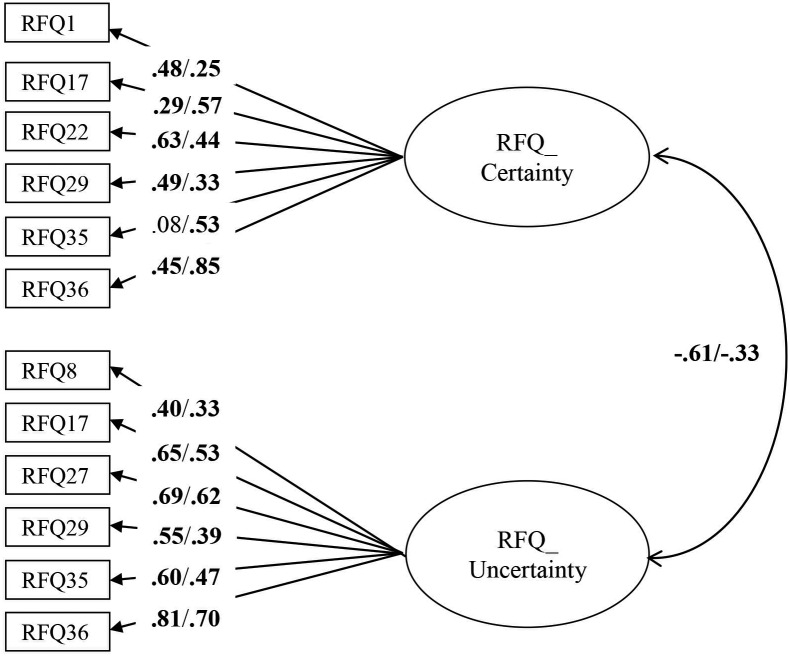
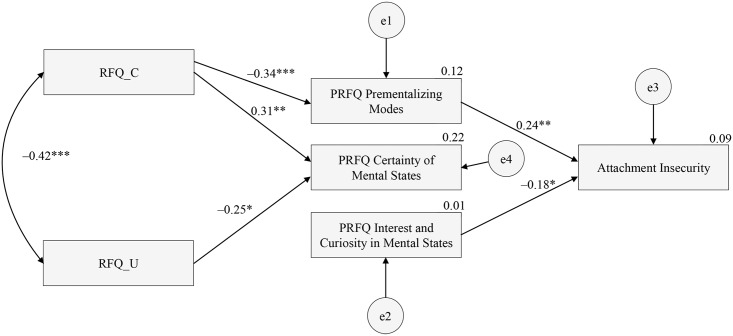
Reflective functioning or mentalizing is the capacity to interpret both the self and others in terms of internal mental states such as feelings, wishes, goals, desires, and attitudes. This paper is part of a series of papers outlining the development and psychometric features of a new self-report measure, the Reflective Functioning Questionnaire (RFQ), designed to provide an easy to administer self-report measure of mentalizing. We describe the development and initial validation of the RFQ in three studies. Study 1 focuses on the development of the RFQ, its factor structure and construct validity in a sample of patients with Borderline Personality Disorder (BPD) and Eating Disorder (ED) (n = 108) and normal controls (n = 295). Study 2 aims to replicate these findings in a fresh sample of 129 patients with personality disorder and 281 normal controls. Study 3 addresses the relationship between the RFQ, parental reflective functioning and infant attachment status as assessed with the Strange Situation Procedure (SSP) in a sample of 136 community mothers and their infants. In both Study 1 and 2, confirmatory factor analyses yielded two factors assessing Certainty (RFQ_C) and Uncertainty (RFQ_U) about the mental states of self and others. These two factors were relatively distinct, invariant across clinical and non-clinical samples, had satisfactory internal consistency and test-retest stability, and were largely unrelated to demographic features. The scales discriminated between patients and controls, and were significantly and in theoretically predicted ways correlated with measures of empathy, mindfulness and perspective-taking, and with both self-reported and clinician-reported measures of borderline personality features and other indices of maladaptive personality functioning. Furthermore, the RFQ scales were associated with levels of parental reflective functioning, which in turn predicted infant attachment status in the SSP. Overall, this study lends preliminary support for the RFQ as a screening measure of reflective functioning. Further research is needed, however, to investigate in more detail the psychometric qualities of the RFQ.
Overview
The claims and statistics of this paper haven’t been checked yet.
Run the check — free, no account needed. It reads the open-access text and checks the sources it cites.
Integrity signals
Registry
Cites
Statistics
Figures
Verification
Claims the paper makes
The claims and statistics of this paper haven’t been checked yet.
Run the check — free, no account needed. It reads the open-access text and checks the sources it cites.
Claims other papers make about this one
Each is checked against this paper’s own text: does it say what the citing paper says it does?
The cited source says what the claim attributes to it.
In the citing paper
“Internal consistency of RFQc and RFQu respectively are α = 0.65 and α = 0.77 in a clinical sample and α = 0.67 and α = 0.63 in a non-clinical sample, respectively [55].”
Self-check
Percentages, sums and reported differences re-computed from the paper’s own numbers.
The self-check needs the paper’s full text.
Citations
Cites
Diagnostic and Statistical Manual of Mental Disorders
Williams, J. B. W., & First, M. B. (2013) · Oxford University Press eBooks · doi:10.1093/acrefore/9780199975839.013.104 · Cited by 109,845
Hu, L., & Bentler, P. M. (1999) · Structural Equation Modeling A Multidisciplinary Journal · doi:10.1080/10705519909540118 · Cited by 108,788
Principles and Practice of Structural Equation Modeling
Tabri, N., & Elliott, C. M. (2012) · Canadian Graduate Journal of Sociology and Criminology · doi:10.15353/cgjsc.v1i1.3787 · Cited by 39,094
(1998) · Cited by 36,049
Structural Equations with Latent Variables
Bollen, K. A. (1989) · Wiley series in probability and statistics · doi:10.1002/9781118619179 · Cited by 17,944
Structural Equations with Latent Variables.
Clogg, C. C., & Bollen, K. A. (1991) · Contemporary Sociology A Journal of Reviews · doi:10.2307/2072165 · Cited by 17,475
Confirmatory factor analysis for applied research
Brown, T. A. (2007) · Choice Reviews Online · doi:10.5860/choice.44-2769 · Cited by 15,621 · cited 1×
“Consistent with state-of-the-art recommendations [55, 56], we limited the number of possible error correlations to a minimum, allowing only error correlations between items that were similar in formulation or meaning (e.”
BackgroundHappiness is everything, or is it? Explorations on the meaning of psychological well-being.
Ryff, C. D. (1989) · Journal of Personality and Social Psychology · doi:10.1037/0022-3514.57.6.1069 · Cited by 14,847 · cited 2×
“PLOS ONE | DOI:10.1371/journal.pone.0158678 July 8, 2016 15 / 28 The Amsterdam Scale of Well-Being (ASWB) [74] assesses well-being rated on the six dimensions described by Ryff (1989).”
BackgroundMethodInfluentialThe benefits of being present: Mindfulness and its role in psychological well-being
Brown, K. W., & Ryan, R. M. (2003) · Journal of Personality and Social Psychology · doi:10.1037/0022-3514.84.4.822 · Cited by 13,448 · cited 3×
“The RFQ_C was, as expected, positively related to other measures of internally based mentalizing, such as the BES and mindfulness as assessed with the MAAS, but was, against expectations, not related to perspective-taking.”
MethodInfluential(1978) · Medical Entomology and Zoology · Cited by 12,570
Cited by
Sorted by citations
Items 701–753 of 753
Effets d’une formation sur la mentalisation offerte aux éducateurs en protection de l’enfance
Rigaud-Larose, F., Terradas, M. M., da Silva, T. M., Parr, V., & Domon-Archambault, V. (2026) · Revue québécoise de psychologie · doi:10.7202/1124387ar
Développer les capacités réflexives des psychothérapeutes en formation
Plantade-Gipch, A., Drouin, M., Marteau-Chasserieau, F., Soumet-Leman, C., Cognet-Kayem, A., Arènes, J., & de Roten, Y. (2026) · Revue québécoise de psychologie · doi:10.7202/1124389ar
Golm, D. (2026) · Adoption & Fostering · doi:10.1177/03085759261426997
Andries, V., Derks, S. D. M., & Sterkenburg, P. S. (2026) · Computers & Education X Reality · doi:10.1016/j.cexr.2026.100153
Gecha, T. C., Cano, K., & Sharp, C. (2026) · Personality and Mental Health · doi:10.1002/pmh.70077
“In the current sample, the RFQ-8 demonstrated acceptable internal consistency (α = 0.83).”
InfluentialCruciani, G., Tracchegiani, J., Quintigliano, M., Mezzalira, S., Scandurra, C., & Carone, N. (2026) · Psychology and Sexuality · doi:10.1080/19419899.2026.2668395
Bauer, M., & Soubelet, A. (2026) · Neuropsychiatrie de l Enfance et de l Adolescence · doi:10.1016/j.neurenf.2026.04.002
Wong, E. P. H., Terradas, M. M., & Labonté, M. (2026) · Journal of Child & Adolescent Trauma · doi:10.1007/s40653-026-00906-2
Fiehn, H., Pahlen, L., Reis, A., Westhoff, M., Stenzel, K. L., Ebert, M., Rief, W., Hofmann, S. G., & Stangier, U. (2026) · Research Square · doi:10.21203/rs.3.rs-9579102/v1
Palma, M. D., Izett, E., Rooney, R. M., McDevitt, M., & Mancini, V. O. (2026) · Frontiers in Psychology · doi:10.3389/fpsyg.2026.1481550
“The 8-item Reflective Functioning Questionnaire (RFQ; Fonagy et al., 2016) measures an individual’s RF on a 7-point Likert scale from 1 (‘do not agree at all’) to 7 (‘agree completely’).”
InfluentialTafteh, M., & Salehi, S. (2026) · Journal of Education and Health Promotion · doi:10.4103/jehp.jehp_2009_24
Wiseman, C. E., Lawrence, A. D., Bisson, J. I., Bader, M., & Zammit, S. (2026) · BJPsych Open · doi:10.1192/bjo.2026.12006
“6 We reverse coded the RFQ-C so for both measures a higher score was indicative of greater difficulties mentalising.”
Parhizgar, N., Khabir, L., Samani, S., & Hooman, F. (2026) · مجله علمی دانشگاه علوم پزشکی رفسنجان · doi:10.66224/jrums.24.10.921
Holka, S., Sörnyei, D., Vass, Á., Rónai, L., & Farkas, K. (2026) · Autism Research · doi:10.1002/aur.70263
“Mentalization capacities were measured through the Mentalization Questionnaire, MZQ, (Hausberg et al. 2012) and the Reflective Functioning Questionnaire, RFQ (Fonagy et al. 2016), attachment patterns were explored using the Adult Attachment Scale, AAS (Collins 1996), and perceived social support via the Multidimension…”
Eisenstadt, N., Gaunt, D., Leach, R., Morgan, K., Feder, G. S., & Cramer, H. (2026) · Frontiers in Sociology · doi:10.3389/fsoc.2026.1787740
Kaas, A. J., Pépin, O., Simonsen, S., Sørensen, P., Vaever, M., Egmose, I., & Hestbæk, E. (2026) · Early Intervention in Psychiatry · doi:10.1111/eip.70208
“Furthermore, self-reports of PRF and child difficulties may be subject to self-assessment bias particularly among parents with low PRF, since parents with difficulties in mentalizing struggle with reporting the mental states of themselves and others (Fonagy et al. 2016).”
Adesina, I., OBEMBE, O. B., Lawal, A., Bello-Mojeed, M. A., Oyewole, F., Adesina, O., Adenusi, S., & Abazie, O. (2025) · Nigerian Journal of Psychiatry · doi:10.5455/njp.306002
Childhood Maltreatment and Psychopathology: The Mediating Roles of Mentalizing and Attachment Styles
Chen, C. A., Selén, K., Raymont, S., MacGregor, C., Saunders, R., Nolte, T., & Fonagy, P. (2026) · Psychopathology · doi:10.1159/000553373
Self-citationMentalization in People Aged 60+
Powell, G., Cogger-Ward, H., & Schroder, T. A. (2026) · GeroPsych · doi:10.1024/1662-9647/a000364
Does childhood trauma predict social cognition in male sexual offenders?
O'Riordan, M., & Rydon‐Grange, M. (2026) · Legal and Criminological Psychology · doi:10.1111/lcrp.70048
Song, M., Wu, Z., & Sun, L. (2026) · International Journal of Mental Health and Addiction · doi:10.1007/s11469-026-01692-6
D’Onofrio, A. M., Calia, R., Pesaresi, F., Moccia, L., Simonetti, A., Pettorruso, M., Martinotti, G., Sani, G., & Camardese, G. (2026) · Child Abuse & Neglect · doi:10.1016/j.chiabu.2026.108219
Koullourou, I., Mantas, C., Hyphantis, T. N., Karagiannopoulou, E., Sharp, C., Salum, G. A., & Kotsis, K. (2026) · Frontiers in Child and Adolescent Psychiatry · doi:10.3389/frcha.2026.1898910
The Role of Mentalizing and Alexithymia in Burnout Among Physicians
Radlović, A., Gogic, A., Zdravkovic, N., & Radmanović, B. (2026) · Cureus · doi:10.7759/cureus.113320
“Mentalization capacity was assessed using the RFQ-8, a short version of the original 46-item instrument [14].”
InfluentialTironi, M., Coppola, I., Berlin, E., Rania, N., Scudieri, L., Crovetto, N., Rollero, C., & Bizzi, F. (2026) · Journal of Interpersonal Violence · doi:10.1177/08862605261462156
Thomson-Casey, C., Sinpeng, A., & Quince, Z. (2026) · SSRN Electronic Journal · doi:10.2139/ssrn.6881139
Bachrach, N., Brugman, S., Berkers, R., & Linde, R. (2026) · Borderline Personality Disorder and Emotion Dysregulation · doi:10.1186/s40479-026-00368-w
“Previous research supported its construct and predictive validity, with internal consistency ranging from 0.65 to 0.77 [11, 20].”
InfluentialLawrence, D., Davies, M., Davies, C., Humphrey, L., Saward, K., & Davies, J. (2026) · Probation Journal · doi:10.1177/02645505261470336
Brouschek, J., Renner, E., Wimmer, R., Zipper, Z., Brössler, H., Fuchshuber, J., Beiglböck, W., & Unterrainer, . (2026) · Frontiers in Psychology · doi:10.3389/fpsyg.2026.1853182
“Mentalization ability was measured using the German short version of the Reflective Functioning Questionnaire (Fonagy et al., 2016; German adaptation according to Spitzer et al., 2021).”
Influential福嶋, 美. (2026) · Journal of Japan Academy of Nursing Science · doi:10.5630/jans.46.593
Gedik, G., & Sütcü, S. T. (2026) · Adıyaman üniversitesi sosyal bilimler enstitüsü dergisi/Adıyaman üniversitesi sosyal bilimler enstitisü dergisi · doi:10.14520/adyusbd.1904435
Bianco, F., Gramaglia, C., Zeppegno, P., Madeddu, F., Romano, D., & Calati, R. (2026) · Journal of Affective Disorders · doi:10.1016/j.jad.2026.122382
Rahbarizadeh, M., Mehrinejad, S. A., Ahadi, B., & Khosravi, Z. (2026) · Quarterly Journal of Child Mental Health · doi:10.66224/jcmh.13.1.6
“…collected using the latest standardized version of the Childhood Trauma Questionnaire (CTQ) (13, 47), the Difficulties in Emotion Regulation Scale (DERS) (57, 58), the Reflective Functioning Questionnaire (RFQ) (59, 60), and the Somatic Symptom Disorder Scale (SSD-12) (61, 62) validated in Iran.”
Mrakovits, J., Mall, V., & Licata‐Dandel, M. (2026) · Frontiers in Developmental Psychology · doi:10.3389/fdpys.2026.1831323
Wang, S., Wu, M., Liu, X., & Zhao, W. X. (2026) · Journal of Child and Family Studies · doi:10.1007/s10826-026-03338-6
“Mentalizing ability, often defined as the capacity to reflect on one’s own and others’ feelings, desires, goals, and atti - tudes, plays a pivotal role in social functioning (Fonagy et al., 2016 ).”
Malek-Abad, M. R., & Abedi, M. R. (2026) · Assessment · doi:10.1177/10731911261477186
Swanson, L., Rask, B., Persson, J., Graner, P., Bengtsson, J., Bodén, R., Cernvall, M., Sällström, U., Tyrberg, M. J., Möritz, S., et al. (2026) · Trials · doi:10.1186/s13063-026-09879-x
“…used: Dysfunctional Attitudes Scale (DAS; [89]) to measure the severity of defeat-ist attitudes; the Reflective Functioning Questionnaire (RFQ-8; [24]) to assess metacognitive capacity; the Calgary Depression Scale for Schizophrenia (CDSS; [1]) to measure depression; and the Internalized Stigma…”
SOubelet, C. M., Riffo, B., & Barriga, O. A. (2026) · PLoS ONE · doi:10.1371/journal.pone.0355044
“…for Adolescents” (MSA) [26], the “Reflective Functioning Scale” (RFS) [27], its later version, the “Reflective Functioning Questionnaire” (RFQ) [28], the “Metacognition Assessment Scale” (MAS) [27], the “Mentalization Questionnaire” (MZQ) [29], the “Mentalization Imbalances Scale” (MIS) [30],…”
Strand, J., Goulding, A., & Thorvaldsson, V. (2026) · Journal of Personality Assessment · doi:10.1080/00223891.2026.2722651
Huang, Y., & Yeh, K. (2026) · Current Psychology · doi:10.1007/s12144-026-09996-5
“The Reflective Functioning Questionnaire (RFQ; Fonagy et al., 2016) was used to assesses mentaliza-tion.”
Relationships between Network Analysis and Psychodynamic Theories: A Scoping Review
Cappelletti, M., Gauld, C., Falissard, B., Bazan, A., & Essadek, A. (2026) · Psychopathology · doi:10.1159/000552525
Social-Cognitive Dysregulation Model of Misophonia: Perspective from a Behavioural StudyPreprint
Erfanian, M., & Kumar, S. (2026) · bioRxiv (Cold Spring Harbor Laboratory) · doi:10.64898/2026.09.03.749152
“…interacting, imprecise self-state self-state representation may heighten ambiguity during social appraisal, while greater processing demands during mental-state inference may increase the salience of socially generated triggers (Bird et al., 2014; Fonagy et al., 2016; Schurz et al., 2021).”
Fang, B., Guo, L., Zhang, H., Yang, Y., Wu, R., Wu, J., Jiang, S., & Zhu, L. (2026) · BMC Health Services Research · doi:10.1186/s12913-026-15542-7
Williamson, V. G., Rankine, A., Owusu-Hienno, V., & Mills, K. C. (2026) · Journal of Mood and Anxiety Disorders · doi:10.1016/j.xjmad.2026.100205
“The eight-item RFQ (RFQ-8; [66]) is a brief self-report measure assessing individuals ’ perceived understanding of their own and others ’ mental states.”
Multimodal Subjective Intention Modeling in Social Interactions
Mercier, A. (2026) · INTERNATIONAL CONFERENCE ON MULTIMODAL INTERACTION · doi:10.1145/3776574.3828968
Usluoğlu, F. (2026) · Psikiyatride Guncel Yaklasimlar - Current Approaches in Psychiatry · doi:10.18863/pgy.1902721
Pastor, T. C., Falcó, R., Sierra, J. O., Castrejón, N. B., Gutiérrez-García, A., & Hofmann, S. G. (2026) · Cognitive Therapy and Research · doi:10.1007/s10608-026-10796-1
McInnes, J. M. L., Kehoe, C. E., Crowe, L. M., & Havighurst, S. S. (2026) · Mental Health & Prevention · doi:10.1016/j.mhp.2026.200583
Choi, J. Y. (2026) · Journal of Psychopathology and Behavioral Assessment · doi:10.1007/s10862-026-10332-1
“General mentalizing ability was assessed using the Korean version of the Reflective Functioning Questionnaire (K-RFQ; Cha, 2018), a shortened 12-item adaptation of the original RFQ-26 (Fonagy et al., 2016).”
Germani, A., Pizzini, B., Dragone, M., & Picione, R. D. L. (2026) · Current Psychology · doi:10.1007/s12144-026-10209-2
Psychometric Evaluation of the Portuguese Reflective Functioning Questionnaire
Ferrajão, P. C., & Martins, A. Q. (2026) · Psychological Test Adaptation and Development · doi:10.1027/2698-1866/a000157
Salve, F. D., Rossi, C., Müller, S., Wendt, L. P., Zimmermann, J., & Oasi, O. (2026) · Assessment · doi:10.1177/10731911261492700
Metadata
- Authors
- Fonagy, P., Luyten, P., Moulton-Perkins, A., Lee, Y.-W., Warren, F., Howard, S., Ghinai, R., Fearon, P., & Lowyck, B.
- Affiliations
- University College London (GB)
- University of Surrey (GB)
- KU Leuven (BE)
- Corresponding author
- Fonagy, Peter
- Venue
- PLOS ONE
- Publisher
- Public Library of Science (PLoS)
- Published
- 2016-07-08
- Volume
- 11
- Issue
- 7
- Pages
- e0158678
- ISSN
- 1932-6203 (ISSN-L)
- PMC
- PMC4938585
- OpenAlex
- W2468117220
- Cited by
- 754
- References
- 113
- Citations by year
- 2026: 102 · 2025: 106 · 2024: 112 · 2023: 108 · 2022: 84 · 2021: 95 · 2020: 54 · 2019: 34 · 2018: 32 · 2017: 21 · 2016: 3
- FWCI
- 39.84
- Type
- journal article
- Language
- en
- Open access
- gold
- doi.org
- Licence
- Locations
- PLoS ONE (publishedVersion, cc-by)
- PubMed Central (publishedVersion, cc-by)
- PubMed (publishedVersion)
- Lirias (KU Leuven) (submittedVersion, other-oa)
- RePEc: Research Papers in Economics (submittedVersion)
- DOAJ (DOAJ: Directory of Open Access Journals) (submittedVersion)
- UCL Discovery (University College London) (submittedVersion)
- Funders
- National Institute for Health Research (NF-SI-0514-10157)
- Economic and Social Research Council (RES-060-25-0044)
- Topics
- Social Sciences › Psychology › Clinical Psychology › Personality Disorders and Psychopathology
- Social Sciences › Psychology › Clinical Psychology › Personality Traits and Psychology
- Social Sciences › Psychology › Clinical Psychology › Psychoanalysis and Psychopathology Research
- Keywords
- mentalization, reflective functioning, self-report measure development, borderline personality disorder, eating disorders, parental reflective functioning, infant attachment, Strange Situation Procedure, empathy, mindfulness, perspective taking, psychometric validation, factor structure
- MeSH terms
- Female, Humans, Male, Psychometrics, Surveys and Questionnaires, Theory of Mind, Self Report
About these checks
Registry, retraction, Cites and statistics results are computed, not judged, with one exception: a printed reference that no index lists is read once by a model before it counts as a citation error. Claims are extracted by a model and kept only when their quote appears verbatim in the text; each cited source is then checked, with a model’s help, for whether it says what the claim relies on. Those verdicts can be wrong — read the claim’s quote and the cited source before relying on one.
Statistics and arithmetic are recomputed, not judged.
Confidence bands are shown only for fields calibrated on our annotated test set. None is calibrated yet, so no band is shown.
What counts as a claim ›How we measure confidence ›How we check this ›
Are you an author, or do you see a problem with this page? Request a review
