

The DOI matches its Crossref record; 111 of the 113 references it cites were found in a registry or an index.
Development and Validation of a Self-Report Measure of Mentalizing: The Reflective Functioning Questionnaire
Open accessAbstract
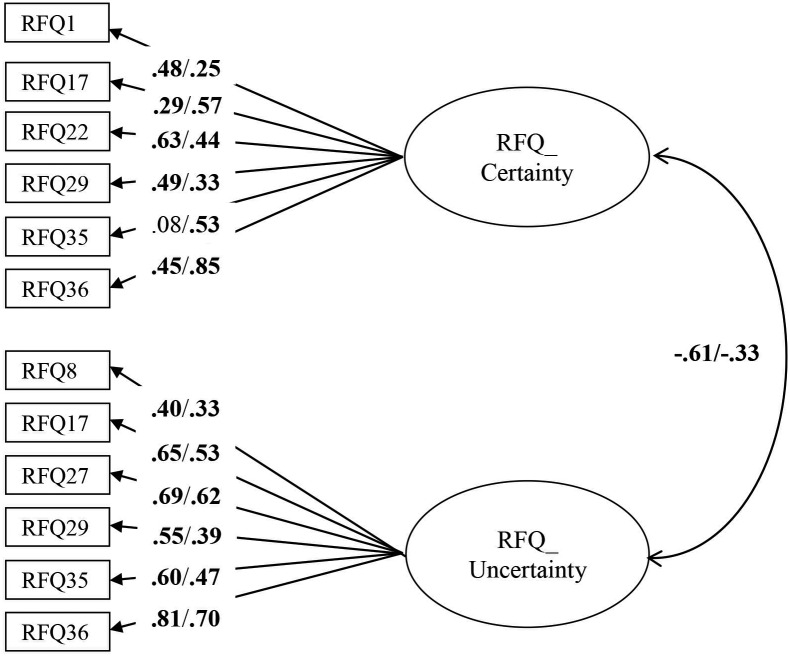
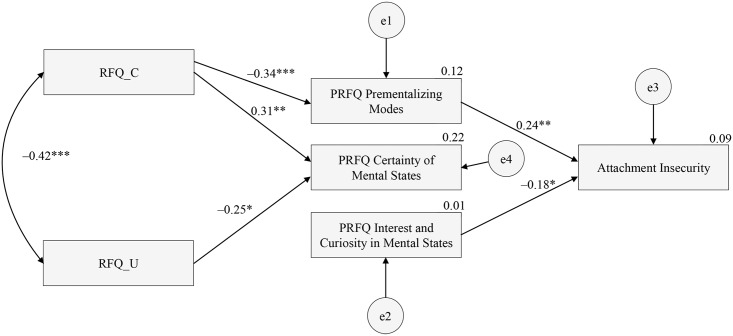
Reflective functioning or mentalizing is the capacity to interpret both the self and others in terms of internal mental states such as feelings, wishes, goals, desires, and attitudes. This paper is part of a series of papers outlining the development and psychometric features of a new self-report measure, the Reflective Functioning Questionnaire (RFQ), designed to provide an easy to administer self-report measure of mentalizing. We describe the development and initial validation of the RFQ in three studies. Study 1 focuses on the development of the RFQ, its factor structure and construct validity in a sample of patients with Borderline Personality Disorder (BPD) and Eating Disorder (ED) (n = 108) and normal controls (n = 295). Study 2 aims to replicate these findings in a fresh sample of 129 patients with personality disorder and 281 normal controls. Study 3 addresses the relationship between the RFQ, parental reflective functioning and infant attachment status as assessed with the Strange Situation Procedure (SSP) in a sample of 136 community mothers and their infants. In both Study 1 and 2, confirmatory factor analyses yielded two factors assessing Certainty (RFQ_C) and Uncertainty (RFQ_U) about the mental states of self and others. These two factors were relatively distinct, invariant across clinical and non-clinical samples, had satisfactory internal consistency and test-retest stability, and were largely unrelated to demographic features. The scales discriminated between patients and controls, and were significantly and in theoretically predicted ways correlated with measures of empathy, mindfulness and perspective-taking, and with both self-reported and clinician-reported measures of borderline personality features and other indices of maladaptive personality functioning. Furthermore, the RFQ scales were associated with levels of parental reflective functioning, which in turn predicted infant attachment status in the SSP. Overall, this study lends preliminary support for the RFQ as a screening measure of reflective functioning. Further research is needed, however, to investigate in more detail the psychometric qualities of the RFQ.
Overview
The claims and statistics of this paper haven’t been checked yet.
Run the check — free, no account needed. It reads the open-access text and checks the sources it cites.
Integrity signals
Registry
Cites
Statistics
Figures
Verification
Claims the paper makes
The claims and statistics of this paper haven’t been checked yet.
Run the check — free, no account needed. It reads the open-access text and checks the sources it cites.
Claims other papers make about this one
Each is checked against this paper’s own text: does it say what the citing paper says it does?
The cited source says what the claim attributes to it.
In the citing paper
“Internal consistency of RFQc and RFQu respectively are α = 0.65 and α = 0.77 in a clinical sample and α = 0.67 and α = 0.63 in a non-clinical sample, respectively [55].”
Self-check
Percentages, sums and reported differences re-computed from the paper’s own numbers.
The self-check needs the paper’s full text.
Citations
Cites
Diagnostic and Statistical Manual of Mental Disorders
Williams, J. B. W., & First, M. B. (2013) · Oxford University Press eBooks · doi:10.1093/acrefore/9780199975839.013.104 · Cited by 109,845
Hu, L., & Bentler, P. M. (1999) · Structural Equation Modeling A Multidisciplinary Journal · doi:10.1080/10705519909540118 · Cited by 108,788
Principles and Practice of Structural Equation Modeling
Tabri, N., & Elliott, C. M. (2012) · Canadian Graduate Journal of Sociology and Criminology · doi:10.15353/cgjsc.v1i1.3787 · Cited by 39,094
(1998) · Cited by 36,049
Structural Equations with Latent Variables
Bollen, K. A. (1989) · Wiley series in probability and statistics · doi:10.1002/9781118619179 · Cited by 17,944
Structural Equations with Latent Variables.
Clogg, C. C., & Bollen, K. A. (1991) · Contemporary Sociology A Journal of Reviews · doi:10.2307/2072165 · Cited by 17,475
Confirmatory factor analysis for applied research
Brown, T. A. (2007) · Choice Reviews Online · doi:10.5860/choice.44-2769 · Cited by 15,621 · cited 1×
“Consistent with state-of-the-art recommendations [55, 56], we limited the number of possible error correlations to a minimum, allowing only error correlations between items that were similar in formulation or meaning (e.”
BackgroundHappiness is everything, or is it? Explorations on the meaning of psychological well-being.
Ryff, C. D. (1989) · Journal of Personality and Social Psychology · doi:10.1037/0022-3514.57.6.1069 · Cited by 14,847 · cited 2×
“PLOS ONE | DOI:10.1371/journal.pone.0158678 July 8, 2016 15 / 28 The Amsterdam Scale of Well-Being (ASWB) [74] assesses well-being rated on the six dimensions described by Ryff (1989).”
BackgroundMethodInfluentialThe benefits of being present: Mindfulness and its role in psychological well-being
Brown, K. W., & Ryan, R. M. (2003) · Journal of Personality and Social Psychology · doi:10.1037/0022-3514.84.4.822 · Cited by 13,448 · cited 3×
“The RFQ_C was, as expected, positively related to other measures of internally based mentalizing, such as the BES and mindfulness as assessed with the MAAS, but was, against expectations, not related to perspective-taking.”
MethodInfluential(1978) · Medical Entomology and Zoology · Cited by 12,570
Cited by
Sorted by citations
The mentalizing approach to psychopathology: State of the art and future directions
Luyten, P., Campbell, C., Allison, E., & Fonagy, P. (2020) · Annual Review of Clinical Psychology · doi:10.1146/annurev-clinpsy-071919-015355 · Cited by 748
“…such impairments and substance abuse, violence, eating disorders, and self-harm, which can all be seen as attempts to regulate, through specific goal-directed behavior, unbearable and unmentalized self-states (Fonagy et al. 2016, Jewell et al. 2016, Suchman et al. 2018, Taubner et al. 2016).”
BackgroundSelf-citationZeegers, M. A. J., Colonnesi, C., Stams, G. J. J. M., & Meins, E. (2017) · Psychological Bulletin · doi:10.1037/bul0000114 · Cited by 478
“The effect size was calculated from the average association of the three PRFQ subscales (i.e., prementalizing modes, certainty of mental states, and interest and curiosity of in mental states) with infant attachment security.”
BackgroundMethodInfluentialDevelopment and validation of a self-report measure of epistemic trust
Campbell, C., Tanzer, M., Saunders, R., Booker, T. L., Allison, E., Li, E. T., O’Dowda, C., Luyten, P., & Fonagy, P. (2021) · PLoS ONE · doi:10.1371/journal.pone.0250264 · Cited by 230
“The Reflective Function Questionnaire (RFQ) [29].”
InfluentialSelf-citationThe bodymind model: a platform for studying the mechanisms of change induced by art therapy
Czamanski-Cohen, J., & Weihs, K. L. (2016) · The Arts in Psychotherapy · doi:10.1016/j.aip.2016.08.006 · Cited by 209
The Mentalization Scale (MentS): A Self-Report Measure for the Assessment of Mentalizing Capacity
Dimitrijević, A., Hanak, N., Dimitrijević, A. A., & Marjanović, Z. J. (2017) · Journal of Personality Assessment · doi:10.1080/00223891.2017.1310730 · Cited by 221
“It is only very recently that this gap has been filled by the Reflective Functioning Questionnaire (RFQ; Badoud et al., 2015; Fonagy et al., 2016).”
BackgroundElevated empathy in adults following childhood trauma
Greenberg, D. M., Baron‐Cohen, S., Rosenberg, N., Fonagy, P., & Rentfrow, P. J. (2018) · PLoS ONE · doi:10.1371/journal.pone.0203886 · Cited by 169
Self-citationBadoud, D., Luyten, P., Fonseca‐Pedrero, E., Eliez, S., Fonagy, P., & Debbané, M. (2015) · PLoS ONE · doi:10.1371/journal.pone.0145892 · Cited by 177
“Further research with this instrument led to the identification of two subscales in the RFQ assessing Certainty (RFQc) and Uncertainty (RFQu) about the mental states of self and others [26].”
BackgroundMethodInfluentialSelf-citationA Critical Evaluation of the Reflective Functioning Questionnaire (RFQ)
Müller, S., Wendt, L. P., Spitzer, C., Masuhr, O., Back, S. N., & Zimmermann, J. (2022) · Journal of Personality Assessment · doi:10.1080/00223891.2021.1981346 · Cited by 138
“…article, we have elaborated our concerns with respect to the instrument’s validity and the methodology used in prior studies (e.g., Badoud et al., 2015; Fonagy et al., 2016), particularly in reference to its item content, scoring procedure, dimensionality, and associations with psychopathology.”
BackgroundMethodResultInfluentialEuler, S., Nolte, T., Constantinou, M., Griem, J., Montague, P. R., & Fonagy, P. (2019) · Journal of Personality Disorders · doi:10.1521/pedi_2019_33_427 · Cited by 157
“reflective functioning, the operationalized form of mentalizing (Fonagy et al., 2016).”
BackgroundSelf-citationHuang, Y. L., Fonagy, P., Feigenbaum, J., Montague, P. R., & Nolte, T. (2020) · Psychopathology · doi:10.1159/000506406 · Cited by 112
Self-citationBerthelot, N., Lemieux, R., Garon‐Bissonnette, J., Lacharité, C., & Muzik, M. (2019) · Child Abuse & Neglect · doi:10.1016/j.chiabu.2019.104065 · Cited by 133
Morandotti, N., Brondino, N., Merelli, A. A., Boldrini, A., Vidovich, G. Z. D., Ricciardo, S., Abbiati, V., Ambrosi, P., Caverzasi, E., Fonagy, P., et al. (2018) · PLoS ONE · doi:10.1371/journal.pone.0206433 · Cited by 122
Self-citationMentalized affectivity: A new model and assessment of emotion regulation
Greenberg, D. M., Kolasi, J., Hegsted, C. P., Berkowitz, Y., & Jurist, E. L. (2017) · PLoS ONE · doi:10.1371/journal.pone.0185264 · Cited by 116
“The 70-item RFQ captures two factors: Certainty and Uncertainty.”
MethodInfluentialLysaker, P. H., Cheli, S., Dimaggio, G., Buck, B., Bonfils, K. A., Huling, K. S., Wiesepape, C. N., & Lysaker, J. T. (2021) · BMC Psychiatry · doi:10.1186/s12888-021-03338-4 · Cited by 97
“The Reflective Functioning Questionnaire [99] and Parent Reflective Functioning Questionnaire [100] are self-report measures designed to assess mentalizing capacity across two subscales, which, respectively, represent salient aspects of mentalizing and evaluate a parent’s ability to understand their child’s behavior i…”
Mentalization‐based treatment and its evidence‐base status: A systematic literature review
Malda‐Castillo, J., Browne, C., & Perez‐Algorta, G. (2019) · Psychology and Psychotherapy: Theory, Research and Practice · doi:10.1111/papt.12195 · Cited by 89
Stuhrmann, L. Y., Göbel, A., Bindt, C., & Mudra, S. (2022) · Frontiers in Psychology · doi:10.3389/fpsyg.2022.765312 · Cited by 104
Meulemeester, C. D., Vansteelandt, K., Luyten, P., & Lowyck, B. (2017) · Personality Disorders Theory Research and Treatment · doi:10.1037/per0000256 · Cited by 96
Self-citationAnis, L., Perez, G., Benzies, K., Ewashen, C., Hart, M. J., & Letourneau, N. L. (2020) · Frontiers in Psychology · doi:10.3389/fpsyg.2020.574719 · Cited by 87
Liotti, M., Milesi, A., Spitoni, G. F., Tanzilli, A., Speranza, A. M., Parolin, L. A. L., Campbell, C., Fonagy, P., Lingiardi, V., & Giovanardi, G. (2023) · PLoS ONE · doi:10.1371/journal.pone.0280328 · Cited by 82
“The Reflective Functioning Questionnaire (RFQ; [28]), an eight-item self-report instrument to evaluate mentalization.”
MethodSelf-citationHypermentalizing and Borderline Personality Disorder: A Meta-Analytic Review
McLaren, V., Gallagher, M., Hopwood, C. J., & Sharp, C. (2022) · American Journal of Psychotherapy · doi:10.1176/appi.psychotherapy.20210018 · Cited by 96
Stagaki, M., Nolte, T., Feigenbaum, J., King‐Casas, B., Lohrenz, T. M., Fonagy, P., & Montague, P. R. (2022) · Child Abuse & Neglect · doi:10.1016/j.chiabu.2022.105576 · Cited by 91
“…to the romantic partner or mentalising and adult self-harm or suicidality, yielding mixed results which require further research (Du ˜ n ´ o et al., 2009; Fonagy et al., 2016; Grunebaum et al., 2010; Hatkevich et al., 2019; Levesque et al., 2010; Levi-Belz et al., 2013; Smith et al., 2012).”
BackgroundMethodResultInfluentialSelf-citationMüller, S., Wendt, L. P., & Zimmermann, J. (2021) · Assessment · doi:10.1177/10731911211061280 · Cited by 95
“Genuine mentalizing is characterized by acknowledging the opaqueness of mental states (Fonagy et al., 2016), that is, being apprehensive of the circumstance that individuals are not always aware of their own inner workings and those of others.”
BackgroundMethodInfluentialLuyten, P., Campbell, C., Moser, M., & Fonagy, P. (2024) · Clinical Psychology Review · doi:10.1016/j.cpr.2024.102380 · Cited by 90
Self-citationLinking childhood emotional abuse and adult depressive symptoms: The role of mentalizing incapacity
Li, E. T., Carracher, E., & Bird, T. (2019) · Child Abuse & Neglect · doi:10.1016/j.chiabu.2019.104253 · Cited by 88
“As depressed individuals tend to externalize alien self-experiences that they cannot mentalize (Luyten & Fonagy, 2016), individuals in a state of hypermentalizing often show reasoning about mental states with repetitive, lengthy, and overly analytical and detailed patterns for self-serving…”
Penner, F., Gambin, M., & Sharp, C. (2019) · Journal of Adolescence · doi:10.1016/j.adolescence.2019.08.002 · Cited by 74
Dysfunction of Empathy and Related Processes in Borderline Personality Disorder: A Systematic Review
Salgado, R. M., Pedrosa, R., & Bastos-Leite, A. J. (2020) · Harvard Review of Psychiatry · doi:10.1097/hrp.0000000000000260 · Cited by 67
Fischer‐Kern, M., & Tmej, A. (2019) · Zeitschrift für psychosomatische Medizin und Psychotherapie · doi:10.13109/zptm.2019.65.2.162 · Cited by 64
Gordo, L., Martínez‐Pampliega, A., Elejalde, L. I., & Luyten, P. (2020) · Journal of Child and Family Studies · doi:10.1007/s10826-020-01840-z · Cited by 66
“…Belgium 3 Research Department of Clinical, Educational and Health Psychology, University College London, London, UK 12 34 56 78 90 () ;,: 12 34 56 78 90 (); ,: completely certain about their children’s mental states (Fonagy et al. 2016; Luyten et al. 2017b; Meins et al. 2001, 2012; Slade 2005).”
BackgroundSelf-citationAttachment and Reflective Functioning in Women With Borderline Personality Disorder
Badoud, D., Prada, P., Nicastro, R., Germond, C., Luyten, P., Perroud, N. A., & Debbané, M. (2017) · Journal of Personality Disorders · doi:10.1521/pedi_2017_31_283 · Cited by 64
“The RFQ (Badoud et al., 2015; Fonagy et al., 2016) provides a valid self-reported measure of RF, which strives to make RF assessment more readily accessible (i.”
BackgroundMethodResultInfluentialSelf-citationThe steamy mirror of adolescent gamblers: Mentalization, impulsivity, and time horizon
Cosenza, M., Ciccarelli, M., & Nigro, G. (2018) · Addictive Behaviors · doi:10.1016/j.addbeh.2018.10.002 · Cited by 63
Bora, E. (2021) · Psychological Medicine · doi:10.1017/s0033291721003718 · Cited by 75
“personality disorders might present with similar levels of deficits in RF (Fonagy et al., 2016; Sacchetti et al., 2019).”
BackgroundMethodInfluentialDoba, K., Saloppé, X., Choukri, F., & Nandrino, J. (2022) · Child Abuse & Neglect · doi:10.1016/j.chiabu.2022.105815 · Cited by 67
Musetti, A., Starčević, V., Boursier, V., Corsano, P., Billieux, J., & Schimmenti, A. (2021) · Journal of Clinical Psychology · doi:10.1002/jclp.23138 · Cited by 68
“Prior research has shown that there is a link between problems related to self–other boundaries (i.e., identity diffusion) and uncertain reflective functioning (De Meulemeester et al., 2017; Fonagy et al., 2016).”
BackgroundMethodInfluentialMeulemeester, C. D., Lowyck, B., Vermote, R., Verhaest, Y., & Luyten, P. (2017) · Psychiatry Research · doi:10.1016/j.psychres.2017.09.061 · Cited by 69
Self-citationWoźniak‐Prus, M., Gambin, M., Cudo, A., & Sharp, C. (2022) · Journal of Personality Assessment · doi:10.1080/00223891.2021.2014505 · Cited by 63
“Finally, it is surprising that the assumed two-factor structure of the original version of RFQ-8 was not verified using exploratory factor analysis, but only verified using confirmatory factor analysis without checking whether the solution had a different number of factors (see Fonagy et al., 2016).”
BackgroundMethodResultInfluentialSystematic Review on Mentalization as Key Factor in Psychotherapy
Lüdemann, J., Rabung, S., & Andreas, S. (2021) · International Journal of Environmental Research and Public Health · doi:10.3390/ijerph18179161 · Cited by 52
“[28] The instrument uses 12 items on 2 subscales, measuring security and insecurity in reflective functioning.”
MethodCiccarelli, M., Nigro, G., D’Olimpio, F., Griffiths, M. D., & Cosenza, M. (2020) · Journal of Gambling Studies · doi:10.1007/s10899-020-09967-w · Cited by 55
Perroud, N. A., Badoud, D., Weibel, S., Nicastro, R., Hasler, R., Küng, A., Luyten, P., Fonagy, P., Dayer, A. G., Aubry, J., et al. (2017) · Psychiatry Research · doi:10.1016/j.psychres.2017.06.087 · Cited by 57
“impairments of RF/mentalizing, as measured by the Reflective Functioning Questionnaire (RFQ) (Badoud et al., 2015; Fonagy et al., 2016), in a sample of adults suffering from ADHD.”
MethodInfluentialSelf-citationTalia, A., Miller‐Bottome, M., Katznelson, H., Pedersen, S. H., Steele, H., Schröder, P., Origlieri, A., Scharff, F. B., Giovanardi, G., Andersson, M., et al. (2018) · Psychotherapy Research · doi:10.1080/10503307.2017.1417651 · Cited by 51
“Although these methods are more time efficient, they still rely on administering an interview—the limitations of which we discussed earlier.1 More recently, Fonagy et al. (2016) have begun to assess RF with selfreport questionnaires (RFQ).”
MethodAival‐Naveh, E., Rothschild‐Yakar, L., & Kurman, J. (2019) · Clinical Psychology Science and Practice · doi:10.1111/cpsp.12300 · Cited by 100
Midgley, N., Cirasola, A., Austerberry, C., Ranzato, E., West, G., Martin, P., Redfern, S., Cotmore, R., & Park, T. (2019) · Developmental Child Welfare · doi:10.1177/2516103218817550 · Cited by 70
Theory of mind performance in depression: A meta-analysis
Nestor, B. A., Sutherland, S. L., & Garber, J. (2022) · Journal of Affective Disorders · doi:10.1016/j.jad.2022.02.028 · Cited by 58
PATERNAL AND MATERNAL REFLECTIVE FUNCTIONING IN THE WESTERN AUSTRALIAN PEEL CHILD HEALTH STUDY
Cooke, D., Priddis, L. E., Luyten, P., Kendall, G. E., & Cavanagh, R. F. (2017) · Infant Mental Health Journal · doi:10.1002/imhj.21664 · Cited by 51
Self-citationSafiye, T., Vukčević, B., Gutić, M., Milidrag, A., Dubljanin, D., Dubljanin, J., & Radmanović, B. (2022) · International Journal of Environmental Research and Public Health · doi:10.3390/ijerph19116577 · Cited by 54
“Public Health 2022, 19, 6577 5 of 13 As in the previously mentioned study [21], the capacity for mentalizing was examined using the hypomentalizing and hypermentalizing scales of the Reflective Functioning Questionnaire of 8 items (RFQ-8) [18].”
BackgroundMethodInfluentialGaron‐Bissonnette, J., Duguay, G., Lemieux, R., Dubois‐Comtois, K., & Berthelot, N. (2021) · Child Abuse & Neglect · doi:10.1016/j.chiabu.2021.105030 · Cited by 49
“…risk and resilience trajectories in people exposed to CA & N, both in theoretical work (Fonagy & Bateman, 2016; Luyten & Fonagy, 2019) and empirical research (Ensink, Berthelot, Begin, Maheux, & Normandin, 2017; Ensink, Normandin, Plamondon, Berthelot, & Fonagy, 2016; Quek et al., 2017).”
Executive Functioning Predicts Reflective Functioning in Mothers
Rutherford, H. J. V., Byrne, S., Crowley, M. J., Bornstein, J., Bridgett, D. J., & Mayes, L. C. (2017) · Journal of Child and Family Studies · doi:10.1007/s10826-017-0928-9 · Cited by 46
“In a similar vein, self-reported questionnaire measures of reflective functioning (Fonagy et al. 2016) and PRF (Luyten et al.”
BackgroundSafiye, T., Gutić, M., Dubljanin, J., Stojanović, T., Dubljanin, D., Kovačević, A., Zlatanović, M., Demirović, D., Nenezić, N., & Milidrag, A. (2023) · International Journal of Environmental Research and Public Health · doi:10.3390/ijerph20085594 · Cited by 37
“In contrast, hypomentalizing refers to the lack of assumptions about the mental states that determine behavior in interpersonal interaction, which manifests itself as uncertainty regarding the accurate assessment of the mental states underlying some behavior [17].”
InfluentialGori, A., Arcioni, A., Topino, E., Craparo, G., & Grotto, R. L. (2021) · Journal of Personalized Medicine · doi:10.3390/jpm11040305 · Cited by 48
“, the Reading the Mind in the Eyes Test [13], narrativebased measures, such as the Reflective Functioning Scale [14], or questionnaires, among which the Mentalization Scale [15], the Mentalization Questionnaire [16], and the Reflective Functioning Questionnaire [17] can be mentioned.”
MethodJørgensen, C. R., & Bøye, R. (2021) · Journal of Personality Disorders · doi:10.1521/pedi_2021_35_526 · Cited by 45
Tanzilli, A., Cibelli, A., Liotti, M., Fiorentino, F., Williams, R., & Lingiardi, V. (2022) · International Journal of Environmental Research and Public Health · doi:10.3390/ijerph192114290 · Cited by 43
“Reflective Functioning Questionnaire: The RFQ [90] is an 8-item self-report questionnaire developed to assess mentalizing abilities, i.”
BackgroundInfluentialCucchi, A., Hampton, J. A., & Moulton‐Perkins, A. (2018) · PeerJ · doi:10.7717/peerj.5756 · Cited by 61
“Desiring a more practical and less labour-intensive tool, Fonagy and colleagues developed the self-report Reflective Function Questionnaire, RFQ (Fonagy et al., 2016).”
InfluentialSelf-citationAttachment and Mentalizing Abilities in Patients with Inflammatory Bowel Disease
Agostini, A., Scaioli, E., Belluzzi, A., & Campieri, M. (2019) · Gastroenterology Research and Practice · doi:10.1155/2019/7847123 · Cited by 43
“The reflective functioning questionnaire (RFQ) brief version [32, 33] is a self-report, eight-item questionnaire designed to assess mentalization abilities.”
BackgroundSchwarzer, N.-H., Nolte, T., Fonagy, P., & Gingelmaier, S. (2021) · Child Abuse & Neglect · doi:10.1016/j.chiabu.2021.105018 · Cited by 43
“To this end, we employed the Reflective Functioning Questionnaire, a self-report measure that operationalizes certainty and uncertainty about mental states (Fonagy et al., 2016).”
InfluentialSelf-citationFonagy, P., Simes, E., Yirmiya, K., Wason, J. M. S., Barrett, B. M., Frater, A. P., Cameron, A., Butler, S., Hoare, Z., McMurran, M., et al. (2025) · The Lancet Psychiatry · doi:10.1016/s2215-0366(24)00445-0 · Cited by 42
Self-citationScandurra, C., Dolce, P., Vitelli, R., Esposito, G., Testa, R. J., Balsam, K. F., & Bochicchio, V. (2020) · Journal of Clinical Psychology · doi:10.1002/jclp.22951 · Cited by 47
Quek, J., Newman, L. K., Bennett, C., Gordon, M. S., Saeedi, N., & Melvin, G. A. (2017) · Child Abuse & Neglect · doi:10.1016/j.chiabu.2017.08.008 · Cited by 39
“An instrument that operationalizes both self-reflective and interpersonal components of ascribing mental states, the RFQY was adapted from an earlier 46-item version of the RFQ, which was originally developed for adults (Fonagy et al., 2016).”
BackgroundMethodPattern of social cognition deficits in individuals with borderline personality disorder
Anupama, V. V., Bhola, P., Thirthalli, J., & Mehta, U. M. (2018) · Asian Journal of Psychiatry · doi:10.1016/j.ajp.2018.03.010 · Cited by 45
Metacognition in gambling disorder: A systematic review and meta-analysis
Rogier, G., Zobel, S. B., Morganti, W., Ponzoni, S., & Velotti, P. (2020) · Addictive Behaviors · doi:10.1016/j.addbeh.2020.106600 · Cited by 43
Jewell, T., Herle, M., Serpell, L., Eivors, A., Simic, M., Fonagy, P., & Eisler, I. (2021) · European Child & Adolescent Psychiatry · doi:10.1007/s00787-021-01930-3 · Cited by 46
“• Reflective Function Questionnaire (RFQ8) [35]: This 8-item measure yields two subscales: Certainty about Mental States (henceforth referred to as Certainty) and Uncertainty about Mental States (henceforth: Uncertainty).”
BackgroundInfluentialSelf-citationSacchetti, S., Robinson, P. H., Bogaardt, A., Clare, A., Ouellet‐Courtois, C., Luyten, P., BATEMAN, A. W., & Fonagy, P. (2019) · BMC Psychiatry · doi:10.1186/s12888-019-2112-9 · Cited by 39
“Furthermore, not only do individuals with EDs have difficulty recognizing their own emotional states, but they also show impairments in acknowledging other people’s emotions [17, 39].”
BackgroundMethodInfluentialSelf-citationSpitzer, C., Zimmermann, J., Brähler, E., Euler, S., Wendt, L. P., & Müller, S. (2020) · PPmP - Psychotherapie · Psychosomatik · Medizinische Psychologie · doi:10.1055/a-1234-6317 · Cited by 39
“Abgebildet sind von links nach rechts zunächst a ein eindimensionales CFAMessmodell mit korrelierten Residuen zwischen Items 3 und 4, b ein 2-dimensionales Messmodell mit Kreuzladungen in Anlehnung an Fonagy und Kollegen [21, 23, 24] und c ein 2-dimensionales EFA-Messmodell.”
BackgroundInfluentialGambin, M., Woźniak‐Prus, M., Konecka, A., & Sharp, C. (2020) · European Journal of Developmental Psychology · doi:10.1080/17405629.2020.1736030 · Cited by 52
Brugnera, A., Zarbo, C., Compare, A., Talia, A., Tasca, G. A., de Jong, K., Greco, A., Greco, F., Pievani, L., Auteri, A., et al. (2020) · Psychotherapy Research · doi:10.1080/10503307.2020.1762946 · Cited by 48
Metacognitive self-assessment scale: psychometric properties and clinical implications
Faustino, B., Vasco, A. B., Oliveira, J., Lopes, P., & da Fonseca, I. B. (2019) · Applied Neuropsychology Adult · doi:10.1080/23279095.2019.1671843 · Cited by 39
“To our knowledge, there is no evidence of convergent validity between the MSAS with other assessment measures of metacognition as the Reflective Function (RF) interview and questionnaire (Fonagy, Steele, Steele, & Target, 1997; Fonagy et al., 2016) and the MCQ (Cartwright-Hatton & Wells, 1997).”
BackgroundNarrative Coherence in Adolescence: Relations With Attachment, Mentalization, and Psychopathology
Lind, M., Vanwoerden, S., Penner, F., & Sharp, C. (2019) · Journal of Personality Assessment · doi:10.1080/00223891.2019.1574805 · Cited by 48
“The RFQY was adapted from the adult RFQ items (Fonagy et al., 2016).”
MethodCarlone, C., Milan, S., Decoste, C., Borelli, J. L., McMahon, T. J., & Suchman, N. E. (2023) · Infant Mental Health Journal · doi:10.1002/imhj.22046 · Cited by 35
Morosan, L., Ghisletta, P., Badoud, D., Sprüngli‐Toffel, E., Eliez, S., & Debbané, M. (2019) · Child Psychiatry & Human Development · doi:10.1007/s10578-019-00910-8 · Cited by 41
Chevalier, V., Simard, V., & Achim, J. (2023) · Journal of Anxiety Disorders · doi:10.1016/j.janxdis.2023.102694 · Cited by 36
Euler, S., Stalujanis, E., Lindenmeyer, H. J., Nicastro, R., Kramer, U., Perroud, N. A., & Weibel, S. (2019) · Journal of Personality Disorders · doi:10.1521/pedi_2019_33_461 · Cited by 36
Löf, J., Clinton, D., Kaldo, V., & Rydén, G. (2018) · BMC Psychiatry · doi:10.1186/s12888-018-1699-6 · Cited by 29
“Since self-reported reflective functioning using the Reflecting Functionning Questionnaire (RFQ) [38, 40], a more specific instrument for assessing a key aspect of mentalisation, has been shown to have moderate to high correlations with self-rated alexithymia, it will be important for future”
MethodDesatnik, A., Bird, A., Shmueli, A., Venger, I., & Fonagy, P. (2023) · PLoS ONE · doi:10.1371/journal.pone.0286500 · Cited by 40
“The original RFQ [58] was developed to measure deficits in PLOS ONE The mindful trajectory: Developmental changes in mentalizing throughout adolescence and young adulthood”
BackgroundMethodSelf-citationArnfred, S. M., Aharoni, R., Hvenegaard, M., Poulsen, S., Bach, B., Arendt, M., Rosenberg, N. K., & Reinholt, N. (2017) · BMC Psychiatry · doi:10.1186/s12888-016-1175-0 · Cited by 31
A Temperament-Attachment-Mentalization-Based (TAM) Theory of Personality and Its Disorders
Karterud, S., & Kongerslev, M. (2019) · Frontiers in Psychology · doi:10.3389/fpsyg.2019.00518 · Cited by 37
“The level of mentalizing ability is a major component of self-consciousness and thus a most important factor to consider when planning treatment (Bateman and Fonagy, 2016).”
BackgroundMethodInfluentialMentalizing Subtypes in Eating Disorders: A Latent Profile Analysis
Gagliardini, G., Gullo, S., Tinozzi, V., Baiano, M., Balestrieri, M., Todisco, P., Schirone, T., & Colli, A. (2020) · Frontiers in Psychology · doi:10.3389/fpsyg.2020.564291 · Cited by 37
“Method: A sample of patients with eating disorders (N = 157) completed a battery of measures assessing mentalization and related variables, including the Reflective Functioning Questionnaire (RFQ), the Difficulties in Emotion Regulation Strategies (DERS), the Interpersonal Reactivity Index (IRI).”
BackgroundInfluentialApplying AMBIT to teacher training
Dlugosch, A., & Henter, M. (2023) · Oxford University Press eBooks · doi:10.1093/med-psych/9780198855910.003.0011 · Cited by 31
Efficacy of mentalization‐based therapy in treating self‐harm: A systematic review and meta‐analysis
Hajek Gross, C., Oehlke, S., Prillinger, K., Goreis, A., Plener, P. L., & Kothgassner, O. D. (2024) · Suicide and Life-Threatening Behavior · doi:10.1111/sltb.13044 · Cited by 31
Theory of Mind and Suicidality: A Meta-Analysis
Nestor, B. A., & Sutherland, S. L. (2021) · Archives of Suicide Research · doi:10.1080/13811118.2021.1939209 · Cited by 33
“…1993), relevant items from the Social Cognition and Object Relations Scale (SCORS; Westen, 1991), the Reflective Functioning Questionnaire (RFQ; Fonagy et al., 2016), and relevant items from an empathic accuracy task (Brook & Kosson, 2013; see Harenski et al., 2017), and perspective-taking…”
Greenberg, D. M., Rudenstine, S., Alaluf, R., & Jurist, E. L. (2021) · Journal of Clinical Psychology · doi:10.1002/jclp.23203 · Cited by 32
Krink, S., & Ramsauer, B. S. (2021) · Infant Mental Health Journal · doi:10.1002/imhj.21914 · Cited by 30
Santoro, G., Midolo, L. R., Costanzo, A., & Schimmenti, A. (2021) · Bulletin of the Menninger Clinic · doi:10.1521/bumc.2021.85.4.358 · Cited by 40
Wibbelink, C. J. M., Arntz, A. R., Grasman, R. P. P. P., Sinnaeve, R., Boog, M., Bremer, O. M. C., Dek, E. C. P., Alkan, S. G., James, C., Koppeschaar, A. M., et al. (2022) · BMC Psychiatry · doi:10.1186/s12888-021-03670-9 · Cited by 33
Georg, A. K., Schröder, P., Cierpka, M., & Taubner, S. (2018) · Praxis der Kinderpsychologie und Kinderpsychiatrie · doi:10.13109/prkk.2018.67.5.421 · Cited by 30
Sharp, C., Steinberg, L., McLaren, V., Weir, S., Ha, C., & Fonagy, P. (2021) · Assessment · doi:10.1177/10731911211003971 · Cited by 31
“Fonagy et al. (2016) did not make use of IRT to reduce the item set, but rather took a more content-driven approach to refining the questionnaire.”
InfluentialSelf-citationMartin-Gagnon, G., Normandin, L., Fonagy, P., & Ensink, K. (2023) · Frontiers in Psychology · doi:10.3389/fpsyg.2023.1237735 · Cited by 35
“Although mentalizing deficits are known as transdiagnostic risk factors for psychopathology (Fonagy et al., 2016; Luyten et al., 2020), further research is required to clarify how Uncertainty/Confusion about mental states relates to CEA and adolescent psychological difficulties such as depression and anxiety.”
BackgroundResultSelf-citationWendt, L. P., Zimmermann, J., Spitzer, C., & Müller, S. (2024) · Psychological Assessment · doi:10.1037/pas0001310 · Cited by 37
Paetzold, R. L., & Rholes, W. S. (2021) · Journal of Trauma & Dissociation · doi:10.1080/15299732.2020.1869654 · Cited by 32
“Individuals have the capability of hypomentalizing or hypermentalizing (Fonagy et al., 2016), both of which have been linked to psychopathology.”
BackgroundInfluentialJohnstone, O. K., Marshall, J. J., & McIntosh, L. G. (2021) · Adolescent Research Review · doi:10.1007/s40894-020-00147-w · Cited by 28
Levante, A., Martis, C., Bianco, F., Castelli, I., Petrocchi, S., & Lecciso, F. (2023) · Frontiers in Psychology · doi:10.3389/fpsyg.2023.1182309 · Cited by 32
“(3) Depression Anxiety Stress Scale-−21 (Fonagy et al., 2016): mother’ distress; Coping Scale (Hamby et al.”
BackgroundInfluentialBorelli, J. L., Palmer, A. C., Vanwoerden, S., & Sharp, C. (2017) · Journal of Clinical Child & Adolescent Psychology · doi:10.1080/15374416.2017.1399400 · Cited by 26
“Construct, convergent, and divergent validity of the RFQ have been demonstrated (Fonagy et al., 2016).”
BackgroundSelf-Rated Mentalizing Mediates the Relationship Between Stress and Coping in a Non-Clinical Sample
Schwarzer, N.-H., Nolte, T., Fonagy, P., & Gingelmaier, S. (2021) · Psychological Reports · doi:10.1177/0033294121994846 · Cited by 34
“…of mentalizing using self-rating assessment in particular has been criticized by various authors (Taubner & Sevecke, 2015), although efforts have been made to use economically manageable test instruments based on questionnaires for some time now (Badoud et al., 2015; Fonagy et al., 2016).”
BackgroundMethodSelf-citationAgency via Awareness: A Unifying Meta-Process in Psychotherapy
Gorlin, E. I., & Békés, V. (2021) · Frontiers in Psychology · doi:10.3389/fpsyg.2021.698655 · Cited by 32
BATEMAN, A. W., Rüfenacht, E., Perroud, N. A., Debbané, M., Nolte, T., Shaverin, L., & Fonagy, P. (2023) · Psychology and Psychotherapy Theory Research and Practice · doi:10.1111/papt.12514 · Cited by 33
“The short (8-item) version of the RFQ (Fonagy et al., 2016) is a self-report tool gauging reflective functioning, a measure of mentalizing capacity focusing on variations in hypomentalizing and hypermen-talizing.”
InfluentialSelf-citationTatnell, R., Hasking, P. A., & Newman, L. K. (2017) · Australian Journal of Psychology · doi:10.1111/ajpy.12166 · Cited by 34
Pajulo, M., Tolvanen, M., Pyykkönen, N., Karlsson, L., Mayes, L. C., & Karlsson, H. (2017) · Psychiatry Research · doi:10.1016/j.psychres.2017.09.020 · Cited by 28
Taubner, S., Hauschild, S., Kasper, L. A., Kaess, M., Sobanski, E., Gablonski, T., Schröder‐Pfeifer, P., & Volkert, J. (2021) · Pilot and Feasibility Studies · doi:10.1186/s40814-021-00876-2 · Cited by 30
“ASPD: Antisocial personality disorder; BRFI: Brief Reflective Functioning Interview; CECA-Q: Childhood Experience of Care and Abuse Questionnaire; CFT-2: Cultural-Fair-Test 2; CGI-SI: Clinical Global Impression – Severity Index; DAPP-BQ: Dimensional Assessment of Personality Pathology – Basic Questionnaire; DSM: Diagn…”
MethodInfluentialBizzi, F., Riva, A., Borelli, J. L., Mora, S. C., Bomba, M., Cavanna, D., & Nacinovich, R. (2021) · Journal of Clinical Psychology · doi:10.1002/jclp.23218 · Cited by 24
“(2015) have adapted the RFQ (Fonagy et al., 2016) for French adolescents, showing configural invariance of the original two‐factor structure of the RFQ across French‐speaking adolescents and adults, satisfactory reliability and construct validity of the two subscales.”
BackgroundMethodResultInfluentialWu, H., Fung, B. J., & Mobbs, D. (2022) · Frontiers in Psychology · doi:10.3389/fpsyg.2021.791835 · Cited by 30
Horváth, Z., Demetrovics, O., Paksi, B., Unoka, Z., & Demetrovics, Z. (2023) · PLoS ONE · doi:10.1371/journal.pone.0282000 · Cited by 28
“Genuine mentalizing is thus characterized by both some extent of certainty and uncertainty while individuals consider having a decent knowledge about their mental states [1].”
BackgroundMethodInfluentialAttachment Security and Suicide Ideation and Behaviour: The Mediating Role of Reflective Functioning
Green, J., Berry, K., Danquah, A., & Pratt, D. (2021) · International Journal of Environmental Research and Public Health · doi:10.3390/ijerph18063090 · Cited by 25
“78, respectively) in a clinical sample and have been found to significantly relate in theoretically predicted ways with related constructs of empathy, mindfulness and perspective-taking [57].”
BackgroundMethodInfluentialAssessing mentalization in psychotherapy: first validation of the Mentalization Imbalances Scale
Gagliardini, G., Gullo, S., Caverzasi, E., Boldrini, A., Blasi, S., & Colli, A. (2018) · Research in Psychotherapy Psychopathology Process and Outcome · doi:10.4081/ripppo.2018.339 · Cited by 27
“A further limitation, somewhat related to the previous one, is that we did not evaluate convergent validity comparing MIS evaluations with other concurrent measures such as, for example, the RFQ (Fonagy et al., 2016), the RFS, or the MAS (Semerari et al.”
MethodResultInfluential
Metadata
- Authors
- Fonagy, P., Luyten, P., Moulton-Perkins, A., Lee, Y.-W., Warren, F., Howard, S., Ghinai, R., Fearon, P., & Lowyck, B.
- Affiliations
- University College London (GB)
- University of Surrey (GB)
- KU Leuven (BE)
- Corresponding author
- Fonagy, Peter
- Venue
- PLOS ONE
- Publisher
- Public Library of Science (PLoS)
- Published
- 2016-07-08
- Volume
- 11
- Issue
- 7
- Pages
- e0158678
- ISSN
- 1932-6203 (ISSN-L)
- PMC
- PMC4938585
- OpenAlex
- W2468117220
- Cited by
- 754
- References
- 113
- Citations by year
- 2026: 102 · 2025: 106 · 2024: 112 · 2023: 108 · 2022: 84 · 2021: 95 · 2020: 54 · 2019: 34 · 2018: 32 · 2017: 21 · 2016: 3
- FWCI
- 39.84
- Type
- journal article
- Language
- en
- Open access
- gold
- doi.org
- Licence
- Locations
- PLoS ONE (publishedVersion, cc-by)
- PubMed Central (publishedVersion, cc-by)
- PubMed (publishedVersion)
- Lirias (KU Leuven) (submittedVersion, other-oa)
- RePEc: Research Papers in Economics (submittedVersion)
- DOAJ (DOAJ: Directory of Open Access Journals) (submittedVersion)
- UCL Discovery (University College London) (submittedVersion)
- Funders
- National Institute for Health Research (NF-SI-0514-10157)
- Economic and Social Research Council (RES-060-25-0044)
- Topics
- Social Sciences › Psychology › Clinical Psychology › Personality Disorders and Psychopathology
- Social Sciences › Psychology › Clinical Psychology › Personality Traits and Psychology
- Social Sciences › Psychology › Clinical Psychology › Psychoanalysis and Psychopathology Research
- Keywords
- mentalization, reflective functioning, self-report measure development, borderline personality disorder, eating disorders, parental reflective functioning, infant attachment, Strange Situation Procedure, empathy, mindfulness, perspective taking, psychometric validation, factor structure
- MeSH terms
- Female, Humans, Male, Psychometrics, Surveys and Questionnaires, Theory of Mind, Self Report
About these checks
Registry, retraction, Cites and statistics results are computed, not judged, with one exception: a printed reference that no index lists is read once by a model before it counts as a citation error. Claims are extracted by a model and kept only when their quote appears verbatim in the text; each cited source is then checked, with a model’s help, for whether it says what the claim relies on. Those verdicts can be wrong — read the claim’s quote and the cited source before relying on one.
Statistics and arithmetic are recomputed, not judged.
Confidence bands are shown only for fields calibrated on our annotated test set. None is calibrated yet, so no band is shown.
What counts as a claim ›How we measure confidence ›How we check this ›
Are you an author, or do you see a problem with this page? Request a review
