

Adolescent Depression and Negative Life Events, the Mediating Role of Cognitive Emotion Regulation
Open accessThe DOI matches its Crossref record; 64 of the 64 references it cites were found in a registry or an index.
Abstract
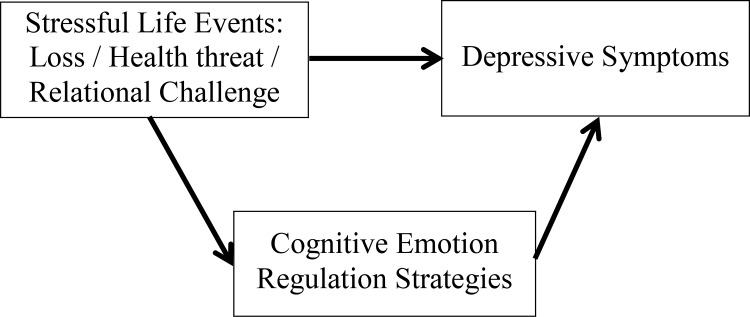
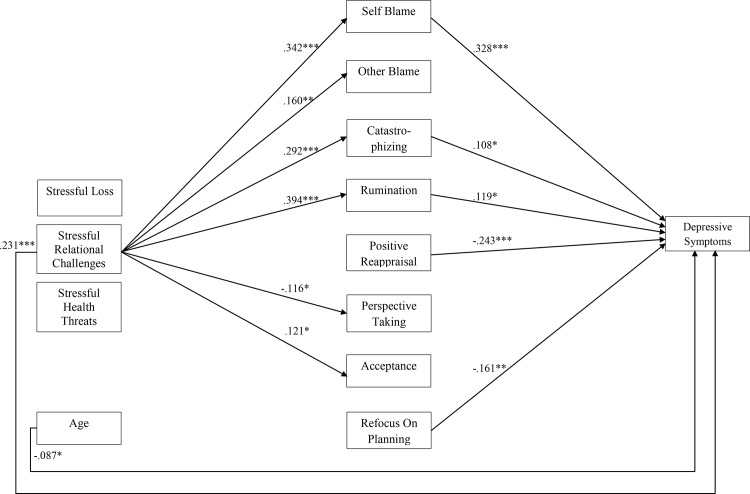
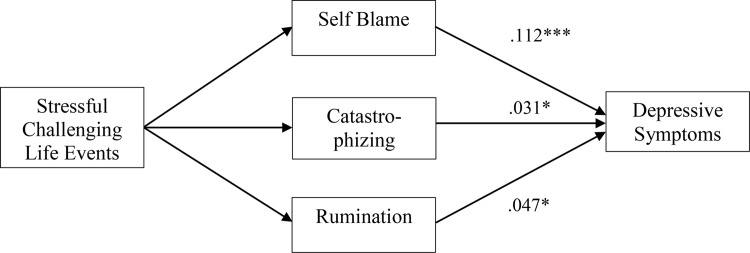
BACKGROUND: Depression during adolescence is a serious mental health problem. Difficulties in regulating evoked emotions after stressful life events are considered to lead to depression. This study examined if depressive symptoms were mediated by various cognitive emotion regulation strategies after stressful life events, more specifically, the loss of a loved one, health threats or relational challenges. METHODS: We used a sample of 398 adolescents (Mage = 16.94, SD = 2.90), including 52 depressed outpatients, who all reported stressful life event(s). Path analyses in Mplus were used to test mediation, for the whole sample as well as separately for participants scoring high versus low on depression, using multigroup analyses. RESULTS: Health threats and relational challenging stressful life events were associated with depressive symptoms, while loss was not. More frequent use of maladaptive strategies was related to more depressive symptoms. More frequent use of adaptive strategies was related to less depressive symptoms. Specific life events were associated with specific emotion regulation strategies. The relationship between challenging, stressful life events and depressive symptoms in the whole group was mediated by maladaptive strategies (self-blame, catastrophizing and rumination). No mediation effect was found for adaptive strategies. CONCLUSION: The association between relational challenging, stressful life events and depressive symptoms was mediated by maladaptive, cognitive emotion regulation strategies.
Overview
The claims and statistics of this paper haven’t been checked yet.
Free: it reads the open-access text and checks the first 5 claims that cite a source we can check. Create a free account to check every claim.
Integrity signals
Registry
Cites
Statistics
Figures
Verification
Claims the paper makes
The claims and statistics of this paper haven’t been checked yet.
Free: it reads the open-access text and checks the first 5 claims that cite a source we can check. Create a free account to check every claim.
Claims other papers make about this one
Each is checked against this paper’s own text: does it say what the citing paper says it does?
The source backs part of the claim, not all of it — or backs it for a different population, condition or comparison.
In the citing paper
“These studies found: (1) an effect of self-blame, catastrophizing, and rumination on the relationship between stressful life events and symptoms of depression [57]”
From Positive and Negative Emotion Regulation in Adolescence: Links to Anxiety and Depression (2019) · cites this paper as [57]
Experimental — accuracy not yet measured
Self-check
Percentages, sums and reported differences re-computed from the paper’s own numbers.
The self-check needs the paper’s full text.
Citations
Cites
Emotion-regulation strategies across psychopathology: A meta-analytic review
Aldao, A., Nolen-Hoeksema, S., & Schweizer, S. (2010) · Clinical Psychology Review · doi:10.1016/j.cpr.2009.11.004 · Cited by 6,686 · cited 5×
“One specific and adaptive cognitive emotion regulation strategy, acceptance, was not significantly associated with depressive symptoms, as was also reported in a meta-analysis band colleagues [41].”
Influential(1999) · Cited by 5,934
Handbook of Emotion Regulation
Lambert, K. G. (2007) · JAMA · doi:10.1001/jama.298.15.1808 · Cited by 4,902
Stress and emotion: a new synthesis
(1999) · Choice Reviews Online · doi:10.5860/choice.37-1229 · Cited by 3,662
Causal Relationship Between Stressful Life Events and the Onset of Major Depression
Kendler, K. S., Karkowski, L. M., & Prescott, C. A. (1999) · American Journal of Psychiatry · doi:10.1176/ajp.156.6.837 · Cited by 2,566 · cited 1×
“A well-established predictor of depressive symptoms is the experience of a stressful life event [9], like a romantic break up.”
Negative life events, cognitive emotion regulation and emotional problems
Garnefski, N., Kraaij, V, & Spinhoven, P. (2001) · Personality and Individual Differences · doi:10.1016/s0191-8869(00)00113-6 · Cited by 2,494 · cited 1×
“Research on the CERQ subscales indicated that internal consistencies were good, ranging from .67 to .81, and good validity [51].”
Hankin, B. L., Abramson, L. Y., Moffitt, T. E., Silva, P. A., McGee, R., & Angell, K. E. (1998) · Journal of Abnormal Psychology · doi:10.1037/0021-843x.107.1.128 · Cited by 2,333 · cited 1×
“We expected to find that [1] the relationship between stressful life events (loss, health threat or relational challenge) and depressive symptoms is mediated by cognitive emotion regulation strategies; [2] the model for mediation would be specific for type of stressful life event: self-blame would be important after h…”
Structural equations modeling: Fit Indices, sample size, and advanced topics
Iacobucci, D. (2010) · Journal of Consumer Psychology · doi:10.1016/j.jcps.2009.09.003 · Cited by 2,263
Emotion regulation and mental health
Gross, J. J., & Muñoz, R. F. (1995) · Clinical Psychology: Science and Practice · doi:10.1111/j.1468-2850.1995.tb00036.x · Cited by 1,595 · cited 1×
“Difficulty in regulating evoked emotions is often thought to lead to depression [11,12,31].”
Cohen, P., Cohen, J., Kasen, S., Velez, C. N., Hartmark, C., Johnson, J., Rojas, M., Brook, J., & Streuning, E. L. (1993) · Journal of Child Psychology and Psychiatry · doi:10.1111/j.1469-7610.1993.tb01094.x · Cited by 957 · cited 1×
“We expected to find that [1] the relationship between stressful life events (loss, health threat or relational challenge) and depressive symptoms is mediated by cognitive emotion regulation strategies; [2] the model for mediation would be specific for type of stressful life event: self-blame would be important after h…”
Cited by
Items 101–166 of 166
The Effects of Dichotomous Thinking on Depression in Japanese College Students
Kawabata, T., Abe, N., & Wakai, T. (2021) · Journal of Educational and Developmental Psychology · doi:10.5539/jedp.v11n1p28 · Cited by 4
“Stikkelbroek et al. (2016) found that stress events and symptoms of depression were mediated by maladaptive cognitive emotion regulation strategies.”
BackgroundNing, C., Lei, H., Xie, W., Dong, D., & Zhang, X. (2025) · Journal of Affective Disorders · doi:10.1016/j.jad.2025.120967 · Cited by 3
Depressionen im Kindes- und Jugendalter
Groen, G., & Ihle, W. (2021) · Springer eBooks · doi:10.1007/978-3-662-45995-9_34-1 · Cited by 2
CELİK, Y., & Ayna, Y. E. (2021) · Uluslararası Anadolu Sosyal Bilimler Dergisi · doi:10.47525/ulasbid.999708 · Cited by 3
Catanzano, A. A., Newton, P. O., Shah, V. J., Yaszay, B., Bartley, C. E., & Bastrom, T. P. (2023) · Spine Deformity · doi:10.1007/s43390-023-00759-x · Cited by 3
“Many times during adolescence, depression and anxiety are prompted by significant life stressors, such as receiving a diagnosis of a significant medical condition [6].”
Srisopa, P., Moungkum, S., Hengudomsub, P., & Sirikit, R. (2023) · Mental Health & Prevention · doi:10.1016/j.mhp.2023.200309 · Cited by 2
Özdemir, G. G., & Eryılmaz, A. (2024) · Uluslararası Anadolu Sosyal Bilimler Dergisi · doi:10.47525/ulasbid.1471379 · Cited by 5
Chukwuere, P. C., Sehularo, L. A., & Manyedi, M. E. (2022) · The Open Public Health Journal · doi:10.2139/ssrn.4208657 · Cited by 3
Green, A. E., DiMaggio-Potter, M. E., Butts, J., Carosella, K. A., Reigstad, K. M., Eberly, L. E., Cullen, K. R., & Klimes‐Dougan, B. (2024) · Research on Child and Adolescent Psychopathology · doi:10.1007/s10802-024-01236-3 · Cited by 5
“Examining emotion regulation abilities would help determine whether this capability moderates, mediates, or predicts clinical outcomes, including NSSI (Feng et al., 2009; Hasking et al., 2009; Robinson et al., 2018; Schwartz et al., 2013; Stikkelbroek et al., 2016).”
Situaciones vitales estresantes y sintomatología depresiva en adolescentes rurales
(2022) · Revista de Psicología y Educación - Journal of Psychology and Education · doi:10.23923/rpye2022.01.219 · Cited by 2
Effect of perfectionism on self-other blame in driving situations
Choi, D., Takeda, Y., Akamatsu, M., Kimura, M., Konishi, N., Ando, T., & Toshihisa, S. A. T. O. (2023) · Personality and Individual Differences · doi:10.1016/j.paid.2023.112462 · Cited by 2
Chukwuere, P. C., Pienaar, A. J., & Sehularo, L. A. (2020) · Journal of Psychology in Africa · doi:10.1080/14330237.2020.1744282 · Cited by 4
asl, D. N., Ahi, Q., Shahabizadeh, F., & Mansouri, A. (2020) · Journal of Research in Behavioural Sciences · doi:10.52547/rbs.18.3.320 · Cited by 6
Takemura, Y., Sato, K., Liang, R., Isobe, M., Kondo, N., & Inoue, K. (2024) · BMJ Mental Health · doi:10.1136/bmjment-2023-300859 · Cited by 2
“25 26 Given that SES has been widely recognised as a key driver of ACEs, asthma and depressive symptoms, it is plausible that ACEs and asthma, each contributing to lower SES and psychological vulnerability in response to stressful events, inter-actively influences mental health.”
Yang, X., Yu, L., Zhang, S., Wei, Z., Xie, G., & Wang, J. (2024) · Frontiers in Psychology · doi:10.3389/fpsyg.2024.1375698 · Cited by 1
“Active coping is associated with decreased depression levels, whereas frequent use of maladaptive strategies is related to increased depressive symptoms (Stikkelbroek et al., 2016; Kugbey et al., 2018; Pelekanakis et al., 2022; Alshowkan et al., 2023; Kumar et al., 2023).”
BackgroundLópez-Odar, D., Morales, M. T. A., Cirilo-Acero, I., Hervias-Guerra, E., Vara-Horna, A., & Villanueva, S. D. (2025) · Behavioral Sciences · doi:10.3390/bs15020224 · Cited by 1
Xiao, Q., Song, X., Zou, S., Wang, Y., Waqi, T., & Yin, L. (2025) · Psychiatry Investigation · doi:10.30773/pi.2024.0303 · Cited by 2
“34-36 These findings can be explained through the interaction between diathetic factors and stress factors.”
Aune, T. K., Wolmer, L., Aune, S. F., Hamiel, D., & Nordahl, H. M. (2025) · Borderline Personality Disorder and Emotion Dysregulation · doi:10.1186/s40479-025-00302-6 · Cited by 2
“Schäfer et al. [32] noted a lack of studies exploring this mediating relationship with a nonclinical sample of older adolescents, especially with longitudinal designs [25].”
InfluentialPrevalence of depressive symptoms among medical students at Badr University in Cairo, Egypt
Sabry, W., Fathy, A., Emaduddin, M., Taher, A. M., Ehab, N., Gamal, M., Mohamed, M. H., Hassan, S.-A., Hamed, O., Ibrahim, S., et al. (2025) · Middle East Current Psychiatry · doi:10.1186/s43045-025-00567-1 · Cited by 4
“In the Netherlands, one study indicated that the severity of depressive symptoms was associated with the occurrence of stressful life events [44].”
Wang, M., Ouyang, L., Xu, Y., Mi, W., Wang, W., Zhou, L., Tang, Y., & Zhang, Q. (2025) · Journal of Psychiatric and Mental Health Nursing · doi:10.1111/jpm.70078 · Cited by 1
Effinger, D. P., Hoffman, J. L., Quadir, S. G., Rollison, C. S., Toedt, D., Sanchez, M. E., High, M. W., Hodge, C. W., & Herman, M. A. (2026) · Nature Communications · doi:10.1038/s41467-026-71481-1 · Cited by 1
Zhu, Q., Yang, L., Zhang, Z., & Liu, Y. (2025) · Psychology in the Schools · doi:10.1002/pits.23560 · Cited by 1
“…studies that did investigate the mechanisms have primarily focused on the emotional domain, particularly emotion regulation (Aune et al. 2023; Stikkelbroek et al. 2016), while only a few have addressed individual internal psychological resources (Aliri et al. 2019; Maciejewski et al. 2000).”
Yin, Y. H., & Lu, Q. (2020) · PubMed Central · doi:10.13201/j.issn.2096-7993.2020.03.017 · Cited by 1
Ahmadi, Z., Amiri, S., Kalantari, M., Abedi, M. R., & Vardanjani, H. M. (2020) · Biannual Journal of Contemporary Psychology · doi:10.29252/bjcp.14.2.15 · Cited by 2
The Relationship between Negative Life Events and Maternal Depression: Multiple Intermediate Effects
Jin, X., Shen, Y. L., Xing, W., & Wang, Z. (2021) · International Conference on Public Health and Data Science (ICPHDS) · doi:10.1109/icphds53608.2021.00045 · Cited by 1
Educación en tiempos de COVID-19: ¿Cómo afecta el estrés al aprendizaje?
Torrens, D. B. I. (2022) · Journal of Neuroeducation · doi:10.1344/joned.v2i1.34844 · Cited by 12
Prieto, C. D. (2017) · Buleria (Universidad de León) · doi:10.18002/10612/6925
Mindfulness and Acceptance during Transitions in Emerging Adults (The MATE Study)
Bhandarkar, A. S. (2018) · Deep Blue (University of Michigan)
McComb, S. E. (2019) · YorkSpace (York University)
Ghaemmaghamfarahani, I., Nosrati, K., & Foroughan, M. (2021)
Cosma, A. P., Költő, A., Baďura, P., Winkler, P., & Kalman, M. (2020) · doi:10.21203/rs.3.rs-16573/v1 · Cited by 2
“In addition, older adolescents may experience a growing number of stressful life events [29], for instance transitioning to high school [30, 31], cumulative victimisation [32], or events related to family or romantic relationships [33], which may have an increasingly negative impact on their mental health and well-bei…”
BackgroundJoormann, J. (2019) · Faculty Opinions – Post-Publication Peer Review of the Biomedical Literature · doi:10.3410/f.735472291.793561244
Introduction to Youth Online Peer Support: A Guide for Teens
Nielsen, A., & Forthun, L. F. (2022) · EDIS · doi:10.32473/edis-fy1511-2022
Wu, A. (2023) · Journal of Education Humanities and Social Sciences · doi:10.54097/ehss.v8i.4652
“In addition, childhood NLEs were found to be related to maladaptive emotional regulation, enhanced avoidance, emotional pressure, and expression of pessimistic information in young people [9, 10].”
BackgroundOhashi, Y.-G. B., Rodman, A. M., & McLaughlin, K. A. (2023) · PsyArXiv (OSF Preprints) · doi:10.31234/osf.io/vkbw9
Investigating the mediating effects of insight between decentring and cognitive coping process
Chan, J. P.-K., & Chan, R. W.-M. (2023) · Global Journal of Psychology Research New Trends and Issues · doi:10.18844/gjpr.v13i1.8441
Amitai, M., etedgi, E., Mevorach, T., kalimi, R., Horesh, N., Oschry-Bernstein, N., Apter, A., Benaroya-Milshtein, N., Fennig, S., Weizman, A., et al. (2023) · Research Square · doi:10.21203/rs.3.rs-2931760/v1
القنيصي, أ. (2023) · مجلة کلية التربية جامعة طنطا · doi:10.21608/mkmgt.2023.204004.1527
INFLUENCE OF STRESS ON STUDENTS’ ACADEMIC AND SOCIAL LIVES: A CASE OF A PRIVATE COLLEGE OF KARACHI
Ali, Z. H. S. S. (2023) · Pakistan Journal of Educational Research · doi:10.52337/pjer.v6i2.795 · Cited by 4
Harianto, I., & Meilia, J. N. (2021) · Surya Medika Jurnal Ilmiah Ilmu Keperawatan dan Ilmu Kesehatan Masyarakat · doi:10.32504/sm.v17i1.450
“Kejadian stress sering terjadi pada remaja (Romeo, Russell, 2013); (Stikkelbroek et al., 2016).”
BackgroundConnectedness in Adolescence: A Concept Analysis
Hudson, K. (2023) · Issues in Mental Health Nursing · doi:10.1080/01612840.2022.2141388 · Cited by 2
“It has been repeatedly found that stressful events experienced in childhood are associated with a higher risk for the development of mental health disorders and other long lasting negative effects in adulthood (Itchhaporia, 2021; Stikkelbroek et al., 2016).”
BackgroundVivar, L. B. Á., Salazar-Muñoz, M., Cárcamo, Y. B., & Arenas, R. P.-L. (2023) · Psicoperspectivas Individuo y Sociedad · doi:10.5027/psicoperspectivas-vol22-issue3-fulltext-2969 · Cited by 1
Perasso, G. F., Serantoni, G., Lillo, C., Maculan, A., Paoletti, P., & Giuseppe, T. D. (2024) · RICERCHE DI PSICOLOGIA · doi:10.3280/rip2023oa16630 · Cited by 3
สุปรียาพร, น. (2023) · Journal of Education Studies · doi:10.58837/chula.educu.51.1.2 · Cited by 3
Andrade, F. R. T., Machado, A. B. C., Hidalgo, S. D. V., Thalheimer, G., & de Almeida, R. M. M. (2024) · American Journal of Health Education · doi:10.1080/19325037.2024.2338461
“The emotional landscape of adolescence, characterized by symptoms influenced by hormonal changes and environmental stressors, necessitates targeted support and interventions (Jones et al., 2021; Stikkelbroek et al., 2016; Zhang et al., 2020).”
Buajaroen, H., Chankham, W., Bungthong, Y., & Khaibua, P. (2025) · Journal of Ecohumanism · doi:10.62754/joe.v3i8.5677
Boostani, H., Rostami, H., Toulabi, M., & Asl, E. M. (2025) · Jundishapur Journal of Chronic Disease Care · doi:10.5812/jjcdc-157066
Childhood Maltreatment and Depression: The Role of Emotion Regulation and Irrational Beliefs
TAŞÖREN, A. B. (2025) · OPUS Toplum Araştırmaları Dergisi · doi:10.26466/opusjsr.1557269
Ekici, E., & Özdel, K. (2025) · Psihologija · doi:10.2298/psi240119008e
Hayashida, T., Kikkawa, M., Masuya, J., Ono, M., Ito, S., Nibuya, R., Takashio, O., Tamada, Y., Hashimoto, N., & Inoue, T. (2025) · Neuropsychiatric Disease and Treatment · doi:10.2147/ndt.s504446
“44 These previous findings are partially consistent with the adverse life events affecting depressive symptoms in the present study.”
Li, M., Wu, J., Zhu, S., & Liu, T. (2025) · Appetite · doi:10.1016/j.appet.2025.108326
Chu, Q., Wang, X., Yao, R., Fan, J., Li, Y., Nie, F., Wang, L., & QiuPing, T. (2022) · Figshare · doi:10.6084/m9.figshare.19135940
Altınışık, B., & Bulut, B. P. (2025) · Klinik Psikoloji Dergisi · doi:10.57127/kpd.26024438.1614719 · Cited by 1
章, 晴. (2026) · Advances in Psychology · doi:10.12677/ap.2026.161016
Mikkelsen, M. B., Randa, H., O’Toole, M. S., Lyby, M. S., & Mehlsen, M. Y. (2026) · Behavioral Sciences · doi:10.3390/bs16020193
Vapattanawong, P., Jampaklay, A., Tangchonlatip, K., Lucktong, A., Yakoh, K., Chamratrithirong, A., & Ford, K. (2026) · BMC Public Health · doi:10.1186/s12889-026-27071-3
Quintana‐Orts, C., Yudes, C., Sánchez-Moreno, V., & Rey, L. (2026) · European Child & Adolescent Psychiatry · doi:10.1007/s00787-026-03015-5 · Cited by 1
Çimen, F., & Seçer, İ. (2026) · European Journal of Psychology of Education · doi:10.1007/s10212-026-01139-5
Jiang, T. X., Zhang, H., Wan, F., Wu, J., Zhang, Z., Dai, Q., Ma, Y., Li, X., Xiao, Q., Chen, K., et al. (2026) · Research Square · doi:10.21203/rs.3.rs-9552308/v1
Zhang, Y., Chen, J. R., Huang, S., Li, P., Song, S., Fu, X., Liao, J., Wang, W. Z., Ma, L., & Huang, X. (2026) · Frontiers in Psychology · doi:10.3389/fpsyg.2026.1826479
“…encounters with such challenges can directly induce depressive symptoms in adolescents (Geng et al., 2022; Sarbu et al., 2022; Boe et al., 2018; Stikkelbroek et al., 2016), manifesting physiological dysfunction (He et al., 2023; Horesh et al., 1995), and deterioration of psychological state…”
Yang, Y., Ye, Q., Peng, Z., Cai, W., Wen, J., Zhang, J., & Lan, Y. (2026) · BMC Psychiatry · doi:10.1186/s12888-026-08452-9
“Adolescents are at a crucial stage of development, and their mental health is closely linked to family dynamics, parenting styles and life events; for many patients, depressive symptoms often stem from family disputes and negative life events [20, 21].”
Wang, Y., Lyu, J., Hong, H., Wang, J., & Qiao, S. (2026) · Frontiers in Psychology · doi:10.3389/fpsyg.2026.1854312
“Similarly, studies have shown that stress-related emotional dysregulation is associated with higher levels of internalizing symptoms and weaker coping capacity (Stikkelbroek et al., 2016; Guassi Moreira et al., 2022; Hossein et al., 2023).”
Özdemir, N., KABAKOĞLU, H., Çalışkan, A., & Fakılı, F. (2026) · Addiction and Health · doi:10.34172/ahj.1708
“20,21 In addition, when we look at it from a social and cultural perspective, we can say that a more patriarchal society is dominant in the geography we live in.”
Zafra-Palomino, L., López, L. J. G., & Jiménez-Vázquez, D. (2026) · Mental Health & Prevention · doi:10.1016/j.mhp.2026.200570
Läßle, R. (2026) · Kinder- und Jugendmedizin · doi:10.1055/a-2884-4373
Metadata
- Authors
- Stikkelbroek, Y., Bodden, D. H. M., Kleinjan, M., Reijnders, M., & van Baar, A. L.
- Affiliations
- Utrecht University (NL)
- Radboud University Nijmegen (NL)
- Trimbos Institute (NL)
- Corresponding author
- Stikkelbroek, Yvonne
- Venue
- PLOS ONE
- Publisher
- Public Library of Science (PLoS)
- Published
- 2016-08-29
- Volume
- 11
- Issue
- 8
- Pages
- e0161062
- ISSN
- 1932-6203 (ISSN-L)
- PMC
- PMC5003336
- OpenAlex
- W2508267175
- Cited by
- 167
- References
- 62
- Citations by year
- 2026: 13 · 2025: 23 · 2024: 15 · 2023: 29 · 2022: 19 · 2021: 20 · 2020: 17 · 2019: 15 · 2018: 8 · 2017: 8
- FWCI
- 13.82
- Type
- journal article
- Language
- en
- Update notices
- correction (2018-01-30)
- Open access
- gold
- doi.org
- Licence
- Locations
- PLoS ONE (publishedVersion, cc-by)
- Europe PMC (PubMed Central) (publishedVersion, cc-by)
- PubMed Central (publishedVersion, cc-by)
- PubMed (publishedVersion)
- VU Research Portal (publishedVersion, other-oa)
- Radboud Repository (Radboud University) (submittedVersion, other-oa)
- DOAJ (DOAJ: Directory of Open Access Journals) (submittedVersion, cc-by-sa)
- Utrecht University Repository (Utrecht University) (submittedVersion, other-oa)
- Radboud Repository (Radboud University) (submittedVersion)
- Data Archiving and Networked Services (DANS) (submittedVersion, other-oa)
- Funders
- Zonmw- the Dutch nonprofit Organisation for Health Research and Development, (grant number 80-82435-98-10117)
- Topics
- Social Sciences › Psychology › Clinical Psychology › Child and Adolescent Psychosocial and Emotional Development
- Social Sciences › Psychology › Experimental and Cognitive Psychology › Anxiety, Depression, Psychometrics, Treatment, Cognitive Processes
- Social Sciences › Psychology › Clinical Psychology › Psychological Treatments and Disorders
- Keywords
- adolescent depression, depressive symptoms, negative life events, cognitive emotion regulation, maladaptive emotion regulation, self-blame, catastrophizing, rumination, loss of a loved one, health hazards, relational challenges, mediation
- MeSH terms
- Adaptation, Psychological, Adolescent, Adult, Child, Depression, Depressive Disorder, Emotions, Female, Humans, Life Change Events, Male, Surveys and Questionnaires, Young Adult
About these checks
Registry, retraction, Cites and statistics results are computed, not judged, with one exception: a printed reference that no index lists is read once by a model before it counts as a citation error. Claims are extracted by a model and kept only when their quote appears verbatim in the text; each cited source is then checked, with a model’s help, for whether it says what the claim relies on. Those verdicts can be wrong — read the claim’s quote and the cited source before relying on one.
Statistics and arithmetic are recomputed, not judged.
Confidence bands are shown only for fields calibrated on our annotated test set. None is calibrated yet, so no band is shown.
What counts as a claim ›How we measure confidence ›How we check this ›
Are you an author, or do you see a problem with this page? Request a review
Data sources
Bibliographic data: Semantic Scholar, OpenAlex, Crossref.
Contains information from the Semantic Scholar Academic Graph Datasets, made available under the ODC Attribution License (ODC-BY 1.0).
Semantic Scholar’s data is described in: Kinney, R., et al. (2023). The Semantic Scholar Open Data Platform. arXiv:2301.10140.
