

Adolescent Depression and Negative Life Events, the Mediating Role of Cognitive Emotion Regulation
Open accessThe DOI matches its Crossref record; 64 of the 64 references it cites were found in a registry or an index.
Abstract
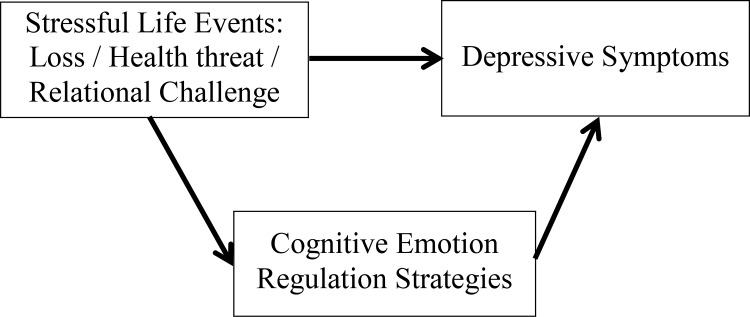
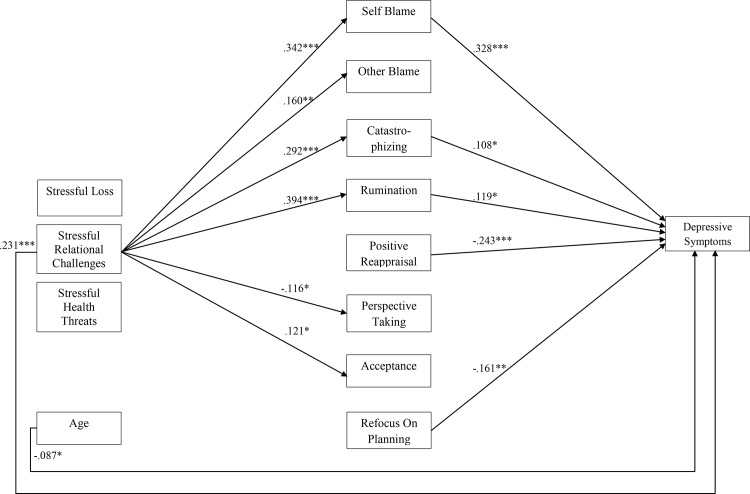
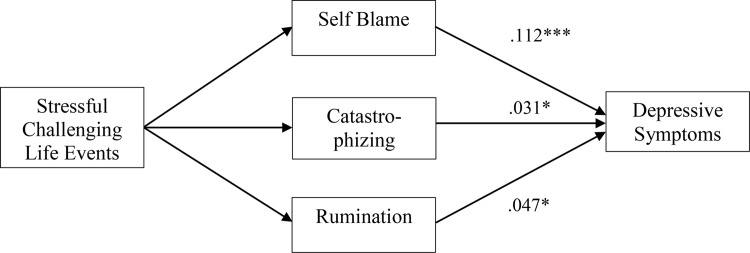
BACKGROUND: Depression during adolescence is a serious mental health problem. Difficulties in regulating evoked emotions after stressful life events are considered to lead to depression. This study examined if depressive symptoms were mediated by various cognitive emotion regulation strategies after stressful life events, more specifically, the loss of a loved one, health threats or relational challenges. METHODS: We used a sample of 398 adolescents (Mage = 16.94, SD = 2.90), including 52 depressed outpatients, who all reported stressful life event(s). Path analyses in Mplus were used to test mediation, for the whole sample as well as separately for participants scoring high versus low on depression, using multigroup analyses. RESULTS: Health threats and relational challenging stressful life events were associated with depressive symptoms, while loss was not. More frequent use of maladaptive strategies was related to more depressive symptoms. More frequent use of adaptive strategies was related to less depressive symptoms. Specific life events were associated with specific emotion regulation strategies. The relationship between challenging, stressful life events and depressive symptoms in the whole group was mediated by maladaptive strategies (self-blame, catastrophizing and rumination). No mediation effect was found for adaptive strategies. CONCLUSION: The association between relational challenging, stressful life events and depressive symptoms was mediated by maladaptive, cognitive emotion regulation strategies.
Overview
The claims and statistics of this paper haven’t been checked yet.
Free: it reads the open-access text and checks the first 5 claims that cite a source we can check. Create a free account to check every claim.
Integrity signals
Registry
Cites
Statistics
Figures
Verification
Claims the paper makes
The claims and statistics of this paper haven’t been checked yet.
Free: it reads the open-access text and checks the first 5 claims that cite a source we can check. Create a free account to check every claim.
Claims other papers make about this one
Each is checked against this paper’s own text: does it say what the citing paper says it does?
The source backs part of the claim, not all of it — or backs it for a different population, condition or comparison.
In the citing paper
“These studies found: (1) an effect of self-blame, catastrophizing, and rumination on the relationship between stressful life events and symptoms of depression [57]”
From Positive and Negative Emotion Regulation in Adolescence: Links to Anxiety and Depression (2019) · cites this paper as [57]
Experimental — accuracy not yet measured
Self-check
Percentages, sums and reported differences re-computed from the paper’s own numbers.
The self-check needs the paper’s full text.
Citations
Cites
Emotion-regulation strategies across psychopathology: A meta-analytic review
Aldao, A., Nolen-Hoeksema, S., & Schweizer, S. (2010) · Clinical Psychology Review · doi:10.1016/j.cpr.2009.11.004 · Cited by 6,686 · cited 5×
“One specific and adaptive cognitive emotion regulation strategy, acceptance, was not significantly associated with depressive symptoms, as was also reported in a meta-analysis band colleagues [41].”
Influential(1999) · Cited by 5,934
Handbook of Emotion Regulation
Lambert, K. G. (2007) · JAMA · doi:10.1001/jama.298.15.1808 · Cited by 4,902
Stress and emotion: a new synthesis
(1999) · Choice Reviews Online · doi:10.5860/choice.37-1229 · Cited by 3,662
Causal Relationship Between Stressful Life Events and the Onset of Major Depression
Kendler, K. S., Karkowski, L. M., & Prescott, C. A. (1999) · American Journal of Psychiatry · doi:10.1176/ajp.156.6.837 · Cited by 2,566 · cited 1×
“A well-established predictor of depressive symptoms is the experience of a stressful life event [9], like a romantic break up.”
Negative life events, cognitive emotion regulation and emotional problems
Garnefski, N., Kraaij, V, & Spinhoven, P. (2001) · Personality and Individual Differences · doi:10.1016/s0191-8869(00)00113-6 · Cited by 2,494 · cited 1×
“Research on the CERQ subscales indicated that internal consistencies were good, ranging from .67 to .81, and good validity [51].”
Hankin, B. L., Abramson, L. Y., Moffitt, T. E., Silva, P. A., McGee, R., & Angell, K. E. (1998) · Journal of Abnormal Psychology · doi:10.1037/0021-843x.107.1.128 · Cited by 2,333 · cited 1×
“We expected to find that [1] the relationship between stressful life events (loss, health threat or relational challenge) and depressive symptoms is mediated by cognitive emotion regulation strategies; [2] the model for mediation would be specific for type of stressful life event: self-blame would be important after h…”
Structural equations modeling: Fit Indices, sample size, and advanced topics
Iacobucci, D. (2010) · Journal of Consumer Psychology · doi:10.1016/j.jcps.2009.09.003 · Cited by 2,263
Emotion regulation and mental health
Gross, J. J., & Muñoz, R. F. (1995) · Clinical Psychology: Science and Practice · doi:10.1111/j.1468-2850.1995.tb00036.x · Cited by 1,595 · cited 1×
“Difficulty in regulating evoked emotions is often thought to lead to depression [11,12,31].”
Cohen, P., Cohen, J., Kasen, S., Velez, C. N., Hartmark, C., Johnson, J., Rojas, M., Brook, J., & Streuning, E. L. (1993) · Journal of Child Psychology and Psychiatry · doi:10.1111/j.1469-7610.1993.tb01094.x · Cited by 957 · cited 1×
“We expected to find that [1] the relationship between stressful life events (loss, health threat or relational challenge) and depressive symptoms is mediated by cognitive emotion regulation strategies; [2] the model for mediation would be specific for type of stressful life event: self-blame would be important after h…”
Cited by
Positive and Negative Emotion Regulation in Adolescence: Links to Anxiety and Depression
Young, K., Sandman, C., & Craske, M. (2019) · Brain Sciences · doi:10.3390/brainsci9040076 · Cited by 485
“These studies found: (1) an effect of self-blame, catastrophizing, and rumination on the relationship between stressful life events and symptoms of depression [57]; and (2) a role for rumination and impulsive responding on the relationship between childhood maltreatment and symptoms of internalizing psychopathology [5…”
BackgroundKang, S., Sun, Y., Zhang, X., Sun, F., Wang, B., & Zhu, W. (2020) · Journal of Epidemiology and Global Health · doi:10.2991/jegh.k.200908.001 · Cited by 98
“Adolescents were in a high-risk period of depression [13], and excessive life events and pressure may induce difficult-to-adjust emotions and psychological health problems [14].”
Wang, Q., Fang, Y., Huang, H., Lv, W., Wang, X., Yang, T., Yuan, J., Gao, Y., Qian, R., & Zhang, Y. (2021) · Journal of Nursing Management · doi:10.1111/jonm.13265 · Cited by 119
“They provide clinical care, disease screening and triage, and psychological counselling in hospitals and communities (Veenema et al., 2019).”
BackgroundZou, P., Sun, L., Yang, W., Zeng, Y., Chen, Q., Yang, H., Zhou, N., Zhang, G., Liu, J., Li, Y., et al. (2018) · Psychiatry Research · doi:10.1016/j.psychres.2018.09.019 · Cited by 90
Anjum, A., Hossain, S., Sikder, M. T., Uddin, M. E., & Rahim, D. A. (2019) · International Health · doi:10.1093/inthealth/ihz092 · Cited by 105
Wu, Y., Liu, F., Chan, K. Q., Wang, N., Zhao, S., Sun, X., Shen, W., & Wang, Z. (2022) · Child Abuse & Neglect · doi:10.1016/j.chiabu.2022.105669 · Cited by 81
van den Heuvel, M. W. H., Stikkelbroek, Y. A. J., Bodden, D. H. M., & van Baar, A. L. (2019) · Development and Psychopathology · doi:10.1017/s0954579419000920 · Cited by 86
“Knowledge on the occurrence of such patterns of different cognitive emotion regulation strategies might be clinically relevant, as these might guide which cognitive strategies could be addressed in depression interventions focusing on cognitive emotion regulation, such as in Cognitive Behavioral Therapy (CBT) (Aldao,…”
InfluentialSelf-citationCruz, M. F., Rodríguez, J. Á., Ruiz, I. Á., López, M. C., Camargo, C. D. B., Rosas, F. D., Castellón, E. M. G., González, D. G., Fernández, A. H., Ibáñez-Cubillas, P., et al. (2020) · Frontiers in Psychology · doi:10.3389/fpsyg.2020.565503 · Cited by 93
“The process of cognitive emotional regulation can be difficult for some people, especially after they have experienced particularly stressful events, to the point where a vicious circle is established (Stikkelbroek et al., 2016).”
BackgroundCameron-Mathiassen, J., Leiper, J., Simpson, J., & McDermott, E. (2022) · Children and Youth Services Review · doi:10.1016/j.childyouth.2022.106524 · Cited by 75
Arslan, G. (2017) · Child Indicators Research · doi:10.1007/s12187-017-9486-3 · Cited by 77
Sheikh, M. A. (2017) · European Child & Adolescent Psychiatry · doi:10.1007/s00787-017-1090-z · Cited by 62
“For instance, childhood physical maltreatment 65 may influence emotional abilities and alter sensory thresholds in ways that undermine effective emotion 66 regulation and create increased susceptibility to internalizing disorders in later life [10,11,4,1,12].”
BackgroundYazawa, A., Shiba, K., Inoue, Y., Okuzono, S. S., Inoue, K., Kondo, N., Kondo, K., & Kawachi, I. I. (2022) · Social Psychiatry and Psychiatric Epidemiology · doi:10.1007/s00127-022-02241-x · Cited by 58
“The stress sensitization model [11–13] posits that people with ACEs become more vulnerable to the adverse impacts of stressors since ACEs may function through negative/maladaptive cognitive style and psychological inflexibility [47, 48] and epigenetically modified biological factors [49] to affect future susceptibilit…”
BackgroundRey, L., Neto, F., & Extremera, N. (2020) · International Journal of Clinical and Health Psychology · doi:10.1016/j.ijchp.2020.03.003 · Cited by 49
Sheikh, M. A. (2017) · Journal of Affective Disorders · doi:10.1016/j.jad.2017.09.015 · Cited by 50
Type and Timing of Negative Life Events Are Associated with Adolescent Depression
Nishikawa, S., Fujisawa, T. X., Kojima, M., & Tomoda, A. (2018) · Frontiers in Psychiatry · doi:10.3389/fpsyt.2018.00041 · Cited by 57
Positive and negative emotion regulation in adolescence: links to anxiety and depressionPreprint
Young, K. S., Sandman, C. F., & Craske, M. G. (2019) · PsyArXiv (OSF Preprints) · doi:10.31234/osf.io/uwy6q · Cited by 49
Keijser, R., Olofsdotter, S., Nilsson, K. W., & Åslund, C. (2020) · Mental Health & Prevention · doi:10.1016/j.mhp.2020.200193 · Cited by 60
“…discussed in the light of influence of biological changes during puberty, differences in oestrogen and testosterone levels, and heritability (Lewis et al., 2015, Spinhoven et al., 2011, Stikkelbroek et al., 2016, Kendler et al., 1999, Naninck et al., 2011, Wang et al., 2016, Newman et al., 2016).”
Ren, Z., Zhou, G., Wang, Q., Xiong, W., Ma, J., He, M., Shen, Y., Fan, X., Guo, X., Gong, P., et al. (2019) · PLoS ONE · doi:10.1371/journal.pone.0219939 · Cited by 46
Quintana‐Orts, C., Mérida‐López, S., Rey, L., Neto, F. F. M., & Extremera, N. (2020) · Journal of Clinical Medicine · doi:10.3390/jcm9103116 · Cited by 51
“Furthermore, some of these studies also found a mediating role of maladaptive and/or adaptive cognitive emotion regulation strategies in the association between stressful or traumatic experiences and depressive symptomatology [25] and suicidal behaviour [24].”
BackgroundDepression and its determinants among adolescents in Jimma town, Southwest Ethiopia
Girma, S., Tsehay, M., Mamaru, A., & Abera, M. (2021) · PLoS ONE · doi:10.1371/journal.pone.0250927 · Cited by 60
“Similar findings were reported from the Netherlands and Colombia [53, 54].”
ResultZagaria, A., Vacca, M., Cerolini, S., Terrasi, M., Bacaro, V., Ballesio, A., Baglioni, C., Spinhoven, P., & Lombardo, C. (2023) · International Journal of Environmental Research and Public Health · doi:10.3390/ijerph20105857 · Cited by 54
“Moreover, negative small to moderate associations were observed for the adaptive strategies, as expected [57], with the exception of acceptance, which demonstrated no significant correlations with psychopathology, supporting previous works [58,59].”
ResultDanza, F., Ravasi, D., Storelli, N., Roman, S., Luedin, S. M., Bueche, M., & Tonolla, M. (2018) · PLoS ONE · doi:10.1371/journal.pone.0209743 · Cited by 38
Qian, H., Shu, C., Li, F., Xiang, J., Guo, Y., & Wang, G. (2022) · Frontiers in Psychiatry · doi:10.3389/fpsyt.2022.838693 · Cited by 51
“These findings were inconsistent with both maladaptive and adaptive strategies that mediated overall childhood maltreatment and depression severity (24), and maladaptive cognitive emotion regulation strategies were significant in the relationship between stressful life events and depressive symptoms (26).”
BackgroundResultWang, Y., Guang, Z., Zhang, J., Han, L., Zhang, R., Chen, Y., Chen, Q., Liu, Z., Gao, Y., Wu, R., et al. (2023) · Behavioral Sciences · doi:10.3390/bs13100861 · Cited by 48
Yang, S., Huang, P., Li, B., Gan, T., Lin, W., & Liu, Y. (2023) · Journal of Affective Disorders · doi:10.1016/j.jad.2023.07.010 · Cited by 35
Pediatric inflammatory demyelinating disorders and mimickers: How to differentiate with MRI?
Pereira, F. V., Jarry, V. D. M., de Castro, J. T. D. S., Appenzeller, S., & Reis, F. (2021) · Autoimmunity Reviews · doi:10.1016/j.autrev.2021.102801 · Cited by 36
Sheikh, M. A. (2017) · Journal of Affective Disorders · doi:10.1016/j.jad.2017.12.051 · Cited by 36
Identity, self-blame, and body regard in NSSI: A test of moderated-mediation
Kruzan, K. P., Muehlenkamp, J. J., & Claes, L. (2022) · Comprehensive Psychiatry · doi:10.1016/j.comppsych.2022.152322 · Cited by 34
“, internalizing conditions, depression) [60,64] including the relationship between child maltreatment and NSSI [61], few studies have examined the potential mediating role of self-blame on the relationship between identity factors (like poor SCC) and NSSI behaviors.”
BackgroundGao, J.-L., Wang, L.-H., Yin, X.-Q., Hsieh, H., Rost, D. H., Zimmerman, M. A., & Wang, J. (2019) · Current Psychology · doi:10.1007/s12144-019-0143-5 · Cited by 33
Rodríguez‐Menchón, M., Orgilés, M., Fernández‐Martínez, I., Espada, J. P., & Morales, A. (2020) · Child Psychiatry & Human Development · doi:10.1007/s10578-020-00988-5 · Cited by 34
Chu, Q.-Q., Wang, X., Yao, R., Fan, J., Li, Y., Nie, F., Wang, L., & Tang, Q. (2022) · BMC Psychiatry · doi:10.1186/s12888-021-03673-6 · Cited by 34
“Some studies have found that neuroticism is negatively correlated with adaptive CERS and positively correlated with maladaptive CERS in adolescents [40] and adults [41].”
BackgroundLuo, Y.-F., Shen, H.-Y., Yang, S. C., & Chen, L. (2021) · International Journal of Environmental Research and Public Health · doi:10.3390/ijerph182413189 · Cited by 27
“Anxiety may further reduce well-being [7]; that is, anxiety may lead to worse physical and mental health [50].”
BackgroundLife experience pathways to college student emotional and mental health: A structural equation model
Hanson, C. L., Magnusson, B. M., Crandall, A., Barnes, M., McFarland, E., & Smith, M. (2022) · Journal of American College Health · doi:10.1080/07448481.2022.2058328 · Cited by 27
Mapping Phenomena Relevant to Adolescent Emotion Regulation: A Text-Mining Systematic Review
van Lissa, C. J. (2022) · Adolescent Research Review · doi:10.1007/s40894-021-00160-7 · Cited by 22
Hong, L., Le, T. T., Lu, Y., Shi, X., Xiang, L., Liu, M., Zhang, W., Zhou, M., Wang, J., Xu, D., et al. (2022) · BMC Pregnancy and Childbirth · doi:10.1186/s12884-021-04316-0 · Cited by 21
Kłosowska, J., Verbeken, S., Braet, C., Wijnant, K., Debeuf, T., Henauw, S. D., & Michels, N. (2020) · Psychosomatic Medicine · doi:10.1097/psy.0000000000000804 · Cited by 23
Gündüz, A., & Gündoğmuş, İ. (2019) · Journal of Clinical Psychiatry · doi:10.5505/kpd.2019.72621 · Cited by 41
Zhao, Y., Li, P., Wang, X., Kong, L., Wu, Y. H., & Liu, X. (2020) · Neuropsychiatric Disease and Treatment · doi:10.2147/ndt.s258806 · Cited by 21
Ranjbar, H. A., Hekmati, I., Eskin, M., & Jobson, L. (2021) · Current Psychology · doi:10.1007/s12144-021-02010-0 · Cited by 21
Sheikh, M. A. (2017) · Frontiers in Psychology · doi:10.3389/fpsyg.2017.01317 · Cited by 20
Aune, T. K., Hamiel, D., & Wolmer, L. (2023) · Journal of Affective Disorders · doi:10.1016/j.jad.2022.12.158 · Cited by 24
Relationship between adult attachment and cognitive emotional regulation style in women and men
Delgado, B., Amor, P. J., Domínguez-Sánchez, F. J., & Tello, F. P. H. (2023) · Scientific Reports · doi:10.1038/s41598-023-35250-0 · Cited by 22
Locus of control, negative live events and psychopathological symptoms in collectivist adolescents
Moreira, P., Vaz, J. M., Stevanović, D., Atilola, O., Dodig‐Ćurković, K., Franić, T., Đorić, A., Davidović, N., Avicenna, M., Noor, I. M., et al. (2019) · Personality and Individual Differences · doi:10.1016/j.paid.2019.109601 · Cited by 18
Xu, T., Liu, J., Zhu, G., & Han, S. (2020) · International Journal of Environmental Research and Public Health · doi:10.3390/ijerph17051497 · Cited by 20
“Economic, life, or study stress and negative life events were important factors for depression and anxiety [51,52], and could further lead to the incidence of SHS.”
BackgroundZhang, Z., Li, P., Zhang, L., Zheng, J., & Xue, Z. (2020) · Current Psychology · doi:10.1007/s12144-020-00864-4 · Cited by 20
Trajectory of Nostalgia in Emerging Adulthood
Wang, Y., Wildschut, T., Sedikides, C., Wu, M., & Cai, H. (2023) · Personality and Social Psychology Bulletin · doi:10.1177/01461672221143241 · Cited by 21
“Indeed, more intense negative life events predict increased risk of depression and anxiety (Stikkelbroek et al., 2016; Zou et al., 2018).”
BackgroundLv, S., Tong, C., Na, S., Lü, L., & Zhao, E. (2023) · Behavioral Sciences · doi:10.3390/bs13030243 · Cited by 21
“Maladaptive emotion regulation strategies mediate the relationship between relational stress and challenging life events and depressive symptoms [20].”
BackgroundLi, Y., Qu, G., Kong, H., Ma, X., Cao, L., Li, T., & Wang, Y. (2022) · Frontiers in Psychiatry · doi:10.3389/fpsyt.2022.989904 · Cited by 14
“For adolescents who are at a critical stage of mental development, depression will destroy their ability to regulate their emotions and cause them to make a series of decisions that are detrimental to their future development (67).”
BackgroundLee, J., Youn, S., Kim, C., Yeo, S., & Chung, S. (2019) · Sleep Medicine Research · doi:10.17241/smr.2019.00388 · Cited by 13
“In particular, catastrophizing, rumination, and positive reappraisal have been the most significant factors described in most studies to date [10,13,14,16,17].”
BackgroundZeng, Z., Hu, Y., Peng, L., Zhan, L., Liu, S., Ouyang, X., Ding, D., Wang, Y., & Li, Z. (2021) · Current Psychology · doi:10.1007/s12144-021-01888-0 · Cited by 18
Sobol, M., Woźny, M., & Czubak, K. (2021) · Personality and Individual Differences · doi:10.1016/j.paid.2021.110665 · Cited by 19
Chukwuere, P. C., Sehularo, L. A., & Manyedi, M. E. (2022) · Curationis · doi:10.4102/curationis.v45i1.2178 · Cited by 16
“(Parent 5, female, MHU) Depression aggravates and predisposes adolescents to hopelessness, helplessness and lack of interest in pleasure http://www.curationis.org.za Open Access (Stikkelbroek et al. 2016:3).”
BackgroundInfluentialYang, Z., Shang, Y., Liang, Y., Zhang, H., Yang, Y., Wang, Y., Shang, L., & Zhang, Y. (2022) · Frontiers in Public Health · doi:10.3389/fpubh.2022.833561 · Cited by 14
Chu, T. H., & Jiang, L. (2023) · Computers in Human Behavior · doi:10.1016/j.chb.2023.108018 · Cited by 18
Lostelius, P. V., Ståhle-Öberg, L., & Fjellman‐Wiklund, A. (2018) · European Journal of Physiotherapy · doi:10.1080/21679169.2018.1505946 · Cited by 12
“could lead to stress-related mental health conditions [30].”
BackgroundQin, X., Sun, X., Zhang, M., Chen, B., Xie, F., Chen, Z., Shen, S., Wen, C., Ren, X., & Dai, Q. (2022) · Frontiers in Psychiatry · doi:10.3389/fpsyt.2022.864751 · Cited by 13
“Existing evidence show that the negative life-events positively relate to the incidence of depression at different ages (23, 24), which might be a possible risk mediator between alienation and later depression.”
BackgroundImpact of clinical pharmacy specialists on glycemic control in veterans with type 2 diabetes
Schmidt, K., Caudill, J., & Hamilton, T. (2019) · American Journal of Health-System Pharmacy · doi:10.1093/ajhp/zxy015 · Cited by 13
Ohashi, Y.-G. B., Rodman, A. M., & McLaughlin, K. A. (2024) · Behaviour Research and Therapy · doi:10.1016/j.brat.2024.104551 · Cited by 17
Ye, X., Yang, G., Zhang, W., Toussaint, L. L., & Zhao, F. (2025) · BMC Nursing · doi:10.1186/s12912-024-02661-x · Cited by 17
“Several studies have explored the potential mechanisms connecting NLEs with depression and anxiety [13, 14].”
Nelson, L., Roots, K., Dunn, T. J., Rees, A., Hull, D. D., & Gordon, W. V. (2021) · International Journal of Spa and Wellness · doi:10.1080/24721735.2021.1909865 · Cited by 14
“…in childhood and adolescence, including low socioeconomic status, social isolation and deprivation, negative life experiences, exposure to violence, and increased academic pressures (Broderick & Metz, 2009; Stikkelbroek et al., 2016; Tomlinson et al., 2008; Van Gordon et al., 2019; WHO, 2012).”
BackgroundNegative life events and internalizing problems among Romanian youth
Sârbu, E. A., Iovu, M.-B., & Lazăr, F. (2021) · Clinical Child Psychology and Psychiatry · doi:10.1177/13591045211055674 · Cited by 12
“Health threatening events and relational challenging life events such as parents’ divorce, romantic break-up, school failure, being expelled from school, conflict with parents or friends are associated with development of depressive symptoms, while events such as death of a loved one are not (Stikkelbroek et al., 2016…”
BackgroundWang, M., ZHENG, X., Guizhi, X. I. A., Didi, L. I. U., Pian, C. H. E. N., & Zhang, W. (2019) · Acta Psychologica Sinica · doi:10.3724/sp.j.1041.2019.00903 · Cited by 14
Physical activity for adolescents with severe mental illness: a systematic scoping review
Anthony, J., Kinnafick, F., Papathomas, A., & Breen, K. C. (2020) · International Review of Sport and Exercise Psychology · doi:10.1080/1750984x.2020.1833360 · Cited by 15
“Comparing PA interventions to an active control yields lower e ff ect sizes than those compared to a non-active control (Stikkelbroek et al., 2016).”
BackgroundStikkelbroek, Y. A. J., Bodden, D. H. M., Kleinjan, M., Reijnders, M., & van Baar, A. L. (2018) · PLoS ONE · doi:10.1371/journal.pone.0192300 · Cited by 11
Self-citationGe, Y., Xiao, Y., Li, M., Yang, L., Song, P., Li, X., & Yan, H. (2023) · Frontiers in Psychiatry · doi:10.3389/fpsyt.2023.1279108 · Cited by 19
“Here, the involvement of adaptive cognitive strategies in this moderating process has not been demonstrated, possibly explained by their less frequent use in the current sample, which is consistent with findings from previous research in NSSI (59, 60) and depression (61, 62).”
ResultLing, Y., Chen, Y., Zhang, Y., & Huebner, E. S. (2023) · Journal of Adolescence · doi:10.1002/jad.12167 · Cited by 11
Carosella, K. A., Wiglesworth, A., Bendezú, J. J., Brower, R., Mirza, S. A., Mueller, B. A., Cullen, K. R., & Klimes‐Dougan, B. (2023) · Psychological Medicine · doi:10.1017/s0033291723002003 · Cited by 11
“Though research has associated adolescent stress responses with psycho-pathology (Kaess et al., 2021; Liu, Cheek, & Nestor, 2016; Stikkelbroek, Bodden, Kleinjan, Reijnders, & Baar, 2016), the role of concordance between components of the stress systems remains unclear.”
BackgroundBao, W., Gao, Y., Feng, R., Cao, L., Zhou, Z., Zhuo, L., Li, H., Ouyang, X., Hu, X., Li, H., et al. (2024) · European Child & Adolescent Psychiatry · doi:10.1007/s00787-024-02456-0 · Cited by 10
Guo, H., & Qiu, C. (2024) · BMC Medical Education · doi:10.1186/s12909-024-05601-0 · Cited by 16
Li, Q., Ye, X., Li, Z., Yang, S., Yin, L., Li, B.-M., & Wang, C. (2024) · Journal of Health Psychology · doi:10.1177/13591053241248940 · Cited by 9
“A previous study reported that adolescents with more SLEs exhibited more maladaptive emotion regulation strategies, which further led to more depressive symptoms (Stikkelbroek et al., 2016).”
Liu, X., Li, P., Xia, Y., Yuan, S., Chen, C., Xie, K., Bao, W., Wang, S., Hao, R., An, C., et al. (2025) · Journal of Affective Disorders · doi:10.1016/j.jad.2025.01.002 · Cited by 10
Söğüt, M., Yedidağ, E., Ray-Yol, E., Özdemir, A. B., & Atalay, A. A. (2021) · Psychological Reports · doi:10.1177/00332941211018802 · Cited by 9
“For example, Andr es et al. (2016) and Stikkelbroek et al. (2016) reported adaptive strategies do not significantly mediate the association between neuroticism and depression.”
BackgroundResultInfluentialLee, T., Liu, H., Huang, Y., Sun, F., & Liu, S. (2023) · Psychology Research and Behavior Management · doi:10.2147/prbm.s429923 · Cited by 9
“19,20 Current evidence has shown that stressors not only play the roles of current triggers but also act as early factors, which exert their effects by shaping personality traits in one’s early life.”
BackgroundAttention control mediates the relationship between mental imagery vividness and emotion regulation
Andries, M., Robert, A. J. A., Lyons, A. L., Rawliuk, T., Li, J., & Greening, S. G. (2024) · Consciousness and Cognition · doi:10.1016/j.concog.2024.103766 · Cited by 12
“Conversely, alternative emotion regulation strategies have been associated with the exacerbation of negative affect, such as rumination (Michl et al., 2013) and catastrophizing (Stikkelbroek et al., 2016).”
BackgroundWu, J., Wang, C., Zheng, Y., Han, X., Guo, J., Cui, Y., Hu, J., Lin, M., & You, J. (2025) · Suicide and Life-Threatening Behavior · doi:10.1111/sltb.70001 · Cited by 12
Ćavar Mišković, F., & Milas, G. (2025) · Medicina · doi:10.3390/medicina61071154 · Cited by 7
Wang, J., Luo, X., Liu, Q., Peng, W., Liu, Z., Ge, Z., Li, F., Liu, J., & Zhong, M. (2021) · Current Psychology · doi:10.1007/s12144-021-02291-5 · Cited by 8
Wang, N., Chung, M. C., Liu, F., & Wang, Y. (2022) · Current Psychology · doi:10.1007/s12144-022-03131-w · Cited by 9
“Engagement in adaptive CER strategies was related to lower endorsement of depression, anxiety, and other internalizing problems in Eastern and Western adolescents (Garnefski & Kraaij, 2006; Stikkelbroek et al., 2016; Amone-P’Olak et al., 2007; d’Acremonta & Van der Linden, 2007; Li et al., 2015), although the relation…”
BackgroundMilas, G., Ćavar, F., & Ribar, M. (2023) · Stress and Health · doi:10.1002/smi.3335 · Cited by 8
Familial, Cognitive, and Behavioral Characteristics of Adolescents with Depression
Lee, Y. A., Kim, B.-N., Park, M.-H., & Park, S. (2017) · Journal of korean Academy of Child and Adolescent Psychiatry · doi:10.5765/jkacap.2017.28.3.168 · Cited by 13
Mentors’ Supporting Approaches of Mentees’ Cognitive Emotion Regulation Strategies
Kiadarbandsari, A. (2023) · Journal of Adolescent Research · doi:10.1177/07435584231163568 · Cited by 14
“Placing the blame or cause of a negative event on others Positively linked to relational challenging stressful life events (Stikkelbroek et al., 2016).”
Zhang, Y., Gong, L., Feng, Q., Hu, K., Liu, C., Tian, J., & Zhang, Q. (2024) · BMC Psychiatry · doi:10.1186/s12888-024-05880-3 · Cited by 9
“Furthermore, the strong correlation between depression, ACEs, and adverse life events among students is well-documented worldwide [23–25].”
BackgroundCybervictimisation and depressive symptoms among adolescents: A moderated mediation model
Chamizo‐Nieto, M. T., & Rey, L. (2021) · Current Psychology · doi:10.1007/s12144-021-02416-w · Cited by 7
“higher levels of negative affect, somatic complaints, and depressive symptoms, as well as lower levels of subjective and psychological well-being, among others), through a more frequent use of maladaptive CERS, such as self-blame or rumination, to cope with stressful situation (e.g. Balzarotti et al., 2016; Ray-Yol et…”
BackgroundResultInfluentialJablonska, B., Dalman, C., Lundin, A., & Kosidou, K. (2019) · BMC Public Health · doi:10.1186/s12889-019-6703-7 · Cited by 7
“Maladaptive emotion regulation strategies such as self-blame, may put a person at increased risk for mental health problems [35].”
BackgroundAntunes, J., Matos, A. P., & Costa, J. J. (2018) · Revista Portuguesa de Enfermagem de Saúde Mental · doi:10.19131/rpesm.0213 · Cited by 7
Li, N., Niu, S., Rong, L., Yan, Q., Liu, Q., Zheng, Y., Zhang, Y., Wang, J., & Liu, Y. (2025) · Journal of Affective Disorders · doi:10.1016/j.jad.2025.01.085 · Cited by 5
He, W., Hu, Q., Wang, J., Rao, Y., Cheng, C., Fang, P., Zhang, Q., & Lu, Y.-R. (2025) · Behavioral Sciences · doi:10.3390/bs15020145 · Cited by 7
“Our work provides further support for the diathesis–stress model (Fox et al., 2010; Hammen, 2005, 2018; Nyarko et al., 2020; Stikkelbroek et al., 2016; Wei et al., 2022).”
Chukwuere, P. C., Sehularo, L. A., & Manyedi, M. E. (2021) · Health SA Gesondheid · doi:10.4102/hsag.v26i0.1528 · Cited by 6
“Difficulties in coping with challenges resulting from breakup in relationships and stressful life experiences are also proximal factors to depression (Stikkelbroek et al. 2016:10).”
BackgroundSelf-Compassion in Depression and Anxiety Disorders
Gürsoy, B. K., & AKKOYUN, A. Z. (2023) · Konuralp Tıp Dergisi · doi:10.18521/ktd.1202613 · Cited by 7
Application of Cognitive Emotion Regulation Questionnaire in Chinese Community Elderly
Ding, Z., Song, Q., Chu, J., Zou, T., Zheng, K., Liu, Z., Peng, W., & Yi, J. (2023) · Psychology Research and Behavior Management · doi:10.2147/prbm.s401087 · Cited by 8
“Since previous studies have proved the good psychometric properties of CERQ for assessing cognitive emotion regulation in various populations,(15,17) some researchers used the CERQ to explore the relationship between cognitive emotion regulation and depression.(18,19) For instance, Stikkelbroek found that adolescents…”
BackgroundMethodResultLashkari, A., Davoodi‐Bojd, E., Fahmy, L. M., Li, L., Nejad‐Davarani, S. P., Chopp, M., Jiang, Q., & Cerghet, M. (2020) · Clinical Neurology and Neurosurgery · doi:10.1016/j.clineuro.2020.106424 · Cited by 5
Impact of Life Experiences and Use of Web 2.0 Tools in Adults and Older Adults
Prieto, C. D., Sánchez, J. N. G., & Canedo-García, A. (2019) · Frontiers in Psychology · doi:10.3389/fpsyg.2019.02158 · Cited by 5
“However, other studies have indicated the maladaptive effect of reminiscence, whereby experiences may be emphasized in an unhealthy manner or prompt rumination, self-blame and pessimism, and memories of these may undermine happiness, satisfaction, and well-being or trigger a series of negative emotions (Henkel et al.,…”
BackgroundHuang, S., Lai, X., Zhang, C., Xinmei, Z., Xinran, D., Mengdi, Q., Huanlei, W., Wenrong, W., & Wang, Y. (2024) · Acta Psychologica Sinica · doi:10.3724/sp.j.1041.2024.00745 · Cited by 13
Liu, L., Zhang, X., Xue, J., Zhao, L., Tang, P., Tian, Y., Fan, H., Hao, M., Zhao, X., Geng, F., et al. (2025) · Frontiers in Psychiatry · doi:10.3389/fpsyt.2025.1583060 · Cited by 6
Mamun, A. S. M. A., Zeshan, M. H. L., Khatun, M. F., Islam, M. N., Hossain, M. R., Wadood, A., Sabiruzzaman, M., & Hossain, M. G. (2022) · Journal of Affective Disorders Reports · doi:10.1016/j.jadr.2022.100445 · Cited by 4
Alwesmi, M. B., Bayounes, R. M., Binrushaydan, N. N., Alanazi, M., Salem, R. M., Alomairi, R. A., Albugami, A. Z., Alzahrani, E. M., Alahmari, L. A., & Youssef, N. F. A. (2024) · Frontiers in Psychiatry · doi:10.3389/fpsyt.2024.1469527 · Cited by 9
Bruguera, M. R., Calonge, I., & Arias, M. D. R. M. (2017) · Clínica y Salud · doi:10.1016/j.clysa.2017.05.005 · Cited by 7
Xie, J., Cheng, G., Zhou, M., Liang, Q., & Wang, Q. (2025) · Frontiers in Psychiatry · doi:10.3389/fpsyt.2025.1520353 · Cited by 3
Gaillard, M., Jones, S. A., Kliamovich, D., Flores, A. L., & Nagel, B. J. (2025) · Brain and Cognition · doi:10.1016/j.bandc.2025.106303 · Cited by 4
Chung, S., Kang, S.-H., Kweon, K., Youn, S., Kang, H. S., Hong, S., & Hong, S. (2018) · Sleep Medicine Research · doi:10.17241/smr.2018.00136 · Cited by 3
“On the contrary, some adaptive strategies such as positive refocusing, refocusing on planning, and putting into perspective are related to lower depressive symptoms [23-25].”
Background
Metadata
- Authors
- Stikkelbroek, Y., Bodden, D. H. M., Kleinjan, M., Reijnders, M., & van Baar, A. L.
- Affiliations
- Utrecht University (NL)
- Radboud University Nijmegen (NL)
- Trimbos Institute (NL)
- Corresponding author
- Stikkelbroek, Yvonne
- Venue
- PLOS ONE
- Publisher
- Public Library of Science (PLoS)
- Published
- 2016-08-29
- Volume
- 11
- Issue
- 8
- Pages
- e0161062
- ISSN
- 1932-6203 (ISSN-L)
- PMC
- PMC5003336
- OpenAlex
- W2508267175
- Cited by
- 167
- References
- 62
- Citations by year
- 2026: 13 · 2025: 23 · 2024: 15 · 2023: 29 · 2022: 19 · 2021: 20 · 2020: 17 · 2019: 15 · 2018: 8 · 2017: 8
- FWCI
- 13.82
- Type
- journal article
- Language
- en
- Update notices
- correction (2018-01-30)
- Open access
- gold
- doi.org
- Licence
- Locations
- PLoS ONE (publishedVersion, cc-by)
- Europe PMC (PubMed Central) (publishedVersion, cc-by)
- PubMed Central (publishedVersion, cc-by)
- PubMed (publishedVersion)
- VU Research Portal (publishedVersion, other-oa)
- Radboud Repository (Radboud University) (submittedVersion, other-oa)
- DOAJ (DOAJ: Directory of Open Access Journals) (submittedVersion, cc-by-sa)
- Utrecht University Repository (Utrecht University) (submittedVersion, other-oa)
- Radboud Repository (Radboud University) (submittedVersion)
- Data Archiving and Networked Services (DANS) (submittedVersion, other-oa)
- Funders
- Zonmw- the Dutch nonprofit Organisation for Health Research and Development, (grant number 80-82435-98-10117)
- Topics
- Social Sciences › Psychology › Clinical Psychology › Child and Adolescent Psychosocial and Emotional Development
- Social Sciences › Psychology › Experimental and Cognitive Psychology › Anxiety, Depression, Psychometrics, Treatment, Cognitive Processes
- Social Sciences › Psychology › Clinical Psychology › Psychological Treatments and Disorders
- Keywords
- adolescent depression, depressive symptoms, negative life events, cognitive emotion regulation, maladaptive emotion regulation, self-blame, catastrophizing, rumination, loss of a loved one, health hazards, relational challenges, mediation
- MeSH terms
- Adaptation, Psychological, Adolescent, Adult, Child, Depression, Depressive Disorder, Emotions, Female, Humans, Life Change Events, Male, Surveys and Questionnaires, Young Adult
About these checks
Registry, retraction, Cites and statistics results are computed, not judged, with one exception: a printed reference that no index lists is read once by a model before it counts as a citation error. Claims are extracted by a model and kept only when their quote appears verbatim in the text; each cited source is then checked, with a model’s help, for whether it says what the claim relies on. Those verdicts can be wrong — read the claim’s quote and the cited source before relying on one.
Statistics and arithmetic are recomputed, not judged.
Confidence bands are shown only for fields calibrated on our annotated test set. None is calibrated yet, so no band is shown.
What counts as a claim ›How we measure confidence ›How we check this ›
Are you an author, or do you see a problem with this page? Request a review
Data sources
Bibliographic data: Semantic Scholar, OpenAlex, Crossref.
Contains information from the Semantic Scholar Academic Graph Datasets, made available under the ODC Attribution License (ODC-BY 1.0).
Semantic Scholar’s data is described in: Kinney, R., et al. (2023). The Semantic Scholar Open Data Platform. arXiv:2301.10140.
