

Adolescent Depression and Negative Life Events, the Mediating Role of Cognitive Emotion Regulation
Open accessThe DOI matches its Crossref record; 64 of the 64 references it cites were found in a registry or an index.
Abstract
BACKGROUND: Depression during adolescence is a serious mental health problem. Difficulties in regulating evoked emotions after stressful life events are considered to lead to depression. This study examined if depressive symptoms were mediated by various cognitive emotion regulation strategies after stressful life events, more specifically, the loss of a loved one, health threats or relational challenges. METHODS: We used a sample of 398 adolescents (Mage = 16.94, SD = 2.90), including 52 depressed outpatients, who all reported stressful life event(s). Path analyses in Mplus were used to test mediation, for the whole sample as well as separately for participants scoring high versus low on depression, using multigroup analyses. RESULTS: Health threats and relational challenging stressful life events were associated with depressive symptoms, while loss was not. More frequent use of maladaptive strategies was related to more depressive symptoms. More frequent use of adaptive strategies was related to less depressive symptoms. Specific life events were associated with specific emotion regulation strategies. The relationship between challenging, stressful life events and depressive symptoms in the whole group was mediated by maladaptive strategies (self-blame, catastrophizing and rumination). No mediation effect was found for adaptive strategies. CONCLUSION: The association between relational challenging, stressful life events and depressive symptoms was mediated by maladaptive, cognitive emotion regulation strategies.
Overview
The claims and statistics of this paper haven’t been checked yet.
Free: it reads the open-access text and checks the first 5 claims that cite a source we can check. Create a free account to check every claim.
Integrity signals
Registry
Cites
Statistics
Figures
Verification
Claims the paper makes
The claims and statistics of this paper haven’t been checked yet.
Free: it reads the open-access text and checks the first 5 claims that cite a source we can check. Create a free account to check every claim.
Claims other papers make about this one
Each is checked against this paper’s own text: does it say what the citing paper says it does?
The source backs part of the claim, not all of it — or backs it for a different population, condition or comparison.
In the citing paper
“These studies found: (1) an effect of self-blame, catastrophizing, and rumination on the relationship between stressful life events and symptoms of depression [57]”
From Positive and Negative Emotion Regulation in Adolescence: Links to Anxiety and Depression (2019) · cites this paper as [57]
Experimental — accuracy not yet measured
Self-check
Percentages, sums and reported differences re-computed from the paper’s own numbers.
The self-check needs the paper’s full text.
Citations
Cites
Emotion-regulation strategies across psychopathology: A meta-analytic review
Aldao, A., Nolen-Hoeksema, S., & Schweizer, S. (2010) · Clinical Psychology Review · doi:10.1016/j.cpr.2009.11.004 · Cited by 6,686 · cited 5×
“One specific and adaptive cognitive emotion regulation strategy, acceptance, was not significantly associated with depressive symptoms, as was also reported in a meta-analysis band colleagues [41].”
Influential(1999) · Cited by 5,934
Handbook of Emotion Regulation
Lambert, K. G. (2007) · JAMA · doi:10.1001/jama.298.15.1808 · Cited by 4,902
Stress and emotion: a new synthesis
(1999) · Choice Reviews Online · doi:10.5860/choice.37-1229 · Cited by 3,662
Causal Relationship Between Stressful Life Events and the Onset of Major Depression
Kendler, K. S., Karkowski, L. M., & Prescott, C. A. (1999) · American Journal of Psychiatry · doi:10.1176/ajp.156.6.837 · Cited by 2,566 · cited 1×
“A well-established predictor of depressive symptoms is the experience of a stressful life event [9], like a romantic break up.”
Negative life events, cognitive emotion regulation and emotional problems
Garnefski, N., Kraaij, V, & Spinhoven, P. (2001) · Personality and Individual Differences · doi:10.1016/s0191-8869(00)00113-6 · Cited by 2,494 · cited 1×
“Research on the CERQ subscales indicated that internal consistencies were good, ranging from .67 to .81, and good validity [51].”
Hankin, B. L., Abramson, L. Y., Moffitt, T. E., Silva, P. A., McGee, R., & Angell, K. E. (1998) · Journal of Abnormal Psychology · doi:10.1037/0021-843x.107.1.128 · Cited by 2,333 · cited 1×
“We expected to find that [1] the relationship between stressful life events (loss, health threat or relational challenge) and depressive symptoms is mediated by cognitive emotion regulation strategies; [2] the model for mediation would be specific for type of stressful life event: self-blame would be important after h…”
Structural equations modeling: Fit Indices, sample size, and advanced topics
Iacobucci, D. (2010) · Journal of Consumer Psychology · doi:10.1016/j.jcps.2009.09.003 · Cited by 2,263
Emotion regulation and mental health
Gross, J. J., & Muñoz, R. F. (1995) · Clinical Psychology: Science and Practice · doi:10.1111/j.1468-2850.1995.tb00036.x · Cited by 1,595 · cited 1×
“Difficulty in regulating evoked emotions is often thought to lead to depression [11,12,31].”
Cohen, P., Cohen, J., Kasen, S., Velez, C. N., Hartmark, C., Johnson, J., Rojas, M., Brook, J., & Streuning, E. L. (1993) · Journal of Child Psychology and Psychiatry · doi:10.1111/j.1469-7610.1993.tb01094.x · Cited by 957 · cited 1×
“We expected to find that [1] the relationship between stressful life events (loss, health threat or relational challenge) and depressive symptoms is mediated by cognitive emotion regulation strategies; [2] the model for mediation would be specific for type of stressful life event: self-blame would be important after h…”
Garnefski, N., & Kraaij, V. (2006) · Personality and Individual Differences · doi:10.1016/j.paid.2005.12.009 · Cited by 908 · cited 1×
“Because extreme scores on Acceptance could be maladaptive the score was transformed into a categorical variable high (score above 14), low (score less than 10) and medium [36].”
Emotion-focused therapy: Coaching clients to work through their feelings.
Greenberg, L. S. (2002) · doi:10.1037/10447-000 · Cited by 843
Predictors and consequences of childhood depressive symptoms: A 5-year longitudinal study.
Nolen–Hoeksema, S., Girgus, J. S., & Seligman, M. E. P. (1992) · Journal of Abnormal Psychology · doi:10.1037//0021-843x.101.3.405 · Cited by 825 · cited 1×
“In children, negative life events were found to be a significant predictor of depression, putting children at risk for future depressive episodes [23,24].”
Sex Differences in Adolescent Depression: Stress Exposure and Reactivity Models
Hankin, B. L., Mermelstein, R., & Roesch, L. (2007) · Child Development · doi:10.1111/j.1467-8624.2007.00997.x · Cited by 810
Collishaw, S., Pickles, A., Messer, J., Rutter, M., Shearer, C., & Maughan, B. (2007) · Child Abuse & Neglect · doi:10.1016/j.chiabu.2007.02.004 · Cited by 720 · cited 1×
“Stressful life events during childhood have repeatedly been found to be associated with an increased risk of developing mental disorders during adulthood [25 – 27].”
Cognitive emotion regulation in the prediction of depression, anxiety, stress, and anger
Martin, R. C., & Dahlen, E. R. (2005) · Personality and Individual Differences · doi:10.1016/j.paid.2005.06.004 · Cited by 680
Stress generation in depression: Reflections on origins, research, and future directions
Hammen, C. (2006) · Journal of Clinical Psychology · doi:10.1002/jclp.20293 · Cited by 674
Acceptance and mindfulness-based therapy: New wave or old hat?
Hofmann, S. G., & Asmundson, G. J. G. (2008) · Clinical Psychology Review · doi:10.1016/j.cpr.2007.09.003 · Cited by 665 · cited 1×
“Increase of acceptance of a problem or risk is a common objective in various treatments such as Mindfulness, and Acceptance and Commitment Therapy [57].”
GARNEFSKI, N., LEGERSTEE, J., KRAAIJ, V., VAN DEN KOMMER, T., & TEERDS, J. (2002) · Journal of Adolescence · doi:10.1006/jado.2002.0507 · Cited by 561 · cited 1×
“This association was not found in earlier research conducted with secondary school students [67].”
(2007) · Cited by 550
Emotion regulation and understanding: implications for child psychopathology and therapy
Southam-Gerow, M. A., & Kendall, P. C. (2002) · Clinical Psychology Review · doi:10.1016/s0272-7358(01)00087-3 · Cited by 540 · cited 1×
“Second, the use of the multi-sample approach, including severely depressed adolescent patients, is scarce and should be used more often [68], as it is essential for the study of psychopathology [14,41].”
Stressors and child and adolescent psychopathology: Evidence of moderating and mediating effects
Grant, K. E., Compas, B. E., Thurm, A. E., McMahon, S. D., Gipson, P. Y., Campbell, A. J., Krochock, K., & Westerholm, R. I. (2006) · Clinical Psychology Review · doi:10.1016/j.cpr.2005.06.011 · Cited by 537 · cited 4×
“Stressors are recognized as very important in the etiology and maintenance of internalizing problems [14].”
InfluentialDelineating components of emotion and its dysregulation in anxiety and mood psychopathology
Mennin, D. S., Holaway, R. M., Fresco, D. M., Moore, M. T., & Heimberg, R. G. (2007) · Behavior Therapy · doi:10.1016/j.beth.2006.09.001 · Cited by 527 · cited 1×
“Difficulty in regulating evoked emotions is often thought to lead to depression [11,12,31].”
Prevalence and Comorbidity of DSM-III-R Diagnoses in a Birth Cohort of 15 Year Olds
FERGUSSON, D. M., HORWOOD, L. J., & LYNSKEY, M. T. (1993) · Journal of the American Academy of Child & Adolescent Psychiatry · doi:10.1097/00004583-199311000-00004 · Cited by 443 · cited 1×
“We expected to find that [1] the relationship between stressful life events (loss, health threat or relational challenge) and depressive symptoms is mediated by cognitive emotion regulation strategies; [2] the model for mediation would be specific for type of stressful life event: self-blame would be important after h…”
Adolescent depression: Description, causes, and interventions
Hankin, B. L. (2006) · Epilepsy & Behavior · doi:10.1016/j.yebeh.2005.10.012 · Cited by 391 · cited 1×
“These findings are in line with a review on depressive symptoms in epileptic youth, showing an elevated risk for depression in this specific group with health problems [66].”
Annotation: Childhood Bereavement Following Parental Death
Dowdney, L. (2000) · Journal of Child Psychology and Psychiatry · doi:10.1017/s0021963099006216 · Cited by 390
Brent, D., Melhem, N., Donohoe, M. B., & Walker, M. (2009) · American Journal of Psychiatry · doi:10.1176/appi.ajp.2009.08081244 · Cited by 382 · cited 1×
“Another study found a significant increase in depression in the second year after bereavement [65].”
Cognitive vulnerability to depression: a dual process model
Beevers, C. G. (2005) · Clinical Psychology Review · doi:10.1016/j.cpr.2005.03.003 · Cited by 357 · cited 3×
“Furthermore, life stress appears to deplete cognitive resources, which are necessary for reflective processes to correct associative processing [30].”
InfluentialCharacteristics of emotion regulation in recovered depressed versus never depressed individuals
Ehring, T., Fischer, S., Schnülle, J., Bösterling, A., & Tuschen-Caffier, B. (2008) · Personality and Individual Differences · doi:10.1016/j.paid.2008.01.013 · Cited by 326 · cited 2×
“This finding is in line with earlier findings that maladaptive emotion regulation was linked to the onset of depressive symptoms [35 – 39].”
Kraaij, V., Garnefski, N., de Wilde, E. J., Dijkstra, A., Gebhardt, W., Maes, S., & ter Doest, L. (2003) · Journal of Youth and Adolescence · doi:10.1023/a:1022543419747 · Cited by 274 · cited 1×
“Some specific maladaptive cognitive emotion regulation strategies such as self-blame, rumination and catastrophizing, are associated with higher levels of depressive symptoms in adolescence, while adaptive strategies such as positive reappraisal, positive refocusing and putting things into a broader perspective, are a…”
Joormann, J., & D'Avanzato, C. (2010) · Cognition & Emotion · doi:10.1080/02699931003784939 · Cited by 260
Recovery and Recurrence Following Treatment for Adolescent Major Depression
Curry, J., Silva, S., Rohde, P., Ginsburg, G., Kratochvil, C., Simons, A., Kirchner, J., May, D., Kennard, B., Mayes, T., et al. (2011) · Archives of General Psychiatry · doi:10.1001/archgenpsychiatry.2010.150 · Cited by 233 · cited 1×
“Depression during adolescence is a serious problem because of its high prevalence [1–3], considerable burden of disease [4], suicide risk [5], other comorbid psychiatric disorders [6] and the high risk of recurrence [5,7].”
Childhood Bereavement: Psychopathology in the 2 Years Postparental Death
CEREL, J., FRISTAD, M. A., VERDUCCI, J., WELLER, R. A., & WELLER, E. B. (2006) · Journal of the American Academy of Child & Adolescent Psychiatry · doi:10.1097/01.chi.0000215327.58799.05 · Cited by 231 · cited 1×
“Earlier studies found that a substantial number of 75% to 80% of children do not develop mental health problems after the death of a parent or sibling, but these studies also found a significant increase in internalizing symptoms in these cases [60 – 64].”
Parental Death and the Adjustment of School-Age Children
Worden, J. W., & Silverman, P. R. (1996) · OMEGA - Journal of Death and Dying · doi:10.2190/p77l-f6f6-5w06-nhbx · Cited by 221 · cited 1×
“Earlier studies found that a substantial number of 75% to 80% of children do not develop mental health problems after the death of a parent or sibling, but these studies also found a significant increase in internalizing symptoms in these cases [60 – 64].”
A taxonomy of emotional disturbances.
Berenbaum, H., Raghavan, C., Le, H.-N., Vernon, L. L., & Gomez, J. J. (2003) · Clinical Psychology: Science and Practice · doi:10.1093/clipsy.bpg011 · Cited by 205 · cited 1×
“In adults, emotion regulation plays a central role in the etiology and maintenance of clinical levels of psychopathology [32 – 34].”
Raaijmakers, Q. A. W. (1999) · Educational and Psychological Measurement · doi:10.1177/0013164499595001 · Cited by 200 · cited 1×
“Missing data were imputed using Relative Mean Substitution [53].”
Calvete, E., Orue, I., & Hankin, B. L. (2012) · Research on Child and Adolescent Psychopathology · doi:10.1007/s10802-012-9691-y · Cited by 187 · cited 1×
“In a longitudinal design this variable should be included because depressive symptoms could increase instantly or gradually after some time, through use of specific cognitive regulation strategies [70].”
Emotion and evolving treatments for adult psychopathology.
Mennin, D., & Farach, F. (2007) · Clinical Psychology: Science and Practice · doi:10.1111/j.1468-2850.2007.00094.x · Cited by 186 · cited 1×
“In adults, emotion regulation plays a central role in the etiology and maintenance of clinical levels of psychopathology [32 – 34].”
Garnefski, N., Boon, S., & Kraaij, V. (2003) · Journal of Youth and Adolescence · doi:10.1023/a:1025994200559 · Cited by 179 · cited 4×
“Some specific maladaptive cognitive emotion regulation strategies such as self-blame, rumination and catastrophizing, are associated with higher levels of depressive symptoms in adolescence, while adaptive strategies such as positive reappraisal, positive refocusing and putting things into a broader perspective, are a…”
InfluentialTreatment of depression in children and adolescents
Ryan, N. D. (2005) · The Lancet · doi:10.1016/s0140-6736(05)67321-7 · Cited by 176
Charbonneau, A. M., Mezulis, A. H., & Hyde, J. S. (2009) · Journal of Youth and Adolescence · doi:10.1007/s10964-009-9398-8 · Cited by 165 · cited 1×
“Stressful life events are associated with a larger increase in depressive symptoms than other types of stress, such as academic stress [17 – 22].”
Dixon-Gordon, K. L., Aldao, A., & De Los Reyes, A. (2015) · Cognition and Emotion · doi:10.1080/02699931.2014.983046 · Cited by 151
The disease burden of childhood adversities in adults: A population-based study
Cuijpers, P. J., Smit, F., Unger, F., Stikkelbroek, Y. A. J., ten Have, M., & de Graaf, R. (2011) · Child Abuse & Neglect · doi:10.1016/j.chiabu.2011.06.005 · Cited by 148 · cited 1×
“Stressful life events during childhood have repeatedly been found to be associated with an increased risk of developing mental disorders during adulthood [25 – 27].”
Self-citationRude, S., & McCarthy, C. (2003) · Cognition & Emotion · doi:10.1080/02699930302283 · Cited by 122
Flynn, M., Kecmanovic, J., & Alloy, L. B. (2010) · Cognitive Therapy and Research · doi:10.1007/s10608-010-9300-8 · Cited by 112
Mental health of adolescents before and after the death of a parent or sibling
Stikkelbroek, Y., Bodden, D. H. M., Reitz, E., Vollebergh, W. A. M., & van Baar, A. L. (2016) · European Child & Adolescent Psychiatry · doi:10.1007/s00787-015-0695-3 · Cited by 111
Self-citationAbravanel, B. T., & Sinha, R. (2015) · Journal of Psychiatric Research · doi:10.1016/j.jpsychires.2014.11.012 · Cited by 109 · cited 1×
“Only a few studies have established the relationship between stressful life events and emotion (dys)regulation in adults [10] and adolescents [13].”
Hankin, B. L. (2012) · Journal of Clinical Child & Adolescent Psychology · doi:10.1080/15374416.2012.711708 · Cited by 107 · cited 1×
“Although knowledge about the etiology of depression has increased in the last decade, it is still difficult to explain and predict who becomes depressed, because of the many factors involved [8].”
Pathways to lifespan health following childhood parental death
Luecken, L. J., & Roubinov, D. S. (2012) · Social and Personality Psychology Compass · doi:10.1111/j.1751-9004.2011.00422.x · Cited by 104
Developmental influences on interpersonal stress generation in depressed youth.
Rudolph, K. D. (2008) · Journal of Abnormal Psychology · doi:10.1037/0021-843x.117.3.673 · Cited by 102 · cited 1×
“Stressful life events are associated with a larger increase in depressive symptoms than other types of stress, such as academic stress [17 – 22].”
The contribution of deficits in emotional clarity to stress responses and depression
Flynn, M., & Rudolph, K. D. (2010) · Journal of Applied Developmental Psychology · doi:10.1016/j.appdev.2010.04.004 · Cited by 91
Schroevers, M. J., Kraaij, V., & Garnefski, N. (2007) · Personality and Individual Differences · doi:10.1016/j.paid.2006.12.009 · Cited by 90 · cited 2×
“This finding is in line with earlier findings that maladaptive emotion regulation was linked to the onset of depressive symptoms [35 – 39].”
Childhood adversity, recent life events and depression in late life
Comijs, H. C., Beekman, A. T. F., Smit, F., Bremmer, M. A., van Tilburg, T. G., & Deeg, D. J. H. (2007) · Journal of Affective Disorders · doi:10.1016/j.jad.2007.01.012 · Cited by 76
Kelly, B. M., Schwartz, D., Gorman, A. H., & Nakamoto, J. (2007) · Research on Child and Adolescent Psychopathology · doi:10.1007/s10802-007-9168-6 · Cited by 71 · cited 1×
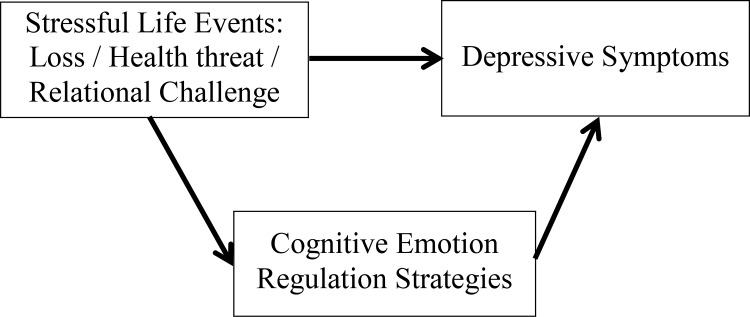
“Therefore, emotion regulation can be considered a mediator in the relationship between stressful life events and depressive symptoms [43,44].”
Waaktaar, T., Borge, A. I. H., Fundingsrud, H. P., Christie, H. J., & Torgersen, S. (2004) · Journal of Adolescence · doi:10.1016/j.adolescence.2003.09.006 · Cited by 67 · cited 1×
“Furthermore, stressors can be followed by depressive symptoms, and depressive symptoms in themselves can generate stressful life events, resulting in a reciprocal relationship [14,28,29].”
The Regulating Role of Negative Emotions in Children’s Coping with Peer Rejection
Goodman, K. L., & Southam‐Gerow, M. A. (2010) · Child Psychiatry & Human Development · doi:10.1007/s10578-010-0185-2 · Cited by 66
Raaijmakers, Q. A. W. (1999) · Educational and Psychological Measurement · doi:10.1177/00131649921970116 · Cited by 66
Herbert, J., Goodyer, I. M., Altham, P. M. E., Pearson, J., Secher, S. M., & Shiers, H. M. (1996) · Psychological Medicine · doi:10.1017/s0033291700034656 · Cited by 65 · cited 1×
“Depression during adolescence is a serious problem because of its high prevalence [1–3], considerable burden of disease [4], suicide risk [5], other comorbid psychiatric disorders [6] and the high risk of recurrence [5,7].”
A Taxonomy of Emotional Disturbances
Berenbaum, H. (2003) · Clinical Psychology Science and Practice · doi:10.1093/clipsy/bpg011 · Cited by 57
Depression and interpersonal stress: The mediating role of emotion regulation
Moriya, J., & Takahashi, Y. (2012) · Motivation and Emotion · doi:10.1007/s11031-012-9323-4 · Cited by 54 · cited 3×
“One study reported that emotion regulation strategies were found to mediate the relationship between interpersonal stress and depressive symptoms in undergraduate students [13].”
Lammers, J., Kuntsche, E. N., Engels, R. C. M. E., Wiers, R. W. H. J., & Kleinjan, M. (2013) · Drug and Alcohol Dependence · doi:10.1016/j.drugalcdep.2013.07.030 · Cited by 52 · cited 1×
“This was done by testing whether the model fit (Δχ2) was significantly better for the model in which the paths of interest were allowed to differ between non-depressed and depressed, compared to the model in which the paths of interest were constrained to be equal [56].”
Self-citationChildren bereaved by parent or sibling death
Dowdney, L. (2005) · Psychiatry · doi:10.1383/psyt.2005.4.9.118 · Cited by 51
Stikkelbroek, Y., Bodden, D. H., Deković, M., & van Baar, A. L. (2013) · BMC Psychiatry · doi:10.1186/1471-244x-13-314 · Cited by 32 · cited 1×
“The second sample participated in an effectiveness trial comparing Cognitive Behavioral Therapy to usual care (for more information, see [45]).”
Self-citationWethington, E. (2016) · Elsevier eBooks · doi:10.1016/b978-0-12-800951-2.00012-1 · Cited by 29 · cited 1×
“For this study, we constructed the Life Event Scale [52], a 23 item self-report questionnaire about three types of life events, based on the distinction of psychological stress made by Lazarus [16]; Loss (1 item: death of a loved one including pets), Health threat (8 items: serious (mental)…”
Cited by
Positive and Negative Emotion Regulation in Adolescence: Links to Anxiety and Depression
Young, K., Sandman, C., & Craske, M. (2019) · Brain Sciences · doi:10.3390/brainsci9040076 · Cited by 485
“These studies found: (1) an effect of self-blame, catastrophizing, and rumination on the relationship between stressful life events and symptoms of depression [57]; and (2) a role for rumination and impulsive responding on the relationship between childhood maltreatment and symptoms of internalizing psychopathology [5…”
BackgroundKang, S., Sun, Y., Zhang, X., Sun, F., Wang, B., & Zhu, W. (2020) · Journal of Epidemiology and Global Health · doi:10.2991/jegh.k.200908.001 · Cited by 98
“Adolescents were in a high-risk period of depression [13], and excessive life events and pressure may induce difficult-to-adjust emotions and psychological health problems [14].”
Wang, Q., Fang, Y., Huang, H., Lv, W., Wang, X., Yang, T., Yuan, J., Gao, Y., Qian, R., & Zhang, Y. (2021) · Journal of Nursing Management · doi:10.1111/jonm.13265 · Cited by 119
“They provide clinical care, disease screening and triage, and psychological counselling in hospitals and communities (Veenema et al., 2019).”
BackgroundZou, P., Sun, L., Yang, W., Zeng, Y., Chen, Q., Yang, H., Zhou, N., Zhang, G., Liu, J., Li, Y., et al. (2018) · Psychiatry Research · doi:10.1016/j.psychres.2018.09.019 · Cited by 90
Anjum, A., Hossain, S., Sikder, M. T., Uddin, M. E., & Rahim, D. A. (2019) · International Health · doi:10.1093/inthealth/ihz092 · Cited by 105
Metadata
- Authors
- Stikkelbroek, Y., Bodden, D. H. M., Kleinjan, M., Reijnders, M., & van Baar, A. L.
- Affiliations
- Utrecht University (NL)
- Radboud University Nijmegen (NL)
- Trimbos Institute (NL)
- Corresponding author
- Stikkelbroek, Yvonne
- Venue
- PLOS ONE
- Publisher
- Public Library of Science (PLoS)
- Published
- 2016-08-29
- Volume
- 11
- Issue
- 8
- Pages
- e0161062
- ISSN
- 1932-6203 (ISSN-L)
- PMC
- PMC5003336
- OpenAlex
- W2508267175
- Cited by
- 167
- References
- 62
- Citations by year
- 2026: 13 · 2025: 23 · 2024: 15 · 2023: 29 · 2022: 19 · 2021: 20 · 2020: 17 · 2019: 15 · 2018: 8 · 2017: 8
- FWCI
- 13.82
- Type
- journal article
- Language
- en
- Update notices
- correction (2018-01-30)
- Open access
- gold
- doi.org
- Licence
- Locations
- PLoS ONE (publishedVersion, cc-by)
- Europe PMC (PubMed Central) (publishedVersion, cc-by)
- PubMed Central (publishedVersion, cc-by)
- PubMed (publishedVersion)
- VU Research Portal (publishedVersion, other-oa)
- Radboud Repository (Radboud University) (submittedVersion, other-oa)
- DOAJ (DOAJ: Directory of Open Access Journals) (submittedVersion, cc-by-sa)
- Utrecht University Repository (Utrecht University) (submittedVersion, other-oa)
- Radboud Repository (Radboud University) (submittedVersion)
- Data Archiving and Networked Services (DANS) (submittedVersion, other-oa)
- Funders
- Zonmw- the Dutch nonprofit Organisation for Health Research and Development, (grant number 80-82435-98-10117)
- Topics
- Social Sciences › Psychology › Clinical Psychology › Child and Adolescent Psychosocial and Emotional Development
- Social Sciences › Psychology › Experimental and Cognitive Psychology › Anxiety, Depression, Psychometrics, Treatment, Cognitive Processes
- Social Sciences › Psychology › Clinical Psychology › Psychological Treatments and Disorders
- Keywords
- adolescent depression, depressive symptoms, negative life events, cognitive emotion regulation, maladaptive emotion regulation, self-blame, catastrophizing, rumination, loss of a loved one, health hazards, relational challenges, mediation
- MeSH terms
- Adaptation, Psychological, Adolescent, Adult, Child, Depression, Depressive Disorder, Emotions, Female, Humans, Life Change Events, Male, Surveys and Questionnaires, Young Adult
About these checks
Registry, retraction, Cites and statistics results are computed, not judged, with one exception: a printed reference that no index lists is read once by a model before it counts as a citation error. Claims are extracted by a model and kept only when their quote appears verbatim in the text; each cited source is then checked, with a model’s help, for whether it says what the claim relies on. Those verdicts can be wrong — read the claim’s quote and the cited source before relying on one.
Statistics and arithmetic are recomputed, not judged.
Confidence bands are shown only for fields calibrated on our annotated test set. None is calibrated yet, so no band is shown.
What counts as a claim ›How we measure confidence ›How we check this ›
Are you an author, or do you see a problem with this page? Request a review
Data sources
Bibliographic data: Semantic Scholar, OpenAlex, Crossref.
Contains information from the Semantic Scholar Academic Graph Datasets, made available under the ODC Attribution License (ODC-BY 1.0).
Semantic Scholar’s data is described in: Kinney, R., et al. (2023). The Semantic Scholar Open Data Platform. arXiv:2301.10140.
