

The DOI matches its Crossref record; 31 of the 36 references it cites were found in a registry or an index.
Do Student Samples Provide an Accurate Estimate of the General Public?
Open accessAbstract
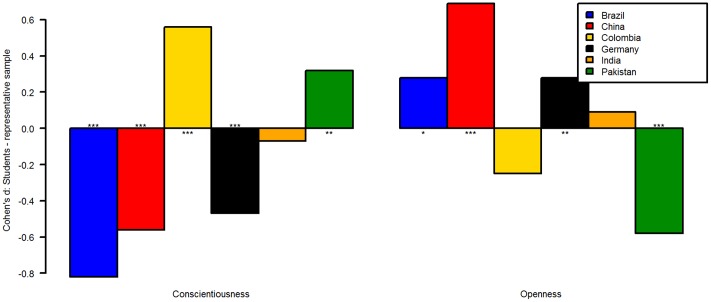
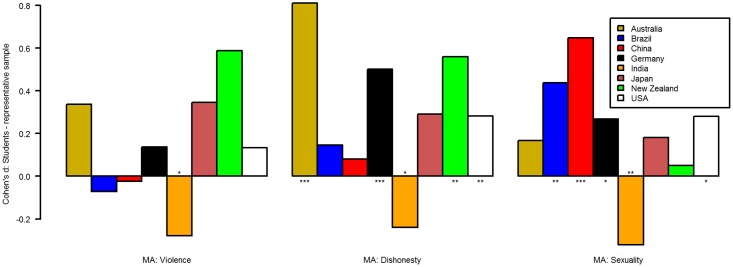
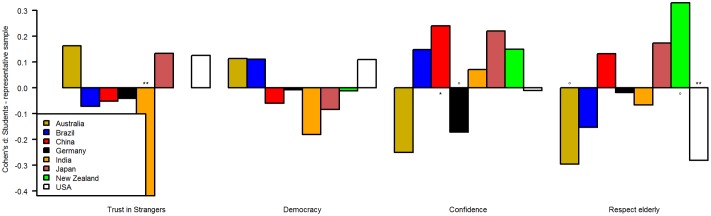
Most psychological studies rely on student samples. Students are usually considered as more homogenous than representative samples both within and across countries. However, little is known about the nature of the differences between student and representative samples. This is an important gap, also because knowledge about the degree of difference between student and representative samples may allow to infer from the former to the latter group. Across 59 countries and 12 personality (Big-5) and attitudinal variables we found that differences between students and general public were partly substantial, incoherent, and contradicted previous findings. Two often used cultural variables, embeddedness and intellectual autonomy, failed to explain the differences between both groups across countries. We further found that students vary as much as the general population both between and within countries. In summary, our results indicate that generalizing from students to the general public can be problematic when personal and attitudinal variables are used, as students vary mostly randomly from the general public. Findings are also discussed in terms of the replication crisis within psychology.
Overview
The claims and statistics of this paper haven’t been checked yet.
Run the check — free, no account needed. It reads the open-access text and checks the sources it cites.
Integrity signals
Registry
Cites
Statistics
Figures
Verification
Claims the paper makes
The claims and statistics of this paper haven’t been checked yet.
Run the check — free, no account needed. It reads the open-access text and checks the sources it cites.
Claims other papers make about this one
Each is checked against this paper’s own text: does it say what the citing paper says it does?
The source backs part of the claim, not all of it — or backs it for a different population, condition or comparison.
In the citing paper
“A further comment, which is true for much psychology literature (e.g., Hanel & Vione, 2016), is that most of this research depends on student samples, most commonly psychology student samples.”
From Factors Related to Mean Score Group Differences on Cognitive Ability Tests: A Systematic Review (2025) · cites this paper as Hanel & Vione, 2016
Experimental — accuracy not yet measured
Self-check
Percentages, sums and reported differences re-computed from the paper’s own numbers.
The self-check needs the paper’s full text.
Citations
Cites
Schwartz, S. H. (1992) · Advances in Experimental Social Psychology · doi:10.1016/s0065-2601(08)60281-6 · Cited by 14,619 · cited 3×
“This was done to correct for individual scale use tendencies and to investigate the relative importance of CVOs [10,16].”
BackgroundThe weirdest people in the world?
Henrich, J., Heine, S. J., & Norenzayan, A. (2010) · Behavioral and Brain Sciences · doi:10.1017/s0140525x0999152x · Cited by 12,641
Estimating the reproducibility of psychological science
Open Science Collaboration (2015) · Science · doi:10.1126/science.aac4716 · Cited by 8,515
A very brief measure of the Big-Five personality domains
Gosling, S. D., Rentfrow, P. J., & Swann, W. B. (2003) · Journal of Research in Personality · doi:10.1016/s0092-6566(03)00046-1 · Cited by 8,307 · cited 2×
“Nevertheless, other psychometric qualities such as convergent validity or test-retest reliabilities were found to be good [20].”
BackgroundMethodPower failure: why small sample size undermines the reliability of neuroscience
Button, K. S., Ioannidis, J. P. A., Mokrysz, C., Nosek, B. A., Flint, J., Robinson, E. S. J., & Munafò, M. R. (2013) · Nature Reviews Neuroscience · doi:10.1038/nrn3475 · Cited by 7,641
Simmons, J. P., Nelson, L. D., & Simonsohn, U. (2011) · Psychological Science · doi:10.1177/0956797611417632 · Cited by 6,567
WEIRD languages have misled us, too
Majid, A., & Levinson, S. C. (2010) · Behavioral and Brain Sciences · doi:10.1017/s0140525x1000018x · Cited by 4,177
Differences Between Tight and Loose Cultures: A 33-Nation Study
Gelfand, M. J., Raver, J. L., Nishii, L., Leslie, L. M., Lun, J., Lim, B. C., Duan, L., Almaliach, A., Ang, S., Arnadottir, J., et al. (2011) · Science · doi:10.1126/science.1197754 · Cited by 3,252 · cited 1×
“We have further added the tightness scores [24] as an independent variables for 20 countries.”
BackgroundAdjusting for multiple testing—when and how?
Bender, R., & Lange, S. (2001) · Journal of Clinical Epidemiology · doi:10.1016/s0895-4356(00)00314-0 · Cited by 3,168 · cited 1×
“, differences between both sample types for country X) should be tested in further confirmatory studies [25].”
BackgroundThe neglected 95%: Why American psychology needs to become less American.
Arnett, J. J. (2008) · American Psychologist · doi:10.1037/0003-066x.63.7.602 · Cited by 2,178 · cited 4×
“10) nor the seven attitudinal variables (all Fs[1, 116]< 1.”
BackgroundResultInfluential
Research works printed but not linked: 2
- Schwartz SH. The 7 Schwartz cultural value orientation scores for 80 countries [Internet]. Dataset; 2008. https://www.researchgate.net/publication/304715744_The_7_Schwartz_cultural_value_orientation_scores_for_80_countries
- JN Druckman, 2011, Cambridge Handbook of Experimental Political Science, 41
Cited by
Sorted by citations
Items 201–300 of 431
Task Enjoyment as an Individual Difference Construct
Czikmantori, T., Hennecke, M., & Brandstätter, V. (2021) · Journal of Personality Assessment · doi:10.1080/00223891.2021.1882473 · Cited by 9
“Their relatively high level of education (Hanel & Vione, 2016) might have made them more interested and/or competent in various tasks, which may have led to a higher sample mean and a more positive skew in TTES scores.”
BackgroundSimplifying the Measurement of Attitudes towards Autistic People
Hanel, P., & Shah, P. (2020) · Experimental Results · doi:10.1017/exp.2020.36 · Cited by 6
Self-citationInman, R. A., Sousa, A., Cunha, D., & Moreira, P. A. S. (2019) · Scandinavian Journal of Child and Adolescent Psychiatry and Psychology · doi:10.21307/sjcapp-2019-003 · Cited by 6
Morin, D. (2018) · Journal of Science Communication · doi:10.22323/2.17040202 · Cited by 5
“Contemporary research indicates that student samples are biased due to undergraduates being rather homogenous across several key variables, including socio-economic status, race, ethnicity, and age [Hanel and Vione, 2016].”
BackgroundJumping to Conclusions: Mechanisms of Cognitive Control in Decision-Making Under Uncertainty
Shih, P.-C., Pérez-Santiago, Á., Peña, D., Wazne, D., & Román, S. (2025) · Behavioral Science · doi:10.3390/bs15020226 · Cited by 5
“For example, Hanel and Vione (2016) argue that personality and attitudinal differences between students and the general public can hinder the generalization of findings.”
Keeping it real: How entrepreneurs effectively disclose risk
Bolinger, M., Brownell, K. M., & Covin, J. (2024) · Strategic Entrepreneurship Journal · doi:10.1002/sej.1525 · Cited by 5
Grigoropoulos, I. (2024) · Sexuality Research & Social Policy · doi:10.1007/s13178-024-00996-3 · Cited by 5
Soto-Vásquez, A. D., Gonzalez, A. A., Garza, E. G., Shi, W., & Garcia, N. (2024) · Health Communication · doi:10.1080/10410236.2024.2353418 · Cited by 5
“What is more, studies have found that the university student population can be as heterogeneous as the rest of the community is general (Hanel et al., 2016).”
Sample characteristics for quantitative analyses in Body Image: Issues of generalisability.
Pollet, T. V., Bovet, J., Buhaenko, R., Cornelissen, P., & Tovée, M. (2024) · Body image · doi:10.1016/j.bodyim.2024.101714 · Cited by 5
Do Narcissists Possess a Sense of Purpose? Purpose-in-life and Narcissism
Velji, J., & Schermer, J. (2024) · Current Research in Behavioral Sciences · doi:10.1016/j.crbeha.2024.100146 · Cited by 5
Gandhi, S., Glaman, R., Jordan, A., DiChristofaro, D., Clark, K., Gandhi, V., & Smith, J. (2023) · International Journal of Environmental Research and Public Health · doi:10.3390/ijerph20206924 · Cited by 5
“College students’ experiences and attitudes diverge significantly from the general population [37,38], but their associated risks and behaviors are understudied during a public health crisis such as the pandemic.”
BackgroundThe benefits of a cyber-resilience posture on negative public reaction following data theft
Toma, T., Décary-Hêtu, D., & Dupont, B. (2023) · Journal of Criminology · doi:10.1177/26338076231161898 · Cited by 5
“Firstly, the sample comprises solely university students, which limits the generalisability of the fi ndings as student samples differ markedly from non-student samples (Hanel & Vione, 2016).”
BackgroundPlog, E., Antov, M. I., Bierwirth, P., & Stockhorst, U. (2023) · PLoS ONE · doi:10.1371/journal.pone.0281644 · Cited by 5
Measuring the suicidal mind: The ‘open source’ Suicidality Scale, for adolescents and adults
Harris, K. M., Wang, L., Mu, G. M., Lu, Y., So, C., Zhang, W., Ma, J., Liu, K., Wang, W., Zhang, M. W.-B., et al. (2023) · PLoS ONE · doi:10.1371/journal.pone.0282009 · Cited by 8
Hoppe, J. M., Vegelius, J., Gingnell, M., Björkstrand, J., & Frick, A. (2022) · Learning and Motivation · doi:10.1016/j.lmot.2022.101848 · Cited by 5
Additional evidence for the relationship between mating strategy and disgust in a non-student sample
Banai, I. P., Mikelin-Opara, A., & Banai, B. (2021) · doi:10.1016/j.paid.2021.111029 · Cited by 5
Binfet, J.-T., Willis-Stewart, S., Lauze, A., Green, F. L. L., Draper, Z. A., & Calibaba, B. (2021) · Journal of Further and Higher Education · doi:10.1080/0309877x.2021.1967895 · Cited by 9
Health Literacy, Education, and Internal Consistency of Psychological Scales
Chen, X.-W., Schofield, E., Orom, H., Hay, J., Kiviniemi, M., & Waters, E. (2021) · Health literacy research and practice · doi:10.3928/24748307-20210728-01 · Cited by 5
“College students are different from the general population across a wide variety of characteristics and experiences (Hanel & Vione, 2016), which could lead them to think about the items differently from people with no college experience.”
BackgroundUser-specific touch interfaces: a viable solution for an aging society?
Shahal, A., Spang, R., Minge, M., Trahms, C., & Voigt-Antons, J.-N. (2021) · Behavior and Information Technology · doi:10.1080/0144929x.2021.1906322 · Cited by 5
“Although the differences between users have been acknowledged, development has all too often focused on the ‘average’ user (young adults) (Bühler and Stephanidis 2004; Arnett 2008; Hanel and Vione 2016).”
BackgroundPalix, J., Abu-Akel, A., Moulin, V., Abbiati, M., Gasser, J., Hasler, C., Marcot, D., Möhr, C., & Dan‐Glauser, E. (2021) · International Journal of Offender Therapy and Comparative Criminology · doi:10.1177/0306624x21994056 · Cited by 9
“…questionnaires have been shown to lack accuracy and to be prone to socially desirable responding (Curwen, 2003; Domes et al., 2013; Kampfe et al., 2009; Tierney & McCabe, 2001), and that their generalizability to populations in clinical or legal settings seems limited (Hanel & Vione, 2016).”
BackgroundResultTin, T., Peden, J., O'Reilly, J., Bastmeijer, K., & Maher, P. (2019) · Polar Record · doi:10.1017/s0032247419000214 · Cited by 5
“Students do not represent a homogeneous bloc, and the largest differences can be seen around issues of religion, regularity-norm behaviours, family roles, and ethnonationalism (Hanel & Vione, 2016; Saucier et al., 2014).”
BackgroundCamara, C. F., Sel, A., de Klerk, C. C. J. M., & Hanel, P. H. P. (2024) · Personality and Individual Differences · doi:10.1016/j.paid.2024.112836 · Cited by 9
Self-citationProlonged social media use is not fundamentally problematic in a Hungarian representative study
Zsila, Á., Bognár, B., & Shabahang, R. (2026) · Scientific Reports · doi:10.1038/s41598-026-36896-2 · Cited by 4
“Moreover, previous investigations that relied on adolescent and undergraduate convenience samples produced findings with limited generalizability to the general adult population 34 .”
Motivations for the use of games in coping and emotional regulation
Cahill, T. J., Cummings, J. J., & Wertz, E. E. (2025) · Frontiers in Communication · doi:10.3389/fcomm.2025.1585586 · Cited by 4
Carraturo, F., Santonicola, R., & Cella, S. (2025) · Clinical psychological science : a journal of the Association for Psychological Science · doi:10.1177/21677026251365927 · Cited by 4
“College populations, however, often differ in difficult-to-predict ways from the general population, and the generalizability of results obtained in such populations is uncertain (Hanel & Vione, 2016).”
MacLellan, A., Fairchild, G., & Button, K. (2025) · Cognitive Therapy and Research · doi:10.1007/s10608-025-10636-8 · Cited by 4
Virtual Reality Provides an Eyewitness Experience That Is Similar to Real Life
Green, A. D., Clark, A., Rechdan, J., & Guppy, A. (2025) · Applied Cognitive Psychology · doi:10.1002/acp.70099 · Cited by 4
The impact of virtual influencer product placement on brand awareness in Indonesia
Cokki, Soelaiman, L., & Tjokrosaputro, M. (2025) · Innovative Marketing · doi:10.21511/im.21(2).2025.10 · Cited by 4
Age differences in motivation drive performance during the sustained attention to response task
Hanzal, S., Learmonth, G., Thut, G., & Harvey, M. (2025) · PLoS ONE · doi:10.1371/journal.pone.0324694 · Cited by 5
Kibitov, A., Potanin, S., Yagina, O. M., Borodin, V. I., & Morozova, M. (2025) · Consortium Psychiatricum · doi:10.17816/cp15537 · Cited by 4
“Therefore, the extrapolation of its results to the general population or to other social and age groups can be done only with reservations [31].”
Selvanathan, H., Leidner, B., Syropoulos, S., Louis, W., Adelman, L., Baka, A., Bauer, C. A., Blikmans, M., Becker, M., Berán, E., et al. (2025) · Group Processes & Intergroup Relations · doi:10.1177/13684302241309554 · Cited by 4
“It is worth noting that this sampling strategy means that our participants are likely to be quite different from the general population (Hanel & Vione, 2016), thereby limiting the generalizability of findings.”
Validation of an online imitation-inhibition task
Westfal, M., Cracco, E., Crusius, J., & Genschow, O. (2025) · Behavior Research Methods · doi:10.3758/s13428-024-02557-3 · Cited by 6
“…effortful, and mainly limited to university samples (e.g., Thomas, 2011), making it very difficult to conduct studies across different countries and cultures (Hanel & Vione, 2016), a steadily increasing number of psychological studies nowadays take place online (e.g., Buhrmester et al., 2018).”
MENTAL HEALTH SUPPORT NEEDS OF STUDENTS DURING THE WARTIME
Polyvianaia, M., Stepanova, N., Yachnik, Y., Myshakivska, O., Fegert, J. M., Sitarski, E., & Pinchuk, I. (2024) · Proceeding of the Shevchenko Scientific Society. Medical Sciences · doi:10.25040/ntsh2024.02.21 · Cited by 4
Vila-Tojo, S., Gómez-Román, C., & Sabucedo, J.-M. (2024) · Frontiers in Psychology · doi:10.3389/fpsyg.2024.1445320 · Cited by 4
Seo, J., Lee, S., Newcombe, K., & Yoon, D. (2024) · Journal of Marketing Communications · doi:10.1080/13527266.2024.2368533 · Cited by 4
“While there have been extensive debates of using student samples in social science research (e.g., Hanel and Vione 2016), differences among the focal variables in the current study (i.e., trust and commitment) have not yet been documents across demographics.”
Wagemann, J., & Walter, A. (2024) · Current Psychology · doi:10.1007/s12144-024-05614-4 · Cited by 6
“Although most psychological studies are based on students as participants, this obviously does not satisfy the needs of generalizability (Hanel & Vione, 2016).”
Castro, P., & Rosa, M. H. (2023) · Environmental Communication · doi:10.1080/17524032.2023.2241652 · Cited by 6
“In terms of education and age, student samples have been shown to di ff er from the general population across cultures (Hanel & Vione 2016).”
BackgroundA Survey on How College Students in a Statistical Literacy Course Apply Statistics Terms to People
Lesser, L., & Santos, M. (2023) · Journal of Statistics and Data Science Education · doi:10.1080/26939169.2023.2193307 · Cited by 4
Valenzuela, N. T., Ruiz-Pérez, I., Rodríguez‐Sickert, C., Polo, P., Reyes, J. A. M., Yeste-Lizán, A., & Pita, M. (2022) · Behavioral Sciences · doi:10.3390/bs12020042 · Cited by 5
“There is an open debate around this topic and a general effort to understand the extent to which biased samples affect behavioral studies [59] and avoid their recurrent use.”
BackgroundÖnen, M., & Watson, F. (2021) · Global Health Promotion · doi:10.1177/17579759211015178 · Cited by 4
“mitigate the limitations of student samples (12).”
Clark, C. A., & Harris, K. M. (2021) · Computers in Human Behavior Reports · doi:10.1016/j.chbr.2021.100095 · Cited by 4
Halal Malaysia brand equity mishap
Ismail, W. R. W., Othman, M., Nor, N. M., Badiuzaman, A. F., & Nor, N. M. S. N. M. (2020) · Journal of Islamic marketing · doi:10.1108/jima-04-2019-0073 · Cited by 10
Field‐testing olfactory ability to understand human olfactory ecology
Hoover, K. C., Botescu, D., Fedurek, P., Aarts, S., & Berbesque, J. C. (2020) · American Journal of Human Biology · doi:10.1002/ajhb.23411 · Cited by 5
Neural Correlates of Self-Construal Priming in the Ultimatum Game
Flinkenflogel, N., Vu, T., van Kesteren, M. V., & Krabbendam, L. (2019) · Frontiers in Neuroscience · doi:10.3389/fnins.2019.00994 · Cited by 4
“For instance, college students’ cultural values might differ from those of the remainder of the population because of, for example, a higher socioeconomic background (Hanel and Vione, 2016).”
BackgroundSánchez-Medina, A. J., Benítez-del-Rosario, J. M., & Blázquez-Santana, F. (2017) · Sustainability · doi:10.3390/su9050802 · Cited by 4
“However, it should be noted that samples of students are sometimes criticized, arguing that they are not generalizable to the rest of the population [79,80].”
BackgroundHaase, J., Matthiesen, J., Schueffler, A., & Kluge, A. (2020) · Hawaii International Conference on System Sciences (HICSS) · doi:10.24251/hicss.2020.589 · Cited by 14
Alkandari, A., Frederick, E., Alsaber, A., AlReshaid, F., & Alhashem, F. (2025) · Frontiers in Communication · doi:10.3389/fcomm.2025.1533414 · Cited by 3
Stavropoulos, L., Sabel, I., Cooper, D. D. J., Newby, J. M., & Grisham, J. R. (2025) · Behaviour Research and Therapy · doi:10.1016/j.brat.2025.104915 · Cited by 3
The relationships between anxiety, psychotic-like experiences and autism: a systematic review
Rowe, M., Shergill, S. S., & Maitra, R. (2025) · Frontiers in Psychology · doi:10.3389/fpsyg.2025.1549886 · Cited by 4
O'Donald, F., & Calia, C. (2025) · Scandinavian Journal of Psychology · doi:10.1111/sjop.70029 · Cited by 3
Walsh, H., McNeill, A., & Duaso, M. (2025) · Substance Use & Misuse · doi:10.1080/10826084.2025.2533985 · Cited by 3
“Further Education (FE) rather than Higher Education (university) settings were selected, as they offer a potentially diverse student population, and are rarely represented in young adult health research (Hanel and Vione, 2016).”
An empirical investigation on social group evacuation dynamics in multi-exit evacuation scenarios
Hu, Y., Chen, J., & Tong, Y.-H. (2025) · Physica A: Statistical Mechanics and its Applications · doi:10.1016/j.physa.2025.130553 · Cited by 3
How do people perceive listeners?
Itzchakov, G., Haddock, G., & Smith, S. F. (2025) · Royal Society Open Science · doi:10.1098/rsos.241550 · Cited by 3
Canal‐Rivero, M., Rider, J., Martínez-López, M. J., Reguera, P., Silva, C., Barrigón, M. L., Baca‐García, E., Joiner, T. E., Crespo‐Facorro, B., & Ruíz-Veguilla, M. (2024) · Current Psychology · doi:10.1007/s12144-024-06986-3 · Cited by 3
“Thus, generalizing results employing undergraduate student samples could be problematic (Hanel & Vione, 2016).”
Daily effects of a brief compassion‐focused intervention for self‐compassion
Varley, D., Sherwell, C. S., & Kirby, J. N. (2024) · British Journal of Psychology · doi:10.1111/bjop.12746 · Cited by 6
Patzl, S., Oberleiter, S., & Pietschnig, J. (2024) · Journal of Intelligence · doi:10.3390/jintelligence12090081 · Cited by 8
“…psychological literature (Thalmayer et al. 2020), in combination with the non-representativeness of such samples for the general population (e.g., Hanel and Vione 2016), indicates a necessity to examine the effects of sample type (i.e., whether a general population or student sample was used) on…”
BackgroundRisky-Choice Framing Effects Result Partly From Mismatched Option Descriptions in Gains and Losses
DeKay, M. L., & Dou, S. (2024) · Psychological Science · doi:10.1177/09567976241249183 · Cited by 6
“One may also ask whether our results can be generalized from our CloudResearch and student samples to broader populations in the United States or else-where (Hanel & Vione, 2016; Protzko et al., 2023).”
Quinton, T. S., & Trafimow, D. (2023) · Philosophical Psychology · doi:10.1080/09515089.2023.2184335 · Cited by 3
“Due to accessibility and convenience, it is often the case that psychological research comprises student samples (Arnett, 2008; Hanel & Vione, 2016).”
Zaal, E., Ongena, Y., & Hoeks, J. C. J. (2023) · Frontiers in Sustainable Food Systems · doi:10.3389/fsufs.2023.1040680 · Cited by 7
Ratees' reactions to equal versus equitable performance outcomes: evidence from Pakistan and Japan
Naz, S., Iqbal, M., Ikramullah, M., Raziq, M., & Khalid, S. (2023) · International Journal of Emerging Markets · doi:10.1108/ijoem-08-2021-1182 · Cited by 3
Personality and Word Use: Study on Czech Language and the Big Five
Kučera, D., Haviger, J., & Havigerová, J. M. (2022) · Journal of Psycholinguistic Research · doi:10.1007/s10936-022-09892-6 · Cited by 3
“…it includes categories of respondents that are difficult to access in psychological research (non-students, older people with elementary education etc.) and whose general unavailability is problematic for interpretation in a number of psychological studies (see, for example, Hanel & Vione, 2016).”
BackgroundGordon, S. (2021) · South African Journal of Psychology · doi:10.1177/00812463211022492 · Cited by 3
“The limitations of using student samples have also been debated on a range of other grounds in social psychology, including generalisability, comparability, and reproducibility (for a review, see Hanel & Vione, 2016).”
BackgroundFranco, A. R., Vieira, R., Riegel, F., & da Graça, O. C. M. (2019) · Studies in Higher Education · doi:10.1080/03075079.2019.1647414 · Cited by 3
Khazaee-Pool, M., Jahangiry, L., Pashaei, T., Ramezani-badr, F., Nadrian, H., & Ponnet, K. (2018) · Substance Abuse Treatment, Prevention, and Policy · doi:10.1186/s13011-018-0175-0 · Cited by 3
“Although students vary both across and within countries as much as the general public [50], (medical) college students are however not representative of the general population.”
BackgroundThe Add Health psychopathy scale: Assessing its construct validity
Jones, S., Dinkins, B. J., Sleep, C. E., Lynam, D. R., & Miller, J. D. (2021) · Journal of Criminal Justice · doi:10.1016/j.jcrimjus.2020.101779 · Cited by 4
Salience and social meaning in speech production and perception
Alderton, R. (2020) · Lancaster EPrints (Lancaster University) · doi:10.17635/lancaster/thesis/938 · Cited by 4
Jemal, M., Kedir, S., & Krug, I. (2026) · Clinical Psychology Review · doi:10.1016/j.cpr.2026.102749 · Cited by 2
Walsh, H., McNeill, A., & Duaso, M. (2025) · Drug and Alcohol Review · doi:10.1111/dar.70002 · Cited by 2
“Recruitment from FE colleges instead of universities has provided findings from a population rarely represented in research [47].”
Fekih‐Romdhane, F., Chaibi, L. S., Alhuwailah, A., Sakr, F., Helmy, M. S., Shuwiekh, H. A. M., Boudouda, N. E., Zarrouq, B., Naser, A. Y., Jebreen, K., et al. (2025) · Scientific Reports · doi:10.1038/s41598-025-90597-w · Cited by 2
“However, the use of students’ samples could have impacted the generalizability of the findings to the broader population of adults 17 .”
A Comparative Analysis of Attitudes Toward Sexual Orientation and Gender Identity Minority People
Rye, B., & Goldszmidt, R. (2025) · The social science · doi:10.3390/socsci14030145 · Cited by 2
Grigoropoulos, I. (2025) · Sexuality & Culture · doi:10.1007/s12119-025-10331-6 · Cited by 2
Ju, I., Yel, E., & Song, H. (2024) · Health Communication · doi:10.1080/10410236.2024.2442560 · Cited by 2
“Although there is a wealth of literature demonstrating the utility of student samples (Hanel et al., 2016), it is recommended that future investigations utilize a more representative sample in order to obtain a more accurate depiction of bystander intervention behaviors during health emergencies…”
Lee, H. P., & Cnaan, R. (2024) · VOLUNTAS - International Journal of Voluntary and Nonprofit Organizations · doi:10.1007/s11266-024-00695-y · Cited by 2
“The literature also highlights potential inconsistencies and contradictions when using student samples, thereby posing challenges to external validity, especially when extrapolating outcomes to the general public (Hanel & Vione, 2016).”
Arthur, L. C., Bastian, B., & Blake, K. R. (2024) · Evolution and human behavior · doi:10.1016/j.evolhumbehav.2024.106616 · Cited by 2
Dominance Analysis of Bright and Dark Dispositional Predictors of Socially Desirable Responding
Miller, B. K., Kirby, E. G., & Stevens, K. (2024) · Psychological Reports · doi:10.1177/00332941241226908 · Cited by 2
“In a recent second order meta-analysis Hanel and Vione (2016) found that the average effect size of differences between students and the general public aggregated in 59 countries were remarkably low for each of the Big Five traits.”
A comparison of short form Marlowe–Crowne and “best friends” social desirability bias measures
Rojas-Méndez, J. I., & Davies, G. (2024) · Marketing Intelligence & Planning · doi:10.1108/mip-06-2023-0258 · Cited by 2
Investigation of gender bias in the mental imagery of faces
Kunst, J. R., Juettemeier, M., Bailey, A. H., Anjum, G., English, A. S., Obaidi, M., Sam, D. L., Yaşın-Tekizoğlu, F., & Agyemang, C. B. (2023) · Group Processes & Intergroup Relations · doi:10.1177/13684302231200168 · Cited by 2
“Both studies are limited in that they relied on student samples across countries (Hanel & Vione, 2016).”
Bradford, B. C. (2023) · ACM Conference on Learning @ Scale · doi:10.1145/3573051.3596189 · Cited by 2
“One of the advantages of administering this and other surveys at scale is that large-scale online studies offer researchers access to a far broader sample than typical psychological studies [20], which tend to be based on undergraduate student samples that are not representative of the US population [9].”
BackgroundLiu, Y., & Nalla, M. K. (2023) · Asian journal of Criminology · doi:10.1007/s11417-023-09399-6 · Cited by 2
“Research in the Western context suggests that college students tend to differ from the general population in their attitudes toward social justice issues (e.g., Ferguson & Ireland, 2006; Hanel & Vione, 2016; Maggard et al., 2012).”
BackgroundThe Naturalistic Cannabis Administration Protocol (NCAP): A Proof-of-Concept Study
Pierre, M. S., Daniels, S., Sanchez, T., Holtzman, S., Russo, E. B., & Walsh, Z. (2022) · Journal of Psychoactive Drugs · doi:10.1080/02791072.2022.2125466 · Cited by 2
Papathanasiou, C., & Apostolidis, T. (2022) · Sociology International Journal · doi:10.15406/sij.2022.06.00289 · Cited by 2
Shaheen, A. A. L., Hamid, H. S. A., & Siaw, Y.-L. (2022) · International Journal of Education Psychology and Counseling · doi:10.35631/ijepc.746002 · Cited by 4
“This is done with the premise of educational level homogeneity and other psychographic characteristics, as well as the consideration of convenience (Hanel & Vione, 2016; Peterson & Merunka, 2014).”
BackgroundTan, W.-L., & Khader, M. (2022) · Legal and Criminological Psychology · doi:10.1111/lcrp.12208 · Cited by 2
Validation of the Need for Competing Inventory
Bugten, J. B., Lugo, R., & Steptoe, K. (2021) · Frontiers in Psychology · doi:10.3389/fpsyg.2021.721903 · Cited by 2
Preconceitos que se Cruzam: A Relação entre o Racismo, Sexismo e Valores
Amorim, A. K. F., Barbosa, L. H. G. M., Vione, K. C., Ferreira, O. D. L., Mariano, T. E., & Silva, F. L. (2021) · Psico-USF · doi:10.1590/1413-82712021260205 · Cited by 14
Self-citationPerceptions of familiar and unfamiliar ear- and eyewitnesses
Harvey, M. B., Bruer, K., & Price, H. L. (2021) · Psychiatry, Psychology and Law · doi:10.1080/13218719.2021.1910588 · Cited by 2
“Both an online community sample and an undergraduate sample were utilized to broaden the generalizability of the current research (see Bornstein et al., 2017; Hanel & Vione, 2016, for further explanation).”
MethodRomani, A. Q., Brandão, M. P., Sudzina, F., Bo, I. G., & Mikkelsen, B. E. (2021) · Current Psychology · doi:10.1007/s12144-021-01422-2 · Cited by 6
The experience of Hope among Italian undergraduate students
Pretto, L. D., Mansilla, O. P., Russo, E., Shin, S., & Tan, D. (2020) · Current Psychology · doi:10.1007/s12144-020-01057-9 · Cited by 2
Applying conventional agency theory to prediction of employee self-reporting performance behaviour
Nsor-Ambala, R. (2020) · doi:10.1108/ijppm-03-2019-0144 · Cited by 2
de Almeida, L. R., Pope, P. A., & Hansen, P. (2020) · Language Cognition and Neuroscience · doi:10.1080/23273798.2020.1799046 · Cited by 2
“Convenience sampling is a common limitation in experimental research with humans, and a topic of current debate (Hanel & Vione, 2016; Jager et al., 2017), as samples may not be representative of the target population, here “young adults”.”
BackgroundFactor mixture analysis of paranoia in young people
Preti, A., Massidda, D., Cella, M., Raballo, A., Scanu, R., Tronci, D., Gabbrielli, M., Muratore, T., Carta, M. G., & Петретто, Д. Р. (2018) · Social Psychiatry and Psychiatric Epidemiology · doi:10.1007/s00127-018-1642-7 · Cited by 5
Muniz, F., & án, F. G. (2021) · Journal of Brand Management · doi:10.1057/s41262-021-00230-0 · Cited by 29
Zhang, X., & Du, J. (2026) · Journal of Environmental Psychology · doi:10.1016/j.jenvp.2026.103171 · Cited by 1
Espinosa, J., Cavalli, C. M., Bentosela, M., Bhadra, A., & Stevens, J. R. (2026) · Current Directions in Psychological Science · doi:10.1177/09637214261450055
Running virtual reality experiments online: A brief introduction and tutorial
Kumle, L., Brazier, A., Kovoor, J., Keil, J. S., Nobre, A. C., & Draschkow, D. (2026) · Behavior Research Methods · doi:10.3758/s13428-026-03025-w · Cited by 2
“While concerns about representativeness are not unique to remote VR studies (e.g., Hanel & Vione, 2016; Henrich et al., 2010), researchers should consider how VR-specific sampling limitations may influence generalisability, particularly for research areas where demographic or experiential factors…”
Institutional path dependence in European short-term rental regulation
Sardo, A., Grillo, A., Kaczmarek, A., & Durán, A. D. M. (2026) · Regional studies · doi:10.1080/00343404.2026.2636091 · Cited by 1
Salton, J., Porter, A., Jago, R., Brunstrom, J. M., & Ferriday, D. (2026) · Appetite · doi:10.1016/j.appet.2026.108534 · Cited by 1
Douglas, E., Morgan, E. J., Sanchez, L., Aguilar, J., & Woodhull, I. (2026) · Child Protection and Practice · doi:10.1016/j.chipro.2026.100284 · Cited by 1
The Double Standard of Stigma: Gender and Compulsive Sexual Behaviour
Snaychuk, L. A., Coelho, S. G., Bőthe, B., Molnar, M., Deska, J. C., Lindsay, B. L., Szeto, A. C. H., & Kim, H. S. A. (2025) · Sexual Health & Compulsivity · doi:10.1080/10720162.2025.2604021 · Cited by 1
“First, studies using student samples may not be generalizable, especially in cases where attitudes are measured (Hanel & Vione, 2016).”
Epstein, R., Godoy, S., Wang, N., & Newland, A. (2025) · Scientific Reports · doi:10.1038/s41598-025-30555-8 · Cited by 2
“We suggest that our large and diverse sample is certainly more informative than the traditional social science study conducted with a few hundred students at a single college or university 167,168 .”
Metadata
- Authors
- Hanel, P. H. P., & Vione, K. C.
- Affiliations
- Cardiff University (GB)
- Corresponding author
- Hanel, Paul H. P.
- ORCID
- Hanel, Paul H. P.
- Venue
- PLOS ONE
- Publisher
- Public Library of Science (PLoS)
- Published
- 2016-12-21
- Volume
- 11
- Issue
- 12
- Pages
- e0168354
- ISSN
- 1932-6203 (ISSN-L)
- PMC
- PMC5176168
- OpenAlex
- W2569236205
- Cited by
- 510
- References
- 36
- Citations by year
- 2026: 45 · 2025: 48 · 2024: 71 · 2023: 59 · 2022: 56 · 2021: 80 · 2020: 87 · 2019: 40 · 2018: 18 · 2017: 5
- FWCI
- 23.02
- Type
- journal article
- Language
- en
- Open access
- gold
- doi.org
- Licence
- Locations
- PLoS ONE (publishedVersion, cc-by)
- PubMed Central (publishedVersion, cc-by)
- PubMed (publishedVersion)
- ORCA Online Research @Cardiff (Cardiff University) (acceptedVersion)
- Open Access at Essex (University of Essex) (acceptedVersion)
- University of Derby Online Research Archive. (University of Derby) (submittedVersion, cc-by)
- The University of Bath Online Publications Store (The University of Bath) (submittedVersion)
- DOAJ (DOAJ: Directory of Open Access Journals) (submittedVersion, cc-by-sa)
- Figshare (submittedVersion, cc-by)
- Pure (University of Bath) (submittedVersion, other-oa)
- Funders
- Economic and Social Research Council (GB) (ES/J500197/1)
- CAPES Foundation
- Topics
- Social Sciences › Decision Sciences › Management Science and Operations Research › Psychometric Methodologies and Testing
- Social Sciences › Psychology › Social Psychology › Social Representations and Identity
- Social Sciences › Sociology and Political Science › Survey Methodology and Nonresponse
- Keywords
- student samples, cross-cultural comparison, Big Five personality traits, attitudes, embeddedness, intellectual autonomy, sampling bias, replication crisis, cross-national comparison
- MeSH terms
- Attitude, Female, Humans, Male, Personality, Psychological Tests, Students, Knowledge, Young Adult
About these checks
Registry, retraction, Cites and statistics results are computed, not judged, with one exception: a printed reference that no index lists is read once by a model before it counts as a citation error. Claims are extracted by a model and kept only when their quote appears verbatim in the text; each cited source is then checked, with a model’s help, for whether it says what the claim relies on. Those verdicts can be wrong — read the claim’s quote and the cited source before relying on one.
Statistics and arithmetic are recomputed, not judged.
Confidence bands are shown only for fields calibrated on our annotated test set. None is calibrated yet, so no band is shown.
What counts as a claim ›How we measure confidence ›How we check this ›
Are you an author, or do you see a problem with this page? Request a review
