

The DOI matches its Crossref record; 49 of the 50 references it cites were found in a registry or an index.
Alterations in Gut Microbiome Composition and Barrier Function Are Associated with Reproductive and Metabolic Defects in Women with Polycystic Ovary Syndrome (PCOS): A Pilot Study
Open accessAbstract
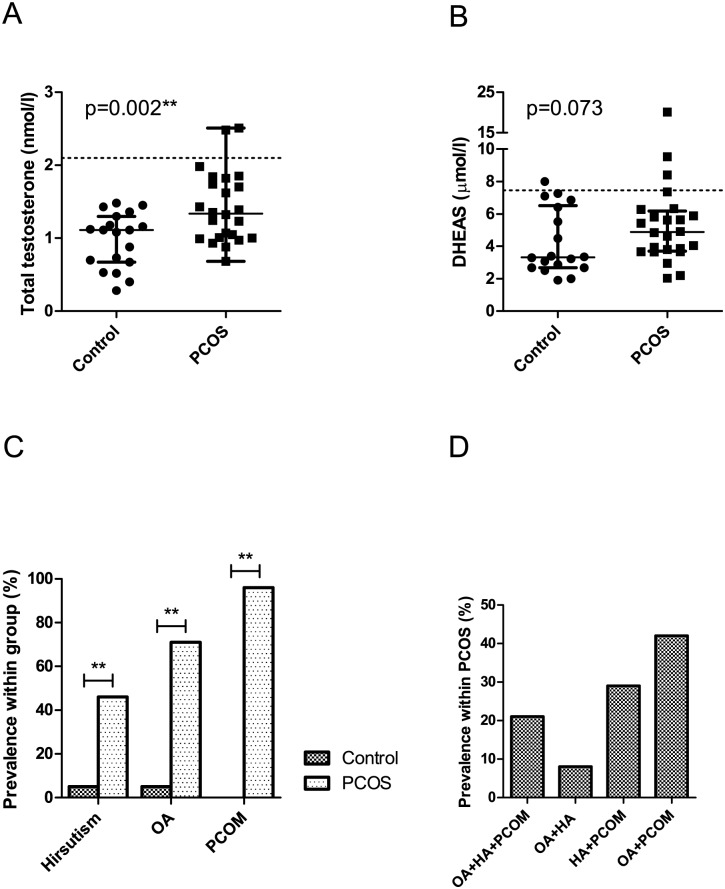
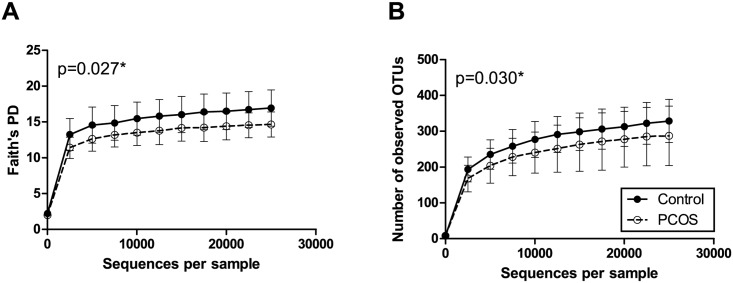
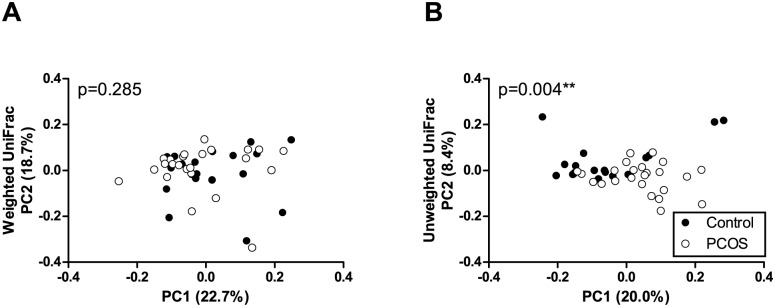
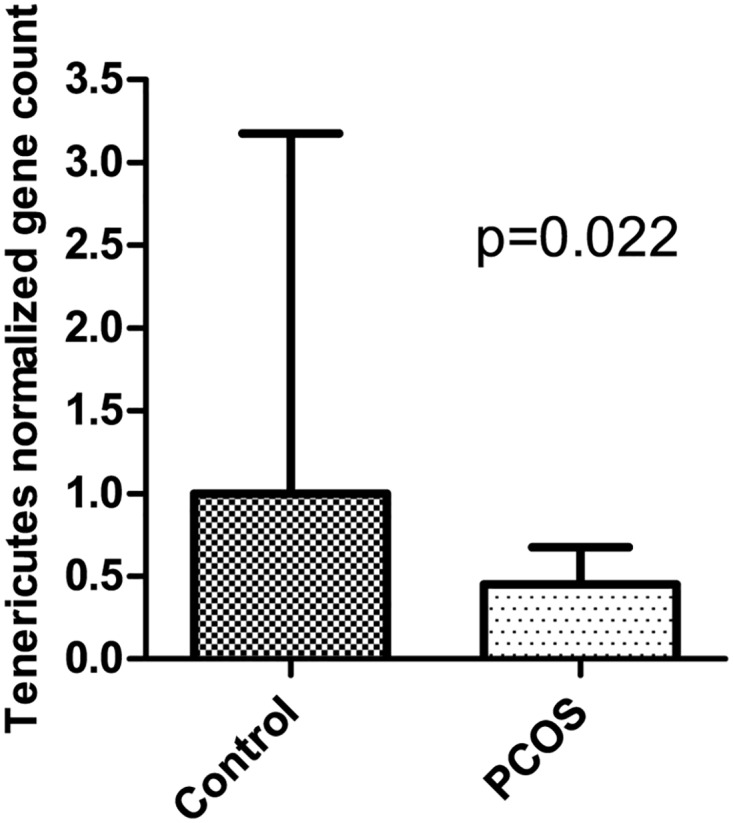
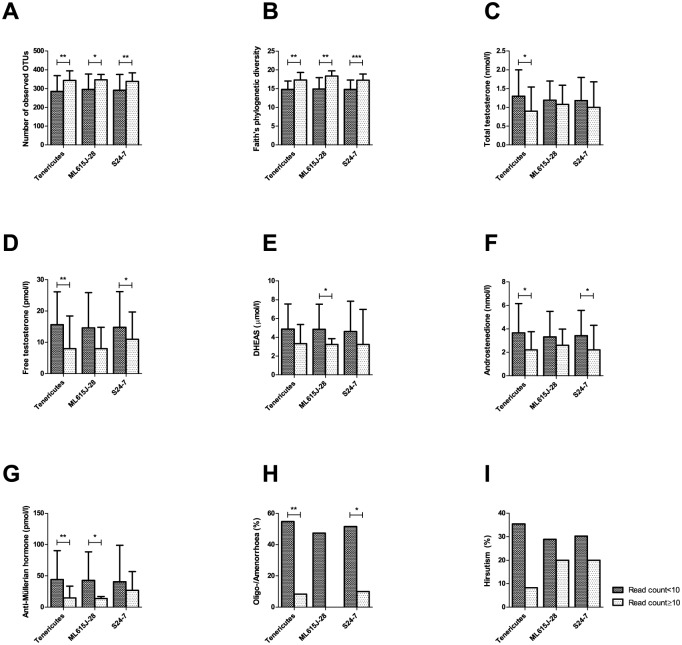
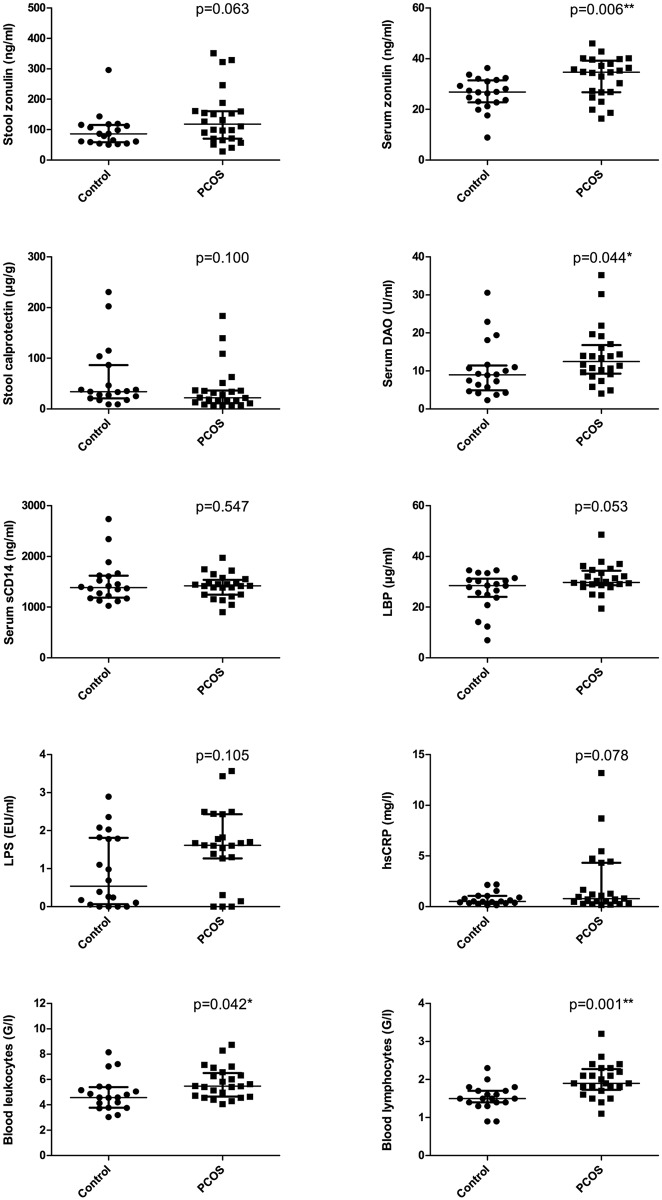
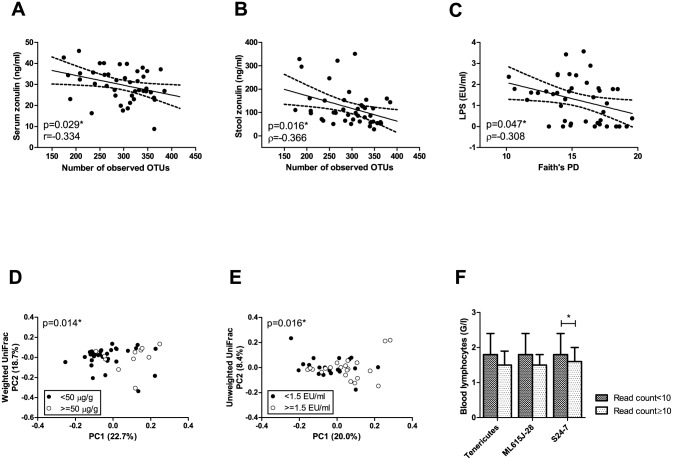
BACKGROUND: Polycystic ovary syndrome (PCOS) is a common female endocrinopathy of unclear origin characterized by hyperandrogenism, oligo-/anovulation, and ovarian cysts. Women with PCOS frequently display overweight, insulin resistance, and systemic low-grade inflammation. We hypothesized that endotoxemia resulting from a leaky gut is associated with inflammation, insulin resistance, fat accumulation, and hyperandrogenemia in PCOS. In this pilot study, we compared the stool microbiome, gut permeability, and inflammatory status of women with PCOS and healthy controls. METHODS: 16S rRNA gene amplicon sequencing was performed on stool samples from 24 PCOS patients and 19 healthy controls. Data processing and microbiome analysis were conducted in mothur and QIIME using different relative abundance cut-offs. Gut barrier integrity, endotoxemia, and inflammatory status were evaluated using serum and stool markers and associations with reproductive, metabolic, and anthropometric parameters were investigated. RESULTS: The stool microbiome of PCOS patients showed a lower diversity and an altered phylogenetic composition compared to controls. We did not observe significant differences in any taxa with a relative abundance>1%. When looking at rare taxa, the relative abundance of bacteria from the phylum Tenericutes, the order ML615J-28 (phylum Tenericutes) and the family S24-7 (phylum Bacteroidetes) was significantly lower and associated with reproductive parameters in PCOS patients. Patients showed alterations in some, but not all markers of gut barrier function and endotoxemia. CONCLUSION: Patients with PCOS have a lower diversity and an altered phylogenetic profile in their stool microbiome, which is associated with clinical parameters. Gut barrier dysfunction and endotoxemia were not driving factors in this patient cohort, but may contribute to the clinical phenotype in certain PCOS patients.
Overview
The claims and statistics of this paper haven’t been checked yet.
Run the check — free, no account needed. It reads the open-access text and checks the sources it cites.
Integrity signals
Registry
Cites
Statistics
Figures
Verification
Claims the paper makes
The claims and statistics of this paper haven’t been checked yet.
Run the check — free, no account needed. It reads the open-access text and checks the sources it cites.
Claims other papers make about this one
Each is checked against this paper’s own text: does it say what the citing paper says it does?
The source backs part of the claim, not all of it — or backs it for a different population, condition or comparison.
In the citing paper
“Similar to microbiomes associated with obesity, the microbiomes of individuals with PCOS have generally been found to have lower alpha diversity (lower numbers of bacterial taxa) than controls, and most studies describe an altered composition of taxa relative to controls [140,143].”
From Polycystic Ovary Syndrome: An Evolutionary Adaptation to Lifestyle and the Environment (2022) · cites this paper as [143]
Experimental — accuracy not yet measuredThe source backs part of the claim, not all of it — or backs it for a different population, condition or comparison.
In the citing paper
“Although most studies are small, dysbiosis has consistently been found to correlate with different physiological parameters, such as obesity, sex hormones and metabolic defects [140,141,143].”
From Polycystic Ovary Syndrome: An Evolutionary Adaptation to Lifestyle and the Environment (2022) · cites this paper as [143]
Experimental — accuracy not yet measuredThe source backs part of the claim, not all of it — or backs it for a different population, condition or comparison.
In the citing paper
“Dysbiosis is a consistent finding when looking at the microbiome of women with PCOS [140,141,142,143].”
From Polycystic Ovary Syndrome: An Evolutionary Adaptation to Lifestyle and the Environment (2022) · cites this paper as [143]
Experimental — accuracy not yet measuredIn the citing paper
“Alternative mechanisms of the pathogenesis of prediabetes and T2D in subjects with PCOS are muscle mitochondrial dysfunction [28] and the gut microbiome [29].”
From From Prediabetes to Type 2 Diabetes Mellitus in Women with Polycystic Ovary Syndrome: Lifestyle and Pharmacological Management (2020) · cites this paper as [29]
In the citing paper
“However, all diets that aim to reduce weight are considered beneficial [29].”
From From Prediabetes to Type 2 Diabetes Mellitus in Women with Polycystic Ovary Syndrome: Lifestyle and Pharmacological Management (2020) · cites this paper as [29]
Self-check
Percentages, sums and reported differences re-computed from the paper’s own numbers.
The self-check needs the paper’s full text.
Citations
Cites
QIIME allows analysis of high-throughput community sequencing data
Caporaso, J. G., Kuczynski, J., Stombaugh, J., Bittinger, K., Bushman, F. D., Costello, E. K., Fierer, N., Peña, A. G., Goodrich, J. K., Gordon, J. I., et al. (2010) · Nature Methods · doi:10.1038/nmeth.f.303 · Cited by 34,887
Search and clustering orders of magnitude faster than BLAST
Edgar, R. C. (2010) · Bioinformatics · doi:10.1093/bioinformatics/btq461 · Cited by 21,098
An obesity-associated gut microbiome with increased capacity for energy harvest
Turnbaugh, P. J., Ley, R. E., Mahowald, M. A., Magrini, V., Mardis, E. R., & Gordon, J. I. (2006) · Nature · doi:10.1038/nature05414 · Cited by 12,444
Greengenes, a Chimera-Checked 16S rRNA Gene Database and Workbench Compatible with ARB
DeSantis, T. Z., Hugenholtz, P., Larsen, N., Rojas, M., Brodie, E. L., Keller, K., Huber, T., Dalevi, D., Hu, P., & Andersen, G. L. (2006) · Applied and Environmental Microbiology · doi:10.1128/aem.03006-05 · Cited by 10,891 · cited 1×
“Open reference operational taxonomic unit (OTU) picking was performed in QIIME 1.8.0 using UCLUST against the greengenes 13.8 database [30–32].”
Influential(2004) · Fertility and Sterility · doi:10.1016/j.fertnstert.2003.10.004 · Cited by 9,050
UniFrac: a New Phylogenetic Method for Comparing Microbial Communities
Lozupone, C., & Knight, R. (2005) · Applied and Environmental Microbiology · doi:10.1128/aem.71.12.8228-8235.2005 · Cited by 8,227
A core gut microbiome in obese and lean twins
Turnbaugh, P. J., Hamady, M., Yatsunenko, T., Cantarel, B. L., Duncan, A., Ley, R. E., Sogin, M. L., Jones, W. J., Roe, B. A., Affourtit, J. P., et al. (2009) · Nature · doi:10.1038/nature07540 · Cited by 7,823
Kozich, J. J., Westcott, S. L., Baxter, N. T., Highlander, S. K., & Schloss, P. D. (2013) · Applied and Environmental Microbiology · doi:10.1128/aem.01043-13 · Cited by 7,246
A metagenome-wide association study of gut microbiota in type 2 diabetes
Qin, J., Li, Y., Cai, Z., Li, S., Zhu, J., Zhang, F., Liang, S., Zhang, W., Guan, Y., Shen, D., et al. (2012) · Nature · doi:10.1038/nature11450 · Cited by 6,762
Metabolic Endotoxemia Initiates Obesity and Insulin Resistance
Cani, P. D., Amar, J., Iglesias, M. A., Poggi, M., Knauf, C., Bastelica, D., Neyrinck, A. M., Fava, F., Tuohy, K. M., Chabo, C., et al. (2007) · Diabetes · doi:10.2337/db06-1491 · Cited by 6,638
Research works printed but not linked: 1
- LJ Owen, 2015, ANNALS EXPRESS: A direct assay for the routine measurement of testosterone, androstenedione, dihydrotestosterone and dehydroepiandrosterone by LC-MS/MS, Ann Clin Biochem, 53, 580
Cited by
Sorted by citations
Items 401–418 of 418
Duodenal microbiome profiles exhibit sex-specific differences
Rashid, M. A., Leite, G., Barlow, G. M., Hosseini, A., Brimberry, D., Flor, D., Parodi, G., Sanchez, M., Rivera, I., Trujillo, A., et al. (2026) · iScience · doi:10.1016/j.isci.2026.116679
“This is interesting as all of these genera have previously been associated with PMOS, 53–56 and a co-abundance group containing Granulicatella, Streptococcus , and Rothia operational taxonomic units (OTUs) was previously identified in stool samples from women with PMOS, and appeared to be slightly elevated in women wi…”
Ni, M., Wang, Q., Ye, T., Lei, H., Wang, Y., & Yuan, Y. (2026) · Journal of Ovarian Research · doi:10.1186/s13048-026-02164-0
Romeo, M., D’Urso, F., Paladini, F., Pollini, M., Chieppa, M., & Broccolo, F. (2026) · Journal of Biological Research - Bollettino della Società Italiana di Biologia Sperimentale · doi:10.4081/jbr.2026.14711
Beyond the Human Binary: Decoding Hormone-Immune Plasticity in Transgender Health
Cembalo, G., Turrini, M., Baldi, S., & Amedei, A. (2026) · Biology · doi:10.3390/biology15141187
“Reduced abundance of barrier-supporting bacteria has been associated with increased intestinal permeability and elevated circulating lipopolysaccharide-binding protein (LBP), a surrogate marker of microbial translocation [82,99–102].”
Síndrome dos ovários policísticos e sua relação com a microbiota intestinal
Righi, G. M., de Oliveira, T. F., & Baracat, M. C. P. (2021) · Femina · doi:10.61622/0100-72544910202108
The Female Reproductive Microbiome: Mechanistic Insights and Bioengineering Perspectives
Díaz, M. B. N., Carriere, P., Vinderola, G., Gentili, C., & Cattoni, D. I. (2026) · Biology · doi:10.3390/biology15161337
“Likewise, Lindheim and coworkers identified significant alterations in gut microbial composition associated with hyper-androgenism and insulin resistance in PMOS patients [76].”
Ruiz, D., Robinson, V., Doucoure, M., Cheema, A. R., Cabal, C. R., Salam, A. S. A., Younes, R. A., Song, W., Ibrahim, S. A., Ariyo, O., et al. (2026) · Cureus · doi:10.7759/cureus.114891 · Cited by 1
“The gut microbiome contributes to systemic estrogen metabolism through the estrobolome and may thereby influence hormonal and inflammatory pathways relevant to reproductive function [54].”
Samareh, A. N., Samare‐Najaf, M., Ghafari, M., Pourghadamyari, H., Asadikaram, G., Barkam, M., & Rastegar, S. (2026) · Reproductive Sciences · doi:10.1007/s43032-026-02176-7
“The gastrointestinal tract often exhibits reduced microbial diversity, with a decline in beneficial, short-chain fatty acid-producing genera and an expansion of pro-inflammatory species [ 15, 69].”
Nowakowski, Ł., Warchoł, K., Kuźniar, A., Zimoń, B., Skoczylas, M. M., Marzec, P., Krawczyk, G., Jegorow, D., Pankiewicz, R., Warchol, A., et al. (2026) · Journal of Clinical Medicine · doi:10.3390/jcm15176705
“Possibly a decrease in functional specialization, less flexibility in metabolizing drugs or hormones [63,72,82,92,101,110,111,118] https://doi.org/10.3390/jcm15176705 This scoping review has several limitations.”
InfluentialYang, Y., Dai, F., He, X., Zhao, P., & Chen, Q. (2026) · Frontiers in Nutrition · doi:10.3389/fnut.2026.1945464
“For instance, a study by Lindheim et al. did not identify intestinal barrier dysfunction or endotoxemia as primary drivers in their PCOS cohort (48); similarly, Lingaiah et al. observed no significant differences in markers such as zonulin and fatty acid-binding protein 2 (FABP2) between the PCOS…”
Kusamoto, A., Osuga, Y., Hirota, Y., & Harada, M. (2026) · Reproductive Medicine and Biology · doi:10.1002/rmb2.70097
“Subsequent human observational studies, conducted across diverse ethnic populations, have reported that women with PMOS exhibit distinct gut microbiota profiles compared with healthy controls, consistent with findings from animal studies [26, 86–88].”
Tunjungseto, A., Pratiwi, I. W., Iffatunnisa, F., Hadi, O. A., Ahsan, F., & Santoso, B. (2026) · Reproductive Medicine · doi:10.3390/reprodmed7030049
Tandl, V., Borzan, V., Riedl, R., Brunnhofer, B., Trummer, O., & Obermayer-Pietsch, B. M. (2026) · Research Square · doi:10.21203/rs.3.rs-10549347/v1
Self-citationNeues zum PCOS/PMOS – „polyendokrines metabolisches Ovar-Syndrom“ bei Frauen … und Männern
Obermayer-Pietsch, B. M. (2026) · Journal für Endokrinologie Diabetologie und Stoffwechsel · doi:10.1007/s41969-026-00320-x
Self-citationNevins, A., Stansbury, N. M., Robinson, R. D., & Zhong, G. (2026) · Pathogens · doi:10.3390/pathogens15101003
Naveed, M., Yang, T., Togliatti, O., Joe, B., & Hill, J. W. (2026) · Reviews in Endocrine and Metabolic Disorders · doi:10.1007/s11154-026-10085-y
Prasad, A., Kishan, A., & Keezhadath, S. (2026) · Metabolites · doi:10.3390/metabo16100758
Gut microbiota in reproductive health: molecular mechanisms and therapeutic perspectives
Dash, D., & Koiri, R. K. (2026) · Total Environment Microbiology · doi:10.1016/j.temicr.2026.100110
Metadata
- Authors
- Lindheim, L., Bashir, M., Münzker, J., Trummer, C., Zachhuber, V., Leber, B., Horvath, A., Pieber, T. R., Gorkiewicz, G., Stadlbauer, V., & Obermayer-Pietsch, B.
- Affiliations
- Medical University of Graz (AT)
- University of Graz (AT)
- Corresponding author
- Lindheim, Lisa
- ORCID
- Venue
- PLOS ONE
- Publisher
- Public Library of Science (PLoS)
- Published
- 2017-01-03
- Volume
- 12
- Issue
- 1
- Pages
- e0168390
- ISSN
- 1932-6203 (ISSN-L)
- PMC
- PMC5207627
- OpenAlex
- W2568515092
- Cited by
- 416
- References
- 50
- Citations by year
- 2026: 51 · 2025: 43 · 2024: 55 · 2023: 70 · 2022: 52 · 2021: 56 · 2020: 44 · 2019: 23 · 2018: 18 · 2017: 3
- FWCI
- 27.94
- Type
- journal article
- Language
- en
- Open access
- gold
- doi.org
- Licence
- Locations
- PLoS ONE (publishedVersion, cc-by)
- PubMed Central (publishedVersion, cc-by)
- PubMed (publishedVersion)
- DOAJ (DOAJ: Directory of Open Access Journals) (submittedVersion, cc-by-sa)
- Figshare (submittedVersion, cc-by)
- Funders
- Austrian Science Fund (W1241)
- Topics
- Health Sciences › Medicine › Reproductive Medicine › Ovarian function and disorders
- Life Sciences › Biochemistry, Genetics and Molecular Biology › Molecular Biology › Gut microbiota and health
- Health Sciences › Medicine › Gastroenterology › Gastrointestinal motility and disorders
- Keywords
- polycystic ovary syndrome, gut microbiota, intestinal barrier, endotoxemia, intestinal permeability, microbial diversity, Tenericutes, Bacteroidetes, S24-7, inflammation, insulin resistance, hyperandrogenemia, reproductive disorders, metabolic defects
- MeSH terms
- Gastrointestinal Microbiome, Adult, Anthropometry, Feces, Female, Humans, Inflammation, Tenericutes, Pilot Projects, Polycystic Ovary Syndrome, Surveys and Questionnaires, RNA, Ribosomal, 16S, Case-Control Studies, Principal Component Analysis, Bacteroidetes, Real-Time Polymerase Chain Reaction
About these checks
Registry, retraction, Cites and statistics results are computed, not judged, with one exception: a printed reference that no index lists is read once by a model before it counts as a citation error. Claims are extracted by a model and kept only when their quote appears verbatim in the text; each cited source is then checked, with a model’s help, for whether it says what the claim relies on. Those verdicts can be wrong — read the claim’s quote and the cited source before relying on one.
Statistics and arithmetic are recomputed, not judged.
Confidence bands are shown only for fields calibrated on our annotated test set. None is calibrated yet, so no band is shown.
What counts as a claim ›How we measure confidence ›How we check this ›
Are you an author, or do you see a problem with this page? Request a review
