

An Adaptation to Low Copper in Candida albicans Involving SOD Enzymes and the Alternative Oxidase
Open accessThe DOI matches its Crossref record; 66 of the 68 references it cites were found in a registry or an index.
Abstract
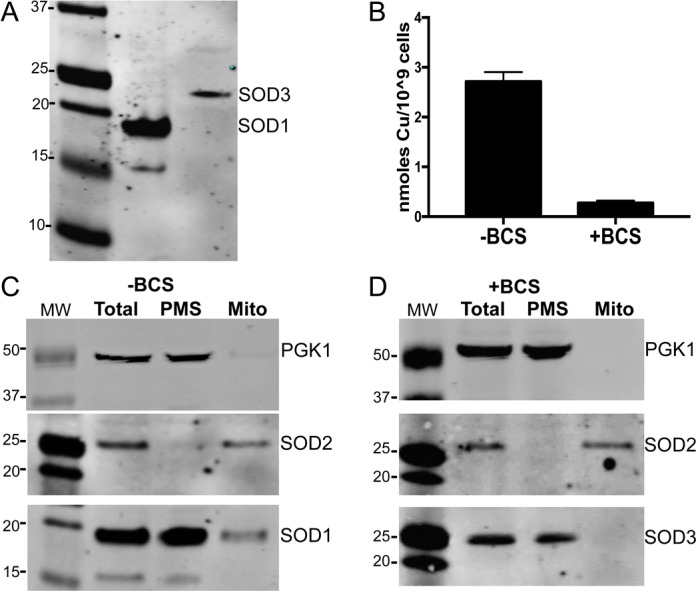
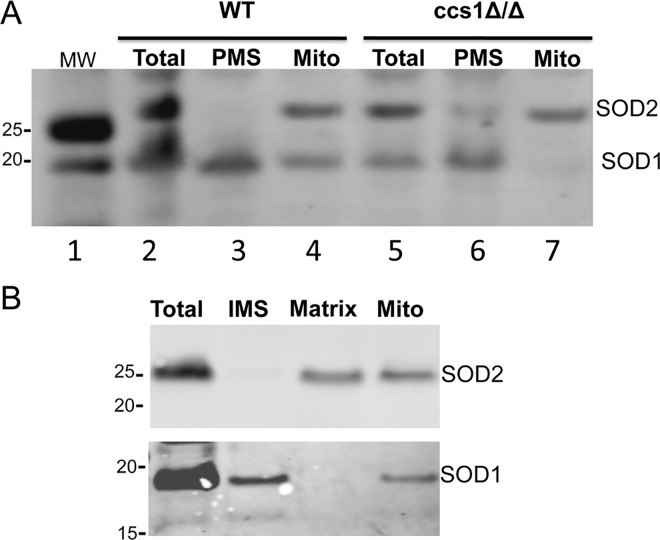
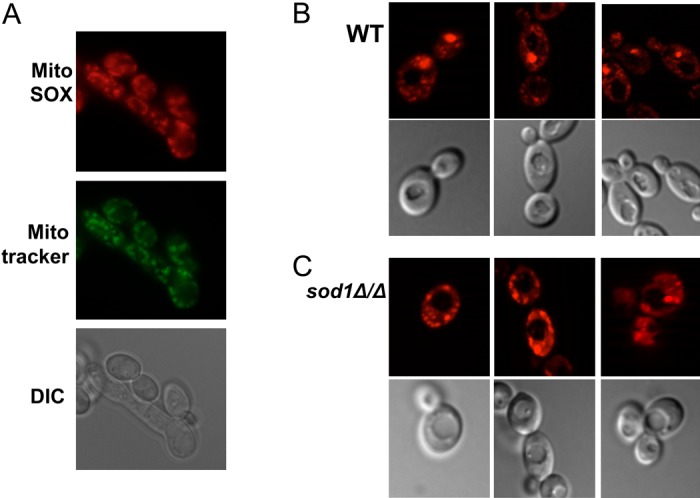
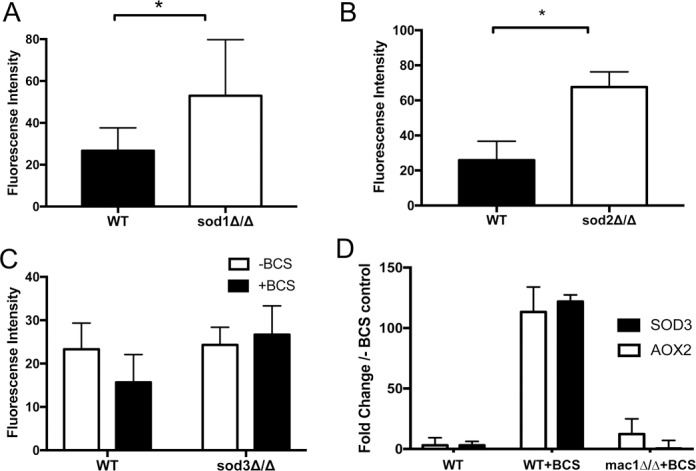
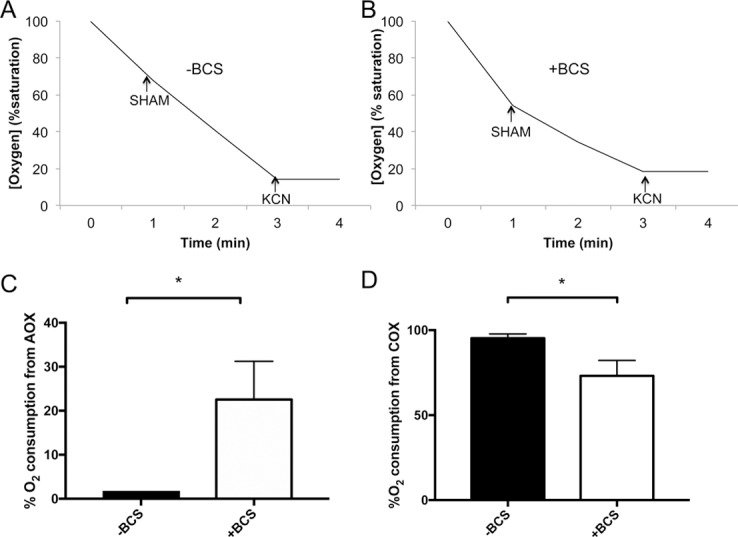
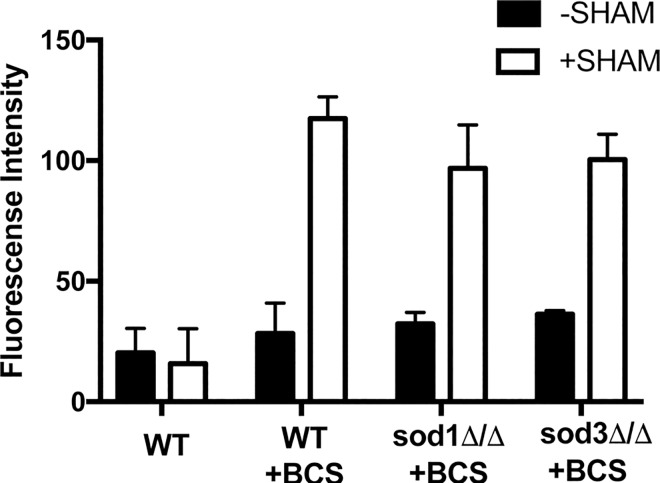
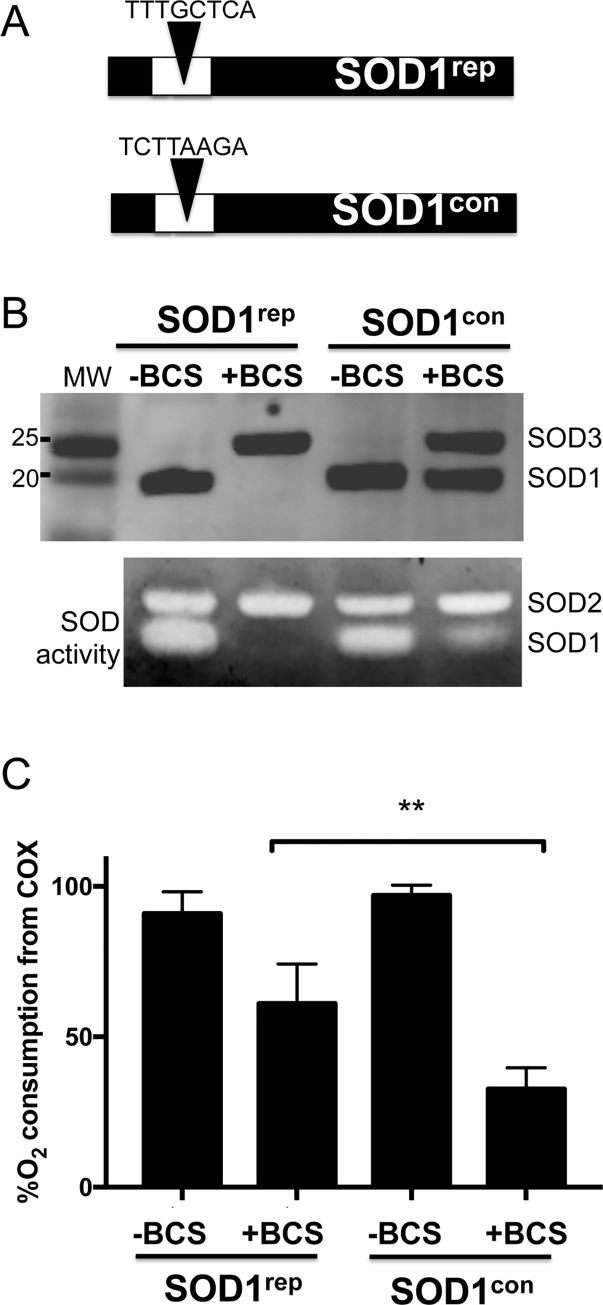
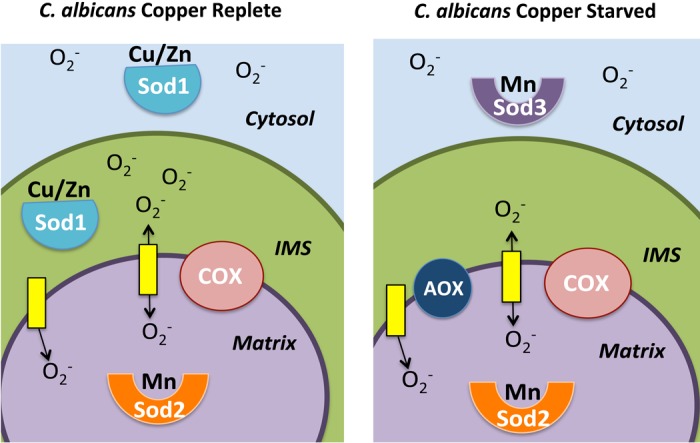
In eukaryotes, the Cu/Zn superoxide dismutase (SOD1) is a major cytosolic cuproprotein with a small fraction residing in the mitochondrial intermembrane space (IMS) to protect against respiratory superoxide. Curiously, the opportunistic human fungal pathogen Candida albicans is predicted to express two cytosolic SODs including Cu/Zn containing SOD1 and manganese containing SOD3. As part of a copper starvation response, C. albicans represses SOD1 and induces the non-copper alternative SOD3. While both SOD1 and SOD3 are predicted to exist in the same cytosolic compartment, their potential role in mitochondrial oxidative stress had yet to be investigated. We show here that under copper replete conditions, a fraction of the Cu/Zn containing SOD1 localizes to the mitochondrial IMS to guard against mitochondrial superoxide. However in copper starved cells, localization of the manganese containing SOD3 is restricted to the cytosol leaving the mitochondrial IMS devoid of SOD. We observe that during copper starvation, an alternative oxidase (AOX) form of respiration is induced that is not coupled to ATP synthesis but maintains mitochondrial superoxide at low levels even in the absence of IMS SOD. Surprisingly, the copper-dependent cytochrome c oxidase (COX) form of respiration remains high with copper starvation. We provide evidence that repression of SOD1 during copper limitation serves to spare copper for COX and maintain COX respiration. Overall, the complex copper starvation response of C. albicans involving SOD1, SOD3 and AOX minimizes mitochondrial oxidative damage whilst maximizing COX respiration essential for fungal pathogenesis.
Overview
The claims and statistics of this paper haven’t been checked yet.
Free: it reads the open-access text and checks the first 5 claims that cite a source we can check. Create a free account to check every claim.
Integrity signals
Registry
Cites
Statistics
Figures
Verification
Claims the paper makes
The claims and statistics of this paper haven’t been checked yet.
Free: it reads the open-access text and checks the first 5 claims that cite a source we can check. Create a free account to check every claim.
Self-check
Percentages, sums and reported differences re-computed from the paper’s own numbers.
The self-check needs the paper’s full text.
Citations
Cites
McCord, J. M., & Fridovich, I. (1969) · Journal of Biological Chemistry · doi:10.1016/s0021-9258(18)63504-5 · Cited by 12,952
Generation of superoxide anion by the NADH dehydrogenase of bovine heart mitochondria
Turrens, J. F., & Boveris, A. (1980) · Biochemical Journal · doi:10.1042/bj1910421 · Cited by 1,601
Ubisemiquinone is the electron donor for superoxide formation by complex III of heart mitochondria
Turrens, J. F., Alexandre, A., & Lehninger, A. L. (1985) · Archives of Biochemistry and Biophysics · doi:10.1016/0003-9861(85)90293-0 · Cited by 1,214
Complex iii releases superoxide to both sides of the inner mitochondrial membrane
Muller, F. L., Liu, Y., & Van Remmen, H. (2004) · Journal of Biological Chemistry · doi:10.1074/jbc.m407715200 · Cited by 1,036
Subcellular Distribution of Superoxide Dismutases (SOD) in Rat Liver
Okado-Matsumoto, A., & Fridovich, I. (2001) · Journal of Biological Chemistry · doi:10.1074/jbc.m105395200 · Cited by 1,013
Mitochondrial Superoxide Dismutase
Weisiger, R. A., & Fridovich, I. (1973) · Journal of Biological Chemistry · doi:10.1016/s0021-9258(19)43735-6 · Cited by 958
ALTERNATIVE OXIDASE: From Gene to Function
Vanlerberghe, G. C., & McIntosh, L. (1997) · Annual Review of Plant Physiology and Plant Molecular Biology · doi:10.1146/annurev.arplant.48.1.703 · Cited by 792
Sturtz, L. A., Diekert, K., Jensen, L. T., Lill, R., & Culotta, V. C. (2001) · Journal of Biological Chemistry · doi:10.1074/jbc.m105296200 · Cited by 718
Self-citationMattiazzi, M., D'Aurelio, M., Gajewski, C. D., Martushova, K., Kiaei, M., Beal, M. F., & Manfredi, G. (2002) · Journal of Biological Chemistry · doi:10.1074/jbc.m203065200 · Cited by 616
Noble, S. M., & Johnson, A. D. (2005) · Eukaryotic Cell · doi:10.1128/ec.4.2.298-309.2005 · Cited by 592
Cited by
Role of Calprotectin in Withholding Zinc and Copper from Candida albicans
Besold, A. N., Gilston, B. A., Radin, J. N., Ramsoomair, C., Culbertson, E. M., Li, C. X., Cormack, B. P., Chazin, W. J., Kehl-Fie, T. E., & Culotta, V. C. (2018) · Infection and Immunity · doi:10.1128/iai.00779-17 · Cited by 136
“albicans involves Cu sparing whereby the major cuproprotein Sod1 is downregulated (7, 9).”
BackgroundSelf-citationPradhan, A., Avelar, G. M., Bain, J. M., Childers, D. S., Larcombe, D. E., Netea, M. G., Shekhova, E., Munro, C. A., Brown, G. D., Erwig, L. P., et al. (2018) · mBio · doi:10.1128/mbio.01318-18 · Cited by 133
“Sod1 is the only superoxide dismutase that localizes to the mitochondrial intermembrane space (62).”
Oxidative responses and fungal infection biology
Warris, A., & Ballou, E. R. (2018) · Seminars in Cell and Developmental Biology · doi:10.1016/j.semcdb.2018.03.004 · Cited by 122
Wiemann, P., Perevitsky, A., Lim, F. Y., Shadkchan, Y., Knox, B. P., Landero Figueora, J. A., Choera, T., Niu, M., Steinberger, A. J., Wüthrich, M., et al. (2017) · Cell Reports · doi:10.1016/j.celrep.2017.04.019 · Cited by 104
Protein markers for Candida albicans EVs include claudin‐like Sur7 family proteins
Dawson, C. S., Garcia‐Ceron, D., Rajapaksha, H., Faou, P., Bleackley, M. R., & Anderson, M. A. (2020) · Journal of Extracellular Vesicles · doi:10.1080/20013078.2020.1750810 · Cited by 83
From economy to luxury: Copper homeostasis in Chlamydomonas and other algae
Merchant, S. S., Schmollinger, S., Strenkert, D., Moseley, J. L., & Blaby-Haas, C. E. (2020) · Biochimica et Biophysica Acta (BBA) - Molecular Cell Research · doi:10.1016/j.bbamcr.2020.118822 · Cited by 55
Copper-only superoxide dismutase enzymes and iron starvation stress in Candida fungal pathogens
Schatzman, S. S., Peterson, R. L., Teka, M., He, B., Cabelli, D. E., Cormack, B. P., & Culotta, V. C. (2020) · Journal of Biological Chemistry · doi:10.1074/jbc.ra119.011084 · Cited by 54
“Moreover, intracellular Cu/ZnSOD1 that is an excellent biomarker of Cu availability (42, 43) does not change in either activity nor protein levels with BPS, unlike cells treated with the Cu(I) chelator bathocuproine sulfonate (BCS) (Fig.”
BackgroundSelf-citationSchatzman, S. S., & Culotta, V. (2018) · ACS Infectious Diseases · doi:10.1021/acsinfecdis.8b00026 · Cited by 53
Self-citationALS-linked SOD1 mutations impair mitochondrial-derived vesicle formation and accelerate aging
Guo, Y., Guan, T., Yu, Q., Sanghai, N., Shafiq, K., Li, M., Jiao, X., Na, D., Zhang, G., & Kong, J. (2023) · Redox Biology · doi:10.1016/j.redox.2023.102972 · Cited by 50
“Previous studies have demonstrated that oxidation of SOD1 protein accumulates not only in the cytoplasm but also in the mitochondria ’ s inner membrane space (IMS) [51].”
BackgroundGenome‐wide analysis of the regulation of Cu metabolism in Cryptococcus neoformans
García‐Santamarina, S., Festa, R. A., Smith, A. D., Yu, C.-H. A., Probst, C., Ding, C., Homer, C. M., Yin, J., Noonan, J. P., Madhani, H. D., et al. (2018) · Molecular Microbiology · doi:10.1111/mmi.13960 · Cited by 41
“…scarcity, cells prioritize the activities of Cu- dependent enzymes to those more essential for cell sur- vival, as has previously been reported for repression of SOD1 in a Mac1-dependent manner during Cu limitation in C. albicans (Woodacre et al., 2008; Li et al., 2015; Broxton and Culotta, 2016).”
Copper in infectious disease: Using both sides of the penny
Culbertson, E. M., & Culotta, V. (2021) · Seminars in Cell and Developmental Biology · doi:10.1016/j.semcdb.2020.12.003 · Cited by 37
Self-citationWiemann, P., Perevitsky, A., Lim, F. Y., Shadkchan, Y., Knox, B. P., Figueroa, J. A. L., Choera, T., Niu, M., Steinberger, A. J., Wüthrich, M., et al. (2017) · Cell Reports · doi:10.1016/j.celrep.2017.05.075 · Cited by 36
“albicans show a distinct response of ROI defensemechanism toward different copper environments during infection (Broxton and Culotta, 2016; Li et al., 2015), suggesting that a similar connection as demonstrated in A.”
Copper potentiates azole antifungal activity in a way that does not involve complex formation
Hunsaker, E. W., & Franz, K. J. (2019) · Dalton Transactions · doi:10.1039/c9dt00642g · Cited by 29
Interactions between copper homeostasis and the fungal cell wall affect copper stress resistance
Probst, C., García‐Santamarina, S., Brooks, J. T., Kloet, I. V. D., Baars, O., Ralle, M., Thiele, D. J., & Alspaugh, J. A. (2022) · PLoS Pathogens · doi:10.1371/journal.ppat.1010195 · Cited by 24
“Therefore, in response to low copper stress, microbes have evolved strategies to increase copper uptake efficiency and to direct copper to sites where it is most needed [2,47,48].”
BackgroundExpanded role of the Cu‐sensing transcription factor Mac1p in Candida albicans
Culbertson, E. M., Bruno, V. M., Cormack, B. P., & Culotta, V. (2020) · Molecular Microbiology · doi:10.1111/mmi.14591 · Cited by 24
“Additionally, Mac1p induces a mitochondrial alternative oxidase (AOX2) to compensate for loss of mitochondrial Cu/Zn-SOD1 (Woodacre et al., 2008; Broxton and Culotta, 2016).”
BackgroundMethodResultInfluentialSelf-citationLiu, Z., Basso, P., Hossain, S., Liston, S. D., Robbins, N., Whitesell, L., Noble, S. M., & Cowen, L. E. (2023) · Nature Communications · doi:10.1038/s41467-023-40209-w · Cited by 22
“In addition to the AOX2 transactivators identi fi ed here, the copper-sensing transcription factor Mac1 has previously been repor-ted to drive AOX2 induction upon copper starvation 44 .”
Candida albicans reprioritizes metal handling during fluconazole stress
Hunsaker, E. W., & Franz, K. J. (2019) · Metallomics · doi:10.1039/c9mt00228f · Cited by 22
Folgueira, I., Lamas, J., Felipe, A. P. D., Sueiro, R. A., & Leiro, J. M. (2019) · Scientific Reports · doi:10.1038/s41598-019-49750-5 · Cited by 22
Transcription factor–driven alternative localization of Cryptococcus neoformans superoxide dismutase
Smith, A. D., García‐Santamarina, S., Ralle, M., Loiselle, D. R., Haystead, T., & Thiele, D. J. (2021) · Journal of Biological Chemistry · doi:10.1016/j.jbc.2021.100391 · Cited by 21
“albicans under Cu limitation as a mechanism to preserve available Cu cofactor (51), the remaining studies here focused on the unknown role of Cuf1 in the regulation of SOD2.”
BackgroundAlternative oxidase promotes high iron tolerance in Candida albicans
Sharma, R., Gibb, A., Barnts, K. L., Elrod, J. W., & Puri, S. (2023) · Microbiology Spectrum · doi:10.1128/spectrum.02157-23 · Cited by 20
“Previous studies in fungal systems including C. albicans have highlighted the role of AOX in managing mitochondrial ROS, and growth defects under oxidative stress were observed in its absence (31, 46, 48).”
BackgroundFiołka, M. J., Czaplewska, P., Wójcik-Mieszawska, S., Bogucka, A. E., Lewtak, K., Sofińska-Chmiel, W., & Buchwald, T. (2021) · Scientific Reports · doi:10.1038/s41598-021-96093-1 · Cited by 19
Szibor, M., Schenkl, C., Barsottini, M. R. D. O., Young, L., & Moore, A. L. (2022) · Biochemical Journal · doi:10.1042/bcj20180192 · Cited by 19
Metabolic Adaptation of Paracoccidioides brasiliensis in Response to in vitro Copper Deprivation
Petito, G. T., de Curcio, J. S., Pereira, M., Bailão, A. M., Paccez, J. D., Tristão, G. B., de Morais, C. O. B., de Sousa, M. V., dos Santos, A. D. C. M., Fontes, W., et al. (2020) · Frontiers in Microbiology · doi:10.3389/fmicb.2020.01834 · Cited by 17
Copper Availability Influences the Transcriptomic Response of Candida albicans to Fluconazole Stress
Hunsaker, E. W., Yu, C.-H. A., & Franz, K. J. (2021) · G3 Genes Genomes Genetics · doi:10.1093/g3journal/jkab065 · Cited by 16
A role for Candida albicans superoxide dismutase enzymes in glucose signaling
Broxton, C. N., He, B., Bruno, V. M., & Culotta, V. (2017) · Biochemical and Biophysical Research Communications · doi:10.1016/j.bbrc.2017.11.084 · Cited by 15
“albicans for sparing intracellular Cu when extracellular Cu becomes low as is seen during fungal invasion of the kidney [18, 26].”
BackgroundSelf-citationUrrialde, V., Alburquerque-González, B., Guirao-Abad, J. P., Plá, J., Argüelles, J. C., & Alonso‐Monge, R. (2017) · Microbiological Research · doi:10.1016/j.micres.2017.06.004 · Cited by 14
The antimicrobial and cytotoxic effects of a copper-loaded zinc oxide phosphate cement
Wassmann, T., Schubert, A., Malinski, F., Rosentritt, M., Krohn, S., Techmer, K. S., & Bürgers, R. (2020) · Clinical Oral Investigations · doi:10.1007/s00784-020-03257-w · Cited by 12
Ceruloplasmin as a source of Cu for a fungal pathogen
Besold, A. N., Shanbhag, V., Petris, M. J., & Culotta, V. (2021) · Journal of Inorganic Biochemistry · doi:10.1016/j.jinorgbio.2021.111424 · Cited by 11
Self-citationZhang, Y., Gu, Z., Li, Z., Wu, Q., Xu, X., & Peng, X. (2025) · PLoS Pathogens · doi:10.1371/journal.ppat.1012887 · Cited by 10
A response to iron involving carbon metabolism in the opportunistic fungal pathogen Candida albicans
Garg, R., Zhu, Z., Hernandez, F. G., Wang, Y., David, M. S., Bruno, V. M., & Culotta, V. (2025) · mSphere · doi:10.1128/msphere.00040-25 · Cited by 8
“A total of 10–20 OD 600 cell units were harvested, lysed by bead homogenization, and RNA isolated by RNAeasy Plus (Qiagen) (22).”
Self-citationNutrition-Associated Processes Govern Fungal Pathogenicity
Gao, X., Fu, Y., & Ding, C. (2021) · Infectious Microbes & Diseases · doi:10.1097/im9.0000000000000055 · Cited by 8
“as mitochondrial superoxide scavengers, whereas the manganesecontaining Sod3 is re-localized from the intermembrane space to the cytosolic space.(98)”
BackgroundChen, H., Li, Z., Yu, Q., Li, W., & Gu, L. (2025) · Advanced Composites and Hybrid Materials · doi:10.1007/s42114-025-01271-8 · Cited by 7
“Additionally, ROS removal genes SOD1 and SOD2 , with fold changes of 0.31 and 0.74, respectively, fail to alleviate ROS toxicity through a series of metabolic reactions [68, 69].”
InfluentialCopper Metabolism in Naegleria gruberi and Its Deadly Relative Naegleria fowleri
Ženíšková, K., Grechnikova, M., & Šuťák, R. (2022) · Frontiers in Cell and Developmental Biology · doi:10.3389/fcell.2022.853463 · Cited by 6
“albicans responds to decreasing copper conditions by switching from copper-dependent Cu/Zn SOD to Mn SOD3 and, interestingly, by upregulating alternative oxidase (AOX) to minimize mitochondrial damage and simultaneously maximize COX respiration (Li CX. et al., 2015; Besold et al., 2016; Broxton and Culotta, 2016).”
BackgroundMorishima, N., Ogata, H., Magae, J., Ito, Y., & Kobayashi, J. (2023) · Genes to Cells · doi:10.1111/gtc.13011 · Cited by 3
“Although SOD1 was originally identified as a cytosolic enzyme, its activity has also been detected in the intermembrane space of mitochondria, where it is presumed to protect against the superoxide produced by the respiratory chain (Broxton & Culotta, 2016).”
BackgroundNeto, J. C., de Llanos, R., & Galindo, F. (2026) · Analytical and Bioanalytical Chemistry · doi:10.1007/s00216-026-06404-6 · Cited by 1
“For instance, nonyl acridine orange (NAO) [27, 28] rhodamine 123 (Rh123) [29], MitoTracker Green (MTG) [30], and DiOC 6 [31], as well as designed conjugates to investigate drug mechanisms of action [32–35].”
The Pseudogymnoascus destructans Proteome Under Copper Stress Conditions
Friudenberg, A. D., Anne, S., Lu, Y., Weintraub, S. T., & Peterson, R. L. (2026) · Journal of Fungi · doi:10.3390/jof12050318 · Cited by 1
“Similar modifications in CcO and AOX activities have been observed in C. albicans under Cu-limited conditions, enabling efficient respiratory growth under Cu restriction [58].”
Leveraging Vulnerabilities in Copper Trafficking for Synergistic Antifungal Activity
Denning-Jannace, C. A., James, K. J., Ortiz, C. M., Sturrock, G. R., Robison, A. T. R., Vaccaro, F. A., Kuhn, S. A., Fitzgerald, M. C., & Franz, K. J. (2025) · ACS Chemical Biology · doi:10.1021/acschembio.5c00525
Discovery of Bacillamide–Acylhydrazone Hybrids as Novel Fungicide Lead Compounds
Feng, S., Zhang, Y., Shi, P., Chen, K., & Lei, K. (2026) · Journal of Fungi · doi:10.3390/jof12030169
“Concurrently, fungal antioxidant capacity is compromised, resulting in intracellular accumulation of reactive oxygen species and subsequent oxidative damage, including lipid peroxidation of cell membranes and DNA damage [52,53].”
From Fungicide to Phagosome: A One Health View of Copper-Driven Fungal–Bacterial Interactions
Duggan, S. (2026) · Current Clinical Microbiology Reports · doi:10.1007/s40588-026-00277-0
“C. albicans appears adapted to fluctuating cop - per availability, shifting between copper import, export and alternative metal cofactor use across host-relevant conditions [40, 47].”
Metadata
- Authors
- Broxton, C. N., & Culotta, V. C.
- Affiliations
- Johns Hopkins University (US)
- Corresponding author
- Culotta, Valeria C.
- ORCID
- Culotta, Valeria C.
- Venue
- PLOS ONE
- Publisher
- Public Library of Science (PLoS)
- Published
- 2016-12-29
- Volume
- 11
- Issue
- 12
- Pages
- e0168400
- ISSN
- 1932-6203 (ISSN-L)
- PMC
- PMC5198983
- OpenAlex
- W2561164201
- Cited by
- 41
- References
- 68
- Citations by year
- 2026: 4 · 2025: 4 · 2023: 4 · 2022: 3 · 2021: 7 · 2020: 5 · 2019: 4 · 2018: 6 · 2017: 4
- FWCI
- 2.42
- Type
- journal article
- Language
- en
- Open access
- gold
- doi.org
- Licence
- Locations
- PLoS ONE (publishedVersion, cc-by)
- Europe PMC (PubMed Central) (publishedVersion, cc-by)
- PubMed Central (publishedVersion, cc-by)
- PubMed (publishedVersion)
- DOAJ (DOAJ: Directory of Open Access Journals) (submittedVersion, cc-by-sa)
- Funders
- National Institute of Allergy and Infectious Diseases (RO1 AI119949)
- National Institute of General Medical Sciences (F31 GM113637)
- National Cancer Institute (T32 CA009110)
- Topics
- Life Sciences › Biochemistry, Genetics and Molecular Biology › Molecular Biology › Fungal and yeast genetics research
- Life Sciences › Biochemistry, Genetics and Molecular Biology › Molecular Biology › Mitochondrial Function and Pathology
- Life Sciences › Biochemistry, Genetics and Molecular Biology › Molecular Biology › Redox biology and oxidative stress
- Keywords
- Candida albicans, superoxide dismutase, SOD1, SOD3, alternative oxidase, mitochondrial superoxide, mitochondrial intermembrane space, cytochrome c oxidase, mitochondrial respiration, copper homeostasis, fungal pathogenesis, oxidative stress
- MeSH terms
- Alternative Oxidase, Adaptation, Physiological, Candida albicans, Copper, Dose-Response Relationship, Drug, Oxidoreductases, Plant Proteins, Superoxide Dismutase, Oxidative Stress, Protein Transport, Mitochondrial Proteins, Mitochondrial Membranes
About these checks
Registry, retraction, Cites and statistics results are computed, not judged, with one exception: a printed reference that no index lists is read once by a model before it counts as a citation error. Claims are extracted by a model and kept only when their quote appears verbatim in the text; each cited source is then checked, with a model’s help, for whether it says what the claim relies on. Those verdicts can be wrong — read the claim’s quote and the cited source before relying on one.
Statistics and arithmetic are recomputed, not judged.
Confidence bands are shown only for fields calibrated on our annotated test set. None is calibrated yet, so no band is shown.
What counts as a claim ›How we measure confidence ›How we check this ›
Are you an author, or do you see a problem with this page? Request a review
Data sources
Bibliographic data: Semantic Scholar, OpenAlex, Crossref.
Contains information from the Semantic Scholar Academic Graph Datasets, made available under the ODC Attribution License (ODC-BY 1.0).
Semantic Scholar’s data is described in: Kinney, R., et al. (2023). The Semantic Scholar Open Data Platform. arXiv:2301.10140.
