

The DOI matches its Crossref record; 94 of the 96 references it cites were found in a registry or an index.
Comparing and evaluating metagenome assembly tools from a microbiologist's perspective - not only size matters!
Open accessAbstract
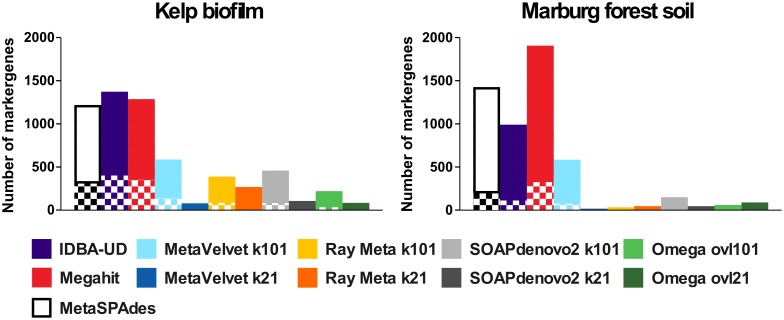
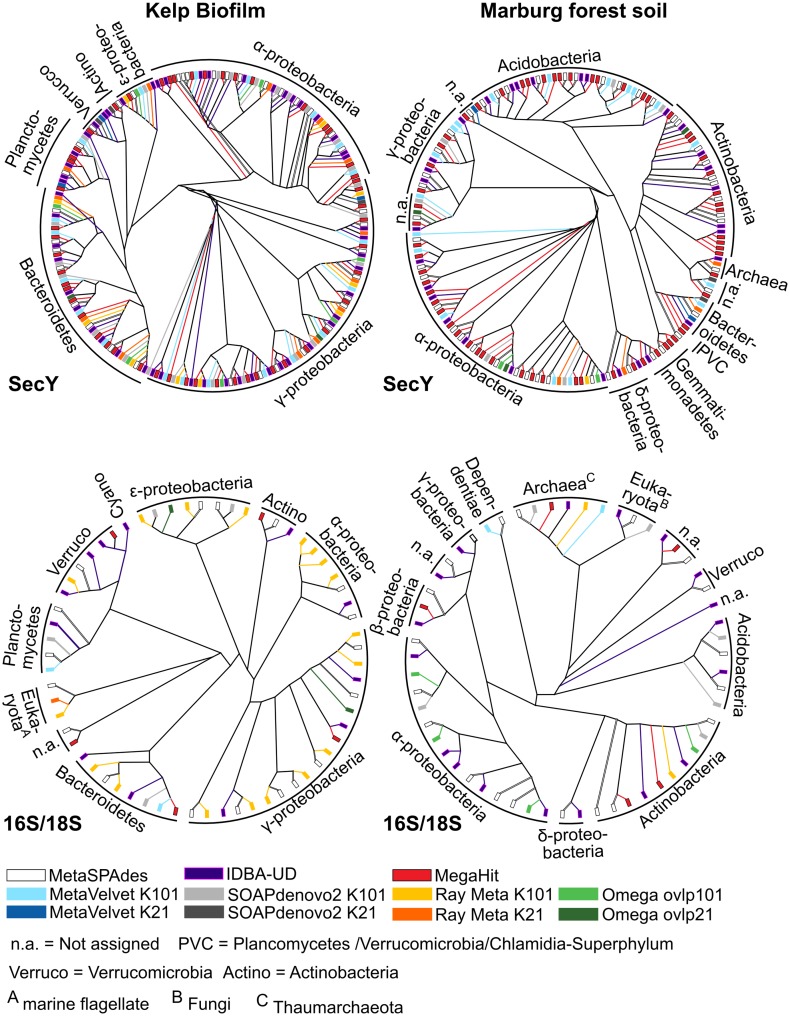
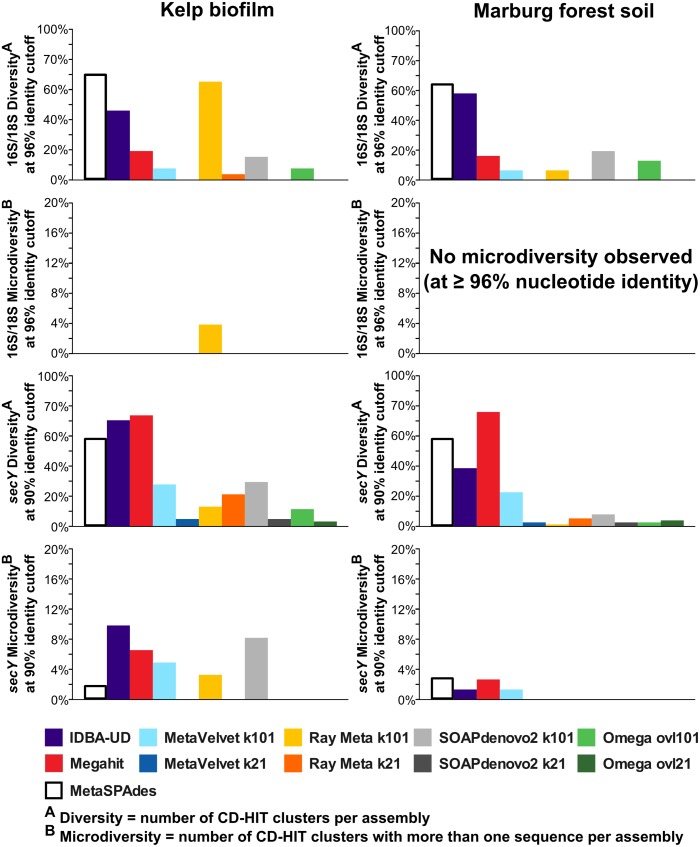
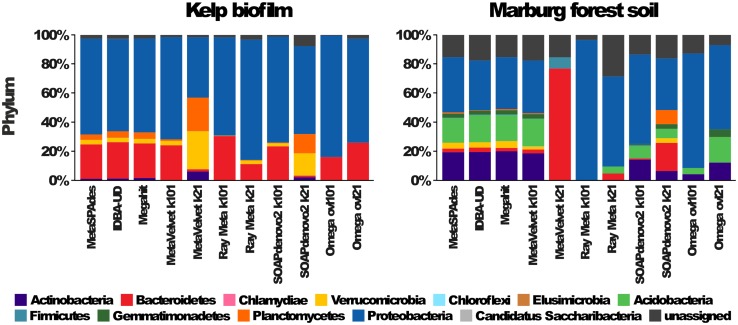
With the constant improvement in cost-efficiency and quality of Next Generation Sequencing technologies, shotgun-sequencing approaches -such as metagenomics- have nowadays become the methods of choice for studying and classifying microorganisms from various habitats. The production of data has dramatically increased over the past years and processing and analysis steps are becoming more and more of a bottleneck. Limiting factors are partly the availability of computational resources, but mainly the bioinformatics expertise in establishing and applying appropriate processing and analysis pipelines. Fortunately, a large diversity of specialized software tools is nowadays available. Nevertheless, choosing the most appropriate methods for answering specific biological questions can be rather challenging, especially for non-bioinformaticians. In order to provide a comprehensive overview and guide for the microbiological scientific community, we assessed the most common and freely available metagenome assembly tools with respect to their output statistics, their sensitivity for low abundant community members and variability in resulting community profiles as well as their ease-of-use. In contrast to the highly anticipated "Critical Assessment of Metagenomic Interpretation" (CAMI) challenge, which uses general mock community-based assembler comparison we here tested assemblers on real Illumina metagenome sequencing data from natural communities of varying complexity sampled from forest soil and algal biofilms. Our observations clearly demonstrate that different assembly tools can prove optimal, depending on the sample type, available computational resources and, most importantly, the specific research goal. In addition, we present detailed descriptions of the underlying principles and pitfalls of publically available assembly tools from a microbiologist's perspective, and provide guidance regarding the user-friendliness, sensitivity and reliability of the resulting phylogenetic profiles.
Overview
The claims and statistics of this paper haven’t been checked yet.
Run the check — free, no account needed. It reads the open-access text and checks the sources it cites.
Integrity signals
Registry
Cites
Statistics
Figures
Verification
Claims the paper makes
The claims and statistics of this paper haven’t been checked yet.
Run the check — free, no account needed. It reads the open-access text and checks the sources it cites.
Claims other papers make about this one
Each is checked against this paper’s own text: does it say what the citing paper says it does?
In the citing paper
“Assembly is a computationally expensive process, frequently requiring terabytes of memory to accomplish when using metaSPAdes (20), which is our primary assembly algorithm, as the ensuing assemblies are typically of better quality than those produced using other assemblers (21).”
From MGnify: the microbiome analysis resource in 2020 (2019) · cites this paper as [21]
Self-check
Percentages, sums and reported differences re-computed from the paper’s own numbers.
The self-check needs the paper’s full text.
Citations
Cites
Trimmomatic: a flexible trimmer for Illumina sequence data
Bolger, A. M., Lohse, M., & Usadel, B. (2014) · Bioinformatics · doi:10.1093/bioinformatics/btu170 · Cited by 65,548
MUSCLE: multiple sequence alignment with high accuracy and high throughput
Edgar, R. C. (2004) · Nucleic Acids Research · doi:10.1093/nar/gkh340 · Cited by 44,662
SPAdes: A New Genome Assembly Algorithm and Its Applications to Single-Cell Sequencing
Bankevich, A., Nurk, S., Antipov, D., Gurevich, A. A., Dvorkin, M. V., Kulikov, A. S., Lesin, V. M., Nikolenko, S., Pham, S., Prjibelski, A. D., et al. (2012) · Journal of Computational Biology · doi:10.1089/cmb.2012.0021 · Cited by 26,312
BLAST+: architecture and applications
Camacho, C., Coulouris, G., Avagyan, V., Ma, N., Papadopoulos, J., Bealer, K., & Madden, T. L. (2009) · BMC Bioinformatics · doi:10.1186/1471-2105-10-421 · Cited by 22,074
FLASH: fast length adjustment of short reads to improve genome assemblies
Magoč, T., & Salzberg, S. L. (2011) · Bioinformatics · doi:10.1093/bioinformatics/btr507 · Cited by 15,366
Fast and sensitive protein alignment using DIAMOND
Buchfink, B., Xie, C., & Huson, D. H. (2015) · Nature Methods · doi:10.1038/nmeth.3176 · Cited by 14,201
Prodigal: prokaryotic gene recognition and translation initiation site identification
Hyatt, D., Chen, G.-L., LoCascio, P. F., Land, M., Larimer, F. W., & Hauser, L. (2010) · BMC Bioinformatics · doi:10.1186/1471-2105-11-119 · Cited by 12,692
Cd-hit: Accelerated for clustering the next-generation sequencing data
Fu, L., Niu, B., Zhu, Z., Wu, S., & Li, W. (2012) · Bioinformatics · doi:10.1093/bioinformatics/bts565 · Cited by 11,175
Li, D., Liu, C.-M., Luo, R., Sadakane, K., & Lam, T. (2015) · Bioinformatics · doi:10.1093/bioinformatics/btv033 · Cited by 10,133
Velvet: Algorithms for de novo short read assembly using de Bruijn graphsPreprint
Zerbino, D. R., & Birney, E. (2008) · Genome Research · doi:10.1101/gr.074492.107 · Cited by 9,587
Research works printed but not linked: 2
- B Haider, 2014, Omega: an Overlap-graph de novo Assembler for Metagenomics, Bioinformatics
- L Fu, 2012, CD-HIT: accelerated for clustering the next-generation sequencing data, Bioinformatics
Cited by
Sorted by citations
Items 101–200 of 240
A Comparison of 16S rRNA Profiles Through Slaughter in Australian Export Beef Abattoirs
Kang, S., Ravensdale, J. T., Coorey, R., Dykes, G. A., & Barlow, R. S. (2019) · Frontiers in Microbiology · doi:10.3389/fmicb.2019.02747 · Cited by 18
Li, S., Tang, H., & Ye, Y. (2019) · Molecular & Cellular Proteomics · doi:10.1074/mcp.tir118.001233 · Cited by 17
Standardization of gut microbiome analysis in sports
Mancin, L., Paoli, A., Berry, S., Gonzalez, J. T., Collins, A. J., Lizarraga, M. A., Mota, J. F., Nicola, S., & Rollo, I. (2024) · Cell Reports Medicine · doi:10.1016/j.xcrm.2024.101759 · Cited by 22
Mitra, S. (2019) · Methods in molecular biology · doi:10.1007/978-1-4939-9074-0_20 · Cited by 16
Cyanobacteria and Soil Restoration: Bridging Molecular Insights with Practical Solutions
García, M., Bruna, P., Durán, P., & Abanto, M. (2025) · Microorganisms · doi:10.3390/microorganisms13071468 · Cited by 17
Assessment of urban microbiome assemblies with the help of targeted in silico gold standards
Gerner, S. M., Rattei, T., & Graf, A. B. (2018) · Biology Direct · doi:10.1186/s13062-018-0225-6 · Cited by 15
Salam, L. B., & Idris, H. (2019) · Environmental Sustainability · doi:10.1007/s42398-019-00058-0 · Cited by 15
Deshpande, A. S., & Fahrenfeld, N. L. (2023) · Journal of Hazardous Materials · doi:10.1016/j.jhazmat.2023.130743 · Cited by 14
GeneMark-HM: improving gene prediction in DNA sequences of human microbiome
Lomsadze, A., Bonny, C., Strozzi, F., & Borodovsky, M. Y. (2021) · NAR Genomics and Bioinformatics · doi:10.1093/nargab/lqab047 · Cited by 15
Carrera-Quintanar, L., Ortuño‐Sahagún, D., Franco‐Arroyo, N. N., Paredes, J. M. V., Zepeda‐Morales, A. S. M., & López-Roa, R. I. (2018) · International Journal of Molecular Sciences · doi:10.3390/ijms19123827 · Cited by 14
Brand, V. R., Crosby, L. D., & Criddle, C. S. (2018) · Applied and Environmental Microbiology · doi:10.1128/aem.02301-18 · Cited by 14
Strain-resolved de-novo metagenomic assembly of viral genomes and microbial 16S rRNAs
Jochheim, A., Jochheim, F. A., Kolodyazhnaya, A., Morice, É., Steinegger, M., & Söding, J. (2024) · Microbiome · doi:10.1186/s40168-024-01904-y · Cited by 13
Comparison of de-novo assembly tools for plasmid metagenome analysis
Gupta, S. K., Raza, S., & Unno, T. (2019) · Genes & Genomics · doi:10.1007/s13258-019-00839-1 · Cited by 14
Rahman, M. A., & Rangwala, H. (2018) · ACM International Conference on Bioinformatics, Computational Biology, and Health Informatics (ACM-BCB) · doi:10.1145/3233547.3233585 · Cited by 12
Detangling the Crosstalk Between Ascaris, Trichuris and Gut Microbiota: What´s Next?
Castañeda, S., Paniz‐Mondolfi, A., & Ramírez, J. D. (2022) · Frontiers in Cellular and Infection Microbiology · doi:10.3389/fcimb.2022.852900 · Cited by 12
Goussarov, G., Mysara, M., Cleenwerck, I., Claesen, J., Leys, N., Vandamme, P. A. R., & Houdt, R. V. (2024) · Microbiology · doi:10.1099/mic.0.001469 · Cited by 11
Jo, H. H., Lee, M. Y., Ha, S. E., Yeom, D. H., & Kim, Y. S. (2024) · Clinical Endoscopy · doi:10.5946/ce.2024.147 · Cited by 13
New bacterial and archaeal lineages discovered in organic rich sediments of a large tropical Bay
Tschoeke, D. A., Coutinho, F. H., Leomil, L., Cavalcanti, G. S., da Silva, B. S., Garcia, G. D., dos Anjos, L. C., Nascimento, L. B., Moreira, L. S., Otsuki, K., et al. (2020) · Marine Genomics · doi:10.1016/j.margen.2020.100789 · Cited by 12
Waite, D. W., Liefting, L. W., Delmiglio, C., Chernyavtseva, A., Ha, H., & Thompson, J. R. (2022) · Viruses · doi:10.3390/v14102163 · Cited by 11
Miralles, I., Ortega, R., & Montero‐Calasanz, M. D. C. (2021) · Research Square · doi:10.21203/rs.3.rs-252045/v1 · Cited by 11
The National Ecological Observatory Network’s soil metagenomes: assembly and basic analysis
Werbin, Z. R., Hackos, B., Lopez-Nava, J., Dietze, M. C., & Bhatnagar, J. M. (2021) · F1000Research · doi:10.12688/f1000research.51494.1 · Cited by 10
MetaHMM: A webserver for identifying novel genes with specified functions in metagenomic samples
Szalkai, B., & Grolmusz, V. I. (2018) · Genomics · doi:10.1016/j.ygeno.2018.05.016 · Cited by 10
A multi-modal deep language model for contaminant removal from metagenome-assembled genomes
Zou, B., Wang, J., Ding, Y., Zhang, Z., Huang, Y., Fang, X., Cheung, K. C., See, S., & Zhang, L. (2024) · Nature Machine Intelligence · doi:10.1038/s42256-024-00908-5 · Cited by 9
Lu, Y., Ocaña‐Pallarès, E., López‐Escardó, D., Dennis, S. R., Monaghan, M. T., Ruiz‐Trillo, I., Spaak, P., & Wolinska, J. (2020) · Molecular Phylogenetics and Evolution · doi:10.1016/j.ympev.2020.106891 · Cited by 9
A Bayesian framework for molecular strain identification from mixed diagnostic samples
Mustonen, L., Gao, X., Santana, A., Mitchell, R., Vigfusson, Y., & Ruthotto, L. (2018) · Inverse Problems · doi:10.1088/1361-6420/aad7cd · Cited by 8
Vuong, P., Moreira‐Grez, B., Wise, M. J., Whiteley, A. S., Kumaresan, D., & Kaur, P. (2022) · Environmental Microbiology · doi:10.1111/1462-2920.15994 · Cited by 8
A method for achieving complete microbial genomes and improving bins from metagenomics dataPreprint
Lui, L. M., Nielsen, T. N., & Arkin, A. P. (2020) · bioRxiv (Cold Spring Harbor Laboratory) · doi:10.1101/2020.03.05.979740 · Cited by 8
An ecological perspective on microbial genes of unknown function in soilPreprint
Holland-Moritz, H. E., Vanni, C., Fernàndez-Guerra, A., Bissett, A. B., & Fierer, N. (2021) · bioRxiv (Cold Spring Harbor Laboratory) · doi:10.1101/2021.12.02.470747 · Cited by 8
Genome-resolved metagenomics from short-read sequencing data in the era of artificial intelligence
Qayyum, H., Ishaq, Z., Ali, A. H., Kayani, M. U. R., & Huang, L. (2025) · Functional & Integrative Genomics · doi:10.1007/s10142-025-01625-x · Cited by 9
Green, S. J., Torok, T., Allen, J., Eloe‐Fadrosh, E. A., Jackson, S. A., Jiang, S. C., Levine, S. S., Levy, S., Schriml, L. M., Thomas, W. K., et al. (2023) · Astrobiology · doi:10.1089/ast.2022.0044 · Cited by 8
Liang, X. Y., Zhang, J., Kim, Y., Ho, J., Liu, K., Keenum, I. M., Gupta, S., Davis, B. C., Hepp, S. L., Zhang, L., et al. (2023) · Frontiers in Genetics · doi:10.3389/fgene.2023.1219297 · Cited by 7
Sunny, J. S., Natarajan, A., Nisha, K., & Saleena, L. M. (2021) · Current Microbiology · doi:10.1007/s00284-021-02456-2 · Cited by 7
Compendium of secondary metabolite biosynthetic diversity encoded in bacterial genomesPreprint
Gavriilidou, A., Kautsar, S. A., Zaburannyi, N., Krug, D., Mueller, R., Medema, M. H., & Ziemert, N. (2021) · bioRxiv (Cold Spring Harbor Laboratory) · doi:10.1101/2021.08.11.455920 · Cited by 7
Nicholls, S. M., Aubrey, W., Edwards, A., Grave, K. D., Huws, S., Schietgat, L., Soares, A., Creevey, C. J., & Clare, A. J. (2018) · Research Portal (Queen's University Belfast) · doi:10.1101/223404 · Cited by 7
Metagenomics: a powerful lens viewing the microbial world
Tiwari, N., Bansal, M., & Sharma, J. (2021) · Wastewater Treatment Reactors · doi:10.1016/b978-0-12-823991-9.00007-1 · Cited by 11
Abad‐Recio, I. L., Alonso‐Sáez, L., & Lanzén, A. (2024) · Environmental DNA · doi:10.1002/edn3.504 · Cited by 6
Berg, M., Reiter, T. E., Emerson, J., Brown, C. T., & Roux, S. (2025) · NAR Genomics and Bioinformatics · doi:10.1093/nargab/lqaf163 · Cited by 6
GLOSSary: the GLobal Ocean 16S subunit web accessible resource
Tangherlini, M., Miralto, M., Colantuono, C., Sangiovanni, M., Dell’Anno, A., Corinaldesi, C., Danovaro, R., & Chiusano, M. L. (2018) · BMC Bioinformatics · doi:10.1186/s12859-018-2423-8 · Cited by 6
Advances in Genetic Engineering of Microalgae
Hallmann, A. (2019) · Grand challenges in biology and biotechnology · doi:10.1007/978-3-030-25233-5_5 · Cited by 6
Next-Generation Sequencing: The Enabler and the Way Ahead
Pavlović, S., Klaassen, K., Stanković, B., Stojiljković, M., & Zukić, B. (2020) · Elsevier eBooks · doi:10.1016/b978-0-12-816664-2.00009-8 · Cited by 6
Benchmarking different approaches for Norovirus genome assembly in metagenome samples
Fuentes‐Trillo, A., Monzó, C., Manzano, I., Santiso-Bellón, C., de Andrade, J. D. S. R., Gozalbo‐Rovira, R., García-García, A.-B., Rodríguez‐Díaz, J., & Chaves, F. J. (2021) · BMC Genomics · doi:10.1186/s12864-021-08067-2 · Cited by 5
Completing the Picture—Capturing the Resistome in Antibiotic Clinical Trials
Stewart, A. G., Satlin, M. J., Schlebusch, S., Isler, B., Forde, B. M., Paterson, D. L., & Harris, P. N. A. (2020) · Clinical Infectious Diseases · doi:10.1093/cid/ciaa1877 · Cited by 5
The evolution of bacterial genome assemblies - where do we need to go next?
Altermann, E., Tegetmeyer, H. E., & Chanyi, R. (2022) · Microbiome Research Reports · doi:10.20517/mrr.2022.02 · Cited by 4
Okazaki, Y., Fujinaga, S., Salcher, M. M., Callieri, C., Tanaka, A., Kohzu, A., Oyagi, H., Tamaki, H., & Nakano, S. (2020) · bioRxiv (Cold Spring Harbor Laboratory) · doi:10.1101/2020.06.03.133140 · Cited by 5
Sagar, K., Priti, K., & Chandra, H. (2026) · Journal of Microbiological Methods · doi:10.1016/j.mimet.2026.107390 · Cited by 4
Talibli, F., & Voß, B. (2025) · microLife · doi:10.1093/femsml/uqaf016 · Cited by 4
Reddy, B., Kumar, A., Mehta, S., & Sahu, K. P. (2021) · Rhizosphere biology · doi:10.1007/978-981-16-3364-5_14 · Cited by 4
Persistent memory as an effective alternative to random access memory in metagenome assembly
Sun, J., Qiu, Z., Egan, R. S., Ho, H., Li, Y., & Wang, Z. (2022) · BMC Bioinformatics · doi:10.1186/s12859-022-05052-8 · Cited by 5
metaGOflow: a workflow for the analysis of marine Genomic Observatories shotgun metagenomics data
Zafeiropoulos, H., Beracochea, M., Ninidakis, S., Exter, K. M., Potirakis, A., Moro, G. D., Richardson, L., Corre, E., Machado, J., Pafilis, E., et al. (2022) · GigaScience · doi:10.1093/gigascience/giad078 · Cited by 4
Probabilistic recovery of cryptic haplotypes from metagenomic dataPreprint
Nicholls, S. M., Aubrey, W., Grave, K. D., Schietgat, L., Creevey, C. J., & Clare, A. J. (2017) · bioRxiv (Cold Spring Harbor Laboratory) · doi:10.1101/117838 · Cited by 3
BinBencher: Fast, flexible and meaningful benchmarking suite for metagenomic binningPreprint
Nissen, J. N., Líndez, P. P., & Rasmussen, S. (2024) · bioRxiv (Cold Spring Harbor Laboratory) · doi:10.1101/2024.05.06.592671 · Cited by 3
Cho, H.-E., Kim, M. J., Choi, J., Sohn, Y., Lee, J. J., Park, K., Cho, S. Y., Park, K., & Kim, Y. J. (2025) · Microorganisms · doi:10.3390/microorganisms13061338 · Cited by 3
Identification of fish eggs and larvae using a novel DNA metabarcoding approach
Costa, G. O., Nobile, A. B., Morales, B. F., Rossini, B. C., Freitas‐Souza, D., Freitas, É. A. S., & Oliveira, C. (2025) · Neotropical Ichthyology · doi:10.1590/1982-0224-2025-0005 · Cited by 5
A guide for the analysis of plant microbial communities through high-throughput sequencing methods
González-Dominici, L. I., Peral-Aranega, E., Díez-Méndez, A., Marcos‐García, M., Menéndez, E., García‐Fraile, P., & Saati‐Santamaría, Z. (2024) · Elsevier eBooks · doi:10.1016/b978-0-443-18446-8.00010-3 · Cited by 3
Tiew, P. Y., & Chotirmall, S. H. (2024) · European Respiratory Society eBooks · doi:10.1183/2312508x.10006823 · Cited by 3
Kono, N., Tomita, M., & Arakawa, K. (2017) · BMC Genomics · doi:10.1186/s12864-017-4162-z · Cited by 3
Uncovering the gene machinery of the Amazon River microbiome to degrade rainforest organic matterPreprint
Júnior, C. D. S., Sarmento, H., de Miranda, F. P., Henrique‐Silva, F., & Logares, R. (2019) · doi:10.21203/rs.2.17206/v1 · Cited by 3
Computational Methods for Chromosome-Scale Haplotype ReconstructionPreprint
Garg, S. (2021) · Preprints.org · doi:10.20944/preprints202101.0116.v1 · Cited by 3
bohao, Z. O. U., Wang, J., Ding, Y., Zhang, Z., Huang, Y., Fang, X., Cheung, K. C., See, S. C. W., & Zhang, L. (2023) · bioRxiv (Cold Spring Harbor Laboratory) · doi:10.1101/2023.09.27.559668 · Cited by 3
Ong, A. Q. W., Philo, S. E., Taylor, A., Hu, R., Meschke, J. S., & Fuhrmeister, E. R. (2024) · Environmental Science & Technology Letters · doi:10.1021/acs.estlett.4c00653 · Cited by 2
Jiménez-Arroyo, C., Molinero, N., del Campo, R., Delgado, S., & Moreno-Arribas, M. V. (2025) · Enfermedades Infecciosas y Microbiología Clínica · doi:10.1016/j.eimc.2025.06.017 · Cited by 4
Hempel, C. A., Carson, S. E. E., Elliott, T. A., Adamowicz, S. J., & Steinke, D. (2023) · Methods in Ecology and Evolution · doi:10.1111/2041-210x.14149 · Cited by 5
Metagenome Mining Approaches for the Discovery of Marine Microbial Natural Products
Nagar, D. N., Mani, K., & Braganca, J. M. (2023) · Springer eBooks · doi:10.1007/978-981-99-6770-4_4 · Cited by 2
Deep Learning-Based Classification of CRISPR Loci Using Repeat Sequences
Liao, X., Li, Y., Wu, Y., Li, X., & Shang, X. (2025) · ACS Synthetic Biology · doi:10.1021/acssynbio.5c00174 · Cited by 2
Yu, K. H.-O., Fang, X., Yao, H., Ng, B., Leung, T. K., Wang, L., Lin, C. H., Chan, A. S. W., Leung, W. K., Leung, S. Y., et al. (2020) · IEEE Transactions on Computational Biology and Bioinformatics · doi:10.1109/tcbb.2020.3004063 · Cited by 1
Algorithmic and computational comparison of metagenome assemblers
Sharma, A., Mishra, D. C., Budhlakoti, N., Rai, A. K., Lal, S. B., & KUMAR, S. (2020) · The Indian Journal of Agricultural Sciences · doi:10.56093/ijas.v90i5.104327 · Cited by 2
Qayyum, H., Raziq, M. F., Manzoor, H., Zaidi, S. S. A., Ali, A. H., & Kayani, M. U. R. (2025) · Interdisciplinary Sciences Computational Life Sciences · doi:10.1007/s12539-025-00722-6 · Cited by 4
FragGeneScanRs: better and faster gene prediction for short readsPreprint
der Jeugt, F. V., Dawyndt, P., & Mesuere, B. (2021) · bioRxiv (Cold Spring Harbor Laboratory) · doi:10.1101/2021.08.11.455929 · Cited by 2
Bioinformatic methods for genome-centric metagenomics
Newell, R. (2023) · Queensland University of Technology · doi:10.5204/thesis.eprints.237953 · Cited by 3
Alignment-free Phylogenetic Placement and its Applications
Blanke, M. (2023) · eDiss (Georg-August-Universität Göttingen) · doi:10.53846/goediss-9762 · Cited by 3
Khan, M. I., & Amin, A. (2024) · Research Square · doi:10.21203/rs.3.rs-3978131/v1 · Cited by 2
Strain-resolved de-novo metagenomic assembly of viral genomes and microbial 16S rRNAsPreprint
Jochheim, A., Jochheim, F. A., Kolodyazhnaya, A., Morice, É., Steinegger, M., & Söding, J. (2024) · bioRxiv (Cold Spring Harbor Laboratory) · doi:10.1101/2024.03.29.587318 · Cited by 2
Phylogenomics and comparative genomics in ant-eating mammals
Allio, R. (2021) · theses.fr (ABES) · doi:10.70675/0b3fded9z0768z4976z9f7cz8b7e4a9f1114 · Cited by 2
Normand, P., Pujić, P., Abrouk, D., Vemulapally, S., Guerra, T. M., Carlos‐Shanley, C., & Hahn, D. (2022) · Journal of Genomics · doi:10.7150/jgen.77880 · Cited by 1
How to Obtain and Compare Metagenome-Assembled Genomes
Sanchez, F. B., Guima, S. E. S., & Setúbal, J. C. (2024) · Methods in molecular biology · doi:10.1007/978-1-0716-3838-5_6 · Cited by 1
Advancement in rhizospheric microbial diversity analysis: an updated perspective
Roy, T., Chaudhary, A., Mishra, A., Arora, S., Kumari, A., & Singh, K. P. (2025) · Journal of Plant Biochemistry and Biotechnology · doi:10.1007/s13562-025-01013-3 · Cited by 1
Metagenome Assembly and Contig Assignment
Zhang, Q. (2018) · Methods in molecular biology · doi:10.1007/978-1-4939-8728-3_12 · Cited by 1
Data science to biologists: Insights into microbiomics
Meenatchi, R., Hassan, S., Priya, P. S., Karamveer, K., Prathiviraj, R., Guru, A., & Arockiaraj, J. (2024) · Elsevier eBooks · doi:10.1016/b978-0-323-91631-8.00017-2 · Cited by 1
Badapanda, C. (2017) · Anatomy Physiology & Biochemistry International Journal · doi:10.19080/apbij.2017.03.555618 · Cited by 1
LABRADOR—A Computational Workflow for Virus Detection in High-Throughput Sequencing Data
Fabiańska, I., Borutzki, S., Richter, B., Tran, H. Q., Neubert, A., & Mayer, D. (2021) · Viruses · doi:10.3390/v13122541 · Cited by 1
Isolation of Actinobacteria from Deep Sea
Kumari, A., & Rao, K. V. B. (2022) · Springer protocols handbooks/Springer protocols · doi:10.1007/978-1-0716-1728-1_3 · Cited by 1
Role of Metagenomics in Exploring Marine Microbiomes
Chandrashekar, M., Nathani, N. M., Solomon, S., Bharathiraja, S., & Gadhvi, I. R. (2020) · Encyclopedia of Marine Biotechnology · doi:10.1002/9781119143802.ch82 · Cited by 1
Profiling the Gut Microbiome: Practice and Potential
Manvar, T., & Lakhujani, V. (2018) · Elsevier eBooks · doi:10.1016/b978-0-12-809633-8.20503-7 · Cited by 1
Influence of sequencing depth on bacterial classification and abundance in bacterial communitiesPreprint
Sánchez, F., Jiménez, F. A., & Tenorio, A. M. (2022) · bioRxiv (Cold Spring Harbor Laboratory) · doi:10.1101/2022.01.04.474922 · Cited by 1
Protein k-mers enable assembly-free microbial metapangenomicsPreprint
Reiter, T. E., Pierce‐Ward, N. T., Irber, L. C., Botvinnik, O. B., & Brown, C. T. (2022) · bioRxiv (Cold Spring Harbor Laboratory) · doi:10.1101/2022.06.27.497795 · Cited by 1
Dissecting Complexity: The Hidden Impact of Application Parameters on Bioinformatics ResearchPreprint
Cashman, M., Cohen, M. B., Marsh, A. L., & Cottingham, R. W. (2022) · bioRxiv (Cold Spring Harbor Laboratory) · doi:10.1101/2022.12.20.521257 · Cited by 1
Venkateswaran, K. J. (2023) · Journal of the Indian Institute of Science · doi:10.1007/s41745-023-00410-8 · Cited by 1
Targeted Sequencing of CTX-M Alleles in Seattle Area WastewaterPreprint
Ong, A. Q. W., Philo, S. E., Taylor, A., Hu, R., Meschke, J. S., & Fuhrmeister, E. R. (2024) · medRxiv · doi:10.1101/2024.05.24.24307913 · Cited by 1
Gut Bacterial Dysfunction in TGFβ Deficient Colon Cancer
Daniel, S. G. (2017) · UA Campus Repository (The University of Arizona)
Metagenomic analysis of river microbial communities
Rossum, T. V. (2017) · Summit (Simon Fraser University)
Bacteriófagos en el cuerpo humano
Brown-Jaque, M. (2018) · Dipòsit Digital de la Universitat de Barcelona (Universitat de Barcelona)
Analysing Microbial Communities
Barnes, K. (2018) · White Rose eTheses Online (University of Leeds, The University of Sheffield, University of York)
The Role of Omic Technologies in the Study of the Human Gut Microbiome
Sen, P., Lamichhane, S., Dickens, A. M., & Orešič, M. (2019) · Elsevier eBooks · doi:10.1016/b978-0-08-100596-5.22922-3
Binning de Sequências Anterior à Montagem em Metagenomas: um estudo de caso
Oliveira, P., Padovani, K., da Silva, R. L., & Alves, R. C. D. O. (2018) · doi:10.5753/bsb_estendido.2018.8797
Bioinformatic Platforms for Metagenomics
Eckenberger, J., Walker, S. P., & Claesson, M. J. (2020) · Elsevier eBooks · doi:10.1016/b978-0-12-816395-5.00009-5
Metagenomics for clinical diagnostics: technologies and informaticsPreprint
Loeffler, C., Gibson, K. M., Martin, L. S., Chang, L., Rotman, J., Toma, I., Mason, C. E., Eskin, E., Zackular, J. P., Crandall, K. A., et al. (2019) · arXiv (Cornell University) · doi:10.48550/arxiv.1911.11304
Gezielte Zellsortierung in der Einzelzellgenomik
Sobol, M. S., & Kaster, A. (2021) · BIOspektrum · doi:10.1007/s12268-021-1569-5
A Step Towards a Reinforcement Learning De Novo Genome AssemblerPreprint
Padovani, K., Xavier, R., de Carvalho, A. C. P. L. F., Reali, A., Château, A., & Alves, R. C. D. O. (2021) · Research Square · doi:10.21203/rs.3.rs-753559/v1
New approaches to characterise viral pathogens in aquaculture
Gallagher, M. D. (2020) · ERA · doi:10.7488/era/1343
Metadata
- Authors
- Vollmers, J., Wiegand, S., & Kaster, A.-K.
- Affiliations
- Leibniz Institute DSMZ – German Collection of Microorganisms and Cell Cultures (DE)
- Corresponding author
- Kaster, Anne-Kristin
- Venue
- PLoS ONE
- Publisher
- Public Library of Science (PLoS)
- Published
- 2017-01-18
- Volume
- 12
- Issue
- 1
- Pages
- e0169662
- ISSN
- 1932-6203 (ISSN-L)
- PMC
- PMC5242441
- OpenAlex
- W2572263783
- Cited by
- 240
- References
- 96
- Citations by year
- 2026: 5 · 2025: 13 · 2024: 28 · 2023: 15 · 2022: 35 · 2021: 37 · 2020: 27 · 2019: 32 · 2018: 25 · 2017: 22
- FWCI
- 11.85
- Type
- journal article
- Language
- en
- Open access
- gold
- doi.org
- Licence
- Locations
- PLoS ONE (publishedVersion, cc-by)
- Europe PMC (PubMed Central) (publishedVersion, cc-by)
- PubMed Central (publishedVersion, cc-by)
- PubMed (publishedVersion)
- DOAJ (DOAJ: Directory of Open Access Journals) (submittedVersion)
- Figshare (submittedVersion, cc-by)
- Funders
- Johns Hopkins University
- University of East Anglia
- Max-Planck-Institut für Terrestrische Mikrobiologie
- Leibniz-Gemeinschaft
- Topics
- Life Sciences › Biochemistry, Genetics and Molecular Biology › Molecular Biology › Genomics and Phylogenetic Studies
- Physical Sciences › Environmental Science › Ecology › Microbial Community Ecology and Physiology
- Physical Sciences › Environmental Science › Ecology › Environmental DNA in Biodiversity Studies
- Keywords
- metagenome assembly, assembler comparison, shotgun sequencing, low-abundance taxa, phylogenetic profiles, algal biofilms, CAMI challenge, mock communities, ease of use
- MeSH terms
- Phylogeny, Software, Soil Microbiology, Macrocystis, Biodiversity, Metagenome, Metagenomics, High-Throughput Nucleotide Sequencing, Forests
About these checks
Registry, retraction, Cites and statistics results are computed, not judged, with one exception: a printed reference that no index lists is read once by a model before it counts as a citation error. Claims are extracted by a model and kept only when their quote appears verbatim in the text; each cited source is then checked, with a model’s help, for whether it says what the claim relies on. Those verdicts can be wrong — read the claim’s quote and the cited source before relying on one.
Statistics and arithmetic are recomputed, not judged.
Confidence bands are shown only for fields calibrated on our annotated test set. None is calibrated yet, so no band is shown.
What counts as a claim ›How we measure confidence ›How we check this ›
Are you an author, or do you see a problem with this page? Request a review
