

The DOI matches its Crossref record; 94 of the 96 references it cites were found in a registry or an index.
Comparing and evaluating metagenome assembly tools from a microbiologist's perspective - not only size matters!
Open accessAbstract
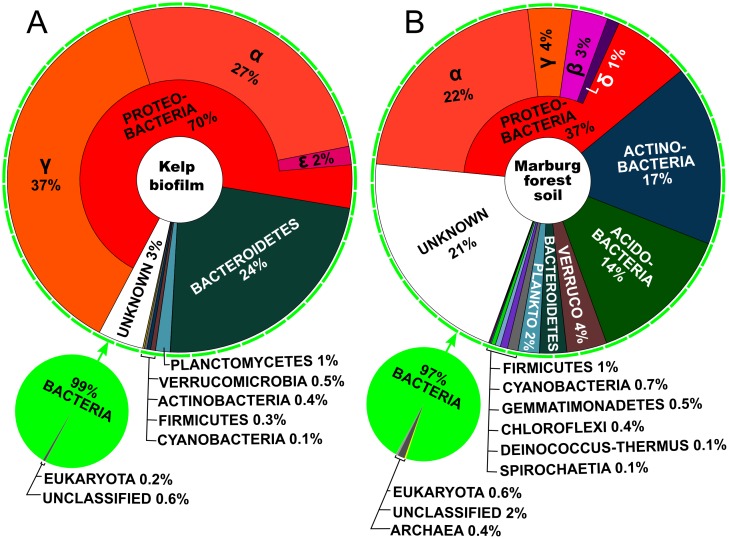
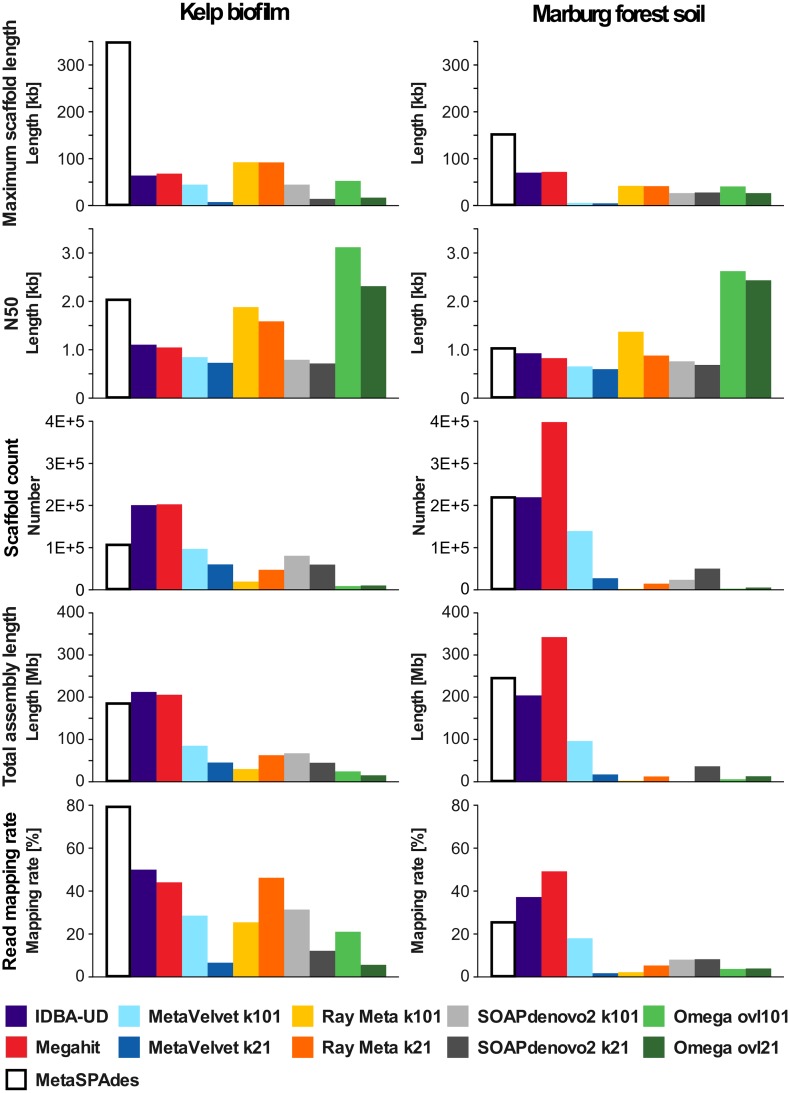
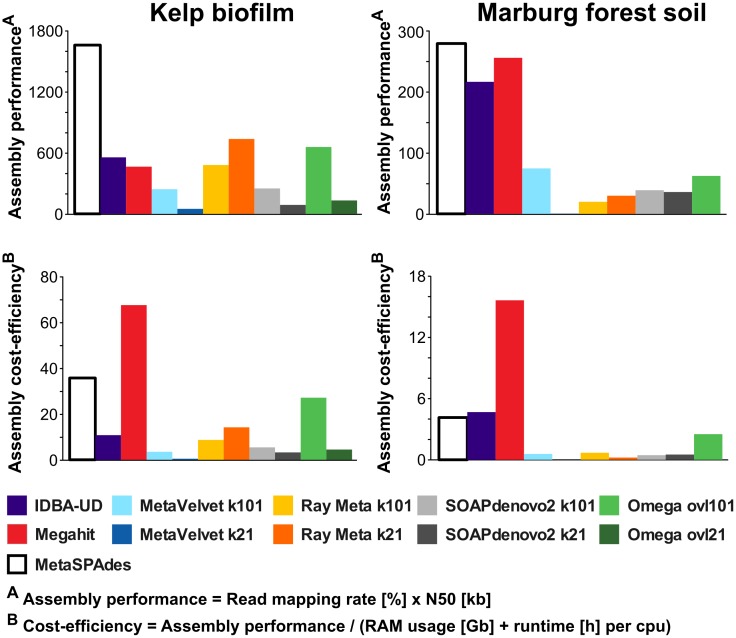
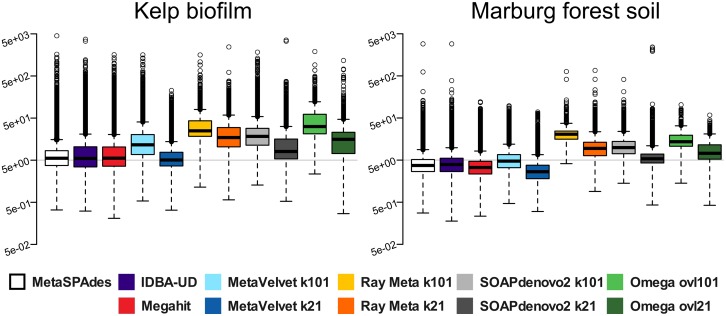
With the constant improvement in cost-efficiency and quality of Next Generation Sequencing technologies, shotgun-sequencing approaches -such as metagenomics- have nowadays become the methods of choice for studying and classifying microorganisms from various habitats. The production of data has dramatically increased over the past years and processing and analysis steps are becoming more and more of a bottleneck. Limiting factors are partly the availability of computational resources, but mainly the bioinformatics expertise in establishing and applying appropriate processing and analysis pipelines. Fortunately, a large diversity of specialized software tools is nowadays available. Nevertheless, choosing the most appropriate methods for answering specific biological questions can be rather challenging, especially for non-bioinformaticians. In order to provide a comprehensive overview and guide for the microbiological scientific community, we assessed the most common and freely available metagenome assembly tools with respect to their output statistics, their sensitivity for low abundant community members and variability in resulting community profiles as well as their ease-of-use. In contrast to the highly anticipated "Critical Assessment of Metagenomic Interpretation" (CAMI) challenge, which uses general mock community-based assembler comparison we here tested assemblers on real Illumina metagenome sequencing data from natural communities of varying complexity sampled from forest soil and algal biofilms. Our observations clearly demonstrate that different assembly tools can prove optimal, depending on the sample type, available computational resources and, most importantly, the specific research goal. In addition, we present detailed descriptions of the underlying principles and pitfalls of publically available assembly tools from a microbiologist's perspective, and provide guidance regarding the user-friendliness, sensitivity and reliability of the resulting phylogenetic profiles.
Overview
The claims and statistics of this paper haven’t been checked yet.
Run the check — free, no account needed. It reads the open-access text and checks the sources it cites.
Integrity signals
Registry
Cites
Statistics
Figures
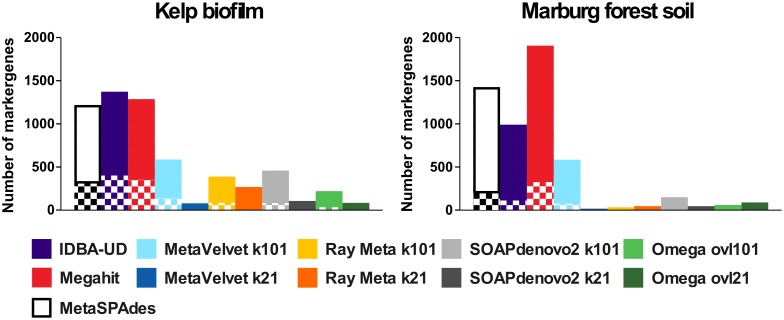
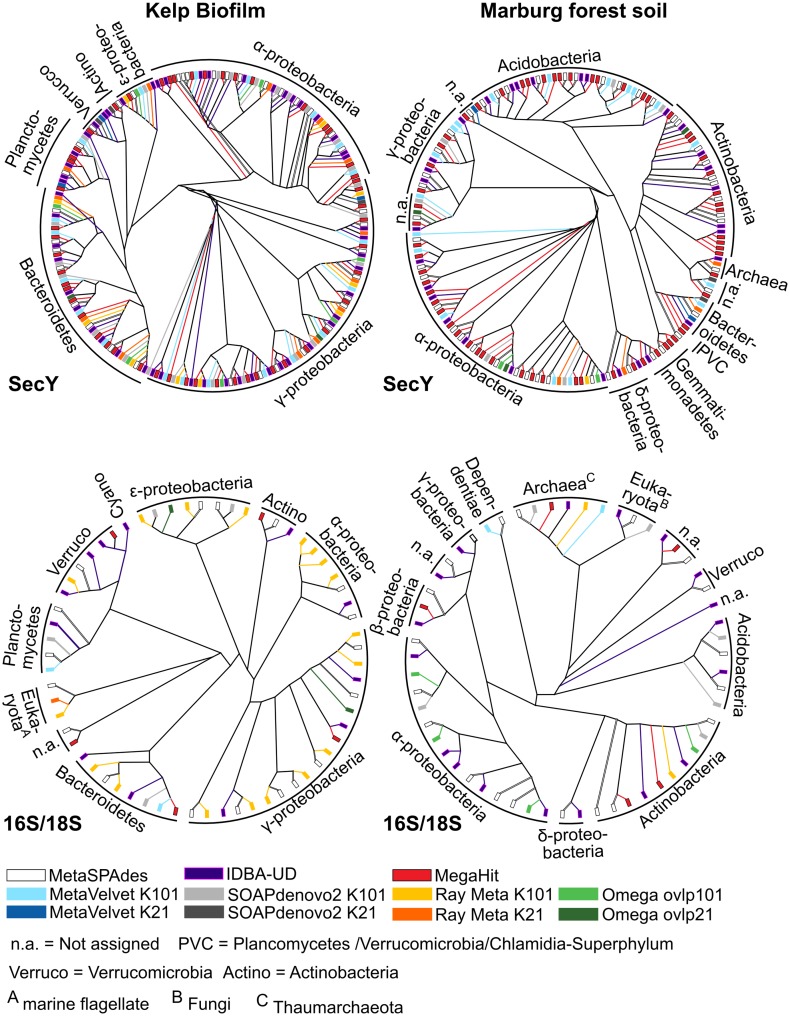
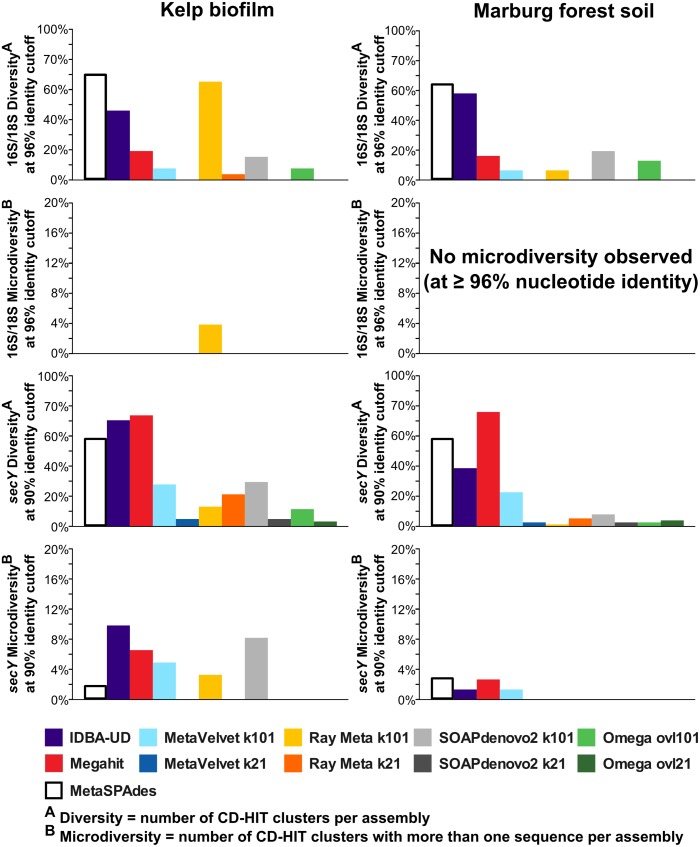
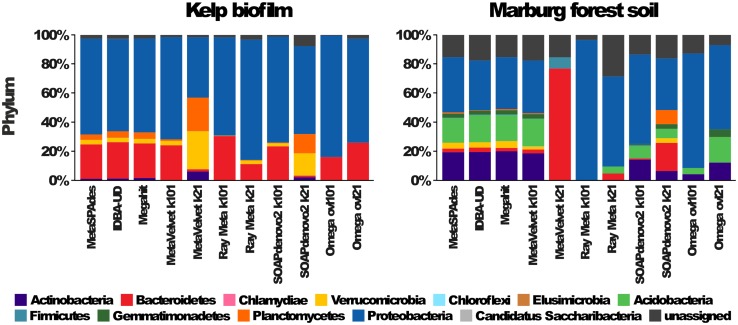
Verification
Claims the paper makes
The claims and statistics of this paper haven’t been checked yet.
Run the check — free, no account needed. It reads the open-access text and checks the sources it cites.
Claims other papers make about this one
Each is checked against this paper’s own text: does it say what the citing paper says it does?
In the citing paper
“Assembly is a computationally expensive process, frequently requiring terabytes of memory to accomplish when using metaSPAdes (20), which is our primary assembly algorithm, as the ensuing assemblies are typically of better quality than those produced using other assemblers (21).”
From MGnify: the microbiome analysis resource in 2020 (2019) · cites this paper as [21]
Self-check
Percentages, sums and reported differences re-computed from the paper’s own numbers.
The self-check needs the paper’s full text.
Citations
Cites
Trimmomatic: a flexible trimmer for Illumina sequence data
Bolger, A. M., Lohse, M., & Usadel, B. (2014) · Bioinformatics · doi:10.1093/bioinformatics/btu170 · Cited by 65,548
MUSCLE: multiple sequence alignment with high accuracy and high throughput
Edgar, R. C. (2004) · Nucleic Acids Research · doi:10.1093/nar/gkh340 · Cited by 44,662
SPAdes: A New Genome Assembly Algorithm and Its Applications to Single-Cell Sequencing
Bankevich, A., Nurk, S., Antipov, D., Gurevich, A. A., Dvorkin, M. V., Kulikov, A. S., Lesin, V. M., Nikolenko, S., Pham, S., Prjibelski, A. D., et al. (2012) · Journal of Computational Biology · doi:10.1089/cmb.2012.0021 · Cited by 26,312
BLAST+: architecture and applications
Camacho, C., Coulouris, G., Avagyan, V., Ma, N., Papadopoulos, J., Bealer, K., & Madden, T. L. (2009) · BMC Bioinformatics · doi:10.1186/1471-2105-10-421 · Cited by 22,074
FLASH: fast length adjustment of short reads to improve genome assemblies
Magoč, T., & Salzberg, S. L. (2011) · Bioinformatics · doi:10.1093/bioinformatics/btr507 · Cited by 15,366
Fast and sensitive protein alignment using DIAMOND
Buchfink, B., Xie, C., & Huson, D. H. (2015) · Nature Methods · doi:10.1038/nmeth.3176 · Cited by 14,201
Prodigal: prokaryotic gene recognition and translation initiation site identification
Hyatt, D., Chen, G.-L., LoCascio, P. F., Land, M., Larimer, F. W., & Hauser, L. (2010) · BMC Bioinformatics · doi:10.1186/1471-2105-11-119 · Cited by 12,692
Cd-hit: Accelerated for clustering the next-generation sequencing data
Fu, L., Niu, B., Zhu, Z., Wu, S., & Li, W. (2012) · Bioinformatics · doi:10.1093/bioinformatics/bts565 · Cited by 11,175
Li, D., Liu, C.-M., Luo, R., Sadakane, K., & Lam, T. (2015) · Bioinformatics · doi:10.1093/bioinformatics/btv033 · Cited by 10,133
Velvet: Algorithms for de novo short read assembly using de Bruijn graphsPreprint
Zerbino, D. R., & Birney, E. (2008) · Genome Research · doi:10.1101/gr.074492.107 · Cited by 9,587
Research works printed but not linked: 2
- B Haider, 2014, Omega: an Overlap-graph de novo Assembler for Metagenomics, Bioinformatics
- L Fu, 2012, CD-HIT: accelerated for clustering the next-generation sequencing data, Bioinformatics
Cited by
Sorted by citations
Microbiome definition re-visited: old concepts and new challenges
Berg, G., Rybakova, D., Fischer, D., Cernava, T., Vergès, M.-C. C., Charles, T., Chen, X., Cocolin, L., Eversole, K., Corral, G. H., et al. (2020) · Microbiome · doi:10.1186/s40168-020-00875-0 · Cited by 2,275
Best practices for analysing microbiomes
Knight, R., Vrbanac, A., Taylor, B. C., Aksenov, A., Callewaert, C., Debelius, J., Gonzalez, A., Kosciolek, T., McCall, L.-I., McDonald, D., et al. (2018) · Nature Reviews Microbiology · doi:10.1038/s41579-018-0029-9 · Cited by 2,030
Allio, R., Schomaker-Bastos, A., Romiguier, J., Prosdocimi, F., Nabholz, B., & Delsuc, F. (2020) · Molecular Ecology Resources · doi:10.1111/1755-0998.13160 · Cited by 1,921
PlasFlow: predicting plasmid sequences in metagenomic data using genome signatures
Krawczyk, P. S., Lipiński, L., & Dziembowski, A. (2017) · Nucleic Acids Research · doi:10.1093/nar/gkx1321 · Cited by 617
Current challenges and best-practice protocols for microbiome analysis
Bharti, R., & Grimm, D. G. (2021) · Briefings in Bioinformatics · doi:10.1093/bib/bbz155 · Cited by 592
MGnify: the microbiome analysis resource in 2020
Mitchell, A. L., Almeida, A., Beracochea, M., Boland, M., Burgin, J., Cochrane, G., Crusoe, M. R., Kale, V., Potter, S. C., Richardson, L. J., et al. (2019) · Nucleic Acids Research · doi:10.1093/nar/gkz1035 · Cited by 562
A review of methods and databases for metagenomic classification and assembly
Breitwieser, F. P., Lu, J., & Salzberg, S. L. (2017) · Briefings in Bioinformatics · doi:10.1093/bib/bbx120 · Cited by 595
Protein-level assembly increases protein sequence recovery from metagenomic samples manyfold
Steinegger, M., Mirdita, M., & Söding, J. (2019) · Nature Methods · doi:10.1038/s41592-019-0437-4 · Cited by 445
Roux, S., Emerson, J., Eloe‐Fadrosh, E. A., & Sullivan, M. B. (2017) · PeerJ · doi:10.7717/peerj.3817 · Cited by 316
Pérez-Cobas, A. E., Gomez-Valero, L., & Buchrieser, C. (2020) · Microbial Genomics · doi:10.1099/mgen.0.000409 · Cited by 314
Biology and Taxonomy of crAss-like Bacteriophages, the Most Abundant Virus in the Human Gut
Guerin, E., Shkoporov, A. N., Stockdale, S. R., Clooney, A. G., Ryan, F. J., Sutton, T., Draper, L. A., González-Tortuero, E., Ross, R. P., & Hill, C. (2018) · Cell Host & Microbe · doi:10.1016/j.chom.2018.10.002 · Cited by 307
Identifying biases and their potential solutions in human microbiome studies
Nearing, J. T., Comeau, A. M., & Langille, M. G. I. (2021) · Microbiome · doi:10.1186/s40168-021-01059-0 · Cited by 240
Yang, C., Chowdhury, D., Zhang, Z., Cheung, W. K., Lü, A., Bian, Z., & Zhang, L. (2021) · Computational and Structural Biotechnology Journal · doi:10.1016/j.csbj.2021.11.028 · Cited by 242
Mitchell, A., Scheremetjew, M., Denise, H., Potter, S., Tarkowska, A., Qureshi, M., Salazar, G. A., Pesseat, S., Boland, M. A., Hunter, F. M. I., et al. (2017) · Nucleic Acids Research · doi:10.1093/nar/gkx967 · Cited by 213
Next generation sequencing of SARS-CoV-2 genomes: challenges, applications and opportunities
Chiara, M., D’Erchia, A. M., Gissi, C., Manzari, C., Parisi, A., Resta, N., Zambelli, F., Picardi, E., Pavesi, G., Horner, D. S., et al. (2020) · Briefings in Bioinformatics · doi:10.1093/bib/bbaa297 · Cited by 214
Gut Bacteriophage: Current Understanding and Challenges
Sutton, T., & Hill, C. (2019) · Frontiers in Endocrinology · doi:10.3389/fendo.2019.00784 · Cited by 199
Dai, D., Brown, C., Bürgmann, H., Larsson, D. G. J., Nambi, I. M., Zhang, T., Flach, C., Pruden, A. J., & Vikesland, P. J. (2022) · Microbiome · doi:10.1186/s40168-021-01216-5 · Cited by 199
Choice of assembly software has a critical impact on virome characterisation
Sutton, T., Clooney, A. G., Ryan, F. J., Ross, R. P., & Hill, C. (2019) · Microbiome · doi:10.1186/s40168-019-0626-5 · Cited by 157
Elucidation of complexity and prediction of interactions in microbial communities
Zúñiga, C., Zaramela, L. S., & Zengler, K. (2017) · Microbial Biotechnology · doi:10.1111/1751-7915.12855 · Cited by 159
Host-associated microbiomes drive structure and function of marine ecosystems
Wilkins, L. G. E., Leray, M., O’Dea, A., Yuen, B., Peixoto, R. S., Pereira, T. J., Bik, H. M., Coil, D. A., Duffy, J. E., Herre, E. A., et al. (2019) · PLoS Biology · doi:10.1371/journal.pbio.3000533 · Cited by 141
Metagenomic Data Assembly – The Way of Decoding Unknown Microorganisms
Lapidus, A. L., & Korobeynikov, A. (2021) · Frontiers in Microbiology · doi:10.3389/fmicb.2021.613791 · Cited by 134
Assembling metagenomes, one community at a time
van der Walt, A. J., Goethem, M. W. V., Ramond, J., Makhalanyane, T. P., Reva, O. N., & Cowan, D. A. (2017) · BMC Genomics · doi:10.1186/s12864-017-3918-9 · Cited by 128
Computational methods for chromosome-scale haplotype reconstruction
Garg, S. (2021) · Genome Biology · doi:10.1186/s13059-021-02328-9 · Cited by 116
The Carbon Footprint of Bioinformatics
Grealey, J., Lannelongue, L., Saw, W., Marten, J., Méric, G., Carmona, S. R., & Inouye, M. (2022) · Molecular Biology and Evolution · doi:10.1093/molbev/msac034 · Cited by 124
Beilsmith, K. R., Thoen, M. P. M., Brachi, B., Gloss, A. D., Khan, M. H., & Bergelson, J. M. (2018) · The Plant Journal · doi:10.1111/tpj.14170 · Cited by 101
Assembly methods for nanopore-based metagenomic sequencing: a comparative study
Latorre‐Pérez, A., Villalba‐Bermell, P., Pascual, J., Porcar, M., & Vilanova, C. (2020) · Scientific Reports · doi:10.1038/s41598-020-70491-3 · Cited by 99
Brown, C., Keenum, I. M., Dai, D., Zhang, L., Vikesland, P. J., & Pruden, A. J. (2021) · Scientific Reports · doi:10.1038/s41598-021-83081-8 · Cited by 100
Noyes, N. R., Weinroth, M. D., Parker, J. K., Dean, C. J., Lakin, S. M., Raymond, R., Rovira, P., Doster, E., Abdo, Z., Martin, J. N., et al. (2017) · Microbiome · doi:10.1186/s40168-017-0361-8 · Cited by 103
GraphBin: refined binning of metagenomic contigs using assembly graphs
Mallawaarachchi, V., Wickramarachchi, A., & Lin, Y. (2020) · Bioinformatics · doi:10.1093/bioinformatics/btaa180 · Cited by 93
Optimizing and evaluating the reconstruction of Metagenome-assembled microbial genomes
Papudeshi, B. N., Haggerty, J. M., Doane, M. P., Morris, M. M., Walsh, K., Beattie, D. T., Pande, D., Zaeri, P., Silva, A. E. T., Thompson, F. L., et al. (2017) · BMC Genomics · doi:10.1186/s12864-017-4294-1 · Cited by 83
Current and Promising Approaches to Identify Horizontal Gene Transfer Events in Metagenomes
Douglas, G. M., & Langille, M. G. I. (2019) · Genome Biology and Evolution · doi:10.1093/gbe/evz184 · Cited by 80
Comparative metagenomics of hydrocarbon and methane seeps of the Gulf of Mexico
Vigneron, A., Alsop, E. B., Cruaud, P., Philibert, G., King, B., Baksmaty, L., Lavallée, D., Lomans, B. P., Kyrpides, N. C., Head, I. M., et al. (2017) · Scientific Reports · doi:10.1038/s41598-017-16375-5 · Cited by 77
Mahapatra, G. P., Raman, S., Nayak, S., Gouda, S., Das, G., & Patra, J. K. (2019) · Current Microbiology · doi:10.1007/s00284-019-01698-5 · Cited by 76
Terabase-scale metagenome coassembly with MetaHipMer
Hofmeyr, S. A., Egan, R. S., Georganas, E., Copeland, A., Riley, R. W., Clum, A., Eloe‐Fadrosh, E. A., Roux, S., Goltsman, E., Buluç, A., et al. (2020) · Scientific Reports · doi:10.1038/s41598-020-67416-5 · Cited by 73
Recovering prokaryotic genomes from host-associated, short-read shotgun metagenomic sequencing data
Kashaf, S. S., Almeida, A., Segre, J. A., & Finn, R. D. (2021) · Nature Protocols · doi:10.1038/s41596-021-00508-2 · Cited by 72
Measuring metagenome diversity and similarity with Hill numbers
Ma, Z. S., & Li, L. (2018) · Molecular Ecology Resources · doi:10.1111/1755-0998.12923 · Cited by 70
Vollmers, J., Wiegand, S., Lenk, F., & Kaster, A. (2022) · Nucleic Acids Research · doi:10.1093/nar/gkac294 · Cited by 56
MetaCompare 2.0: differential ranking of ecological and human health resistome risks
Rumi, M. A., Oh, M., Davis, B. C., Brown, C., Juvekar, A. S., Vikesland, P. J., Pruden, A. J., & Zhang, L. (2024) · FEMS Microbiology Ecology · doi:10.1093/femsec/fiae155 · Cited by 71
Microbial single-cell omics: the crux of the matter
Kaster, A., & Sobol, M. S. (2020) · Applied Microbiology and Biotechnology · doi:10.1007/s00253-020-10844-0 · Cited by 65
Visualizing metagenomic and metatranscriptomic data: A comprehensive review
Aplakidou, E., Vergoulidis, N., Chasapi, M. N., Venetsianou, N. K., Kokoli, M., Panagiotopoulou, E., Iliopoulos, I., Karatzas, E., Pafilis, E., Georgakopoulos‐Soares, I., et al. (2024) · Computational and Structural Biotechnology Journal · doi:10.1016/j.csbj.2024.04.060 · Cited by 64
Blaustein, R. A., McFarland, A. G., Maamar, S. B., Lopez, A. E., Castro-Wallace, S. L., & Hartmann, E. M. (2019) · mSystems · doi:10.1128/msystems.00281-18 · Cited by 64
Uncovering the genomic potential of the Amazon River microbiome to degrade rainforest organic matter
Júnior, C. D. S., Sarmento, H., de Miranda, F. P., Henrique‐Silva, F., & Logares, R. (2020) · Microbiome · doi:10.1186/s40168-020-00930-w · Cited by 58
What Is in Umbilicaria pustulata? A Metagenomic Approach to Reconstruct the Holo-Genome of a Lichen
Tzovaras, B. G., Segers, F. H. I. D., Bicker, A., Grande, F. D., Otte, J., Anvar, S. Y., Hankeln, T., Schmitt, I., & Ebersberger, I. (2020) · Genome Biology and Evolution · doi:10.1093/gbe/evaa049 · Cited by 57
Taubert, M., Grob, C., Crombie, A. T., Howat, A. M., Burns, O. J., Weber, M., Lott, C., Kaster, A., Vollmers, J., Jehmlich, N., et al. (2019) · Environmental Microbiology · doi:10.1111/1462-2920.14728 · Cited by 56
Metagenomic assemblies tend to break around antibiotic resistance genes
Abramova, A., Karkman, A., & Bengtsson‐Palme, J. (2024) · BMC Genomics · doi:10.1186/s12864-024-10876-0 · Cited by 56
Slizovskiy, I. B., Mukherjee, K., Dean, C., Boucher, C. A., & Noyes, N. R. (2020) · Frontiers in Microbiology · doi:10.3389/fmicb.2020.01376 · Cited by 55
Evaluating de Novo Assembly and Binning Strategies for Time Series Drinking Water Metagenomes
Vosloo, S., Huo, L.-X., Anderson, C. L., Dai, Z.-H., Sevillano, M., & Pinto, A. (2021) · bioRxiv · doi:10.1128/spectrum.01434-21 · Cited by 43
A comparison of short-read, HiFi long-read, and hybrid strategies for genome-resolved metagenomics
Eisenhofer, R., Nesme, J., Santos‐Bay, L., Koziol, A., Sørensen, S. J., Alberdi, A., & Aizpurua, O. (2024) · Microbiology Spectrum · doi:10.1128/spectrum.03590-23 · Cited by 51
Asante, J., & Sekyere, J. O. (2019) · Environmental Microbiology Reports · doi:10.1111/1758-2229.12735 · Cited by 51
Hempel, C. A., Wright, N., Harvie, J., Hleap, J. S., Adamowicz, S. J., & Steinke, D. (2022) · Nucleic Acids Research · doi:10.1093/nar/gkac689 · Cited by 51
Jameson, E., Stephenson, J., Jones, H. J., Millard, A. D., Kaster, A., Purdy, K. J., Airs, R. L., Murrell, J. C., & Chen, Y. (2018) · The ISME Journal · doi:10.1038/s41396-018-0269-8 · Cited by 48
Gut microbiota in ALS: possible role in pathogenesis?
McCombe, P. A., Henderson, R. D., Lee, A., Lee, J. D., Woodruff, T. M., Restuadi, R., McRae, A., Wray, N. R., Ngo, S., & Steyn, F. J. (2019) · Expert Review of Neurotherapeutics · doi:10.1080/14737175.2019.1623026 · Cited by 46
Leyva, L. L., Brereton, N. J. B., & Koski, K. G. (2020) · Computational and Structural Biotechnology Journal · doi:10.1016/j.csbj.2020.11.057 · Cited by 50
metaProbiotics: a tool for mining probiotic from metagenomic binning data based on a language model
Wu, S., Feng, T., Tang, W., Qi, C., Gao, J., He, X., Wang, J., Zhou, H., & Fang, Z. (2024) · Briefings in Bioinformatics · doi:10.1093/bib/bbae085 · Cited by 46
Metagenomic approaches and opportunities in arid soil research
Ejaz, M. R., Badr, K., Hassan, Z. U., Al-Thani, R. F., & Jaoua, S. (2024) · The Science of The Total Environment · doi:10.1016/j.scitotenv.2024.176173 · Cited by 44
The OMG dataset: An Open MetaGenomic corpus for mixed-modality genomic language modelingPreprint
Cornman, A., West-Roberts, J. A., Camargo, A. P., Roux, S., Beracochea, M., Mirdita, M., Ovchinnikov, S., & Hwang, Y. (2024) · bioRxiv (Cold Spring Harbor Laboratory) · doi:10.1101/2024.08.14.607850 · Cited by 52
Behera, B. K., Dehury, B., Rout, A. K., Patra, B., Mantri, N. L., Chakraborty, H. J., Sarkar, D. J., Kaushik, N. K., Bansal, V., Singh, I., et al. (2021) · Gene Reports · doi:10.1016/j.genrep.2021.101372 · Cited by 45
Contrasting Pathways for Anaerobic Methane Oxidation in Gulf of Mexico Cold Seep Sediments
Vigneron, A., Alsop, E. B., Cruaud, P., Philibert, G., King, B., Baksmaty, L., Lavallée, D., Lomans, B. P., Eloe‐Fadrosh, E. A., Kyrpides, N. C., et al. (2019) · mSystems · doi:10.1128/msystems.00091-18 · Cited by 41
Localized effect of treated wastewater effluent on the resistome of an urban watershed
Thornton, C. N., Tanner, W. D., VanDerslice, J. A., & Brazelton, W. J. (2020) · GigaScience · doi:10.1093/gigascience/giaa125 · Cited by 42
Bacterial genomic epidemiology with mixed samples
Mäklin, T., Kallonen, T., Alanko, J., Samuelsen, Ø., Hegstad, K., Mäkinen, V., Corander, J., Heinz, E., & Honkela, A. (2021) · Microbial Genomics · doi:10.1099/mgen.0.000691 · Cited by 40
Islam, R., Raju, R. S., Tasnim, N., Shihab, I. H., Bhuiyan, M. A., Araf, Y., & Islam, T. (2021) · Briefings in Bioinformatics · doi:10.1093/bib/bbab102 · Cited by 41
Fernández‐Orth, D., Miró, E., Brown-Jaque, M., Rodríguez‐Rubio, L., Espinal, P., Rodríguez-Navarro, J., González‐López, J. J., Muniesa, M., & Navarro, F. (2018) · Journal of Antimicrobial Chemotherapy · doi:10.1093/jac/dky540 · Cited by 39
Genome-resolved metagenomics using environmental and clinical samples
Kayani, M. U. R., Huang, W., Feng, R., & Chen, L. (2021) · Briefings in Bioinformatics · doi:10.1093/bib/bbab030 · Cited by 45
Computational methods and challenges in analyzing intratumoral microbiome data
Wang, Q., Liu, Z., Ma, A., Li, Z., Liu, B., & Ma, Q. (2023) · Trends in Microbiology · doi:10.1016/j.tim.2023.01.011 · Cited by 37
Methanethiol and Dimethylsulfide Cycling in Stiffkey Saltmarsh
Carrión, O., Pratscher, J., Kumari, R., Rostant, W. G., Haque, M. F. U., Murrell, J. C., & Todd, J. D. (2019) · Frontiers in Microbiology · doi:10.3389/fmicb.2019.01040 · Cited by 38
A method for achieving complete microbial genomes and improving bins from metagenomics data
Lui, L., Nielsen, T., & Arkin, A. (2020) · bioRxiv · doi:10.1371/journal.pcbi.1008972 · Cited by 37
Deshpande, A. S., & Fahrenfeld, N. L. (2022) · Water Research · doi:10.1016/j.watres.2022.118363 · Cited by 37
ASaiM: a Galaxy-based framework to analyze microbiota data
Batut, B., Gravouil, K., Defois, C., Hiltemann, S., Brugère, J., Peyretaillade, É., & Peyret, P. (2018) · GigaScience · doi:10.1093/gigascience/giy057 · Cited by 36
Practical evaluation of 11 de novo assemblers in metagenome assembly
Forouzan, E., Shariati, P., Maleki, M. S. M., Karkhane, A. A., & Yakhchali, B. (2018) · Journal of Microbiological Methods · doi:10.1016/j.mimet.2018.06.007 · Cited by 36
Dam, H. T., Vollmers, J., Sobol, M. S., Cabezas, A., & Kaster, A. (2020) · Frontiers in Microbiology · doi:10.3389/fmicb.2020.01377 · Cited by 36
Okazaki, Y., Fujinaga, S., Salcher, M. M., Callieri, C., Tanaka, A., Kohzu, A., Oyagi, H., Tamaki, H., & Nakano, S. (2021) · Microbiome · doi:10.1186/s40168-020-00974-y · Cited by 34
Gene Prediction in Metagenomic Fragments with Deep Learning
Zhang, S., Jin, X., & Zhang, T. (2017) · BioMed Research International · doi:10.1155/2017/4740354 · Cited by 35
Applying Genome-Resolved Metagenomics to Deconvolute the Halophilic Microbiome
Uritskiy, G., & DiRuggiero, J. (2019) · Genes · doi:10.3390/genes10030220 · Cited by 33
Kohl, K. D. (2017) · Integrative and Comparative Biology · doi:10.1093/icb/icx013 · Cited by 31
Current Trends in Experimental and Computational Approaches to Combat Antimicrobial Resistance
Imchen, M., Moopantakath, J., Kumavath, R., Barh, D., Tiwari, S., Ghosh, P., & Azevedo, V. (2020) · Frontiers in Genetics · doi:10.3389/fgene.2020.563975 · Cited by 33
Novel ssDNA Viruses Detected in the Virome of Bleached, Habitat-Forming Kelp Ecklonia radiata
Beattie, D. T., Lachnit, T., Dinsdale, E. A., Thomas, T., & Steinberg, P. D. (2018) · Frontiers in Marine Science · doi:10.3389/fmars.2017.00441 · Cited by 32
Slizovskiy, I. B., Oliva, M., Settle, J., Zyskina, L. V., Prosperi, M., Boucher, C. A., & Noyes, N. R. (2022) · Microbiome · doi:10.1186/s40168-022-01368-y · Cited by 31
Ecosystem-specific microbiota and microbiome databases in the era of big data
Lobanov, V. P., Gobet, A., & Joyce, A. (2022) · Environmental Microbiome · doi:10.1186/s40793-022-00433-1 · Cited by 33
High-throughput DNA sequencing technologies for water and wastewater analysis
Chan, A. W. Y., Naphtali, J., & Schellhorn, H. E. (2019) · Science Progress · doi:10.1177/0036850419881855 · Cited by 32
Accurate Binning of Metagenomic Contigs Using Composition, Coverage, and Assembly Graphs
Mallawaarachchi, V., & Lin, Y. (2022) · Journal of Computational Biology · doi:10.1089/cmb.2022.0262 · Cited by 30
A Review of Scalable Bioinformatics Pipelines
Fjukstad, B., & Bongo, L. A. (2017) · Data Science and Engineering · doi:10.1007/s41019-017-0047-z · Cited by 28
Machine learning meets genome assembly
Padovani, K., Setúbal, J. C., de Carvalho, A. C. P. L. F., Oliveira, G., Château, A., & Alves, R. C. D. O. (2018) · Briefings in Bioinformatics · doi:10.1093/bib/bby072 · Cited by 28
Extreme Scale De Novo Metagenome Assembly
Georganas, E., Egan, R. S., Hofmeyr, S. A., Goltsman, E., Arndt, B., Tritt, A., Buluç, A., Oliker, L., & Yelick, K. (2018) · International Conference for High Performance Computing, Networking, Storage and Analysis (SC) · doi:10.1109/sc.2018.00013 · Cited by 27
Rathour, R., Gupta, J., Kumar, M., Hiloidhari, M., Mehrotra, A. K., & Thakur, I. S. (2017) · Genome Announcements · doi:10.1128/genomea.01029-17 · Cited by 27
Menon, R. K., Gomez, A. M., Brandt, B. W., Leung, Y. Y., Gopinath, D., Watt, R. M., Crielaard, W., Nelson, K. E., & Botelho, M. G. (2019) · Scientific Reports · doi:10.1038/s41598-019-55056-3 · Cited by 33
Goussarov, G., Mysara, M., Vandamme, P. A. R., & Houdt, R. V. (2022) · MicrobiologyOpen · doi:10.1002/mbo3.1298 · Cited by 27
Doster, E., Rovira, P., Noyes, N. R., Burgess, B. A., Yang, X., Weinroth, M. D., Linke, L., Magnuson, R. J., Boucher, C. A., Belk, K. E., et al. (2019) · Frontiers in Microbiology · doi:10.3389/fmicb.2019.02499 · Cited by 26
CRISPRclassify: Repeat-Based Classification of CRISPR Loci
Nethery, M. A., Korvink, M., Makarova, K. S., Wolf, Y. I., Koonin, E. V., & Barrangou, R. (2021) · The CRISPR Journal · doi:10.1089/crispr.2021.0021 · Cited by 25
FragGeneScanRs: faster gene prediction for short reads
der Jeugt, F. V., Dawyndt, P., & Mesuere, B. (2022) · BMC Bioinformatics · doi:10.1186/s12859-022-04736-5 · Cited by 25
Koutsandreas, T., Ladoukakis, E., Pilalis, E. D., Zarafeta, D., Kolisis, F. N., Σκρέτας, Γ., & Chatziioannou, A. A. (2019) · Frontiers in Genetics · doi:10.3389/fgene.2019.00469 · Cited by 25
Evaluating Metagenome Assembly on a Simple Defined Community with Many Strain VariantsPreprint
Awad, S., Irber, L. C., & Brown, C. T. (2017) · bioRxiv (Cold Spring Harbor Laboratory) · doi:10.1101/155358 · Cited by 25
Haryono, M., Law, Y., Arumugam, K., Liew, L. C. W., Nguyen, T. Q. N., Drautz‐Moses, D. I., Schuster, S. C., Wuertz, S., & Williams, R. B. H. (2022) · Frontiers in Microbiology · doi:10.3389/fmicb.2022.869135 · Cited by 24
Iron-Fueled Life in the Continental Subsurface: Deep Mine Microbial Observatory, South Dakota, USA
Casar, C. P., Momper, L., Kruger, B. R., & Osburn, M. R. (2021) · Applied and Environmental Microbiology · doi:10.1128/aem.00832-21 · Cited by 27
MAGNETO: An Automated Workflow for Genome-Resolved Metagenomics
Churcheward, B., Millet, M., Bihouée, A., Fertin, G., & Chaffron, S. (2022) · mSystems · doi:10.1128/msystems.00432-22 · Cited by 23
Identifying Eukaryotes and Factors Influencing Their Biogeography in Drinking Water Metagenomes
Gabrielli, M., Dai, Z., Delafont, V., Timmers, P. H. A., van der Wielen, P. W. J. J., Antonelli, M., & Pinto, A. J. (2023) · Environmental Science & Technology · doi:10.1021/acs.est.2c09010 · Cited by 23
Alam, I. S., Kamau, A. A., Ngugi, D. K., Gojobori, T., Duarte, C. M., & Bajić, V. B. (2021) · Scientific Reports · doi:10.1038/s41598-021-90799-y · Cited by 20
Valencia, E. M., Maki, K. A., Dootz, J. N., & Barb, J. J. (2024) · Scientific Data · doi:10.1038/s41597-023-02877-7 · Cited by 20
DeWeese, K., & Osborne, M. G. (2021) · Journal of the World Aquaculture Society · doi:10.1111/jwas.12782 · Cited by 18
Methods and Developments in Graphical Pangenomics
Outten, J., & Warren, A. S. (2021) · Journal of the Indian Institute of Science · doi:10.1007/s41745-021-00255-z · Cited by 19
Lou, E. G., Fu, Y., Wang, Q., Treangen, T. J., & Stadler, L. B. (2023) · Journal of Hazardous Materials · doi:10.1016/j.jhazmat.2024.133939 · Cited by 18
Metadata
- Authors
- Vollmers, J., Wiegand, S., & Kaster, A.-K.
- Affiliations
- Leibniz Institute DSMZ – German Collection of Microorganisms and Cell Cultures (DE)
- Corresponding author
- Kaster, Anne-Kristin
- Venue
- PLoS ONE
- Publisher
- Public Library of Science (PLoS)
- Published
- 2017-01-18
- Volume
- 12
- Issue
- 1
- Pages
- e0169662
- ISSN
- 1932-6203 (ISSN-L)
- PMC
- PMC5242441
- OpenAlex
- W2572263783
- Cited by
- 240
- References
- 96
- Citations by year
- 2026: 5 · 2025: 13 · 2024: 28 · 2023: 15 · 2022: 35 · 2021: 37 · 2020: 27 · 2019: 32 · 2018: 25 · 2017: 22
- FWCI
- 11.85
- Type
- journal article
- Language
- en
- Open access
- gold
- doi.org
- Licence
- Locations
- PLoS ONE (publishedVersion, cc-by)
- Europe PMC (PubMed Central) (publishedVersion, cc-by)
- PubMed Central (publishedVersion, cc-by)
- PubMed (publishedVersion)
- DOAJ (DOAJ: Directory of Open Access Journals) (submittedVersion)
- Figshare (submittedVersion, cc-by)
- Funders
- Johns Hopkins University
- University of East Anglia
- Max-Planck-Institut für Terrestrische Mikrobiologie
- Leibniz-Gemeinschaft
- Topics
- Life Sciences › Biochemistry, Genetics and Molecular Biology › Molecular Biology › Genomics and Phylogenetic Studies
- Physical Sciences › Environmental Science › Ecology › Microbial Community Ecology and Physiology
- Physical Sciences › Environmental Science › Ecology › Environmental DNA in Biodiversity Studies
- Keywords
- metagenome assembly, assembler comparison, shotgun sequencing, low-abundance taxa, phylogenetic profiles, algal biofilms, CAMI challenge, mock communities, ease of use
- MeSH terms
- Phylogeny, Software, Soil Microbiology, Macrocystis, Biodiversity, Metagenome, Metagenomics, High-Throughput Nucleotide Sequencing, Forests
About these checks
Registry, retraction, Cites and statistics results are computed, not judged, with one exception: a printed reference that no index lists is read once by a model before it counts as a citation error. Claims are extracted by a model and kept only when their quote appears verbatim in the text; each cited source is then checked, with a model’s help, for whether it says what the claim relies on. Those verdicts can be wrong — read the claim’s quote and the cited source before relying on one.
Statistics and arithmetic are recomputed, not judged.
Confidence bands are shown only for fields calibrated on our annotated test set. None is calibrated yet, so no band is shown.
What counts as a claim ›How we measure confidence ›How we check this ›
Are you an author, or do you see a problem with this page? Request a review
