

The DOI matches its Crossref record; 94 of the 96 references it cites were found in a registry or an index.
Comparing and evaluating metagenome assembly tools from a microbiologist's perspective - not only size matters!
Open accessAbstract
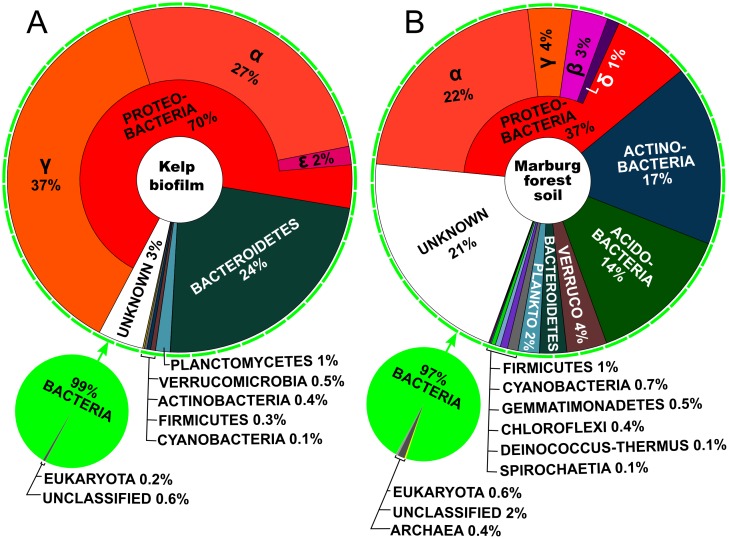
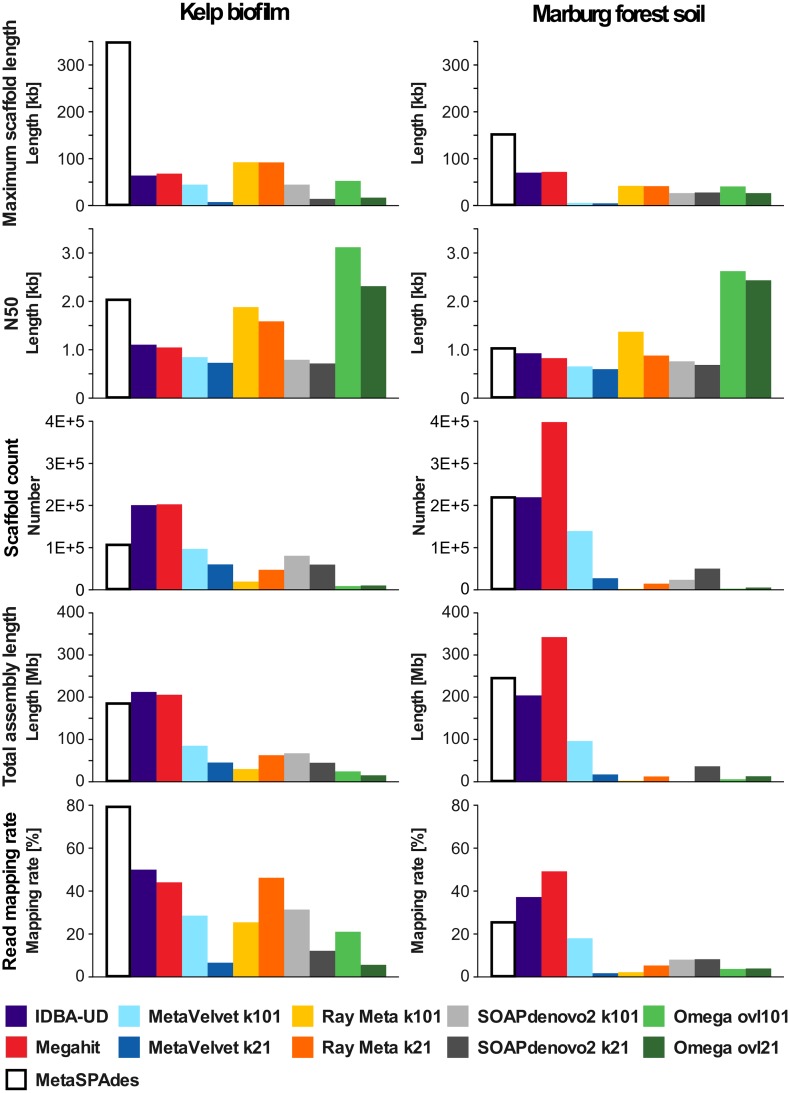
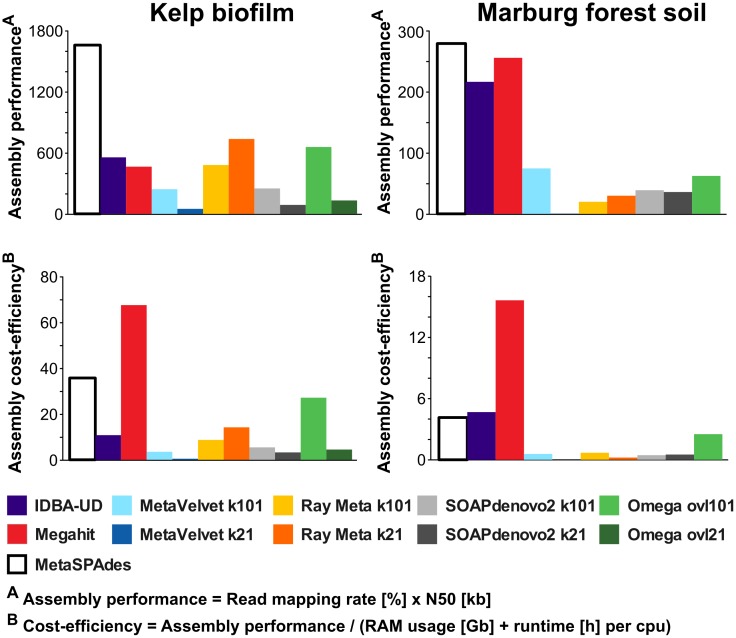
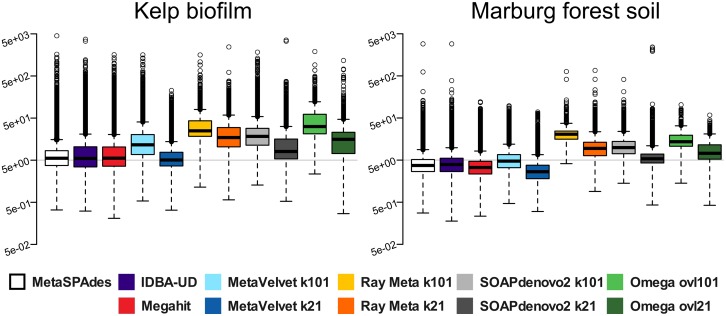
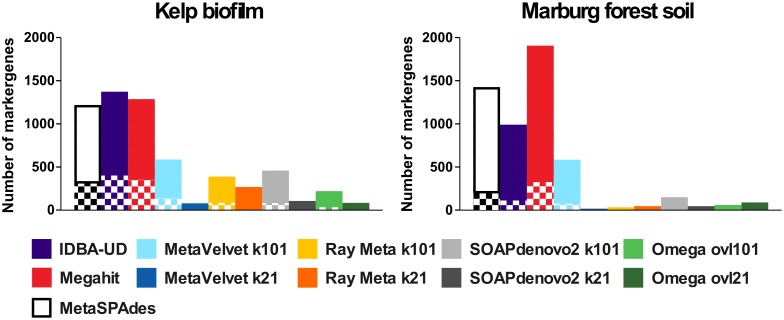
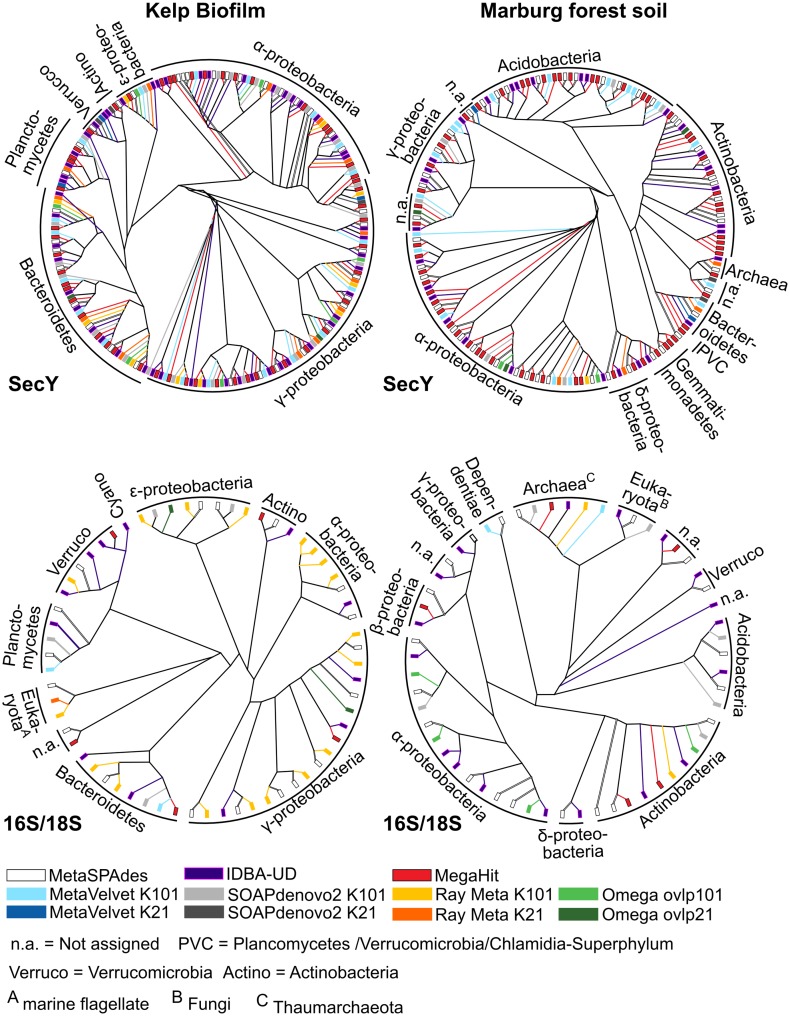
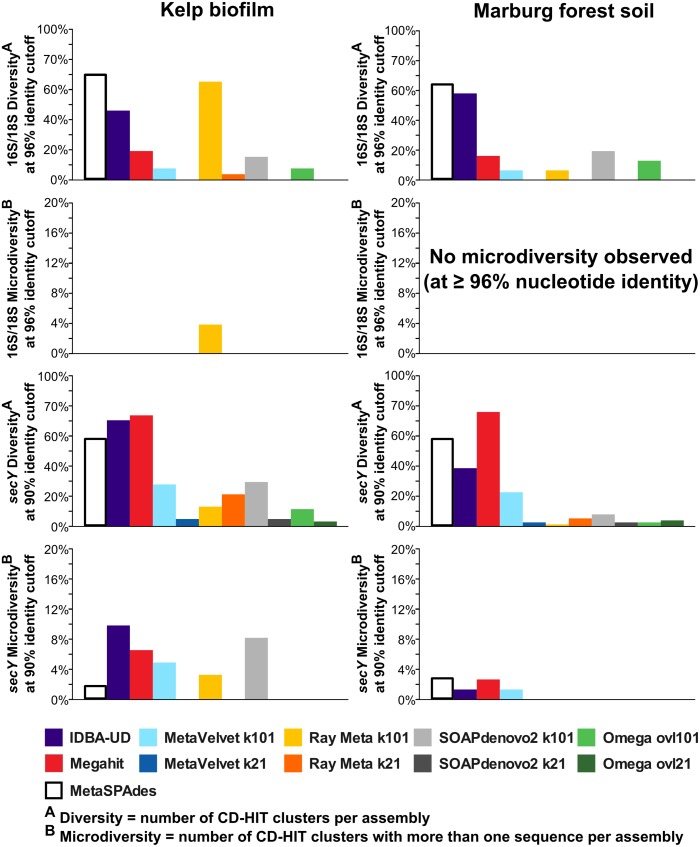
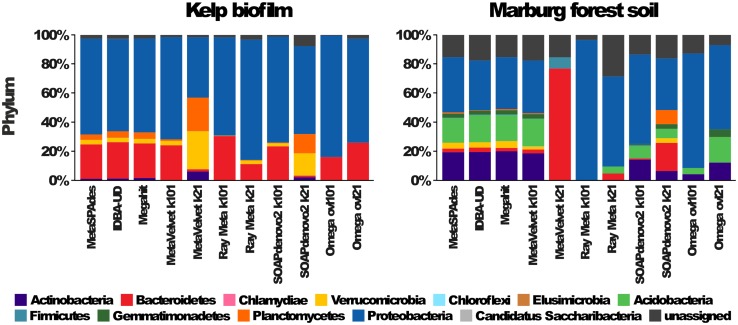
With the constant improvement in cost-efficiency and quality of Next Generation Sequencing technologies, shotgun-sequencing approaches -such as metagenomics- have nowadays become the methods of choice for studying and classifying microorganisms from various habitats. The production of data has dramatically increased over the past years and processing and analysis steps are becoming more and more of a bottleneck. Limiting factors are partly the availability of computational resources, but mainly the bioinformatics expertise in establishing and applying appropriate processing and analysis pipelines. Fortunately, a large diversity of specialized software tools is nowadays available. Nevertheless, choosing the most appropriate methods for answering specific biological questions can be rather challenging, especially for non-bioinformaticians. In order to provide a comprehensive overview and guide for the microbiological scientific community, we assessed the most common and freely available metagenome assembly tools with respect to their output statistics, their sensitivity for low abundant community members and variability in resulting community profiles as well as their ease-of-use. In contrast to the highly anticipated "Critical Assessment of Metagenomic Interpretation" (CAMI) challenge, which uses general mock community-based assembler comparison we here tested assemblers on real Illumina metagenome sequencing data from natural communities of varying complexity sampled from forest soil and algal biofilms. Our observations clearly demonstrate that different assembly tools can prove optimal, depending on the sample type, available computational resources and, most importantly, the specific research goal. In addition, we present detailed descriptions of the underlying principles and pitfalls of publically available assembly tools from a microbiologist's perspective, and provide guidance regarding the user-friendliness, sensitivity and reliability of the resulting phylogenetic profiles.
Overview
The claims and statistics of this paper haven’t been checked yet.
Run the check — free, no account needed. It reads the open-access text and checks the sources it cites.
Integrity signals
Registry
Cites
Statistics
Figures
Verification
Claims the paper makes
The claims and statistics of this paper haven’t been checked yet.
Run the check — free, no account needed. It reads the open-access text and checks the sources it cites.
Claims other papers make about this one
Each is checked against this paper’s own text: does it say what the citing paper says it does?
In the citing paper
“Assembly is a computationally expensive process, frequently requiring terabytes of memory to accomplish when using metaSPAdes (20), which is our primary assembly algorithm, as the ensuing assemblies are typically of better quality than those produced using other assemblers (21).”
From MGnify: the microbiome analysis resource in 2020 (2019) · cites this paper as [21]
Self-check
Percentages, sums and reported differences re-computed from the paper’s own numbers.
The self-check needs the paper’s full text.
Citations
Cites
Trimmomatic: a flexible trimmer for Illumina sequence data
Bolger, A. M., Lohse, M., & Usadel, B. (2014) · Bioinformatics · doi:10.1093/bioinformatics/btu170 · Cited by 65,548
MUSCLE: multiple sequence alignment with high accuracy and high throughput
Edgar, R. C. (2004) · Nucleic Acids Research · doi:10.1093/nar/gkh340 · Cited by 44,662
SPAdes: A New Genome Assembly Algorithm and Its Applications to Single-Cell Sequencing
Bankevich, A., Nurk, S., Antipov, D., Gurevich, A. A., Dvorkin, M. V., Kulikov, A. S., Lesin, V. M., Nikolenko, S., Pham, S., Prjibelski, A. D., et al. (2012) · Journal of Computational Biology · doi:10.1089/cmb.2012.0021 · Cited by 26,312
BLAST+: architecture and applications
Camacho, C., Coulouris, G., Avagyan, V., Ma, N., Papadopoulos, J., Bealer, K., & Madden, T. L. (2009) · BMC Bioinformatics · doi:10.1186/1471-2105-10-421 · Cited by 22,074
FLASH: fast length adjustment of short reads to improve genome assemblies
Magoč, T., & Salzberg, S. L. (2011) · Bioinformatics · doi:10.1093/bioinformatics/btr507 · Cited by 15,366
Fast and sensitive protein alignment using DIAMOND
Buchfink, B., Xie, C., & Huson, D. H. (2015) · Nature Methods · doi:10.1038/nmeth.3176 · Cited by 14,201
Prodigal: prokaryotic gene recognition and translation initiation site identification
Hyatt, D., Chen, G.-L., LoCascio, P. F., Land, M., Larimer, F. W., & Hauser, L. (2010) · BMC Bioinformatics · doi:10.1186/1471-2105-11-119 · Cited by 12,692
Cd-hit: Accelerated for clustering the next-generation sequencing data
Fu, L., Niu, B., Zhu, Z., Wu, S., & Li, W. (2012) · Bioinformatics · doi:10.1093/bioinformatics/bts565 · Cited by 11,175
Li, D., Liu, C.-M., Luo, R., Sadakane, K., & Lam, T. (2015) · Bioinformatics · doi:10.1093/bioinformatics/btv033 · Cited by 10,133
Velvet: Algorithms for de novo short read assembly using de Bruijn graphsPreprint
Zerbino, D. R., & Birney, E. (2008) · Genome Research · doi:10.1101/gr.074492.107 · Cited by 9,587
Research works printed but not linked: 2
- B Haider, 2014, Omega: an Overlap-graph de novo Assembler for Metagenomics, Bioinformatics
- L Fu, 2012, CD-HIT: accelerated for clustering the next-generation sequencing data, Bioinformatics
Cited by
Sorted by citations
Items 201–240 of 240
Piel, J., & Rust, M. (2019) · Elsevier eBooks · doi:10.1016/b978-0-12-409547-2.14722-5
OBSOLETE: Bioinformatic Platforms for Metagenomics
Eckenberger, J. (2015) · Elsevier eBooks · doi:10.1016/b978-0-08-100596-5.00009-3
MetagenomicsAssembly and Database‐Dependent Approaches
Dick, G. J. (2018) · doi:10.1002/9781118708231.ch6
SARS-CoV-2 Variant Surveillance in Genomic Medicine Era
Diaconu, C. C., Pitica, I. M., Chivu‐Economescu, M., Necula, L. G., Botezatu, A., Iancu, I. V., Neagu, A. I., Radu, E. L., Matei, L., Ruță, S. M., et al. (2022) · Infectious diseases · doi:10.5772/intechopen.107137
Metagenomics and Metatranscriptomics
Guyomar, C., & Lemaitre, C. (2022) · doi:10.1002/9781394169641.ch5
Jochheim, A. (2022) · eDiss (Georg-August-Universität Göttingen) · doi:10.53846/goediss-9608
The piglet tonsillar microbiome and Streptococcus suis disease
Fredriksen, S. (2023) · doi:10.18174/582380
Métagénomique et métatranscriptomique
Guyomar, C., & Lemaitre, C. (2023) · doi:10.51926/iste.9066.ch5
Qodriyah, N. R. L., Sanjaya, E. H., Wahab, R. A., & Susanti, E. (2023) · Jurnal Kimia VALENSI · doi:10.15408/jkv.v9i2.34316
Taxanorm: a novel taxa-specific normalization approach for microbiome data
Wang, Z., Lloyd, D., Zhao, S., & Motsinger‐Reif, A. A. (2024) · BMC Bioinformatics · doi:10.1186/s12859-024-05918-z
Cărunta, A., Mizeranschi, A. E., Cărunta, C., Banciu, H. L., Moldovan, O. T., Zaharie, D., & Negru, V. (2024) · IEEE International Conference on Bioinformatics and Bioengineering (BIBE) · doi:10.1109/bibe63649.2024.10820451
Towards Comprehensive Metagenomic Recovery and Data Mining of Complex Environmental DNA Viromes
Ji, M., & Tu, Q. (2025) · Environmental DNA · doi:10.1002/edn3.70172
Slizovskiy, I. B., Oliva, M., Settle, J., Zyskina, L. V., Prosperi, M., Boucher, C., & Noyes, N. R. (2022) · Figshare · doi:10.6084/m9.figshare.21485325
Slizovskiy, I. B., Oliva, M., Settle, J., Zyskina, L. V., Prosperi, M., Boucher, C., & Noyes, N. R. (2022) · Figshare · doi:10.6084/m9.figshare.21485322
Additional file 2 of FragGeneScanRs: faster gene prediction for short reads
der Jeugt, F. V., Dawyndt, P., & Mesuere, B. (2022) · Figshare · doi:10.6084/m9.figshare.19920893
Slizovskiy, I. B., Oliva, M., Settle, J., Zyskina, L. V., Prosperi, M., Boucher, C., & Noyes, N. R. (2022) · Figshare · doi:10.6084/m9.figshare.21485307
Additional file 1 of Taxanorm: a novel taxa-specific normalization approach for microbiome data
Wang, Z., Lloyd, D., Zhao, S., & Motsinger‐Reif, A. A. (2024) · Figshare · doi:10.6084/m9.figshare.27042494
Slizovskiy, I. B., Oliva, M., Settle, J., Zyskina, L. V., Prosperi, M., Boucher, C., & Noyes, N. R. (2022) · Figshare · doi:10.6084/m9.figshare.21485328
Additional file 1 of FragGeneScanRs: faster gene prediction for short reads
der Jeugt, F. V., Dawyndt, P., & Mesuere, B. (2022) · Figshare · doi:10.6084/m9.figshare.19920890
Okazaki, Y., Fujinaga, S., Salcher, M. M., Callieri, C., Tanaka, A., Kohzu, A., Oyagi, H., Tamaki, H., & Nakano, S. (2021) · Figshare · doi:10.6084/m9.figshare.13632888
Okazaki, Y., Fujinaga, S., Salcher, M. M., Callieri, C., Tanaka, A., Kohzu, A., Oyagi, H., Tamaki, H., & Nakano, S.-I. (2021) · Figshare · doi:10.6084/m9.figshare.13632891
Slizovskiy, I. B., Oliva, M., Settle, J., Zyskina, L. V., Prosperi, M., Boucher, C., & Noyes, N. R. (2022) · Figshare · doi:10.6084/m9.figshare.21485319
Challenges and Future Perspectives for Single-Cell Multi-Omics in Prokaryotes
Magold, T., & Kaster, A.-K. (2025) · The microbiomes of humans, animals, plants, and the environment · doi:10.1007/978-3-032-07527-7_7
Sharma, A., Oswalt, K., Wong, N., Zhao, C., Beckmann, J. F., & Martin, K. (2025) · bioRxiv (Cold Spring Harbor Laboratory) · doi:10.64898/2025.12.27.696710
Microbiome Profiling in Chagas Disease: Sample Collection, Sequencing, and Analysis
Castañeda, S., Ramírez, J. D., & Poveda, C. (2026) · Methods in molecular biology · doi:10.1007/978-1-0716-5142-1_15
Gravouil, K. (2019) · theses.fr (ABES) · doi:10.70675/d91a3321z646fz4691zb1f5z1e5039b15385
The coupling of carbon and iron cycles in the Southern Ocean through microbial metabolism
Debeljak, P. (2019) · theses.fr (ABES) · doi:10.70675/e025a5aaz43e9z43c8z88edzd49b528ec0af
Metabarcoding and metagenomic approaches to decipher microbial communities in suboxic environments
Reboul, G. (2020) · theses.fr (ABES) · doi:10.70675/f0308064z2fe8z44fczb92dzb797ed7fe3ed
Annotation computationnelle de génomes : des organismes uniques aux communautés complexes
Strozzi, F. (2024) · theses.fr (ABES) · doi:10.70675/c9da71c3zac1cz426fz8f3az8a3c7fcf3c17
Metagenomic Assembly and Gene Prediction
Li, B., Yang, X., Zhao, T., Xu, J., Meng, Q., Yin, Q., & Zou, Y. (2026) · Methods in molecular biology · doi:10.1007/978-1-0716-5264-0_4
Computational Microbial and Viral Ecology Analysis
Kosmopoulos, J. C., & Anantharaman, K. (2026) · Methods in molecular biology · doi:10.1007/978-1-0716-5080-6_6
Long, W. E. N., Jing, M., Li, Y., Shang, X., & Liao, X. (2026) · ACS Synthetic Biology · doi:10.1021/acssynbio.6c00398
FAIRsharing record for: MGnify
FAIRsharing Team (2015) · FAIRsharing.org · doi:10.25504/fairsharing.dxj07r
Metadata
- Authors
- Vollmers, J., Wiegand, S., & Kaster, A.-K.
- Affiliations
- Leibniz Institute DSMZ – German Collection of Microorganisms and Cell Cultures (DE)
- Corresponding author
- Kaster, Anne-Kristin
- Venue
- PLoS ONE
- Publisher
- Public Library of Science (PLoS)
- Published
- 2017-01-18
- Volume
- 12
- Issue
- 1
- Pages
- e0169662
- ISSN
- 1932-6203 (ISSN-L)
- PMC
- PMC5242441
- OpenAlex
- W2572263783
- Cited by
- 240
- References
- 96
- Citations by year
- 2026: 5 · 2025: 13 · 2024: 28 · 2023: 15 · 2022: 35 · 2021: 37 · 2020: 27 · 2019: 32 · 2018: 25 · 2017: 22
- FWCI
- 11.85
- Type
- journal article
- Language
- en
- Open access
- gold
- doi.org
- Licence
- Locations
- PLoS ONE (publishedVersion, cc-by)
- Europe PMC (PubMed Central) (publishedVersion, cc-by)
- PubMed Central (publishedVersion, cc-by)
- PubMed (publishedVersion)
- DOAJ (DOAJ: Directory of Open Access Journals) (submittedVersion)
- Figshare (submittedVersion, cc-by)
- Funders
- Johns Hopkins University
- University of East Anglia
- Max-Planck-Institut für Terrestrische Mikrobiologie
- Leibniz-Gemeinschaft
- Topics
- Life Sciences › Biochemistry, Genetics and Molecular Biology › Molecular Biology › Genomics and Phylogenetic Studies
- Physical Sciences › Environmental Science › Ecology › Microbial Community Ecology and Physiology
- Physical Sciences › Environmental Science › Ecology › Environmental DNA in Biodiversity Studies
- Keywords
- metagenome assembly, assembler comparison, shotgun sequencing, low-abundance taxa, phylogenetic profiles, algal biofilms, CAMI challenge, mock communities, ease of use
- MeSH terms
- Phylogeny, Software, Soil Microbiology, Macrocystis, Biodiversity, Metagenome, Metagenomics, High-Throughput Nucleotide Sequencing, Forests
About these checks
Registry, retraction, Cites and statistics results are computed, not judged, with one exception: a printed reference that no index lists is read once by a model before it counts as a citation error. Claims are extracted by a model and kept only when their quote appears verbatim in the text; each cited source is then checked, with a model’s help, for whether it says what the claim relies on. Those verdicts can be wrong — read the claim’s quote and the cited source before relying on one.
Statistics and arithmetic are recomputed, not judged.
Confidence bands are shown only for fields calibrated on our annotated test set. None is calibrated yet, so no band is shown.
What counts as a claim ›How we measure confidence ›How we check this ›
Are you an author, or do you see a problem with this page? Request a review
