

The DOI matches its Crossref record; 42 of the 42 references it cites were found in a registry or an index.
The Incidence of Postpartum Hemorrhage in Pregnant Women with Placenta Previa: A Systematic Review and Meta-Analysis
Open accessAbstract
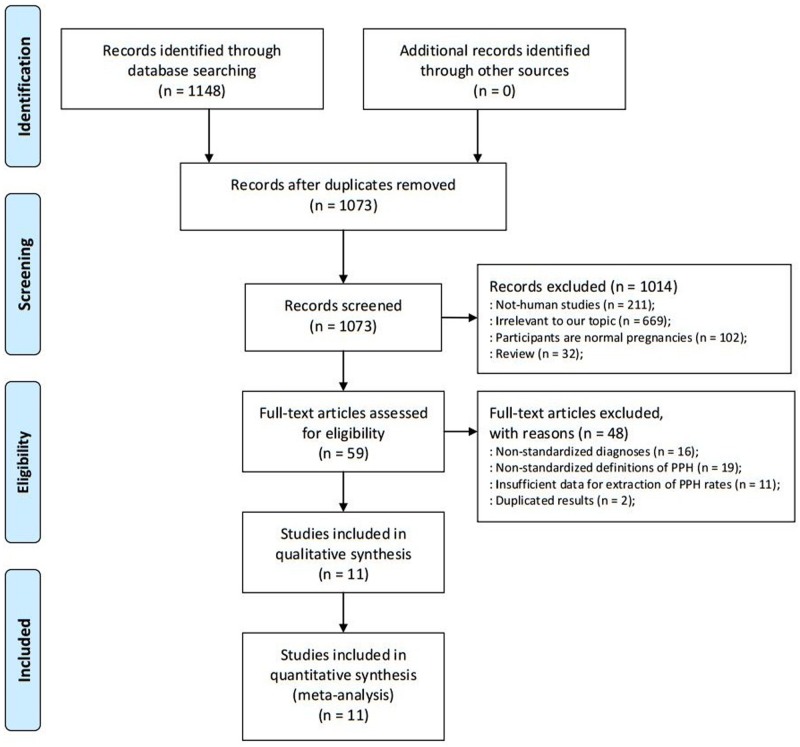
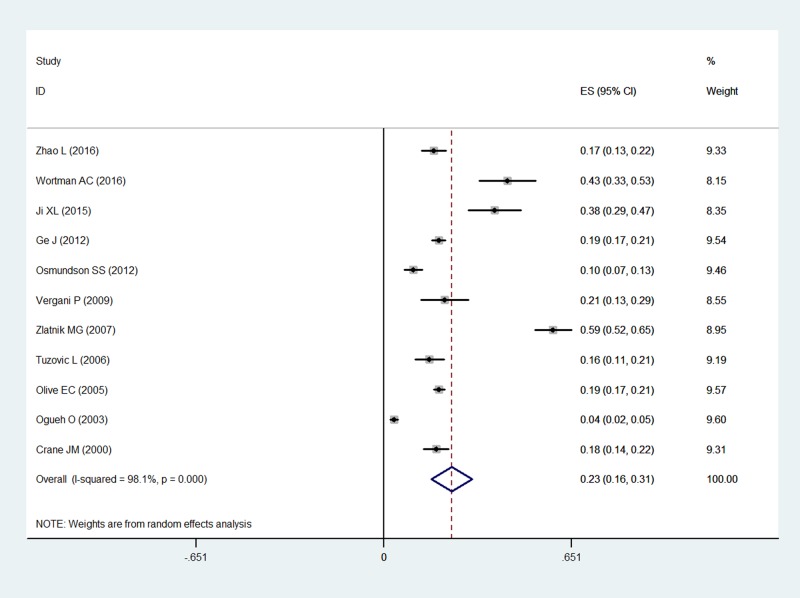
BACKGROUND: The global burden of postpartum hemorrhage (PPH) in women with placenta previa is a major public health concern. Although there are different reports on the incidence of PPH in different countries, to date, no research has reviewed them. OBJECTIVE: The aim of this study was to calculate the average point incidence of PPH in women with placenta previa. METHODS: A systematic review and meta-analysis of observational studies estimating PPH in women with placenta previa was conducted through literature searches in four databases in Jul 2016. This study was totally conducted according to the MOOSE guidelines and in accordance with the Preferred Reporting Items for Systematic Reviews and Meta-Analyses standard. RESULTS: From 1148 obtained studies, 11 included in the meta-analysis, which involved 5146 unique pregnant women with placenta previa. The overall pooled incidence of PPH was 22.3% (95% CI 15.8-28.7%). In the subgroup, the prevalence was 27.4% in placenta previas, and was 14.5% in low-lying placenta previa; the highest prevalence was estimated in Northern America (26.3%, 95%CI 11.0-41.6%), followed by the Asia (20.7%, 95%CI 12.8-28.6%), Australia (19.2%, 95% CI 17.2-21.1%) and Europe (17.8%, 95% CI, 11.5%-24.0%). CONCLUSIONS: The summary estimate of the incidence of PPH among women with placenta previa was considerable in this systematic review. The results will be crucial in prevention, treatment, and identification of PPH among pregnant women with placenta previa and will be contributed to the planning and implantation of relevant public health strategies.
Overview
The claims and statistics of this paper haven’t been checked yet.
Run the check — free, no account needed. It reads the open-access text and checks the sources it cites.
Integrity signals
Registry
Cites
Statistics
Figures
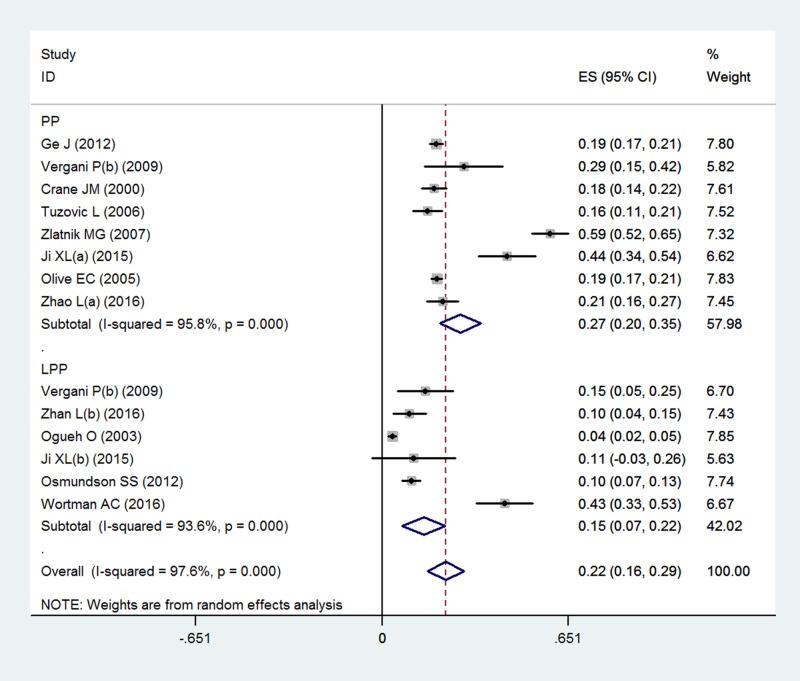
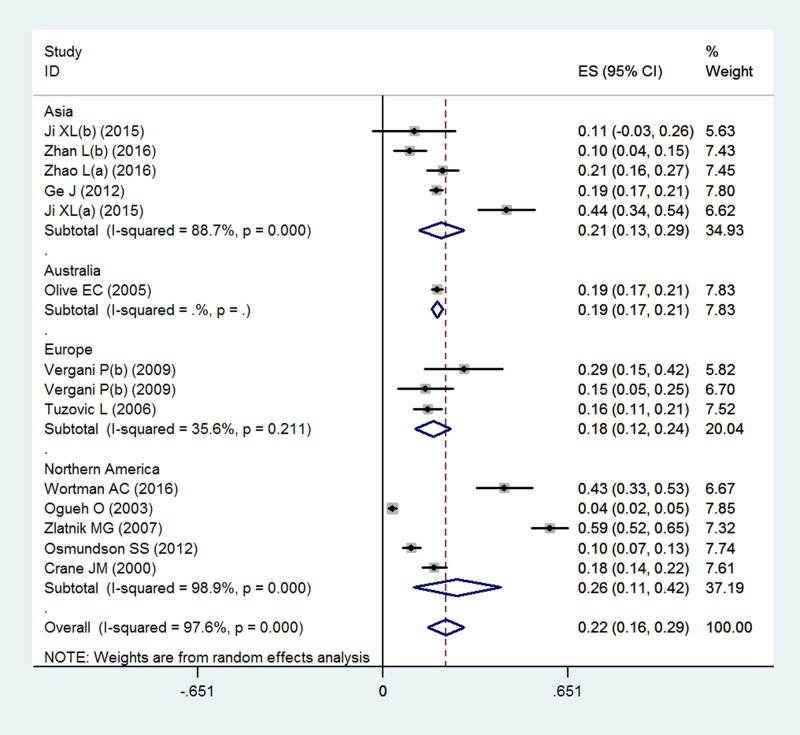
Verification
Claims the paper makes
The claims and statistics of this paper haven’t been checked yet.
Run the check — free, no account needed. It reads the open-access text and checks the sources it cites.
Claims other papers make about this one
Each is checked against this paper’s own text: does it say what the citing paper says it does?
The source backs part of the claim, not all of it — or backs it for a different population, condition or comparison.
In the citing paper
“Placenta previa and, to a lesser extent, low-lying placenta are associated with severe obstetric risks caused by blood loss in the third trimester and during delivery (Fan et al. 2017; Jansen et al. 2019).”
From Automatic Placenta Localization From Ultrasound Imaging in a Resource-Limited Setting Using a Predefined Ultrasound Acquisition Protocol and Deep Learning (2022) · cites this paper as Fan et al. 2017
Experimental — accuracy not yet measured
Self-check
Percentages, sums and reported differences re-computed from the paper’s own numbers.
The self-check needs the paper’s full text.
Citations
Cites
Dermyshi, E., Wang, Y., Yan, C., Hong, W., Qiu, G., Gong, X., & Zhang, T. (2017) · Neonatology · doi:10.1159/000454668 · Cited by 24,586
von Elm, E., Altman, D. G., Egger, M., Pocock, S. J., Gøtzsche, P. C., & Vandenbroucke, J. P. (2007) · The Lancet · doi:10.1016/s0140-6736(07)61602-x · Cited by 21,320
Meta-analysis of Observational Studies in Epidemiology<SUBTITLE>A Proposal for Reporting</SUBTITLE>
Stroup, D. F. (2000) · JAMA · doi:10.1001/jama.283.15.2008 · Cited by 20,623
Preferred reporting items for systematic reviews and meta-analyses: The PRISMA statement
Moher, D., Liberati, A., Tetzlaff, J., & Altman, D. G. (2010) · International Journal of Surgery · doi:10.1016/j.ijsu.2010.02.007 · Cited by 12,156
Global causes of maternal death: a WHO systematic analysis
Say, L., Chou, D., Gemmill, A., Tunçalp, Ö., Moller, A.-B., Daniels, J., Gülmezoglu, A. M., Temmerman, M., & Alkema, L. (2014) · The Lancet Global Health · doi:10.1016/s2214-109x(14)70227-x · Cited by 6,582
WHO analysis of causes of maternal death: a systematic review
Khan, K. S., Wojdyla, D., Say, L., Gülmezoglu, A. M., & Van Look, P. F. (2006) · The Lancet · doi:10.1016/s0140-6736(06)68397-9 · Cited by 3,978
Meta-analysis in clinical trials revisited
DerSimonian, R., & Laird, N. (2015) · Contemporary Clinical Trials · doi:10.1016/j.cct.2015.09.002 · Cited by 2,677
Transformations Related to the Angular and the Square Root
Freeman, M. F., & Tukey, J. W. (1950) · The Annals of Mathematical Statistics · doi:10.1214/aoms/1177729756 · Cited by 2,665
Practice Bulletin No. 183: postpartum hemorrhage
(2017) · Obstetrics & Gynecology · doi:10.1097/aog.0000000000002351 · Cited by 1,406
Mata, D. A., Ramos, M. A., Bansal, N., Khan, R., Guille, C., Di Angelantonio, E., & Sen, S. (2015) · JAMA · doi:10.1001/jama.2015.15845 · Cited by 1,255
Research works printed but not linked: 2
- M Knight, 2016, Beyond maternal death: improving the quality of maternal care through national studies of 'near-miss' maternal morbidity, Programme Grants for Applied Research. Southampton (UK)
- L Zhao, 2016, Effects of different types of placenta previa on pregnancy outcome, Maternal and Child Health Care of China, 31, 1163
Cited by
Sorted by citations
Prevalence of non-syndromic orofacial clefts: based on 15,094,978 Chinese perinatal infants
Fan, D., Wu, S., Liu, L., Xia, Q., Tian, G., Wang, W., Ye, S., Wang, L., Rao, J., Yang, X., et al. (2018) · Oncotarget · doi:10.18632/oncotarget.24238 · Cited by 84
Self-citationYu, S. C. H., Cheng, Y. K. Y., Tse, W. T., Sahota, D. S., Chung, M. Y., Wong, S. S. M., Chan, O. K., & Leung, T. Y. (2020) · American Journal of Obstetrics and Gynecology · doi:10.1016/j.ajog.2020.01.024 · Cited by 61
Impact of placenta previa with placenta accreta spectrum disorder on fetal growth
Jauniaux, E. R. M., Dimitrova, I., Kenyon, N. J., Gzirí, M. M., Kametas, N. A., Zosmer, N., Hubinont, C., Nicolaides, K. H., & Collins, S. (2019) · Ultrasound in Obstetrics and Gynecology · doi:10.1002/uog.20244 · Cited by 59
Adere, A., Mulu, A., & Temesgen, F. (2020) · Journal of Pregnancy · doi:10.1155/2020/5630296 · Cited by 59
Maternal risk factors associated with persistent placenta previa
King, L. J., Mackeen, A. D., Nordberg, C. M., & Paglia, M. J. (2020) · Placenta · doi:10.1016/j.placenta.2020.08.004 · Cited by 46
Current State and Future Direction of Postpartum Hemorrhage Risk Assessment
Ende, H. B., & Butwick, A. J. (2021) · Obstetrics and Gynecology · doi:10.1097/aog.0000000000004579 · Cited by 44
Vaginal delivery in women with a low‐lying placenta: a systematic review and meta‐analysis
Jansen, C. H. J. R., de Mooij, Y. M., Blomaard, C. M., Derks, J. B., van Leeuwen, E., Limpens, J., Schuit, E., Mol, B. W., & Pajkrt, E. (2019) · BJOG An International Journal of Obstetrics & Gynaecology · doi:10.1111/1471-0528.15622 · Cited by 41
Management of massive hemorrhage in pregnant women with placenta previa
Park, H., & Cho, H. (2020) · Anesthesia and Pain Medicine · doi:10.17085/apm.20076 · Cited by 41
Incidence and Risk Factors of Postpartum Hemorrhage in China: A Multicenter Retrospective Study
Li, S., Gao, J., Liu, J., Hu, J., Chen, X., He, J., Tang, Y., Liu, X., Cao, Y., Liu, X., et al. (2021) · Frontiers in Medicine · doi:10.3389/fmed.2021.673500 · Cited by 40
Shih, J., Liu, K., Kang, J., Yang, J., Lin, M. ‐., & Yu, C. (2018) · BJOG An International Journal of Obstetrics & Gynaecology · doi:10.1111/1471-0528.15410 · Cited by 39
Nsangamay, T., & Mash, R. J. (2019) · BMC Pregnancy and Childbirth · doi:10.1186/s12884-019-2635-6 · Cited by 33
Liu, Z., Wang, Y., Yan, J., Li, J., Liu, X., Zhang, L., & Li, C. (2018) · The Journal of Maternal-Fetal & Neonatal Medicine · doi:10.1080/14767058.2018.1497599 · Cited by 32
Self-citationHabitamu, D., Goshu, Y. A., & Zeleke, L. B. (2019) · BMC Research Notes · doi:10.1186/s13104-019-4646-9 · Cited by 30
Fetomaternal outcome in patients with placenta previa
Wasim, T., Bushra, N., Riaz, S., & Iqbal, H. I. (2020) · Pakistan Journal of Medical Sciences · doi:10.12669/pjms.36.5.1647 · Cited by 29
Oğlak, S. C., Ölmez, F., & Tunç, Ş. (2022) · Ochsner Journal · doi:10.31486/toj.21.0138 · Cited by 27
RU-Net: An improved U-Net placenta segmentation network based on ResNet
Wang, Y., Li, Y., Lai, Q.-Q., Li, S., & Huang, J. (2022) · Computer Methods and Programs in Biomedicine · doi:10.1016/j.cmpb.2022.107206 · Cited by 27
Effect of Intrahepatic Cholestasis of Pregnancy on Neonatal Birth Weight: A Meta-Analysis
Li, L., Chen, Y.-H., Yang, Y.-Y., & Cong, L. (2017) · Journal of Clinical Research in Pediatric Endocrinology · doi:10.4274/jcrpe.4930 · Cited by 26
Takemoto, Y., Matsuzaki, S., Matsuzaki, S., Kakuda, M., Lee, M., Hayashida, H., Maeda, M., & Kamiura, S. (2023) · Biomedicines · doi:10.3390/biomedicines11010152 · Cited by 25
Prevalence of abnormally invasive placenta among deliveries in mainland China
Fan, D., Song, L., Wu, S., Wang, W., Ye, S., Xia, Q., Liu, L., Feng, J., Wu, S., Guo, X., et al. (2017) · Medicine · doi:10.1097/md.0000000000006636 · Cited by 24
Self-citationSchilpzand, M., Neff, C., van Dillen, J., van Ginneken, B., Heskes, T., de Korte, C., & van den Heuvel, T. (2022) · Ultrasound in Medicine & Biology · doi:10.1016/j.ultrasmedbio.2021.12.006 · Cited by 23
Mastrolia, S. A., Baumfeld, Y., Loverro, G., Yohai, D., Hershkovitz, R., & Weintraub, A. Y. (2015) · The Journal of Maternal-Fetal & Neonatal Medicine · doi:10.3109/14767058.2015.1131264 · Cited by 22
Abbas, A. M., Shady, N. W., & Sallam, H. F. (2018) · Journal of Gynecology Obstetrics and Human Reproduction · doi:10.1016/j.jogoh.2018.10.023 · Cited by 22
RetractedDiagnosis and management of placenta previa and low placental implantation
Alouini, S., Mégier, P., Fauconnier, A., Huchon, C., Fievet, A., Ramos, A., Mégier, C., & Valéry, A. (2019) · The Journal of Maternal-Fetal & Neonatal Medicine · doi:10.1080/14767058.2019.1570118 · Cited by 21
DeBolt, C. A., Rosenberg, H. M., Pruzan, A. N., Goldberger, C., Kaplowitz, E., Buckley, A. B., Vieira, L., Stone, J. L., & Bianco, A. (2021) · Ultrasound in Obstetrics and Gynecology · doi:10.1002/uog.24825 · Cited by 20
Kang, S., Zhou, L., Zhu, L., Wang, Y., Yue, Y., & Li, Y. (2022) · Clinical and Experimental Obstetrics & Gynecology · doi:10.31083/j.ceog4901023 · Cited by 20
Fan, D., Wu, S., Ye, S., Wang, W., Wang, L., Fu, Y., Zeng, M., Liu, Y., Guo, X., & Liu, Z. (2018) · The Journal of Maternal-Fetal & Neonatal Medicine · doi:10.1080/14767058.2018.1457638 · Cited by 19
Self-citationMaternal and neonatal outcomes in transverse and vertical skin incision for placenta previa
Fan, D., Zhang, H., Rao, J., Lin, D., Wu, S., Li, P., Chen, G., Zhou, Z., Liu, J., Chen, T., et al. (2021) · BMC Pregnancy and Childbirth · doi:10.1186/s12884-021-03923-1 · Cited by 18
Self-citationAnesthesia management of complete versus incomplete placenta previa: a retrospective cohort study
Orbach‐Zinger, S., Weiniger, C. F., Aviram, A., Balla, A., Fein, S., Eidelman, L. A., & Ioscovich, A. (2017) · The Journal of Maternal-Fetal & Neonatal Medicine · doi:10.1080/14767058.2017.1311315 · Cited by 17
Zhou, C., Zhang, L., Bao, Y., Li, L., Zhang, T., Zhang, X., & Wang, C. (2021) · Medicine · doi:10.1097/md.0000000000023885 · Cited by 17
Demissie, D. B., Kaura, D. K., & Gebhardt, G. (2025) · Frontiers in Reproductive Health · doi:10.3389/frph.2025.1721550 · Cited by 15
Pinton, A., Deneux‐Tharaux, C., Seco, A., Sentilhes, L., Kayem, G., & the PACCRETA Study Group (2023) · BJOG An International Journal of Obstetrics & Gynaecology · doi:10.1111/1471-0528.17554 · Cited by 15
Ornaghi, S., Tessitore, I. V., & Vergani, P. (2021) · Journal of Ultrasound in Medicine · doi:10.1002/jum.15687 · Cited by 15
Estimating blood loss during cesarean delivery: A comparison of methods
Gari, A. M., Hussein, K. S., Daghestani, M. H., Aljuhani, S., Bukhari, M., Alqahtani, A., & Almarwani, M. (2022) · Journal of Taibah University Medical Sciences · doi:10.1016/j.jtumed.2022.03.004 · Cited by 15
Dang, X., Zhang, L., Bao, Y., Xu, J., Du, H., Wang, S., Liu, Y., Deng, D., Chen, S., Zeng, W., et al. (2022) · Frontiers in Medicine · doi:10.3389/fmed.2021.789529 · Cited by 14
Hu, H., Wang, L., Gao, J., Chen, Z., Chen, X., Tang, P., & Zhong, Y. (2024) · BMC Pregnancy and Childbirth · doi:10.1186/s12884-024-06876-3 · Cited by 14
Özköse, Z. G., Oğlak, S. C., & Ölmez, F. (2022) · Ginekologia Polska · doi:10.5603/gp.a2021.0160 · Cited by 13
Carusi, D. A., Gopal, D., Cabral, H., Bormann, C. L., Racowsky, C., & Stern, J. E. (2022) · Fertility and Sterility · doi:10.1016/j.fertnstert.2022.08.013 · Cited by 13
Risk factors for blood transfusion in Cesarean section: A systematic review and meta-analysis
Iqbal, K., Iqbal, A., Rathore, S. S., Ahmed, J., Ali, S. A., Farid, E., Hasanain, M., Azeem, Q., Qadar, L. T., Memon, F. R., et al. (2021) · Transfusion Clinique et Biologique · doi:10.1016/j.tracli.2021.09.010 · Cited by 13
Çalışkan, E., Akar, B., Ceylan, Y., & Karadağ, C. (2021) · Journal of Turkish Society of Obstetric and Gynecology · doi:10.4274/tjod.galenos.2021.72437 · Cited by 12
Landsverk, E., Westvik‐Johari, K., Wennerholm, U., Bergh, C., Kyhl, F., Spangmose, A. L., Vassard, D., Pinborg, A. B., Rönö, K., Gissler, M., et al. (2025) · PLoS Medicine · doi:10.1371/journal.pmed.1004536 · Cited by 11
Teixeira, L. N. A., Silveira, A. E. L., Portela, L. P., Negreiros, F. D. S., Júnior, V. A. D. C., dos Santos, G. G. O., Lopes, M. W. S., & Nunes, M. D. D. S. (2021) · Brazilian Journal of Health Review · doi:10.34119/bjhrv4n3-066 · Cited by 10
Sallam, H. F., & Shady, N. W. (2018) · The Journal of Maternal-Fetal & Neonatal Medicine · doi:10.1080/14767058.2018.1457643 · Cited by 10
RetractedBalachandar, K., Melov, S. J., & Nayyar, R. (2020) · Australian and New Zealand Journal of Obstetrics and Gynaecology · doi:10.1111/ajo.13172 · Cited by 9
Is it Possible to Predict Massive Bleeding in Nulliparous Women with Placenta Previa?
Örgül, G., Ayhan, Ş. G., Saracoglu, G. C., & Yücel, A. (2021) · Revista Brasileira Ginecologia e Obstetrícia · doi:10.1055/s-0040-1721355 · Cited by 9
Yang, Y., He, J., & Deng, N. (2021) · International Journal of Women s Health · doi:10.2147/ijwh.s332020 · Cited by 8
Placenta previa and placenta accreta: questions of diagnosing and obstetric management
Syundyukova, E. G., Chulanova, Y. S., Сашенков, С. Л., Medvedev, B. I., & Узлова, Т. В. (2022) · Russian Bulletin of Obstetrician-Gynecologist · doi:10.17116/rosakush20222203112 · Cited by 7
Blood Type and Outcomes in Pregnant Women with Placenta Previa
Fan, D., Rao, J., Zhang, H., Lin, D., Guo, X., & Liu, Z. (2023) · Oxidative Medicine and Cellular Longevity · doi:10.1155/2023/4725064 · Cited by 7
Self-citationMartins, R. I. L., Mayrink, J., & Reis, Z. S. N. (2024) · Revista Brasileira Ginecologia e Obstetrícia · doi:10.61622/rbgo/2024ao14 · Cited by 7
Stortroen, N. E., Tubog, T. D., & Shaffer, S. K. (2020) · PubMed · Cited by 7
Uterine compression suture is an effective mode of treatment of postpartum haemorrhage
Jiang, H., Wang, L., & Liang, J. (2019) · Pakistan Journal of Medical Sciences · doi:10.12669/pjms.36.2.1072 · Cited by 7
Placenta previa: resultados perinatales en la experiencia de una unidad médica de tercer nivel
Sandoval-García-Travesí, F. A., Reyes-Hernández, M., Sandoval-Barajas, D., Hernández, S. M., Galván, V. T., Hinojosa-Cruz, J. C., & Veloz-Martínez, M. G. (2019) · Cirugía y Cirujanos · doi:10.24875/ciru.19000861 · Cited by 5
Esan, D. T., Imene, P. O., Akingbade, O., Ojo, E. F., & Ramos, C. (2022) · Enfermería Clínica (English Edition) · doi:10.1016/j.enfcle.2022.09.001 · Cited by 5
Huang, J., Lu, Y., He, Y., Wang, Y., Zhu, Q., Qi, J., Ding, Y., Li, X., Ding, Z., Lindheim, S. R., et al. (2024) · Human Reproduction · doi:10.1093/humrep/deae172 · Cited by 4
Sertel, E., Demir, M., Üçüzler, Ş., Yetim, Ç., & Yavuz, A. (2024) · Journal of Turkish Society of Obstetric and Gynecology · doi:10.4274/tjod.galenos.2024.58291 · Cited by 4
Xie, R., Zeng, S., Zhou, L., Wen, S., Liao, Y., WALKER, M. C., Wen, S. W., & Lei, H. (2021) · Journal of Obstetrics and Gynaecology Canada · doi:10.1016/j.jogc.2020.12.022 · Cited by 4
Uterine arteries prophylactic occlusion balloon placement in pregnancies with placenta praevia
Giampaolino, P., Corte, L. D., Apparente, P., & Bifulco, G. (2019) · Minimally Invasive Therapy & Allied Technologies · doi:10.1080/13645706.2019.1679838 · Cited by 4
Dong, H., Song, J., Cui, H., & Chen, X. (2022) · Annals of Translational Medicine · doi:10.21037/atm-22-68 · Cited by 4
Postpartum Hemorrhage With Cardiorespiratory Collapse Transported From a Rural Hospital
Ulrich, C. L., Utarnachitt, R. B., Danielson, K., Pieri, A., Whitley, S., & Latimer, A. J. (2019) · Air Medical Journal · doi:10.1016/j.amj.2019.07.017 · Cited by 4
Perinatal factors for antepartum hemorrhage in women with placenta accreta spectrum
Hu, P., Ye, S., Zhou, S., Guo, X., & Fan, D. (2025) · Frontiers in Surgery · doi:10.3389/fsurg.2025.1588498 · Cited by 3
Self-citationEffect of a Combined Hemostatic Technique during Cesarean Section in Placenta Previa
Lee, D. H., Choi, W. K., Park, D. J., Jeong, Y. J., & Lee, J. H. (2020) · Perinatology · doi:10.14734/pn.2020.31.1.20 · Cited by 3
Shin, H. J., Nam, S. W., Koo, B.-W., Kim, J., Hwang, J., Do, S.-H., & Na, H.-S. (2023) · Heliyon · doi:10.1016/j.heliyon.2023.e13563 · Cited by 3
Ghose, S., Miuli, I., Arumugam, S. C., & Srinivasan, S. (2023) · Journal of South Asian Federation of Obstetrics and Gynaecology · doi:10.5005/jp-journals-10006-2260 · Cited by 3
Third-trimester resolution of low placentation and risk of postpartum hemorrhage
Cohen, A., Qi, T., Miguel, C., Peskin-Stolze, M., Dar, P., & Doulaveris, G. (2025) · European Journal of Obstetrics & Gynecology and Reproductive Biology · doi:10.1016/j.ejogrb.2025.01.035 · Cited by 3
Postpartum Hemorrhage in Patients With a Low-Lying Placenta
Bonanni, G., Lopez, M. C., Tarchi, S. M., Abiad, M., Shantz, C. F., Bevilacqua, E., Shainker, S. A., Modest, A. M., Aagaard, K. M., Berghella, V., et al. (2025) · Obstetrics and Gynecology · doi:10.1097/aog.0000000000005956 · Cited by 2
Choi, S., Chung, H., Ko, H. S., Gen, Y., Kim, S. M., Shin, J., Kil, K., Kim, Y., Wie, J. H., & Jo, Y. (2023) · Nigerian Journal of Clinical Practice · doi:10.4103/njcp.njcp_456_22 · Cited by 2
Ukraine Health System during the 2022 War Crisis: The Battling Concern of the Hour
Boppana, S. H., Kunden, V. D., Mamidi, S. R., Kutikuppala, L. V. S., & Kalyani, P. S. V. (2023) · Journal of Public Health and Primary Care · doi:10.4103/jphpc.jphpc_29_22 · Cited by 2
Factors associated with poorer childbirth outcomes in pregnant women diagnosed with placenta previa
Lv, Y., Zhang, X., Xu, Q., & Wu, J. (2023) · Taiwanese Journal of Obstetrics and Gynecology · doi:10.1016/j.tjog.2023.03.004 · Cited by 2
Kochhar, P. K., & Knowles, S. (2019) · Cambridge University Press eBooks · doi:10.1017/9781108296793.028 · Cited by 2
Farisoğulları, N., Tanaçan, A., Sakcak, B., Denızlı, R., Özkavak, O. O., Turgut, E., Kara, Ö., Yazıhan, N., & Şahın, D. (2023) · Journal of Interferon & Cytokine Research · doi:10.1089/jir.2023.0106 · Cited by 1
Yang, J., Ye, S., Xuan, B., Liu, Z., & Fan, D. (2025) · PeerJ · doi:10.7717/peerj.19091 · Cited by 1
Self-citationRen, D. (2025) · American Journal of Translational Research · doi:10.62347/emny9955 · Cited by 1
Lê, H., Nguyễn, T. H., Đỗ, T. H., Đoàn, T. Đ., Quan, K. P., Nguyễn, T. T., Trang, H. H., & Phạm, T. Q. N. (2024) · Tạp chí Y Dược học Cần Thơ · doi:10.58490/ctump.2024i77.2704 · Cited by 1
Wang, Y., Hou, Z., Xia, B., Xie, X., & He, Y. (2025) · Clinical and Experimental Obstetrics & Gynecology · doi:10.31083/ceog26095 · Cited by 1
Risk Factors and Postpartum Hemorrhage among Women with Vaginal Delivery
Dube, R., Kar, S. S., Satapathy, S., Bahutair, S. N., Younus, H. A., & Abdulsalam, K. S. (2025) · Annals of African Medicine · doi:10.4103/aam.aam_55_25 · Cited by 1
Lin, X., Zhang, X., Chen, J., Ning, L., Zhang, L., Jiang, Y., Yao, W., Zhao, B., & Luo, Q. (2025) · International Journal of Gynecology & Obstetrics · doi:10.1002/ijgo.70535 · Cited by 1
Salzer, E. A. J. (2022) · Physician Assistant Clinics · doi:10.1016/j.cpha.2022.02.010 · Cited by 1
Shinohara, S., Kasai, M., Yasuda, G., & Sunami, R. (2023) · PLoS ONE · doi:10.1371/journal.pone.0290244 · Cited by 1
Maternal And Fetal Outcome in Placenta Previa: A Multicenter Prospective Observational Study
Khan, B., Jabeen, S. S., Khan, F. S., Mumtaz, F., Gul, R., & Nawaz, Q. (2024) · Journal of Rawalpindi Medical College · doi:10.37939/jrmc.v28i1.2320 · Cited by 1
Mitigating Caesarean Section Complications
Gubu-Ntaba, C. N., Mpumlwana, V., & Businge, C. B. (2024) · Obstetrics and gynecology. · doi:10.5772/intechopen.114976 · Cited by 1
NUTRITIONAL AND MATERNAL FACTORS INFLUENCING POSTPARTUM HAEMORRHAGE IN LAMBUSSIE DISTRICT
Taabia, F. Z., Mornah, L. N., & Michael, W. (2022) · UDS International Journal of Development · doi:10.47740/612.udsijd6i · Cited by 1
Placenta Previa and the Associated Risk Factors
Nazneen, S., & Bukhari, N. (2022) · Pakistan Journal of Medical and Health Sciences · doi:10.53350/pjmhs22167765 · Cited by 1
Postpartum hemorrhage control by double-balloon catheters.
Nwanodi, O. B. (2018) · Gynecology and Reproductive Endocrinology · doi:10.35841/2591-7994.2.1.5
Fahmy, M. S. E. D., Ezzat, L., Khalil, M. M., Elsayed, A. H., Fahmy, S., Badawy, A., Ramadan, H., & Abbas, A. M. (2018) · International Journal of Reproduction Contraception Obstetrics and Gynecology · doi:10.18203/2320-1770.ijrcog20183291
Haque, H., & Pandit, U. (2017) · Journal of Nepalgunj Medical College · doi:10.3126/jngmc.v15i1.23528
STUDY OF PLACENTA PRAEVIA AND ITS FOETOMATERNAL OUTCOME IN A TERTIARY CARE CENTER- MGMGH, TRICHY
Gayathriedevi Sellathamby, S., & Baskaran, S. (2019) · Journal of Evidence Based Medicine and Healthcare · doi:10.18410/jebmh/2019/284
Prospective observational study of risk factors and maternofetal outcome of placenta previa at LMICs
Verma, M. L., Singh, U., Solanki, V., Singh, A., Sachan, R., & Sankhwar, P. (2020) · International Journal of Community Medicine and Public Health · doi:10.18203/2394-6040.ijcmph20203911
Obstetric outcome in major vs minor placenta praevia
Matsubara, S., Matsubara, T., & Takahashi, H. (2021) · Australian and New Zealand Journal of Obstetrics and Gynaecology · doi:10.1111/ajo.13272
Saleh, A., & Grover, J. (2021) · Emergency medical services · doi:10.1002/9781119756279.ch42
Impact of Placenta Previa on Fetal Growth
Elrewany, H. A., Elnamoury, M. M., Elshourbagy, S. H., & Awarah, A. M. (2021) · Journal of Advances in Medicine and Medical Research · doi:10.9734/jammr/2021/v33i2331186
Maternal Complications in Multifetal Pregnancy
Ramler, P. I., & van den Akker, T. (2021) · Springer eBooks · doi:10.1007/978-3-030-47652-6_23
Sharawi, N., Whittington, J. R., & Sultan, P. (2022) · Springer eBooks · doi:10.1007/978-3-030-72487-0_35
Multi-Center Investigation and Analysis of Risk Factors of Premature Birth
陈, 晨. (2021) · Advances in Clinical Medicine · doi:10.12677/acm.2021.115358
Use of Cervical Length in Labor and Delivery
Mascio, D. D., Renzo, G. C. D., & Berghella, V. (2021) · Springer eBooks · doi:10.1007/978-3-030-57595-3_19
(2020) · Advances in medical diagnosis, treatment, and care (AMDTC) book series · doi:10.4018/978-1-7998-4357-3.ch006
Placenta Previa and Placental Adhesive Diseases Does It Affect Fetal Growth Patterns?
Elnagar, W. M. (2019) · Journal of Gynecology and Womens Health · doi:10.19080/jgwh.2019.15.555912
A study on fetomaternal outcome in cases of placenta previa in a tertiary health care hospital
Penamalli, J., & Bhumireddy, K. (2022) · International Journal of Clinical Obstetrics and Gynaecology · doi:10.33545/gynae.2022.v6.i5a.1205
Esan, D. T., Imene, P. O., Akingbade, O., Ojo, E. F., & Ramos, C. (2022) · Enfermería Clínica · doi:10.1016/j.enfcli.2022.09.002
Novel Presentation of Placenta Accreta Spectrum
Sajjad, R., & Ashraf, V. (2022) · Pakistan Armed Forces Medical Journal · doi:10.51253/pafmj.v72i6.7870
Factores de riesgos que inciden en la hemorragia postparto.
Pincay, F. L. C., Caicedo, K. P. E., Cedeño, M., & Eras, E. (2023) · Killkana Salud y Bienestar · doi:10.26871/killcanasalud.v7i3.1347
R*, S., Gayathri, G., Uma, N., & Karimunnisha, S. K. (2024) · International Journal of Recent Innovations in Medicine and Clinical Research · doi:10.18231/j.ijrimcr.2020.015
Metadata
- Authors
- Fan, D., Xia, Q., Liu, L., Wu, S., Tian, G., Wang, W., Wu, S., Guo, X., & Liu, Z.
- Affiliations
- Anhui Medical University (CN)
- Anhui University of Traditional Chinese Medicine (CN)
- First Affiliated Hospital Zhejiang University (CN)
- Foshan Maternity and Child Health Care Hospital (CN)
- Corresponding author
- Guo, Xiaoling
- Venue
- PLOS ONE
- Publisher
- Public Library of Science (PLoS)
- Published
- 2017-01-20
- Volume
- 12
- Issue
- 1
- Pages
- e0170194
- ISSN
- 1932-6203 (ISSN-L)
- PMC
- PMC5249070
- OpenAlex
- W2574444842
- Cited by
- 115
- References
- 42
- Citations by year
- 2026: 8 · 2025: 13 · 2024: 12 · 2023: 11 · 2022: 18 · 2021: 18 · 2020: 10 · 2019: 12 · 2018: 8 · 2017: 4
- FWCI
- 1.74
- Type
- journal article
- Language
- en
- Open access
- gold
- doi.org
- Licence
- Locations
- PLoS ONE (publishedVersion, cc-by)
- Europe PMC (PubMed Central) (publishedVersion, cc-by)
- PubMed Central (publishedVersion, cc-by)
- PubMed (publishedVersion)
- QUT ePrints (Queensland University of Technology) (submittedVersion, cc-by)
- RePEc: Research Papers in Economics (submittedVersion)
- DOAJ (DOAJ: Directory of Open Access Journals) (submittedVersion)
- Figshare (submittedVersion, cc-by)
- Topics
- Health Sciences › Medicine › Pediatrics, Perinatology and Child Health › Maternal and fetal healthcare
- Health Sciences › Medicine › Hematology › Blood transfusion and management
- Health Sciences › Medicine › Obstetrics and Gynecology › Pregnancy and preeclampsia studies
- Keywords
- postpartum hemorrhage, placenta previa, incidence, pregnancy complications, maternal morbidity, regional variation in incidence
- MeSH terms
- Adult, Female, Postpartum Hemorrhage, Humans, Placenta Previa, Pregnancy, Incidence
About these checks
Registry, retraction, Cites and statistics results are computed, not judged, with one exception: a printed reference that no index lists is read once by a model before it counts as a citation error. Claims are extracted by a model and kept only when their quote appears verbatim in the text; each cited source is then checked, with a model’s help, for whether it says what the claim relies on. Those verdicts can be wrong — read the claim’s quote and the cited source before relying on one.
Statistics and arithmetic are recomputed, not judged.
Confidence bands are shown only for fields calibrated on our annotated test set. None is calibrated yet, so no band is shown.
What counts as a claim ›How we measure confidence ›How we check this ›
Are you an author, or do you see a problem with this page? Request a review
