

The DOI matches its Crossref record; 2 of the 2 references it cites were found in a registry or an index.
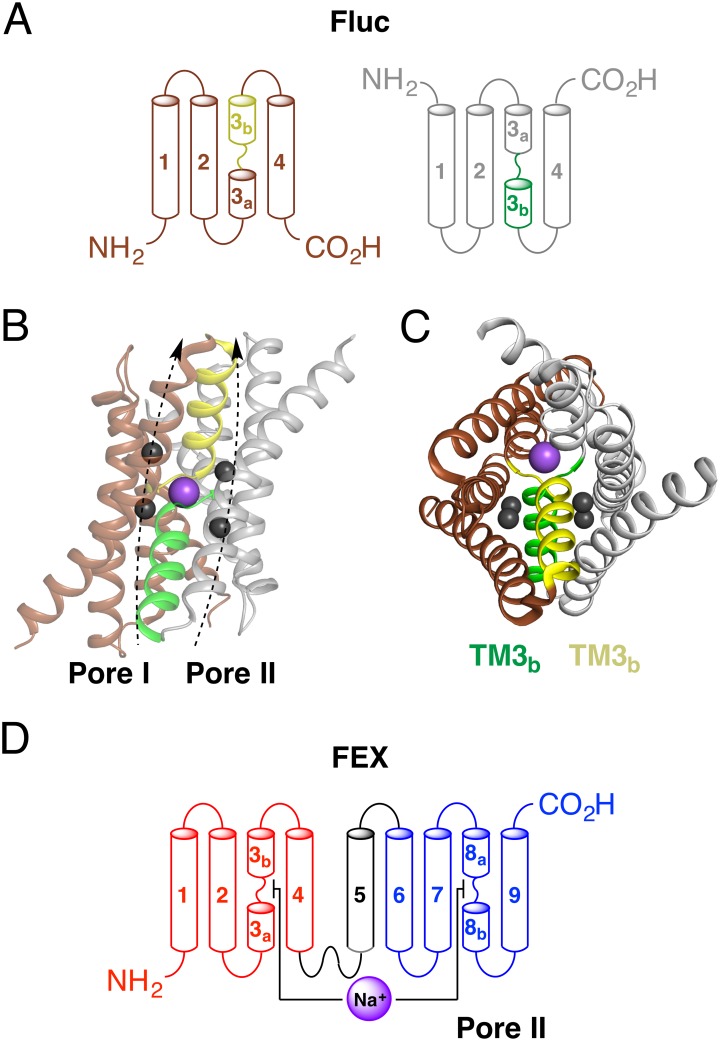
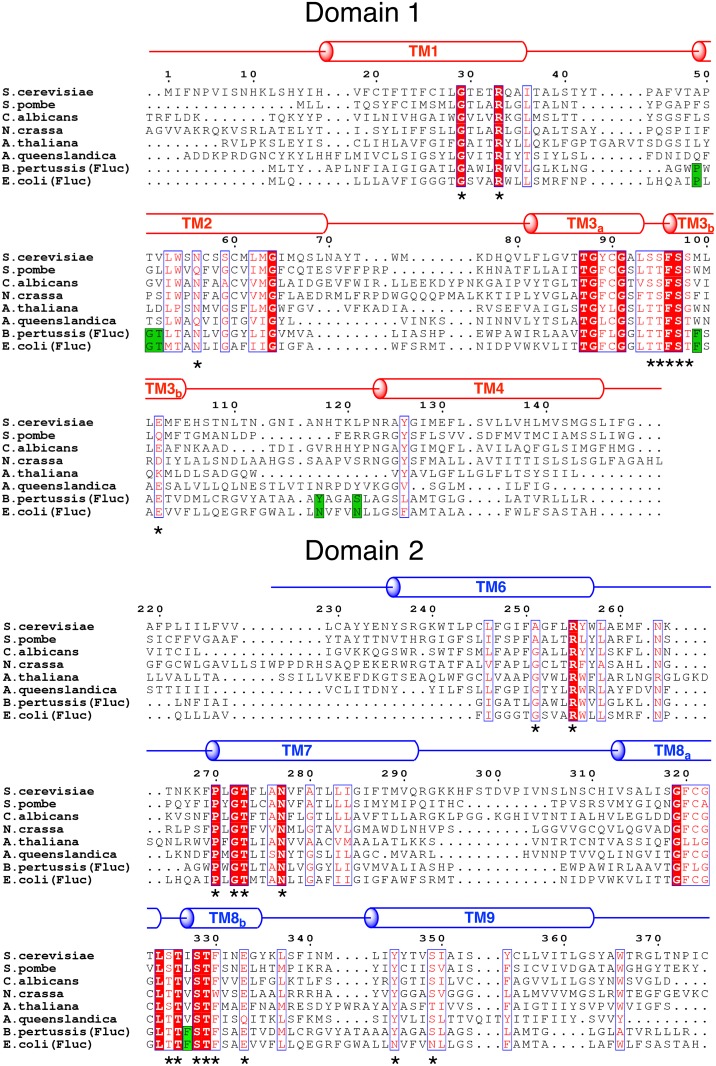
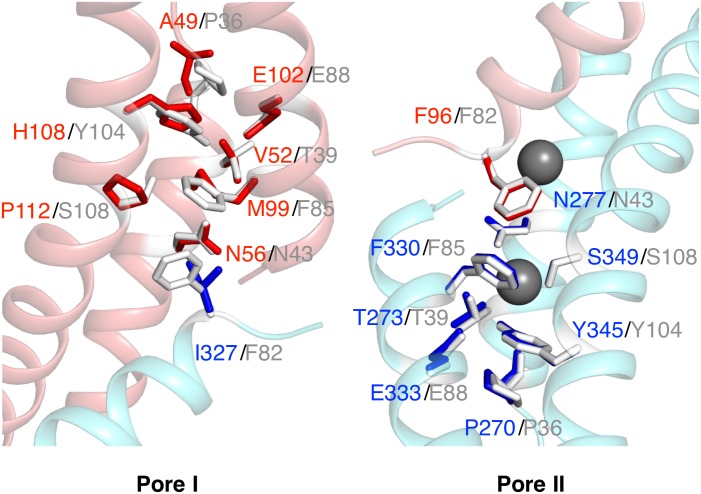
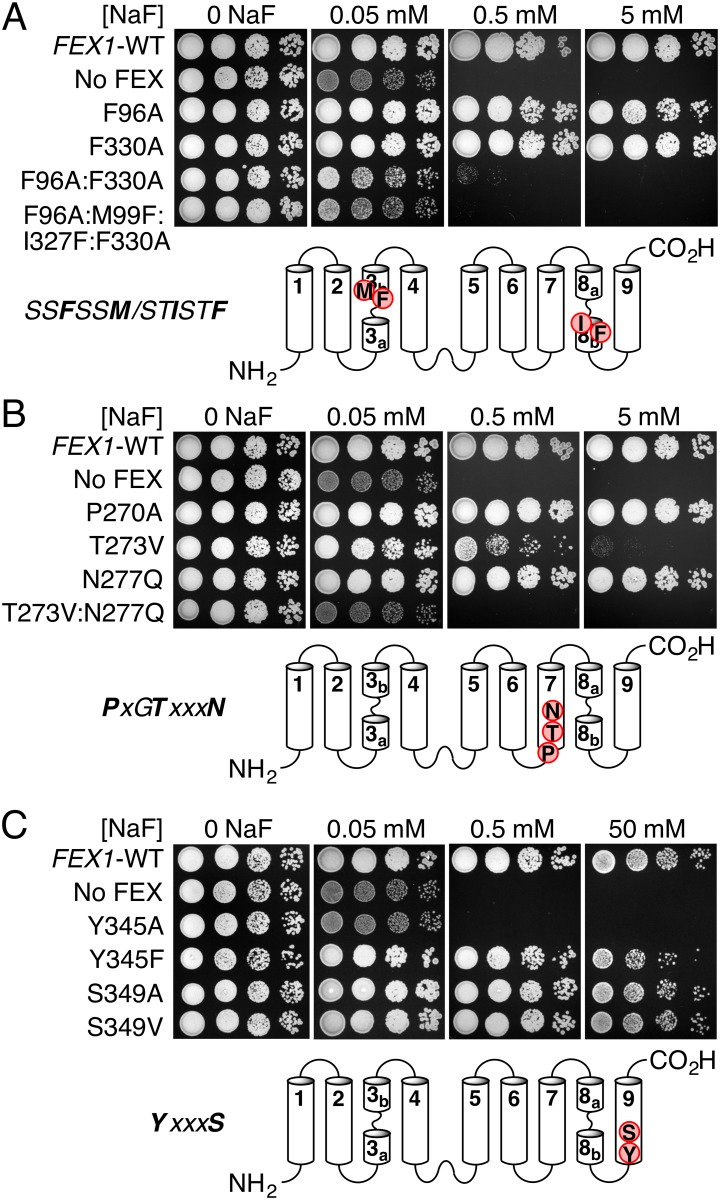
Fluoride export (FEX) proteins from fungi, plants and animals are 'single barreled' channels containing one functional and one vestigial ion pore
Overview
The claims and statistics of this paper haven’t been checked yet.
Run the check — free, no account needed. It reads the open-access text and checks the sources it cites.
Integrity signals
Registry
Cites
Statistics
Figures
Verification
Claims the paper makes
The claims and statistics of this paper haven’t been checked yet.
Run the check — free, no account needed. It reads the open-access text and checks the sources it cites.
Claims other papers make about this one
Each is checked against this paper’s own text: does it say what the citing paper says it does?
The cited source doesn’t support the claim as written.
In the citing paper
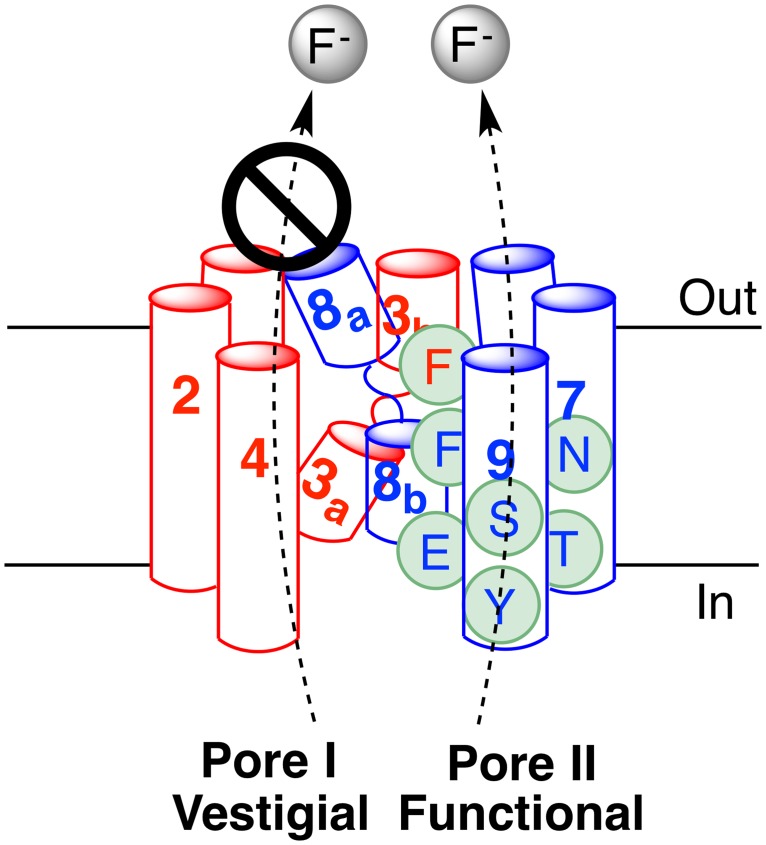
“In the heterodimeric Fluc and FEX proteins, essential pore-lining residues are conserved in only one of the two domains(3, 66, 73), providing a case study in how redundant features degrade upon gene duplication, fusion, and genetic drift.”
From Membrane exporters of fluoride ion (2021) · cites this paper as [66]
Checked by a reasoning model — may be wrong.
Experimental — accuracy not yet measuredThe source backs part of the claim, not all of it — or backs it for a different population, condition or comparison.
In the citing paper
“Yeast, fungi, plants, and some ocean-dwelling animals like corals and sponges also possess fluoride exporters that belong to a third molecular family known as FEX85,86.”
From The link between ancient microbial fluoride resistance mechanisms and bioengineering organofluorine degradation or synthesis (2024) · cites this paper as [86]
Experimental — accuracy not yet measuredIn the citing paper
“These channels are structurally related to the Flucs but possess a more complicated two-domain fold (24, 25).”
From Fluoride export is required for the competitive fitness of pathogenic microorganisms in dental biofilm models (2024) · cites this paper as [25]
In the citing paper
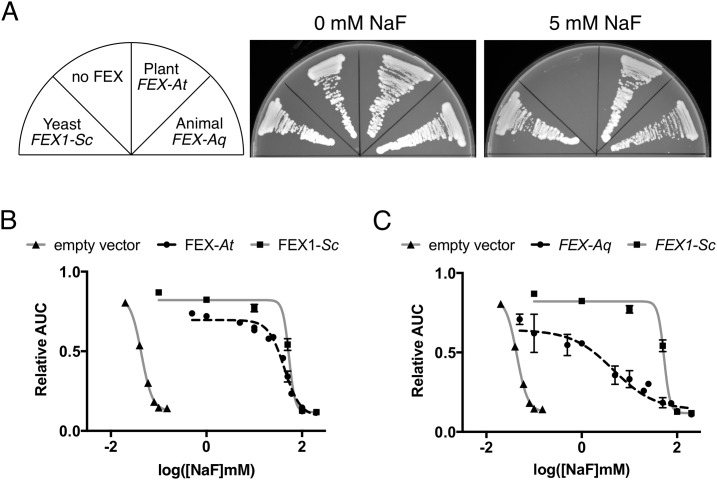
“Moreover, proteins from plants and animals including Arabidopsis thaliana(66), the tea plant Camellia sinensis(67), and the sea sponge Amphimedon queenslandica(66) all complement strains of S. cerevisiae for which endogenous FEX channels have been knocked out.”
From Membrane exporters of fluoride ion (2021) · cites this paper as [66]
In the citing paper
“In S. cerevisiae FEX channels, mutation of the corresponding glutamate renders the protein unprotective against F−(66).”
From Membrane exporters of fluoride ion (2021) · cites this paper as [66]
Self-check
Percentages, sums and reported differences re-computed from the paper’s own numbers.
The self-check needs the paper’s full text.
Citations
Cites
The Amphimedon queenslandica genome and the evolution of animal complexity
Srivastava, M., Simakov, O., Chapman, J., Fahey, B., Gauthier, M. E. A., Mitros, T., Richards, G. S., Conaco, C., Dacre, M., Hellsten, U., et al. (2010) · Nature · doi:10.1038/nature09201 · Cited by 1,049
Crystal structures of a double-barrelled fluoride ion channel
Stockbridge, R. B., Kolmakova-Partensky, L., Shane, T., Koide, A., Koide, S., Miller, C., & Newstead, S. (2015) · Nature · doi:10.1038/nature14981 · Cited by 119
Research works printed but not linked: 31
- S Ayoob, 2006, Fluoride in drinking water: A review on the status and stress effects, Critical Reviews in Environmental Science and Technology, 36, 433, 10.1080/10643380600678112 · DOI
- S Jagtap, 2012, Fluoride in Drinking Water and Defluoridation of Water, Chemical Reviews, 112, 2454, 10.1021/cr2002855 · DOI
- M Vithanage, 2015, Fluoride in the environment: sources, distribution and defluoridation, Environmental Chemistry Letters, 13, 131, 10.1007/s10311-015-0496-4 · DOI
- E Gazzano, 2010, Fluoride Effects: The Two Faces of Janus, Current Medicinal Chemistry, 17, 2431, 10.2174/092986710791698503 · DOI
- O Barbier, 2010, Molecular mechanisms of fluoride toxicity, Chemico-Biological Interactions, 188, 319, 10.1016/j.cbi.2010.07.011 · DOI · Paper page
- M Golicnik, 2010, Metallic Fluoride Complexes as Phosphate Analogues for Structural and Mechanistic Studies of Phosphoryl Group Transfer Enzymes, Acta Chimica Slovenica, 57, 272
- A Strunecka, 2007, Fluoride interactions: From molecules to disease, Current Signal Transduction Therapy, 2, 190, 10.2174/157436207781745300 · DOI
- JL Baker, 2012, Widespread Genetic Switches and Toxicity Resistance Proteins for Fluoride, Science, 335, 233, 10.1126/science.1215063 · DOI · Paper page
- RB Stockbridge, 2012, Fluoride resistance and transport by riboswitch-controlled CLC antiporters, Proceedings of the National Academy of Sciences of the United States of America, 109, 15289, 10.1073/pnas.1210896109 · DOI · Paper page
- RB Stockbridge, 2013, A family of fluoride-specific ion channels with dual-topology architecture, Elife, 2
- RB Stockbridge, 2014, Proof of dual-topology architecture of Fluc F- channels with monobody blockers, Nature Communications, 5, 10.1038/ncomms6120 · DOI · Paper page
- NB Last, 2016, Mechanistic signs of double-barreled structure in a fluoride ion channel, eLife, 5
- S Li, 2013, Eukaryotic resistance to fluoride toxicity mediated by a widespread family of fluoride export proteins, Proceedings of the National Academy of Sciences of the United States of America, 110, 19018, 10.1073/pnas.1310439110 · DOI · Paper page
- R Fernandez, 2016, Use of a fluoride channel as a new selection marker for fission yeast plasmids and application to fast genome editing with CRISPR/Cas9, Yeast, 33, 549, 10.1002/yea.3178 · DOI
- KD Smith, 2015, Yeast Fex1p Is a Constitutively Expressed Fluoride Channel with Functional Asymmetry of Its Two Homologous Domains, Journal of Biological Chemistry, 290, 19874, 10.1074/jbc.M115.651976 · DOI · Paper page
- M Cametti, 2009, Recognition and sensing of fluoride anion, Chemical Communications, 20, 2809, 10.1039/b902069a · DOI · Paper page
- NI Agalakova, 2011, Effect of inorganic fluoride on living organisms of different phylogenetic level, Journal of Evolutionary Biochemistry and Physiology, 47, 393, 10.1134/S002209301105001X · DOI
- JM Horner, 1995, EFFECTS OF FLUORIDE AND ACIDITY ON EARLY PLANT-GROWTH, Agriculture Ecosystems & Environment, 52, 205, 10.1016/0167-8809(94)00533-K · DOI
- SK Jha, 2009, Fluoride toxicity effects in onion (Allium cepa L.) grown in contaminated soils, Chemosphere, 76, 353, 10.1016/j.chemosphere.2009.03.044 · DOI
- A Ram, 2014, EFFECT OF FLUORIDE AND SALICYLIC ACID ON SEEDLING GROWTH AND BIOCHEMICAL PARAMETERS OF WATERMELON (CITRULLUS LANATUS), Fluoride, 47, 49
- Y Yang, 2016, Aluminium alleviates fluoride toxicity in tea (Camellia sinensis), Plant and Soil, 402, 179, 10.1007/s11104-015-2787-8 · DOI
- MA Pulyaevskaya, 2011, Sodium Fluoride Inhibits HSP Synthesis in Heat-Stressed Cultured Cells of Arabidopsis thaliana, Russian Journal of Plant Physiology, 58, 589, 10.1134/S1021443711040108 · DOI
- ST Lee, 2014, Monofluoroacetate-Containing Plants That Are Potentially Toxic to Livestock, Journal of Agricultural and Food Chemistry, 62, 7345, 10.1021/jf500563h · DOI
- M Schmid, 2005, A gene expression map of Arabidopsis thaliana development, Nature Genetics, 37, 501, 10.1038/ng1543 · DOI
- D Winter, 2007, An "Electronic Fluorescent Pictograph" Browser for Exploring and Analyzing Large-Scale Biological Data Sets, Plos One, 2, 10.1371/journal.pone.0000718 · DOI
- JA Camargo, 2003, Fluoride toxicity to aquatic organisms: a review, Chemosphere, 50, 251, 10.1016/S0045-6535(02)00498-8 · DOI · Paper page
- HF Akers, 2004, An historical perspective on early progress of Queensland water fluoridation 1945–1954: Sheep, climate and sugar, Australian Dental Journal, 49, 61, 10.1111/j.1834-7819.2004.tb00051.x · DOI
- M Biasini, 2014, SWISS-MODEL: modelling protein tertiary and quaternary structure using evolutionary information, Nucleic Acids Research, 42, W252, 10.1093/nar/gku340 · DOI
- H McWilliam, 2013, Analysis Tool Web Services from the EMBL-EBI, Nucleic Acids Research, 41, W597, 10.1093/nar/gkt376 · DOI
- A Krogh, 2001, Predicting transmembrane protein topology with a hidden Markov model: Application to complete genomes, Journal of Molecular Biology, 305, 567, 10.1006/jmbi.2000.4315 · DOI · Paper page
- X Robert, 2014, Deciphering key features in protein structures with the new ENDscript server, Nucleic Acids Research, 42, W320, 10.1093/nar/gku316 · DOI · Paper page
Cited by
Sorted by citations
Stockbridge, R. B., & Wackett, L. P. (2024) · Nature Communications · doi:10.1038/s41467-024-49018-1 · Cited by 80
Membrane exporters of fluoride ion
McIlwain, B. C., Ruprecht, M. T., & Stockbridge, R. B. (2021) · Annual Review of Biochemistry · doi:10.1146/annurev-biochem-071520-112507 · Cited by 69
Banerjee, A., Kang, C.-Y., An, M., Koff, B. B., Sunder, S., Kumar, A., Tenuta, L. M. A., & Stockbridge, R. B. (2024) · mBio · doi:10.1128/mbio.00184-24 · Cited by 17
Metadata
- Authors
- Berbasova, T., Nallur, S., Sells, T., Smith, K. D., Gordon, P. B., Tausta, S. L., & Strobel, S. A.
- Venue
- PLOS ONE
- Publisher
- Public Library of Science (PLoS)
- Published
- 2017-05-04
- Volume
- 12
- Issue
- 5
- Pages
- e0177096
- ISSN
- 1932-6203
- PMC
- PMC5417652
- Cited by
- 36
- References
- 2
- Language
- en
- Funders
- National Institutes of Health (GM022778)
About these checks
Registry, retraction, Cites and statistics results are computed, not judged, with one exception: a printed reference that no index lists is read once by a model before it counts as a citation error. Claims are extracted by a model and kept only when their quote appears verbatim in the text; each cited source is then checked, with a model’s help, for whether it says what the claim relies on. Those verdicts can be wrong — read the claim’s quote and the cited source before relying on one.
Statistics and arithmetic are recomputed, not judged.
Confidence bands are shown only for fields calibrated on our annotated test set. None is calibrated yet, so no band is shown.
What counts as a claim ›How we measure confidence ›How we check this ›
Are you an author, or do you see a problem with this page? Request a review
