

Towards the automated localisation of targets in rapid image-sifting by collaborative brain-computer interfaces
Open accessThe DOI matches its Crossref record; 69 of the 69 references it cites were found in a registry or an index.
Abstract
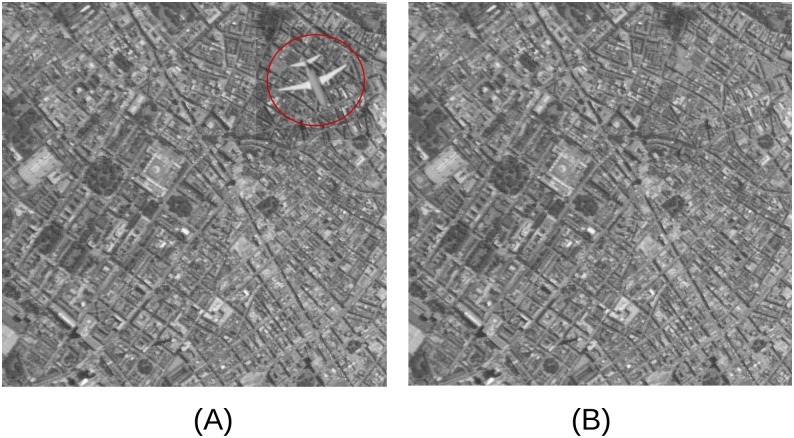
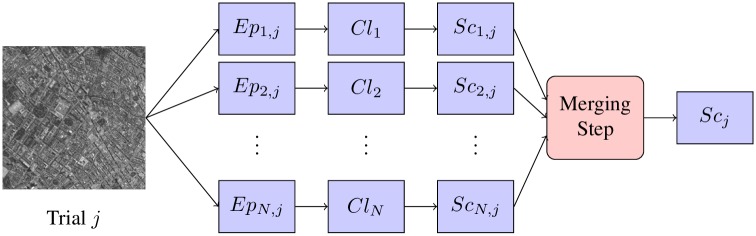
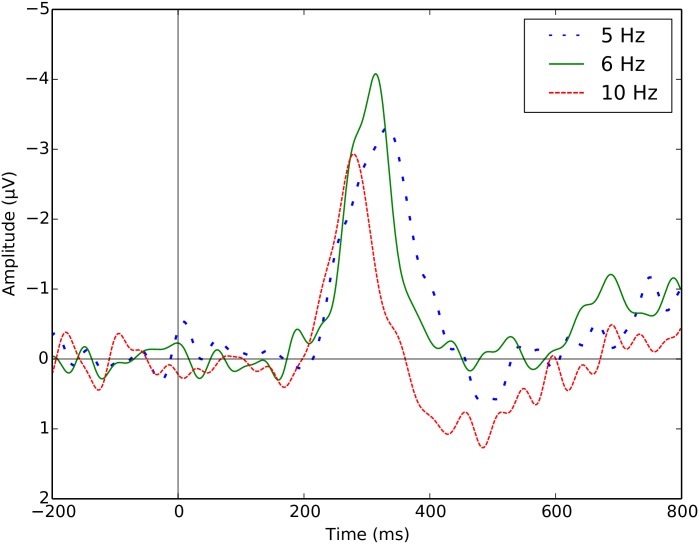
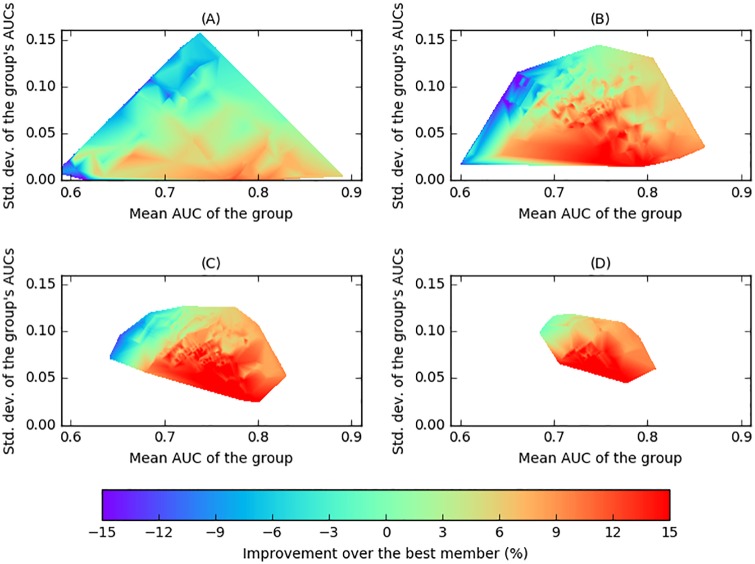
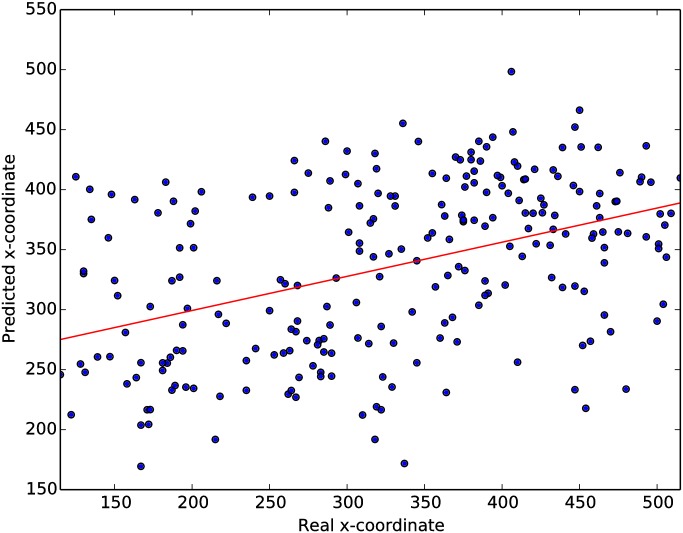
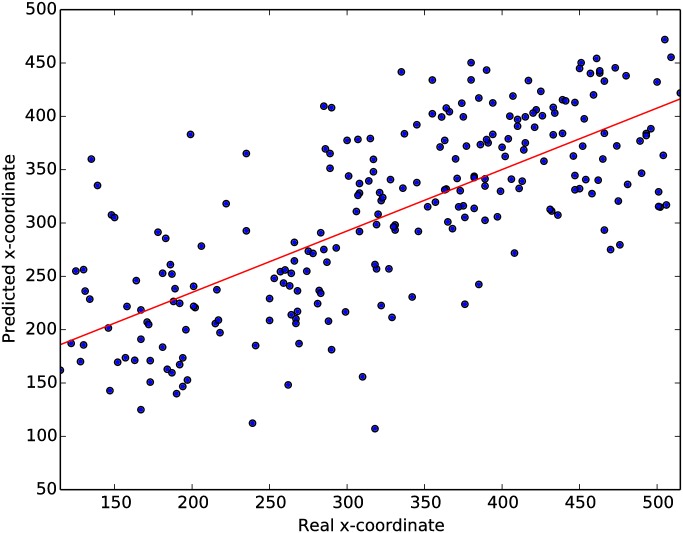
The N2pc is a lateralised Event-Related Potential (ERP) that signals a shift of attention towards the location of a potential object of interest. We propose a single-trial target-localisation collaborative Brain-Computer Interface (cBCI) that exploits this ERP to automatically approximate the horizontal position of targets in aerial images. Images were presented by means of the rapid serial visual presentation technique at rates of 5, 6 and 10 Hz. We created three different cBCIs and tested a participant selection method in which groups are formed according to the similarity of participants' performance. The N2pc that is elicited in our experiments contains information about the position of the target along the horizontal axis. Moreover, combining information from multiple participants provides absolute median improvements in the area under the receiver operating characteristic curve of up to 21% (for groups of size 3) with respect to single-user BCIs. These improvements are bigger when groups are formed by participants with similar individual performance, and much of this effect can be explained using simple theoretical models. Our results suggest that BCIs for automated triaging can be improved by integrating two classification systems: one devoted to target detection and another to detect the attentional shifts associated with lateral targets.
Overview
The claims and statistics of this paper haven’t been checked yet.
Free: it reads the open-access text and checks the first 5 claims that cite a source we can check. Create a free account to check every claim.
Integrity signals
Registry
Cites
Statistics
Figures

Verification
Claims the paper makes
The claims and statistics of this paper haven’t been checked yet.
Free: it reads the open-access text and checks the first 5 claims that cite a source we can check. Create a free account to check every claim.
Self-check
Percentages, sums and reported differences re-computed from the paper’s own numbers.
The self-check needs the paper’s full text.
Citations
Cites
1 retracted
Brain–computer interface–based communication in the completely locked-in State
Chaudhary, U., Xia, B., Silvoni, S., Cohen, L. G., & Birbaumer, N. (2017) · PLOS Biology · doi:10.1371/journal.pbio.1002593 · Cited by 235
RetractedThe meaning and use of the area under a receiver operating characteristic (ROC) curve.
Hanley, J. A., & McNeil, B. J. (1982) · Radiology · doi:10.1148/radiology.143.1.7063747 · Cited by 21,856
The use of the area under the ROC curve in the evaluation of machine learning algorithms
Bradley, A. P. (1997) · Pattern Recognition · doi:10.1016/s0031-3203(96)00142-2 · Cited by 7,217
Farwell, L. A., & Donchin, E. (1988) · Electroencephalography and Clinical Neurophysiology · doi:10.1016/0013-4694(88)90149-6 · Cited by 3,228
The mental prosthesis: assessing the speed of a P300-based brain-computer interface
Donchin, E., Spencer, K. M., & Wijesinghe, R. (2000) · IEEE Transactions on Rehabilitation Engineering · doi:10.1109/86.847808 · Cited by 1,222
Spatial filtering during visual search: Evidence from human electrophysiology.
Luck, S. J., & Hillyard, S. A. (1994) · Journal of Experimental Psychology: Human Perception and Performance · doi:10.1037//0096-1523.20.5.1000 · Cited by 1,121
The N2pc component as an indicator of attentional selectivity
Eimer, M. (1996) · Electroencephalography and Clinical Neurophysiology · doi:10.1016/0013-4694(96)95711-9 · Cited by 1,018
Bahrami, B., Olsen, K., Latham, P. E., Roepstorff, A., Rees, G., & Frith, C. D. (2010) · Science · doi:10.1126/science.1185718 · Cited by 738
Repetition blindness: Type recognition without token individuation
Kanwisher, N. G. (1987) · Cognition · doi:10.1016/0010-0277(87)90016-3 · Cited by 664
Recognition memory for a rapid sequence of pictures.
Potter, M. C., & Levy, E. I. (1969) · Journal of Experimental Psychology · doi:10.1037/h0027470 · Cited by 527
Research works printed but not linked: 1
- Yuan P, Wang Y, Wu W, Xu H, Gao X, Gao S. Study on an online collaborative BCI to accelerate response to visual targets. In: Proceedings of 34nd IEEE EMBS Conference; 2012. · DOI
Cited by
Transfer Learning for Brain–Computer Interfaces: A Euclidean Space Data Alignment Approach
He, H., & Wu, D. (2020) · IEEE Transactions on Biomedical Engineering · doi:10.1109/tbme.2019.2913914 · Cited by 569
“It contained EEG data from 11 healthy subjects upon rapid presentation of images at 5, 6, and 10 Hz [21].”
MethodNeurotechnologies for Human Cognitive Augmentation: Current State of the Art and Future Prospects
Cinel, C., Valeriani, D., & Poli, R. (2019) · Frontiers in Human Neuroscience · doi:10.3389/fnhum.2019.00013 · Cited by 178
“…250ms after stimulus presentation on the opposite side of the scalp with respect to the visual hemispace where an object of interest is located, has been used for BCIs for determining the location(rather than the presence) of targets in aerial pictures (Matran-Fernandez and Poli, 2017a).”
MethodSelf-citationA Survey of Cutting-edge Multimodal Sentiment Analysis
Singh, U., Abhishek, K., & Azad, H. K. (2024) · ACM Computing Surveys · doi:10.1145/3652149 · Cited by 136
Recent Approaches on Classification and Feature Extraction of EEG Signal: A Review
Pooja, Pahuja, S., & Veer, K. (2021) · Robotica · doi:10.1017/s0263574721000382 · Cited by 132
Beyond Flexible: Unveiling the Next Era of Flexible Electronic Systems
Kim, M. S., Almuslem, A. S., Babatain, W., Bahabry, R. R., Das, U. K., El‐Atab, N., Ghoneim, M. T., Hussain, A. M., Kutbee, A. T., Nassar, J. M., et al. (2024) · Advanced Materials · doi:10.1002/adma.202406424 · Cited by 121
Martínek, R., Ládrová, M., Šidiková, M., Jaroš, R., Behbehani, K., Kahankova, R. V., & Kawala‐Sterniuk, A. (2021) · Sensors · doi:10.3390/s21155186 · Cited by 118
Thinker invariance: enabling deep neural networks for BCI across more people
Kostas, D., & Rudzicz, F. (2020) · Journal of Neural Engineering · doi:10.1088/1741-2552/abb7a7 · Cited by 114
Martínek, R., Ládrová, M., Šidiková, M., Jaroš, R., Behbehani, K., Kahankova, R. V., & Kawala‐Sterniuk, A. (2021) · Sensors · doi:10.3390/s21196343 · Cited by 64
Multi-source manifold feature transfer learning with domain selection for brain-computer interfaces
She, Q., Cai, Y., Du, S., & Chen, Y. (2022) · Neurocomputing · doi:10.1016/j.neucom.2022.09.124 · Cited by 46
Liang, Z., Zheng, Z., Chen, W., Pei, Z., Wang, J., & Chen, J. (2024) · Biomedical Signal Processing and Control · doi:10.1016/j.bspc.2024.106311 · Cited by 41
Can a Soldier Say No to an Enhancing Intervention?
Latheef, S., & Henschke, A. (2020) · Philosophies · doi:10.3390/philosophies5030013 · Cited by 37
Li, F., Wang, C., Li, Y., Wu, H., Fu, B., Ji, Y., Niu, Y., & Shi, G. (2021) · IEEE Transactions on Biomedical Engineering · doi:10.1109/tbme.2021.3130917 · Cited by 32
Li, Z., Sun, S., Zhao, H., Pei, W., Chen, H., Gao, X., Zhang, L., & Wang, Y. (2020) · Frontiers in Neuroscience · doi:10.3389/fnins.2020.579469 · Cited by 29
UAV Target Detection for IoT via Enhancing ERP Component by Brain–Computer Interface System
Zhang, Y., Zhang, H., Gao, X., Zhang, S., & Yang, C. (2023) · IEEE Internet of Things Journal · doi:10.1109/jiot.2023.3273163 · Cited by 26
Anytime collaborative brain–computer interfaces for enhancing perceptual group decision-making
Bhattacharyya, S., Valeriani, D., Cinel, C., Citi, L., & Poli, R. (2021) · Scientific Reports · doi:10.1038/s41598-021-96434-0 · Cited by 25
Self-citationBridging Waves and Crucial Events in the Dynamics of the Brain
Bohara, G., West, B. J., & Grigolini, P. (2018) · Frontiers in Physiology · doi:10.3389/fphys.2018.01174 · Cited by 25
Luo, J., Cui, W., Xu, S., Wang, L., Chen, H., & Li, Y. (2024) · IEEE Transactions on Neural Systems and Rehabilitation Engineering · doi:10.1109/tnsre.2024.3359191 · Cited by 24
Workshops of the eighth international brain–computer interface meeting: BCIs: the next frontier
Huggins, J. E., Krusienski, D. J., Vansteensel, M. J., Valeriani, D., Thelen, A., Stavisky, S. D., Norton, J. J. S., Nijholt, A., Müller-Putz, G., Kosmyna, N., et al. (2022) · Brain-Computer Interfaces · doi:10.1080/2326263x.2021.2009654 · Cited by 21
Effects of sampling rate on multiscale entropy of electroencephalogram time series
Zheng, J., Li, Y., Zhai, Y., Zhang, N., Yu, H., Tang, C., Yan, Z., Luo, E., & Xie, K. (2023) · Journal of Applied Biomedicine · doi:10.1016/j.bbe.2022.12.007 · Cited by 20
Li, F., Li, H., Li, Y., Wu, H., Fu, B., Ji, Y., Wang, C., & Shi, G. (2022) · Journal of Neural Engineering · doi:10.1088/1741-2552/ac6a7d · Cited by 19
Zhao, Z., Lin, Y., Wang, Y., & Gao, X. (2023) · IEEE Transactions on Biomedical Engineering · doi:10.1109/tbme.2023.3309255 · Cited by 13
Design and Implementation of Efficient Digital Filter for Preprocessing of EEG Signals
Anshul, Bansal, D., & Mahajan, R. (2019) · International Conference on Computing for Sustainable Global Development · Cited by 12
RSVP-based BCI for inconspicuous targets: detection, localization, and modulation of attention
Zhou, Q., Zhang, Q., Wang, B., Yang, Y., Yuan, Z., Li, S., Zhao, Y., Zhu, Y., Gao, Z., Zhou, J., et al. (2024) · Journal of Neural Engineering · doi:10.1088/1741-2552/ad658e · Cited by 11
Bhattacharyya, S., Valeriani, D., Cinel, C., Citi, L., & Poli, R. (2019) · International IEEE/EMBS Conference on Neural Engineering · doi:10.1109/ner.2019.8717146 · Cited by 10
Self-citationSong, X., Zeng, Y., Tong, L., Shu, J., Yang, Q., Kou, J., Minghua, S., & Yan, B. (2022) · Computational Intelligence and Neuroscience · doi:10.1155/2022/4752450 · Cited by 9
Kilani, S., Aghili, S. N., Fathi, Y., & Sburlea, A. I. (2024) · Frontiers in Neuroscience · doi:10.3389/fnins.2024.1360709 · Cited by 6
Xu, M., Zhang, B., Zhang, L., Wang, D., & Chen, Y. (2025) · IEEE Transactions on Biomedical Engineering · doi:10.1109/tbme.2025.3603945 · Cited by 6
Goshvarpour, A., & Goshvarpour, A. (2018) · Biomedical Physics & Engineering Express · doi:10.1088/2057-1976/aae441 · Cited by 6
Stress Monitoring in Humans using Biomedical Signal Analysis
Jyothirmy, S., Ahamed, S. F., Ravi Raja, A., Geethika, G., Sai, S. B., & Saiteja, B. (2023) · International Conference on Electrical, Electronics, Information and Communication Technologies (ICEEICT) · doi:10.1109/iceeict56924.2023.10156948 · Cited by 6
Tian, Y., Zhang, H., Li, P., & Li, Y. (2019) · IEEE Access · doi:10.1109/access.2019.2929545 · Cited by 5
Feature Extraction on Brain Wave Activities in Rapid Serial Visual Presentation Stimulus
Amri, M. F., Yuliani, A. R., Kusumandari, D. E., Rizqyawan, M. I., Simbolon, A. I., Mahmudah, S., & Ristiana, R. (2020) · International Conference on Radar, Antenna, Microwave, Electronics, and Telecommunications (ICRAMET) · doi:10.1109/icramet51080.2020.9298684 · Cited by 4
A neural network predicting the amplitude of the N2pc in individual EEG datasets
Marturano, F., Brigadoi, S., Doro, M., Dell’Acqua, R., & Sparacino, G. (2021) · Journal of Neural Engineering · doi:10.1088/1741-2552/ac2849 · Cited by 4
In-Node Adaptive Compressive Sensing Technique for EEG Signal in WBAN
Kunabeva, R., Vinutha, L. B., & Manjunatha, P. (2022) · Algorithms for intelligent systems · doi:10.1007/978-981-16-6460-1_54 · Cited by 3
Brain–Eye Collaboration Target Detection and Localization in Remote Sensing Image
Han, J., Ma, L., Zhu, L., Tang, J., & Kong, W. (2025) · IEEE Transactions on Cognitive and Developmental Systems · doi:10.1109/tcds.2024.3523018 · Cited by 2
Using Multiple Frequency Selection at Each Measurement Channel to Analyze Brain Electrical Activity
Coman, D. A., Ioniță, S., & Lita, I. (2022) · International Conference on Electronics, Computers and Artificial Intelligence (ECAI) · doi:10.1109/ecai54874.2022.9847429 · Cited by 2
Méthodes pour l'électroencéphalographie multi-sujet et application aux interfaces cerveau-ordinateur
Korczowski, L. (2018) · theses.fr (ABES) · doi:10.70675/38d2a12fz024fz4d84z8a8az0dc16b2cff6a · Cited by 2
Recurrence plots for the analysis of generalized synchronization by real physiological signals
Illarionova, E., & Москаленко, О. И. (2025) · The European Physical Journal Special Topics · doi:10.1140/epjs/s11734-025-02106-9 · Cited by 1
Luo, T.-J. (2026) · Cognitive Neurodynamics · doi:10.1007/s11571-026-10450-2
Improving decision capabilities through brain–computer interfaces
Poli, R., & Cinel, C. (2025) · Elsevier eBooks · doi:10.1016/b978-0-443-24824-5.00008-9
Self-citationSanchez, K. A. R., Yuting, P., Elochukwu, E., Rehmat, N., Metan, R., & Ibrahim, A. (2026) · International Conference on Neural Networks and Neurotechnologies (NeuroNT) · doi:10.1109/neuront71829.2026.11651377
Application of Statistical Physics in Human Physiology: Heart-Brain Dynamics
Bohara, G. (2018) · University of North Texas Digital Library (University of North Texas) · doi:10.12794/metadc1248449
On the Difficulty of Training Deep Neural Networks with Raw Encephalography Data
Kostas, D. (2022) · TSpace (University of Toronto)
Exploration and Assertion of the ‘Theory of Potential’ using Human Brain Signals
Flower, J., & Chuckravanen, D. (2020) · International Journal of Innovative Science and Research Technology (IJISRT) · doi:10.38124/ijisrt20may167
Presence of the Characteristics of Scalable 'Potential Molecule' for in EEG Signal
Flower, R. J., & Chuckravanen, D. (2020) · International Journal of Psychological and Brain Sciences · doi:10.11648/j.ijpbs.20200502.12
Chakraborty, A., Goswami, R. T., & Saha, S. (2021) · AIP conference proceedings · doi:10.1063/5.0074312
Development of computational methods for predicting EEG time series
de Figueiredo, M. F. O. (2025) · Institutional Repository of the Federal Technological University of Paraná (RIUT) (Federal University of Technology – Paraná)
Optimized Digital Filtering of EEG Signals for ERP Preservation and Noise Suppression
Goni, M. M., KhosruTalha, A., Rahat, Y., Rimu, R. S., & Rafi, R. (2025) · IEEE International Women in Engineering (WIE) Conference on Electrical and Computer Engineering (WIECON-ECE) · doi:10.1109/wiecon-ece69386.2025.11526230
Proposta de plataforma online para gerar conjuntos de dados anotados de sinais biomédicos
Martínez, I. J. C., Pacheco, D. H., Puerto, C. L. J., Farray, J. C. P., & Crispi, A. T. (2026) · MediCiego
Metadata
- Authors
- Matran-Fernandez, A., & Poli, R.
- Affiliations
- University of Essex (GB)
- Venue
- PLOS ONE
- Publisher
- Public Library of Science (PLoS)
- Published
- 2017-05-31
- Volume
- 12
- Issue
- 5
- Pages
- e0178498
- ISSN
- 1932-6203 (ISSN-L)
- PMC
- PMC5451058
- OpenAlex
- W2616977573
- Cited by
- 45
- References
- 69
- Citations by year
- 2026: 2 · 2025: 5 · 2024: 6 · 2023: 4 · 2022: 6 · 2021: 7 · 2020: 6 · 2019: 5 · 2018: 4
- FWCI
- 2.35
- Type
- journal article
- Language
- en
- Open access
- gold
- doi.org
- Licence
- Locations
- PLoS ONE (publishedVersion, cc-by)
- Europe PMC (PubMed Central) (publishedVersion, cc-by)
- PubMed Central (publishedVersion, cc-by)
- PubMed (publishedVersion)
- Open Access at Essex (University of Essex) (acceptedVersion)
- DOAJ (DOAJ: Directory of Open Access Journals) (submittedVersion, cc-by-sa)
- Funders
- Engineering and Physical Sciences Research Council (EP/K004638/1)
- Topics
- Life Sciences › Neuroscience › Cognitive Neuroscience › EEG and Brain-Computer Interfaces
- Physical Sciences › Computer Science › Human-Computer Interaction › Gaze Tracking and Assistive Technology
- Social Sciences › Human Factors and Ergonomics › Human-Automation Interaction and Safety
- Keywords
- N2pc, event-related potentials, target localization, rapid serial visual presentation, aerial imagery, automated triage, attentional shift, target detection
- MeSH terms
- Adult, Automation, Evoked Potentials, Female, Humans, Male, Photic Stimulation, Task Performance and Analysis, Young Adult, Brain-Computer Interfaces
About these checks
Registry, retraction, Cites and statistics results are computed, not judged, with one exception: a printed reference that no index lists is read once by a model before it counts as a citation error. Claims are extracted by a model and kept only when their quote appears verbatim in the text; each cited source is then checked, with a model’s help, for whether it says what the claim relies on. Those verdicts can be wrong — read the claim’s quote and the cited source before relying on one.
Statistics and arithmetic are recomputed, not judged.
Confidence bands are shown only for fields calibrated on our annotated test set. None is calibrated yet, so no band is shown.
What counts as a claim ›How we measure confidence ›How we check this ›
Are you an author, or do you see a problem with this page? Request a review
Data sources
Bibliographic data: Semantic Scholar, OpenAlex, Crossref.
Contains information from the Semantic Scholar Academic Graph Datasets, made available under the ODC Attribution License (ODC-BY 1.0).
Semantic Scholar’s data is described in: Kinney, R., et al. (2023). The Semantic Scholar Open Data Platform. arXiv:2301.10140.
