

Use of the FDA nozzle model to illustrate validation techniques in computational fluid dynamics (CFD) simulations
Open accessThe DOI matches its Crossref record; 46 of the 47 references it cites were found in a registry or an index.
Abstract
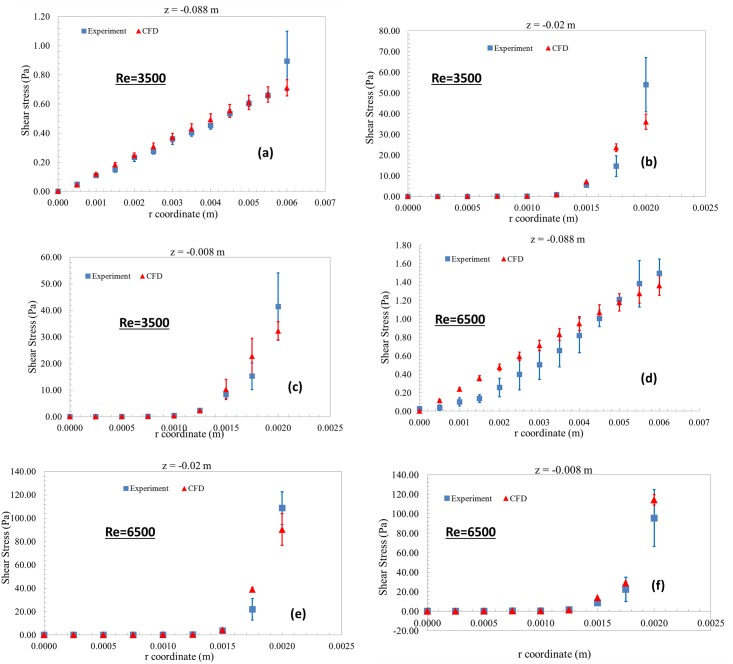
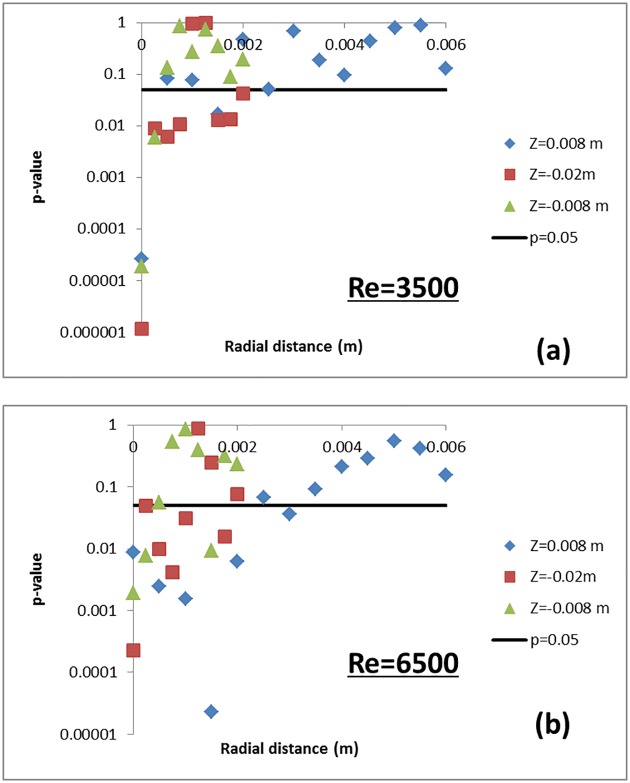
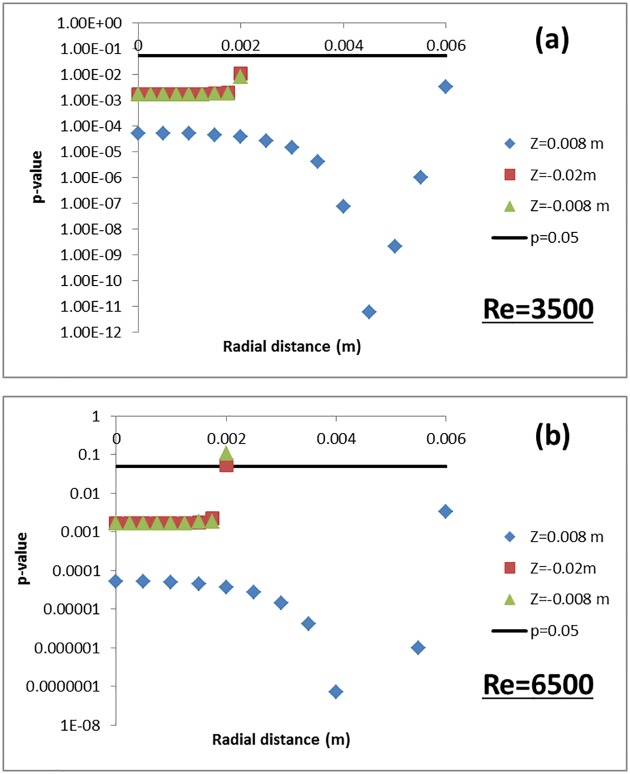
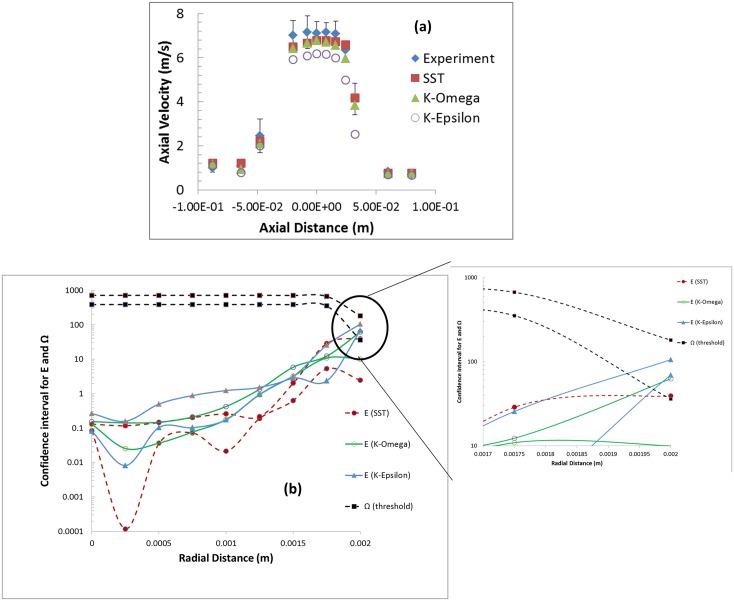
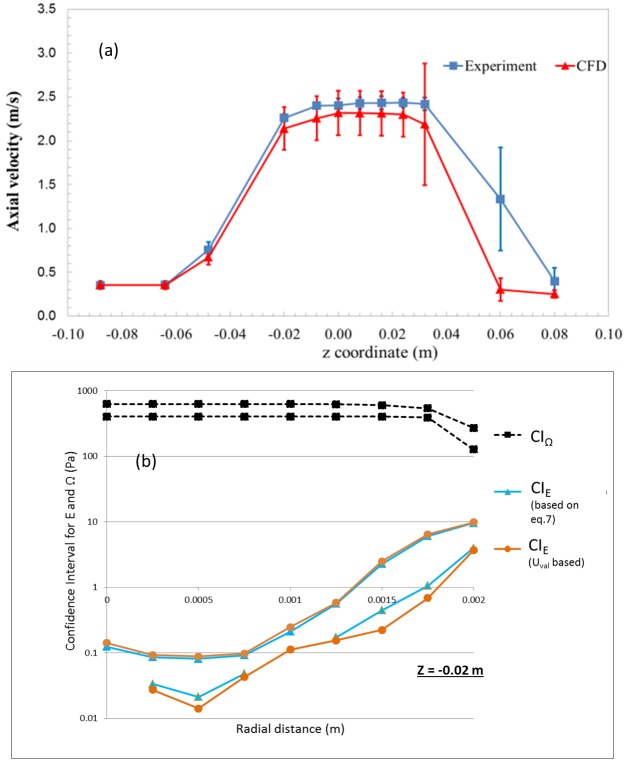
A "credible" computational fluid dynamics (CFD) model has the potential to provide a meaningful evaluation of safety in medical devices. One major challenge in establishing "model credibility" is to determine the required degree of similarity between the model and experimental results for the model to be considered sufficiently validated. This study proposes a "threshold-based" validation approach that provides a well-defined acceptance criteria, which is a function of how close the simulation and experimental results are to the safety threshold, for establishing the model validity. The validation criteria developed following the threshold approach is not only a function of Comparison Error, E (which is the difference between experiments and simulations) but also takes in to account the risk to patient safety because of E. The method is applicable for scenarios in which a safety threshold can be clearly defined (e.g., the viscous shear-stress threshold for hemolysis in blood contacting devices). The applicability of the new validation approach was tested on the FDA nozzle geometry. The context of use (COU) was to evaluate if the instantaneous viscous shear stress in the nozzle geometry at Reynolds numbers (Re) of 3500 and 6500 was below the commonly accepted threshold for hemolysis. The CFD results ("S") of velocity and viscous shear stress were compared with inter-laboratory experimental measurements ("D"). The uncertainties in the CFD and experimental results due to input parameter uncertainties were quantified following the ASME V&V 20 standard. The CFD models for both Re = 3500 and 6500 could not be sufficiently validated by performing a direct comparison between CFD and experimental results using the Student's t-test. However, following the threshold-based approach, a Student's t-test comparing |S-D| and |Threshold-S| showed that relative to the threshold, the CFD and experimental datasets for Re = 3500 were statistically similar and the model could be considered sufficiently validated for the COU. However, for Re = 6500, at certain locations where the shear stress is close the hemolysis threshold, the CFD model could not be considered sufficiently validated for the COU. Our analysis showed that the model could be sufficiently validated either by reducing the uncertainties in experiments, simulations, and the threshold or by increasing the sample size for the experiments and simulations. The threshold approach can be applied to all types of computational models and provides an objective way of determining model credibility and for evaluating medical devices.
Overview
The claims and statistics of this paper haven’t been checked yet.
Free: it reads the open-access text and checks the first 5 claims that cite a source we can check. Create a free account to check every claim.
Integrity signals
Registry
Cites
Statistics
Figures
Verification
Claims the paper makes
The claims and statistics of this paper haven’t been checked yet.
Free: it reads the open-access text and checks the first 5 claims that cite a source we can check. Create a free account to check every claim.
Claims other papers make about this one
Each is checked against this paper’s own text: does it say what the citing paper says it does?
The cited source says what the claim attributes to it.
In the citing paper
“The medical devices modeling community has developed frameworks and methods to assess credibility of computational models for medical devices, including the ASME V&V40 2018 Standard, FDA Guidance [2], and various supporting documents [3–7].”
From Credibility assessment of in silico clinical trials for medical devices (2024) · cites this paper as [6]
Self-check
Percentages, sums and reported differences re-computed from the paper’s own numbers.
The self-check needs the paper’s full text.
Citations
Cites
Fundamentals of Biostatistics.
(1969) · Annals of Internal Medicine · doi:10.7326/0003-4819-70-4-873 · Cited by 4,575
The American Society of Mechanical Engineers
(1925) · Science · doi:10.1126/science.62.1611.432-a · Cited by 1,053
Verification, validation, and predictive capability in computational engineering and physics
Oberkampf, W. L., Trucano, T. G., & Hirsch, C. (2004) · Applied Mechanics Reviews · doi:10.1115/1.1767847 · Cited by 719
Red Blood Cell Damage by Shear Stress
Leverett, L. B., Hellums, J. D., Alfrey, C. P., & Lynch, E. C. (1972) · Biophysical Journal · doi:10.1016/s0006-3495(72)86085-5 · Cited by 682
Zhang, Y. (2007) · The American Statistician · doi:10.1198/tas.2007.s79 · Cited by 523
ROSNER, B. A. (2011) · Cited by 467
Code Verification by the Method of Manufactured Solutions
SALARI, K., & KNUPP, P. (2000) · doi:10.2172/759450 · Cited by 313
Concepts of Model Verification and Validation
B.H.Thacker, S.W.Doebling, F.M.Hemez, Anderson, M. C., Pepin, J. E., & Rodriguez, E. A. (2004) · doi:10.2172/835920 · Cited by 272
Bayesian uncertainty analysis with applications to turbulence modeling
Cheung, S. H., Oliver, T. A., Prudencio, E. E., Prudhomme, S., & Moser, R. D. (2011) · Reliability Engineering & System Safety · doi:10.1016/j.ress.2010.09.013 · Cited by 267
Experimental uncertainty estimation and statistics for data having interval uncertainty.
Ferson, S., Kreinovich, V., Hajagos, J., Oberkampf, W., & Ginzburg, L. (2007) · doi:10.2172/910198 · Cited by 218
Research works printed but not linked: 1
- Raghunathan R, Myagmar O, Day SW, editors. Magnetically levitated shear inducing device for the testing of cell fragility. Summer Biomechanics, Bioengineering and Biotransport Conference; 2016; National Harbor, MD: ASME.
Cited by
Morrison, T. M., Pathmanathan, P., Adwan, M., & Margerrison, E. (2018) · Frontiers in Medicine · doi:10.3389/fmed.2018.00241 · Cited by 186
“Computational models of anatomy or physiology include improved drug delivery in the cornea with ultrasound energy (24); physiological models of heart cells (25), renal circulation (26), hemodynamic responses to blood volume perturbations (27), left bundle branch block (28), gas dynamics in the…”
BackgroundSelf-citationKainz, W., Neufeld, E., Bolch, W. E., Graff, C. G., Kim, C. H., Kuster, N., Lloyd, B., Morrison, T., Segars, P., Yeom, Y. S., et al. (2019) · IEEE Transactions on Radiation and Plasma Medical Sciences · doi:10.1109/trpms.2018.2883437 · Cited by 109
“Another approach to judge the necessary validation rigor is to assess the safety margin between the model-predicted exposure, the danger thresholds, and to demand that the validation be sufficiently robust to keep the confidence interval associated with the model well below that safety margin [41].”
Self-citationKosiyaporn, H., Chanvatik, S., Issaramalai, T., Kaewkhankhaeng, W., Kulthanmanusorn, A., Saengruang, N., Witthayapipopsakul, W., Viriyathorn, S., Kirivan, S., Kunpeuk, W., et al. (2020) · PLOS ONE · doi:10.1371/journal.pone.0227973 · Cited by 83
Morrison, T. M., Hariharan, P., Funkhouser, C. M., Afshari, P., Goodin, M., & Horner, M. (2019) · ASAIO Journal · doi:10.1097/mat.0000000000000996 · Cited by 68
Self-citationCredibility of In Silico Trial Technologies—A Theoretical Framing
Viceconti, M., Juarez, M. A., Curreli, C., Pennisi, M., Russo, G., & Pappalardo, F. (2020) · IEEE Journal of Biomedical and Health Informatics · doi:10.1109/jbhi.2019.2949888 · Cited by 67
Credibility assessment of in silico clinical trials for medical devices
Pathmanathan, P., Aycock, K., Badal, A., Bighamian, R., Bodner, J., Craven, B. A., & Niederer, S. (2024) · PLOS Computational Biology · doi:10.1371/journal.pcbi.1012289 · Cited by 62
Mulugeta, L., Drach, A., Erdemir, A., Hunt, C. A., Horner, M., Ku, J. P., Myers Jr., J. G., Vadigepalli, R., & Lytton, W. W. (2018) · Frontiers in Neuroinformatics · doi:10.3389/fninf.2018.00018 · Cited by 58
“The US Food and Drug Administration (FDA) and the Association for the Study of Medical Education have also been working to publish standards and guidelines for regulatory submissions involving computational models and simulations for healthcare applications (Hariharan et al., 2017).”
BackgroundSelf-citationWei, Z. A., Sonntag, S. J., Toma, M., Singh-Gryzbon, S., & Sun, W. (2018) · Cardiovascular Engineering and Technology · doi:10.1007/s13239-018-0349-y · Cited by 43
“These CFD solvers have been extensively verified, validated and adopted for industrial engineering applications [23, 24].”
BackgroundAn Introduction to Biomedical Computational Fluid Dynamics
Reid, L. (2021) · Advances in experimental medicine and biology · doi:10.1007/978-3-030-76951-2_10 · Cited by 26
Abdelmalek, S. M. A., AlEjielat, R., Rayyan, W. A., Qinna, N. A., & Darwish, D. (2021) · BMC Public Health · doi:10.1186/s12889-021-10723-x · Cited by 31
Hariharan, P., Sharma, N., Guha, S., Banerjee, R. K., D’Souza, G. A., & Myers, M. R. (2021) · Scientific Reports · doi:10.1038/s41598-021-89604-7 · Cited by 19
Self-citationLeinan, P. R., Grønli, T., Skjetne, P., Wigen, M. S., Urheim, S., Løvstakken, L., & Dahl, S. K. (2022) · Computers in Biology and Medicine · doi:10.1016/j.compbiomed.2022.105358 · Cited by 18
Lynch, C. J., Diallo, S. Y., Kavak, H., & Padilla, J. J. (2020) · PLoS ONE · doi:10.1371/journal.pone.0232929 · Cited by 17
“Determining adequate sample sizes in the experimentation phase strengthens model credibility [98] by directly connecting with statistical sample size requirements and revealing how much of the solution space has actually undergone verification.”
Increased Need for Data Analytics Education in Support of Verification and Validation
Lynch, C. J., Gore, R. J., Collins, A. J., Cotter, T. S., Grigoryan, G., & Leathrum, J. F. (2021) · Winter Simulation Conference · doi:10.1109/wsc52266.2021.9715485 · Cited by 16
“Identifying an analysis plan and corresponding sample size requirement a priori can greatly facilitate the analysis processes for V&V. Model credibility can be supported through adequate sample sizes in the experimentation phase (Hariharan et al. 2017, Lynch and Gore 2021).”
BackgroundRolandi, P. A. (2019) · Computer-aided chemical engineering/Computer aided chemical engineering · doi:10.1016/b978-0-12-818597-1.50023-0 · Cited by 11
Pewowaruk, R. J., Li, Y., Rowinski, D. H., & Roldán‐Alzate, A. (2021) · International Journal for Numerical Methods in Biomedical Engineering · doi:10.1002/cnm.3432 · Cited by 10
“TI values at the inlet were based on prior publications from the FDA.(2,50) The outlet boundary was set to atmospheric pressure.”
MethodYu, Z., Tan, J., Wang, S., & Guo, B. (2021) · Science Progress · doi:10.1177/00368504211039363 · Cited by 9
“Besides, many scholars’ studies have reflected that it is difficult to achieve a quantitative analysis of this degree of hemolytic difference in blood experiments.(23,24) In future research, we will improve technology and methods and strive to determine the optimization effect through blood experiments.”
BackgroundMałota, Z., Sadowski, W., Pieszko, K., Zimoląg, R., Czekała, F., Malinowska, R., & Hiczkiewicz, J. (2023) · Cardiovascular Engineering and Technology · doi:10.1007/s13239-023-00658-2 · Cited by 6
On the performance and accuracy of PFEM-2 in the solution of biomedical benchmarks
Pin, F. D., Huang, C.-J., Çaldichoury, I., & Paz, R. R. (2019) · Computational Particle Mechanics · doi:10.1007/s40571-019-00241-4 · Cited by 5
“It can be observed that results by PFEM-2 all have good agreement with experiments in [7] with both meshes.”
ResultA Hybrid RANS-LES Computational Fluid Dynamics Simulation of an FDA Medical device benchmark
Drešar, P., & Duhovnik, J. (2019) · Mechanika · doi:10.5755/j01.mech.25.4.20105 · Cited by 4
Neves, P. R. F., Oliveira, T. D., Magalhães, T. F., dos Reis, P. R. S., Tofaneli, L. A., Santos, A. Á. B., Machado, B. A. S., Oliveira, F. O., Andrade, L. P. C. D. S., Badaró, R. J. D. S., et al. (2021) · PLoS ONE · doi:10.1371/journal.pone.0251817 · Cited by 4
“Some studies have shown the development of disinfection chambers using CFD and have illustrated validation techniques using such type of simulations [44, 49].”
BackgroundMethodContarino, C., Chifari, F., D’Souza, G. A., & Herbertson, L. H. (2023) · ASAIO Journal · doi:10.1097/mat.0000000000002062 · Cited by 4
Self-citationWanki, G., Ekwaro-Osire, S., Dias, J. P., & Cunha, A. (2020) · Journal of Verification Validation and Uncertainty Quantification · doi:10.1115/1.4048749 · Cited by 2
Loss of Stability of the Blood Liquid State and Assessment of Shear-Induced Thrombosis Risk
Pushin, D. M., Salikhova, T., Biryukova, L. S., & Guria, G. (2021) · Radiophysics and Quantum Electronics · doi:10.1007/s11141-021-10097-5 · Cited by 2
D’Souza, G. A., Taylor, M. D., & Banerjee, R. K. (2019) · Journal of Medical Devices · doi:10.1115/1.4043992 · Cited by 1
Self-citationAbeken, J., Gülan, U., von Petersdorff-Campen, K., Charitatos, V., Daners, M. S., Meboldt, M., Holzner, M., de Zélicourt, D., & Kurtcuoglu, V. (2025) · Annals of Biomedical Engineering · doi:10.1007/s10439-025-03846-4 · Cited by 1
“In light of the recent focus of the FDA on the use of CFD in medical device development, several studies have addressed the need for rigorous validation of CFD models [7]–[10, 37].”
Uncertainty-Aware Model Validation Framework for Pharmaceutical Process Development
Matsunami, K., Barhate, Y., & Nagy, Z. K. (2026) · Systems and Control Transactions · doi:10.69997/sct.156975 · Cited by 1
Matsunami, K., Orosz, Á., Sundarkumar, V., Zhu, G., Nazemifard, N., Papageorgiou, C. D., & Nagy, Z. K. (2026) · Organic Process Research & Development · doi:10.1021/acs.oprd.6c00161 · Cited by 1
Körner, M., & Dorn, M. (2016) · Springer eBooks · doi:10.1007/978-3-662-47972-8_22 · Cited by 5
Computational Fluid Dynamics Modeling of a Commercial Diving Incident
Kemper, B., & Cross, L. (2021) · Journal of the National Academy of Forensic Engineers · doi:10.51501/jotnafe.v38i1.66
Computational investigation of emboli behaviour during aortic cannulation
Ho, R. (2022) · Queensland University of Technology · doi:10.5204/thesis.eprints.235390
Credibility of digital health predictors of human movement
Bottin, F. (2024) · AMS Dottorato Institutional Doctoral Theses Repository (University of Bologna) · doi:10.48676/unibo/amsdottorato/11543
Comparative CFD analysis of flow direction in the FDA benchmark nozzle
Avcı, M., & Koca, S. K. (2026) · Journal of Engineering Research · doi:10.1016/j.jer.2026.01.006
Maghouli, A. (2023) · theses.fr (ABES) · doi:10.70675/4318ac92z2c4cz4b86zbc67z403a153b892e
Horner, M., & Nagaraja, S. (2026) · Springer eBooks · doi:10.1007/978-3-032-09180-2_6
Self-citation
Metadata
- Authors
- Hariharan, P., D’Souza, G. A., Horner, M., Morrison, T. M., Malinauskas, R. A., & Myers, M. R.
- Affiliations
- United States Food and Drug Administration (US)
- Corresponding author
- Hariharan, Prasanna
- Venue
- PLoS ONE
- Publisher
- Public Library of Science (PLoS)
- Published
- 2017-06-08
- Volume
- 12
- Issue
- 6
- Pages
- e0178749
- ISSN
- 1932-6203 (ISSN-L)
- PMC
- PMC5464577
- OpenAlex
- W2623873284
- Cited by
- 35
- References
- 47
- Citations by year
- 2026: 4 · 2025: 1 · 2024: 1 · 2023: 3 · 2022: 2 · 2021: 9 · 2020: 3 · 2019: 7 · 2018: 4
- FWCI
- 1.72
- Type
- journal article
- Language
- en
- Open access
- gold
- doi.org
- Licence
- public-domain
- creativecommons.org/publicdomain/zero/1.0/ (vor)
- Locations
- PLoS ONE (publishedVersion, public-domain)
- Europe PMC (PubMed Central) (publishedVersion, public-domain)
- PubMed Central (publishedVersion, public-domain)
- PubMed (publishedVersion)
- RePEc: Research Papers in Economics (submittedVersion)
- DOAJ (DOAJ: Directory of Open Access Journals) (submittedVersion, cc-by-sa)
- Funders
- Food and Drug Administration (Critical Path Initiative Grant)
- Topics
- Health Sciences › Medicine › Cardiology and Cardiovascular Medicine › Mechanical Circulatory Support Devices
- Physical Sciences › Energy › Nuclear Energy and Engineering › Nuclear Engineering Thermal-Hydraulics
- Physical Sciences › Engineering › Computational Mechanics › Computational Fluid Dynamics and Aerodynamics
- Keywords
- CFD validation, model credibility, hemolysis, viscous shear stress, blood-contacting devices, uncertainty quantification, patient safety, context of use, high Reynolds number flow
- MeSH terms
- Computer Simulation, Models, Theoretical, Hydrodynamics
About these checks
Registry, retraction, Cites and statistics results are computed, not judged, with one exception: a printed reference that no index lists is read once by a model before it counts as a citation error. Claims are extracted by a model and kept only when their quote appears verbatim in the text; each cited source is then checked, with a model’s help, for whether it says what the claim relies on. Those verdicts can be wrong — read the claim’s quote and the cited source before relying on one.
Statistics and arithmetic are recomputed, not judged.
Confidence bands are shown only for fields calibrated on our annotated test set. None is calibrated yet, so no band is shown.
What counts as a claim ›How we measure confidence ›How we check this ›
Are you an author, or do you see a problem with this page? Request a review
Data sources
Bibliographic data: Semantic Scholar, OpenAlex, Crossref.
Contains information from the Semantic Scholar Academic Graph Datasets, made available under the ODC Attribution License (ODC-BY 1.0).
Semantic Scholar’s data is described in: Kinney, R., et al. (2023). The Semantic Scholar Open Data Platform. arXiv:2301.10140.
